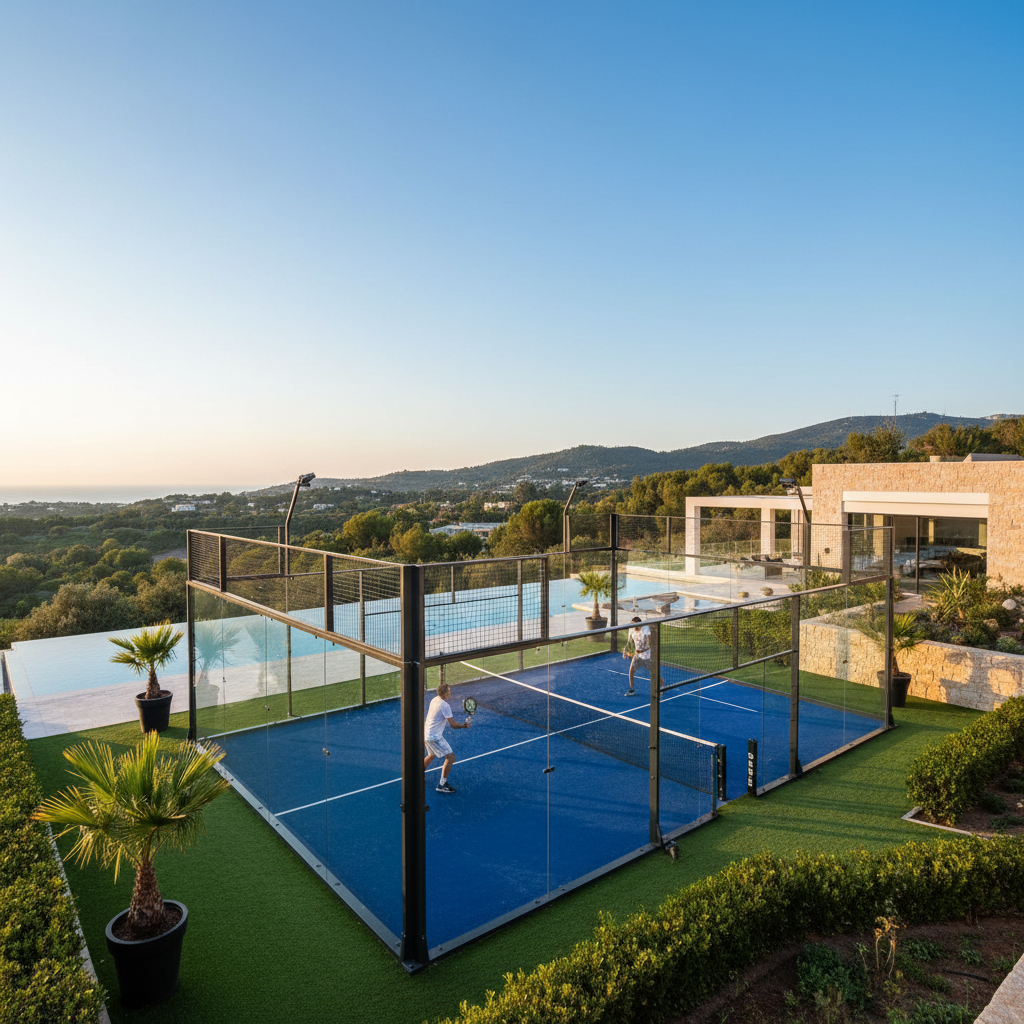
A standard doubles court measures exactly 20 meters long by 10 meters wide within its official boundary lines. Knowing how big is a padel court prevents expensive construction errors and ensures your facility meets professional standards. Investors often underestimate land requirements, leading to cramped spaces that frustrate players and compromise safety. Superb Padel provides precise manufacturing blueprints so your installation runs smoothly from start to finish.
1. What defines how big is a padel court for doubles?
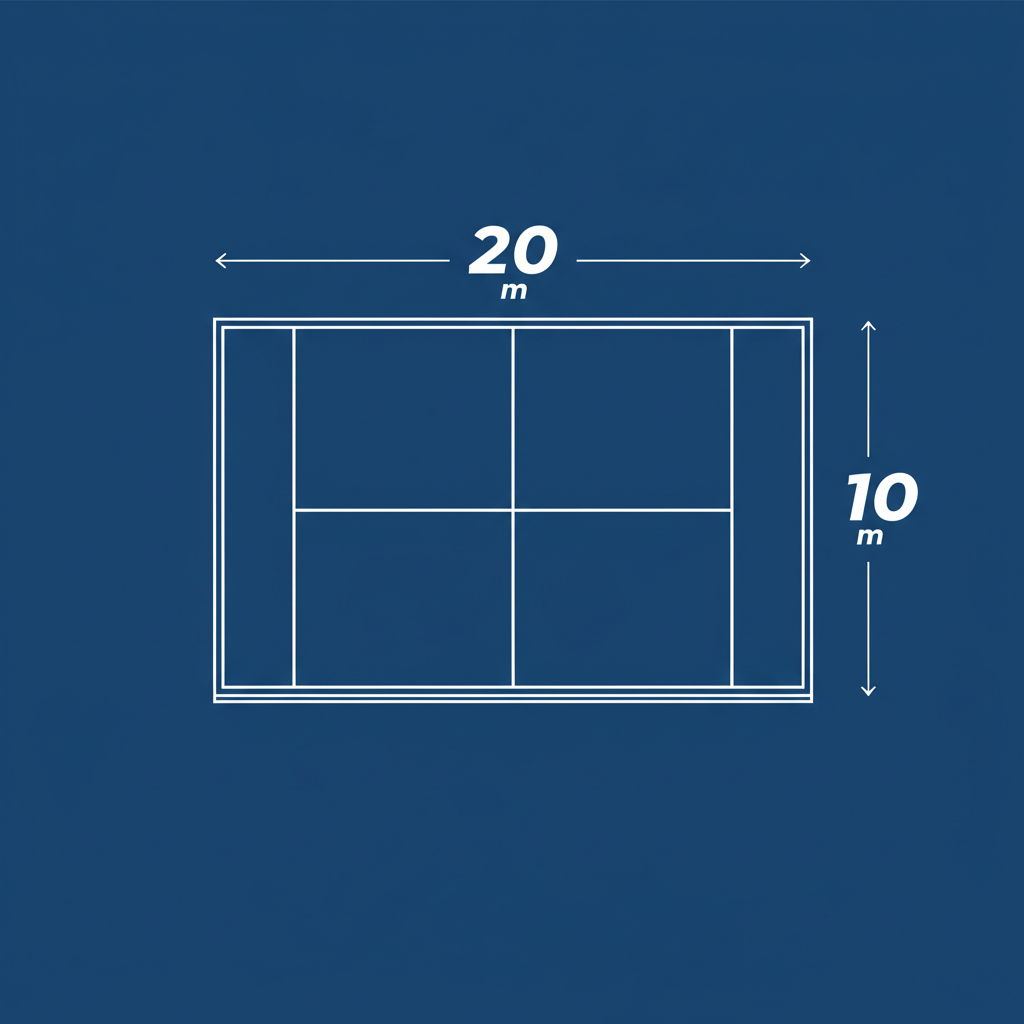
A standard doubles court measures exactly 20 meters long by 10 meters wide within its lines. These specific measurements define playability for every sanctioned event globally. Building a Standard Padel Court requires extreme precision to maintain structural integrity across every steel pillar.
Internal Playing Zones
Here is the deal, you must verify these specific dimensions against global competition rules before pouring concrete. Professional athletes demand perfect ball response which only accurate spacing provides for high-speed matches. Superb Padel manufactures precision components using advanced computer modeling to guarantee every bolt hole aligns perfectly during on-site assembly.
- Length: 20 meters
- Width: 10 meters
- Tolerance: +/- 0.5%
- Material: Galvanized Steel
High-end clubs prioritize these tolerances to satisfy elite athletes who demand perfection. The following data highlights the exact measurements required for a professional installation.
| Component | Measurement | Tolerance |
|---|---|---|
| Playing Length | 20.00 Meters | +/- 0.5% |
| Playing Width | 10.00 Meters | +/- 0.5% |
| Diagonal Match | 22.36 Meters | +/- 10mm |
Key Takeaway: Always use 20m x 10m internal measurements for doubles courts to meet professional standards.
2. How big is a padel court in square meters total?

Determining how big is a padel court in area results in 200 square meters for the playing surface. While the playing area is 200 square meters, you actually need approximately 231 square meters for the complete structural installation. This extra space accommodates the Padel Structure pillars and the 12mm tempered glass panels that form the enclosure.
Total Footprint Requirements
What is the real story? You should also consider additional land for perimeter drainage systems or lighting pole foundations which extend beyond the glass walls. Accurate land assessment prevents delays during the excavation phase when heavy machinery is already on-site. We provide exact foundation blueprints so you can plan your site layout without wasting valuable real estate.
- Playing Area: 200 sqm
- Total Footprint: 231 sqm
- Foundation Extension: 0.5m
- Glass Thickness: 12mm
Smart facility owners maximize revenue by placing three courts where one tennis court would normally sit. Use these metrics to calculate your potential land utilization.
| Metric | Playing Area | Total Footprint |
|---|---|---|
| Area (sqm) | 200 | 231 |
| Length (m) | 20.0 | 21.0 |
| Width (m) | 10.0 | 11.0 |
Key Takeaway: Plan for a 231 square meter footprint per court to include all structural elements.
3. How big is a padel court structural framework height?
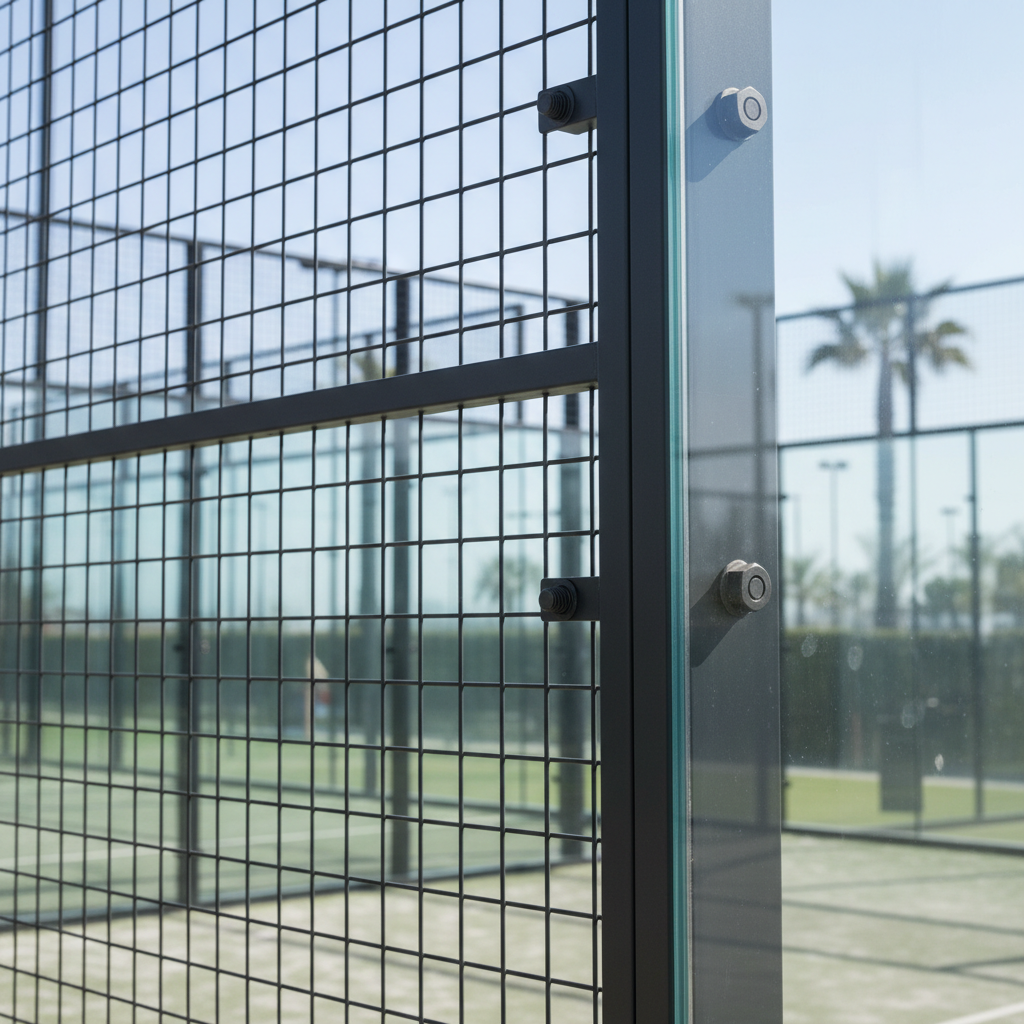
The steel structure stands 4 meters high at the back walls and 3 meters high on the sides. Back walls feature 3 meters of glass topped by 1 meter of galvanized mesh for total height. Side walls follow a specific U-shape or stepped pattern combining glass and mesh sections to allow for ball rebound variety.
Vertical Structure Specifications
Ready for the good part? You should select a Panoramic Padel Court design if you want unobstructed views for spectators at your high-end club. Our engineering ensures these frames withstand high wind loads and player impacts during intense matches. We utilize 3mm thick steel tubing to maintain rigidity under heavy use and prevent swaying.
- Back Wall: 4 meters
- Side Wall: 3 meters
- Glass Height: 3 meters
- Mesh Height: 1 meter
Cheap steel frames corrode quickly and vibrate during play, which ruins the player experience. Ensure your vertical components match the following professional specifications.
| Element | Height (m) | Material |
|---|---|---|
| Back Wall | 4.0 | Glass + Mesh |
| Side Wall | 3.0 | Glass + Mesh |
| Pillars | 4.0 | Galvanized Steel |
Key Takeaway: Professional structures require 4-meter back walls for safety and official ball rebound rules.
4. How big is a padel court synthetic turf surface area?
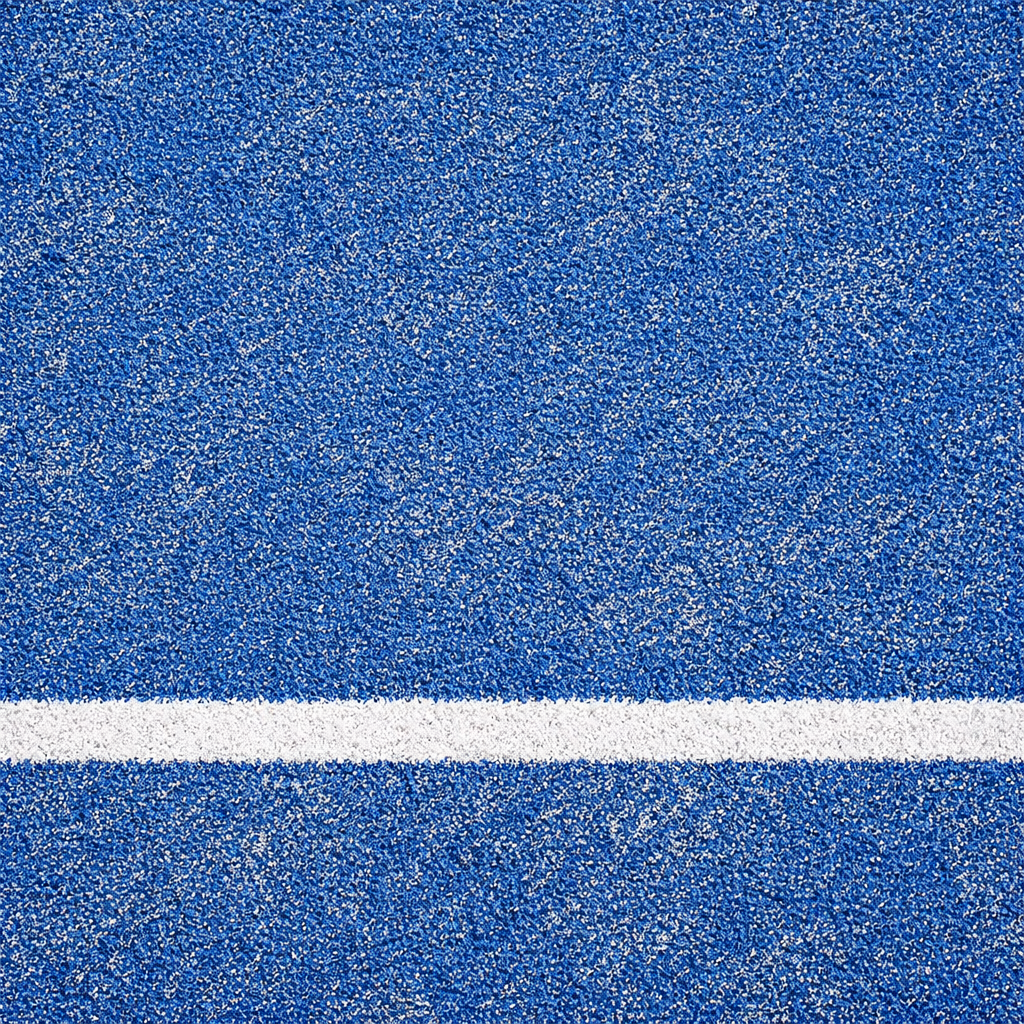
The how big is a padel court turf covers the entire 200 square meter playing floor exactly. Selecting the right Padel Grass influences ball bounce speed and injury prevention for your members. Professional courts use 12mm to 15mm pile heights with specific sand infill ratios to maintain a consistent surface.
Turf Selection Criteria
This is where things get interesting, you need approximately 2,500 kilograms of specialized kiln-dried silica sand to stabilize the turf. Proper installation involves gluing the seams with high-strength polyurethane adhesive to prevent trip hazards. High-quality grass lasts over five years even with daily high-frequency booking schedules at busy sports centers.
- Turf Area: 200 sqm
- Pile Height: 12-15 mm
- Sand Infill: 2,500 kg
- Material: Monofilament
Investing in premium monofilament fibers keeps the court soft and protects player joints over long-term play. Review these surface specifications for your installation.
| Feature | Specification | Benefit |
|---|---|---|
| Pile Height | 12-15 mm | Consistent Bounce |
| Fiber Type | Monofilament | Wear Resistance |
| Sand Infill | 15-20 kg/sqm | Stability |
Key Takeaway: Use 200 square meters of high-density turf with silica sand for a professional-grade floor.
5. How big is a padel court foundation slab footprint?
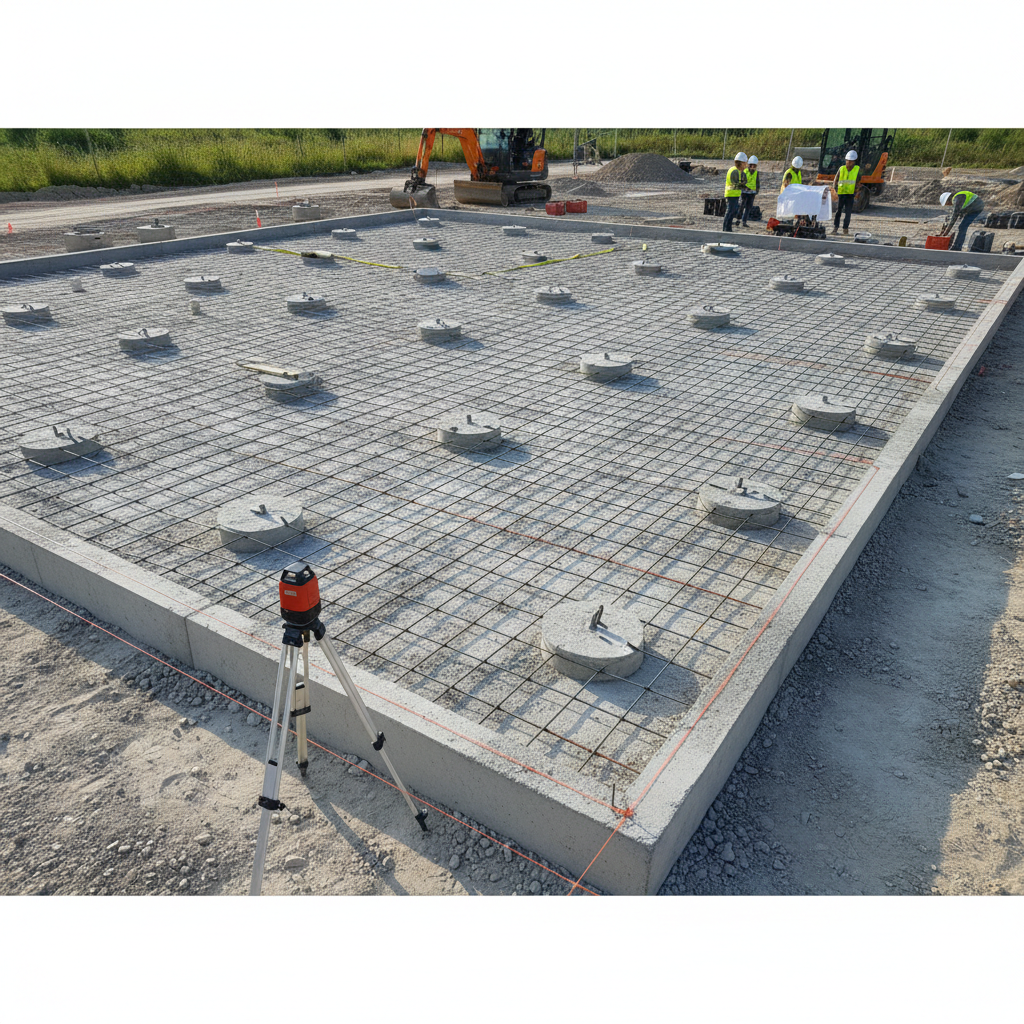
The concrete foundation slab should extend at least 50 centimeters beyond the internal playing lines. You need a minimum thickness of 15 centimeters to support the steel frame weight effectively. The foundation acts as the anchor for the entire 231 square meter structure including all glass panels.
Foundation Engineering Steps
But here’s the kicker, any deviation greater than 3mm will cause the 12mm glass panels to misalign or crack. You should incorporate a slight 1% slope for outdoor courts to facilitate rapid water drainage after heavy rain. Proper ground preparation prevents the slab from sinking or shifting over time which protects your investment.
- Slab Width: 11 meters
- Slab Length: 21 meters
- Thickness: 15 cm
- Surface Slope: 1%
Many builders skip the reinforced mesh in the concrete to save money, leading to surface cracks. Follow these sub-base layers for a durable construction.
| Layer | Depth (cm) | Purpose |
|---|---|---|
| Sub-base | 20 | Drainage |
| Concrete | 15 | Structural Base |
| Leveling | 0.3 | Precision |
Key Takeaway: Build a 15cm thick reinforced slab that extends past the glass for maximum stability.
6. How big is a padel court height for indoor buildings?
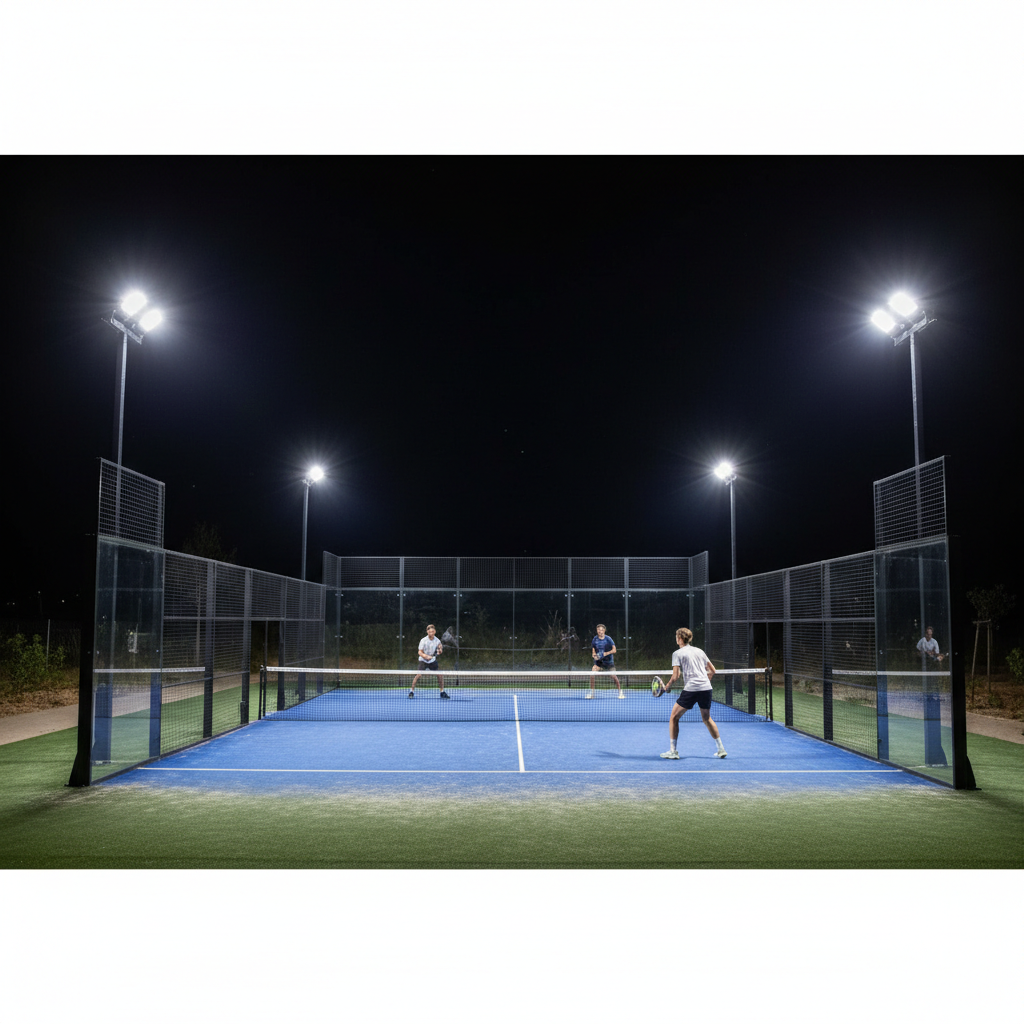
Indoor how big is a padel court clearance must be at least 6 meters to allow for lobs. Vertical clearance is just as important as the horizontal 20×10 meter dimensions for indoor clubs. High lobs are a fundamental part of padel strategy and hitting a low ceiling results in a point loss.
Indoor Vertical Clearance
Ready for the good part? You must ensure that lighting fixtures or ventilation ducts do not hang below the 6-meter minimum threshold. We recommend a Roofed Padel Court setup if you are building from scratch in a rainy region to save space. Professional players prefer 9 meters of height so they can play aggressive defensive shots without fear.
- Minimum Height: 6 meters
- Recommended: 8 meters
- Pro Standard: 9+ meters
- Clearance: 100% Unobstructed
Low ceilings make the court feel cramped and trap heat near the floor during intense matches. Compare the vertical requirements based on your facility’s target play level.
| Play Level | Min Height (m) | Recommended (m) |
|---|---|---|
| Recreational | 6.0 | 7.0 |
| Competitive | 7.0 | 8.0 |
| Professional | 8.0 | 9.0+ |
Key Takeaway: Maintain at least 6 meters of clear height to avoid interfering with lobs.
7. How big is a padel court compared to tennis dimensions?
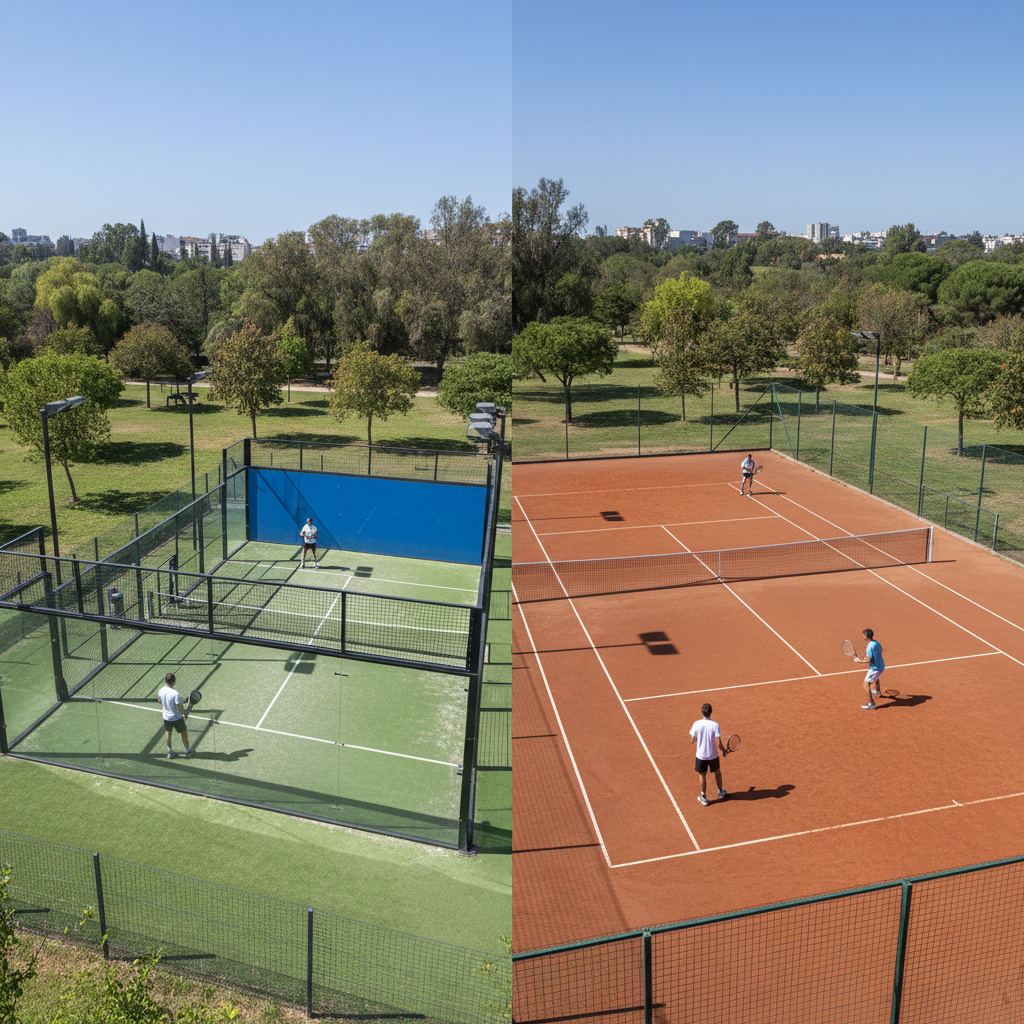
Padel is roughly one-third the size of a standard tennis court including the runoff zones. A single tennis court requires about 670 square meters because of the large peripheral areas behind the baselines. Padel courts use glass walls as the boundary which eliminates the need for massive peripheral clearance.
Space Utilization Analysis
Here is the deal, you can host twelve players in the same footprint that accommodates only four tennis players. This 3:1 ratio makes padel a much more profitable investment for gym owners and developers. You should consider converting underutilized tennis surfaces into multiple padel zones to boost your facility’s utilization.
- Padel Area: 231 sqm
- Tennis Area: 670 sqm
- Utilization Ratio: 2.9 to 1
- Player Density: High
More players per square meter means more membership fees and higher refreshment sales for your business. This efficiency generates higher hourly rental income due to the compact layout.
| Sport | Footprint (sqm) | Player Density |
|---|---|---|
| Padel | ~231 | High |
| Tennis | ~670 | Low |
| Ratio | 1.0 | 2.9 |
Key Takeaway: Replace one tennis court with three padel courts to triple your potential revenue.
8. How big is a padel court net and post hardware?
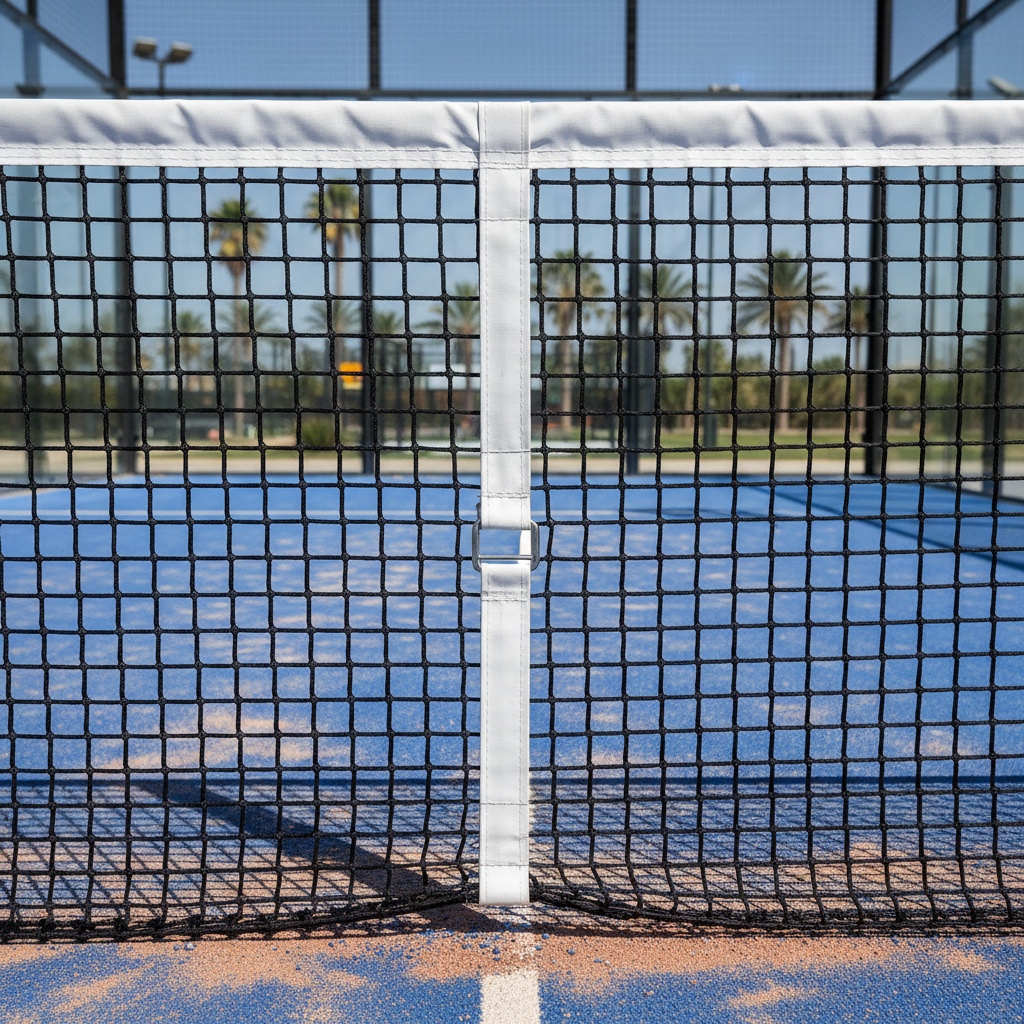
The how big is a padel court net spans 10 meters across the center exactly. The net stands 88 centimeters tall at the center and 92 centimeters at the posts. You must use high-tension posts that remain rigid under the pull of the internal cable system.
Hardware Standards
What is the real story? Poorly installed posts will lean inward over time which causes the net to sag. You should select a high-quality mesh net with a 10cm white top band for better visibility. We include professional-grade net hardware with every standard kit to ensure consistent tension for years.
- Net Width: 10 meters
- Center Height: 88 cm
- Post Height: 92 cm
- Band Width: 10 cm
Recreational players might not notice a saggy net, but competitive members will complain immediately. Check your hardware against these international height regulations.
| Net Part | Height (m) | Width (m) |
|---|---|---|
| Center Height | 0.88 | 10.0 |
| Post Height | 0.92 | 10.1 |
| Top Band | 0.10 | 10.0 |
Key Takeaway: Keep the center height at exactly 88cm to comply with international regulations.
9. How big is a padel court for children and junior play?
Junior courts for kids measure 10 meters long and 5 meters wide for optimal development. You can use these smaller dimensions to build a youth academy in a very tight space. These compact versions are perfect for resorts or schools that want to introduce the sport to students.
Youth Academy Specs
This is where things get interesting, junior courts allow kids to develop hand-eye coordination without being overwhelmed by adult distances. You should still use the same high-quality 12mm glass to ensure the same safety standards as full models. Building a dedicated youth area shows your commitment to the next generation of players.
- Junior Length: 10 meters
- Junior Width: 5 meters
- Target Age: Under 6
- Area: 50 sqm
These mini-courts occupy only 50 square meters but provide massive marketing value for family-friendly brands. Compare the different court sizes available for your sports academy.
| Court Type | Length (m) | Width (m) |
|---|---|---|
| Kids (U6) | 10.0 | 5.0 |
| Singles | 20.0 | 6.0 |
| Doubles | 20.0 | 10.0 |
Key Takeaway: Install a 10m x 5m junior court to attract families and diversify your sports academy.
10. How big is a padel court for a boutique club project?
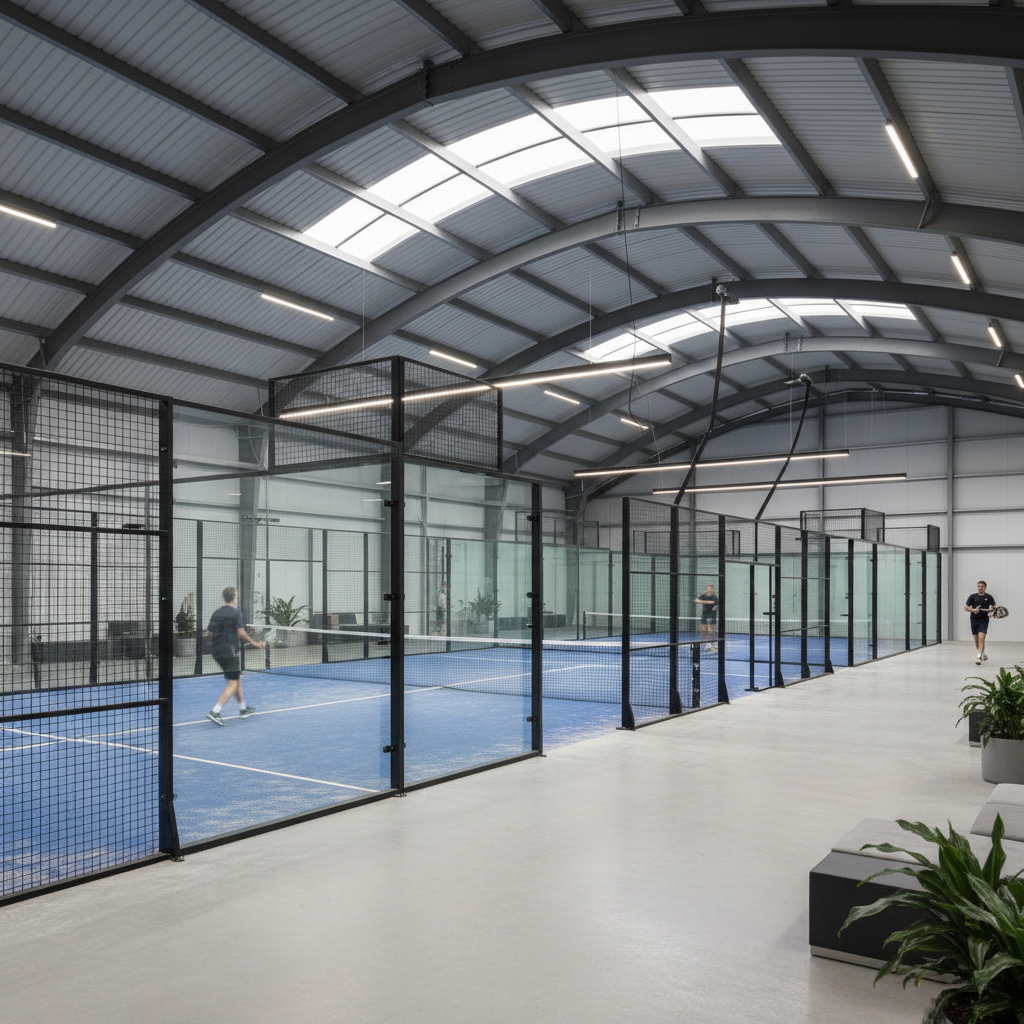
A boutique club with four how big is a padel court units needs 1,500 square meters. You must plan for parking, social areas, and changing rooms alongside the actual playing surfaces. Knowing the dimensions is only half the battle when designing a high-revenue commercial club facility.
Facility Planning
The best part? Efficient land use reduces your property tax burden while maximizing the player capacity per hour. You should leave at least 2 meters of space between adjacent courts to prevent noise interference. We assist with master planning so you can fit the maximum number of courts comfortably.
- 4-Court Land: 1,500 sqm
- Buffer Space: 2 meters
- Social Area: Mandatory
- Pro Shop: Recommended
Clubs that only focus on courts often fail to build a loyal community of players. Use these general land requirements to scale your sports investment correctly.
| Facility Scale | Number of Courts | Total Land (sqm) |
|---|---|---|
| Private Site | 1 | 300 |
| Boutique Club | 4 | 1,500 |
| Commercial Hub | 8+ | 3,000+ |
Key Takeaway: Plan for 1,500+ square meters for a four-court club to include essential social amenities.
FAQ Section
Q1: Can I fit a padel court in my backyard?
Yes, if you have a flat area of at least 21×11 meters, a standard doubles court fits perfectly.
Q2: What’s the best way to choose between panoramic or standard glass?
Panoramic courts offer better visibility for spectators, while standard models provide higher structural rigidity for windy locations.
Q3: How do I know if I can build a padel court on an existing tennis court?
Padel has a smaller footprint, allowing you to install up to three courts on a single standard tennis surface.
Q4: Can I customize the court colors to match my brand?
Absolutely, our factory provides full OEM support to customize colors and logos for your specific project.
Q5: What’s the best height for indoor LED lighting?
Professional courts use 6-meter poles, but for indoor play, we recommend mounting LEDs at 7 to 8 meters.
Building a successful sports facility requires precise knowledge of how big is a padel court and how to optimize your available space. By following international standards and choosing high-quality materials, you guarantee a safe, professional, and profitable environment. Whether you are launching a private court or a massive commercial club, Superb Padel stands ready to deliver factory-direct solutions tailored to your needs.
Please contact us today for a personalized quote and technical consultation.