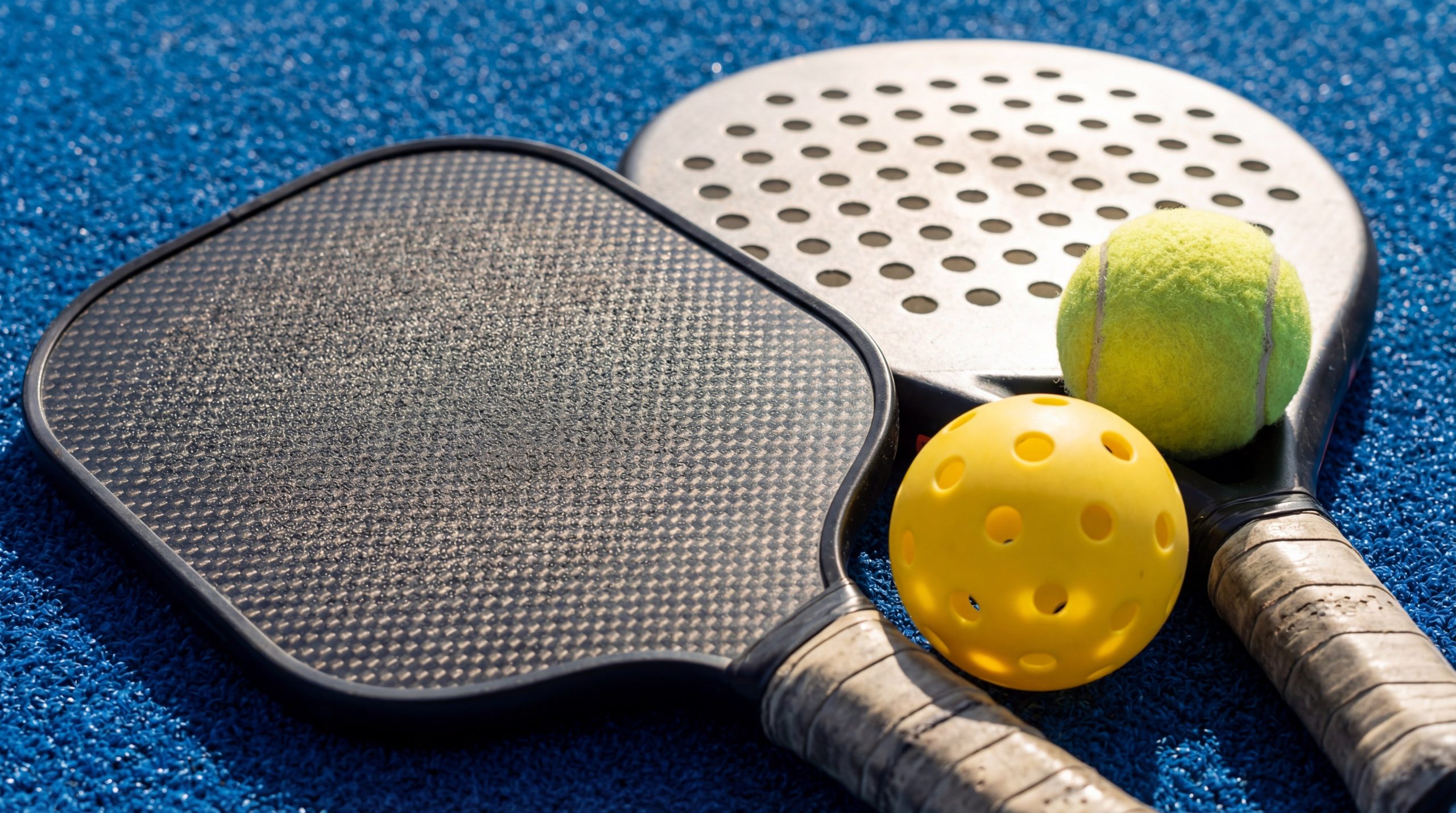
Traditional racket sports are facing a disruptive challenge as facility owners struggle to keep pace with the meteoric rise of new alternatives. You may see your tennis courts sitting empty while local community boards are flooded with requests for modern play spaces, leaving you stuck in a cycle of indecision and missed revenue. This guide provides a definitive analysis of the pickleball vs padel popularity shift, offering the strategic roadmap you need to build a high-demand, profitable sports destination.
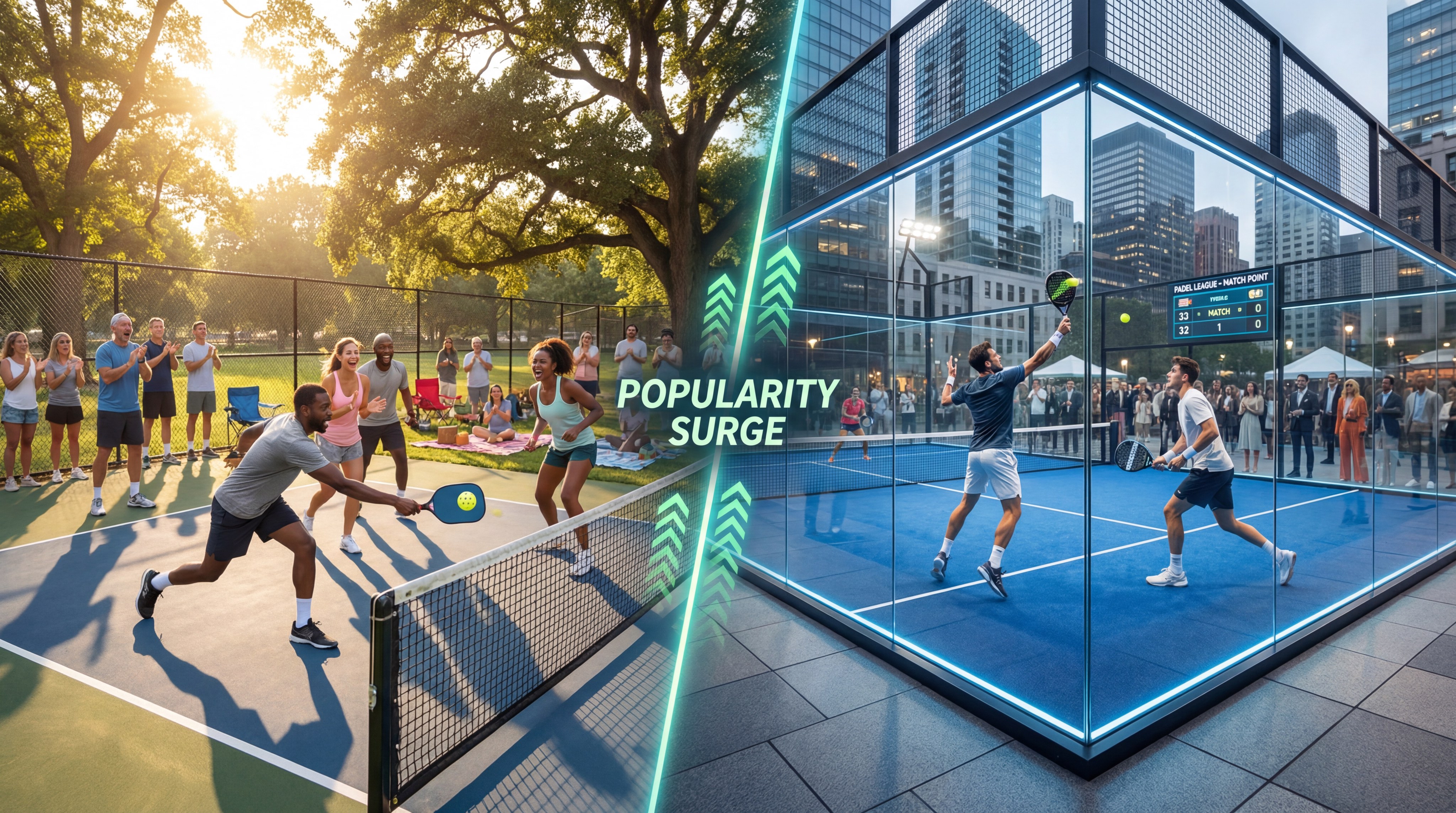
1. Why is pickleball vs padel popularity surging now?
- Bucket Brigade: Here’s the thing:
- Bulleted List:
- Social accessibility and ease of learning for beginners.
- Compact court footprints allowing for higher player density.
- Minimal equipment requirements compared to tennis.
The global surge in these sports is not merely a trend but a fundamental shift in how people consume recreation. Modern players prioritize social interaction and immediate gratification, both of which are core components of these racket games.
Is the “low barrier to entry” the primary driver?
| Growth Metric | Pickleball | Padel |
|---|---|---|
| Primary Market | North America | Europe/Middle East |
| Ease of Learning | Very High | High |
| Social Element | Extremely High | High |
How did the pandemic accelerate racket sport adoption?
- Key Takeaways: Popularity is driven by the “instant fun” factor where players can reach a rally state within minutes.
2. How does pickleball vs padel popularity vary by region?

- Bucket Brigade: Think about it:
- Bulleted List:
- Pickleball’s roots in US community centers and schools.
- Padel’s luxury branding and club-centric model in Spain and Sweden.
- The expansion of the World Padel Tour across the Middle East.
Regional infrastructure often dictates which sport takes the lead in local markets. While North America has leveraged its existing public park networks for rapid expansion, the European and Middle Eastern markets have focused on high-end private club developments.
Why is pickleball dominating the North American market?
| Region | Popularity Leader | Growth Driver |
|---|---|---|
| North America | Pickleball | Public Parks |
| Europe | Padel | Private Clubs |
| Middle East | Padel | Government Investment |
What makes padel the fastest-growing sport in Europe?
- Key Takeaways: Geography dictates infrastructure; North America favors the public court model, while the rest of the world trends toward private club memberships.
3. What equipment impacts pickleball vs padel popularity?
- Bucket Brigade: You might be wondering:
- Bulleted List:
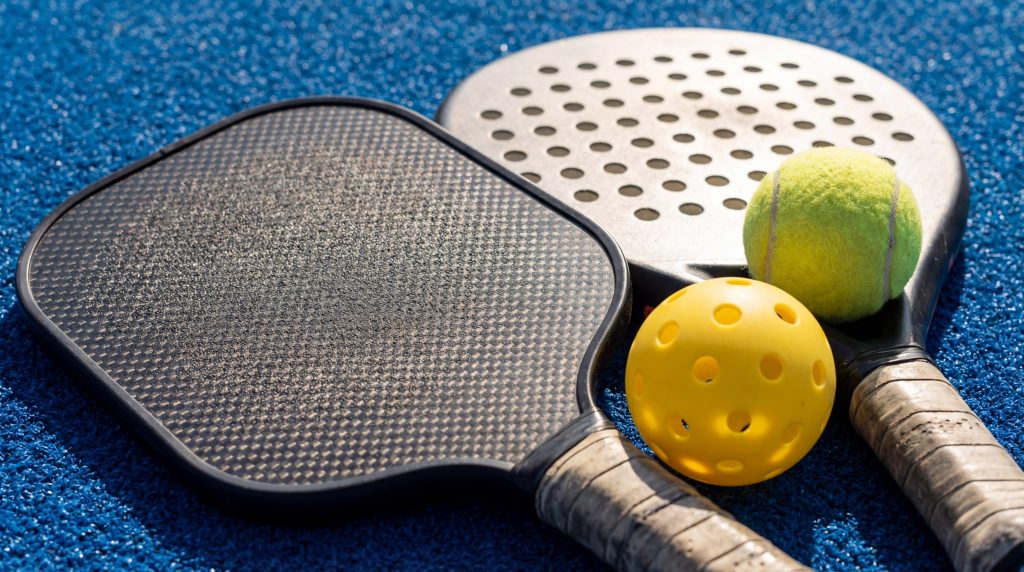
- The difference between perforated plastic balls and pressurized felt.
- Paddle materials: Carbon fiber vs. composite power dynamics.
- Safety gear and its role in senior player adoption.
The tactile nature of the equipment plays a significant role in how quickly a player feels “competent” in the game. Understanding these nuances is critical for facility owners looking to stock pro shops or provide rental gear that enhances the user experience.
How do paddle mechanics influence player retention?
| Equipment Element | Pickleball | Padel |
|---|---|---|
| Racket Type | Solid Paddle | Perforated Racket |
| Ball Type | Plastic (Wiffle style) | Depressurized Tennis Ball |
| Footwear | Court Shoes | Specialized Padel Shoes |
Does ball technology change the game’s difficulty?
- Key Takeaways: Equipment choices directly affect the “feel” of the game; choosing the right gear is essential when comparing pickleball vs padel ball options for your shop.
4. Does court size drive pickleball vs padel popularity?
- Bucket Brigade: But wait, there’s more:
- Bulleted List:
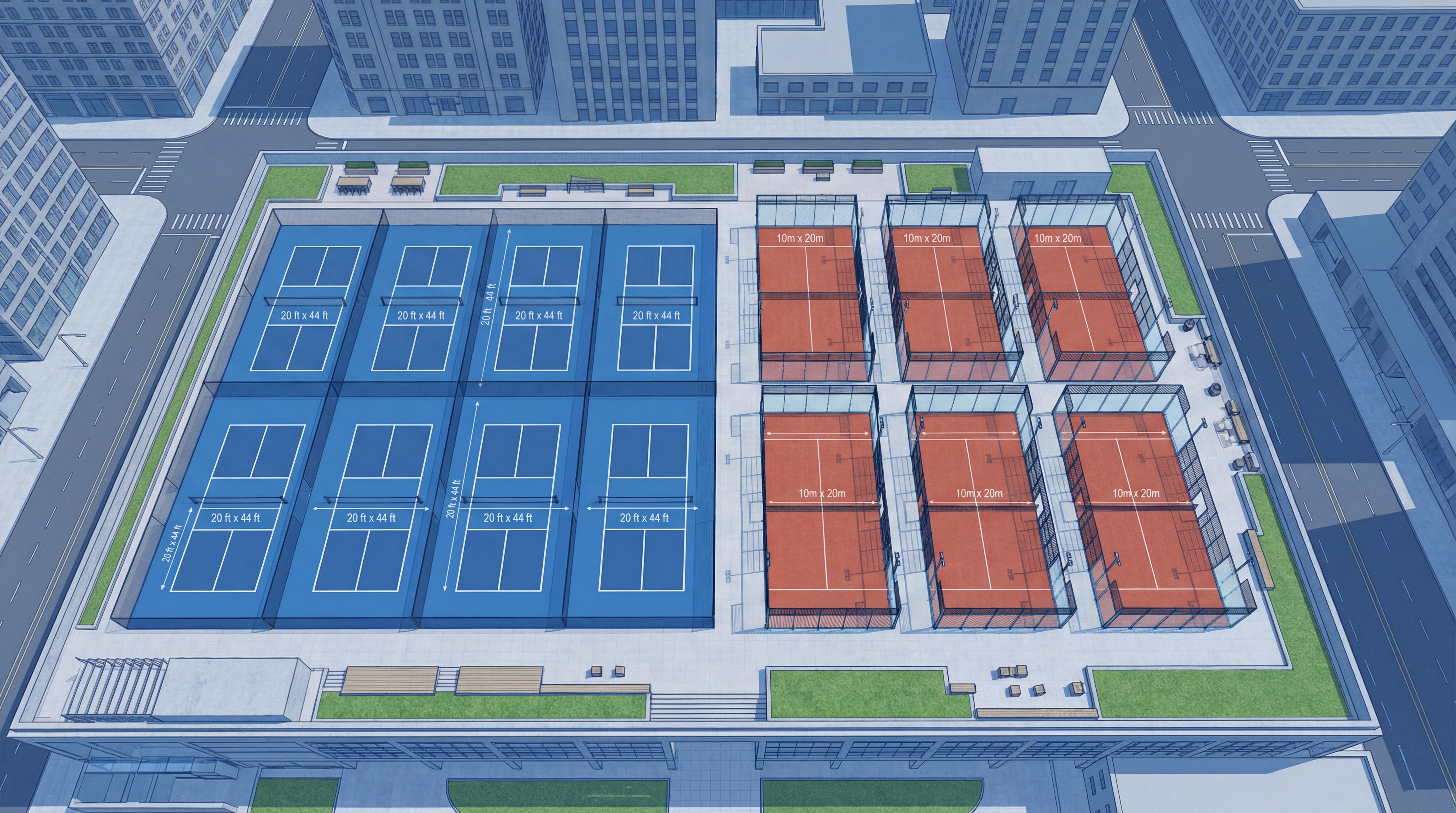
- Standard pickleball dimensions (20′ x 44′) allowing 4 courts per tennis court.
- Padel’s 10m x 20m footprint requiring specialized glass and mesh enclosures.
- The strategic importance of following professional blueprints.
The physical footprint of a court is often the primary constraint for urban developments. Efficiency in court placement allows for higher player turnover per square foot, which directly impacts the bottom line of any sports facility.
Is a smaller footprint the key to urban scalability?
| Feature | Pickleball Court | Padel Court |
|---|---|---|
| Dimensions | 6.1m x 13.4m | 10m x 20m |
| Enclosure | None (Open) | Glass & Steel Mesh |
| Players | Singles or Doubles | Primarily Doubles |
How does the “cage” design change the padel experience?
- Key Takeaways: Space efficiency is the ultimate win for facility owners; pickleball wins on density, but padel wins on “premium” player experience and necessitates a Standard Padel Court specification.
5. How to budget for pickleball vs padel popularity growth?
- Bucket Brigade: It gets better:
- Bulleted List:
- Surface material costs: Acrylic vs. Artificial Turf.
- Lighting and acoustic management for residential areas.
- Long-term maintenance of glass walls vs. net replacements.
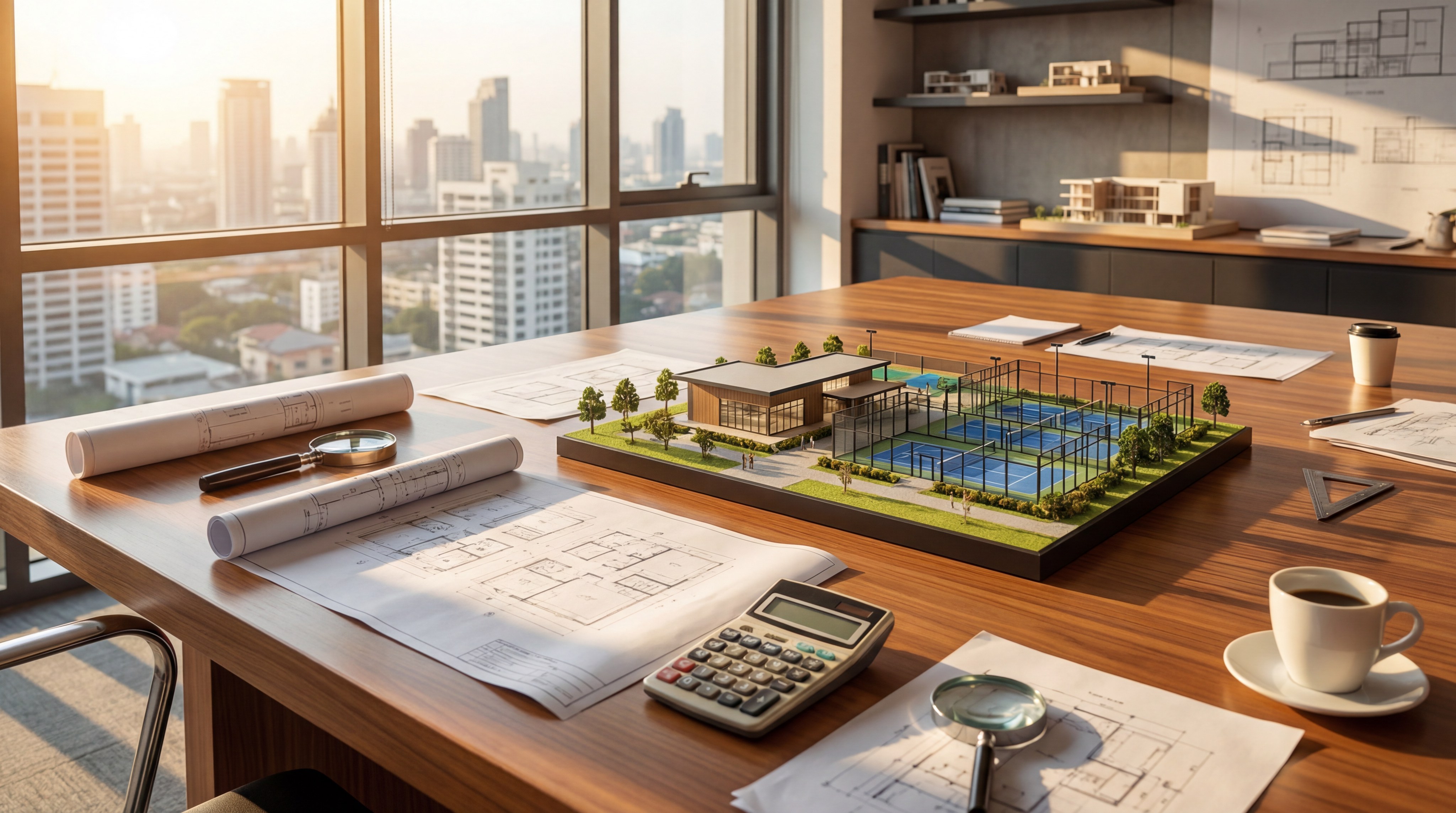
Financial planning for these facilities requires a deep dive into both CAPEX and OPEX. While initial construction costs vary significantly between the two sports, the revenue potential per court remains high if the local demographic is targeted correctly.
| Cost Factor | Pickleball (Low-Mid) | Padel (High) |
|---|---|---|
| Construction | $15k – $30k | $45k – $70k |
| Maintenance | Minimal | Regular Glass Cleaning |
| Revenue Potential | High (Vol-based) | High (Premium-based) |
How quickly can a pickleball court see a return?
- Key Takeaways: Investors must how to budget costs carefully to ensure the infrastructure matches the local demographic’s spending power.
6. Can conversion boost pickleball vs padel popularity?

- Bucket Brigade: Look at it this way:
- Bulleted List:
- Utilizing existing concrete slabs for rapid pickleball deployment.
- Structural requirements for anchoring padel glass to old foundations.
- The logistical benefits of multi-sport layout designs.
Conversion is the most efficient method to revitalize a stagnating facility. By repurposing underutilized tennis courts, owners can immediately tap into new revenue streams with relatively low upfront disruption to their operations.
Is converting underused tennis courts a viable strategy?
| Conversion Step | Pickleball | Padel |
|---|---|---|
| Foundation | Existing Surface OK | Needs Reinforcement |
| Timeframe | 1-2 Weeks | 3-5 Weeks |
| Complexity | Low | Moderate |
How does multi-sport layout design affect gameplay?
- Key Takeaways: Conversion is the fastest path to profitability, allowing owners to pivot with market trends and learn how to convert your court layout to support both sports.
7. What demographics fuel pickleball vs padel popularity?
- Bucket Brigade: That’s not all:
- Bulleted List:
- The shift toward Gen Z and Millennial participation in pickleball leagues.
- The appeal of padel for networking and corporate team building.
- The inclusive nature of racket sports for mixed-gender play.
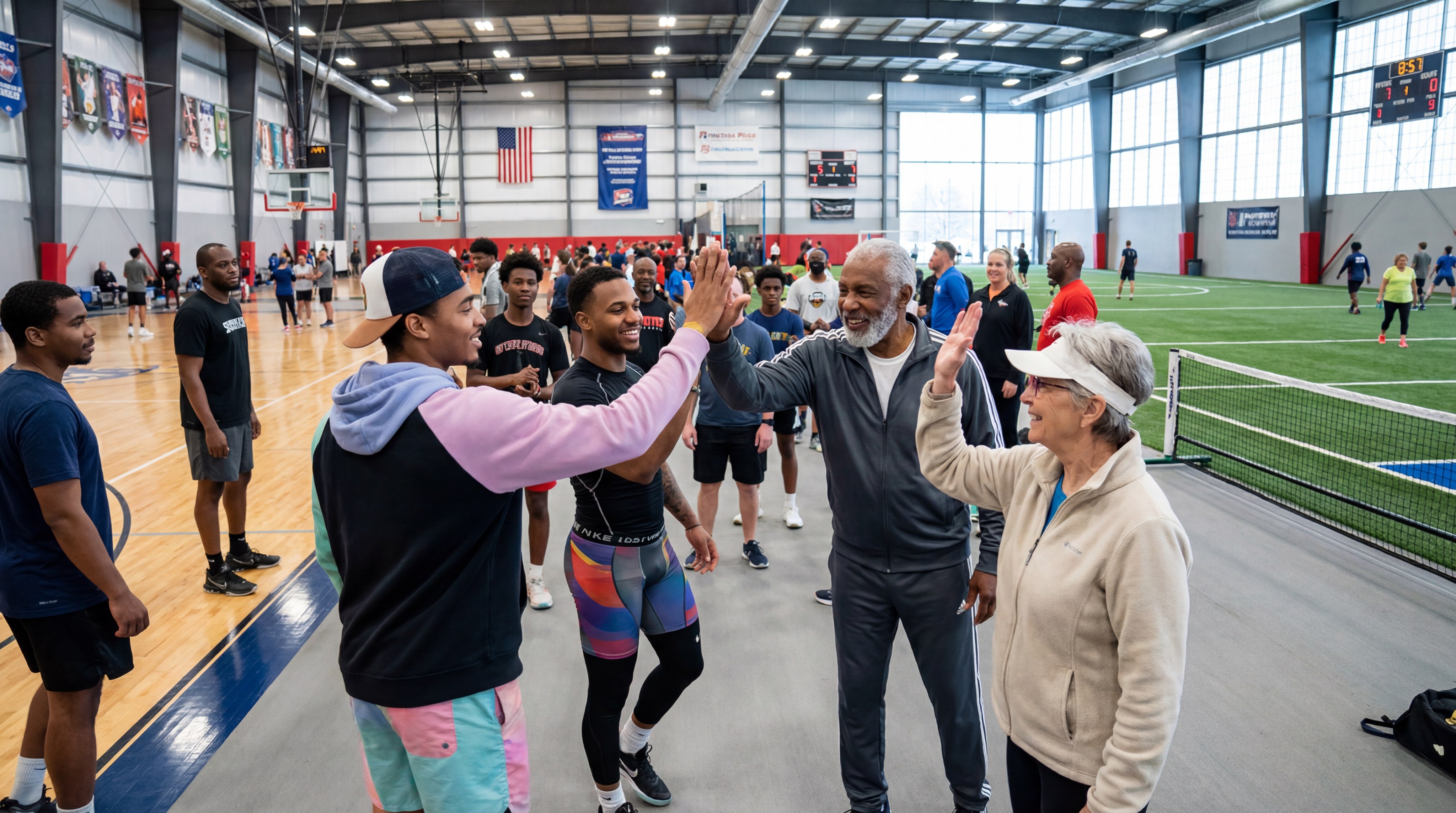
Understanding the user profile is essential for effective marketing and programming. While pickleball has historically skewed older, the demographic is rapidly diversifying, whereas padel often attracts a high-earning corporate crowd.
Is pickleball still just a sport for retirees?
| Audience Segment | Pickleball Interest | Padel Interest |
|---|---|---|
| Seniors (55+) | Very High | Moderate |
| Professionals (25-45) | High | Very High |
| Youth/Schools | Rapidly Growing | Emerging |
Why is padel attracting the “corporate athlete” crowd?
- Key Takeaways: Understanding your local audience’s age and lifestyle is crucial before breaking ground on new courts to ensure maximum utilization.
- Bucket Brigade: Best of all:
- Bulleted List:
- The role of celebrity endorsements (LeBron James, Tom Brady).
- Instagrammable club aesthetics in the padel world.
- Short-form video content showcasing “insane” rallies and trick shots.
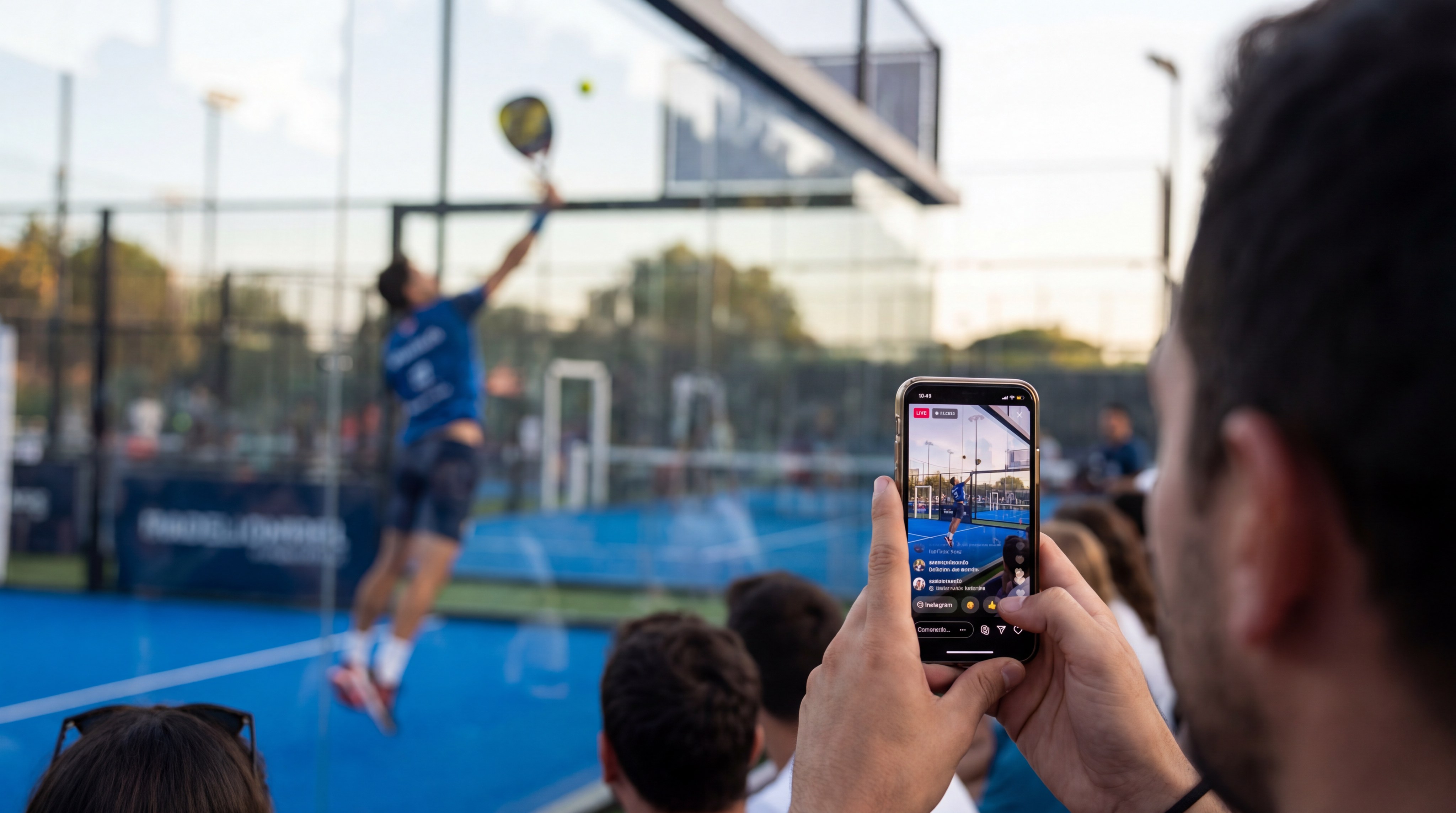
Digital visibility has been a primary catalyst for the exponential growth seen in recent years. Viral content not only introduces the sports to new audiences but also creates a “fear of missing out” that drives court bookings.
| Social Platform | Top Content Type | Impact Level |
|---|---|---|
| Aesthetics/Lifestyle | High | |
| TikTok | Skill Shots/Tutorials | Extreme |
| Networking/Business | Moderate |
Does “lifestyle branding” sell court time?
- Key Takeaways: Digital presence is no longer optional; your courts must be designed to look as good on a smartphone as they do in person to attract influencers.
9. How can clubs sustain pickleball vs padel popularity?
- Bucket Brigade: You see:
- Bulleted List:
- Implementing ladder leagues and round-robin tournaments.
- Creating “Third Space” amenities: cafés, lounges, and pro-shops.
- Developing certification programs for internal coaches.
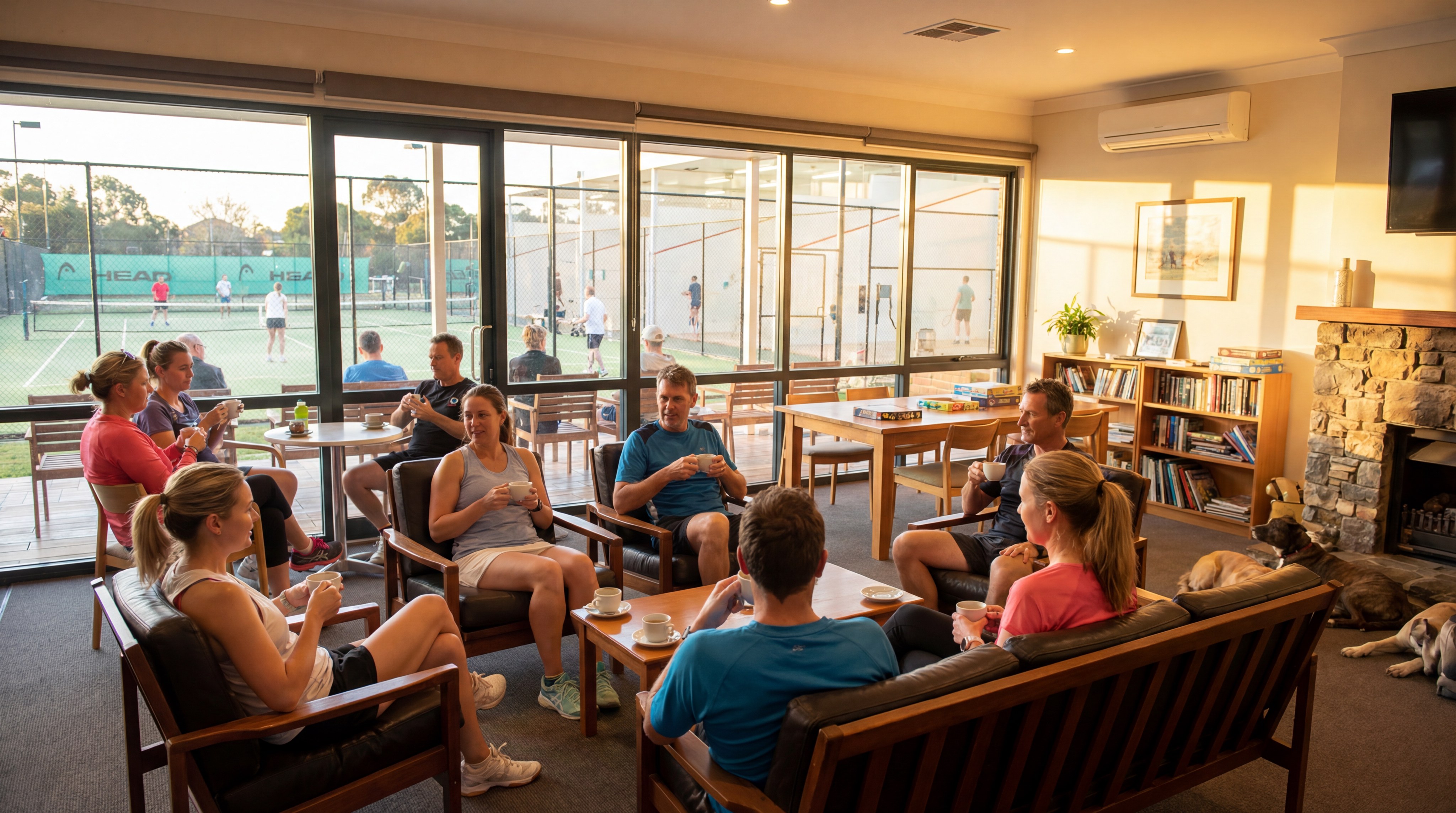
Sustainability in the racket sports industry relies on community density and player retention. A facility that offers more than just court time—providing a social hub and progression paths—will always outperform a “courts-only” model.
Is community building more important than court quality?
| Retention Strategy | Impact on Pickleball | Impact on Padel |
|---|---|---|
| Ladder Leagues | Vital | Highly Effective |
| Pro-Shop Sales | Moderate | High |
| Social Events | Critical | Vital |
What role does professional coaching play in retention?
- Key Takeaways: Long-term success is built on the culture inside the fence, not just the fence itself; focus on building a community of loyal players.
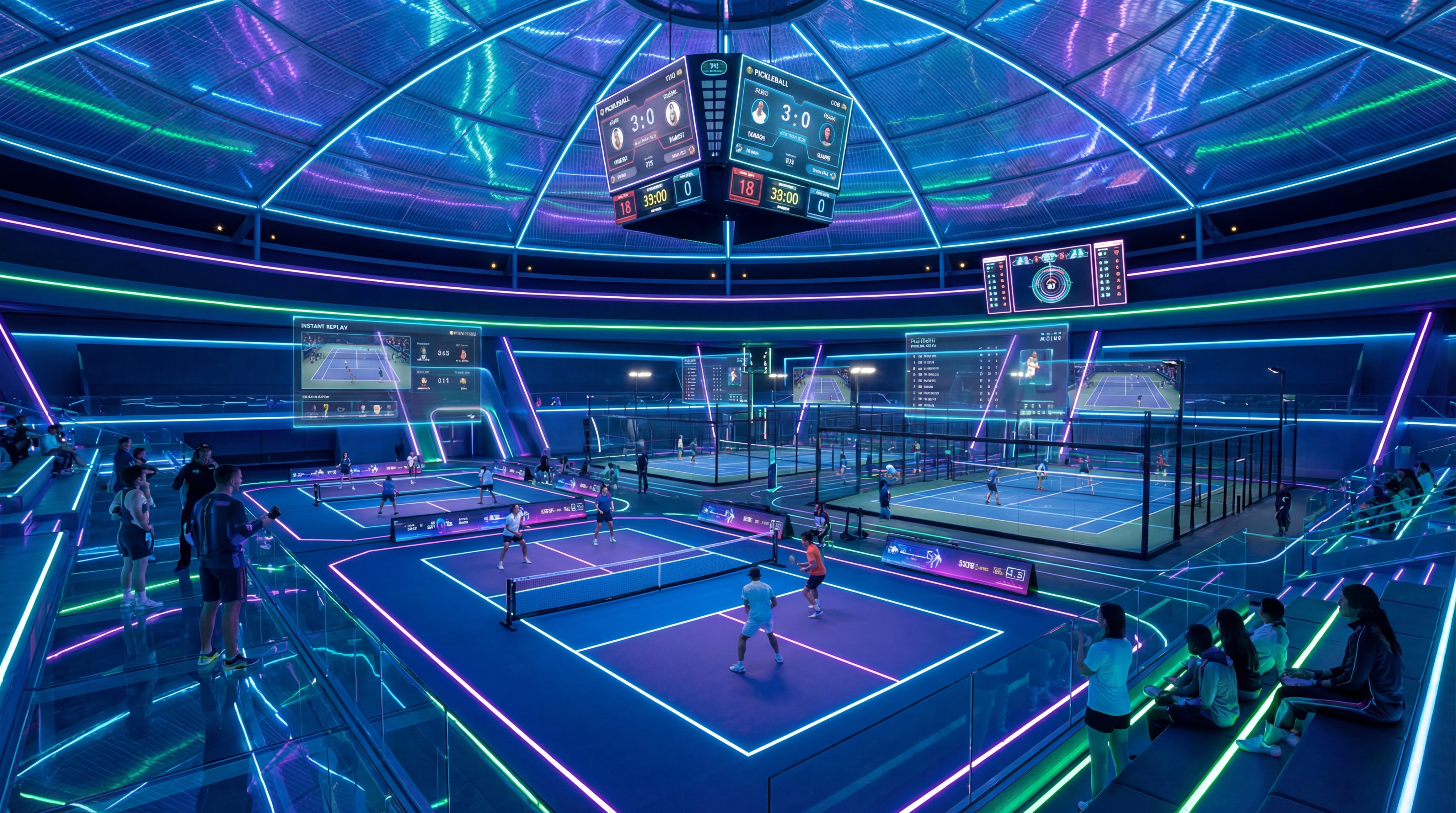
10. What is the future of pickleball vs padel popularity?
- Bucket Brigade: Bottom line:
- Bulleted List:
- The potential for Olympic inclusion for both sports.
- Technological integration: Smart courts and automated booking.
- The “Co-existence Model” where clubs offer both to maximize ROI.
The trajectory for both sports remains aggressively upward. As the industry professionalizes, we expect to see more integrated hubs that cater to both player bases, utilizing shared amenities to maximize land value.
Will one sport eventually dominate the other?
| Forecast (2030) | Pickleball | Padel |
|---|---|---|
| Global Player Base | 50M+ | 40M+ |
| Infrastructure | Ubiquitous | Premium Standard |
| Market Status | Mainstream | Professionalized |
Is the global market reaching a saturation point?
- Key Takeaways: The future isn’t about “either/or”; it’s about “and”—integrated racket hubs are the ultimate evolution of the sports facility industry.
Strategic Conclusion
By identifying the unique drivers behind pickleball vs padel popularity, we have solved the puzzle of where to invest your resources for maximum impact. The decision no longer rests on guesswork, but on a clear understanding of regional trends, demographic needs, and infrastructure costs.
At Superb Padel, we don’t just provide information; we help you execute your vision from the first blueprint to the final match. Our expertise ensures your facility isn’t just a place to play, but a cornerstone of your community’s social fabric.
We envision a world where every community has access to world-class racket sports infrastructure—and we want to help you build it. If you’re ready to transform your facility and capitalize on this growth, please contact us today to start your journey.
FAQ
- What’s the best sport for a small community center?
Pickleball is typically the best fit due to its lower cost of entry, smaller footprint, and ability to be played on existing gym floors. - Can I build a padel court on an existing tennis court?
Yes, but it requires structural assessment. Padel courts need specialized anchoring for the glass walls, which may require a reinforced concrete slab. - What’s the best surface for high-traffic pickleball?
A high-quality acrylic hard-court surface provides the best durability and consistent bounce for high-frequency public use. - Can I host professional tournaments on standard courts?
While “standard” courts work for local play, professional tournaments often require specific runoff space and lighting standards defined by international federations. - What’s the best way to monetize a new racket club?
A hybrid model of court rentals, membership tiers, and a robust “food and beverage” offering consistently yields the highest ROI.