Are you planning to build a sports facility but aren’t sure which court will bring the best return on investment? Finding the right sport is hard when technical specifications and player demands are constantly shifting. Investing in the wrong infrastructure can lead to expensive retrofitting or, worse, an empty club. We provide the comprehensive solution by breaking down the exact requirements for padel vs paddleball to ensure your project succeeds from day one.
What is the main difference in padel vs paddleball?
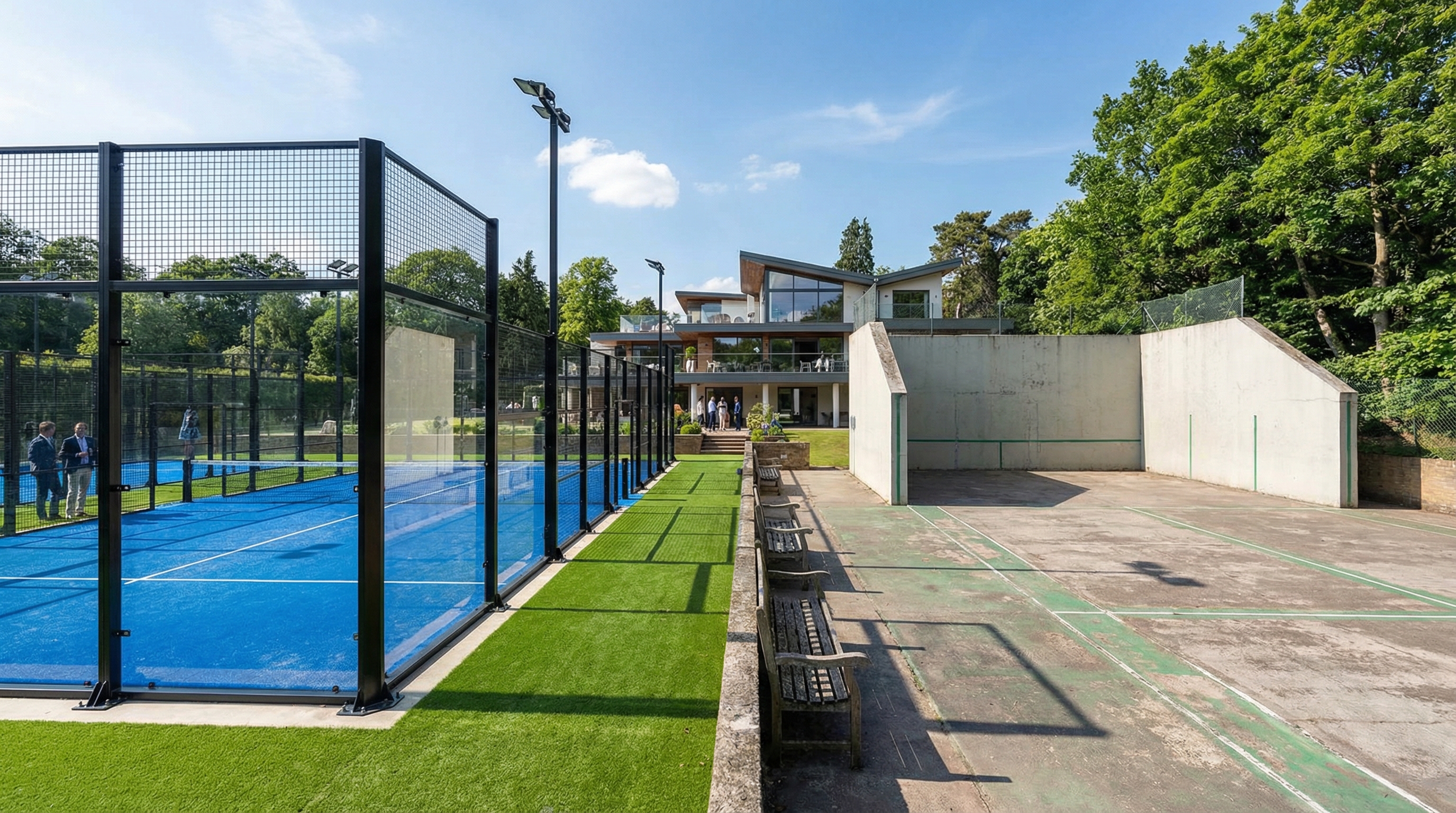
Padel is an enclosed sport played on a court with glass walls and a central net. In contrast, paddleball is traditionally played against one or more solid walls and lacks a net entirely. You will find that the mechanics of play are fundamentally different, as padel relies heavily on the rebound from the back and side enclosures.
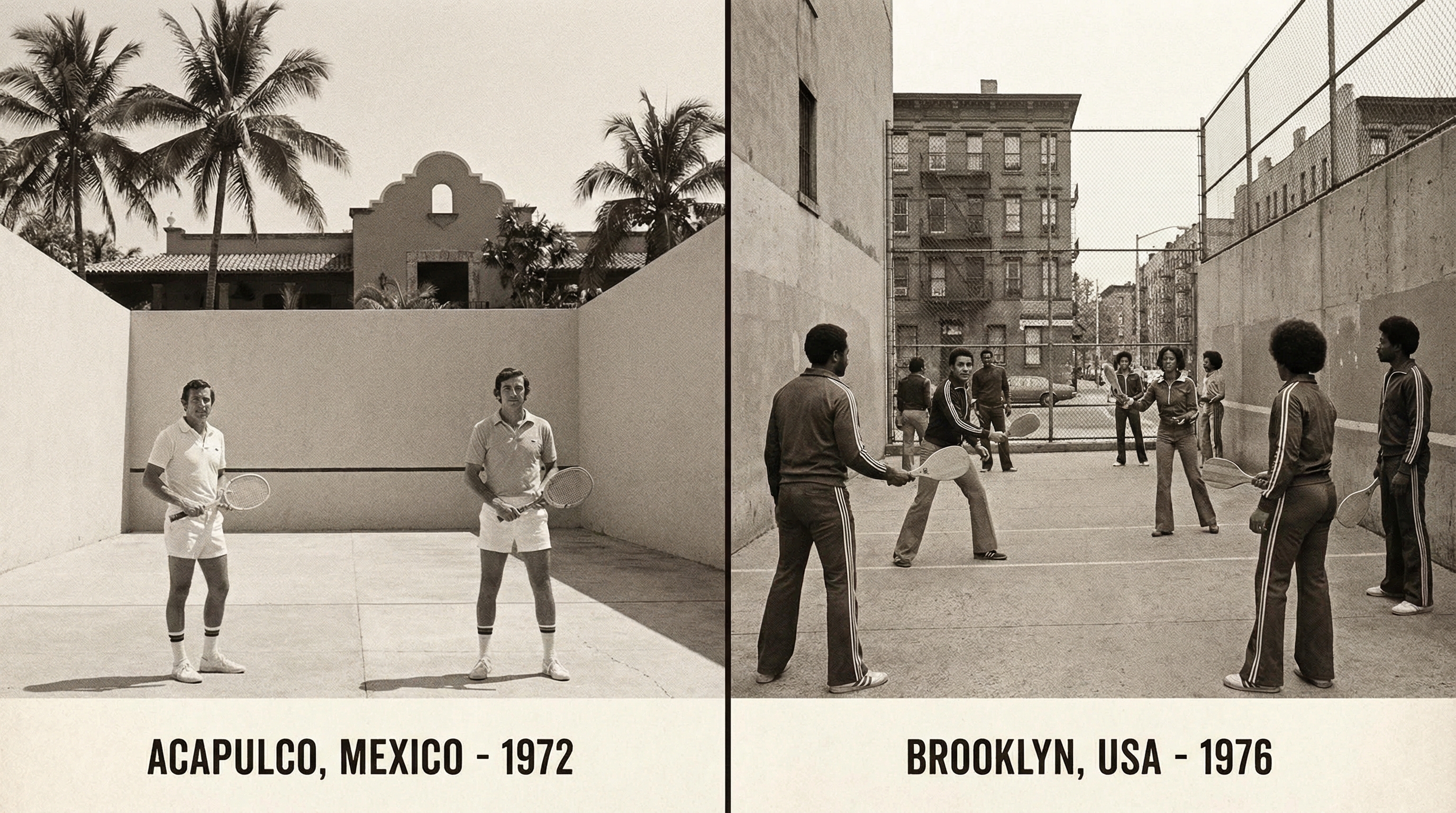
Think about it: while both use solid paddles, the physical environment dictates the strategy. Padel is strictly a doubles game, whereas paddleball can be played as singles or doubles. Understanding this distinction is the first step in deciding which demographic you want to attract to your new facility.
Key Takeaway: Padel is a net-based social sport, while paddleball is a wall-centric game with varied configurations.
| Feature | Padel | Paddleball |
|---|---|---|
| Enclosure | Glass and Mesh | Concrete or Wood Walls |
| Net | Required | Not Used |
| Format | Always Doubles | Singles or Doubles |
Analysis: The structural presence of a net and glass walls defines padel’s higher technical complexity compared to paddleball.
Why is court size vital for padel vs paddleball?
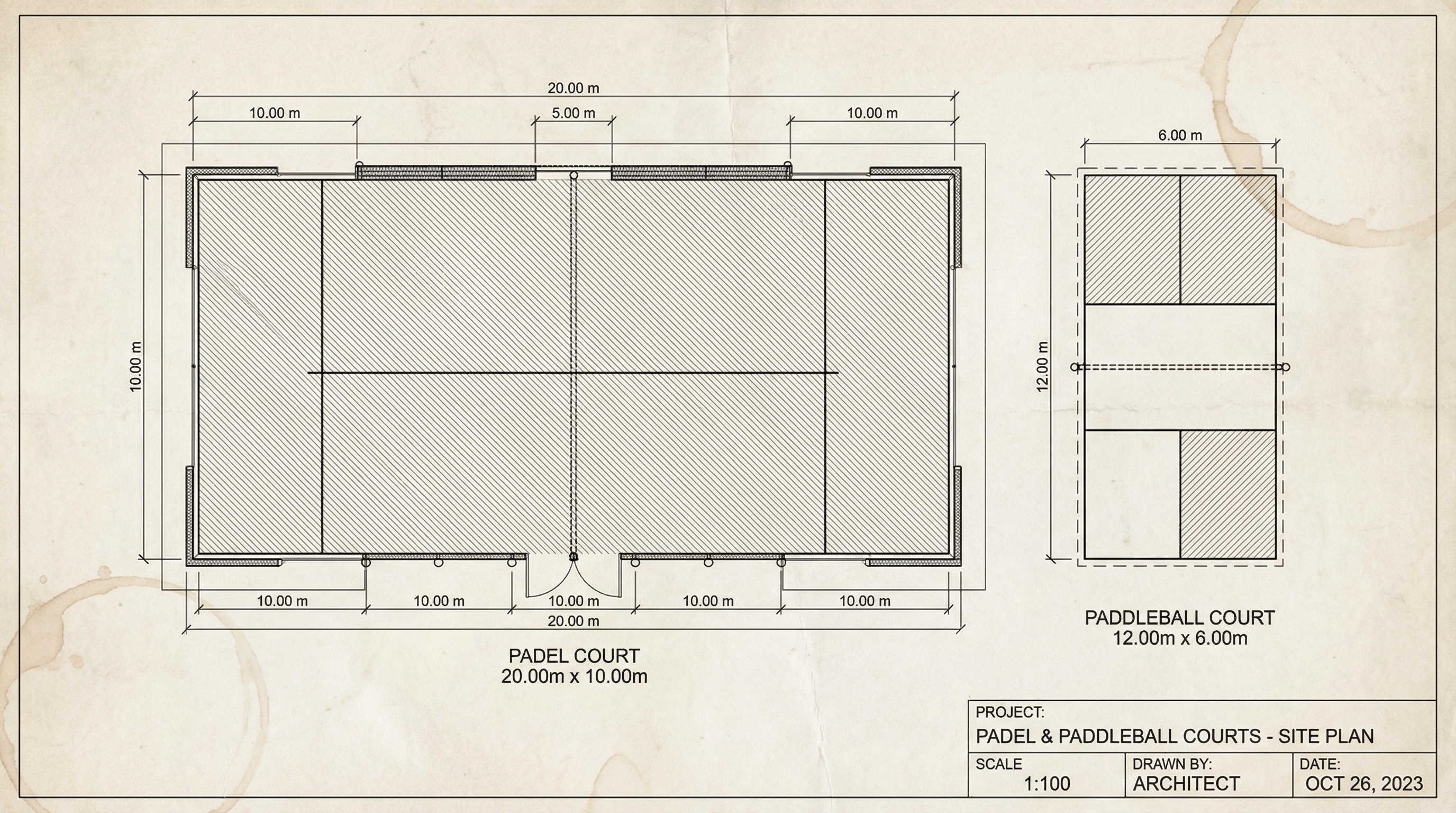
Court size dictates your land use and the number of players you can accommodate per square meter. A padel court construction project requires a precise 10×20 meter footprint. Paddleball courts are generally smaller, often mirroring handball dimensions of approximately 6×10 meters for single-wall setups.
Here is why: the standardized size of padel allows for international play and tournament hosting. If you deviate from these measurements, your facility may not be eligible for official rankings. You must plan for the total area, including the safety zones required outside the court cage.
Key Takeaway: Padel requires a larger, standardized footprint that is double the width of a standard paddleball court.
| Metric | Padel Court | Paddleball Court (Typical) |
|---|---|---|
| Length | 20 Meters | 10 – 12 Meters |
| Width | 10 Meters | 5 – 6 Meters |
| Total Area | 200 sq. meters | ~60 – 72 sq. meters |
Analysis: Padel’s larger footprint requires more land but supports a consistent, professional play experience.
How do walls function in padel vs paddleball play?
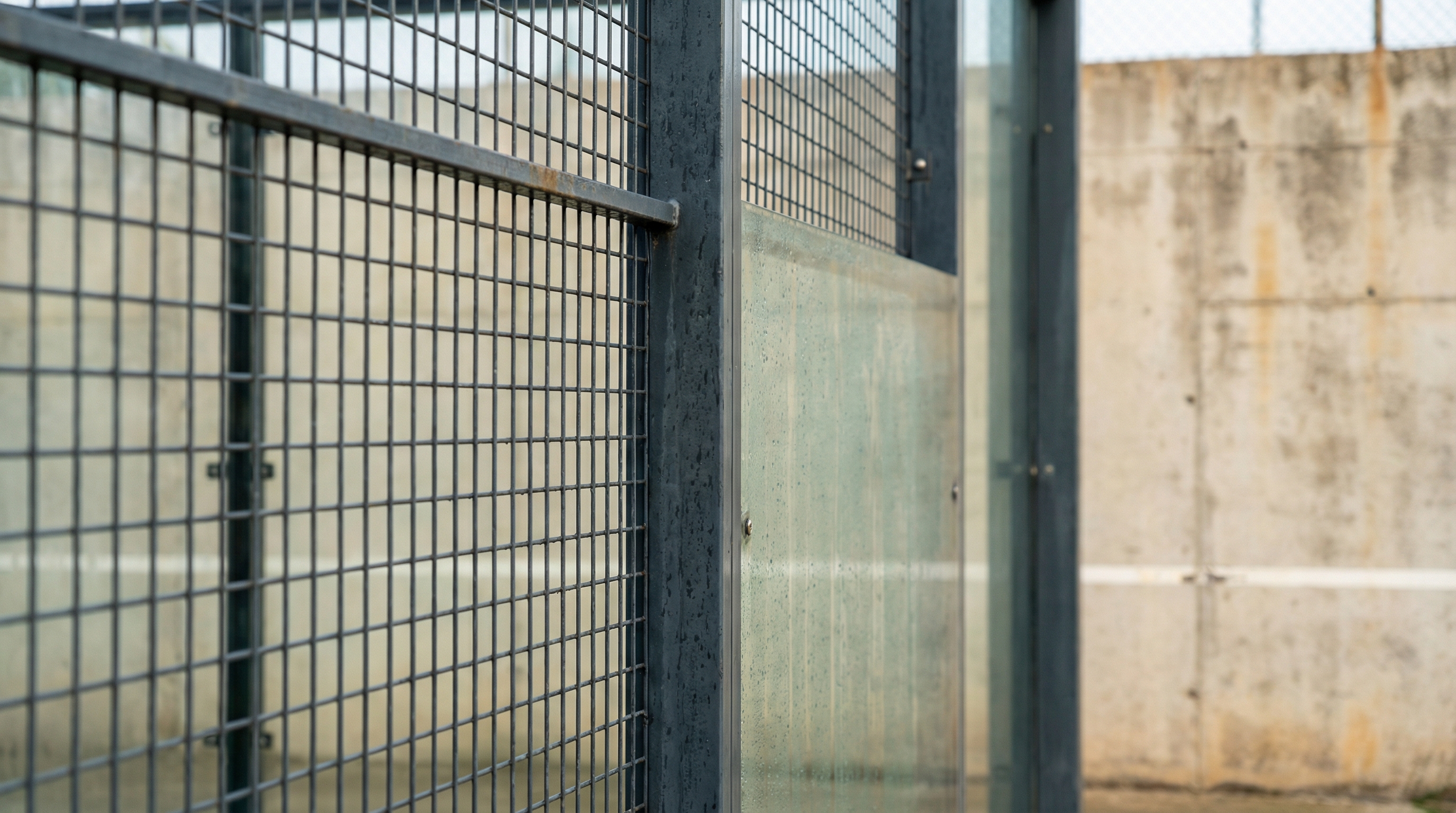
In padel, the walls act as a defensive and strategic secondary surface where the ball remains “in play” after hitting the ground. In paddleball, the wall is the primary target that you must hit to return the ball to your opponent. You will notice that padel walls are a combination of tempered glass and metallic mesh to create different bounce patterns.
But wait, there is more: paddleball walls are typically opaque and built from high-density concrete to ensure a fast, consistent rebound. Padel walls prioritize visibility, allowing spectators to watch the action from any angle. This makes padel a much more spectator-friendly sport for commercial clubs and lounges.
Key Takeaway: Padel walls are strategic “out-of-bounce” tools, while paddleball walls are the primary field of play.
| Wall Type | Padel Function | Paddleball Function |
|---|---|---|
| Glass | Defensive Play / Visibility | Rarely Used |
| Mesh | Unpredictable Rebound | Not Applicable |
| Concrete | Not Standard | Primary Impact Surface |
Analysis: The move from concrete to glass creates a social, high-visibility environment that defines the modern padel experience.
What equipment is used in padel vs paddleball matches?
Padel equipment consists of a thick, perforated composite paddle and a low-compression ball similar to a tennis ball. Paddleball uses a thinner, often wooden or graphite paddle and a high-bounce rubber ball. It is essential to realize that padel court dimensions are specifically tuned to the physics of these low-pressure balls.
Think about it: using the wrong ball on a court can damage the surfaces or the fencing. You must provide the correct equipment if you plan to offer rentals at your facility. The perforated design of a padel racquet is crucial for reducing wind resistance and increasing maneuverability for the player.
Key Takeaway: Padel uses specialized composite paddles and pressurized balls, whereas paddleball relies on solid wood and high-bounce rubber.
| Equipment | Padel | Paddleball |
|---|---|---|
| Paddle Material | Carbon/Glass Fiber + EVA | Wood, Graphite, or Plastic |
| Paddle Surface | Perforated (Holes) | Solid |
| Ball Type | Pressurized (Low) | High-Bounce Rubber |
Analysis: The specialized nature of padel equipment requires higher-quality manufacturing and consistent replacement schedules.
Is the scoring unique in padel vs paddleball games?
Padel adopts the traditional tennis scoring system of 15, 30, and 40, usually playing best-of-three sets. Paddleball scoring is simpler, typically playing to a set number of points like 15 or 21. Here is why: the tennis-style scoring in padel creates high-tension moments that are familiar to racquet sport enthusiasts worldwide.
But wait, there is more: the “Golden Point” rule is often used in padel to speed up games and increase excitement for television and spectators. Paddleball matches often move at a faster, more continuous pace without the breaks associated with changing sets. You should consider which style of match flow your local community prefers before building.
Key Takeaway: Padel uses tennis-based scoring for drama, while paddleball uses a straightforward point-tally system for speed.
| Scoring System | Padel | Paddleball |
|---|---|---|
| Point Sequence | 15, 30, 40, Game | 1, 2, 3… to 15/21 |
| Winning Set | Best of 3 Sets | Single Game Rounds |
| Tie-Breaker | Standard Tennis Style | Win by 2 Points |
Analysis: Padel’s scoring structure encourages longer dwell times at your facility, potentially increasing secondary revenue from food and beverage.
How to start building for padel vs paddleball needs?
You must start with a solid foundation, usually a reinforced concrete slab, to support the heavy glass panels of a padel court. Consulting a professional padel court manufacturer is the most efficient way to ensure your sub-base meets the necessary drainage and levelness requirements. Think about it: a 1% slope error can cause water to pool on the turf and ruin the playing experience.
Here is why: the engineering of a padel cage involves wind-load calculations that are much more complex than building a simple paddleball wall. You need to secure permits that specifically cover the structural height of the fencing and lighting poles. Start by defining your budget and the number of courts your land can realistically support.
Key Takeaway: Padel construction requires specialized engineering and a high-precision sub-base compared to standard paddleball walls.
| Build Step | Padel Requirement | Paddleball Requirement |
|---|---|---|
| Foundation | Reinforced Concrete Slab | Concrete or Asphalt |
| Structure | Steel Frame + Glass | Masonry or Wood Wall |
| Specialist | Required for Glass/Turf | General Contractor |
Analysis: The complexity of padel installation demands expert oversight to ensure long-term structural safety and warranty compliance.
What materials work for padel vs paddleball surfaces?
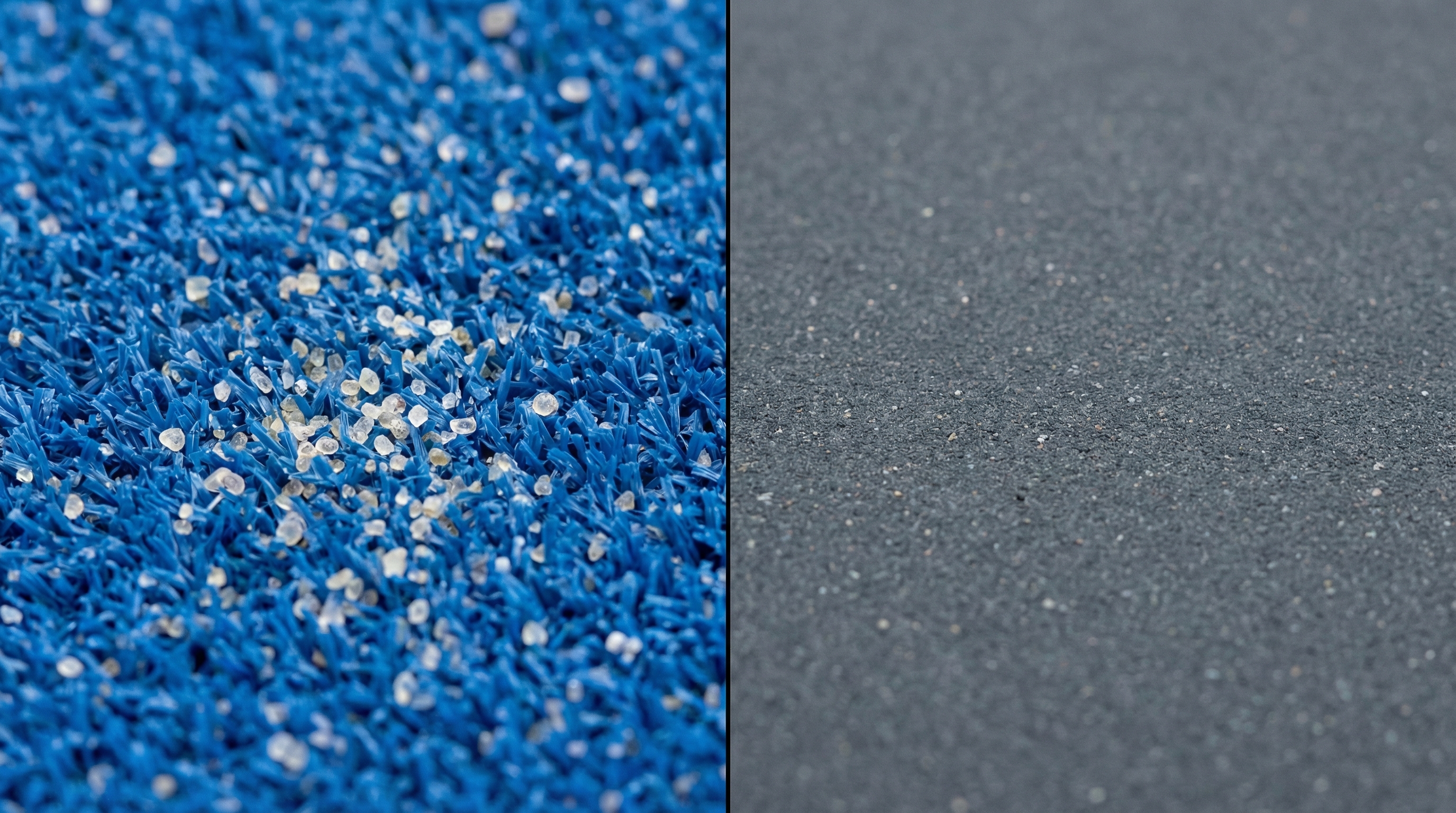
Padel courts almost exclusively use artificial turf filled with fine silica sand to allow for controlled sliding and joint protection. Paddleball is traditionally played on hard surfaces like concrete, which allows the small rubber ball to bounce at high speeds. You will notice that the turf in padel reduces the impact on players’ knees, making it popular for all age groups.
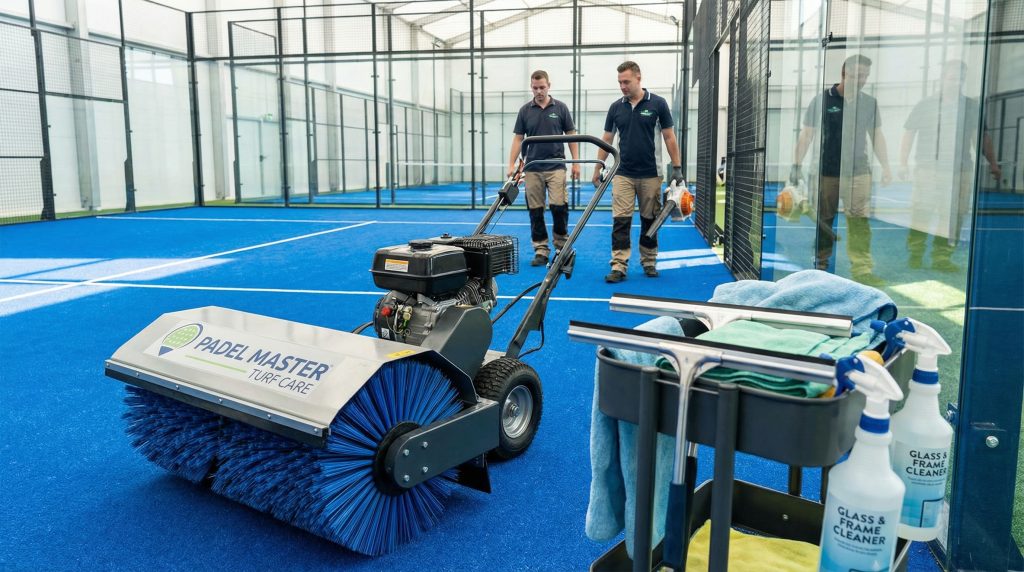
Think about it: the choice of surface material impacts your maintenance schedule and the “speed” of the game. Hard courts are easier to clean but can be punishing on the body over long sessions. Synthetic turf requires specialized brushing to keep the sand distributed evenly across the fibers.
Key Takeaway: Padel uses joint-friendly artificial turf, while paddleball relies on the high-speed bounce of hard concrete.
| Surface Material | Padel Usage | Paddleball Usage |
|---|---|---|
| Artificial Turf | Primary Standard | Rarely Used |
| Concrete/Asphalt | Sub-base Only | Primary Surface |
| Acrylic Coating | Not Standard | Common for Color/Grip |
Analysis: Padel’s turf surface is a major selling point for older demographics and professional athletes looking to avoid injury.
Does lighting differ for padel vs paddleball courts?
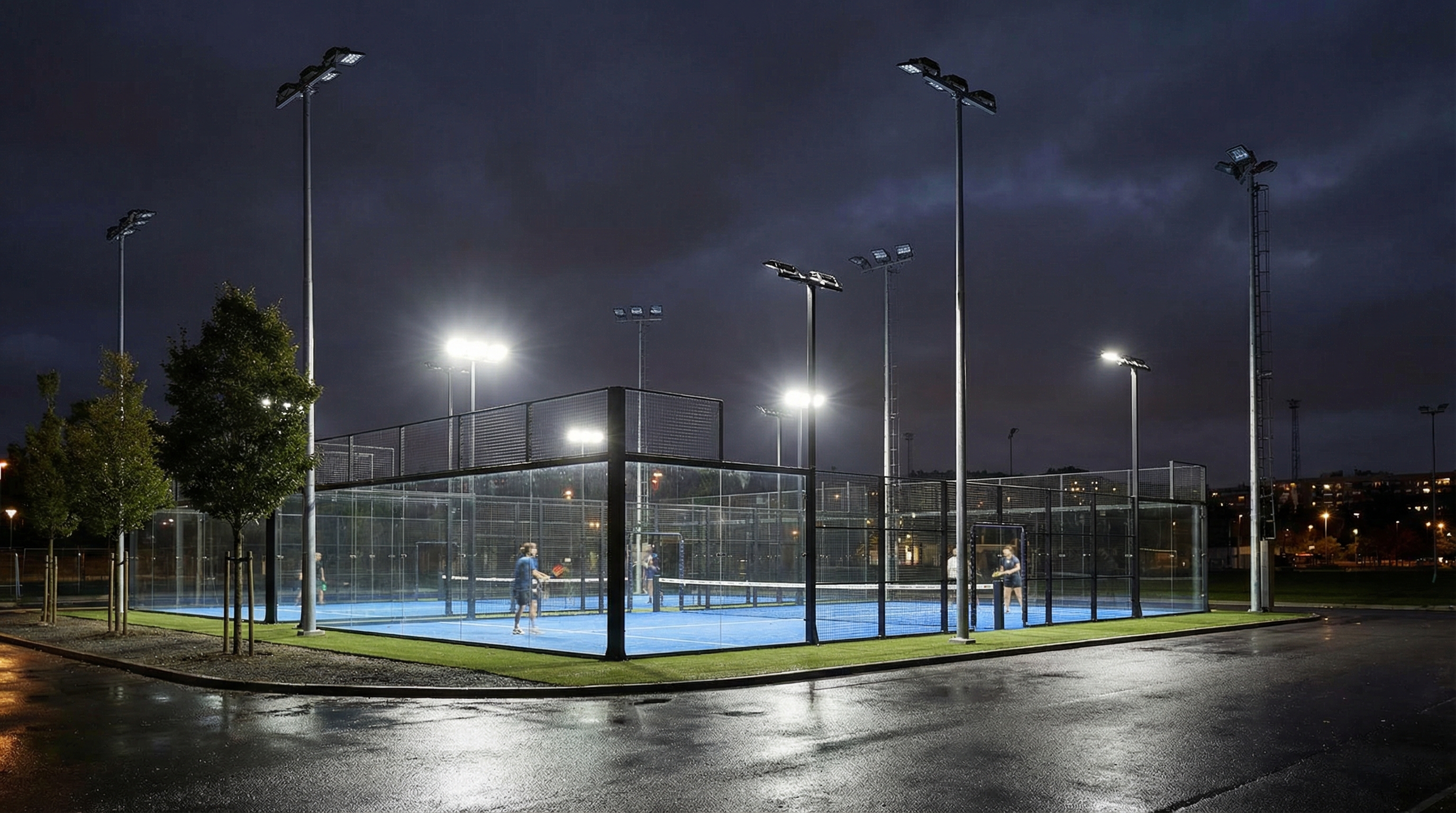
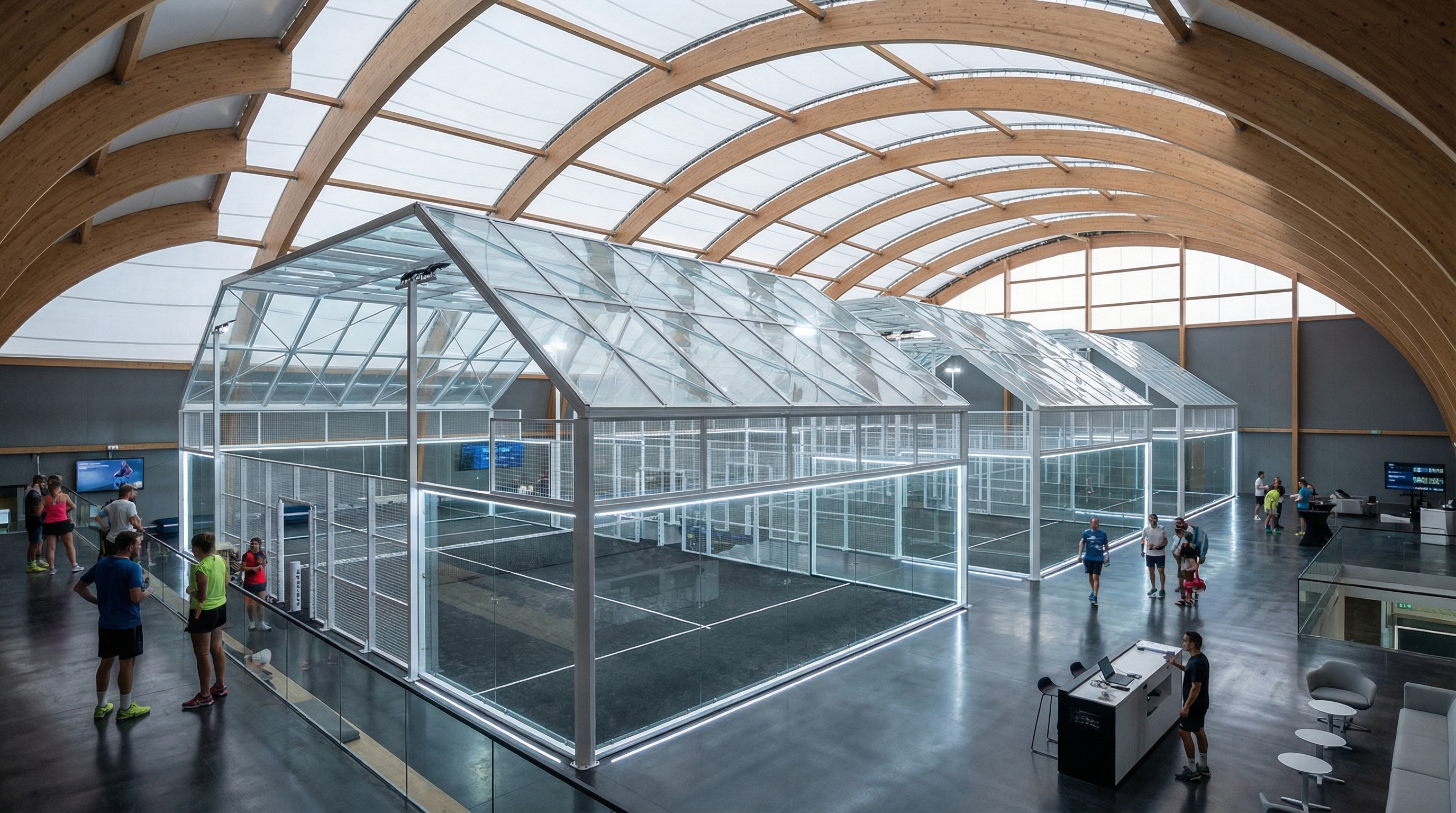
Standard park lighting is often insufficient for the high-speed, high-visibility needs of a padel court. You should install specialized padel court lighting that features anti-glare LED technology to prevent players from being blinded during overhead shots. Here is why: the reflection of lights on the glass walls can create “ghost balls” if the fixtures aren’t positioned correctly.
But wait, there is more: paddleball lighting is typically simpler since there are no glass reflections to manage. You must ensure that your padel court has a uniform 500-750 lux level for professional play. Proper lighting extends your operating hours and maximizes the revenue potential of your facility.
Key Takeaway: Padel requires anti-glare, high-uniformity LED systems to manage glass reflections and overhead visibility.
| Lighting Feature | Padel Standard | Paddleball Standard |
|---|---|---|
| Fixture Type | Specialized Anti-Glare LED | Standard LED Floodlights |
| Lux Level | 500 – 750 Lux | 300 – 500 Lux |
| Pole Height | 6 Meters | 4 – 6 Meters |
Analysis: Investing in high-end lighting for padel is non-negotiable for commercial success and player safety.
What is the total cost for padel vs paddleball builds?
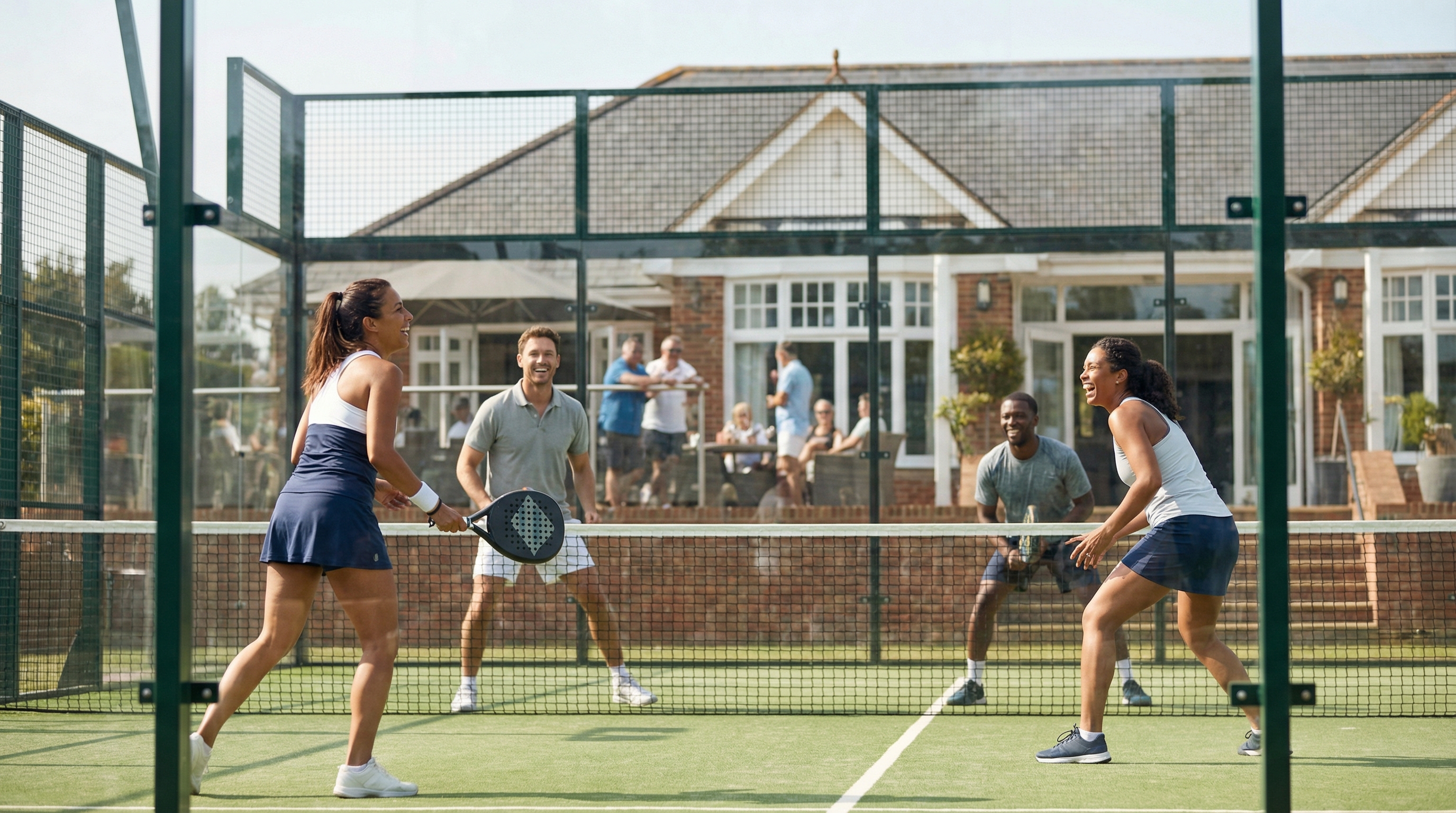
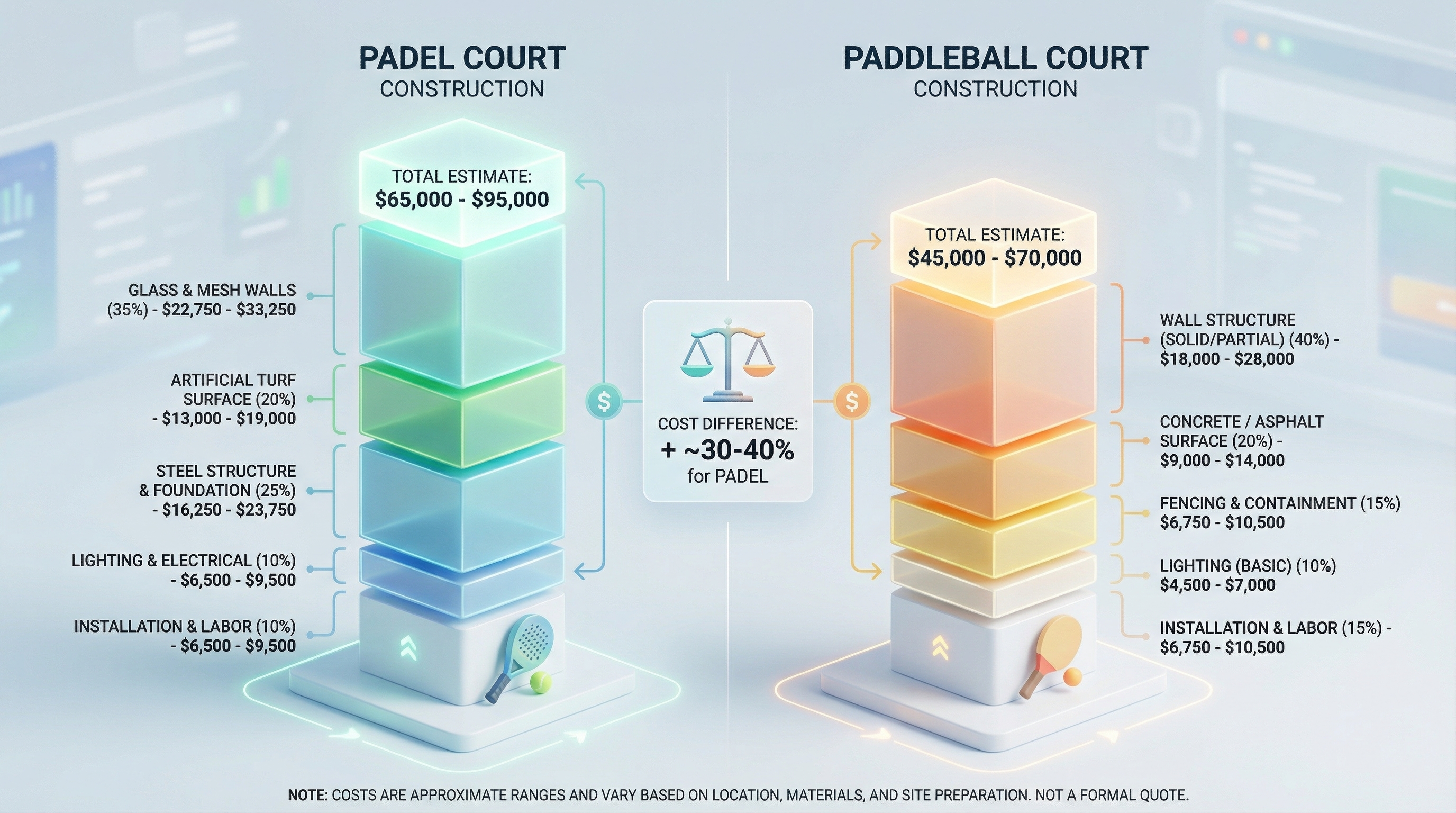
A padel court is a more significant investment, typically ranging from $25,000 to $50,000 depending on the glass and turf quality. Paddleball courts are generally cheaper to build because they lack the complex steel and glass enclosure. But wait, there is more: the higher social demand for padel often results in a much faster ROI for club owners.
Think about it: a padel court can accommodate four players in a smaller space than a tennis court, doubling your hourly revenue. You must factor in shipping, foundation work, and expert installation when calculating your total project cost. While the entry price is higher, the premium membership fees padel commands often offset the initial spend.
Key Takeaway: Padel has higher upfront costs but offers superior commercial scaling and faster ROI through higher occupancy.
| Cost Component | Padel | Paddleball |
|---|---|---|
| Structure Materials | High (Steel/Glass) | Low (Concrete/Wood) |
| Installation Labor | Specialized Team | General Labor |
| Maintenance | Regular Sand/Glass Care | Periodic Resurfacing |
Analysis: Padel functions as a premium amenity that justifies its higher construction costs through increased player engagement.
How to maintain a court for padel vs paddleball use?
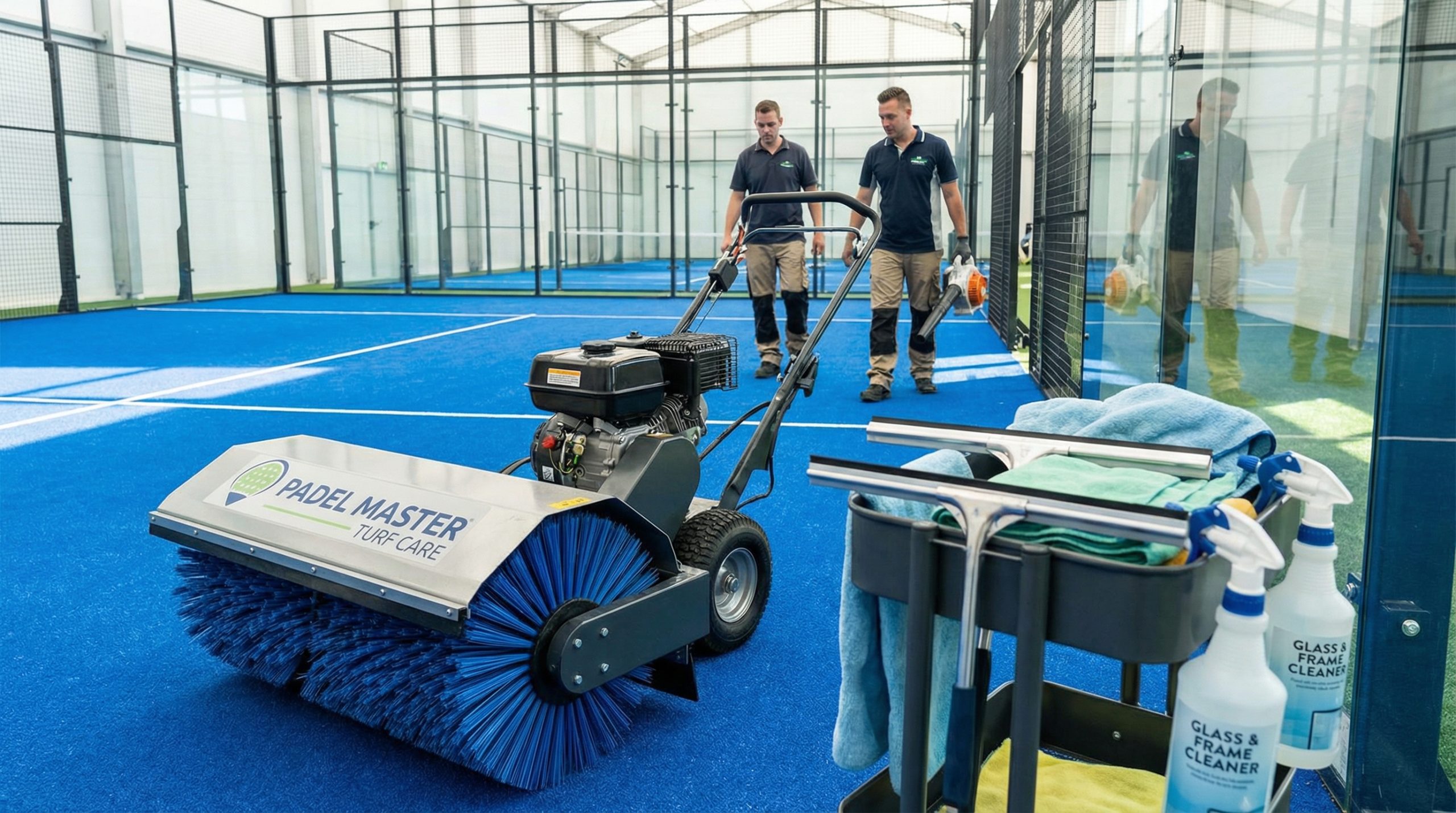
Maintaining a padel court involves regular brushing of the synthetic turf to keep the sand infill level and prevent fibers from matting. You must also clean the glass walls weekly to maintain the “premium” look and visibility players expect. Here is why: neglected turf becomes slippery and dangerous, while dirty glass ruins the spectator experience.
Paddleball courts require less frequent daily care but need periodic repainting and crack repair to keep the surface fast and true. You should inspect the tension of the padel net and the integrity of the mesh panels every month. Consistent maintenance protects your investment and ensures your facility remains the top choice in your area.
Key Takeaway: Padel requires frequent, low-intensity maintenance, while paddleball needs infrequent but more intensive surface repairs.
| Task | Padel Frequency | Paddleball Frequency |
|---|---|---|
| Surface Brushing | Weekly | Not Required |
| Glass Cleaning | Weekly | Not Applicable |
| Resurfacing | Every 5-7 Years (Turf) | Every 3-5 Years (Paint) |
Analysis: A well-maintained padel court preserves the aesthetic appeal that attracts high-end clientele to your sports club.
*
We understand that choosing between padel vs paddleball is a significant strategic decision for your business. By focusing on high-quality materials and professional installation, you can build a facility that thrives for decades. Whether you need technical blueprints or expert construction advice, we are here to help you every step of the way. If you are ready to start your project, contact us today for a custom consultation.
FAQ
Can I build a padel court on an existing tennis court?
Yes, you can typically fit two padel courts on the footprint of one tennis court. This is an excellent way to maximize player density and increase your hourly revenue per square foot.
What’s the best way to choose between glass and wall materials?
If your goal is a commercial club, tempered glass is the standard because it allows for spectators and social interaction. For public parks with limited maintenance budgets, concrete walls for paddleball might be more practical.
How do I prevent the glass from breaking during play?
You must ensure the court uses 10mm or 12mm tempered safety glass that meets international standards. Proper installation by a certified manufacturer ensures the glass can withstand high-velocity impacts without shattering.
Can I play paddleball on a padel court?
Technically you can hit a ball against the glass, but it is not recommended. The glass is not designed for the specific impact of heavy paddleball equipment, and the net would interfere with the traditional game flow.
What’s the best surface for drainage in outdoor courts?
A porous concrete or asphalt sub-base is essential for outdoor padel courts. This allows rainwater to pass through the artificial turf and the slab, ensuring the court is playable shortly after a storm.