What exactly defines a professional padel court?
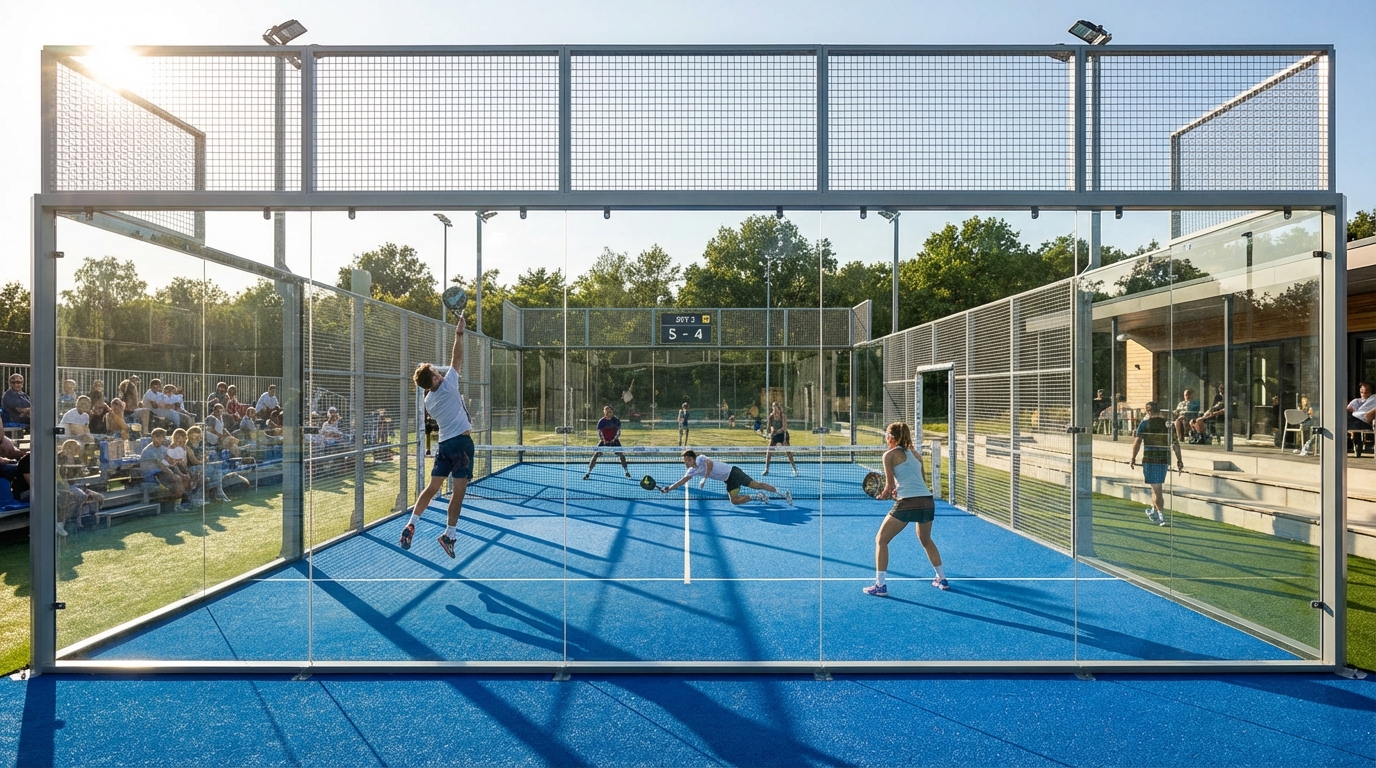
A professional padel court is defined by its enclosed structure where the walls are an active part of the game. Unlike tennis, this environment requires high-impact tempered glass and a specific type of synthetic grass that facilitates a unique ball bounce.
Think about it: the synergy between the frame and the surface is what creates the “padel experience.” You must ensure every component meets international federation standards to provide a safe, competitive environment for your users.
The Structural Components
The cage is the heart of the facility, consisting of hot-dip galvanized steel frames and electro-welded mesh. These components must be corrosion-resistant to handle high-frequency use and diverse weather conditions.
Here is the deal:
- Steel frames provide the necessary rigidity for the glass panels.
- Metallic mesh allows for air circulation while keeping the ball in play.
- EPDM rubber gaskets are essential between the steel and glass to absorb impact.
Glass and Lighting Standards
High-quality tempered glass, usually 10mm or 12mm thick, is non-negotiable for safety and rebound consistency. Your lighting system should offer uniform horizontal and vertical illumination to prevent shadows during fast-paced matches.
Key Takeaway: Using certified materials ensures that your facility provides professional-grade playability while minimizing the risk of structural failure.
| Component | Standard Specification | Primary Benefit |
|---|---|---|
| Enclosure Frame | Hot-dip Galvanized Steel | 20-year corrosion resistance |
| Wall Material | 12mm Tempered Safety Glass | Consistent ball rebound |
| Lighting | 8x200W LED Fixtures | Professional visibility |
This structural foundation is the primary variable in determining the long-term success of your sports venue.
How do you begin padel court construction correctly?
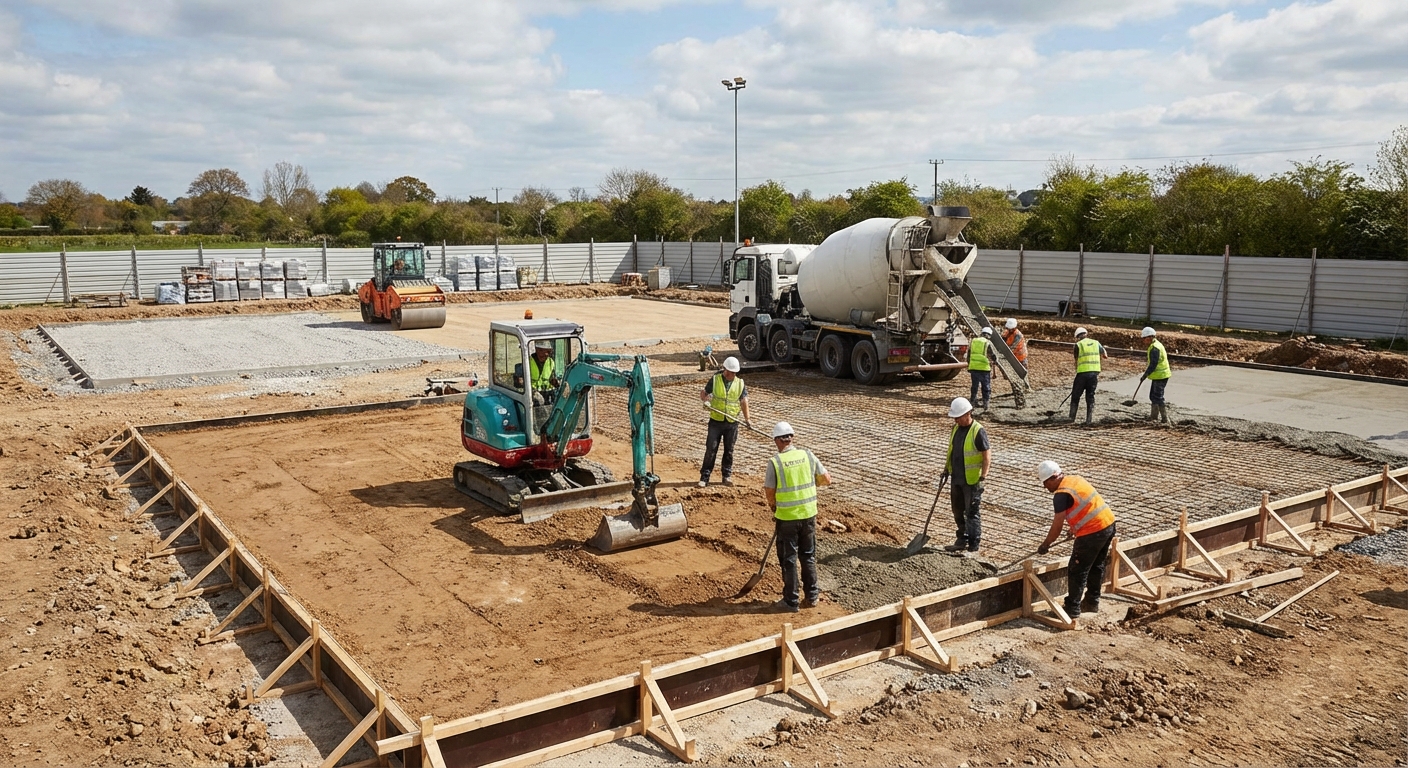
Padel court construction begins with a geo-technical survey and the preparation of a perfectly level reinforced concrete slab. You cannot skip this stage, as a sloping or uneven foundation will lead to pooling water and inconsistent turf performance.
The ground must be cleared of all vegetation and compacted to create a stable base for the heavy materials. If you are building outdoors, a slight slope of 0.5% to 1% is typically engineered into the slab to facilitate efficient drainage.
Excavation and Sub-base Preparation
Before pouring concrete, you need a sub-base of crushed stone and gravel to provide adequate drainage. This layer prevents the ground from shifting under the weight of the court and helps manage moisture levels.
Look:
- Excavate at least 20cm of topsoil.
- Layer 10-15cm of crushed stone for stability.
- Install a moisture barrier to protect the concrete slab.
Pouring the Concrete Foundation
A reinforced concrete slab of 15cm to 20cm thickness is the standard for commercial installations. The perimeter must be specifically reinforced with a ring beam to support the concentrated weight of the glass panels and steel pillars.
Key Takeaway: A precision-engineered foundation prevents surface cracks and ensures that the glass walls remain perfectly aligned over decades of use.
| Phase | Action | Requirement |
|---|---|---|
| Surveying | Leveling and orientation check | 100% flat within tolerances |
| Base Layer | Crushed stone compaction | High-density stability |
| Foundation | Reinforced concrete pour | 3,000 PSI minimum strength |
Once the slab is cured, you move into the specialized design phase that defines the court’s aesthetic.
What are the essential padel court design factors?
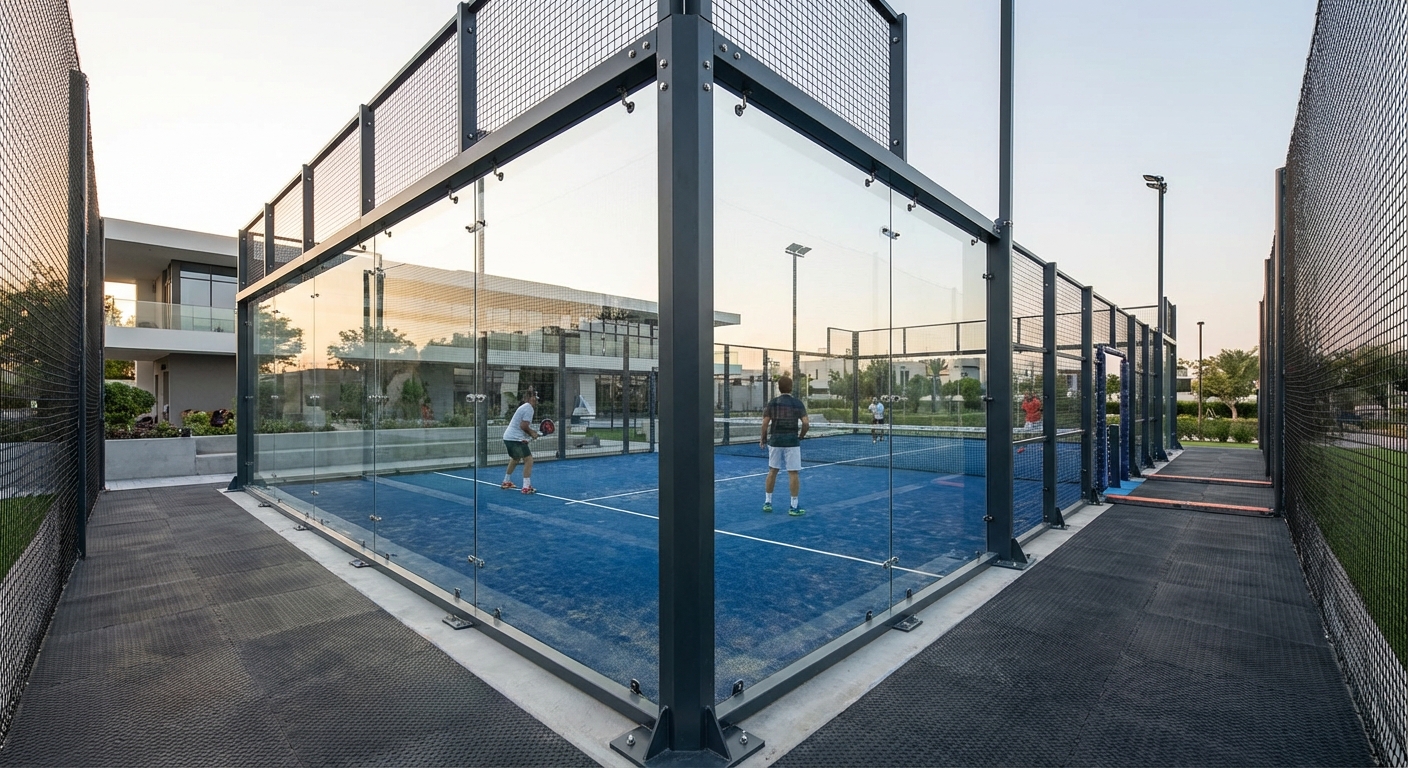
Essential design factors for a padel court include the choice between a classic frame or a panoramic view, and the integration of professional safety zones. You must decide whether your facility targets casual players or high-level tournaments, as this dictates the structural layout.
Designing with the user in mind means considering spectator visibility and player safety. A well-designed court not only looks premium but also reduces the physical strain on players through optimized material selection.
Choosing Between Panoramic and Standard
A panoramic design removes the vertical pillars at the back of the court to provide an unobstructed view for spectators. This is the gold standard for luxury clubs and televised events where visibility is a priority.
The best part?
- Panoramic glass offers a “stadium feel” for users.
- Standard frames are more cost-effective for high-density clubs.
- Modular designs allow for faster installation on-site.
Safety and Access Design
Designers must account for access doors and the “out-of-court” play zone required for professional matches. This requires at least 2 meters of clear space around the perimeter to allow players to safely retrieve balls.
Key Takeaway: Thoughtful design increases the commercial value of your court by making it suitable for both high-level competition and social play.
| Design Type | Best For | Visual Impact |
|---|---|---|
| Panoramic | Professional Clubs | Maximum |
| Standard | Residential/Schools | Moderate |
| Modular | Temporary Facilities | Low |
Strategic design choices ensure that your facility meets the specific needs of your target demographic.
Which padel court surfacing materials perform best?
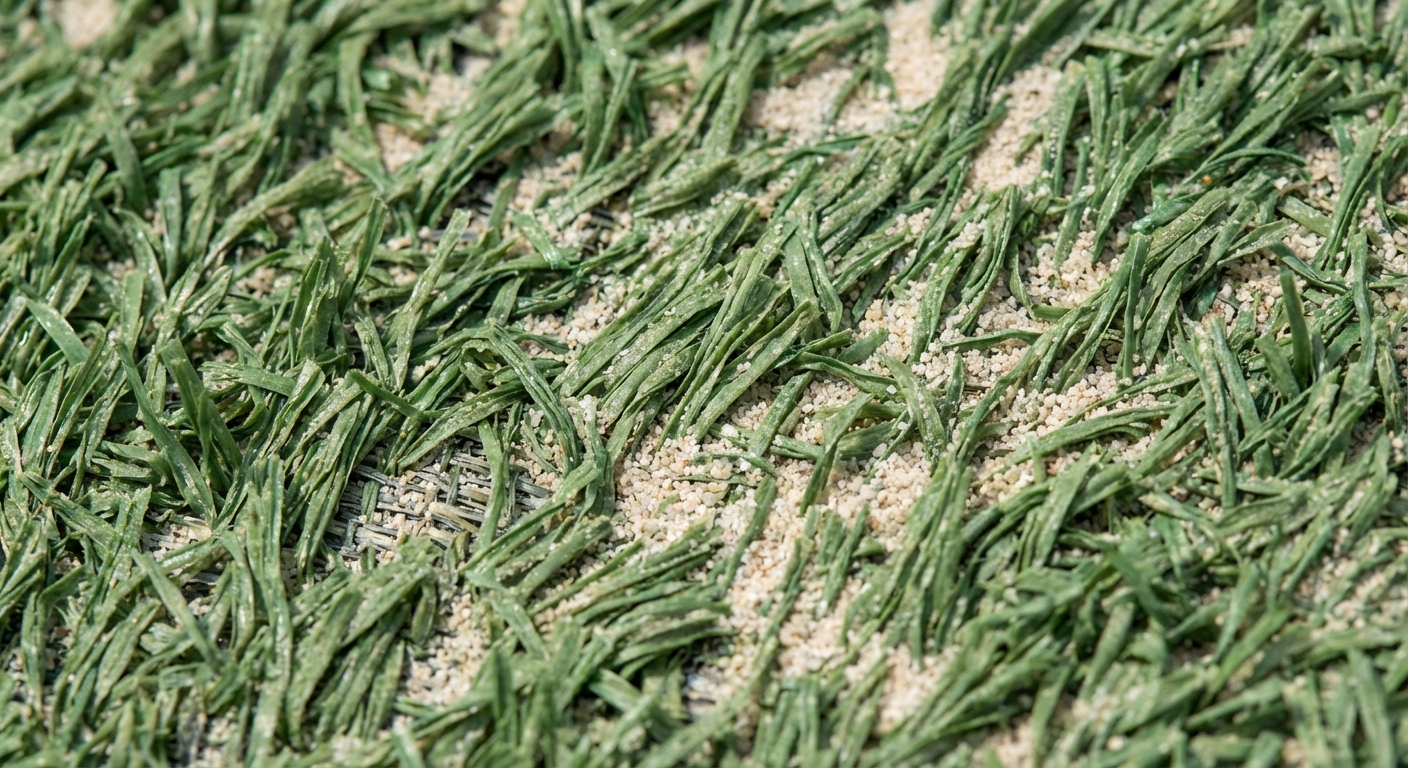
High-density artificial turf with silica sand infill is the top-performing surface for any professional padel court. You should choose a monofilament or textured fiber that resists wear and tear while providing the right balance of grip and slide.
The surface is where the most physical interaction happens, so choosing a sub-standard material can lead to joint injuries for your players. A high-quality turf ensures a consistent ball bounce and predictable player movement.
Artificial Turf Selection
Textured turf, often called “curly grass,” is becoming the industry favorite because it holds the sand infill more uniformly. This results in less maintenance and a much more professional appearance for your facility.
But wait:
- Monofilament fibers offer high durability for heavy use.
- Sand infill must be kiln-dried silica for the best performance.
- Turf density should exceed 50,000 stitches per square meter.
Drainage and Adhesion
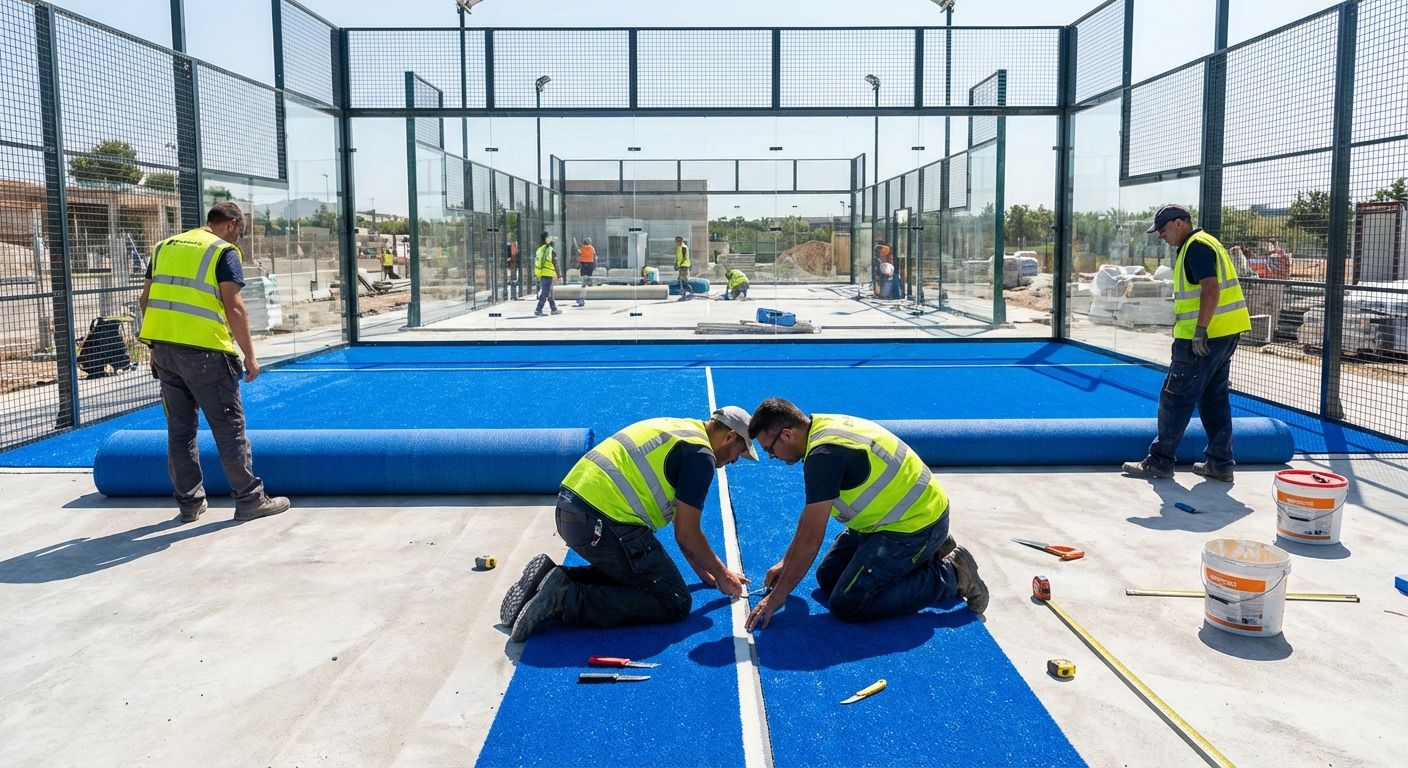
The turf must be bonded to the concrete base using high-strength polyurethane adhesive and specialized seaming tape. Proper installation ensures that there are no wrinkles or loose edges that could cause a tripping hazard.
Key Takeaway: Investing in premium synthetic grass extends the life of your surface and significantly improves the player experience.
| Turf Type | Maintenance Level | Playability |
|---|---|---|
| Textured (Curly) | Low | Professional |
| Monofilament | Medium | Club Standard |
| Fibrillated | High | Entry Level |
The choice of surface directly impacts how often your players return to your facility.
What elements impact the total padel court cost?
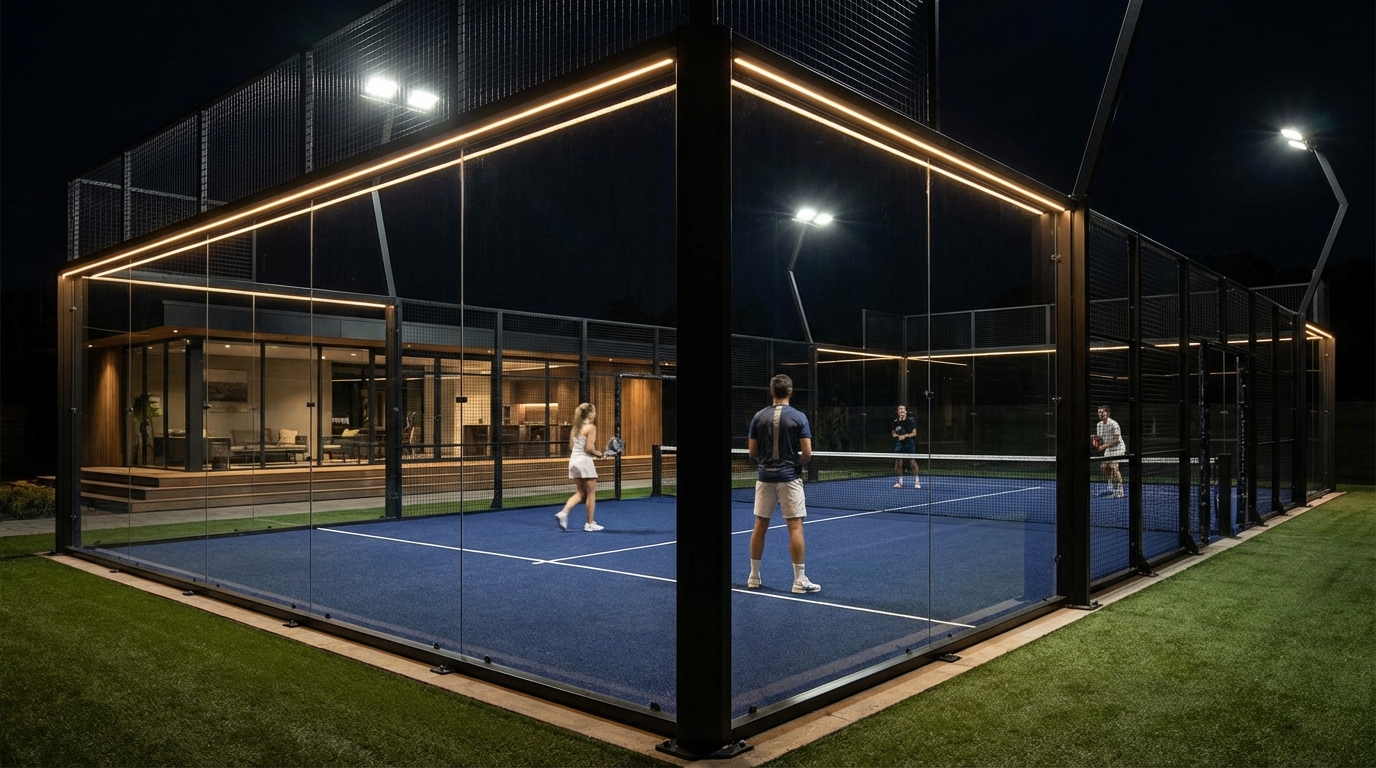
Total padel court costs are primarily driven by material quality, the complexity of site preparation, and the choice of premium features like padel court lighting. You must balance your initial capital expenditure with the potential for long-term operational savings.
While it might be tempting to cut corners on the foundation or the glass thickness, these choices often lead to expensive repairs later. A high-quality build usually pays for itself through lower maintenance and higher booking fees.
Material and Structural Costs
Panoramic designs and 12mm glass are more expensive than standard setups due to the manufacturing complexity. However, these features attract elite players and can justify a higher hourly rental rate for your club.
Think about it:
- 12mm glass increases safety but adds to shipping and hardware costs.
- Galvanized steel with powder coating provides the best life-to-cost ratio.
- High-efficiency LEDs reduce monthly electricity bills significantly.
Site and Installation Labor
Civil works, including the concrete slab and drainage, often account for 30% to 50% of the total project budget. Local labor rates and the accessibility of your site will also influence the final quote from your contractor.
Key Takeaway: A comprehensive budget should account for both the upfront purchase and the ongoing energy and grooming costs.
| Cost Category | Typical Budget % | Variable Factor |
|---|---|---|
| Civil Works | 35% | Ground conditions |
| Structure & Glass | 45% | Design type (Pano vs. Std) |
| Lighting & Turf | 20% | Quality grade |
Understanding these financial levers allows you to optimize your investment without sacrificing quality.
What are the official padel court dimensions to follow?
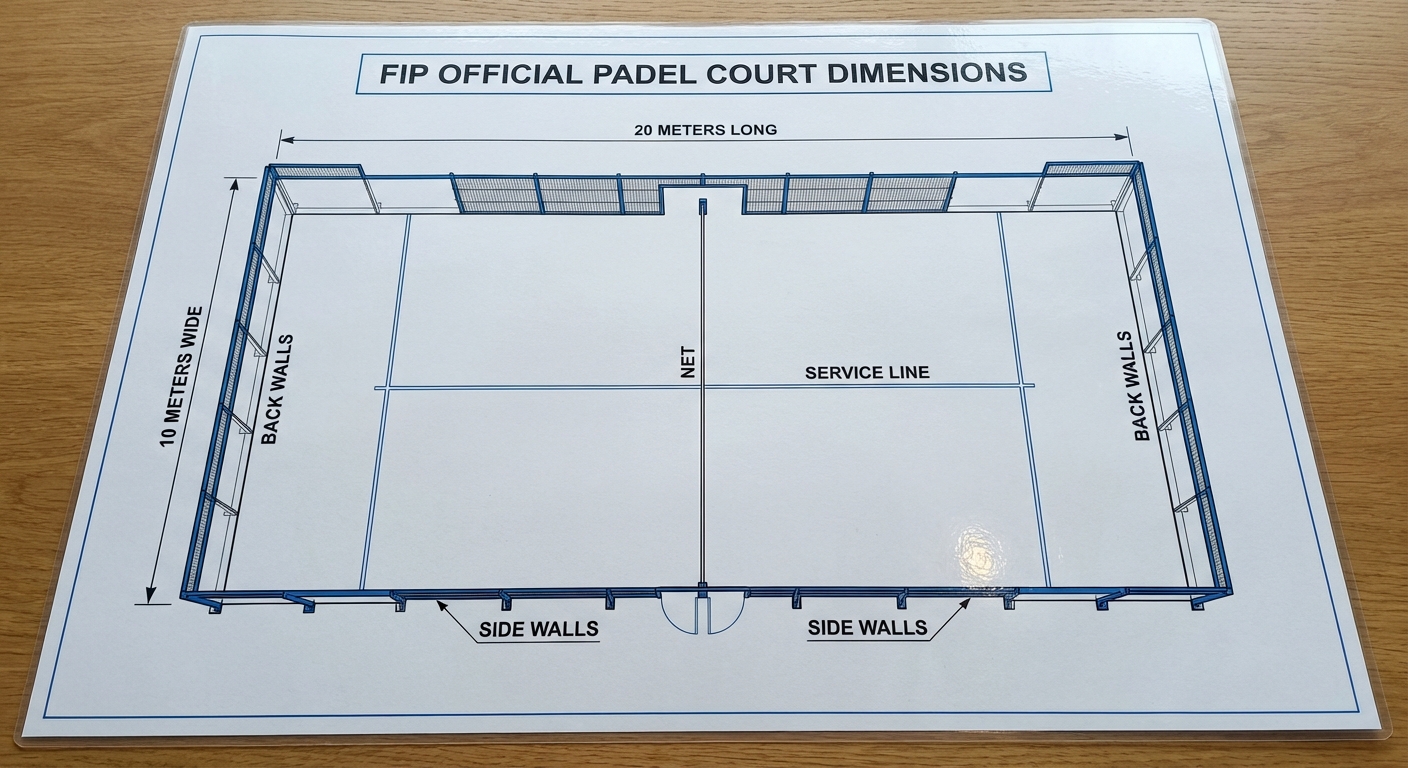
Official dimensions for a padel court are strictly set by the International Padel Federation at 20 meters in length and 10 meters in width. You must adhere to these internal playing measurements to ensure your facility is eligible for league play and tournaments.
The court is divided into two halves by a central net, with service lines located 6.95 meters from the net. Precision during the marking phase is vital, as even a small deviation can affect the legality of the matches played.
Internal Playing Area
The 200-square-meter playing area is surrounded by walls that vary in height. The back walls are typically 3 meters high, while the side walls often feature a stepped or “diagonal” design connecting to the metallic mesh.
Here is the deal:
- The net is 10 meters long and 0.88 meters high at the center.
- Service boxes are 5 meters wide.
- All markings should be 5cm wide and in a contrasting color (usually white).
Total Footprint Requirements
When planning your site, you need more than just the 10x20m playing space. You must account for the structural pillars, foundations, and a safety perimeter, usually requiring a total area of approximately 231 square meters.
Key Takeaway: Following regulation dimensions is the only way to ensure your facility maintains its value and professional reputation.
| Measurement | Dimension | Tolerance |
|---|---|---|
| Total Length | 20.00 Meters | +/- 0.5% |
| Total Width | 10.00 Meters | +/- 0.5% |
| Net Height (Center) | 0.88 Meters | Fixed |
Accurate dimensions are the cornerstone of a fair and competitive sporting environment.
Why should you consider an indoor padel court?
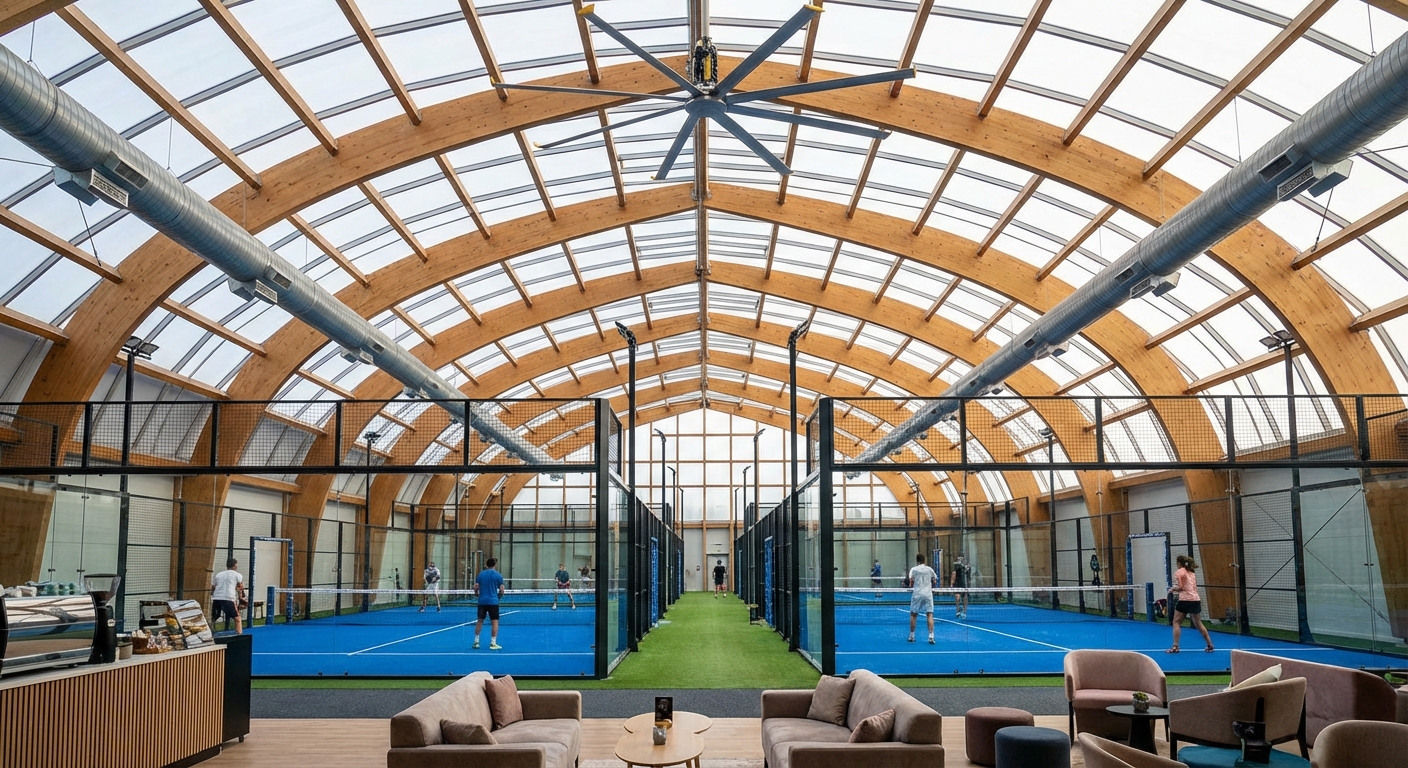
An indoor padel court offers 100% playable hours by eliminating weather-related cancellations from rain, wind, or extreme sun. You can generate a consistent, year-round revenue stream that is not dependent on the local climate.
Indoor facilities also provide a controlled environment for lighting and acoustics, which many professional players prefer. This setup allows you to host evening leagues and winter tournaments that outdoor facilities simply cannot accommodate.
Revenue Consistency
While an indoor facility requires a larger initial investment in a building or canopy, the return on investment is often faster. You don’t lose revenue on rainy days, and you can charge premium rates for the climate-controlled experience.
But wait:
- Ceiling height must be at least 6 meters (ideally 8m+).
- Ventilation is critical to manage humidity and player comfort.
- Lighting is more effective without competition from natural glare.
Protecting the Structure
Indoor courts are shielded from UV rays and moisture, which are the main causes of turf degradation and steel corrosion. This means your maintenance cycle is longer and your structural components will last significantly longer.
Key Takeaway: Indoor facilities provide the highest booking security and longevity for your sporting assets.
| Environment | Weather Impact | Annual Revenue Potential |
|---|---|---|
| Outdoor | High | 60% – 80% |
| Indoor | None | 95% – 100% |
| Roofed/Canopy | Low | 85% – 90% |
Choosing an indoor or roofed environment is a strategic decision to maximize facility utilization.
How do you maintain a padel court for longevity?
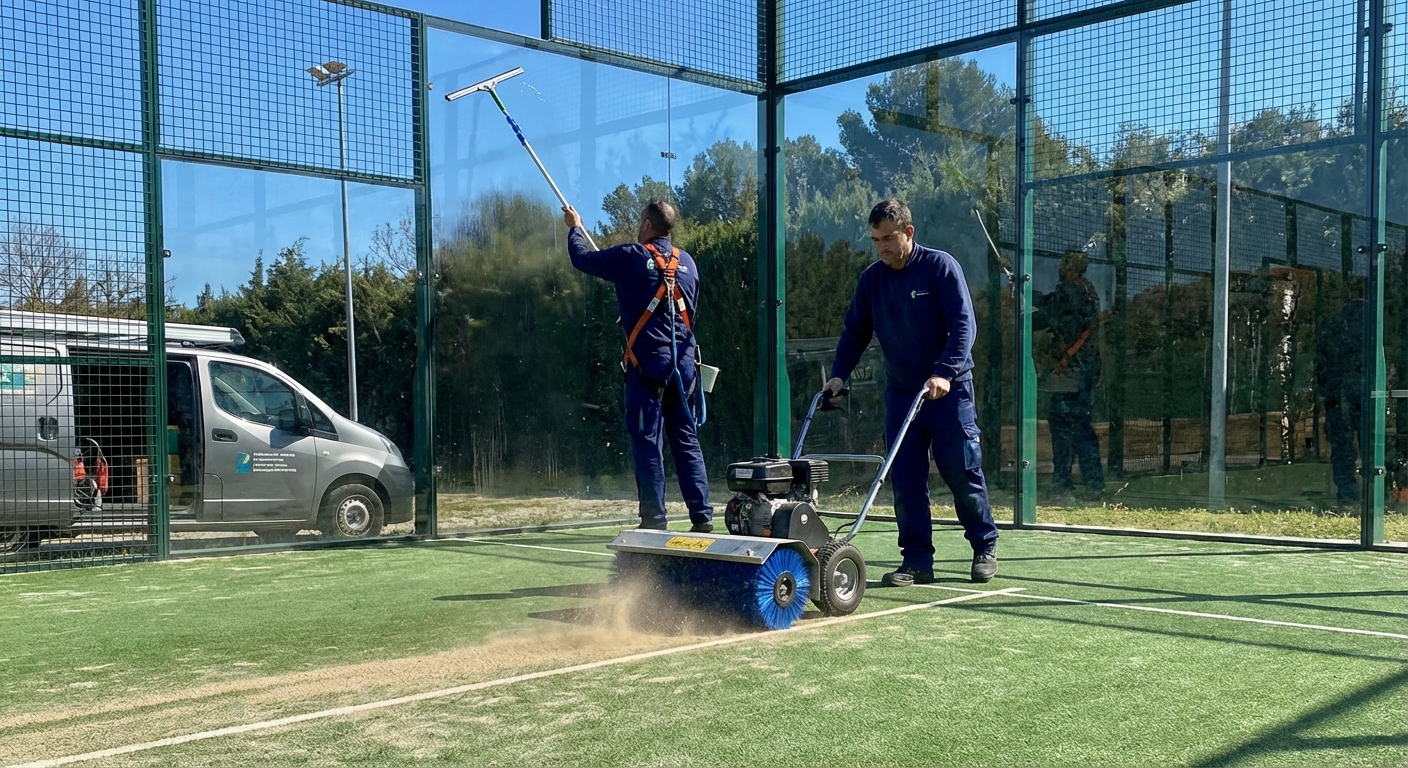
Maintaining a padel court involves weekly glass cleaning and bi-weekly turf grooming to redistribute the silica sand. You must be proactive with maintenance to prevent the synthetic fibers from matting down and the glass from becoming stained.
Neglecting these simple tasks will lead to a “skidding” ball bounce and a slippery surface that players will quickly notice. A clean, well-groomed court is your best marketing tool for attracting new members.
Turf Grooming and Sand Levelling
The silica sand tends to migrate to the corners of the court due to player movement. You need to use a specialized triangular brush to move the sand back into the high-traffic areas, ensuring an even playing surface.
Look:
- Brush the turf every 2 weeks.
- Check sand levels quarterly; top up as needed.
- Remove leaves and debris immediately to prevent mold growth.
Glass and Hardware Checks
Glass panels should be cleaned with a squeegee and mild detergent to remove sweat and handprints. Additionally, you should inspect the bolts and tension of the metallic mesh every few months to ensure the “cage” remains secure.
Key Takeaway: Consistent maintenance can extend the life of your turf by up to 5 years and prevents costly structural repairs.
| Task | Frequency | Purpose |
|---|---|---|
| Sand Brushing | Bi-weekly | Even ball bounce |
| Glass Cleaning | Weekly | Visual clarity |
| Hardware Audit | Quarterly | Structural safety |
A disciplined maintenance routine preserves the professional aesthetic and performance of your venue.
How long does the padel court installation take?
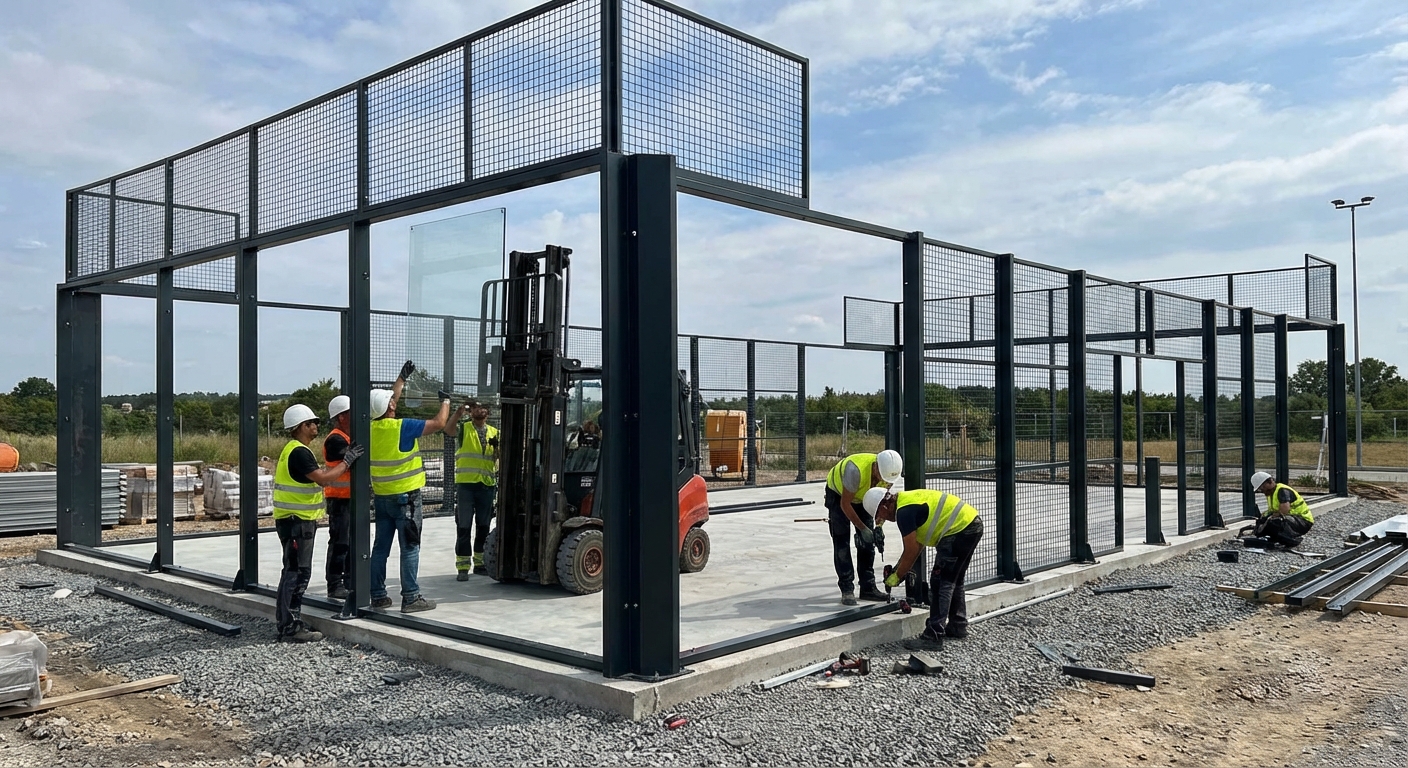
The padel court installation process typically takes 4 to 6 weeks from the first day of excavation to the first match. You are looking at two distinct phases: civil works (foundation) and the assembly of the specialized sports equipment.
The foundation curing time is the most significant factor, as you cannot install the heavy steel and glass until the concrete has reached its full structural strength. Proper scheduling is essential to avoid delays during the final assembly.
The Foundation Phase
Civil works usually take 10 to 14 days, followed by a mandatory 21-day curing period for the concrete slab. If you rush this process, you risk the foundations cracking under the dynamic loads of active gameplay.
Think about it:
- Excavation and drainage: 3-5 days.
- Concrete pour and finishing: 2-3 days.
- Full structural curing: 21 days.
Assembly and Completion
Once the base is ready, a professional team can assemble the metallic structure, install the glass panels, and lay the turf in just 5 to 7 days. This is the stage where the facility truly comes to life.
Key Takeaway: Planning for a 6-week window ensures that all structural components are installed on a stable, fully-cured foundation.
| Phase | Duration | Key Dependency |
|---|---|---|
| Site Preparation | 2 Weeks | Local weather |
| Concrete Curing | 3 Weeks | Temperature |
| Component Assembly | 1 Week | Skilled labor |
Careful project management allows you to transition from a construction site to a revenue-generating club efficiently.
Where is the most profitable padel court location?
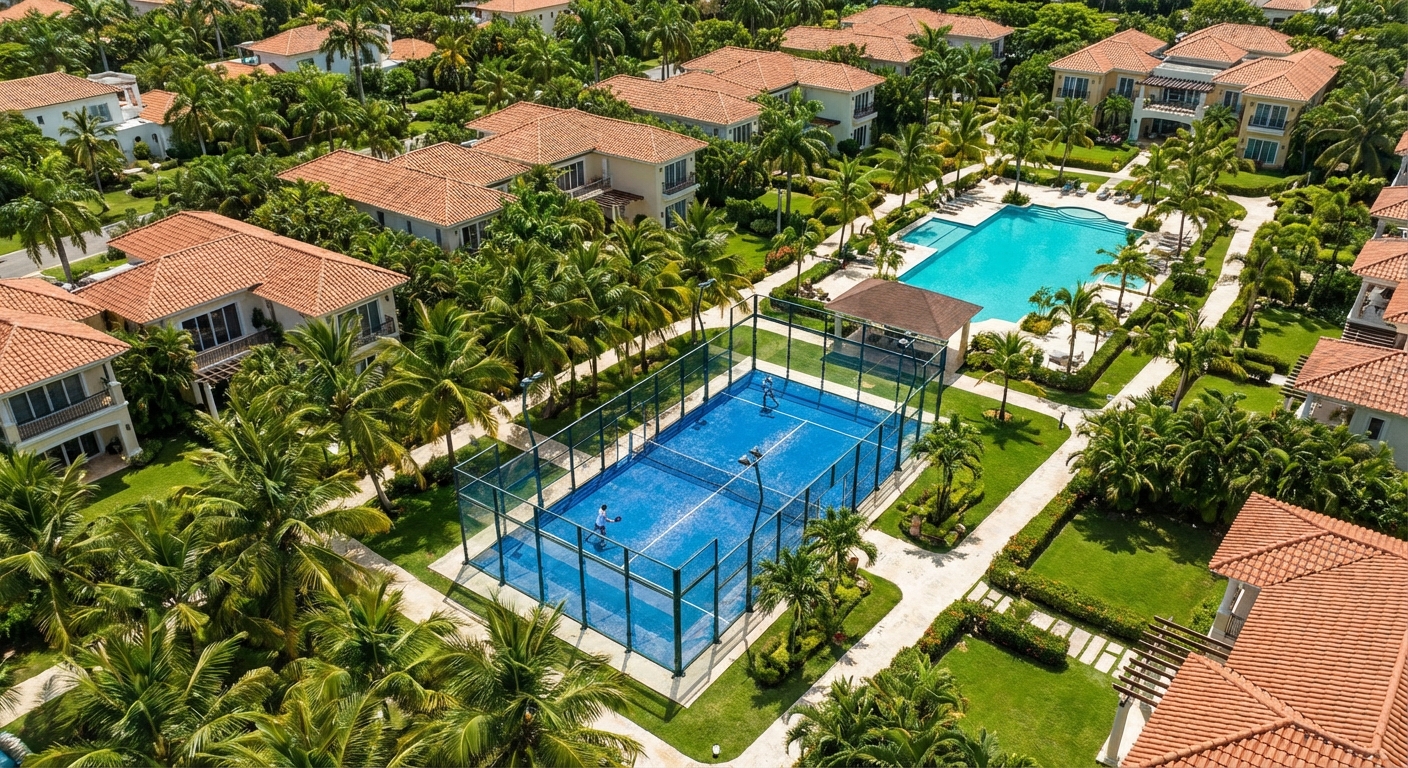
The most profitable location for a padel court is within existing sports clubs, luxury resorts, or high-end residential developments where there is a built-in community. You want to place your courts in visible areas that encourage social interaction and “walk-in” curiosity.
Padel is a social sport, so the amenities surrounding the court—such as a café or lounge area—are just as important as the court itself. High-traffic areas ensure that your facility remains fully booked throughout the week.
Maximizing Space in Sports Clubs
You can fit two to three of these courts in the footprint of a single regulation tennis court. This density makes it the most efficient way to increase your club’s revenue per square meter while offering a trending sport to your members.
Here is the deal:
- Target urban areas with limited sports facilities.
- Integrate courts into residential complexes to boost property value.
- Partner with hotels to offer unique amenities for guests.
Considering Local Regulations
Before choosing a site, you must check local zoning laws regarding sports structures and noise. While padel is generally quieter than tennis, the sound of the ball hitting the glass can be a concern in very dense residential zones.
Key Takeaway: Strategic placement in high-density social hubs ensures maximum occupancy and a faster return on your investment.
| Location Type | Primary Driver | ROI Potential |
|---|---|---|
| Sports Club | Member retention | High |
| Luxury Resort | Guest amenity | Very High |
| Private Estate | Property value | Moderate |
Choosing the right site is the final piece of the puzzle in building a successful sports business.
*
Developing a professional sports facility is a significant investment that requires a blend of civil engineering and specialized design. By focusing on a reinforced foundation, high-quality tempered glass, and professional-grade synthetic turf, you create a venue that stands out in a competitive market. Whether you are looking to upgrade a private residence or launch a world-class commercial club, the success of your project depends on adhering to international standards and choosing durable, factory-direct components. We are committed to helping you transform your vision into a high-performance reality through our expertise in manufacturing and project management. If you are ready to elevate your facility, contact us today to start your journey toward a premier sporting destination.
FAQ
Can I build a court on an existing tennis court?
Yes. Since a tennis court is significantly larger, you can typically fit two standard installations in the same space, making it an excellent conversion project.
What is the best way to handle outdoor drainage?
It depends. A porous asphalt base allows water to drain straight through, while a concrete slab requires a 1% slope to guide water into perimeter drains.
How do I know if I need 10mm or 12mm glass?
10mm is standard for private use, but 12mm is highly recommended for commercial clubs and professional venues where high-impact play is frequent.
Is a panoramic court harder to maintain?
No. The maintenance routine is the same as a standard court, though the initial cost is higher due to the thicker glass and structural engineering.
What is the minimum ceiling height for an indoor facility?
Regulations require at least 6 meters of clear height, but for professional play, 8 to 10 meters is preferred to accommodate high lobs.