Table of Contents
- What exactly is a Panoramic padel court?
- Why choose a Panoramic padel court for your club?
- What materials ensure structural stability?
- What are the Panoramic padel court dimensions?
- How to build a Panoramic padel court step by step?
- How long to install a Panoramic padel court?
- Is a Panoramic padel court safe for players?
- How much does a Panoramic padel court cost?
- Is a Panoramic padel court a good investment?
- How to maintain a Panoramic padel court?
- Conclusion
- FAQ
Choosing the right facility for your sports club can feel overwhelming. You want something modern that attracts players but fear making a costly mistake with complex construction. Here is the deal. We have the perfect solution for upgrading your venue with style and performance. A panoramic padel court offers unmatched visibility plus premium aesthetics that elite players love. You can trust our expertise in manufacturing high-end courts that deliver lasting value.
What exactly is a Panoramic padel court?
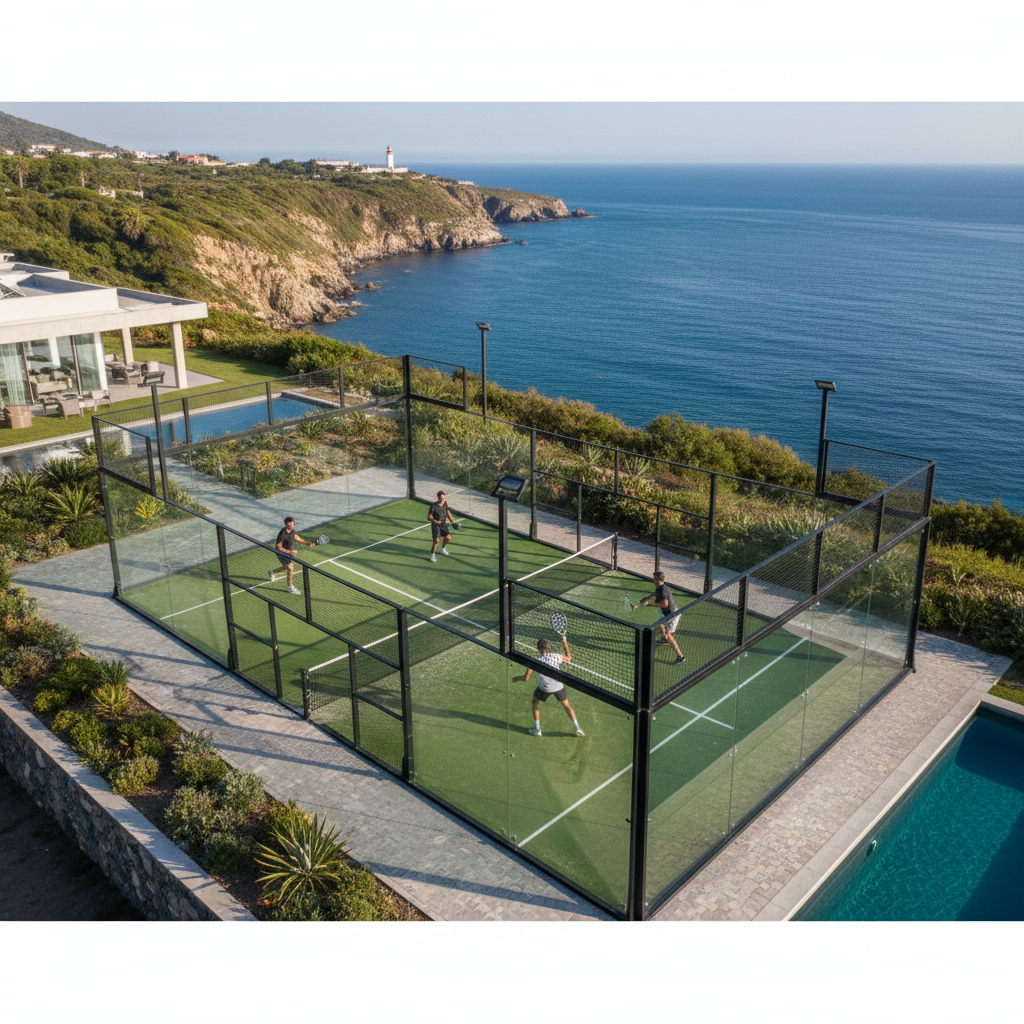
A panoramic padel court creates an unobstructed viewing experience by removing vertical corner pillars. Standard courts typically use metal posts at the glass intersections which block sightlines for spectators. This advanced design replaces those intrusive columns with small, transparent connectors or specialized hardware. You might be wondering why this matters so much. It transforms a regular match into a broadcast-ready event where audiences see every shot clearly.
Players inside feel a greater sense of space because no heavy steel beams confine them visually. We recommend you explore our panoramic padel court options to see this openness in action. Most high-end clubs now prefer this style for their center court to host tournaments. The seamless glass back wall acts as a cinematic screen for the action inside. It creates a premium atmosphere that standard metal-heavy cages simply cannot match.
| Feature | Standard Court | Panoramic Court |
|---|---|---|
| Rear Pillars | Large steel posts | None / Minimal Connectors |
| Visibility | Obstructed at corners | 360-degree clear view |
| Glass Thickness | Often 10mm | Typically 12mm |
| Best Use | Training / Daily Play | Tournaments / Center Court |
Why choose a Panoramic padel court for your club?
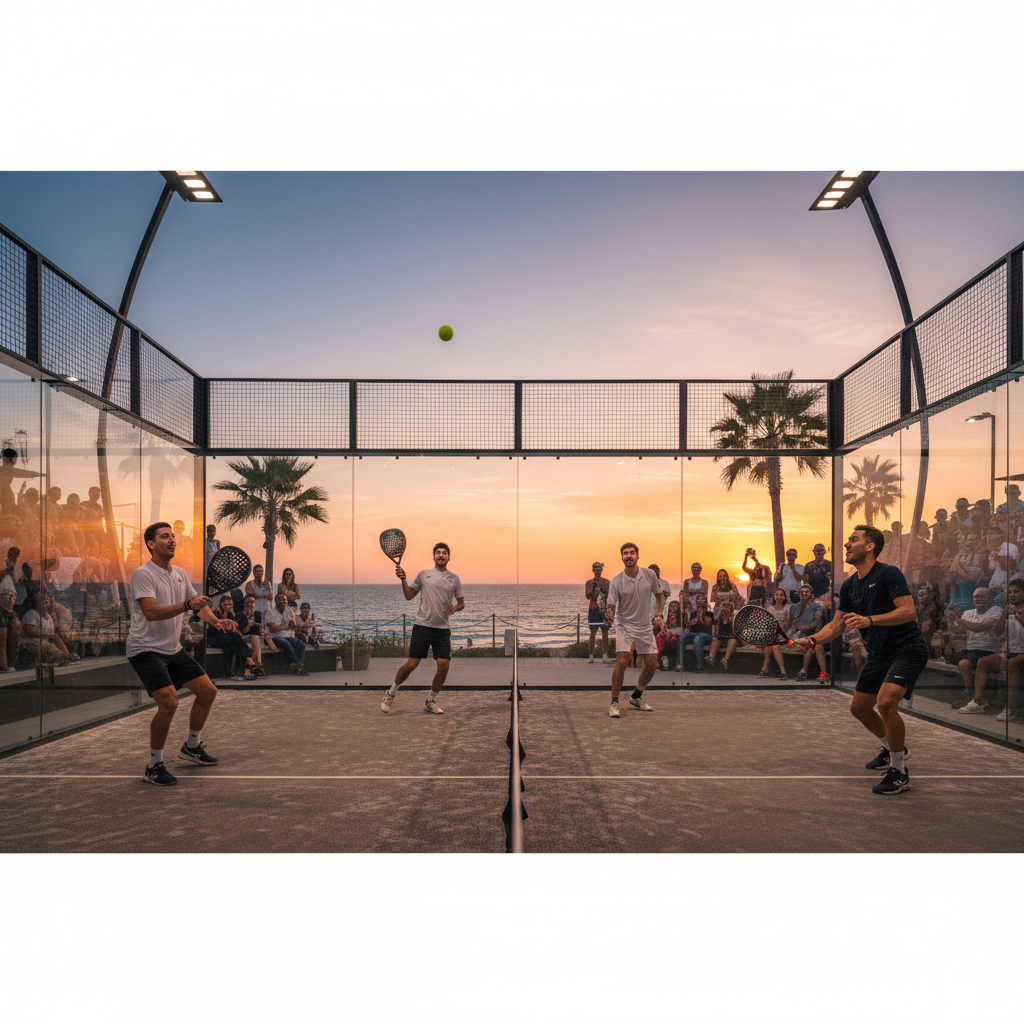
Clubs gain a massive competitive edge by installing these visually stunning courts. Here is the kicker. They act as a magnet for premium members who are willing to pay higher hourly rates. The aesthetic appeal of frameless glass elevates your entire facility’s brand image instantly. Marketing your club becomes easier when you have photos of sleek, modern courts rather than industrial-looking cages.
Spectators stay longer and buy more refreshments when they can actually see the game. Standard posts often hide the most exciting corner plays from audience view. Television broadcasters also demand these courts because cameras capture the action without metal bars getting in the way. If you want maximum visibility with super panoramic designs, this investment secures your status as a top-tier venue. Your players will appreciate the professional feel and improved spatial awareness during intense rallies.
What materials ensure structural stability?
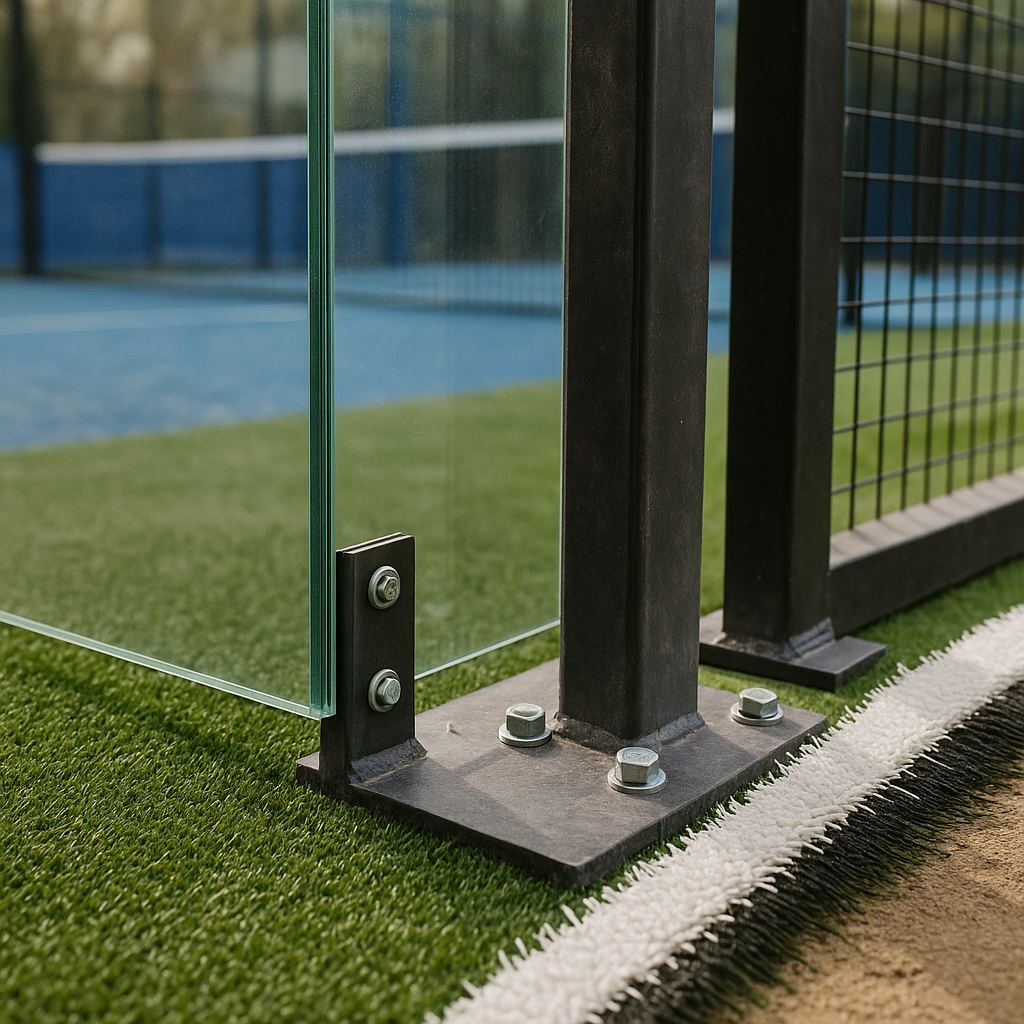
Structural integrity relies heavily on the quality of steel and glass used in construction. This is where it gets interesting. Without rear posts, the glass panels must withstand immense pressure from body impact and wind loads. We use 12mm tempered glass that meets strict safety standards like EN 12150. This thickness provides necessary rigidity that thinner 10mm options might lack in a frameless setup.
The metal framework usually consists of hot-dip galvanized steel to prevent rust. A durable hot-dip galvanized steel structure ensures your investment lasts for decades even outdoors. Neoprene gaskets sit between glass and metal to absorb vibration and prevent shattering. High-quality fasteners replace bulky columns to hold everything securely in place. Every component works together to maintain safety without sacrificing that signature open look.
| Material Component | Specification | Function |
|---|---|---|
| Glass | 12mm Tempered | Structural wall & rebound surface |
| Frame | Galvanized Steel | Main support skeleton |
| Connectors | Stainless Steel / Acrylic | Joins glass panels securely |
| Turf | Monofilament / Textured | Player comfort & ball bounce |
What are the Panoramic padel court dimensions?
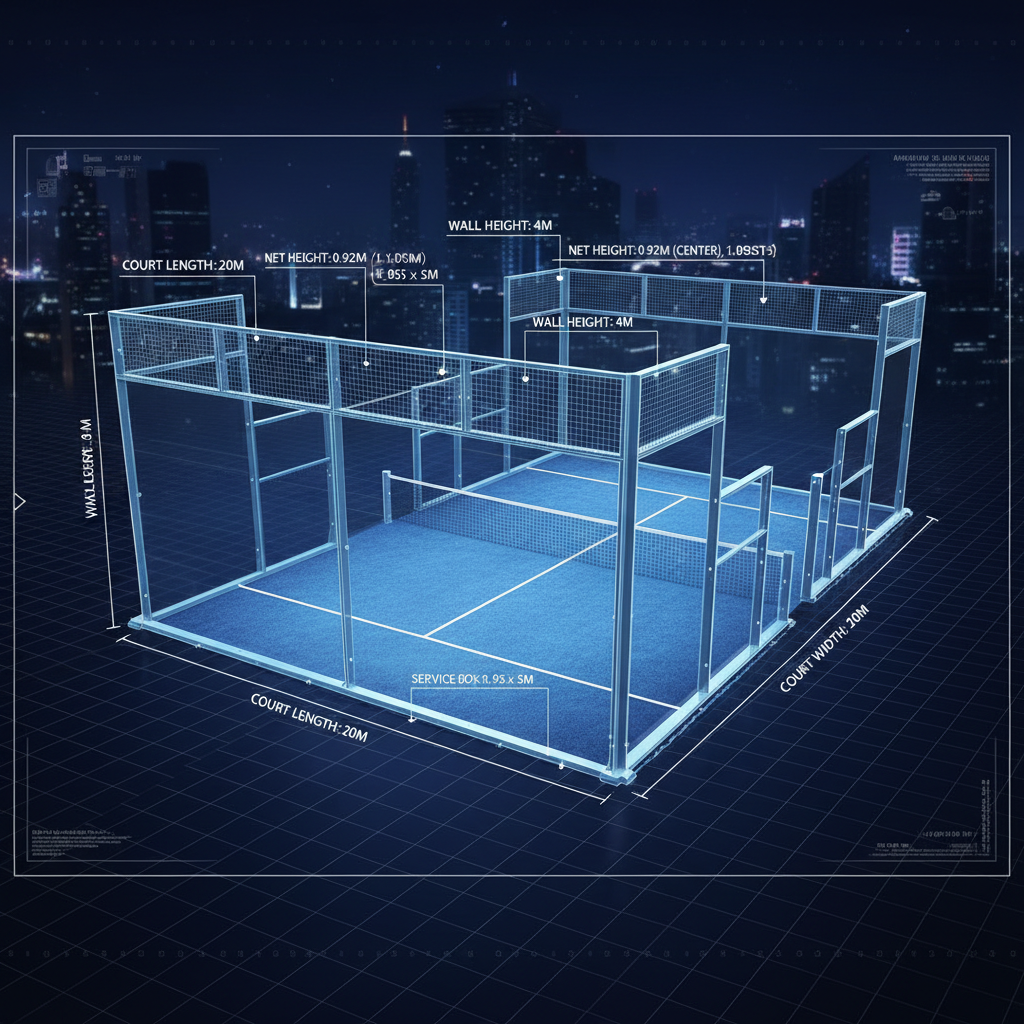
Official regulations dictate strict measurements for competitive play regardless of court style. Here is the bottom line. The playing area must measure exactly 20 meters long by 10 meters wide. Tolerance levels are extremely low to ensure fair gameplay for everyone. Walls stand 3 meters high on the back and extend to 4 meters with mesh fencing.
Indoor installations require paying close attention to ceiling height. You need at least 6 meters of free space above the turf, though 8 meters is ideal for lobs. Panoramic designs do not change these footprint requirements but they do demand precise foundation work. Glass panels must align perfectly along the 10-meter rear width to function as a single structural unit. Even a millimeter of error in the concrete base can prevent safe installation.
How to build a Panoramic padel court step by step?
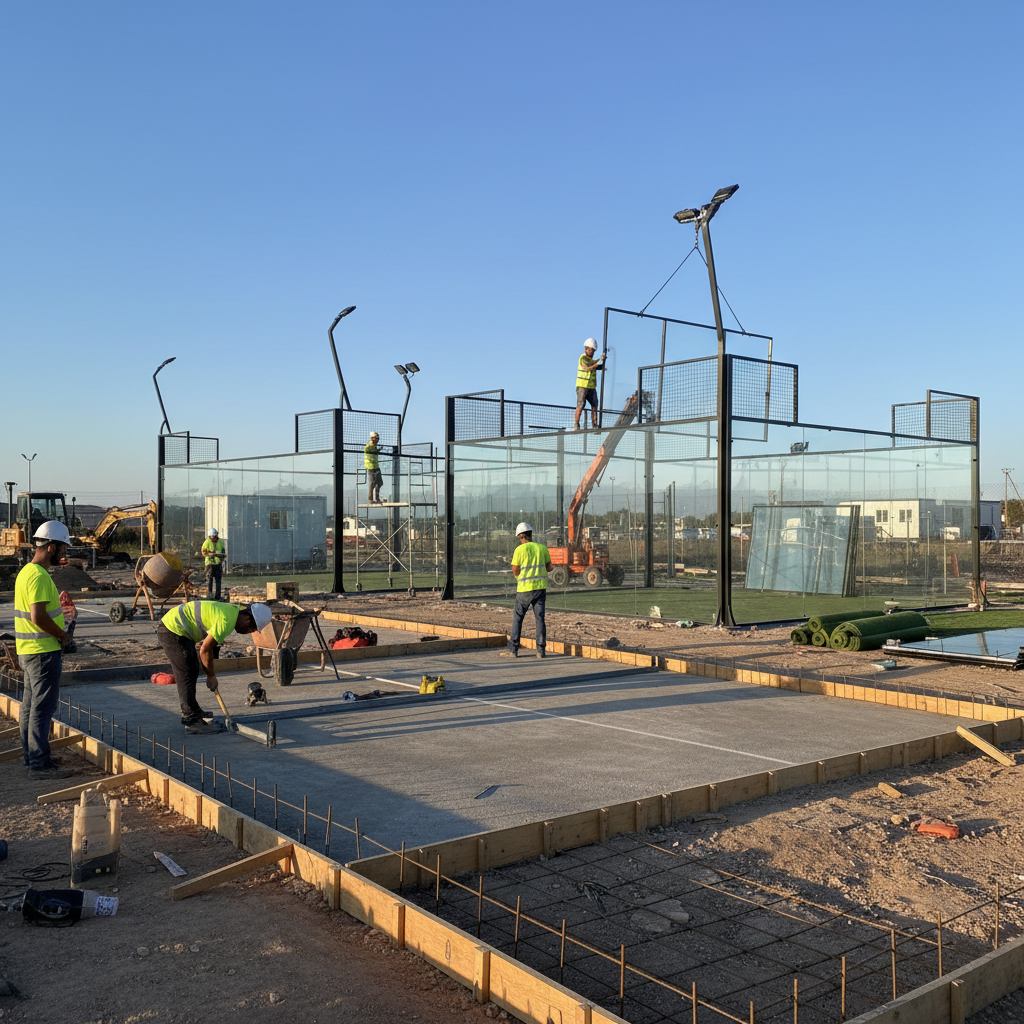
Building one of these courts is a precise engineering challenge. Here is the secret. Success lies entirely in the preparation of your ground surface. Workers must pour a reinforced concrete perimeter or full slab that is perfectly level. Once this foundation cures, the team erects the steel mesh frame along the sides first.
Next comes the delicate task of installing 12mm tempered safety glass along the back. Handlers use suction cups to position heavy panels with extreme care. They tighten minimal connectors only after ensuring perfect vertical alignment. Finally, installers roll out artificial turf and cut it to fit the 20×10 meter area. Silica sand is then brushed into the grass fibers to stabilize the surface and ensure proper ball bounce.
| Step | Action | Critical Factor |
|---|---|---|
| 1 | Site Prep | Level concrete beam/slab |
| 2 | Frame Assembly | Galvanized steel erection |
| 3 | Glass Install | Handling 12mm heavy panels |
| 4 | Turf Laying | Cutting & gluing seams |
| 5 | Infill | Brushing silica sand evenly |
How long to install a Panoramic padel court?
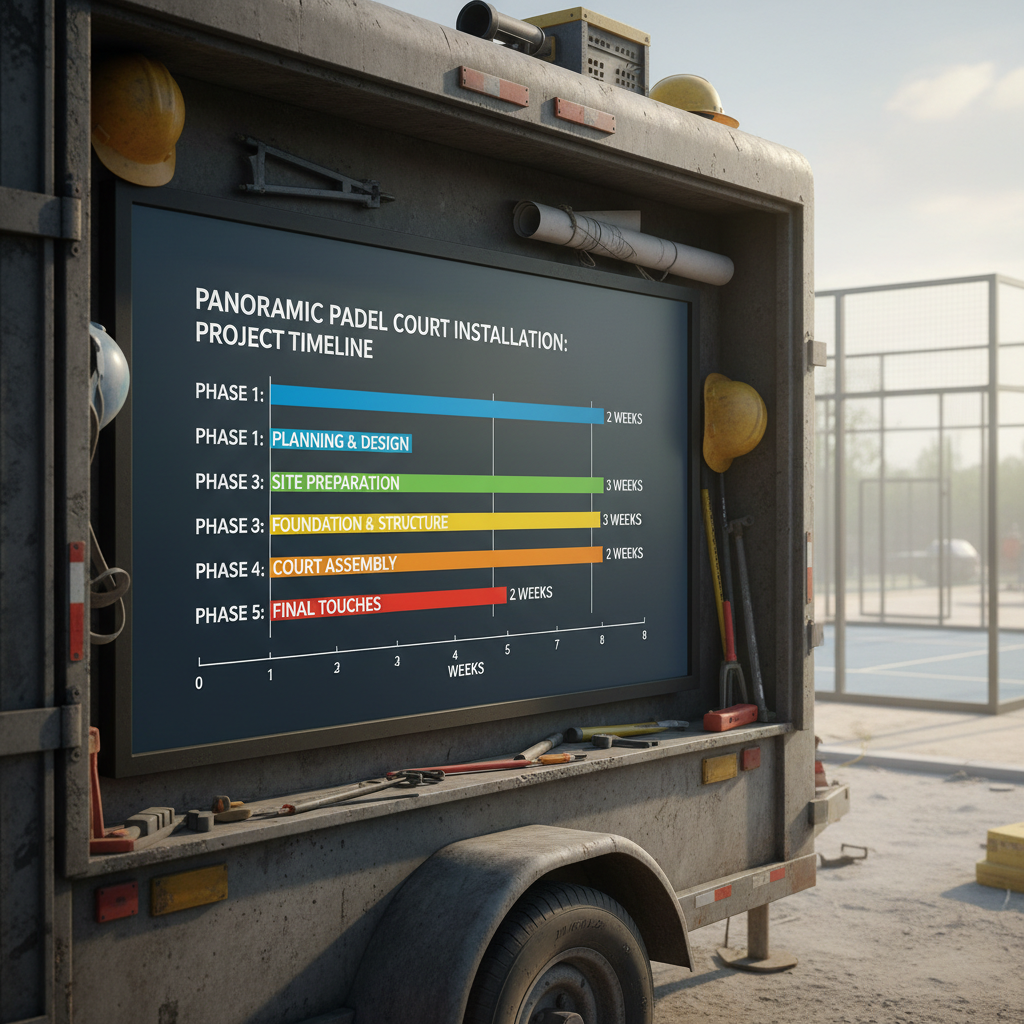
Time is money for any club owner waiting to launch. But here is the good news. The actual assembly of the court structure takes only about 3 to 5 days. However, the total project timeline is usually longer due to groundwork and curing times. Concrete foundations need roughly 3 weeks to dry completely before you can drill anchors into them.
Shipping materials from the factory might take another 4 weeks depending on your location. Planning permits can also add unpredictable delays to your schedule. We advise starting the permitting process immediately while you finalize court specifications. If the concrete is ready when materials arrive, your court can be playable within a week of delivery. Smart project management overlaps these phases to minimize downtime.
Is a Panoramic padel court safe for players?
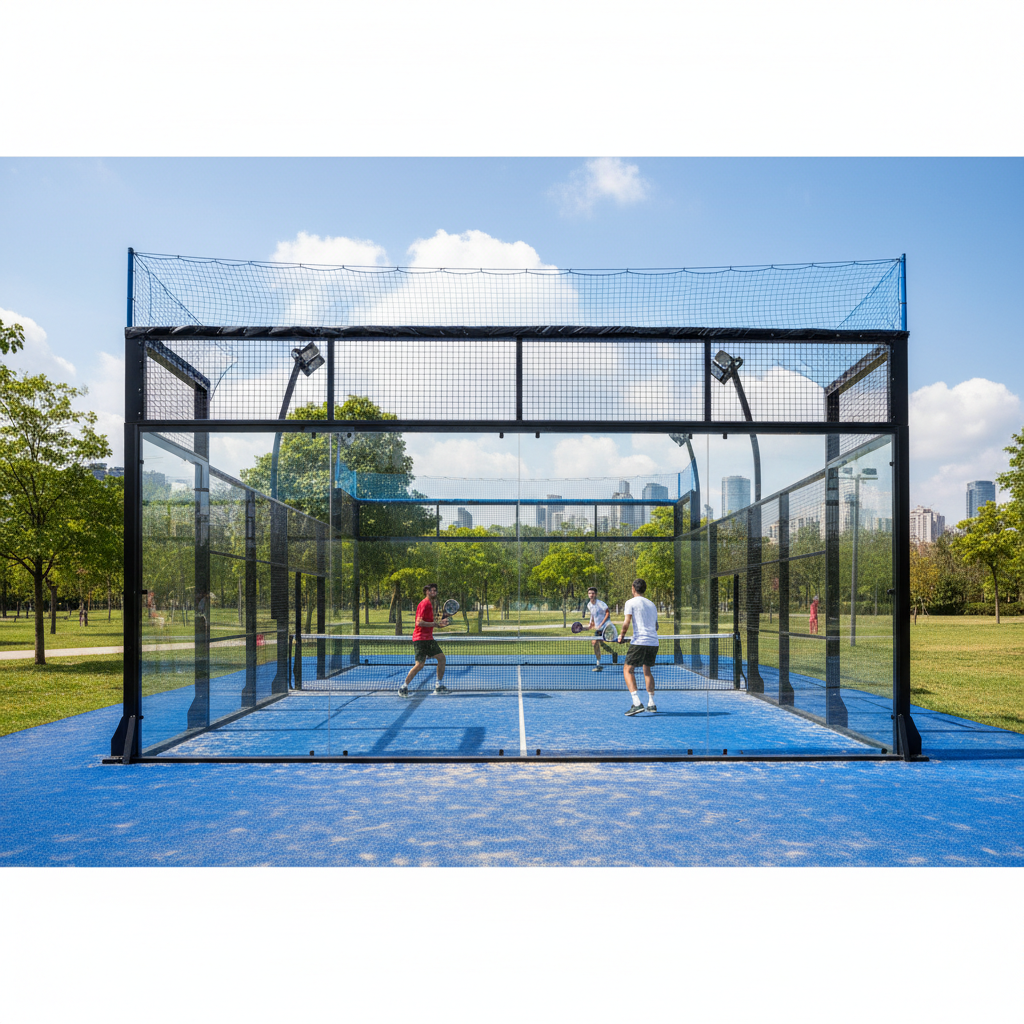
Safety is the number one concern when removing structural steel posts. You might be skeptical. Can glass really support itself during a high-speed match? The answer is yes, provided you use the correct specifications. We mandate 12mm tempered glass because it withstands significant impact without breaking. In the rare event it does break, it shatters into small, blunt cubes rather than dangerous jagged shards.
Wind load is another critical safety factor for outdoor installations. Engineers calculate the necessary glass thickness and anchor depth based on local weather data. Anti-injury mesh fencing prevents players from catching fingers or clothing during play. Regular safety checks ensure bolts remain tight and glass stays secure. Players can dive for shots confidently knowing the structure is engineered for their protection.
How much does a Panoramic padel court cost?
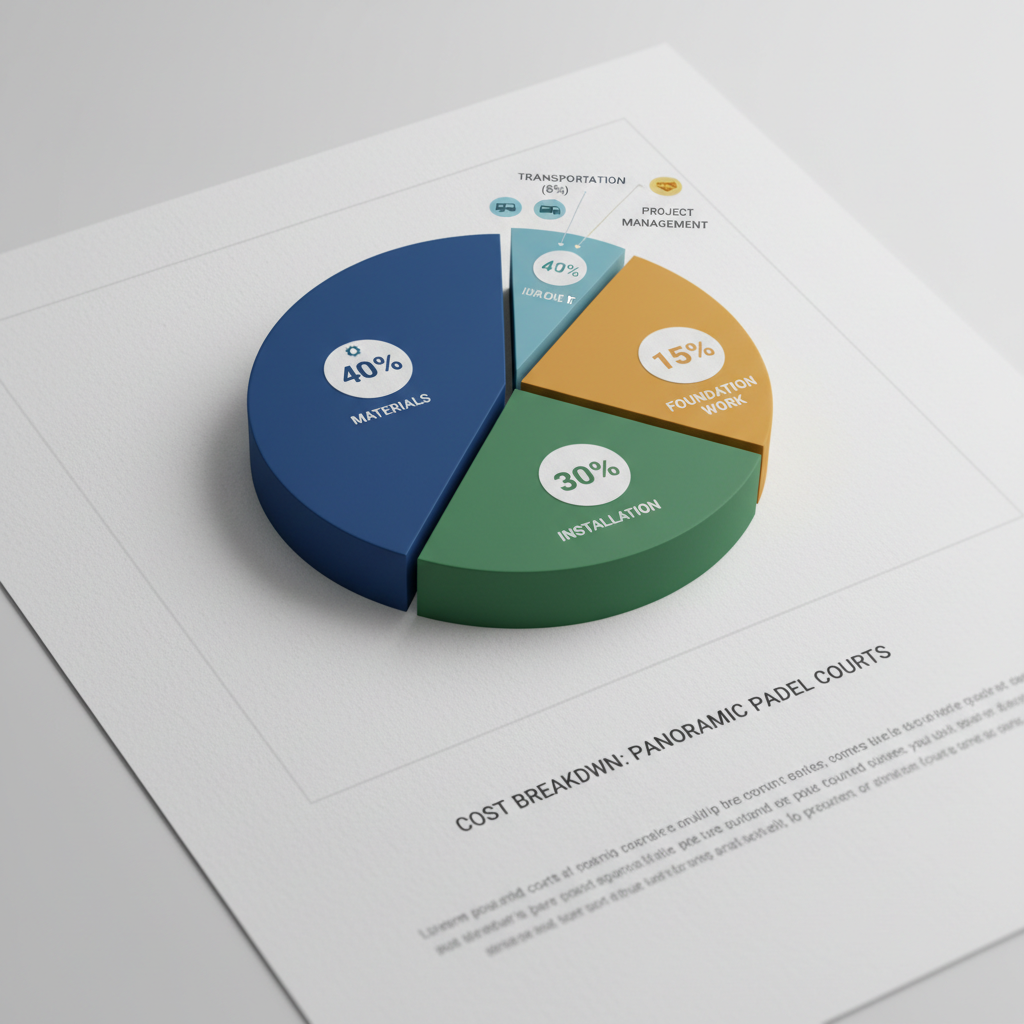
Pricing varies widely based on customization and location. Let’s cut to the chase. A high-quality panoramic court generally costs between €25,000 and €40,000 excluding civil works. The glass itself represents a larger portion of the budget compared to standard courts. Shipping heavy 12mm panels also increases logistics costs significantly.
Site preparation often surprises new investors with its expense. Excavation and concrete pouring can add another €10,000 to €20,000 to your total bill. Lighting upgrades to TV-ready LED systems will also nudge the price upward. While the initial outlay is higher, the premium rental fees you can command help offset these costs.
| Cost Element | Est. % of Budget | Notes |
|---|---|---|
| Structure & Glass | 45% | Core material cost |
| Foundation | 30% | Concrete & labor |
| Installation | 15% | Skilled assembly team |
| Logistics | 10% | Shipping & taxes |
Is a Panoramic padel court a good investment?
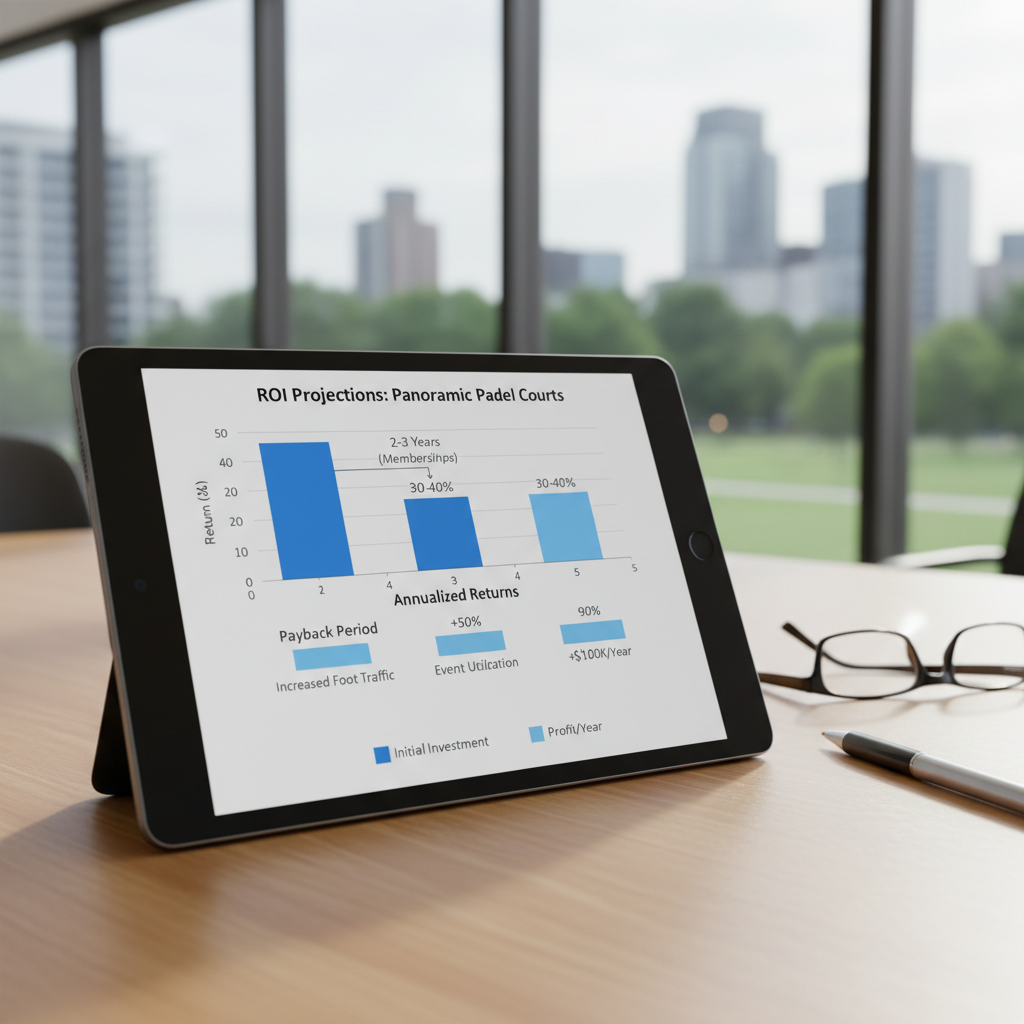
ROI calculations often favor panoramic models despite the higher entry price. Here is the real story. Players perceive these courts as premium experiences and are willing to pay 20-30% more per hour. This increased hourly revenue accumulates rapidly over a year. High-end courts also attract corporate events and tournaments that bring significant sponsorship money.
Clubs with panoramic courts report higher occupancy rates during off-peak hours. The “wow factor” generates organic social media marketing as players share photos of your stunning venue. Property value increases with the installation of modern, professional-grade sports facilities. Most owners see a full return on their investment within 2 to 3 years of operation.
How to maintain a Panoramic padel court?
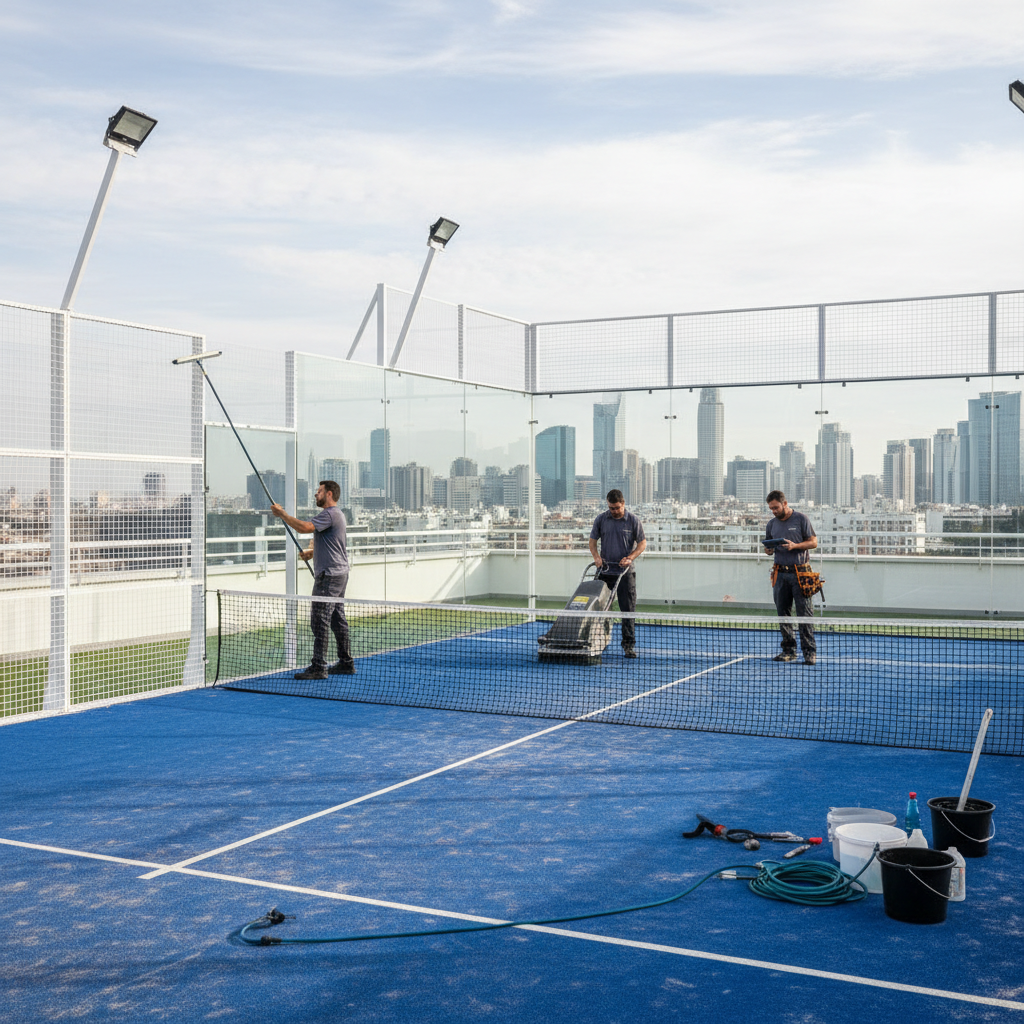
Keeping your court in pristine condition requires a consistent routine. Do not ignore this. The glass back walls need frequent cleaning to maintain that signature transparency. Dirt and smudges are more visible on panoramic courts than on standard ones. We suggest using specialized squeegees and non-abrasive cleaners to prevent scratches.
Turf maintenance involves brushing the sand infill every two weeks to keep it evenly distributed. This prevents uneven wear and extends the life of your carpet. You must also check the tension of the glass connectors periodically. Vibrations from play can loosen bolts over time, so a monthly wrench check is vital. Proper care ensures your panoramic court looks brand new for years.
Conclusion
Installing a panoramic padel court is a bold move that pays off. You solve the problem of outdated facilities and attract a new wave of enthusiastic players. Here is the bottom line. The combination of superior visibility, safety, and player satisfaction makes it the smart choice for any ambitious club. We have covered everything from structural materials to the impressive ROI you can expect. Now it is time to take action and transform your venue. Contact our team for a custom quote today and start building the future of your club.
FAQ
Q1: What is the main difference between a panoramic and standard padel court?
A panoramic court replaces the vertical steel corner posts on the rear walls with small glass connectors or frameless hardware. This provides a completely unobstructed view for spectators and cameras, whereas standard courts have metal beams that block sightlines.
Q2: How thick is the glass on a panoramic padel court?
Most panoramic courts use 12mm tempered safety glass to ensure structural stability without rear posts. This is thicker than the 10mm glass often found on standard courts, providing greater resistance to wind and impact.
Q3: Can I install a panoramic court outdoors?
Yes, you can install them outdoors, but you must account for wind loads. We recommend using 12mm glass and ensuring your location does not experience hurricane-force winds that exceed the structural rating of a frameless design.
Q4: How much space do I need for installation?
You need a footprint of at least 20×10 meters for the court itself. However, we recommend a total area of 22×12 meters to allow for safe runoff zones and player access around the exterior.
Q5: What is the typical warranty for a panoramic court?
Warranties vary by manufacturer but typically cover the steel structure for 10-20 years against rust. The artificial turf usually has a warranty of 5-7 years, while glass is often guaranteed against manufacturing defects upon delivery.