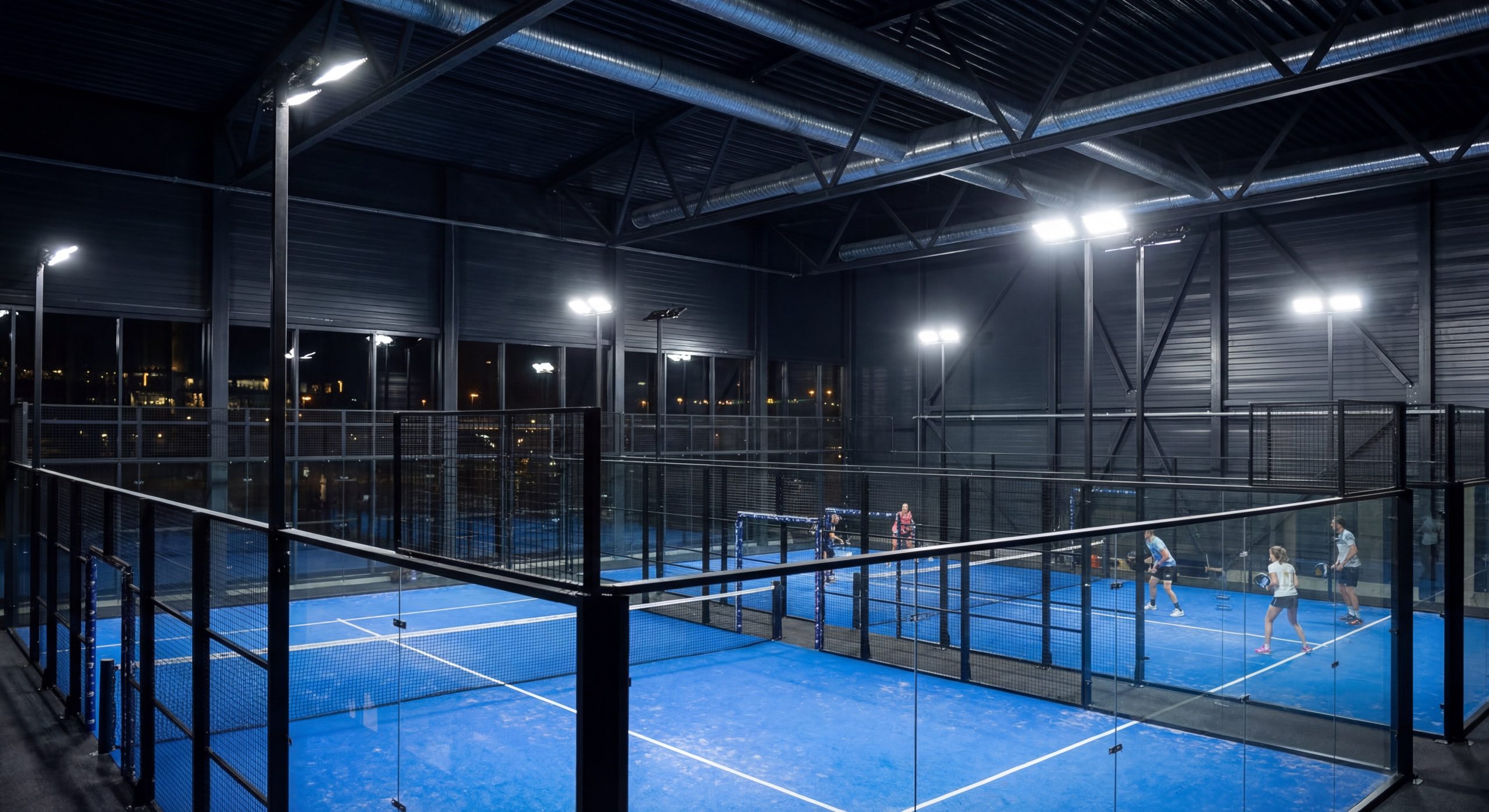
An indoor padel court is a specialized, fully enclosed sports facility designed to provide a weather-independent environment for playing one of the world’s fastest-growing racket sports. You may find that outdoor club owners often face significant revenue losses due to rain, extreme heat, or seasonal winds that force booking cancellations. This inconsistency not only hurts your bottom line but also frustrates serious players who require stable training conditions. By transitioning to a professional indoor setup, you ensure 365-day operation and protect your high-value equipment from UV and moisture degradation.
What defines a modern indoor padel court?
A modern indoor padel court is defined by its climate-controlled enclosure, specialized LED lighting systems, and structural integrity that allows for year-round gameplay. When you step into a high-quality indoor padel court, you notice the absence of environmental variables like wind or glare. These facilities typically utilize high ceilings and acoustic treatments to create a professional atmosphere for athletes.
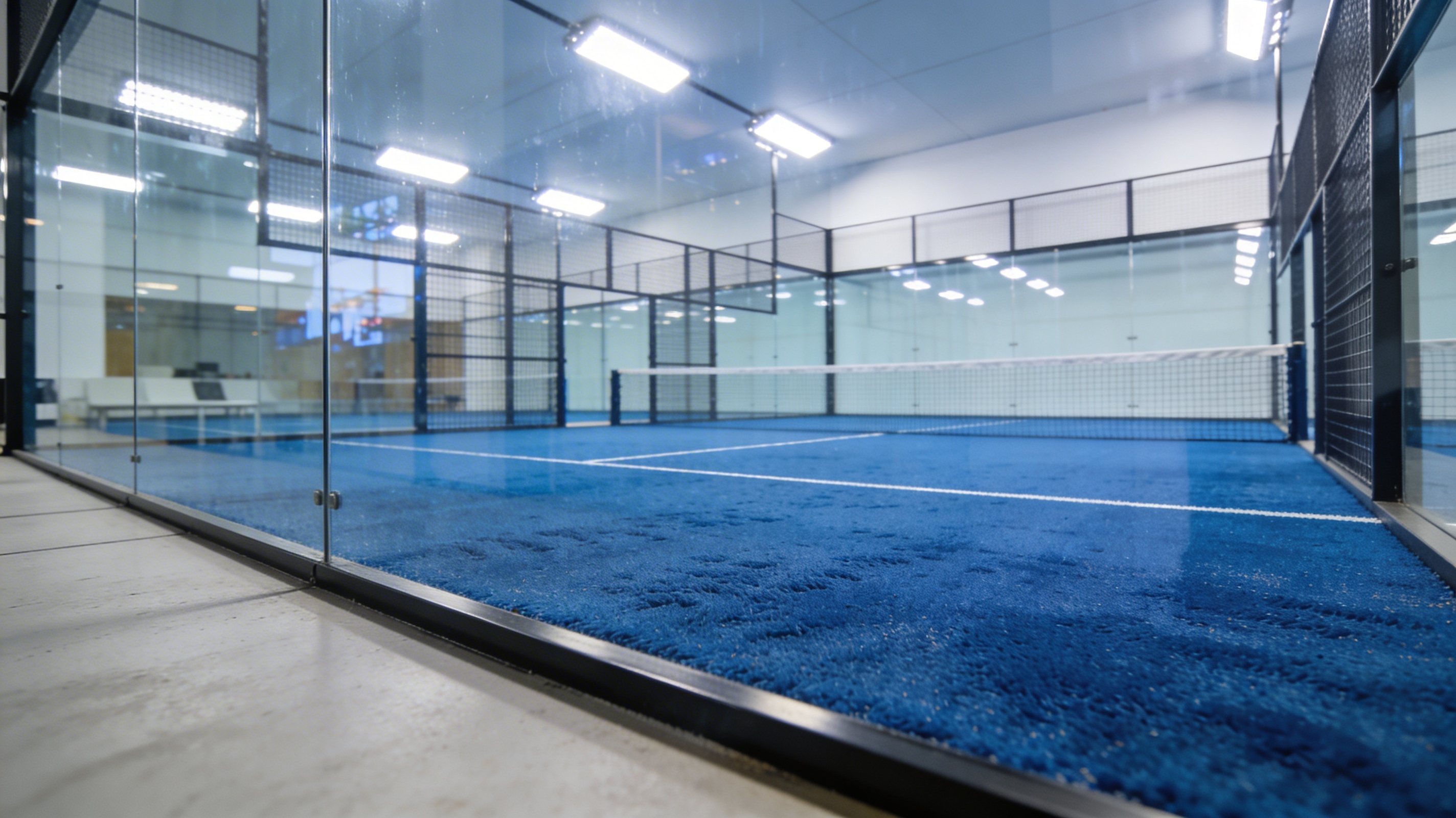
Core structural components
The primary structure consists of hot-dip galvanized steel frames and tempered safety glass panels. These materials work together to create a rigid, safe playing environment that can withstand high-impact ball contact.
Here is the deal:
- Steel frames provide the skeleton of the court.
- 12mm tempered glass ensures consistent rebounds.
- Anti-corrosion coatings extend the facility’s lifespan.
All-weather playing advantages
The biggest draw for any facility owner is the ability to ignore the weather forecast entirely. You can offer consistent booking slots regardless of whether it is snowing or scorching outside.
Key Takeaway: Modern indoor facilities eliminate weather-related revenue loss while providing players with a premium, controlled environment.
| Feature | Indoor Specification | Primary Benefit |
|---|---|---|
| Enclosure | Fully Sheltered | 100% weather protection |
| Lighting | 8x200W LED | No shadows or sun glare |
| Climate | HVAC Integrated | Year-round player comfort |
The structural definition of your court sets the stage for long-term commercial success and player satisfaction.
Why invest in a professional indoor padel court?
Investing in a professional indoor padel court allows you to capture a stable market of players who prioritize consistency and comfort over outdoor exposure. Because an indoor padel court operates independently of the weather, your booking calendar remains full throughout the entire year. This stability makes it much easier to project annual revenue and manage staff schedules effectively.
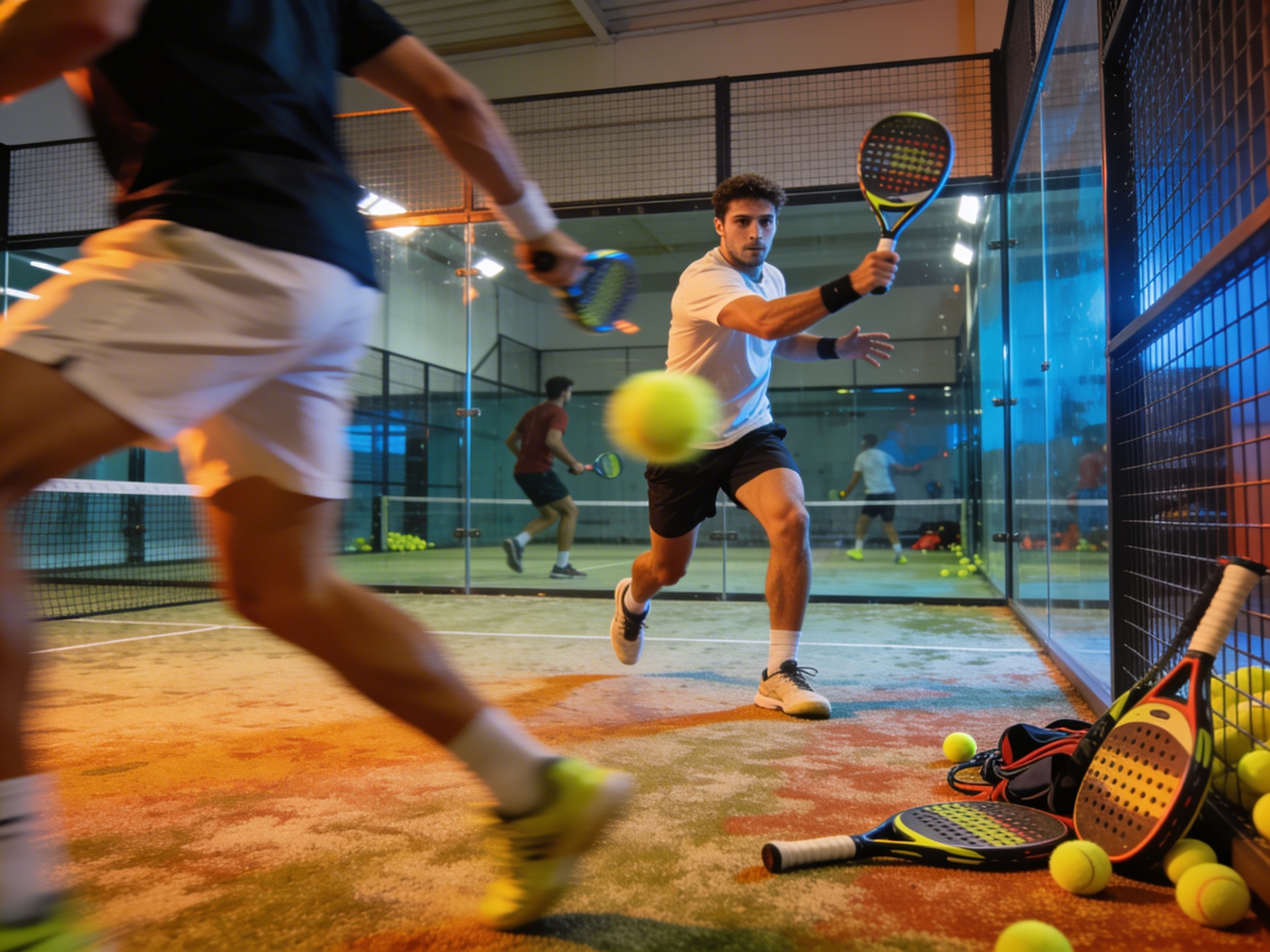
Year-round revenue generation
A single rainy weekend can cost an outdoor club thousands of dollars in lost rental fees and secondary sales. By moving indoors, you effectively “weather-proof” your business model.
Consider this:
- No cancelled bookings due to rain or wind.
- Evening play is more attractive with professional lighting.
- Memberships are more valuable when access is guaranteed.
Reduced long-term maintenance
Exposure to UV rays and rain is the leading cause of turf and frame degradation in outdoor settings. Indoor environments shield your investment from these harsh elements, significantly extending the life of your materials.
Key Takeaway: Indoor courts offer a faster Return on Investment (ROI) by maximizing booking hours and minimizing the cost of material wear.
| Metric | Outdoor Impact | Indoor Advantage |
|---|---|---|
| Booking Days | 250 – 280 days | 365 days |
| Turf Lifespan | 4 – 5 years | 7 – 10 years |
| Frame Rust | High Risk | Negligible |
Understanding the financial incentives of indoor play clarifies why this model is dominating the European and American markets.
What are the specs for an indoor padel court?
The technical specs for an indoor padel court require a minimum playing area of 10×20 meters and a clear ceiling height of at least 6 to 8 meters. When you are planning your indoor padel court, you must also account for the structural footprint, which usually adds another 0.5 to 1 meter to the total width. Ensuring these dimensions are accurate is vital for legal competition and player safety.
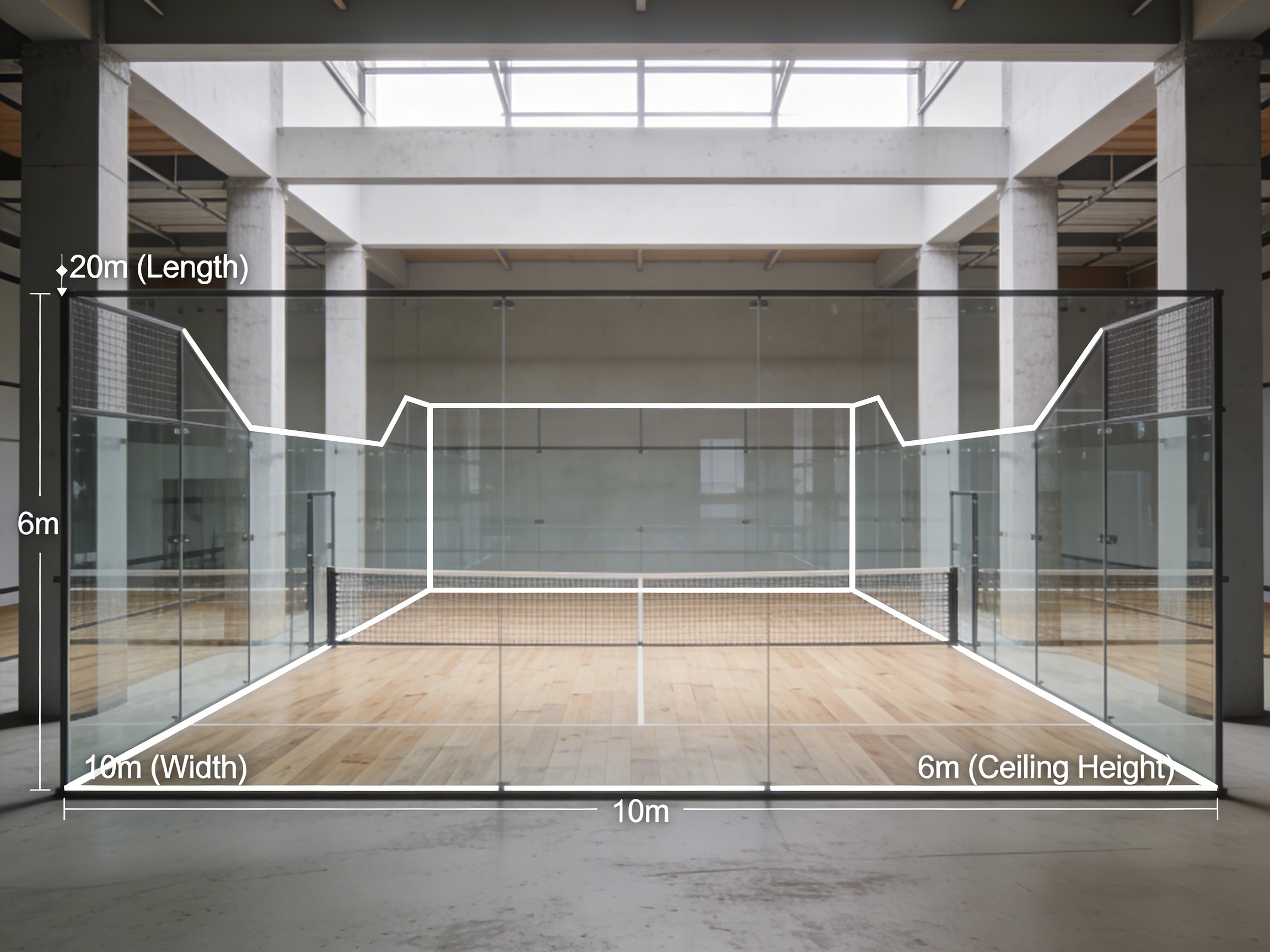
Essential ceiling height requirements
Height is often the most overlooked factor when selecting an indoor location. If the ceiling is too low, players cannot effectively perform “lobs,” which are a fundamental part of padel strategy.
But wait, there’s more:
- Minimum height: 6 meters for recreational play.
- Ideal height: 8+ meters for professional tournaments.
- Clearance: Must be free of hanging lights or beams.
Necessary safety clearance zones
While the court itself is 200 square meters, you need additional space around the perimeter for maintenance and player movement. Local regulations may also require specific fire exits and accessibility paths.
Key Takeaway: Adhering to strict height and width specifications ensures your facility remains competitive and compliant with international standards.
| Component | Standard Dimension | Importance |
|---|---|---|
| Play Area | 10m x 20m | FIP Regulation standard |
| Glass Height | 3m (sides) / 4m (back) | Ensures proper ball bounce |
| Total Height | 6m – 8m | Allows for tactical lob shots |
Precision in the initial design phase prevents costly structural modifications during the construction process.
Which models suit an indoor padel court setup?
The models that suit an indoor padel court setup include standard commercial designs, panoramic views for better spectating, and customized modular units. Choosing the right indoor padel court model depends entirely on whether your focus is on high-volume training or elite spectator events. For most club owners, a balance of durability and visibility is the winning combination.
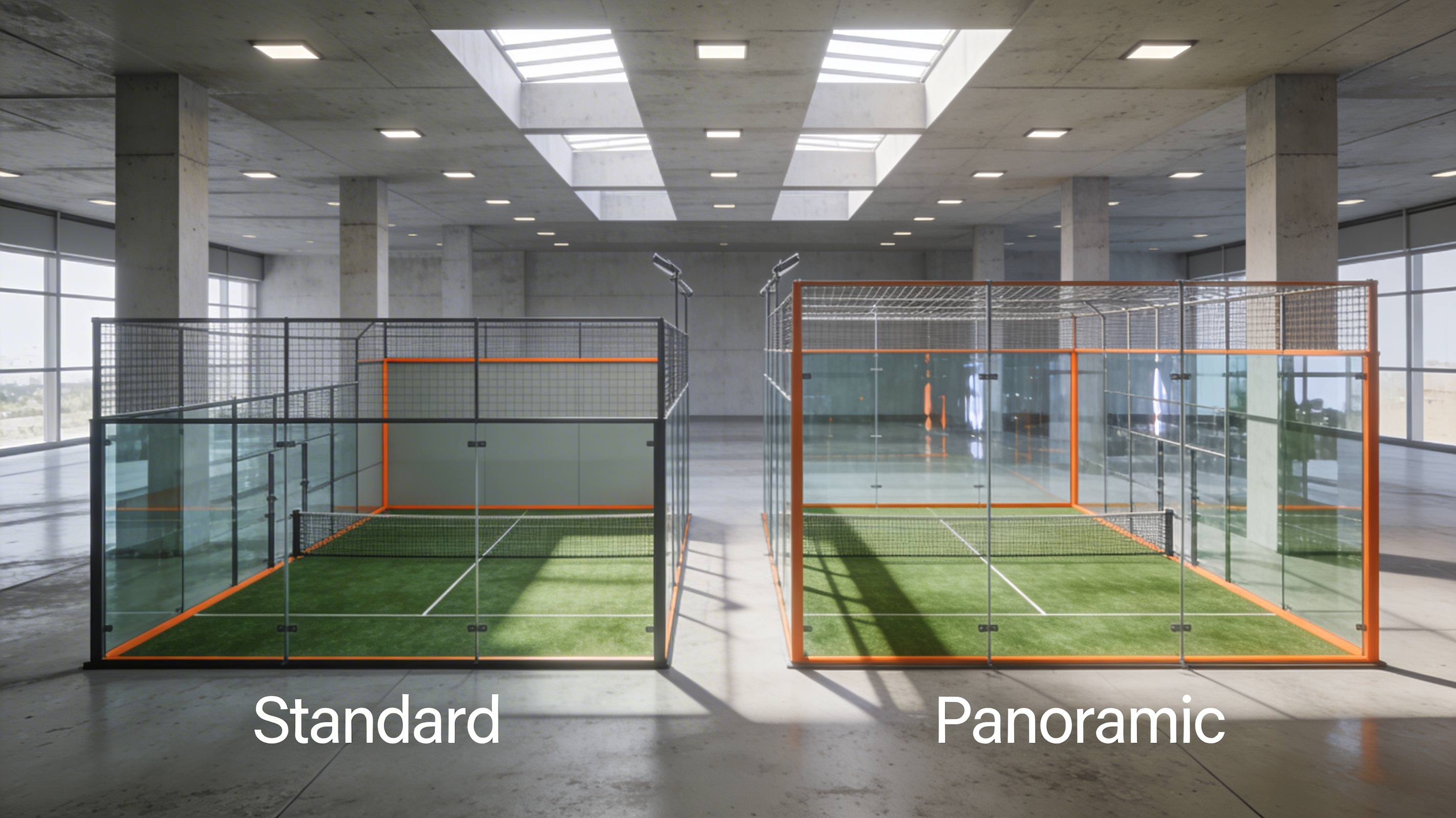
The Standard vs. Panoramic debate
Standard models use more steel pillars, which provides a very robust feel and lower cost. Panoramic models remove the rear pillars to give fans an unobstructed view of the action.
Think about this:
- Standard: Best for heavy-duty daily use.
- Panoramic: Ideal for “Show Courts” and tournaments.
- Modular: Quick to install in existing warehouses.
Can you customize the colors?
Most professional manufacturers allow you to customize the RAL colors of the steel frame to match your brand’s identity. This creates a cohesive look that can attract more premium sponsors and members.
Key Takeaway: Selecting a court model should align with your business goals, whether that is maximizing spectator views or minimizing initial capital expenditure.
| Model Type | Key Feature | Best For |
|---|---|---|
| Standard | Reinforced Pillars | Training and Clubs |
| Panoramic | Unobstructed Glass | Spectator / Show Courts |
| Super Pano | Zero Rear Posts | Elite Professional Play |
Tailoring the court model to your specific facility use-case ensures the best possible experience for your target demographic.
Is glass vital for an indoor padel court build?
Yes, glass is vital for an indoor padel court build because it provides the transparency needed for spectators and the rebound consistency required for high-level play. When sourcing indoor padel court materials, you must prioritize 12mm tempered safety glass that meets international impact standards. This thickness ensures that the panels can handle the weight of players leaning or crashing into them during intense points.
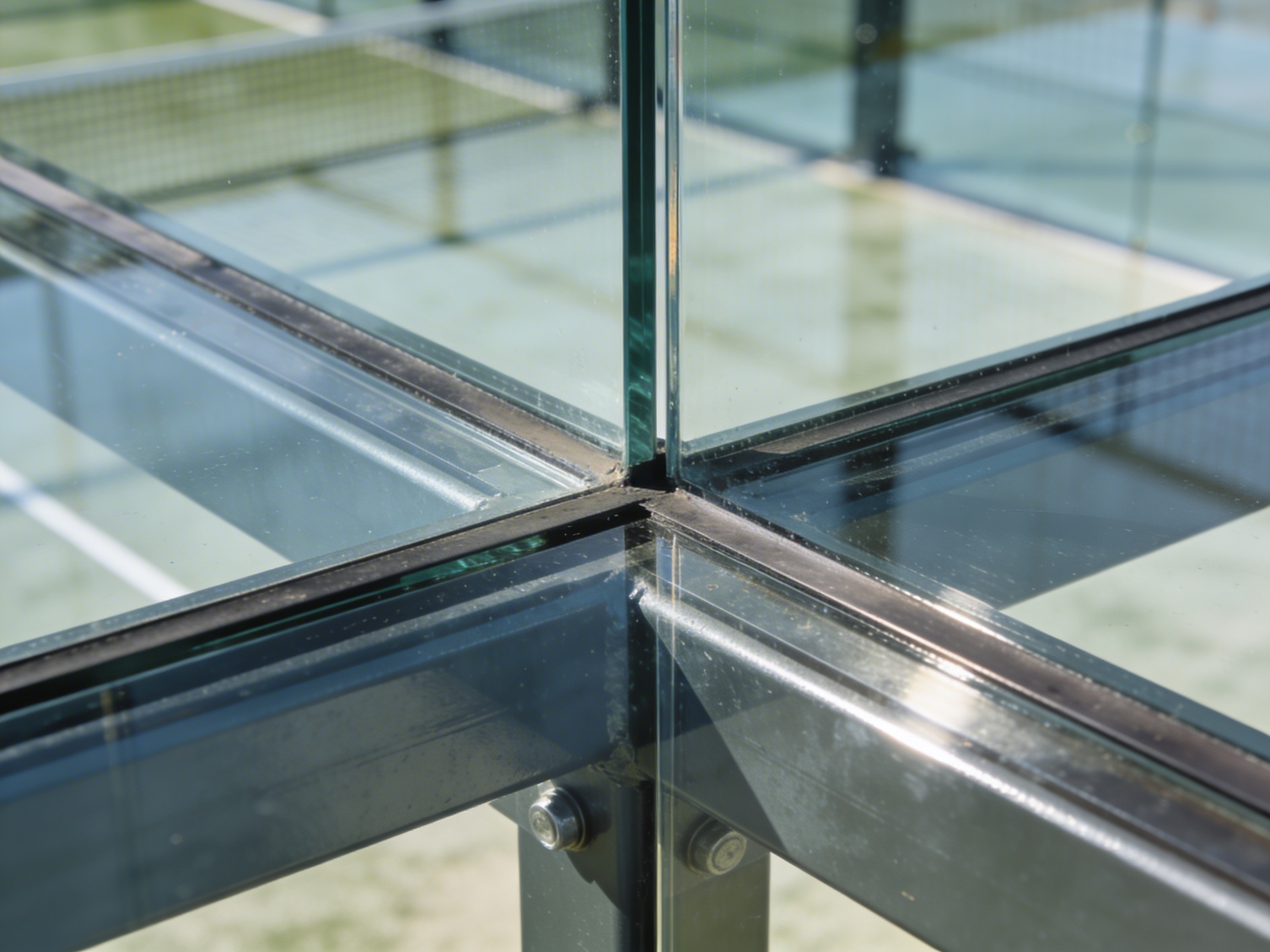
Tempered safety glass standards
Safety glass is designed to crumble into small, blunt pieces if it ever breaks, preventing serious injuries. High-quality manufacturers use “anti-explosion” film for an extra layer of security in high-traffic indoor environments.
The point is:
- 12mm is the gold standard for safety.
- Heat-soak testing reduces spontaneous breakage risk.
- High transparency improves the broadcast quality of matches.
Impact resistance for players
Indoor players often use the walls more aggressively than outdoor players because there are no wind distractions. You need glass that offers a perfectly flat surface to ensure the ball doesn’t take “weird” bounces.
Key Takeaway: High-grade tempered glass is a non-negotiable safety and performance feature for any professional indoor installation.
| Glass Property | Standard Requirement | Safety Impact |
|---|---|---|
| Thickness | 10mm – 12mm | Prevents structural failure |
| Type | Tempered (Toughened) | Breaks into safe fragments |
| Certification | EN 12150-1 | Guarantees impact quality |
Investing in premium glass reduces your liability and provides a consistent playing experience that keeps members returning.
What grass is best for an indoor padel court?
The best grass for an indoor padel court is high-density monofilament or fibrillated polyethylene turf specifically engineered for racket sports. Because an indoor padel court does not have to deal with UV drainage or heavy rain, the focus shifts toward wear resistance and sand displacement. You want a turf that maintains its pile height even after thousands of hours of intense foot traffic.
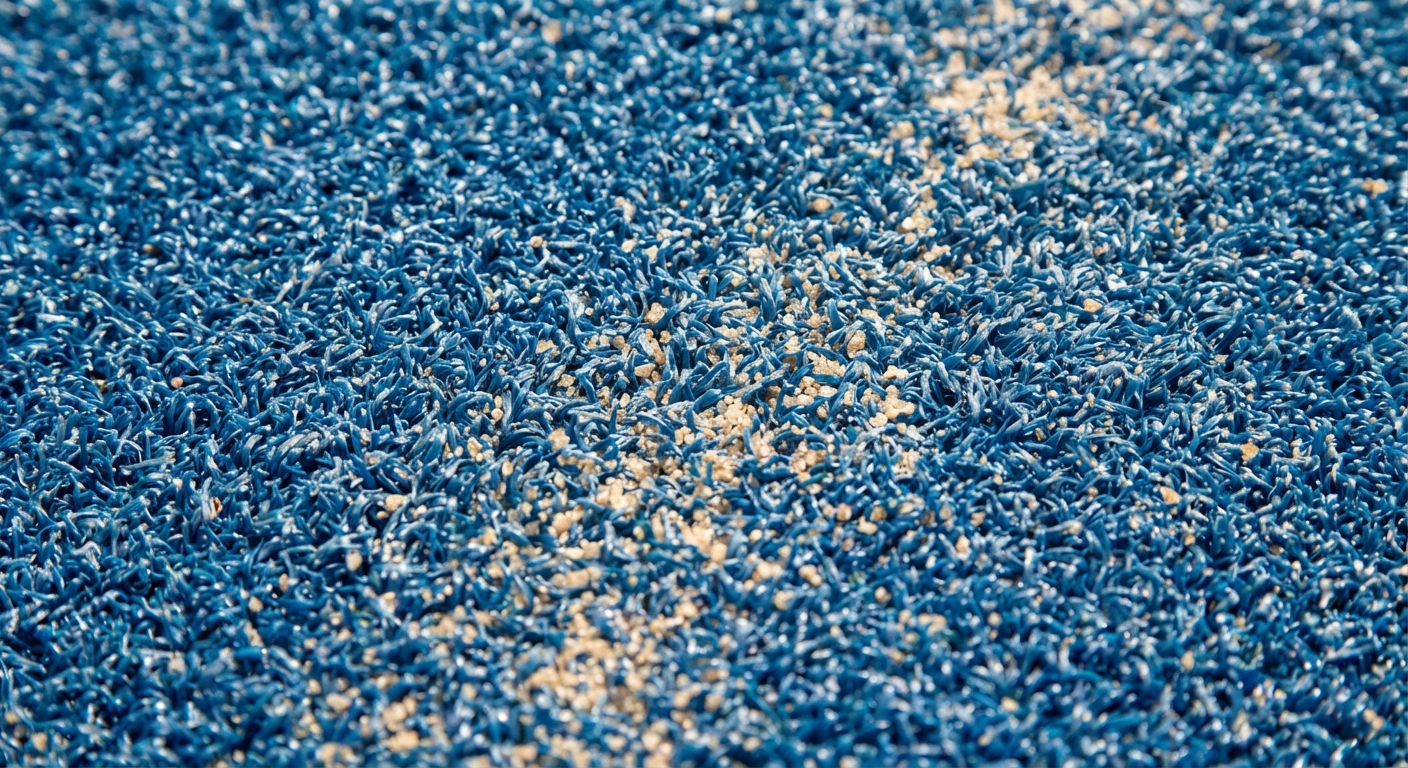
Fibrillated vs. Monofilament turf
Monofilament turf is generally considered more durable and offers a more natural ball bounce. Fibrillated turf is often easier to maintain and can be more cost-effective for clubs with very high volume.
Check this out:
- Monofilament: Better for professional performance.
- Fibrillated: Great for high-frequency recreational use.
- Texturized: Requires less sand infill.
Sand infill requirements
Even indoors, you must use high-quality kiln-dried silica sand to weight the turf down and allow for player sliding. Proper sand distribution prevents the turf from bunching and reduces the risk of ankle injuries.
Key Takeaway: Choosing high-density, texturized turf reduces your daily maintenance needs and provides a professional-grade surface for athletes.
| Turf Detail | Ideal Spec | Performance Result |
|---|---|---|
| Pile Height | 10mm – 12mm | Consistent ball speed |
| Gauge | 3/16 inch | High stitch density |
| Material | PE (Polyethylene) | Low skin abrasion |
The playing surface is the most touched part of your court; getting it right is essential for player comfort.
What is the cost of an indoor padel court?
The cost of an indoor padel court typically ranges between $15,000 and $25,000 per unit, depending on the model and customization options chosen. By purchasing from a factory-direct indoor padel court manufacturer, you can often save up to 30% on procurement costs compared to local distributors. It is important to factor in the price of the structure, glass, turf, and the logistics of shipping to your specific location.
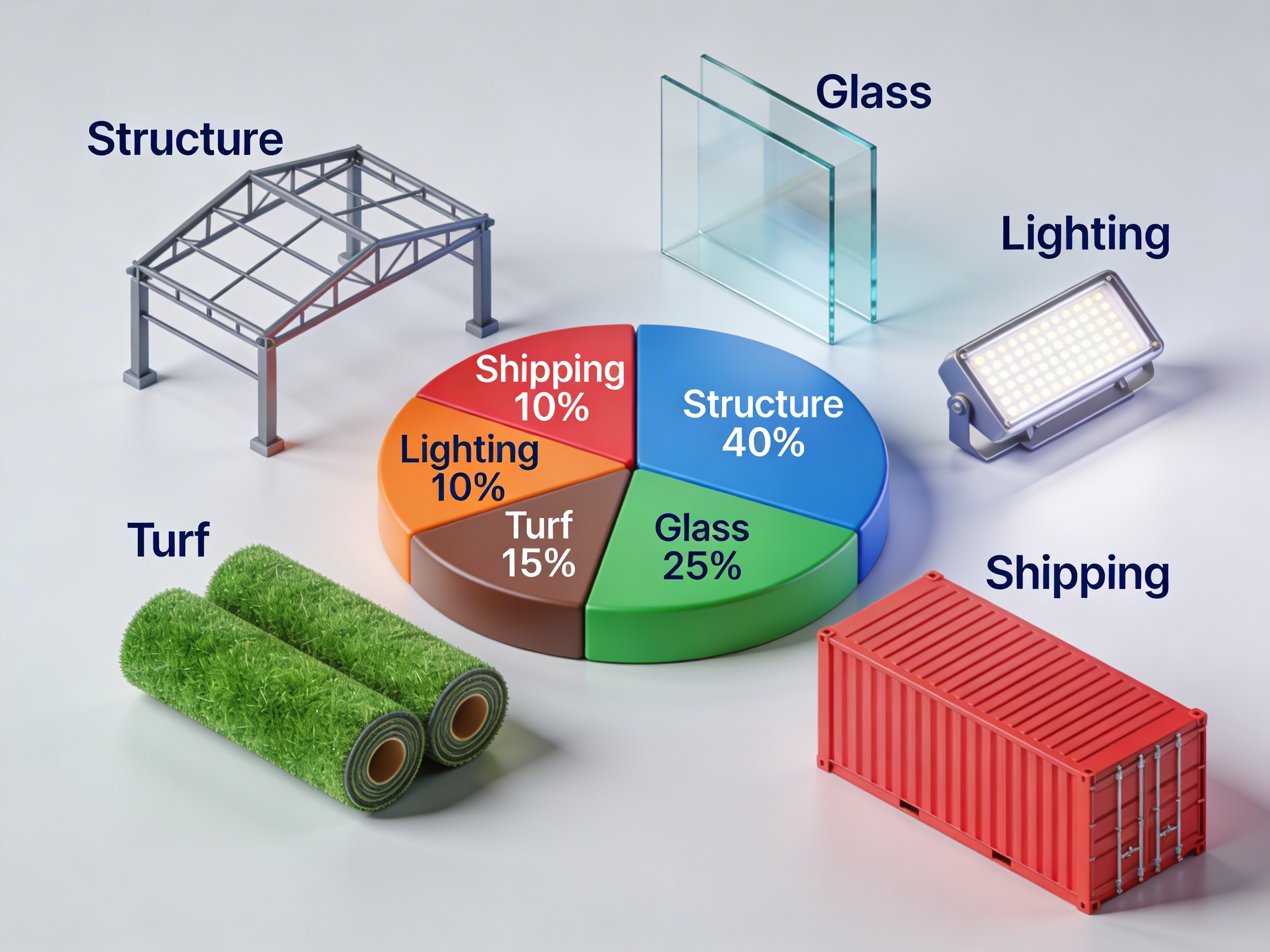
Factory direct pricing benefits
Eliminating the middleman is the fastest way to improve your project’s ROI. When you deal directly with the source, you also get better access to technical support and replacement parts for long-term maintenance.
Here is the secret:
- Lower unit prices through volume production.
- Direct OEM customization services.
- Transparent material specifications.
ROI analysis for club owners
While the initial investment might seem high, the increased booking capacity of an indoor facility usually pays for the court within 18 to 24 months. You are trading a one-time capital expense for a lifetime of stable, high-margin revenue.
Key Takeaway: Buying direct from the manufacturer significantly lowers your entry cost, allowing for a much faster transition to profitability.
| Cost Element | % of Total Budget | Estimated Range (USD) |
|---|---|---|
| Structure | 40% | $6,000 – $10,000 |
| Glass | 25% | $3,750 – $6,250 |
| Turf & Lighting | 25% | $3,750 – $6,250 |
| Shipping | 10% | $1,500 – $2,500 |
Strategic procurement is the difference between a struggling club and a thriving sports business.
How to plan your indoor padel court construction?
Planning your indoor padel court construction starts with securing a level concrete foundation and verifying that your indoor space meets all local building codes. Building an indoor padel court is a modular process, meaning the steel frame, glass, and turf are assembled on-site in a specific sequence. You must ensure the sub-base is reinforced and perfectly flat to prevent the glass panels from cracking during installation or play.
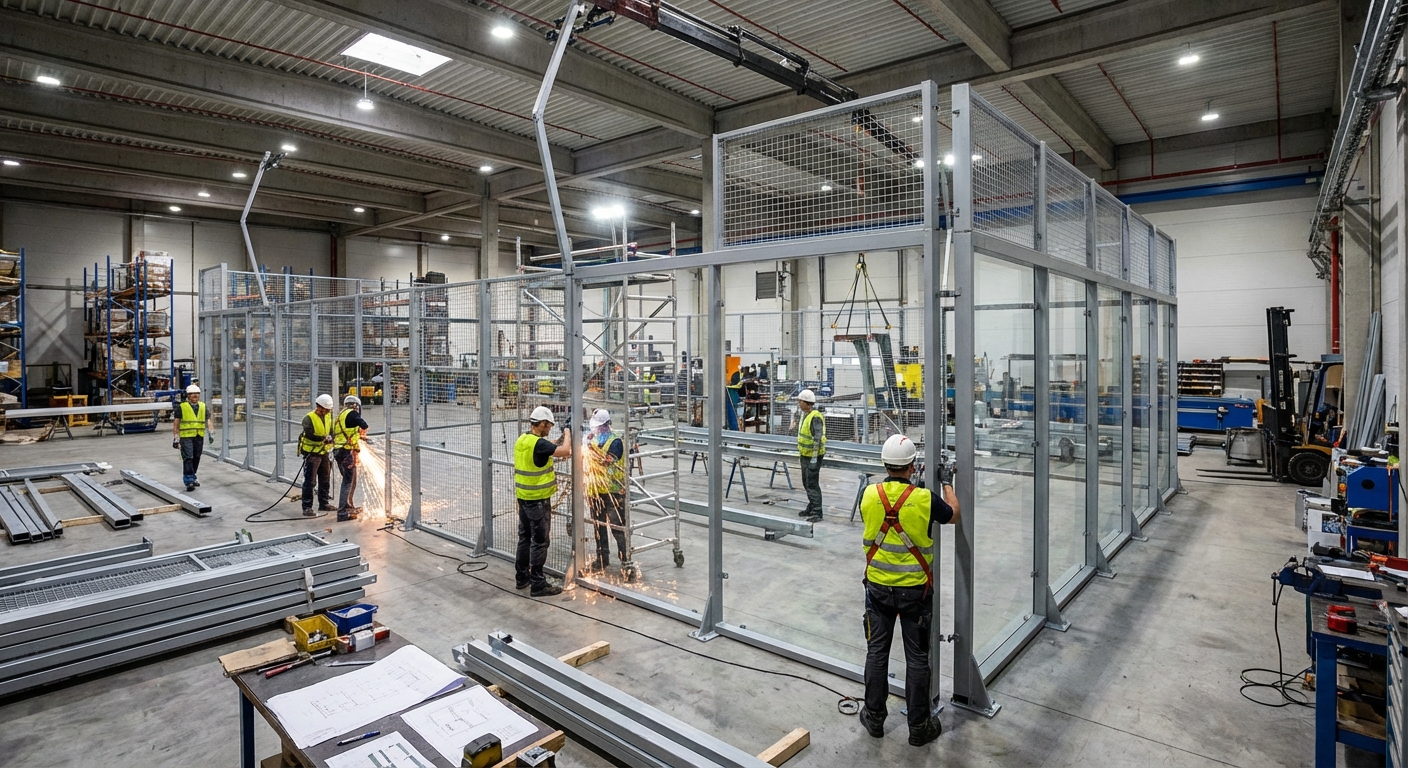
Preparing the concrete sub-base
The concrete should be at least 15cm thick with steel mesh reinforcement to support the weight of the structure and the dynamic loads of players. A laser-leveled finish is mandatory for a professional-grade installation.
Consider this:
- Levelness tolerance: Less than 3mm over 3 meters.
- Curing time: Concrete must be fully dry before turf installation.
- Anchor bolts: Used to secure the steel pillars to the floor.
Modular structure assembly steps
Once the foundation is ready, the steel pillars are erected, followed by the mesh fencing and the glass panels. The turf is then laid out, glued, and filled with sand to finalize the playing surface.
Key Takeaway: A perfect foundation is the most critical part of the construction; without it, the rest of the court will never function correctly.
| Phase | Duration | Critical Task |
|---|---|---|
| Foundation | 7 – 14 days | Leveling and Reinforcement |
| Steel Frame | 1 – 2 days | Leveling and Bolting |
| Glass & Turf | 2 – 3 days | Sealing and Sanding |
Meticulous planning during the preparation stage ensures a smooth assembly and a durable final product.
What lighting fits an indoor padel court best?
The lighting that fits an indoor padel court best is a 200W LED system with an IP66 rating to ensure uniform brightness across the entire playing area. For a high-performance indoor padel court, you should install at least eight floodlights to eliminate shadows and prevent player-blinding glares. Proper lighting allows you to run your facility late into the night, maximizing your potential booking hours.
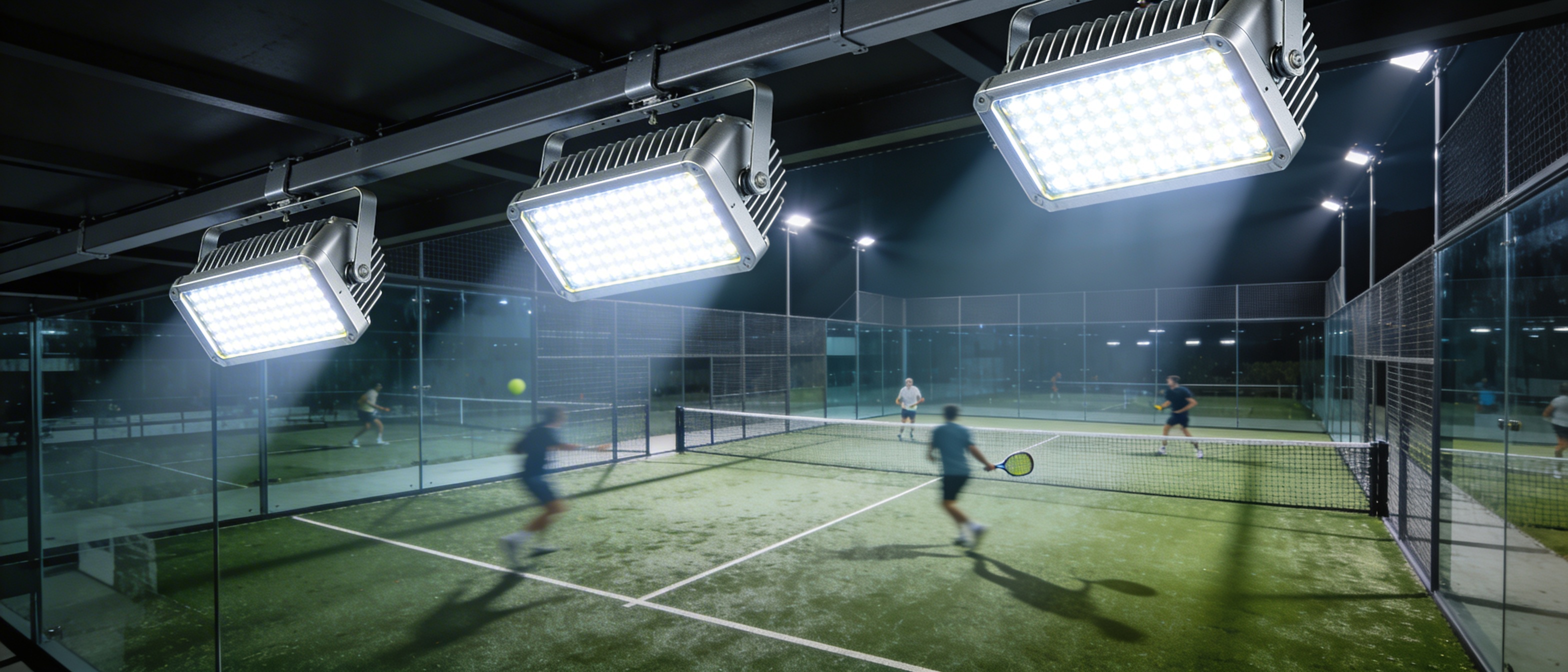
LED floodlight positioning
Lights are typically mounted on 6-meter poles or directly to the ceiling if the height allows. The goal is to provide a “vertical illuminance” that makes the ball easy to track even during high-speed exchanges.
The reality is:
- Instant on/off: No warm-up time required.
- Energy efficiency: Reduces monthly utility bills.
- Uniformity: Ensures no “dark spots” on the court.
Reducing glare for players
Glare is a major problem in many indoor sports. Professional padel lights use specialized lenses or tilted brackets to direct light downward onto the court rather than into the players’ eyes.
Key Takeaway: High-quality LED lighting not only improves gameplay but also significantly reduces the operational costs of running an indoor facility.
| Lighting Metric | Ideal Value | Player Benefit |
|---|---|---|
| Brightness | 500 – 750 Lux | Clear ball visibility |
| Power | 200W per lamp | High intensity / Low cost |
| Color Temp | 5000K (Daylight) | Natural visual feel |
Upgrading your lighting system is one of the simplest ways to elevate the perceived quality of your sports club.
Where to buy a premium indoor padel court?
You should buy a premium indoor padel court from an internationally certified manufacturer that offers factory-direct shipping and a proven track record of global installations. When searching for an indoor padel court provider, prioritize those who offer comprehensive OEM services and 24-hour quotation responses. This level of service ensures that your project stays on schedule and that you receive the exact technical documentation needed for local permits.
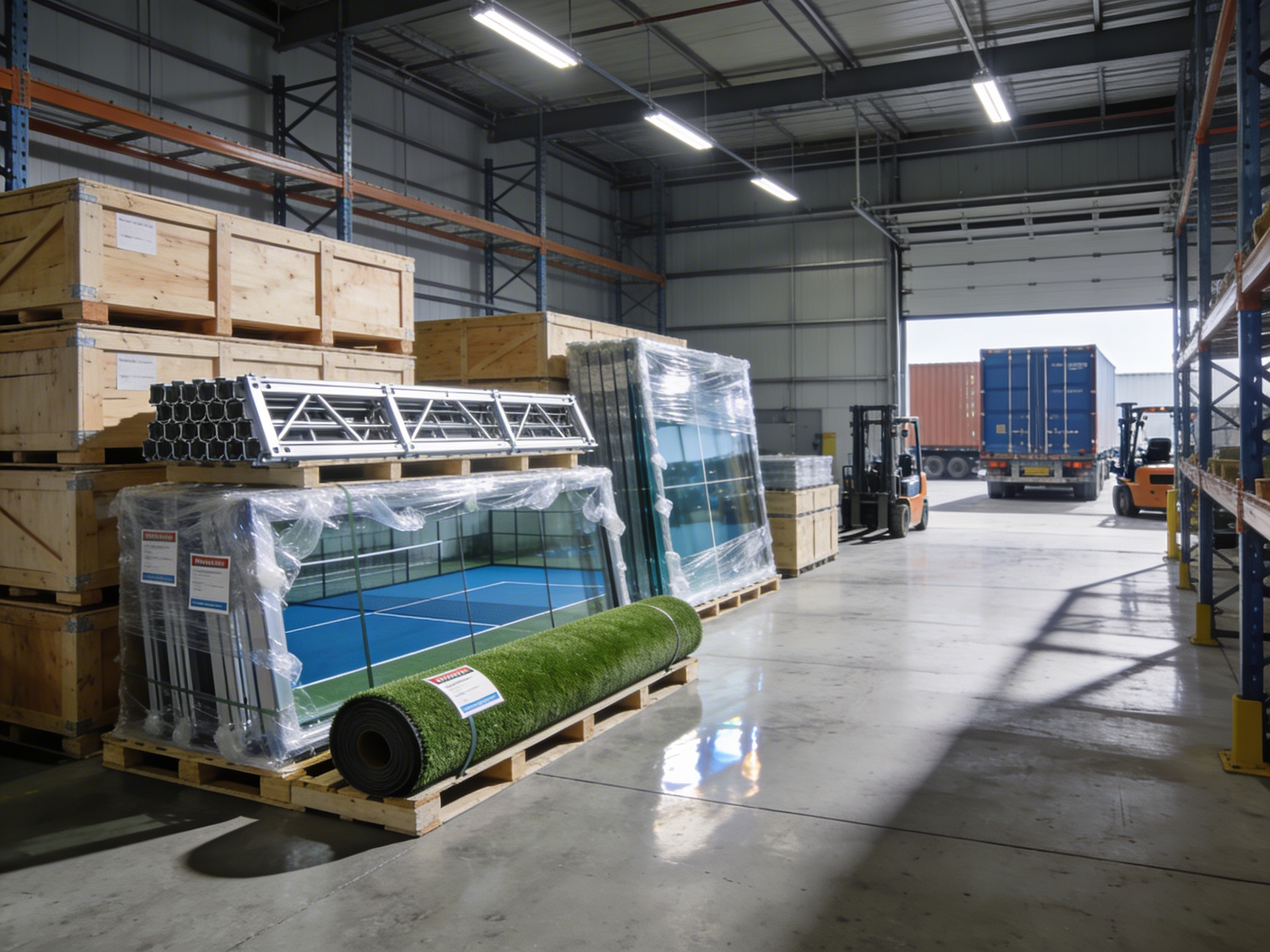
Finding a reliable manufacturer
Look for companies with at least 15 years of experience and certifications that comply with European and American safety standards. A manufacturer that owns its production facility can guarantee better quality control than a trading company.
Keep in mind:
- Check for global project portfolios.
- Verify shipping expertise to your region.
- Ask for detailed material test reports.
International shipping support
Logistics can be the most complex part of buying from overseas. A top-tier manufacturer will handle the packing and container loading professionally to ensure your glass and steel arrive in perfect condition.
Key Takeaway: Choosing a partner with deep