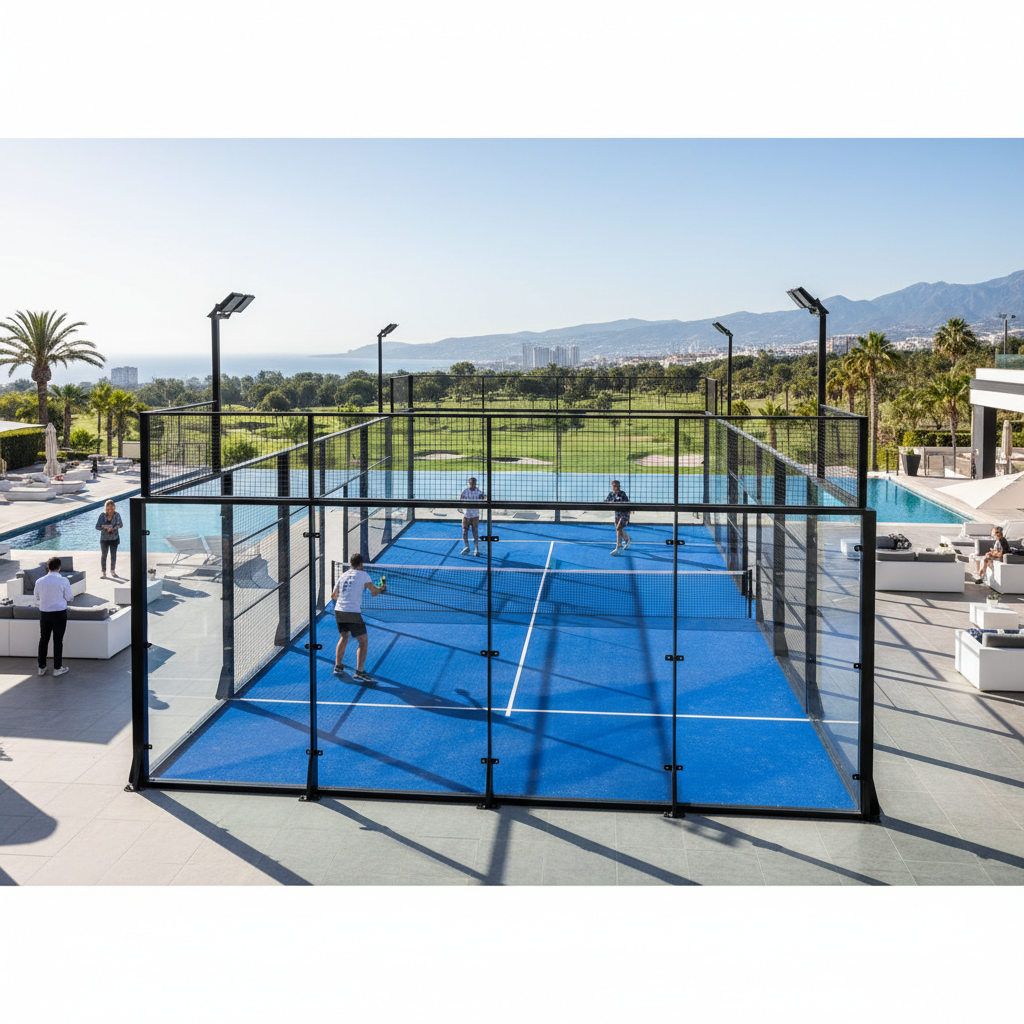
A standard size of padel court is 20 meters by 10 meters, and it is built using a reinforced concrete base, structural glass and steel walls, and professional-grade synthetic turf. If you are planning to invest in a sports facility, you might face significant capital loss if your dimensions do not meet international standards. You might be wondering if a single meter of deviation truly matters in a commercial project. Understanding the precise size of padel court metrics allows you to build a safe, high-performance arena that attracts elite players and ensures tournament certification.
What is the official size of padel court for doubles?
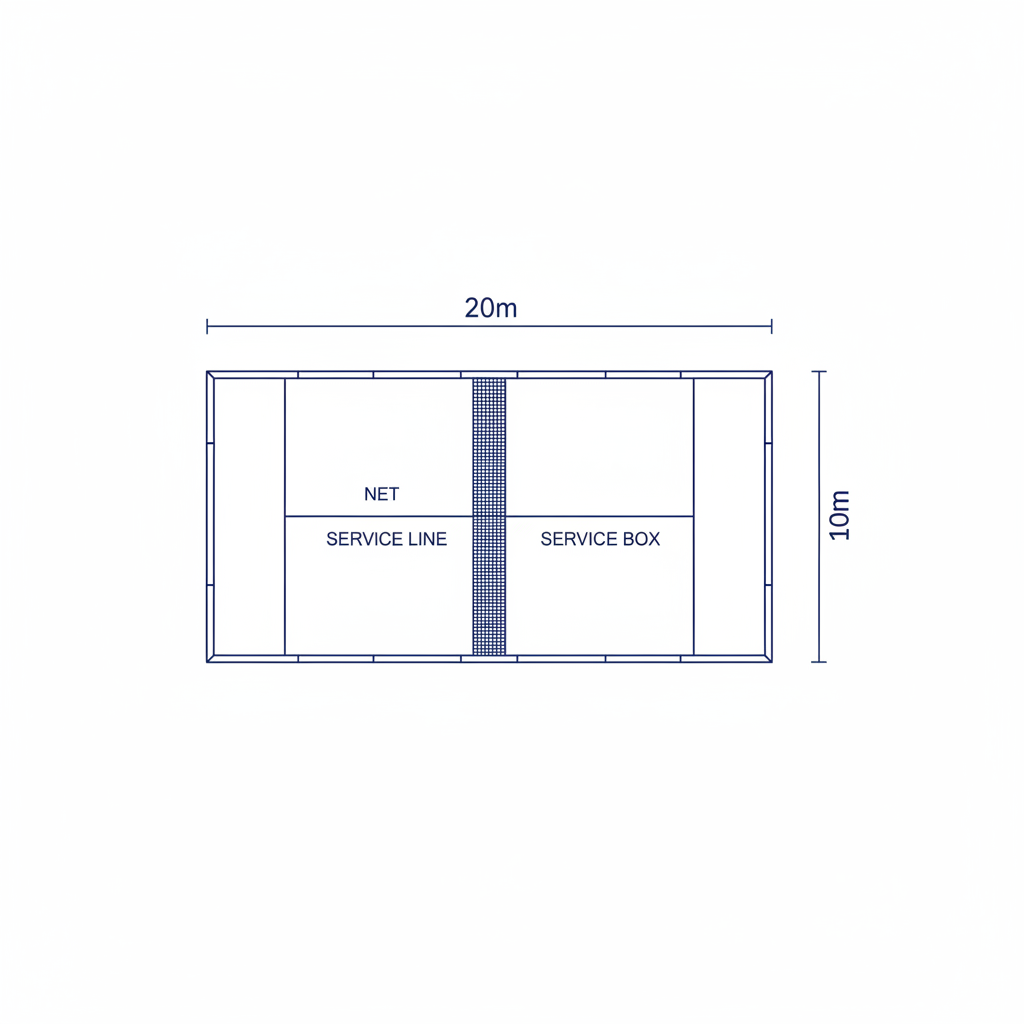
The official size of padel court dimensions for a standard doubles match must be exactly 20 meters in length and 10 meters in width. This rectangular footprint covers a total area of 200 square meters, not including the external safety buffer zones required by the International Padel Federation. Professional builders utilize laser-guided tools to ensure the perimeter is perfectly symmetrical before the foundation is poured. Precise measurements prevent dead zones where ball rebounds would otherwise become unpredictable and frustrate competitive athletes.
How are the internal service lines marked?
Think about this: The layout of the service boxes is what defines the tactical flow of every serve and volley.
- Service lines are placed 6.95 meters from the central net.
- A center service line divides the area between the net and the service line into two equal 5-meter boxes.
- All markings must be exactly 5 centimeters wide for clear visibility.
- White or black paint is used to contrast with the synthetic turf color.
Key Takeaway: Adhering to the 20×10 meter regulatory footprint is the primary requirement for any club seeking professional certification and fair gameplay.
Official Boundary Metrics
| Feature | Measurement | Required Tolerance |
|---|---|---|
| Court Length | 20.00 Meters | +/- 0.5% |
| Court Width | 10.00 Meters | +/- 0.5% |
| Net Height (Center) | 0.88 Meters | Fixed |
| Service Line Depth | 6.95 Meters | Fixed |
The precision of these metrics ensures your facility can host sanctioned tournaments and provide a consistent experience for all members.
Why does the size of padel court impact match dynamics?
The size of padel court is specifically designed to create a fast-paced environment where the walls act as active participants in the match. Unlike tennis, the smaller 20×10 space forces doubles partners to stay in close proximity, rewarding quick reflexes and strategic communication. Skilled players use the 10-meter width to execute sharp cross-court angles that capitalize on the glass rebounds. If the internal dimensions are even slightly off, the energy transfer between the ball and the glass panels will ruin the competitive balance.
Does the court size favor power or precision?
Here is the deal: The compact nature of the arena shifts the advantage away from raw power toward technical placement and positioning.
- Shorter distances between players reduce reaction times for volleys.
- The 10-meter width encourages tactical lobs and dinks over the net.
- Predictable rebounds allow for complex defensive play from the rear glass.
- Symmetry across the 20-meter length ensures no team has a spatial advantage.
Key Takeaway: Precise spatial dimensions are the foundation of padel’s unique physics, ensuring that player skill remains the deciding factor in every rally.
Gameplay Strategy Factors
| Metric | Dimension | Impact on Play |
|---|---|---|
| Playing Area | 200m² | High-speed intensity |
| Wall Proximity | 3.00m (Rear) | Defensive rebound options |
| Net Span | 10.00m | Cross-court tactical depth |
| Total Length | 20.00m | Lob and smash accuracy |
Careful planning of the internal space ensures that your facility provides the “feel” that experienced players expect from a world-class arena.
How to prepare the foundation for the size of padel court?
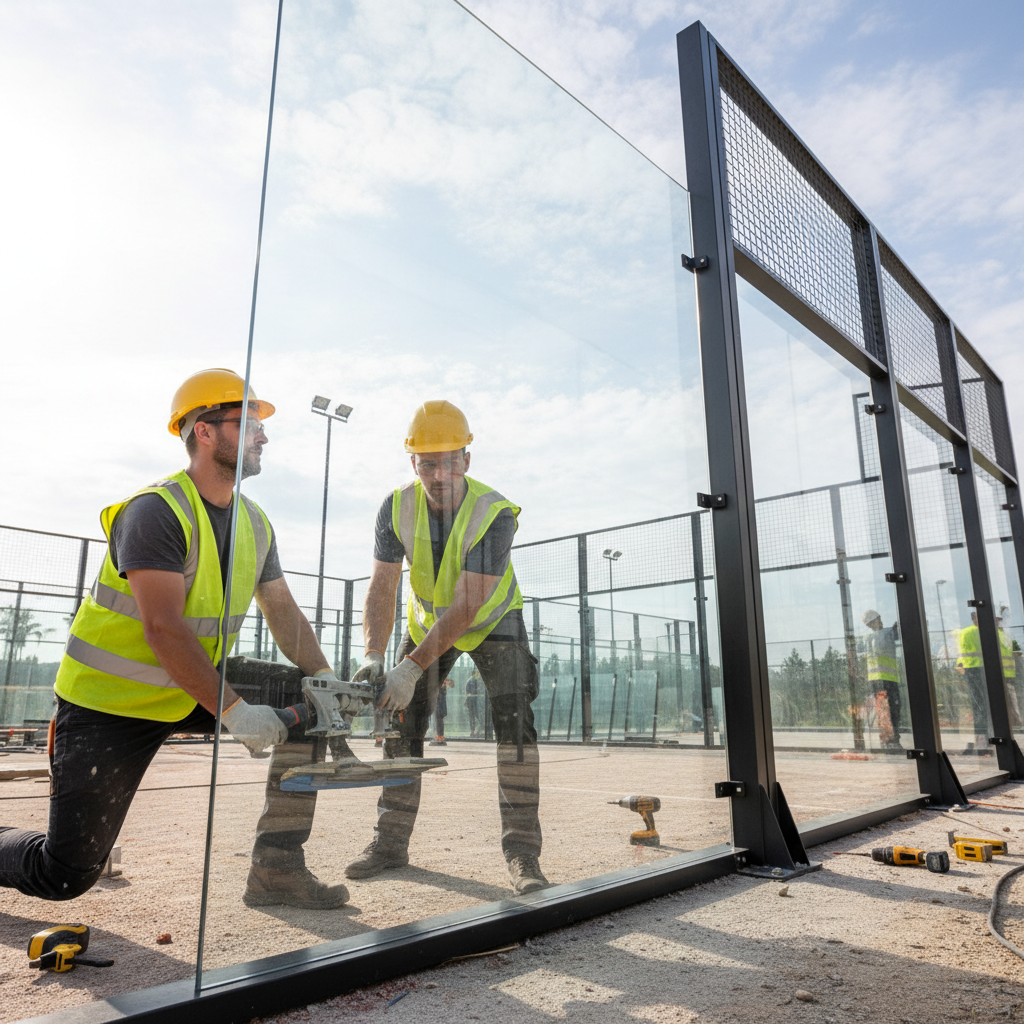
Preparing the base for the size of padel court requires a 15-centimeter thick slab of reinforced concrete to support the weight of the structural glass. Engineers must ensure the foundation is perfectly level, as even a 3-millimeter dip can cause water to pool and ruin the synthetic turf. The concrete base should extend at least 20 centimeters beyond the 20×10 perimeter to provide a secure anchoring zone for the steel frame pillars. Professional site preparation includes a crushed stone sub-base to prevent soil shifts from cracking the main playing surface.
What are the drainage requirements for outdoor builds?
Believe it or not, standing water is the leading cause of premature synthetic turf failure in outdoor sports facilities.
- Foundations should have a 1% transversal slope for horizontal drainage.
- Porous concrete options allow for vertical drainage during heavy rainfall.
- Perimeter channels must be installed to carry runoff away from the site.
- Aggregates should be compacted to 95% density to prevent future sinking.
Key Takeaway: A robust, level foundation is the most critical technical investment to ensure the long-term structural integrity of your sports arena.
Foundation Specification Table
| Layer | Material | Recommended Depth |
|---|---|---|
| Sub-Base | Compacted Gravel | 200mm |
| Structural Slab | Reinforced Concrete | 150mm |
| Perimeter Support | Extended Concrete | 200mm Width |
| Surface Finish | Leveling Compound | 1mm – 3mm |
Proper groundwork prevents structural warping and ensures that the glass panels remain perfectly aligned for the life of the facility.
What wall height is standard for the size of padel court?
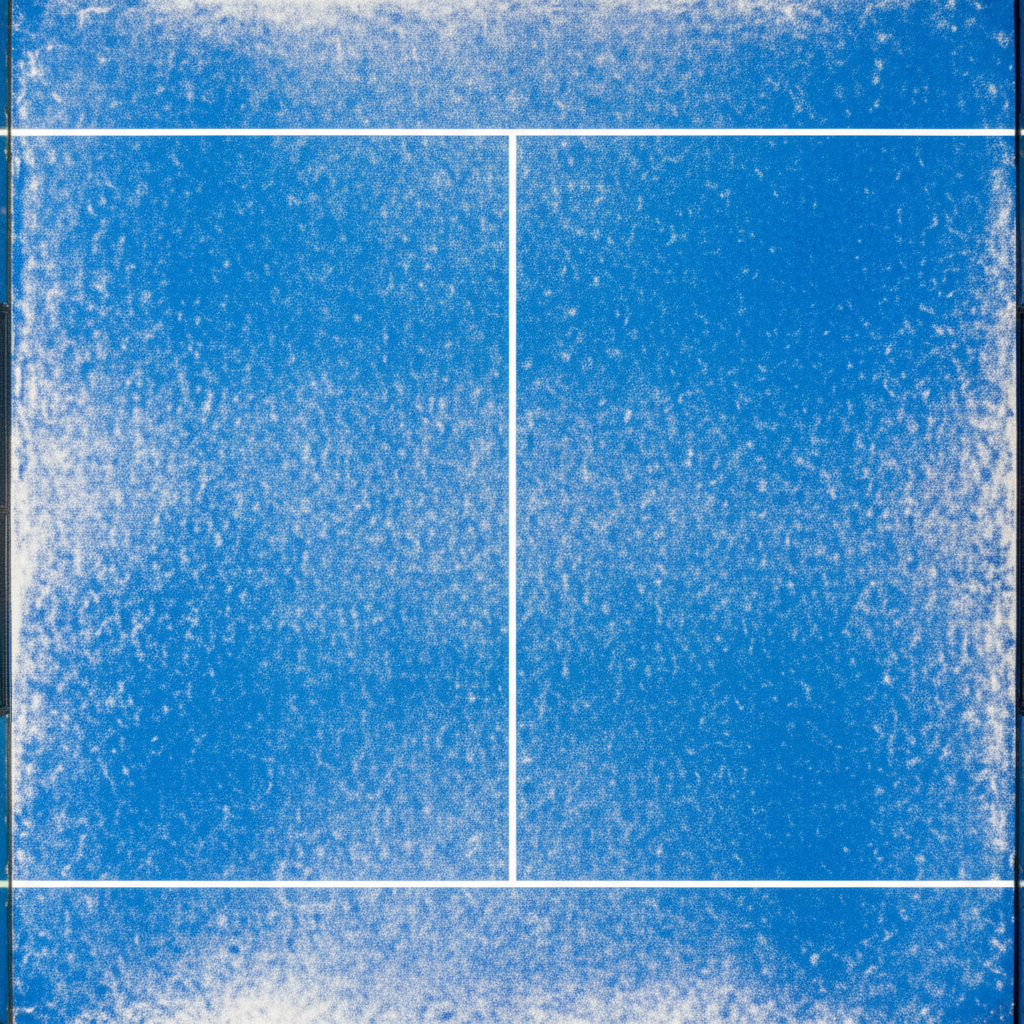
The size of padel court enclosures reaches a maximum height of 4 meters at the rear to contain high-velocity smashes. These walls consist of 3-meter high tempered glass panels topped with 1 meter of electro-welded metal mesh. Side walls typically follow a “stepped” or “level” configuration where the height drops to 3 meters after the first section to improve spectator visibility. High-quality steel frames are mandatory to support these vertical heights against extreme wind loads in outdoor settings.
Why is glass thickness critical for safety?
Ready for the good part? Using 12-millimeter anti-explosion tempered glass ensures the panels can withstand player collisions and heavy ball impacts.
- Rear glass panels stand 3 meters high.
- Side glass typically reaches 2 meters before transitioning to mesh.
- Neoprene gaskets must be used to cushion glass against the steel frame.
- High-tensile mesh prevents the ball from leaving the 10-meter wide arena.
Key Takeaway: Standardized wall heights and glass specifications are essential for player safety and the unique “wall-play” mechanics of the sport.
Vertical Wall Configuration
| Section | Total Height | Material Composition |
|---|---|---|
| Rear Wall | 4.00 Meters | Glass (3m) + Mesh (1m) |
| Side (Ends) | 4.00 Meters | Glass (3m) + Mesh (1m) |
| Side (Middle) | 3.00 Meters | Structural Metal Mesh |
| Glass Thickness | 12mm | Tempered Safety Standard |
These vertical benchmarks define the boundary of play and are strictly regulated to maintain the safety of both athletes and spectators.
How much land is required for the size of padel court runoff?
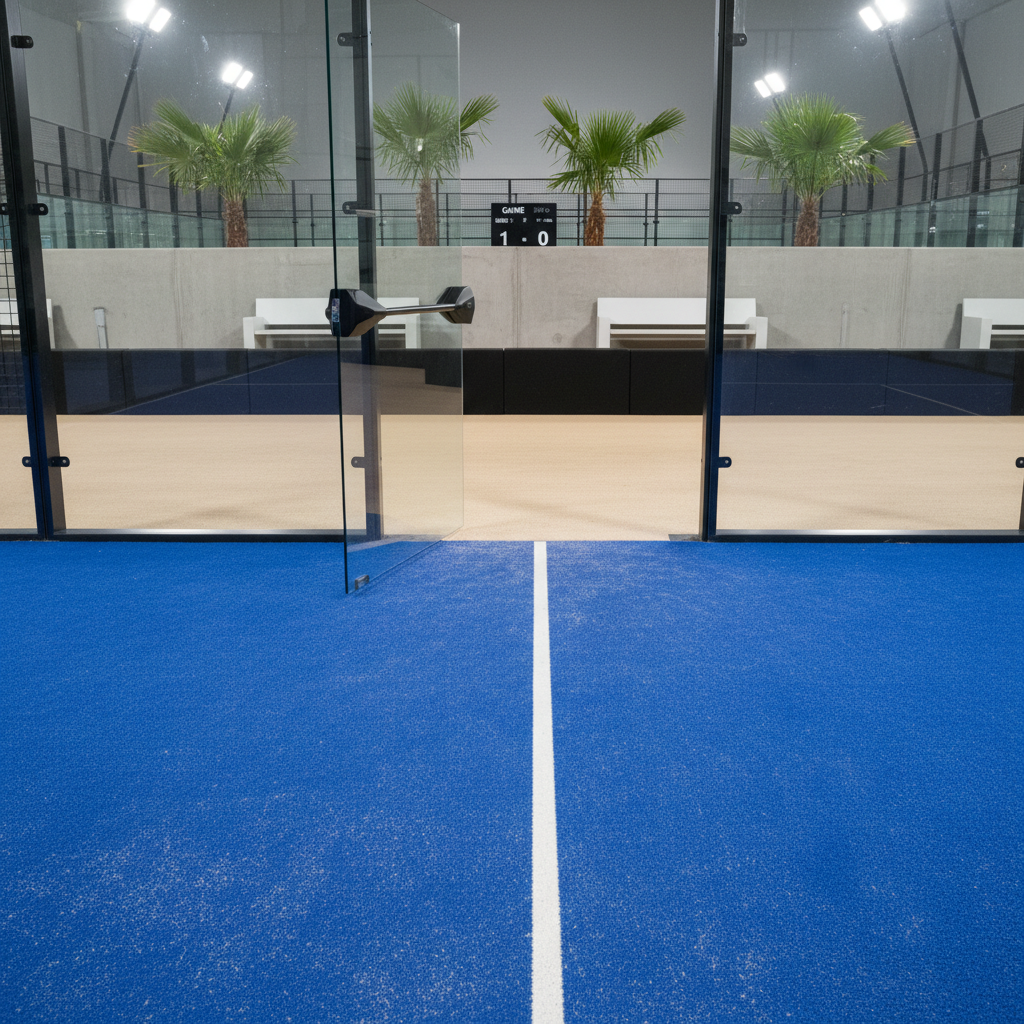
While the size of padel court is 20×10 meters, you must allocate a total area of approximately 24×14 meters to account for mandatory safety runoff zones. International standards require at least 2 meters of clear space around the perimeter to allow players to safely exit the court to retrieve “out-of-bounds” balls. Obstructing these zones with benches, lighting poles, or spectator seating can lead to serious injuries and legal liability for the club owner. Proper spatial planning ensures that the flow of traffic around the courts remains efficient during peak booking hours.
What amenities should sit outside the runoff zone?
Think about this: Professional facilities use the space beyond the 2-meter buffer to enhance the social experience for members.
- Spectator benches should be placed 3 meters away from the glass.
- Lighting masts must be integrated into the fence line to save space.
- Water stations and equipment cubbies belong in the social transit zones.
- Landscaping must remain clear of the high-speed player exit doors.
Key Takeaway: Providing sufficient safety runoff is a non-negotiable requirement for professional clubs and significantly improves the facility’s overall safety rating.
Total Site Area Requirements
| Zone Type | Dimensions | Total Area |
|---|---|---|
| Playable Court | 20m x 10m | 200m² |
| Safety Runoff | 2m Perimeter | 96m² (Additional) |
| Minimum Plot | 24m x 14m | 336m² |
| Recommended Plot | 26m x 16m | 416m² |
Allocating the correct amount of land from the start prevents overcrowding and allows for the future installation of amenities like shade structures.
Can you install the size of padel court in indoor arenas?
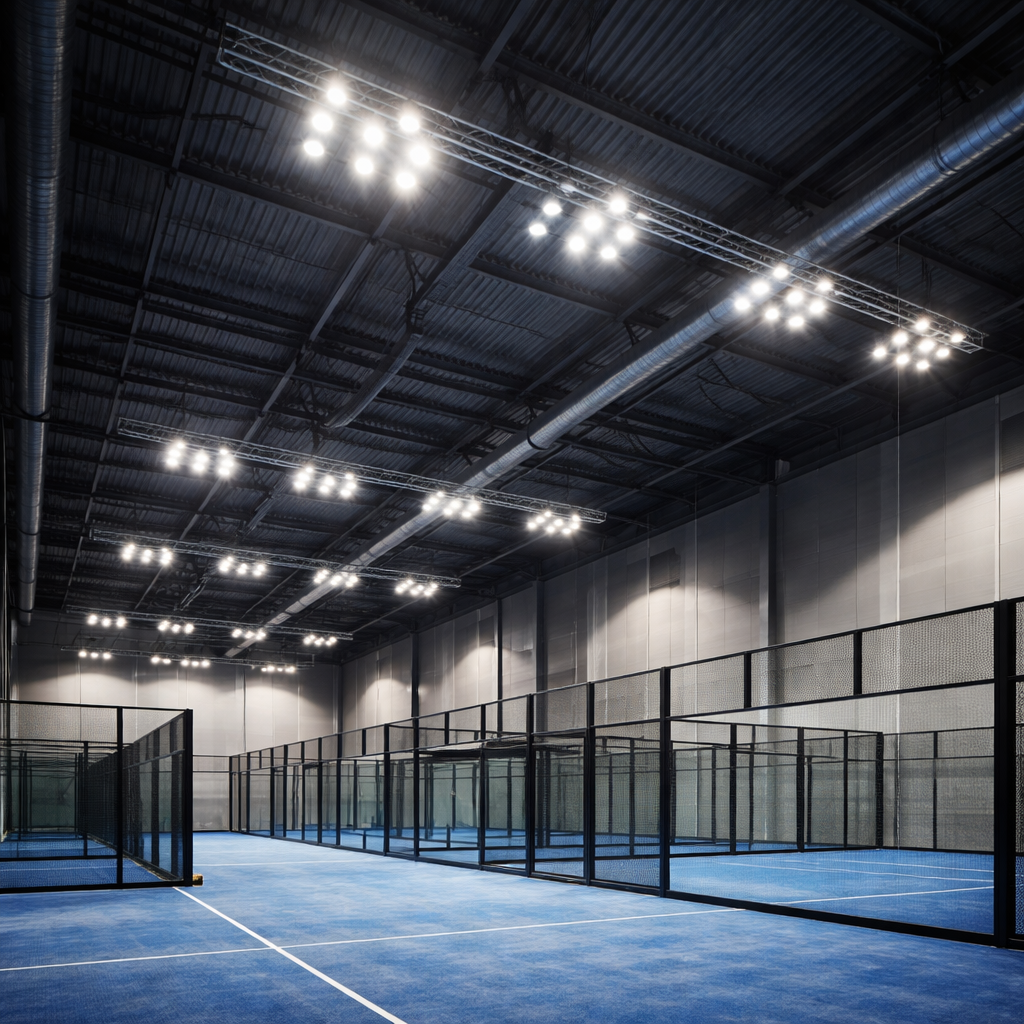
The size of padel court is ideal for indoor facilities, but the ceiling height is the most restrictive factor for successful builds. You need a minimum clear height of 6 meters, though 8 meters is strongly recommended to allow for competitive defensive lobs. Indoor environments provide the major benefit of year-round revenue, as matches are never interrupted by rain or extreme temperatures. Converting existing warehouses or gyms requires a thorough check of structural pillar placement to ensure the 20×10 meter area remains unobstructed.
How to manage acoustics in indoor venues?
The best part? Indoor courts allow for total environmental control, which keeps the playing surface dry and the glass walls crystal clear.
- Acoustic panels can be installed to reduce the loud echo of ball impacts.
- Specialized lighting systems prevent shadows against high industrial ceilings.
- HVAC systems must maintain low humidity to prevent glass condensation.
- Flooring must be leveled with epoxy before the synthetic turf is laid.
Key Takeaway: Indoor courts offer stable revenue and a premium experience, provided the building meets the 8-meter vertical clearance benchmark.
Indoor Facility Standards
| Feature | Minimum | Recommended |
|---|---|---|
| Ceiling Height | 6.00 Meters | 8.00+ Meters |
| Ventilation | 2 Changes/Hr | 4 Changes/Hr |
| Lighting | 500 Lux | 750 Lux |
| Floor Levelness | +/- 3mm | +/- 1mm |
Meeting these indoor benchmarks ensures that high-level players will choose your facility over competitors with restricted vertical space.
What lighting is needed for the size of padel court area?
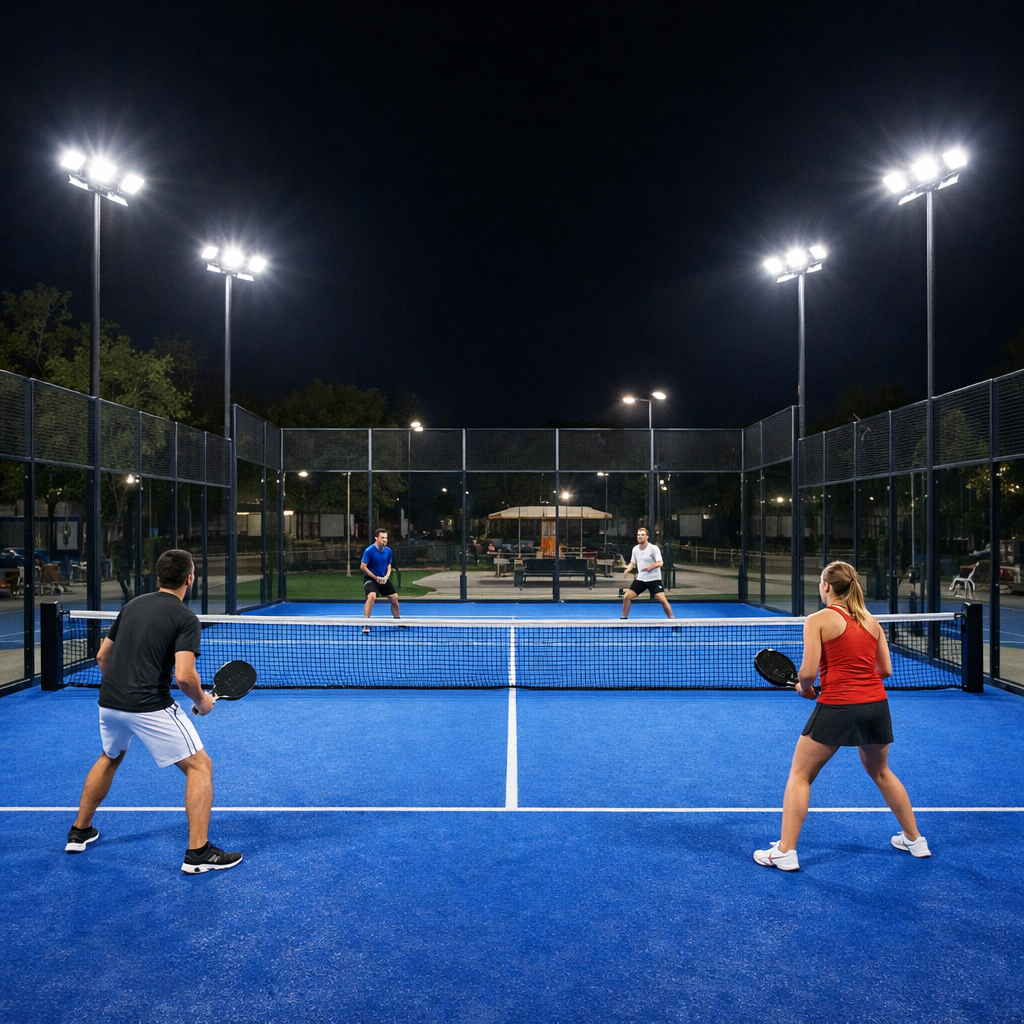
The size of padel court lighting must provide uniform coverage across the entire 200m² playing surface to ensure player safety during night matches. Standard layouts utilize four 6-meter masts equipped with high-efficiency LED floodlights to reach a brightness level of at least 500 lux. Professional venues hosting filmed tournaments often require up to 1000 lux with a high uniformity ratio to avoid shadows in the corners. Modern LED systems are preferred because they offer instant ignition and significantly lower electricity costs for club owners.
How to prevent glare for serves and lobs?
Here is the deal: The placement and angle of the floodlights are just as important as the total lumen output.
- Masts are typically placed 10 meters apart along the side fences.
- Asymmetrical lenses direct light downward to avoid blinding players.
- Anti-glare shields protect neighboring properties from light pollution.
- Integrated masts can be built into the structural frame pillars to save land.
Key Takeaway: High-quality, uniform LED lighting maximizes your court’s operational hours and provides a professional look that attracts evening bookings.
Lighting System Metrics
| Category | Club Standard | Tournament Grade |
|---|---|---|
| Average Lux | 500 | 750 – 1000 |
| Uniformity Ratio | 0.50 | 0.70 |
| Mast Height | 6.00 Meters | 8.00 Meters |
| Power Source | LED | LED High-Output |
Investing in a digital lighting controller allows you to adjust brightness levels based on court occupancy, further reducing your monthly utility bills.
Which materials are best for the size of padel court frames?
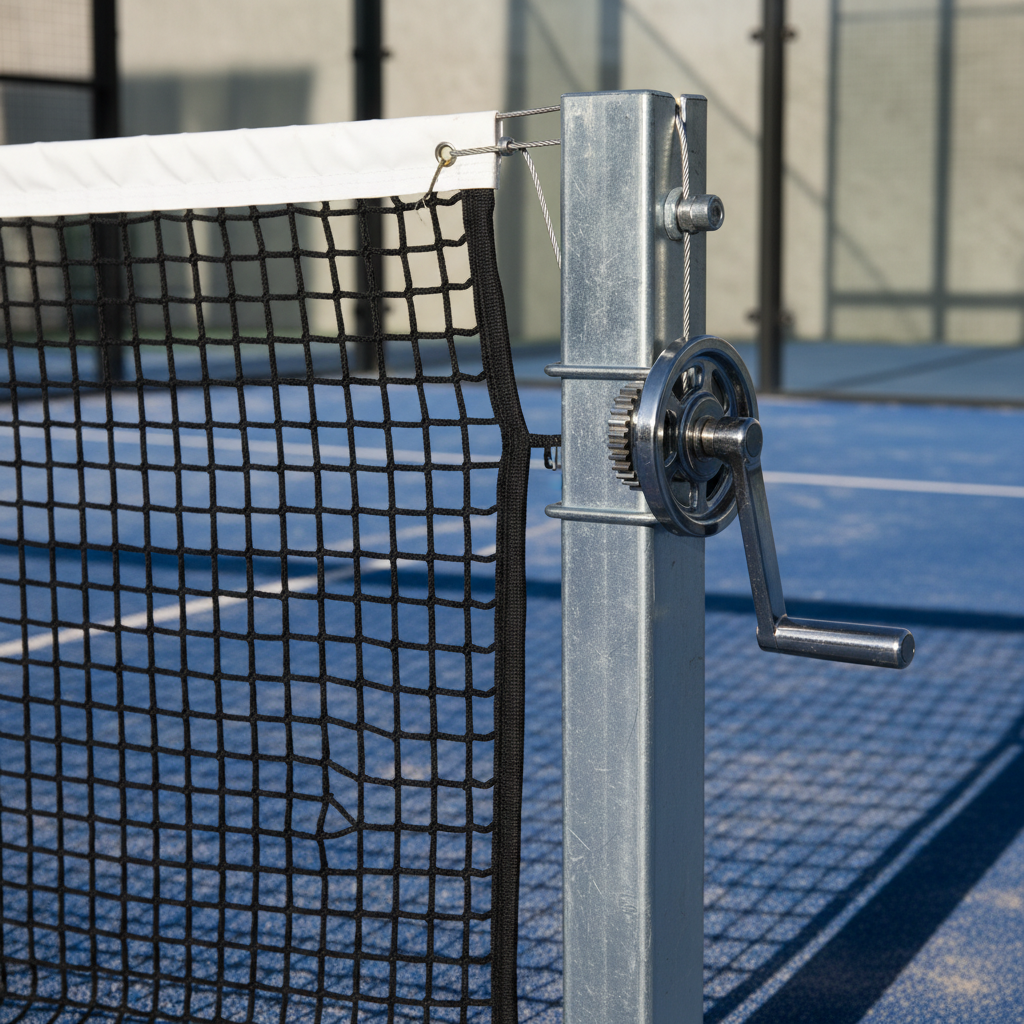
Matching high-grade materials to the size of padel court specifications is essential for a structure that survives decades of intense use. The frame should be constructed from hot-dip galvanized steel to prevent rust, especially in humid or coastal environments. Tempered safety glass with a thickness of 12mm provides the necessary mass for consistent rebounds and protects players from injury during impacts. Professional builders also insist on high-density monofilament turf, which offers the best balance of grip and slide for athlete footwork.
Why is the sub-base material so important?
Ready for the good part? Using rounded silica sand infill protects the synthetic fibers from abrasion and keeps the turf upright.
- Steel pillars must be at least 3mm thick for structural stability.
- Stainless steel hardware prevents corrosion at the glass connection points.
- UV-resistant turf coatings prevent the blue color from fading in the sun.
- Modular frame designs allow for faster on-site assembly and lower labor costs.
Key Takeaway: Selecting industrial-grade, certified materials is the only way to minimize maintenance costs and ensure the safety of your club members.
Material Selection Standards
| Component | Minimum Specification | Benefit |
|---|---|---|
| Structural Frame | Galvanized Steel | 20-Year Rust Protection |
| Wall Panels | 12mm Tempered Glass | Safe, Predictable Rebounds |
| Playing Surface | Monofilament Turf | High Grip & Low Abrasion |
| Fasteners | Stainless Steel | Structural Integrity |
Consult with a specialist manufacturer to ensure every component of your build meets the European safety standards for public sports arenas.
How to calculate construction costs for the size of padel court?
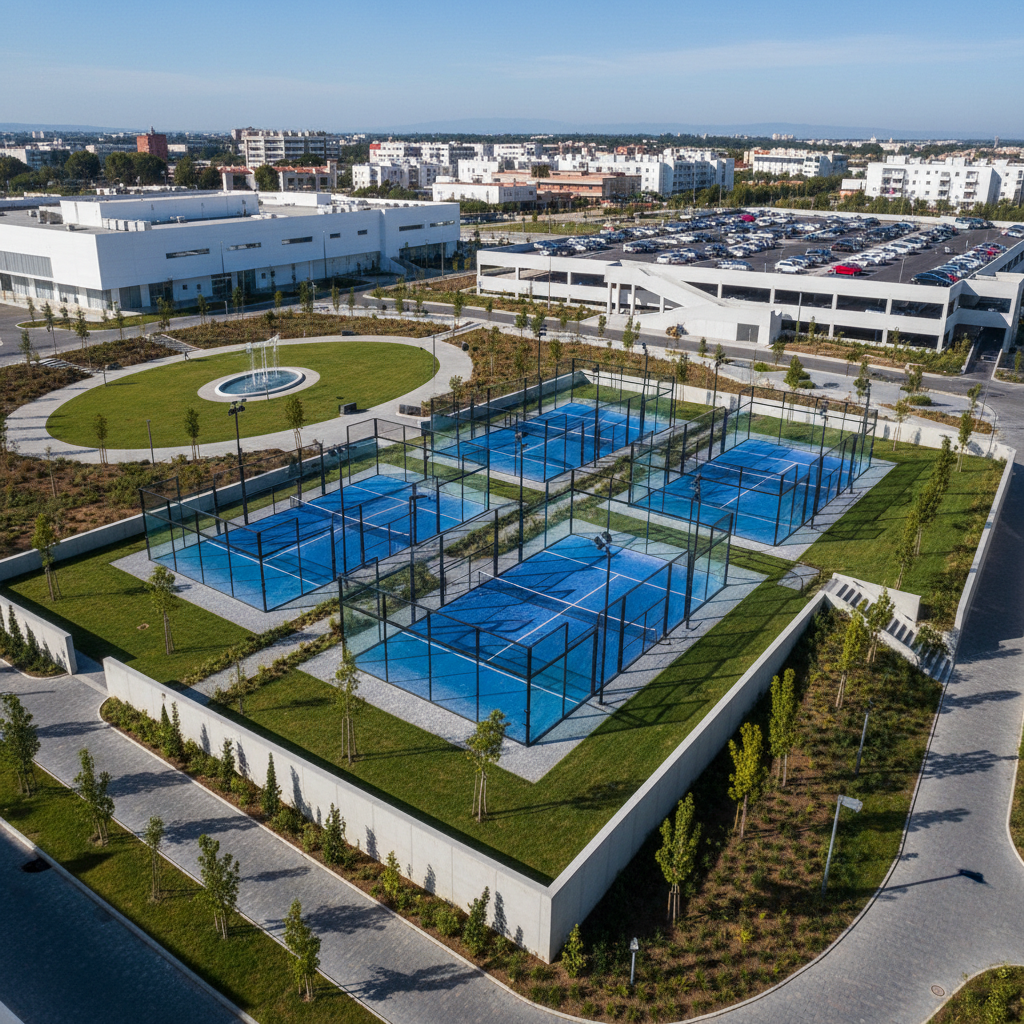
Calculating the budget for the size of padel court depends on site preparation, material quality, and whether you choose a standard or panoramic design. A standard commercial-grade court typically ranges from $25,000 to $40,000, while premium panoramic models can exceed $60,000. Foundation work is the most variable cost, as local soil conditions and drainage needs can significantly increase the amount of concrete and excavation required. Savvy investors often buy directly from the manufacturer to save up to 30% on the structural components.
What are the main operational expenses?
Think about it: The initial build is only one part of the financial model; you must also plan for ongoing facility maintenance.
- LED lighting consumes very little power but should be factored into bills.
- Turf requires a deep cleaning and sand top-up every 12 to 18 months.
- Glass panels should be inspected annually for gasket wear and alignment.
- Marketing and booking software are essential for maximizing occupancy rates.
Key Takeaway: Strategic budgeting and choosing factory-direct procurement routes will ensure a faster return on investment and lower total cost of ownership.
Estimated Budget Breakdown
| Category | Percentage of Budget | Cost Drivers |
|---|---|---|
| Court Structure | 45% | Steel, Glass, Net |
| Foundation/Site | 35% | Concrete, Excavation |
| Turf & Lighting | 15% | LED, Grass Quality |
| Shipping/Labor | 5% | Location, Local Rates |
Proper financial planning allows you to build a high-end facility that justifies premium booking rates and attracts a loyal membership base.
Where can I find a kit for the size of padel court build?
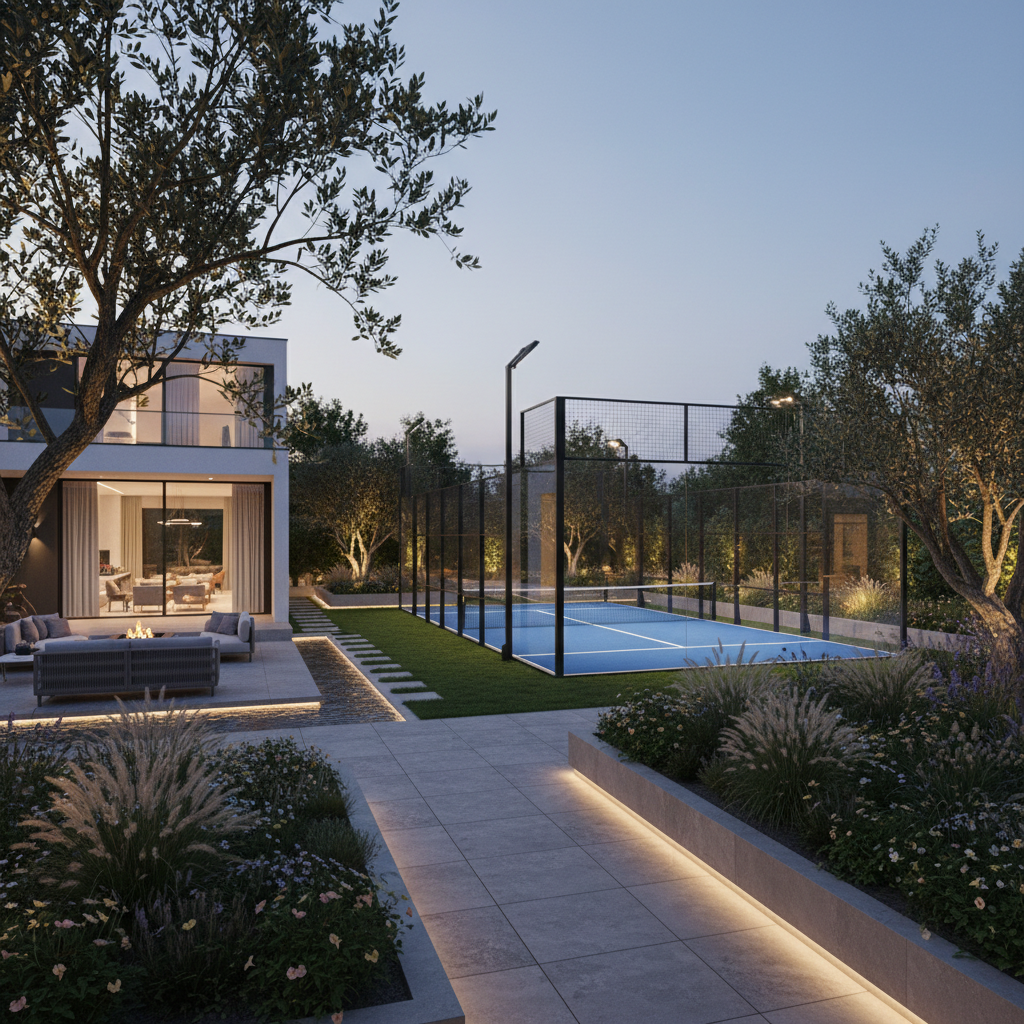
Finding a reliable supplier for the size of padel court kit ensures that every structural element arrives on-site ready for precision assembly. Manufacturers provide complete modular packages that include the galvanized steel frame, tempered glass panels, synthetic turf, and lighting masts. Using a prefabricated kit reduces construction time on-site from weeks to just a few days, allowing your club to begin generating revenue sooner. It is essential to choose a supplier with international certifications to ensure the glass and steel meet public safety standards.
Is professional installation always required?
Ready for the good part? While the modular design is straightforward, professional installers have the suction equipment and laser tools needed for perfect glass alignment.
- Complete kits include all necessary bolts and neoprene gaskets.
- Remote video guidance is often available for local construction crews.
- Choosing a “turn-key” solution minimizes the risk of structural mistakes.
- Custom colors and branding can be integrated into the factory build.
Key Takeaway: Sourcing your court kit directly from an experienced manufacturer guarantees structural compliance and provides the best value for your investment.
Procurement Checklist
| Step | Action Item | Goal |
|---|---|---|
| Design | Select Panoramic or Standard | Aesthetic & Budget match |
| Order | Verify Factory Certification | Safety Compliance |
| Logistics | Specify Port of Destination | Reduced Inland Costs |
| Install | Hire Specialist Crew | Precision Glass Fitting |
Following this procurement path ensures that your final facility is a world-class sports destination that will stand the test of time.
Restating the article title, the size of padel court is a precise technical metric that defines the success of your sports facility. We have analyzed the mandatory 20m x 10m footprint, the critical foundation requirements, and the material standards necessary for a professional build. Successful developers prioritize these global benchmarks to ensure safety, gameplay integrity, and long-term profitability. Our vision is to empower you with the data needed to build world-class arenas that bring people together through sport. If you are ready to start your journey, please contact us today to receive your custom manufacturing blueprint.
Q1: Can I build a court in a small backyard?
Yes, provided you have a flat area of at least 24×14 meters to accommodate the court and the required safety runoff zones. You must also check local zoning laws regarding permanent structures and lighting.
Q2: What’s the best color for the playing turf?
Blue is the professional standard as it provides the highest visual contrast against the yellow ball and looks excellent on video. Green and terracotta are popular alternatives for more rustic or residential settings.
Q3: How do I know if the glass is safe for public use?
How you know is by checking for the EN 12150 certification, which ensures the glass is tempered and anti-explosion. This prevents the panels from breaking into dangerous shards during a heavy impact.
Q4: Can I install padel on an existing tennis court?
Yes, since a padel court is smaller, you can often fit two or even three padel courts within the footprint of a single traditional tennis court. You will still need to verify that the existing base can support the new glass wall weight.
Q5: What’s the best way to handle drainage for my court?
The best way is to utilize a porous concrete foundation that allows water to drain vertically into a stone sub-base. This keeps the court perfectly flat and playable even shortly after a heavy rainstorm.