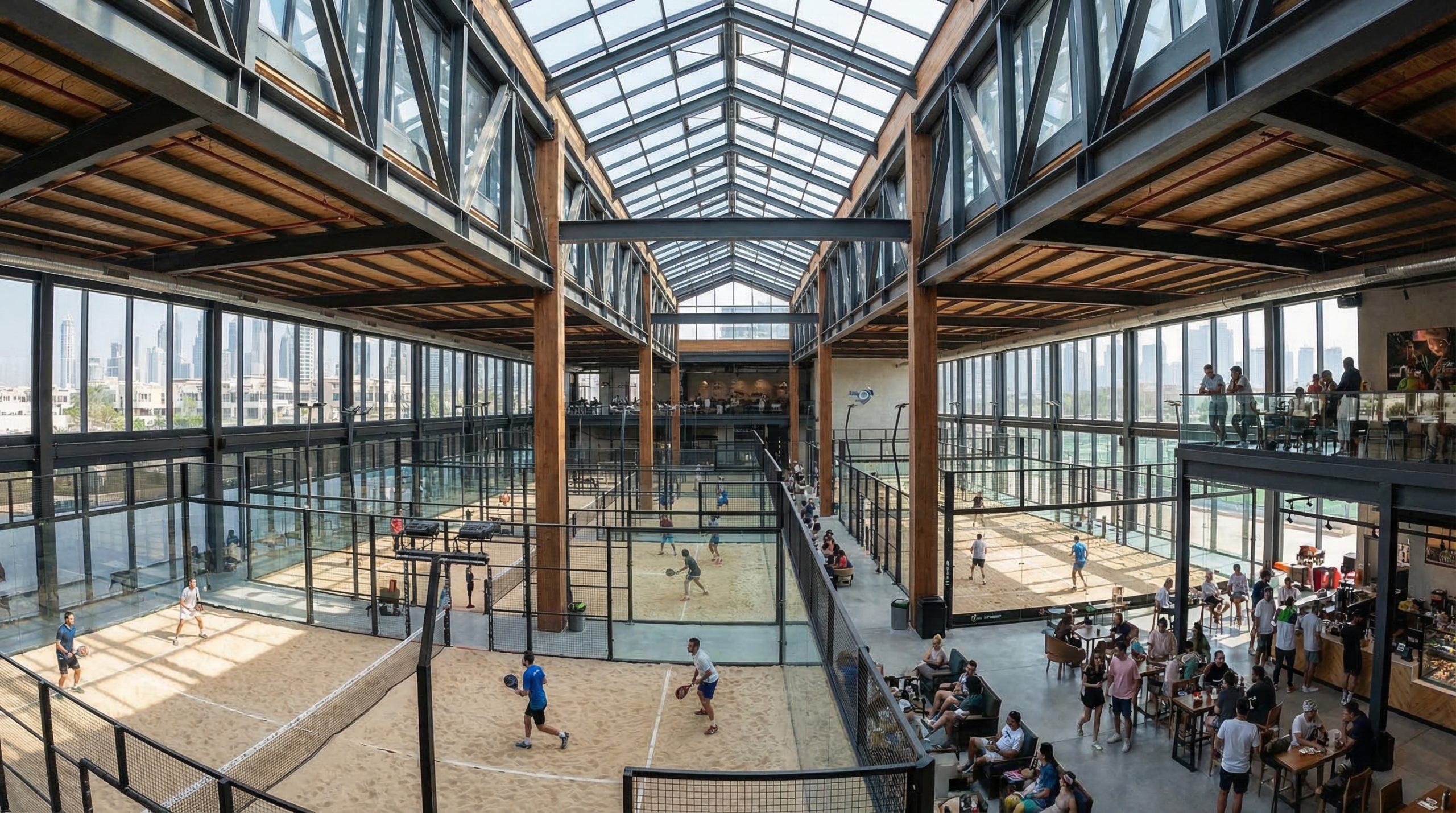
What are indoor padel courts dubai?
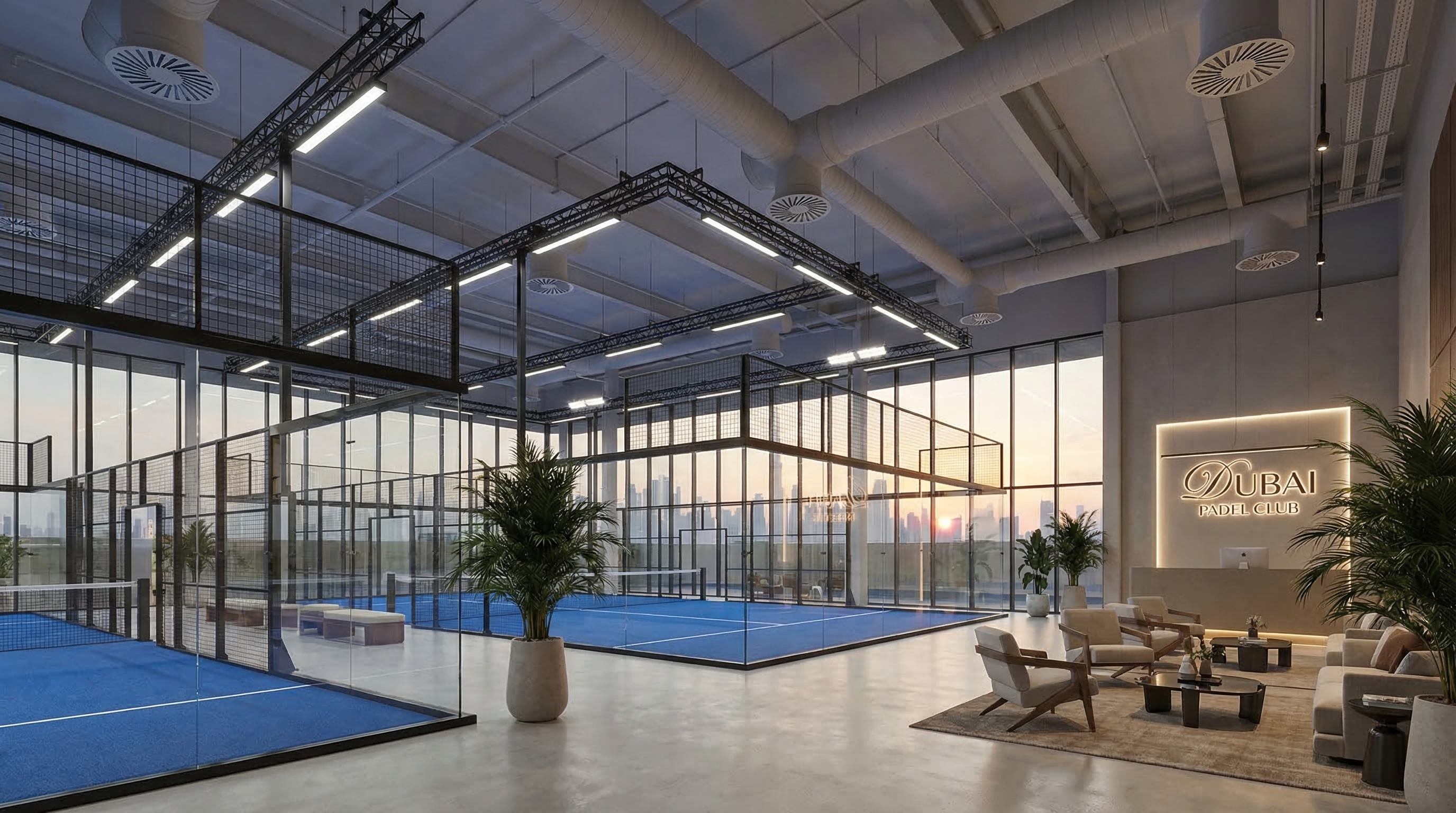
These are fully enclosed sports systems featuring a 20×10 meter playing area surrounded by tempered glass and metallic mesh, specifically housed within air-conditioned buildings. Building indoor padel courts dubai allows operators to bypass the logistical nightmares of seasonal weather shifts.
The structure is typically integrated into high-clearance warehouses or retail spaces. This ensures that the social and competitive thrill of padel remains accessible even during the peak of the Arabian summer.
The rise of indoor sports in the UAE
The demand for high-quality indoor facilities has exploded as Dubai continues its transformation into a global sports capital. People here prioritize luxury and comfort, making the move from outdoor sun-baked courts to chilled indoor arenas a logical progression.
Here is the deal:
Players are willing to pay a premium for air conditioning.
- Consistent temperature regulation (22-24°C).
- Protection from sandstorms and high humidity.
- Advanced acoustics and glare-free lighting.
How does it differ from outdoor padel?
Indoor play eliminates variables like wind resistance and direct sun glare, which significantly improves the technical quality of the game. For professionals, the controlled environment allows for more precise lobs and consistent ball behavior off the glass.
Key Takeaway: Indoor courts prioritize player comfort and technical consistency, providing a premium experience that outdoor venues cannot match in the desert climate.
| Feature | Indoor Padel | Outdoor Padel |
|---|---|---|
| Climate Control | Full AC (Year-round) | Seasonal (Winter only) |
| Ball Speed | Consistent | Variable (Humidity/Wind) |
| Operational Hours | 24/7 Potential | Limited by Heat/Light |
Indoor facilities represent the evolution of the sport in urban environments where weather is a limiting factor.
Why choose indoor padel courts dubai for your club?
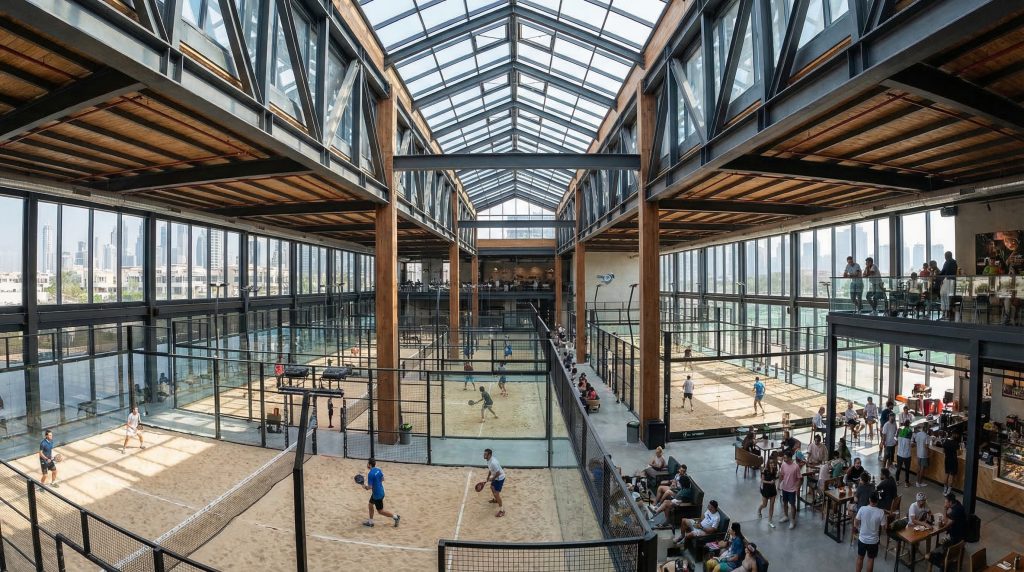
Choosing indoor padel courts dubai ensures that your facility remains a high-traffic destination every single day of the calendar year. Unlike outdoor venues that see a 60% drop in bookings during the summer, indoor centers maintain steady cash flow through the hottest months.
This predictability is the cornerstone of a successful business model in the UAE sports industry. You can plan tournaments, coaching clinics, and corporate events without ever checking a weather forecast.
Beating the extreme summer heat
The primary driver for indoor facilities is survival against the UAE’s heatwaves that render outdoor play impossible for six months. Players are increasingly looking for “cool” social experiences where they can compete without the risk of heatstroke.
But wait, there is more:
Indoor facilities also protect your equipment from UV degradation.
- Higher player retention rates.
- Reduced wear and tear on turf and nets.
- Enhanced opportunities for evening and midnight play.
Year-round revenue opportunities
By removing seasonal barriers, you double your potential booking hours compared to traditional outdoor models. This consistency allows for better long-term contracts with coaching academies and sports sponsors who need reliable venues.
Key Takeaway: Investing in indoor infrastructure is a strategic move to secure consistent revenue and dominate the local market through weather-resilient operations.
| Metric | Indoor Club Impact | Outdoor Club Impact |
|---|---|---|
| Annual Utilization | 90% – 95% | 45% – 55% |
| Summer Revenue | Peak Performance | Significant Decline |
| Customer Loyalty | High (Habitual Play) | Low (Seasonal Play) |
Operating an indoor center removes the volatility associated with Dubai’s harsh environment.
Where is the best location for indoor padel courts dubai?
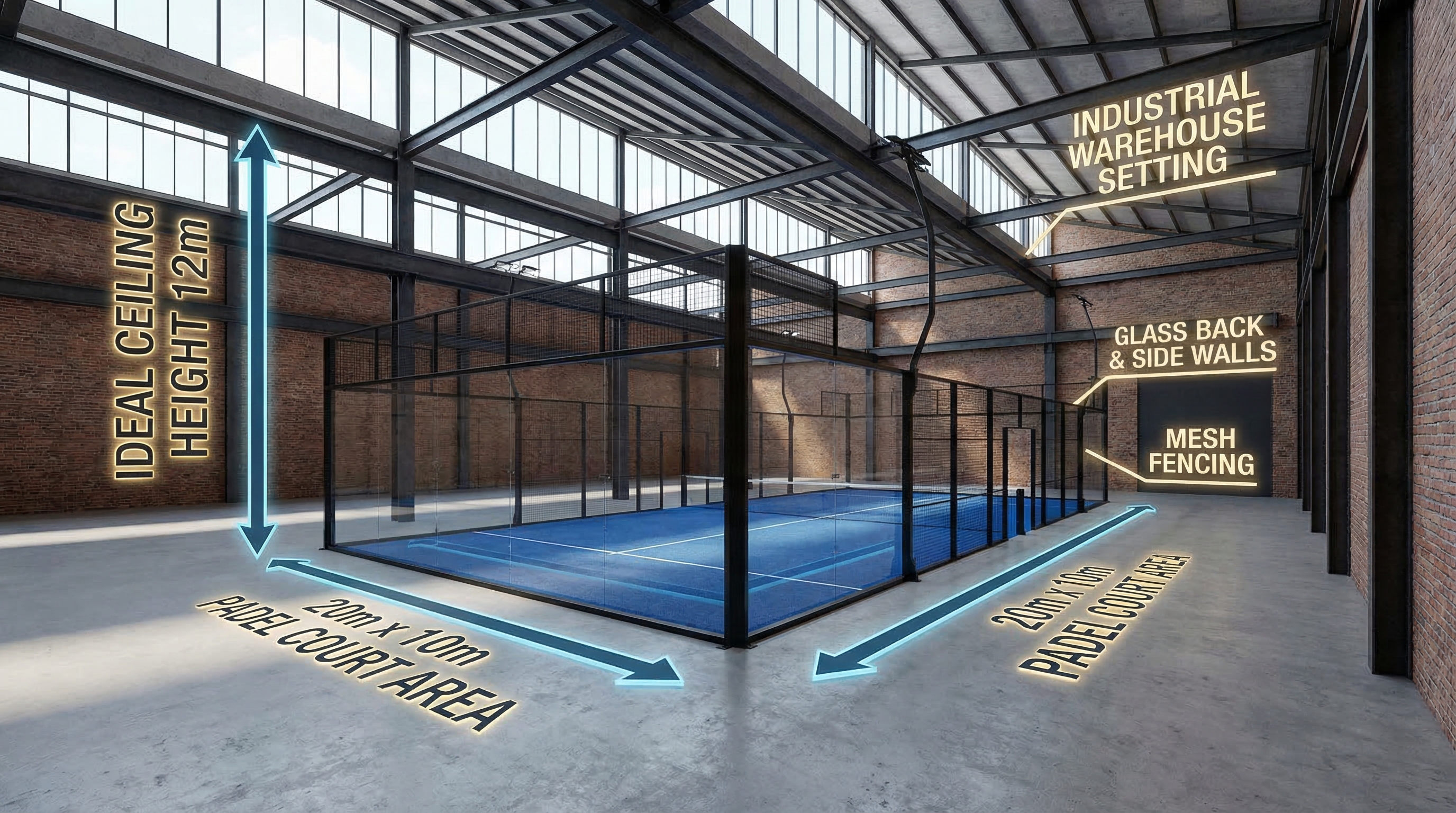
The best location for indoor padel courts dubai involves finding industrial zones like Al Quoz or Dubai Investment Park that offer high-clearance warehouses. These areas provide the structural height and floor space necessary to fit multiple courts without expensive structural modifications.
Selecting a site with easy access to major highways like Sheikh Zayed Road ensures that your club is reachable for residents across the city. Proximity to residential hubs is a major factor in driving recurring membership sales.
Ideal ceiling heights for professional play
A minimum ceiling height of 6 to 8 meters is the baseline, but 12 meters is considered the gold standard for high-level play. This height allows players to execute deep lobs—a fundamental part of padel strategy—without the ball hitting the roof.
Here is the deal:
The higher the ceiling, the more “professional” your club will feel to elite players.
- Minimum: 6 meters (Amateur play).
- Standard: 9 meters (Competitive play).
- Elite: 12 meters (World-class standards).
Selecting the right industrial or retail zone
While Al Quoz is the traditional home of Dubai’s indoor sports scene, newer developments in Al Barsha and Mirdif are becoming highly attractive. You need to verify that the zoning allows for commercial sports use and that there is sufficient parking for peak hours.
Key Takeaway: Strategic location scouting focuses on ceiling clearance and accessibility, ensuring the facility meets professional standards while remaining convenient for the local community.
| Zone Type | Pros | Cons |
|---|---|---|
| Industrial (Al Quoz) | High ceilings, lower rent | Traffic congestion |
| Retail Hubs | High visibility, foot traffic | Higher rent, lower ceilings |
| Sports Complexes | Built-in audience | High competition |
Choosing the right shell for your court is as important as the court construction itself.
What materials are needed for indoor padel courts dubai?
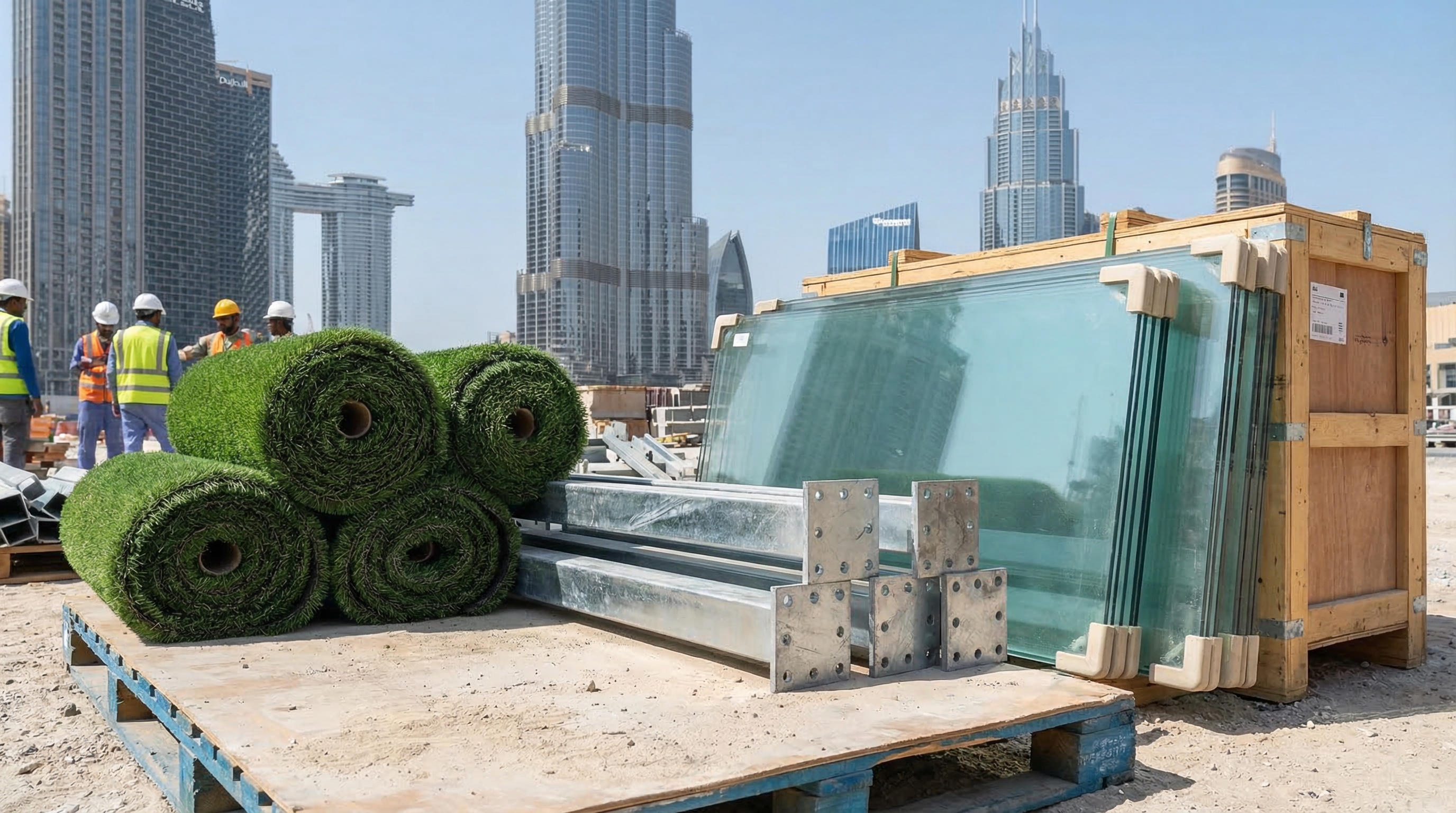
Professional indoor padel courts dubai require a combination of high-grade tempered glass, hot-dip galvanized steel, and modular fencing. Using premium materials is non-negotiable if you want to ensure player safety and minimize long-term maintenance costs in a humid environment.
Specifically, a Standard Padel Court utilizes a 3mm thick steel profile to maintain structural rigidity during high-impact rallies. The glass must be specifically rated to handle the pressure of players crashing into the walls.
Tempered safety glass and steel frames
For indoor settings, 12mm tempered glass is the industry standard because it offers the perfect balance of ball rebound and safety. The steel frames must be powder-coated or galvanized to prevent corrosion, especially if the facility is near the coast.
But wait, there is more:
Precision in the steel joints ensures the court remains quiet and stable during play.
- 12mm anti-explosion tempered glass.
- 80x80mm or 100x100mm steel pillars.
- Electro-welded mesh panels for the side walls.
Why 12mm glass is the industry standard?
Thicker glass provides a more “authentic” rebound, which is critical for competitive players who rely on predictable ball behavior. It also acts as a superior acoustic barrier, helping to dampen the sound of play within a cavernous warehouse environment.
Key Takeaway: Quality materials are an investment in safety and performance; choosing 12mm glass and galvanized steel reduces the risk of structural failure and play disruptions.
| Component | Standard Specification | Premium Recommendation |
|---|---|---|
| Glass | 10mm Tempered | 12mm Anti-Explosion |
| Steel | Q235 Steel | Hot-dip Galvanized |
| Paint | Standard Coating | Dual-layer Powder Coating |
High-quality materials define the “feel” of the court and the lifespan of your investment.
Which turf is best for indoor padel courts dubai?
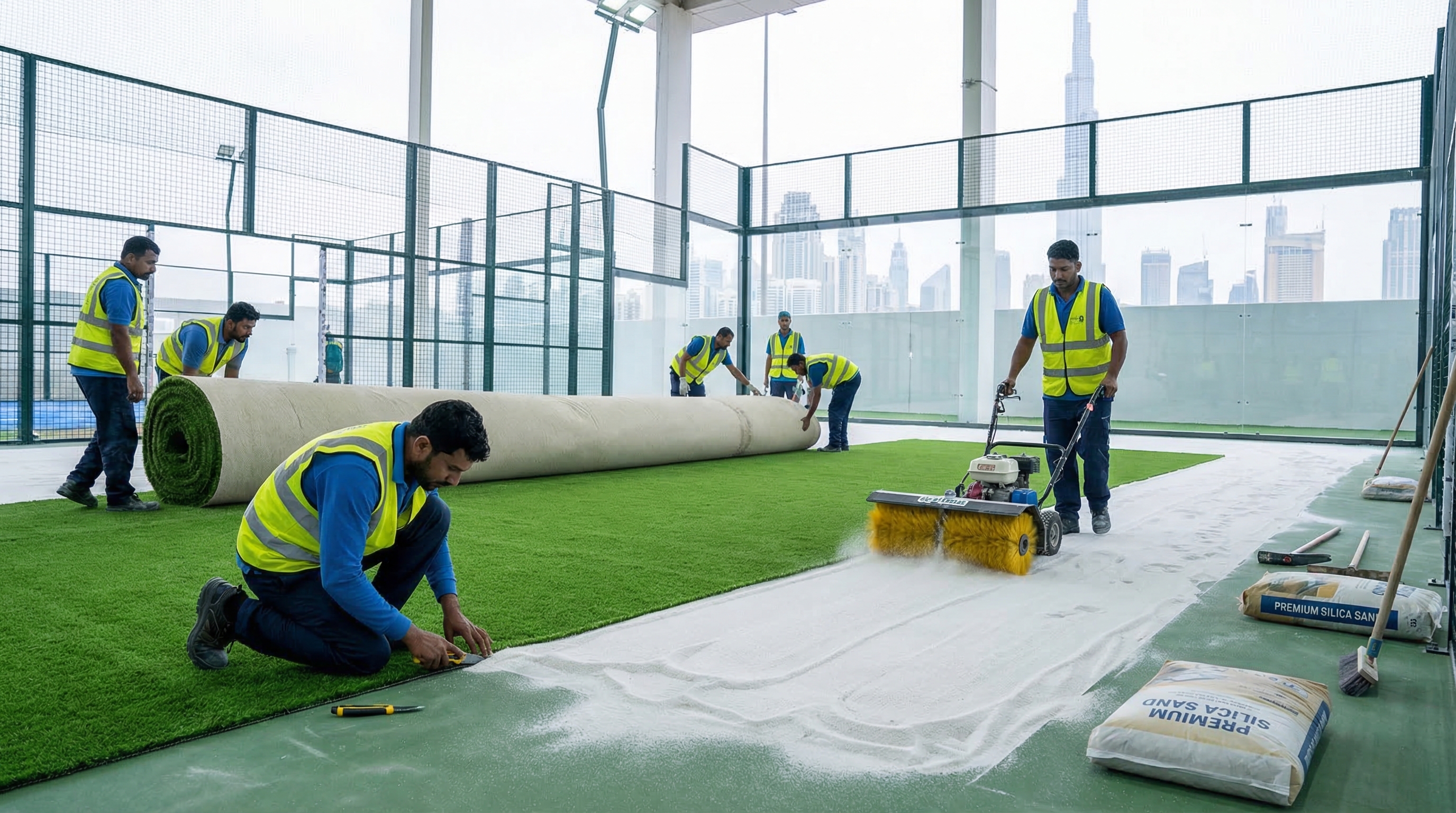
The best turf for indoor padel courts dubai is a high-density, monofilament synthetic grass that is designed for heavy usage. Indoor courts do not have to deal with rainwater drainage, which allows you to focus purely on playability and fiber durability.
Selecting the right Padel Grass ensures a consistent ball bounce and reduces the risk of player injuries related to slips or joint strain. The color of the turf also plays a role in visibility under artificial lighting.
Monofilament vs. Fibrillated grass
Monofilament grass is generally preferred for high-end clubs because the fibers remain upright longer, providing a more consistent playing surface. Fibrillated grass is more economical and holds the sand infill well but may flatten over time with intense indoor use.
Here is the deal:
The way you install the sand infill determines the “speed” of the court.
- Monofilament: Superior durability and rebound.
- Fibrillated: Better sand retention, lower cost.
- Textured (Curly): Professional standard, requires less sand.
Achieving consistent ball bounce
Indoor courts rely on a perfectly leveled concrete base to ensure the turf lays flat. Even a 2mm deviation in the floor can cause “dead spots” where the ball doesn’t bounce correctly, frustrating advanced players.
Key Takeaway: Monofilament turf is the optimal choice for Dubai’s indoor centers, offering the best combination of longevity and professional play characteristics.
| Turf Type | Player Experience | Maintenance |
|---|---|---|
| Monofilament | High performance | Moderate brushing |
| Fibrillated | Standard feel | High sand management |
| Textured | Professional speed | Minimal maintenance |
Your choice of turf is the most direct point of contact between the player and the game.
How to design lighting for indoor padel courts dubai?
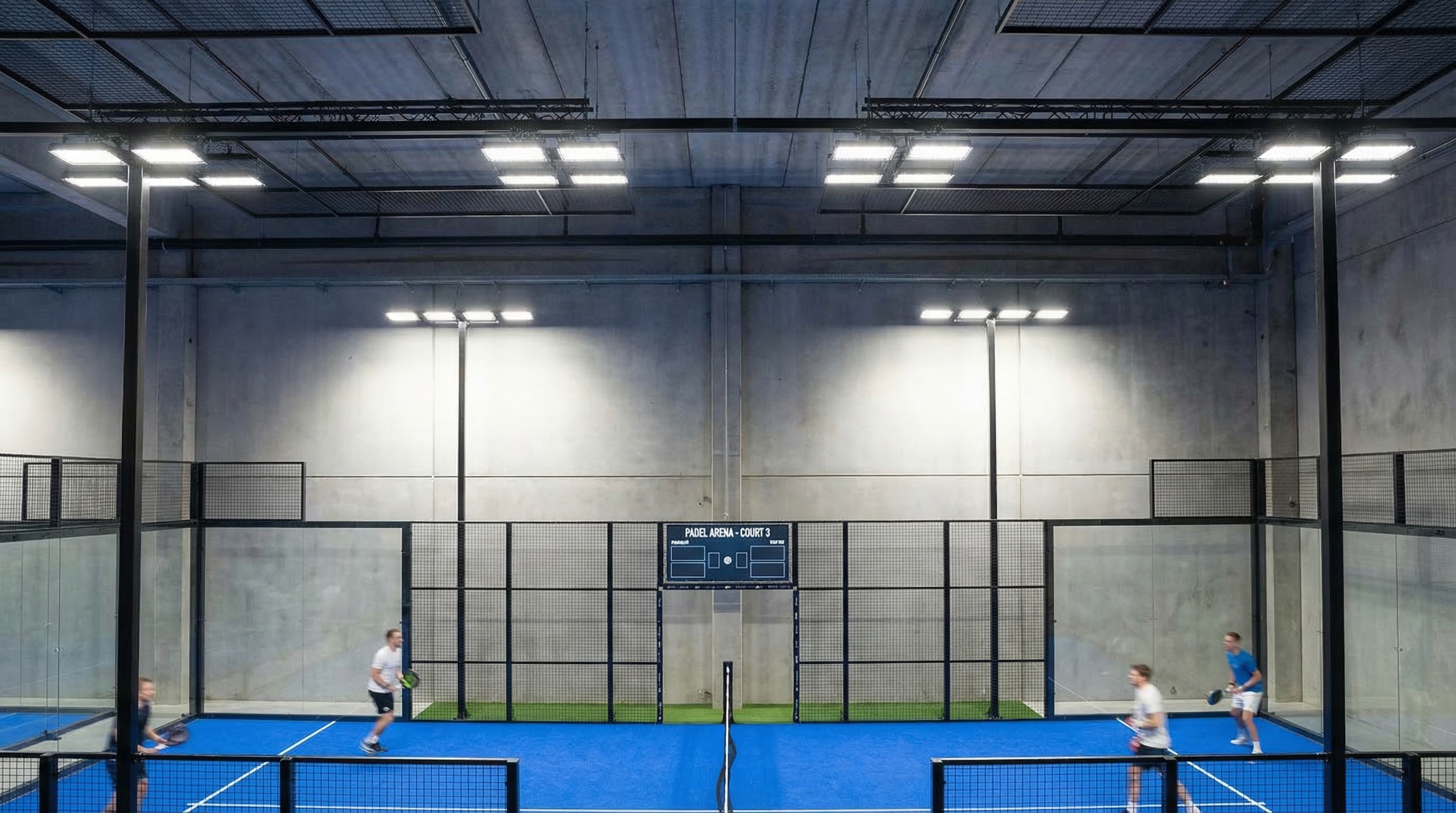
Effective lighting for indoor padel courts dubai requires a minimum of eight high-efficiency LED floodlights positioned at a height of 6 meters. Since indoor arenas lack natural light, the artificial system must be flicker-free and evenly distributed to eliminate dark zones on the court.
Using Padel LED Lighting reduces your operational energy costs by up to 50% compared to traditional metal halide bulbs. This is a critical factor in maintaining the profitability of a 24-hour facility.
High-efficiency LED floodlight placement
The lights should be angled toward the playing surface but shielded to prevent direct glare into the eyes of a player looking up to hit a smash. Proper mounting ensures that the corners of the court are just as bright as the center.
But wait, there is more:
Modern LED systems can be controlled via smartphone apps for dimming during off-peak hours.
- 8 floodlights per court (200W each).
- Average illuminance: 500 Lux.
- Color temperature: 5000K (Daylight feel).
Eliminating shadows and glare for players
Shadows can distort a player’s depth perception, making it difficult to time shots correctly. By using asymmetrical lenses in your LED fixtures, you can direct light exactly where it is needed, creating a crisp, professional atmosphere.
Key Takeaway: Precision LED lighting is essential for indoor safety and playability, significantly impacting the professional look and energy efficiency of your club.
| Lighting Goal | Solution |
|---|---|
| Uniformity | 8-point LED distribution |
| Glare Reduction | Anti-dazzle lenses |
| Energy Savings | Smart LED controllers |
High-quality lighting transforms a dark warehouse into a premium sporting arena.
What amenities elevate indoor padel courts dubai?
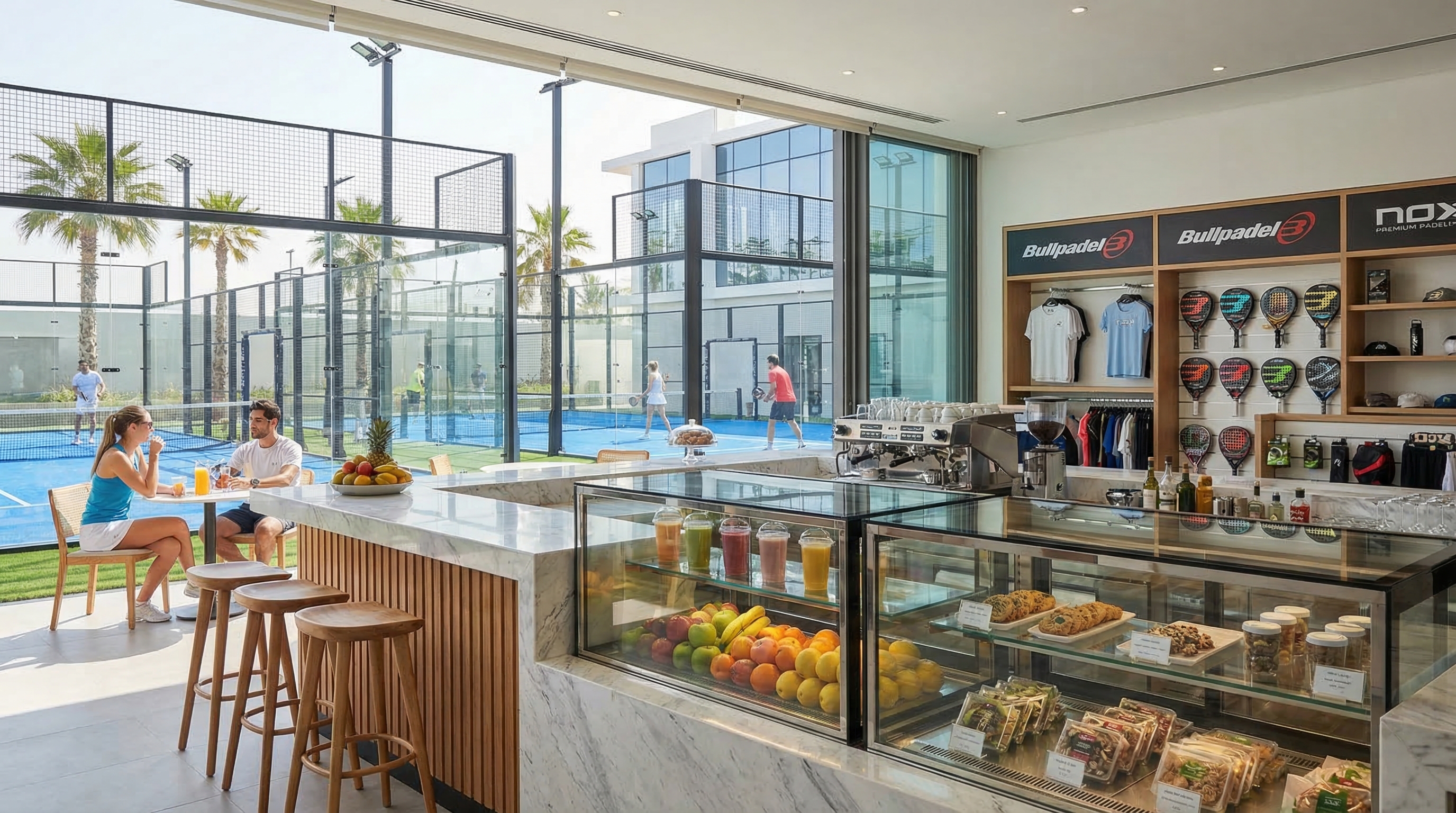
Beyond the court itself, indoor padel courts dubai succeed by offering luxury amenities like social lounges, pro shops, and high-end changing rooms. In the UAE, padel is as much a social networking event as it is a sport, so your facility must cater to the “after-game” lifestyle.
Adding a Panoramic Padel Court can serve as a “show court” for tournaments, surrounded by comfortable seating areas for spectators and fans. This creates a stadium-like atmosphere that justifies higher rental fees.
Integrating pro shops and bistros
A well-stocked pro shop allows players to rent or buy high-end rackets, balls, and apparel on-site. Meanwhile, a bistro serving healthy shakes and specialty coffee encourages players to stay longer, increasing your secondary revenue streams.
Here is the deal:
The “social” revenue can often match the “court rental” revenue in premium clubs.
- High-end juice and coffee bars.
- Luxury locker rooms with sauna/steam.
- Pro shops with racket testing programs.
Coaching services and community areas
Dedicated zones for warm-ups and stretching, combined with resident professional coaches, turn a simple court into a full-service academy. Building a community through WhatsApp groups and internal leagues is the best way to ensure long-term membership.
Key Takeaway: Amenities are the “lifestyle” component of padel; they build community and significantly increase the total revenue generated per player visit.
| Amenity | Revenue Impact | Player Retention |
|---|---|---|
| Pro Shop | 15% – 20% Increase | Moderate |
| Bistro/Cafe | 20% – 30% Increase | High |
| Recovery Zone | 5% – 10% Increase | Very High |
A club is only as strong as the community it fosters outside the glass walls.
How do you build indoor padel courts dubai step-by-step?
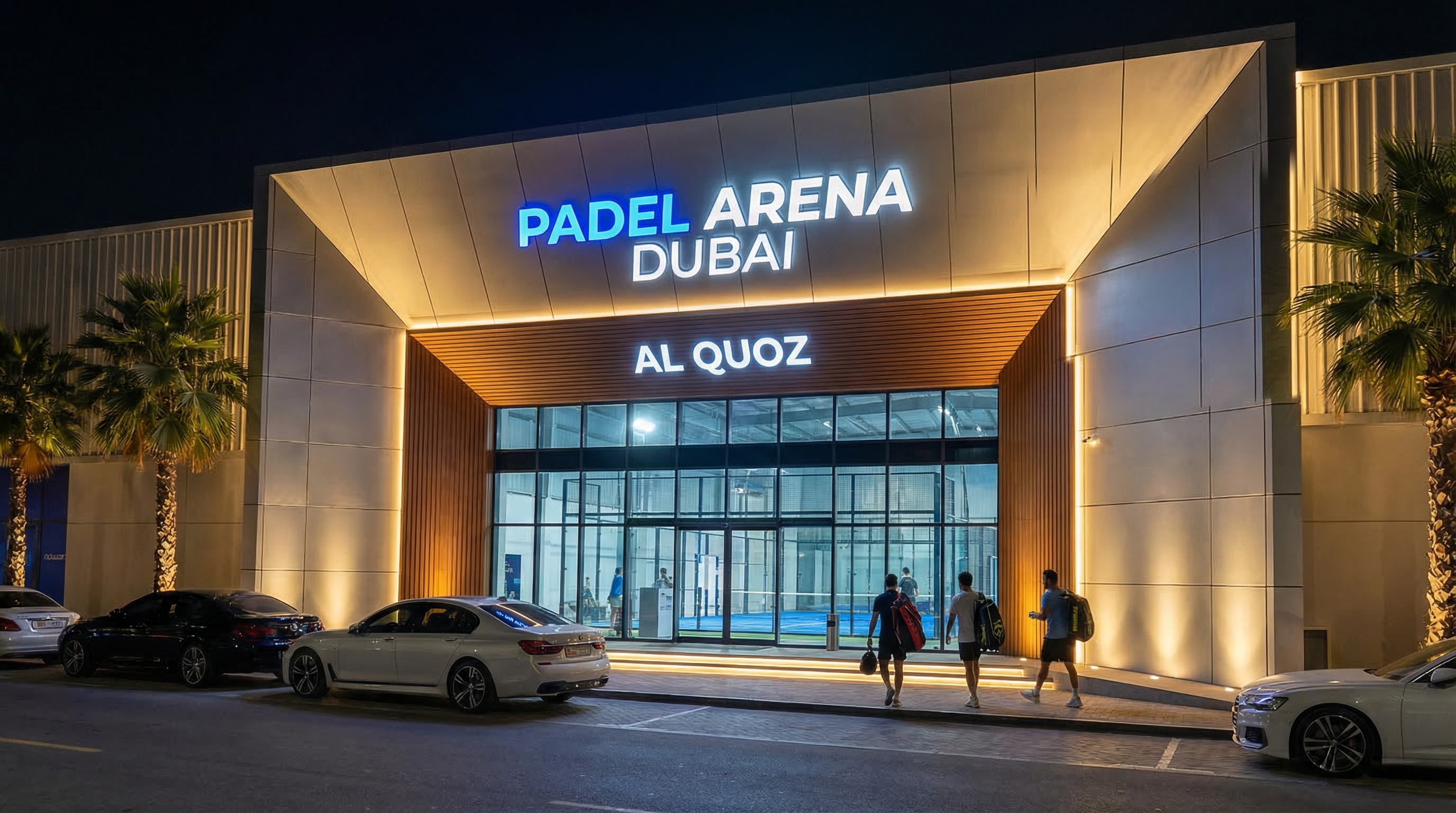
Building indoor padel courts dubai involves a systematic process of site preparation, structural anchoring, and professional finishing. Because these courts are installed indoors, you don’t need to worry about the massive excavation required for outdoor drainage, which speeds up the construction timeline.
The foundation must be a reinforced concrete slab that is perfectly level to prevent structural stress on the glass panels. Once the base is ready, the modular steel frame is bolted down using heavy-duty chemical anchors.
Site preparation and structural assembly
You must first ensure the floor load capacity of the warehouse can handle the weight of the steel and glass. The assembly starts with the corner pillars, followed by the mesh panels, creating a rigid skeleton for the court.
But wait, there is more:
The glass panels must be handled with specialized suction equipment to prevent accidents.
- Check floor levels (Tolerance < 2mm).
- Anchor the 3000kg steel frame.
- Install the 10mm or 12mm glass panels.
Finalizing the court with glass and turf
After the structure is secure, the synthetic turf is rolled out and the seams are glued using professional-grade adhesive. Finally, a layer of kiln-dried silica sand is brushed into the turf to provide the necessary weight and ball traction.
Key Takeaway: Professional installation requires a level foundation and precision anchoring; shortcuts in the build phase lead to glass breakage and uneven play surfaces.
| Build Phase | Primary Task | Duration (Approx.) |
|---|---|---|
| Phase 1 | Base preparation & leveling | 3 – 5 Days |
| Phase 2 | Steel & Glass installation | 4 – 6 Days |
| Phase 3 | Turf laying & Sand infill | 2 – 3 Days |
A typical indoor court can be fully installed within 10 to 14 days once the site is prepared.
Are indoor padel courts dubai a profitable investment?
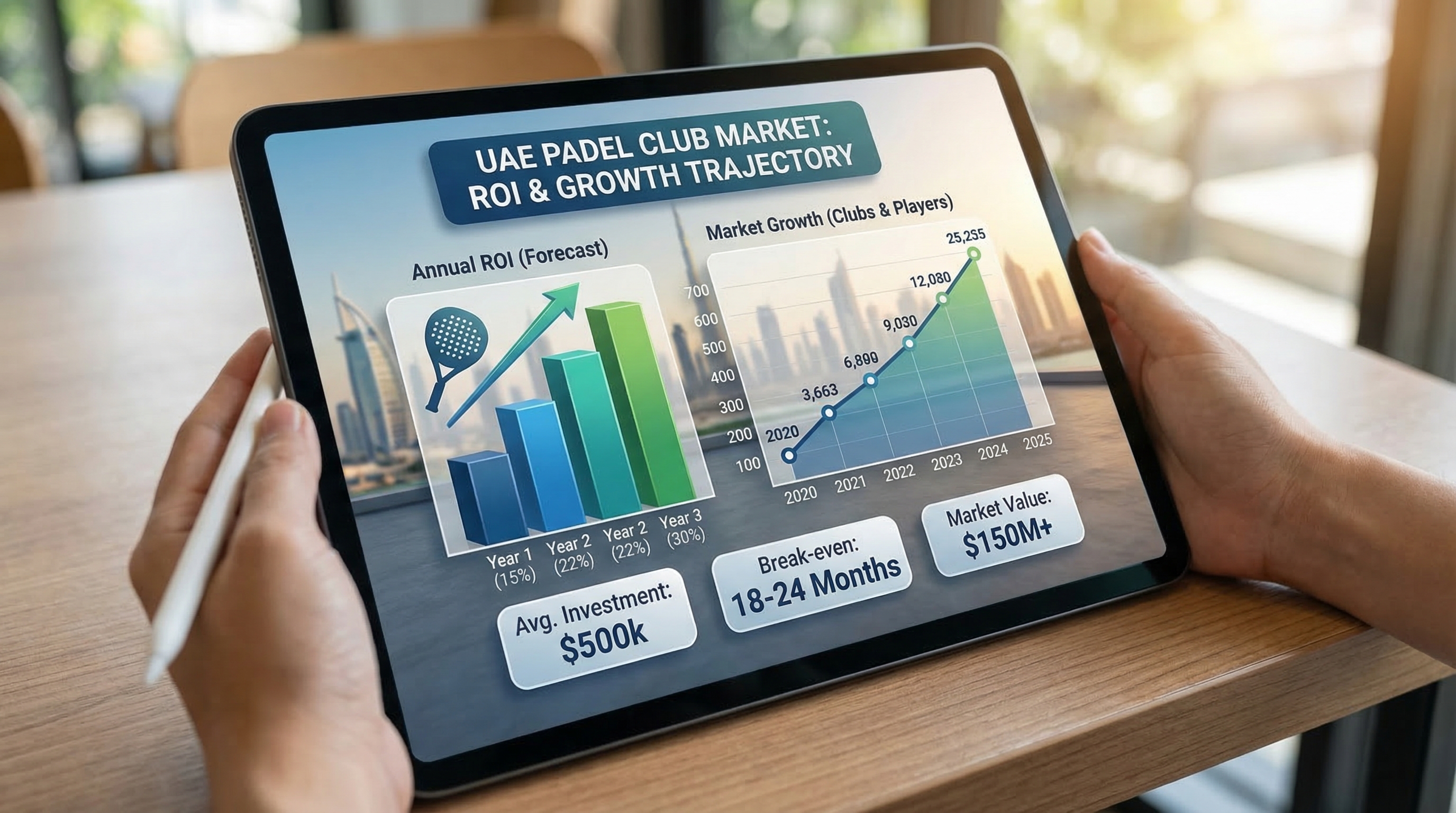
Absolutely, indoor padel courts dubai are currently one of the highest ROI investments in the UAE sports sector. With a Super Panoramic Padel Court, you can command premium hourly rates of 300 AED to 500 AED, depending on the peak time.
As the infographic above shows, a well-managed 4-court facility can achieve a full return on investment within 18 to 24 months. The key to this profitability is the 365-day utilization rate that only indoor facilities can provide.
Analyzing ROI and court rental demand
The demand for padel in Dubai currently outstrips supply, especially in the evenings and on weekends. By offering a climate-controlled environment, you capture the 6:00 PM to 12:00 AM “peak zone” where players are most active.
Here is the deal:
Corporate bookings and leagues provide the “base” income that covers all operational costs.
- Average court rental: 350 AED / hour.
- Operating hours: 14+ hours per day.
- Occupancy rate: 70% – 85% average.
Diversifying income through events
Tournaments and corporate team-building events are massive revenue drivers for indoor clubs. Because the environment is controlled, you can sell VIP hospitality packages and sponsorship slots for branded court-side branding.
Key Takeaway: High demand and 24/7 playability lead to rapid ROI; a four-court facility is the “sweet spot” for balancing operational costs with maximum profit.
| Revenue Stream | Contribution | Growth Potential |
|---|---|---|
| Court Rentals | 60% | Stable |
| Coaching/Academy | 20% | High |
| Food & Retail | 20% | Very High |
The financial viability of indoor padel is anchored in its immunity to the UAE’s seasonal climate.
How to maintain indoor padel courts dubai over time?
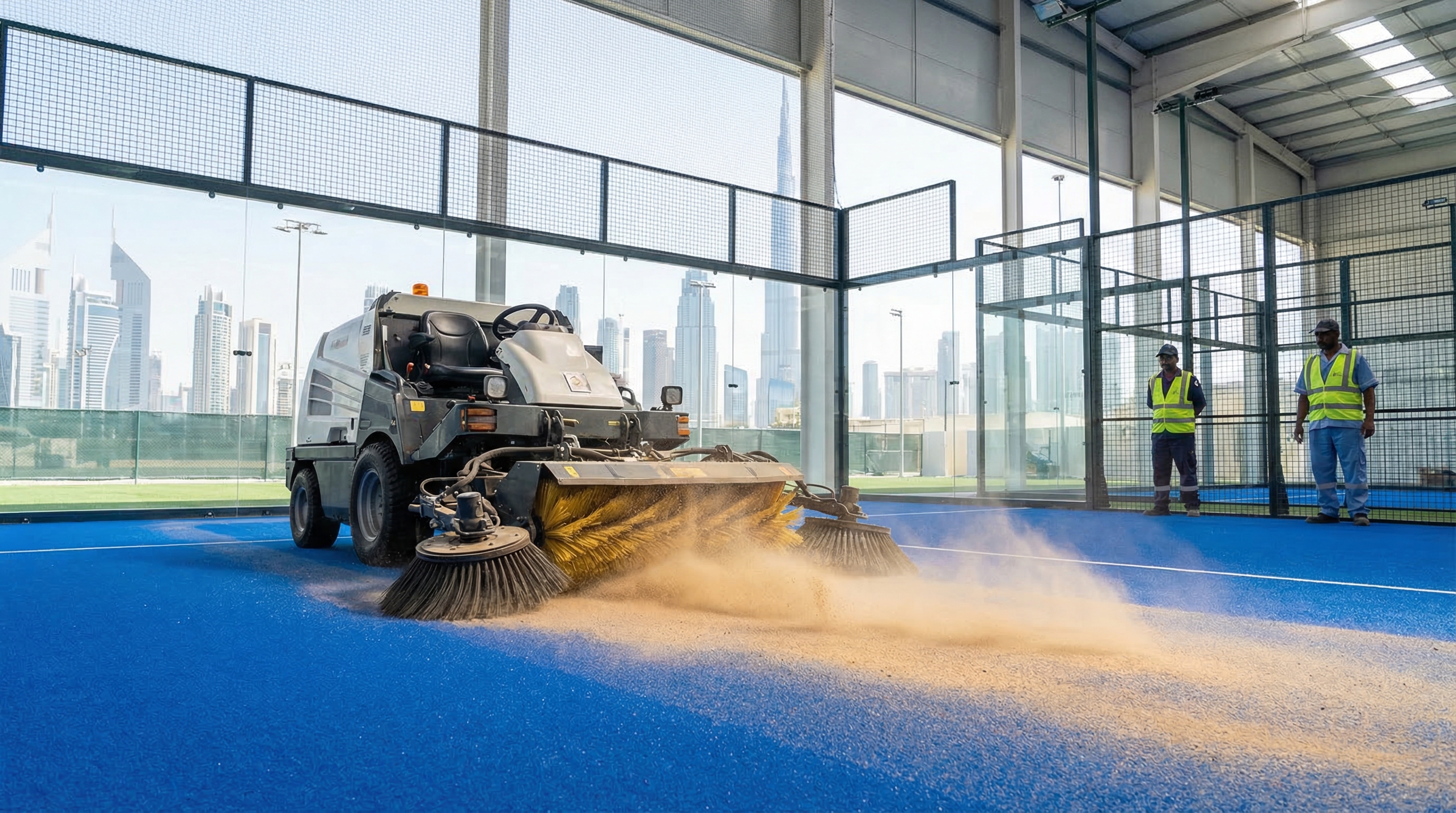
Maintaining indoor padel courts dubai is relatively straightforward but requires a strict weekly schedule to ensure the longevity of the materials. Unlike outdoor courts, you don’t have to deal with sandstorm buildup, but you do need to manage the distribution of the silica sand within the turf.
Regularly checking the structural integrity of the Padel Structure ensures that no bolts have loosened due to the constant vibrations of the game. This proactive approach prevents costly emergency repairs and ensures player safety.
Daily cleaning and turf redistribution
The turf needs to be brushed at least once a week to move the sand from the edges back to the high-traffic center areas. This prevents the fibers from flattening and ensures the ball bounce remains consistent across the entire court surface.
But wait, there is more:
Glass panels should be cleaned daily to maintain the “premium” look of the facility.
- Weekly turf brushing (cross-pattern).
- Monthly bolt and anchor inspections.
- Daily glass cleaning with non-abrasive solution.
Regular structural safety inspections
The tension of the net and the alignment of the glass panels should be verified monthly. In an indoor setting, the main enemy is dust from the AC system, so filters should be cleaned regularly to prevent a layer of grime from forming on the court surface.
Key Takeaway: Consistency is the secret to low-cost maintenance; a 15-minute daily check prevents the majority of long-term structural and turf issues.
| Task | Frequency | Estimated Time |
|---|---|---|
| Glass Cleaning | Daily | 30 Minutes |
| Turf Brushing | Weekly | 1 Hour |
| Bolt Tightening | Quarterly | 2 Hours |
Proper maintenance protects your capital investment and keeps the “elite” feel of your club intact.
*
Strategic Construction Summary
| Component | Professional Standard | Dubai Recommendation |
|---|---|---|
| Glass Thickness | 10mm – 12mm | 12mm Tempered Safety |
| Steel Finish | Galvanized | Hot-dip Galvanized + Powder |
| Lighting Lux | 300 Lux | 500 Lux (Flicker-Free) |
| Ceiling Height | 6m Minimum | 9m – 12m (Optimal) |
| Base Level | +/- 3mm | +/- 2mm (Laser Level) |
Building a padel club in Dubai is a high-reward venture that requires a deep understanding of local climate demands and player expectations. By focusing on indoor infrastructure, you solve the primary problem of seasonality, ensuring your business thrives while others are forced to pause. From selecting the right warehouse in Al Quoz to installing professional-grade 12mm glass and monofilament turf, every decision should prioritize the long-term value of the facility. If you are ready to transform a space into a world-class sporting hub, contact us today to receive a customized quotation and engineering consultation. Our vision is to empower the next generation of UAE sports entrepreneurs with factory-direct, premium court solutions that set the industry standard.
*
FAQ: Indoor Padel Build Guide
Can I build a padel court in any warehouse?
No, you must verify the ceiling height and floor load capacity first. Padel requires at least 6 meters of clearance, and the concrete must be able to support the 3-ton weight of the steel and glass without cracking.
What’s the best glass for an indoor club?
12mm tempered safety glass is the gold standard for indoor facilities. It provides the best rebound for competitive play and offers a higher safety margin against accidental impacts compared to 10mm glass.
How do I know if my AC is powerful enough?
You need an HVAC system that can maintain 22-24°C even with 8 players active and 20 spectators in the building. High humidity inside can make the court slippery, so the system must also have strong dehumidification capabilities.
Can I use outdoor turf for an indoor court?
Yes, but it is not necessary to use turf with high-speed drainage holes. For indoors, you should prioritize “textured” or “monofilament” fibers that offer high density and lower sand requirements for a cleaner look.
How long does a court last indoors?
An indoor court can last 15 to 20 years with proper maintenance. Because it is protected from UV rays and rain, the steel and turf degrade much slower than they would in an outdoor environment.