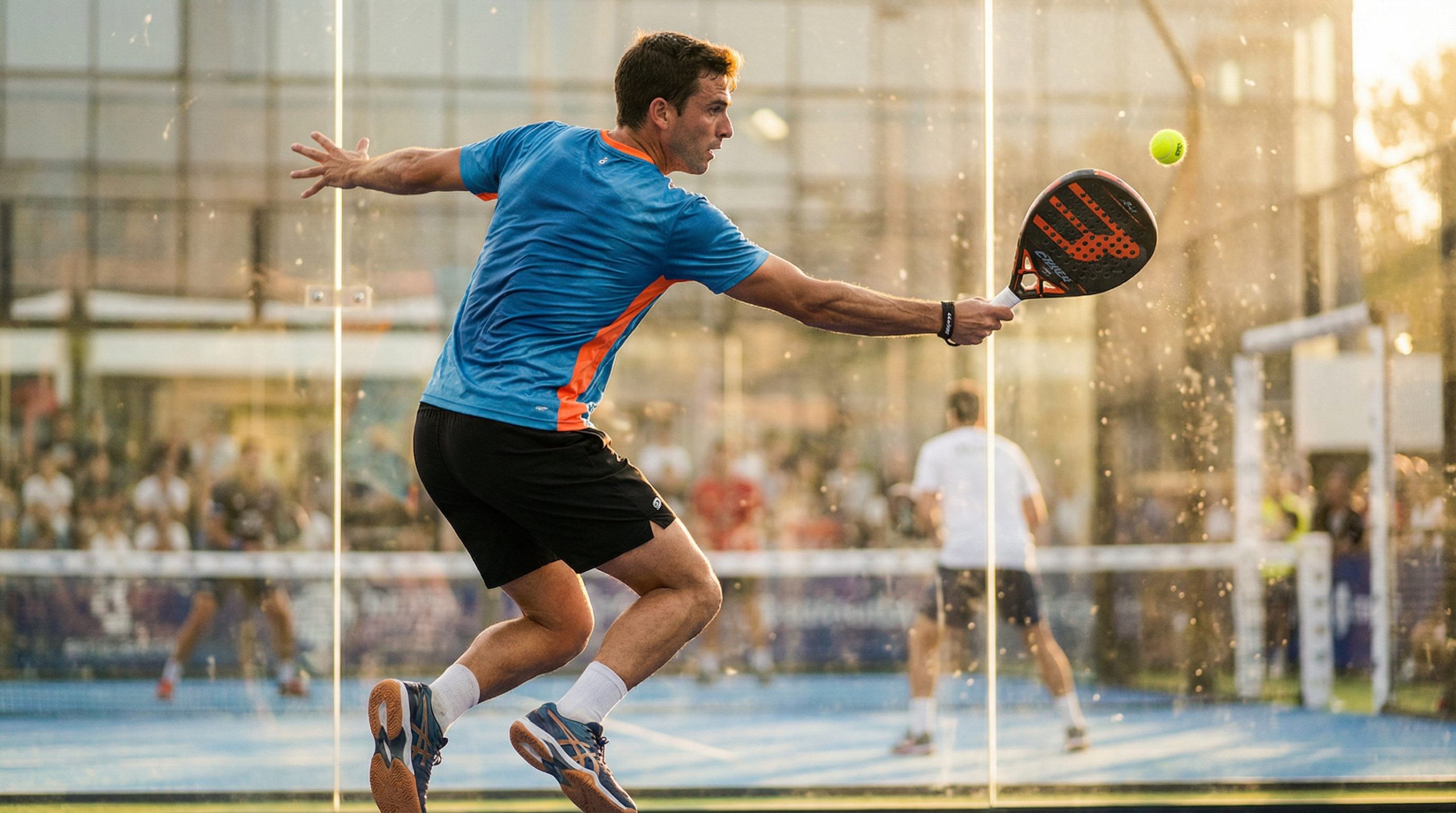
Padel apparel is a category of specialized athletic wear engineered specifically for the unique biomechanical demands, lateral movement patterns, and environmental conditions of padel. Unlike general fitness clothes, these garments utilize high-density micro-polyesters and elastane blends to provide the four-way stretch necessary for explosive overhead smashes and low defensive volleys.
You step onto the glass-walled court, heart racing, ready to dominate the match. But three games in, your heavy cotton shirt is soaked, clinging to your skin and restricting your shoulder rotation during that crucial bandeja. The friction from your non-specialized socks is already signaling a blister, and your focus shifts from the ball to your own discomfort. This is the “hidden opponent” every player faces when they ignore the technical requirements of their gear. By investing in professional padel apparel, you eliminate these physical distractions, allowing your technique and strategy to take center stage while the fabric works to regulate your body temperature and facilitate every lunging reach.
What defines the technical construction of padel apparel?
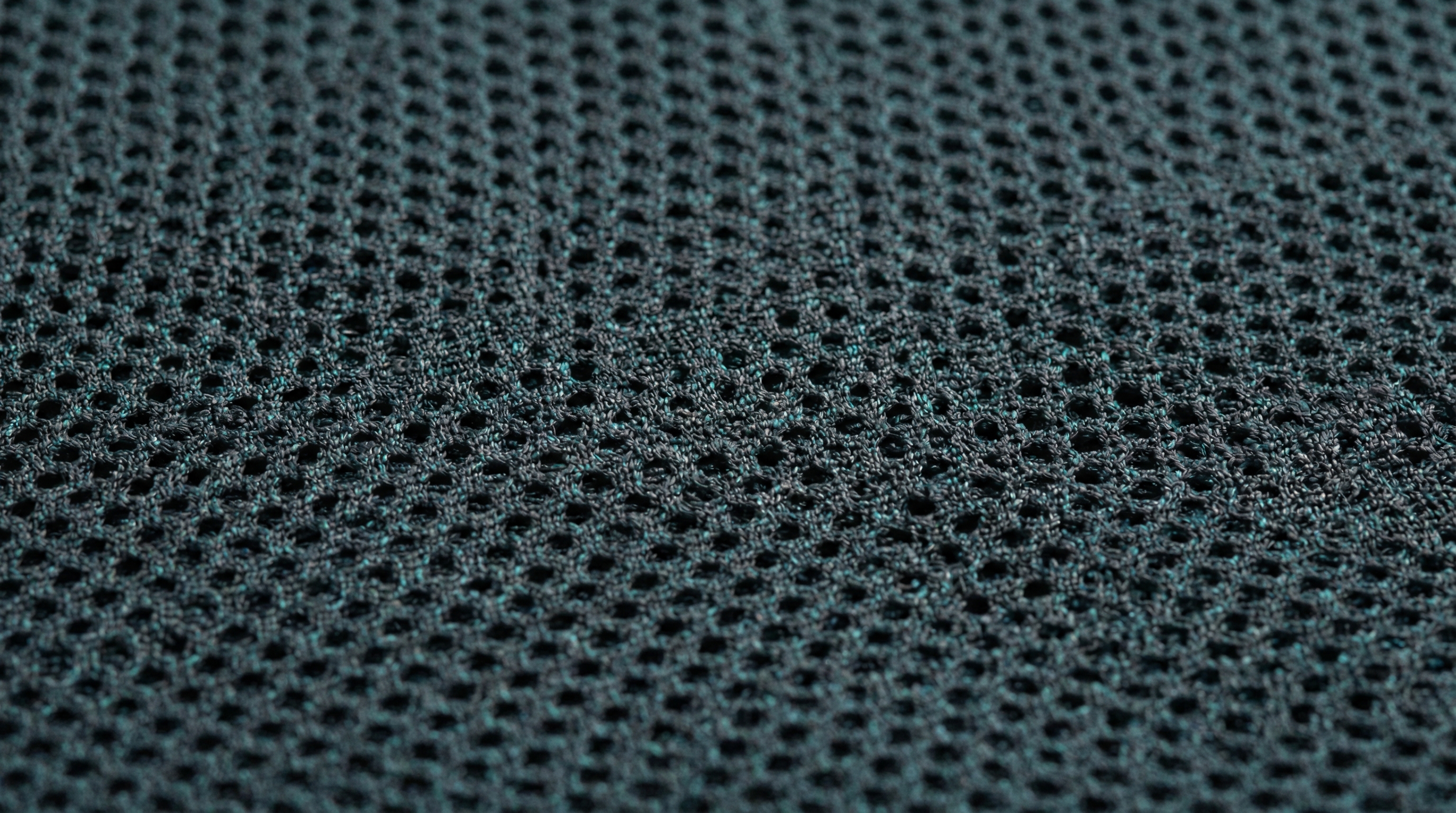
The technical construction of padel apparel focuses on advanced fiber integration and “intelligent” weaving patterns that prioritize moisture management and structural elasticity. These garments are typically manufactured using cationic polyesters and micro-mesh panels placed in high-perspiration zones to ensure the player remains dry during long rallies.
Advanced Fiber Engineering for the Court
Modern textiles in this field rely on synthetic blends that do not absorb water but rather transport it to the surface. You will find that high-quality items often feature a hexagonal or honeycomb weave which increases the surface area for evaporation. This engineering prevents the garment from becoming heavy or losing its shape when exposed to intense sweat.
Ergonomic Seams and Friction Reduction
Because padel involves constant rotation and lateral lunges, the placement of seams is a critical design factor. You should look for “flat-lock” stitching or bonded seams that sit flush against the skin to prevent chafing. Comfort is not a luxury; it is a prerequisite for sustained high-level performance.
- Micro-Polyester: High-durability fiber that resists shrinking and fading.
- Elastane (Lycra): Provides the necessary “snap-back” for repetitive movements.
- Anti-Bacterial Treatments: Silver ion finishes that neutralize odors during play.
- UV Protection: Integrated UPF 50+ layers for outdoor panoramic court sessions.
Think about it this way:
Key Takeaway
Technical garments are the foundation of a player’s physical efficiency, transforming sweat into a cooling mechanism rather than a weight burden.
| Feature | Technical Benefit | Material Used |
|---|---|---|
| Moisture Wicking | Rapid sweat evaporation | Capillary-action polyester |
| 4-Way Stretch | Unrestricted limb movement | High-percentage Elastane |
| Thermal Regulation | Core temperature stability | Micro-perforated mesh |
The synergy between hydrophobic fibers and ergonomic tailoring ensures that the garment acts as a second skin rather than a mechanical restriction.
Why does padel apparel enhance your performance?
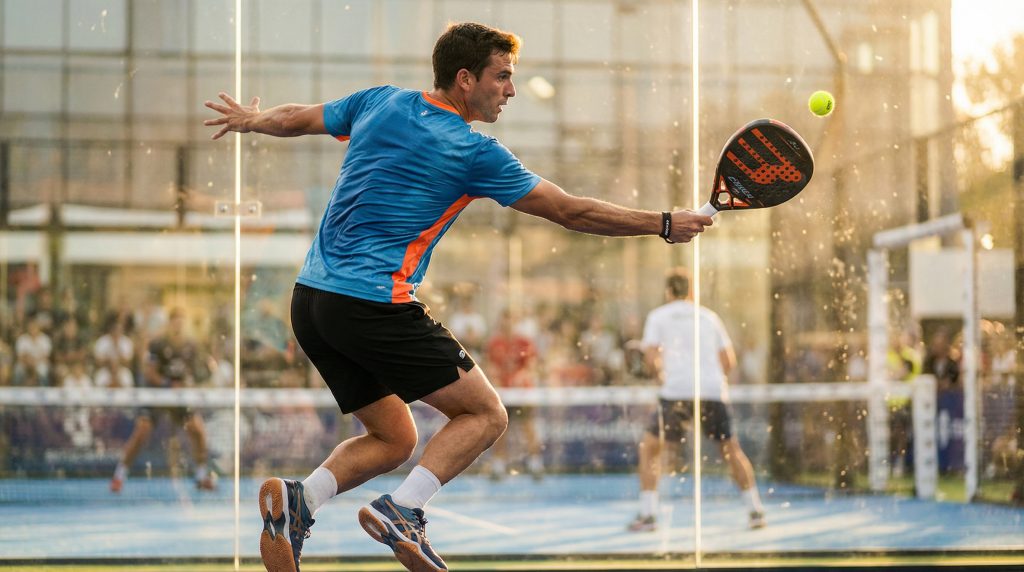
Specialized padel apparel directly impacts performance by optimizing the “Range of Motion” (ROM) required for the sport’s specific overhead and defensive strokes. By reducing the weight of the kit and providing targeted compression, these garments help maintain muscle oxygenation and reduce the onset of fatigue during three-set matches.
Maximizing Explosive Power Delivery
When you execute a “smash x3” or a heavy vibora, your upper body requires total freedom in the scapular region. Padel-specific tops are cut with a slight taper and wider armholes to ensure that no fabric bunching occurs at the peak of your swing. You will notice a measurable difference in your ability to generate racket head speed when the fabric moves with you.
Compression and Recovery During Play
Many high-performance shorts and leggings now incorporate zones of graduated compression to support the quads and hamstrings. You can benefit from improved blood flow and reduced muscle vibration, which are primary causes of post-match soreness. Performance is as much about the clothes you wear as the racket you hold.
- Lactic Acid Reduction: Improved circulation through targeted fabric tension.
- Proprioception: Better body awareness through skin-tight technical fits.
- Weight Optimization: Ultra-lightweight materials that weigh less than 150 grams.
- Aerodynamics: Reduced drag during quick forward sprints to the net.
But here’s the kicker:
Key Takeaway
Performance clothing functions as a biomechanical tool that sharpes a player’s reaction time by removing the friction of traditional athletic wear.
| Performance Metric | Apparel Impact | Resulting Advantage |
|---|---|---|
| Agility | Reduced fabric drag | Faster net transitions |
| Stamina | Body temperature control | Less energy spent cooling |
| Precision | Scapular freedom | Consistent overhead contact |
The integration of compression technology into court wear serves to bridge the gap between raw athletic ability and sustained match endurance.
How does it differ from traditional tennis clothing?
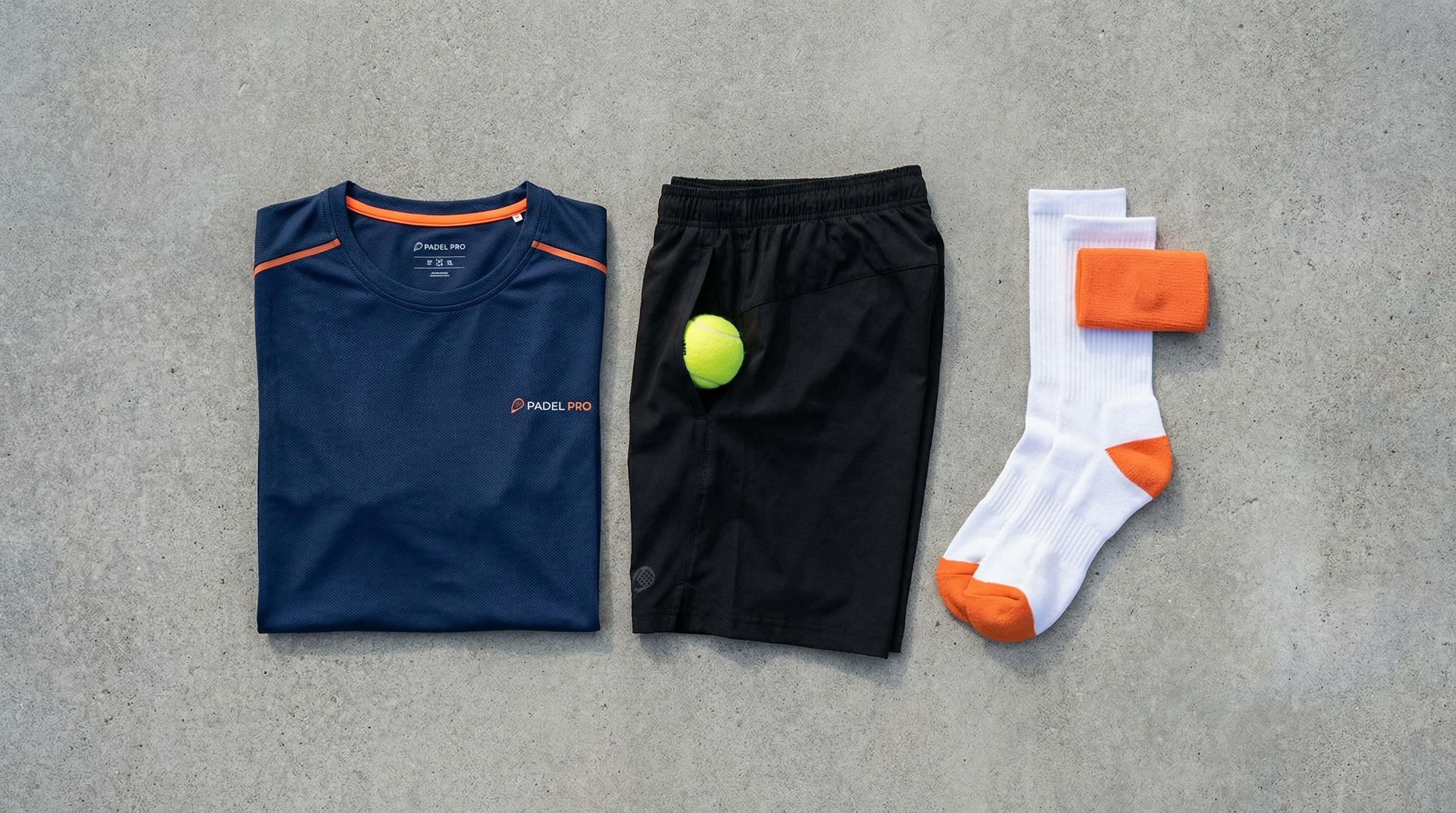
While they share a visual heritage, padel apparel is distinct from tennis gear due to the higher frequency of vertical movements and the specific ball-storage needs of the game. The “glass-play” nature of the sport means players are constantly twisting in tighter circles, requiring a different tensile strength in the fabric than the linear sprints of tennis.
Optimized Ball Storage Solutions
In padel, you often need to carry two balls for service, but the pockets must be designed so the balls don’t bounce against your leg during rapid lateral movements. Padel-specific shorts feature deeper, reinforced “ball pockets” with specialized mesh linings that grip the felt of the ball. This ensures you aren’t distracted by shifting weights while trying to defend a difficult corner shot.
Durability for High-Impact Contact
The sport involves frequent contact with the turf and occasionally the glass walls, which can be abrasive to standard tennis silks. You need fabrics with a higher “Denier” count in the lower body sections to resist pilling and tearing. Tennis wear is built for the lawn; padel wear is built for the cage.
- Pocket Depth: Specifically measured to house 3.1-inch diameter balls securely.
- Sleeve Length: Shorter cuts to prevent interference with the racket’s safety cord.
- Hem Weighting: Designed to stay in place during the high-reaching “Bandeja” motion.
- Abrasion Resistance: Reinforced panels for players who dive on synthetic turf.
You might be wondering:
Key Takeaway
The divergence between the two disciplines lies in the necessity for “compact agility” in padel versus the “linear speed” focus of tennis design.
| Comparison Point | Tennis Apparel | Padel Apparel |
|---|---|---|
| Movement Focus | Lateral baselining | Multi-directional & Vertical |
| Pocket Tech | Loose side-slits | Deep, low-profile stretch |
| Fabric Weight | Variable/Standard | Ultra-light micro-polyester |
The structural differences in pocket depth and seam tension reflect the faster, more confined tactical nature of the padel court environment.
What essential items form a padel outfit?
A complete padel apparel kit consists of four core pillars: the technical top, ergonomic shorts or skirt, padded technical socks, and specialized court shoes. Each component is designed to work in harmony, creating a moisture-management system that protects the athlete from the ground up.
The Technical Base Layer and Shell
The shirt is your primary tool for thermoregulation, often featuring laser-cut ventilation holes along the spine. You will find that high-end kits often include a “dry-fit” base layer that sits tight against the skin to move moisture to the outer shell. This layering system is essential for maintaining a stable core temperature during fluctuating match intensities.
Lower Body Mobility and Support
For men, the focus is on “unlined” shorts that allow for customized compression undergarments, while women often prefer skirts with integrated “ball-pockets” in the inner shorts. You must ensure that the waistband is wide and elasticated to distribute pressure evenly across the core. A kit is only as strong as its weakest seam.
- Technical Tees: Round neck or polo styles with high-ventilation back panels.
- Ergonomic Shorts: 5-7 inch inseams to provide balance between coverage and speed.
- Court Skirts: Lycra-based with “stay-put” silicone leg grippers.
- Sweat Management: Wristbands and headbands made of high-absorbency terry cloth.
Think about it this way:
Key Takeaway
Building a kit is an exercise in modular performance, where each layer serves a specific physiological purpose from the skin outward.
| Essential Item | Primary Function | Ideal Material |
|---|---|---|
| Micro-Mesh Tee | Heat dissipation | 100% Cationic Polyester |
| Woven Shorts | Ball carriage/Stretch | Ripstop/Elastane blend |
| Padded Socks | Blister prevention | Coolmax/Cotton hybrid |
Modern kit components are increasingly interconnected, with fabrics designed to slide against one another to minimize friction and energy loss.
How do you choose the right court footwear?
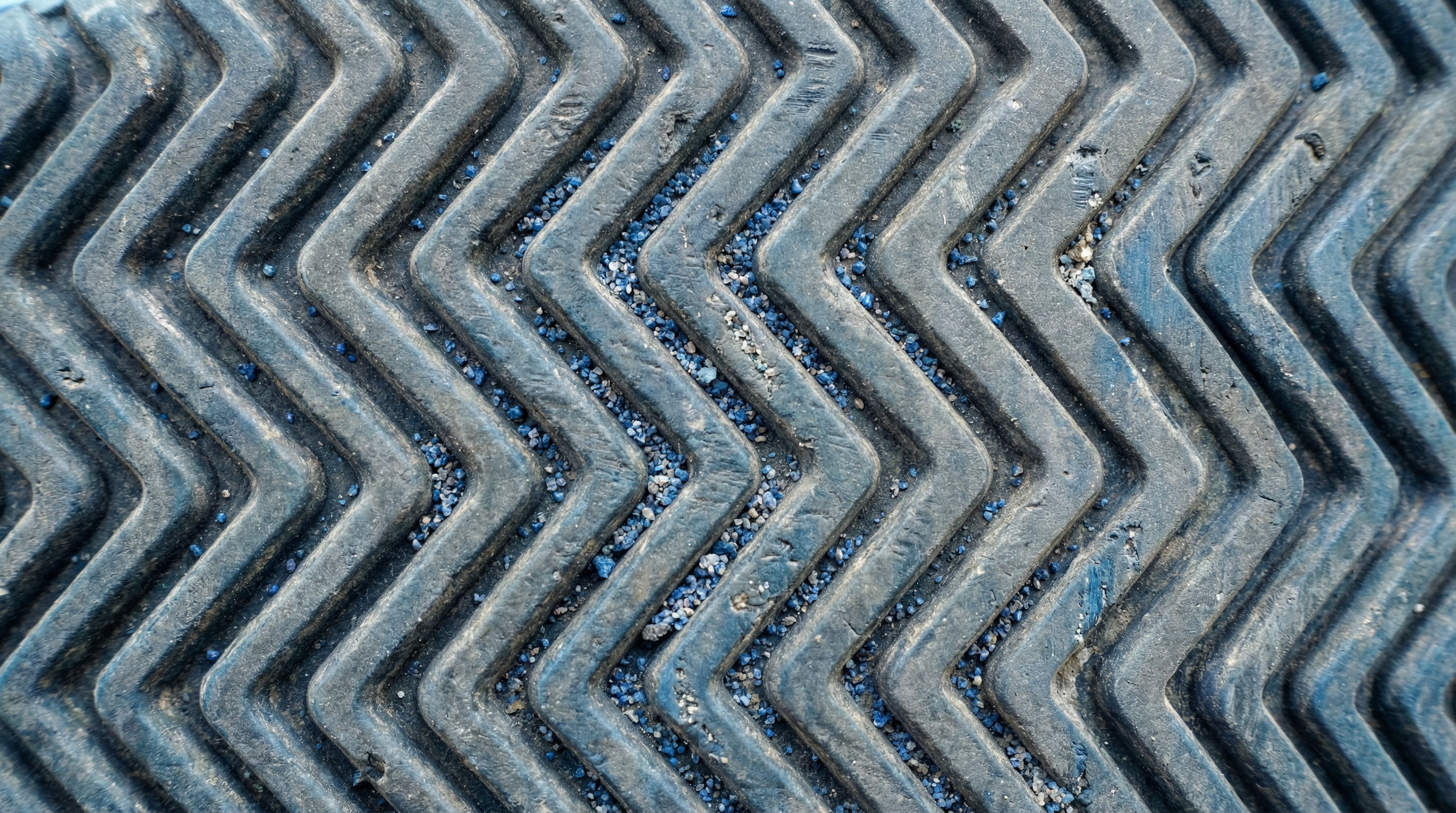
Selecting footwear for your padel apparel collection is arguably the most critical safety decision a player can make. Padel courts use a specific type of synthetic turf often filled with fine sand, which requires a “herringbone” or “omni” sole pattern to provide the necessary grip for sudden stops and starts.
Understanding Traction and Surface Interaction
You need a shoe that allows for a “controlled slide” rather than an abrupt halt, which can lead to knee or ankle injuries. The deep grooves in a herringbone sole are designed to “clean” the sand from the tread as you move, ensuring consistent contact with the turf. You will feel more confident in your defensive lobs when you know your feet won’t slip on the blue sand.
Cushioning and Lateral Stability
Padel involves a high volume of jumping and landing, particularly for aggressive net players. You should look for shoes with reinforced lateral supports to prevent the foot from rolling during heavy weight shifts. The court is hard; your landing should be soft.
- Clay/Herringbone Sole: The gold standard for traction on sandy padel courts.
- Midsole Dampening: Gel or foam inserts to absorb the impact of overhead jumps.
- Lateral Outriggers: Extra width on the outer sole to prevent ankle rolls.
- Reinforced Toe Cap: Protects the shoe from “toe-drag” during low volleys.
Believe it or not:
Key Takeaway
Footwear is the literal interface between the athlete and the court, making traction the primary variable in injury prevention.
| Sole Type | Best Surface | Grip Level |
|---|---|---|
| Herringbone | Heavy sand/Turf | Very High (Standard) |
| Omni-Court | Low sand/New Turf | Medium/High |
| Hybrid | All-round club play | Versatile |
The evolution of padel footwear has moved toward lighter, more breathable uppers that maintain structural integrity during extreme lateral torque.
What accessories complete your court look?
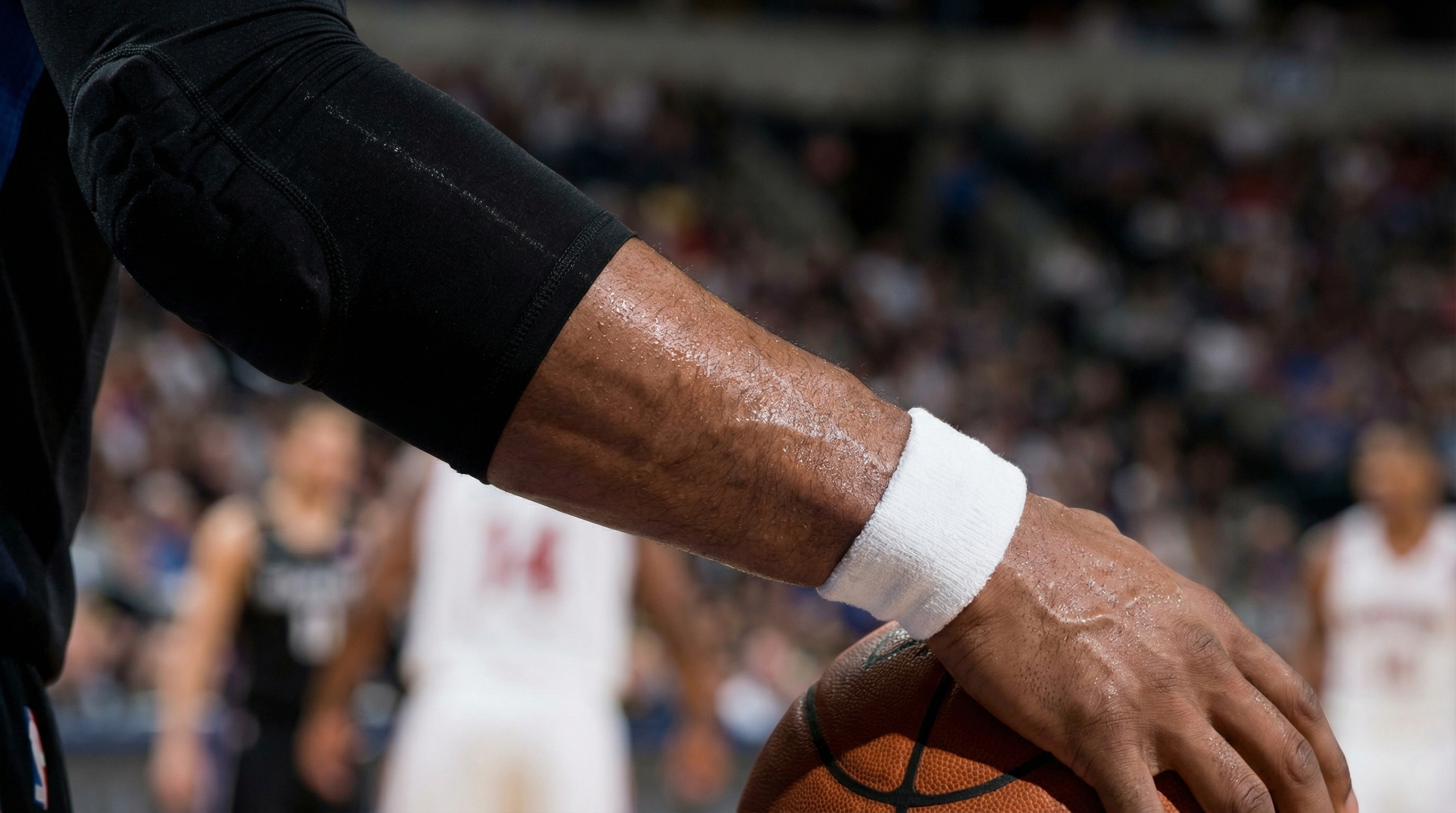
To fully optimize your padel apparel, you must integrate technical accessories that manage the secondary effects of high-intensity play. This includes everything from compression sleeves that prevent “padel elbow” to technical socks that manage the unique friction points created by court movement.
Compression Sleeves and Arm Protection
If you play several times a week, you may experience muscle vibration in your racket arm. You can utilize compression sleeves to keep the muscles warm and reduce the micro-trauma caused by hitting high-speed balls. These accessories also provide a layer of protection if you happen to graze your arm against the court walls.
Technical Socks and Foot Health
Standard gym socks are often made of cotton, which holds moisture and causes blisters. You should switch to technical socks featuring arch support and reinforced heels and toes. Your feet carry the weight of your game; treat them with technical respect.
- Double-Layer Socks: Prevents friction between the foot and the shoe.
- Wristbands: Prevents sweat from running down the arm and onto the racket grip.
- High-Absorbency Headbands: Keeps vision clear during high-noon outdoor matches.
- Protective Caps: Lightweight, UV-resistant headwear with moisture-wicking sweatbands.
Here is the kicker:
Key Takeaway
Accessories are the “fine-tuning” of a padel outfit, addressing specific physiological needs that core garments cannot fully cover.
| Accessory | Problem Solved | Functional Feature |
|---|---|---|
| Wristbands | Slippery racket grip | High-density Terry Cloth |
| Comp. Sleeve | Muscle fatigue | Graduated compression |
| Arch Socks | Foot fatigue | Elasticated mid-foot band |
While often overlooked, accessories represent the difference between a player who is struggling with the elements and one who is perfectly adapted to them.
How to build a custom apparel collection?
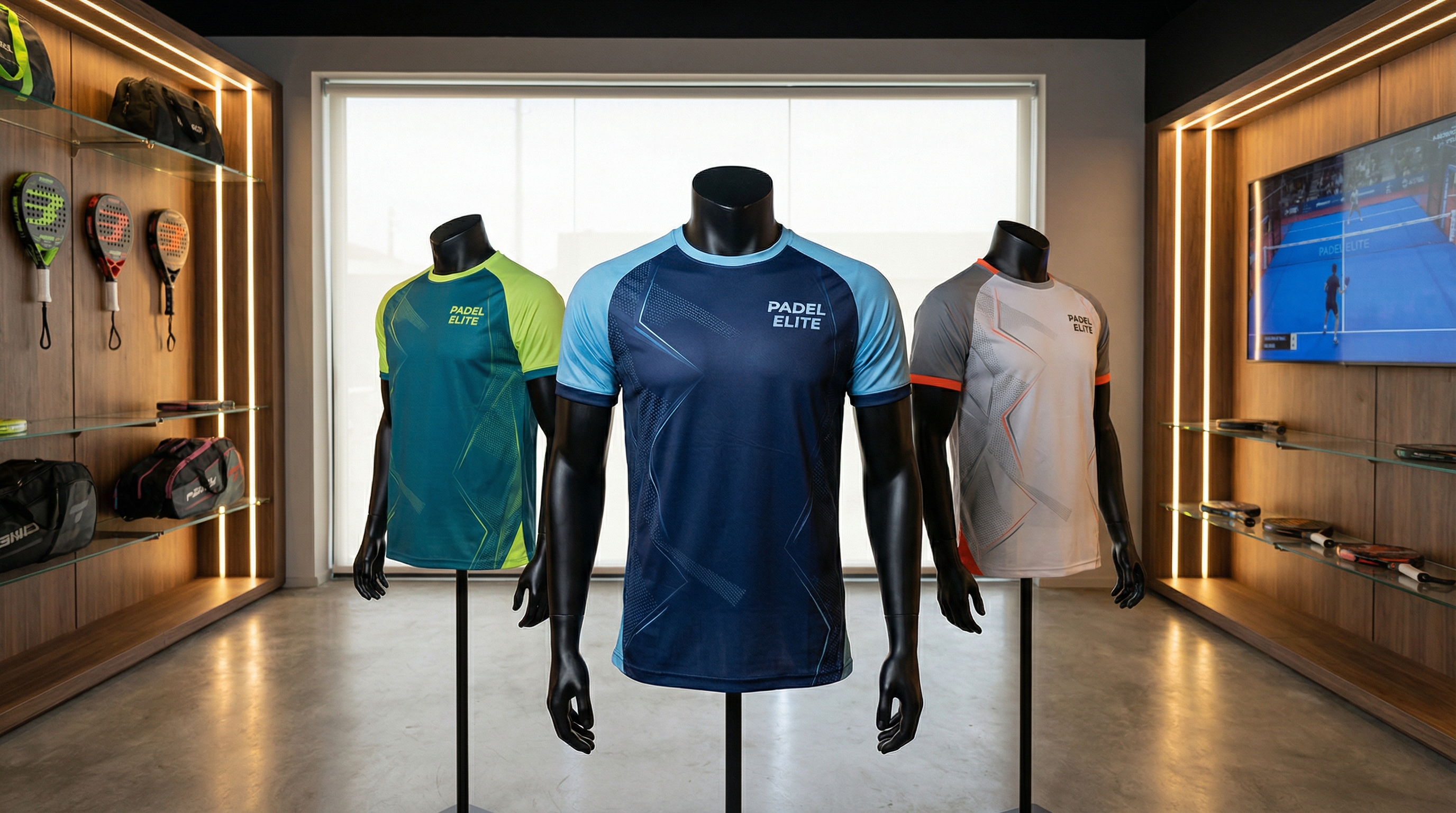
Building a custom collection of padel apparel for a club or team requires a balance between brand identity and technical specifications. You must start by selecting a base fabric that supports high-resolution printing without compromising the breathability of the garment.
Designing for Brand and Performance
When you begin the design phase, you should choose a color palette that stands out against the blue or green of the court. Sublimation printing is the preferred method, as it dyes the fabric fibers directly, ensuring that logos don’t peel or fade over time. You will find that a cohesive team look increases the professional atmosphere of any padel facility.
Fabric Sourcing and Prototyping
You cannot rely on generic sportswear templates if you want a premium result. You should work with manufacturers who understand the “padel-specific cut”—shorter sleeves and longer torso lengths to prevent the shirt from riding up during smashes. A custom collection is a statement of intent for any serious club.
- Sublimation Printing: Allows for unlimited colors and high-detail logos.
- Heat-Transfer Vinyl: Ideal for individual player names and numbers.
- Custom Labels: Adds a retail-quality touch to club-branded merchandise.
- Prototype Testing: Essential for checking the “stretch-recovery” of custom prints.
In other words:
Key Takeaway
Customization is a marketing tool that, when paired with technical quality, builds deep loyalty within the local padel community.
| Build Stage | Key Decision | Expected Outcome |
|---|---|---|
| Sourcing | Fabric GSM (Weight) | Balance of durability/coolness |
| Design | Print Method | Longevity of brand assets |
| Fitment | Pattern Selection | Player comfort and ROM |
The transition from generic gear to a custom collection marks the professionalization of a club’s presence in the competitive landscape.
What are the latest industry material trends?
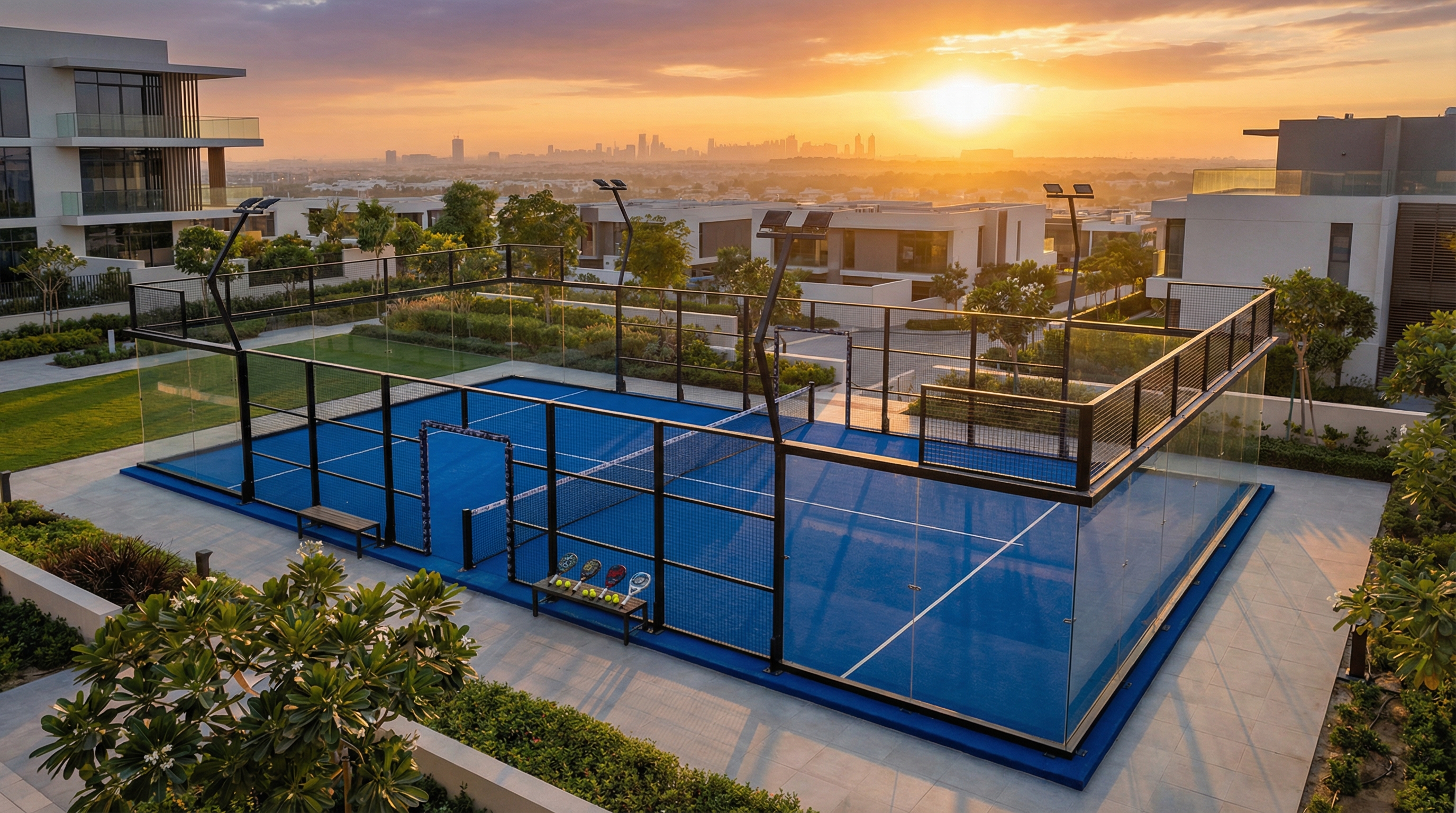
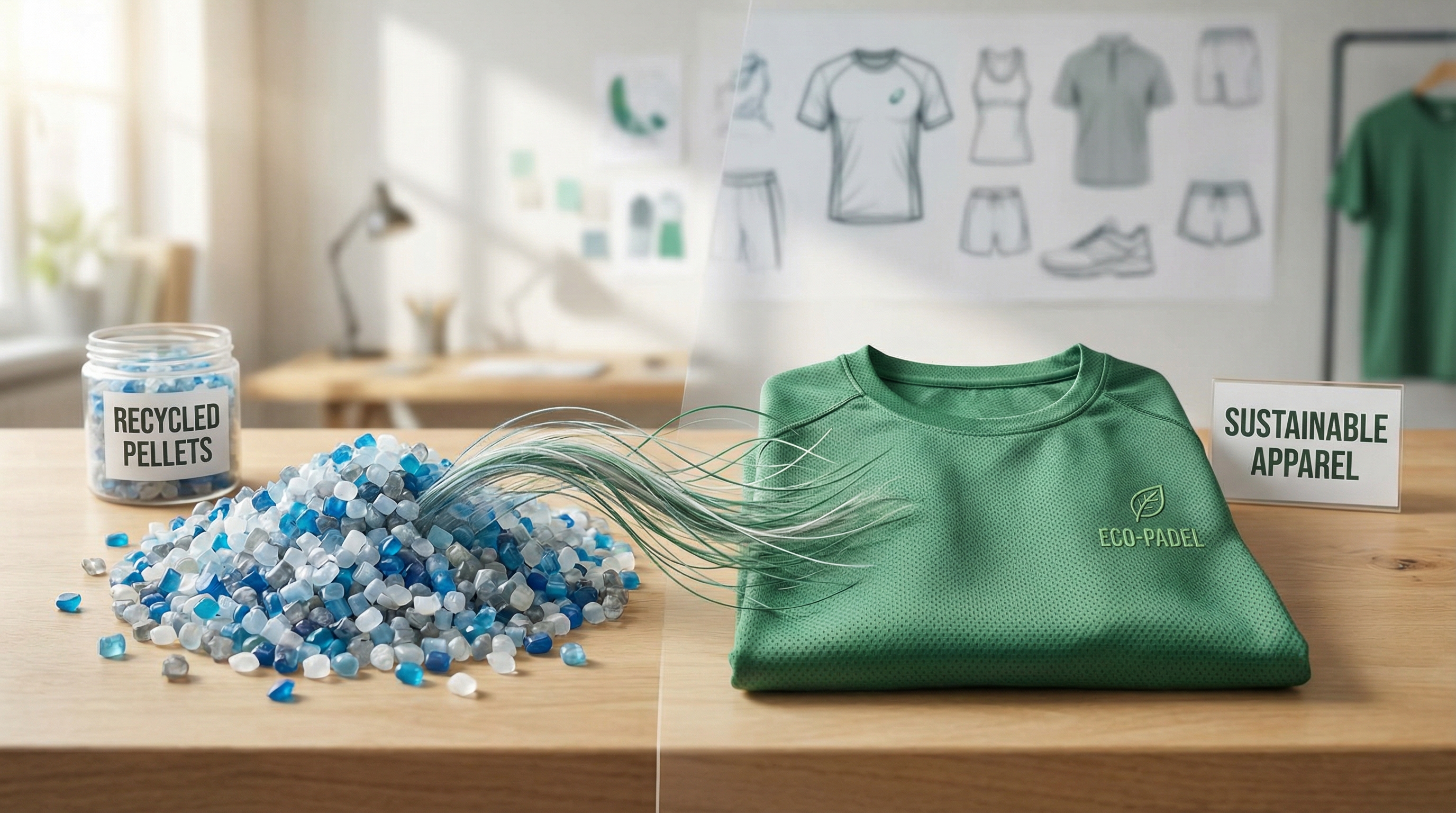
The padel apparel industry is currently shifting toward “eco-performance,” where recycled ocean plastics are being transformed into high-grade technical textiles. This trend is driven by a player base that is increasingly conscious of the environmental impact of synthetic sports manufacturing.
The Rise of Recycled Micro-Polyester
You will now see major manufacturers offering kits made from 100% recycled materials that outperform traditional “virgin” polyesters. These fabrics often feature enhanced “cooling yarns” that use jade or coffee grounds infused into the fiber to naturally lower skin temperature. You can now support the planet while maintaining a competitive edge on the court.
Smart Fabrics and Thermal Sensing
Innovation is moving toward garments that change their porosity based on body heat. You should look for “active-venting” textiles that open their weave when you start to sweat and close it to retain heat during rest periods. Sustainability is the new benchmark of high-end athletic design.
- Ocean Plastic Fabric: High-tenacity polyester derived from recycled plastic bottles.
- Graphene Infusion: Provides incredible strength-to-weight ratios and thermal conductivity.
- Biodegradable Fibers: Newer materials designed to break down after their long lifecycle.
- Digital Knitting: Minimizes fabric waste by knitting garments to their exact shape.
But that’s not all:
Key Takeaway
The future of the sport’s fashion is rooted in the “circular economy,” proving that high performance does not require high environmental costs.
| Trend | Innovation | Primary Benefit |
|---|---|---|
| Eco-Yarns | Recycled polymers | Reduced carbon footprint |
| Jade-Infusion | Mineral-cooling | -2°C skin temperature drop |
| Zero-Waste | Seamless knitting | Reduced friction points |
Industry leaders are proving that technical superiority and environmental stewardship are no longer mutually exclusive goals in court wear.
How to maintain your high-performance gear?
Proper maintenance is essential to extending the lifespan of your padel apparel and preserving the technical properties of the fibers. Technical fabrics are sensitive to heat and chemical additives, which can clog the micro-pores responsible for moisture wicking.
Washing Techniques for Longevity
You should always wash your kit in cold water and avoid the use of fabric softeners at all costs. Softeners leave a waxy coating on the fibers that kills the fabric’s ability to “breathe.” You will find that air-drying is much better than using a tumble dryer, as high heat can damage the elastane and cause the garment to lose its shape.
Spot Cleaning and Odor Management
Because these fabrics are synthetic, they can sometimes trap odors. You can use specialized “sport-wash” detergents or a dash of white vinegar in the rinse cycle to neutralize bacteria without damaging the UV-protective layers. Treat your gear like the equipment it is, and it will last for hundreds of matches.
- Cold Wash Only: Prevents the breakdown of elastic fibers and color bleeding.
- No Softeners: Keeps the moisture-wicking channels open and effective.
- Inside-Out Washing: Protects the surface finish and any printed logos.
- Immediate Drying: Never leave wet kit in a bag, as it encourages mildew.
It’s a simple truth:
Key Takeaway
Maintenance is the silent contributor to performance, ensuring that the “out-of-the-box” technical benefits last for years.
| Care Step | Why It Matters | Consequence of Failure |
|---|---|---|
| Air Dry | Preserves elasticity | Sagging/Baggy fit |
| No Softener | Maintains wicking | Fabric stays wet/heavy |
| Cold Water | Protects color/fiber | Fading and shrinking |
A disciplined approach to garment care ensures that the athlete’s investment continues to pay dividends in comfort and style.
Where can you find top-tier padel solutions?
Finding the right partner for your padel apparel needs is the final step in creating a professional court experience. Whether you are an individual player seeking the latest tech or a club owner looking to build a custom brand, sourcing from specialists who understand the sport’s nuances is paramount.
Partnering with Padel Experts
You should look for suppliers who provide comprehensive solutions, from court construction to the apparel worn on them. This holistic approach ensures that the gear is perfectly calibrated for the specific turf and lighting conditions of modern facilities. You will gain a significant advantage by working with a partner who lives and breathes the sport.
Scaling Your Brand with Quality
If you are looking to build a commercial collection, you need a partner with a proven track record in manufacturing and distribution. You should prioritize quality over quantity to ensure that your players become walking advertisements for your club’s excellence. The right partner doesn’t just sell products; they build the sport’s future with you.
- Holistic Suppliers: Companies that offer courts, gear, and expertise.
- Customization Experts: Manufacturers with specialized padel templates.
- Innovation Leaders: Partners who utilize the latest sustainable materials.
- Global Distribution: Ensuring your team has access to gear wherever they play.
Think about it:
Key Takeaway
Professional sourcing is the bridge between a casual hobby and a high-performance athletic lifestyle.
| Solution Type | Target Audience | Primary Goal |
|---|---|---|
| Retail Tech | Individual Players | Personal performance |
| Club Sourcing | Owners/Managers | Brand monetization |
| Full Facility | Investors | Professional ecosystem |
Selecting a premium partner ensures that every touchpoint of the player’s journey is supported by world-class engineering and design.
*
Choosing the right padel apparel is a strategic decision that directly influences your comfort, safety, and performance on the court. By understanding the science of moisture-wicking fabrics, the necessity of specialized footwear, and the importance of professional maintenance, you position yourself to excel in this fast-growing sport. Whether you are building a custom club collection or selecting your first high-performance kit, focus on materials that offer 4-way stretch and superior thermal regulation.
To take your game or your facility to the next level, contact us today and let our experts guide you through building a professional padel environment. At Superb Padel, our vision is to provide the infrastructure and knowledge that empowers every player to reach their full potential on the world stage.
*
Frequently Asked Questions
Can I use my standard gym clothes for playing padel?
While you can certainly wear basic gym clothes as a beginner, you will quickly find that they lack the specific lateral stretch and specialized pocket depth required for the sport. Technical garments are designed to prevent the “heavy” feeling of sweat-soaked cotton and provide the freedom of movement needed for complex overhead strokes.
What is the best fabric for playing in high-humidity climates?
In humid conditions, you should prioritize 100% synthetic micro-mesh polyesters with “Cool-Dry” finishes. These fabrics work through capillary action to pull sweat away from the skin and promote rapid evaporation, keeping your body temperature stable even when the air is thick with moisture.
How do I know if my shoes have the correct grip for a padel court?
A dedicated shoe will feature a deep “herringbone” or “clay” sole pattern designed to navigate the fine sand on the turf. If you find yourself sliding uncontrollably during sudden stops or losing traction on your first step toward the net, your current footwear likely lacks the necessary tread depth.
How many technical shirts should a regular player have in their rotation?
If you play 2-3 times per week, it is recommended to have at least 4-5 technical shirts. This ensures you always have a fresh, dry garment ready and prevents the “over-washing” of a single item, which can prematurely break down the elastic fibers and technical coatings.
What is the most common mistake when building a custom team collection?
The most frequent error is choosing “standard” athletic templates that aren’t designed for the high-reaching motions of padel. You must ensure your manufacturer uses patterns with specific gussets under the arms and a slightly longer “drop-tail” hem to maintain coverage and comfort during smashes and lobs.