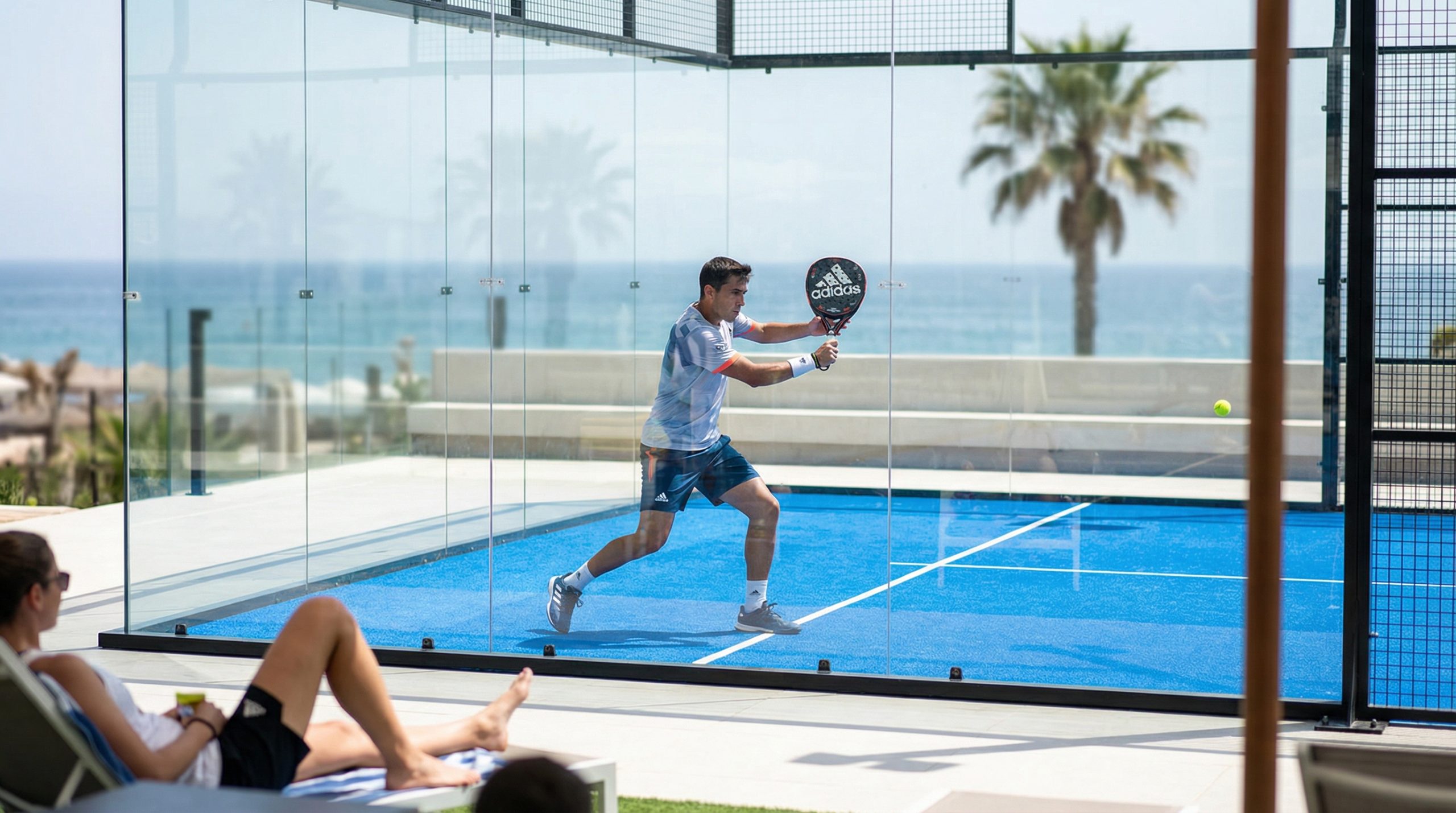
You are standing at the baseline of a pristine court, the sun reflecting off the glass walls, and the game is tied at deuce. You swing for a decisive volley, but your racket feels heavy, vibrates excessively, and the ball dies into the net. Using a generic or poorly suited racket doesn’t just lose you points; it causes arm fatigue and stunts your technical growth, leaving you frustrated while your opponents improve. By understanding the advanced construction of an adidas padel racket, you can choose or customize a tool that aligns with your biomechanics and playstyle to reclaim your competitive edge.
What defines an adidas padel racket?
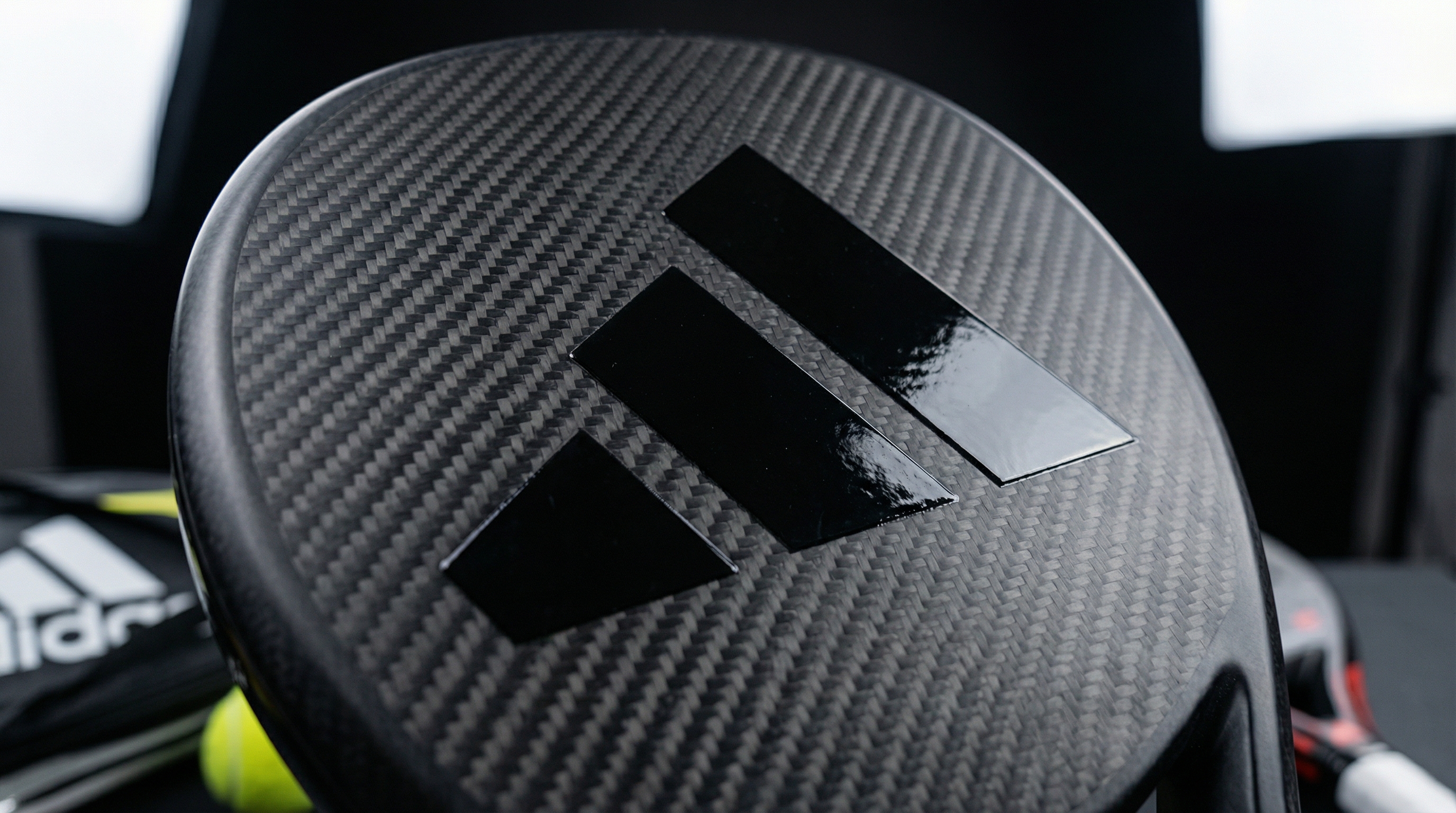
An adidas padel racket is defined by its sophisticated fusion of German engineering, high-performance materials like carbon aluminized fiber, and a commitment to sport-specific ergonomics. These rackets are crafted to provide a specific equilibrium between structural stiffness for power and controlled flexibility for comfort, ensuring that every impact translates into precise ball output. By integrating advanced geometric shapes and specialized face textures, the brand creates a tool that caters to the rigorous demands of professional-level play.
Engineering for high-performance play
The engineering behind these rackets focuses on optimizing the energy transfer between the player’s swing and the ball’s flight path. High-density materials are layered strategically to ensure that the frame does not deform under the high-pressure conditions of a competitive smash. You will notice that the vibration dampening systems are often built into the heart of the racket to protect your elbow from long-term strain.
But that’s only half the story.
- Structural carbon reinforcement for maximum frame durability.
- Specialized hole patterns designed to reduce aerodynamic drag.
- Vibration-absorbing bridges located in the racket throat.
- Multi-layered face composites for varied responsiveness.
- Ergonomic handle designs for superior grip security.
The signature three-stripe aesthetic
The aesthetic design serves as a visual representation of the technological rigor applied to every single frame in the lineup. Beyond just branding, the placement of the iconic stripes often aligns with structural ridges that reinforce the racket’s most vulnerable impact points. This marriage of form and function ensures that your equipment looks as professional as the performance it facilitates on the court.
It gets even better.
- High-contrast colorways for better visual tracking during fast play.
- Matte and gloss finishes that improve surface friction.
- Protective head-guard integration that maintains a sleek profile.
- Laser-etched technical specifications on the racket frame.
- Signature branding that signifies premium manufacturing standards.
Key Takeaway: Every racket is a blend of German engineering and sports science, designed to provide a specific balance of stiffness and flexibility.
| Component | Benefit |
|---|---|
| Carbon Fiber Frame | Increases structural rigidity and power output. |
| Specialized Geometry | Optimizes the sweet spot for varied playstyles. |
| Signature Branding | Reflects a legacy of professional athletic excellence. |
How to maintain your adidas padel racket?
Maintaining your adidas padel racket requires a consistent regimen of physical protection, temperature regulation, and surface cleaning to preserve the integrity of the carbon fibers and the EVA core. Because the materials are sensitive to extreme environmental fluctuations, you must ensure your equipment is shielded from direct sunlight and excessive humidity when not in active use. Proper maintenance not only extends the lifespan of the tool but also ensures that the “pop” or elasticity of the hitting surface remains consistent over hundreds of matches.
Applying protective frame tape
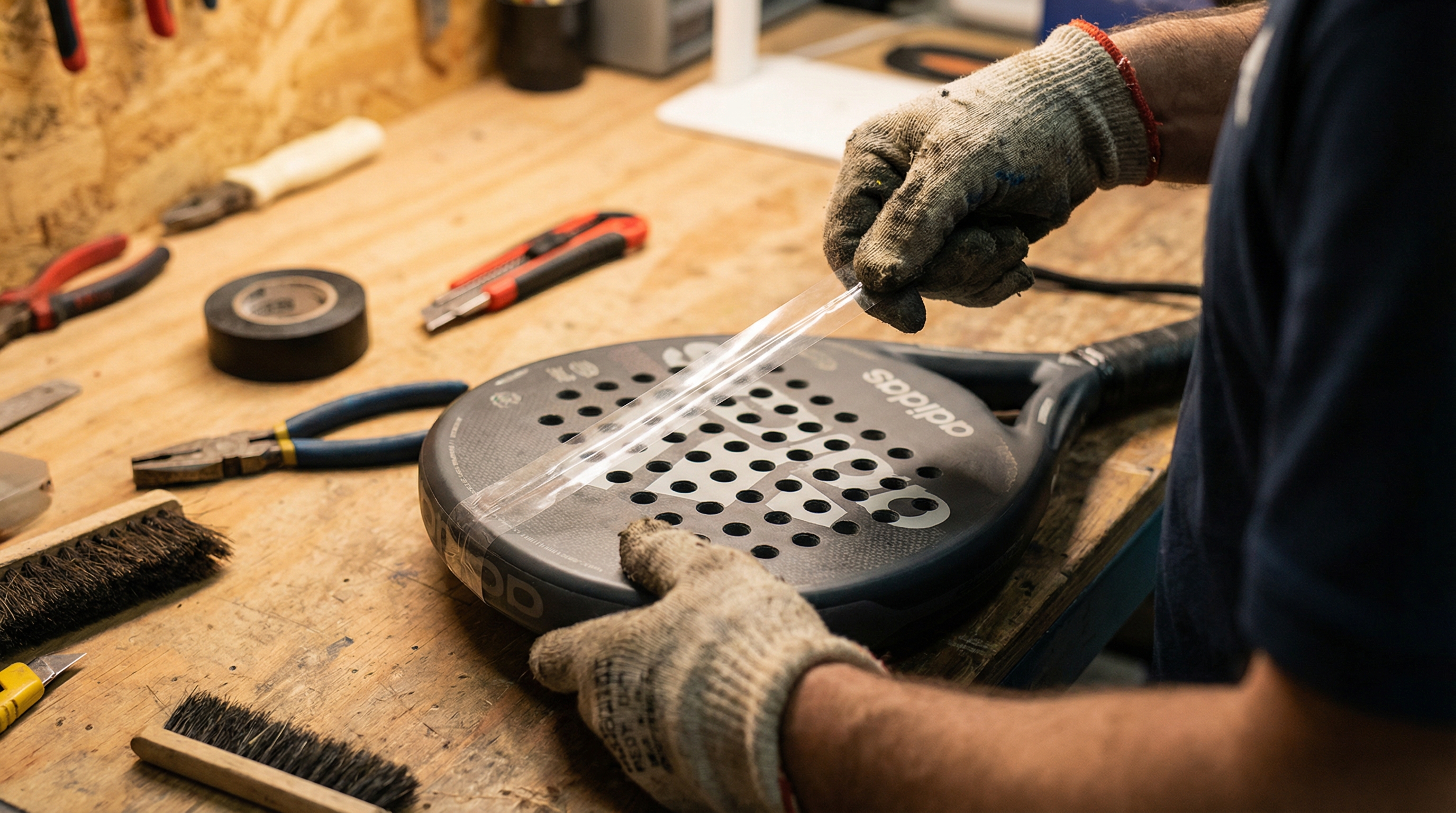
Applying a high-quality protective tape to the head of your frame is the first line of defense against the inevitable scrapes from the court walls. This tape acts as a sacrificial layer that absorbs the impact energy and prevents cracks from forming in the primary carbon structure. You should replace this tape whenever it shows significant wear to ensure the underlying frame remains pristine and structurally sound.
Believe it or not.
- Clear adhesive guards for invisible frame protection.
- Textured head-tape for additional impact dissipation.
- Precision application techniques to avoid air bubbles.
- Regular inspection routines to identify early stress signs.
- Replacement schedules based on match frequency and intensity.
Cleaning and storage protocols
Cleaning your racket surface after every match removes sweat, salt, and court debris that can degrade the specialized “Spin Blade” textures over time. Storing the racket in a thermal-lined bag is equally crucial, as it prevents the internal EVA core from expanding or contracting due to temperature shifts. These small habits collectively ensure that your investment retains its professional performance characteristics for as long as possible.
Think about this.
- Microfiber cloth usage for gentle surface debris removal.
- Avoidance of harsh chemicals that could damage the resin.
- Thermal bag storage to regulate internal core temperature.
- Grip replacement frequency to maintain hand-to-racket synergy.
- Drying protocols after playing in high-humidity environments.
Key Takeaway: To ensure long-term professional performance, you must treat your adidas padel racket with consistent care, protecting the frame from heat and impact.
| Action | Frequency |
|---|---|
| Frame Inspection | Weekly or after every intensive match. |
| Surface Cleaning | Immediately following every session. |
| Grip Replacement | Every 3-5 matches for optimal control. |
What materials comprise the racket core?
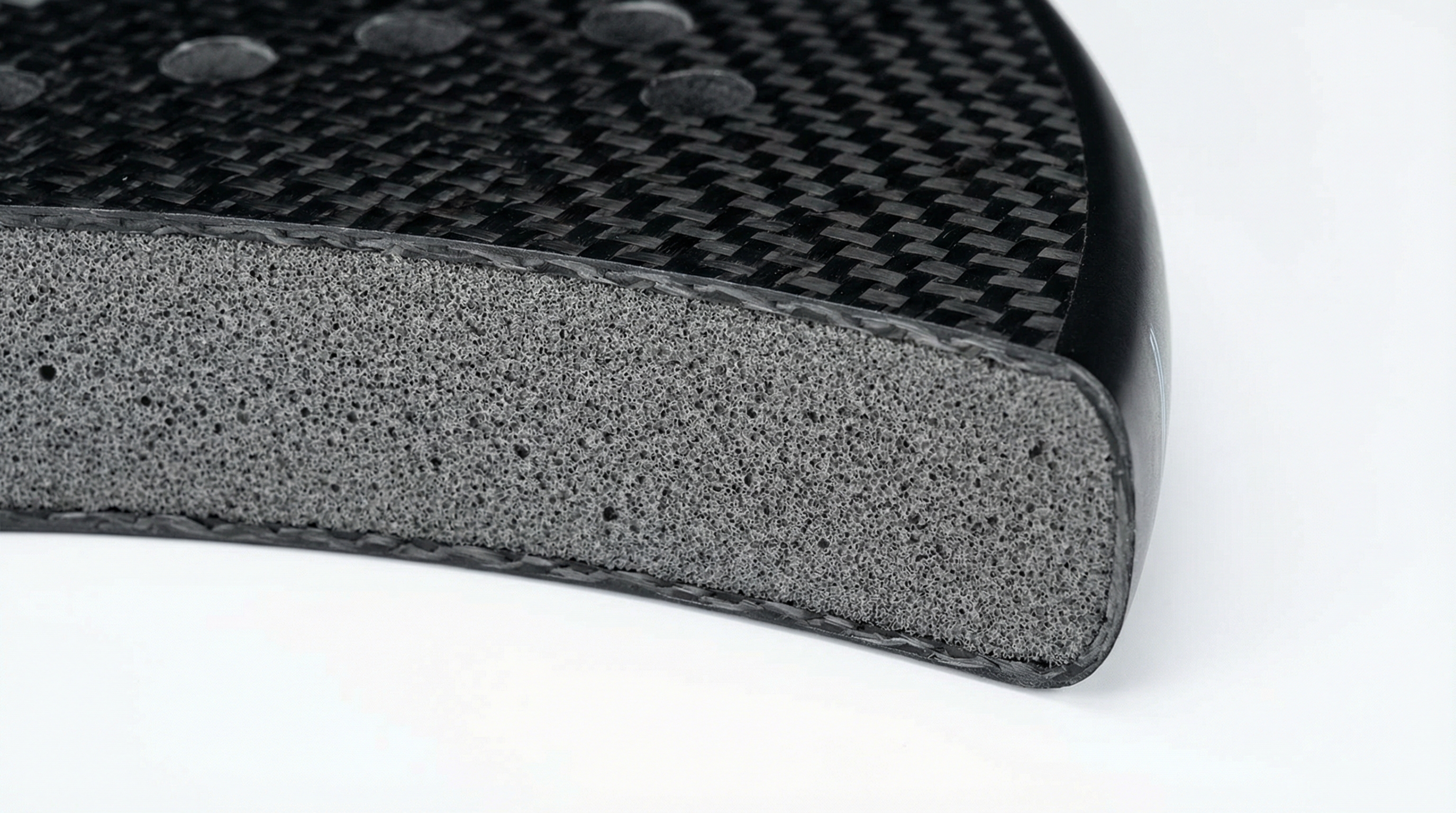
The core of an adidas padel racket is primarily composed of various densities of Ethylene Vinyl Acetate (EVA) rubber, a material chosen for its exceptional memory and shock-absorption properties. This internal foam is what dictates the “feel” of the racket, determining whether the ball lingers on the face for control or rebounds instantly for explosive power. By varying the chemical composition and density of this rubber, the engineering team can create rackets tailored for either defensive baseline play or aggressive net attacks.
High-density EVA rubber variations
High-density EVA rubber is specifically designed for advanced players who possess the physical strength to generate their own power and require a stiff response. This material offers a “hard” touch, which provides incredible precision and direct feedback, allowing you to place the ball with surgical accuracy. While it requires more effort from the player’s arm, the rewards in terms of ball speed and smash potential are significantly higher.
Here is the kicker.
- High-memory foam for rapid shape recovery after impact.
- Increased stiffness for advanced power-oriented players.
- Minimal vibration transfer for higher impact clarity.
- Durable chemical structure that resists long-term compression.
- Temperature-stable formulas for consistent performance.
The impact of core density on power
Low-density or “soft” EVA cores are engineered to provide “trampoline effect” power, which helps beginners and intermediate players achieve greater depth with less effort. This softer core absorbs more of the ball’s kinetic energy and releases it smoothly, offering a comfortable playing experience that minimizes the risk of joint injuries. Choosing between hard and soft cores is perhaps the most critical decision you will make when selecting your ideal equipment setup.
You might be wondering.
- Enhanced ball output for players with slower swing speeds.
- Superior comfort levels for those prone to tennis elbow.
- Larger effective sweet spot due to material flexibility.
- Reduced noise levels during high-velocity impacts.
- Forgiving nature during off-center hits and volleys.
Key Takeaway: The “memory” of the EVA core determines how quickly the racket recovers after impact, directly affecting your shot speed.
| Core Type | Player Benefit |
|---|---|
| High-Density EVA | Maximum power and precision for elite athletes. |
| Soft Performance | High comfort and easy ball depth for beginners. |
| Medium Density | A balanced feel for versatile all-around play. |
How does an adidas padel racket affect movement?
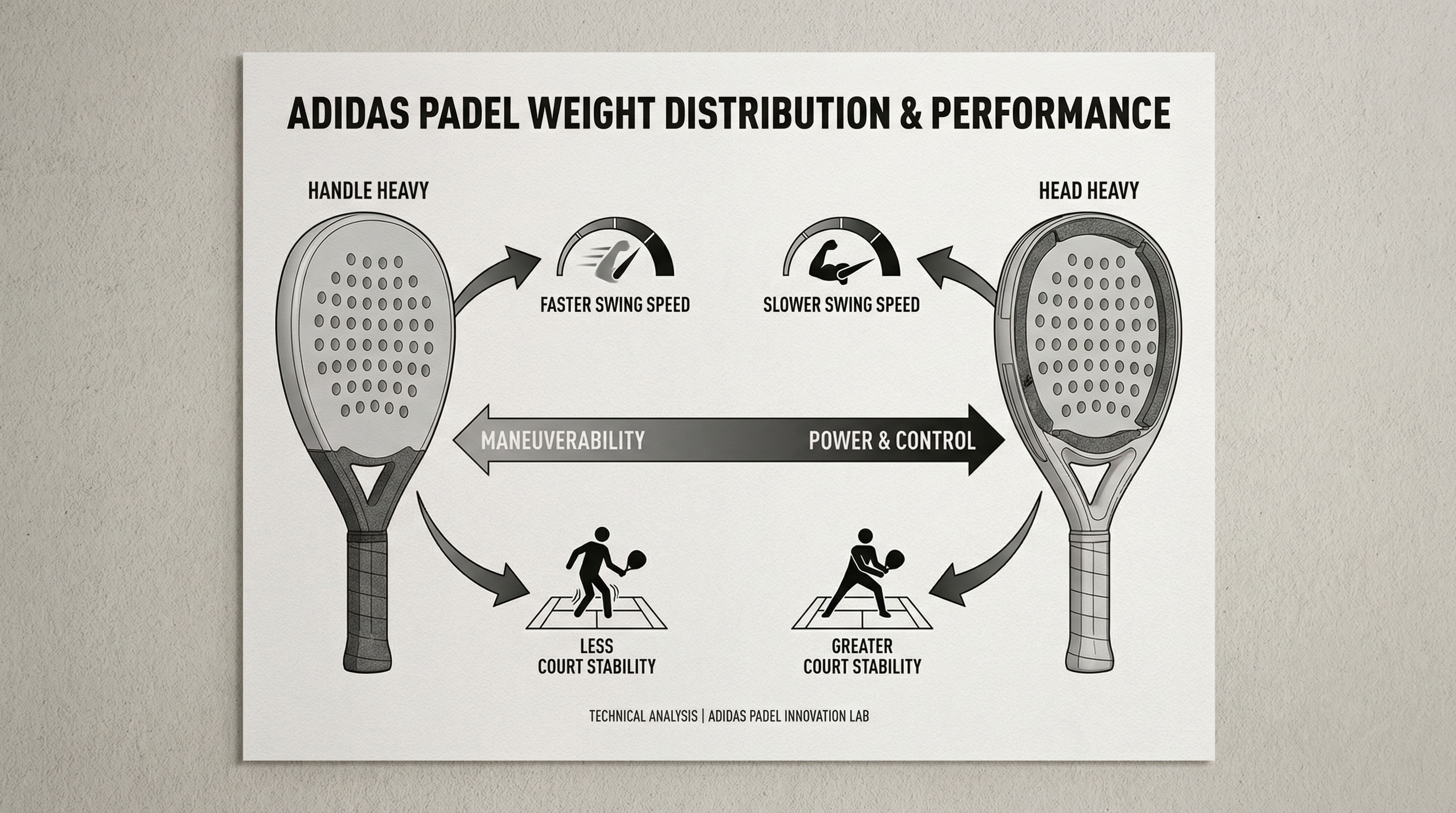
An adidas padel racket significantly affects your movement by influencing your swing weight, reaction speed, and overall center of gravity during fast-paced rallies. Because the weight is strategically distributed across the frame—ranging from head-heavy for power to handle-heavy for control—the racket dictates how much effort is required to transition from a defensive backhand to an offensive volley. A well-balanced racket allows for more fluid court coverage, enabling you to reach difficult balls without feeling encumbered by your equipment.
Weight distribution and swing weight
The concept of swing weight refers to how heavy the racket feels when it is in motion, which is often more important than the static weight you see on a scale. Head-heavy designs provide the inertia needed for massive smashes, but they can slow down your defensive reactions at the net. Conversely, a racket with weight concentrated toward the handle feels light and “whippy,” allowing you to flick the ball into tight angles with minimal preparation time.
And that’s just the beginning.
- Head-heavy balance for increased leverage on smashes.
- Neutral balance for players who transition often.
- Handle-heavy setups for maximum defensive maneuverability.
- Static weight ranges typically between 345g and 375g.
- Customizable balance points via integrated weight systems.
Ergonomics and handle stability
The ergonomics of the handle play a vital role in how securely you can hold the racket during high-impact exchanges, which directly impacts your movement confidence. A stable grip prevents the racket from twisting in your hand, allowing you to maintain a consistent swing path even when sprinting to a corner. By optimizing the handle circumference and using moisture-wicking materials, the design ensures that your movement remains precise and uninterrupted.
Wait, there’s more.
- Octagonal handle shapes for better grip orientation.
- Multi-layer overgrip compatibility for size customization.
- Moisture-management materials to prevent slippage.
- Reinforced bridge designs to minimize torsional twist.
- Wrist strap integration for safety and player confidence.
Key Takeaway: Selecting a well-balanced adidas padel racket enhances your reaction time and stability during rapid court transitions.
| Balance Type | Primary Advantage |
|---|---|
| High Balance | Superior power and leverage for attacking. |
| Low Balance | Exceptional agility and control for defending. |
| Even Balance | Versatility across all areas of the court. |
How to build your custom racket setup?
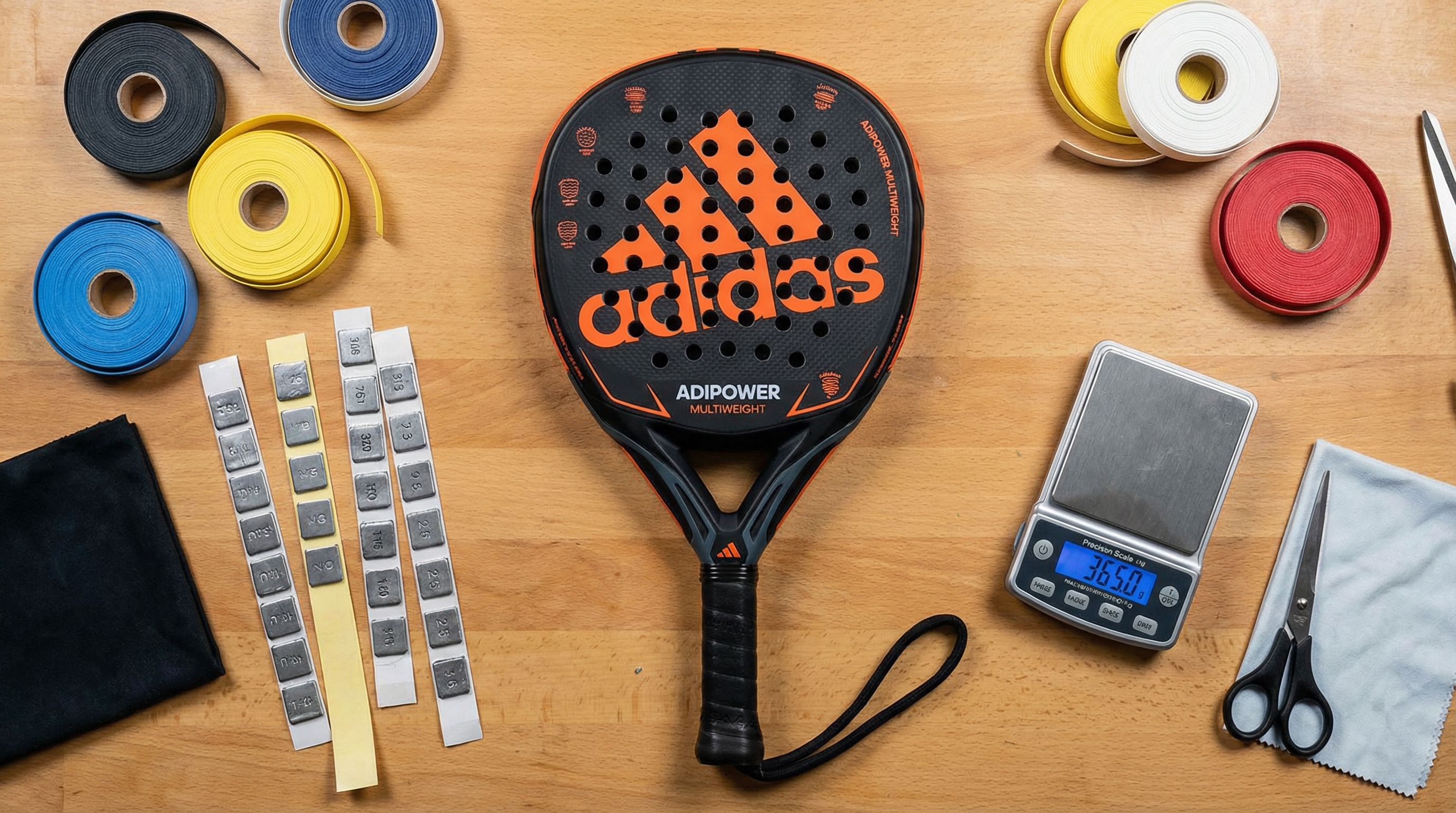
Building your custom setup involves fine-tuning the static weight, balance, and grip thickness of your adidas padel racket to perfectly match your physical attributes and tactical preferences. Many modern models feature “Weight & Balance Systems” that allow you to add or remove small metal screws from the bridge or head to shift the center of gravity in real-time. This level of customization transforms a standard piece of equipment into a bespoke tool that can evolve as your skill level and playing style mature.
Adjusting weight with adhesive lead tapes
For models without integrated weight systems, you can still “build” a heavier profile by strategically applying adhesive lead or tungsten tapes to the frame. Adding weight to the top of the racket increases its swing weight for more power, while adding it to the throat can improve stability without sacrificing too much speed. You must experiment with small increments of weight to find the “sweet spot” of performance that doesn’t cause fatigue during long matches.
Check this out.
- Lead tape application for head-heavy customization.
- Tungsten strips for eco-friendly weight adjustment.
- Symmetrical placement to avoid frame imbalance.
- Incremental testing to monitor arm fatigue levels.
- Permanent vs. temporary weighting solutions.
Choosing the right overgrip thickness
The grip is your only physical connection to the racket, so building the correct thickness is essential for both control and injury prevention. If your grip is too thin, you may squeeze too hard, leading to tension; if it is too thick, you lose the ability to feel the racket’s orientation. Most professional players use a combination of a base grip and one or two overgrips to achieve the perfect diameter for their hand size.
You won’t believe it.
- Tacky overgrips for maximum friction in dry weather.
- Perforated grips for better sweat absorption.
- Towel grips for players with excessive hand moisture.
- Custom wrapping techniques for varied ridge feel.
- Regular replacement to maintain tactile feedback.
Key Takeaway: “Building” your racket means fine-tuning the static weight and grip size to match your hand’s anatomy and swing strength.
| Modification | Expected Result |
|---|---|
| Adding Head Weight | Increases power but reduces maneuverability. |
| Adding Throat Weight | Enhances stability and reduces vibrations. |
| Increasing Grip Size | Reduces wrist strain for players with large hands. |
Is an adidas padel racket best for standard courts?
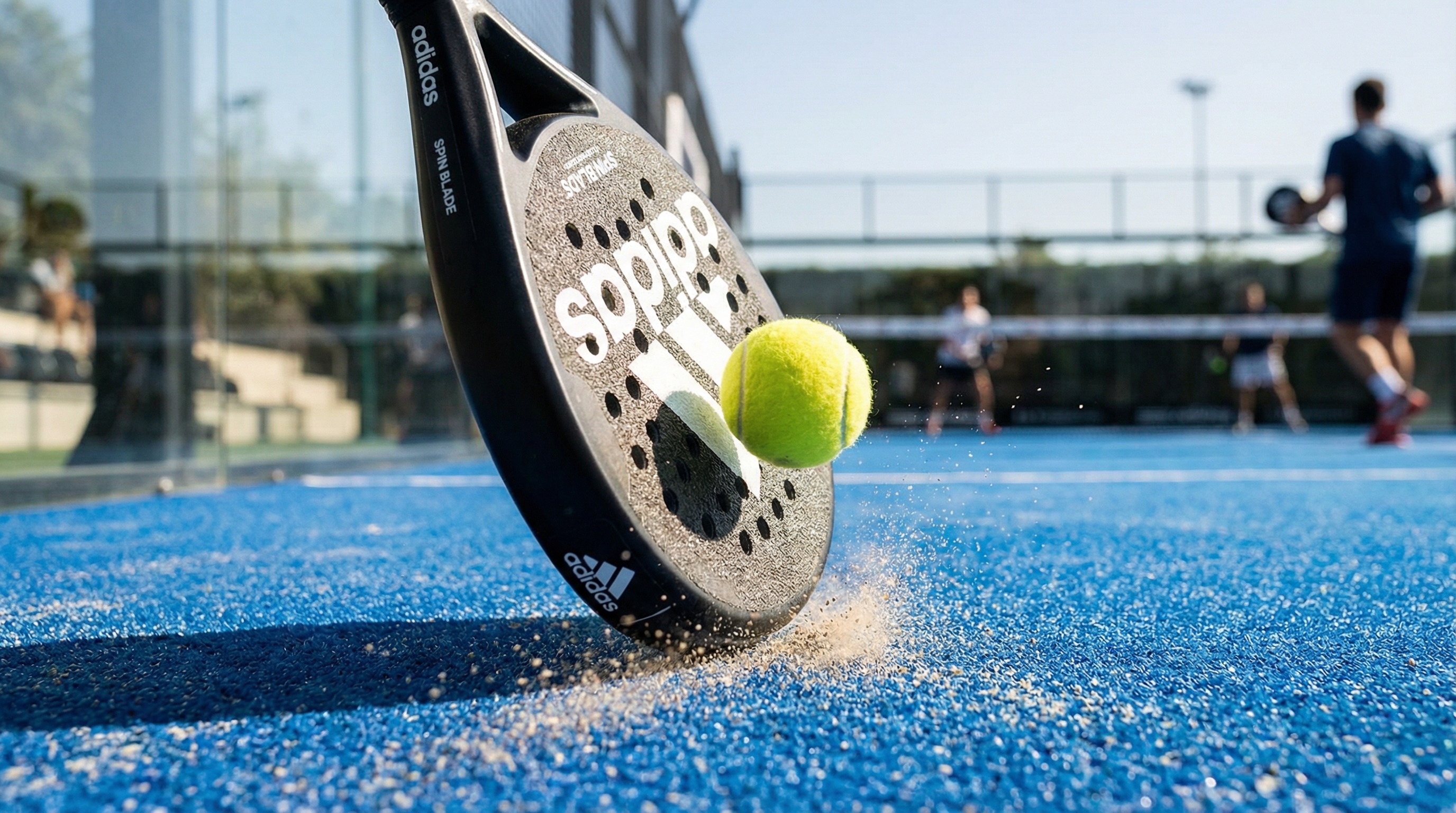
An adidas padel racket is exceptionally well-suited for standard courts because its versatile technology manages the consistent ball bounce and predictable wall rebounds found in these environments. Standard courts often feature artificial turf that provides a medium-speed game, allowing the spin-enhancing textures of the racket face to bite into the ball effectively. Whether you are playing a friendly match or a local tournament, the reliability of the frame’s construction ensures that your shots remain consistent regardless of the court’s condition.
Surface texture and spin efficiency
The “Spin Blade” technology found on many high-end models utilizes a 3D relief or a gritty sand-like finish to increase the friction between the racket and the ball. This allows you to impart heavy slice or topspin, which is crucial on standard courts where the ball might otherwise sit up for your opponent. By mastering the use of this texture, you can keep your shots low and difficult to return after they hit the back glass.
This is the secret.
- 3D molded patterns for consistent spin generation.
- Sand-blast finishes for maximum ball grip.
- Strategic hole placement to optimize spin surface area.
- Durable coatings that resist texture wear.
- Enhanced “cut” potential on volleys and overheads.
Impact resistance on standard walls
Standard courts often utilize tempered glass or metallic mesh walls that can be punishing to equipment during accidental contact. The structural reinforcement in these rackets is designed to withstand these minor impacts without suffering catastrophic failure or delamination. You can play with more confidence near the boundaries of the court, knowing that your frame is built with the toughness required for the modern game.
It gets better.
- Carbon-reinforced frames for superior impact durability.
- Integrated head protectors to shield against wall scrapes.
- High-quality resins that prevent frame cracking.
- Rigid bridge designs for long-term shape retention.
- Stress-tested materials for high-intensity match play.
Key Takeaway: On a Standard Padel Court, the spin-blade technology of the racket face allows for aggressive “slice” shots that stay low after hitting the glass.
| Feature | Court Benefit |
|---|---|
| Spin Blade Texture | Keeps the ball low after hitting the glass wall. |
| Reinforced Frame | Protects against damage from the mesh fencing. |
| Balanced Weight | Allows for quick defensive resets at the net. |
What are the primary racket shapes?
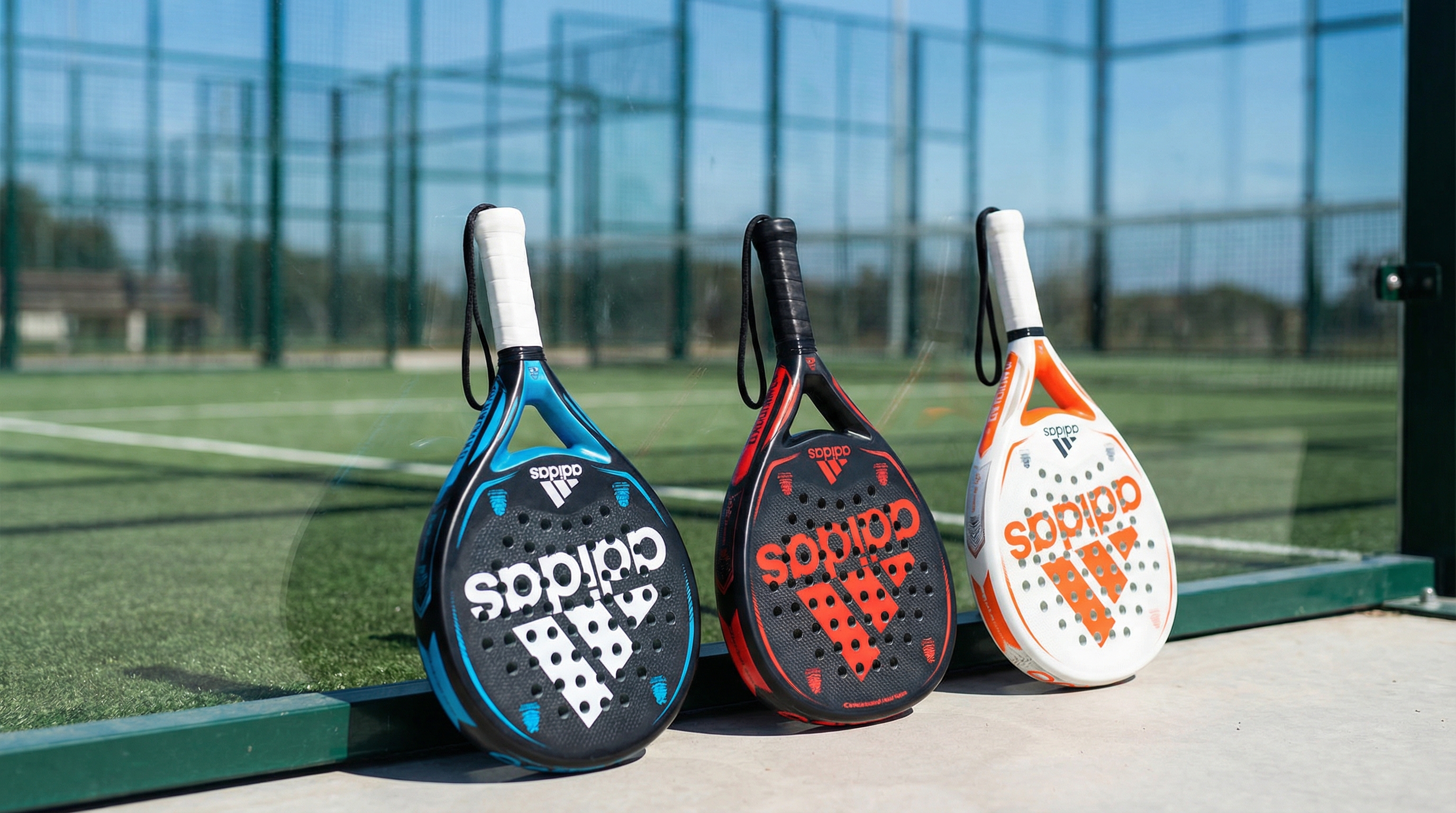
The primary shapes of an adidas padel racket are round, teardrop, and diamond, each offering a distinct profile that caters to specific skill levels and tactical roles on the court. Round shapes prioritize a large, centered sweet spot for maximum control, making them ideal for defensive players and beginners. Teardrop and diamond shapes shift the balance higher up the frame, trading some of that forgiveness for the increased leverage and power required by offensive specialists.
Round shapes for defensive control
Round rackets are the gold standard for players who want to minimize errors and maintain a consistent rhythm from the back of the court. Because the weight is distributed closer to the handle, these rackets are incredibly easy to maneuver during fast defensive exchanges. If you find yourself playing a “control” role, where your job is to reset the point and wait for an opponent’s mistake, this is the shape for you.
But wait, there’s more.
- Centered sweet spot for maximum shot forgiveness.
- Low balance point for easy, fatigue-free handling.
- Ideal for beginners learning the technical fundamentals.
- Enhanced precision for lobs and placement shots.
- Highly recommended for players with previous elbow issues.
Diamond shapes for offensive power
Diamond-shaped rackets are designed with a “top-heavy” balance that provides maximum inertia for smashes and aggressive volleys. The sweet spot is located significantly higher on the face, which requires a more precise technical strike but rewards the player with unmatched ball speed. Advanced players who prefer to dominate the net and finish points quickly will find this shape indispensable for their aggressive style.
You’ll want to see this.
- High balance point for increased “hammer” effect on smashes.
- Smaller sweet spot that rewards elite-level precision.
- Carbon-aluminized surfaces for a stiffer hitting feel.
- Optimized for overhead power and fast attacking play.
- Popular choice among professional World Padel Tour players.
Teardrop shapes for versatile players
Teardrop rackets represent the “hybrid” choice, offering a balanced middle ground between the control of a round shape and the power of a diamond. This shape is perfect for the modern “all-around” player who needs to defend effectively but also wants the capability to attack when the opportunity arises. You will find that these rackets offer enough forgiveness for tricky defensive shots while still providing a satisfying “pop” on your volleys.
Think about this.
- Intermediate balance point for all-court versatility.
- Moderate sweet spot size for a blend of power and control.
- Suitable for improving players transitioning to advanced play.
- Adaptable for both offensive and defensive tactical roles.
- The most popular shape for club-level competitive players.
Key Takeaway: Your choice of shape dictates the location of the “sweet spot,” moving it higher for power or centering it for control.
| Shape | Skill Level | Primary Style |
|---|---|---|
| Round | Beginner / Intermediate | Defensive Control |
| Teardrop | Intermediate / Advanced | Versatile All-Rounder |
| Diamond | Advanced / Professional | Aggressive Power |
Do adidas padel rackets suit panoramic courts?
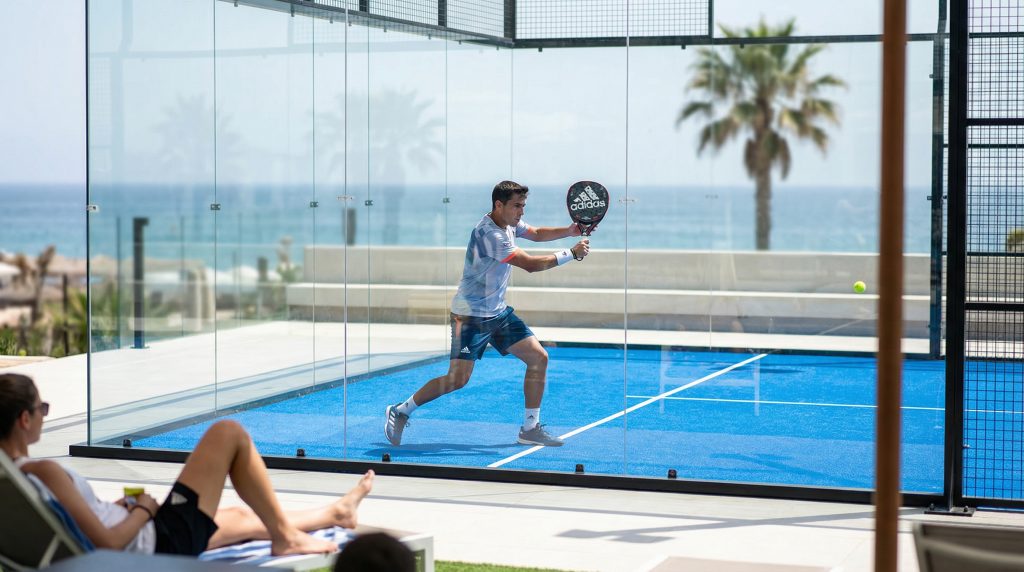
Yes, an adidas padel racket is perfectly suited for panoramic courts, as its advanced vibration dampening and structural rigidity excel in the high-intensity environment these courts often host. Panoramic courts provide better visibility and often attract higher-level play, where the speed of the ball is significantly increased. In these conditions, you need a racket that can handle the sheer force of elite-level smashes while providing the stability required to defend against high-velocity returns.
Power output for high-visibility play
The “Structural Power” technology found in top-tier models ensures that the frame does not lose energy through torsion during heavy hits on a fast panoramic court. This means that when you go for a “por tres” (hitting the ball out of the court over the side wall), the racket transmits your power directly into the ball with minimal loss. This efficiency is critical in high-stakes matches where every millimeter of ball depth matters for your tactical advantage.
It’s actually quite simple.
- Carbon exoskeleton designs to prevent frame twisting.
- Power Embossed Ridges for increased structural stiffness.
- High-rebound core materials for maximum ball exit speed.
- Aerodynamic profiles for faster swing speeds in the air.
- Optimized for the faster pace of elite-level tournament play.
Vibration dampening for intensive matches
Playing on a professional panoramic court often means longer rallies and more forceful impacts, which can lead to arm fatigue if your equipment isn’t properly dampened. The specialized bridges and internal silicone inserts in these rackets absorb the high-frequency vibrations before they reach your wrist and elbow. This allows you to play multiple intensive sets without the “stinging” sensation often associated with stiff, low-quality rackets.
You might not know this.
- Dual Exoskeleton technology to distribute impact energy.
- Soft-fiber face options for increased vibration absorption.
- Ergonomic bridge designs that neutralize shockwaves.
- Consistent feel across the entire face of the racket.
- Reduced risk of chronic injuries during high-frequency play.
Key Takeaway: When playing on a Panoramic Padel Court, the structural reinforcement of the racket helps manage the higher intensity and faster pace of elite-level games.
| Feature | Benefit on Panoramic Court |
|---|---|
| Carbon Exoskeleton | Maintains frame shape during high-speed volleys. |
| High-Density Core | Provides the power needed for spectacular smashes. |
| Vibration Control | Ensures comfort during long, professional rallies. |
How does the brand innovate racket tech?
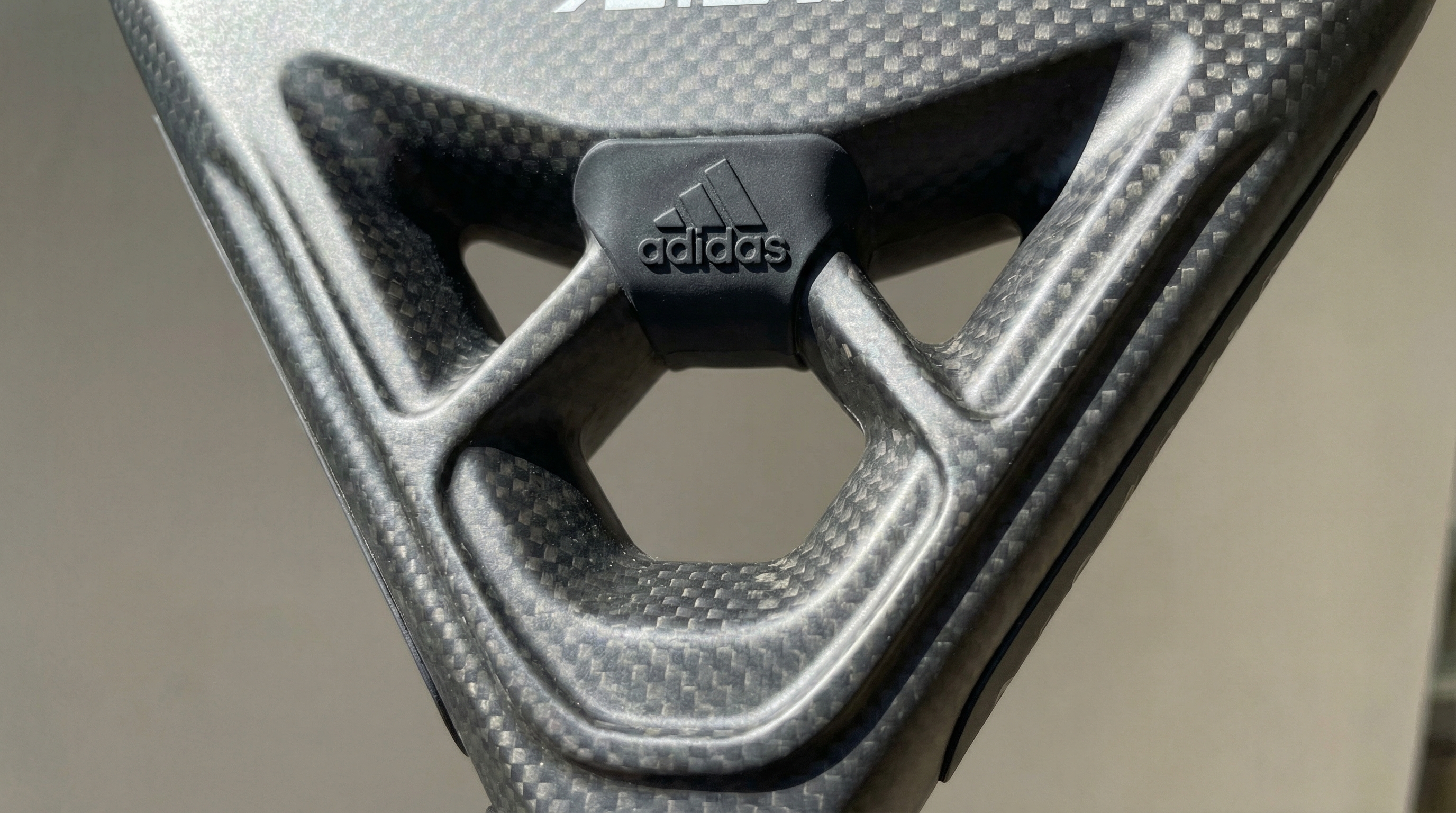
The brand innovates its adidas padel racket technology by focusing on “Structural Power” and “Spin Optimization” through advanced materials like carbon aluminized fiber and unique geometric frame reinforcements. By using computer-aided design and real-world testing with professional athletes, the engineering team identifies stress points and optimizes the carbon layup for maximum efficiency. This commitment to research and development ensures that each new generation of rackets offers tangible improvements in durability, power, and player comfort.
Dual Exoskeleton carbon structures
The Dual Exoskeleton is a revolutionary design feature that uses double-height carbon ribs in the heart and frame of the racket to provide unparalleled rigidity. This structure acts as a skeleton for the racket, ensuring that it remains perfectly stable even during the most powerful smashes. When you swing with full force, this technology prevents the racket from bending, allowing for a much cleaner and more powerful ball strike.
Here is the real kicker.
- Double-height carbon ribs for localized reinforcement.
- Torsional resistance for better accuracy on off-center hits.
- Lightweight yet incredibly strong structural geometry.
- Improved energy return for more explosive shot making.
- Iconic design language that integrates tech and style.
Power Embossed Ridge technology
The Power Embossed Ridge consists of an outer carbon nerve on the frame that provides extra stiffness to the head of the racket. This specific innovation is designed to increase the leverage you have when hitting overhead shots, effectively turning the racket into a powerful extension of your arm. By concentrating the reinforcement where it is needed most, the design achieves high power without adding unnecessary weight to the overall frame.
Wait, there’s more.
- Exterior carbon ridges that reinforce the frame’s edge.
- Increased durability during high-velocity impact sessions.
- Enhanced leverage for overhead and smash techniques.
- Optimized weight distribution for aggressive playstyles.
- Precision manufacturing that ensures consistent ridge quality.
Key Takeaway: Innovation is centered on “structural power,” using carbon ridges to prevent frame distortion during high-velocity smashes.
| Innovation | Technical Purpose |
|---|---|
| Dual Exoskeleton | Prevents frame torsion and increases stability. |
| Power Embossed Ridge | Strengthens the head for maximum smash power. |
| Spin Blade | Increases ball friction for advanced technical shots. |
How to choose your first adidas padel racket?
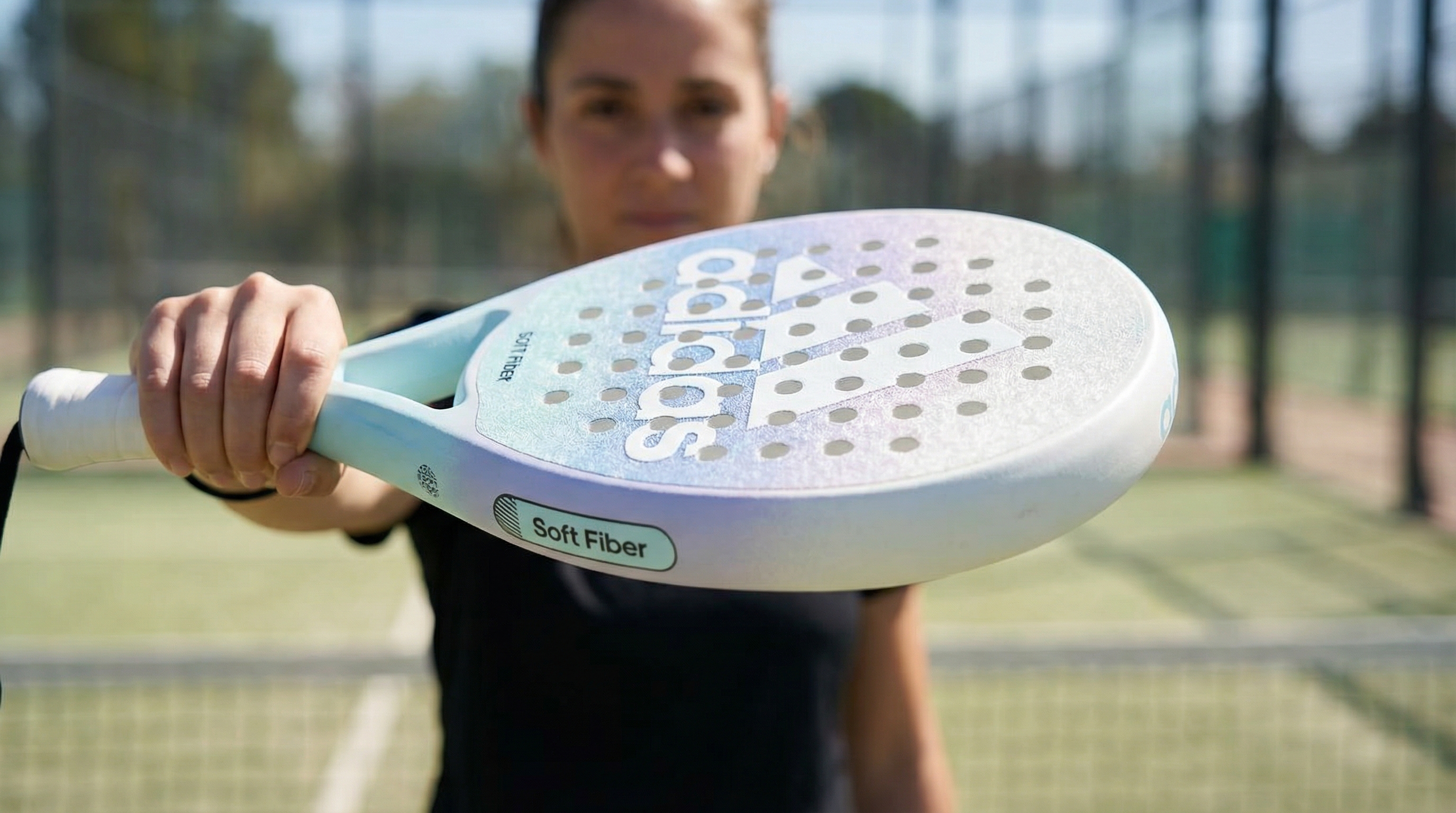
Choosing your first adidas padel racket requires a focus on maneuverability, a large sweet spot, and a “soft” feel to help you master the basic strokes without physical strain. As a beginner, your priority should be “forgiveness,” meaning the racket should help you keep the ball in play even when your contact isn’t perfect. By selecting a model with a fiberglass face and a round shape, you will find that the game becomes much more enjoyable and your learning curve significantly shorter.
Matching racket stiffness to skill level
The stiffness of the racket face, often determined by whether it uses fiberglass or carbon fiber, should directly correspond to your current skill level. Fiberglass is more flexible and offers a “soft” touch that helps you generate ball depth with a slower swing, which is ideal for those just starting out. As you become more advanced and your swing speed increases, you can transition to stiffer carbon fiber models that offer the precision and power needed for competitive play.
This is the key.
- Fiberglass faces for a softer, more forgiving feel.
- Carbon fiber surfaces for advanced power and precision.
- Progressive stiffness levels to match your skill growth.
- Soft Performance EVA cores for maximum comfort.
- Avoiding “Pro” models too early to prevent arm injury.
Testing the balance in-hand
Before making a final decision, it is crucial to feel how the racket balances in your hand, as this will dictate your comfort during a full two-hour match. A racket that feels too head-heavy might give you power, but it could also lead to wrist fatigue if you haven’t yet developed the necessary forearm strength. You should look for a “neutral” or “handle-heavy” balance for your first racket to ensure you have the maximum amount of control over your movements.
You won’t believe the difference.
- Low balance points for easy defensive maneuverability.
- Static weights between 345g and 360g for easy swinging.
- Handle ergonomics that fit comfortably in your palm.
- Testing different shapes to see which feels more natural.
- Seeking expert advice to match your specific hand size.
Key Takeaway: Beginners should prioritize large sweet spots and soft fibers, while advanced players should look for stiff carbon frames.
| Player Level | Ideal Racket Feature |
|---|---|
| Absolute Beginner | Round shape, fiberglass face, soft EVA core. |
| Developing Player | Teardrop shape, carbon/fiberglass mix. |
| Competitive Player | Diamond shape, full carbon, high-density core. |
Frequently Asked Questions
- Can I customize the weight of my racket?
Yes, you can build a heavier profile or adjust the balance by using integrated Weight & Balance Systems or by adding adhesive lead tapes to the frame. Adding weight to the head increases power, while adding it to the handle or throat improves maneuverability and stability. - What’s the best adidas racket for a beginner?
The best choice for a beginner is a round-shaped model featuring a fiberglass face and a “Soft Performance” EVA core. This combination provides a large sweet spot and excellent comfort, making it easier to control the ball and avoid injuries while learning. - How often should I replace my racket?
For regular players (2-3 times per week), the internal EVA core typically loses its elasticity every 12 to 18 months. Once the core “dies,” the racket will lose its power and vibration dampening, signaling it is time for a replacement to maintain performance and protect your arm. - Does a diamond shape really increase power?
Yes, the diamond shape shifts the balance point toward the head of the racket, creating more leverage and inertia during your swing. This results in significantly more power on overhead shots and smashes, though it requires more skill to handle the smaller sweet spot. - Is it possible to repair a cracked frame?
While minor surface scratches or paint chips can be ignored, structural cracks in the carbon fiber frame generally cannot be repaired without altering the racket’s performance. Playing with a cracked frame is dangerous and can lead to injury, so it is best to replace the racket immediately.
Building the perfect game starts with the right equipment. Whether you are fine-tuning the balance of your current setup or selecting a new high-performance model, understanding the technology is key. To find the perfect gear for your next match, contact us today.