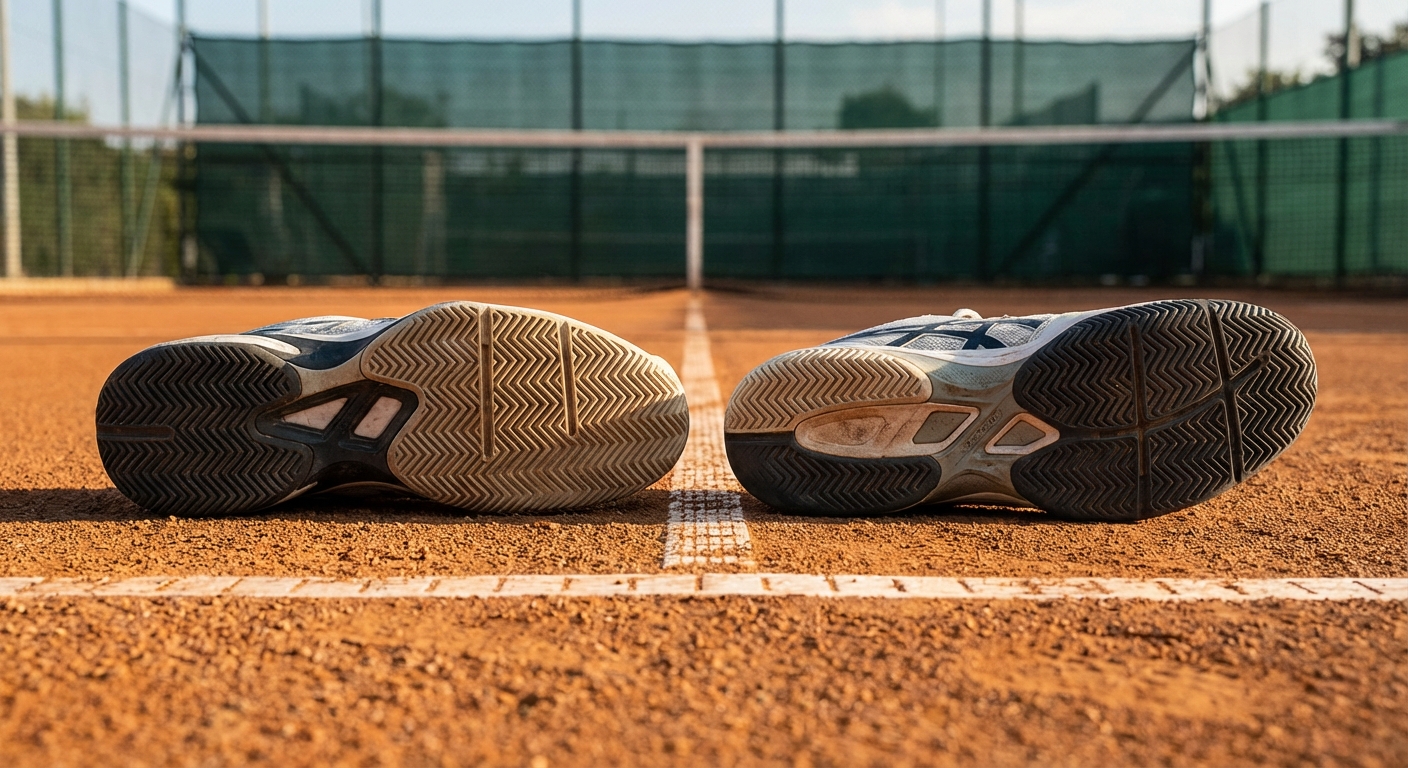
Padel shoes are specialized performance footwear engineered specifically for the vertical pivots and high-traction demands of sand-filled artificial turf, whereas tennis shoes are designed for the sliding mechanics and high-abrasion resistance required on hard or clay courts.
Using improper footwear on the court leads to immediate traction loss, increased fatigue, and a significantly higher risk of debilitating ankle rolls or ligament tears. You might feel your footing slip during a crucial smash, or realize too late that your standard sneakers offer zero protection against the sudden changes in direction inherent to the game. Investing in the correct padel shoes vs tennis shoes provides the safety, stability, and grip necessary to master the court and protect your long-term athletic health.
What is the main difference in padel shoes vs tennis shoes?
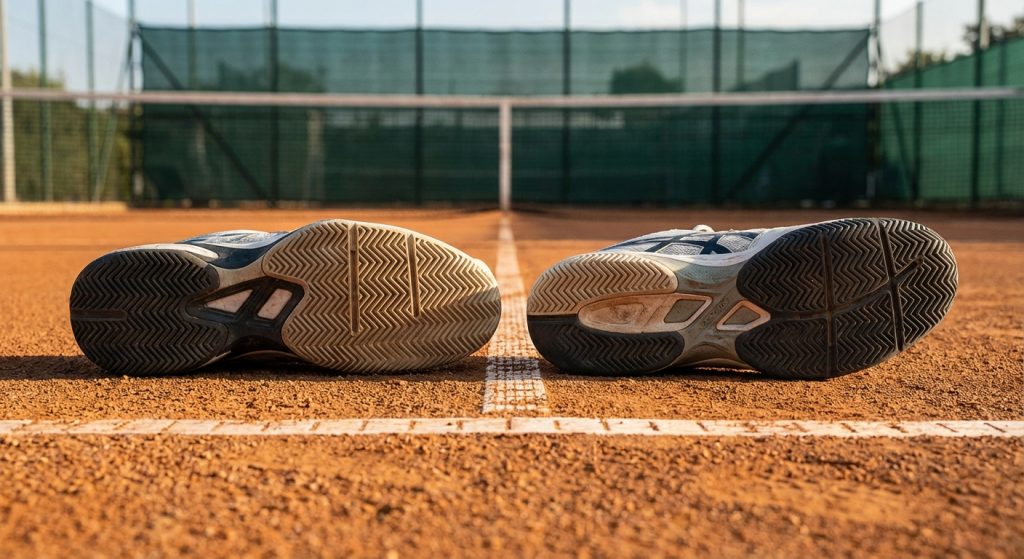
The primary difference lies in the outsole architecture and the degree of lateral reinforcement required to handle the specific friction levels of the playing surface. Padel footwear typically features deeper grooves for gripping artificial grass, whereas tennis footwear uses flatter, denser rubber compounds to balance grip with the ability to slide safely on hard surfaces.
Understanding the core mechanical differences
You need to recognize that the movement patterns in these two sports are fundamentally distinct. Padel involves frequent jumping and 360-degree rotations, while tennis is defined by explosive lateral sprints and long-distance baseline recovery.
Think about it:
- Padel shoes prioritize flexibility in the forefoot for rapid turns.
- Tennis shoes emphasize rigid lateral walls to prevent foot rollover during slides.
- The weight distribution in padel gear is often lighter to facilitate agility.
You will notice the difference the moment you step onto the court.
How do court surfaces impact padel shoes vs tennis shoes?
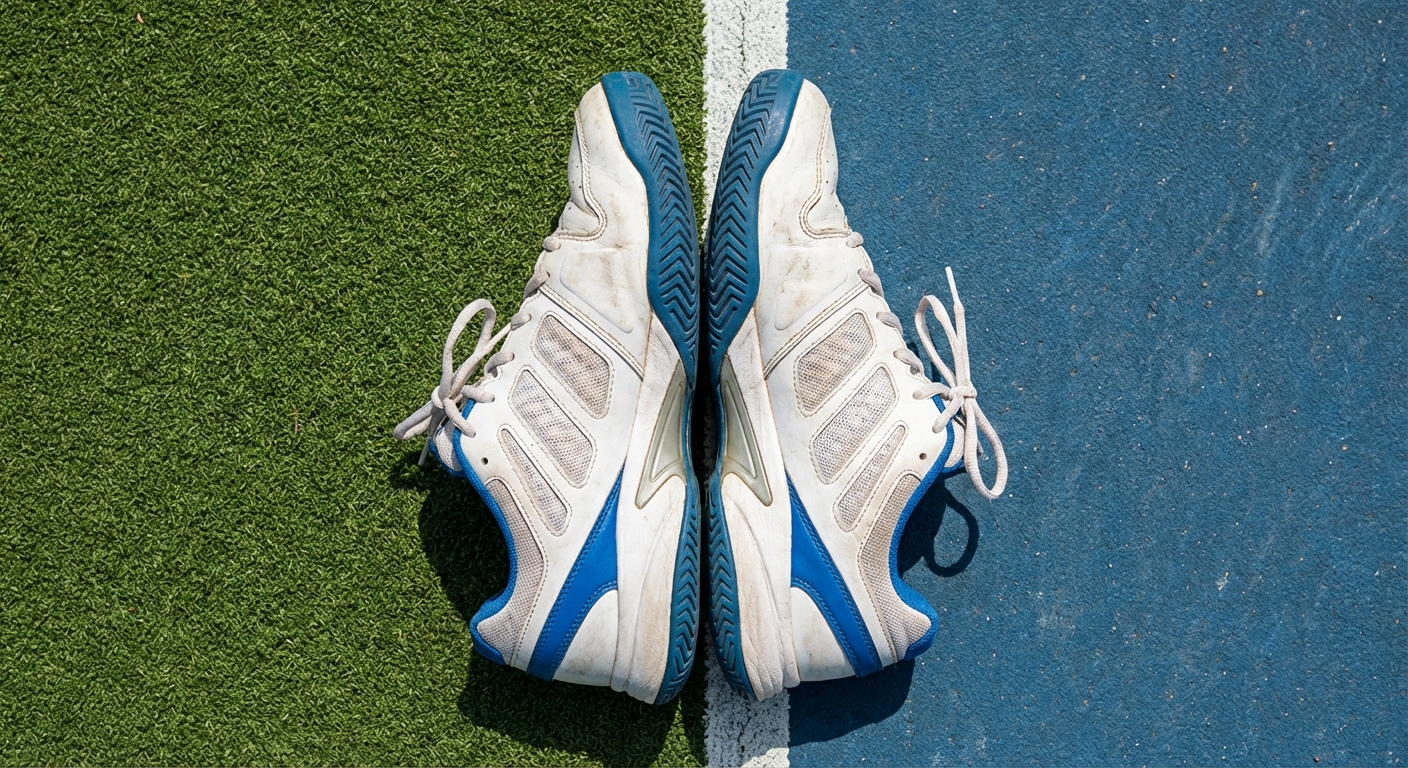
Court surfaces dictate the necessary friction coefficient, making the choice between padel shoes vs tennis shoes a matter of matching rubber density to the abrasiveness of the ground. Padel courts are usually composed of artificial turf with a thin layer of sand, requiring a “bite” that hard-court tennis shoes simply cannot provide.
Adapting to artificial turf and sand
You must ensure your footwear can penetrate the sand layer to reach the turf fibers below. Without this specialized traction, your feet will slide uncontrollably, leading to inefficient movement and wasted energy during high-intensity points.
It gets better:
- Deep tread patterns prevent sand from clogging the sole.
- Softer rubber compounds provide better “tackiness” on synthetic grass.
- Multi-directional lugs support the frequent pivoting required at the net.
Key Takeaway
Choosing the right surface-specific shoe ensures maximum energy transfer and prevents the dangerous “hydroplaning” effect caused by sand on flat soles.
| Surface Type | Optimal Shoe Choice | Primary Benefit |
|---|---|---|
| Artificial Turf (Sand) | Padel Shoe | Maximum Traction |
| Hard Court | Tennis Shoe | Durability & Slide |
| Clay Court | Clay/Padel Shoe | Grip & Debris Release |
The data confirms that matching your footwear to the specific court material is the most effective way to optimize athletic performance and safety.
Which sole pattern works for padel shoes vs tennis shoes?
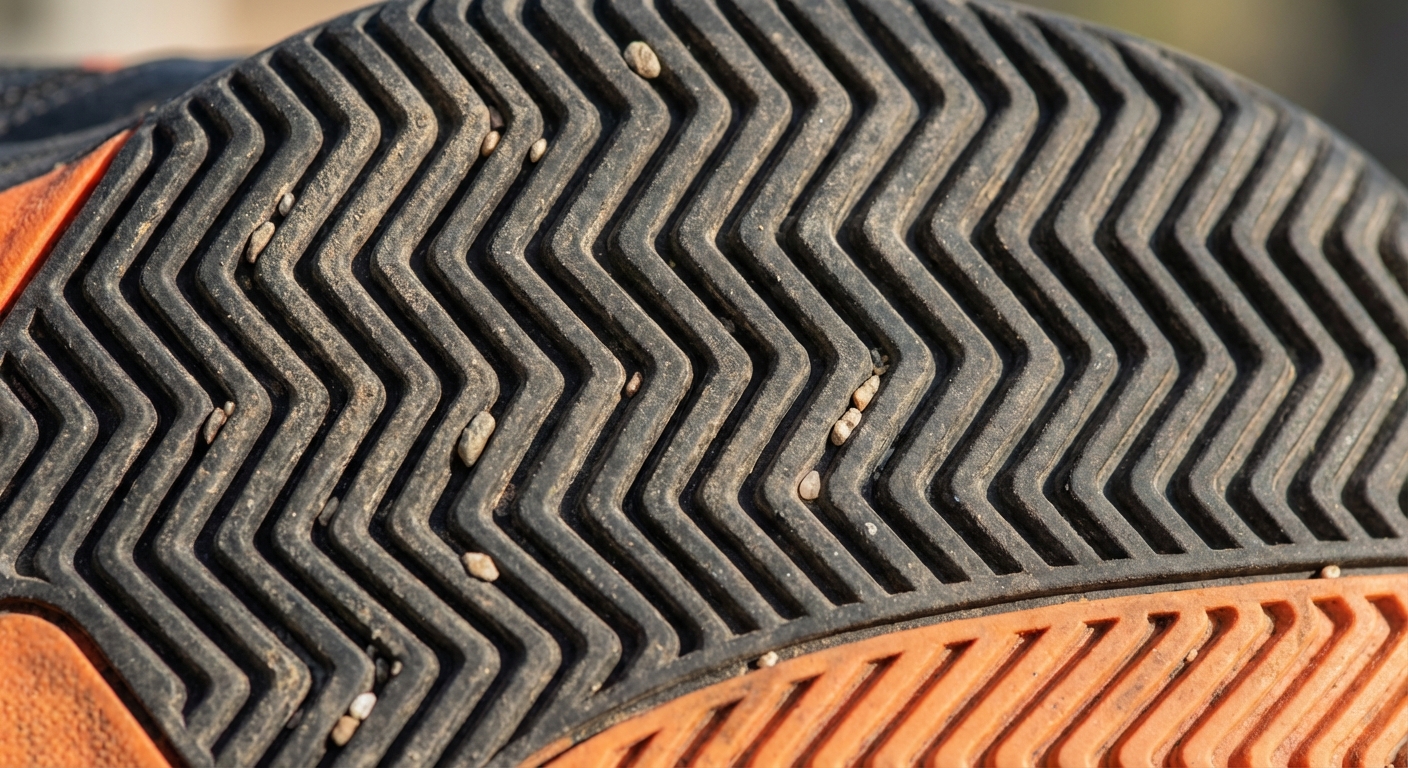
Herringbone and omni-court patterns are the standard for padel, while tennis utilizes a variety of specialized soles including modified herringbone for clay and intricate multi-directional patterns for hard courts. The zig-zag “clay” pattern is highly popular in padel because it allows for a controlled slide while maintaining enough grip to push off instantly.
Evaluating the herringbone and omni designs
You should choose your sole pattern based on the amount of sand present on your local courts. Omni-court soles feature small “pimples” or lugs that excel on courts with very little sand, whereas the classic herringbone is superior for heavily sanded surfaces.
Here is the kicker:
- Herringbone patterns expel sand automatically as the shoe flexes.
- Omni patterns provide a more immediate “stop” on dry surfaces.
- Hybrid soles combine both elements for versatile performance across different facilities.
Key Takeaway
The sole pattern is your primary interface with the court, directly affecting your ability to stop, start, and rotate without injuring your joints.
| Sole Design | Best Used For | Traction Level |
|---|---|---|
| Herringbone | High-sand Padel Courts | High |
| Omni (Pimples) | Low-sand/Dry Turf | Very High |
| All-Court | Hard Tennis Courts | Medium |
A deeper tread depth is generally preferred for padel to ensure the shoe remains effective even as the rubber wears down over time.
Why is lateral support vital in padel shoes vs tennis shoes?
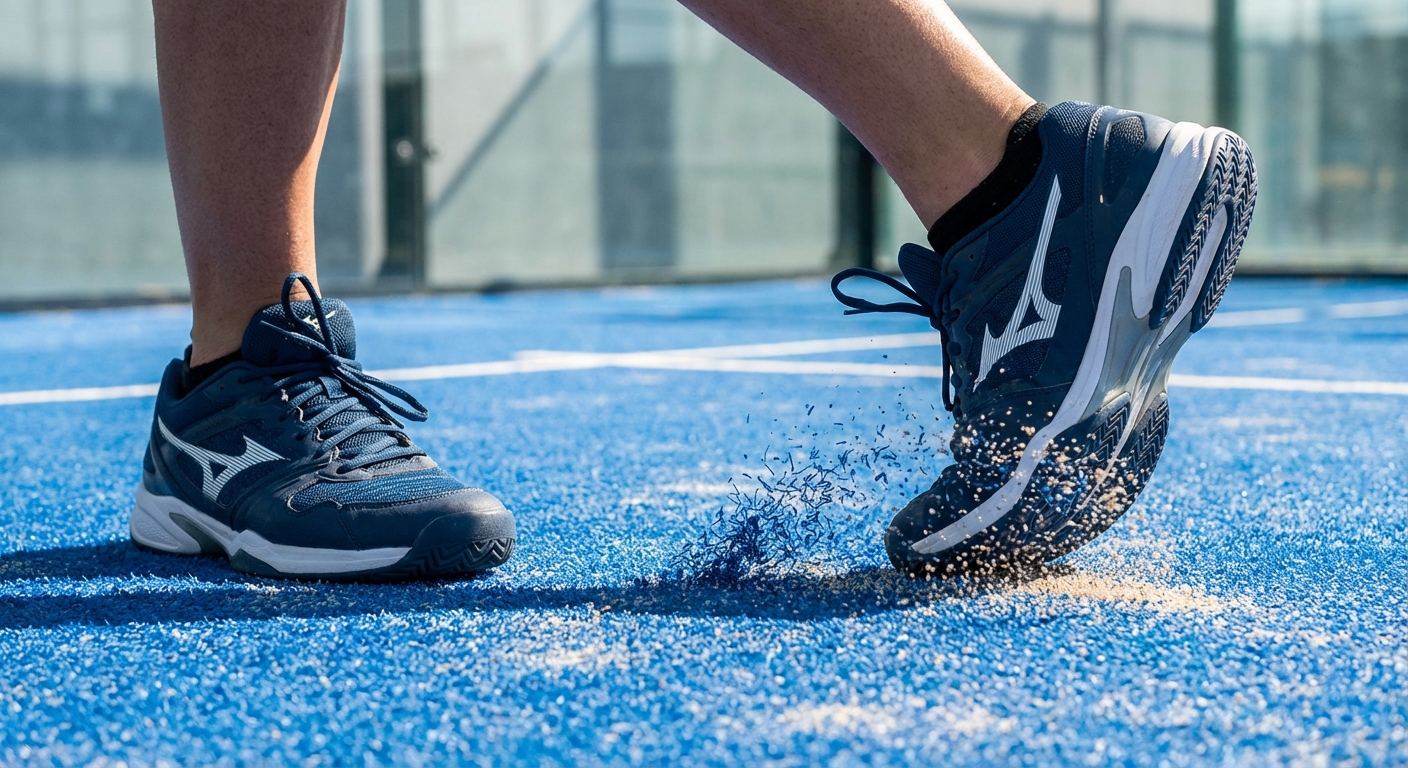
Lateral support is critical in padel shoes vs tennis shoes to stabilize the ankle during the sudden, sharp direction changes that characterize close-quarters net play. Padel shoes feature reinforced side walls and “outriggers” on the sole to provide a wider base, preventing the foot from rolling over the edge of the shoe.
Protecting the ankle during high-speed pivots
You need specialized stabilization because the cage-based nature of the sport forces you into awkward angles. Standard running shoes or poorly constructed court shoes lack the rigid chassis required to keep your foot locked over the midsole during these high-stress moments.
The best part?
- Reinforced toe caps protect against drag during lunges.
- Heel counters lock the rearfoot in place to prevent internal slipping.
- Lateral stabilizers act as a physical barrier against ankle inversion.
Key Takeaway
Robust lateral support is the most important safety feature of a court shoe, acting as a preventative measure against common ligament injuries.
| Support Feature | Function | Injury Prevention |
|---|---|---|
| Lateral Outrigger | Wide base for stability | Ankle Sprains |
| Heel Counter | Locks foot in shoe | Blisters & Slips |
| TPU Chassis | Torsional rigidity | Midfoot Strain |
Advanced support systems allow you to move with total confidence, knowing your equipment will hold firm under maximum physical load.
What is the technical grip of padel shoes vs tennis shoes?
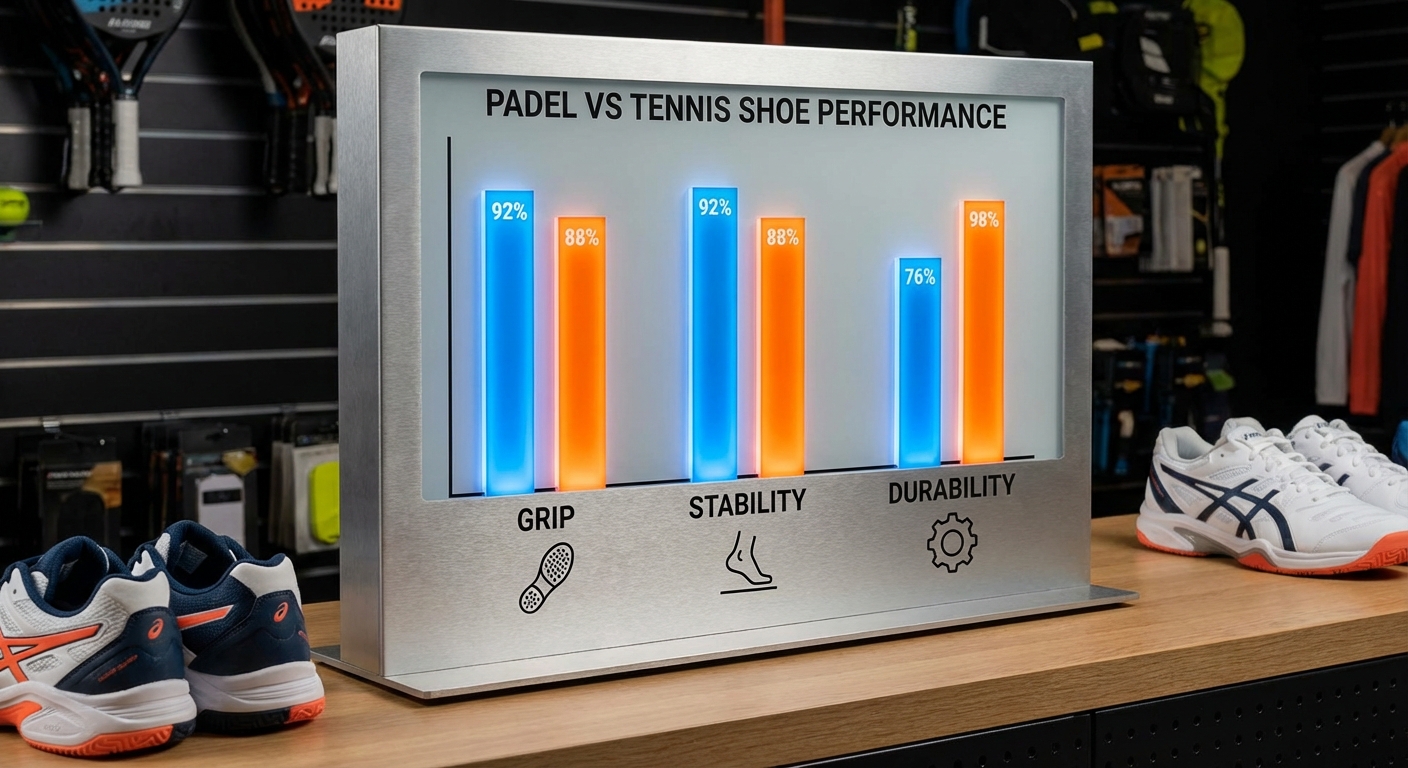
Technical grip refers to the friction levels measured between the outsole and the court, with padel shoes requiring a higher “static” grip for explosive vertical movements. While tennis shoes are engineered for “dynamic” grip—allowing a player to slide into a shot—padel shoes focus on immediate engagement with the turf to facilitate rapid-fire volleys and overheads.
Comparing friction and slide coefficients
You will find that a shoe with too much grip on a hard court can be just as dangerous as a shoe with too little grip on turf. The goal of the technical design is to find the “sweet spot” where you can move freely without the fear of your foot getting “stuck” or sliding out from under you.
Listen to this:
- Padel shoes use softer rubber for better adhesion to synthetic fibers.
- Tennis shoes utilize high-density compounds for heat resistance on asphalt.
- Technical testing shows padel soles provide 20% more initial bite on sand.
Key Takeaway
Technical grip is a calculated balance of rubber chemistry and tread geometry designed to match the specific physics of the sport.
| Metric | Padel Shoe | Tennis Shoe |
|---|---|---|
| Initial Traction | High | Medium-High |
| Sliding Ability | Controlled | High |
| Rubber Softness | High | Low |
A technical analysis reveals that padel footwear is superior for verticality and rotation, while tennis footwear excels in linear durability and sliding.
How does cushioning vary in padel shoes vs tennis shoes?
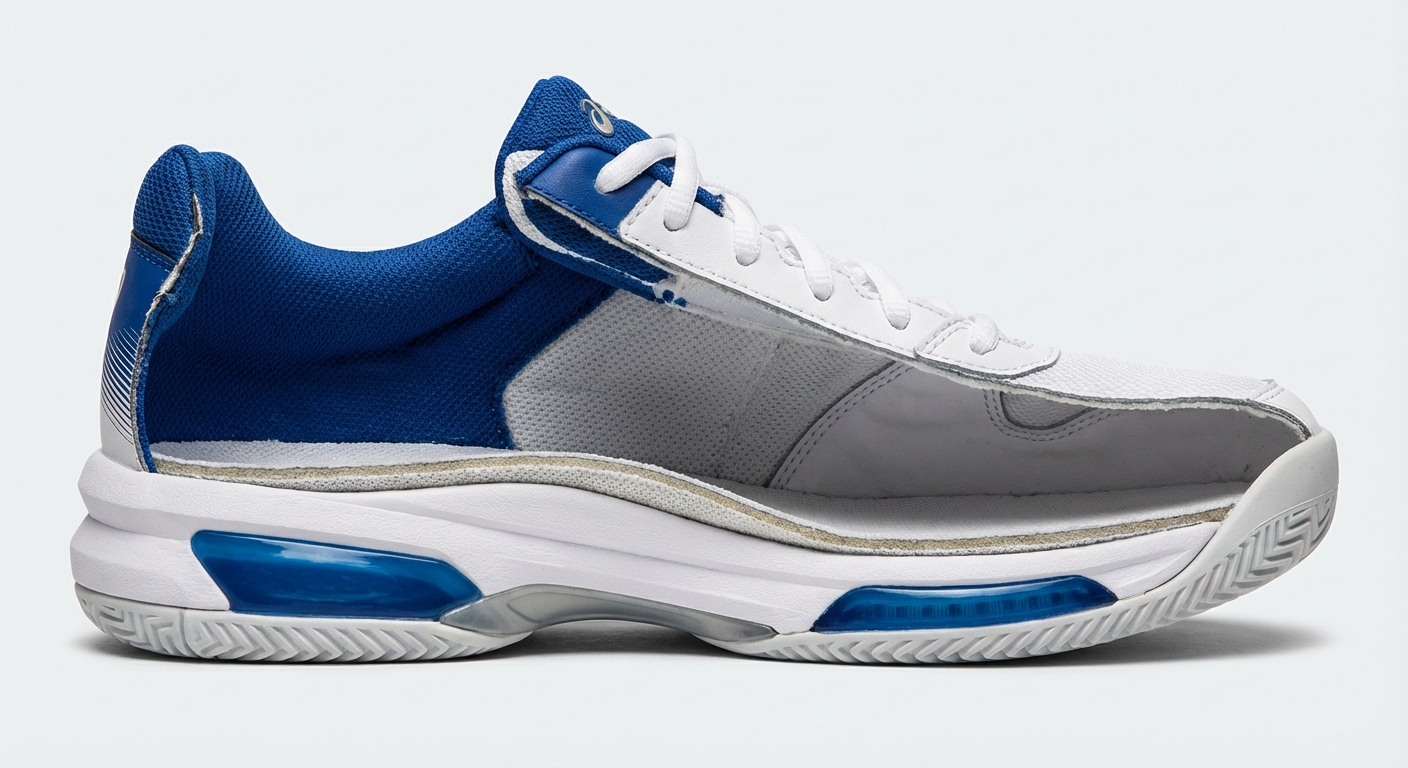
Cushioning in padel shoes vs tennis shoes is distributed differently, with padel models often featuring extra protection in the heel to absorb the impact of constant jumping. Tennis shoes generally prioritize midfoot cushioning and energy return to help players sprint across the baseline for extended periods.
Impact protection for vertical play
You should look for high-performance foam or gel inserts that can withstand repetitive high-impact landings. Because the court surface in padel is slightly more forgiving than concrete, the cushioning can be tuned for responsiveness rather than just pure shock absorption.
Think about it:
- Dual-density midsoles provide soft landings and firm take-offs.
- Forefoot cushioning is essential for players who stay on their toes.
- Proper shock absorption reduces the risk of tendonitis and shin splints.
Key Takeaway
Strategically placed cushioning preserves your energy levels and protects your joints from the cumulative stress of match play.
| Cushioning Zone | Padel Benefit | Tennis Benefit |
|---|---|---|
| Heel | Jump Impact Absorption | Landing Stability |
| Midfoot | Torsional Support | Energy Return |
| Forefoot | Quick Step Response | Sprint Comfort |
Modern midsole technologies ensure that players can enjoy long sessions without the typical foot fatigue associated with lower-quality footwear.
Can you use clay court gear for padel shoes vs tennis shoes?
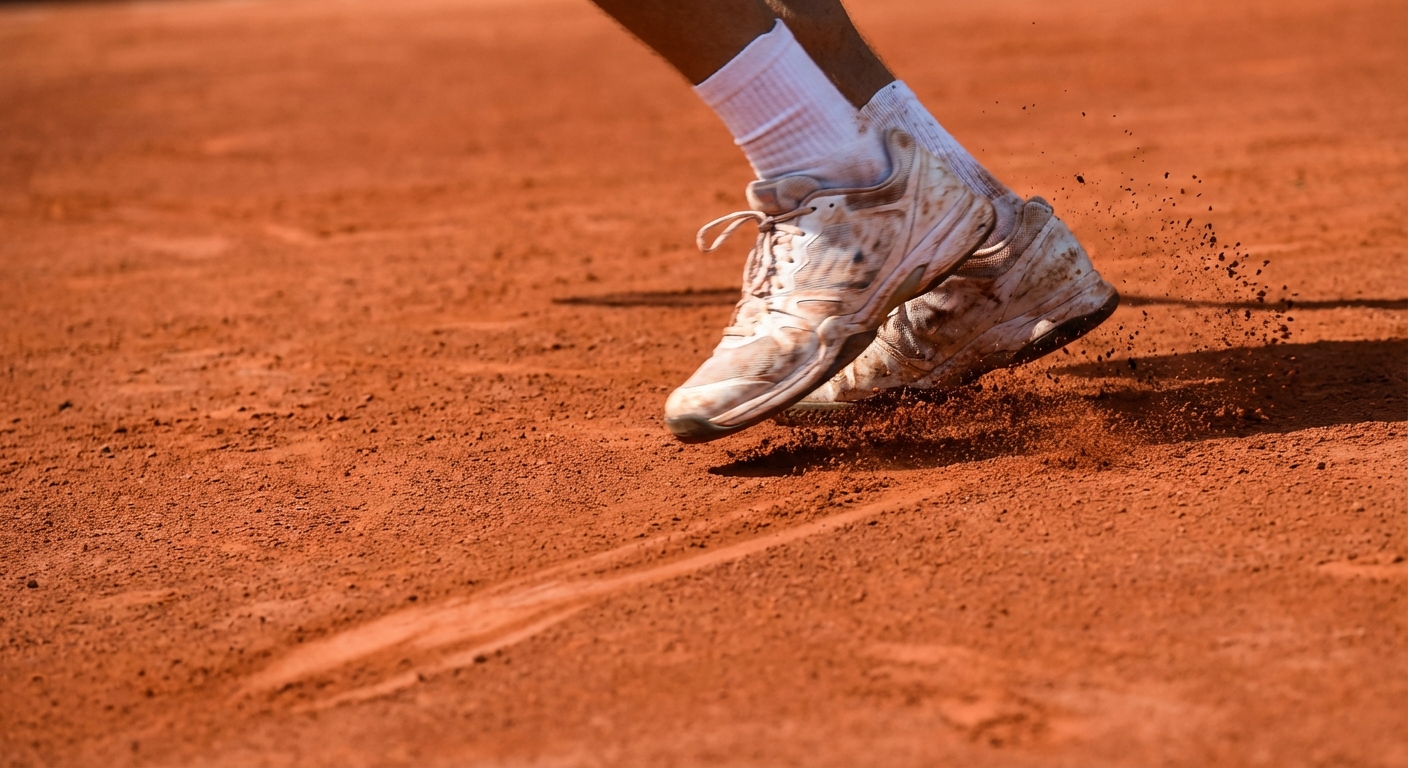
Clay court tennis shoes are often used as a substitute for padel shoes due to their identical herringbone sole pattern which handles sand effectively. However, true padel-specific shoes often feature more flexible uppers and different pivot point locations to better serve the unique rotation requirements of the smaller court.
Determining the crossover potential
You can safely use clay court shoes for padel if you are a beginner or intermediate player, as the traction levels are very similar. As you progress to more advanced play, the specialized lateral reinforcements of a dedicated padel shoe will become more apparent during high-speed movements.
It gets better:
- Clay shoes are designed to shed fine dust, which works for sand.
- The flexibility of clay models allows for natural foot movement.
- Most professionals consider clay shoes the only viable alternative to padel gear.
Key Takeaway
While clay shoes are an excellent temporary solution, dedicated padel footwear offers the precise structural reinforcements needed for elite-level performance.
| Shoe Type | Suitability for Padel | Missing Features |
|---|---|---|
| Clay Tennis | Excellent | Specific Pivot Points |
| Hard Court Tennis | Poor | Traction on Sand |
| All-Court Tennis | Moderate | Longevity on Turf |
Using the wrong tennis shoe on a padel court is a major safety risk, but a clay-specific model is a highly effective “bridge” between the two sports.
What determines durability in padel shoes vs tennis shoes?
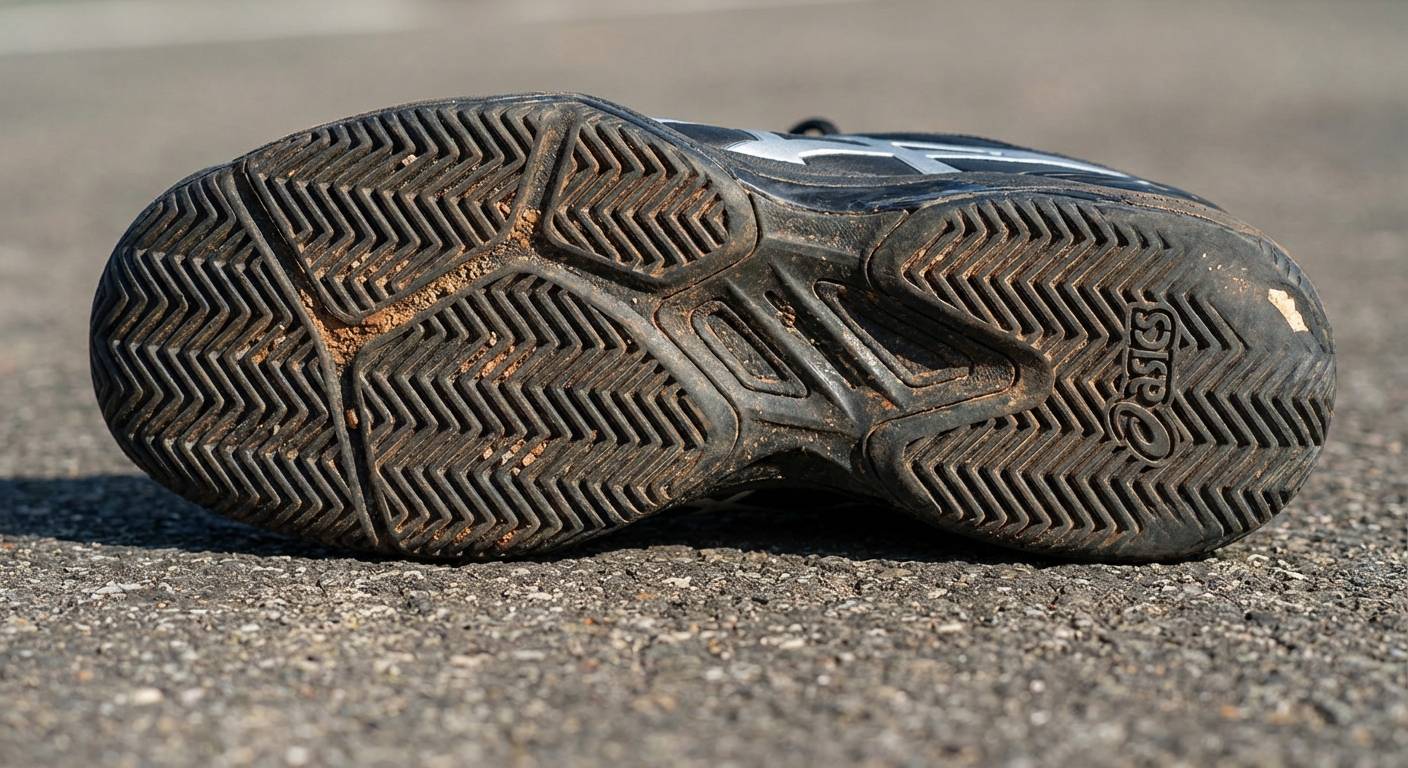
Durability in padel shoes vs tennis shoes is determined by the abrasion resistance of the outsole and the strength of the upper materials. Tennis shoes are built to survive the “sandpaper” effect of hard courts, while padel shoes must resist the friction generated by pivoting on sand and artificial grass.
Measuring the lifespan of your footwear
You need to monitor the tread depth of your shoes regularly, as worn-out soles are the leading cause of court injuries. Once the herringbone pattern begins to smooth out, the shoe loses its ability to grip the turf, making every movement a potential hazard.
Here is the kicker:
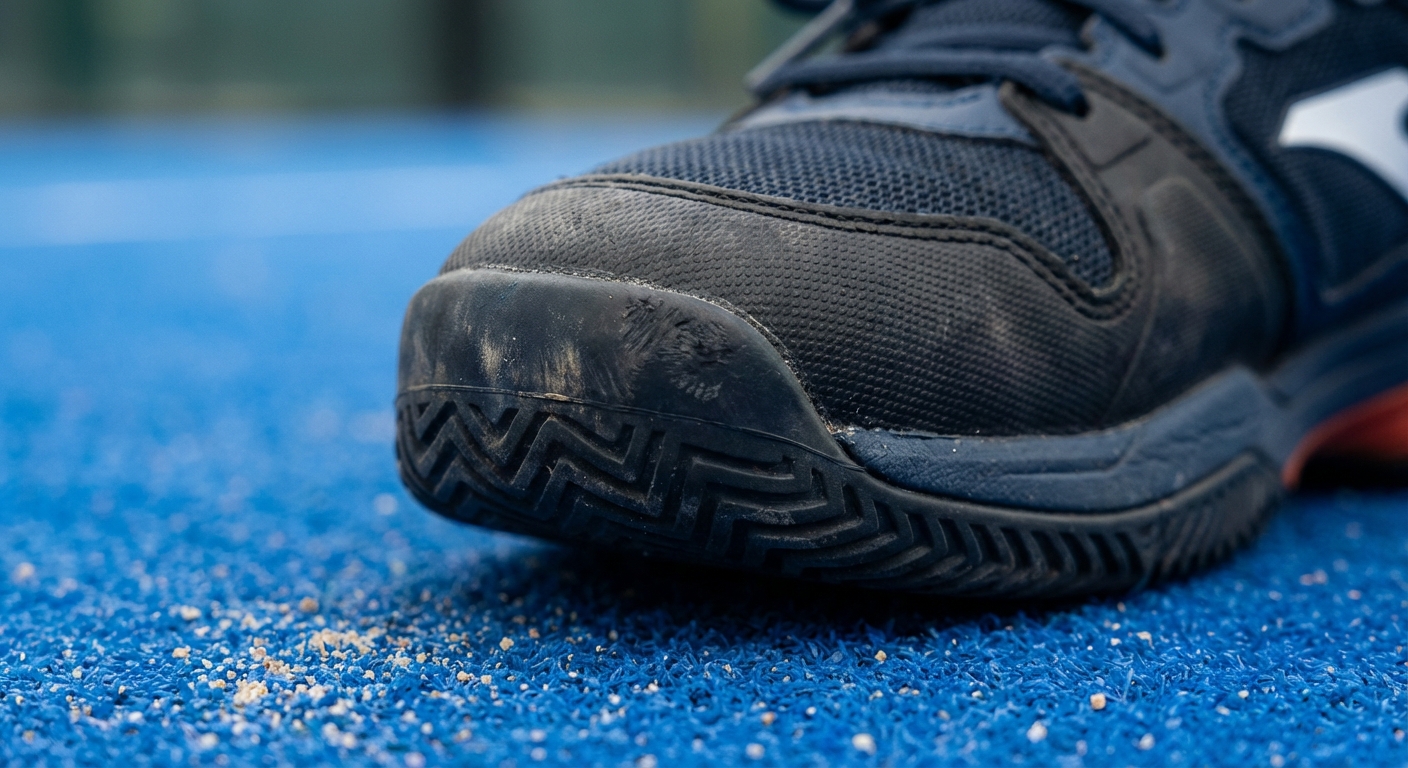
- Friction-resistant overlays on the toe prevent “drag” damage.
- High-quality mesh uppers provide durability without sacrificing breathability.
- Rotating your shoes allows the foam to decompress between sessions.
Key Takeaway
Investing in high-quality materials ensures your shoes maintain their safety features and performance characteristics throughout their entire lifespan.
| Wear Area | Padel Stressor | Tennis Stressor |
|---|---|---|
| Outsole | Sand Erosion | Hard Court Abrasion |
| Toe Box | Dragging during lunges | Hard Stops |
| Upper | Multi-directional flex | Lateral Strides |
By choosing shoes with reinforced high-wear zones, you can significantly extend the time between replacements and save money in the long run.
How do you build a kit with padel shoes vs tennis shoes?
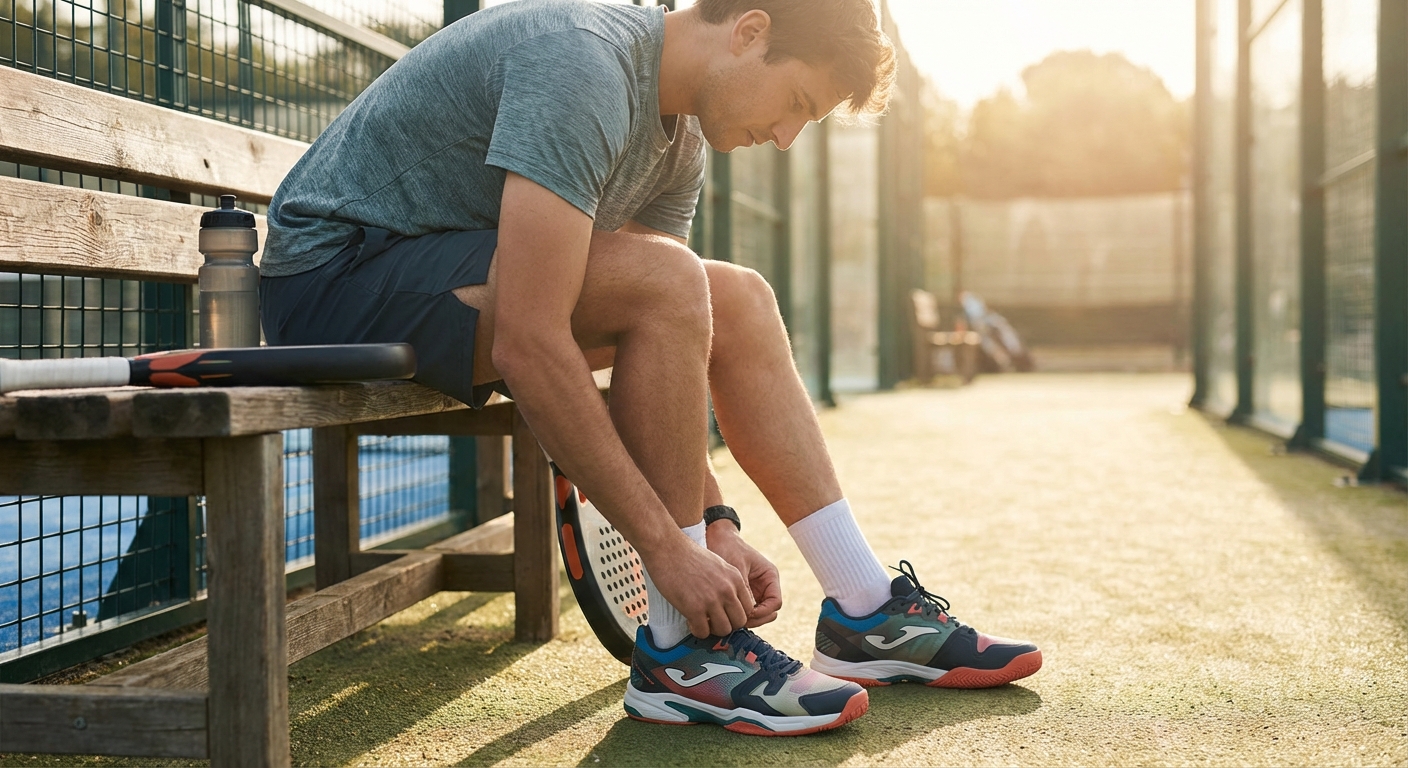
Building a high-performance kit starts with the shoes and extends to moisture-wicking socks and supportive insoles that complement your specific foot shape. You must view your footwear as the foundation of your equipment, ensuring that every other piece of gear works in harmony with your movement on the court.
Integrating footwear into your total setup
You should always try on your shoes with the specific socks you plan to wear during matches to ensure a perfect fit. A shoe that is too loose will cause blisters and instability, while one that is too tight will restrict blood flow and cause discomfort during long sets.
The best part?
- Performance socks provide extra cushioning in high-friction areas.
- Custom insoles can correct overpronation or supination issues.
- Carrying your shoes in a ventilated bag prevents moisture and odor buildup.
Key Takeaway
A complete kit prioritizes comfort and safety from the ground up, allowing you to focus entirely on your game strategy.
| Kit Component | Purpose | Importance |
|---|---|---|
| Padel Shoes | Foundation & Grip | Critical |
| Technical Socks | Friction Reduction | High |
| Supportive Insoles | Alignment & Comfort | Moderate |
When you build your kit around specialized footwear, you eliminate the mechanical variables that can hinder your progress as a player.
FAQ regarding padel shoes vs tennis shoes?
Finding the right balance in padel shoes vs tennis shoes often comes down to specific player needs and local court conditions. Here are the most common questions players ask when selecting their next pair of court shoes.
- Can I wear running shoes for padel? You should never wear running shoes for padel as they lack lateral support and have tread patterns that are dangerous on sand-filled turf.
- What’s the best way to clean my padel soles? You should use a soft brush to remove trapped sand from the grooves after every match to maintain maximum traction levels.
- How do I know if I need a wider shoe? If you feel pinching in the toe box or excessive pressure on the sides of your foot during lateral moves, you likely need a wide-fit model.
- Can I use my padel shoes for tennis? While possible on clay, using padel shoes on a hard tennis court will destroy the soft rubber outsole in a matter of hours.
- How often should I replace my shoes? You should replace your footwear every 6 to 12 months depending on your playing frequency and the visible wear on the tread.
Building the perfect court setup requires attention to detail and expert guidance. If you have further questions about optimizing your gear for the upcoming season, please contact us today for a personalized equipment consultation.