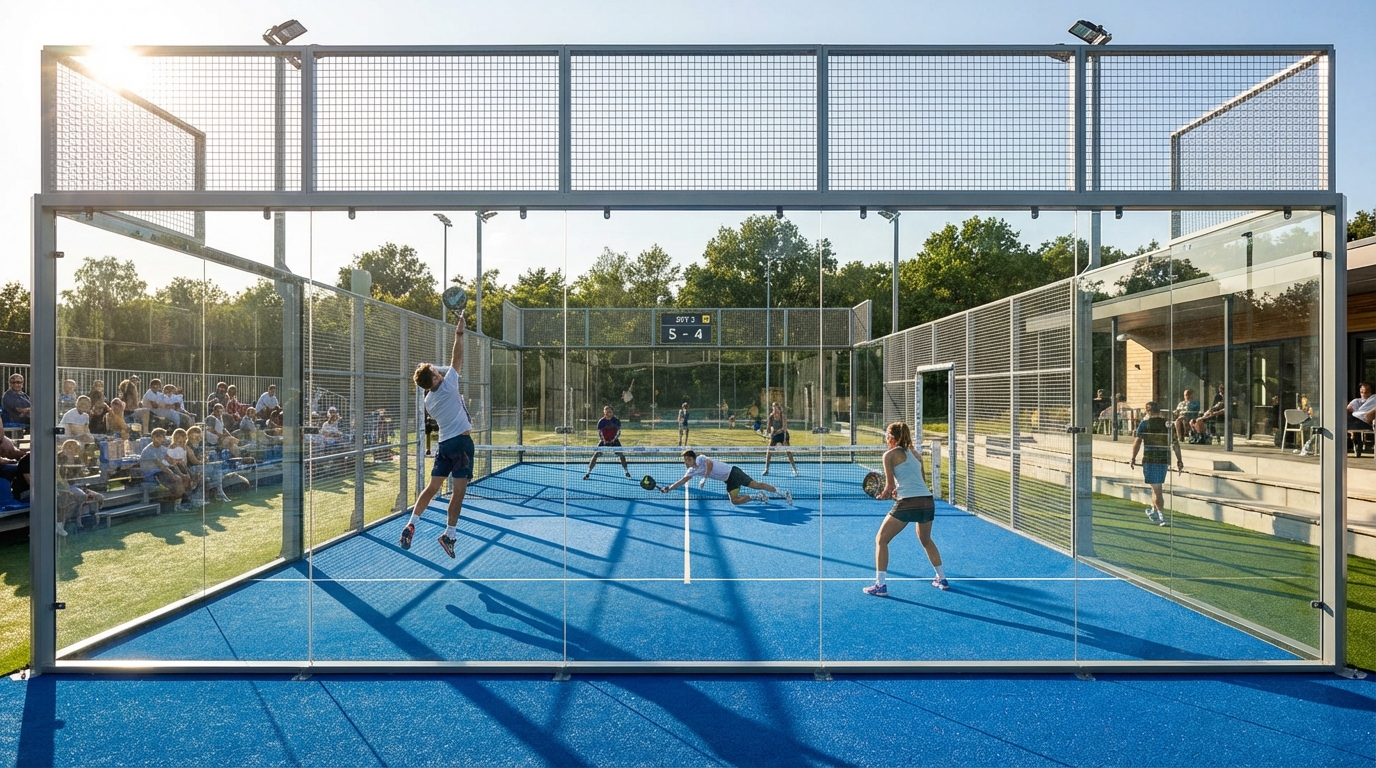
Padel is a fast-paced sport played within glass-walled enclosures, while pickleball is a high-accessibility game played on open courts with a perforated plastic ball. You might be looking at an underutilized area or a new development plot, fearing that a wrong investment will lead to low utilization and wasted capital. The frustration of navigating technical dimensions and specific surface requirements can stall your project before the first shovel hits the ground. Our guide to padel vs pickle ball provides the technical clarity and construction roadmap you need to build a world-class facility that thrives.
What are the main differences in court size?
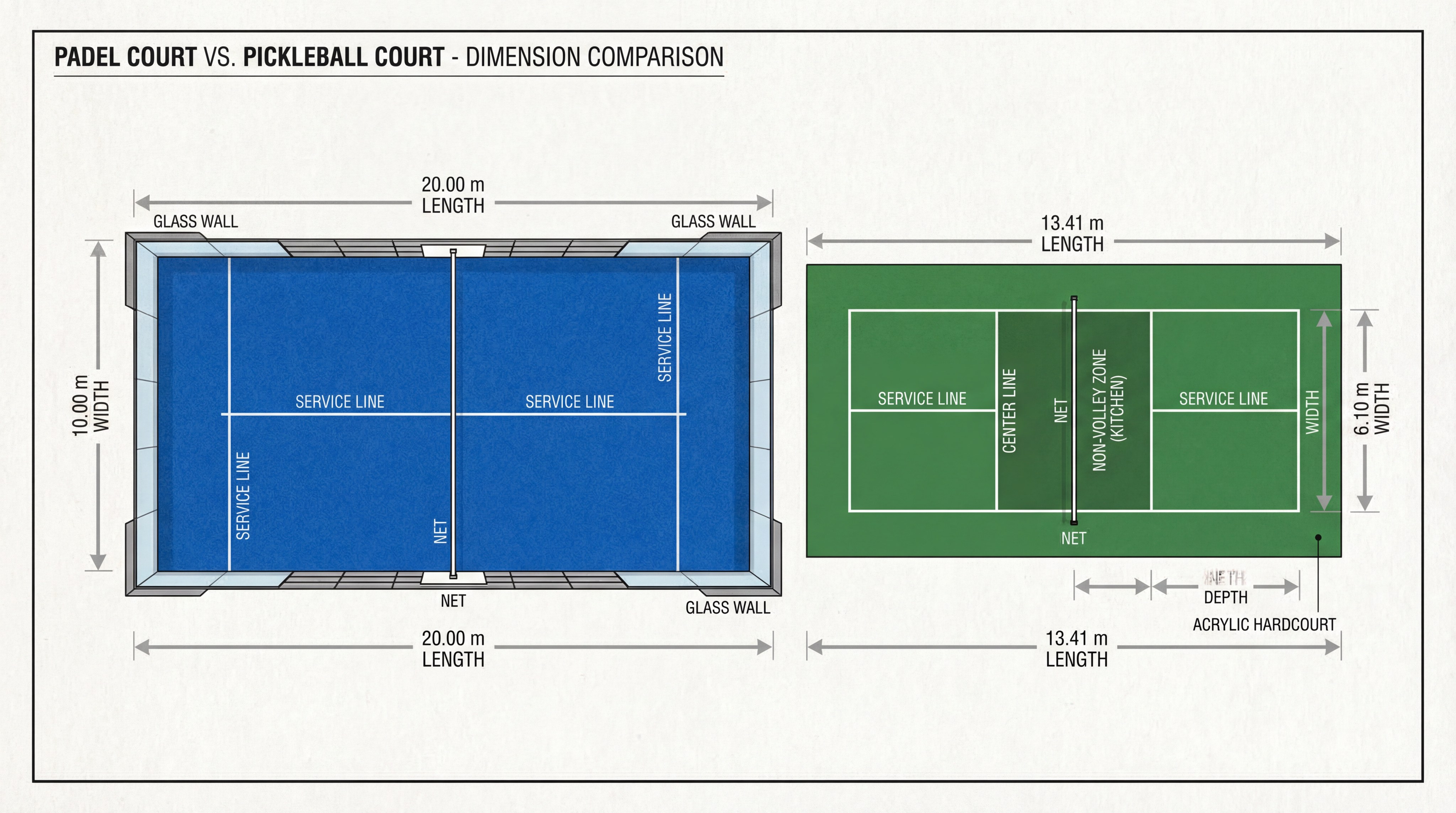
A padel court measures 20 meters by 10 meters, making it significantly larger than a standard pickleball court which measures 13.41 meters by 6.09 meters. When analyzing padel vs pickle ball, the spatial footprint determines how many courts you can fit into your available land area. You must also account for the vertical height required for padel glass walls compared to the open environment of pickleball.
Is the service box layout the same?
The service boxes in padel are located near the net, while pickleball service boxes are connected directly to the baseline.
- Padel service lines are 6.95m from the net.
- Pickleball service areas are divided by a center line.
- Padel requires clear space for the glass wall structure.
Look, the layout impacts how players move during a serve. This distinction is critical for your court markings.
Why does pickleball have a non-volley zone?
The non-volley zone, or “kitchen,” is a 2.13-meter area on both sides of the net where players cannot volley the ball. This prevents players from simply standing at the net and smashing every return. It forces a more tactical, soft-touch style of play known as dinking.
Key Takeaway: Understanding these dimensions is the first step in ensuring your facility layout maximizes player density and complies with international standards.
| Feature | Padel Dimension | Pickleball Dimension |
|---|---|---|
| Court Length | 20.00 Meters | 13.41 Meters |
| Court Width | 10.00 Meters | 6.09 Meters |
| Enclosure | Glass & Mesh Walls | Open / Fence |
This technical data confirms that you can fit nearly two pickleball courts in the space of one padel court.
How does the equipment differ between the two?
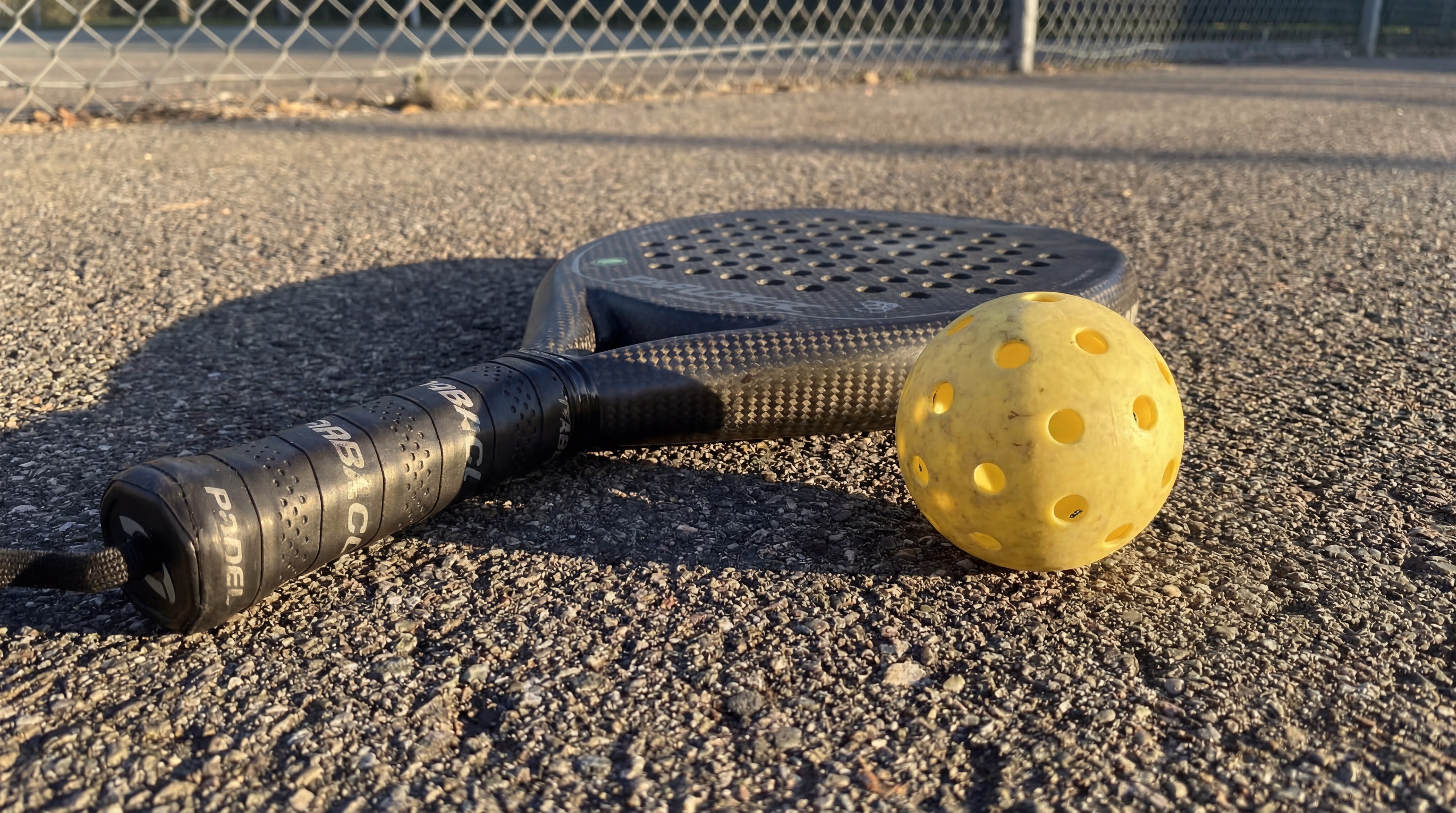
Padel equipment consists of a stringless, perforated racket and a low-pressure ball, whereas pickleball utilizes a solid paddle and a plastic wiffle-style ball. When choosing between padel vs pickle ball, you must understand that the gear is not interchangeable. The physics of each sport requires specific materials to ensure safety and performance for your club members.
What makes a padel racket unique?
A padel racket is typically made of carbon fiber or fiberglass with an EVA foam core to absorb high-velocity impacts.
- The head is thick (usually 38mm).
- It features a pattern of holes for aerodynamics.
- A safety wrist strap is mandatory.
Here is the kicker: the core density changes the power-to-control ratio significantly.
Why is a pickleball ball perforated?
The holes in a pickleball reduce wind resistance and slow down the flight of the ball. This allows for the high-reflex rallies the sport is known for. Outdoor balls have smaller holes to resist wind, while indoor balls have larger holes for a better bounce.
Key Takeaway: Investing in the correct gear for your pro shop ensures that your players have the best experience and reduces the risk of equipment-related injuries.
| Equipment | Padel | Pickleball |
|---|---|---|
| Racket Type | Perforated Foam Core | Solid Composite Paddle |
| Ball Material | Felt/Rubber (Low PSI) | Perforated Plastic |
| Racket Shape | Round, Teardrop, Diamond | Rectangular |
Proper equipment selection is vital for maintaining the professional standards of your new sports facility.
What are the unique rules for padel and pickleball?
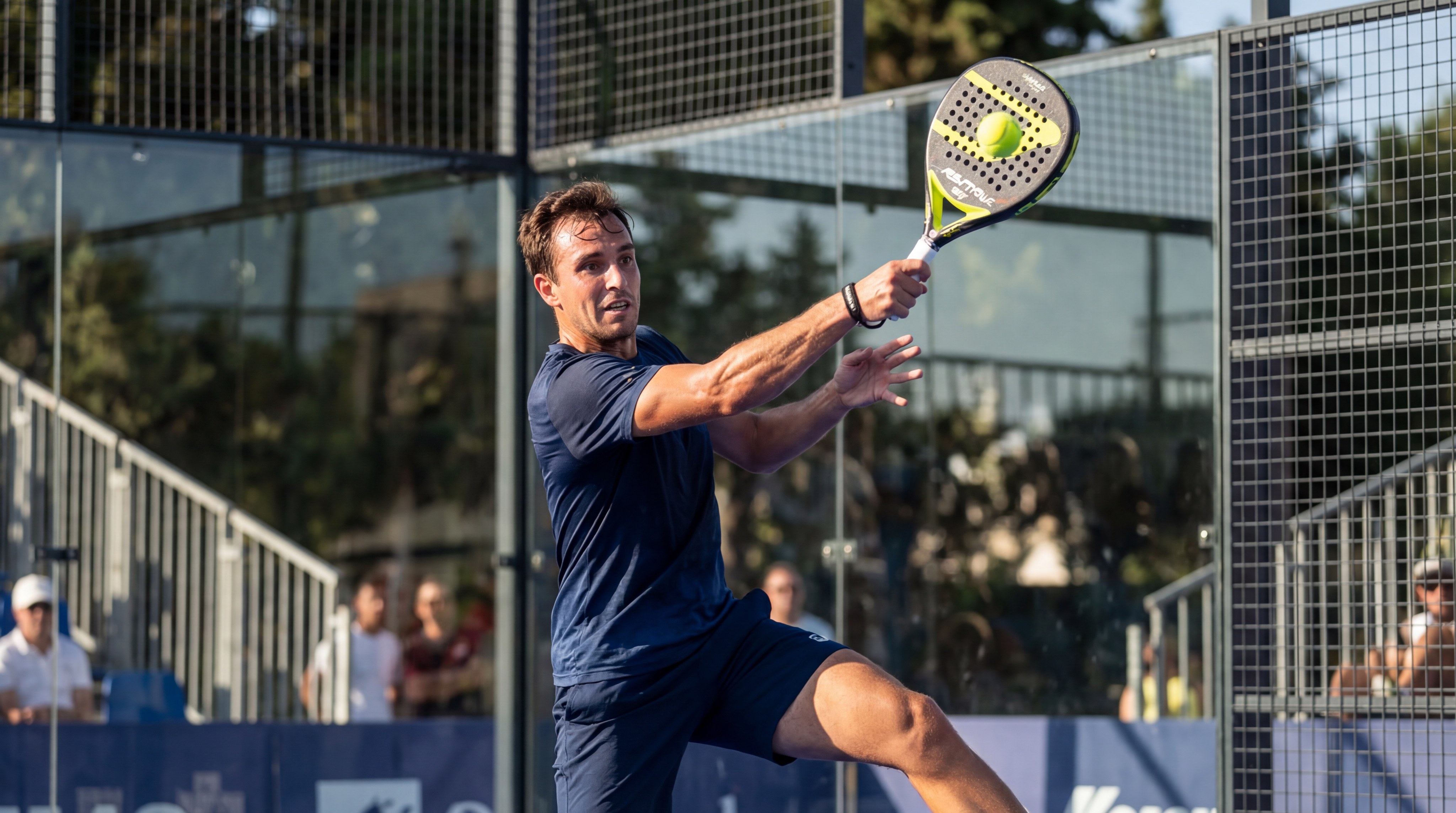
Padel rules integrate the surrounding walls as active play surfaces, while pickleball rules center on a “double-bounce” requirement and kitchen restrictions. To understand what is pickleball versus its counterpart, you must see how the environment dictates the strategy. In padel vs pickle ball, the use of space transforms the game from a linear exchange to a multi-dimensional challenge.
How do wall rebounds work in padel?
The ball can hit any number of walls after it bounces on the ground, but it must be returned before the second bounce.
- Balls hitting the mesh are harder to predict.
- Glass rebounds allow for defensive lobs.
- The ball is out if it hits a wall before the ground.
Make no mistake, the walls are your best friend once you master the angles.
What is the double-bounce rule in pickleball?
Each side must play their first shot off the bounce. This means the serve must bounce once, and the return must bounce once before volleys are allowed. This rule levels the playing field and prevents the serving team from rushing the net immediately.
Key Takeaway: Detailed knowledge of the rules allows you to design court runoff areas and spectator zones that enhance the flow of professional play.
| Rule Feature | Padel | Pickleball |
|---|---|---|
| Wall Play | Allowed and encouraged | Not applicable |
| Serving Style | Underhand below waist | Underhand below waist |
| Players | Primarily 2v2 (Doubles) | Singles or Doubles |
Strategic rule integration ensures your court design supports the specific competitive nuances of both popular sports.
How does scoring work in these racquet sports?
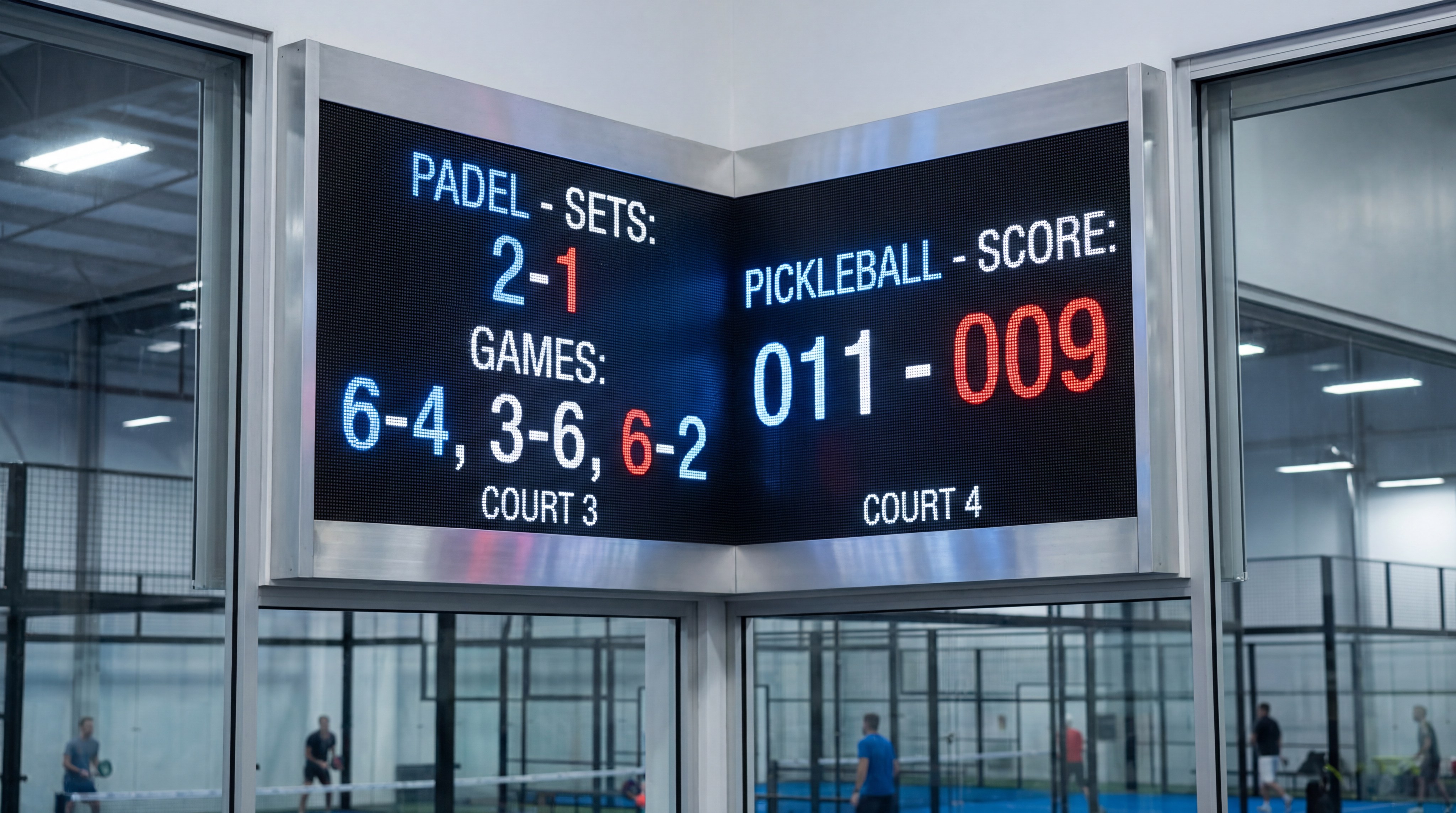
Padel follows the traditional tennis scoring system of 15, 30, and 40, while pickleball uses a unique three-number sequence up to 11 points. When comparing padel vs pickle ball, the scoring dictates the length and intensity of each match. This affects how you manage court bookings and turn-around times for your facility.
Is there a “deuce” system in padel?
Yes, padel uses a deuce system at 40-40, often requiring a two-point advantage or a “Golden Point” in professional tours.
- 15 is the first point.
- 30 is the second point.
- 40 is the third point.
It gets better: the Golden Point rule can speed up matches for television and tournament schedules.
How do you win a point in pickleball?
In most formats, only the serving team can score a point. If the receiving team wins a rally, they earn the right to serve but do not increase their score. This “side-out” scoring makes every service possession incredibly valuable.
Key Takeaway: Implementing automated scoring systems requires an understanding of these different logic flows to provide a seamless player experience.
| Scoring Aspect | Padel | Pickleball |
|---|---|---|
| Point System | 15, 30, 40, Game | 1, 2, 3… up to 11 |
| Winning Margin | Must win by two | Must win by two |
| Set Structure | Best of three sets | Typically single games |
Efficient scoring management is the backbone of hosting successful tournaments and keeping your facility members engaged.
What are the specific shots used in each game?
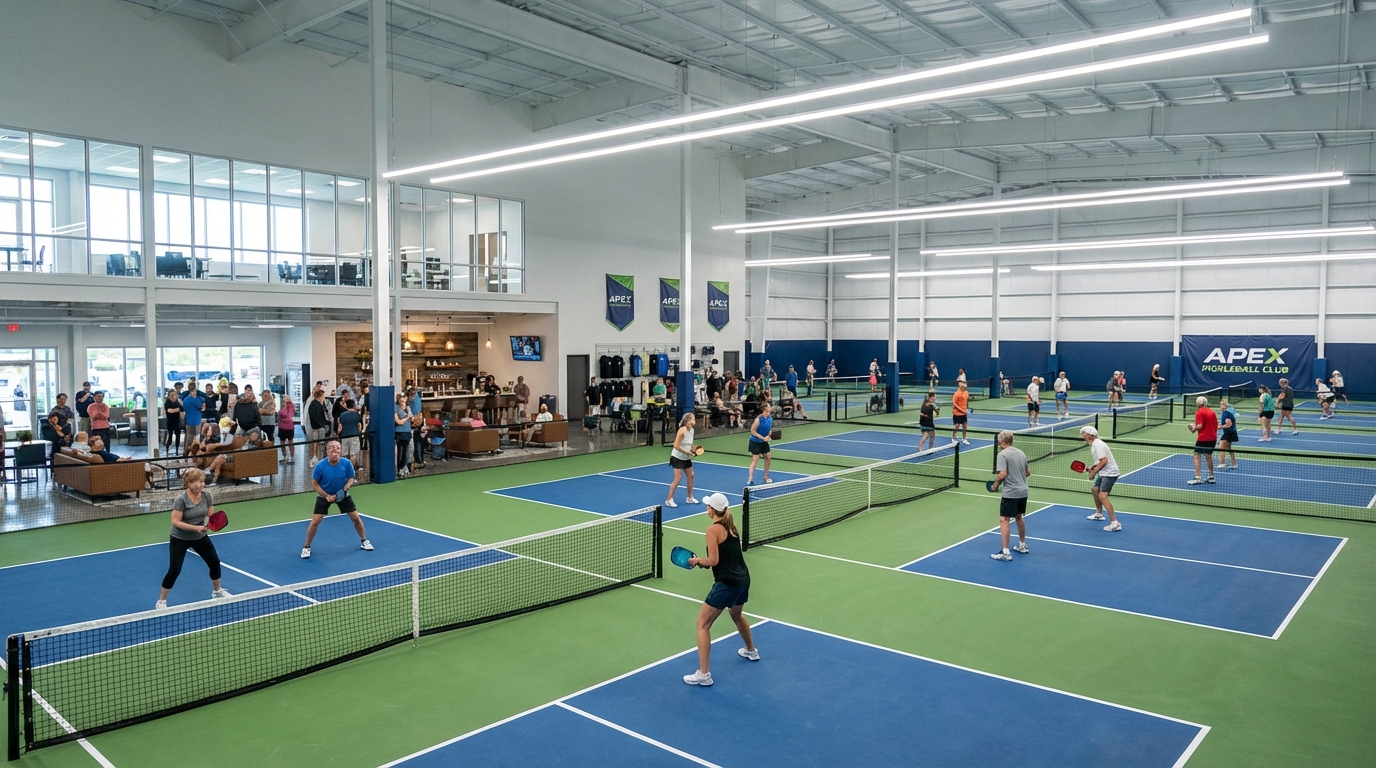
Padel strategy relies on shots like the “Bandeja” and “Chiquita,” whereas pickleball centers on the tactical “dink” and the “third-shot drop.” Our padel vs pickle ball guide 2026 highlights how these shots influence court wear and tear. In the debate of padel vs pickle ball, the variety of shots defines the athletic appeal for different age groups.
What is the purpose of the “Bandeja”?
The Bandeja is a defensive smash designed to keep the opponents at the back of the court while maintaining your position at the net. It uses a slice to keep the ball low after hitting the back glass.
- It is hit with a high contact point.
- The goal is placement over raw power.
- It prevents the ball from bouncing too high.
Think about it: mastering this shot is the difference between a beginner and a pro player.
Why is the “dink” vital in pickleball?
The dink is a soft shot hit from the kitchen line into the opponent’s kitchen. It forces them to hit the ball upward, setting you up for a powerful put-away shot. It is the ultimate test of patience and precision in the sport.
Key Takeaway: Designing courts with high-quality surfaces is essential to ensure these delicate, tactical shots bounce consistently for all skill levels.
| Specialized Shot | Sport | Tactical Purpose |
|---|---|---|
| Bandeja | Padel | Maintain net position |
| The Dink | Pickleball | Force opponent errors |
| Chiquita | Padel | Draw opponent forward |
A surface that supports consistent ball response allows players to execute high-level strategies and improves long-term facility reputation.
Which sport is easier for beginners to learn?
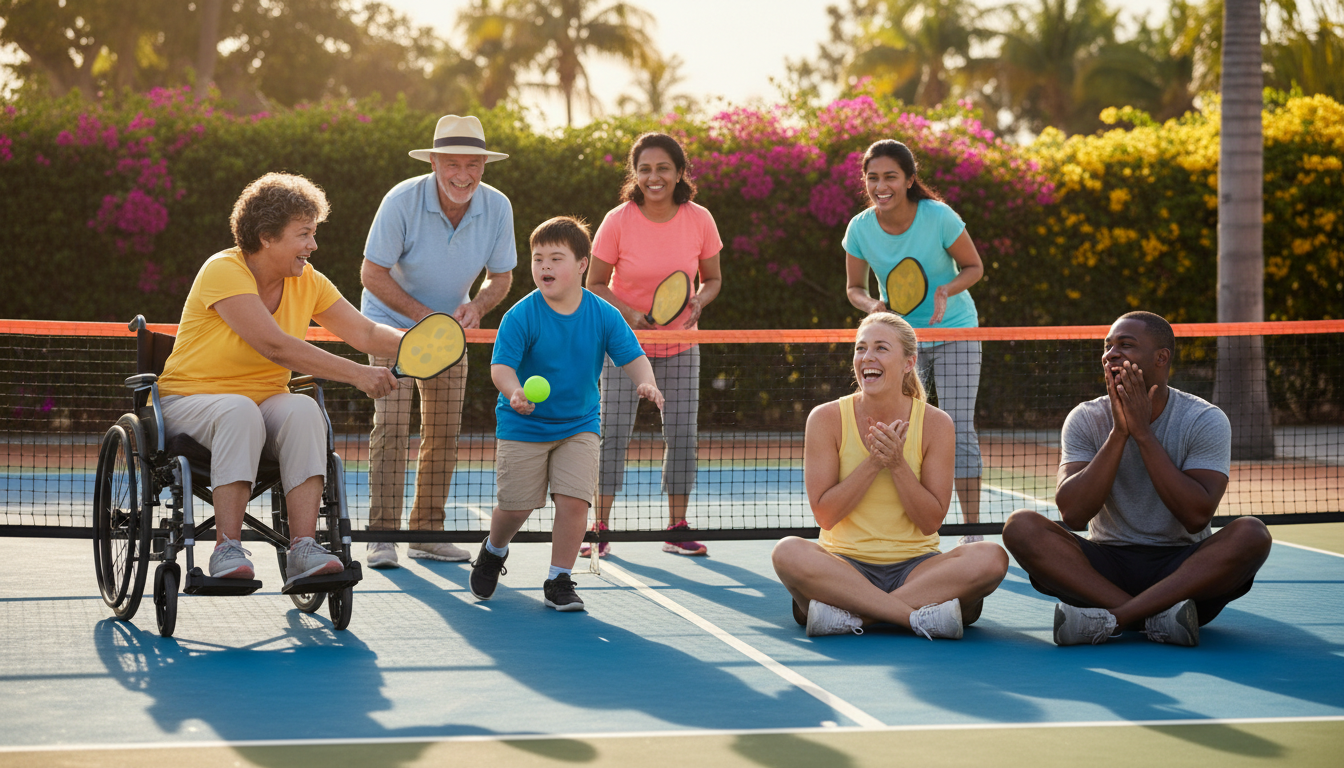
Pickleball is widely considered the easier sport for beginners due to the slower ball speed and smaller court area. When marketing padel vs pickle ball to your community, accessibility is a major factor in driving initial membership. While padel vs pickle ball both offer social benefits, the learning curve for wall geometry in padel can be steeper for some.
Does pickleball require prior racket experience?
No, the mechanics of pickleball are very intuitive, allowing new players to have competitive rallies within their first hour of play.
- The underhand serve is easy to master.
- The paddle is lightweight and manageable.
- The court size reduces the need for sprinting.
The best part? People of all ages can play together on the same court competitively.
How long does it take to master padel walls?
Mastering the walls usually takes several weeks of consistent play to understand how the ball reacts to different angles and speeds. Beginners often struggle with the ball “getting past them” before realizing they can play it off the glass.
Key Takeaway: Offering both sports allows you to capture a wider demographic, from the casual family player to the high-intensity club athlete.
| Learning Factor | Padel | Pickleball |
|---|---|---|
| Initial Barrier | Moderate (Wall logic) | Very Low |
| Physical Effort | High intensity | Low to Moderate |
| Social Appeal | High (Club style) | Very High (Community) |
Choosing a sport with a low entry barrier like pickleball ensures high utilization rates from day one of your facility opening.
What are the physical demands of each sport?
Padel demands high cardiovascular endurance and explosive movement, while pickleball focuses more on hand-eye coordination and lateral reflexes. Our analysis of padel vs pickle ball similarities and differences shows that padel is generally the more physically taxing sport. In padel vs pickle ball, your choice of sport should align with the fitness goals of your target audience.
Is padel higher impact than pickleball?
Yes, the larger court size and the constant movement required to cover wall rebounds put more strain on the joints and heart.
- Sprints are longer and more frequent.
- Overheads require significant shoulder mobility.
- Transitioning from net to back-court is constant.
Basically, you are getting a full-body workout every single time you step on the glass.
What are common injuries in these sports?
Common injuries include “tennis elbow” from improper racket grip and ankle sprains from quick lateral movements. Proper court surfacing can mitigate many of these risks by providing the right balance of grip and slide.
Key Takeaway: High-quality construction materials directly impact player health and longevity, making them a non-negotiable part of your build.
| Physical Metric | Padel | Pickleball |
|---|---|---|
| Calories Burned/Hr | 600 – 800 | 400 – 600 |
| Heart Rate Zone | Aerobic to Anaerobic | Primarily Aerobic |
| Movement Type | Multidirectional/Explosive | Lateral/Reflexive |
Understanding these demands helps you provide the right amenities, such as recovery zones and proper lighting, for your athletic facility.
What are the site requirements for building a court?
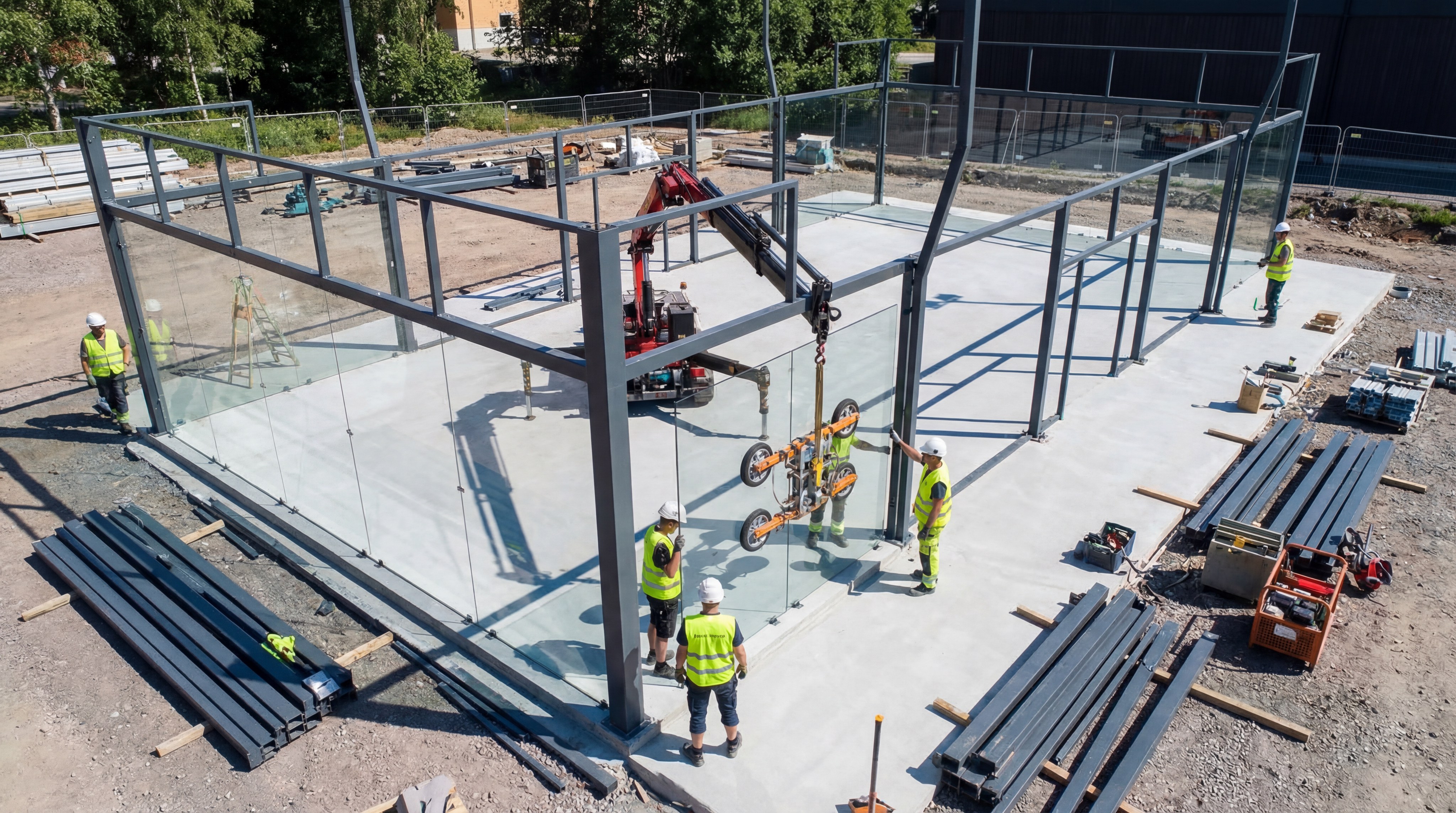
Building a court requires a reinforced concrete base and specific drainage systems to handle environmental stress. When comparing padel vs pickle ball, the structural requirements for padel are much higher due to the weight of the glass panels. In padel vs pickle ball construction, cutting corners on the foundation can lead to costly structural failures later.
What type of concrete base is required?
Padel courts require a 15cm to 20cm reinforced concrete slab to support the steel frame and 12mm tempered glass walls.
- The slab must be perfectly level.
- Perimeter footings are needed for wall posts.
- Sub-base compaction is critical for stability.
Wait, there’s more: without proper drainage, water can collect under the turf, causing mold and surface degradation.
Do you need planning permission for walls?
In many regions, the high walls and lighting poles of a padel court require specific planning permissions. Pickleball courts, being flatter and often without high enclosures, may face fewer regulatory hurdles during the initial development phase.
Key Takeaway: Professional site assessment and engineering ensure that your courts remain safe and functional for decades without needing major repairs.
| Requirement | Padel Court | Pickleball Court |
|---|---|---|
| Slab Depth | 15cm – 20cm | 10cm – 15cm |
| Wall Support | Heavy Steel Frame | Not Required |
| Surface Type | Artificial Grass + Sand | Acrylic Hardcourt |
Investing in a robust foundation is the most important decision you will make for the long-term ROI of your sports asset.
Which materials are best for professional court construction?
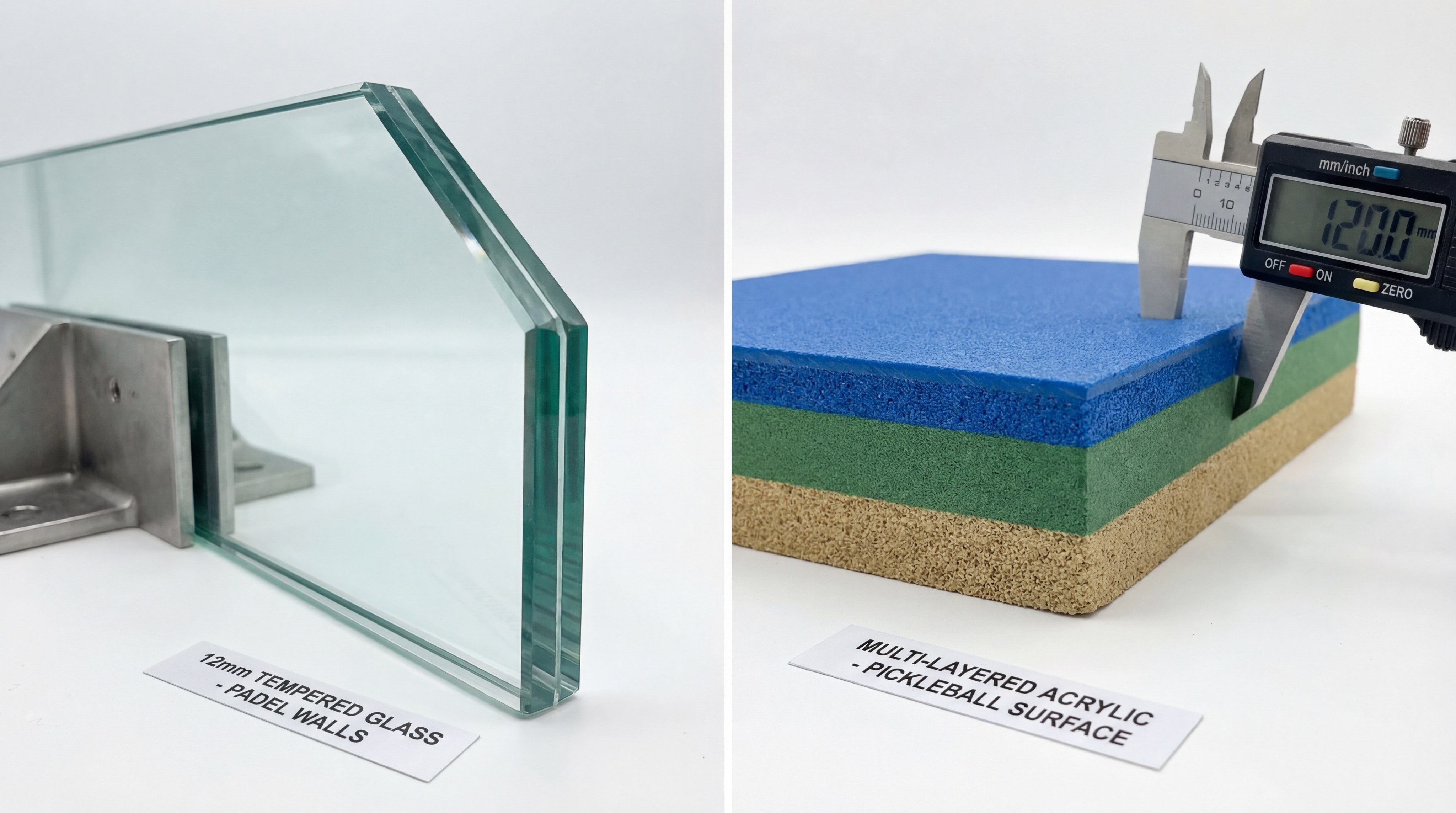
Professional courts utilize 12mm tempered glass for walls and multi-layered acrylic or high-density turf for playing surfaces. When evaluating padel vs pickle ball materials, you must prioritize safety standards and weather resistance. Choosing premium components reduces long-term maintenance and keeps your players coming back to a high-quality environment.
Is 10mm or 12mm glass better for padel?
While 10mm glass is common, 12mm tempered glass is the professional standard as it provides better rebound consistency and higher safety ratings.
- It is more resistant to high-speed impacts.
- It reduces vibration during heavy play.
- It offers better clarity for spectators.
It gets better: higher quality glass is easier to clean and maintains its aesthetic appeal for longer periods.
What is the best surfacing for pickleball?
A multi-layered acrylic coating with a cushioned sub-layer is ideal for pickleball. This provides a consistent ball bounce while reducing the impact on players’ joints, which is especially important for the sport’s senior demographic.
Key Takeaway: Material quality is the primary differentiator between a community court and a world-class professional athletic destination.
| Material | Padel | Pickleball |
|---|---|---|
| Enclosure | 12mm Tempered Glass | Vinyl Coated Chainlink |
| Surface | Monofilament Turf | Acrylic Polymer |
| Netting | Heavy-Duty Polyethylene | Weather-Resistant Nylon |
High-grade materials not only improve the player experience but also significantly lower your annual facility maintenance costs.
How much space is needed for a multi-court facility?
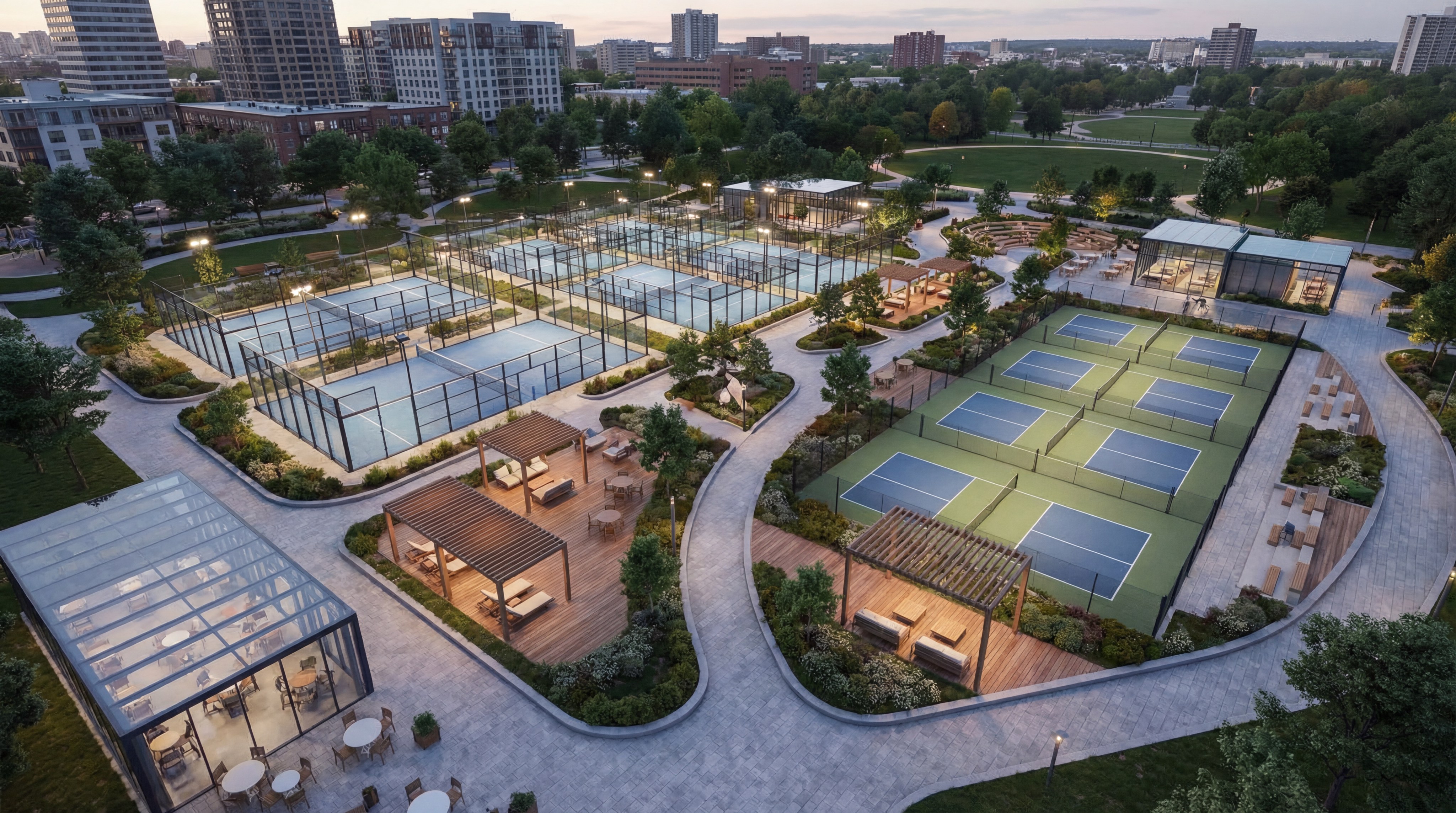
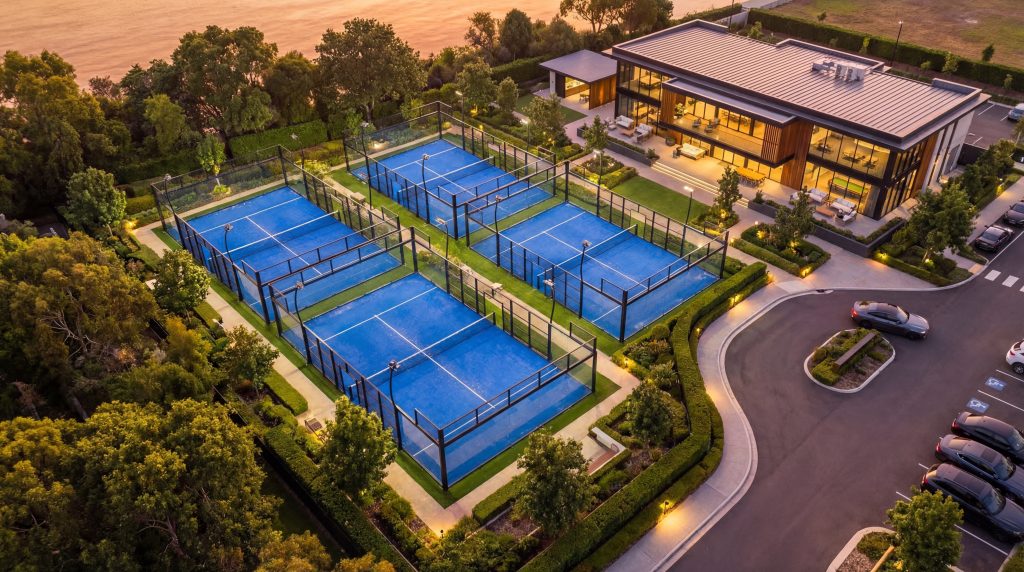
A multi-court facility requires extra space for safety zones, walkways, and social areas to create a viable business model. When planning padel vs pickle ball layouts, you should allow for at least 2 meters of runoff around the entire perimeter of each court. In padel vs pickle ball development, the “dead space” between courts is where your community’s social culture is built.
Can you put both sports in one facility?
Yes, many modern clubs integrate both sports to diversify their revenue streams and appeal to a broader range of members.
- Group courts by sport for noise control.
- Share lighting and drainage infrastructure.
- Centralize the pro shop and locker rooms.
The best part? Cross-over play can increase your total court occupancy by up to 30% during off-peak hours.
What is the ideal distance between courts?
You should maintain at least 4 meters between parallel padel courts to allow for safe player exits and spectator movement. For pickleball, a “cluster” design can be more compact, but you still need enough room to prevent balls from interfering with adjacent games.
Key Takeaway: Strategic spatial planning transforms a collection of courts into a high-energy, profitable sports hub with maximum social engagement.
| Zone | Recommended Space | Purpose |
|---|---|---|
| Runoff Zone | 2.0 – 3.0 Meters | Player safety |
| Social Zone | 5.0 – 10.0 Meters | Networking & Drinks |
| Walkways | 1.5 Meters Minimum | Efficient traffic flow |
A well-designed layout ensures safety, improves club atmosphere, and maximizes the financial performance of your sports investment.
*
Build Your Legacy on the Court
Navigating the technical landscape of racquet sports doesn’t have to be a solo journey. We have solved the problems of spatial inefficiency, material selection, and structural engineering to ensure your project succeeds. Whether you are aiming for the high-end prestige of glass-walled courts or the vibrant community energy of a multi-court hardcourt complex, the right planning makes all the difference. Our vision is to empower developers to create sustainable, world-class facilities that inspire athletic excellence.
Contact us today to begin your site assessment and transform your vision into a premier sports destination.
*
FAQ
- Can I convert a tennis court into these sports?
Yes, you can typically fit four pickleball courts or two padel courts (with slight modifications) onto one standard tennis court footprint. - Can I build a padel court without glass?
No, the glass walls are a fundamental part of the gameplay and rules; removing them would change the sport entirely. - What’s the best lighting for night play?
It depends on the sport, but generally, 400-600 lux LED floodlighting is required to provide visibility without creating glare on the glass or surface. - How do I know if my soil is stable enough for construction?
It depends on a professional geotechnical report, which is essential before pouring a reinforced concrete slab for padel walls. - Can I install these courts myself?
No, the construction of padel courts, especially the glass and steel structure, requires specialized professional installation for safety and warranty purposes.