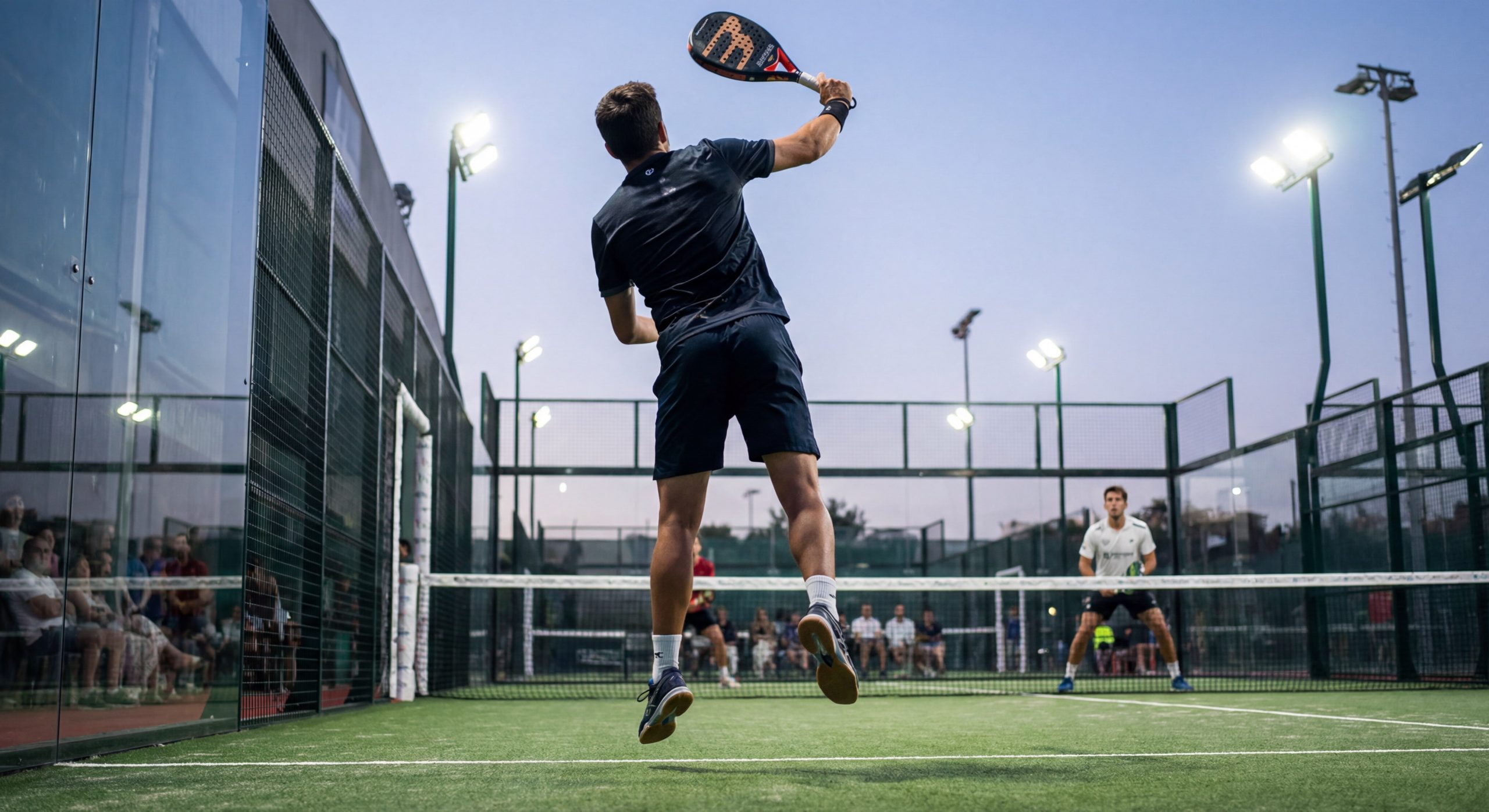
A juego de padel is a high-energy racket sport played in doubles on an enclosed court where the ball remains in play after bouncing off glass walls. You might find traditional tennis too demanding on your joints or find it difficult to maintain long rallies as a beginner. By choosing to build or play a juego de padel, you embrace a social, strategic, and accessible sport that is currently taking the global athletic community by storm.
What is the origin of the modern juego de padel?
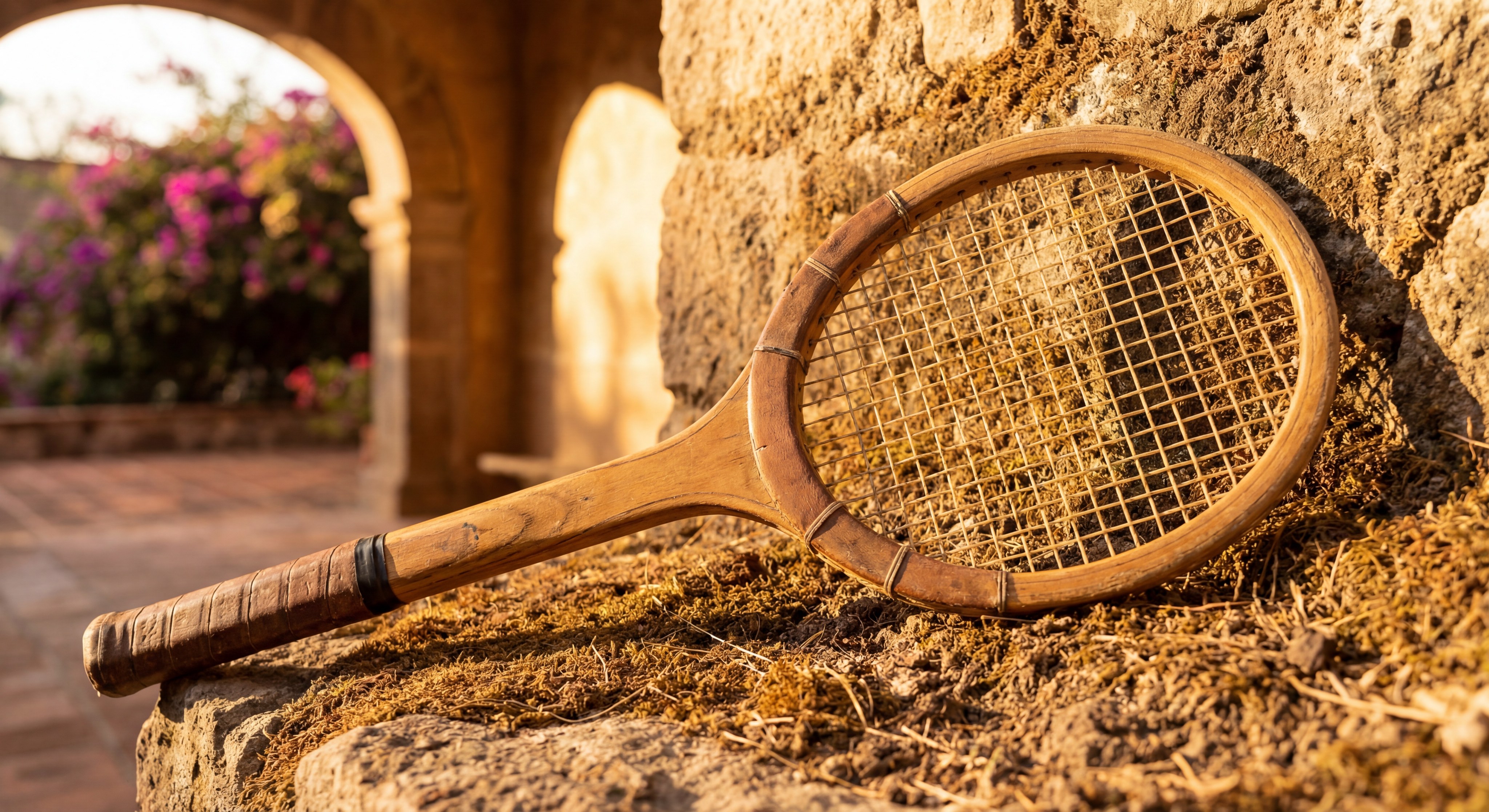
The modern juego de padel originated in Acapulco, Mexico, during the early 1970s. You can trace its roots back to Enrique Corcuera, who modified his home fronton court to prevent overgrown vegetation from interfering with his game. This adaptation created a unique environment that combined elements of tennis and squash.
From Acapulco 1974 to Global Phenomenon
Believe it or not:
The sport spread from Mexico to Spain and Argentina within just a few years. You will find that its growth was fueled by elite social circles before it became a mainstream sensation.
- Initial development in 1974.
- Introduction to Marbella, Spain.
- Rapid expansion across South America.
- Current status as a top global racket sport.
Today, you can see courts appearing in almost every major city worldwide. This growth demonstrates how a simple backyard modification evolved into a professional circuit.
The Vision of Enrique Corcuera
Here is the kicker:
Corcuera didn’t set out to invent a new sport, but rather to make his own play space more functional. He added walls and used shorter rackets to keep the game fast and engaging for his guests.
- Use of 20×10 meter dimensions.
- Inclusion of surrounding walls.
- Adoption of non-strung wooden paddles.
- Focus on doubles-only play.
Key Takeaway: The sport was born from architectural necessity and a desire for more dynamic, social gameplay.
| Feature | Description |
|---|---|
| Founder | Enrique Corcuera |
| Year | 1974 |
| Location | Acapulco, Mexico |
| Core Innovation | Enclosed court walls |
Analyze the historical transition from wooden paddles to carbon fiber to understand how the sport’s speed has increased over decades.
What are the basic rules for every juego de padel?
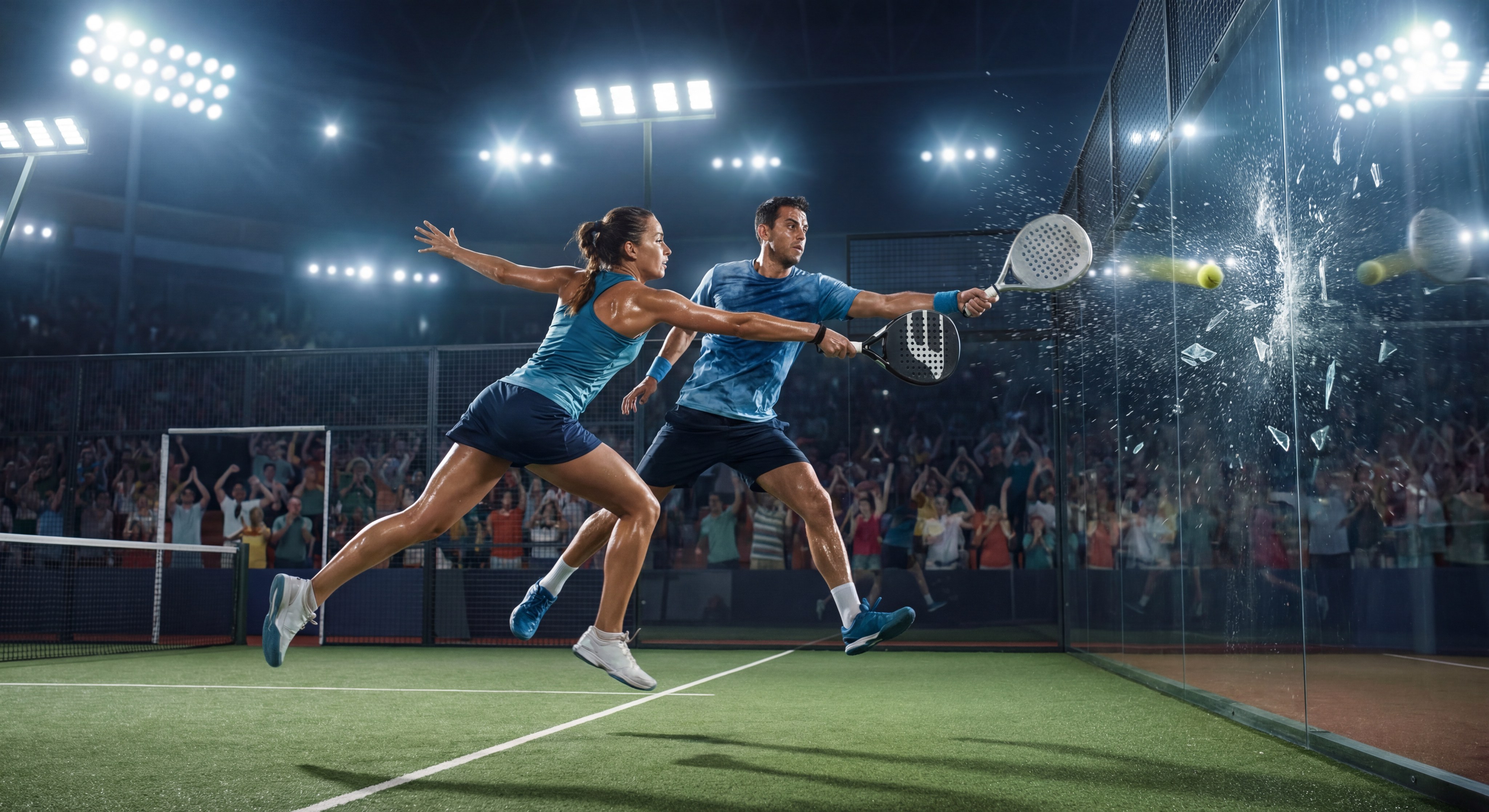
The basic rules for every juego de padel require you to play in teams of two on a court enclosed by glass and mesh. You must ensure the ball bounces on the opponent’s turf before hitting any of the surrounding walls. If the ball hits a wall directly without bouncing first, it is considered out.
Court Boundaries and Wall Interactions
But wait, there’s more:
You can actually use your own glass walls to return the ball to the opponent’s side. This adds a vertical dimension to your strategy that most other racket sports lack.
- The ball must bounce once on the floor.
- Contact with the fence is allowed after the bounce.
- You can play the ball off your own glass.
- Directly hitting the opponent’s wall is a fault.
Mastering the angles of the glass is essential for your progression. You will quickly learn that the walls are your best friends during defensive plays.
The Underhand Serve Technique
The truth is:
Every point in this sport begins with an underhand serve delivered at or below waist level. You must bounce the ball once behind the service line before striking it cross-court into the receiver’s box.
- Serve must be underhand.
- Ball must hit the diagonal service box.
- Two serve attempts are permitted.
- Server must keep at least one foot on the ground.
Key Takeaway: Understanding the interaction between the floor and walls is the foundation of successful play.
| Rule Type | Action |
|---|---|
| Serve | Underhand below waist |
| Bounce | Must hit ground first |
| Doubles | Mandatory 2v2 format |
| Fault | Ball hitting wall directly |
Investigate the rebound physics of different wall materials to predict ball trajectory during high-speed rallies.
How do you score points during a juego de padel?
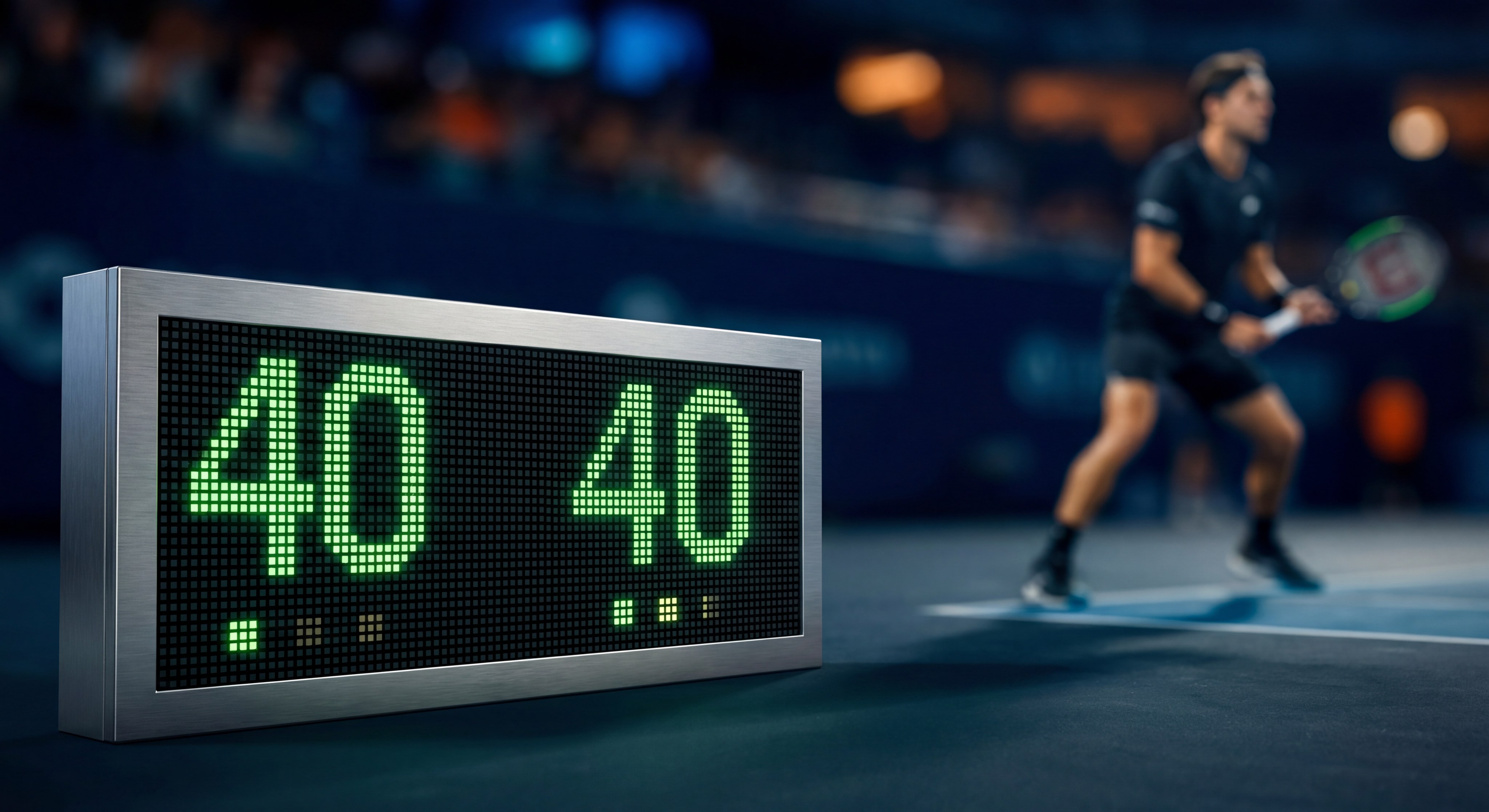
You score points in a juego de padel using a system identical to traditional tennis, moving from 15 to 30, 40, and then the game. Winning six games allows you to take a set, and matches are typically played as the best of three sets. If you reach a 6-6 tie in games, a tie-break is played to seven points.
Understanding Sets, Games, and 15-30-40 Logic
It gets better:
The scoring sequence provides a familiar rhythm for anyone who has watched or played tennis. You will find that the pressure builds significantly once both teams reach the 40-point mark.
- 1st point: 15
- 2nd point: 30
- 3rd point: 40
- 4th point: Game
Keeping track of the score requires focus during long, exhausting rallies. You must always call the server’s score first to maintain clarity on the court.
The “Punto de Oro” Tie-Break System
Here is the kicker:
Many professional circuits now use the “Golden Point” to decide a game when the score reaches deuce. This means you only have one chance to win the game after the score is tied at 40-40.
- No “advantage” scoring used.
- Receiving team chooses the side.
- Single point decides the winner.
- Increases match intensity and speed.
Key Takeaway: While the 15-40 system is standard, the Golden Point variation demands high mental fortitude and risk management.
| Score | Term |
|---|---|
| 0 | Love |
| 40-40 | Deuce / Punto de Oro |
| 6-6 | Tie-break |
| 2 Sets | Match Winner |
Compare the impact of Golden Point scoring versus traditional advantage scoring on total match duration and player fatigue.
Which equipment is essential for a juego de padel?
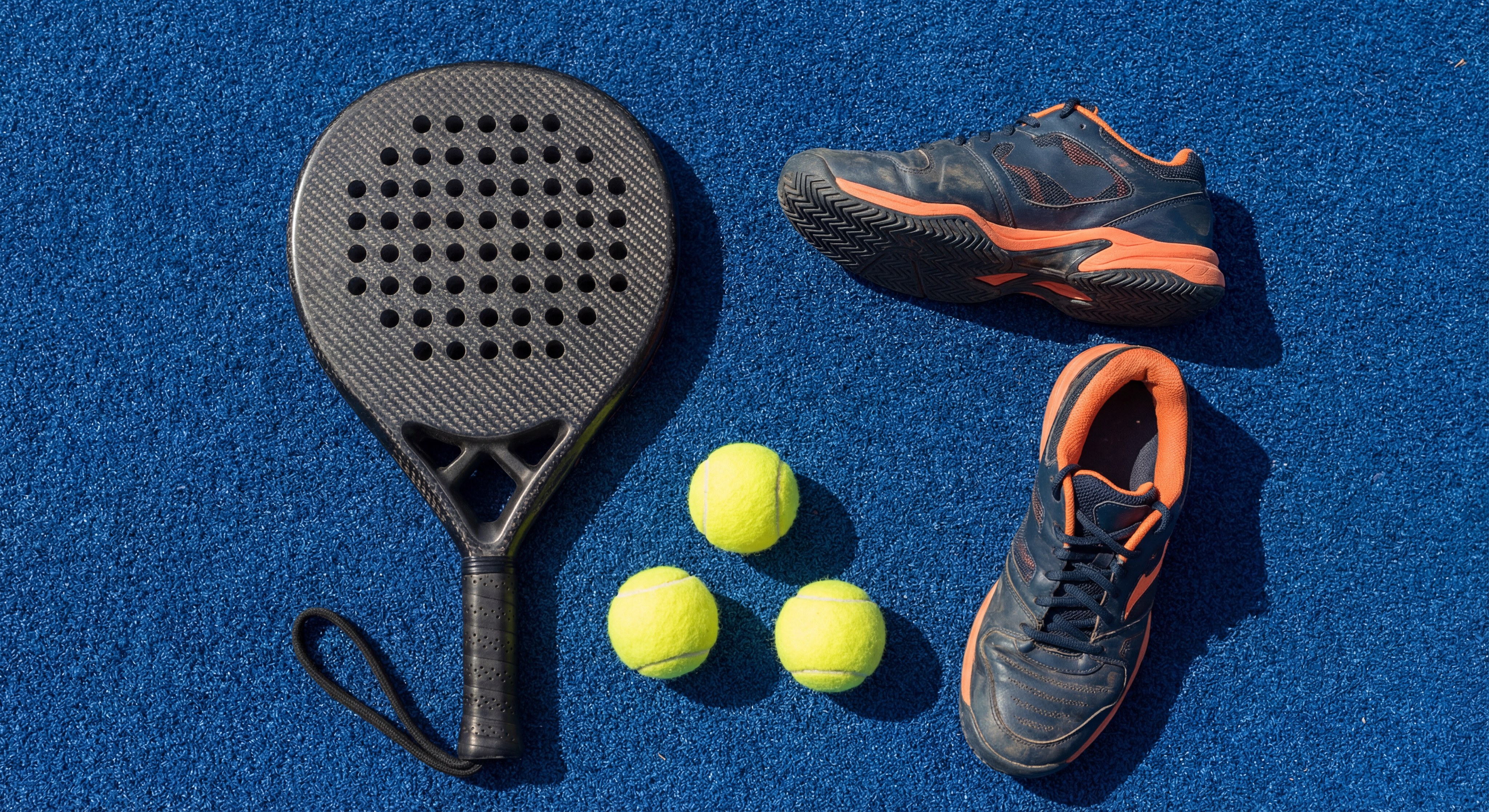
Essential equipment for a juego de padel includes a specialized solid racket, pressurized balls, and court-specific footwear. You cannot use a tennis racket because padel palas are shorter, thicker, and lack strings. The balls also have slightly less pressure to match the smaller court size and wall play.
Selecting Professional Carbon Fiber Palas
Think about this:
Modern rackets use advanced materials like carbon fiber and EVA foam to balance power and control. You should choose a racket weight that allows you to swing comfortably without straining your elbow.
- Round shape for better control.
- Teardrop shape for balanced play.
- Diamond shape for maximum power.
- Perforated surface for aerodynamics.
Your choice of racket will define your playing style on the court. You will likely start with a round shape before graduating to more aggressive designs.
High-Impact Footwear and Specific Balls
But wait, there’s more:
The soles of your shoes must provide enough grip for the sand-filled turf while allowing for controlled slides. Using standard running shoes can lead to ankle injuries due to the frequent lateral movements.
- Herringbone or “clay” sole patterns.
- Reinforced toe caps for durability.
- High-cushioning heels for impact.
- Padel-specific balls with lower bounce.
Key Takeaway: Investing in padel-specific shoes is just as important as choosing the right racket for injury prevention and performance.
| Equipment | Essential Feature |
|---|---|
| Racket | Solid with foam core |
| Shoes | High-grip clay sole |
| Balls | Low-pressure pressurized |
| Grip | Overgrip for sweat absorption |
Examine the degradation rate of EVA foam cores in rackets to determine the optimal frequency for equipment replacement.
How to start building a court for a juego de padel?
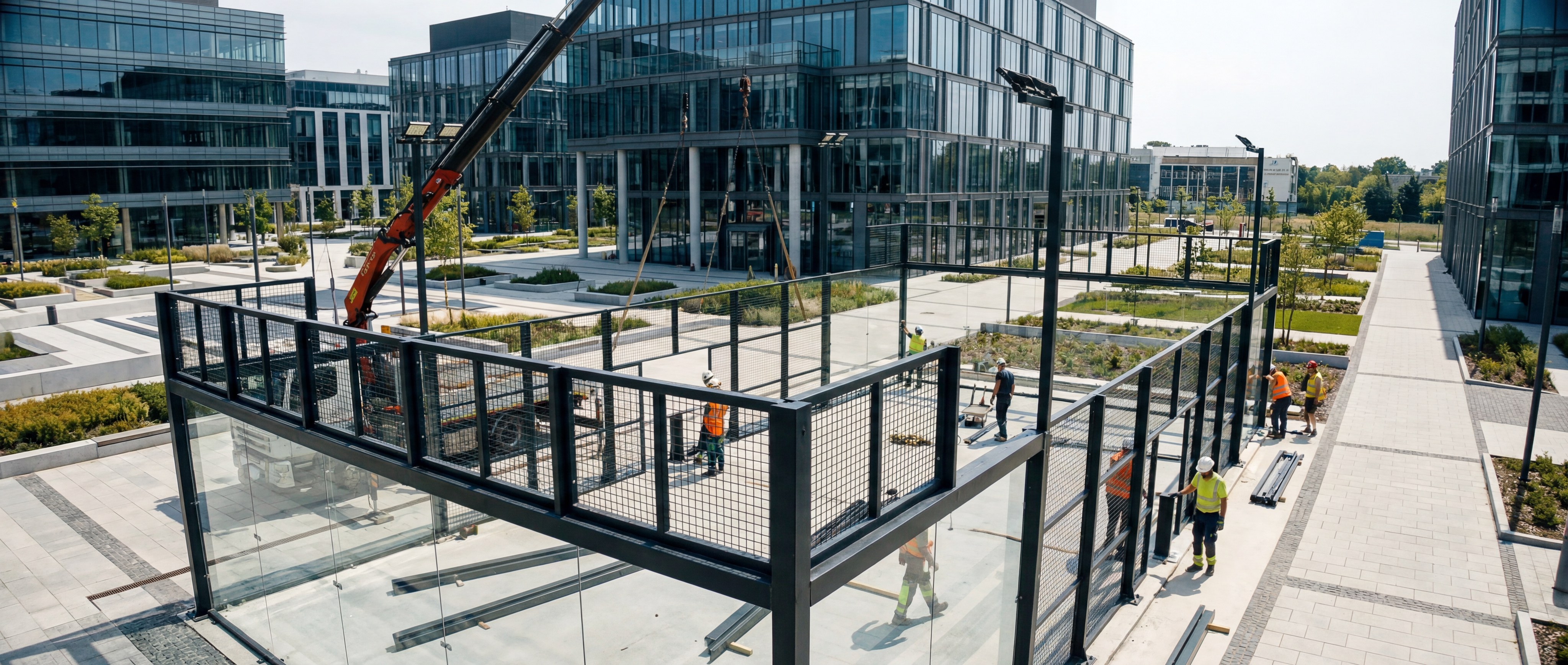
To start building a court for a juego de padel, you must first secure a level concrete foundation and check local building regulations. You will need a space of at least 21×11 meters to account for the court itself and the surrounding safety perimeter. Choosing high-quality tempered glass and galvanized steel is vital for long-term durability.
Site Feasibility and Foundation Planning
Here is the kicker:
The slab must be perfectly level to ensure an even ball bounce across the entire surface. Any slight incline can cause the ball to behave unpredictably when it hits the turf.
- Porous concrete for drainage.
- Minimum 15cm thickness for stability.
- Reinforced mesh within the slab.
- Integrated anchors for the steel frame.
You should consult with a structural engineer before pouring any concrete. This ensures your foundation can withstand the weight of the glass walls and the tension of the fence.
Commercial Zoning and Permit Requirements
The truth is:
Building a court often requires specific permits for lighting and noise, especially in residential areas. You must ensure your project complies with local height restrictions for the ten-meter-high ceiling required for indoor play.
- Noise impact assessments.
- Lighting pollution regulations.
- Zoning for sports facilities.
- Accessibility and parking codes.
Key Takeaway: A successful build starts with a flawless foundation and a clear understanding of local legal requirements.
| Phase | Priority Task |
|---|---|
| Planning | Zoning and permits |
| Foundations | Level concrete slab |
| Structure | Galvanized steel frames |
| Surface | Artificial turf installation |
Review the load-bearing capacity of different soil types to prevent future cracking or shifting of the court foundation.
What are the official dimensions for a juego de padel?
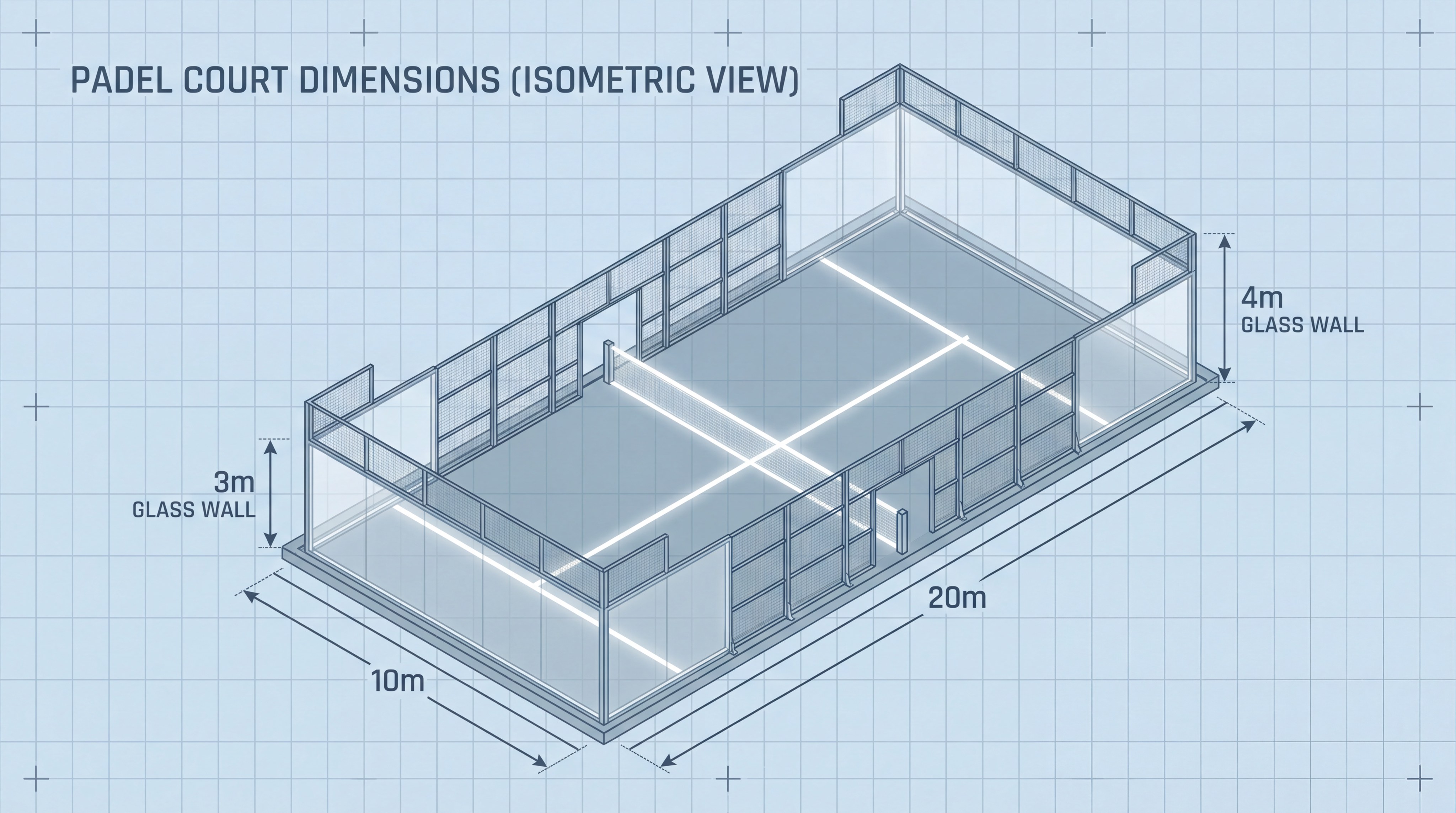
Official dimensions for a juego de padel are strictly set at 20 meters in length and 10 meters in width. You will find that the court is divided by a net in the middle, which stands 88 centimeters high at the center. The surrounding walls must be 3 meters high on the sides and 4 meters high at the back.
Standard 20×10 Meter Layout Requirements
Believe it or not:
The compact size of the court is what makes the game so social and fast-paced. You are never more than a few steps away from your partner, allowing for constant communication.
- 10 meters wide by 20 meters long.
- Service lines 6.95 meters from the net.
- Central line divides service boxes.
- Net height of 0.88m (center) to 0.92m (posts).
Accuracy in these measurements is critical for official tournament play. You should always verify that your court lines are exactly 5 centimeters wide.
Glass Wall and Mesh Fence Height Specs
But wait, there’s more:
The walls are not just a single height; they transition from solid glass to metal mesh in specific patterns. You must use 10mm or 12mm tempered glass to ensure the safety of the players during high-impact collisions.
- Back walls: 3m glass + 1m mesh.
- Sidewalls: Stepped or “American” style.
- Mesh panels: 3m high on sides.
- Glass must be impact-resistant.
Key Takeaway: Strict adherence to the 20×10 layout and specific wall heights ensures a consistent playing experience across all facilities.
| Dimension | Metric Measurement |
|---|---|
| Length | 20 Meters |
| Width | 10 Meters |
| Back Wall Height | 4 Meters (Total) |
| Net Height | 88 – 92 Centimeters |
Calculate the total square footage of tempered glass required for a standard court to estimate material costs accurately.
How to build a professional facility for juego de padel?
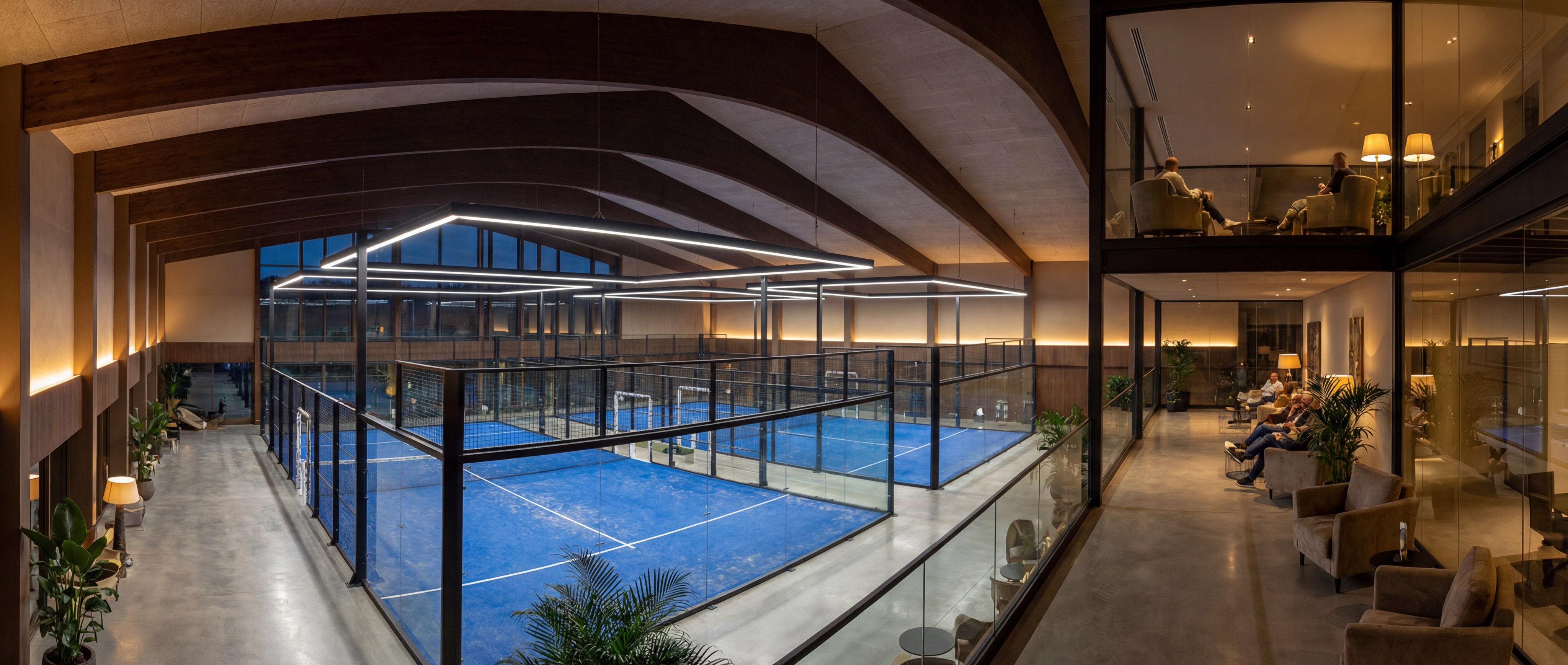
Building a professional facility for juego de padel involves more than just installing courts; it requires high-quality lighting, ventilation, and player amenities. You need to focus on the “off-court” experience to keep members returning to your club. A professional layout often includes a pro shop, lounge area, and high-end changing rooms.
Designing for Indoor vs. Outdoor Environments
Here is the kicker:
Indoor facilities allow for year-round play but require a minimum ceiling height of 6 meters, though 8 to 10 meters is preferred for professional lobs. You must also invest in anti-glare LED lighting systems to prevent players from losing the ball in the lights.
- Indoor: Climate control and high ceilings.
- Outdoor: Weather-resistant materials and drainage.
- Lighting: 4 or 8 LED projectors per court.
- Lux levels: 300 to 750 for pro play.
Your lighting placement should be outside the court perimeter to avoid shadows. You will find that players prefer consistent, bright illumination that mimics natural daylight.
Integrating Player Amenities and Pro Shops
The truth is:
The social aspect is the “secret sauce” of a successful club. You should provide a comfortable space where players can have a drink and watch other matches through glass galleries.
- Café or juice bar for post-match social.
- Pro shop with racket testing programs.
- High-quality showers and locker rooms.
- Digital booking and court management systems.
Key Takeaway: A professional facility succeeds by balancing high-performance court specs with a premium social environment.
| Amenity | Value Add |
|---|---|
| LED Lighting | Anti-glare for visibility |
| Pro Shop | Racket sales and rentals |
| Lounge | Community and social retention |
| App Booking | Operational efficiency |
Evaluate the return on investment for indoor climate control versus increased court occupancy during winter months.
Which surface materials work best for a juego de padel?
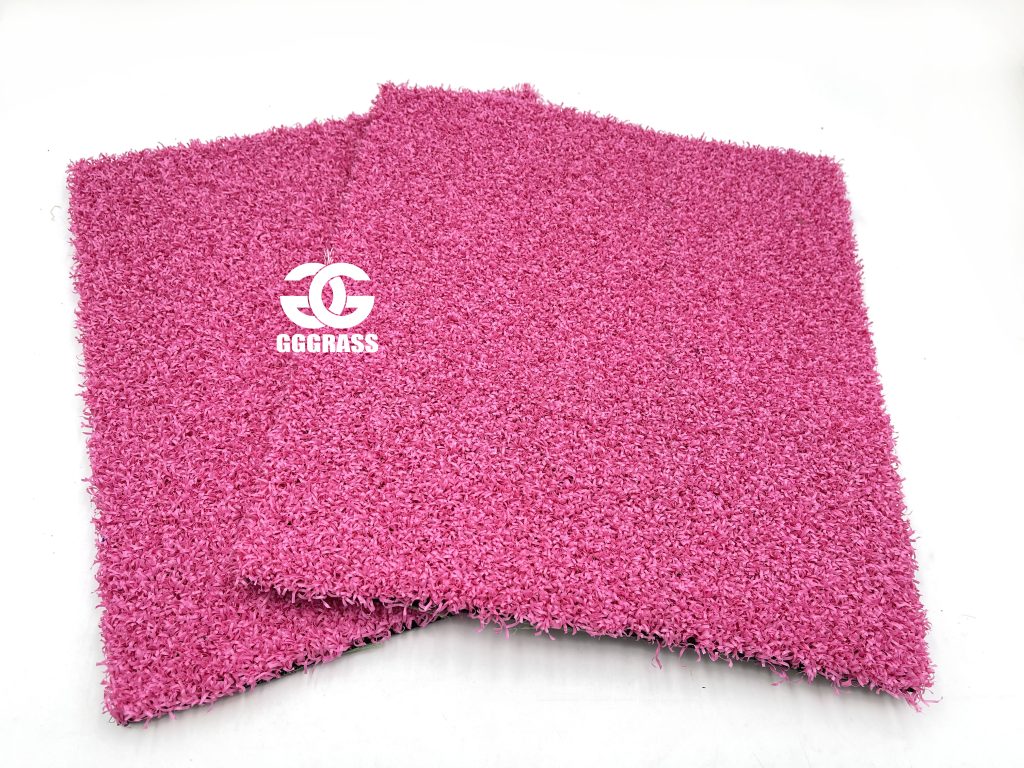
The surface materials that work best for a juego de padel are monofilament or textured synthetic turfs filled with fine silica sand. You will notice that the sand is almost invisible in modern “Mondo” style courts because it is trapped within curly fibers. This provides a consistent bounce and prevents the slippery “skating” effect found on older, sand-heavy courts.
Synthetic Turf and Sand Infusion Options
But wait, there’s more:
The color of your turf—typically blue, green, or terracotta—is not just for aesthetics; it provides contrast for the yellow ball. You should look for turf with high UV resistance to prevent the fibers from becoming brittle and breaking under the sun.
- Monofilament: Durable and high-performance.
- Fibrillated: Good for recreational use.
- Silica sand: 0.2mm to 0.8mm grain size.
- Permeability for quick rain recovery.
Maintaining the sand level is your most important maintenance task. You must brush the court regularly to ensure the sand is distributed evenly across the high-traffic areas.
Impact of Surface Texture on Ball Bounce
The truth is:
A court with too little sand will cause the ball to bounce too fast, while too much sand makes the surface slow and unpredictable. You will feel the difference in your joints, as well-maintained turf offers better shock absorption.
- Sand acts as a stabilizer for fibers.
- Curly fibers reduce sand migration.
- Consistent friction for player pivots.
- Protects the underlying concrete.
Key Takeaway: Modern textured turf with minimal visible sand offers the best balance of player safety, ball speed, and visual appeal.
| Turf Type | Best Use Case |
|---|---|
| Textured/Curly | Professional / Low maintenance |
| Monofilament | High-traffic commercial clubs |
| Fibrillated | Budget-conscious residential |
| Blue Color | Television and high visibility |
Measure the friction coefficient of your turf to determine when the fibers have worn down enough to require full surface replacement.
How to select the right board for your juego de padel?
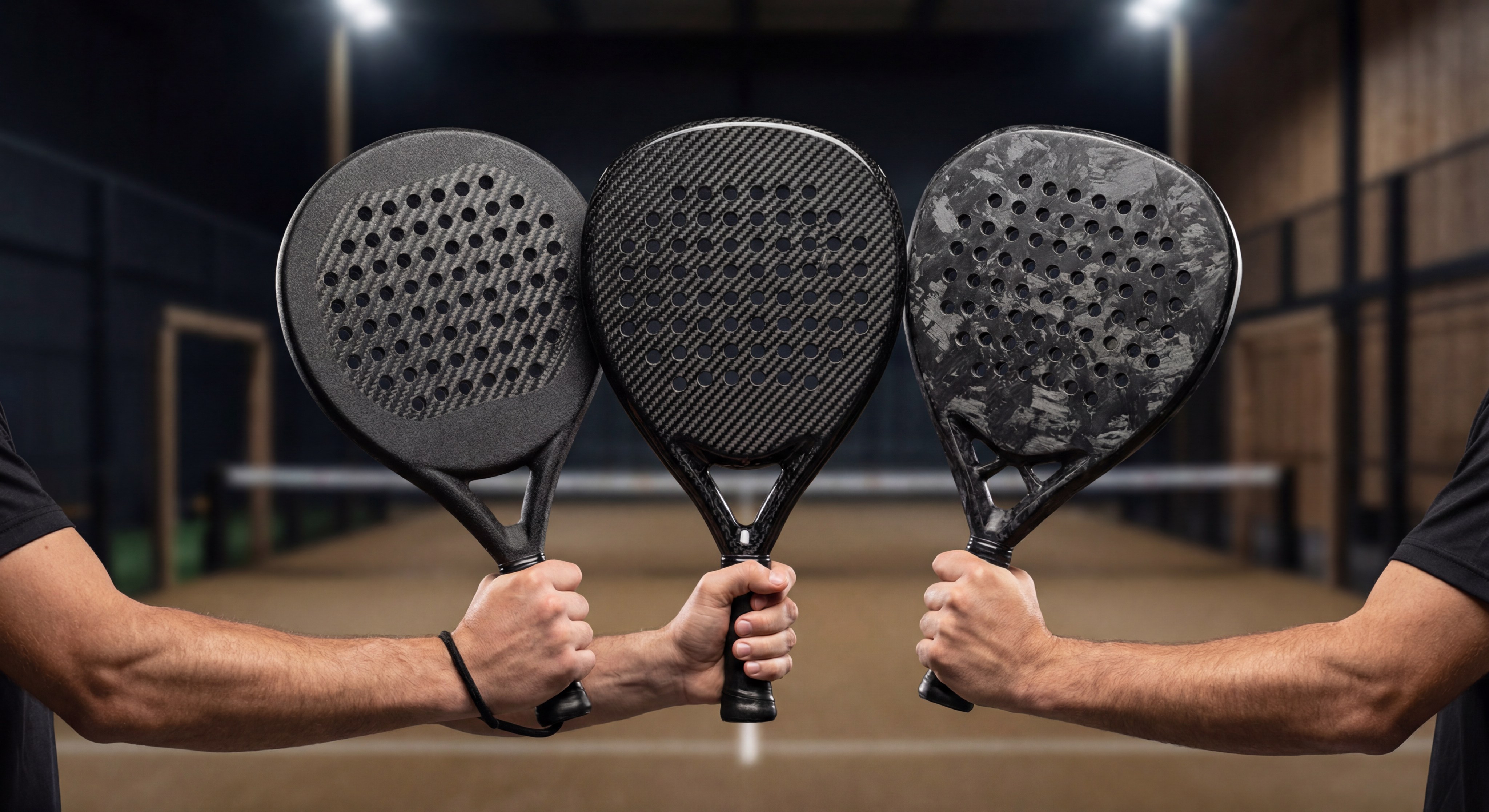
Selecting the right board or racket for your juego de padel depends on your skill level and preferred style of play. You must decide between round, teardrop, or diamond shapes, which determine where the “sweet spot” is located on the racket face. Beginners should generally opt for a round shape to maximize control and minimize errors.
Comparing Round, Teardrop, and Diamond Shapes
Here is the kicker:
The shape of the racket fundamentally changes its balance point. You will feel that a diamond racket is “head-heavy,” which helps you generate smash power but makes it harder to maneuver at the net.
- Round: Low balance, large sweet spot.
- Teardrop: Medium balance, versatile play.
- Diamond: High balance, power-focused.
- Fiberglass faces: Softer feel for beginners.
As you advance, you might move toward a teardrop shape. This allows you to maintain control while adding a bit more “pop” to your volleys and overheads.
Weight Distribution and Player Skill Levels
But wait, there’s more:
A difference of just 10 grams can significantly affect your risk of developing “tennis elbow.” You should aim for a weight between 350g and 375g for a balanced experience that doesn’t fatigue your arm during a long match.
- Lighter (350-360g): Easy to move, less power.
- Heavier (370-385g): More stability, harder to swing.
- Carbon fiber: Stiffer and more durable.
- Soft EVA: More comfort and ball exit.
Key Takeaway: Prioritize a round or teardrop shape with a manageable weight to build your technique before switching to power-oriented diamond rackets.
| Shape | Benefit | Skill Level |
|---|---|---|
| Round | Control / Forgiveness | Beginner |
| Teardrop | Versatility / Balance | Intermediate |
| Diamond | Power / Smash Speed | Advanced |
| Hard EVA | Precision / Durability | Expert |
Analyze your error-to-winner ratio during matches to decide if you need a more forgiving round racket or a more aggressive diamond shape.
How can you improve your strategy in a juego de padel?
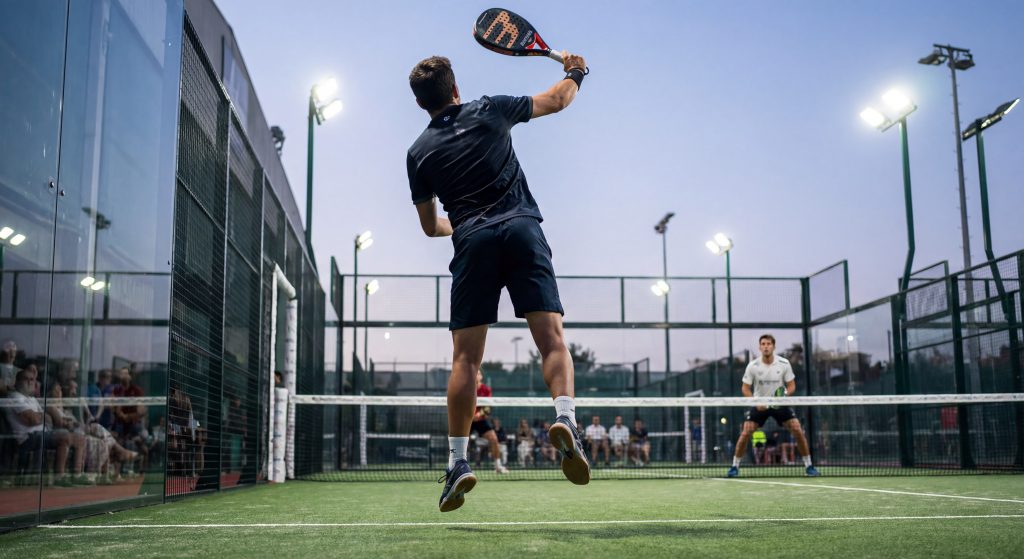
To improve your strategy in a juego de padel, you must master the art of the transition from defense to offense. You will find that winning the “net position” is the primary goal of every point. Unlike tennis, hitting the ball as hard as possible is often a losing strategy; instead, you should focus on placement and keeping the ball low.
Mastering the Bandeja and Vibora Shots
Believe it or not:
The “Bandeja” is a unique overhead shot designed specifically to keep your opponents at the back of the court. You hit it with slice to ensure the ball doesn’t bounce high enough for them to attack.
- Bandeja: Defensive overhead for control.
- Vibora: Aggressive overhead with side-spin.
- Lob: The most important shot in the game.
- Chiquita: A slow shot at the opponent’s feet.
Learning when to use a Bandeja versus a smash is the hallmark of an intermediate player. You will win more points by being patient and waiting for the right opportunity to finish.
Communication and Positioning in Doubles Play
The truth is:
You and your partner must move like they are connected by a string. If one of you moves to the net, the other should follow to close the gaps and prevent the opponents from hitting “down the middle.”
- Always call “mine” or “yours.”
- Cover the middle of the court together.
- Use hand signals for service strategy.
- Support each other after every point.
Key Takeaway: Padel is a game of patience where the team that controls the net and communicates best usually wins.
| Strategy | Goal |
|---|---|
| The Lob | Regain the net position |
| The Chiquita | Force a weak volley |
| Bandeja | Neutralize the opponent |
| Communication | Minimize court gaps |
Track your team’s “net retention” percentage to identify whether your lobs or your volleys are the weak link in your strategy.
Every juego de padel represents a unique blend of athleticism, social interaction, and tactical depth. Whether you are stepping onto the court for the first time or planning to build a world-class facility, focusing on quality equipment and proper court dimensions is essential for success. This sport offers a lifetime of improvement and community engagement for those who master its nuances. Contact us today to explore how we can help you build your dream court or improve your game.
Start your journey today and experience the fastest-growing sport in the world.
FAQ
Can I build a padel court in my backyard?
Yes, as long as you have a level space of at least 21×11 meters and comply with local zoning and noise regulations.
What’s the best racket for a total beginner?
The best choice is a round-shaped racket with a fiberglass face and a soft EVA foam core for maximum control and comfort.
Can I use tennis balls for padel?
It is not recommended because padel balls have less internal pressure, which is necessary for the smaller court and wall interactions.
How many players do I need for a match?
Standard padel is always played in doubles, so you will need four players in total to start a match.
How often should I change the sand on my court?
You don’t usually need to replace the sand, but you must brush it weekly to ensure even distribution across the turf fibers.