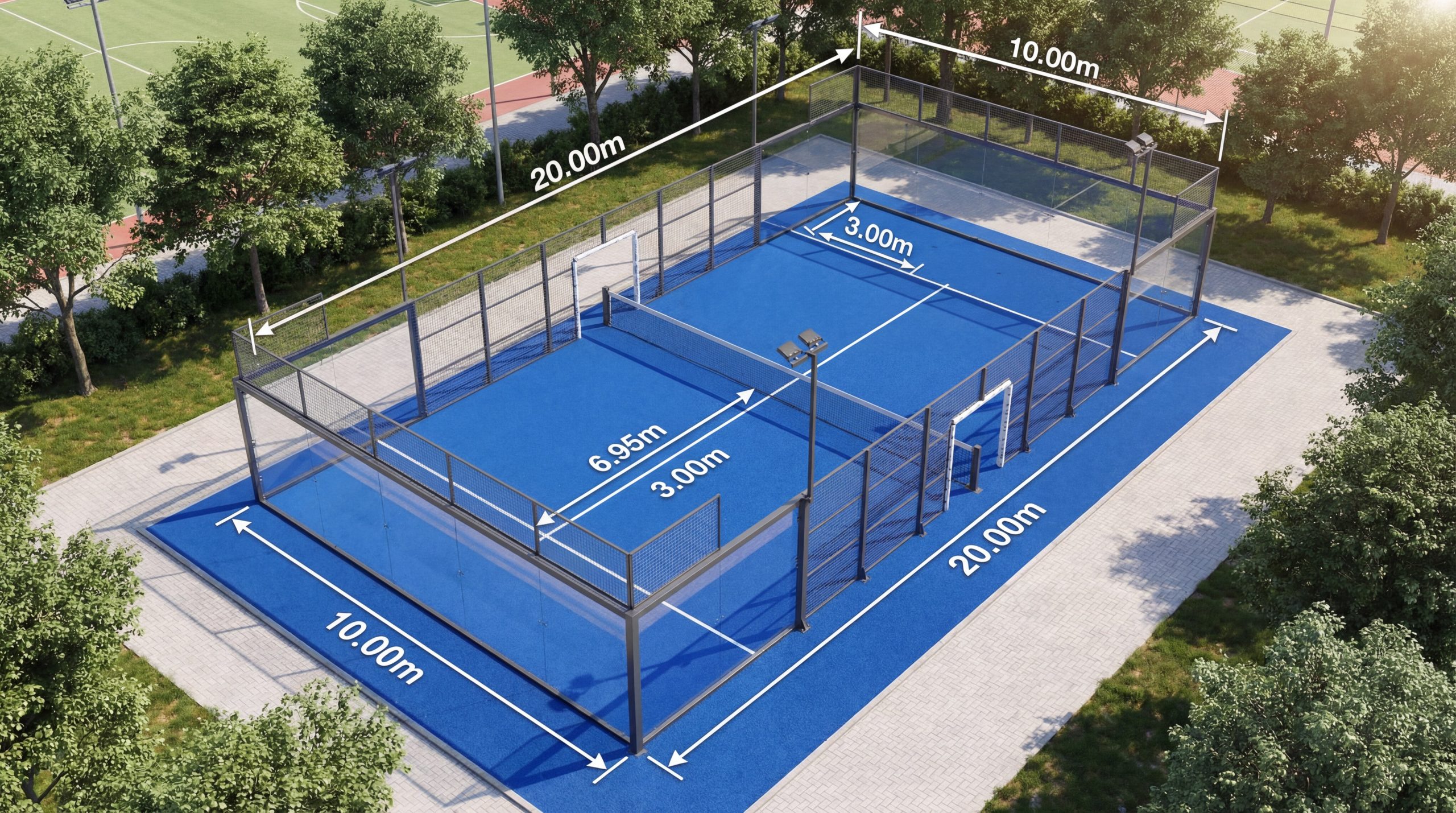
Padel court design is the specialized engineering of 10x20m enclosed playing areas, and building it involves precise site preparation followed by the installation of galvanized steel frames, tempered glass, and synthetic turf. Many sports club owners and private developers struggle with low court utilization and high recurring repair costs due to poor initial planning. Without the right technical specifications, you risk player injuries from uneven turf or structural failures that drain your investment capital. By mastering the technicalities of padel court design, you can create a high-performance facility that ensures long-term durability and a superior player experience.
What are the basics of padel court design?
padel court design involves creating a 200-square-meter footprint enclosed by glass and mesh, constructed by anchoring a modular metallic framework onto a leveled concrete base. You must ensure the structure is robust enough to handle player impacts and environmental stressors like wind or moisture.
The foundation of any successful project begins with the anatomical understanding of the enclosure. You need to coordinate the placement of glass panels and metal fencing to ensure the ball bounces consistently throughout the game.
Essential structural components
Every professional build requires a specific set of high-quality components to function correctly. You cannot cut corners on the thickness of the steel or the quality of the anchors if you want the court to last for decades.
Here is the kicker:
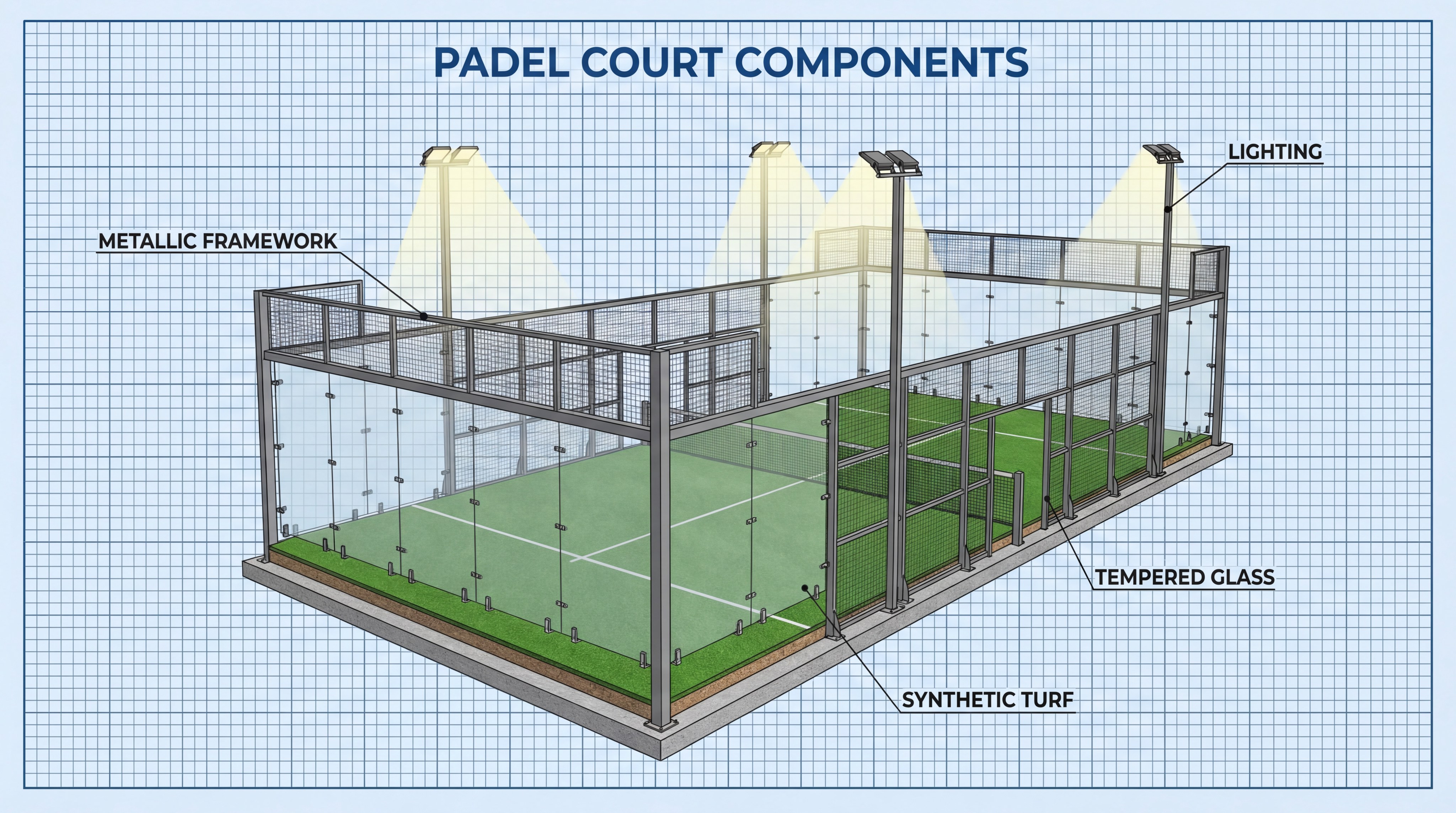
- Metallic Framework: Hot-dip galvanized steel that resists corrosion.
- Glass Enclosure: Tempered safety panels that act as active playing surfaces.
- Synthetic Turf: A specialized carpet layer filled with silica sand for traction.
- Lighting Columns: Integrated posts that provide uniform illumination for night play.
Key Takeaway: A standard court requires a 10m x 20m internal playing area with a focus on structural rigidity and material durability to meet international standards.
| Component | Standard Requirement | Purpose |
|---|---|---|
| Framework | Hot-dip Galvanized Steel | Structural support and corrosion resistance |
| Enclosure | 10mm or 12mm Tempered Glass | Ball rebound and spectator visibility |
| Playing Area | 20.00m x 10.00m | Regulation sizing for doubles play |
The structural basics serve as the primary blueprint for ensuring player safety and game integrity during the assembly phase.
How do I plan a functional padel court design?
Planning a functional padel court design requires you to analyze your site’s wind loads and drainage capacity before selecting the right enclosure type for your specific climate. You must also consider the flow of players and spectators to maximize the social atmosphere of your facility.
The orientation of the court is vital for outdoor installations to prevent sun glare from affecting players. You should ideally position the court along a north-south axis to ensure fair playing conditions for both sides during the day.
Site preparation and orientation
Choosing the right location involves more than just finding flat ground. You must assess the soil stability to prevent the concrete slab from cracking or shifting over time, which would ruin the playing surface.
But wait, there is more:
- Safety Zones: You need at least 0.5 to 1 meter of clearance around the structure.
- Drainage: A 1% slope on the concrete base is necessary for outdoor courts to shed water.
- Access Points: Centrally located doors allow for easy player transitions.
Key Takeaway: Functional planning balances technical site requirements with player comfort, ensuring the court remains playable in various weather conditions.
| Planning Factor | Recommendation | Critical Benefit |
|---|---|---|
| Orientation | North-South Axis | Minimizes sun glare for players |
| Buffer Zone | 1 Meter minimum | Enhances safety and movement |
| Base Slope | 1% Gradient | Prevents water pooling on the turf |
Strategic site planning reduces long-term maintenance costs by preventing environmental damage to the structural framework.
Does the FIP regulate padel court design?
The International Padel Federation (FIP) regulates padel court design by mandating a 20m x 10m inner playing area and specific tolerances for net height and court line widths. Compliance with these standards is mandatory if you intend to host official tournaments or professional-grade matches at your facility.
You must follow the strict ±0.5% deviation allowance for all court measurements. This precision ensures that a player’s skills translate perfectly from one court to another regardless of the location.
Official FIP dimensions and markings
The net height is one of the most strictly monitored aspects of a regulation court. It must be exactly 0.88 meters high in the center and 0.92 meters at the posts to maintain game balance.
You might be wondering:
- Service Lines: These are drawn exactly 6.95 meters from the net on both sides.
- Line Width: All court markings must be 5cm wide and in a contrasting color.
- Wall Height: The back walls must be 3 to 4 meters high to accommodate lobs.
Key Takeaway: FIP certification requires rigorous adherence to dimensions, ensuring the facility is suitable for competitive play and recognized tournaments.
| Regulation Feature | FIP Standard | Tolerance |
|---|---|---|
| Court Length | 20.00 Meters | ± 0.10m |
| Court Width | 10.00 Meters | ± 0.05m |
| Net Center Height | 0.88 Meters | Fixed |
Adherence to FIP standards increases the commercial value of your court by attracting serious players and tournament organizers.
Which flooring works for padel court design?
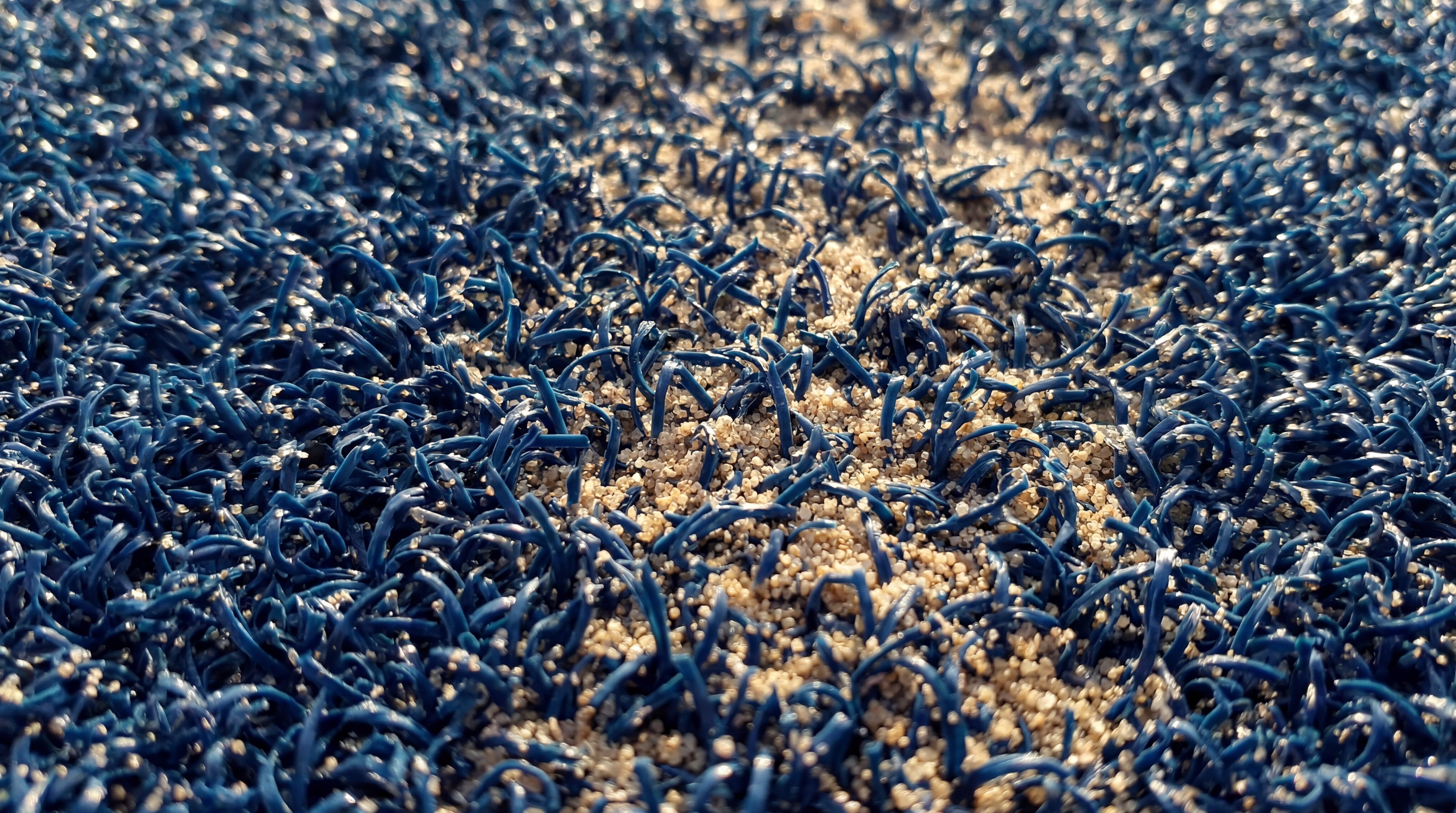
The best flooring for padel court design is textured synthetic turf filled with silica sand, which you install over a porous concrete or asphalt foundation to ensure a consistent ball bounce. The quality of the Padel-Grass you choose will directly impact player safety by reducing joint stress and preventing slips.
You must select a turf density that can withstand heavy daily use while maintaining its shape. High-density monofilament fibers are the industry standard for premium clubs due to their superior wear resistance.
Selecting the right synthetic turf
Not all artificial grass is created equal, and you need a product specifically designed for the lateral movements found in padel. The sand infill plays a dual role in weighting the carpet and providing the necessary slide for advanced players.
Truth be told:
- Monofilament Turf: Offers the highest durability and a natural feel.
- Sand Infill: You must use kiln-dried silica sand (0.3-0.8mm) for the best results.
- UV Resistance: Essential for outdoor courts to prevent the color from fading.
Key Takeaway: Synthetic turf with proper silica sand distribution is the only surface that provides the necessary traction and bounce for professional padel.
| Turf Type | Best For | Main Advantage |
|---|---|---|
| Monofilament | Professional Clubs | Superior fiber memory and lifespan |
| Fibrillated | Community Courts | High sand retention and budget-friendly |
| Texturized | High-End Facilities | Lower maintenance and sleek look |
Investing in high-grade flooring materials significantly reduces the frequency of resurfacing, protecting your initial capital investment.
Is glass essential for padel court design?
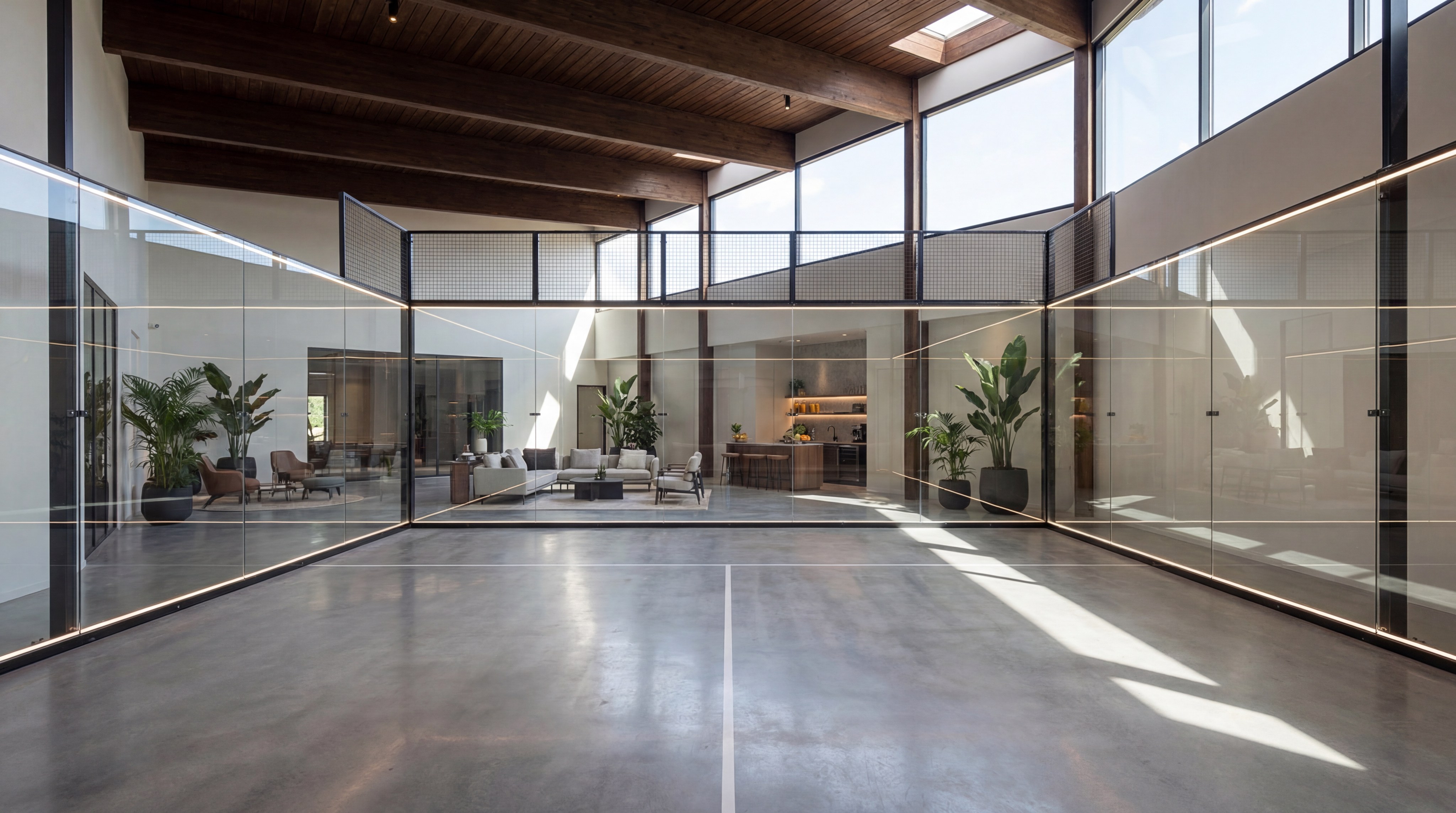
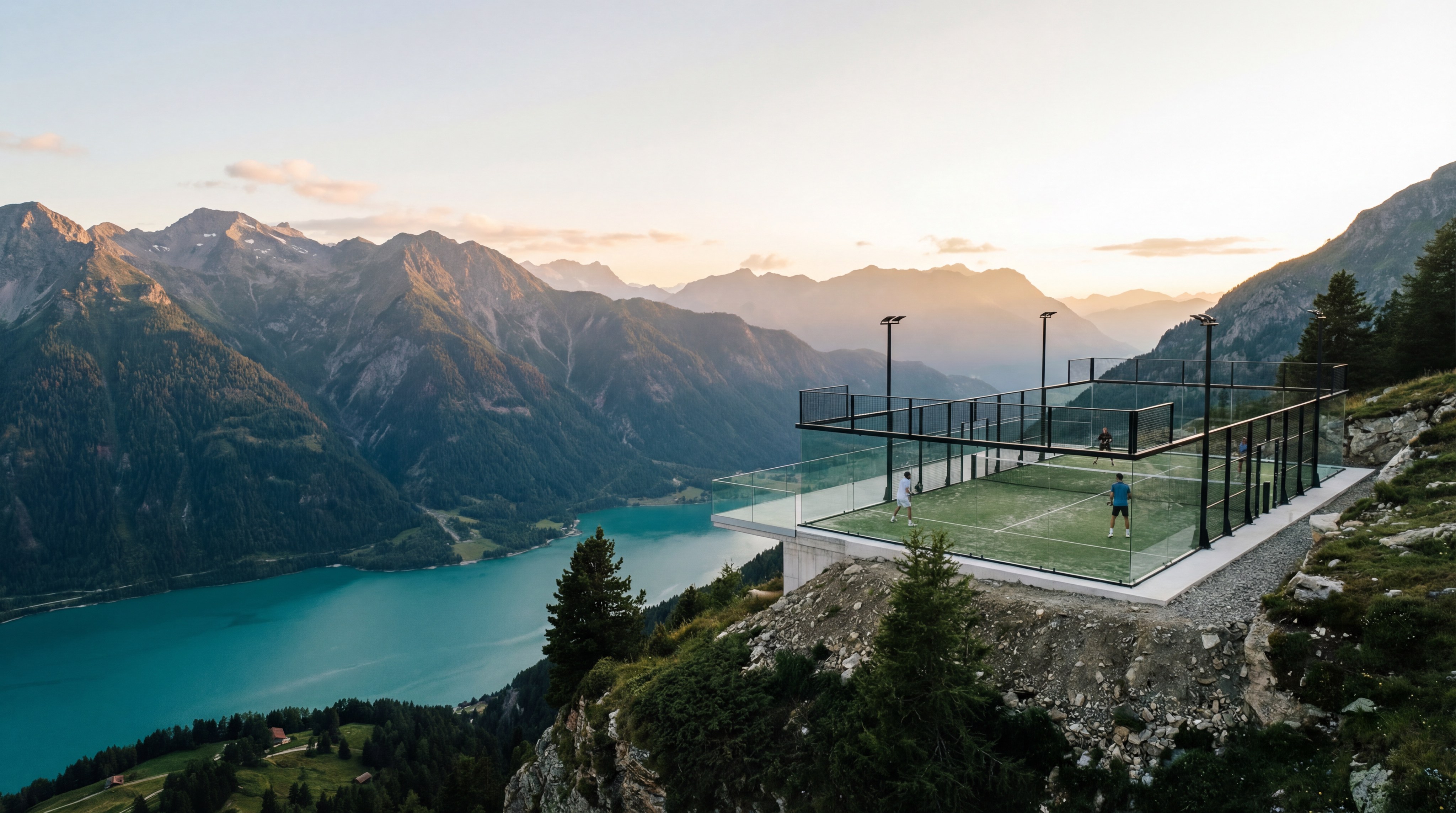
Glass is essential for padel court design because it provides the “active” back-walls that facilitate gameplay while offering spectators a clear, immersive view of the action. Most modern facilities now opt for a Panoramic-Padel-Court design, which removes vertical structural pillars to provide a seamless viewing experience.
You must use Padel-Glass that meets European EN 12150 standards for safety. This tempered glass is designed to withstand intense impacts without shattering into dangerous shards, protecting players during aggressive returns.
Safety standards and viewing angles
For high-performance clubs, the thickness of the glass is a major decision point. While 10mm glass is standard, upgrading to 12mm provides a more consistent ball rebound and higher structural integrity.
The best part?
- Anti-Explosion Film: Adds an extra layer of security to the tempered panels.
- Flush Mounting: Ensuring the glass is level with the frame prevents erratic bounces.
- Polished Edges: Reduces the risk of injury during the installation process.
Key Takeaway: Tempered glass is the defining feature of padel, serving both as a critical gameplay element and a safety barrier for spectators.
| Glass Attribute | Standard Specs | Benefit |
|---|---|---|
| Thickness | 10mm – 12mm | Impact resistance and rebound quality |
| Certification | EN 12150-1 | Guaranteed safety and durability |
| Finish | Polished/Toughened | Player safety and aesthetic appeal |
Choosing the right glass configuration elevates the aesthetic of your club and justifies premium booking fees for players.
How do roofs transform padel court design?
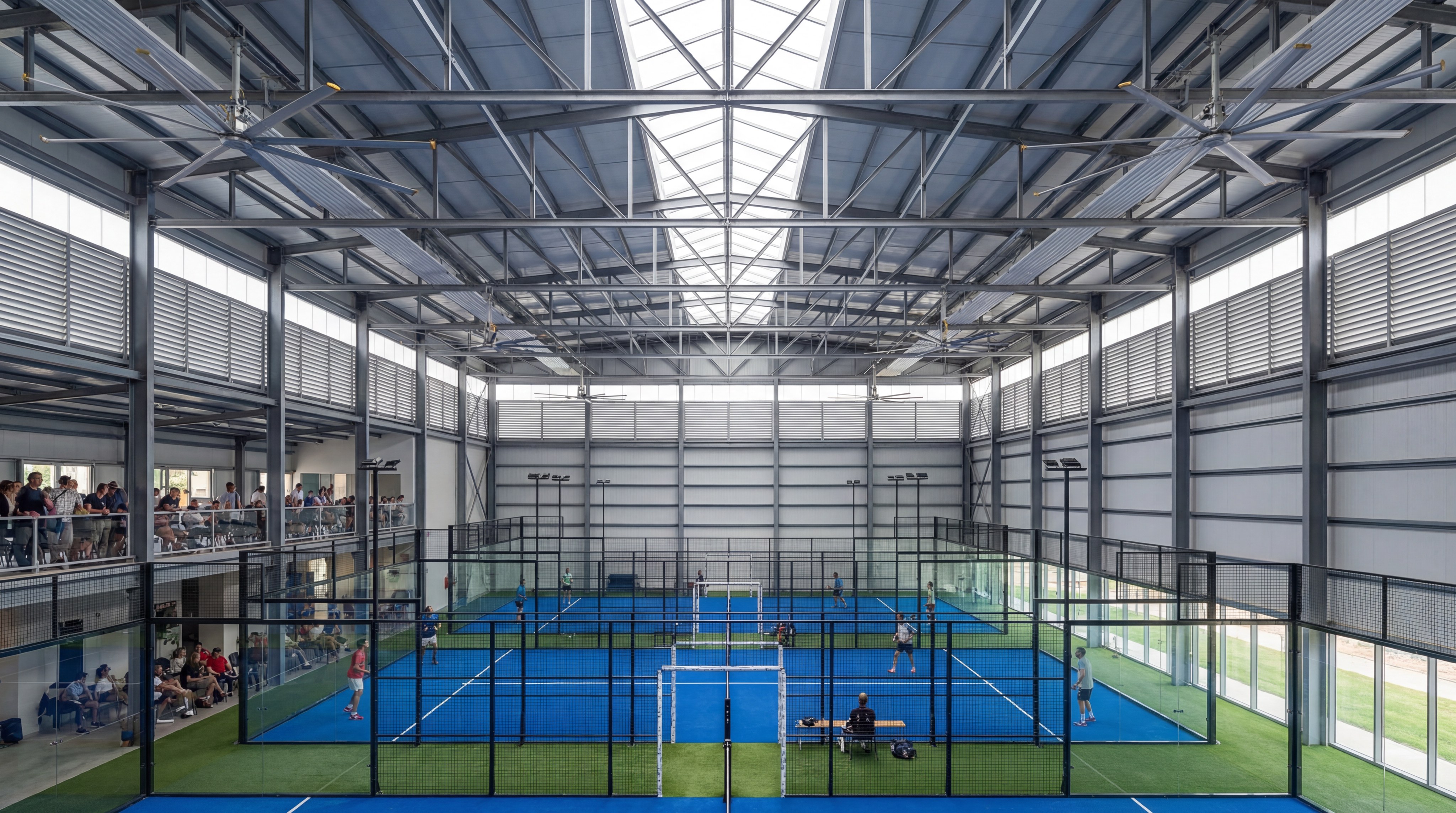
Roofs transform padel court design by shielding the surface from UV degradation and heavy rain, allowing you to build a year-round revenue stream in any climate. An integrated roofing system prevents the court from becoming a “seasonal” asset, ensuring consistent booking schedules regardless of the weather.
You must ensure that any roof structure maintains a minimum internal height to avoid interfering with lobs. A height of 8 meters is the professional ideal, though 6 meters is considered the functional minimum for recreational facilities.
Climate control and playability
Indoor or roofed facilities offer a more controlled environment where wind and humidity do not affect the ball’s flight path. This consistency is highly valued by competitive players who want to practice in tournament-like conditions.
Think about it:
- Steel Span: Needs to be wide enough to avoid internal support pillars.
- Ventilation: Essential for indoor courts to prevent humidity buildup.
- Hurricane Ratings: Necessary for roofs in coastal or high-wind areas.
Key Takeaway: Roofing systems maximize the return on investment by eliminating downtime caused by rain, snow, or extreme heat.
| Roof Feature | Professional Standard | Impact |
|---|---|---|
| Ceiling Height | 8.00 Meters | Allows professional-level lobs |
| Material | PVC or Insulated Steel | Weatherproofing and UV protection |
| Lighting | Integrated LED | Uniform light regardless of time |
A well-designed roof turns a padel court into a premium, all-weather destination that attracts members throughout the winter months.
Can LED lighting enhance padel court design?
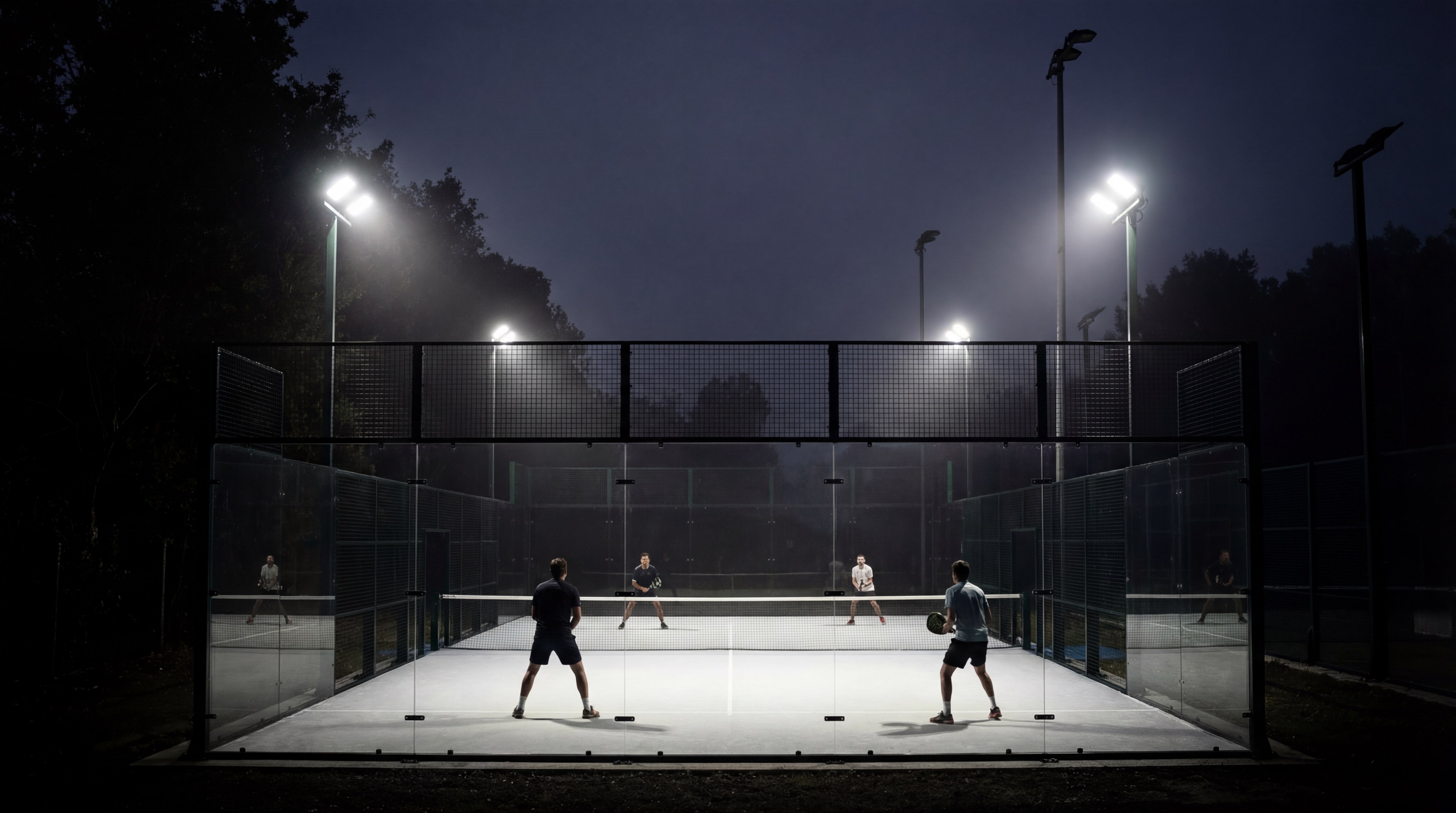
LED lighting enhances padel court design by providing uniform, flicker-free illumination that allows you to operate your facility safely and profitably during evening hours. Proper lighting placement is crucial to eliminate shadows and glare, which can drastically lower the quality of play.
You should aim for a minimum of 400 to 500 lux across the entire court surface. High-efficiency LEDs are the preferred choice because they offer long lifespans and lower energy costs compared to traditional metal halide fixtures.
Illumination standards and visibility
The height of the lighting columns should match the height of the court enclosure, typically around 6 to 8 meters. This ensures that the light is distributed evenly without blinding players when they look up for high lobs.
Believe it or not:
- IP66 Rating: Ensures the light fixtures are waterproof and dustproof.
- Color Temperature: 5000K provides a daylight-like feel that improves focus.
- Energy Savings: LED systems can reduce your electrical bill by over 50%.
Key Takeaway: Professional LED lighting doubles your operational hours, making it one of the most profitable upgrades in padel court construction.
| Lighting Spec | Requirement | Objective |
|---|---|---|
| Average Lux | 400 – 500 | Professional visibility and safety |
| IP Rating | IP66 or higher | Durability in outdoor environments |
| Wattage | 200W – 400W LED | Energy efficiency and high output |
Optimized lighting ensures that your facility remains a safe and welcoming environment for social play long after sunset.
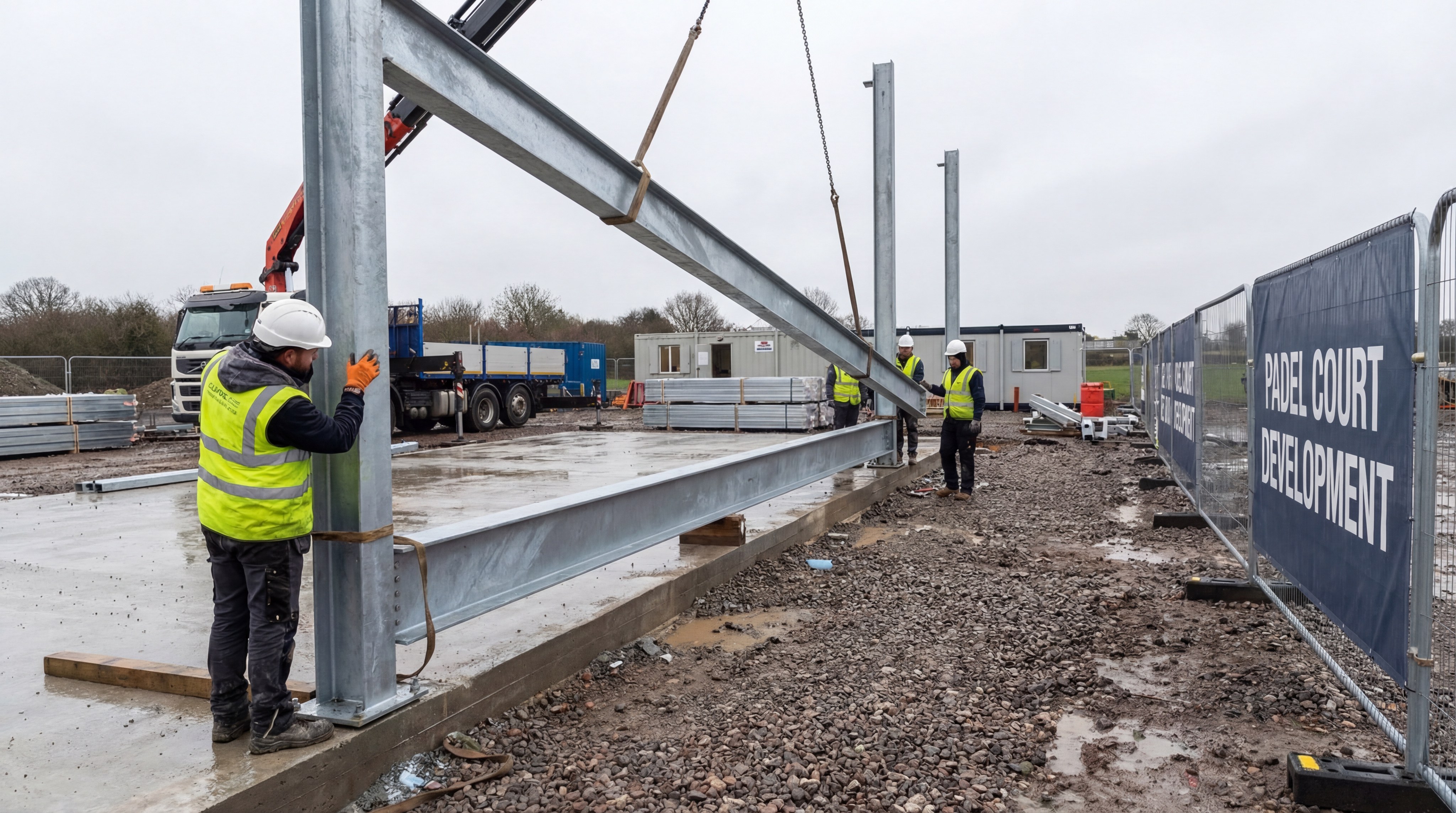
What are the steps for padel court design?
The steps for padel court design include excavating the site, pouring a reinforced concrete slab, and meticulously assembling the modular steel and glass enclosure. Following a guide on how to build a professional ultra padel court for premium clubs ensures that you manage the construction timeline efficiently without wasting materials.
You must allow the concrete base to cure for at least 7 to 14 days before installing the turf. Installing the synthetic grass too early can lead to moisture trapping, which weakens the adhesive bonds.
The construction sequence
Assembly of the metallic framework is a precision task that requires laser levels to ensure every post is perfectly vertical. Even a minor misalignment can prevent the glass panels from fitting correctly, leading to safety risks.
It gets better:
- Base Leveling: The concrete must be perfectly flat to ensure even ball bounce.
- Framework Securing: Using high-strength chemical anchors is mandatory.
- Glass Mounting: This requires a specialized suction team to prevent breakage.
Key Takeaway: A systematic construction process prevents structural failures and ensures the final court meets all professional safety certifications.
| Build Stage | Estimated Time | Critical Check |
|---|---|---|
| Site Prep | 3 – 5 Days | Soil compaction and drainage |
| Base Curing | 7 – 14 Days | Concrete strength and moisture |
| Enclosure | 3 – 5 Days | Alignment and glass security |
A disciplined approach to the build phase guarantees that the court will perform at a high level for its entire design life.
How do I budget for a padel court design?
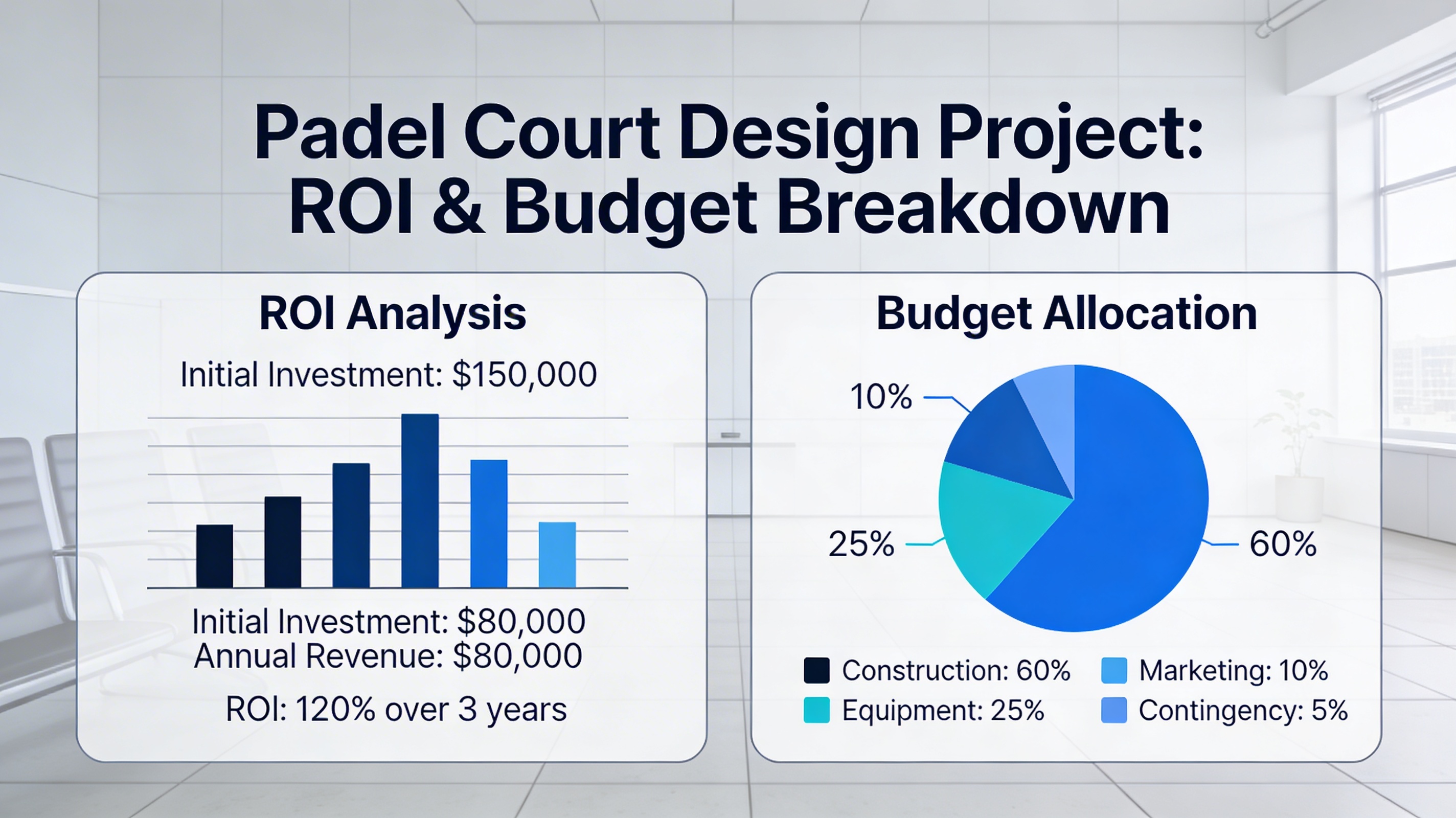
You budget for a padel court design by accounting for raw material costs, international logistics, and local site preparation, which typically ranges from $20,000 to $50,000 per court. Understanding the Return on Investment (ROI) is crucial for commercial projects, as a well-managed court can pay for itself within 24 to 36 months.
You must include a contingency fund of at least 5% to cover unexpected ground conditions or shipping delays. Factory-direct sourcing is often the best way to reduce procurement costs while maintaining high material standards.
Cost factors and ROI analysis
The biggest variables in your budget will be the enclosure type and the level of customization. Opting for a super-panoramic design will increase the upfront cost but can significantly boost your club’s prestige and hourly rental rates.
That’s not all:
- Shipping Logistics: Container costs vary by region and season.
- Installation Labor: Specialized teams may need travel and lodging.
- Custom Branding: Adding your logo to the turf or framework adds value.
Key Takeaway: Smart budgeting focuses on high-quality core materials that minimize maintenance, leading to a faster and more sustainable ROI.
| Expense Category | Percentage | Notes |
|---|---|---|
| Construction | 60% | Framework, glass, and turf |
| Equipment | 25% | Lighting, nets, and accessories |
| Logistics/Other | 15% | Shipping, labor, and marketing |
Evaluating your budget through a long-term lens ensures that you prioritize durability over the lowest initial price tag.
Is maintenance part of padel court design?
Maintenance is a core part of padel court design because proactive care of the glass joints, mesh tension, and turf fibers protects your long-term structural integrity. You must establish a routine maintenance schedule from day one to ensure the playing surface remains safe and high-performing.
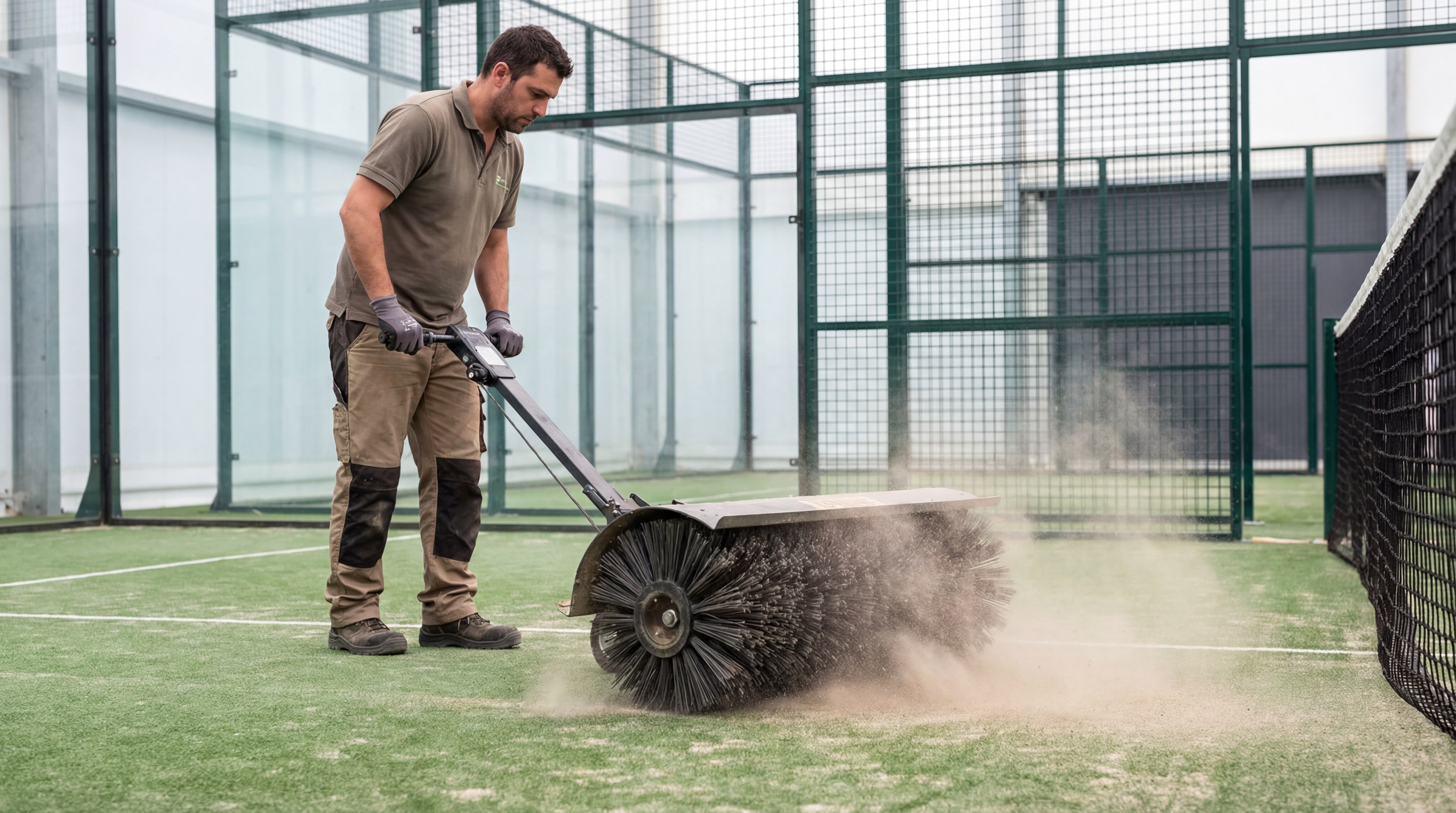
Without regular brushing, the silica sand in the turf will compact, leading to slippery spots and inconsistent ball speed. This neglect not only ruins the player experience but also accelerates the wear of the expensive synthetic fibers.
Preventative maintenance routines
The glass walls should be cleaned weekly to maintain the aesthetic appeal and visibility for spectators. You must also inspect the structural bolts and net tensioners every month to prevent mechanical failures.
Simply put:
- Turf Brushing: Use a drag brush weekly to redistribute the sand.
- Joint Inspection: Check the silicone seals between glass panels for wear.
- Debris Removal: Clear leaves and trash immediately to prevent staining.
Key Takeaway: A well-maintained court lasts twice as long as a neglected one, directly impacting the lifetime profitability of your facility.
| Task | Frequency | Equipment Needed |
|---|---|---|
| Surface Brushing | Weekly | Drag brush or power broom |
| Glass Cleaning | Weekly | Non-abrasive squeegee |
| Safety Check | Monthly | Torque wrench for bolts |
Consistent upkeep is the final step in a successful padel project, ensuring your facility remains a top-tier destination for years to come.
Frequently Asked Questions (FAQ)
Can I build a padel court on an existing tennis court?
Yes. You can typically fit two to three padel courts within the footprint of one standard tennis court, making it an excellent way to increase revenue per square foot.
What’s the best glass thickness for a commercial club?
12mm tempered glass is highly recommended for commercial use. It provides a more professional ball rebound and superior durability compared to 10mm options, especially in high-traffic facilities.
How do I know if my concrete base is ready for turf?
The concrete must be fully cured and exhibit a moisture content of less than 4%. You should test the surface for levelness using a 3-meter straight edge to ensure there are no deviations greater than 3mm.
Can I customize the color of the padel court framework?
Absolutely. Most manufacturers offer a wide range of RAL colors for the metallic structure, allowing you to align the court design with your brand identity or club aesthetic.
At our core, we believe that world-class sports facilities should be accessible through smart engineering and transparent manufacturing. Our vision is to empower club owners globally with factory-direct solutions that never compromise on safety or professional performance standards. If you are ready to transform your space into a premier sports destination, contact us today to receive a personalized design consultation and a comprehensive project quote.