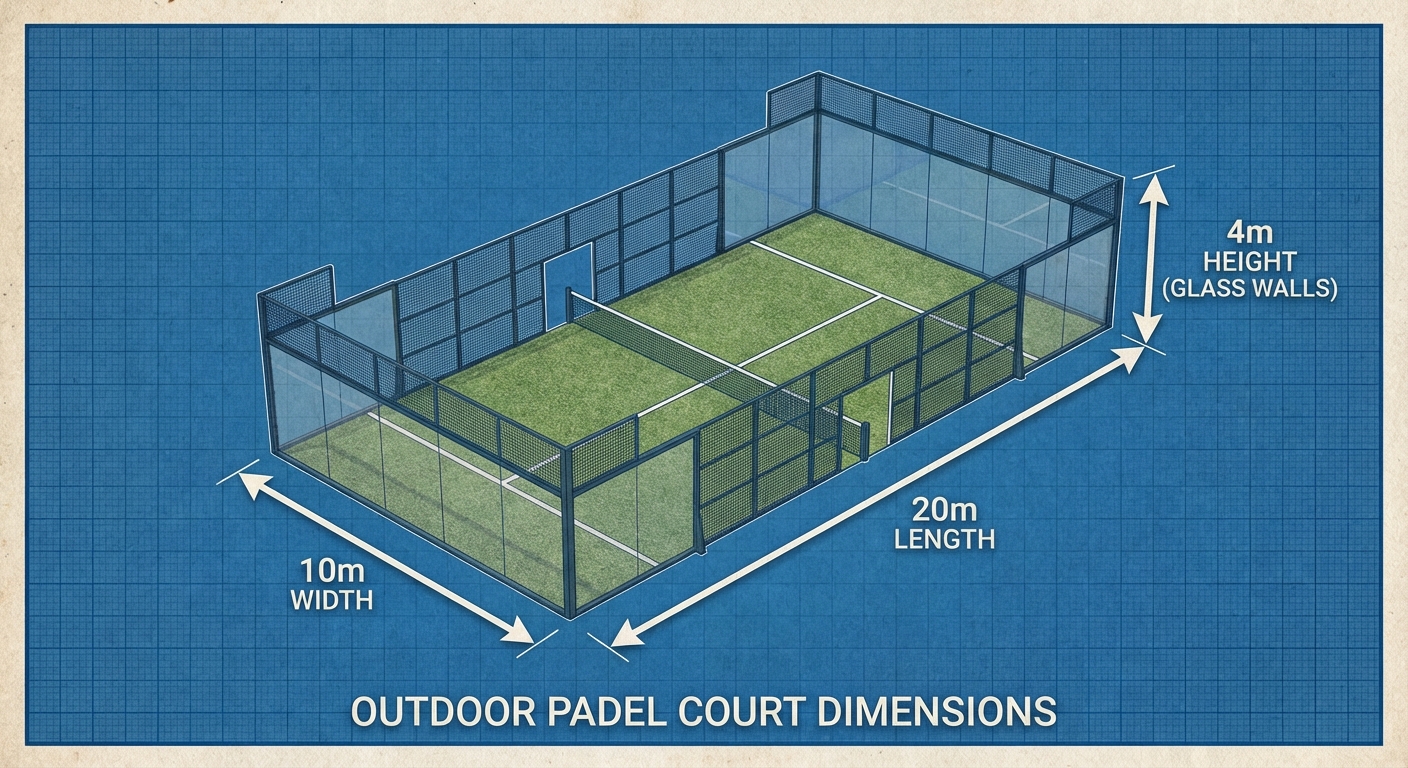
An outdoor padel court is a specialized 20m x 10m sports facility enclosed by glass and mesh walls, and building it involves precise ground preparation, structural assembly, and high-performance turf installation. You likely have underutilized land that is generating zero value, and it is frustrating to watch potential members go elsewhere for their fitness needs. Traditional sports infrastructure often feels too massive or too expensive to manage effectively. The reality is that a professional outdoor padel court solves these issues by maximizing player density in a small footprint while offering a social, all-weather sporting experience.
What defines a high-quality outdoor padel court?
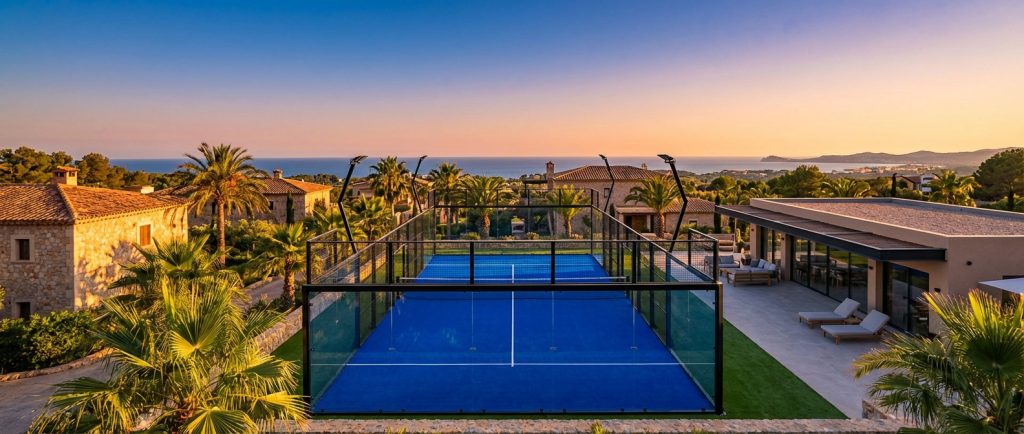
A high-quality court combines professional-grade turf, anti-explosion tempered glass, and a hot-dip galvanized steel frame for 20-year durability. Investing in a premium outdoor padel court ensures that your facility can withstand heavy daily use without degrading. This level of quality is essential for both player safety and long-term financial stability.
Which core structural components are essential?
The primary frame must be made of hot-dip galvanized steel to prevent rust in varying climates.
- Modular Steel Frame: Provides structural rigidity and easy assembly.
- Tempered Glass: 12mm thick panels for consistent ball bounce and safety.
- Electrostatic Powder Coating: Protects the metal from UV rays and moisture.
But that’s not all…
How do safety standards impact your build?
You must ensure that all glass panels comply with European EN 12150 standards to mitigate project liability.
- Anti-Explosion Certification: Essential for high-impact sports environments.
- Secure Gaskets: Rubber seals between glass and steel to absorb vibrations.
- Net Tensioning: High-quality nets that maintain height over time.
Think about it:
Key Takeaway: A top-tier court relies on certified safety materials and corrosion-resistant metals to guarantee a 20-year lifespan.
| Component | Standard | Benefit |
|---|---|---|
| Steel Frame | Hot-dip Galvanized | 20-year rust protection |
| Glass | 12mm Tempered | Maximum player safety |
| Coating | UV-Resistant | Long-term color retention |
Professional certification of these components is the only way to ensure your facility remains a safe, premium asset.
How much space for an outdoor padel court is needed?
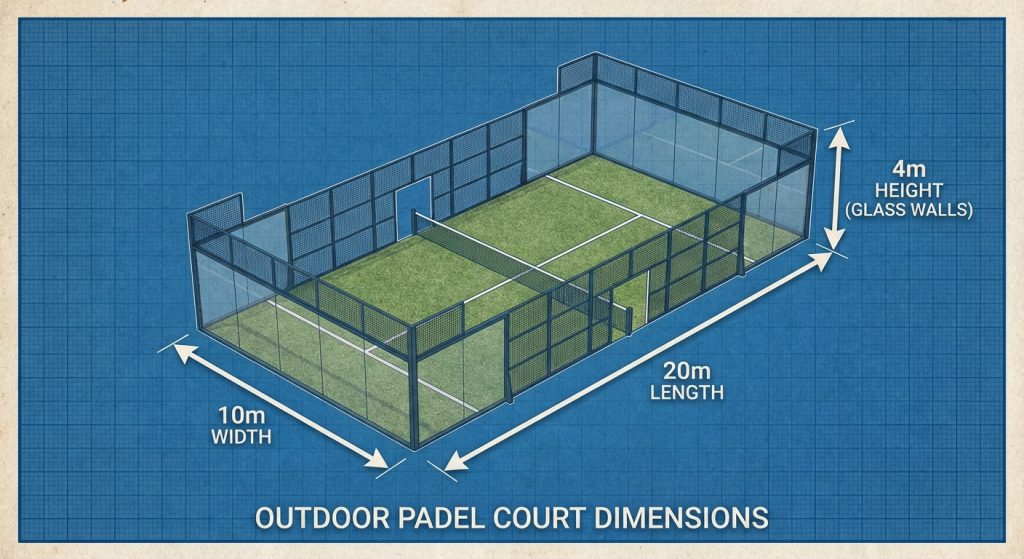
You need a minimum footprint of 20×10 meters for the playing area, plus a small perimeter for the structure and player movement. An outdoor padel court occupies much less space than a tennis court, allowing you to double your player capacity on the same land. Precise measurement during the planning phase prevents costly errors during foundation pouring.
Are standard dimensions enough?
The interior playing area is strictly 20 meters long by 10 meters wide, divided by a central net.
- Total footprint: 21m x 11m recommended to accommodate the external structure.
- Wall Height: Glass sections are typically 3m high, extending to 4m with mesh.
- Clearance: Ensure no low-hanging trees or power lines are nearby.
The best part?
What about multi-court configurations?
If you are building multiple courts, you can share structural pillars to save on material costs and space.
- Side-by-side layout: Ideal for commercial clubs to foster a social atmosphere.
- Back-to-back layout: Better for narrow plots of land.
- Access paths: Leave at least 1.5 meters between courts for safe player entry.
Here is the kicker:
Key Takeaway: While the court is 20x10m, you should plan for a 231-square-meter total footprint to include structural supports and walkways.
| Metric | Dimension | Purpose |
|---|---|---|
| Playing Area | 200 sqm | Standardized match play |
| Recommended Foundation | 231 sqm | Stability and safety |
| Minimum Height | 6 meters | Unobstructed lob shots |
Allocating slightly more space than the bare minimum ensures a premium experience for both players and spectators.
What foundation works for an outdoor padel court?
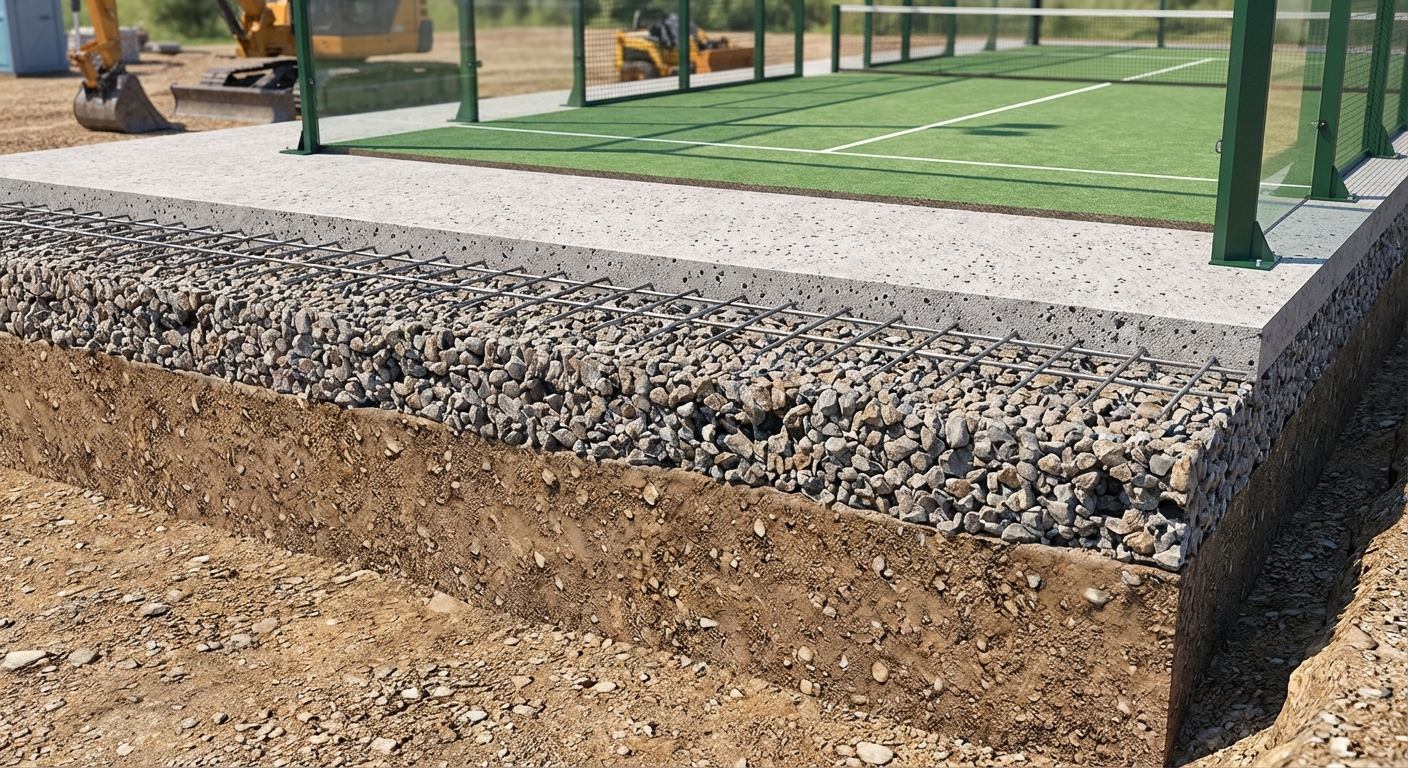
A reinforced concrete slab with integrated drainage is the gold standard for long-term structural integrity and playability. Your outdoor padel court is only as good as the ground it sits on, as any shifting will crack the glass panels. Using a multi-layer sub-base approach prevents water pooling and ensures a perfectly level surface.
Is reinforced concrete better?
You should use a reinforced concrete slab (HA-25) at a thickness of at least 15cm to support the weight of the glass walls.
- Steel Mesh: Prevents the concrete from cracking under thermal expansion.
- Leveling: Surface tolerance must be less than 3mm over a 3-meter straight edge.
- Perimeter Ring: A deeper beam around the edges to bolt the structure securely.
But wait, there’s more…
What are the drainage options?
Porous concrete is excellent for high-rainfall areas because it allows water to pass through the slab directly into the sub-base.
- Sloped Drainage: A 0.5% to 1% slope towards the edges for non-porous slabs.
- Gravel Layer: A 20cm compacted gravel base facilitates water dispersal.
- Drainage Channels: External gutters to prevent water from re-entering the court.
The reality is:
Key Takeaway: A reinforced concrete slab combined with a gravel sub-base is essential to prevent structural shifting and water damage.
| Foundation Layer | Thickness | Function |
|---|---|---|
| Reinforced Concrete | 15-20 cm | Primary structural support |
| Compacted Gravel | 20 cm | Drainage and stability |
| Geotextile Fabric | N/A | Prevents soil mixing |
Correct foundation work accounts for nearly 40% of the build’s success and prevents the most expensive future repairs.
Why choose panoramic glass for an outdoor padel court?
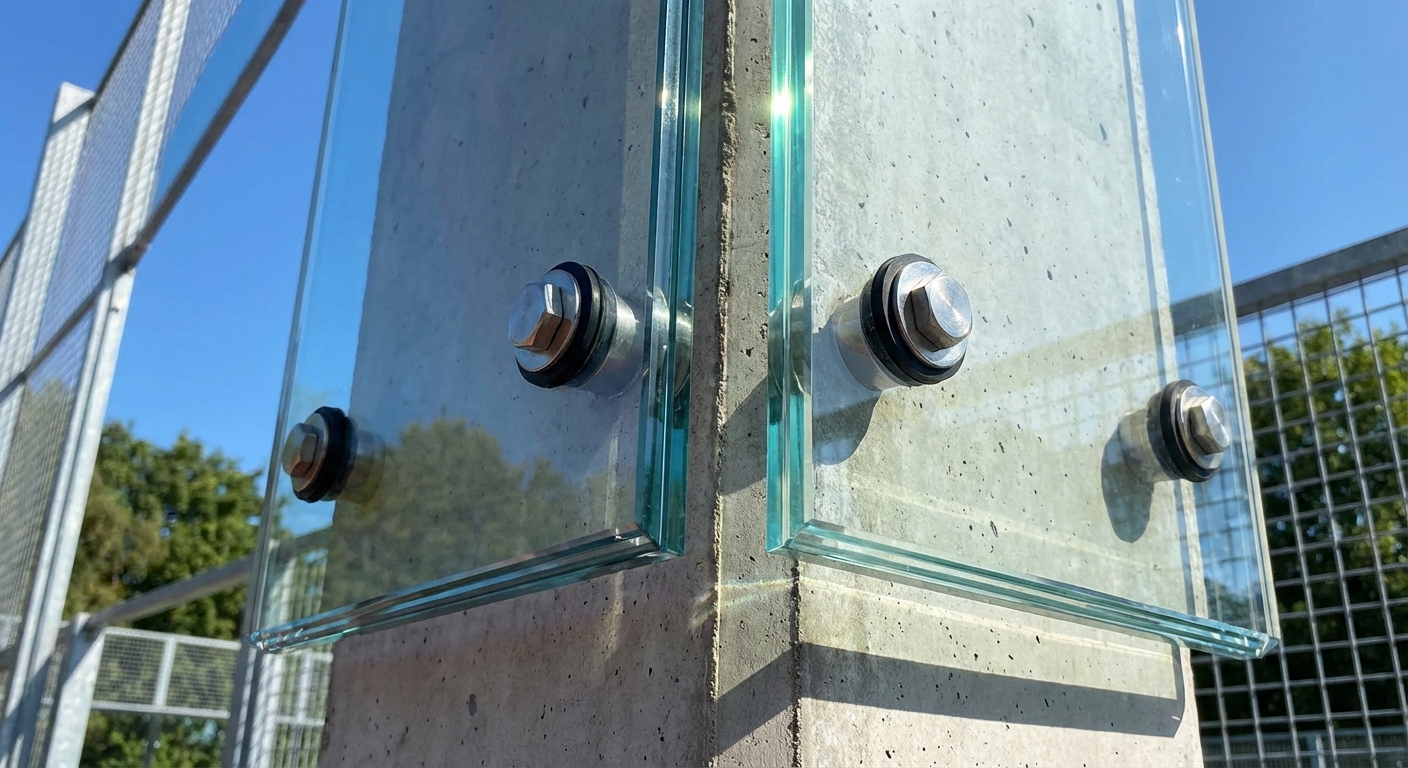
Panoramic glass provides unobstructed views for spectators and a premium aesthetic that justifies higher booking rates at your facility. An outdoor padel court with a panoramic design removes the rear structural pillars, offering a “stadium feel” that players love. This design is the standard for high-end clubs and televised professional matches.
How durable is the glass?
You are using 12mm thick tempered glass that is designed to withstand high-velocity ball impacts and player collisions.
- Impact Resistance: High-strength glass that crumbles into small, blunt pieces if broken.
- Polished Edges: Prevents cuts during installation and improves aesthetic appeal.
- Mounting Gaskets: High-quality rubber prevents glass-to-metal contact.
Believe it or not:
Does it improve the player experience?
Without vertical metal posts in the corners, you get a much cleaner visual of the ball coming off the back wall.
- Consistent Bounce: Rigid glass ensures the ball reacts predictably every time.
- Spectator View: Perfect for clubs that want to host tournaments and events.
- Modern Look: Elevates the overall branding of your sports center.
Here is the kicker:
Key Takeaway: Panoramic glass maximizes visibility and prestige, making your court the preferred choice for competitive players.
| Feature | Standard Glass | Panoramic Glass |
|---|---|---|
| Rear Posts | Present every 2m | Zero posts in back |
| Visibility | Interrupted | 100% Unobstructed |
| Luxury Status | Standard | Premium |
Choosing panoramic glass is a strategic marketing move that sets your facility apart from basic, budget-oriented competitors.
Which turf is best for your outdoor padel court?
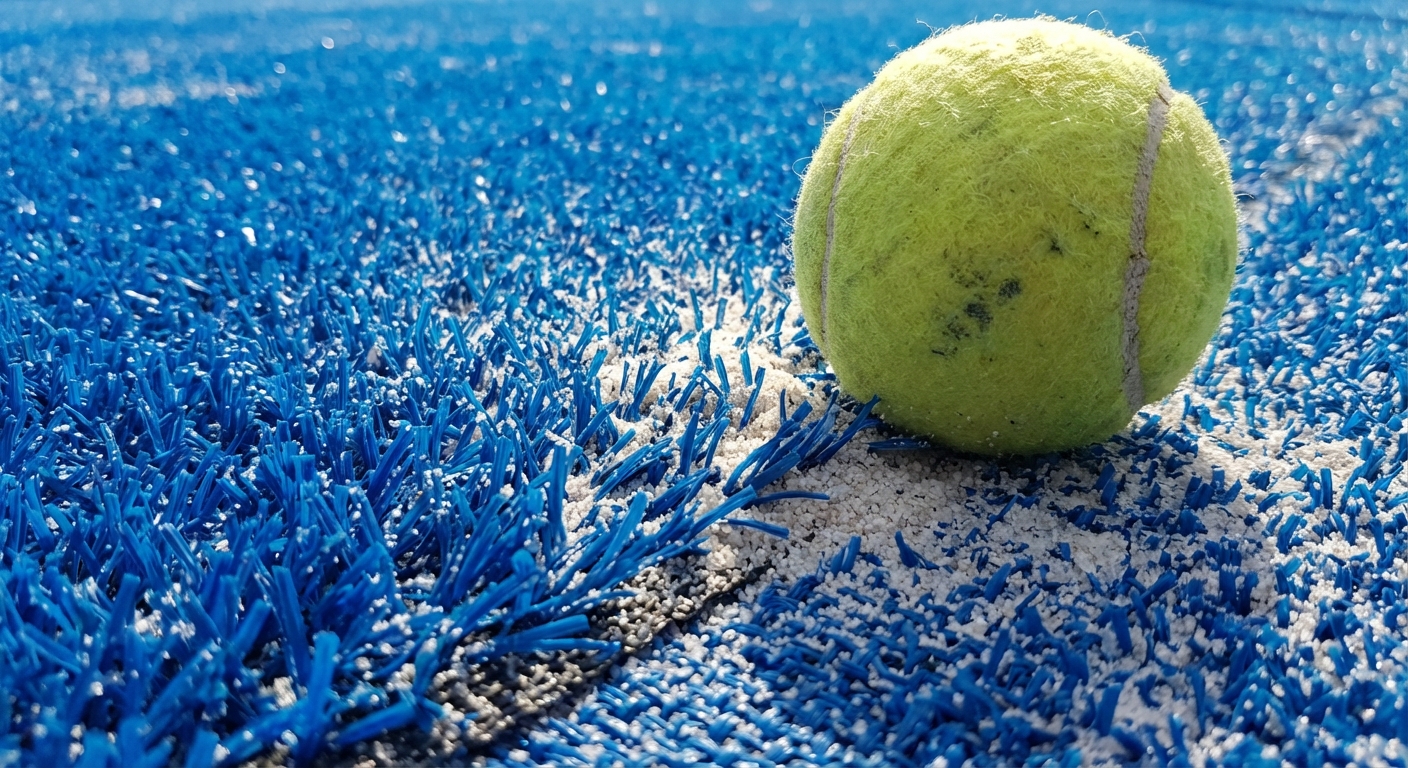
High-density fibrillated turf is generally preferred for outdoor environments due to its exceptional wear resistance and consistent ball bounce. Your outdoor padel court requires specialized synthetic grass that can handle the abrasive effects of silica sand and heavy foot traffic. The right turf ensures player comfort by reducing the impact on joints during quick directional changes.
Monofilament vs. Fibrillated yarn?
Fibrillated turf has a “web” structure that holds the sand in place better, making it ideal for high-use commercial courts.
- Monofilament: Offers a more natural aesthetic and superior “verticality” of the blades.
- Fibrillated: More durable and easier to maintain for beginners and club play.
- UV Resistance: Look for turf with specialized coatings to prevent color fading.
Think about it:
How much silica sand is needed?
You must infill the turf with approximately 3kg to 5kg of kiln-dried silica sand per square meter.
- Sand Function: Provides the weight needed to keep the turf flat and allows for player sliding.
- Ball Bounce: The sand density directly affects how high and fast the ball bounces.
- Drainage: Correct sand levels allow water to flow through the turf backing.
The best part?
Key Takeaway: High-density, UV-stabilized fibrillated turf is the most cost-effective and durable choice for high-traffic outdoor courts.
| Turf Feature | Specification | User Benefit |
|---|---|---|
| Stitch Rate | 50,000+ per sqm | Increased durability |
| Infill | Kiln-dried Silica | Predictable ball bounce |
| Backing | Polyurethane | Superior water drainage |
Investing in high-quality grass ensures your court remains playable and attractive for years, reducing the need for premature replacement.
How to optimize lighting for an outdoor padel court?
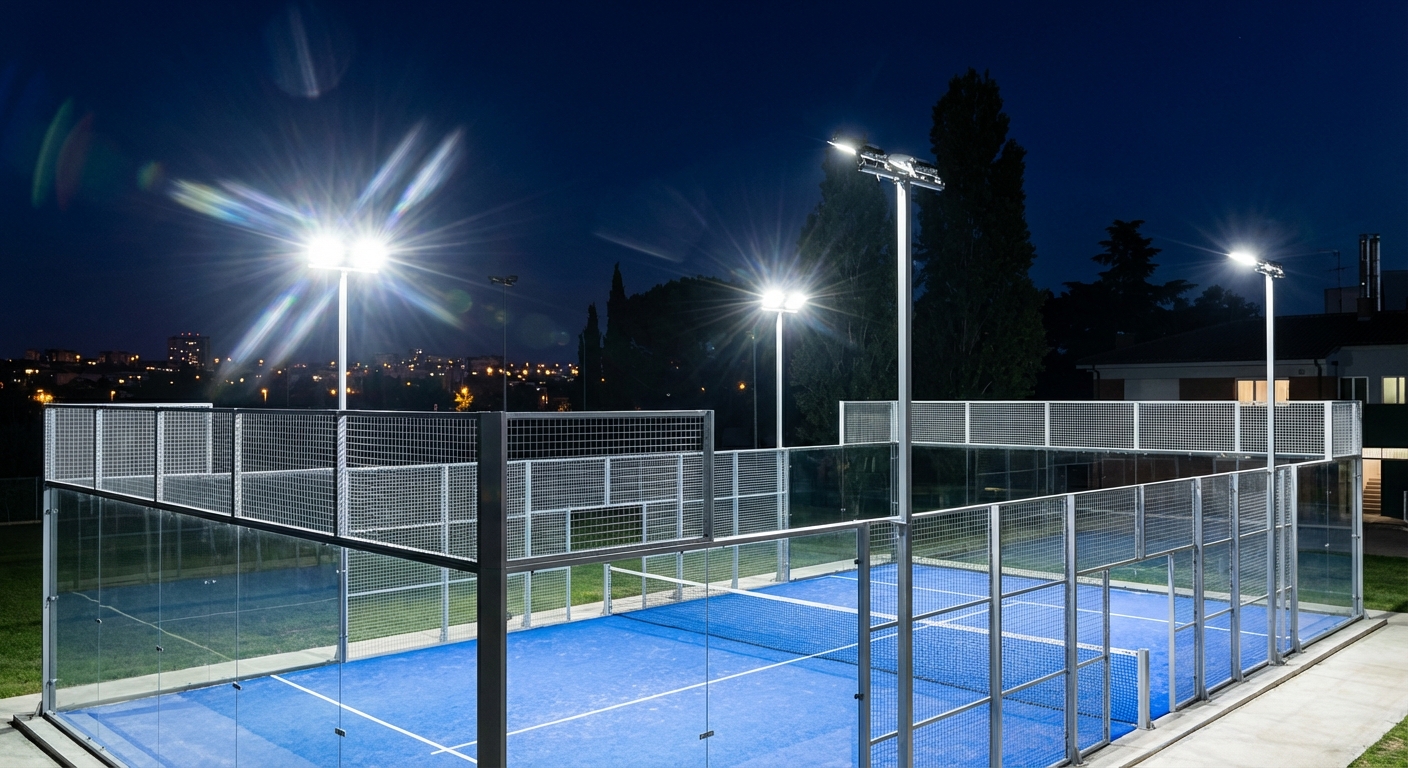
Installing IP66-rated LED floodlights ensures uniform illumination and extends your facility’s operational hours well into the evening. A professional outdoor padel court requires lighting that eliminates shadows and glare, which can distract players during fast-paced points. Modern LED systems are significantly more energy-efficient than traditional halide lamps, lowering your monthly utility bills.
What are the LED specifications?
You should aim for at least 200W to 300W per lamp, with a total of eight lamps mounted on four 6-meter poles.
- Luminous Flux: 100+ lumens per watt for maximum brightness.
- IP66 Rating: Completely dust-tight and protected against powerful water jets.
- Color Temperature: 5000K to 6000K (Daylight white) is ideal for sports.
But that’s not all…
How do you reduce glare?
You must tilt the lamps correctly or use asymmetric lenses to ensure light is directed onto the court, not into the players’ eyes.
- Asymmetric Lenses: Directs light downwards to minimize light pollution in residential areas.
- Pole Placement: Poles should be positioned at the sides, never behind the service lines.
- Instant On: LEDs reach full brightness instantly, unlike old metal halide bulbs.
Think about it:
Key Takeaway: Eight 200W LED floodlights with asymmetric lenses provide the perfect balance of visibility and energy efficiency.
| Lighting Factor | Requirement | Impact |
|---|---|---|
| Average Lux | 300 – 500 Lux | Clear night visibility |
| Power Consumption | ~1.6 kW total | Low operational cost |
| Waterproofing | IP66 Grade | All-weather reliability |
Optimized lighting turns your court into a 24/7 revenue generator, especially during the high-demand evening hours.
How does weather affect your outdoor padel court?
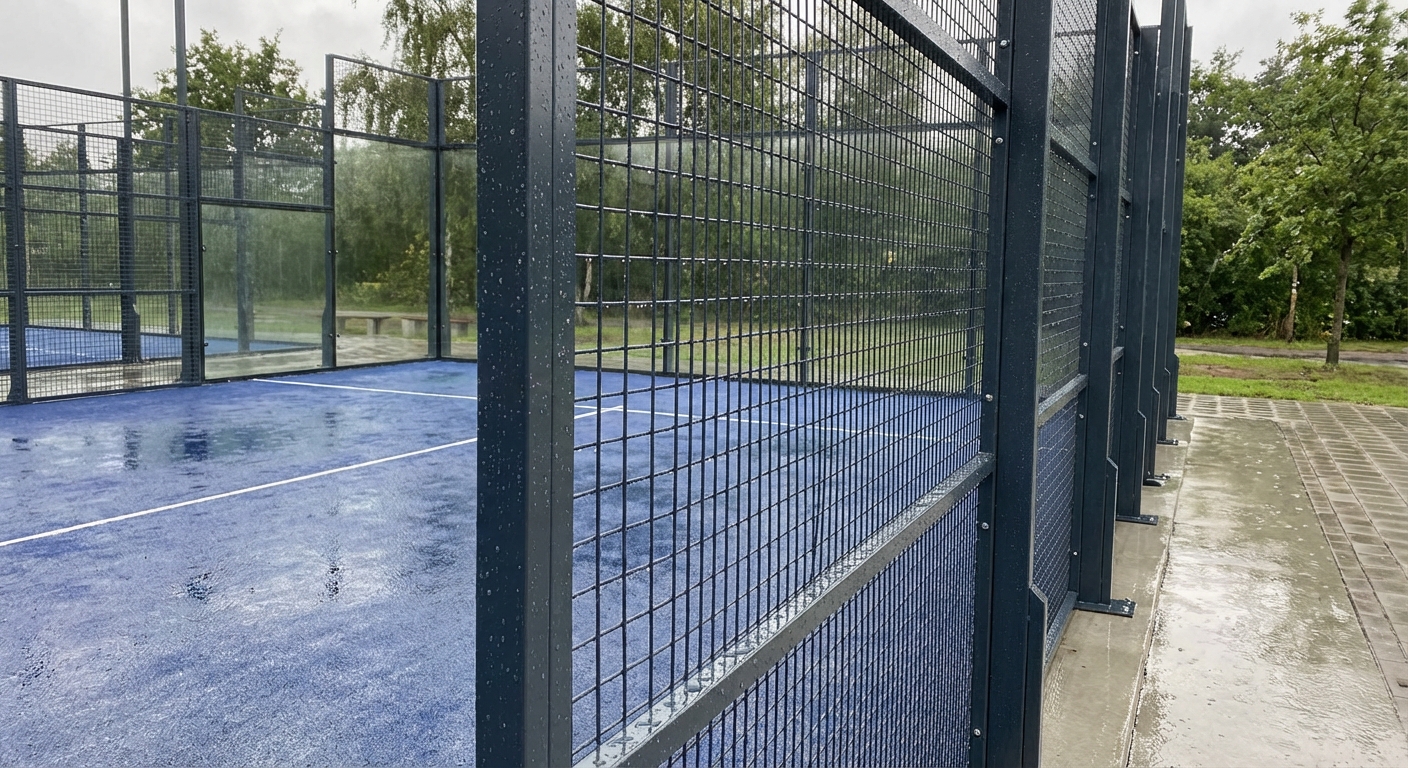
Severe weather requires anti-corrosion frame treatments and UV-resistant surfaces to prevent rust and material degradation over time. An outdoor padel court in a coastal or humid environment is particularly vulnerable to salt spray and oxidation. Using hot-dip galvanized steel is the only way to ensure the structure doesn’t fail after a few seasons of rain and snow.
How to manage wind loads?
You must verify that the structural calculations for your court match the maximum wind speeds recorded in your specific region.
- Reinforced Pillars: Essential for areas prone to hurricanes or high-altitude winds.
- Aero-dynamic Mesh: Allows wind to pass through the structure rather than pushing against it.
- Foundation Depth: Deeper footings provide the leverage needed to resist wind force.
The best part?
What about UV and heat?
You need to choose turf and powder coatings that are specifically tested for UV stability to prevent fading and cracking.
- Thermal Expansion: Gaskets must allow for the glass to expand and contract in extreme heat.
- Color Retention: High-quality paints won’t peel or chalk under direct sunlight.
- Water Permeability: Turf must drain at least 60 liters per minute per square meter.
Think about it:
Key Takeaway: Using hot-dip galvanized steel and UV-stabilized materials is mandatory for any court exposed to the elements.
| Weather Factor | Protection Method | Result |
|---|---|---|
| High Humidity | Hot-dip Galvanization | No rust for 20 years |
| Heavy Rain | Porous Sub-base | Playable within minutes |
| Intense Sun | UV-Stabilized Turf | No fading or brittle blades |
Building for the worst-case weather scenario protects your investment from the inevitable wear and tear of nature.
What permits apply to an outdoor padel court build?
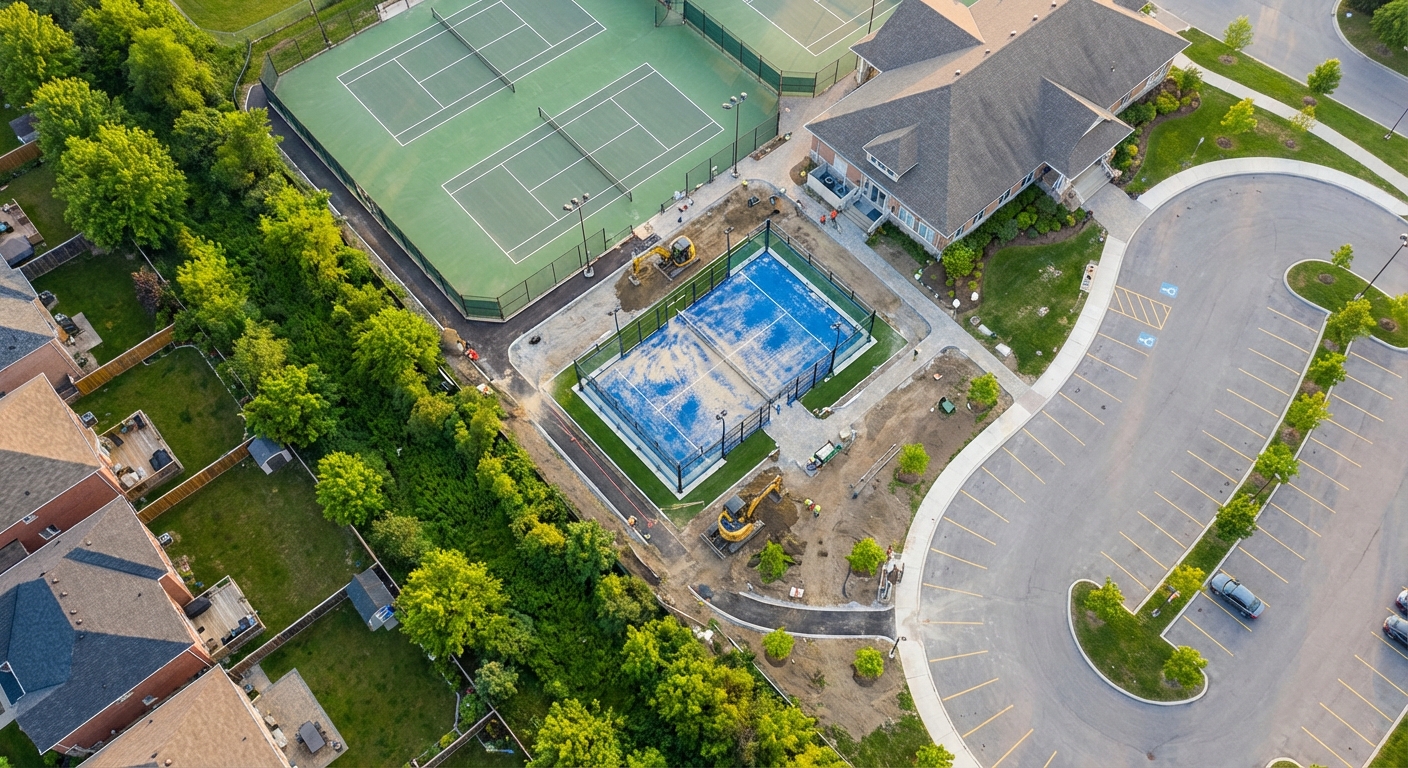
You typically need local zoning approval and land use permits to ensure your project complies with neighborhood noise and environmental regulations. An outdoor padel court can generate significant noise from ball impacts and player shouting, which might require a noise assessment. Checking with your local planning department early can save you from having to halt construction later.
What are the zoning laws?
You should check if your land is zoned for recreational use and if there are “setback” requirements from property lines.
- Building Height: Ensure your 4-meter to 6-meter structures don’t violate local ordinances.
- Environmental Impact: Some regions require permeable surfaces to manage stormwater runoff.
- Structural Engineering: You may need stamped drawings from a local engineer for the foundation.
Here is the kicker:
How to handle noise complaints?
You can install acoustic glass or specialized sound-dampening mesh if your court is located near a quiet residential area.
- Operating Hours: Permits may restrict play during early mornings or late nights.
- Sound Barriers: Landscaping or acoustic walls can significantly reduce noise travel.
- Player Conduct: Establishing club rules can prevent excessive shouting that bothers neighbors.
Believe it or not:
Key Takeaway: Early consultation with local authorities regarding noise and zoning is the most critical step in the pre-construction phase.
| Permit Type | Focus Area | Why You Need It |
|---|---|---|
| Zoning Permit | Land Use | Confirms recreational legality |
| Structural Permit | Safety | Ensures foundation can hold glass |
| Noise Assessment | Community | Prevents legal disputes with neighbors |
Obtaining the correct paperwork ensures your business can operate smoothly without the threat of legal fines or closure.
What is the ROI of a commercial outdoor padel court?
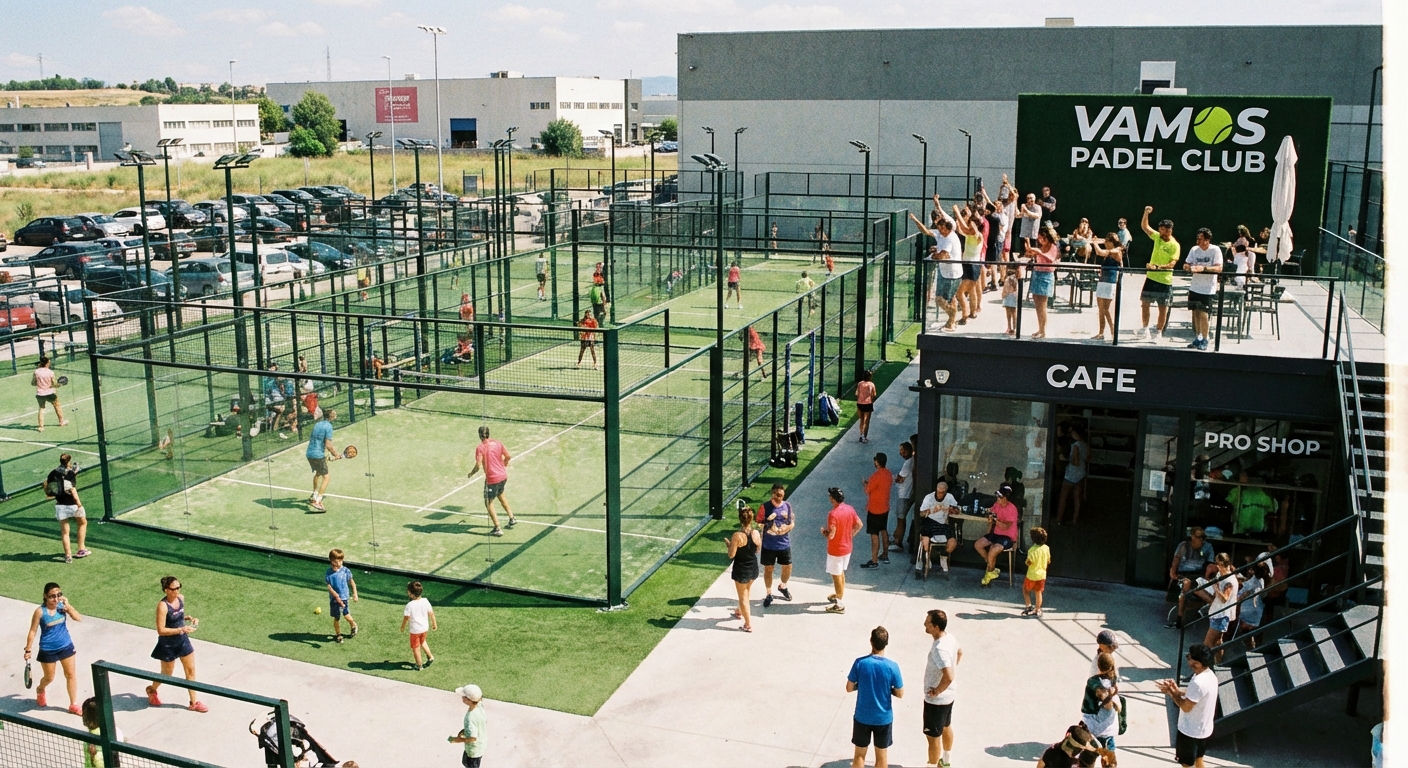
Commercial courts often see a full return on investment within 24 months due to high demand and low operational costs. Researching a outdoor padel court reveals that they generate significantly more revenue per square meter than tennis or swimming facilities. Because four players share a small space, the booking frequency and “social stickiness” of the sport drive consistent income.
What are the revenue streams?
You can charge hourly court rentals, but you should also consider coaching clinics, tournaments, and equipment sales.
- Court Rentals: The primary income source, often reaching 10-14 hours of use per day.
- Corporate Events: High-margin bookings for team building and local businesses.
- Membership Fees: Provides steady cash flow for maintenance and facility upgrades.
Think about it:
How much are the operating costs?
Your primary expenses will be electricity for lighting and occasional sand redistribution for the turf.
- Low Maintenance: Unlike clay courts, padel courts don’t require daily watering or rolling.
- Staffing: Can be managed with a simple automated booking app and entry system.
- Durability: High-quality builds require very few repairs in the first 5-10 years.
The best part?
Key Takeaway: Padel’s high player density and low maintenance requirements make it one of the most profitable sports investments available today.
| Revenue Factor | Estimate | Monthly Impact |
|---|---|---|
| Booking Rate | $30 – $60 / hour | Primary revenue driver |
| Monthly Utilization | 200+ hours | High ROI potential |
| Operational Costs | < $300 / month | High profit margin |
The financial data proves that padel is not just a trend but a high-performance business asset for any sports facility.
How do you clean and fix an outdoor padel court?
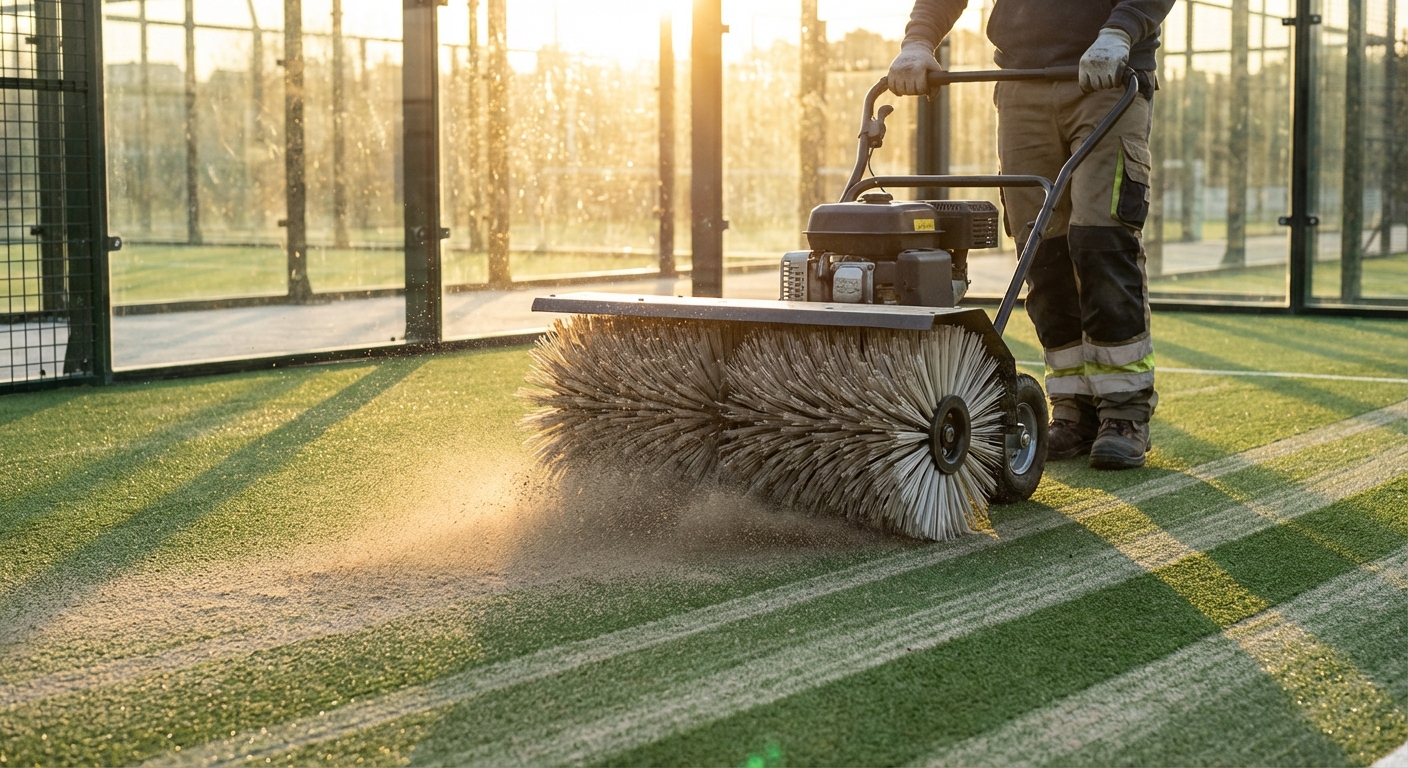
Routine maintenance involves regular turf brushing to redistribute sand and annual deep cleaning to maintain the glass and net tension. An outdoor padel court that is neglected will quickly lose its playability, as sand clumps and glass becomes cloudy. A simple weekly schedule keeps the facility looking brand new and extends the life of the materials.
Why is brushing the turf important?
You must use a mechanical brush or a heavy-duty broom to keep the silica sand evenly distributed across the fibers.
- Prevents Matting: Keeps the synthetic grass blades standing upright for a consistent bounce.
- Improves Drainage: Moves sand out of the drainage holes in the turf backing.
- Safety: Prevents “bald spots” where players might slip and injure themselves.
But wait, there’s more…
How to maintain the glass and frame?
You should clean the glass panels with standard window cleaner every two weeks to remove handprints and ball marks.
- Bolt Check: Tighten structural bolts every six months to ensure the frame remains rigid.
- Net Tension: Adjust the central cable to keep the net at exactly 88cm in the middle.
- Rust Spotting: Touch up any scratches in the paint immediately to prevent oxidation.
The reality is:
Key Takeaway: Consistent weekly brushing and semi-annual structural checks are the keys to a 20-year court lifespan.
| Maintenance Task | Frequency | Benefit |
|---|---|---|
| Turf Brushing | Weekly | Consistent bounce and safety |
| Glass Cleaning | Bi-weekly | Professional aesthetic |
| Bolt Inspection | Every 6 months | Structural integrity |
A well-maintained court not only lasts longer but also allows you to maintain premium booking rates because players prefer clean facilities.
*
Building a professional outdoor padel court is the most effective way to transform underused land into a high-revenue social hub. By following professional construction standards—from reinforced concrete foundations to panoramic glass and high-density turf—you eliminate the risk of structural failure and wasted capital. At Superbpadel, we specialize in providing factory-direct, certified court solutions that help you launch your project with confidence and total support. We stand by our commitment to international quality and simplified global logistics, ensuring your facility is a success from day one. To receive a personalized blueprint and a factory-direct price list, contact us today and let our engineering team guide your vision.
*
FAQ
Can I build a padel court on an existing tennis court?
Yes. You can actually fit two to three padel courts into the space of a single standard tennis court, significantly increasing your revenue per square meter.
What’s the best glass thickness for a commercial court?
12mm. While 10mm is sometimes used for private residential builds, 12mm anti-explosion tempered glass is the international professional standard for safety and durability.
Can I customize the colors of the steel structure?
Absolutely. We offer full OEM support, allowing you to choose any RAL color for the frame and integrate your club’s logo directly into the court design.
What is the best foundation for areas with heavy rain?
Porous concrete. This specialized foundation allows water to drain directly through the slab, ensuring your court is dry and playable within minutes of a storm ending.
Can I install the court myself?
Yes. Our courts feature a modular design for straightforward assembly, and we provide detailed installation manuals and remote video guidance for your local team.