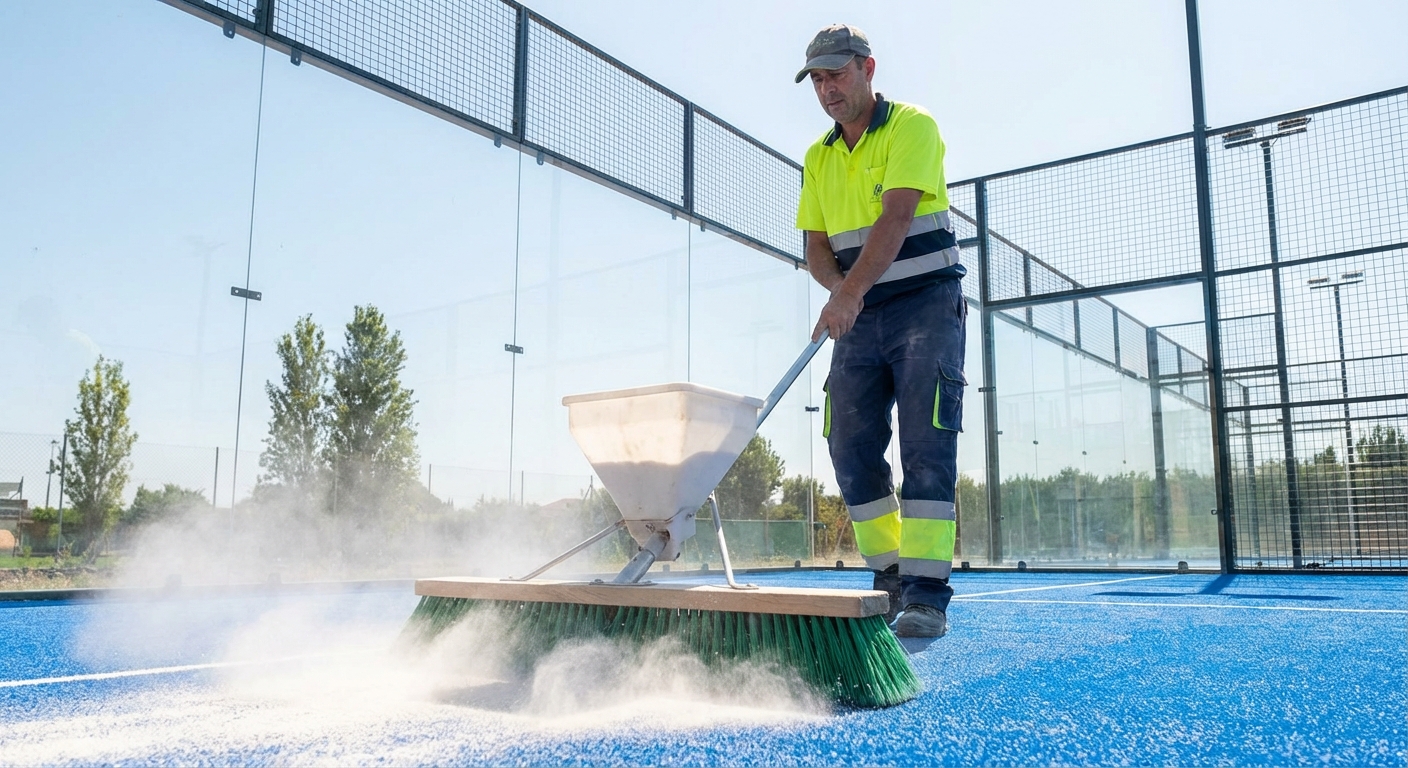
Professional padel court construction is a specialized engineering process that involves creating a 20×10 meter enclosed sports environment designed for high-density, social play. Many facility owners face the challenge of underutilized space and declining interest in traditional sports, leading to stagnant revenue streams. By choosing professional padel court construction, you can transform these dormant areas into high-traffic athletic hubs that accommodate four players in half the space of a tennis court.
Why is padel court construction a top investment?
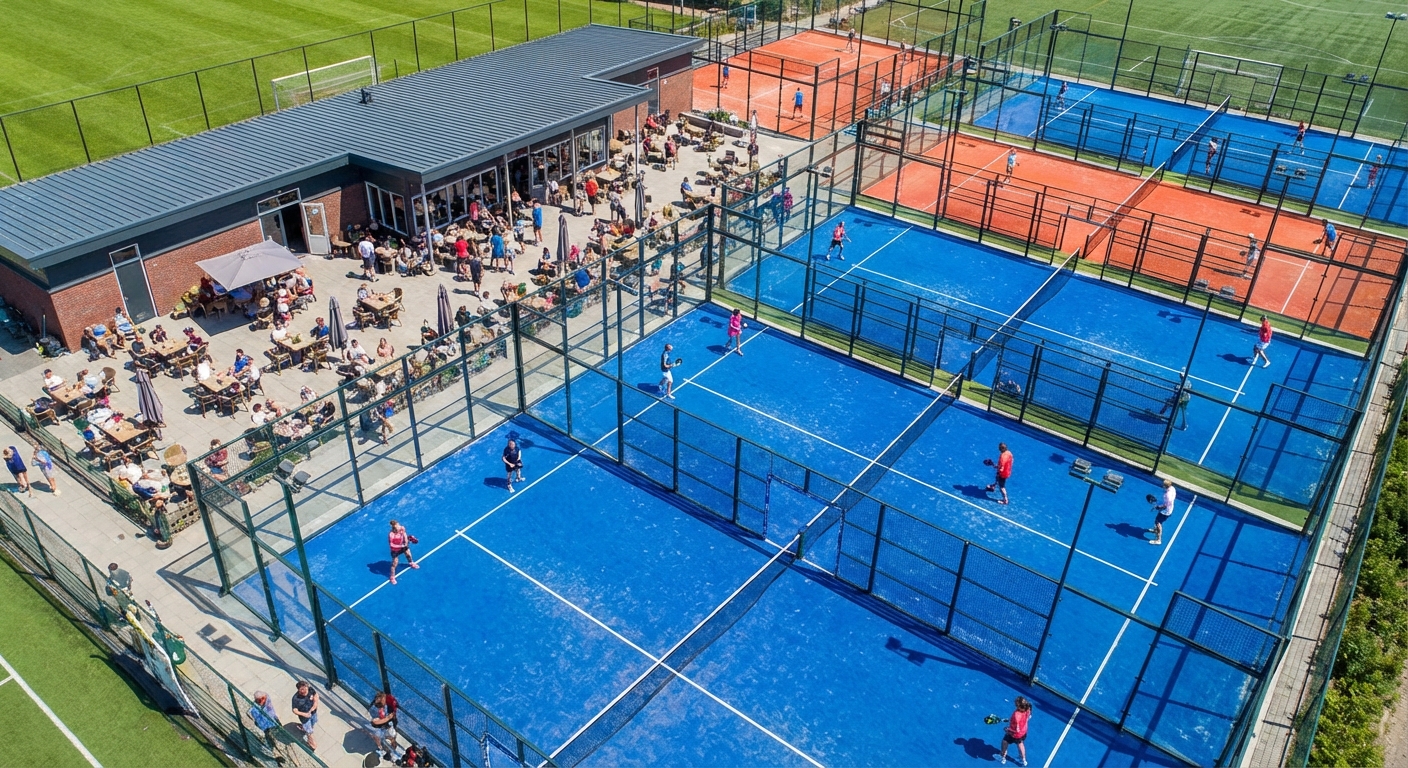
Padel court construction offers an exceptional return on investment due to the sport’s massive growth and spatial efficiency. Modern padel court construction allows you to host double the players per square meter compared to other racquet sports. This high utilization rate translates directly into increased booking fees and membership retention for your facility.
How do you maximize revenue per square meter?
You can significantly boost your club’s earnings by replacing a single tennis court with up to three padel courts. The best part? You are catering to a demographic that values the social, four-player dynamic of the game.
- Increased hourly booking potential.
- Higher foot traffic for on-site cafes and pro shops.
- Lower entry barriers for new players.
Key Takeaway: Investing in specialized construction turns small footprints into high-yield assets that attract a wide range of skill levels.
| Benefit | Impact | Efficiency |
|---|---|---|
| Space Savings | 2-3 courts per 1 tennis court | 300% Increase |
| Player Count | 4 players per 200sqm | High Density |
| Revenue | Higher frequency of bookings | Rapid ROI |
This analysis confirms that the economic logic behind padel projects rests on maximizing player density within a compact, urban-friendly footprint.
What materials define high-quality construction?
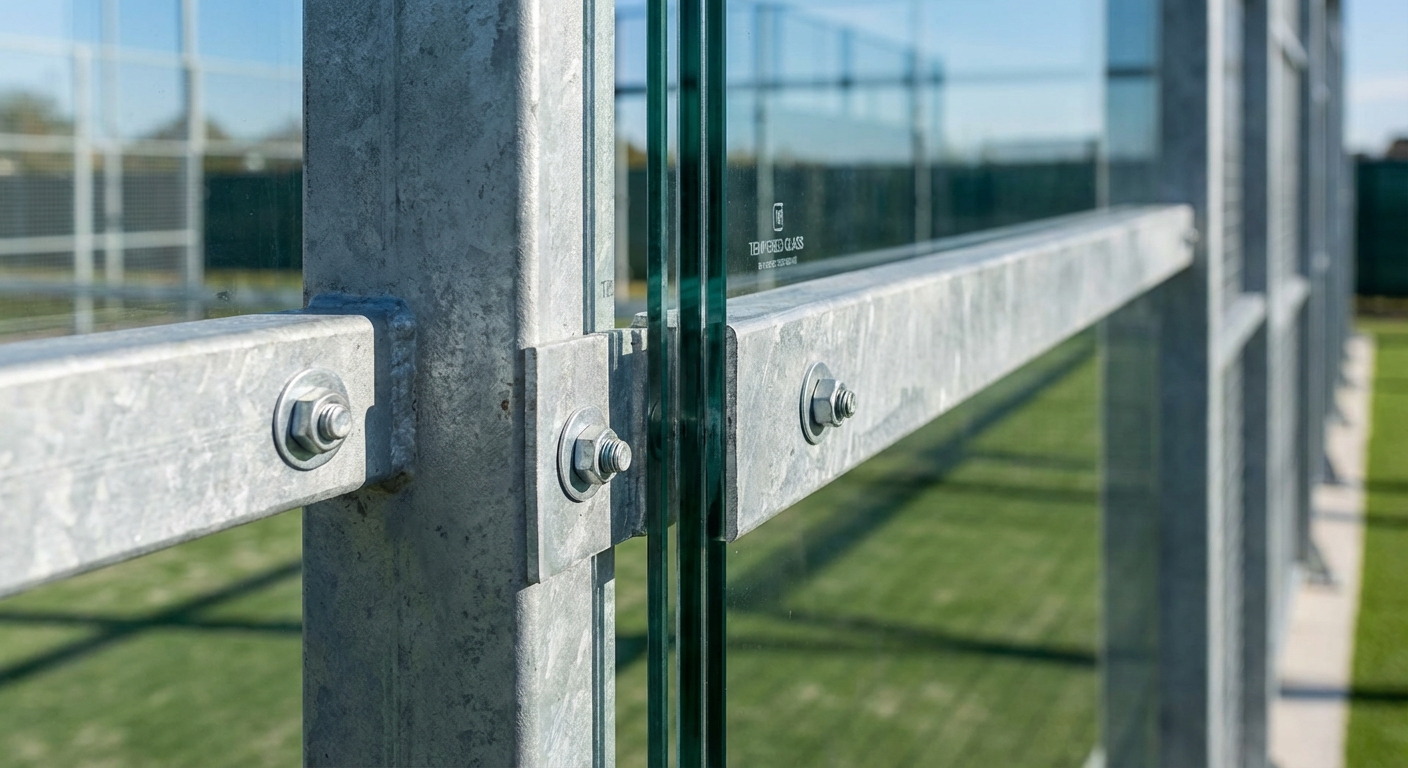
The durability of padel court construction depends on using hot-dip galvanized steel and certified tempered safety glass. High-end padel court construction utilizes 10mm or 12mm anti-explosion glass to ensure both player safety and consistent ball bounce. These materials are engineered to withstand structural fatigue and environmental stressors over a 20-year lifespan.
Are you choosing the right structural frames?
You must prioritize corrosion resistance if your project is located in a high-humidity or coastal environment. Here is the deal: using low-grade steel will lead to rust and structural failure within just a few years.
- Hot-dip galvanized steel for rust prevention.
- 12mm tempered glass for maximum impact safety.
- Zinc-coated electro-welded mesh for the fencing.
Key Takeaway: Selecting industrial-grade materials at the start prevents expensive repairs and ensures the safety of your club members.
| Component | Standard Material | Benefit |
|---|---|---|
| Frame | Hot-Dip Galvanized Steel | Corrosion Resistance |
| Walls | 12mm Tempered Glass | Safe Ball Bounce |
| Fasteners | Stainless Steel | Longevity |
Using these premium materials ensures that the structural integrity of your court remains uncompromised regardless of heavy daily usage.
How do you plan padel court construction projects?
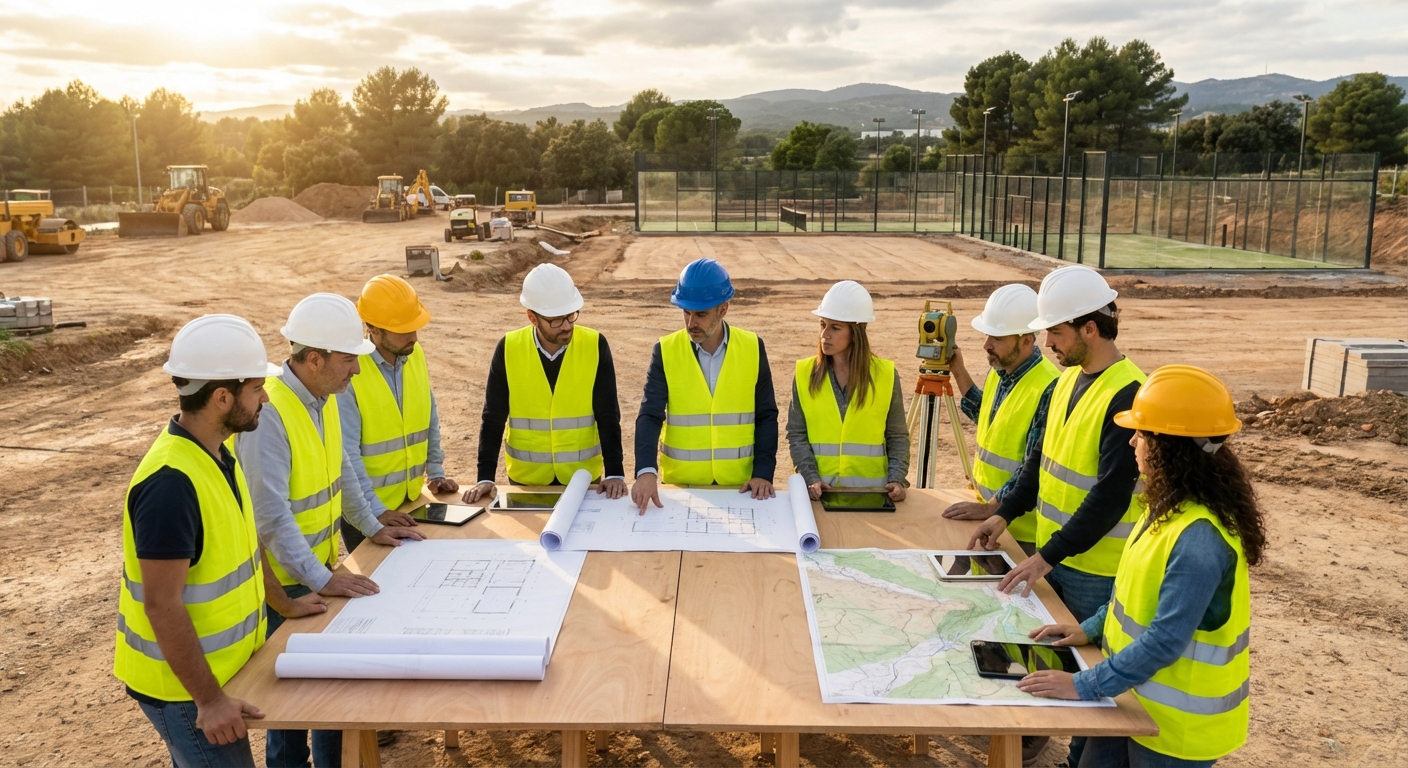
Successful planning for padel court construction involves detailed site surveys, architectural blueprints, and strict adherence to local zoning laws. Professional padel court construction requires a perfectly level sub-base to prevent drainage issues and surface irregularities. You must coordinate with engineers to ensure the ground can support the weight of the steel frames and heavy glass panels.
What permits do you need for your facility?
You should consult with local authorities early to determine the specific building codes for sports structures in your region. Listen: failing to secure the right permits can lead to costly project shutdowns or mandatory removals later.
- Topographical surveys for ground leveling.
- Soil stability tests for concrete slabs.
- Zoning verification for sports use.
Key Takeaway: Thorough pre-construction planning avoids legal delays and ensures the foundation is built to support a tournament-grade court.
| Planning Step | Primary Goal | Priority |
|---|---|---|
| Site Survey | Leveling and stability | Essential |
| Legal Audit | Permit compliance | Critical |
| Logistics | Delivery access for glass | High |
A detailed roadmap at the planning stage acts as a safeguard against unforeseen engineering challenges during the actual assembly phase.
Which dimensions guide professional construction?
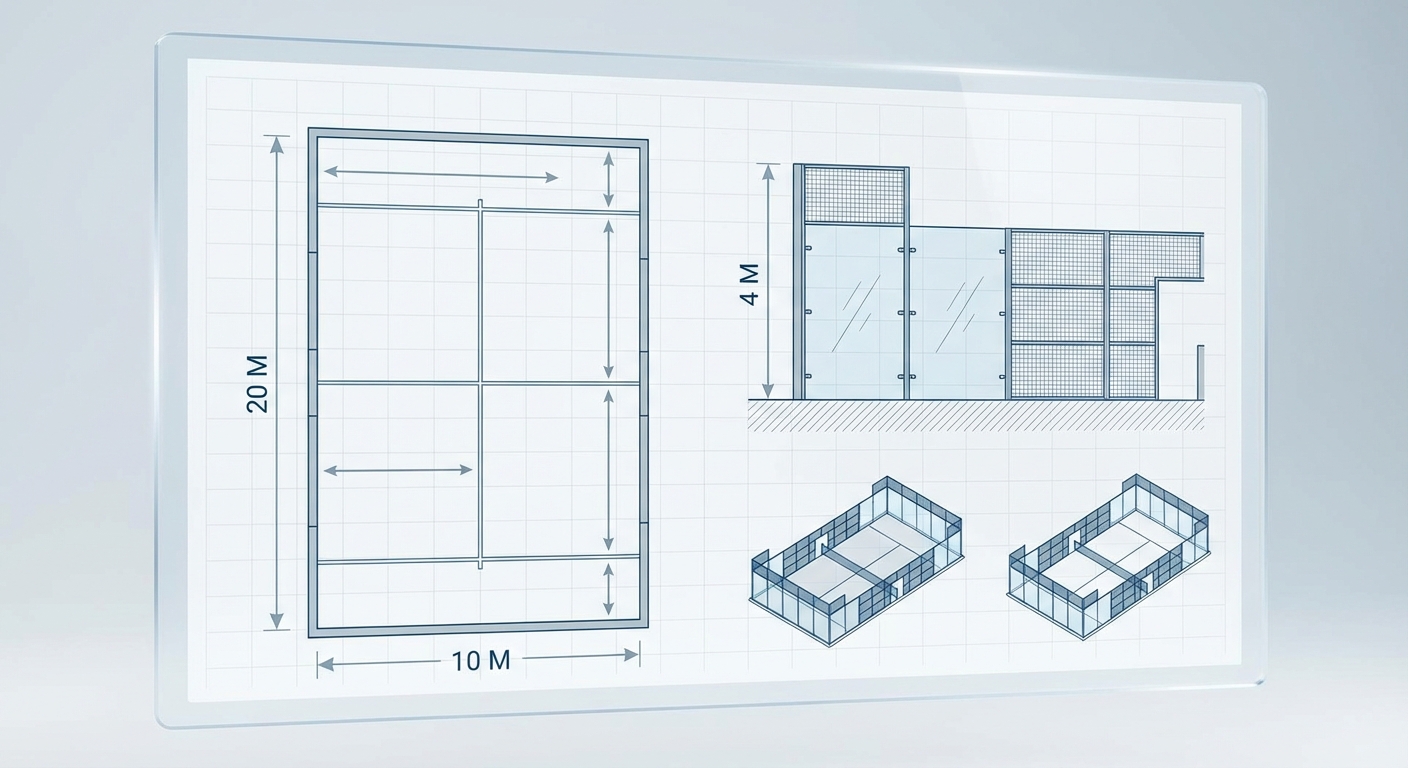
Official dimensions for padel court construction are set at 20 meters in length and 10 meters in width according to international standards. Accurate padel court construction includes a 4-meter high back wall and 3-meter high side walls to accommodate specific gameplay rules. Every line on the court must be exactly 5cm wide to ensure the facility is suitable for official tournament play.
Do you understand the importance of ceiling height?
You need to ensure a minimum clear height of 6 meters for indoor installations, though 8 meters is the professional recommendation. The reason is simple: padel relies heavily on “lob” shots that require significant vertical clearance.
- Standard 20m x 10m playing area.
- 4-meter high rear glass panels.
- 88cm center net height.
Key Takeaway: Adhering to precise FIP (International Padel Federation) dimensions ensures your court is recognized as a professional-grade venue.
| Element | Official Dimension | Tolerance |
|---|---|---|
| Total Length | 20 Meters | +/- 0.1% |
| Total Width | 10 Meters | +/- 0.1% |
| Back Wall Height | 4 Meters | Required |
Strict adherence to these technical measurements is the only way to provide a consistent playing experience that athletes expect from modern clubs.
How is the surface handled in construction?
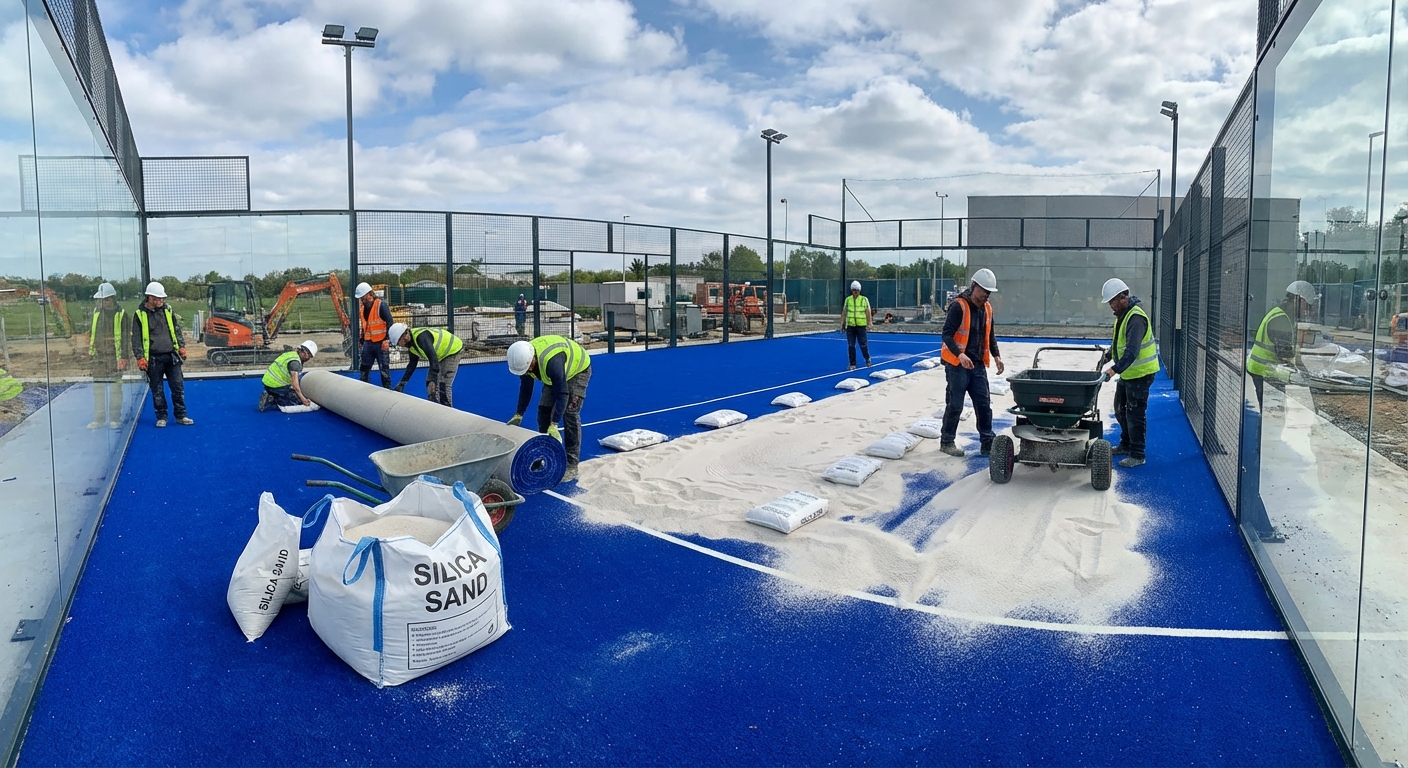
Surface installation in padel court construction involves laying high-density synthetic turf over a porous concrete or asphalt sub-base. Specialized padel court construction uses fibrillated or monofilament grass that is UV-stabilized for long-term outdoor performance. This surface is then filled with specific amounts of kiln-dried silica sand to provide the necessary grip and ball bounce characteristics.
Why is the sub-base quality so vital?
You must realize that the turf is only as good as the ground beneath it. Here is the deal: any dip or rise in the concrete slab will cause the ball to bounce unpredictably, ruining the game for competitive players.
- 12-15mm synthetic turf height.
- Kiln-dried silica sand infill (8-10kg per sqm).
- Porous concrete for rapid drainage.
Key Takeaway: A high-performance surface requires a combination of top-tier synthetic fibers and a perfectly engineered, level foundation.
| Surface Layer | Material Type | Function |
|---|---|---|
| Base | Porous Concrete | Support & Drainage |
| Turf | Monofilament PE | Player Traction |
| Infill | Silica Sand | Ball Bounce |
The interaction between the turf fibers and the sand infill determines the “speed” of the court and the comfort of the players during movement.
Why is lighting critical in the construction process?
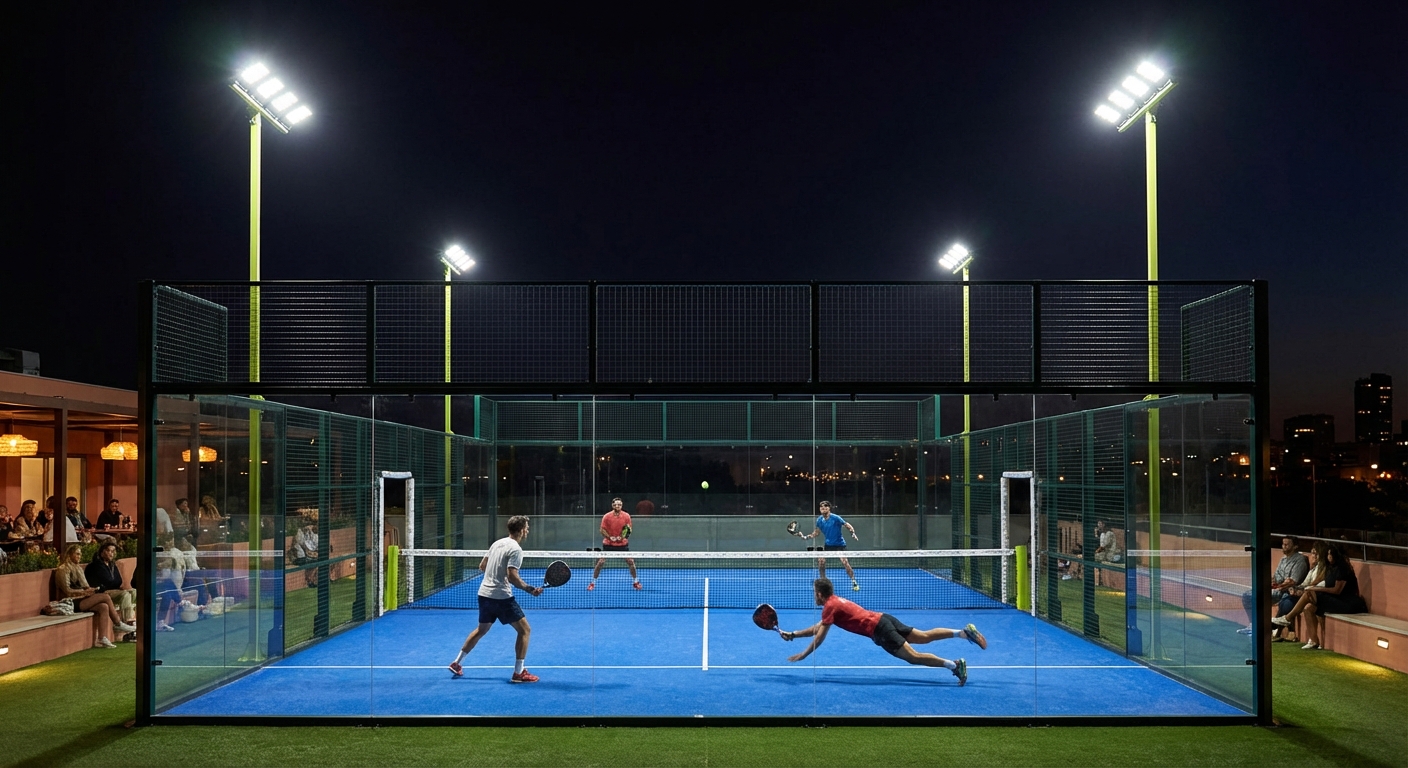
Effective lighting in padel court construction extends your operating hours and ensures the facility can generate revenue well into the evening. Modern padel court construction utilizes IP66-rated LED floodlights that provide uniform illumination without creating glare for the players. Proper light placement is essential to prevent “shadow zones” where players might lose track of the ball during fast exchanges.
How do you achieve tournament-grade brightness?
You should aim for a minimum of 300 lux for recreational play and 500 lux for professional competitions. The best part? LED technology consumes up to 60% less energy than traditional metal halide lamps, significantly lowering your monthly utility bills.
- 4 or 8 light poles per court.
- Flicker-free LED drivers for video recording.
- Impact-resistant housings (IK10 rating).
Key Takeaway: High-efficiency LED systems are an essential component for maximizing court bookings and providing a professional atmosphere at night.
| Feature | Requirement | Benefit |
|---|---|---|
| Intensity | 300 – 500 Lux | Clear Visibility |
| Tech | LED | Low Energy Cost |
| Rating | IP66 Waterproof | Outdoor Durability |
Investing in superior lighting hardware allows your facility to operate as a 24/7 sports hub, dramatically shortening your payback period.
How does drainage affect construction?
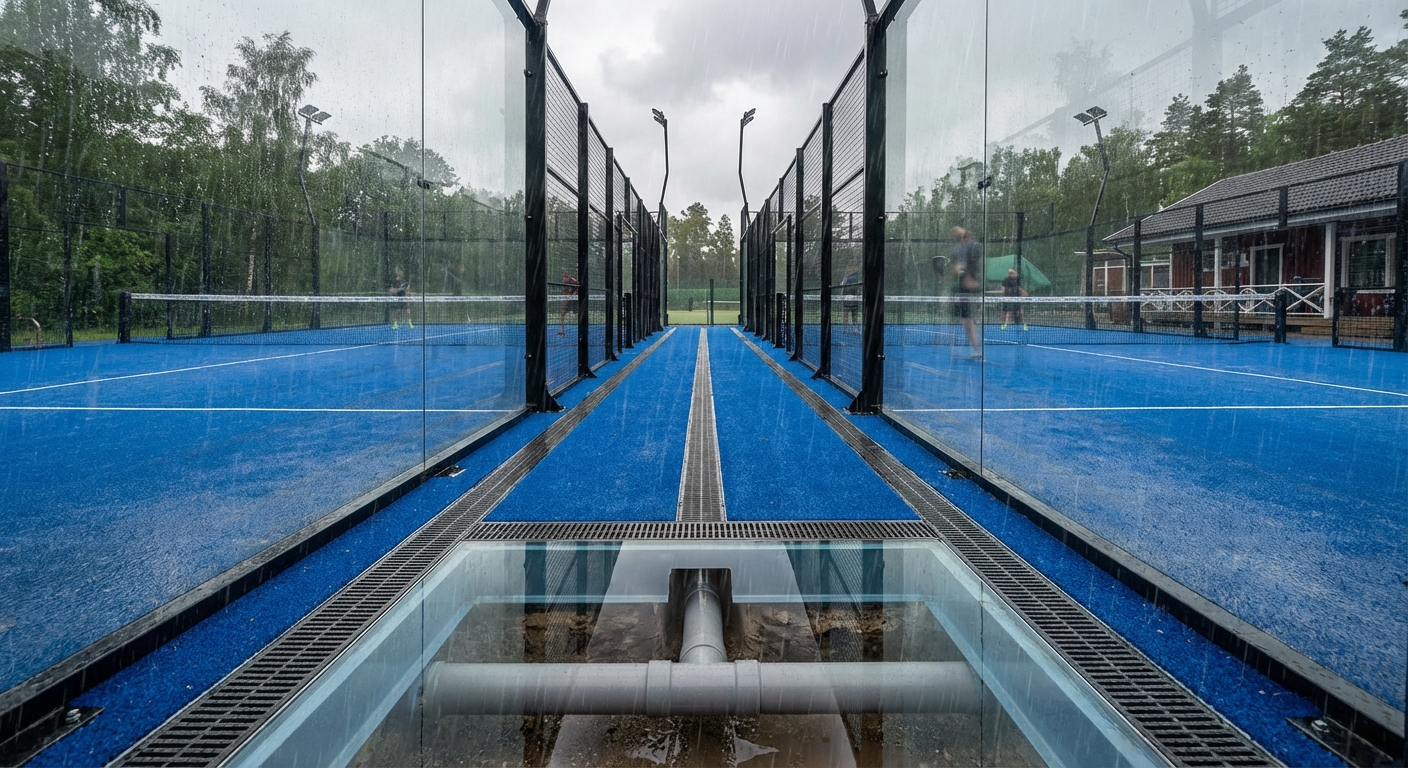
Managing water runoff is a critical phase of padel court construction, particularly for outdoor facilities in high-rainfall climates. Advanced padel court construction incorporates a 0.5% to 1% slope in the sub-base and perimeter drainage channels to clear water quickly. This engineering ensures that the court is playable within minutes after a heavy downpour, maintaining your booking schedule.
Can you build without a drainage plan?
You should never overlook the sub-surface water management system during the design phase. Listen: water pooling under the synthetic turf will eventually rot the fibers and cause the concrete base to crack over time.
- Perimeter drainage gutters.
- Porous sub-base materials.
- Correct topographical grading.
Key Takeaway: Proper drainage is the secret to maintaining a high-performance court surface and protecting your long-term infrastructure investment.
| Drainage Element | Technical Solution | Result |
|---|---|---|
| Surface Water | 1% Slope Grading | No Puddles |
| Sub-Surface | Porous Slab | Dry Foundation |
| Perimeter | Grated Channels | Managed Runoff |
A well-designed drainage system acts as an insurance policy for your court, ensuring year-round usability even in challenging weather conditions.
What is the total cost of court construction?
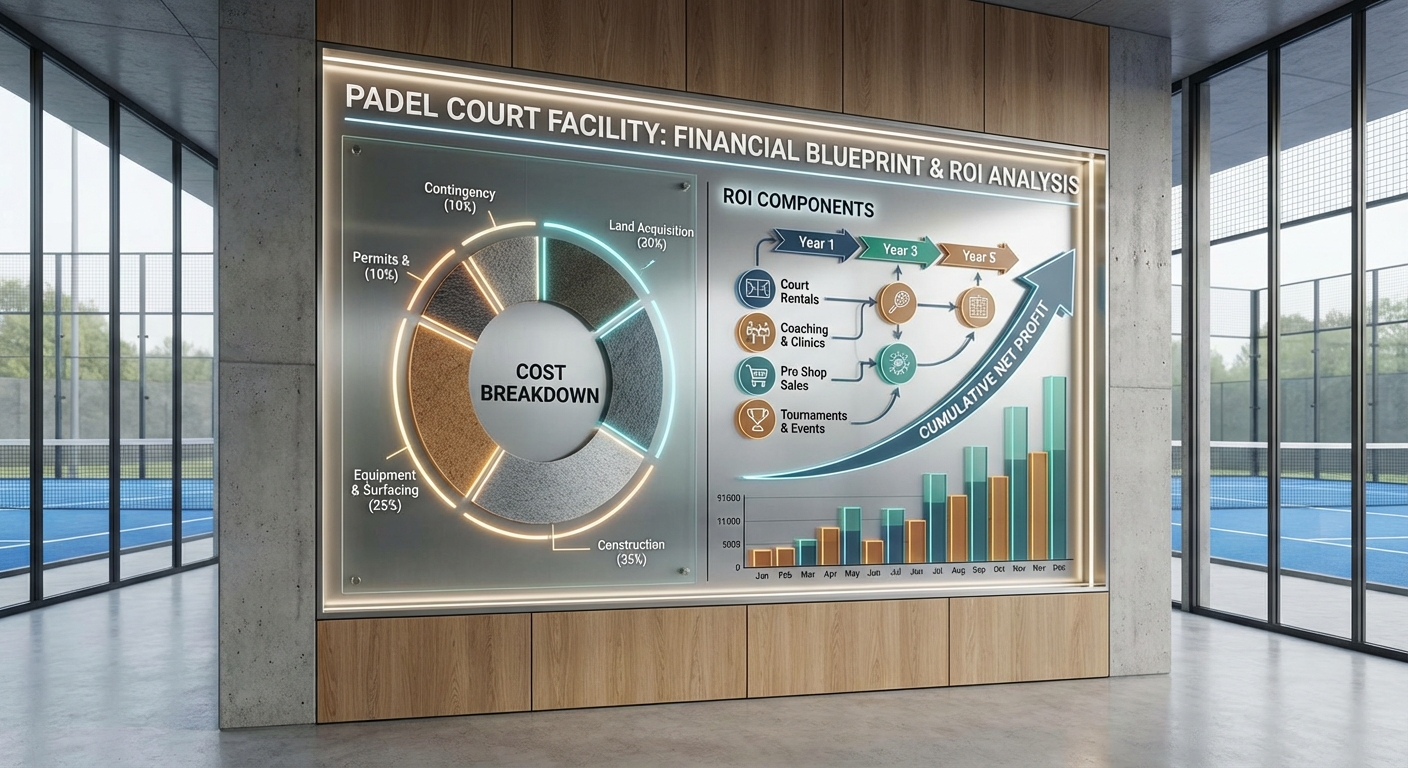
The total cost of padel court construction varies depending on site preparation requirements, material quality, and the level of customization. Professional padel court construction typically involves expenses for the concrete foundation, the steel and glass structure, and specialized lighting systems. While initial costs may seem high, the rapid ROI—often achieved within 12 to 24 months—makes it a financially sound venture.
How do you estimate your project budget?
You must factor in shipping, installation labor, and potential customization like logo integration or specific RAL colors. Here is the deal: cutting corners on the foundation usually leads to much higher maintenance costs within the first three years.
- Structure and glass procurement.
- Concrete slab and site work.
- Lighting and turf installation.
Key Takeaway: Budgeting for high-quality components and a professional installation team is the most effective way to ensure long-term profitability.
| Budget Item | % of Total | Variability |
|---|---|---|
| Foundation | 30 – 40% | High (Soil dependent) |
| Structure | 40 – 50% | Medium (Glass type) |
| Finishing | 10 – 20% | Low (Lighting/Turf) |
Analyzing the cost-to-revenue ratio shows that padel remains one of the most profitable sports investments currently available in the fitness market.
Why maintain padel court construction?
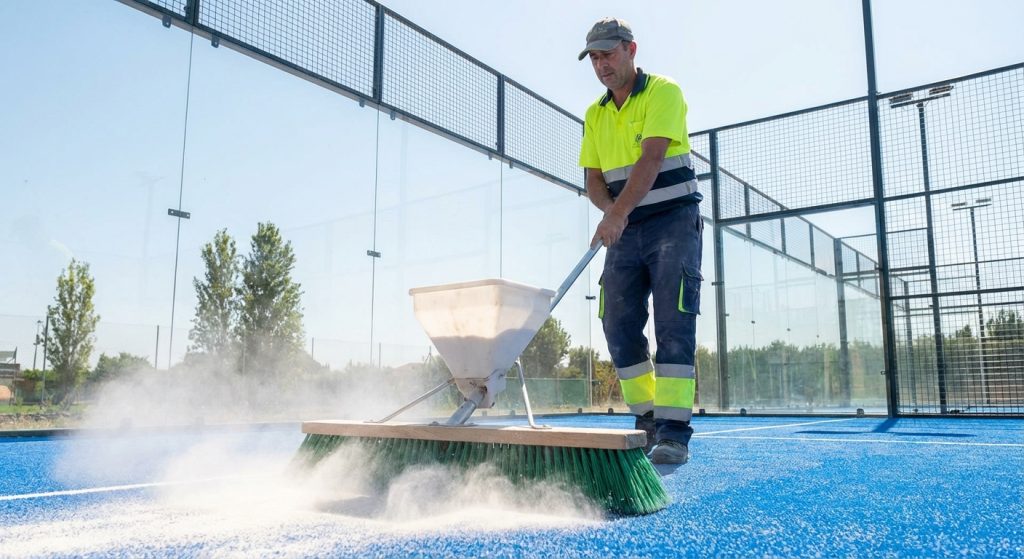
Ongoing maintenance is vital to preserve the playability and safety standards established during the padel court construction phase. Regular padel court construction upkeep includes redistributing silica sand, cleaning glass panels, and checking the tension of the structural bolts. Neglecting these simple tasks can lead to uneven turf wear and, in extreme cases, the cracking of the glass walls due to loose frames.
How often should you brush your turf?
You need to brush the synthetic grass weekly to prevent the sand from compacting and the fibers from flattening. The best part? This simple 20-minute task extends the life of your turf by several years and keeps the ball bounce consistent.
- Weekly turf brushing.
- Bi-weekly glass cleaning.
- Bi-annual bolt and frame audits.
Key Takeaway: A proactive maintenance schedule protects your investment and ensures that players continue to receive a premium experience.
| Task | Frequency | Duration |
|---|---|---|
| Sand Leveling | Weekly | 20 Minutes |
| Glass Polish | Bi-weekly | 1 Hour |
| Safety Check | Bi-annually | 3 Hours |
Maintaining a clean and well-tuned court is the best marketing tool for your club, as players always prefer facilities that feel new and safe.
Are there modern styles of court construction?
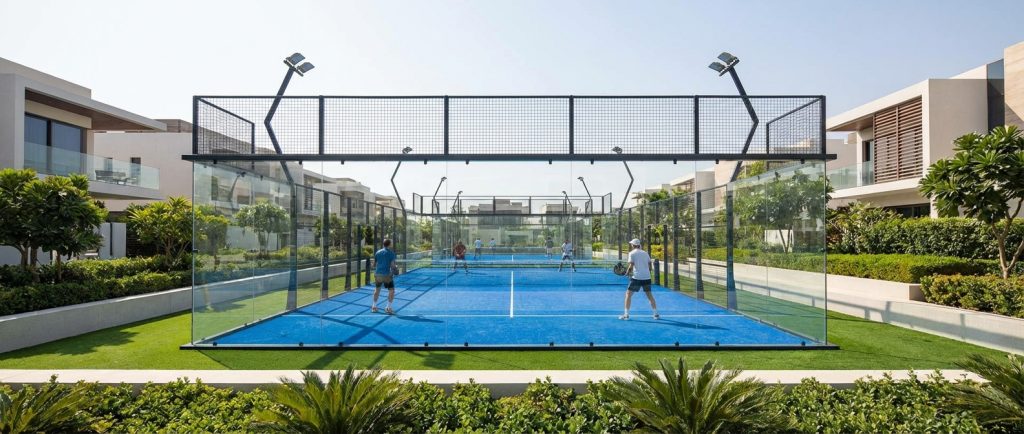
Modern padel court construction has evolved to include panoramic and super panoramic designs that remove traditional vertical pillars. These advanced padel court construction styles use thicker 12mm glass and reinforced horizontal beams to provide an unobstructed view for spectators. These courts are often the centerpieces of high-end sports clubs and are essential for hosting televised professional matches.
Is a panoramic court worth the extra cost?
You should consider the aesthetic and commercial value that a panoramic design adds to your facility. Listen: these courts often command a higher booking fee because players enjoy the premium “center court” feel they provide.
- Unobstructed 360-degree views.
- High-tensile steel reinforcements.
- Enhanced aesthetic for luxury resorts.
Key Takeaway: Moving beyond standard models to panoramic designs can elevate your club’s brand and attract higher-paying clientele.
| Court Style | Visibility | Best Use Case |
|---|---|---|
| Standard | Good | General Club Use |
| Panoramic | Excellent | High-End Resorts |
| Super Panoramic | Perfect | Tournament Finals |
Choosing a modern, visually striking design ensures that your facility remains competitive in a market that increasingly values both form and function.
*
Frequently Asked Questions
Can I build a padel court on an existing tennis court?
Yes, you can easily fit two or three padel courts within the footprint of a single tennis court. This is a highly efficient way to modernize an older facility and increase the total number of players you can serve simultaneously.
What’s the best material for low-maintenance courts?
Hot-dip galvanized steel combined with high-density synthetic monofilament turf is the industry gold standard. These materials require the least amount of intervention while providing the highest resistance to weather and mechanical wear.
How do I know if my ground is suitable for construction?
A professional topographic survey and soil test are the only definitive ways to confirm ground suitability. You must ensure the soil can bear the weight of the structure without shifting, which prevents the tempered glass from cracking.
Can I customize the colors of the court structure?
Yes, most professional manufacturers offer full RAL color customization for the steel framing and various turf color options. This allows you to align the court’s appearance with your facility’s existing branding and architecture.
What is the minimum ceiling height for an indoor court?
While 6 meters is technically the minimum allowed, we strongly recommend a height of 8 meters or more. This height ensures that technical lob shots can be played without hitting the roof, which is essential for advanced gameplay.
Strategic Conclusion
Building a professional padel facility is a high-yield strategic move that requires a deep understanding of materials, engineering standards, and player needs. By prioritizing padel court construction quality—from the galvanized steel frame to the precision of the LED lighting—you create a durable asset that delivers consistent revenue for decades. At our core, we believe that the highest standards of sports engineering are the foundation of any successful athletic community. To transform your space into a world-class venue, contact us today for a comprehensive project evaluation.