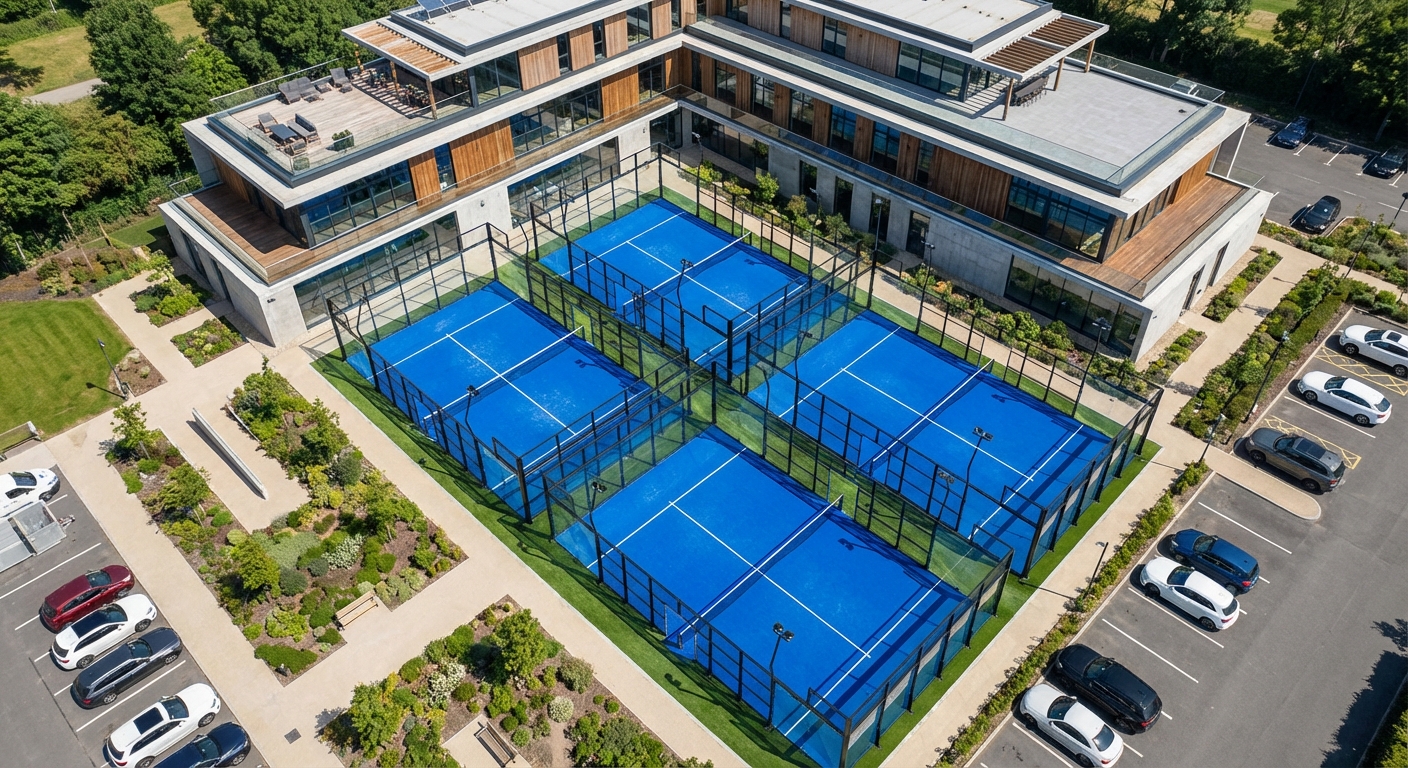
Padel tennis court construction is the specialized engineering and assembly of a 20×10 meter glass-enclosed sports arena designed for high-performance play. You likely want to maximize your club’s revenue, but traditional tennis courts take up significant space and often have lower utilization rates. This inefficiency leaves potential profits on the table while maintenance costs for underused facilities continue to climb. Engaging in professional padel tennis court construction provides a high-density solution that fits two courts in the footprint of one, boosting your ROI and community engagement instantly through the world’s fastest-growing racket sport.
Why is padel tennis court construction growing?
It is surging because it offers a high player-per-square-foot ratio and exceptional social engagement for commercial sports clubs. Professional padel tennis court construction is becoming the preferred choice for facility owners looking to modernize their sports offerings.
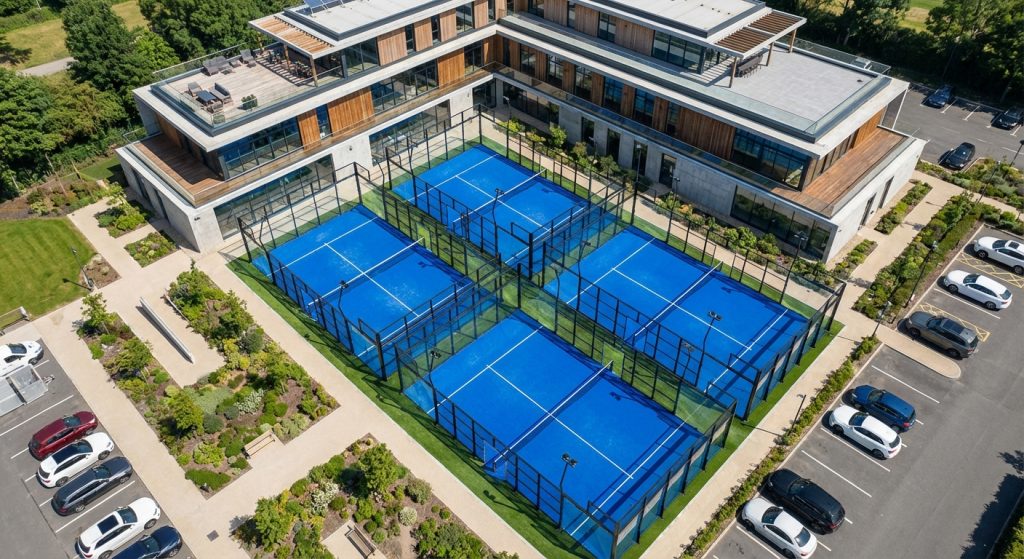
Revenue optimization for clubs
By installing multiple courts in a small area, you can host more players simultaneously. This leads to higher hourly rental income compared to almost any other racket sport.
Look closer.
- You can fit four players on a small 200sqm surface.
- High turnover rates increase secondary spend on beverages.
- Membership retention improves due to the social nature of the game.
Key Takeaway: Padel courts are high-yield assets that maximize land use and player participation.
| Feature | Impact | Benefit |
|---|---|---|
| Player Density | 4 players per 200m² | Higher Revenue |
| Social Appeal | High Engagement | Membership Growth |
| Space Efficiency | 2 courts per tennis court | Doubled Capacity |
Investing in this sport starts with a clear understanding of the site requirements and preparation.
What starts padel tennis court construction?
The process begins with a detailed site analysis and soil stability assessment to ensure a level foundation. Proper padel tennis court construction requires a roadmap that includes topographical surveys and architectural planning to prevent future structural issues.
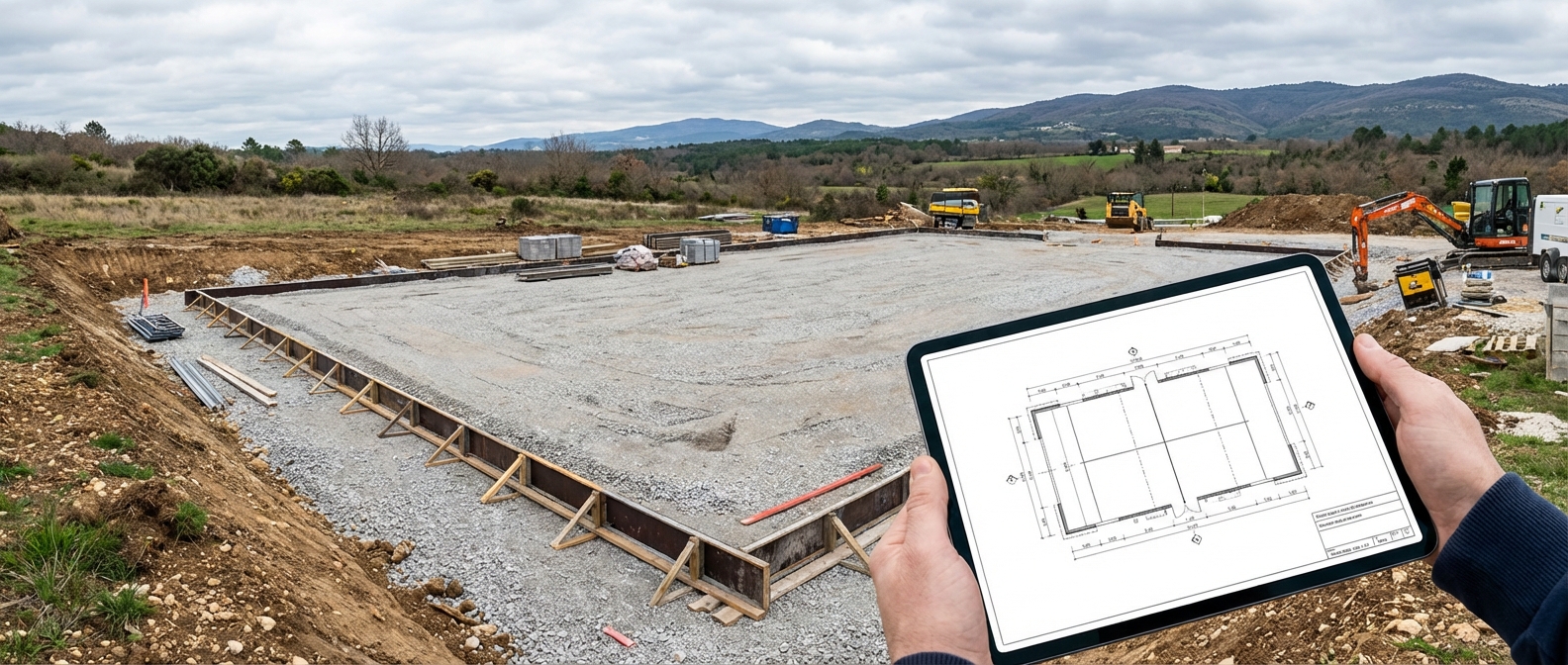
Site assessment and soil stability
Think about it. You cannot build a high-end facility on shifting ground without risking glass breakage or turf ripples.
- Evaluate the soil load-bearing capacity.
- Check for underground utilities and drainage lines.
- Survey the topography to plan for necessary excavation.
Key Takeaway: Early site preparation prevents costly structural failures and drainage problems during the build.
| Planning Step | Action Required | Importance |
|---|---|---|
| Soil Test | Lab Analysis | Critical for Stability |
| Surveying | Leveling Plan | Precision Play Surface |
| Zoning | Permit Filing | Legal Compliance |
Once the site is secured, you must adhere to the official dimensions governing the sport.
How do rules guide padel tennis court construction?
Regulations dictate specific dimensions and safety zones to ensure the facility meets international tournament standards. Adhering to these strict metrics during padel tennis court construction is vital for club owners who wish to host official events.
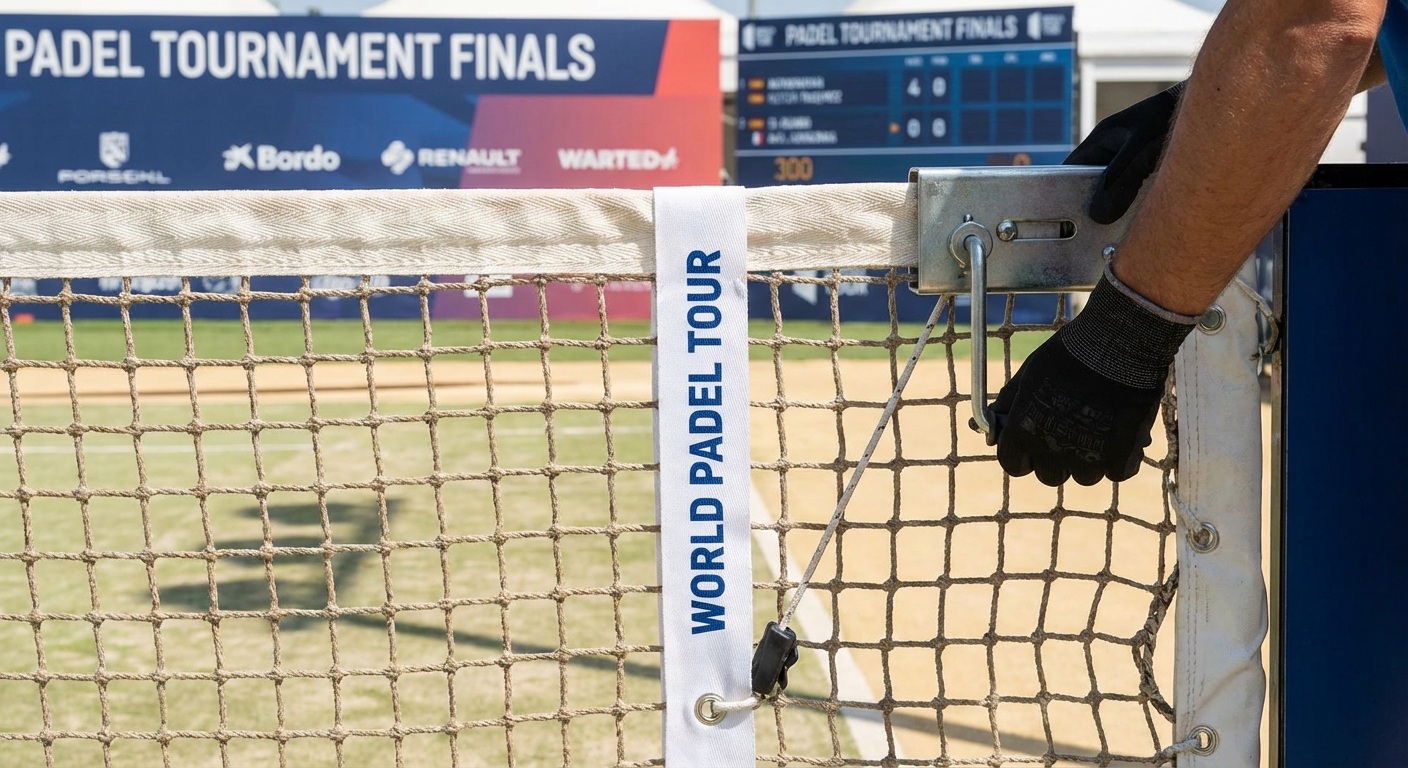
Official dimensions and safety zones
A Standard Padel Court must measure exactly 20 meters in length and 10 meters in width internally. The truth is, even a few centimeters of error can disqualify a court from professional play.
- The net must be 88cm high at the center.
- Safety zones should extend 2 meters beyond the side openings.
- Minimum ceiling height for indoor builds is 6 meters, though 8 meters is preferred.
Key Takeaway: Strict adherence to international standards ensures your facility is “tournament ready” and attracts serious players.
| Component | Standard Metric | Tolerance |
|---|---|---|
| Length | 20.00 Meters | +/- 0.1m |
| Width | 10.00 Meters | +/- 0.05m |
| Net Height | 0.88 – 0.92 Meters | Fixed |
Building to these specs requires a rock-solid foundation that manages moisture and weight.
Which base fits padel tennis court construction?
A reinforced concrete slab or porous asphalt base is essential for a consistent ball bounce and long-term durability. Quality padel tennis court construction relies on a sub-base that prevents “dead spots” and manages heavy rain efficiently.
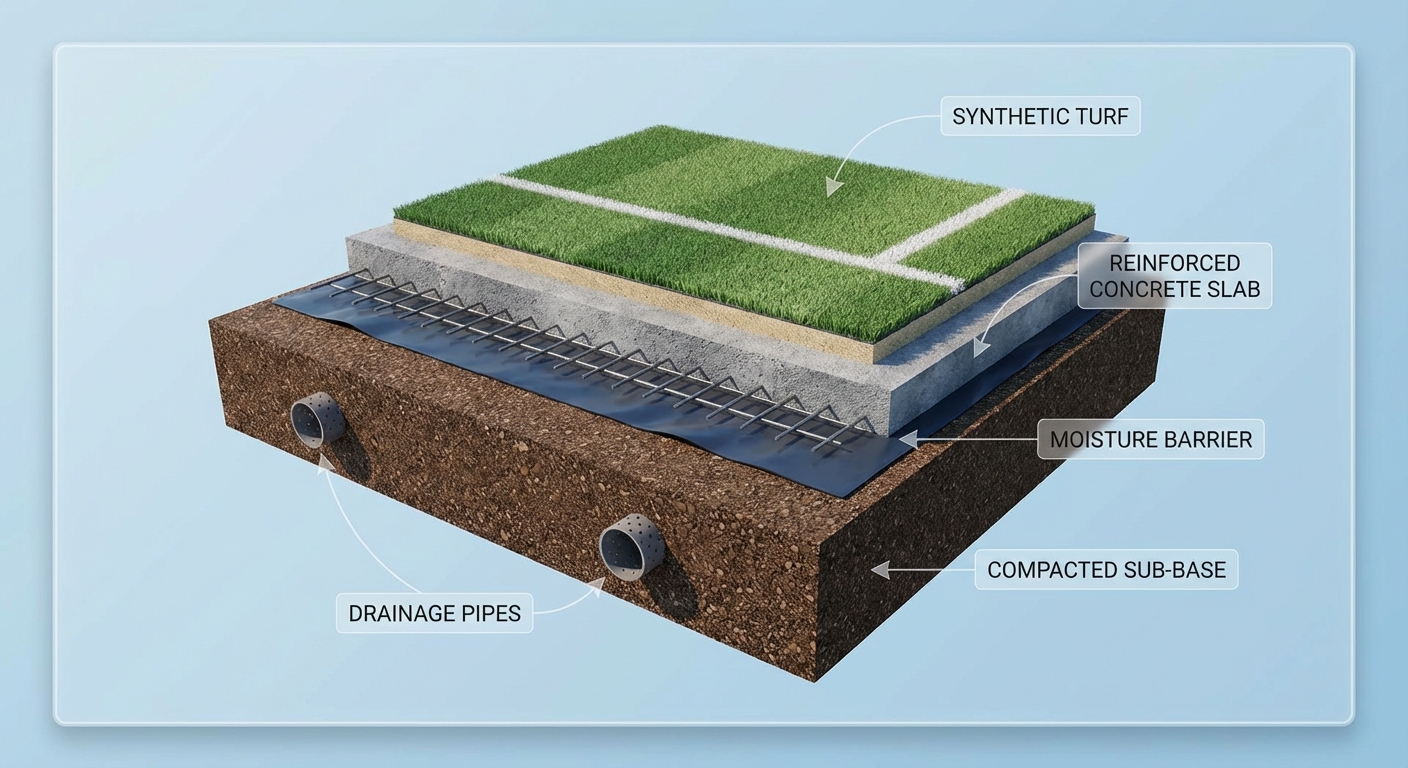
Foundation types and drainage systems
Here is the kicker: the foundation is the most expensive part to fix if it is done incorrectly the first time.
- Reinforced concrete provides the best stability for glass anchoring.
- Porous asphalt allows water to drain vertically, reducing downtime after rain.
- Compaction must reach 95% Proctor to prevent future settling.
Key Takeaway: A high-quality foundation is the secret to a court that lasts 20 years without needing major repairs.
| Base Material | Best Use Case | Durability |
|---|---|---|
| Reinforced Concrete | Professional / High Traffic | Highest |
| Porous Asphalt | Outdoor / High Rain | High |
| Compacted Gravel | Budget / Temporary | Low |
With the base set, the focus shifts to the iconic glass walls that define the game.
Why is glass key to padel tennis court construction?
Glass walls are fundamental because they allow the ball to remain in play and provide spectators with an unobstructed view. During padel tennis court construction, selecting the correct glass thickness is a matter of both performance and safety.
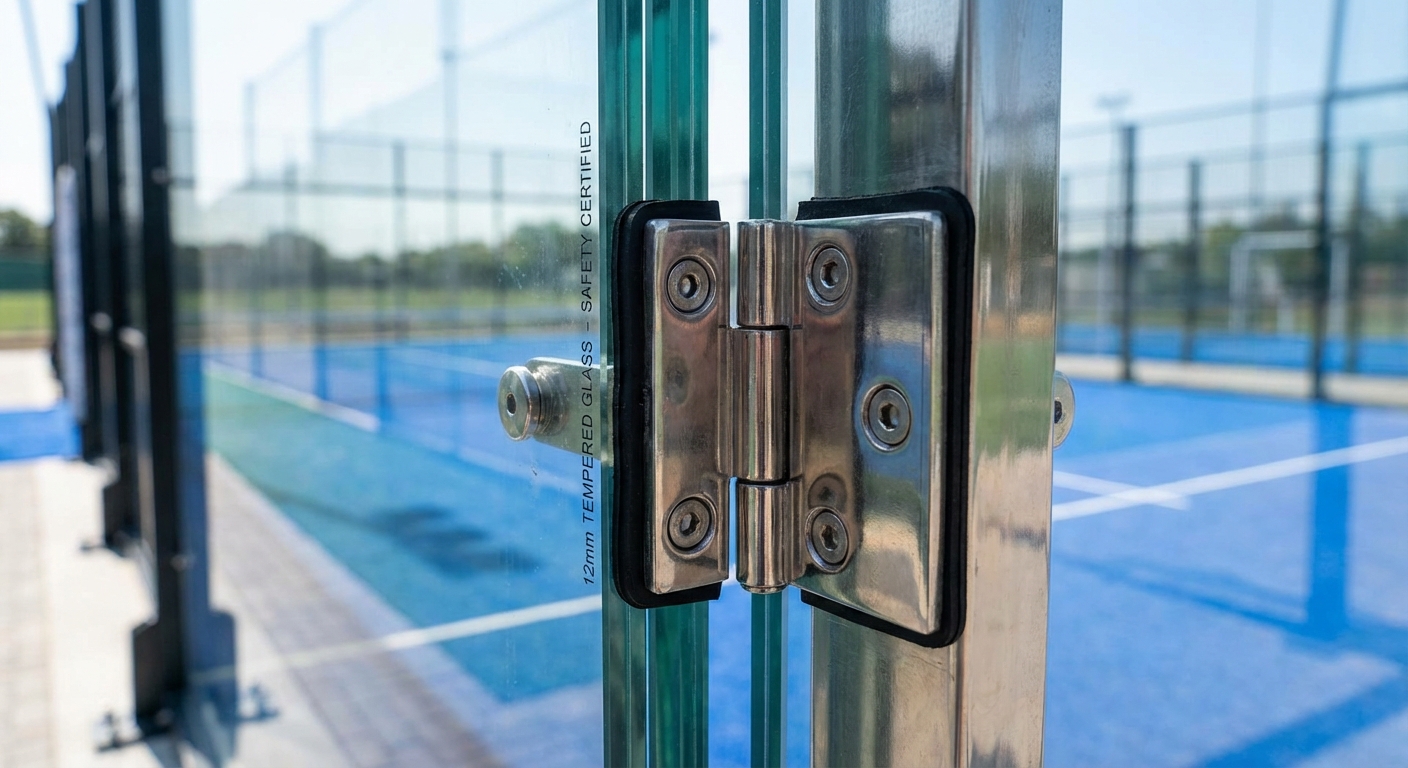
Safety certifications and impact resistance
You must use tempered Padel Glass that can withstand the impact of high-speed balls and player collisions. But wait, there’s more.
- Standard glass is 10mm thick, but 12mm is recommended for high-end clubs.
- Edges must be polished to prevent stress fractures during temperature changes.
- Counter-sunk holes ensure the fixing hardware is flush with the glass surface.
Key Takeaway: Investing in certified safety glass protects your players and reduces your long-term liability.
| Glass Type | Thickness | Application |
|---|---|---|
| Standard Tempered | 10mm | Club Use |
| Heavy Duty | 12mm | Pro / Tournament |
| Anti-Explosion | 12mm | High Safety |
The playing surface itself is equally important for player comfort and traction.
What turf works for padel tennis court construction?
Modern synthetic turf with silica sand infill provides the perfect balance of grip, slide, and consistent ball bounce. The right choice in padel tennis court construction prevents joint injuries and ensures the court looks professional for years.
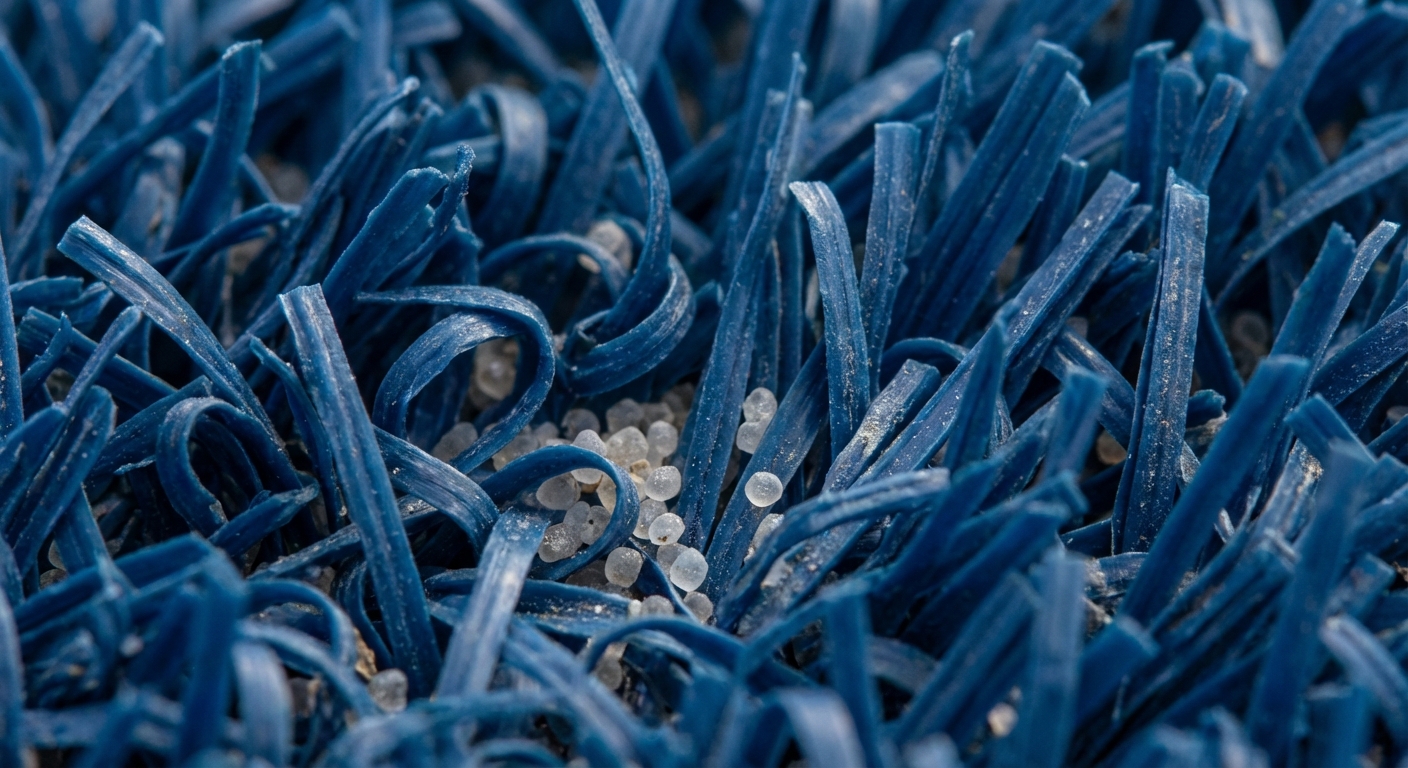
Fiber density and player safety
As you might expect, the quality of Padel Grass is determined by its Dtex rating and stitch density.
- Monofilament fibers are durable and offer a natural look.
- Textured or “curly” fibers require less sand maintenance.
- High-purity silica sand (0.2-0.5mm) is necessary for proper infill.
Key Takeaway: High-quality turf reduces maintenance needs and significantly improves the player experience.
| Fiber Type | Maintenance | Play Experience |
|---|---|---|
| Monofilament | Medium | Traditional |
| Fibrillated | High | Fast |
| Textured | Low | Consistent |
To extend playing hours into the evening, you must consider the lighting infrastructure.
How does light aid padel tennis court construction?
Professional lighting ensures the court is usable 24/7, effectively doubling your potential revenue hours. Precision in padel tennis court construction lighting prevents shadows and glare that can frustrate players during fast-paced matches.
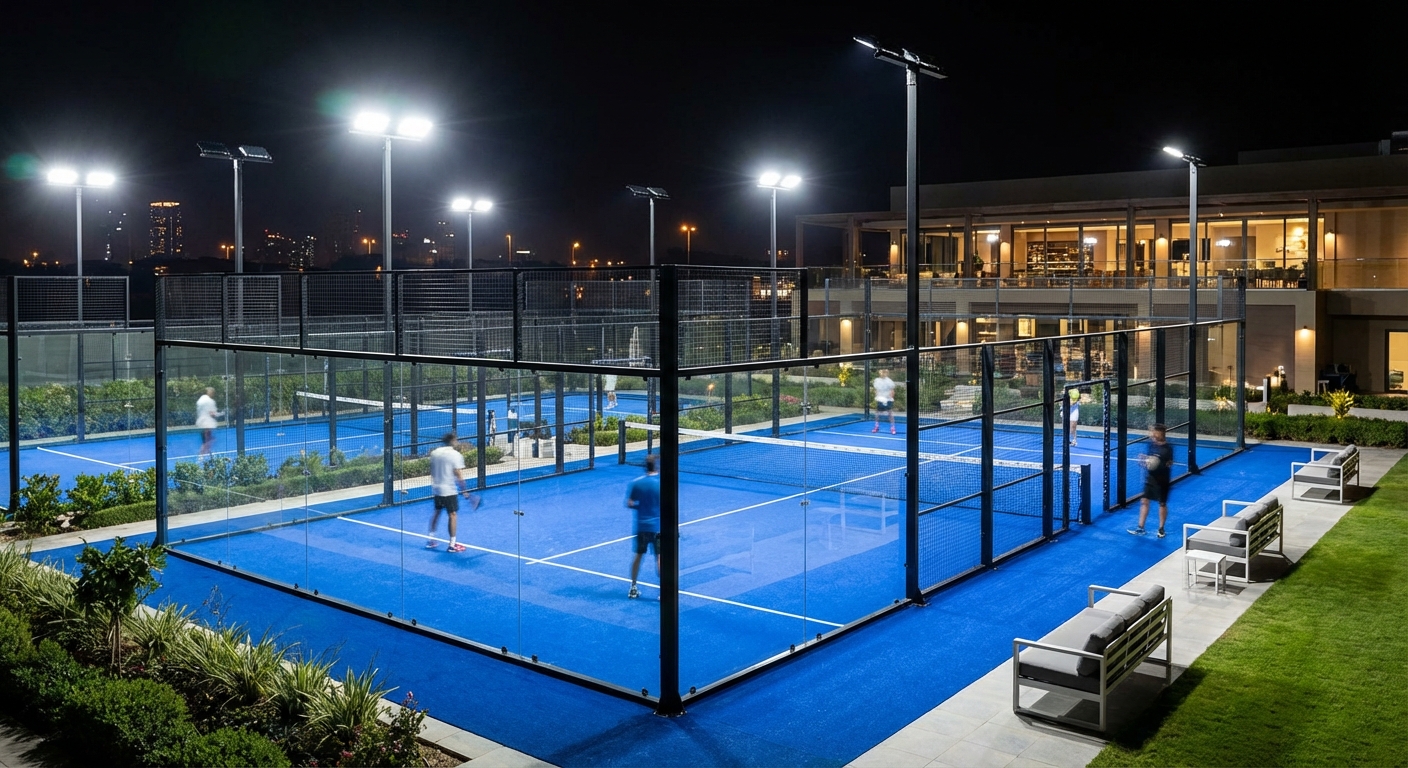
Lux requirements and asymmetric optics
In other words, you need powerful Padel LED Lighting that illuminates the ball even at high speeds.
- Minimum 300 lux is required for club play.
- 500-750 lux is the standard for professional tournaments.
- Asymmetric floodlights prevent “blinding” the players when they look up for a lob.
Key Takeaway: Proper lighting is a revenue multiplier that allows for high-demand evening bookings.
| Lighting Goal | Standard Metric | Result |
|---|---|---|
| Club Play | 300 Lux | Safe Vision |
| Professional | 500+ Lux | TV Quality |
| Uniformity | >0.7 | No Shadows |
For those looking for the ultimate aesthetic, a panoramic design is the gold standard.
Why use panoramic padel tennis court construction?
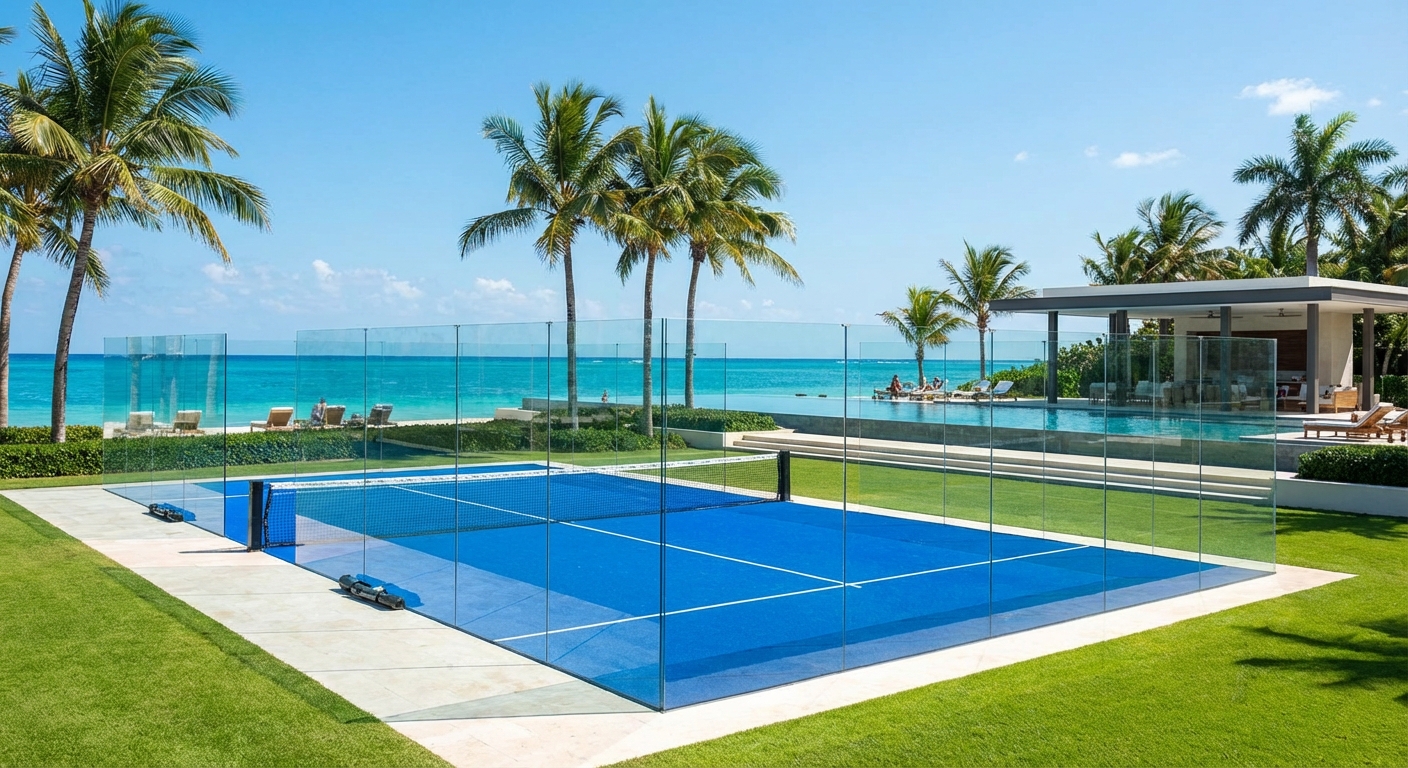
Panoramic designs replace structural pillars with thick glass joints to provide a 360-degree view of the action. High-end padel tennis court construction often utilizes this “frameless” look to attract premium members and television broadcasters.
Spectator visibility and premium aesthetics
Make no mistake, a Panoramic Padel Court is the centerpiece of any luxury sports facility.
- Eliminating rear pillars creates an immersive “fishbowl” effect.
- The lack of metal frames enhances the visual appeal of the venue.
- Spectators and cameras get an unobstructed view of every corner.
Key Takeaway: Panoramic courts are marketing magnets that signal your club’s status as a premium destination.
| Design Type | Pillar Usage | Visibility |
|---|---|---|
| Standard | Corner Pillars | Good |
| Panoramic | Glass-to-Glass | Exceptional |
| Full Panoramic | Zero Obstruction | Elite |
If your region faces harsh weather, adding a canopy can safeguard your investment.
Can covers improve padel tennis court construction?
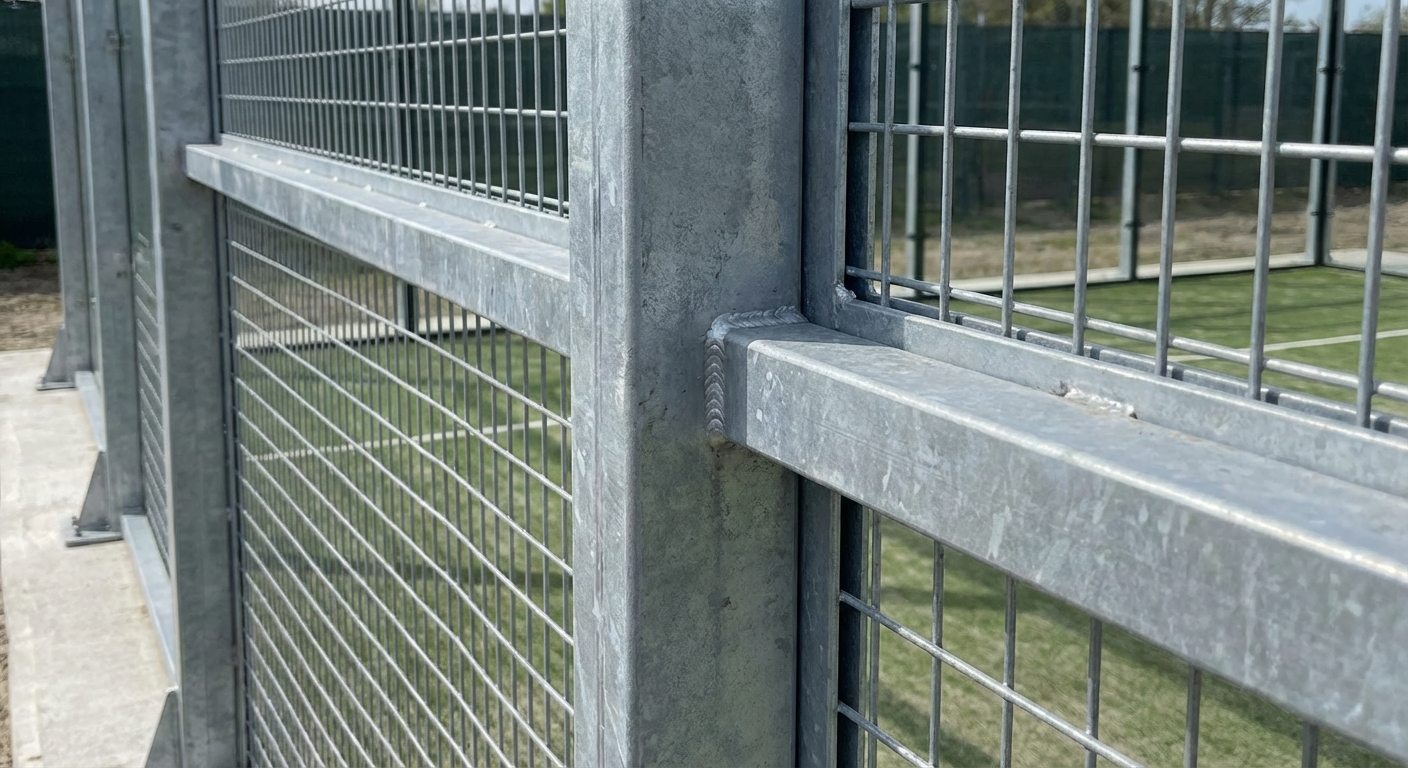
Adding a roof or canopy allows for year-round play regardless of rain, snow, or extreme summer heat. Integrating a Roofed Padel Court system into your padel tennis court construction plan ensures your revenue remains consistent throughout the seasons.
Climate protection and revenue continuity
Best of all, a covered court protects the turf and glass from UV degradation and water damage.
- Tensile fabric roofs are cost-effective and allow for natural light.
- Steel structures provide long-term durability in windy regions.
- High-clearance roofs (8m+) are necessary to allow for lobs.
Key Takeaway: Canopies eliminate “rain-out” days and keep your court rental schedule full 365 days a year.
| Cover Type | Advantage | Cost Level |
|---|---|---|
| Tensile Fabric | Airflow / Light | Medium |
| Metal Roof | Max Durability | High |
| Indoor Facility | Full Climate Control | Highest |
Finally, understanding the financial commitment is the last step before breaking ground.
What is the cost for padel tennis court construction?
The total cost depends on the quality of materials, site preparation, and whether you choose panoramic or standard features. Total padel tennis court construction costs typically range from $20,000 to $45,000 per court, excluding civil works.
Civil works and component assembly
Now for the details on where your budget actually goes.
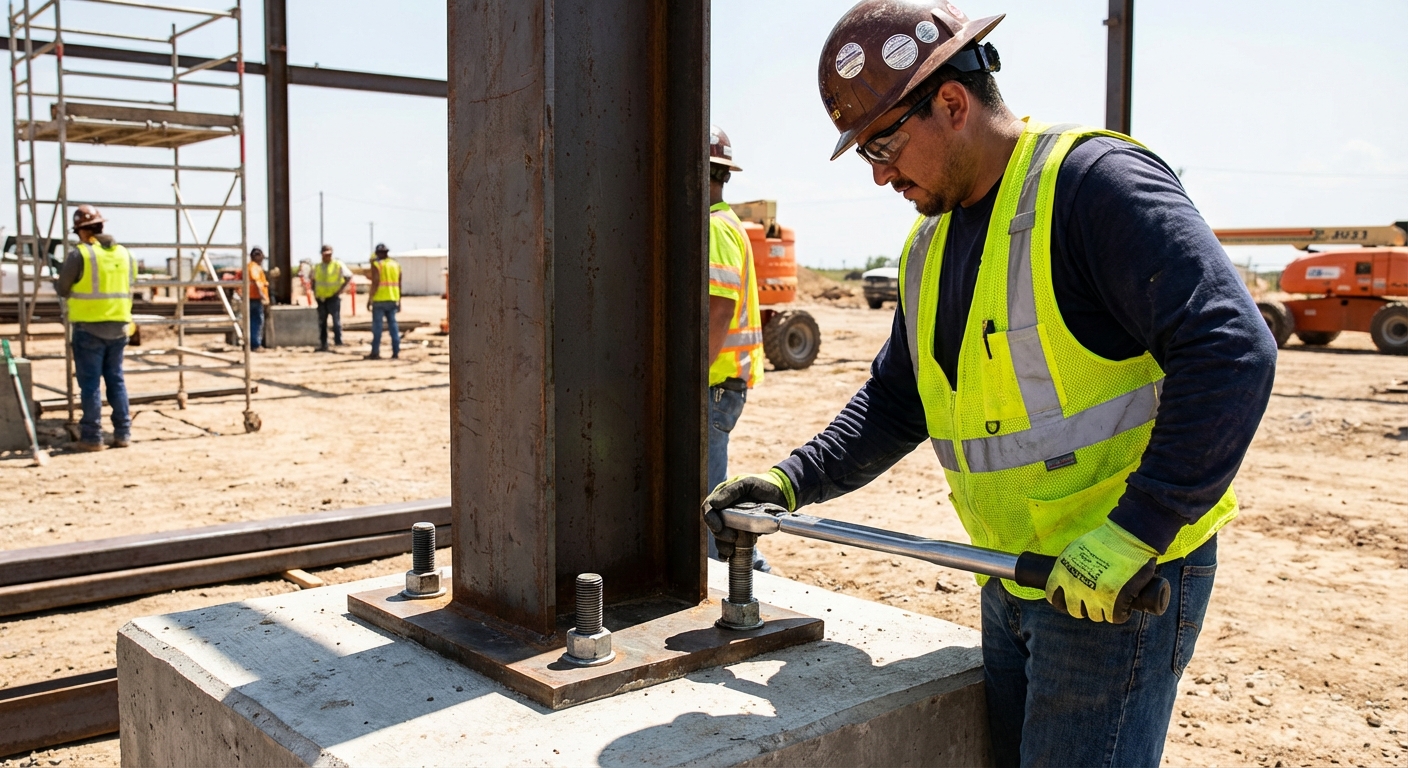
- Civil works (earthmoving and concrete) can take 30-40% of the budget.
- The metallic structure and glass are the core material expenses.
- Professional installation is required to ensure the glass is perfectly aligned.
Key Takeaway: Quality materials and expert installation are necessary to protect your long-term ROI and player safety.
| Expense Category | % of Budget | Key Factor |
|---|---|---|
| Foundations | 35% | Concrete Grade |
| Court Materials | 50% | Glass/Steel Quality |
| Installation | 15% | Laser Precision |
Building a world-class facility requires the right partner and the best technical components.
Conclusion
Mastering padel tennis court construction is the key to unlocking a high-revenue, low-maintenance sports facility. By solving the problem of inefficient space usage and addressing the agitation of weather-dependent revenue, you create a sustainable business model for the future of racket sports. Our vision is to provide every developer and club owner with the engineering precision needed to build iconic courts that stand the test of time.
Ready to build your dream facility? contact us today to receive a technical consultation and a customized quote for your project.
Frequently Asked Questions
Can I build a padel court on an old tennis court?
Yes, it is highly efficient. One tennis court footprint can comfortably fit two padel courts, doubling your revenue potential with minimal additional land work.
What’s the best glass thickness for a commercial club?
12mm is the best choice. It provides superior impact resistance for high-traffic environments and offers a much more solid ball bounce for experienced players.
How do I know if my site has enough drainage?
A professional soil test followed by a 1% slope gradient check is required. If water pools after rain, you likely need a porous sub-base or an integrated trench drainage system.
Can I install the court myself to save costs?
No, professional installation is mandatory. The precision required to align 200kg glass panels and seam synthetic turf is extremely high, and errors can lead to glass breakage or injury.
What’s the best way to maintain the turf?
Regular brushing is essential. You must redistribute the silica sand once a week to prevent the fibers from flattening, which keeps the bounce consistent and extends the turf’s lifespan.