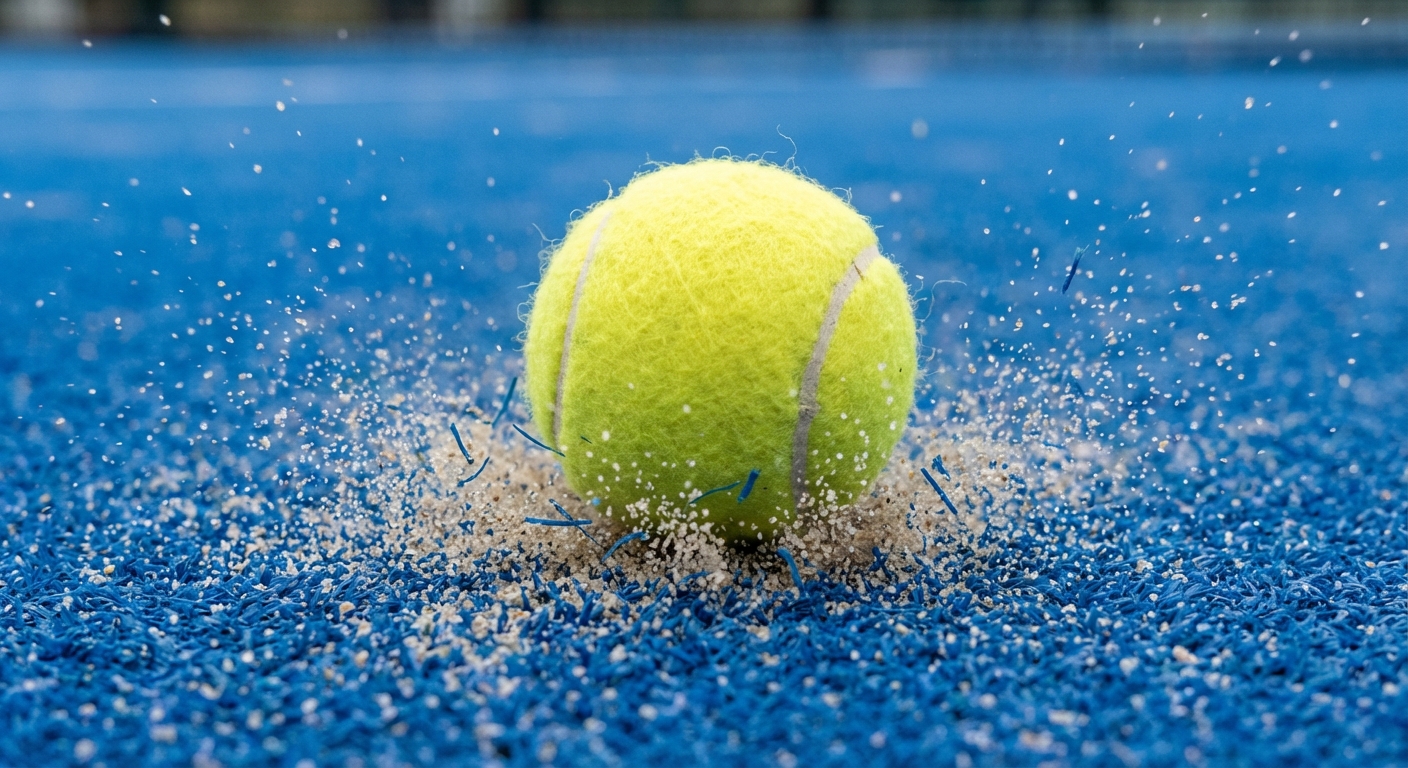
What is the composition of a padel court floor?
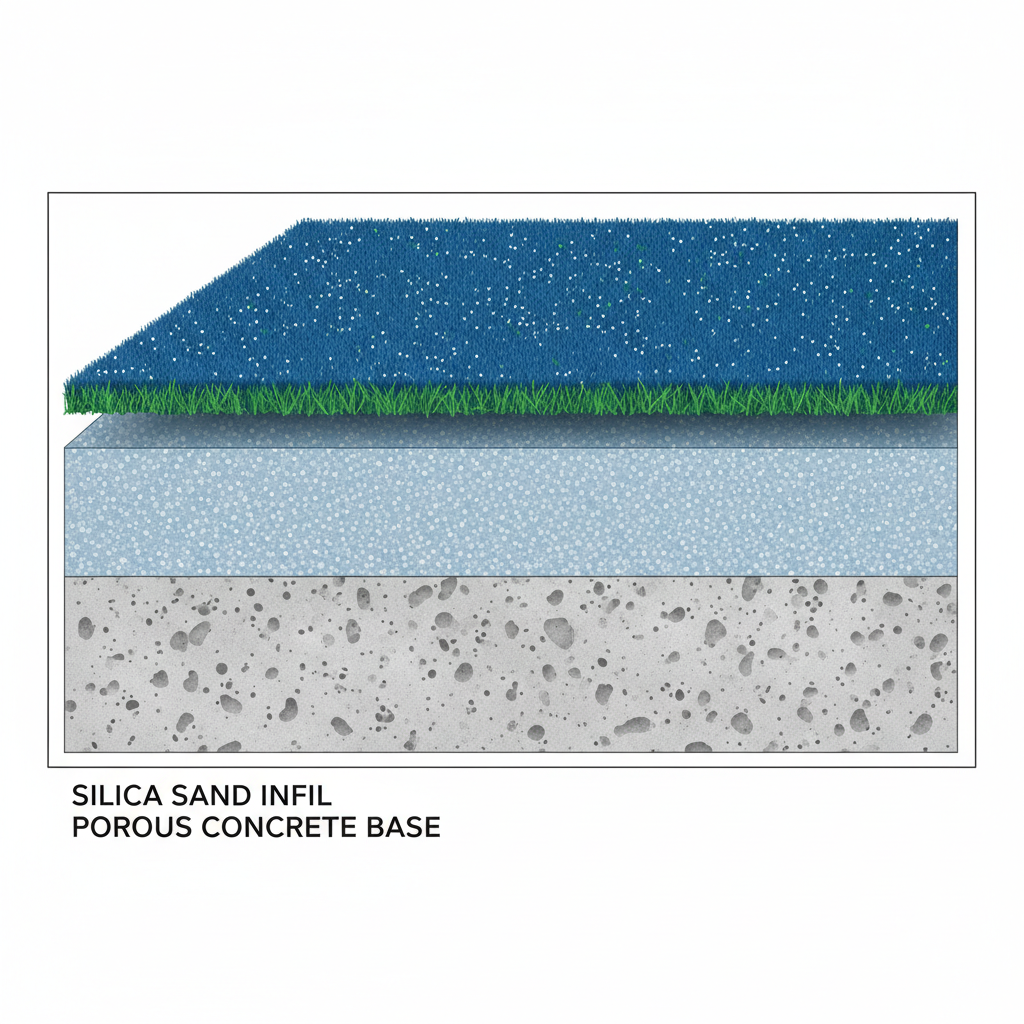
The technical build of a padel court surface consists of a high-performance synthetic turf layered over a stable, porous base and stabilized by specialized sand. You are not just buying a carpet; you are installing a precision-engineered system that manages friction and vertical deformation.
Synthetic Fibers and Infill Systems
Most professional setups utilize monofilament or fibrillated polyethylene fibers designed to withstand rapid lateral movements. The silica sand infill is brushed into these fibers to keep them upright and provide the necessary “slide” for players.
Think of it this way: the sand acts as the stabilizer that prevents the turf from matting while protecting the player’s ligaments.
- Monofilament Turf: Offers high durability and upright fiber memory.
- Fibrillated Turf: Provides a denser look and excellent sand retention.
- Silica Sand: Must be rounded and washed to prevent abrasive wear on the turf.
Key Takeaway: Understanding the layered anatomy of the court ensures you select materials that balance high-performance play with long-term durability.
| Layer | Material | Primary Role |
|---|---|---|
| Top Layer | Synthetic Polyethylene | Player grip and aesthetic finish |
| Stabilizer | Rounded Silica Sand | Ball bounce and fiber support |
| Structural Base | Porous Concrete/Asphalt | Leveling and rapid water drainage |
This layered approach guarantees that every square inch of the court performs consistently under various competitive conditions.
Why is the choice of playing surface so critical?
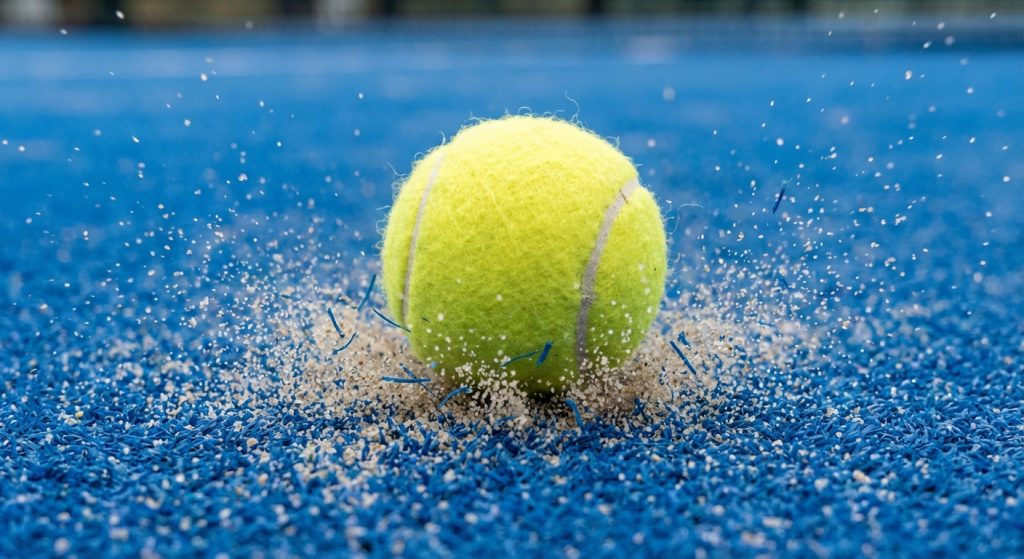
Selecting a high-quality padel court surface directly dictates the “speed” of the game and the physical longevity of your players. When you choose a padel court surface, you are essentially defining the brand identity of your club—whether it is a fast-paced pro hub or a safe, social environment.
Impact on Game Speed and Safety
The density of the turf and the volume of sand used determine how much energy the ball retains after hitting the floor. A well-maintained surface reduces the impact on ankles and knees, significantly lowering the risk of chronic injury.
The bottom line is: player comfort leads to higher booking rates and member retention.
- Shock Absorption: High-quality turf minimizes the vertical load on joints.
- Friction Control: Proper sand levels allow for controlled sliding without catching.
- Bounce Consistency: A level surface ensures the ball reacts predictably every time.
Key Takeaway: The surface is the primary interface between the player and the game, making it the most vital investment for safety and playability.
| Performance Metric | High Quality | Low Quality |
|---|---|---|
| Joint Impact | Low / Dampened | High / Stressful |
| Ball Speed | Predictable | Erratic |
| Player Confidence | High (Good Grip) | Low (Slippery/Stiff) |
Evaluating these metrics allows you to justify the cost of premium materials through improved player health outcomes.
How do environmental factors influence your surface selection?
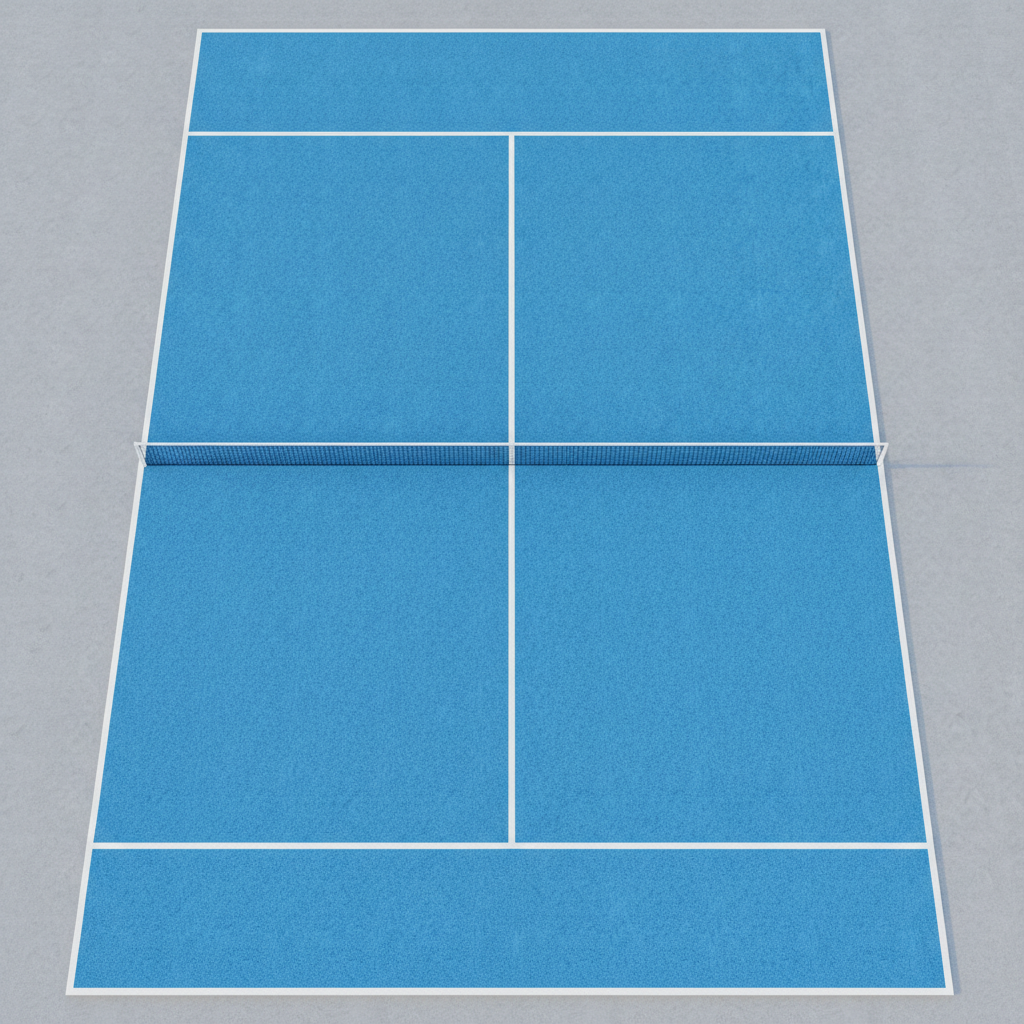
Your local climate dictates the specific UV resistance and drainage capacity required for your padel court surface. Outdoor installations face extreme temperature shifts and direct sunlight that can degrade synthetic fibers in just a few seasons.
Weather Resistance and Durability
You must choose a turf with high UV stabilization to prevent the blue or green color from fading and the fibers from becoming brittle. Proper drainage prevents the sub-base from shifting, which could cause hazardous unevenness in the playing area.
Let’s be honest: a court that stays wet for hours after rain is a lost revenue opportunity.
- UV Treatment: Prevents fiber degradation in high-sunlight regions.
- Porous Sub-base: Allows water to pass through the turf and foundation instantly.
- Color Fastness: Ensures the court looks professional for years, not months.
Key Takeaway: Tailoring your surface choice to your local environment prevents premature replacement costs and maximizes your court’s daily uptime.
| Factor | Outdoor Requirement | Indoor Requirement |
|---|---|---|
| UV Protection | High / Mandatory | Low / Optional |
| Drainage | Vertical / Rapid | Minimal / Not Needed |
| Maintenance | Frequent Debris Removal | Humidity Control |
Matching these requirements to your specific site conditions is the first step in a successful build.
What are the official dimensions for a padel area?
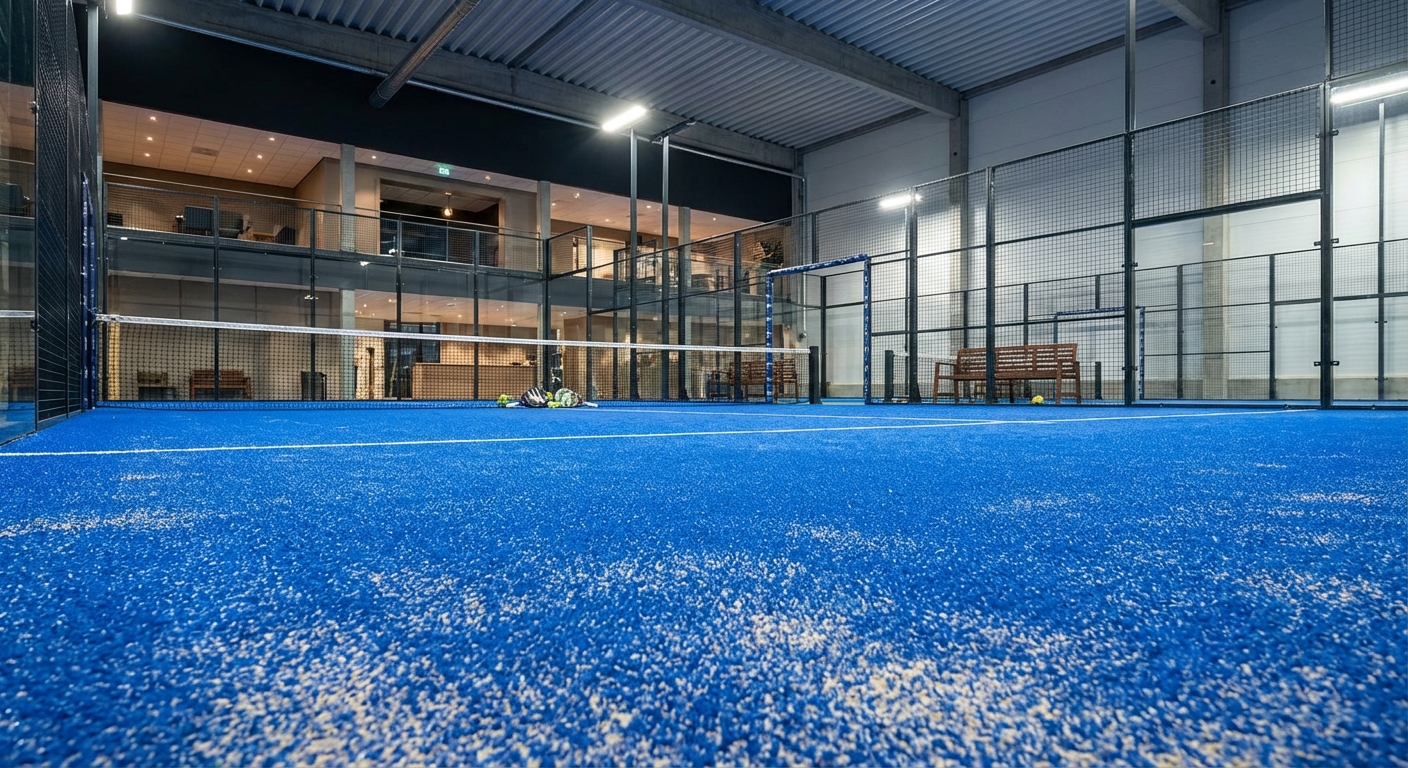
The standard padel court surface must cover an area of exactly 10 meters in width and 20 meters in length. Adhering to these padel court surface standards is non-negotiable if you plan to host sanctioned tournaments or professional events.
Precision Layout and Boundary Rules
The playing area is divided by a central net, with service lines situated 6.95 meters from the net on both sides. You must also account for the space required for the glass walls and metallic mesh, which sit directly on the perimeter of the surface.
Here’s the kicker: even a 5-centimeter error can make your court ineligible for official play.
- Total Area: 200 square meters of playable turf.
- Line Width: Standard 5cm white lines integrated into the turf.
- Safety Zones: Minimum 2-meter clearance for out-of-court play in pro setups.
Key Takeaway: Strict adherence to international dimensions ensures your facility meets the expectations of high-level players and official organizations.
| Zone | Measurement | Tolerance |
|---|---|---|
| Length | 20.00 Meters | +/- 0.5% |
| Width | 10.00 Meters | +/- 0.5% |
| Service Line | 6.95 Meters from Net | Exact |
Standardizing your build dimensions protects the long-term competitive value of your real estate investment.
How is the structural foundation for the court prepared?
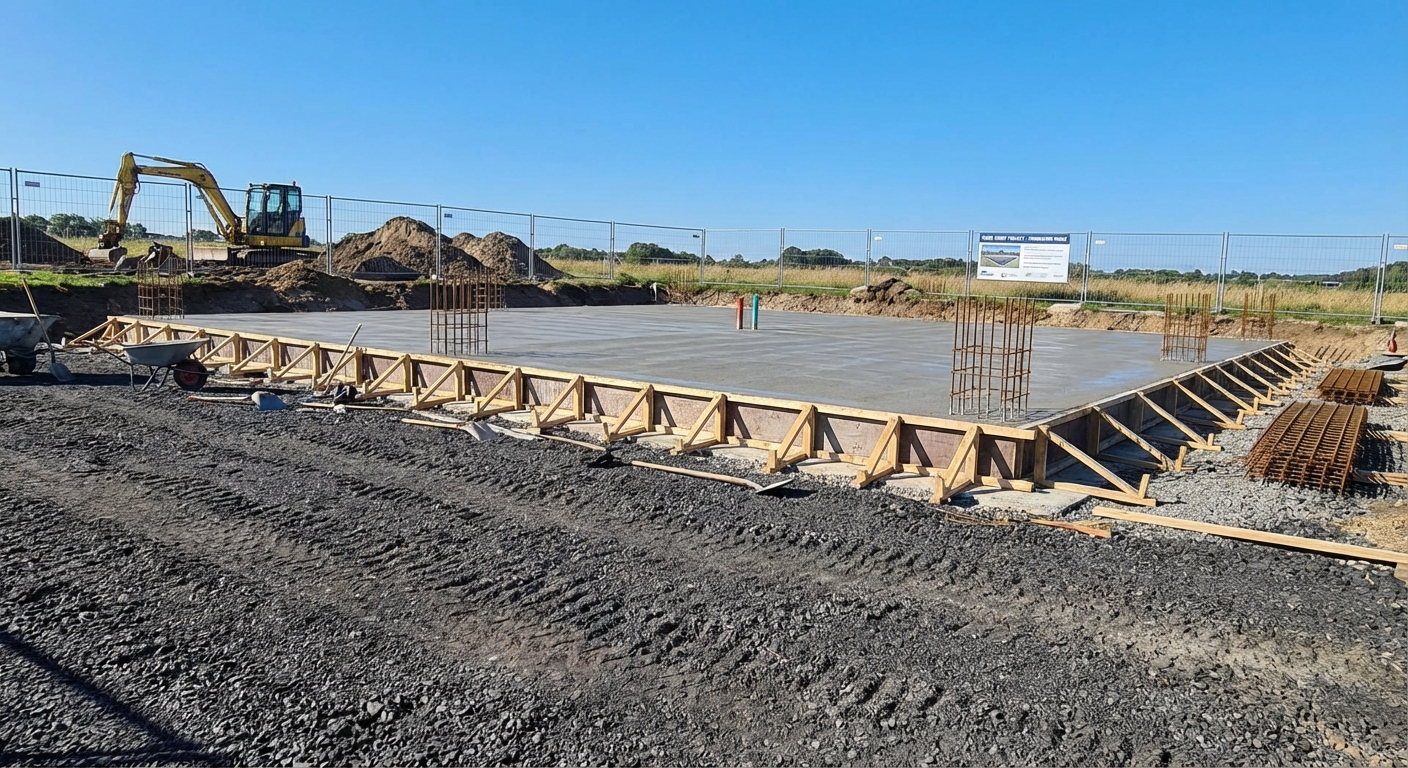
A robust foundation is the only way to ensure your padel court surface remains perfectly level over time. Without a reinforced concrete or asphalt slab, the turf will eventually ripple, creating “dead spots” where the ball refuses to bounce.
Excavation and Sub-grade Stability
You need to remove at least 25-30cm of topsoil and replace it with compacted gravel and a moisture barrier. This prevents organic rot and shifting, providing a rock-solid platform for the final surface layer.
It gets better: a properly sloped foundation (0.5% to 1%) allows for natural water runoff, protecting your turf from stagnant pools.
- Compaction: Must reach 95% Proctor density to prevent sinking.
- Reinforcement: Steel mesh in the concrete slab prevents cracking under pressure.
- Surface Finish: Must be smooth enough to prevent the turf from wearing out from below.
Key Takeaway: The quality of the invisible work beneath the turf determines the lifespan and playability of the visible surface.
| Construction Phase | Critical Task | Risk of Failure |
|---|---|---|
| Excavation | Soil stabilization | Surface subsidence |
| Foundation | Reinforced concrete slab | Structural cracking |
| Leveling | Laser-guided screeding | Inconsistent ball bounce |
Investing in high-quality groundwork prevents the need for expensive turf re-leveling in the future.
What steps are involved in laying synthetic turf?
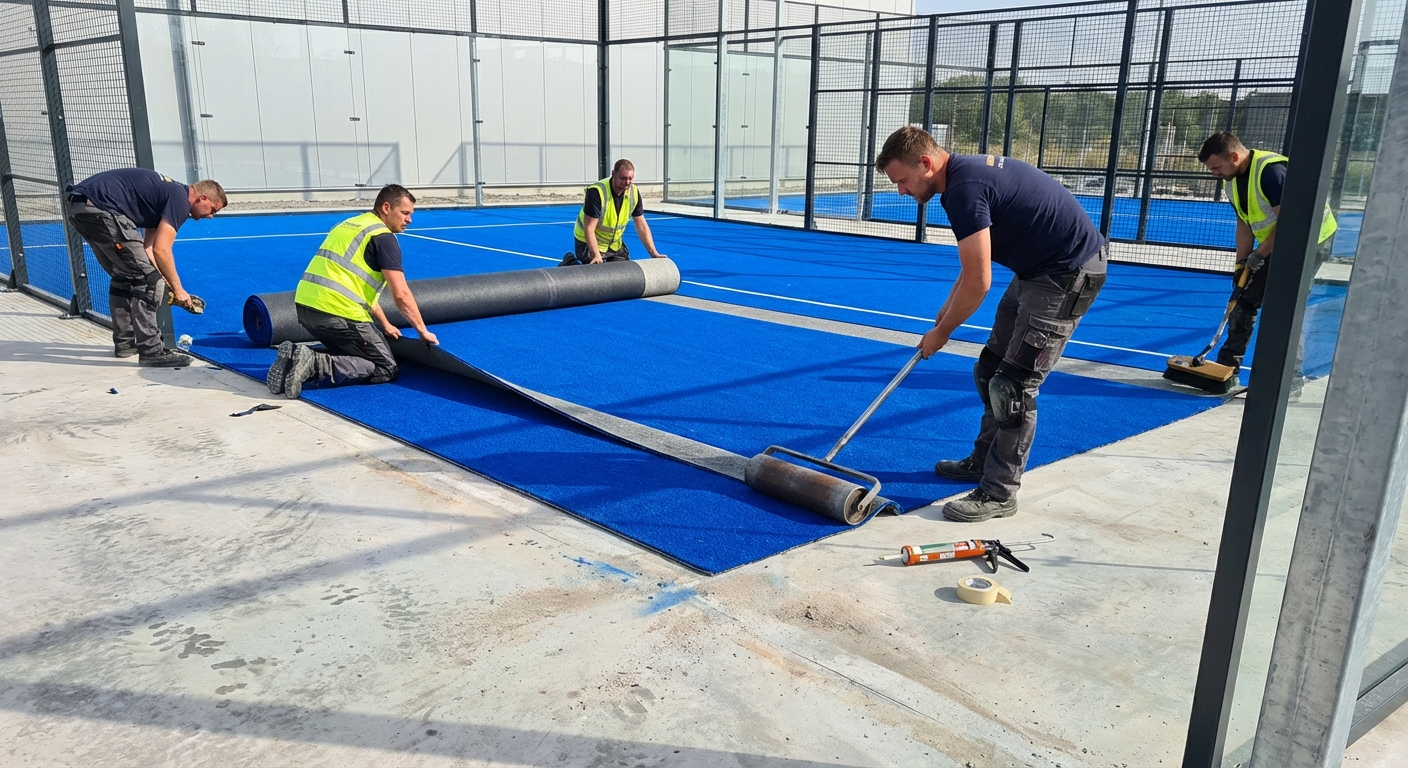
Installing a padel court surface requires unrolling the turf, joining the seams with high-strength adhesive, and infilling with silica sand. For a professional result, many owners opt for a padel court surface installation that focuses on seamless aesthetics and precise line cutting.
Seam Joining and Line Integration
The turf rolls must be aligned with millimeter precision before using specialized joining tape and two-part polyurethane glue. Once the main area is set, white lines are cut into the blue or green turf to ensure they never fade or peel.
Wait, there’s more: the sand must be spread in multiple thin layers to ensure it reaches the base of every fiber.
- Glue Application: Requires dry conditions for a permanent chemical bond.
- Mechanical Brushing: Essential for working the sand deep into the pile.
- Tensioning: The turf must be stretched correctly to avoid future wrinkles.
Key Takeaway: Professional installation techniques guarantee a surface that looks uniform and performs consistently for up to a decade.
| Installation Step | Detail | Success Metric |
|---|---|---|
| Unrolling | Acclimatize turf rolls | No permanent creases |
| Seaming | High-tensile adhesive | Invisible, flush joints |
| Infilling | 12-15kg of sand per sqm | Even distribution across court |
The precision of the installation phase directly impacts the player’s perception of your facility’s quality.
How do roofed facilities affect the flooring requirements?
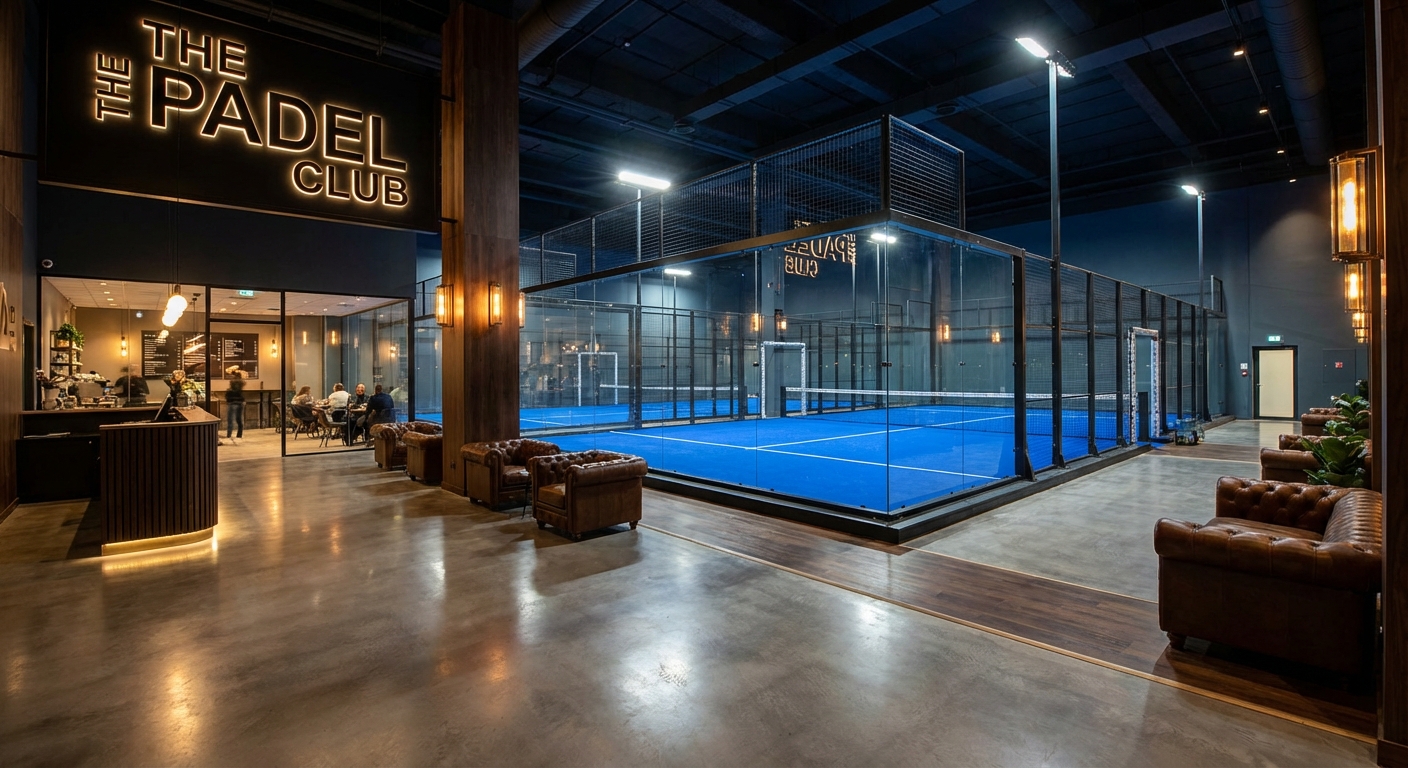
When you install a padel court surface under a roof, you eliminate rain concerns but introduce challenges like humidity and static. Indoor courts do not benefit from natural wind, which means dust and moisture can linger longer on the surface.
Humidity Control and Sand Selection
In enclosed environments, you may need to choose a specialized coated sand that prevents clumping in high-humidity conditions. Since UV degradation is not a factor, you can focus your budget on higher-density fibers that offer a “plush” professional feel.
In other words, indoor surfaces allow for more luxury, but they require better climate management.
- Airflow: Essential to keep the sand dry and free-flowing.
- Dust Management: Vacuuming becomes more important than outdoor brushing.
- Static Reduction: Specialized turf coatings prevent shocks in dry indoor air.
Key Takeaway: Indoor courts offer the most consistent play environment but require specific maintenance to manage air quality and humidity.
| Feature | Indoor Focus | Outdoor Focus |
|---|---|---|
| Primary Threat | Humidity / Dust | UV / Heavy Rain |
| Turf Selection | High Density / Aesthetic | Durability / UV Resistant |
| Sand Type | Anti-clumping | Standard Silica |
Managing the indoor climate ensures your premium surface remains in tournament-ready condition year-round.
What determines the total investment for a court build?
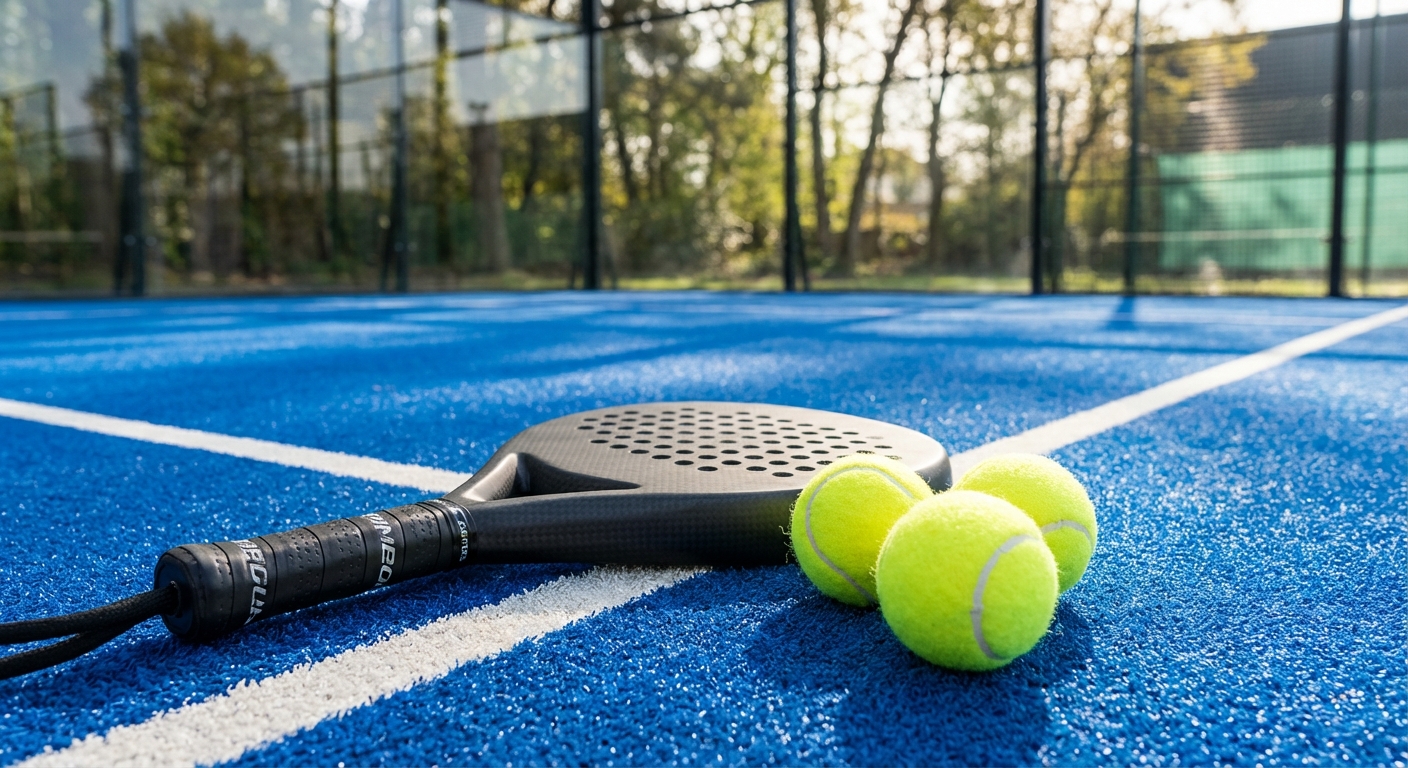
The cost of your padel court surface depends on fiber quality, foundation complexity, and the level of customization. When planning a padel court surface, you must look at the total cost of ownership rather than just the initial sticker price.
Material Quality vs. Replacement Frequency
Cheap turf might save you money today, but it often needs replacing in four years instead of ten. Premium monofilament fibers and high-grade silica sand reduce long-term maintenance labor and enhance the resale value of your facility.
The bottom line is: durability is the most effective way to protect your ROI.
- Turf Grade: High-density monofilament is the gold standard for longevity.
- Foundation Type: A porous concrete slab is more expensive but prevents drainage issues.
- Logistics: Shipping and expert installation teams add to the upfront cost.
Key Takeaway: Investing in premium materials upfront significantly lowers your annual operating costs and improves the player experience.
| Cost Component | Budget Option | Premium Option |
|---|---|---|
| Synthetic Turf | Fibrillated (Low Density) | Monofilament (High Density) |
| Foundation | Asphalt | Reinforced Porous Concrete |
| Infill | Local Raw Sand | Rounded, Coated Silica |
Choosing premium components ensures your court remains a high-revenue asset for many years.
How do you maintain the longevity of the turf?
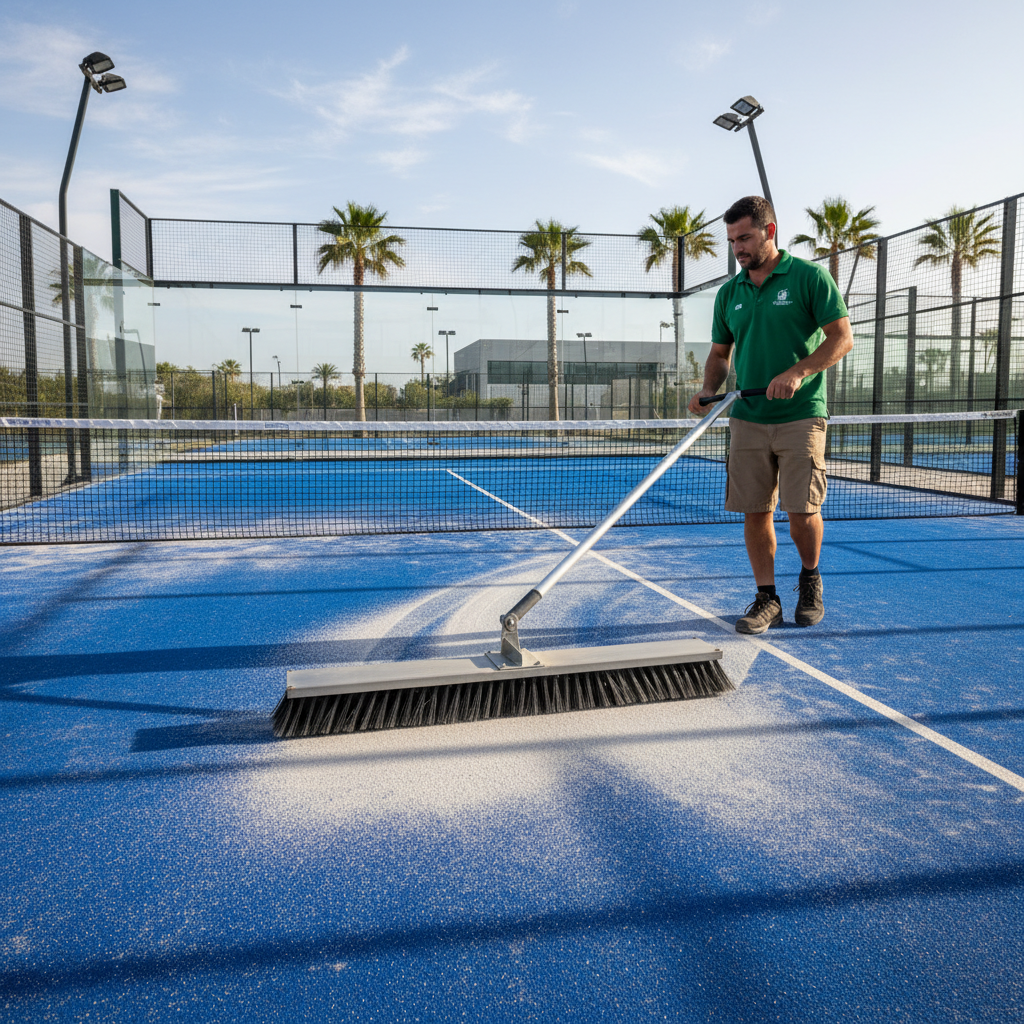
Regular maintenance of your padel court surface is essential to prevent the sand from compacting and the fibers from flattening. Neglecting your court for even a few months can lead to a slippery surface that is dangerous for players and damaging to the turf.
Brushing Protocols and Sand Top-ups
You should mechanically brush the court weekly to redistribute the sand that naturally moves toward the corners during play. This keeps the pile upright, protecting the base of the fibers from UV exposure and abrasive wear.
Don’t overlook this: checking sand levels every month ensures the ball continues to bounce at the correct height.
- Debris Removal: Prevent leaves and dirt from clogging the drainage pores.
- Deep Cleaning: Annual professional grooming removes deep-seated contaminants.
- Weed Control: Essential for outdoor courts to prevent structural damage.
Key Takeaway: A simple weekly maintenance routine can extend the life of your surface by several years and keep players coming back.
| Task | Frequency | Main Benefit |
|---|---|---|
| Brushing | Weekly | Prevents sand compaction |
| Level Check | Monthly | Maintains consistent bounce |
| Deep Clean | Annually | Restores drainage and traction |
Consistency in care is the difference between a court that looks new for a decade and one that fails early.
How does panoramic design impact the installation process?
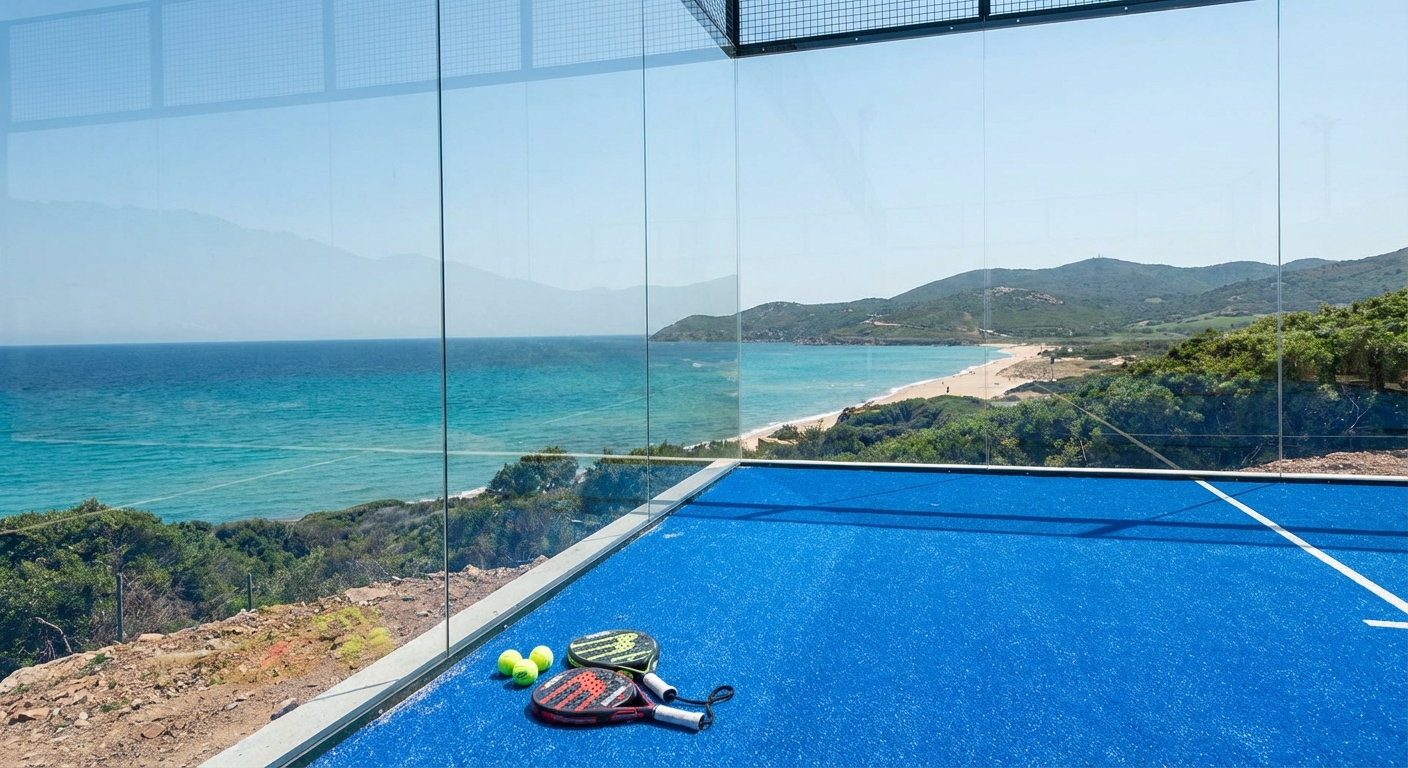
A panoramic design requires a more precise padel court surface integration because the glass walls lack the vertical pillars of standard courts. When you install a padel court surface with a panoramic view, the perimeter anchoring must be flawless to maintain structural integrity.
Structural Anchoring and Vibration Management
The concrete slab must be thicker at the edges to support the heavier glass panels used in panoramic setups. This ensures that when a player crashes into the glass, the vibration does not cause the surface to shift or crack.
The best part? This design provides an unobstructed view of the high-quality turf, making your facility a magnet for spectators.
- Perimeter Strength: Enhanced steel reinforcement around the edges.
- Visual Flow: Seamless turf-to-glass transition for a luxury aesthetic.
- Player Focus: Reduced visual clutter helps players track the ball better.
Key Takeaway: Panoramic structures demand higher precision in foundation engineering but offer the highest aesthetic and commercial appeal.
| Design Type | Foundation Need | Aesthetic Value |
|---|---|---|
| Standard | Basic Reinforced Slab | Traditional / Reliable |
| Panoramic | Heavy-Duty Perimeter | Luxury / High ROI |
| Super Panoramic | Max Reinforcement | Professional / Iconic |
Selecting a panoramic design elevates your brand and provides a premium surface experience that justifies higher booking fees.
*
Conclusion
Building a professional facility requires more than just choosing a color; it involves a deep understanding of how a padel court surface interacts with players, the environment, and the structural foundation. By prioritizing high-density monofilament turf, a rock-solid porous base, and consistent maintenance, you solve the most common problems of player injury and surface degradation. Our vision at SuperbPadel is to provide the engineering excellence and high-performance materials needed to transform any space into a world-class sports destination. Whether you are building a private residential court or a massive commercial club, we are committed to ensuring your investment stands the test of time. To get started on your customized build or to explore our premium turf options, contact us today for expert guidance.