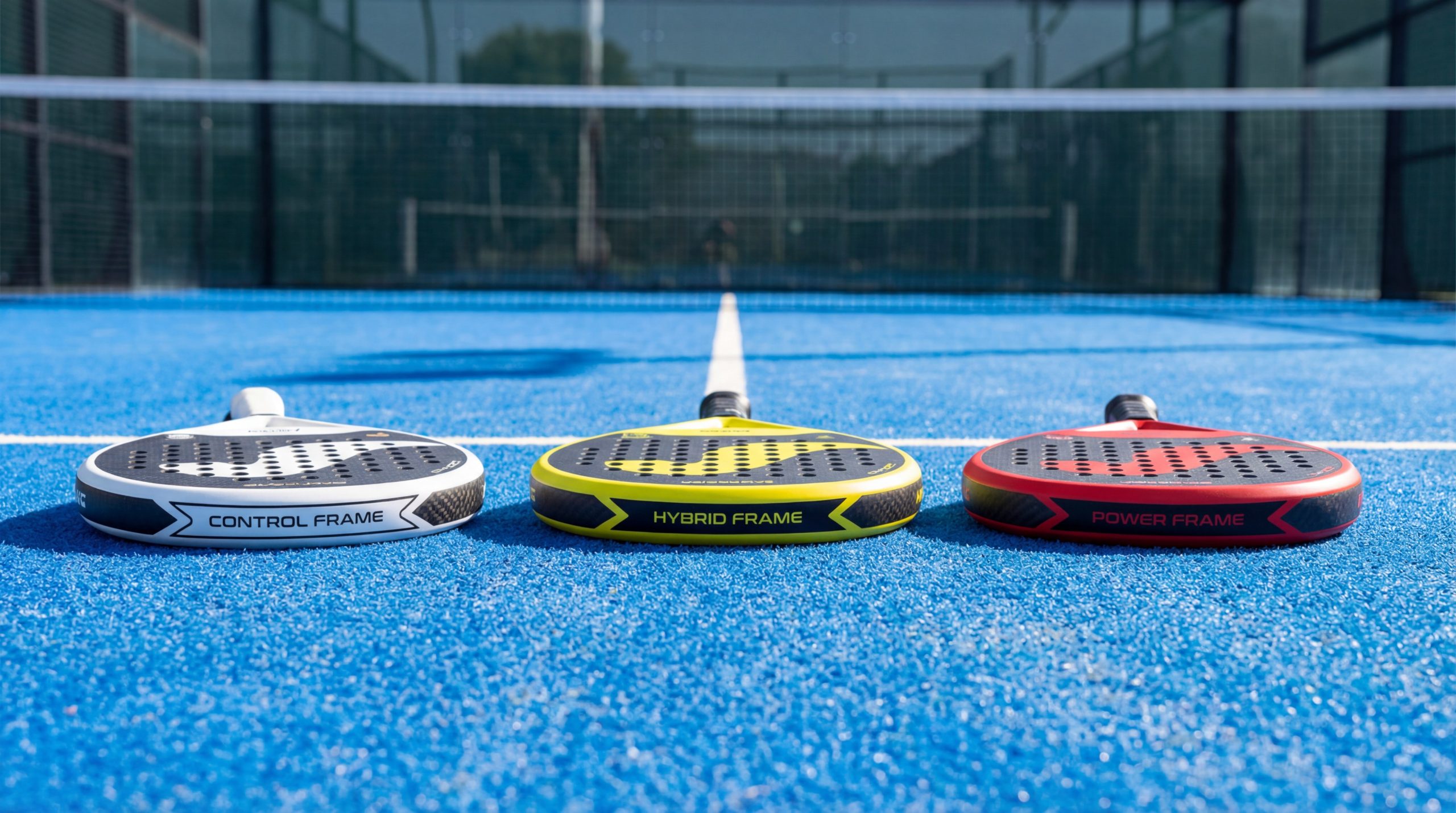
Navigating the world of padel requires the right technical knowledge and the correct gear to ensure peak performance on the court. If you are struggling with inconsistent shots or lack of control, the issue often lies not in your technique, but in your choice of padel tennis equipment. Using subpar gear can lead to unnecessary physical strain and a frustrating plateau in your skill development. By investing in high-quality components and understanding how to build a professional-grade setup, you can transform your game into a strategic and powerful experience.
Why is choosing the right padel tennis equipment essential for your game?
Selecting the appropriate padel tennis equipment is the foundation of every successful player’s journey, especially when playing on high-performance surfaces like a panoramic padel court. The unique nature of padel, which combines speed with strategic rebounds, demands a specific level of responsiveness from your gear. Without the correct specifications, you may find yourself struggling to react to fast-paced volleys or failing to generate enough spin on the ball.
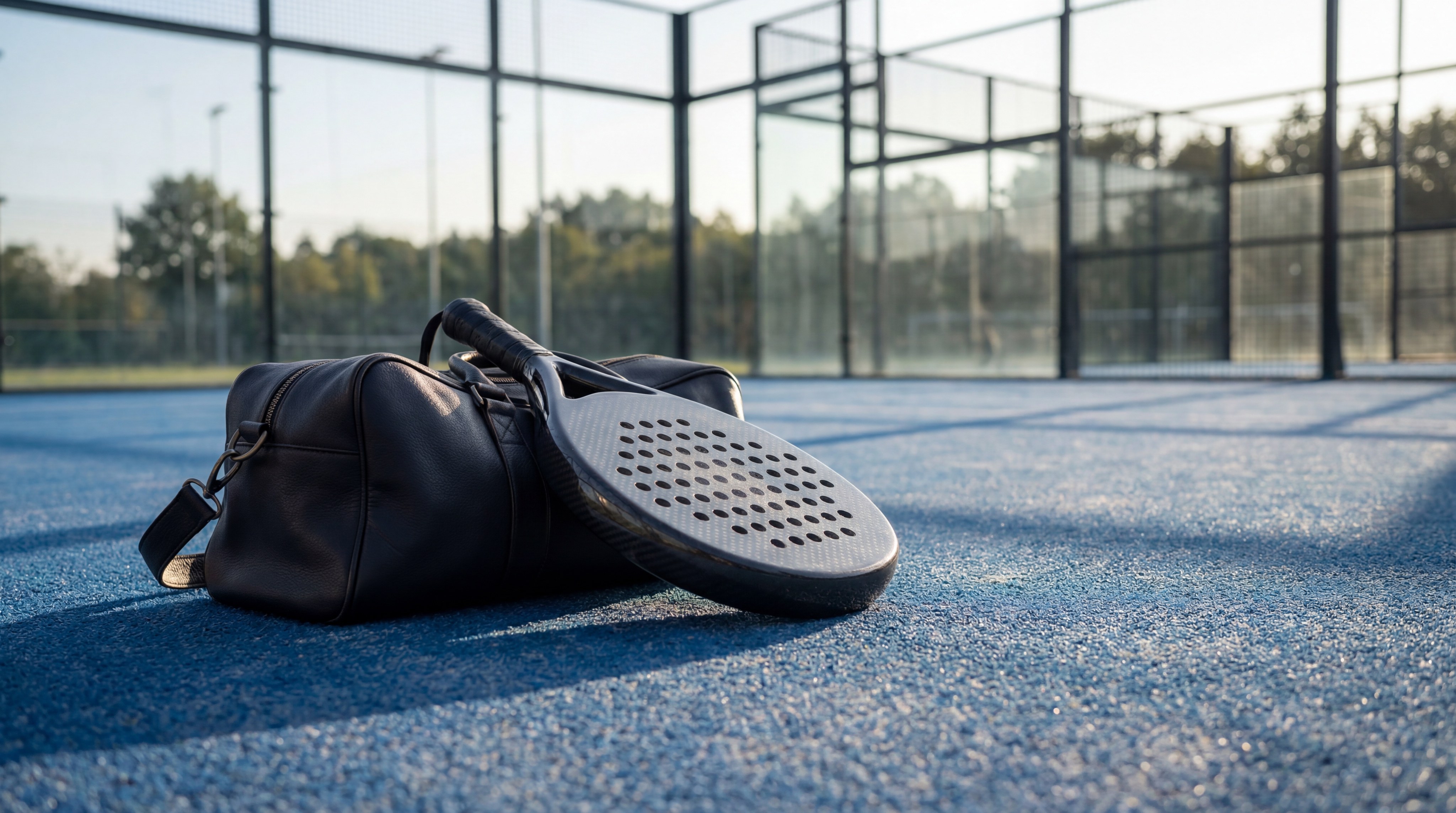
Think about it: the right racket or footwear acts as an extension of your body. When your gear aligns with your physical capabilities, you experience a significant boost in confidence and execution. High-quality materials allow for better shock absorption and energy transfer, which are critical for maintaining a competitive edge during long rallies.
The Role of Aerodynamics and Balance
In the fast-moving environment of a padel match, the weight distribution of your racket determines how quickly you can reset your position. A well-balanced frame allows you to swing with precision while reducing the torque on your wrist and elbow.
- Head-heavy rackets: Designed for increased power in smashes and aggressive play.
- Even-balance rackets: Offer a versatile mix of control and power for all-court players.
- Handle-heavy rackets: Provide maximum manoeuvrability for defensive shots.
- Weight ranges: Typically vary between 360g and 375g to suit different strength profiles.
Injury Prevention Through Technical Specifications
Your safety on the court is directly linked to the quality of the materials you use. Modern construction techniques utilise carbon fibre and specialised foam cores to dampen the vibrations that cause common ailments like tennis elbow.
- Vibration dampening: Integrated systems in the racket neck to protect joints.
- Core density: Softer cores absorb more impact; harder cores offer more feedback.
- Grip thickness: Properly sized grips prevent over-tightening of the hand muscles.
Section Summary: Performance and Safety Benefits
| Benefit | Description | Impact on Play |
|---|---|---|
| Power Efficiency | Optimised energy transfer from the core. | Harder smashes. |
| Joint Protection | Reduced vibration through carbon frames. | Fewer injuries. |
| Tactical Control | Enhanced ball feel on the racket face. | Better placement. |
What defines the core components of professional padel tennis equipment?
The architecture of professional padel tennis equipment is distinct from traditional tennis or squash gear, relying on a combination of solid, stringless rackets and low-compression balls. Understanding these core components is the first step in building a setup that meets international competitive standards and ensures a true bounce across the entire court surface.
You cannot simply substitute tennis gear and expect the same results. The physics of the padel ball’s interaction with the racket face and the glass walls requires specialised equipment. Each piece of kit serves a unique purpose in the ecosystem of the game, from the shoes that provide lateral stability to the court surfaces themselves.
The Anatomy of the Professional Racket
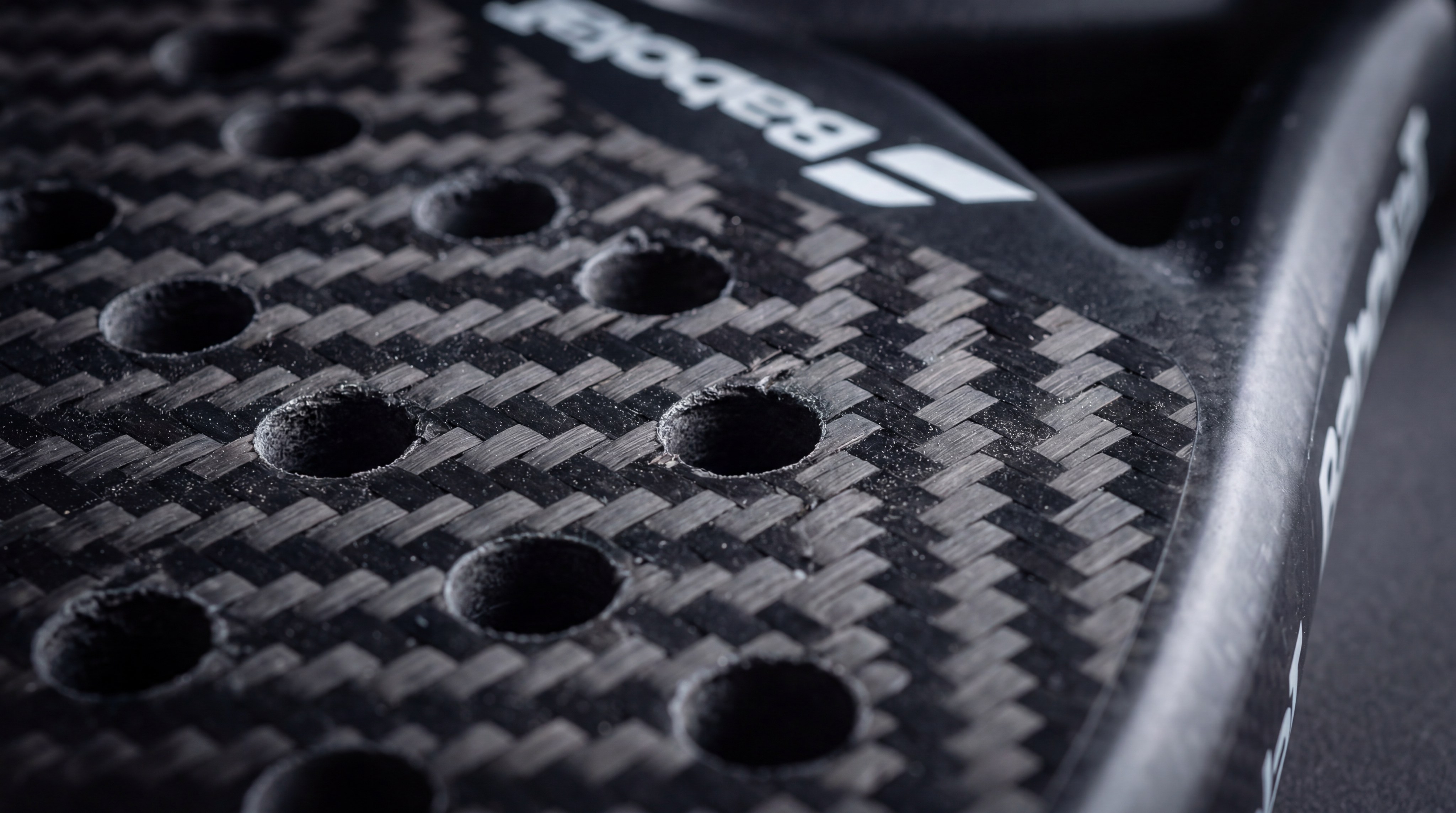
A professional racket is defined by its lack of strings and the presence of holes drilled into the hitting surface. These holes are strategically placed to reduce air resistance and improve the “sweet spot” of the tool.
- Perforation patterns: Designed to balance weight and air flow.
- Frame reinforcement: Includes a protective strip to prevent damage from wall contact.
- Safety straps: A mandatory wrist cord to prevent the racket from flying off during play.
- Shape variations: Diamond, teardrop, and round shapes cater to different tactical styles.
Ball Pressure and Material Composition
Padel balls are significantly different in internal pressure and felt thickness compared to tennis balls. They are designed to be slightly smaller and have a lower bounce to keep the game within the confines of the court walls.
- Internal pressure: Generally ranges between 10psi and 11psi for optimal bounce.
- Felt quality: High-synthetic content allows for better durability on abrasive turf.
- Visibility: Usually bright yellow or orange to stand out against court colors.
Section Summary: Technical Hardware Specifications
| Component | Technical Detail | Primary Function |
|---|---|---|
| Racket Face | Carbon/Fiberglass mix. | Structural integrity and power. |
| EVA Core | High-rebound foam. | Ball compression and feel. |
| Padel Ball | 13.5-14.5 PSI (standard). | Controlled rebound height. |
How do you select padel tennis equipment based on your playing level?
Choosing padel tennis equipment that matches your current skill level is vital for consistent improvement and enjoyment of the sport. As you move from foundational play to tactical mastery, your equipment should transition from forgiveness and comfort to precision and power.
There is a clear hierarchy of gear designed to grow with you. It is about finding the “sweet spot” between what you can handle and what the equipment can provide. For instance, an advanced player needs a stiffer frame to handle higher ball speeds, whereas a beginner needs a more flexible surface to help generate depth.
Entry-Level Gear for Skill Acquisition
For those just starting, the focus should be on “forgiveness”—equipment that helps you keep the ball in play even when your timing isn’t perfect. Round rackets with a wide sweet spot are the standard choice here.
- Round shape: Large central hitting area for consistent ball contact.
- Fiberglass face: More flexible than carbon, providing a softer, more comfortable feel.
- Lightweight construction: Reduces fatigue as you build up necessary muscles.
Advanced Requirements for Competitive Play
As you reach a competitive level, you need gear that can handle the increased speed and spin of the modern game. This usually means moving towards teardrop or diamond shapes and stiffer materials like high-grade carbon fibre.
- Diamond shape: Shifts the weight to the top for maximum leverage in smashes.
- Carbon 18K: An extremely stiff weave that provides surgical precision for experts.
- Textured surfaces: Advanced 3D patterns to increase the RPM on sliced shots.
Section Summary: Skill-Based Equipment Selection
| Skill Level | Recommended Shape | Primary Material |
|---|---|---|
| Beginner | Round | Fiberglass |
| Intermediate | Teardrop | Carbon 3K |
| Advanced | Diamond | Carbon 12K/18K |
Where can you find high-quality padel tennis equipment for club use?
Sourcing padel tennis equipment for a commercial or community club requires a focus on durability, standardised quality, and bulk reliability. Finding a supplier who understands the specific needs of facility managers is essential for maintaining a high standard of play for members.
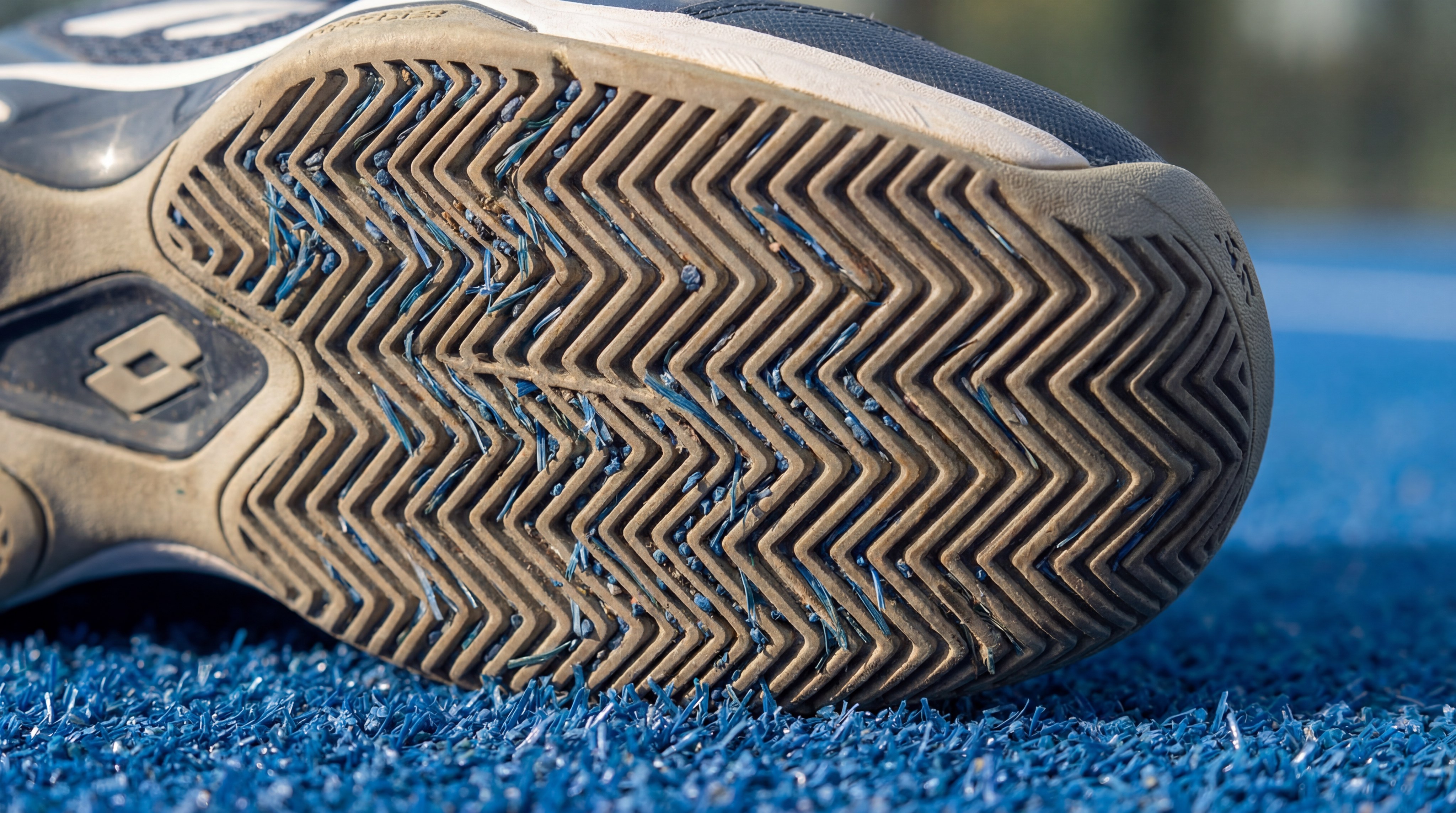
A club’s reputation often hinges on the quality of its rental gear and court accessories. If players are using worn-out rackets or shoes with no grip, they are less likely to return. You need a source that provides consistent high-performance kit to keep the facility running smoothly.
Bulk Sourcing for Court Accessories
When outfitting a club, you must look beyond just the rackets and balls. Nets, court sweepers, and ball hoppers are the unsung heroes of a well-maintained facility.
- Heavy-duty nets: UV-treated nylon that won’t sag or fray in the sun.
- Ball hoppers: Stainless steel or reinforced plastic for easy ball collection.
- Maintenance tools: Brushes designed to redistribute sand evenly across the turf.
- Post protectors: Padded covers to prevent player injury during net-side chases.
Evaluating Supplier Reliability
Partner with suppliers who offer comprehensive warranties and after-sales support. A professional supplier will have a deep inventory and the ability to provide expert advice on the best configurations for your specific court type.
- Technical support: Access to experts for court maintenance guidance.
- Warranty programs: Protection against manufacturing defects for rental gear.
- Shipping speed: Reliable delivery timelines to ensure continuity of service.
Section Summary: Commercial Outfitting Priorities
| Facility Need | Essential Item | Quality Metric |
|---|---|---|
| Court Playability | Sand Brushes | Bristle density and durability. |
| Player Safety | Net Post Padding | High-density foam thickness. |
| Rental Inventory | Composite Rackets | Resistance to frame cracking. |
How do you maintain your padel tennis equipment to ensure longevity?
Taking care of your padel tennis equipment is just as important as choosing it in the first place, as materials like EVA foam are sensitive to environmental factors. A disciplined maintenance routine will not only save you money but also ensure that your equipment performs predictably every time you step on the court.
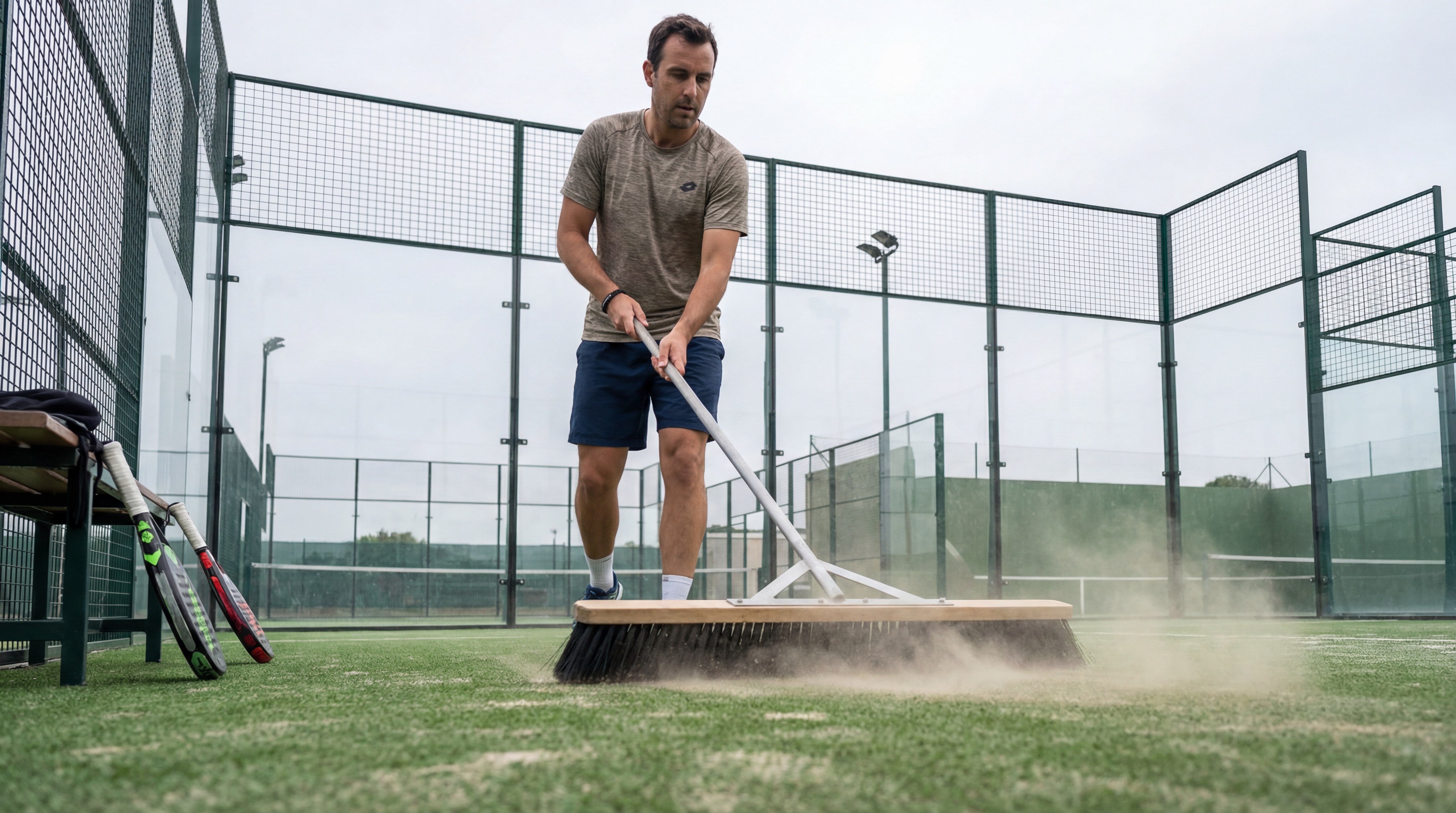
Small habits can double the lifespan of your gear. When you treat your equipment with respect, the materials retain their elasticity and structural integrity for much longer. This consistency is key to developing a “feel” for the ball and improving your accuracy over time.
Storage and Environmental Protection
The foam inside a padel racket is susceptible to hardening in the cold and softening in extreme heat. Storing your gear in a climate-controlled environment is the simplest way to prevent these changes.
- Thermal compartments: Specifically designed to regulate racket temperature.
- Dry storage: Keeping gear away from moisture to prevent grip degradation.
- Impact protection: Padded bags to prevent accidental chips during transit.
Regular Component Replacement
Certain parts of your gear are designed to be replaced frequently to protect the underlying structure.
- Overgrips: Should be changed every 3-5 matches to maintain tackiness.
- Protective tape: Shields the top of the frame from inevitable wall scrapes.
- Ball replacement: Competitive balls should be replaced after 2-3 matches.
- Shoe insoles: Replace regularly to maintain arch support and cushioning.
Section Summary: Maintenance Cycles
| Task | Frequency | Expected Benefit |
|---|---|---|
| Overgrip Change | Weekly | Improved grip and sweat absorption. |
| Thermal Storage | Constant | Consistent foam rebound. |
| Frame Cleaning | Monthly | Removal of abrasive sand and dirt. |
What specific padel tennis equipment is needed to build a home court?
Building a private facility requires specialized padel tennis equipment and professional installation services such as padel court construction. You cannot simply pave a flat area; it involves a complex assembly of tempered glass, galvanized steel, and specialized synthetic turf.
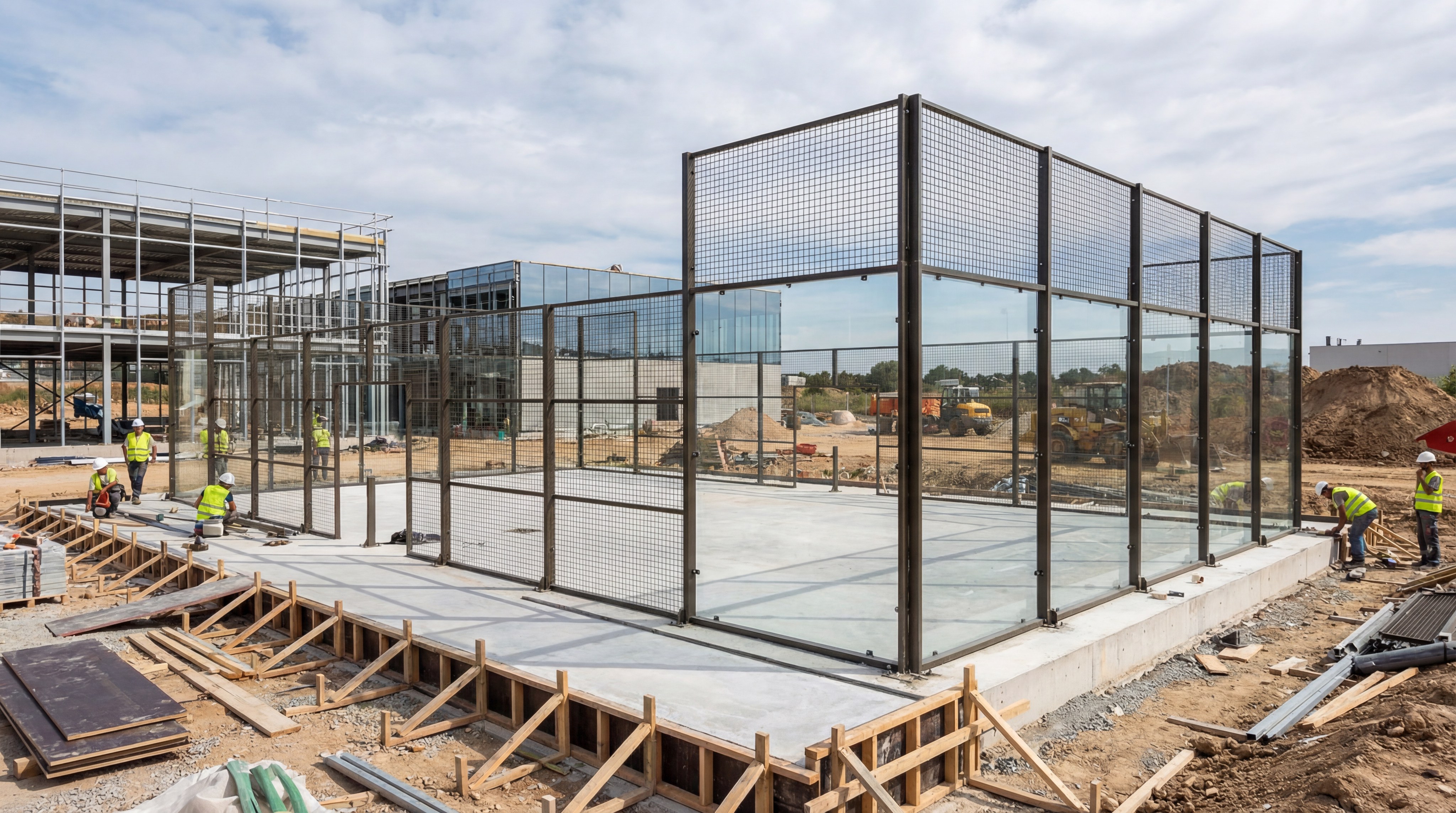
The quality of the structural components determines the safety and the “playability” of the court. Cheap glass or poorly installed mesh will vibrate excessively and could pose a safety risk. Focus on galvanized steel and tempered safety glass to ensure a professional-grade experience that lasts decades.
Structural Framework and Fencing
The skeleton of the court consists of a galvanized steel frame that supports the glass panels and the electro-welded mesh.
- Pillar thickness: Usually 100mm x 100mm for maximum stability.
- Mesh panels: Designed to be flush with the glass to ensure a true bounce.
- Anti-corrosion: Essential for the UK climate to prevent structural rust.
- Powder coating: Provides an aesthetic finish and additional weather protection.
Glass and Turf Specifications
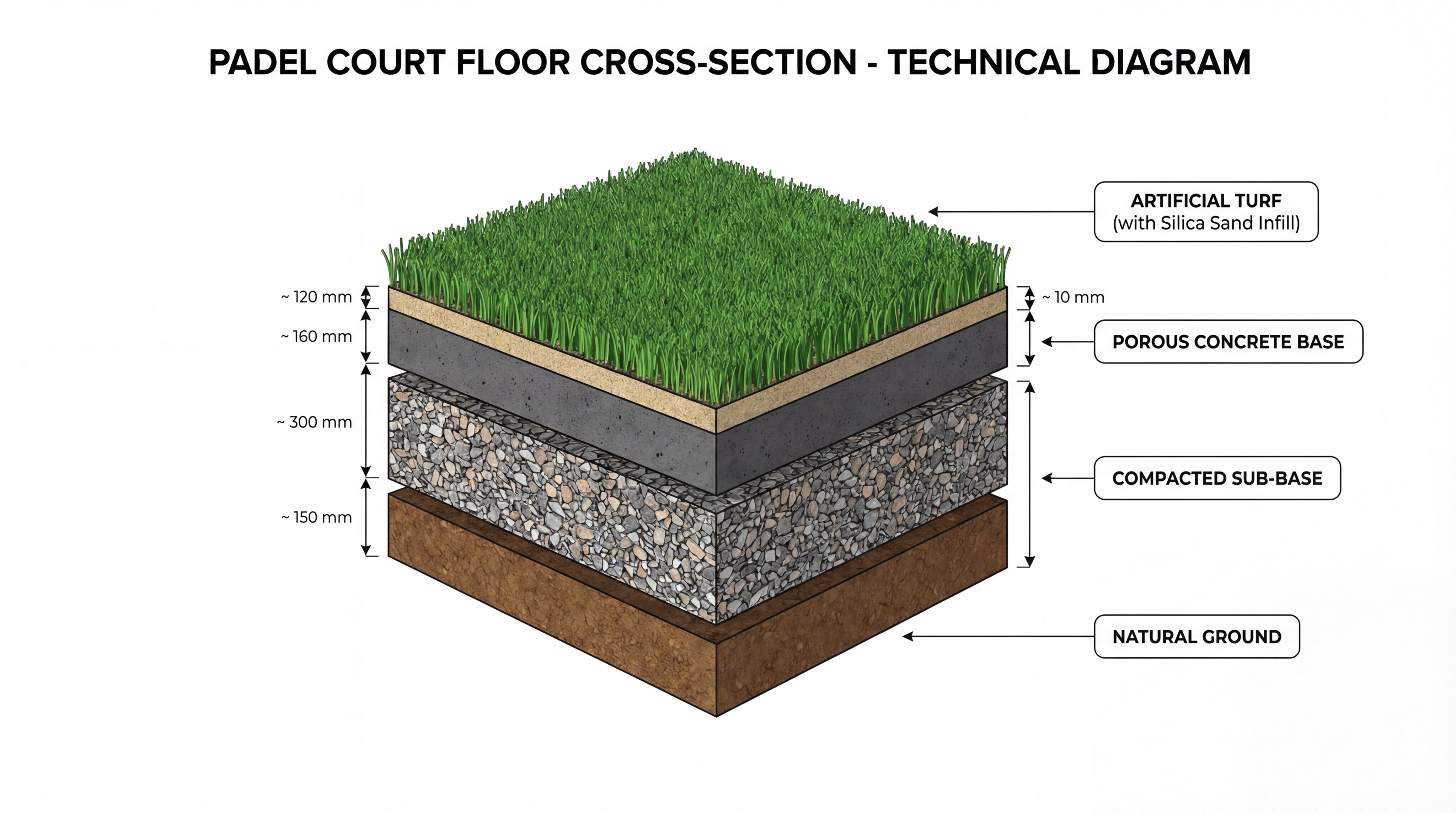
The “walls” are made from 10mm or 12mm tempered safety glass, while the turf must be a monofilament or fibrillated synthetic grass.
- Tempered glass: Compliant with European safety standards.
- Neoprene gaskets: Placed between glass and metal to absorb vibration.
- Sand infill: Essential for keeping turf upright and allowing for controlled sliding.
Section Summary: Structural Bill of Materials
| Court Element | Technical Requirement | Strategic Importance |
|---|---|---|
| Glass Walls | 10mm-12mm Tempered. | Predictable ball rebound. |
| Synthetic Turf | 12mm-15mm pile height. | Joint protection and grip. |
| Steel Frame | Galvanized & Powder Coated. | Structural longevity. |
How does the technical design of padel tennis equipment affect performance?
The science behind padel tennis equipment is constantly evolving to make the game faster and more accessible through advanced computer modeling. Every millimetre of change in the balance or thickness of a racket can alter the trajectory of your shot, making technical understanding a prerequisite for high-level play.
Designers analyze how air flows through the holes in a racket and how different foam densities react to high-impact collisions. The engineering inside the racket is specifically designed to maximize the “dwell time”—the tiny fraction of a second the ball stays on the face—allowing for greater control.
Core Density and Energy Return
The core of the racket, usually made of EVA or polyethylene, is the engine of your equipment.
- Hard EVA: Best for aggressive players who want maximum feedback.
- Soft Foam: Ideal for those who need help with ball exit speed and vibration dampening.
- Hybrid Cores: Combine different densities for a versatile experience.
Surface Texture and Spin Mechanics
The face of the racket can be smooth, sandy, or embossed with a 3D pattern to facilitate mechanical grip on the ball.
- Sandpaper finish: Provides the highest level of friction for maximum spin.
- Moulded 3D patterns: Integrated into the carbon for long-lasting texture.
- Smooth finish: Favours players relying on flat, powerful shots and pure speed.
Section Summary: Performance Engineering
| Design Feature | Functional Outcome | Player Benefit |
|---|---|---|
| High Balance | Increased leverage. | More powerful smashes. |
| Soft Core | Higher ball exit speed. | Easier defensive lobs. |
| Textured Face | Increased ball friction. | More effective spin shots. |
Can you customise your padel tennis equipment for better control?
One of the great advantages of modern padel tennis equipment is the ability to personalise it to your specific needs via grip adjustments and weighting. Customisation allows you to bridge the gap between a standard product and a bespoke tool that feels like a natural extension of your arm.
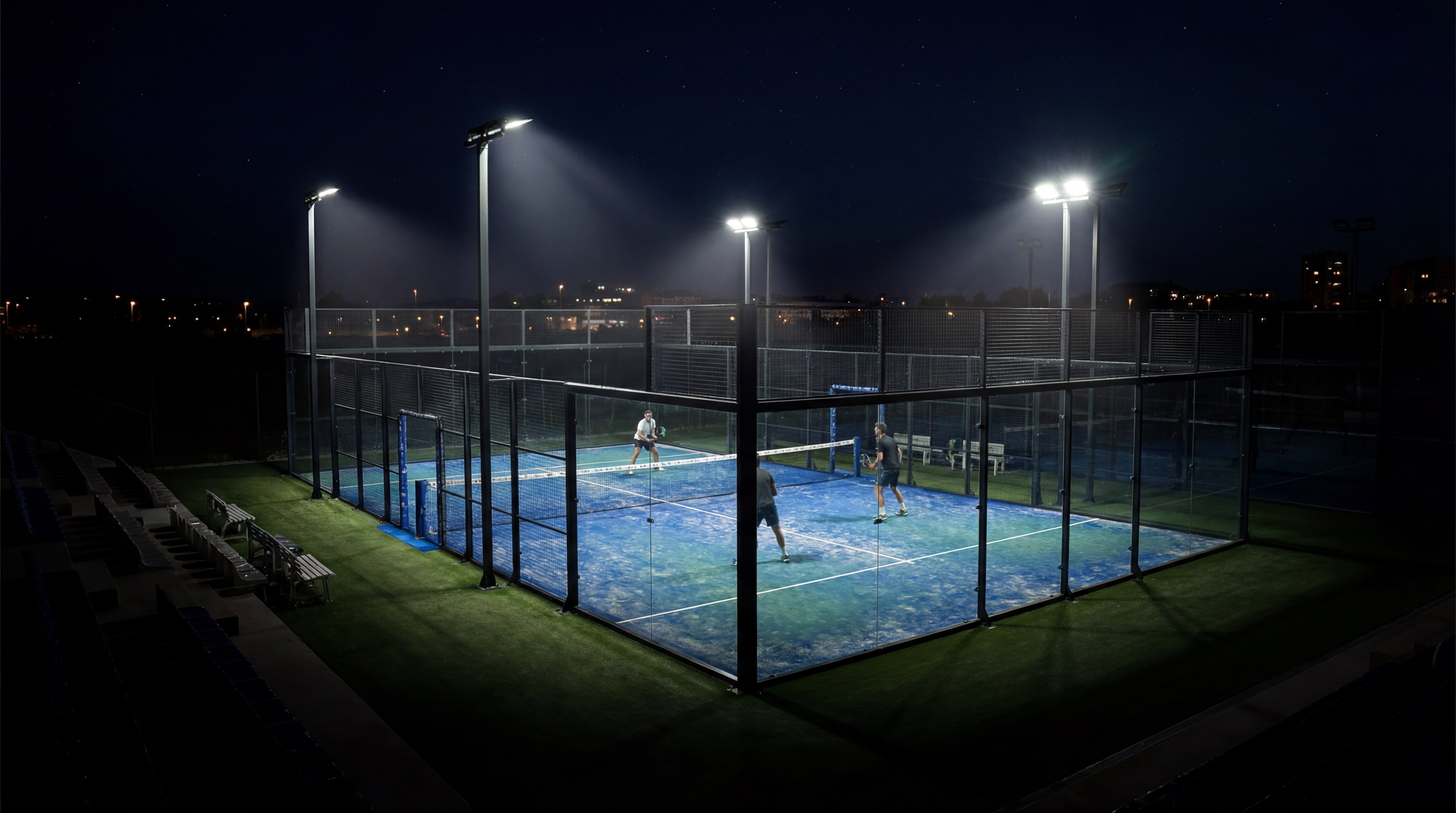
You don’t need a professional workshop to make these changes. Most customisations involve adding or removing weight and adjusting the grip size. These small tweaks can drastically change the balance and feel of your racket, giving you a sense of “ownership” over your equipment.
Grip Modification and Weighting
The thickness of your grip is the most common customisation, often achieved by adding multiple overgrips.
- Overgrip layering: Build up the handle to reduce strain on the forearm.
- Weight tape: Applied to the top for power or the handle for manoeuvrability.
- Hessacore grips: Ergonomic honeycomb replacements that reduce vibration.
Protective Enhancements
Customising your gear also involves protecting it from the environment and impact damage.
- Transparent protectors: Discreetly shield the carbon frame from wall contact.
- Custom wrist straps: Upgrading to a padded or adjustable strap for better comfort.
- Anti-shock stickers: Small dampeners that can be placed on the face to reduce noise.
Section Summary: Customisation Methods
| Customisation | Method | Primary Goal |
|---|---|---|
| Grip Thickness | Multiple overgrips. | Hand comfort and stability. |
| Balance Adjustment | Lead/Tungsten tape. | Altering the swing weight. |
| Frame Protection | Adhesive protectors. | Preventing structural cracks. |
What safety standards should padel tennis equipment meet in the UK?
In the United Kingdom, the safety of padel tennis equipment and court structures, such as a classic padel court, is governed by strict regulations. Ensuring that your equipment meets these standards is not just a legal requirement but a moral obligation to prevent accidents on the court.
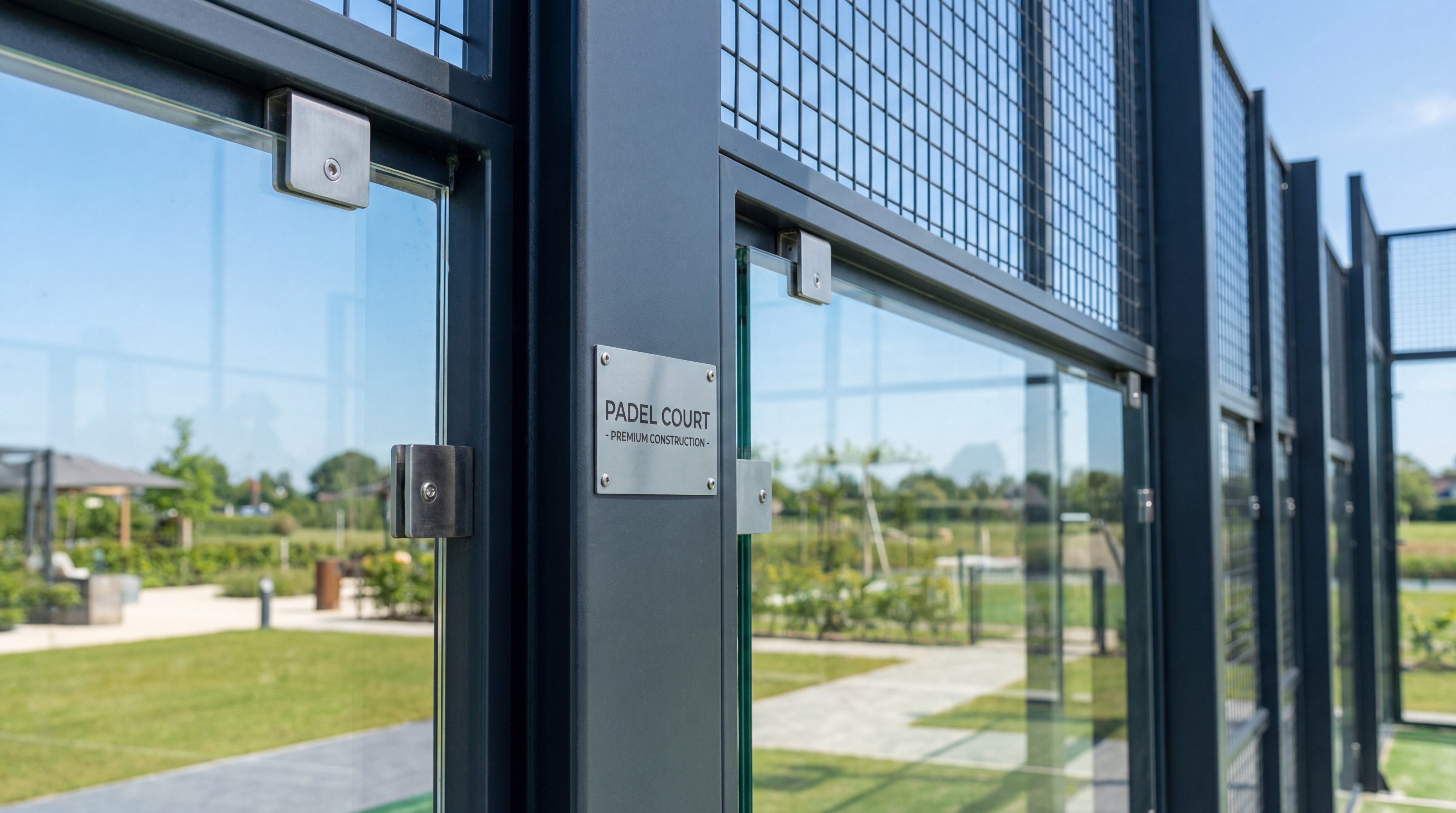
A court that doesn’t meet safety standards is a liability. Whether it is the type of glass used or the impact-resistance of the rackets, these standards exist for a reason. Always look for CE marking or specific British Standards (BS) when purchasing equipment or commissioning a court build.
Glass Safety and Mesh Integrity
The glass panels must be tempered and meet the BS EN 12150 standard to ensure they shatter into blunt pieces if broken.
- Tempered glass certification: Look for the permanent etched mark on every panel.
- Impact testing: Frames should be tested to withstand high-velocity player impact.
- Mesh spacing: Specifically sized to prevent finger entrapment.
Personal Equipment and Eye Protection
Personal items like shoes must provide adequate lateral support to prevent ankle rolls on the synthetic turf.
- Non-marking soles: Essential for maintaining the court surface.
- Polycarbonate lenses: For eyewear, to prevent injury from close-range ball impact.
- Wrist strap compliance: Every racket must have a secure, non-detachable strap.
Section Summary: UK Safety Compliance
| Component | Standard | Safety Purpose |
|---|---|---|
| Glass Panels | BS EN 12150-1 | Shatter-resistance. |
| Steelwork | Eurocode 3 | Wind and impact loading. |
| Racket Straps | FIP Standards | Prevention of projectile injury. |
Whether you are an individual player or a club owner, budgeting for padel tennis equipment requires a clear understanding of initial costs versus long-term value. Premium gear often carries a higher upfront price tag, but its durability and performance usually result in a lower “cost per play” over several seasons.
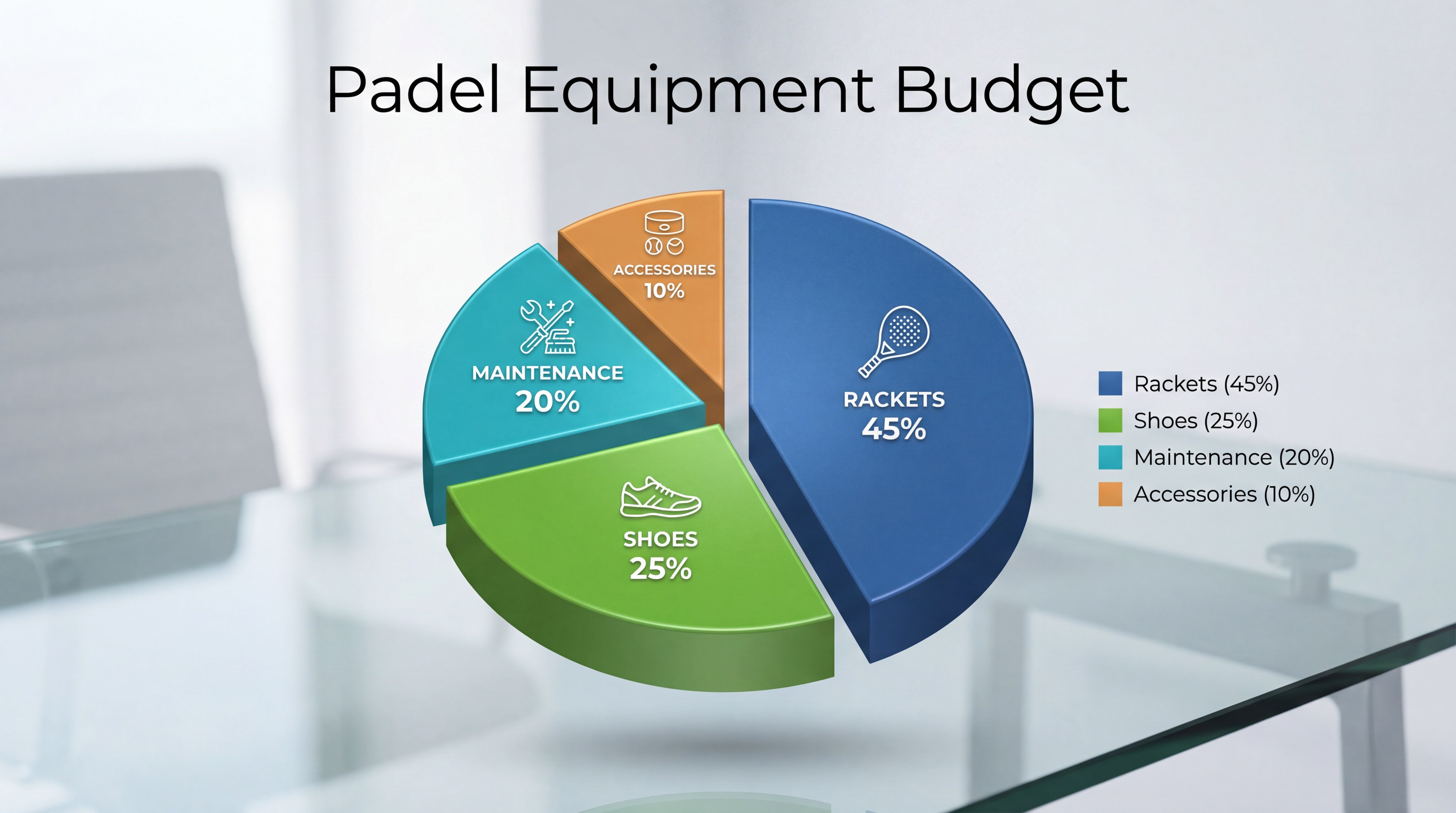
Investing in quality from day one often prevents the need for frequent replacements. When you buy cheap gear, you end up paying twice—once for the initial purchase and again when it inevitably fails. A well-planned budget allows you to access the best technology without straining your finances.
Allocating Funds for Personal Gear
For an individual, the largest portion of the budget should go toward the racket and shoes, which impact performance and health.
- Racket budget: Expect to spend between £150 and £300 for a high-quality carbon model.
- Footwear: Budget around £80 to £130 for specialized padel shoes.
- Consumables: Account for approximately £10-£20 per month for grips and balls.
Commercial Installation and Maintenance Costs
For those building a court, the budget must include groundworks, structural components, and lighting.
- Groundworks: Often represents 30-40% of the total court construction cost.
- Court kit: Includes the steel, glass, and turf; usually the largest single expense.
- Lighting: Modern LED systems save money on utilities over time.
Section Summary: Strategic Budgeting
| Budget Category | Priority | Long-term Strategy |
|---|---|---|
| Primary Tool | High | Invest in carbon for durability. |
| Safety/Footwear | High | Prioritize lateral support. |
| Consumables | Medium | Buy in bulk to reduce unit cost. |
Conclusion
Building your padel experience requires a blend of technical understanding and quality investment. From the core density of your racket to the safety standards of the glass walls, every detail contributes to the speed and enjoyment of the game. By choosing the right gear for your skill level and maintaining it with care, you set the stage for years of competitive and healthy play. Ready to elevate your setup? To find the best options for your next match or court project, contact us today.
Frequently Asked Questions
Can I use a regular tennis racket for padel?
No, padel rackets are solid, stringless, and specifically designed for the sport’s mechanics; using a tennis racket would be ineffective and could cause injury.
Can I build a padel court on any flat surface?
A padel court requires a specifically engineered concrete or asphalt base with proper drainage and anchoring points for the steel structure.
Can I wash my padel shoes in a washing machine?
It is not recommended, as the heat and agitation can degrade the glues and the structural cushioning of the sole; hand-cleaning is best.
Can I play padel in the rain with my equipment?
While you can, the moisture will make the ball heavy and can damage the racket’s core over time if not dried properly.
Can I change the weight of my racket after buying it?
Yes, you can use specialized lead or tungsten adhesive tapes to adjust the balance and total weight of your racket to suit your swing.