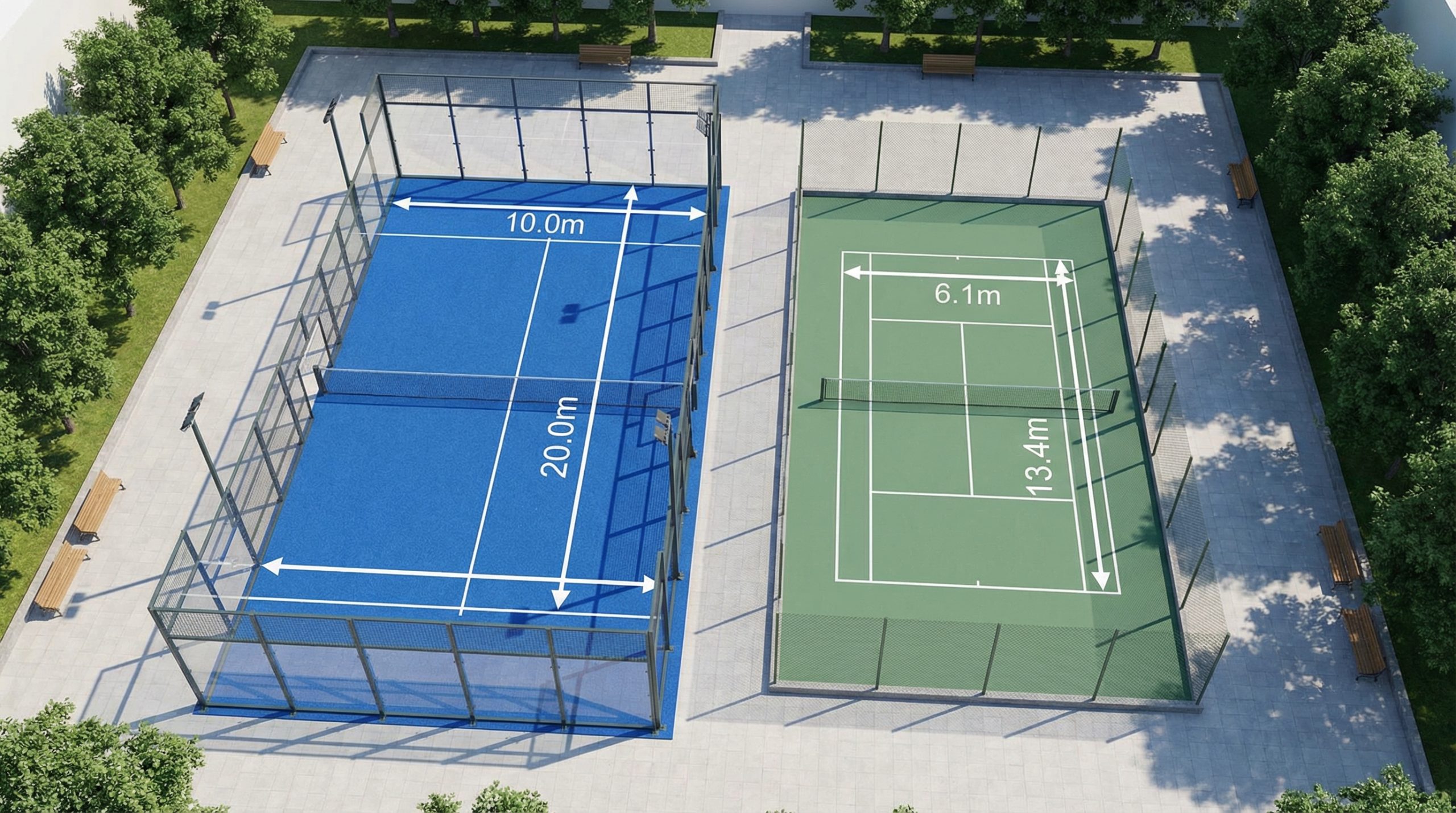
Padel is a glass-enclosed racquet sport that integrates walls into active play, whereas paddle tennis is a modified, wall-less version of traditional tennis played on a smaller court. You are likely seeing the explosion of racquet sports in your local market and considering a high-ROI facility upgrade. However, confusing these two sports can lead to significant procurement errors and structural designs that fail to meet international federation standards. This mistake not only wastes your initial capital but can also result in a facility that fails to attract the growing demographic of professional players. By understanding the critical nuances of paddle vs padel, you can ensure your investment is built on a foundation of professional-grade quality and commercial viability.
What is the main difference in paddle vs padel?
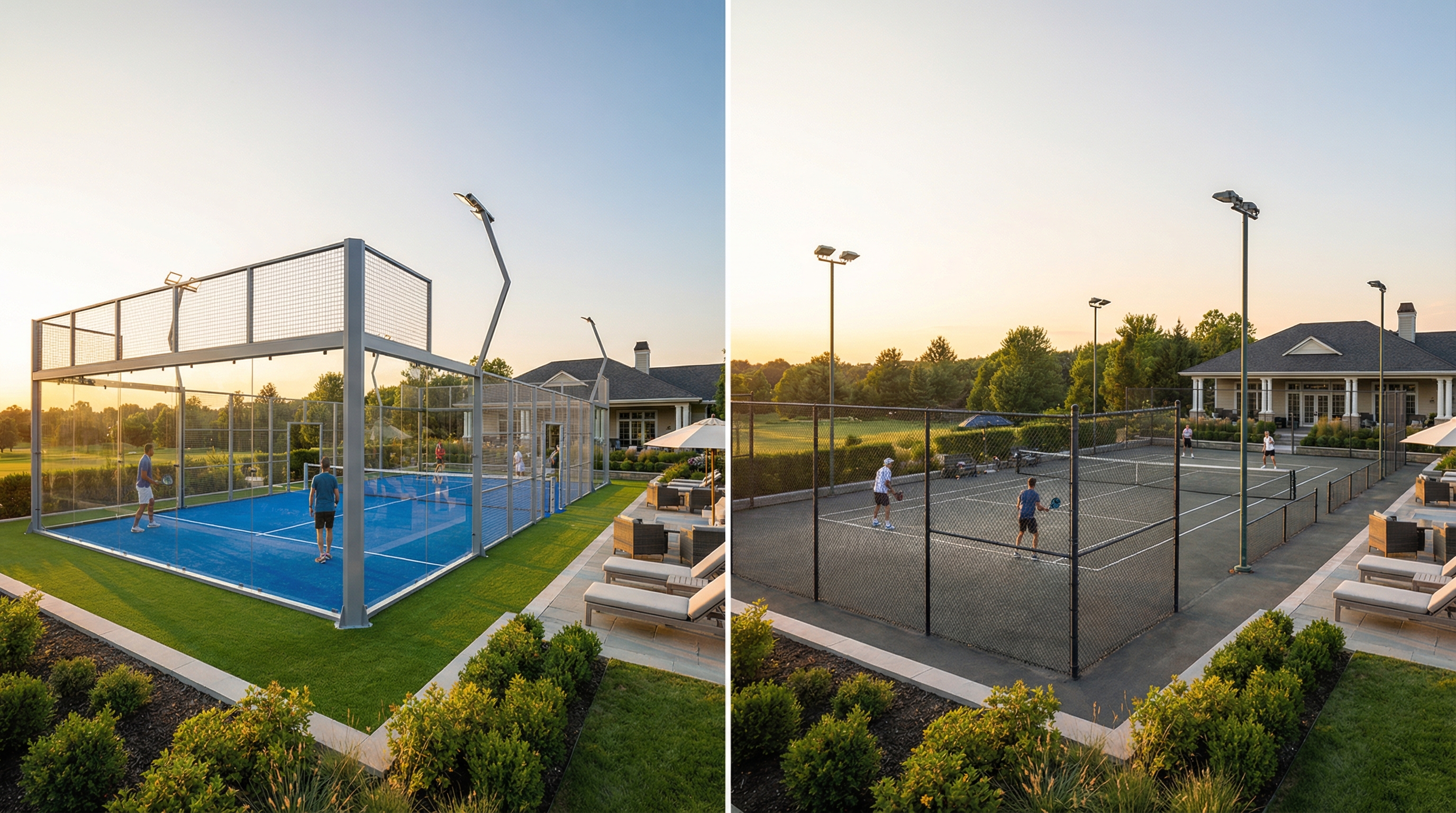
The primary difference in paddle vs padel is that padel utilizes glass and mesh walls as part of the field of play, while paddle tennis does not. Padel is essentially a synthesis of tennis, squash, and Basque pelota, whereas paddle tennis is simply a miniaturized version of tennis. Understanding this distinction is vital for determining the structural components you will need to order from a manufacturer.
Who invented these sports?
Paddle tennis was first established in the United States during the early 20th century by Reverend Frank Beal to provide recreational outlets for urban youth. In contrast, padel was invented much later, in 1969, by Enrique Corcuera in Mexico, who built walls around his court to keep out vegetation.
The history of each sport dictates the current global tournament standards you must follow.
- Paddle tennis originated on transatlantic ships and urban playgrounds.
- Padel evolved into a high-tech sport requiring specific glass tempering and turf density.
The bottom line?
Knowing the origin helps you understand why the structural demands of a padel court are so much more rigorous than those of a standard tennis variant.
Are the rules similar?
While both sports use a scoring system similar to tennis, the service and wall-play rules in padel create a completely different game dynamic. In padel, all serves must be underhand, and the ball can be played off the glass walls after it hits the ground.
This difference in gameplay necessitates a court design that can withstand constant high-impact ball strikes.
- Underhand serves are mandatory in padel.
- Overhead serves are common in paddle tennis.
- Wall rebounds are the core strategy of padel play.
How does wall play differ?
Wall play is the defining characteristic of padel, requiring the use of 12mm tempered safety glass to ensure the ball bounces consistently. Paddle tennis courts are open-air or fenced like traditional tennis courts, meaning they lack the rebound physics that make padel so strategically complex.
| Feature | Padel | Paddle Tennis |
|---|---|---|
| Enclosure | 12mm Tempered Glass & Mesh | Open or Perimeter Fence |
| Service | Underhand only | Overhand allowed |
| Strategy | Rebounds and Angles | Traditional Net/Baseline Play |
Investing in a padel facility offers higher long-term social engagement because the walls keep the ball in play longer, making it more accessible to beginners.
How do dimensions vary for paddle vs padel?
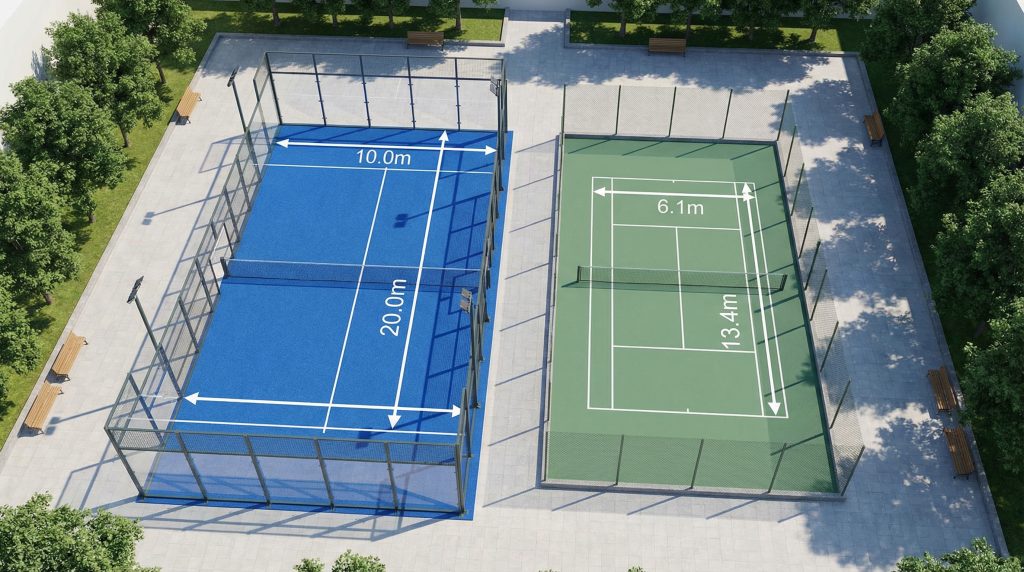
Standard dimensions for paddle vs padel differ because a padel court requires a strict 10×20 meter footprint surrounded by 3-to-4-meter high walls. Paddle tennis courts are typically slightly smaller than a half-tennis court, but because they lack walls, they require more “run-off” space around the perimeter.
What is the padel court footprint?
A professional padel court is always 10 meters wide by 20 meters long, divided by a net and enclosed by a combination of glass and metallic mesh. You must ensure your site has at least a 21×11 meter flat surface to accommodate the structural pillars that support the glass.
- Length: 20 meters.
- Width: 10 meters.
- Height of back walls: 3 meters of glass + 1 meter of mesh.
Here is the deal.
If your dimensions are off by even a few centimeters, your glass panels will not fit the modular steel frame.
How big is a paddle tennis court?
Paddle tennis courts are roughly 50 feet long by 20 feet wide, which is significantly smaller than the metric-standard padel court. Because there are no walls, you need to budget for additional space around the lines so players don’t run into obstacles during a match.
- Court size: Approximately 15.24m x 6.1m.
- Safety clearance: 3 to 5 meters of perimeter space.
- Total area needed: Roughly 200 to 250 square meters.
Why does the ceiling height matter?
For indoor installations, padel requires a minimum clear ceiling height of 6 meters, though 8 meters is preferred for professional tournament play to allow for high “lobs.” Paddle tennis, being a lower-trajectory game, can often be accommodated in facilities with standard commercial ceiling heights.
| Dimension | Padel Court | Paddle Tennis Court |
|---|---|---|
| Playing Area | 200 m² (10x20m) | ~93 m² (50x20ft) |
| Vertical Clearance | 6m – 8m Minimum | Standard Ceiling (3m+) |
| Structural Load | High (Glass/Pillars) | Low (Surface only) |
Choosing a 10x20m padel layout ensures your facility remains compliant with global booking apps and professional tour standards, future-proofing your business.
What equipment is needed for paddle vs padel?
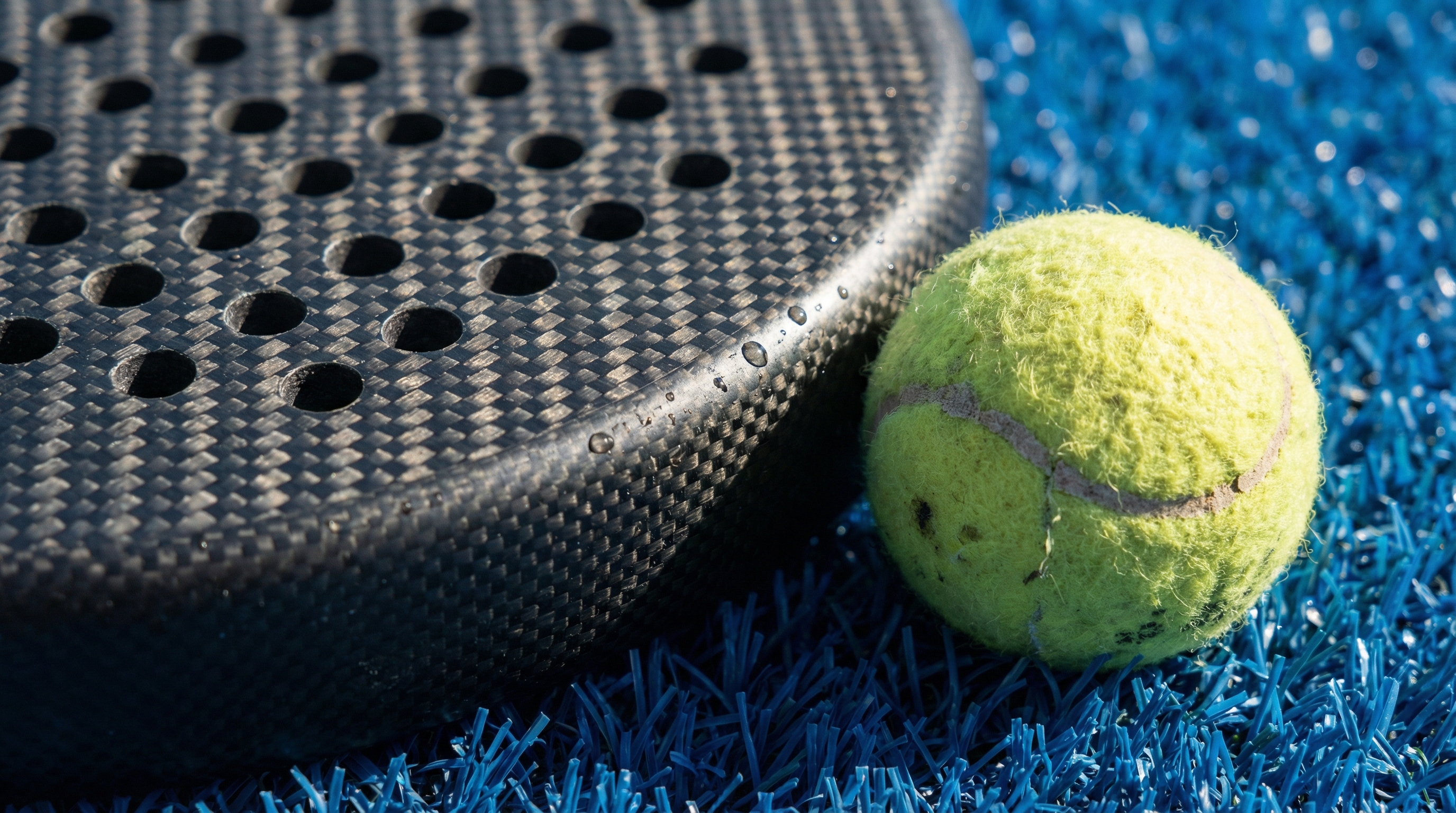
The equipment utilized in paddle vs padel is not interchangeable, as padel requires a solid-surface “pala” while paddle tennis typically uses a perforated paddle or a wooden racquet. Using the wrong equipment can damage the court surface or lead to player injury due to weight and vibration differences.
What are padel rackets like?
Padel rackets, or “palas,” are made from composite materials like carbon fiber and glass fiber with a core of EVA foam to absorb impact. They have no strings and are perforated with holes to reduce wind resistance while maintaining a solid hitting surface for wall-rebound control.
- Materials: Carbon fiber, fiberglass, and EVA foam.
- Weight: Usually between 350g and 385g.
- Thickness: Standardized at 38mm.
Look at it this way.
A padel racket is designed for “touch” and “control” rather than the raw power associated with stringed tennis racquets.
What is used in paddle tennis?
Traditional paddle tennis was played with wooden rackets, but modern versions use composite materials similar to padel but with different dimensions and weight distributions. The balls are also depressurized tennis balls, which bounce lower than the high-pressure balls used in traditional tennis.
- Racket type: Solid or perforated composite.
- Ball type: Depressurized or “dead” tennis balls.
- Grip size: Usually smaller than standard tennis rackets.
Can you use tennis balls for padel?
While padel balls look like tennis balls, they have a lower internal pressure to ensure the ball doesn’t bounce too high off the glass walls. Using a standard high-pressure tennis ball in a padel court makes the game nearly impossible to control, as the ball will fly out of the 4-meter enclosure too easily.
| Equipment | Padel | Paddle Tennis |
|---|---|---|
| Racket Surface | Solid with holes | Solid or Perforated |
| Ball Pressure | Low (Specific Padel PSI) | Depressurized Tennis Ball |
| Stringing | None | None |
For facility owners, providing the correct high-tech carbon fiber rackets for rent can create an additional high-margin revenue stream.
Which costs more to build, paddle vs padel?
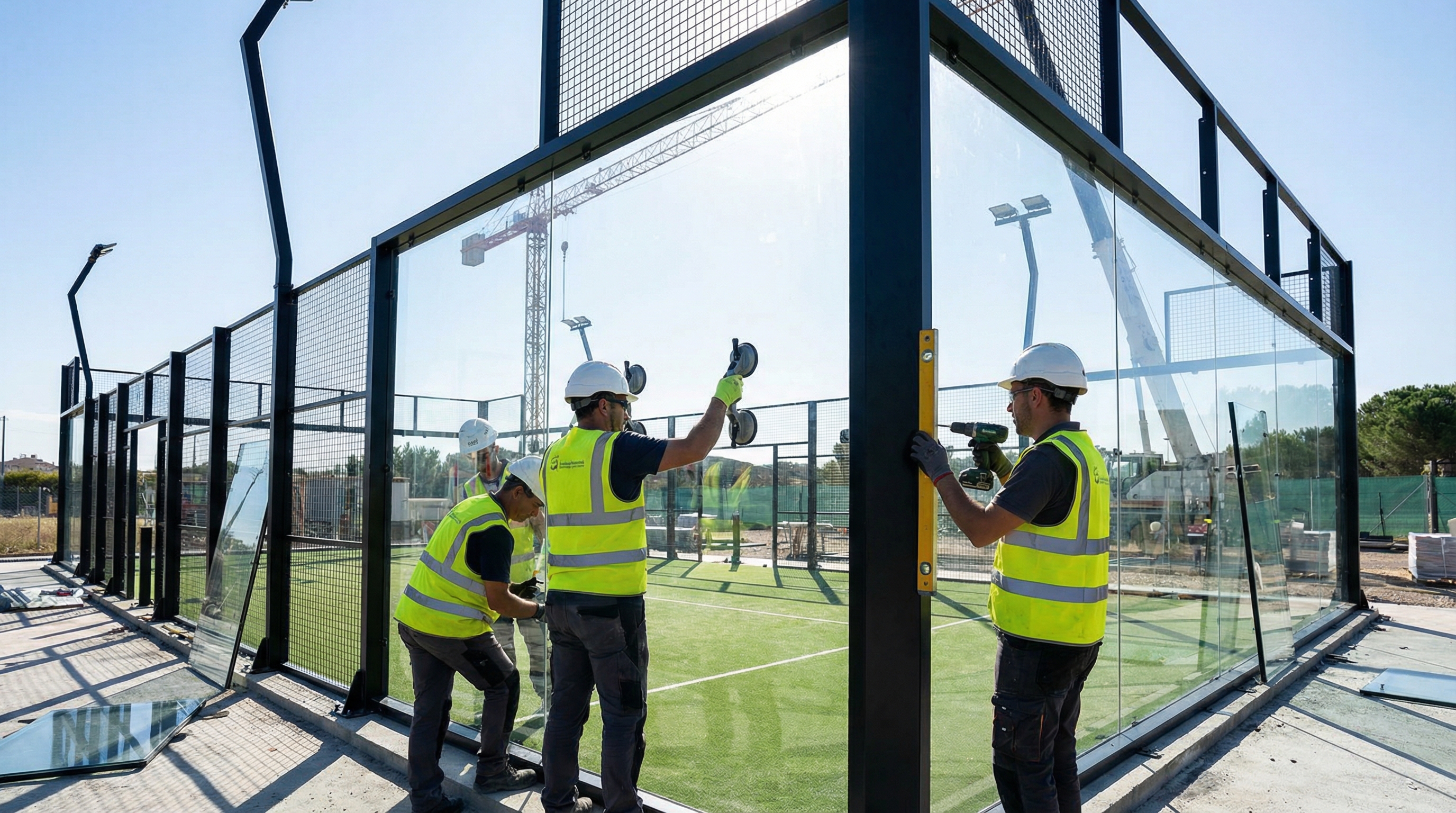
In the debate of paddle vs padel, padel is almost always the more expensive investment due to the requirement for heavy-duty tempered glass and galvanized steel structures. While paddle tennis requires a high-quality acrylic or concrete surface, it avoids the massive material and logistical costs associated with transporting and installing tons of glass.
What are the main costs of padel?
The primary costs for a padel court involve the hot-dip galvanized steel frame, the 12mm anti-explosion glass, and the professional-grade artificial turf. You also need to factor in the cost of a reinforced concrete slab, which must be perfectly level to prevent glass cracking.
- Steel Frame: Modular design with anti-corrosion coating.
- Glass: 18 to 20 panels of 12mm tempered glass.
- Turf: Fibrillated or monofilament artificial grass.
Think about it.
You are building a structural machine, not just a sports surface, which justifies the higher initial CAPEX.
Is paddle tennis cheaper?
Building a paddle tennis court is generally more affordable because the construction process is similar to a standard tennis court or basketball court. You are primarily paying for the surface preparation and the fencing, without the need for specialized glass installers or heavy lifting equipment.
- Surface: Acrylic, asphalt, or concrete.
- Fencing: Standard chain-link or rigid mesh.
- Lighting: Standard outdoor floodlights.
How does OEM branding affect price?
When you buy directly from a manufacturer, you can customize the colors and logos of your court, which adds value without significantly increasing the cost. Many B2B buyers choose to brand their courts to increase the “prestige” of their club, which allows for higher booking fees.
| Cost Factor | Padel Court | Paddle Tennis Court |
|---|---|---|
| Materials | Glass, Steel, Turf | Concrete, Acrylic, Mesh |
| Installation | Specialist Crew Required | General Contractor |
| Shipping | High (Weight of Glass) | Low (Fencing/Coating) |
While padel has a higher entry cost, the ability to charge premium hourly rates often results in a faster break-even point than traditional paddle tennis.
What is the ROI potential for paddle vs padel?
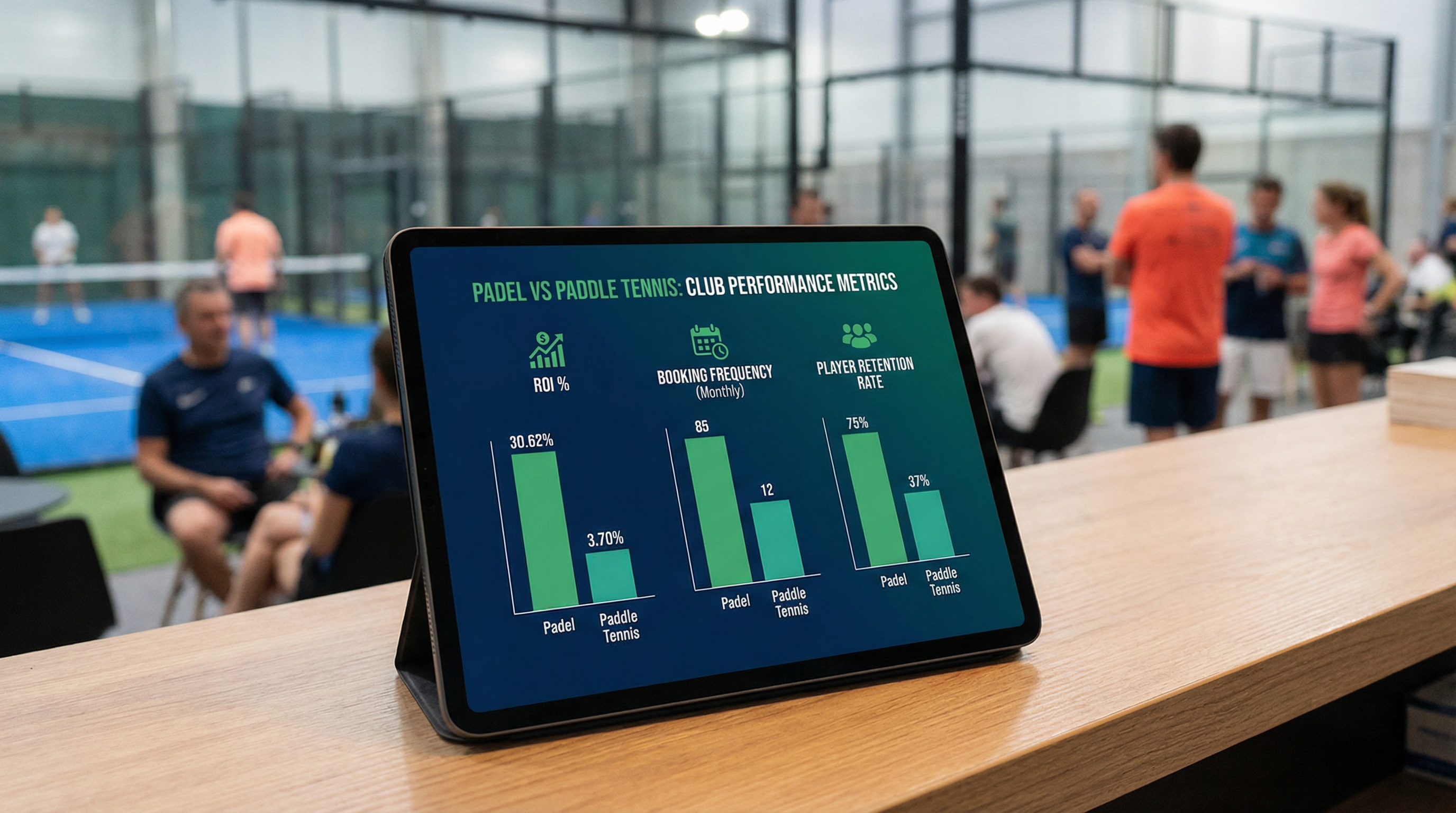
The ROI for paddle vs padel typically favors padel in the current market due to its surging global popularity and higher player-per-square-foot density. Because four players occupy a relatively small 200-square-meter area, the revenue generated per hour is significantly higher than that of traditional tennis or paddle tennis.
How do booking fees compare?
Padel courts often command a premium price, with clubs in major metros charging between $40 and $120 per hour depending on the facility’s quality. Paddle tennis, while popular, often lacks the “luxury” appeal of a panoramic padel court, leading to lower average hourly rates.
- Padel Rate: $60/hr average (4 players = $15 each).
- Paddle Tennis Rate: $30/hr average.
- Capacity: Both sports are predominantly played as doubles.
Here is the kicker.
Padel players are often willing to pay more for “social” features like integrated lounges and high-end glass aesthetics.
What is the member retention rate?
Padel is famous for its “easy to learn, hard to master” curve, which keeps members coming back more frequently than they do for paddle tennis. The social nature of the long rallies and the close proximity of the players makes it a highly addictive sport that builds community.
- Beginner friendly: Playable within 15 minutes.
- Social distance: Players are close enough to talk easily.
- Repeat bookings: Most players book 2-3 times per week.
Can you host tournaments?
Padel has a much more robust international tournament infrastructure, which can bring sponsorship dollars and high-profile events to your facility. Hosting a local or regional padel league can fill your courts during off-peak hours and increase your brand visibility across the region.
| ROI Metric | Padel Court | Paddle Tennis Court |
|---|---|---|
| Hourly Revenue | High ($60+) | Medium ($30+) |
| Player Density | High (4 per 200m²) | Very High (4 per 93m²) |
| Social Appeal | High (Trend-driven) | Medium (Regional) |
The density of paddle tennis is impressive, but the market demand for padel currently allows for a much higher price ceiling in the B2B sports sector.
What surface is best for paddle vs padel?
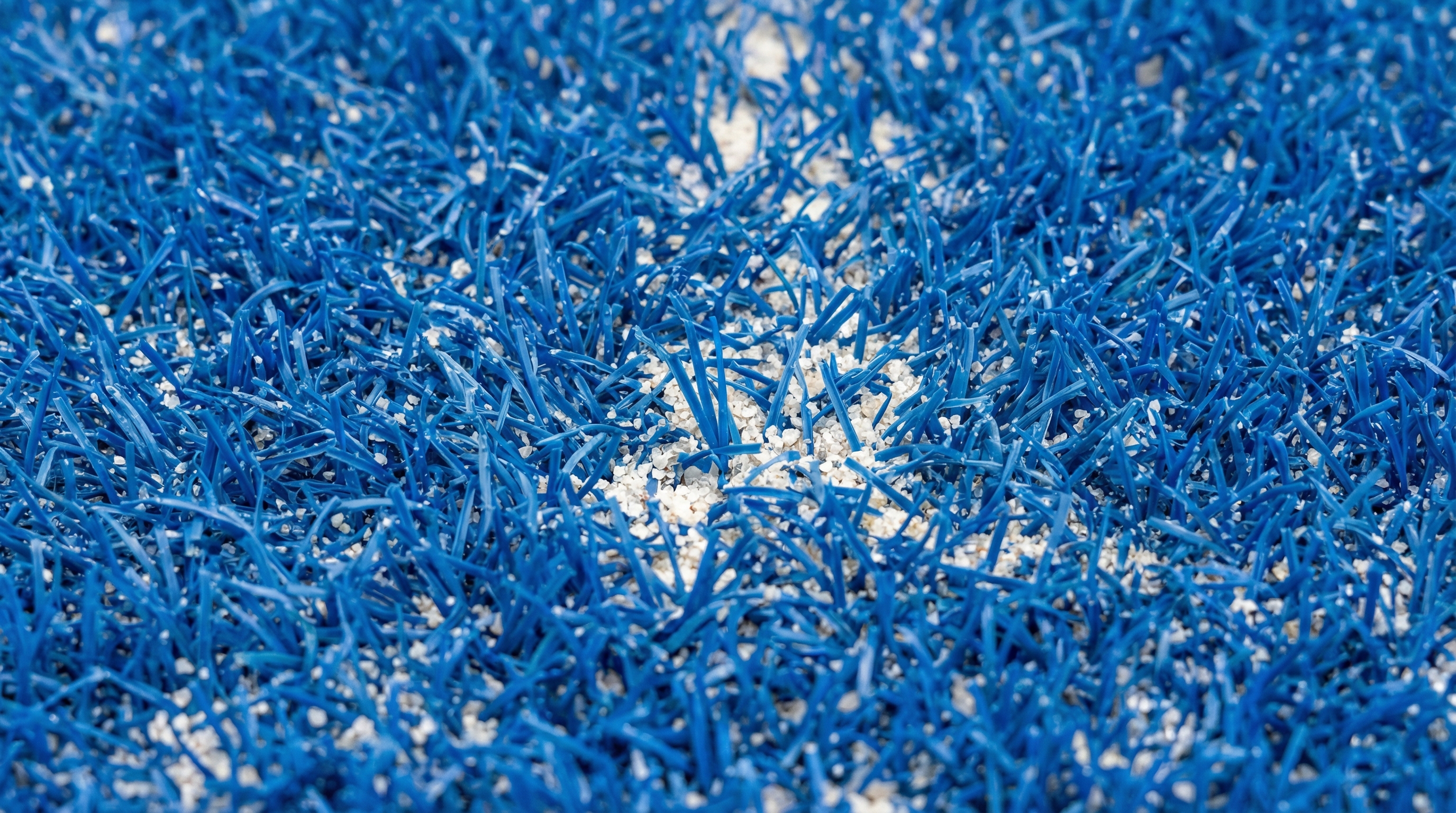
The ideal surface for paddle vs padel differs because padel requires specialized artificial turf to facilitate consistent ball bounce, while paddle tennis uses hard surfaces. Padel grass is engineered to hold a specific amount of silica sand, which allows players to slide safely and the ball to react predictably.
Why use artificial turf for padel?
Artificial turf is the industry standard for padel because it provides the necessary friction and shock absorption for fast-paced, multi-directional movement. Monofilament or fibrillated turf fibers are designed to withstand high-frequency use while maintaining an aesthetic appearance.
- Fiber type: PE (Polyethylene) for durability.
- Sand infill: Fine-grain silica sand (approx. 3kg per m²).
- Standard: Must comply with international federation bounce tests.
Look at it this way.
Without the sand-filled turf, the ball would skid too much, and the unique “wall game” of padel would be ruined.
Is hardcourt better for paddle tennis?
Paddle tennis is traditionally played on hard surfaces like concrete or acrylic-coated asphalt, which provides the low, fast bounce the sport is known for. These surfaces are extremely durable and require very little maintenance compared to the turf-and-sand system used in padel.
- Materials: Acrylic resin or modular tiles.
- Maintenance: Occasional pressure washing.
- Durability: Can last 10+ years with proper coating.
How does weather affect surfaces?
Padel turf is designed with integrated drainage holes to allow for play shortly after rain, whereas hardcourt paddle tennis courts can remain slippery for longer. If you are in a high-UV environment, you must ensure your padel turf is UV-stabilized to prevent the fibers from becoming brittle.
| Surface Trait | Padel (Turf) | Paddle Tennis (Hard) |
|---|---|---|
| Impact Level | Low (Easy on joints) | High (Standard hardcourt) |
| Maintenance | Weekly brushing/sand leveling | Annual cleaning |
| Customization | Blue, Green, Red, Purple | Any acrylic color |
For commercial clubs, the blue monofilament turf of a padel court has become an iconic visual marker that attracts premium clientele.
How long does it take to build paddle vs padel?
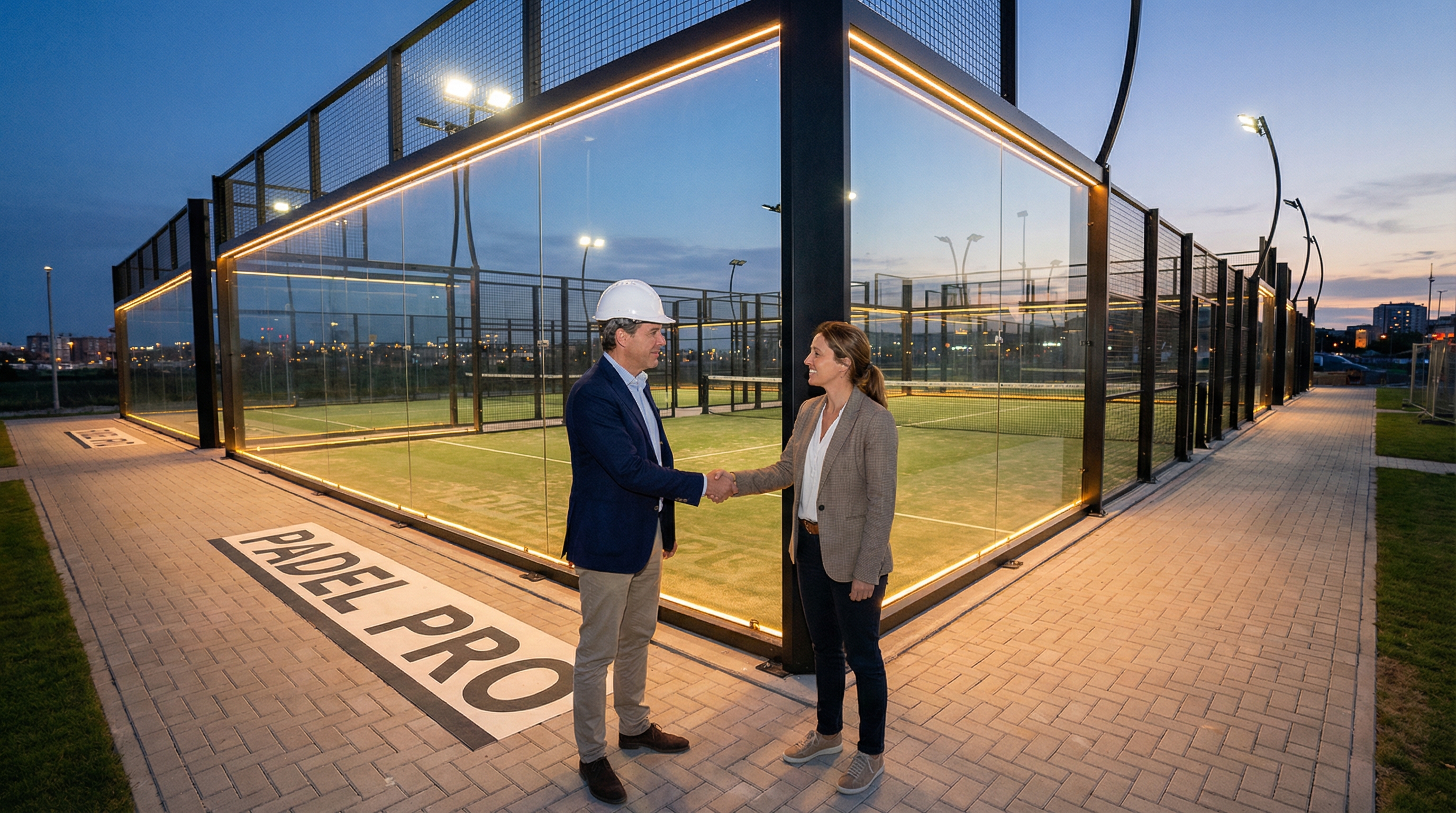
The construction timeline for paddle vs padel varies significantly, with a standard padel court taking about 7 to 10 days for structural assembly after the foundation is cured. Paddle tennis courts can be “resurfaced” in just a few days if the concrete is already in place.
How fast is the modular assembly?
Because modern padel courts are modular, the steel frame and glass can be bolted together very quickly by a professional three-person team. The most time-consuming part of the process is not the assembly itself, but the preparation of the reinforced concrete ring or slab.
- Unloading: 1 day.
- Structure & Glass: 3-4 days.
- Turf & Lighting: 2 days.
Here is the deal.
If you buy a precision-engineered kit, the parts will align perfectly, preventing delays caused by manual adjustments.
What slows down paddle tennis?
The main bottleneck in paddle tennis construction is the curing time for the asphalt or concrete and the multi-layer application of the acrylic surface. Each layer of acrylic paint must dry completely before the next is applied, meaning high humidity can add weeks to your schedule.
- Excavation: 2-3 days.
- Curing: 21-28 days (for concrete).
- Surfacing: 3-5 days.
Can you use remote installation guidance?
Many manufacturers now offer remote video support and detailed manuals, allowing your local general contractor to install the court without an international specialist. This is particularly effective for padel, where the modular steel design is relatively straightforward for anyone with basic engineering knowledge.
| Phase | Padel Timeline | Paddle Tennis Timeline |
|---|---|---|
| Foundation | 3-4 Weeks (Curing) | 3-4 Weeks (Curing) |
| Assembly | 7-10 Days | 3-5 Days (Painting) |
| Ready for Play | Immediately after turf | 24 hrs after final coat |
By choosing a modular padel design, you can significantly reduce on-site labor costs and get your facility operational faster.
Are safety standards different for paddle vs padel?
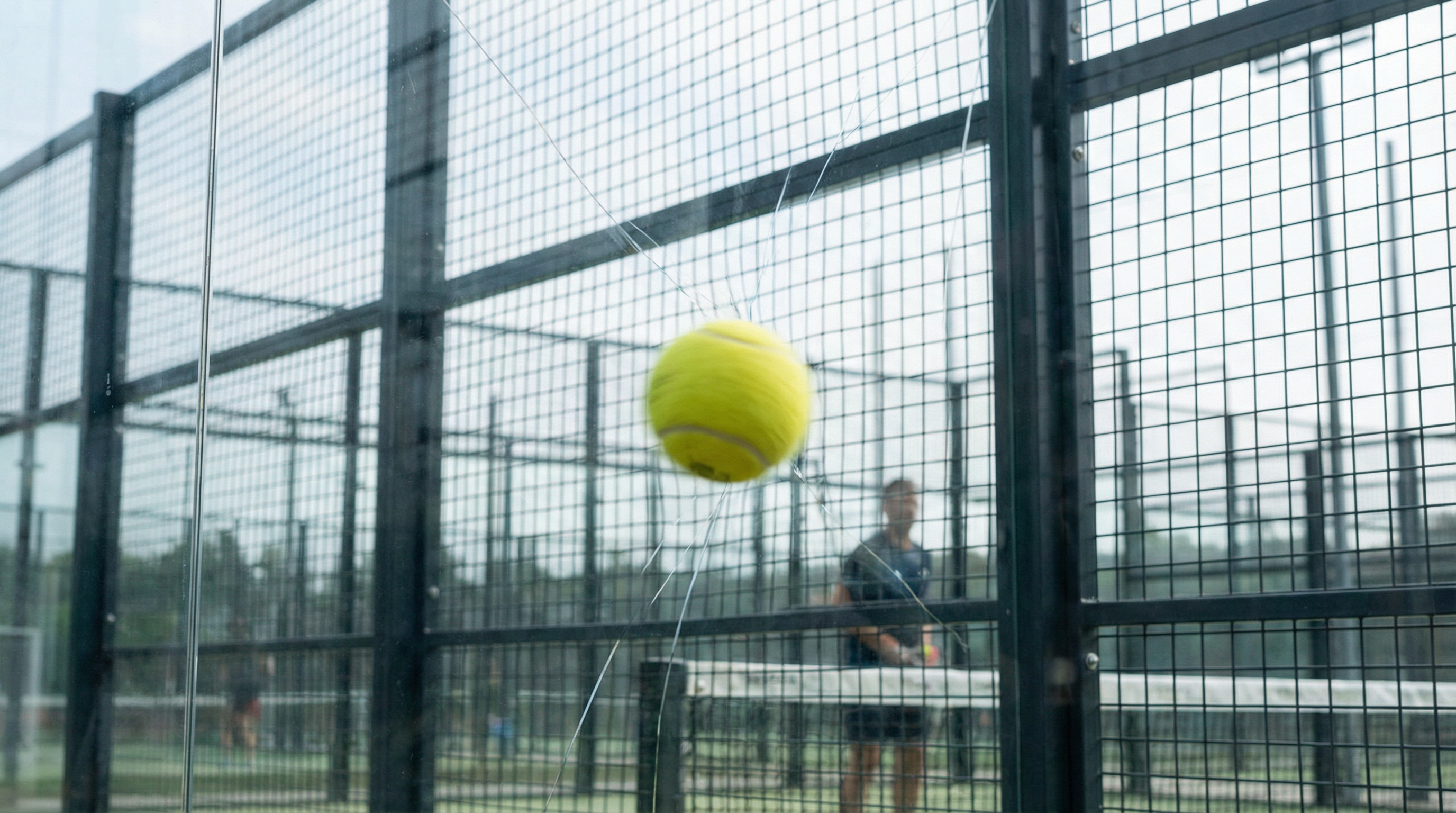
Safety requirements in paddle vs padel are much more stringent for padel due to the inclusion of heavy glass panels and player-to-wall contact. While paddle tennis safety focuses on surface slip-resistance, padel safety is centered on “explosion-proof” glass and impact-absorbing steel mesh.
Why use 12mm tempered glass?
Padel regulations require 10mm or 12mm tempered safety glass that is designed to crumble into small, blunt pieces rather than sharp shards if it breaks. This glass must be certified to EN 12150 standards to ensure it can withstand the weight of a professional player falling against it.
- Certification: CE and EN 12150 standards.
- Thickness: 12mm is the gold standard for commercial clubs.
- Durability: Anti-explosion treatment is mandatory.
The bottom line?
Cutting costs on glass thickness is a massive liability risk that no commercial operator should ever take.
What are the risks in paddle tennis?
In paddle tennis, the primary safety concerns are related to the perimeter fence and the surface grip. Because the game is played at high speeds on a small court, players are at risk of “over-running” the lines and tripping on the fencing.
- Fence type: Must be smooth to prevent snagging clothes or skin.
- Surface: Must have a consistent “grit” for traction.
- Clearance: Mandatory 3-meter safety zone around the court.
Is lighting safety a factor?
Both sports require flicker-free LED lighting to ensure players can track the ball at high speeds, but padel poles must be integrated into the structure safely. LED lights should be IP66 waterproof rated to ensure they don’t short-circuit or break during outdoor use.
| Safety Element | Padel Standard | Paddle Tennis Standard |
|---|---|---|
| Wall Safety | 12mm Tempered Glass | Not Applicable |
| Impact Protection | Foam-covered pillars | Safe run-off zones |
| Lighting | 8x200W LED (Uniform) | Standard Floodlights |
Selecting a manufacturer that provides 12mm anti-explosion glass is the single most important decision for mitigating project liability.
Which demographic prefers paddle vs padel?
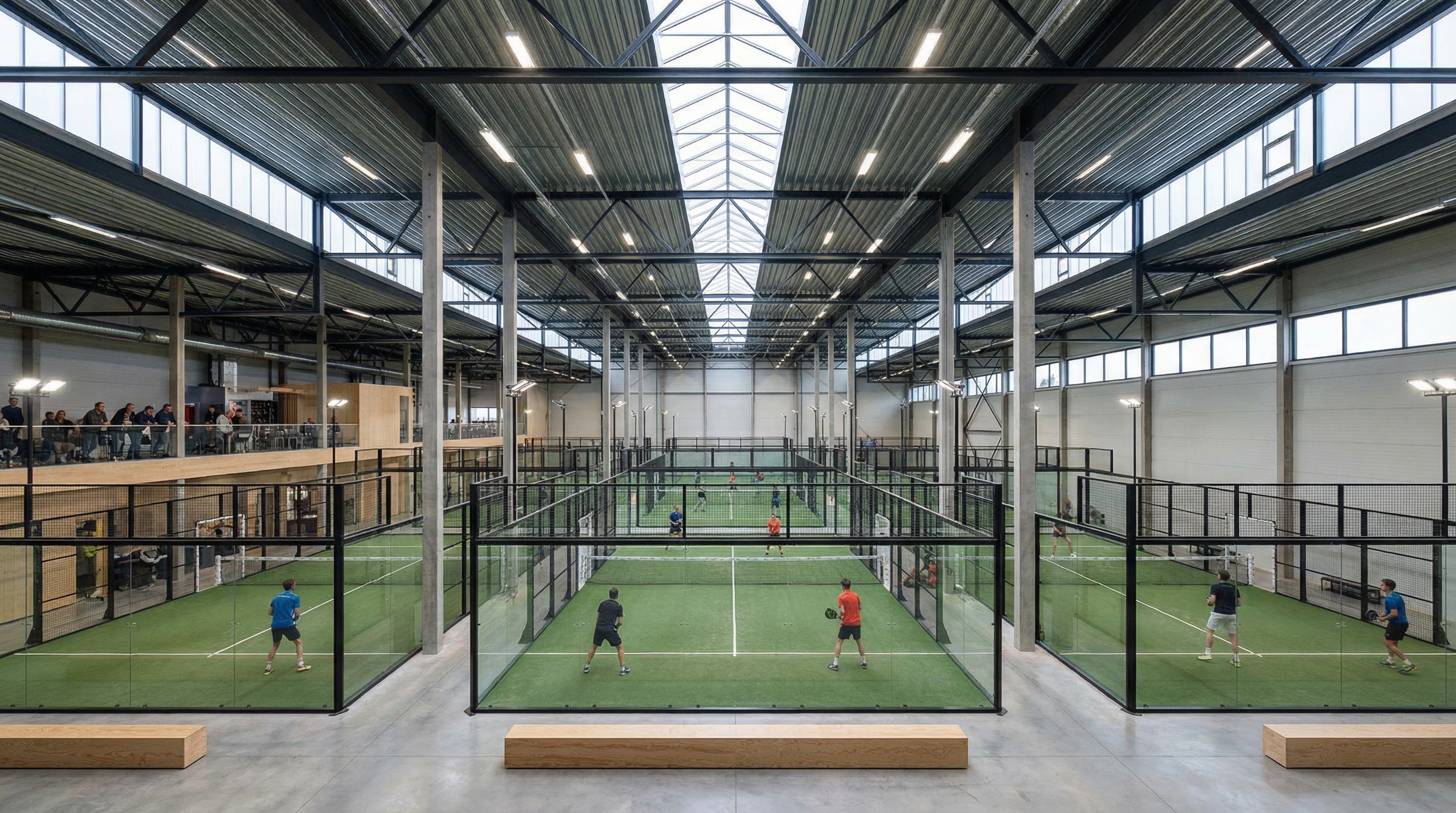
The target audience for paddle vs padel is shifting, with padel currently capturing the high-end corporate and “social athlete” demographic. Paddle tennis remains a staple in specific urban pockets, but padel’s explosive growth is driven by millennials and Gen Z players who value the sport’s aesthetic appeal.
Who plays padel today?
Padel has become the “new golf” for the corporate world, attracting professionals who want a social yet competitive workout that can be finished in 60 minutes. It is particularly popular among women and families because the smaller court removes the physical barriers that make tennis intimidating.
- Primary Age: 25 to 55.
- Gender Split: Highly balanced (approx. 40% female).
- Social Level: High (Post-match drinks are part of the culture).
Here is the kicker.
Padel is a “lifestyle” sport, meaning players spend more on apparel, rackets, and club memberships.
Is paddle tennis still relevant?
Paddle tennis still has a loyal following in California and parts of the Northeastern US, where it has been played for decades. It appeals to traditional tennis players who want a faster game with less running, making it a favorite for senior players.
- Primary Age: 45+.
- Market: Specific geographic strongholds (e.g., Venice Beach).
- Entry Barrier: Very low (Anyone who plays tennis can play instantly).
Padel’s panoramic glass walls and colorful turf make it incredibly “Instagrammable,” which has led to a massive organic marketing push for the sport. Players love filming their highlights through the glass, which provides free advertising for your facility every time a match is played.
| Demographic Trait | Padel Audience | Paddle Tennis Audience |
|---|---|---|
| Average Age | 25-45 | 45-65+ |
| Tech-Savviness | High (App-based bookings) | Medium (Traditional) |
| Spending Power | High (Premium Gear) | Medium (Utility Gear) |
The visual nature of padel makes it a superior “anchor” amenity for luxury resorts and high-end fitness centers looking to attract a modern crowd.
How do you maintain a facility for paddle vs padel?
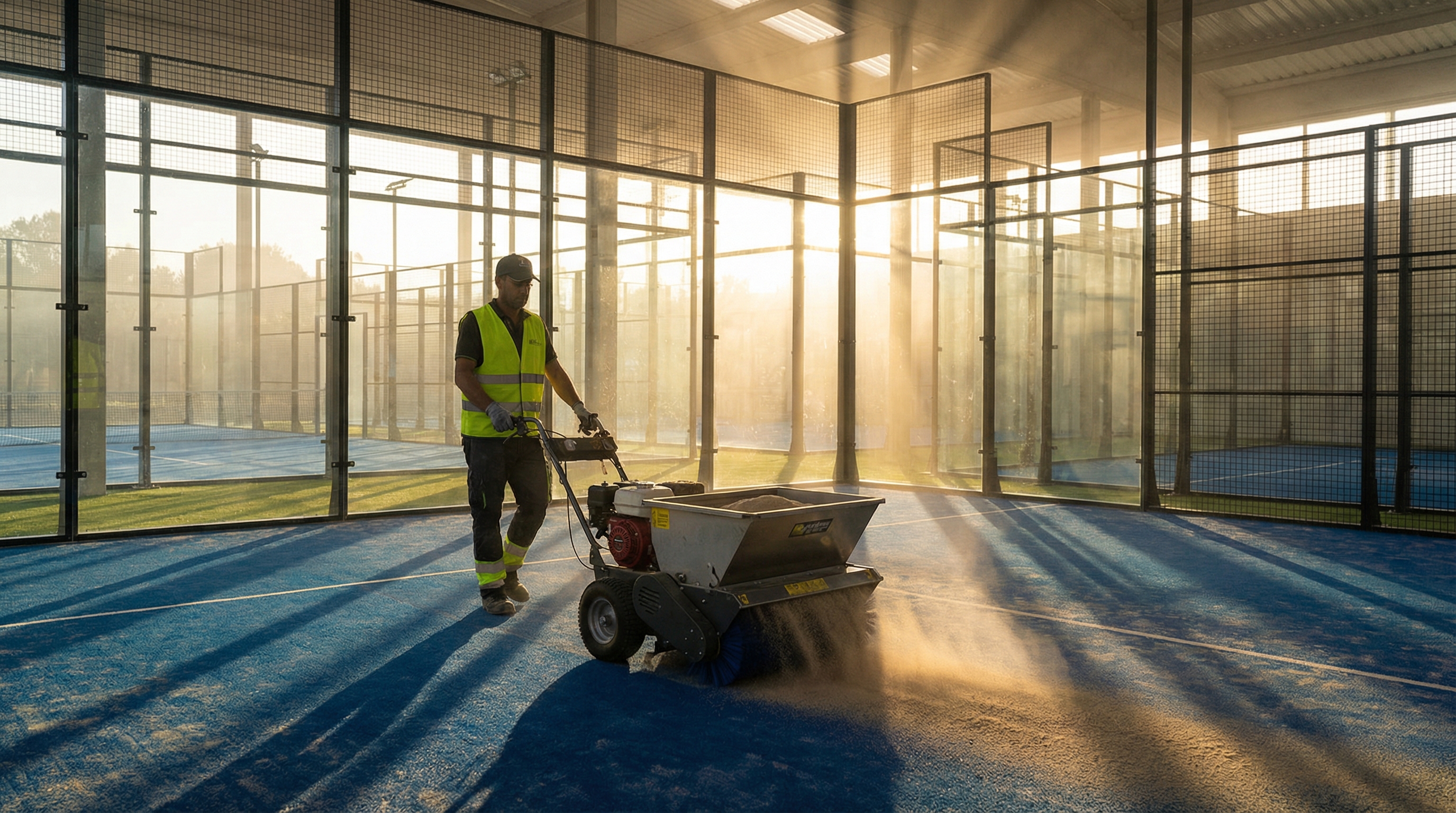
Maintaining paddle vs padel facilities requires different daily routines, with padel needing glass cleaning and sand brushing, while paddle tennis needs surface washing. Neglecting these tasks will shorten the lifespan of your investment and lead to a poor player experience and potential safety hazards.
How do you clean padel glass?
Padel glass must be cleaned regularly with non-abrasive tools to remove sweat and fingerprints that can interfere with the ball’s bounce. You should also check the tension of the bolts that hold the glass to the steel frame every few months to account for settling.
- Frequency: Glass cleaning (Daily/Weekly).
- Tools: Squeegee and mild detergent.
- Hardware: Torque-check bolts every 6 months.
Here is the deal.
Clean glass is the hallmark of a premium club; dirty glass makes your facility look neglected and unprofessional.
Does the turf need brushing?
The silica sand in padel turf tends to migrate to the corners of the court over time, creating “bald spots” where the ball bounces inconsistently. You must use a specialized triangular brush to redistribute the sand evenly across the surface at least once a week.
- Task: Redistribution of silica sand.
- Benefit: Prevents fiber matting and ensures consistent bounce.
- Time: 15 minutes per court.
What about paddle tennis maintenance?
Paddle tennis courts are much easier to maintain, requiring only a leaf blower to remove debris and a pressure wash once or twice a year. You will eventually need to “resurface” the court with a new layer of acrylic every 5 to 7 years to keep the colors vibrant.
| Task | Padel Frequency | Paddle Tennis Frequency |
|---|---|---|
| Surface Cleaning | Weekly (Brushing) | Monthly (Blowing/Washing) |
| Structural Check | Bi-Annually (Bolts) | Annually (Fencing) |
| Deep Service | Every 2-3 Years (Sand Add) | Every 5-7 Years (Paint) |
Establishing a strict maintenance schedule ensures your facility maintains its “factory-new” feel, justifying premium booking prices for years to come.
The Future of Racquet Sports
The global shift toward high-density, social-first sports is undeniable, and the choice between building for paddle or padel will define your facility’s competitive edge for the next decade. As the market matures, the demand for high-quality, factory-direct construction and professional-grade materials will only increase. By choosing a partner who understands the technical nuances of the paddle vs padel debate, you ensure that your facility is built to last and delivers the high ROI your project deserves. The vision for the industry is clear: sports facilities are no longer just places to play; they are social hubs designed for community, health, and premium experiences.
Are you ready to transform your space? To get a detailed blueprint and a factory-direct quote for your next project, contact us today and let our expert engineers help you build a world-class facility that stands the test of time.
FAQ
Can I convert an old tennis court into a padel court?
Yes, you can, but it requires a reinforced concrete ring to support the glass walls. Since one tennis court provides enough space for two or even three padel courts, this is one of the most profitable ways to repurpose underutilized land.
What’s the best way to choose between paddle and padel for my club?
Analyze your local demographics and existing competition before committing to a build. If you want to attract a high-spending, younger crowd, padel is currently the superior investment; if you have an older tennis-heavy membership, paddle tennis may be a safer transition.
How do I know if my glass is safe for a public facility?
Check for the EN 12150 certification mark on every panel before installation. Only 10mm or 12mm tempered safety glass should be used in commercial padel installations to prevent catastrophic failure and liability issues.
Can I install a padel court on my own?
Yes, if you have a qualified general contractor and follow the manufacturer’s modular assembly guide. While the structure is straightforward to bolt together, the precision required for leveling the glass panels often benefits from remote video guidance.
What’s the best surface color for high-end clubs?
Blue is currently the most popular and “standard” color for professional padel courts worldwide. It provides the best contrast for the yellow ball on camera and has become the recognizable brand color for the sport globally.