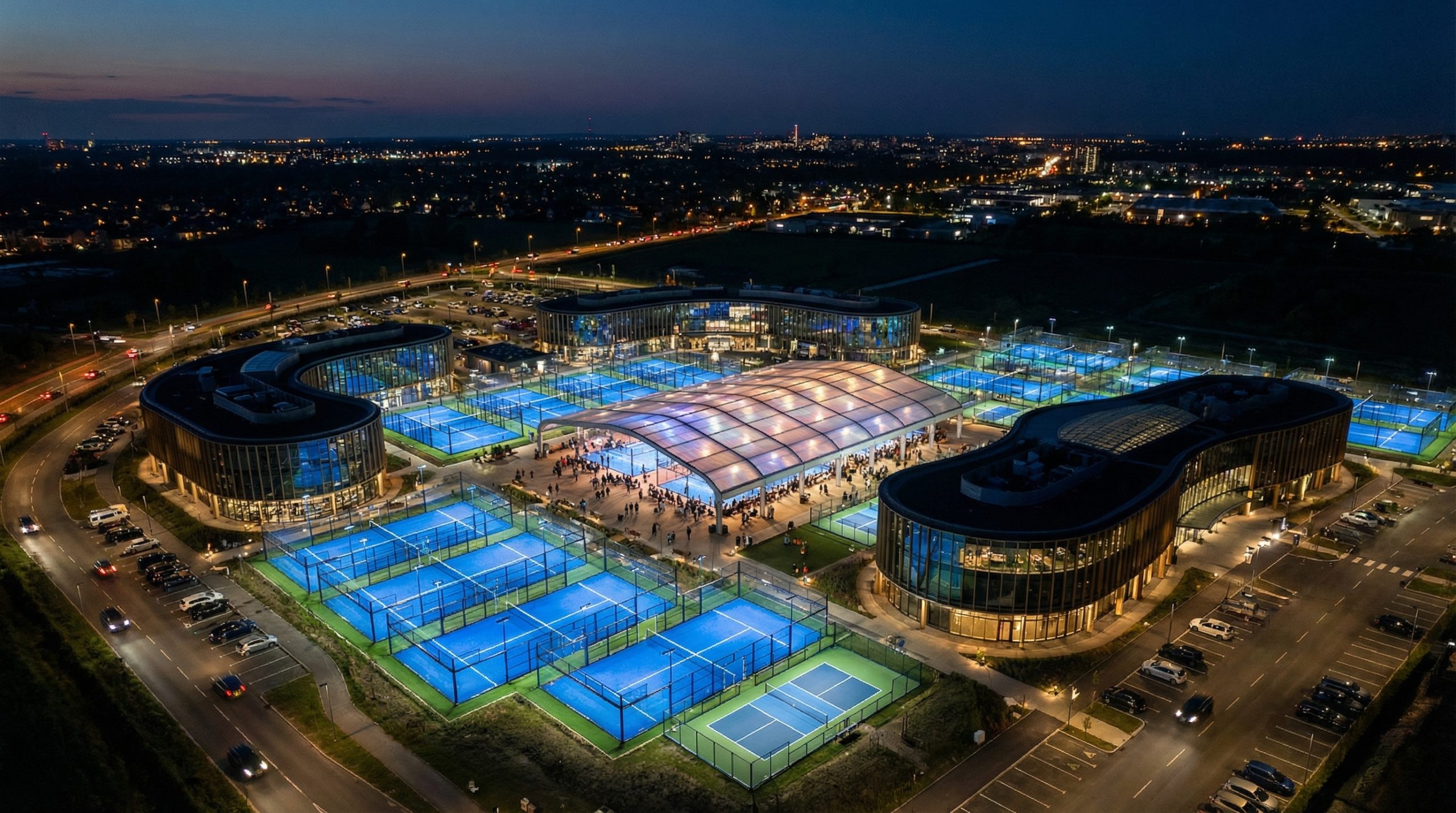
Understanding the padel ball vs pickleball debate is the first step toward building a high-ROI sports facility that caters to the massive global demand for social racket sports. Many developers find themselves paralyzed by the choice between these two explosive trends, fearing they might invest in a fading fad rather than a long-term asset. You don’t have to guess. This guide breaks down exactly what separates these sports and provides a technical blueprint for successful construction.
Why is everyone talking about padel ball vs pickleball right now?
Comparing padel ball vs pickleball reveals that both sports are currently dominating the recreational market because they prioritize social interaction over grueling athleticism. If you want to design multi-sport facilities, understanding this cultural shift is mandatory.
The rise of these sports isn’t accidental. Investors are noticing that people want activities where they can talk and play simultaneously.
- Increased court density leads to higher club revenue.
- Easier entry points attract families and retirees.
- Social media visibility drives younger demographics to the court.
How accessibility drives popularity
Here is the kicker: you don’t need years of training to enjoy these games. Unlike tennis, the learning curve is measured in minutes, not months.
- Smaller court sizes mean less running and more hitting.
- Doubles play is the standard, fostering community ties.
- Equipment is relatively affordable for new players.
| Feature | Padel Appeal | Pickleball Appeal |
|---|---|---|
| Social Level | Very High | Extremely High |
| Pace | Fast & Tactical | Moderate & Volley-heavy |
Analyzing the market shows that while both sports are growing, they often attract slightly different user profiles based on geographic trends and existing infrastructure.
Key Takeaway: Both sports offer high engagement, making them safe bets for diverse facility developments.
What are the technical differences between a padel ball vs pickleball?
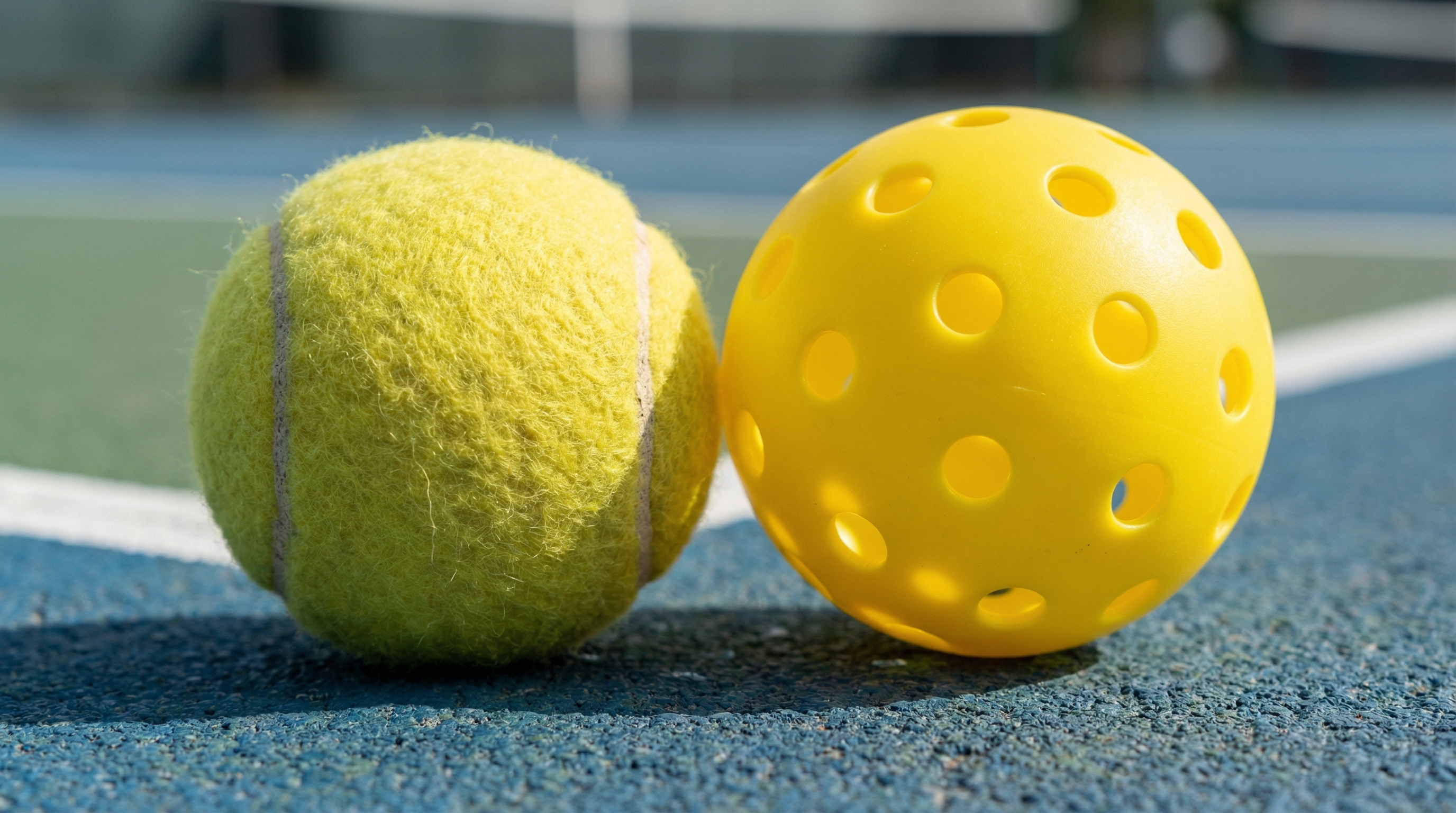
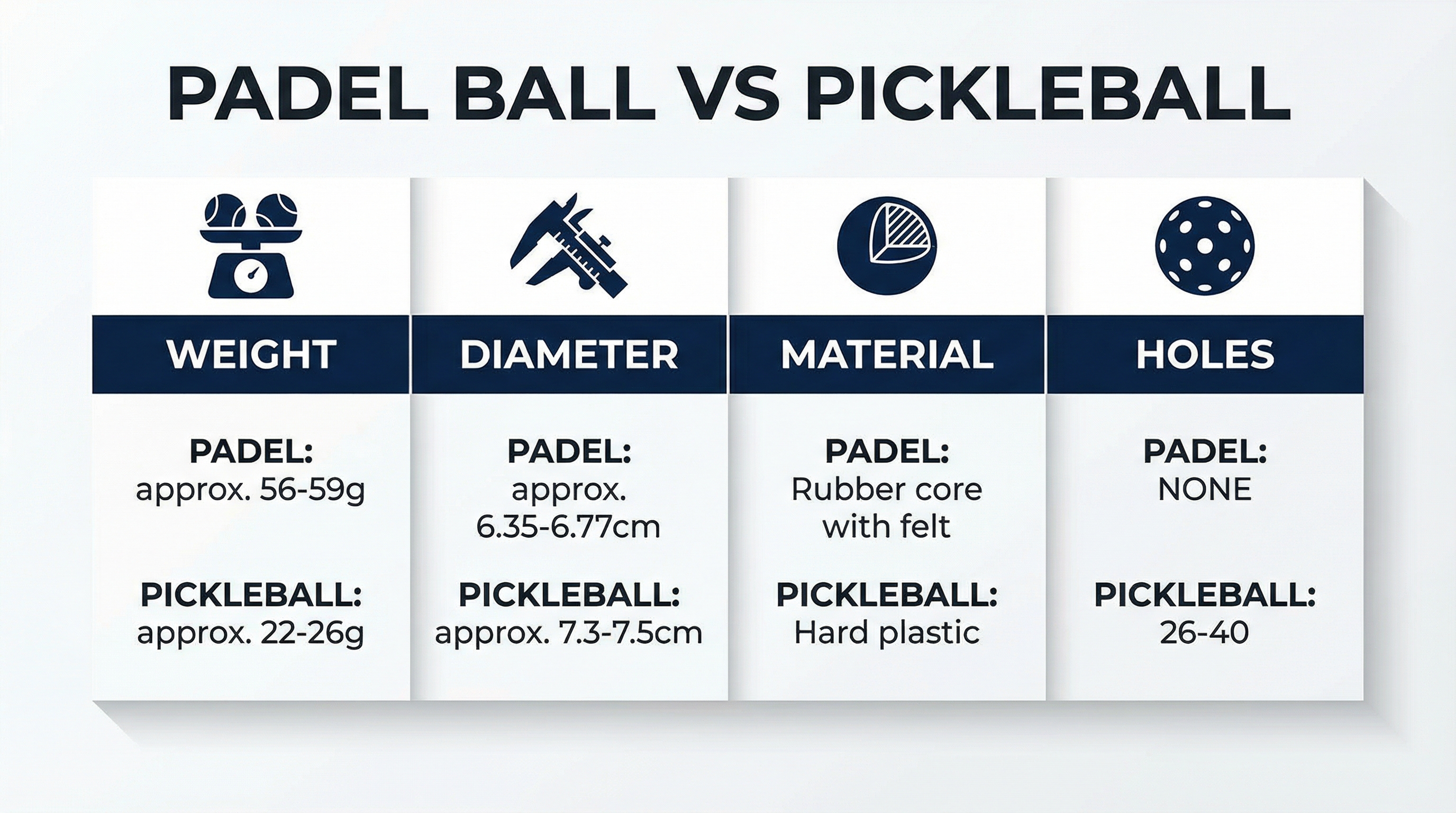
Distinguishing a padel ball vs pickleball is essential for players and builders alike, as the equipment dictates the surface requirements and fence tension. You can find detailed technical specs in our padel court size and build guide.
Comparing internal pressure and bounce
The padel ball looks like a tennis ball but has lower internal pressure. This design ensures that the ball interacts predictably with the glass walls.
- Standard pressure is between 10psi and 11psi.
- The felt surface provides grip for spin.
- Bounce height is lower than a standard tennis ball.
Material composition: Felt vs. Plastic
Now, look at the pickleball. It is a perforated plastic sphere, much like a wiffle ball, designed specifically to reduce speed and wind resistance.
- Constructed from durable, hard plastic.
- Features 26 to 40 precision-drilled holes.
- Produces a distinct “pop” sound upon impact.
| Characteristic | Padel Ball | Pickleball |
|---|---|---|
| Material | Rubber & Felt | Perforated Plastic |
| Pressure | Pressurized | No Pressure |
The fundamental physics of these balls determine why a pickleball court cannot simply replace a padel court without major structural changes.
Key Takeaway: Padel balls rely on internal air pressure, while pickleballs rely on aerodynamic hole patterns.
How do court dimensions vary in padel ball vs pickleball?
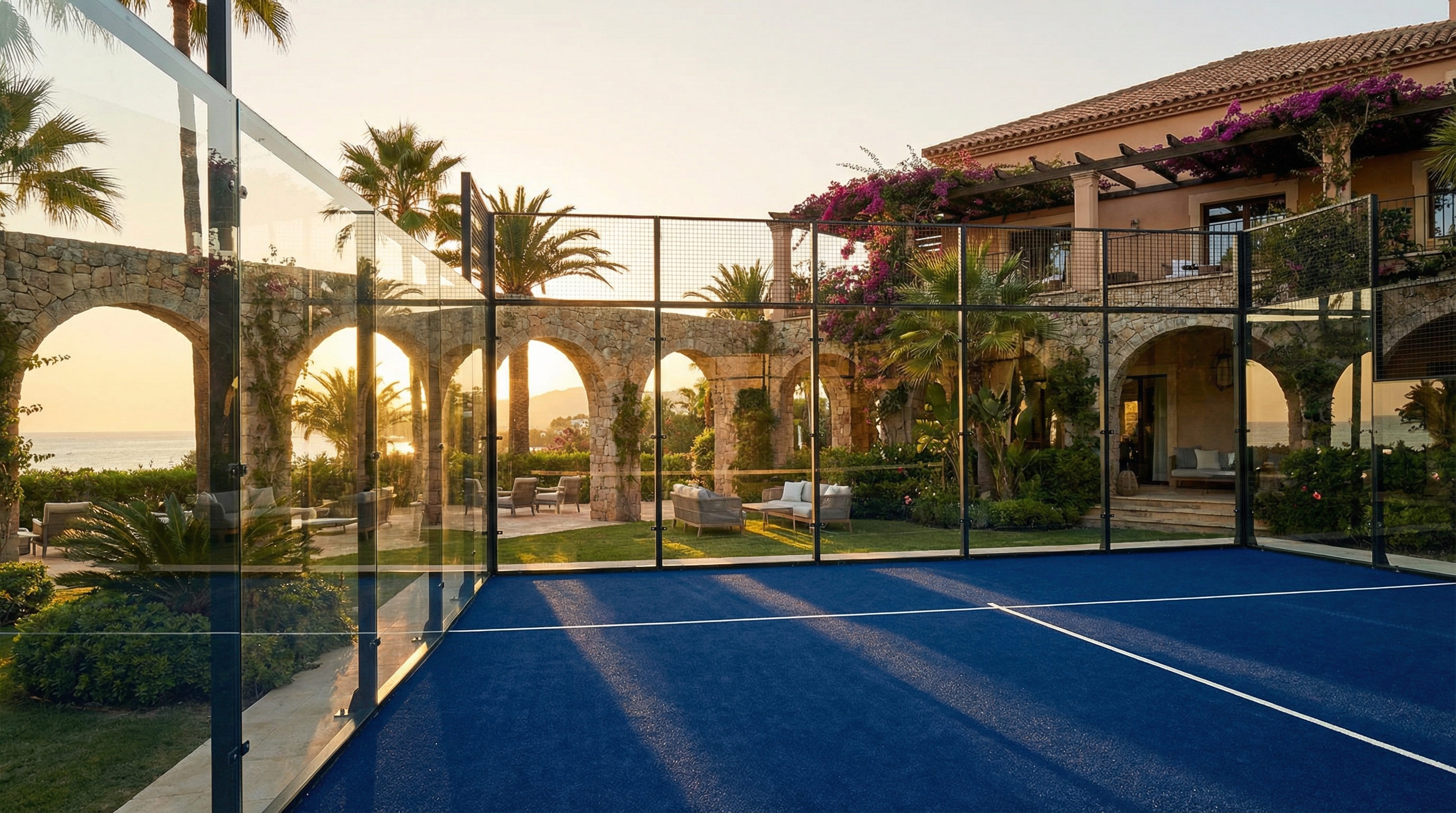
Analyzing court dimensions for padel ball vs pickleball highlights the different spatial needs for your project. To ensure your facility meets international standards, check our guide on professional court standards.
The role of glass walls in Padel
Padel is played in an enclosed “box” measuring 10 meters by 20 meters. Think about it: the walls aren’t just boundaries; they are active parts of the game.
- Tempered glass panels allow for rebound play.
- Metallic mesh sections create unpredictable bounces.
- The total footprint requires about 200 square meters.
Kitchen zones and Pickleball boundaries
Pickleball courts are significantly smaller, measuring 20 feet by 44 feet. The most critical area you need to know about is the “Kitchen” or non-volley zone.
- The Kitchen prevents players from smashing at the net.
- Courts are roughly the size of a badminton court.
- You can fit nearly three pickleball courts in the space of one tennis court.
| Dimension | Padel Court | Pickleball Court |
|---|---|---|
| Total Area | 200 sqm | ~82 sqm |
| Walls | Required (Glass/Mesh) | Optional (Fencing only) |
Choosing between these dimensions usually comes down to how much land you have available and your target player density.
Key Takeaway: Padel requires vertical infrastructure (walls), while pickleball maximizes horizontal player density.
Which equipment is essential for padel ball vs pickleball play?
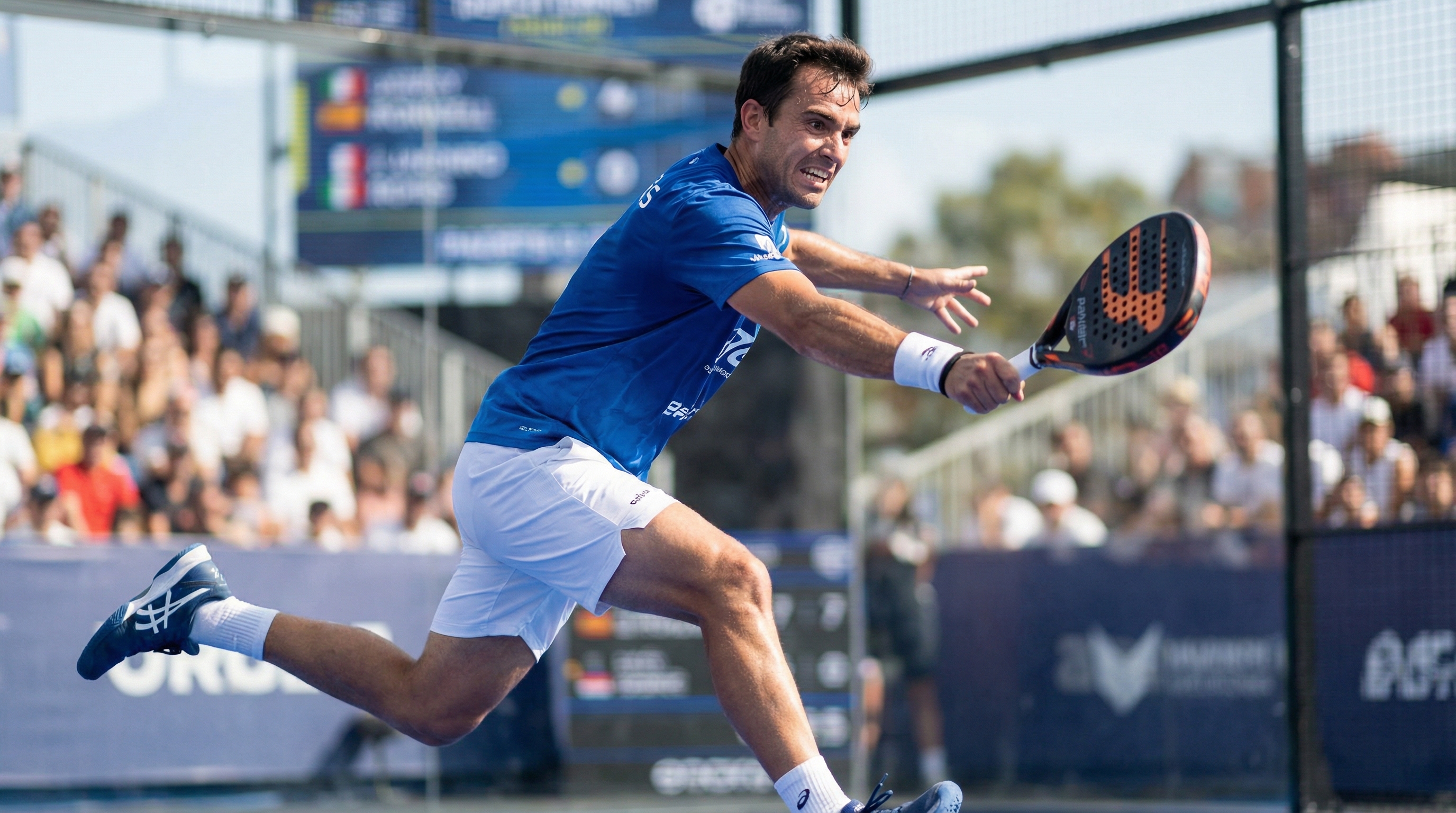
Choosing equipment for padel ball vs pickleball requires an understanding of different materials and striking surfaces. If you are a club owner, selecting the right gear is part of creating profitable business models.
Paddle anatomy: Carbon fiber vs. Composite
Padel rackets are thick, stringless, and perforated. They are usually made from carbon fiber or fiberglass with an EVA foam core for shock absorption.
- Rackets include a wrist strap for safety.
- Thickness usually ranges from 36mm to 38mm.
- The solid surface allows for heavy spin and power.
Choosing the right footwear for court surfaces
The best part? Your shoes matter just as much as your paddle. Because the surfaces vary, the grip needs to be specific to avoid injury.
- Padel shoes often use a herringbone “clay” sole for turf.
- Pickleball shoes require non-marking rubber for hard courts.
- Lateral support is vital for both due to quick side-to-side movements.
| Equipment | Padel | Pickleball |
|---|---|---|
| Striker | Perforated Foam Racket | Solid Composite Paddle |
| Safety | Wrist Strap Mandatory | No Strap Required |
Equipping your pro-shop with the correct gear ensures players have a better experience and stay injury-free.
Key Takeaway: Padel gear focuses on impact absorption, while pickleball gear emphasizes lightweight maneuverability.
How do rules and scoring differ for padel ball vs pickleball?
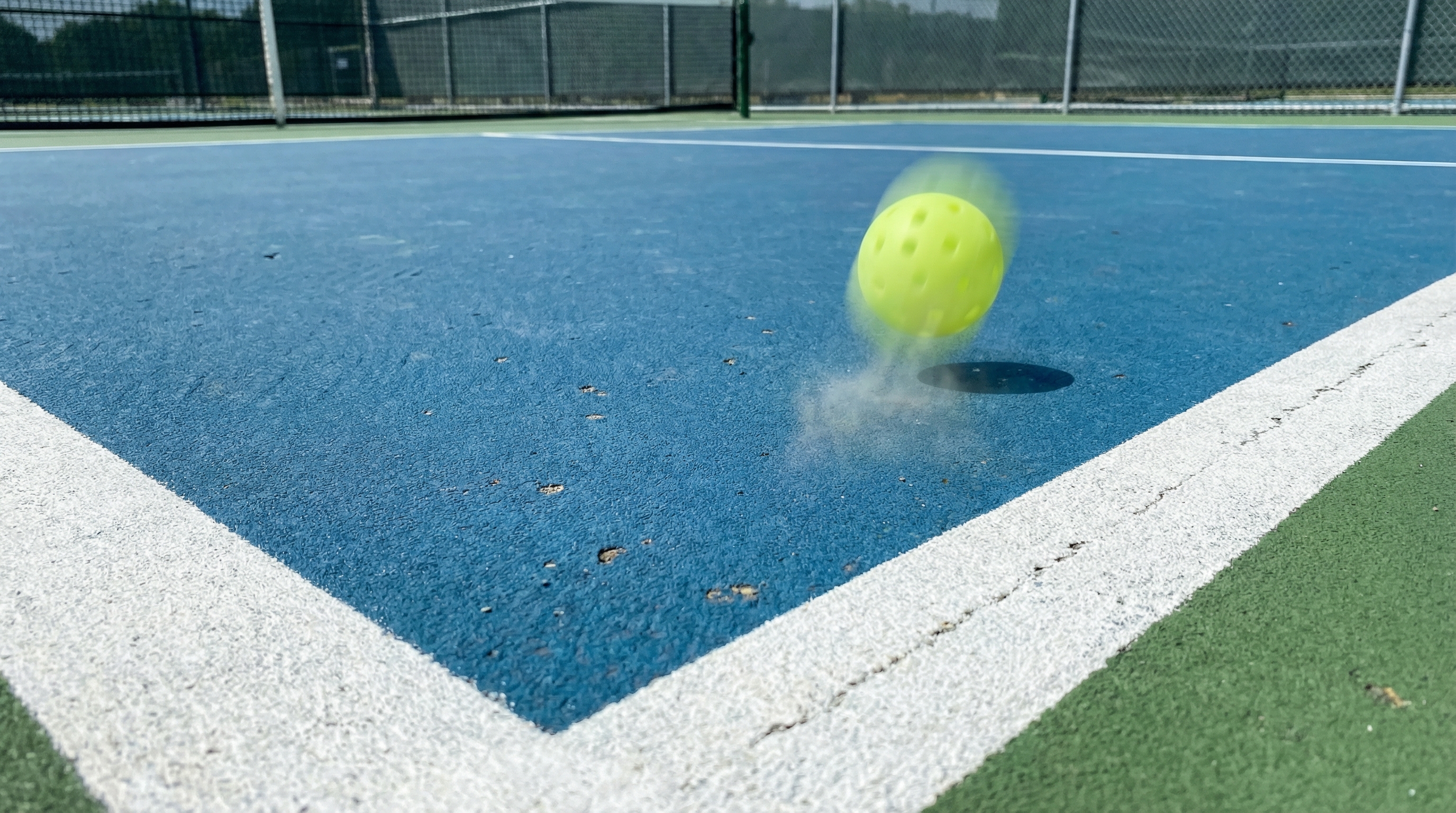
Learning the rules of padel ball vs pickleball is the best way to appreciate the unique “personality” of each game. While they share a net, the way you win a point is vastly different.
The “two-bounce” rule in Pickleball
In pickleball, the ball must bounce once on each side before anyone can volley. This rule is designed to extend rallies and prevent early-game dominance.
- Serves must be underhand and cross-court.
- You can only score points when you are the server.
- Games are typically played to 11 points, win by 2.
Padel’s tennis-style scoring system
Padel scoring will feel very familiar if you have played tennis. It uses the 15, 30, 40, and Game structure that most sports fans already understand.
- Sets are usually played to six games.
- Underhand serves must bounce once before being hit.
- The ball can hit the glass after bouncing on the turf.
| Rule Detail | Padel | Pickleball |
|---|---|---|
| Scoring | Tennis style (15, 30, 40) | Rally/Side-out to 11 |
| Serving | Underhand below waist | Underhand below navel |
Understanding these mechanics helps builders realize why court spacing and spectator areas need to be designed specifically for the flow of the game.
Key Takeaway: Pickleball uses a unique side-out scoring system, while Padel sticks to traditional tennis counting.
Is the learning curve easier for padel ball vs pickleball?
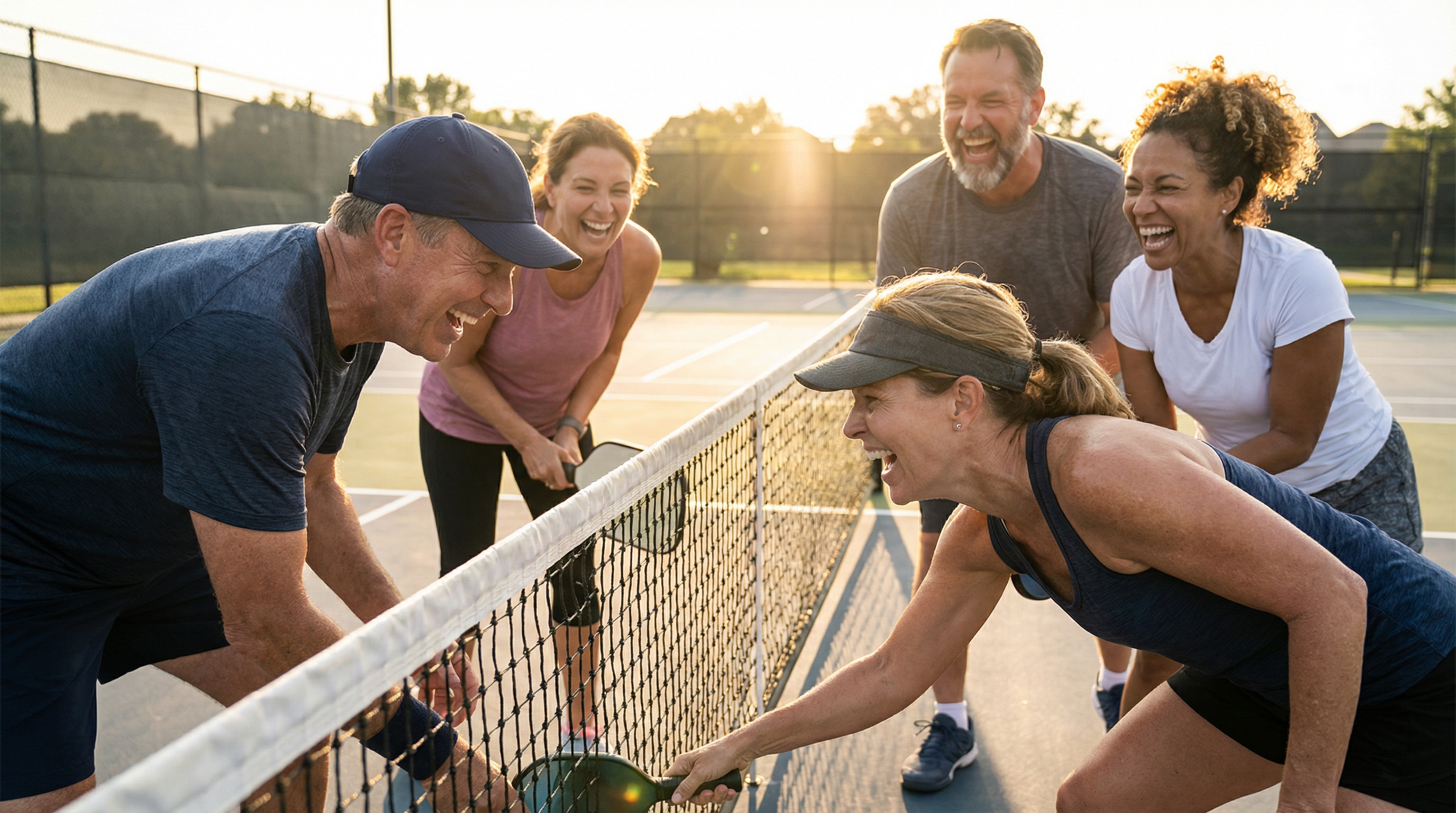
Evaluating the difficulty of padel ball vs pickleball is a major factor for club owners looking to attract new members. Both sports pride themselves on being “easy to learn, hard to master.”
Hand-eye coordination requirements
Pickleball is often cited as the easiest racket sport to pick up. Because the paddle is close to the hand and the ball moves slower, beginners find success almost immediately.
- The short paddle reduces the margin of error.
- Slow ball speed allows more time for positioning.
- The underhand serve is easy for all ages to master.
Social dynamics and doubles play
Padel is slightly more complex due to the walls. However, the walls also act as a safety net, keeping the ball in play longer for beginners who might otherwise miss.
- Learning to play “off the glass” adds a fun tactical layer.
- The enclosed space keeps the action close and fast.
- Teams of two ensure that the physical load is manageable.
| Metric | Padel Learning | Pickleball Learning |
|---|---|---|
| First-day Fun | High | Very High |
| Tactical Depth | High (Walls) | Medium (Dinking) |
The social nature of both sports creates a “sticky” environment where players return frequently to improve their skills with friends.
Key Takeaway: Pickleball has the lowest barrier to entry, but Padel offers unique tactical variety through its wall play.
What materials are required to build for padel ball vs pickleball?
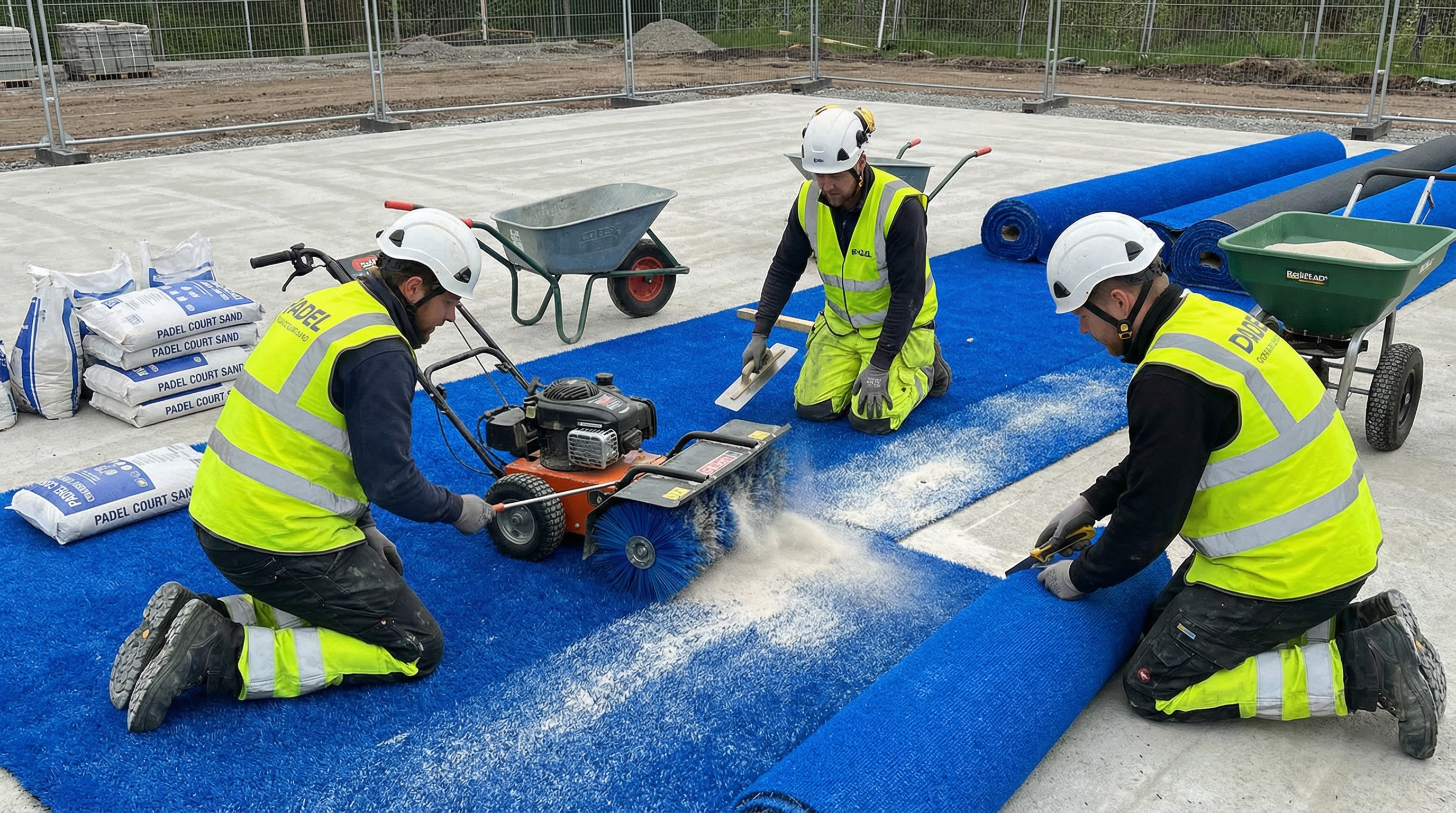
Understanding the materials for padel ball vs pickleball construction is critical for long-term durability. These sports require different sub-bases and surface finishes to perform correctly.
Concrete vs. Asphalt sub-bases
Padel courts almost always require a reinforced concrete slab. Because the glass walls are extremely heavy, the foundation must be perfectly level and structurally sound to prevent cracking.
- Concrete provides the necessary anchor for steel pillars.
- Proper drainage systems must be integrated during the pour.
- Accuracy is vital for the glass panel alignment.
Artificial turf and acrylic coating options
Pickleball is typically built on asphalt or concrete with an acrylic coating. This “hard court” surface is what gives the plastic ball its consistent bounce.
- Acrylic layers include sand for slip resistance.
- Padel uses specific monofilament artificial turf with sand infill.
- The turf allows players to slide safely during intense points.
| Component | Padel Material | Pickleball Material |
|---|---|---|
| Surface | Sand-filled Artificial Turf | Multi-layer Acrylic |
| Foundation | Reinforced Concrete | Asphalt or Concrete |
Investing in high-quality materials during the initial build phase significantly reduces the total cost of ownership over the facility’s lifespan.
Key Takeaway: Padel construction is more industrial and structural, whereas pickleball is focused on precision surfacing.
How do you maintain courts designed for padel ball vs pickleball?
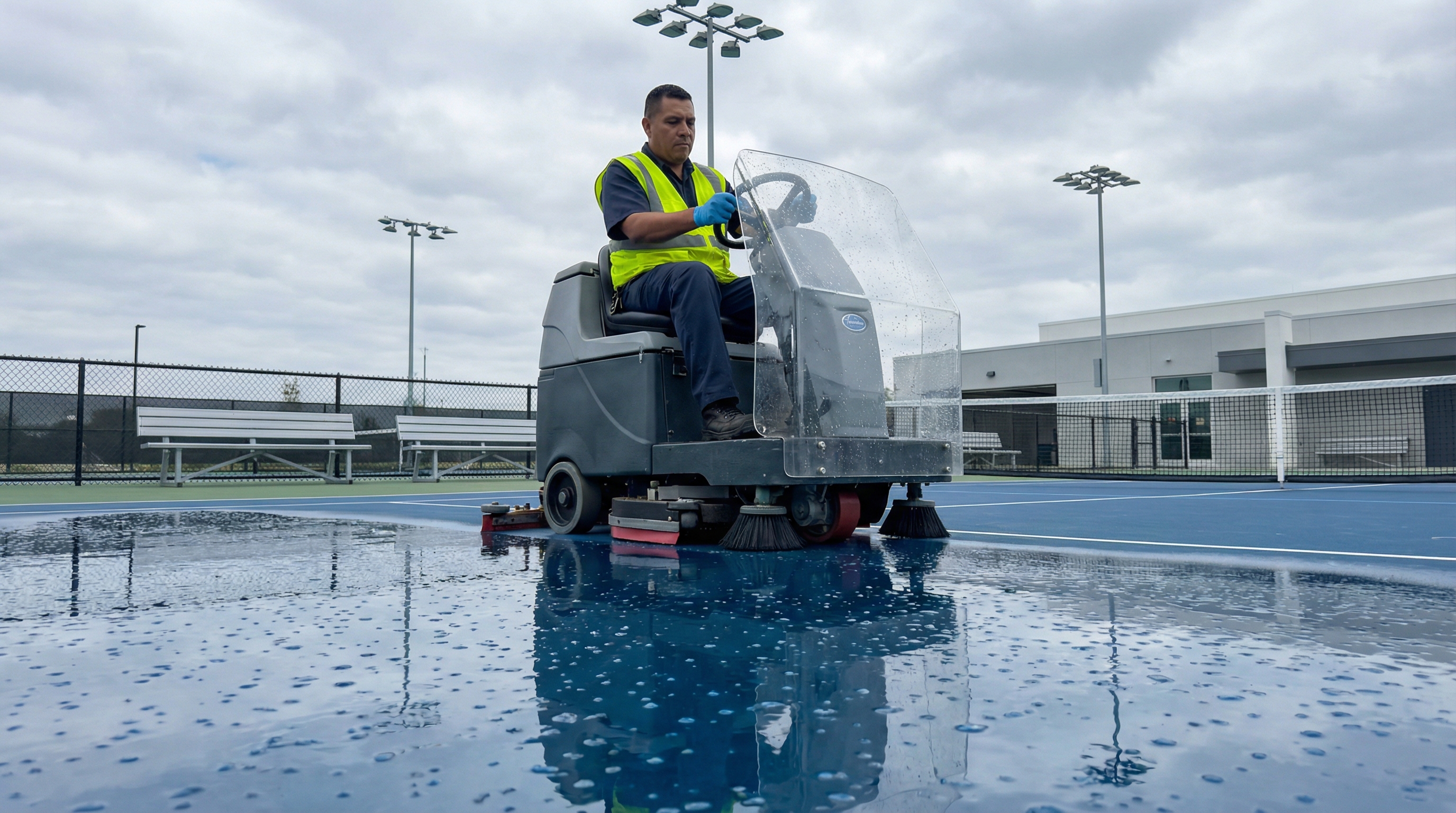
Maintaining the integrity of padel ball vs pickleball courts ensures player safety and aesthetic appeal. Routine care prevents the need for expensive structural repairs later.
Glass cleaning and sand redistribution
For padel, the most frequent task is cleaning the glass. Fingerprints and sweat can obscure vision, while the sand in the turf needs regular brushing.
- Use non-abrasive cleaners to keep glass panels clear.
- Brush the turf weekly to redistribute sand infill.
- Check the tension of the metallic mesh monthly.
Resurfacing timelines for longevity
Pickleball maintenance is lower on a weekly basis but requires periodic resurfacing. The acrylic can wear down or fade under heavy UV exposure.
- Squeegee water off after rain to prevent mineral buildup.
- Expect to resurface the acrylic every 4 to 6 years.
- Keep the court free of debris to avoid surface scratching.
| Task | Padel Frequency | Pickleball Frequency |
|---|---|---|
| Cleaning | Weekly (Glass/Turf) | Monthly (Power wash) |
| Structural Check | Quarterly | Annually |
A proactive maintenance schedule keeps your facility looking premium and helps retain high-value club members.
Key Takeaway: Padel requires constant aesthetic care (glass), while pickleball needs long-term surface reapplications.
Why should businesses invest in padel ball vs pickleball facilities?
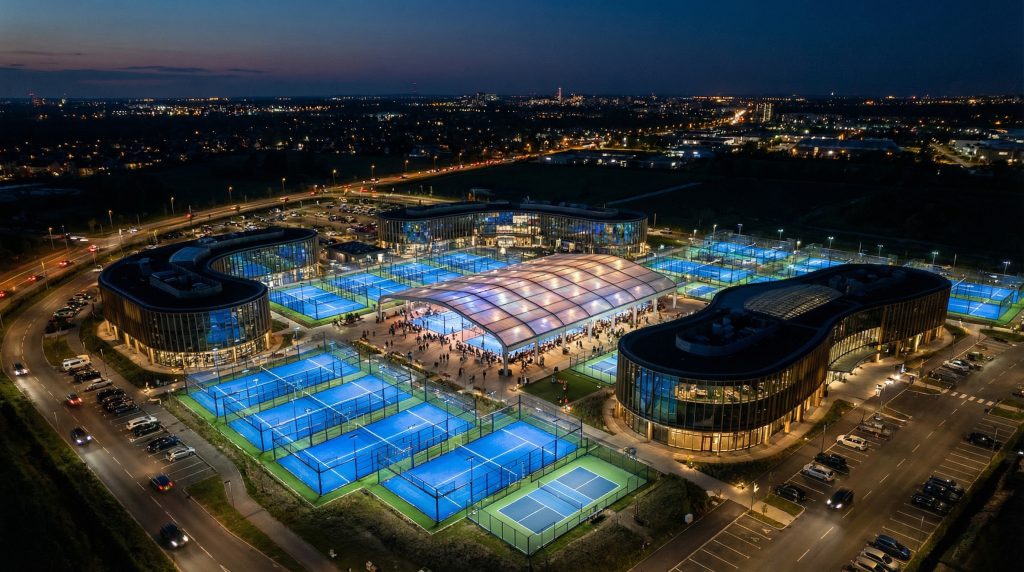
The business case for padel ball vs pickleball is incredibly strong in the current real estate market. Both sports offer higher revenue per square foot than traditional tennis or gym spaces.
Revenue per square foot comparison
Think about this: you can fit four pickleball courts into the space of one tennis court. That means sixteen people playing simultaneously instead of just two or four.
- Higher player turnover increases beverage and retail sales.
- Court rental fees can be split among four players, making it affordable.
- Night lighting extends operational hours and profitability.
Attracting a diverse demographic
Padel attracts a high-spending corporate and professional crowd. Meanwhile, pickleball captures everyone from teenagers to active seniors, ensuring your facility is busy all day.
- Corporate events find racket sports perfect for networking.
- Junior programs build long-term membership bases.
- Tournaments can draw large crowds and sponsorship dollars.
| Business Metric | Padel Facility | Pickleball Facility |
|---|---|---|
| Player Density | Moderate | Very High |
| Target Demo | Professionals/Expats | All-age Community |
Smart investors often build hybrid facilities to capture both markets and mitigate the risk of changing local preferences.
Key Takeaway: Pickleball offers the highest player density, while Padel often commands higher premium membership fees.
How do you decide which sport to build for: padel ball vs pickleball?
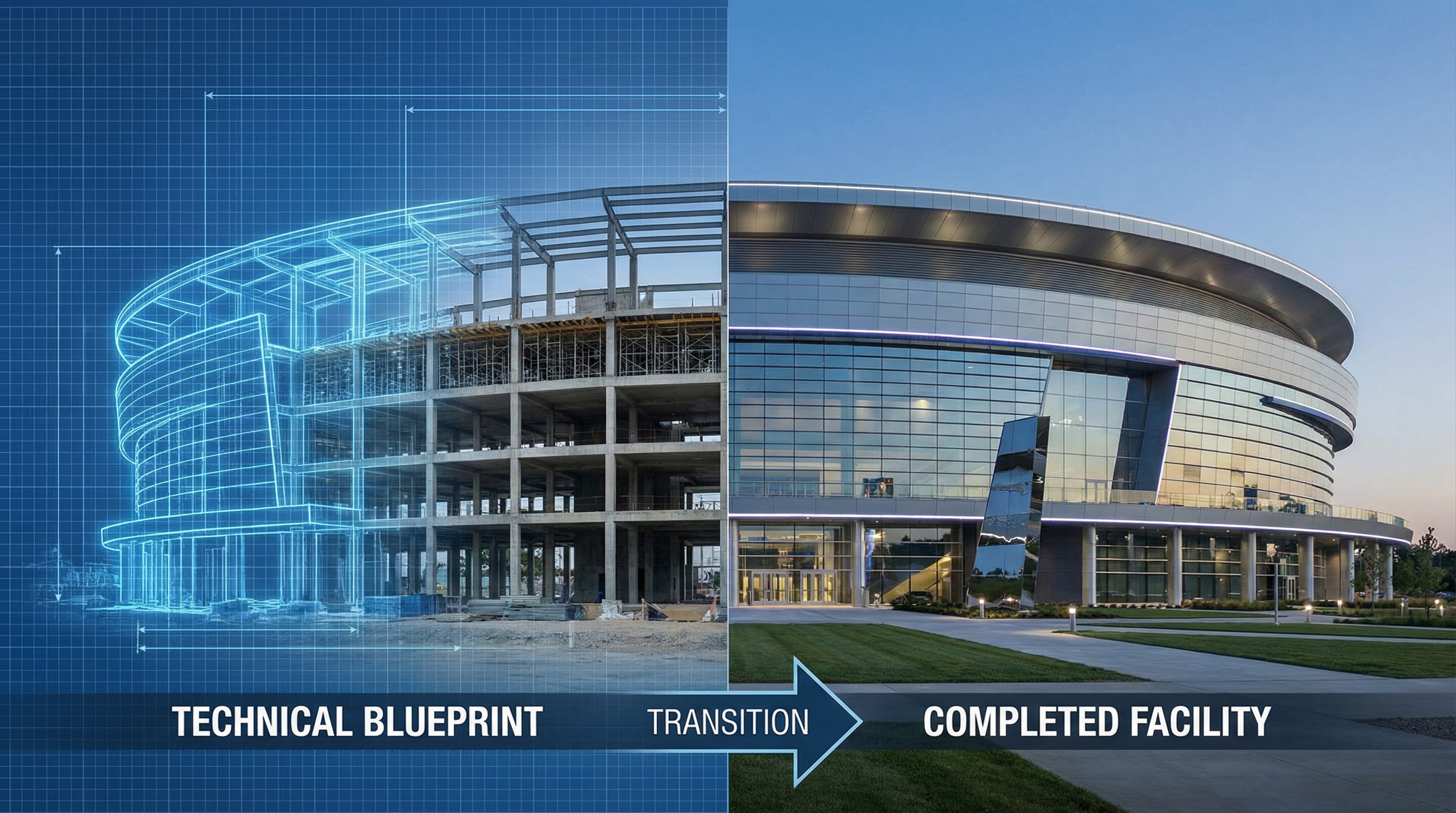
The final choice between padel ball vs pickleball depends on your land, budget, and local market demand. You must look at the data before breaking ground.
Assessing your available land area
If you have irregular or small plots of land, pickleball is your best friend. However, if you are building a luxury destination, the architectural beauty of a glass-walled padel court is hard to beat.
- Measure the exact square footage including run-off zones.
- Consider the height requirements (indoor ceilings need 6m+).
- Factor in the weight-bearing capacity of your sub-base.
Evaluating local market demand
Wait, is there already a pickleball club nearby? If so, building a premium padel facility might give you a competitive edge by offering something different.
- Survey your target audience to see which sport they prefer.
- Check for local coaching availability to support the community.
- Analyze the competition’s pricing and membership structure.
| Decision Factor | Choose Padel If… | Choose Pickleball If… |
|---|---|---|
| Budget | You have higher capital ($) | You want a faster ROI |
| Space | You want a “wow” factor | Space is extremely limited |
Conducting a thorough feasibility study is the only way to guarantee your project’s success in the competitive sports market.
Key Takeaway: Use Padel for luxury branding and Pickleball for maximizing community throughput and quick entry.
FAQ
Can I use a Padel court for Pickleball matches?
Technically, you can play pickleball on the turf, but the bounce will be significantly deadened, making it a poor experience. It is much better to build dedicated surfaces for each sport.
What’s the best way to reduce noise for pickleball courts?
The “pop” of the paddle can be loud. You should consider acoustic fencing or building courts at least 150 feet away from residential properties to avoid noise complaints.
Is building a Padel court more expensive than a Pickleball court?
Yes, generally. Padel requires tempered glass, steel structures, and specialized artificial turf, whereas pickleball is largely an asphalt and paint job.
Can I build these courts indoors?
Absolutely. Both sports thrive indoors, but Padel requires a minimum ceiling height of 6 meters (ideally 8 meters) to allow for the high lobs that are central to the game.
How long does it take to construct a professional court?
A pickleball court can be surfaced in a few days once the base is ready. A padel court typically takes 2 to 4 weeks for the full installation of the structure and glass.
Ready to build your legacy?
Whether you are leaning toward the high-tech glass of Padel or the high-speed volleys of Pickleball, the most important step is starting with a professional plan. The market for social sports is only getting larger, and the space for new facilities is filling up fast.
If you are ready to transform your land into a high-revenue sports destination, contact us today for a professional consultation and custom blueprint.
Brand Vision: We believe in creating spaces where community and competition meet, building the infrastructure that powers the next generation of global racket sports.