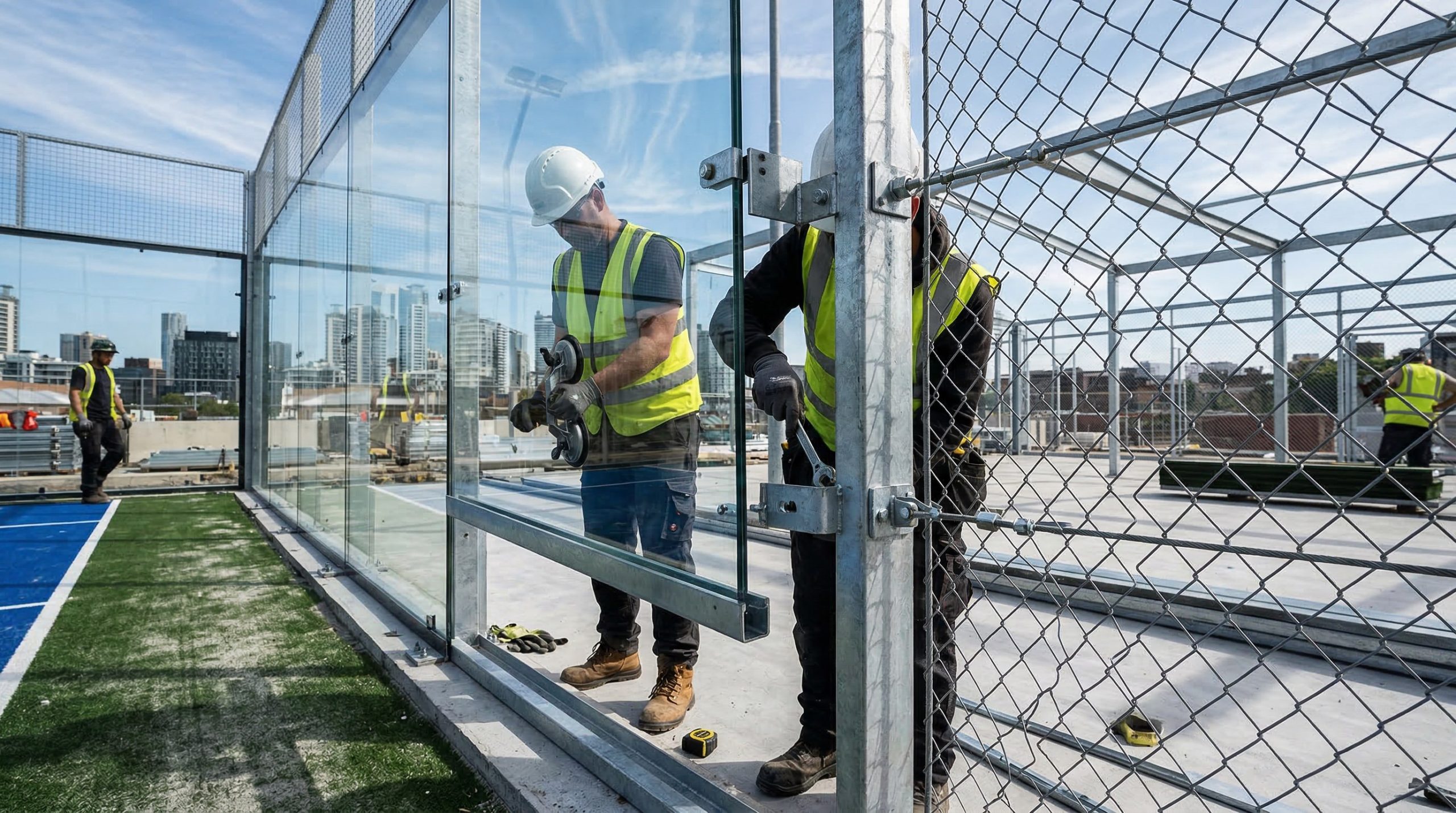
Choosing between padel vs. pickleball requires understanding that padel is an enclosed, strategic sport played off glass walls, while pickleball is an open-court game emphasizing quick reflexes on a smaller surface. To build them, you must decide between high-spec engineering involving tempered glass and steel or a more straightforward acrylic surfacing project.
You want to capitalize on the soaring demand for racquet sports, but the sheer variety of court types is overwhelming. Investing thousands in the wrong infrastructure could leave you with a facility that fails to attract the right demographic or requires constant, expensive repairs. By following this guide, you will learn the precise technical specifications and construction phases needed to deliver a world-class playing environment. Understanding padel vs. pickleball is the first step toward building a profitable, high-traffic sports destination.
What defines the core of padel vs. pickleball?
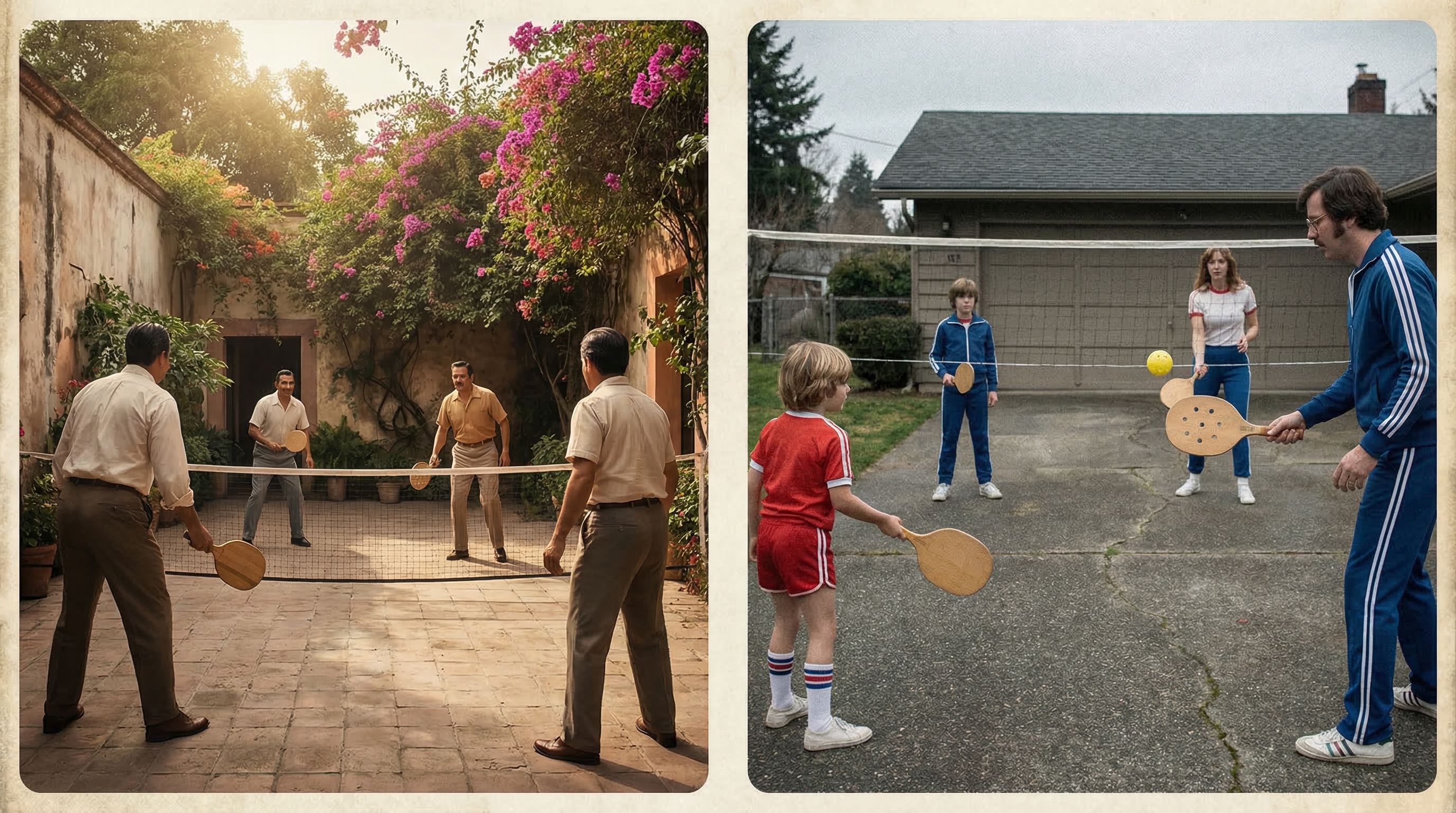
Understanding the fundamental identity of padel vs. pickleball is essential before you break ground. Padel is a doubles-focused game played in a cage of glass and mesh where the ball stays in play after hitting the walls. Pickleball, conversely, is an open-air sport played with a perforated plastic ball on a court similar in size to badminton.
How did these sports originate?
The best part? Both sports were born from a desire for accessibility and family fun. Padel began in Mexico when a player added walls to his front yard to keep balls from disappearing into the brush. Pickleball was famously invented by three fathers in Washington using old ping-pong paddles and a wiffle ball.
- Padel: Invented in 1969 by Enrique Corcuera.
- Pickleball: Created in 1965 by Joel Pritchard and friends.
- Padel: Global growth accelerated in Spain and Argentina.
- Pickleball: Rapidly became the fastest-growing sport in the USA.
What is the unique vibe of each game?
Here is the deal: Padel feels like a high-energy mix of tennis and squash, focusing on angles and teamwork. Pickleball offers a more relaxed, social atmosphere that is incredibly easy for beginners to pick up. You will find that both sports prioritize community interaction over the solitary intensity of traditional tennis.
Key Takeaway
| Sport | Primary Vibe | Key Advantage |
|---|---|---|
| Padel | Strategic & Intense | High spectator engagement |
| Pickleball | Social & Friendly | Extremely low entry barrier |
The historical and social contexts of these sports dictate the type of community and facility atmosphere you will ultimately cultivate.
How do court sizes differ for padel vs. pickleball?
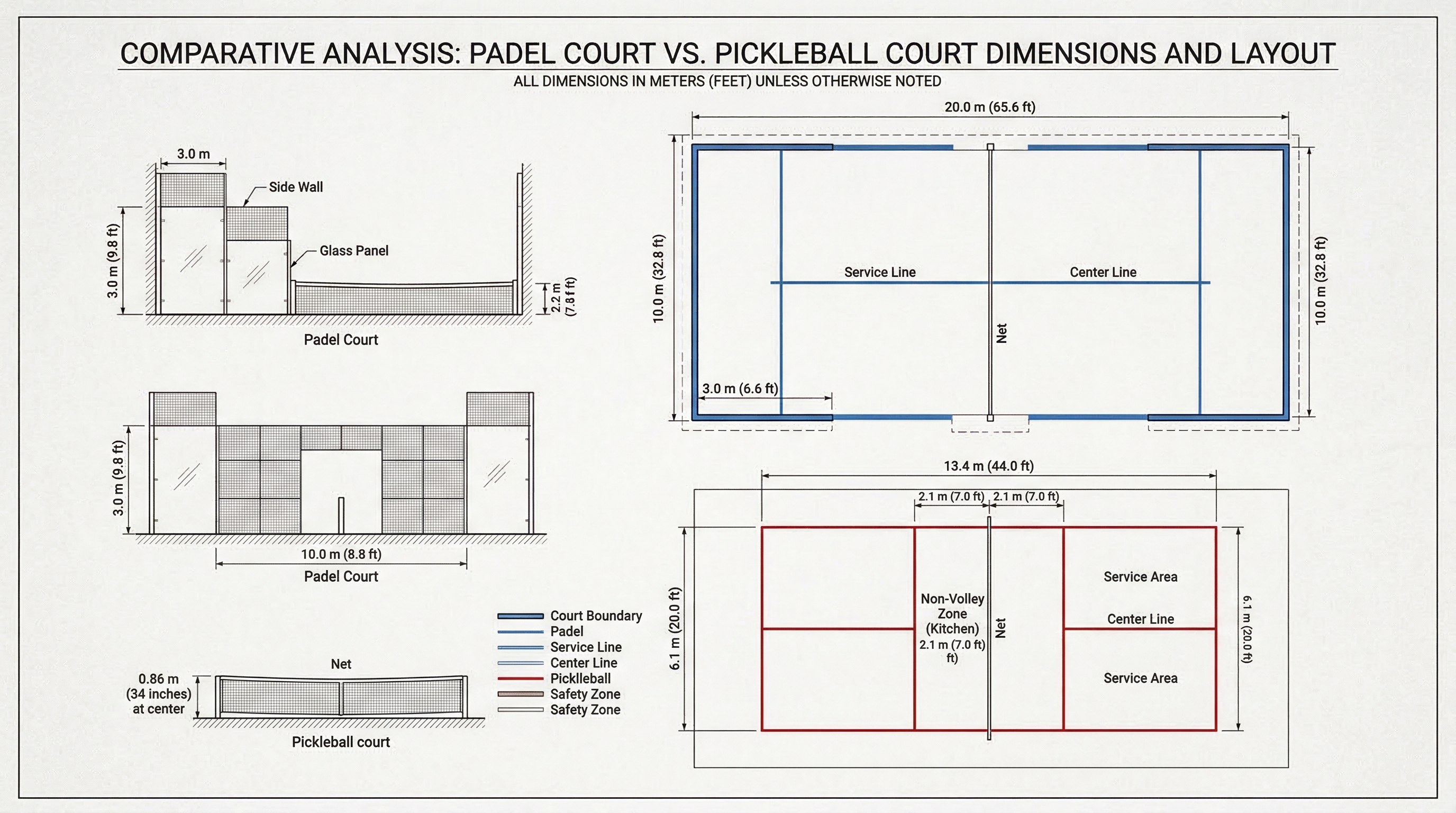
The physical footprint of padel vs. pickleball determines how many units you can fit into your available real estate. A padel court measures 20 meters by 10 meters, requiring a reinforced base for its heavy glass structure. Pickleball uses a much tighter space of 13.4 meters by 6.1 meters, making it ideal for converting old tennis courts.
What are the dimensions for padel?
Look: You need a clear 200-square-meter area just for the playing surface of a standard padel court. Beyond the lines, you must account for the structural pillars and the safety zone required for “out-of-court” play. This larger footprint allows for dramatic rallies and professional-grade competition.
- Length: 20 meters.
- Width: 10 meters.
- Net Height: 88cm at the center.
- Total Area: 200 square meters per court.
How much space does pickleball require?
The best part? You can fit nearly four pickleball courts in the space occupied by a single traditional tennis court. This density makes it a favorite for municipal parks and high-density residential developments. It is the perfect solution for maximizing player throughput in a limited urban environment.
Key Takeaway
| Feature | Padel Court | Pickleball Court |
|---|---|---|
| Length | 20m | 13.4m |
| Width | 10m | 6.1m |
| Total Area | 200 sq. m | 81.7 sq. m |
Padel requires more than double the space of pickleball, which significantly impacts your total facility capacity and land use planning.
Which gear is essential for padel vs. pickleball?
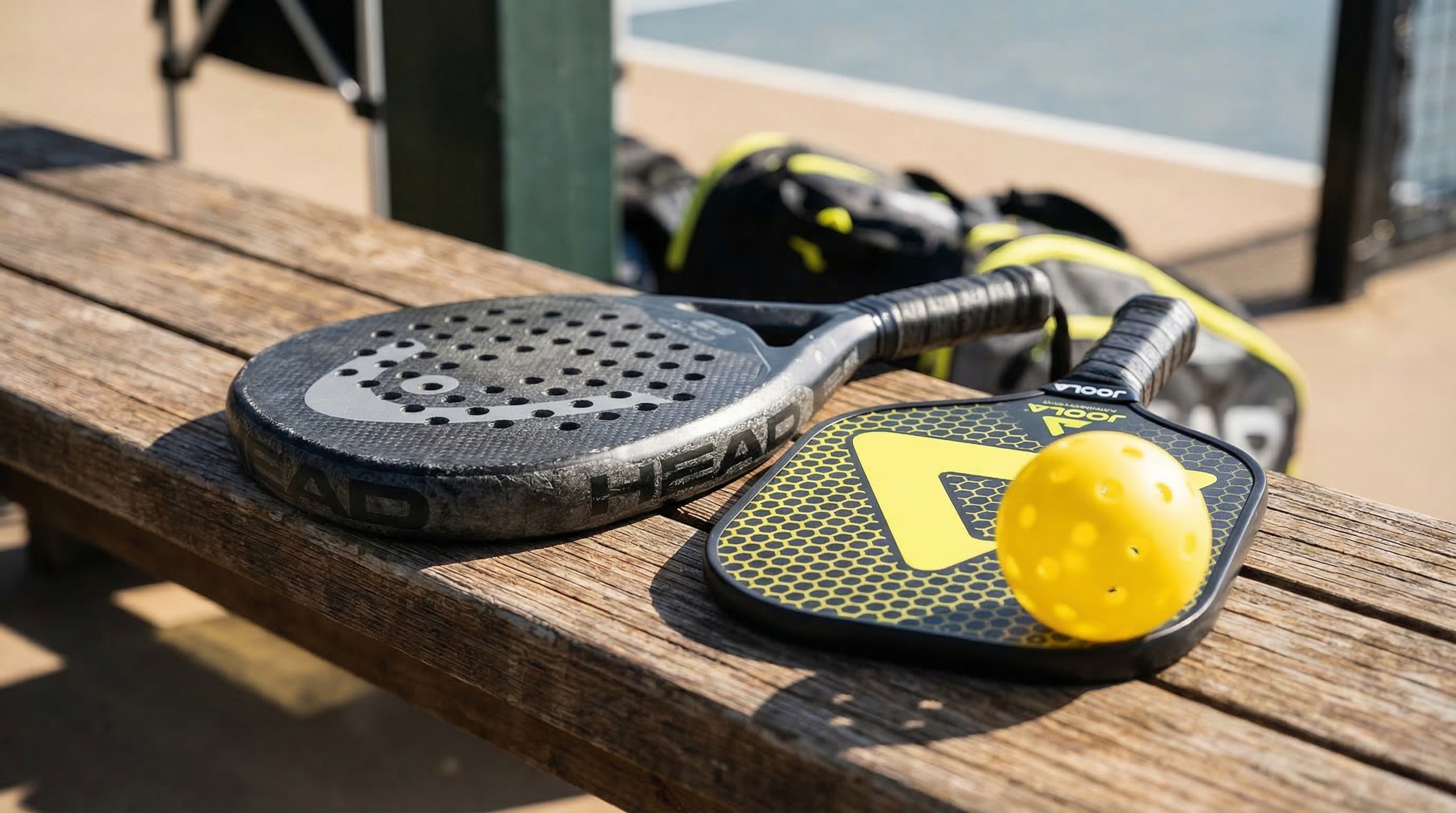
Selecting the right equipment for padel vs. pickleball is your next priority once the dimensions are set. Padel players use a “pala,” which is a solid, perforated racquet usually made of carbon fiber or fiberglass with an elastic core. Pickleball players utilize a flat paddle made of composite materials like graphite or honeycomb polymer.
What makes a padel pala unique?
Look: Unlike tennis racquets, padel palas have no strings and are much shorter, giving players incredible control at the net. They come in different shapes—round, teardrop, or diamond—to suit various skill levels and playing styles. Most high-end palas feature a rough surface to help players generate massive spin on the ball.
- Material: Carbon fiber or fiberglass.
- Core: EVA foam or Polyethylene.
- Safety: Must include a wrist strap for player protection.
- Weight: Typically ranges between 350g and 385g.
Why does pickleball use a plastic ball?
Here is the deal: The perforated plastic ball is designed to move slower through the air, making the game accessible for all ages. These balls come in indoor and outdoor varieties, differing in the number and size of the holes. They produce a distinct “pop” sound that has become synonymous with the sport’s fast-paced net play.
Key Takeaway
| Gear Item | Padel | Pickleball |
|---|---|---|
| Striking Tool | Solid Pala (carbon/foam) | Composite Paddle (honeycomb) |
| Ball Type | Pressurized (low bounce) | Perforated Plastic (wiffle style) |
The specialized materials in padel gear reflect its higher-impact nature compared to the lightweight, aerodynamics-focused equipment used in pickleball.
What are the rule variations in padel vs. pickleball?
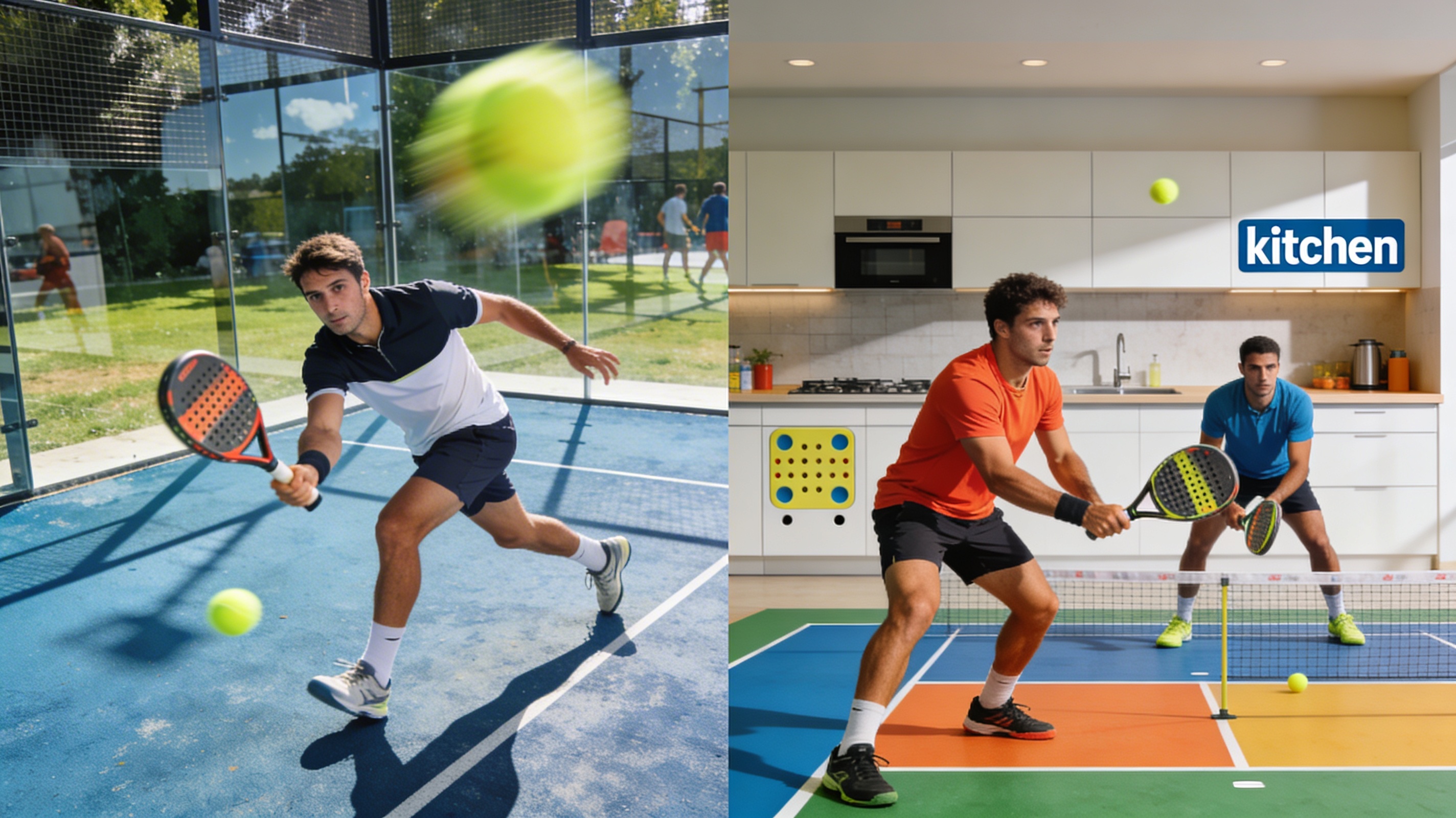
Mastering the rules of padel vs. pickleball is vital for designing courts that meet official tournament standards. Padel utilizes traditional tennis scoring but allows the ball to be played off the glass walls after it bounces on the turf. Pickleball uses a unique “point-on-serve” scoring system and features a strict “no-volley” zone known as the kitchen.
Is padel scoring similar to tennis?
Look: You will find the 15, 30, 40, and Game sequence very familiar if you have ever played or watched tennis. However, the use of walls adds a three-dimensional layer of strategy that changes how players defend and attack. You must serve underhand, and the ball must land in the opponent’s service box to start the point.
- Service: Underhand only, below waist level.
- Walls: Valid to play off glass after one floor bounce.
- Mesh: The ball is out if it hits the metal mesh before the floor.
- Scoring: Identical to tennis (15-30-40-Game).
What is the kitchen in pickleball?
The best part? The “Non-Volley Zone,” or kitchen, prevents players from standing right at the net and smashing every shot. This seven-foot area on both sides of the net forces a game of “dinking,” which is a soft, strategic shot. It balances the game, ensuring that power isn’t the only way to win a point.
Key Takeaway
| Rule | Padel | Pickleball |
|---|---|---|
| Scoring System | Tennis Style (15, 30, 40) | Side-out Scoring (to 11 or 15) |
| Wall Use | Essential for gameplay | Not applicable (open court) |
Padel scoring is intuitive for tennis players, whereas pickleball introduces unique zones that completely shift the tactical focus of the game.
How do you build a high-quality padel structure?
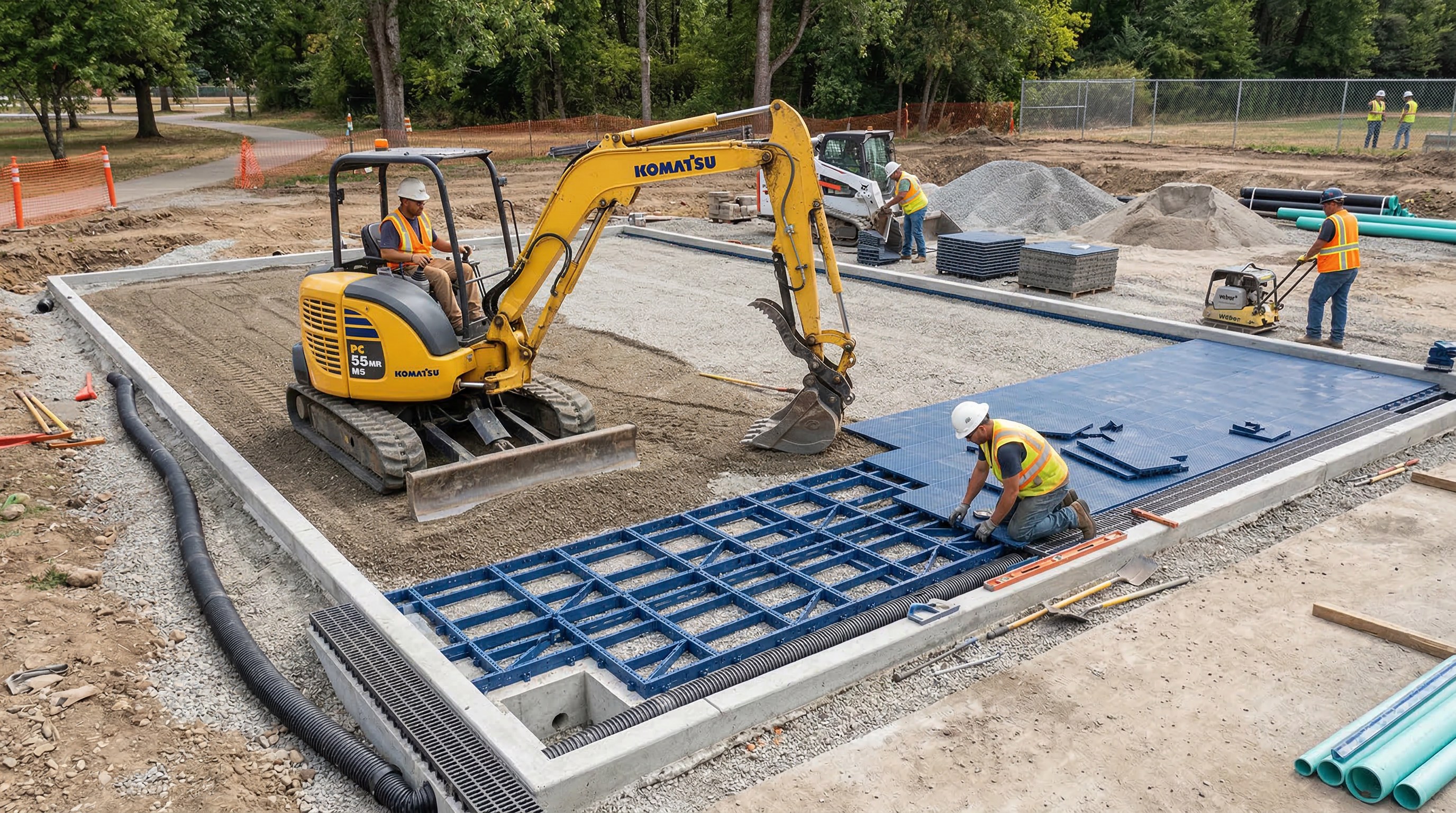
Building a padel court involves much more than just painting lines; it requires a heavy-duty steel frame and tempered glass panels. The structure must be made of hot-dip galvanized steel to prevent rust, especially in outdoor or humid environments. You also need to ensure the modular design allows for thermal expansion and resists high wind loads.
What is the best steel for the structure?
Here is the deal: Using high-quality galvanized steel ensures your court will last for over 20 years without structural degradation. The frames are typically powder-coated in custom colors to match your facility’s branding and aesthetic. It is crucial to use a modular assembly system that allows for quick installation and easy maintenance of individual parts.
- Treatment: Hot-dip galvanization for corrosion resistance.
- Thickness: Standard 3.0mm to 4.0mm steel profiles.
- Finish: UV-resistant electrostatic powder coating.
- Pillars: Reinforced corners for maximum stability.
How do you install the glass walls?
Look: The glass is the most critical component for both safety and the quality of play in a padel court. You must use 10mm or 12mm tempered safety glass that meets international “anti-explosion” standards. Professional installers use specialized suction equipment and laser leveling to ensure every panel is perfectly aligned for consistent ball bounce.
Key Takeaway
| Component | Material | Function |
|---|---|---|
| Frame | Galvanized Steel | Structural support and mesh housing |
| Walls | Tempered Safety Glass | Active play surface and visibility |
Investing in premium steel and certified glass is the only way to guarantee the long-term safety and commercial viability of a padel court.
What are the construction steps for pickleball?
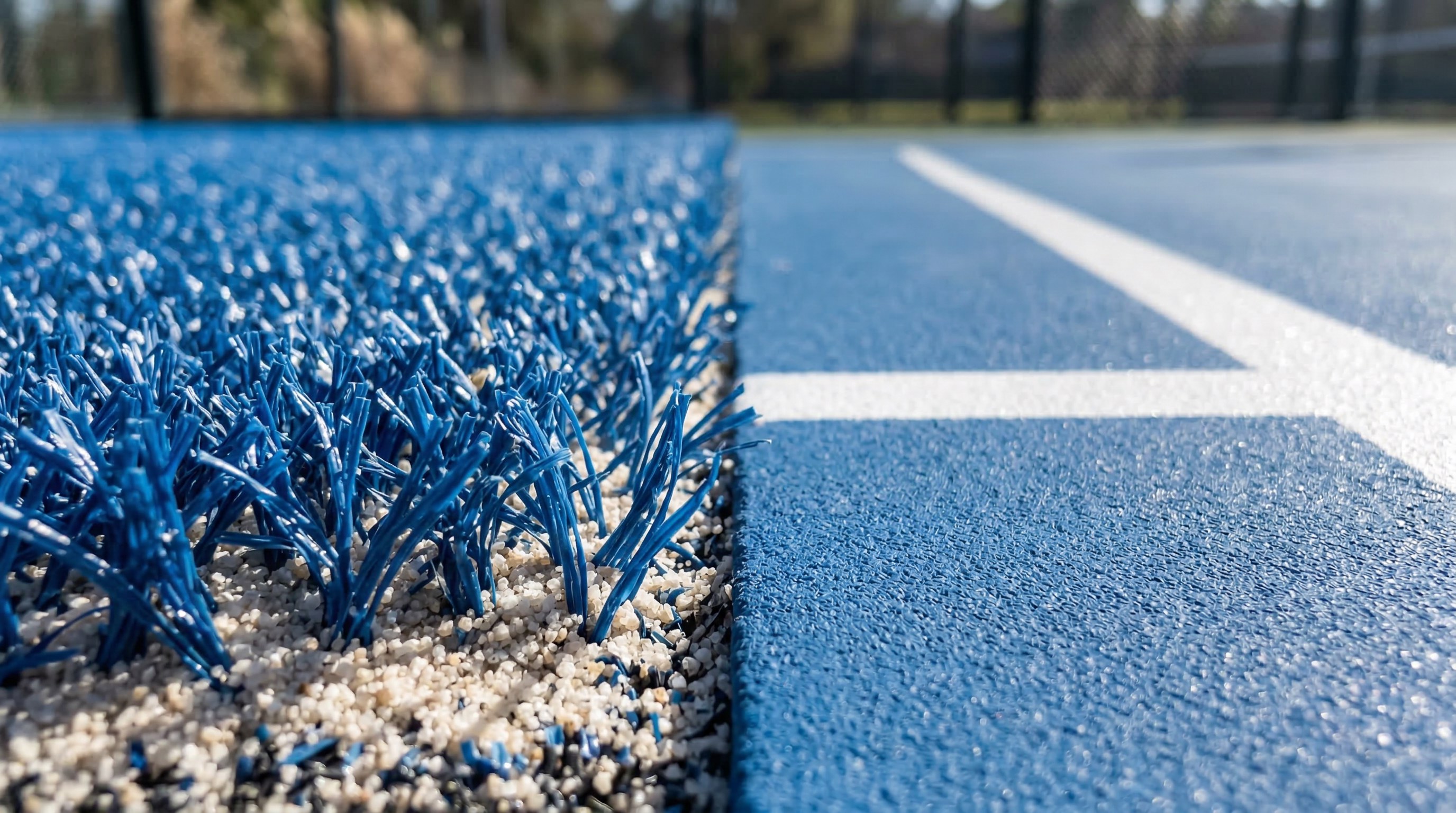
When comparing padel vs. pickleball construction, the latter focuses heavily on the quality of the concrete base and the final acrylic coating. You don’t have to worry about heavy glass walls, but the surface must be perfectly flat to avoid erratic bounces. The process starts with site excavation followed by a multi-layer surfacing system.
How do you prepare the concrete base?
The best part? A well-prepared concrete or asphalt base acts as a permanent foundation that requires very little structural upkeep. You must ensure proper drainage with a 1% slope to prevent water from pooling on the court after rain. This stage is where you decide between post-tensioned concrete or traditional reinforced slabs.
- Base: 4-inch reinforced concrete or asphalt.
- Slope: 1% for efficient water drainage.
- Vapor Barrier: Essential to prevent moisture rising through the slab.
- Curing: Minimum 28 days for concrete before applying coatings.
Which acrylic surfacing is best?
Here is the deal: A professional pickleball court requires a multi-layered acrylic system that provides both color and texture for grip. You can choose “cushioned” systems that incorporate rubber granules to reduce impact on players’ joints. The final lines must be painted with high-precision striping paint to meet official tournament regulations.
Key Takeaway
| Construction Phase | Requirement | Priority |
|---|---|---|
| Sub-base | Flatness and drainage | Preventing surface cracks |
| Coating | Multi-layer acrylic | Player grip and aesthetics |
Pickleball construction is essentially a high-end surfacing project, emphasizing the perfection of the ground rather than the vertical structure.
Why is glass choice vital for padel vs. pickleball?
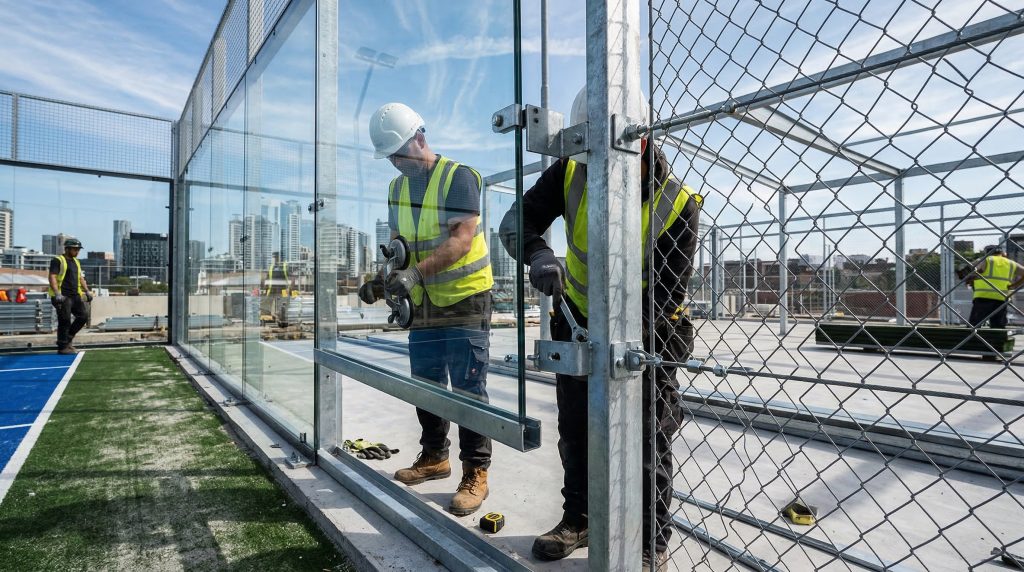
In the debate of padel vs. pickleball, glass is only a factor for the former, but it is the most expensive and visible part of the build. You must choose between standard frames and panoramic designs which offer unobstructed views for spectators. High-quality glass ensures that the ball bounces predictably, which is the hallmark of a professional-grade court.
Is tempered glass always required?
Look: Using anything other than tempered safety glass is a massive liability risk for your sports facility. Tempered glass is heat-treated to be four to five times stronger than standard glass and shatters into small, blunt pieces if broken. You should always look for the EN 12150 certification to ensure the glass meets European safety standards.
- Thickness: 10mm for standard; 12mm for panoramic.
- Safety: Must be tempered and heat-soaked.
- Mounting: Uses specialized gaskets to prevent metal-on-glass contact.
- Clarity: High-transparency options improve the spectator experience.
How does panoramic design impact safety?
The best part? Panoramic courts remove the rear structural posts, giving fans a “television-style” view of the action. To compensate for the missing posts, these courts use thicker 12mm glass and reinforced horizontal beams. This creates a premium look that can justify higher court rental fees for your club.
Key Takeaway
| Glass Type | Thickness | Application |
|---|---|---|
| Standard | 10mm | Budget-friendly club play |
| Panoramic | 12mm | High-end facilities and tournaments |
The glass quality directly correlates with player safety and the prestige of your facility, making it an area where you should never cut corners.
What lighting is required for padel vs. pickleball?
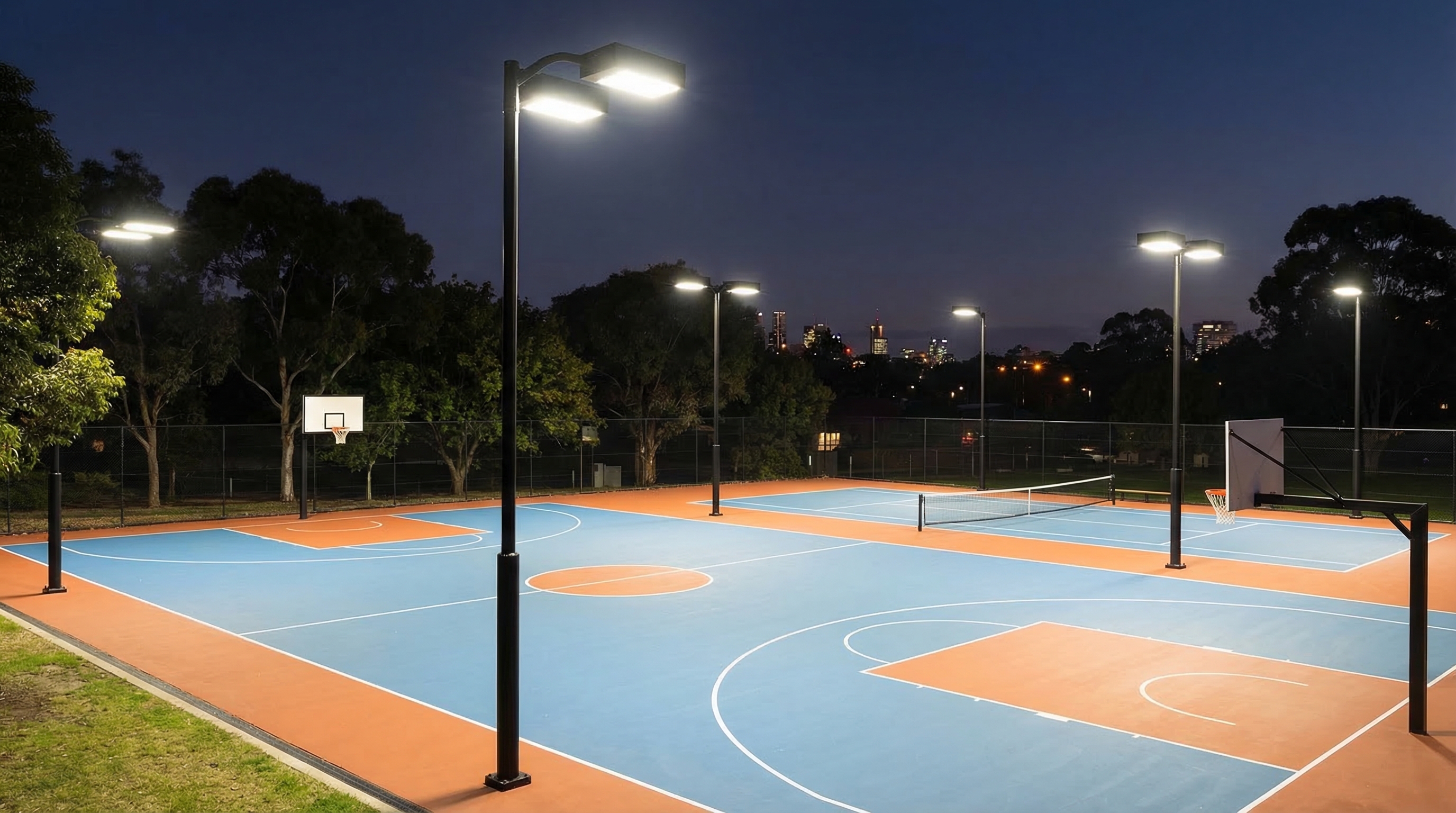
Optimal lighting for padel vs. pickleball ensures your facility can operate during evening hours, maximizing your revenue potential. For padel, you need floodlights mounted on 6-meter poles that provide uniform brightness across the entire cage. Pickleball lighting is often lower to the ground but must be carefully positioned to avoid blinding players during overhead smashes.
How many LUX are required for play?
Look: For recreational play, you should aim for a minimum of 300 LUX, while professional tournaments require upwards of 500 to 750 LUX. Uniformity is the key; you don’t want dark spots near the net or the corners of the court. Modern LED systems provide this brightness while consuming 50% less energy than traditional metal halide bulbs.
- Recreational: 300 LUX.
- Professional: 500 – 750 LUX.
- Color Temp: 5000K (Daylight) is preferred.
- Mounting: 4 to 8 LED lamps per court.
What are IP66 waterproof standards?
Here is the deal: Outdoor courts are exposed to dust, rain, and humidity, so your lighting must be fully sealed. An IP66 rating means the fixtures are dust-tight and protected against powerful water jets. This ensures that your lighting system won’t fail during a storm or require frequent internal cleaning.
Key Takeaway
| Lighting Feature | Standard | Benefit |
|---|---|---|
| Intensity | 300+ LUX | Enables safe nighttime play |
| Protection | IP66 Rated | Durability in outdoor environments |
High-performance LED lighting extends your operational hours and significantly reduces the long-term utility costs of your sports center.
How do you select turf for padel vs. pickleball?
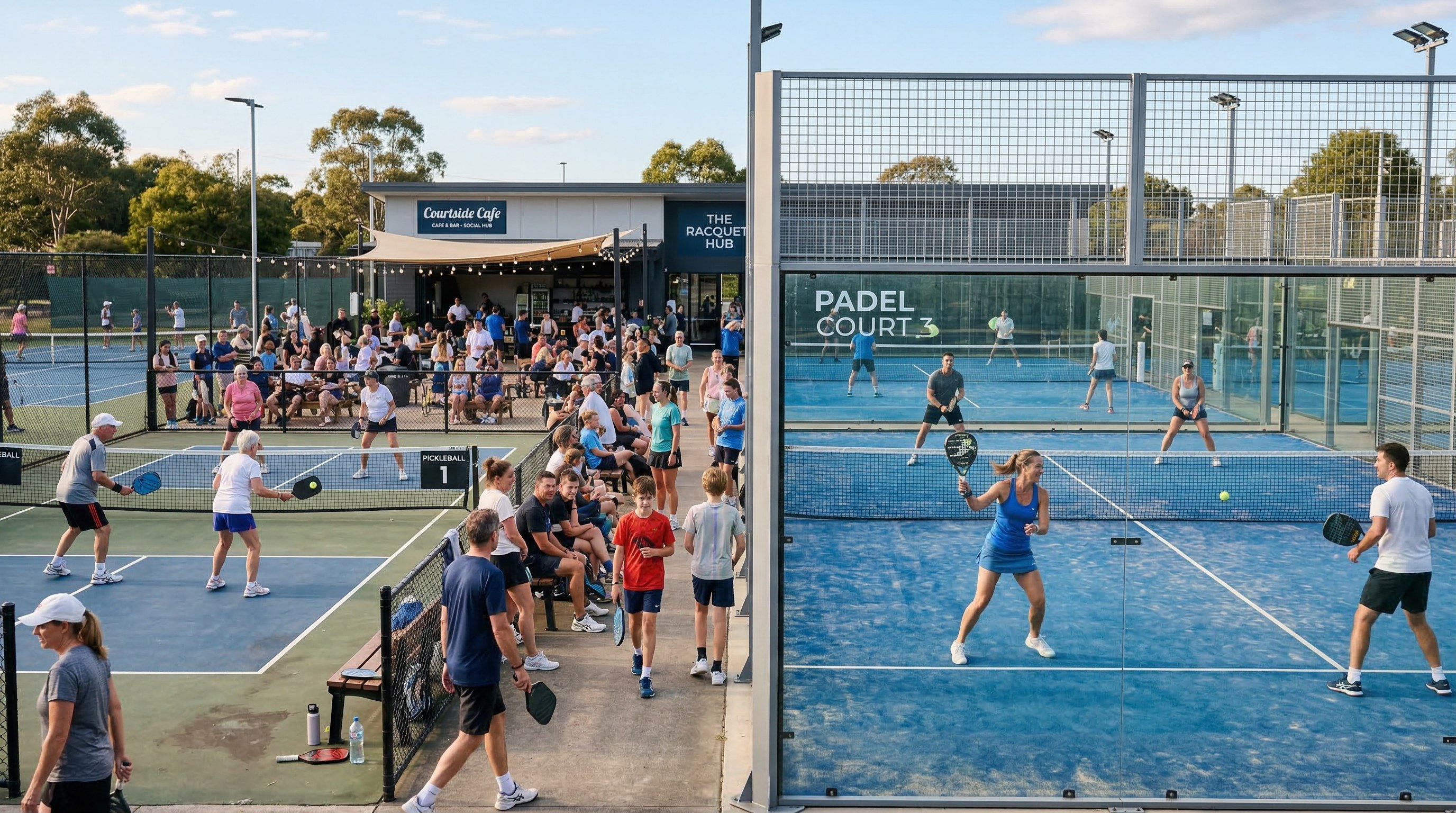
The playing surface for padel vs. pickleball dictates the speed of the game and the physical strain on the players. Padel exclusively uses artificial turf with a specific sand infill that allows for the perfect balance of grip and slide. Pickleball is traditionally played on hard acrylic, but some private facilities are now experimenting with modular tiles for better shock absorption.
What is fibrillated padel grass?
Look: Fibrillated turf features small slits in the fibers that allow them to spread out and hold the silica sand infill in place. This creates a consistent surface where the ball bounces predictably and players can move comfortably. It is highly durable and designed to withstand thousands of hours of intense foot traffic.
- Pile Height: Typically 10mm to 12mm.
- Density: High-stitch count for better wear resistance.
- Infill: Rounded silica sand (approx. 3kg per square meter).
- UV Resistance: Must be treated to prevent fading in the sun.
Are modular tiles good for pickleball?
The best part? Modular interlocking tiles can be installed in a single day over any flat surface, including old parking lots. They offer excellent drainage and are much softer on the knees than traditional concrete or asphalt. However, professional tournaments still prefer the consistent “pop” and speed of a hard acrylic court.
Key Takeaway
| Surface Type | Material | Sport |
|---|---|---|
| Artificial Turf | Polyethylene + Sand | Padel |
| Acrylic Coating | Resin + Sand/Rubber | Pickleball |
Choosing the right turf or coating is a balance between meeting professional standards and protecting the long-term health of your players’ joints.
What is the business ROI for padel vs. pickleball?
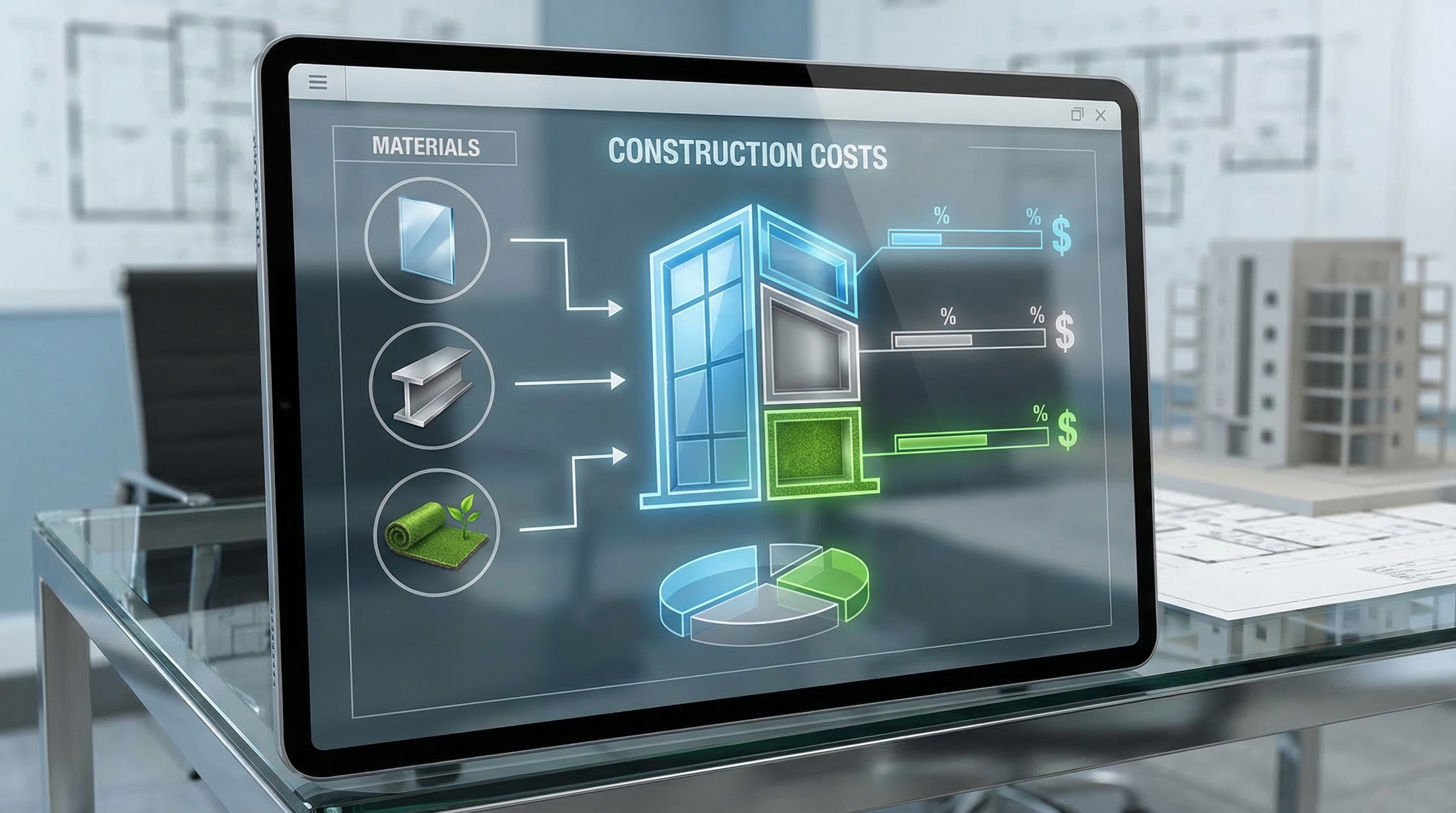
Calculating the return on investment for padel vs. pickleball involves looking at construction costs against player density and hourly rates. Padel courts have a higher initial setup cost due to the glass and steel, but they often command higher hourly rental fees. Pickleball is cheaper to build, allowing you to flood your facility with more courts and more players.
Which sport attracts more members?
Look: Pickleball has a massive following in the senior and family demographics, ensuring high court occupancy during morning and afternoon hours. Padel attracts a younger, corporate-professional crowd that is willing to pay a premium for peak-hour evening slots. Offering both can help you achieve a 100% occupancy rate throughout the entire day.
- Pickleball: High volume, lower price point.
- Padel: Premium experience, higher price point.
- Social Media: Padel is highly “Instagrammable,” driving organic marketing.
- Retention: Both sports have high “stickiness” once players learn the basics.
How can you maximize court revenue?
Here is the deal: Beyond simple hourly rentals, you can generate significant income through coaching programs, equipment sales, and tournament fees. A panoramic padel court can also serve as a centerpiece for corporate events and sponsorships. You should always include a small cafe or social area, as these players love to stay for a drink after the match.
Key Takeaway
| Financial Factor | Padel | Pickleball |
|---|---|---|
| Initial Investment | High ($$$) | Low to Medium ($$) |
| Rental Rate | Premium | Standard |
While padel requires more capital upfront, its status as a “premium” sport often leads to a faster ROI through higher fees and elite membership tiers.
*
Frequently Asked Questions
Can I build a padel court on top of an existing tennis court?
Yes, you certainly can. A standard tennis court is large enough to fit two padel courts comfortably, including the necessary safety zones. This is a common way for clubs to modernize their facilities and increase their revenue per square foot.
What’s the best way to maintain the glass on a padel court?
Short, regular cleanings are the secret. You should use a simple squeegee and non-abrasive soap to remove sweat and fingerprints every few weeks. This maintains the professional look of your facility and ensures spectators have a clear view.
How much does wind impact padel court construction?
It is a major factor for outdoor builds. Padel courts must be engineered to withstand local wind speeds, which may require thicker steel pillars or specialized glass mounting systems. Always check your local building codes for wind load requirements before starting.
Can I customize the color of my pickleball or padel court?
Absolutely, most manufacturers offer full customization. For padel, you can choose the RAL color of the steel frame and the color of the turf. For pickleball, you can mix and match acrylic colors for the inner court, outer court, and the kitchen.
Is it possible to play padel or pickleball indoors?
Yes, both sports thrive in indoor environments where weather is never a factor. For indoor padel, you need a minimum ceiling height of 6 meters, though 8 to 10 meters is preferred for professional lobs. Indoor pickleball can be played in any standard gymnasium.
*
Whether you are developing a luxury resort or a local community club, the decision between padel and pickleball will define your facility’s future. By prioritizing high-quality materials—from galvanized steel structures to professional-grade acrylic surfaces—you ensure that your investment stands the test of time. These sports are not just trends; they are the new standard for social and competitive athletics.
Take the next step in your project.
Our team is ready to provide you with technical blueprints and factory-direct pricing to bring your vision to life. Contact us today to start your journey into the world’s most exciting racquet sports.