The standard padel tennis court size is exactly 20 meters long by 10 meters wide for a doubles court. You are likely considering adding this high-growth asset to your facility, yet the technical requirements can seem overwhelming. Building a court with even a slight deviation from these measurements can lead to failed certifications and a poor player experience that drives away your high-value members. This guide provides the definitive technical blueprint you need for padel tennis court size and professional construction success.
What is the official padel tennis court size?
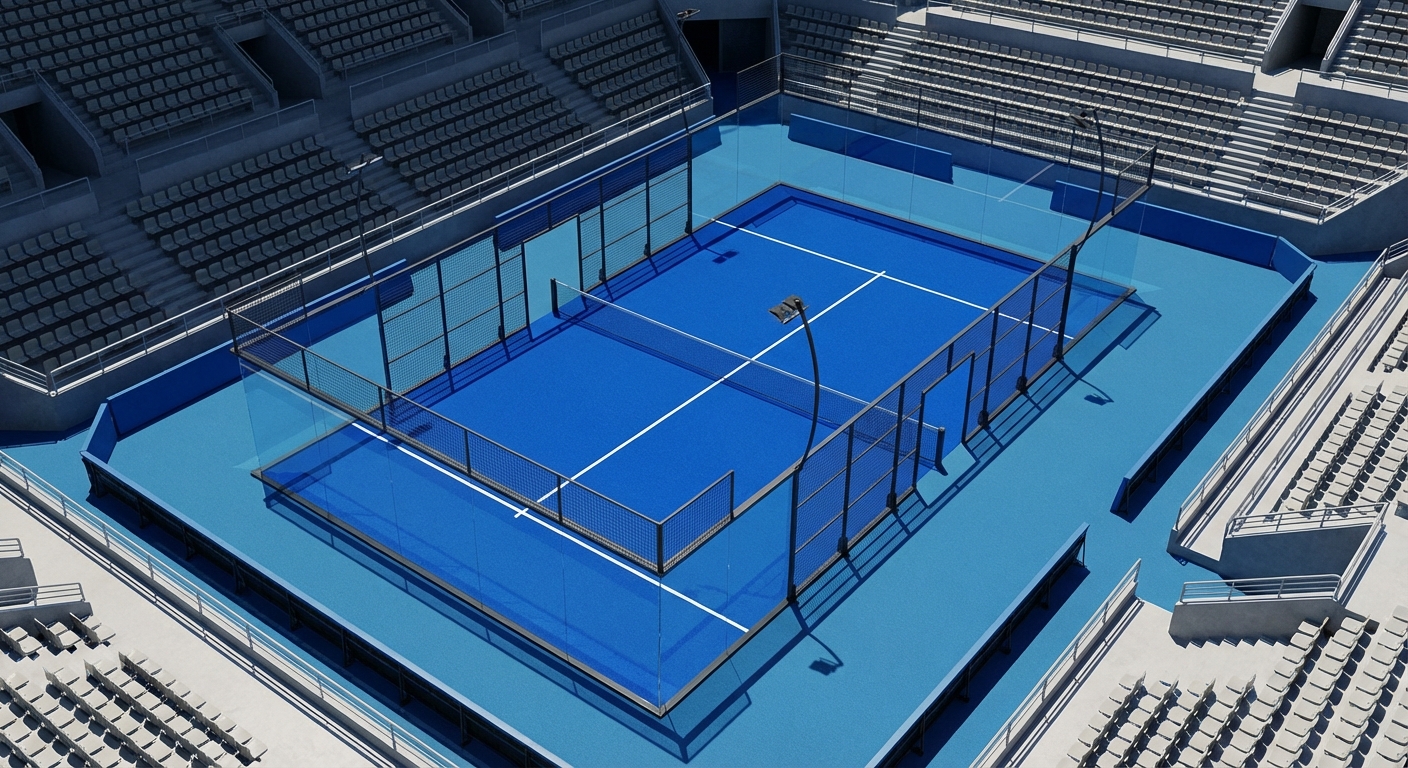
The official padel tennis court size for a doubles game is a rectangle measuring 10 meters in width by 20 meters in length. These are the internal playing dimensions measured from the inner face of the walls. It is critical to maintain a 0.5% tolerance level to ensure the court meets international competition standards.
Core Playing Area Requirements
When you plan your layout, the internal playing area is your primary focus.
- Length: 20 meters.
- Width: 10 meters.
- Total Area: 200 square meters.
Think about it. Even a few centimeters of error can disrupt the ball’s bounce geometry.
Key Takeaway: The 20m x 10m interior dimension is the non-negotiable global standard for all professional doubles play.
| Feature | Official Measurement |
|---|---|
| Interior Length | 20.00 Meters |
| Interior Width | 10.00 Meters |
| Total Square Footage | 2,152 sq ft (approx) |
This table highlights the strict symmetry required for a standard FIP-compliant doubles court layout.
How does singles padel tennis court size differ?
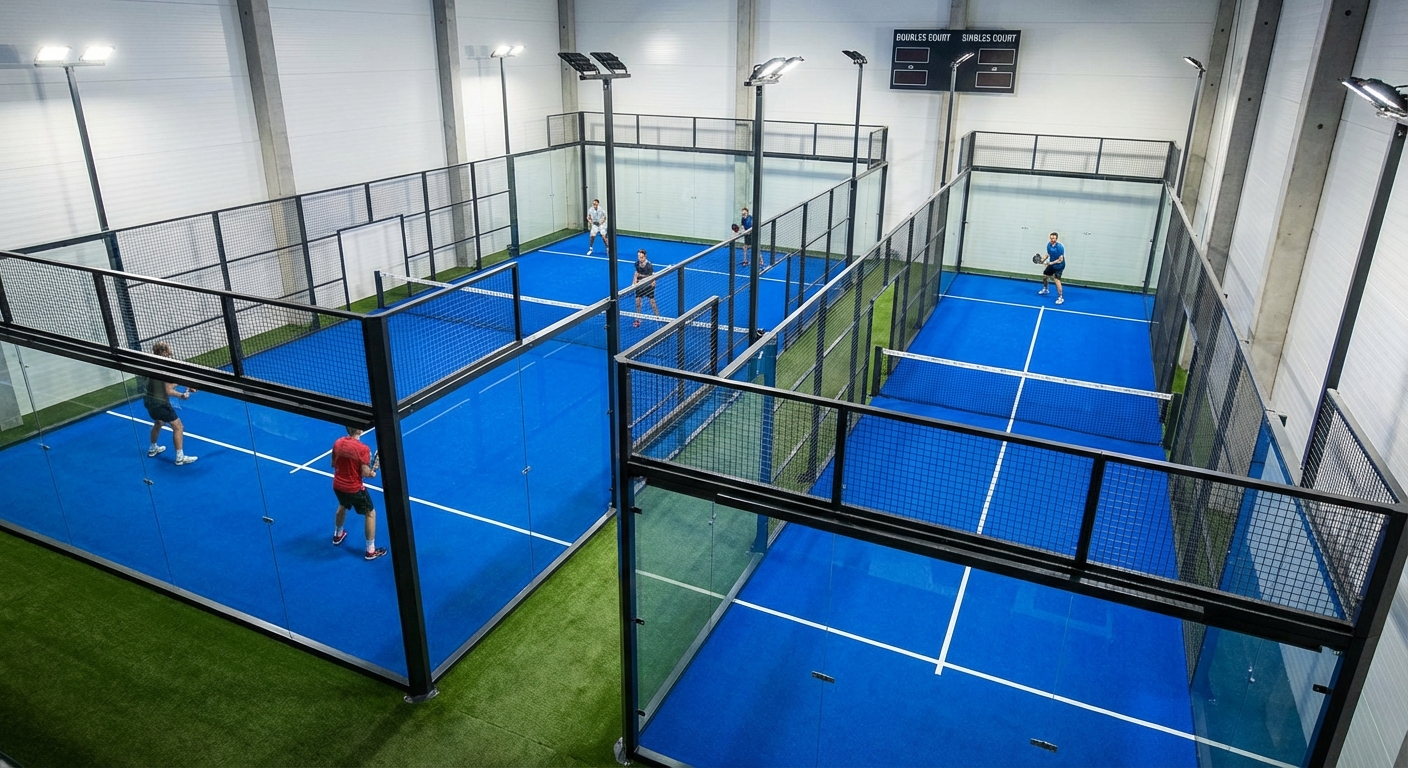
A singles padel tennis court size is narrower than a doubles court, measuring 20 meters in length by only 6 meters in width. While the length remains identical to the standard version, the width is reduced by 40% to accommodate one-on-one play. These courts are excellent for residential projects or clubs with limited lateral space.
Space Optimization for Singles
Building a singles court allows you to utilize narrow strips of land that would otherwise be wasted.
- Width: 6 meters.
- Length: 20 meters.
- Usage: Training and coaching clinics.
But that’s not all. The structural framework for singles courts follows the same engineering standards as doubles courts.
Key Takeaway: Singles courts maintain the 20m length but shrink the width to 6m, making them ideal for high-density training facilities.
| Court Type | Width | Length | Total Area |
|---|---|---|---|
| Singles | 6 Meters | 20 Meters | 120 m² |
| Doubles | 10 Meters | 20 Meters | 200 m² |
The singles variant offers a 40% reduction in footprint while maintaining the standard match length for consistent ball physics.
What total footprint fits a padel tennis court size?
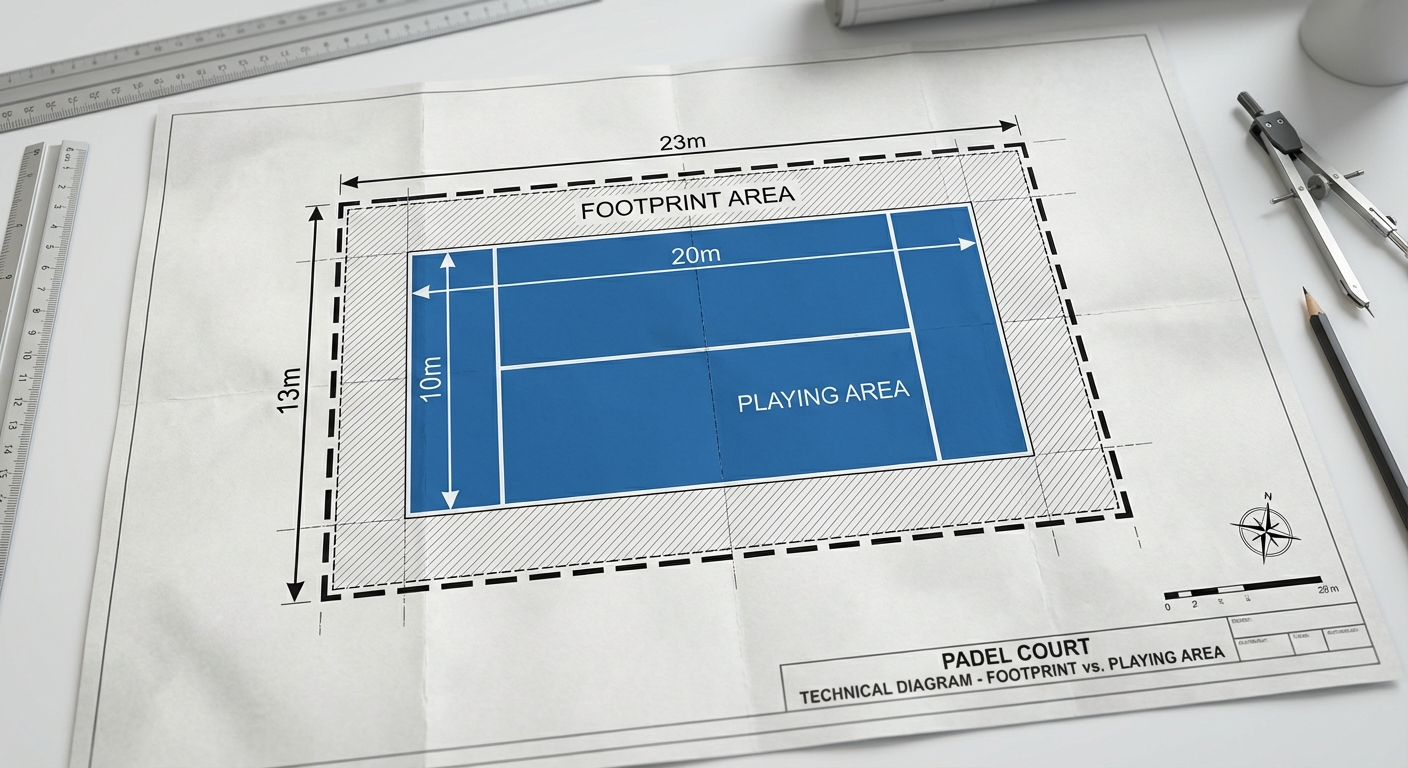
The total footprint required for a padel tennis court size is approximately 23 meters by 13 meters when accounting for the structure and safety zones. While the playing area is 20x10m, you must include the width of the steel pillars and the safety perimeter required for out-of-court play. Most professional installers recommend a minimum clear area of 300 square meters per court.
Planning the Total Enclosure
You need to look beyond the white lines to the structural anchors and safety clearances.
- Pillar Width: 100mm to 150mm.
- Safety Zone: 2 meters around the perimeter.
- Inter-court Gap: 4 meters between parallel courts.
Make no mistake. Skimping on the perimeter space prevents the court from hosting high-level tournaments where players run outside to retrieve balls.
Key Takeaway: Always allocate a 23m x 13m area to ensure the structure fits comfortably with adequate safety margins.
| Area Type | Dimensions | Total Space |
|---|---|---|
| Playing Surface | 10m x 20m | 200 m² |
| Structural Footprint | ~10.3m x 20.3m | ~210 m² |
| Total Safe Zone | 13m x 23m | 299 m² |
Calculating the total footprint ensures your facility complies with both safety regulations and architectural best practices.
Does net height affect padel tennis court size?
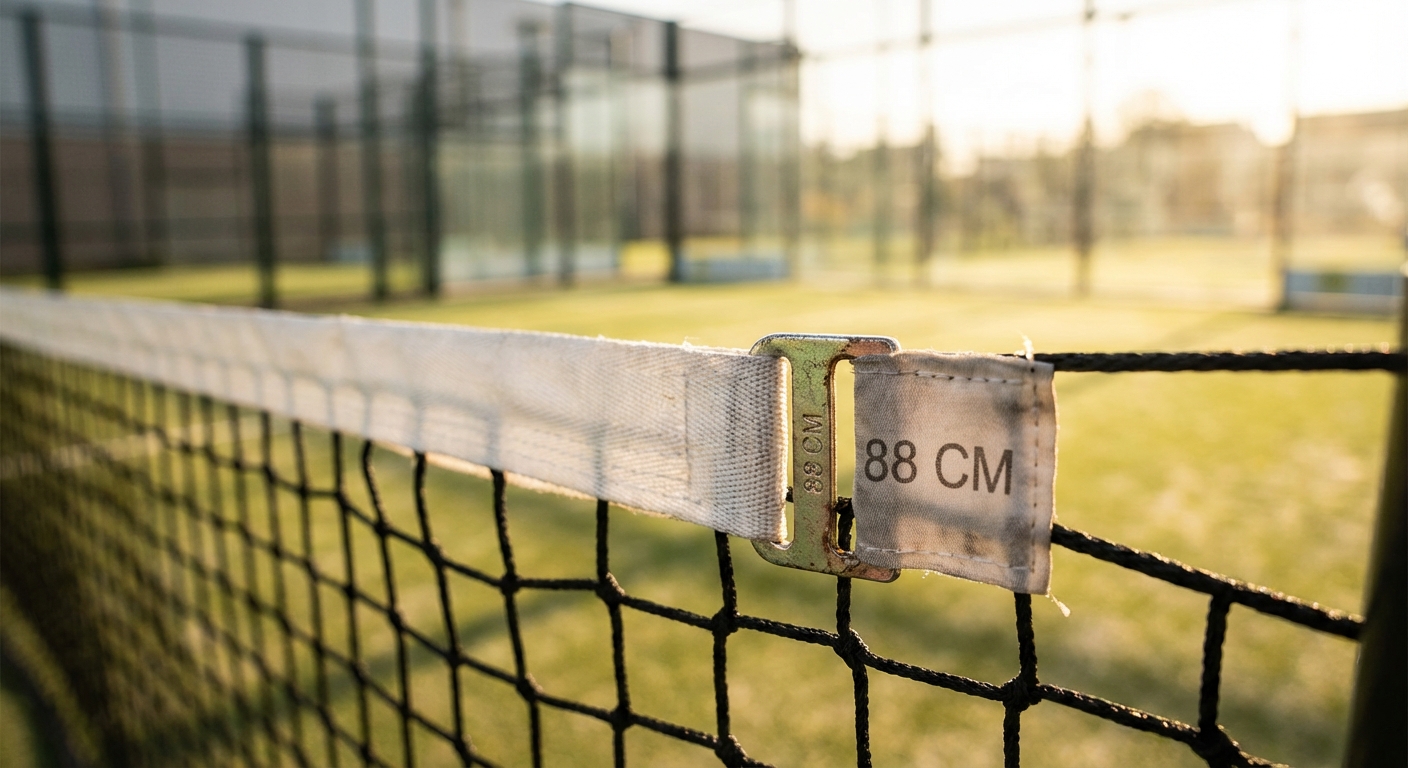
Regulation net height is a core component of the padel tennis court size specifications, standing at 88 cm at the center and 92 cm at the posts. The net must span the entire 10-meter width of the court and is held in place by two lateral posts. Precise tensioning is required to ensure the ball reacts predictably during low-altitude volleys.
Net and Service Line Specs
The net dictates the pace of the game and must be paired with accurate service line placement.
- Length: 10 meters (for doubles).
- Post Height: 1.05 meters (maximum).
- Service Line: 6.95 meters from the net.
The truth is, even a 1 cm difference in net height changes the entire competitive landscape of the match.
Key Takeaway: A professional net must sag slightly to 88cm at the center while reaching 92cm at the ends to satisfy FIP rules.
| Net Component | Height | Position |
|---|---|---|
| Center Strap | 88 cm | Exact Center |
| Lateral Ends | 92 cm | Near Posts |
| Support Posts | 1.05 m (Max) | Outside Playing Area |
Maintaining these specific heights is essential for ensuring that gameplay remains fair and consistent across different venues.
How do walls impact the padel tennis court size?
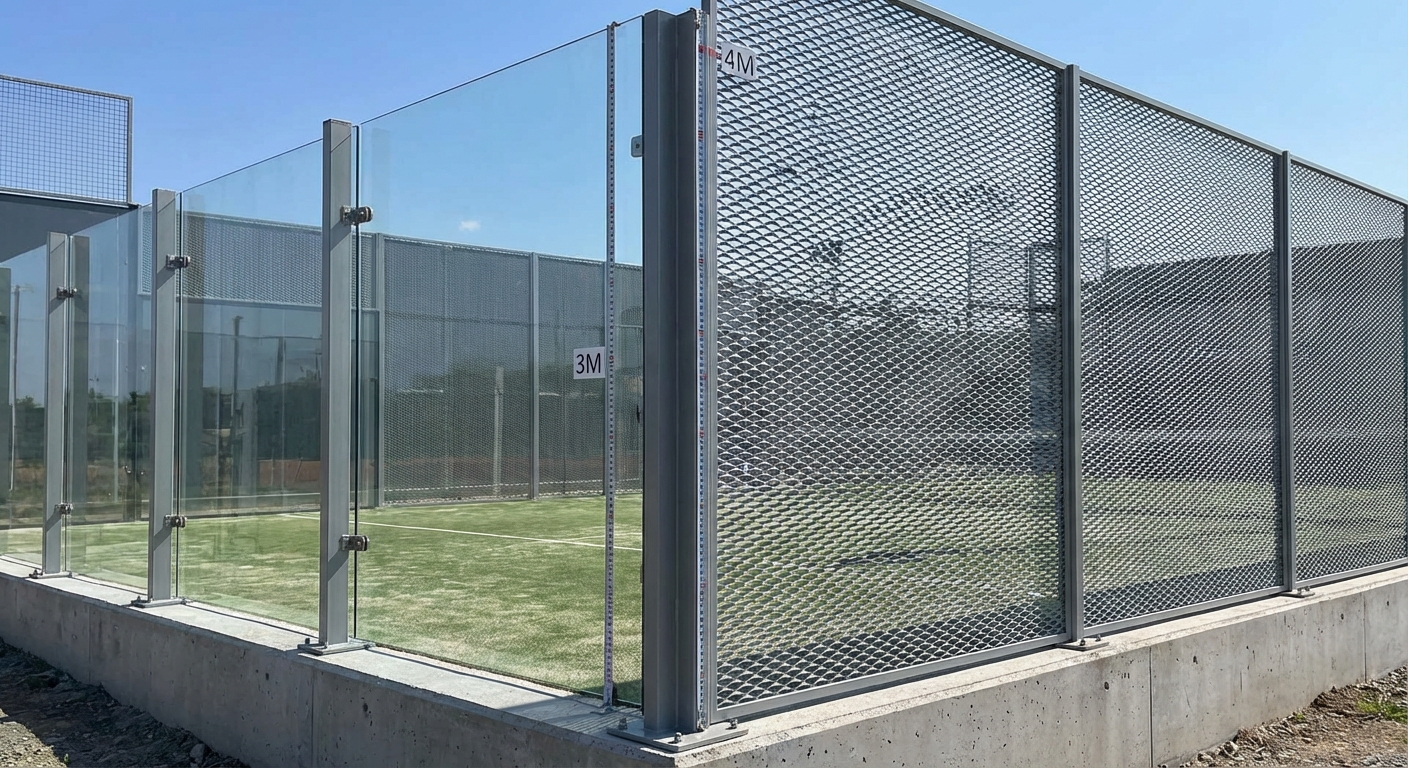
The enclosure walls define the padel tennis court size by acting as active playing surfaces that return the ball into play. These walls are typically 3 meters high on the back ends, often extended to 4 meters with a metallic mesh topper. The combination of 10mm or 12mm tempered glass and galvanized steel mesh ensures the ball bounces true while protecting spectators.
Wall Geometry and Materials
The interaction between the ball and the wall is what makes the sport unique.
- Glass Height: 3 meters.
- Mesh Height: 1 meter (above glass).
- Side Walls: Stepped design from 3m to 2m.
It gets better. Using high-clarity tempered glass allows for a panoramic view that enhances the aesthetic value of your club.
Key Takeaway: Walls must be perfectly vertical and rigid to maintain the 20x10m internal playing dimensions during high-impact play.
| Wall Section | Material | Height |
|---|---|---|
| Back Wall | Tempered Glass | 3 Meters |
| Back Extension | Metallic Mesh | 1 Meter (4m Total) |
| Side Fencing | Steel Mesh | 3 to 4 Meters |
Structural wall integrity is the backbone of the court, determining both safety and the quality of the playing experience.
Why does padel tennis court size beat tennis?
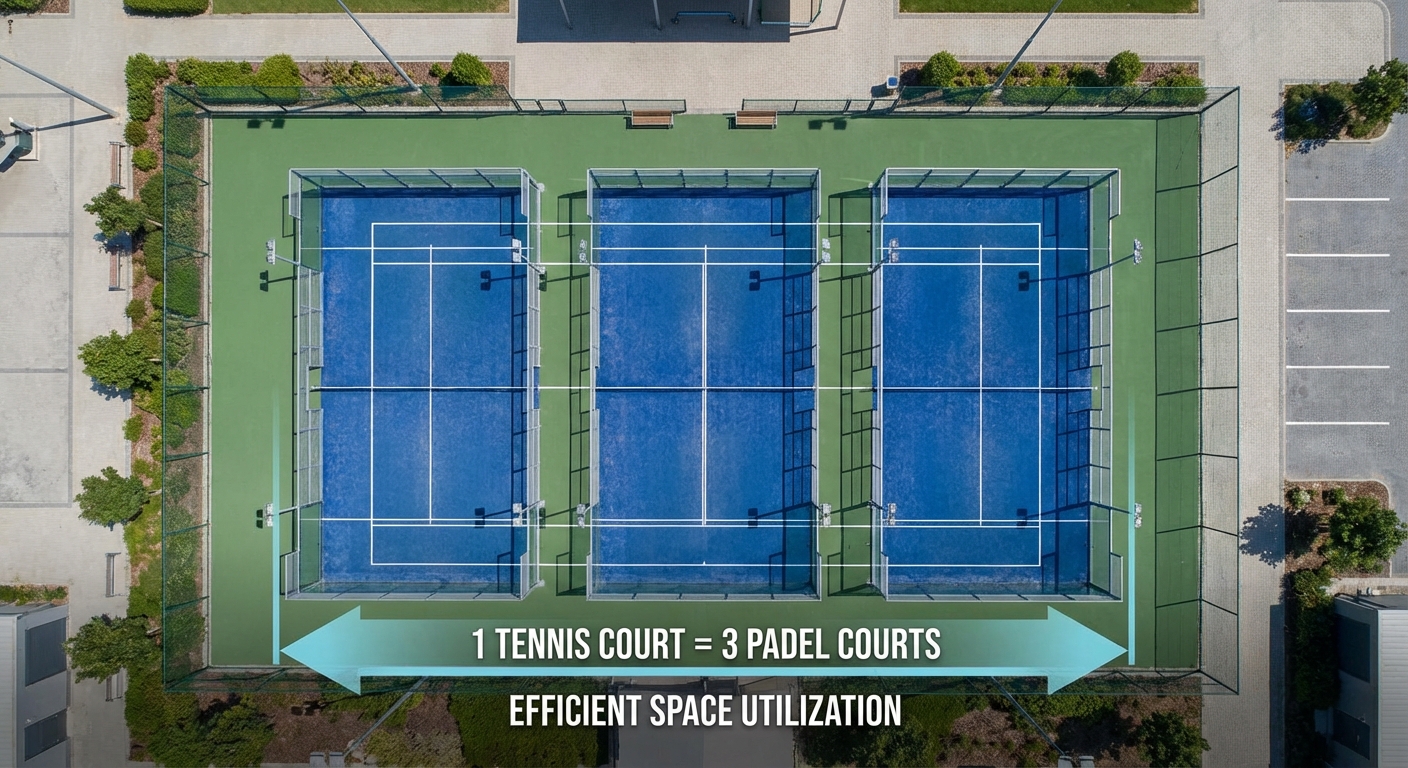
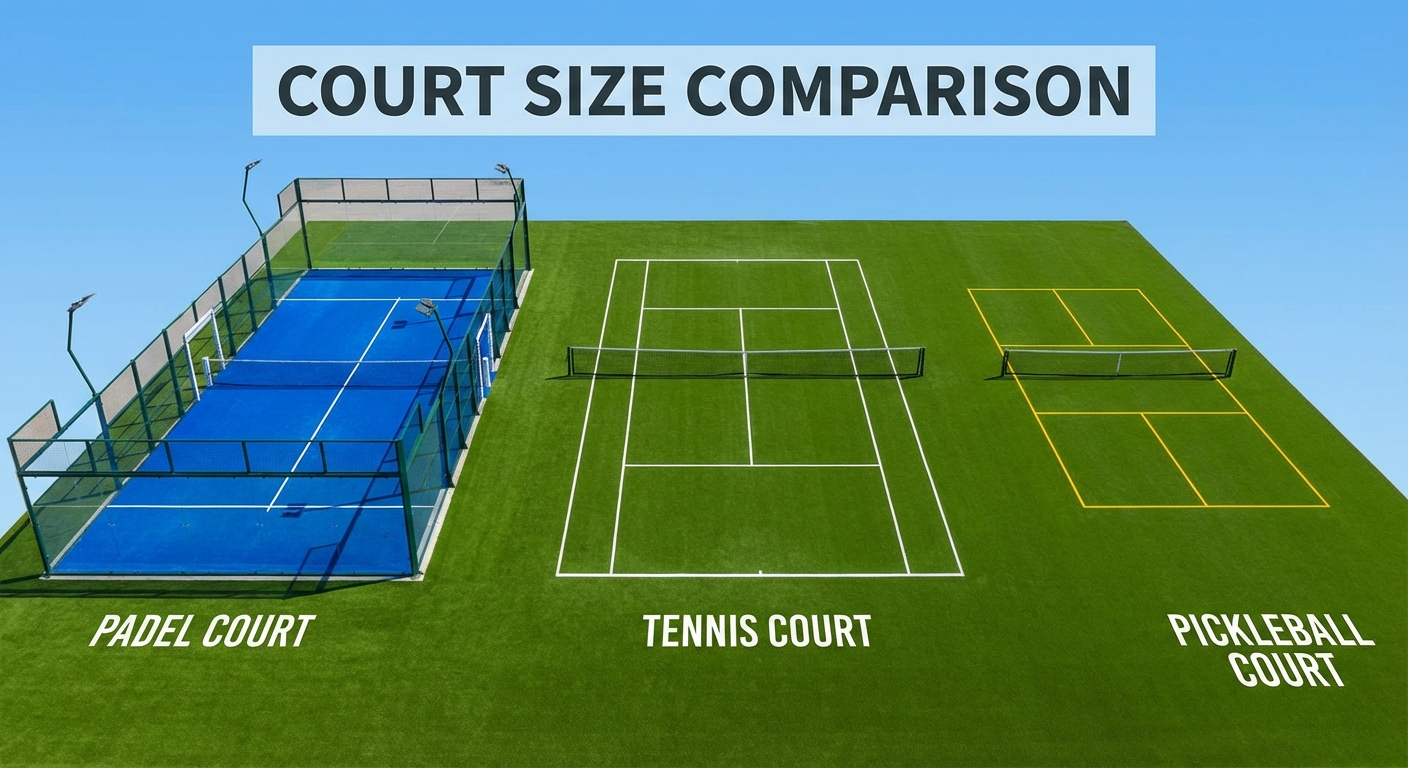
The compact padel tennis court size allows you to fit three padel courts into the space required for one traditional tennis court. A tennis court requires roughly 670 square meters of land, whereas a padel court only needs about 200 square meters for the playing surface. This efficiency significantly increases the revenue potential per square meter for club owners and investors.
Revenue and Space Efficiency
By maximizing the number of players per square foot, you maximize your hourly booking income.
- Tennis: 2-4 players per 670 m².
- Padel: 12 players per 670 m² (on 3 courts).
- Result: 3x the revenue potential.
Think about it. You can serve more members and generate more social buzz in a smaller, more manageable area.
Key Takeaway: Padel’s smaller footprint makes it the most financially efficient use of sports real estate in the modern market.
| Sport | Footprint Needed | Players per Area |
|---|---|---|
| Tennis | ~670 m² | 4 Max |
| Padel | ~200 m² | 4 Max |
| Space Ratio | 1 Tennis : 3 Padel | 3x Capacity |
The comparison proves that switching to or adding padel courts is a strategic move for maximizing facility utilization and profit.
How does padel tennis court size rank vs others?

A padel tennis court size sits between a pickleball court and a tennis court, offering a balanced middle ground for social and competitive play. While pickleball is smaller (approx. 6m x 13m), padel provides a much more dynamic environment due to its high walls and larger 200 m² surface. This size makes it approachable for beginners while remaining physically demanding for advanced athletes.
Competitive Sizing Overview
Understanding where the sport fits helps you target the right demographic for your facility.
- Pickleball: 81 square meters.
- Padel: 200 square meters.
- Tennis: 260 square meters (playing area only).
But that’s not all. Padel’s use of vertical space via walls adds a layer of complexity that smaller sports lack.
Key Takeaway: Padel offers the optimal “Sweet Spot” in sports sizing—larger than pickleball for better movement, but smaller than tennis for better social interaction.
| Sport | Length | Width | Surface Area |
|---|---|---|---|
| Pickleball | 13.4 m | 6.1 m | 81.7 m² |
| Padel | 20.0 m | 10.0 m | 200.0 m² |
| Tennis | 23.7 m | 10.9 m | 260.8 m² |
Padel provides a unique playing experience that justifies its larger footprint compared to pickleball while remaining more accessible than tennis.
How to plan the slab for padel tennis court size?
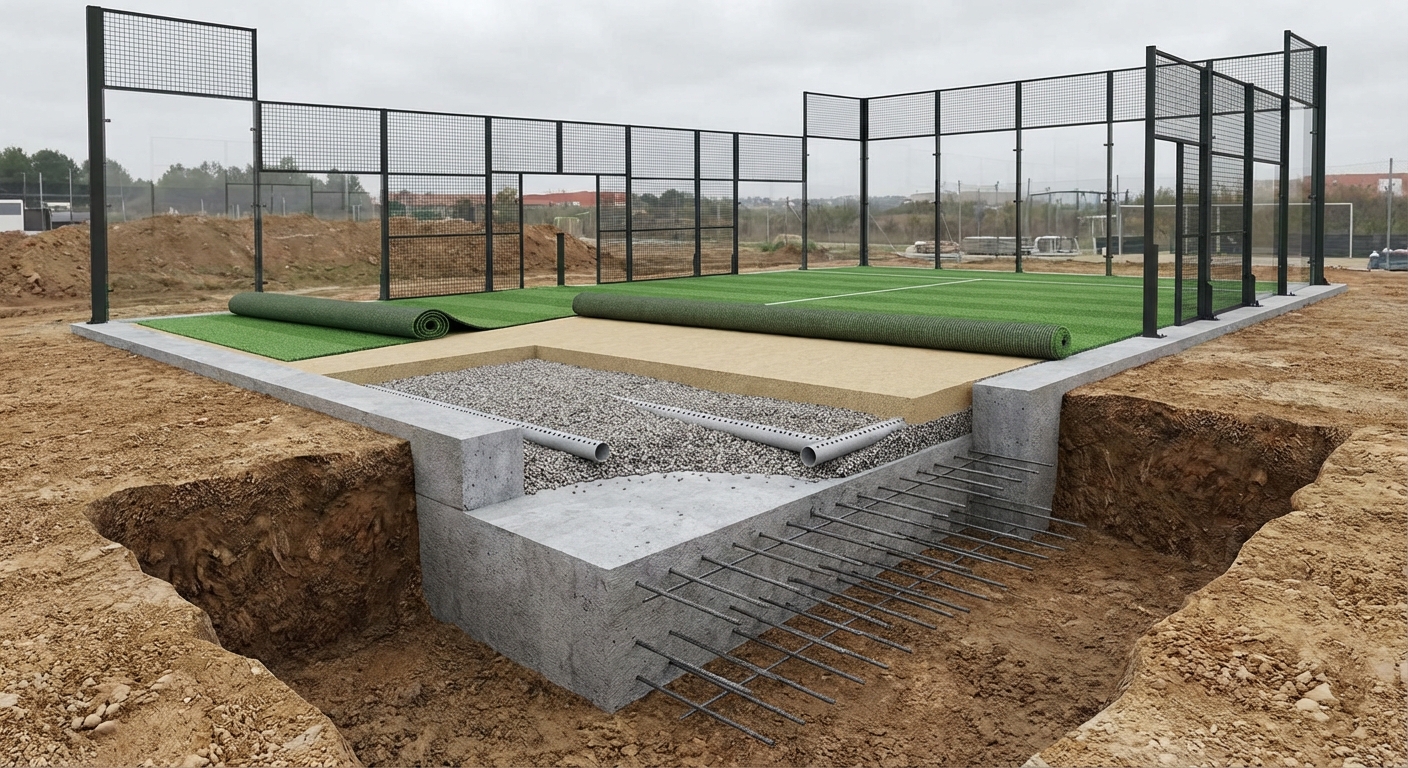
The foundation for a padel tennis court size requires a reinforced concrete slab that is slightly larger than the 20x10m playing area. You should aim for a 15cm to 20cm thickness with a laser-leveled finish to ensure there are no dead spots in the ball’s bounce. A 0.5% slope is typically integrated into outdoor slabs to allow for efficient water drainage.
Sub-base and Foundation Steps
A court is only as good as the ground it sits on, making the foundation the most critical construction phase.
- Concrete: 3000 PSI reinforced with mesh.
- Drainage: Porous concrete or a subtle gradient.
- Perimeter: Thickened edges to support the glass wall weight.
Here’s the kicker. If the slab is uneven, the glass panels may crack under tension or the turf will develop dangerous wrinkles.
Key Takeaway: A professional build starts with a 21m x 11m concrete slab to provide a stable anchor for the court walls.
| Build Layer | Specification | Purpose |
|---|---|---|
| Sub-base | Compacted Gravel | Stability |
| Main Slab | Reinforced Concrete | Level Playing Surface |
| Surface | Synthetic Turf | Player Comfort/Grip |
Starting with a high-quality, engineered foundation prevents expensive structural repairs and ensures the longevity of your investment.
Does indoor padel tennis court size need height?
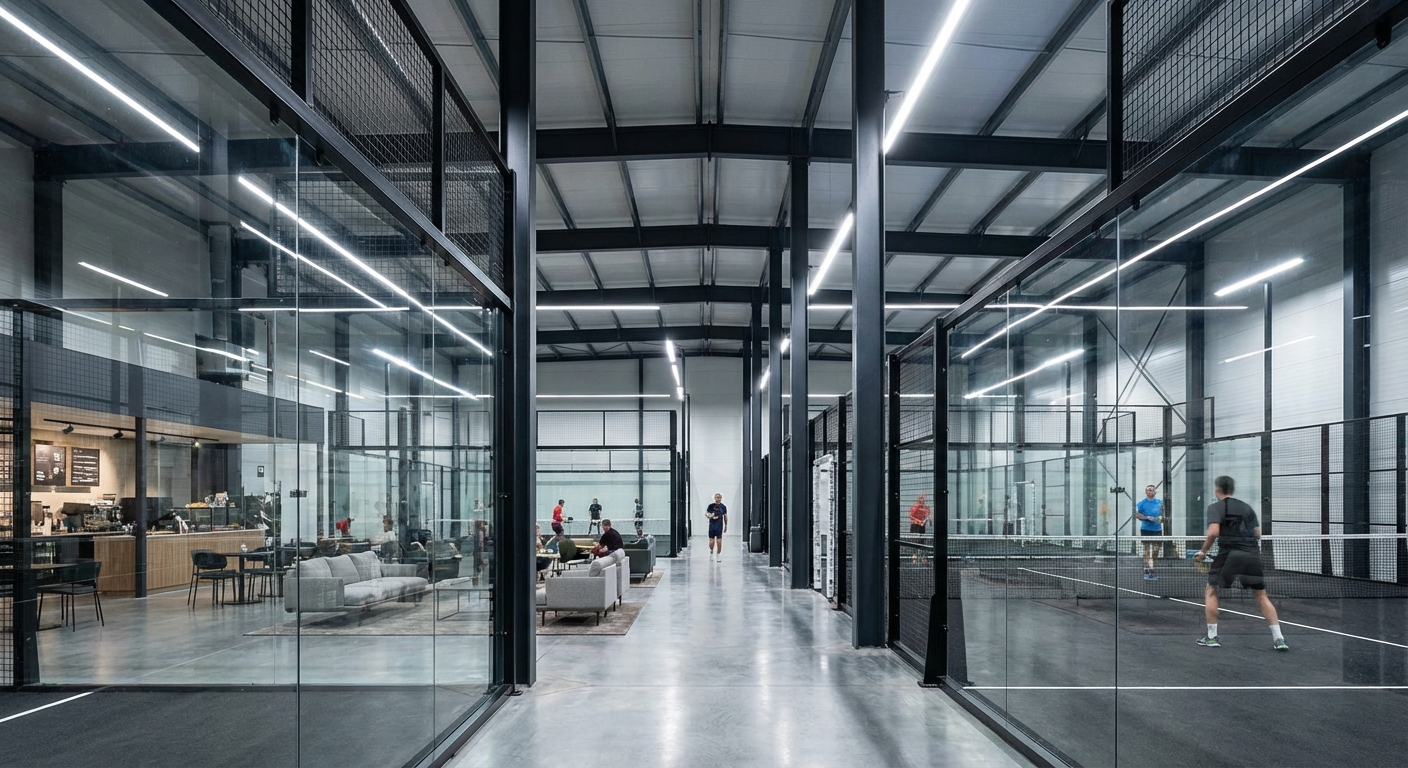
While the footprint of the padel tennis court size remains 10x20m indoors, the vertical clearance must be at least 6 meters, with 8 meters being the industry preference. High-level padel relies heavily on the “lob” shot, which requires significant ceiling height to remain viable. If your ceiling is too low, it fundamentally changes the game’s tactics and frustrates skilled players.
Indoor Environment Controls
Building indoors requires you to manage more than just the floor dimensions.
- Ceiling Height: 8 meters (Optimal).
- Lighting: 500-750 Lux (Uniform).
- Ventilation: Minimum 6 air changes per hour.
Think about it. A dark or cramped indoor court will never achieve the same booking rates as a bright, airy facility.
Key Takeaway: Vertical clearance is just as important as the 20x10m footprint when designing a professional indoor padel club.
| Metric | Minimum | Recommended |
|---|---|---|
| Ceiling Height | 6.0 Meters | 8.0+ Meters |
| Light Intensity | 300 Lux | 500-750 Lux |
| Clear Span | 11 Meters | 12 Meters |
Prioritizing vertical space ensures that players can use the full range of tactical shots, making your indoor facility a premier destination.
What rules govern the padel tennis court size?
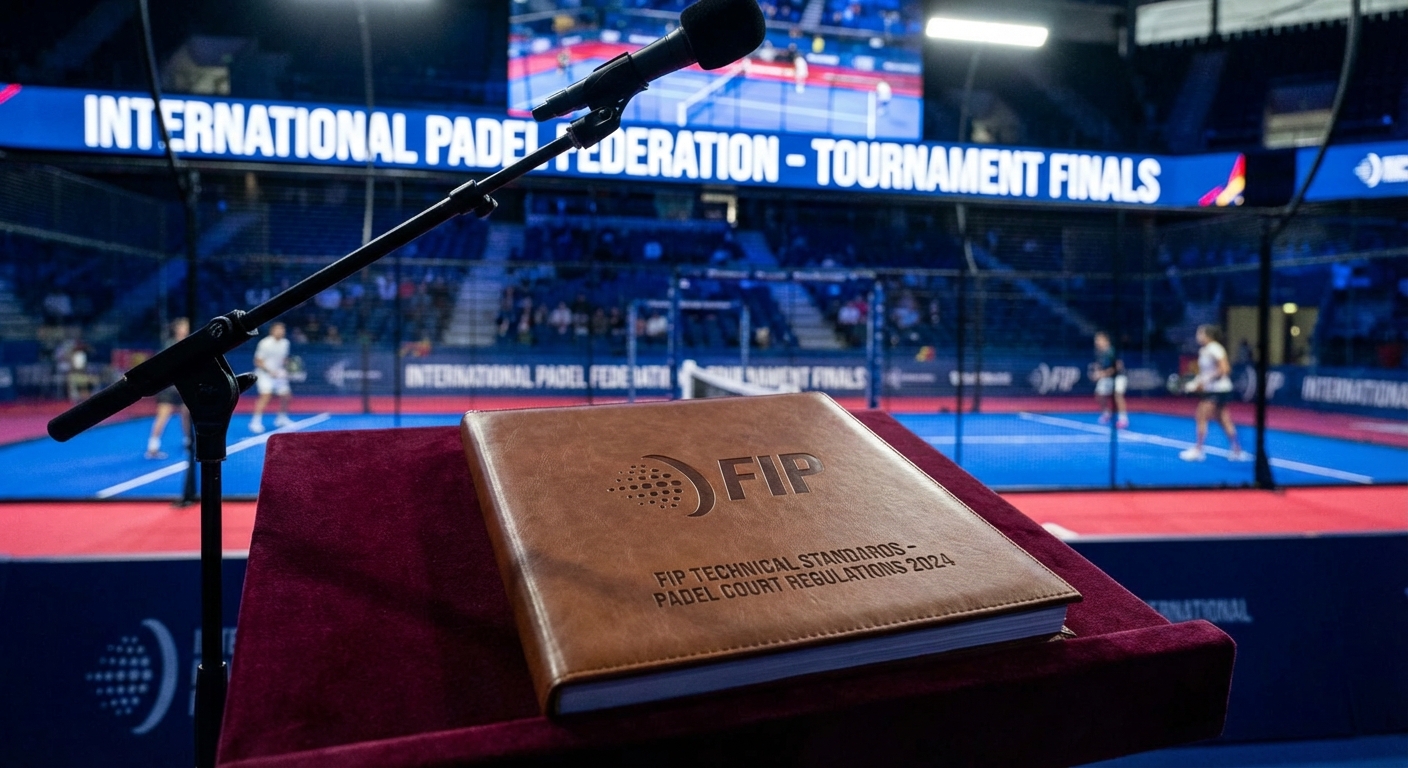
The International Padel Federation (FIP) is the governing body that dictates the official padel tennis court size and material standards. Following these guidelines is essential if you want your facility to host sanctioned tournaments or be recognized by national sports associations. These regulations cover everything from the friction coefficients of the turf to the impact resistance of the glass.
Compliance and Certification
Ensuring your court is FIP-compliant protects your investment and ensures player safety.
- Certification: FIP official homologation.
- Inspections: Dimension verification and bounce tests.
- Safety: Adherence to tempered glass standards.
Make no mistake. Using non-certified materials to save costs can lead to legal liability and the eventual closure of your facility.
Key Takeaway: Always source your court from a manufacturer that guarantees adherence to the latest FIP technical specifications.
| Regulation Body | Role | Key Focus |
|---|---|---|
| FIP | Global Regulator | Dimensions & Rules |
| Local Authorities | Zoning/Safety | Building Codes |
| Manufacturers | Implementation | Quality Control |
Adhering to international standards ensures that your facility remains a top-tier venue for both local players and international competitors.
*
Building Your Professional Padel Facility
We have explored how the precise padel tennis court size impacts everything from player safety to your long-term return on investment. By following these FIP-mandated dimensions and focusing on high-quality structural components, you can transform a simple plot of land into a thriving, high-revenue sports destination. Our team specializes in delivering world-class, certified courts that exceed these standards. Don’t leave your project’s success to chance—ensure your facility is built for the future of the sport. Contact us today to receive a professional consultation and custom quote for your next installation.
*
Frequently Asked Questions
Can I build a court in a 12m x 22m space?
Yes, but it will be tight. While the internal playing area is 10x20m, you usually need a bit more for the structure; however, a 12m width can accommodate the pillars if out-of-court play is not required.
What’s the best lighting for this court size?
LED is the standard. You should use 8 lamps (2 per pole) to provide 500+ lux of uniform light across the entire 200 m² surface.
Is concrete better than asphalt for the base?
Concrete is superior. It provides a more stable foundation for the heavy glass walls and ensures a more consistent ball bounce over 10-15 years.
Can I convert a tennis court into padel courts?
Absolutely. You can typically fit 2.5 to 3 padel courts in the space of one tennis court, which is a common strategy for increasing club revenue.
Do I need a building permit for these dimensions?
Usually, yes. Because of the 4-meter high walls and lighting poles, most local municipalities classify padel courts as permanent structures requiring engineering approval.