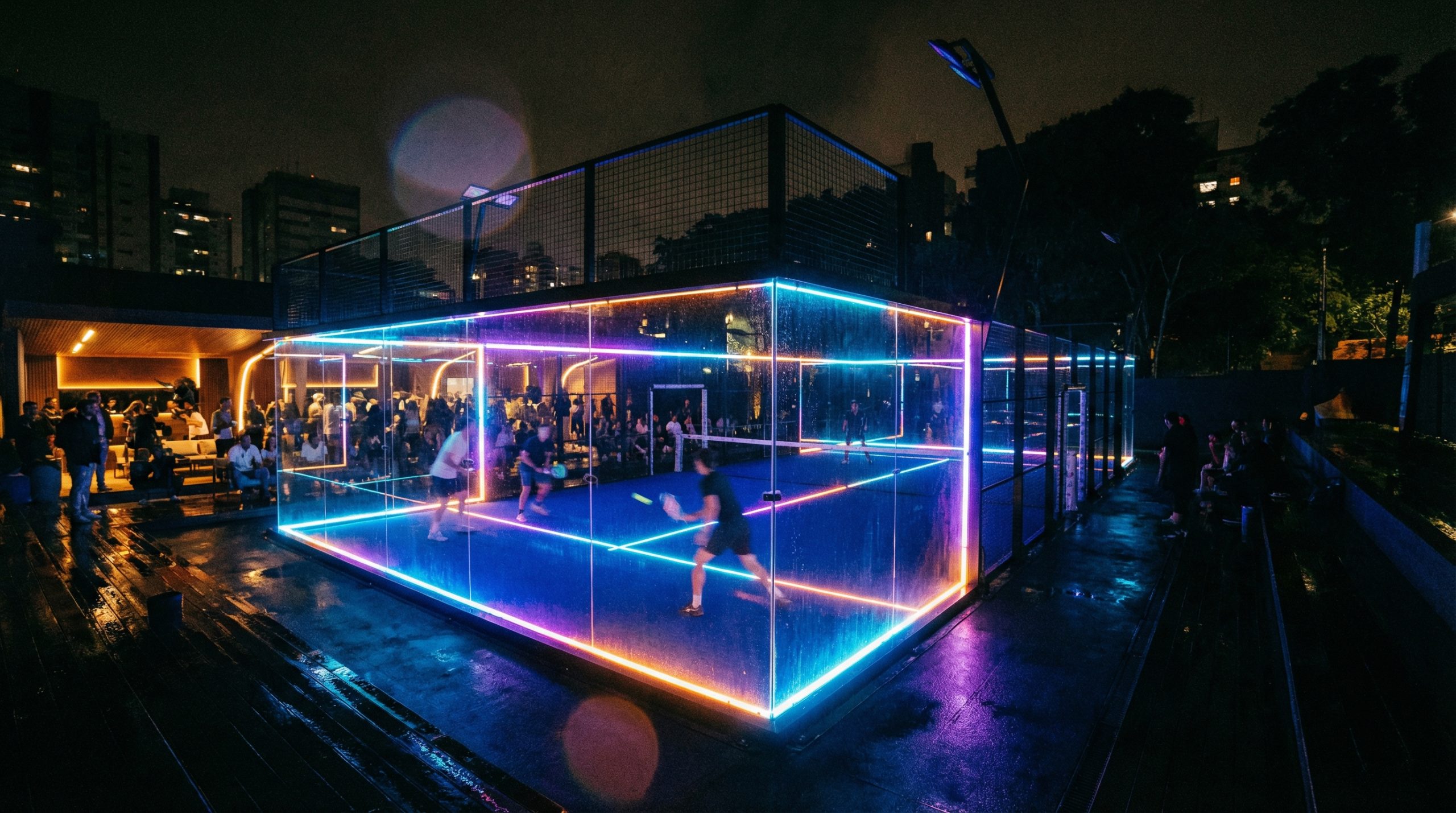
Developing a tempo padel court involves a meticulous synthesis of high-performance engineering and sophisticated architectural design to create an elite sporting destination. You understand the challenge of catering to a discerning clientele who find traditional tennis too isolated and standard gyms too utilitarian. In modern development, static spaces are a liability, and failure to provide dynamic, social, and aesthetically striking amenities can leave your property behind the curve. By choosing this advanced sports solution, you resolve the tension between luxury leisure and athletic rigor, ensuring your venue remains at the forefront of the global sporting trend.

The rise of tempo padel within elite circles is driven by its unique ability to combine high-intensity competition with an inherently social, lounge-like atmosphere. You will find that these courts serve as the centerpiece for modern hospitality, bridging the gap between wellness and networking. The aesthetic is unmistakably urban and refined, fitting perfectly into the portfolio of any high-end developer or club owner.
How does it foster community engagement?
A tempo padel installation encourages more frequent interactions because the smaller court size and glass walls keep spectators and players in constant visual contact. This proximity naturally leads to a more vibrant social scene compared to traditional racquet sports.
Look:
- Four-player format promotes team building and networking.
- Transparent glass walls provide a theater-like experience for onlookers.
- Compact footprint allows for integrated seating and bar areas nearby.
Key Takeaway: Incorporating these courts transforms a simple sports facility into a high-traffic social hub that increases member retention and dwell time.
| Feature | Social Impact |
|---|---|
| 4-Player Format | Guaranteed networking opportunities |
| 360-Degree Visibility | High spectator engagement |
| Multi-Generational Appeal | Broadens club demographic |
This architectural synergy ensures your club remains the preferred destination for a modern, active elite.
What are the structural essentials of a tempo padel court?
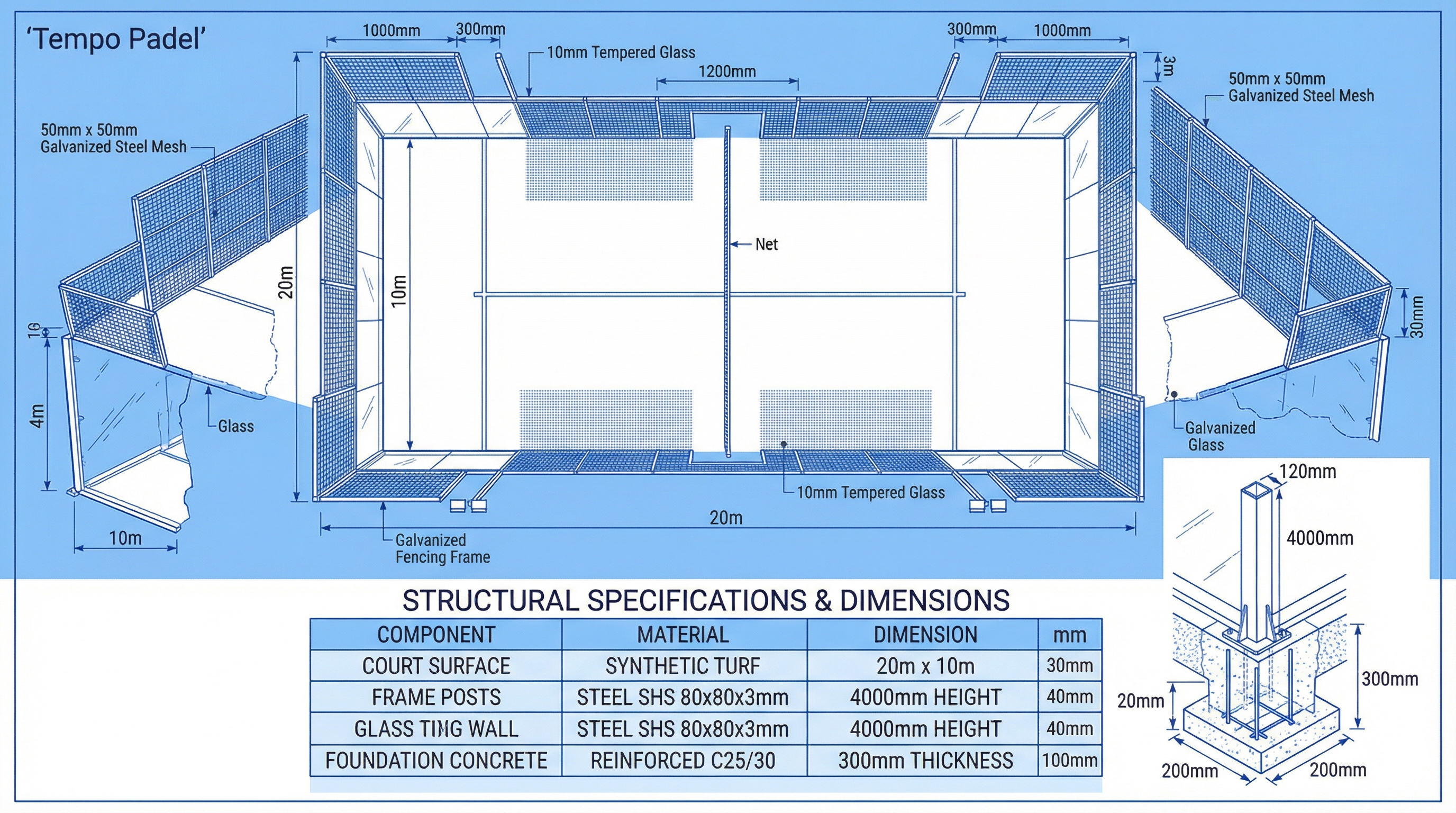
The technical blueprint for a tempo padel facility relies on a precision-engineered Padel Structure that withstands high-velocity ball impacts and environmental stresses. You must prioritize high-grade galvanized steel and tempered safety glass to ensure the long-term viability of the installation. Every millimeter of the frame is designed to support the specific rebound physics that make this sport so addictive.
What dimensions are required for installation?
You must allocate a minimum footprint of 10×20 meters for the playing surface, though additional clearance for the external structure is necessary. The height of the glass and mesh walls must be strictly regulated to meet international tournament standards.
Here is the deal:
- Internal playing area is exactly 200 square meters.
- Mesh height typically sits at 4 meters on the ends.
- Corner glass panels must be perfectly aligned for consistent bounce.
Key Takeaway: Precision in the structural layout is non-negotiable for achieving the professional-grade performance your clients expect.
| Component | Standard Specification |
|---|---|
| Playing Area | 10m x 20m |
| Pillar Thickness | 80mm – 120mm |
| Steel Treatment | Hot-dip galvanization |
Adhering to these strict specifications prevents structural fatigue and maintains the court’s pristine aesthetic over years of heavy use.
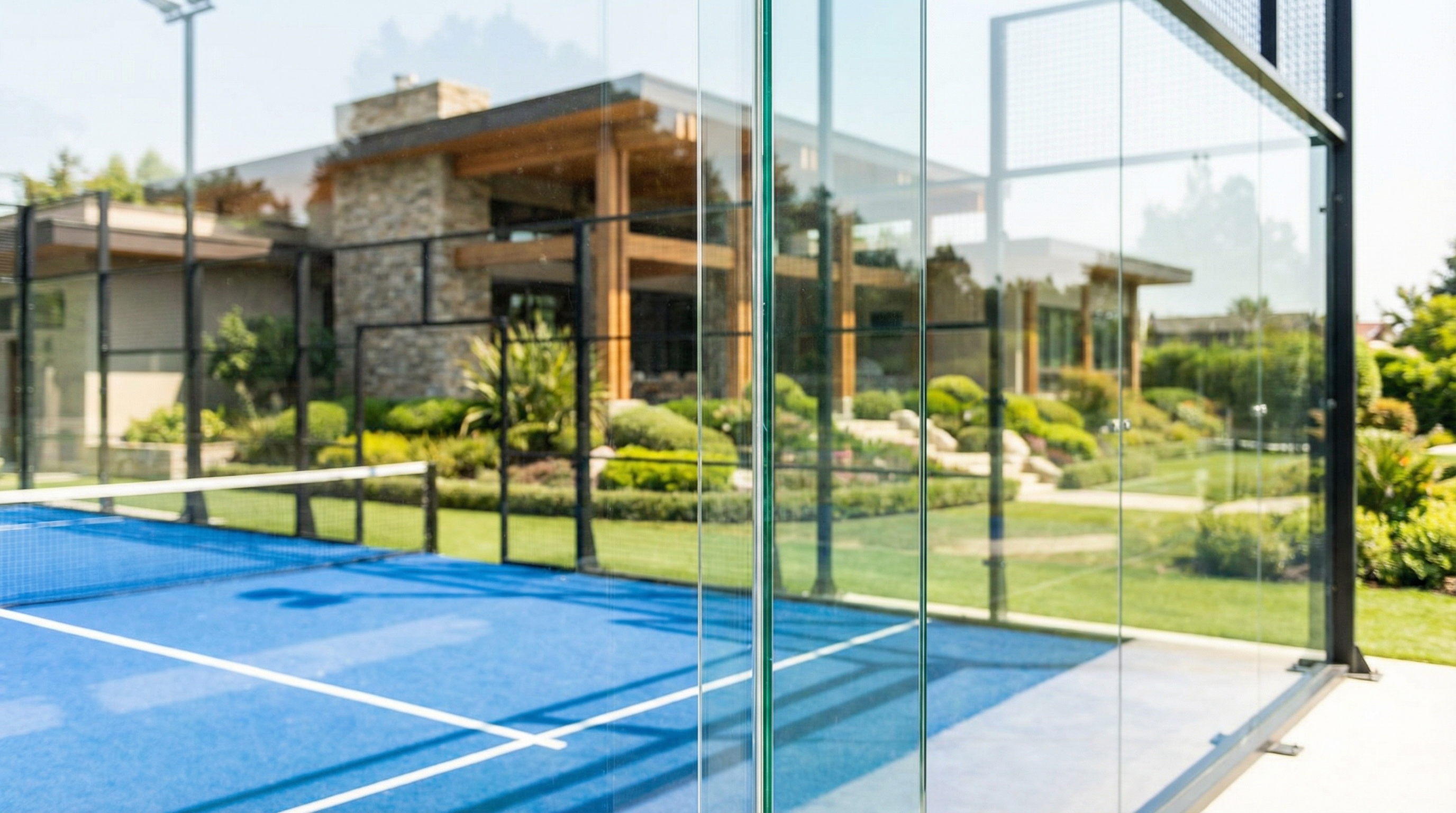
Installing high-clarity Padel Glass within a tempo padel court ensures maximum visibility for spectators while providing the rigid, predictable surface required for expert defensive play. You will appreciate the way premium glazing reflects the surrounding architecture, effectively turning the court into a piece of functional art. The transparency of the glass is what defines the “open” feel of the game, inviting passersby to witness the action.
Why is thickness a critical factor for safety?
Standard installations utilize 10mm or 12mm tempered glass to absorb the energy of players leaning or bumping into the walls during intense rallies. This durability is essential for B2B applications where liability and longevity are primary concerns for the operator.
The secret?
- 12mm glass offers superior vibration dampening for a quieter game.
- Heat-soak testing prevents spontaneous shattering in extreme climates.
- Recessed fixings ensure a flush surface to avoid ball deviations.
Key Takeaway: Investing in top-tier glazing reduces maintenance risks and provides the cinematic clarity that defines a luxury sporting venue.
| Glass Type | Benefit |
|---|---|
| 12mm Tempered | Maximum durability and safety |
| Anti-Reflective Coating | Enhanced night-time visibility |
| Polished Edges | Seamless aesthetic transitions |
The right glass selection transforms the court from a mere enclosure into a sophisticated stage for athletic prowess.
What defines the nighttime atmosphere of tempo padel?
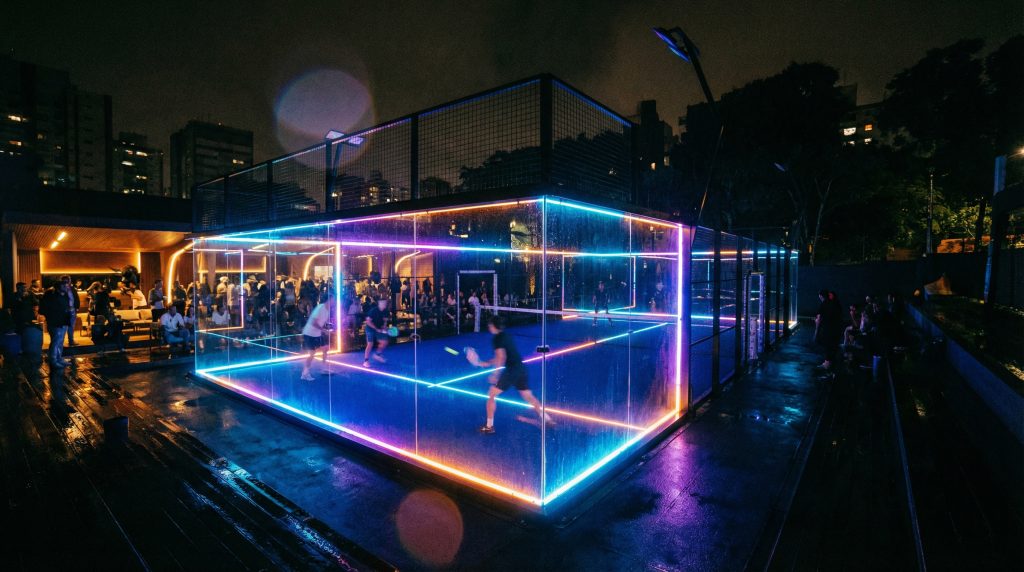
The nocturnal appeal of tempo padel is created by integrated Padel LED Lighting systems that provide shadowless illumination across the entire 200-square-meter surface. You can extend your club’s operational hours well into the evening, capitalizing on the peak demand for post-work recreation. The glow of a lit court against an urban or coastal backdrop creates a powerful visual magnet for your property.
How do you achieve optimal lux levels?
You should target a minimum of 500 to 750 lux to ensure that fast-moving balls are clearly visible from all angles. High-efficiency LEDs mounted on custom-designed pillars provide the necessary coverage without creating glare for the players.
The result?
- 8 high-output LED projectors provide uniform light distribution.
- Instant-on technology allows for immediate play without warm-up times.
- Low energy consumption reduces long-term operational costs for the club.
Key Takeaway: Expert lighting design is the difference between a functional court and a world-class evening destination.
| Lighting Metric | Optimal Value |
|---|---|
| Average Illumination | 500 – 750 Lux |
| Color Temperature | 5000K (Daylight white) |
| Energy Savings | Up to 60% vs. Halogen |
Sophisticated lighting ensures that the game remains as sharp and visually stunning at midnight as it is at noon.
Can you integrate tempo padel into a private estate?
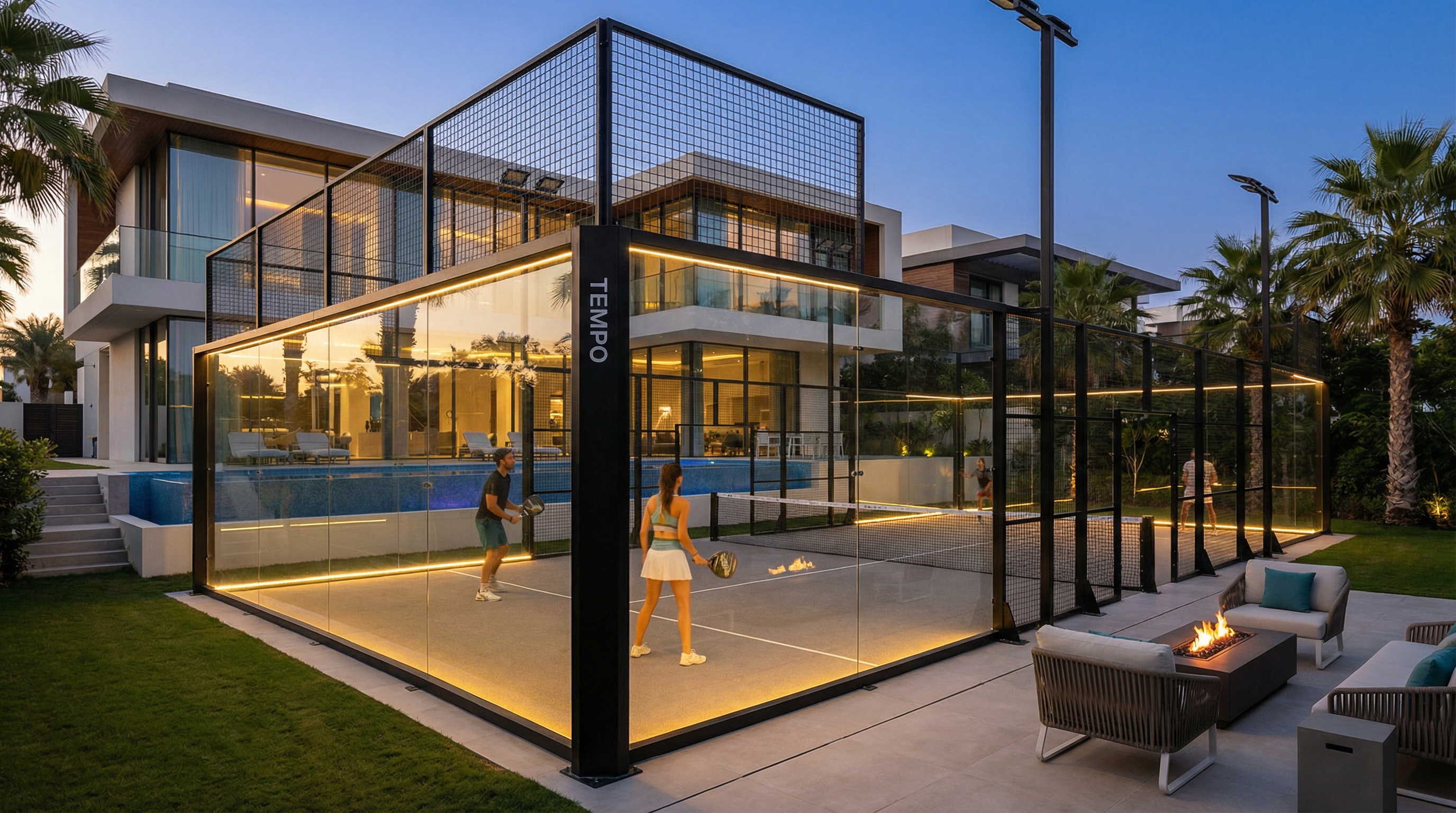
Customizing a tempo padel court for a private residence allows you to blend high-performance sports technology with the existing landscape and architectural language of the estate. You can specify frame colors and glass finishes that harmonize with the home’s exterior, ensuring the court feels like a curated extension of the living space. It represents the ultimate statement in lifestyle-forward residential design.
Does it require a specific landscape style?
The versatility of the structure means you can install it on varied terrains, provided a level reinforced concrete base is prepared. Whether set against a brutalist concrete villa or a lush tropical garden, the court’s minimalist lines remain timeless.
Believe it or not:
- Modular frame designs adapt to restricted residential footprints.
- Custom powder-coating allows for infinite color matching.
- Integrated sound-dampening mesh reduces noise for neighboring properties.
Key Takeaway: A private court adds significant value to residential real estate while providing a personal sanctuary for health and leisure.
| Design Element | Customization Option |
|---|---|
| Frame Finish | Matte Black, Bronze, or Bespoke RAL |
| Lighting Style | Curved “V” pillars or Straight poles |
| Glass Tint | Clear or subtle privacy frost |
Strategic placement and aesthetic alignment ensure the court enhances, rather than disrupts, the residential experience.
What is the timeline for building a tempo padel court?
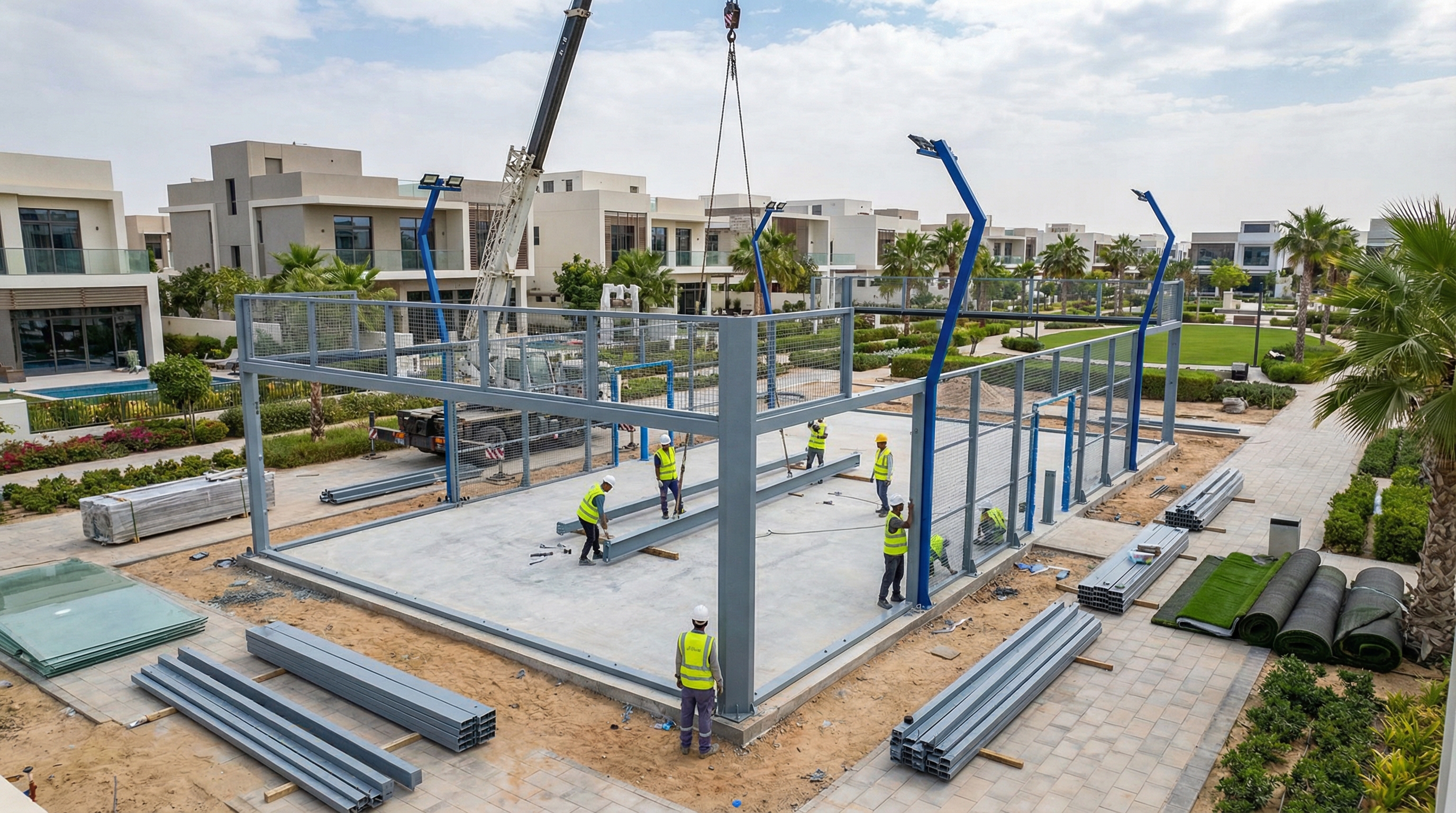
The construction of a tempo padel installation typically spans four to six weeks, assuming the site has been properly cleared and surveyed. You must manage a sequence that involves foundation pouring, structural assembly, and the delicate installation of glass and turf. Working with a specialized team ensures that each phase meets the rigorous tolerances required for a professional-grade finish.
What are the critical path milestones?
The most time-sensitive phase is the curing of the concrete slab, which must be perfectly level to avoid drainage issues or “dead spots” in the ball bounce. Once the base is ready, the steel frame and glass can be erected in a matter of days.
Check this out:
- Foundation curing: 14 to 21 days for maximum strength.
- Frame and glass installation: 4 to 7 working days.
- Turf laying and silica infill: 2 to 3 days for a perfect finish.
Key Takeaway: Efficient project management and a specialized crew are essential to meeting tight development deadlines.
| Phase | Duration |
|---|---|
| Site Preparation | 3-5 Days |
| Concrete Base | 2 Weeks (Curing) |
| Assembly | 1 Week |
A structured approach guarantees that you can move from groundbreaking to the inaugural match with absolute confidence.
Why is turf quality critical for tempo padel performance?
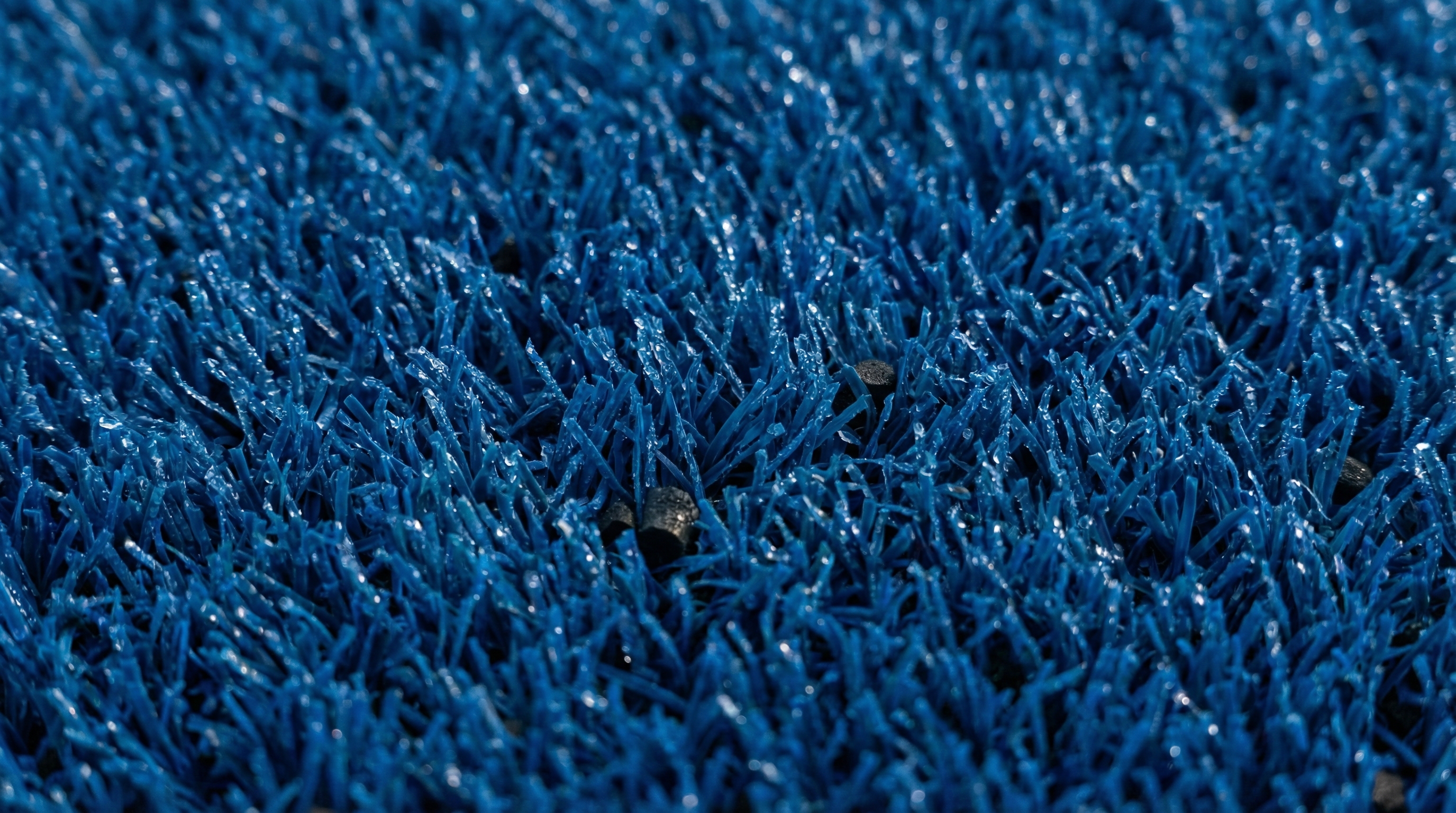
Selecting a premium Padel Grass for your tempo padel court is essential for ensuring player safety and achieving the consistent ball speed expected by professionals. You will notice that high-density monofilament fibers provide superior grip, allowing for the explosive lateral movements that define the sport. The texture of the turf also dictates how the ball interacts with the surface, influencing the entire rhythm of the match.
What is the benefit of monofilament fibers?
Monofilament turf is the industry gold standard because it resists matting and maintains its upright structure under heavy foot traffic. This longevity ensures that the court’s playing characteristics do not degrade after only one season of use.
The bottom line?
- Higher stitch density leads to a more uniform ball bounce.
- Specialized backing allows for rapid drainage after heavy rain.
- Texturized yarns hold the silica sand infill more effectively.
Key Takeaway: The playing surface is the most touched element of the court; compromising here compromises the entire user experience.
| Turf Quality | Performance Impact |
|---|---|
| Texturized Monofilament | Reduced skin abrasion and better grip |
| High Dtex Rating | Enhanced durability and fiber memory |
| UV Stabilization | Prevents color fading in sun-drenched sites |
Premium turf ensures that every sprint and slide is supported by a surface designed for elite performance.
How does tempo padel redefine modern urban sports spaces?
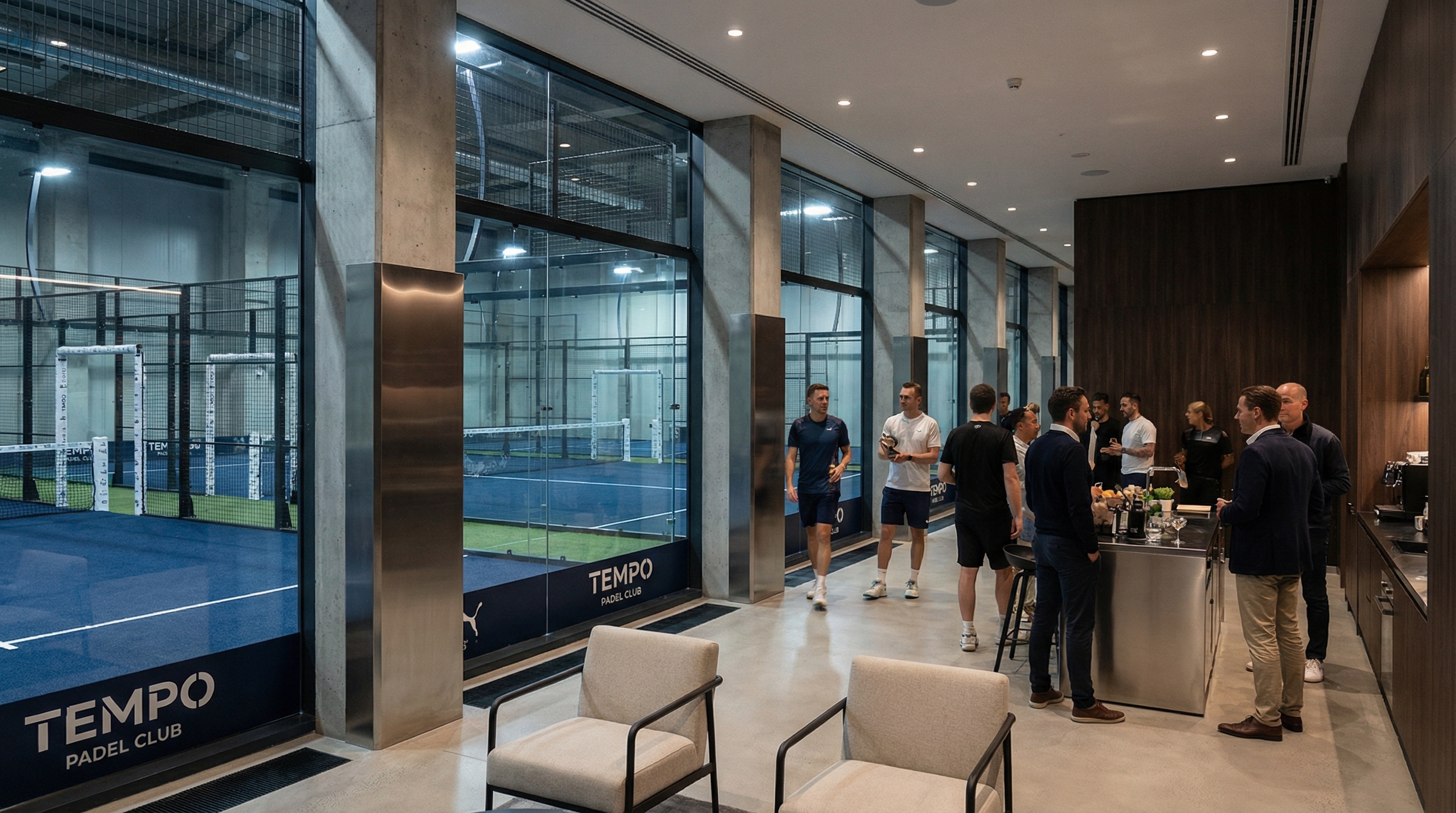
By integrating tempo padel into high-density urban environments, you capitalize on the trend of “wellness-as-a-service” in commercial real estate. You can transform underutilized rooftops or industrial warehouses into high-revenue sporting hubs that cater to the modern professional. The sleek, glass-heavy design language of these courts complements contemporary office architecture and luxury lofts.
How does it optimize the floor area?
Because the courts are significantly smaller than tennis courts, you can install three units in the space typically required for one traditional court. This triples your potential revenue stream and increases the density of active users within your facility.
In other words:
- Higher player-to-square-meter ratio than almost any other sport.
- Glass walls create a sense of space in confined indoor settings.
- Low ceiling requirements (minimum 6-8m) suit many existing warehouses.
Key Takeaway: Maximum spatial efficiency makes these courts the most profitable sports amenity for urban developers.
| Metric | Tempo Padel | Traditional Tennis |
|---|---|---|
| Players per Court | 4 | 2 or 4 |
| Space Required | 200 sqm | 600+ sqm |
| Revenue Potential | High | Moderate |
The urban adaptability of the system allows for the creation of vibrant sports communities in the heart of the city.
What maintenance is required for a pristine tempo padel court?
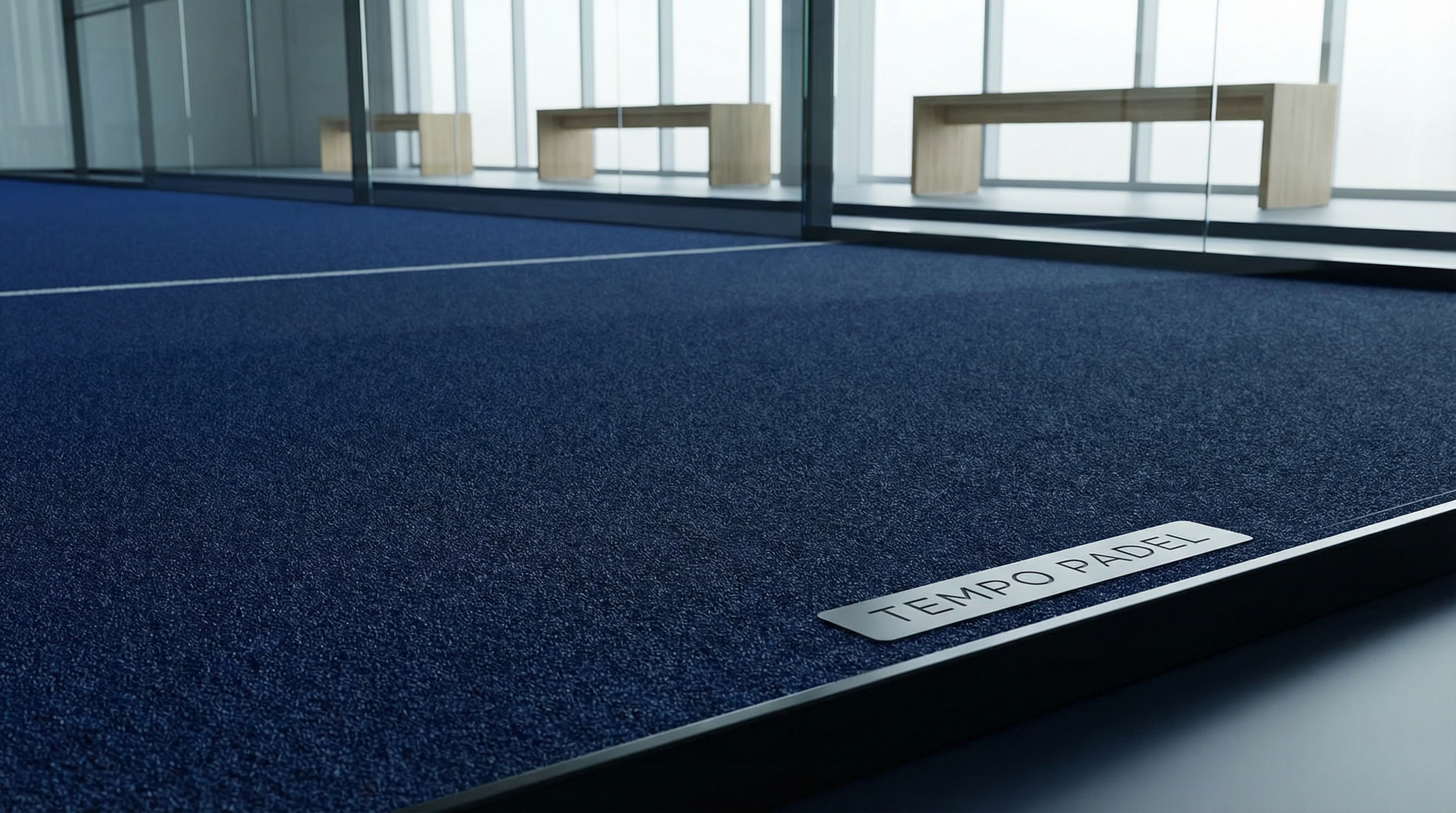
Maintaining a tempo padel facility involves a simple but consistent regimen of surface brushing and glass cleaning to preserve both the aesthetics and the playability. You should ensure that the silica sand infill remains evenly distributed across the turf to prevent slippery spots or uneven wear. A well-maintained court not only looks better but significantly extends the life of the expensive components like the turf and the mesh.
How often should you brush the surface?
For high-traffic clubs, you should brush the turf weekly to redistribute the sand and keep the synthetic fibers standing upright. This prevents the “carpet” from becoming flat and slick, which can lead to player injuries.
Best of all:
- Routine glass cleaning with non-abrasive tools keeps the “theater” clear.
- Periodic checks of the tension in the net and mesh ensure safety.
- Removing debris promptly prevents drainage clogs in the backing.
Key Takeaway: Proactive maintenance preserves the high-end feel of the venue and protects your long-term capital investment.
| Task | Frequency |
|---|---|
| Turf Brushing | Weekly |
| Glass Cleaning | Bi-weekly |
| Structural Bolt Check | Bi-annually |
Consistency in care ensures that your facility remains the premier choice for the most discerning players in your region.
Where is the ideal location to install tempo padel?
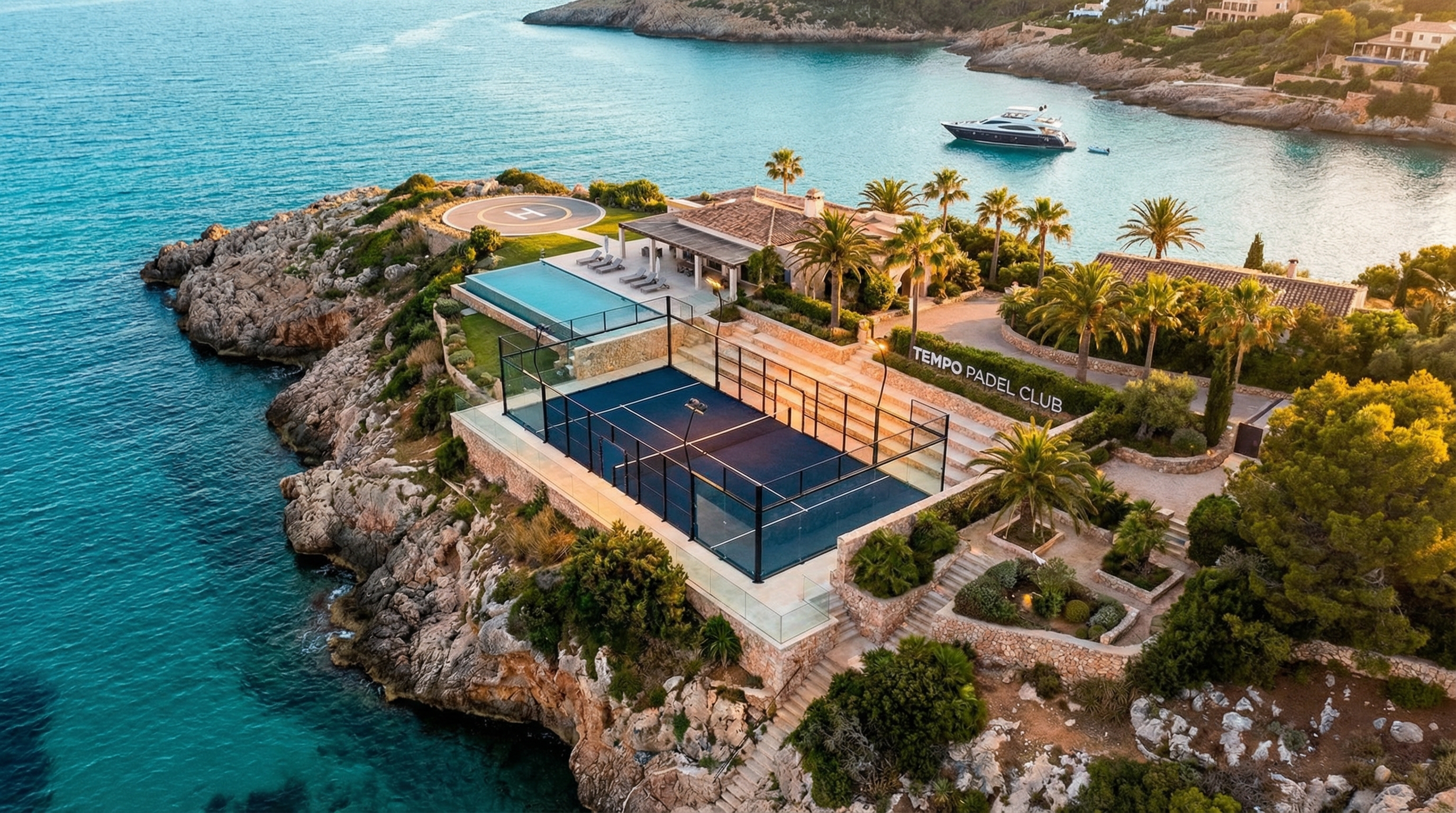
Selecting a site for tempo padel requires balancing aesthetic impact with accessibility, whether you choose a dramatic coastal cliffside or a central urban plaza. You must consider the visual “wow factor” that the glass structure provides, as it serves as a powerful branding tool for the entire property. The most successful locations are those that integrate the court into the daily flow of the residents or members.
How do you manage corrosion in coastal areas?
When building near the ocean, you must specify triple-layered galvanization and marine-grade coatings for all steel components to prevent salt-air degradation. This ensures that the court remains structurally sound and visually perfect despite the harsh environment.
Here is the deal:
- Stainless steel hardware prevents unsightly rust streaks on the glass.
- Specialized coatings resist UV damage and salt-water corrosion.
- Strategic windbreaks can be integrated into the surrounding landscaping.
Key Takeaway: Site selection and material adaptation are the foundations of a successful, long-lasting sports destination.
| Location Type | Primary Challenge | Solution |
|---|---|---|
| Coastal / Marine | Salt-air corrosion | Marine-grade galvanization |
| High-Wind Area | Structural load | Reinforced pillar bracing |
| Urban Rooftop | Weight distribution | Lightweight steel alloys |
The perfect location elevates the sport into a lifestyle experience that resonates with your target demographic.
To begin your journey toward a world-class sports destination, contact us today for a bespoke consultation. Our team is ready to translate your vision into a precision-engineered reality.
Brand Stance: At the intersection of architecture and athletics, we define the future of B2B sports luxury.
FAQ
Can I install a tempo padel court on an existing tennis court?
Certainly, as the smaller footprint allows you to maximize space and potentially fit two courts in the place of one.
What’s the best way to choose between 10mm and 12mm glass?
You should opt for 12mm glass for B2B or high-traffic environments to ensure maximum safety and a premium playing feel.
Can I customize the frame color of my tempo padel court?
Yes, you can select from a wide range of RAL colors to ensure the court perfectly matches your brand or architectural aesthetic.
What’s the best foundation for a permanent installation?
A reinforced concrete slab with a 300mm thickness is the industry standard for ensuring a level and stable playing surface.
Can I include integrated spectator seating in the design?
Absolutely, because the modular nature of the structure allows for the seamless addition of tiered seating or lounge areas around the perimeter.