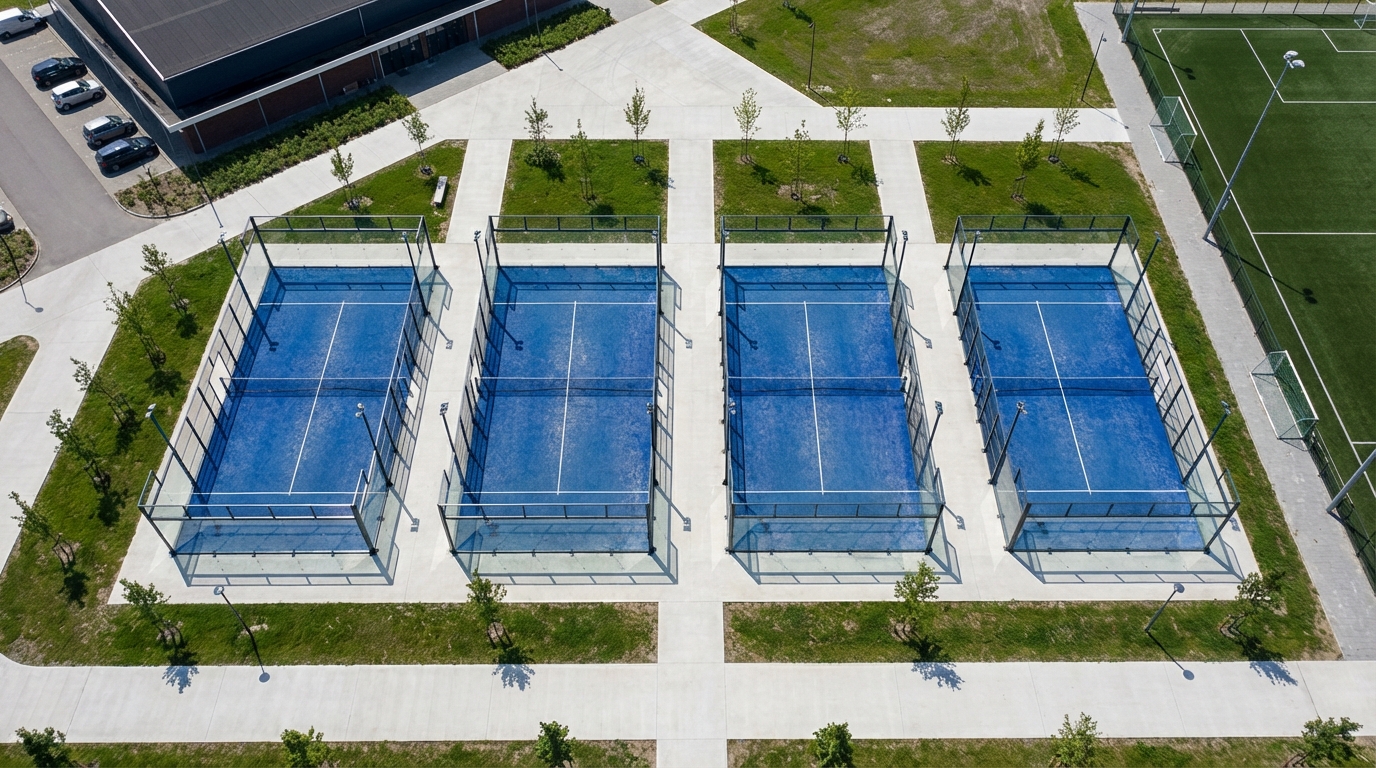
A regulation padel court measures 20 meters in length and 10 meters in width, creating a precise 200-square-meter field of play. Many facility managers and investors struggle to maximize their available real estate while trying to capitalize on the global explosive growth of racquet sports. This lack of precision often leads to costly installation errors that can render a court ineligible for professional tournaments and frustrate high-end club members. By mastering the specific padel tennis court dimensions, you can ensure your project meets international standards while optimizing the long-term ROI of your sports facility.
What are the official padel tennis court dimensions?
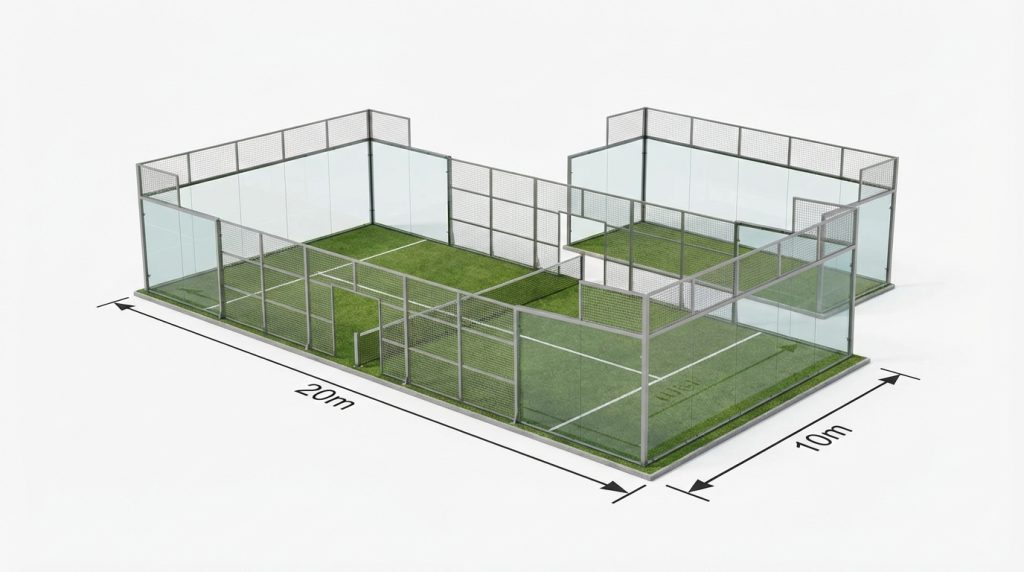
The official playing area is a rectangle that measures exactly 20 meters long and 10 meters wide. Achieving these exact padel tennis court dimensions is vital for compliance with the International Padel Federation (FIP) playing standards.
Does the International Padel Federation set these sizes?
You might be wondering if these measurements vary by region. Standardized sizes ensure that professional players experience the same rebound and court geometry whether they are in Spain, Mexico, or the United States.
- Length: 20 meters (65ft 7in).
- Width: 10 meters (32ft 10in).
- Tolerance: A 0.5% margin is permitted for official competition.
Key Takeaway: Adhering to regulation sizes ensures your facility is capable of hosting sanctioned tournaments. This consistency builds trust with competitive players who rely on predictable court behavior.
| Component | Metric Measurement | Imperial Measurement |
|---|---|---|
| Court Length | 20.00 Meters | 65′ 7″ |
| Court Width | 10.00 Meters | 32′ 10″ |
| Total Playable Area | 200 Square Meters | 2,153 Square Feet |
Precise geometric execution during the foundation phase prevents structural misalignments that are difficult to correct once the glass is installed.
How do padel tennis court dimensions affect the lines?
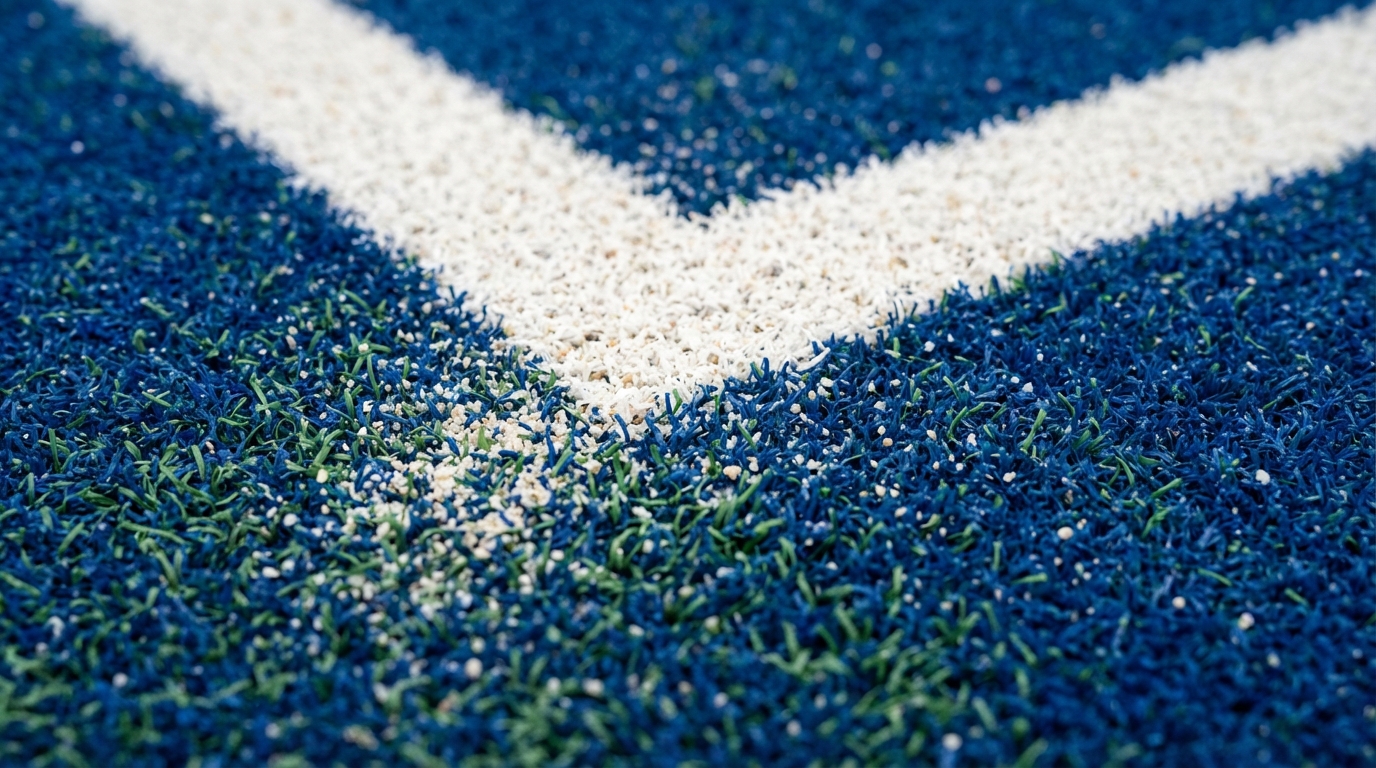
Court markings must be precisely placed within the 20m x 10m area to define service zones and the central axis. All lines must align with the padel tennis court dimensions to facilitate accurate serving and fair play during fast-paced matches.
Where is the service line located on each side?
Here is the deal: the service line is positioned exactly 7 meters from the net on both sides of the court. This line runs across the full width and defines the boundary where a serve must bounce before being hit by the receiver.
Are there specific rules for line width and color?
All court lines must be 5 centimeters (2 inches) wide to ensure maximum visibility for players and referees. They should be painted in a contrasting color to the turf, with white being the universal standard for professional clubs.
Key Takeaway: Accuracy in line marking is non-negotiable for competitive play. High-contrast lines help players track boundaries during high-speed rallies and facilitate better broadcasting quality.
| Line Feature | Distance from Net | Purpose |
|---|---|---|
| Service Line | 7.00 Meters | Defines the back of the service box |
| Center Line | N/A | Splits the service area into two zones |
| Line Width | 5.00 Centimeters | Standard visibility requirement |
The service boxes created by these lines dictate the tactical flow of the game, making precision in paint application a top priority.
What net size fits padel tennis court dimensions?
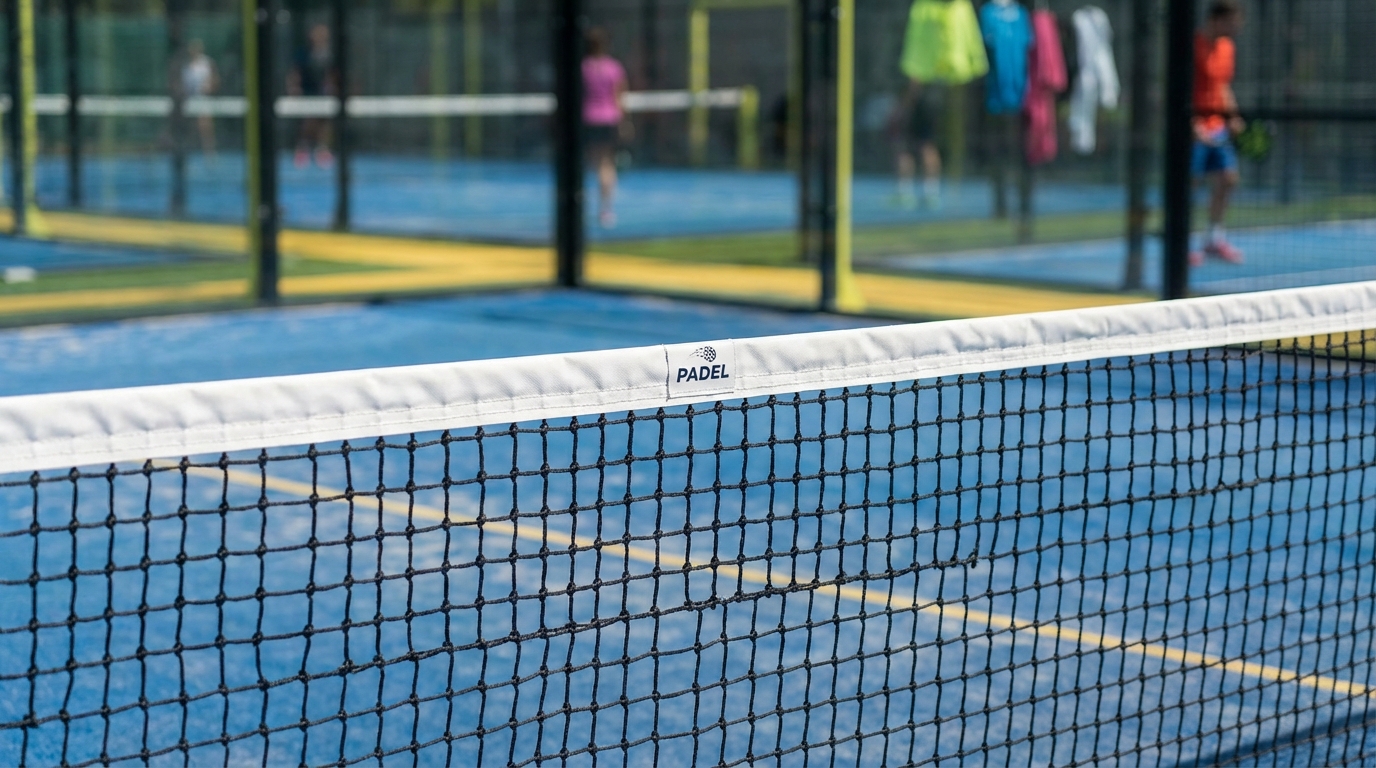
A standard net must span the full 10-meter width to divide the court into two equal halves without any gaps. Selecting a net that complements the padel tennis court dimensions ensures that the ball cannot pass through or under the barrier during a point.
How high should the net be at the center?
The best part? FIP regulations specify that the net must be exactly 0.88 meters (2ft 11in) high at the center. This height is slightly lower than the posts to allow for the natural tension curve of the suspension cable.
- Length: 10 meters.
- Center Height: 0.88 meters.
- Post Height: 0.92 meters maximum.
- Top Band: 5cm to 6.35cm wide white band.
Key Takeaway: Proper net tension is essential for maintaining the correct center height during play. A high-quality net system uses galvanized steel cables to resist sagging over time.
| Net Component | Required Specification | Material |
|---|---|---|
| Central Height | 0.88 Meters | Synthetic Mesh |
| Post Height | 0.92 Meters | Galvanized Steel |
| Suspension Cable | Max 0.01m thickness | Steel |
Maintaining the correct net height across the entire width is crucial for preserving the balance between offensive and defensive play.
Are enclosures tied to padel tennis court dimensions?
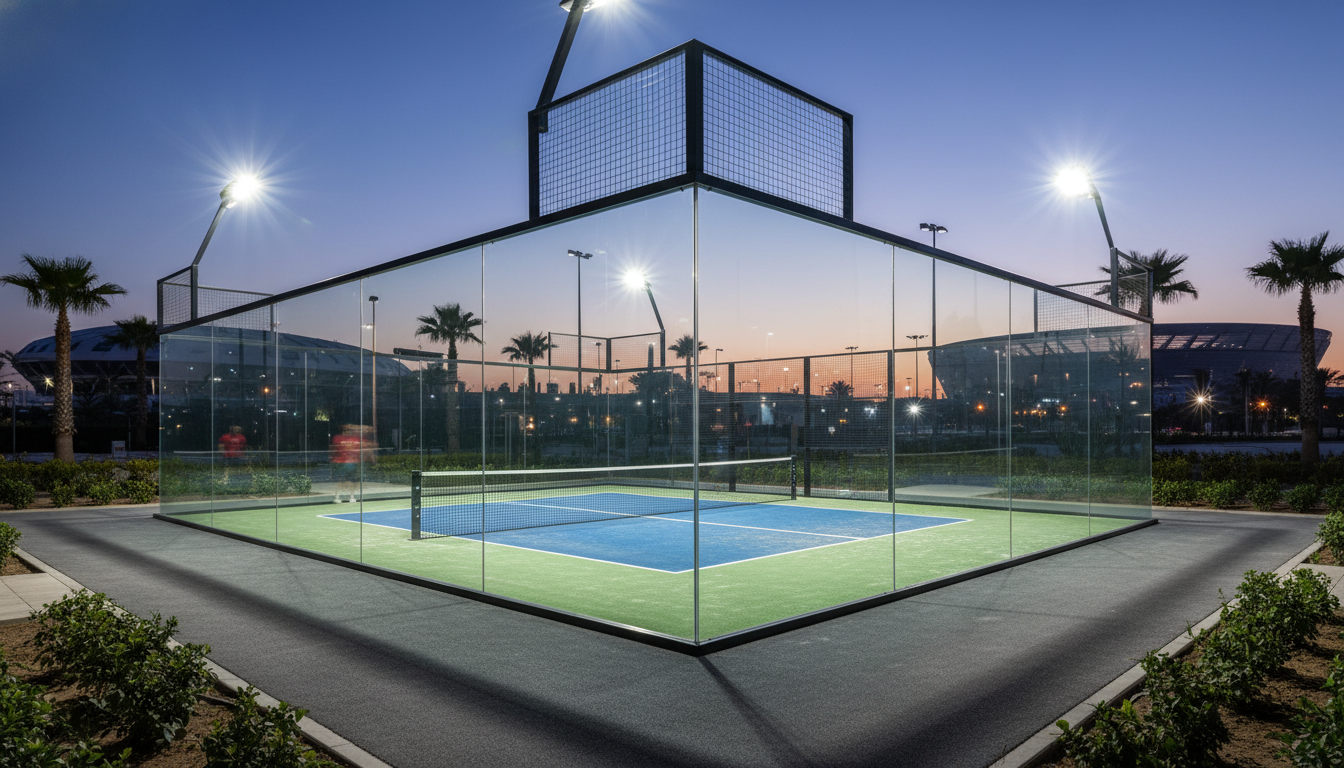
The wall structure is engineered specifically to surround the 200-square-meter playing surface while allowing for required rebound physics. Modern enclosure systems must fit the padel tennis court dimensions perfectly to ensure the glass panels and mesh are flush with the playing area.
What are the standard wall height options?
Look: the back walls are typically 3 meters high, often constructed from tempered glass to allow for the characteristic “off the wall” play. Many professional courts add an additional meter of metallic mesh on top of the glass for a total height of 4 meters.
How does the lateral mesh integrate?
The sidewalls use a combination of glass and metallic mesh to provide both visibility and variety in ball rebound. These sections must be rigid enough to withstand constant ball impact without deforming or creating irregular bounces.
Key Takeaway: Padel is unique because the walls are an active part of the game. Using 12mm tempered safety glass ensures player safety and consistent ball behavior.
| Enclosure Section | Height | Typical Material |
|---|---|---|
| Back Wall Glass | 3.00 Meters | 12mm Tempered Glass |
| Back Wall Top | +1.00 Meter | Metallic Mesh |
| Lateral Mesh | 3.00 Meters | Electro-welded Mesh |
The transition between glass and mesh sections must be perfectly smooth to prevent unpredictable bounces that can frustrate competitive athletes.
How much space do padel tennis court dimensions need?
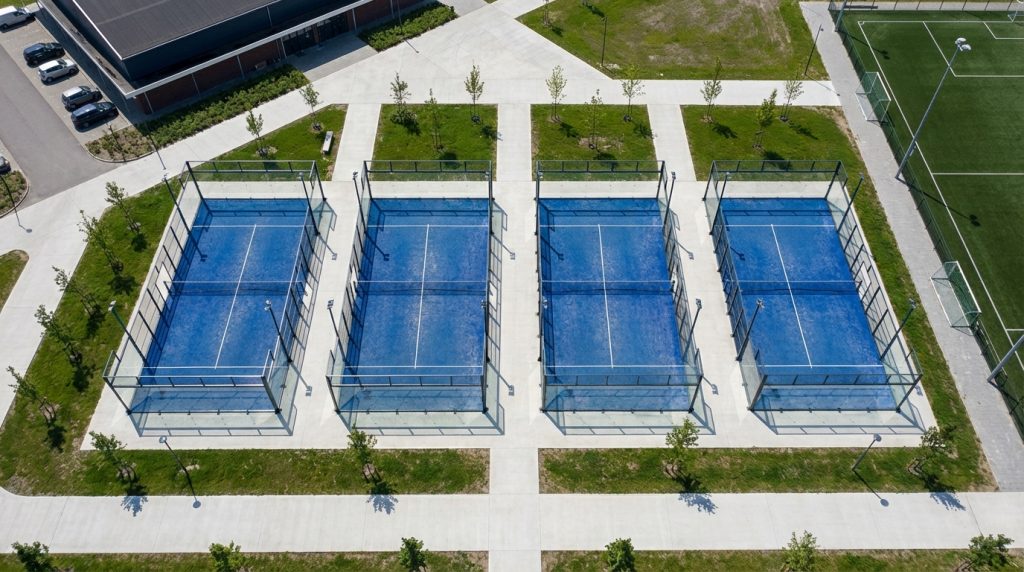
You generally need a total footprint of at least 21 meters by 11 meters to accommodate the necessary structural base and safety zones. Planning your facility goes beyond just the padel tennis court dimensions, as structural foundations must extend slightly beyond the internal play area.
What is the minimum ceiling height for indoor play?
Think about it: an indoor court with a low ceiling severely limits the ability to play “lobs,” which are a fundamental tactic in padel. While the FIP allows a minimum height of 6 meters, a clearance of 8 meters is highly recommended for professional clubs.
- Concrete Base: 21m x 11m minimum.
- Indoor Clearance: 6m minimum (8m preferred).
- Safety Zones: 2m x 4m areas at the doors for out-of-court play.
- Spacing: 1-2 meters between multiple courts for maintenance.
Key Takeaway: Always account for space beyond the playing lines. Foundations require extra width to secure the steel pillars and glass mounting brackets safely.
| Space Requirement | Minimum | Recommended |
|---|---|---|
| Concrete Base Size | 21m x 11m | 22m x 12m |
| Indoor Height | 6.00 Meters | 8.00 Meters |
| Space Between Courts | 1.00 Meter | 2.00 Meters |
Sufficient ceiling height and perimeter spacing transform a standard court into a premium facility capable of hosting elite competitive events.
Which materials support padel tennis court dimensions?
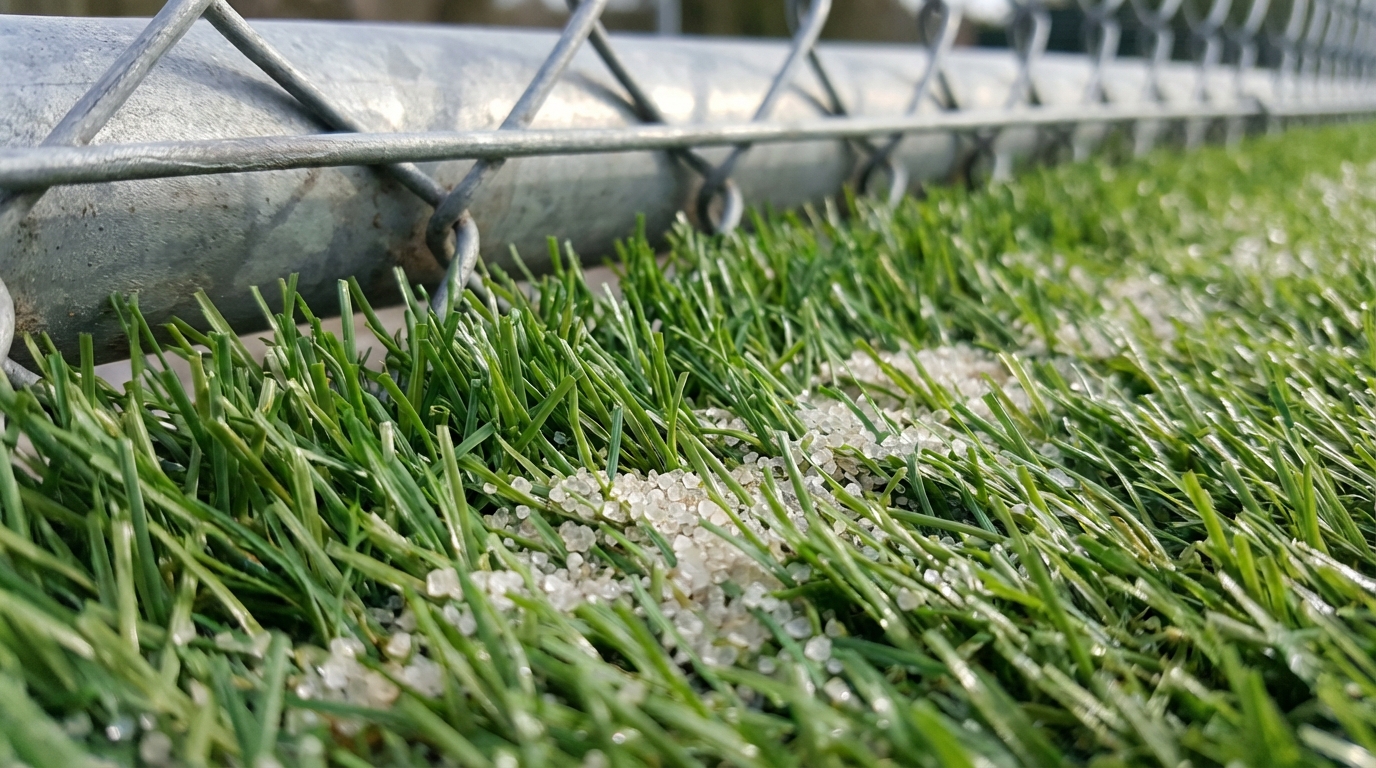
Reinforced concrete and galvanized steel frames provide the structural stability required to maintain the court’s integrity under heavy use. The durability of your investment depends on materials that can sustain the padel tennis court dimensions despite environmental stress and player impact.
Why is high-density turf the top choice?
In short: specialized artificial turf filled with silica sand provides the necessary traction for players and a consistent bounce for the ball. This surface is specifically engineered to resist wear in the high-traffic areas around the net and service lines.
What metal treatments prevent frame corrosion?
Hot-dip galvanization is the industry standard for steel frames, especially for outdoor courts exposed to rain and humidity. This treatment prevents rust from weakening the structure, ensuring the enclosure remains perfectly aligned for decades.
Key Takeaway: High-quality materials like 12mm tempered glass and UV-resistant turf reduce long-term maintenance costs. They also provide the professional aesthetic expected by premium club members.
| Material | Purpose | Key Feature |
|---|---|---|
| Fibrillated Turf | Playing Surface | UV resistance & durability |
| Galvanized Steel | Frame Structure | Corrosion resistance |
| Silica Sand | Turf Infill | Supports player pivots |
Investing in premium materials during the initial construction phase prevents the need for expensive repairs and surface replacements later on.
What are building costs for padel tennis court dimensions?
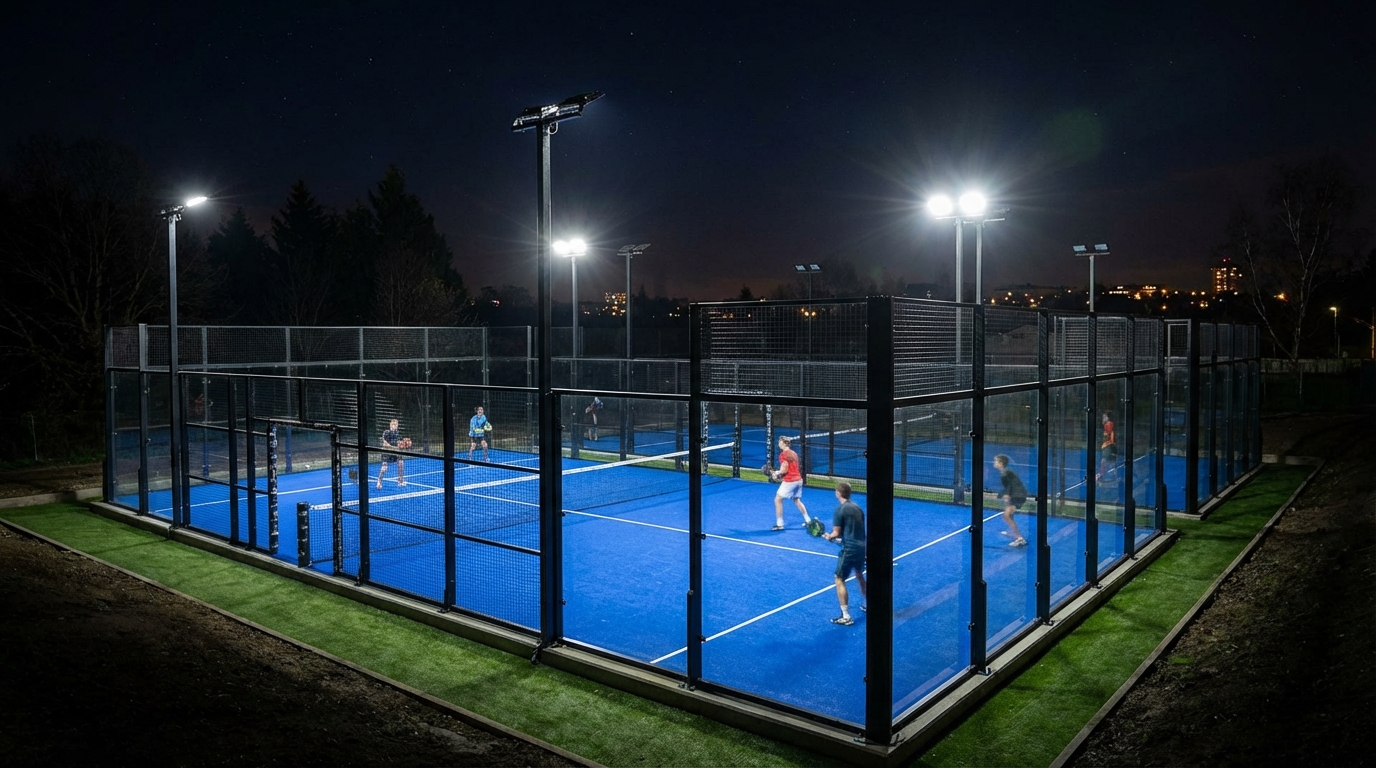
Construction usually ranges from $24,000 to $65,000 per court depending on site preparation and specific glass or lighting upgrades. Building a facility to official padel tennis court dimensions involves balancing the budget between high-quality materials and specialized labor.
How do location and court type impact the price?
Wait, there is more: the choice between a standard frame and a panoramic design can significantly shift your total expenditure. Panoramic courts remove vertical posts for better visibility but require thicker glass and reinforced frames, increasing the material costs.
- Structure & Glass: $15,000 – $30,000.
- Foundation Work: $8,000 – $20,000.
- Turf & Install: $5,000 – $10,000.
- Lighting Systems: $2,000 – $5,000.
Key Takeaway: Buying factory-direct can save you up to 30% on procurement costs. This allows you to allocate more budget toward amenities like premium lighting or player lounges.
| Cost Factor | Estimated Range | % of Total Budget |
|---|---|---|
| Enclosure | $15k – $30k | 50% |
| Civil Works | $8k – $20k | 30% |
| Turf Surface | $5k – $10k | 15% |
| LED Lighting | $2k – $5k | 5% |
The high ROI of padel—accommodating four players in a small footprint—makes it one of the most profitable investments in modern sports.
How does lighting fit padel tennis court dimensions?
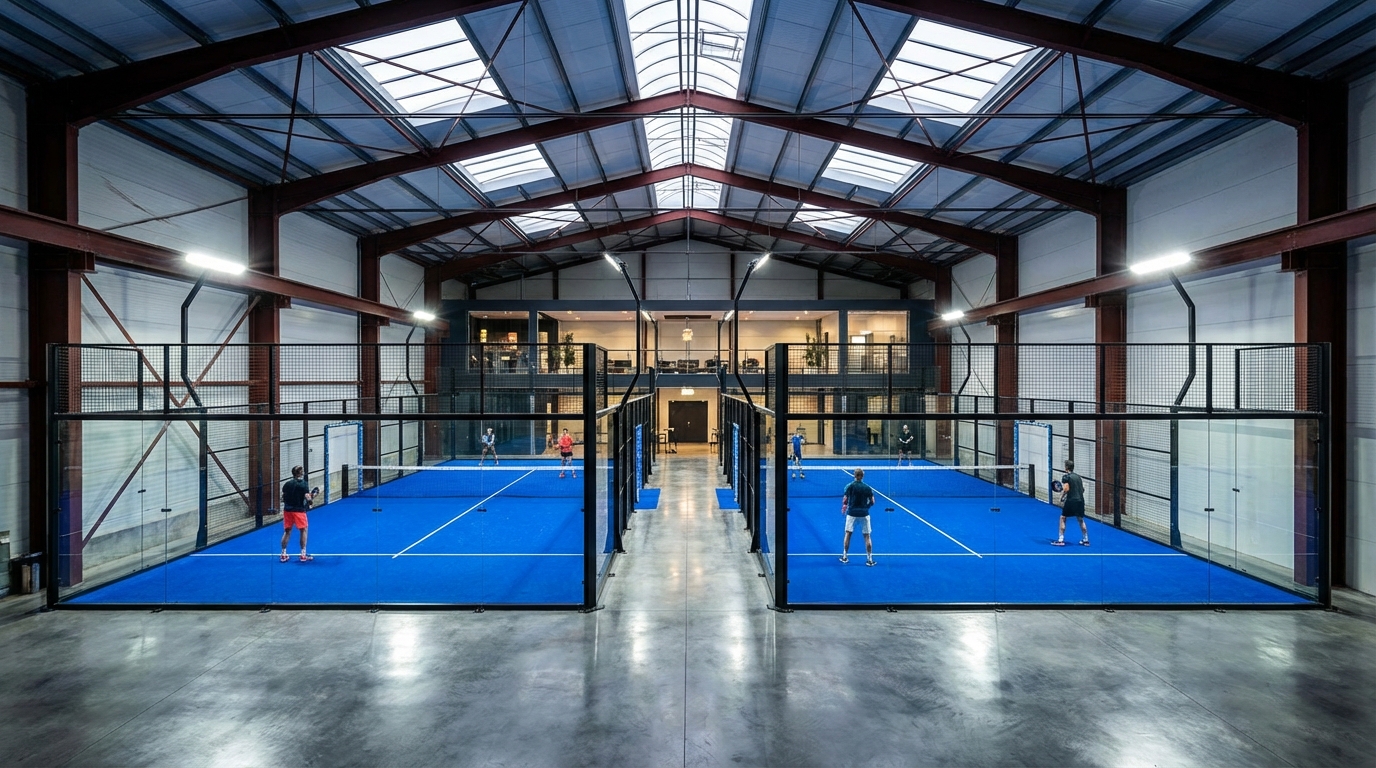
LED systems must provide uniform illumination across the entire 200-square-meter area to ensure safe and accurate nighttime play. Proper lighting design is essential for courts built to padel tennis court dimensions, as shadows in the corners can hide the ball during fast rallies.
Can IP66 LED lights improve night matches?
It gets better: using IP66 waterproof-rated LED floodlights ensures that your lighting system remains reliable even in heavy rain or dusty environments. These high-efficiency lights reduce energy consumption by up to 50% compared to traditional halogen bulbs.
Where should the light poles be placed?
Light poles are typically 6 meters high and positioned at the four corners or the mid-points of the court. This arrangement provides a minimum luminosity of 300 to 500 lux, which is the standard for professional club play.
Key Takeaway: Uniform lighting eliminates dark spots and glare, allowing players to track the ball’s trajectory clearly. This is particularly important for high-speed “off-the-glass” shots.
| Feature | Club Standard | Pro Standard |
|---|---|---|
| Average Lux Level | 300 Lux | 500+ Lux |
| Light Posts | 4 Units | 8 Units |
| Waterproof Rating | IP66 | IP66 |
Superior illumination extends your court’s operating hours and increases revenue by allowing for late-evening bookings and league matches.
Can you customize padel tennis court dimensions?
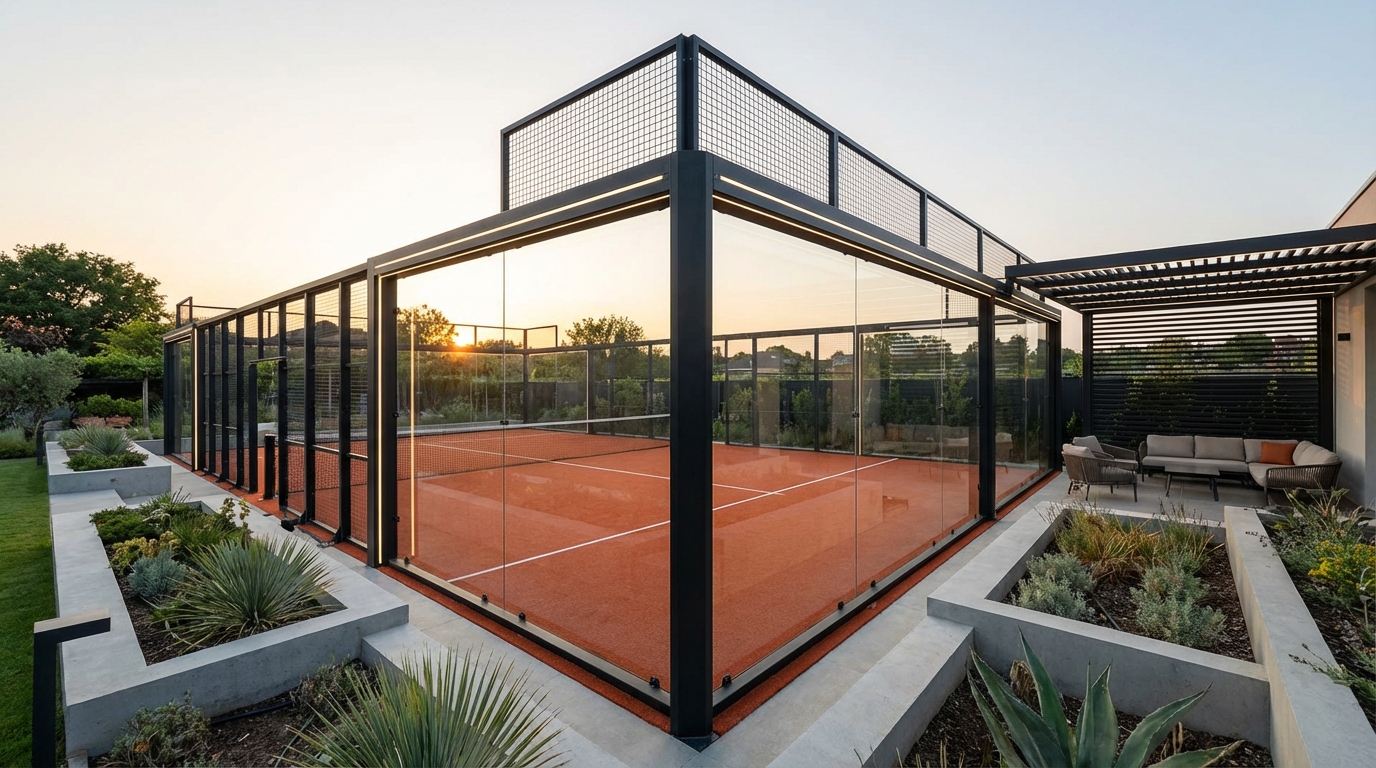
While the internal 20m x 10m area is fixed for competition, the external aesthetics and material colors are fully flexible for branding. You can customize the structure surrounding the padel tennis court dimensions to match your club’s identity or luxury real estate design.
Does OEM branding allow for unique logos?
Believe it or not: you can have your club logo integrated directly into the net or etched onto the glass protectors. This level of customization helps your facility stand out in a competitive market and builds strong brand recognition.
- Frame Colors: Any RAL color (e.g., Matte Black, Navy Blue).
- Turf Options: Blue, Green, or Terracotta clay styles.
- Glass Types: Standard structural posts or Panoramic views.
- Logo Placement: Nets, glass, and perimeter padding.
Key Takeaway: Aesthetic customization does not impact playability but significantly enhances the “premium” feel of your facility. It allows you to charge higher rental fees for a unique experience.
| Custom Element | Options | Benefit |
|---|---|---|
| Frame Color | Any RAL Color | Brand recognition |
| Turf Style | Blue, Green, Clay | Aesthetic variety |
| Enclosure Type | Standard vs Panoramic | Improved viewing |
Choosing a unique color scheme and integrating custom branding creates a memorable environment that encourages repeat bookings and social sharing.
Why contact us for padel tennis court dimensions?
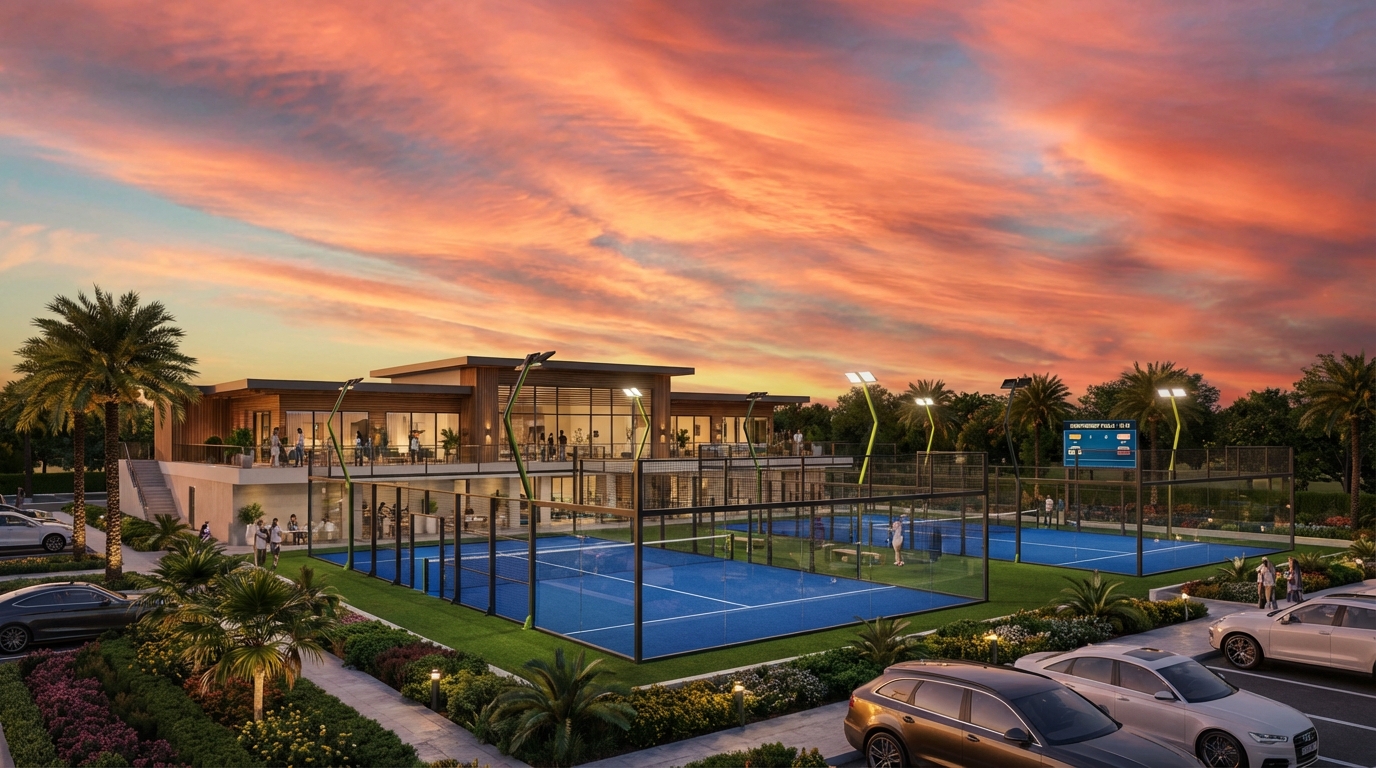
Our engineering team guarantees that every build complies with FIP standards while saving you 30% through direct factory procurement. We specialize in maintaining the exact padel tennis court dimensions required for high-performance play while offering full customization for your brand.
How can buying factory-direct save project costs?
Ready to start? By eliminating middlemen, you gain access to the same materials used in world-class tournaments at a fraction of the retail price. We provide full technical documentation and remote installation guidance to ensure your project is completed flawlessly.
Do you provide support for international shipments?
Our logistics team manages global shipping to over 190 countries, ensuring your court arrives safely and on schedule. We handle the complexities of transport and customs, providing you with a hassle-free experience from order to installation.
Key Takeaway: Partnering with a professional manufacturer ensures your facility meets international safety and performance certifications. This long-term reliability protects your investment for over 20 years.
| Service | Why Choose Our Team |
|---|---|
| Pricing | Factory-direct (30% Savings) |
| Quality | EN 12150 Certified Glass |
| Support | 24-hour Quotation Response |
| Branding | Full OEM/ODM Customization |
Our commitment to technical precision and material quality ensures that your padel project becomes a landmark destination for athletes.
Building a world-class padel facility requires more than just space; it requires a deep understanding of the technical standards that define the sport. We have solved the challenges of structural alignment and material durability for over 500 satisfied clients worldwide. Whether you are developing a private residence or a multi-court commercial center, we can help you navigate the complexities of international standards while maximizing your project’s profitability. Let us transform your vision into a professional-grade reality. We invite you to contact us today to receive a customized quote and expert consultation within 24 hours.
FAQ Section
Can I build a padel court in my backyard?
Yes, provided you have a flat area of at least 21m x 11m and meet local zoning requirements for permanent structures.
What’s the best material for a padel court base?
A reinforced concrete slab with a thickness of 15cm to 20cm is the best choice to ensure the playing surface remains perfectly level.
Can I customize the color of the padel grass?
Absolutely. While blue is the standard for high visibility, FIP regulations also approve green and terracotta for professional use.
How do I know if my ceiling is high enough for an indoor court?
It depends on the level of play you intend to host; a 6-meter clearance is the minimum, but 8 meters is the gold standard for high-level tactical lobs.
How long does it take to install a court?
It usually takes 3 to 5 days for a professional team to assemble the steel frame, glass panels, and turf once the concrete base has fully cured.