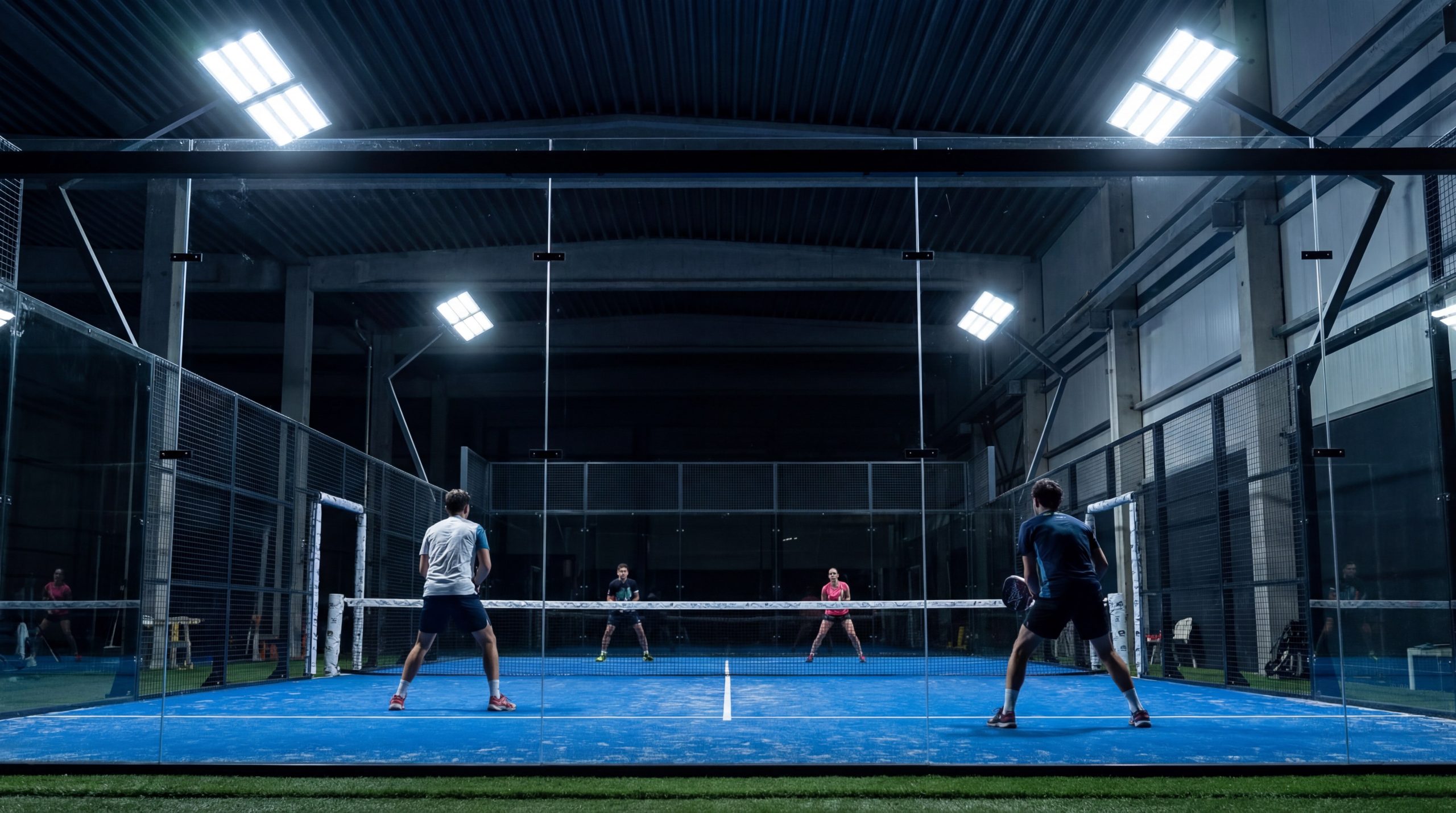
An indoor padel court is a specialized, fully enclosed sports facility designed to provide a weather-independent environment for playing padel, featuring the standard 10×20 meter dimensions and high-grade materials. Imagine investing significant capital into a new sports venture only to have rain, wind, or extreme heat empty your facility half the year. This seasonal volatility kills cash flow and frustrates your membership base. By choosing a professional indoor padel court, you eliminate environmental risks and ensure your club operates at 100% capacity every single day of the year.
What is an indoor padel court?
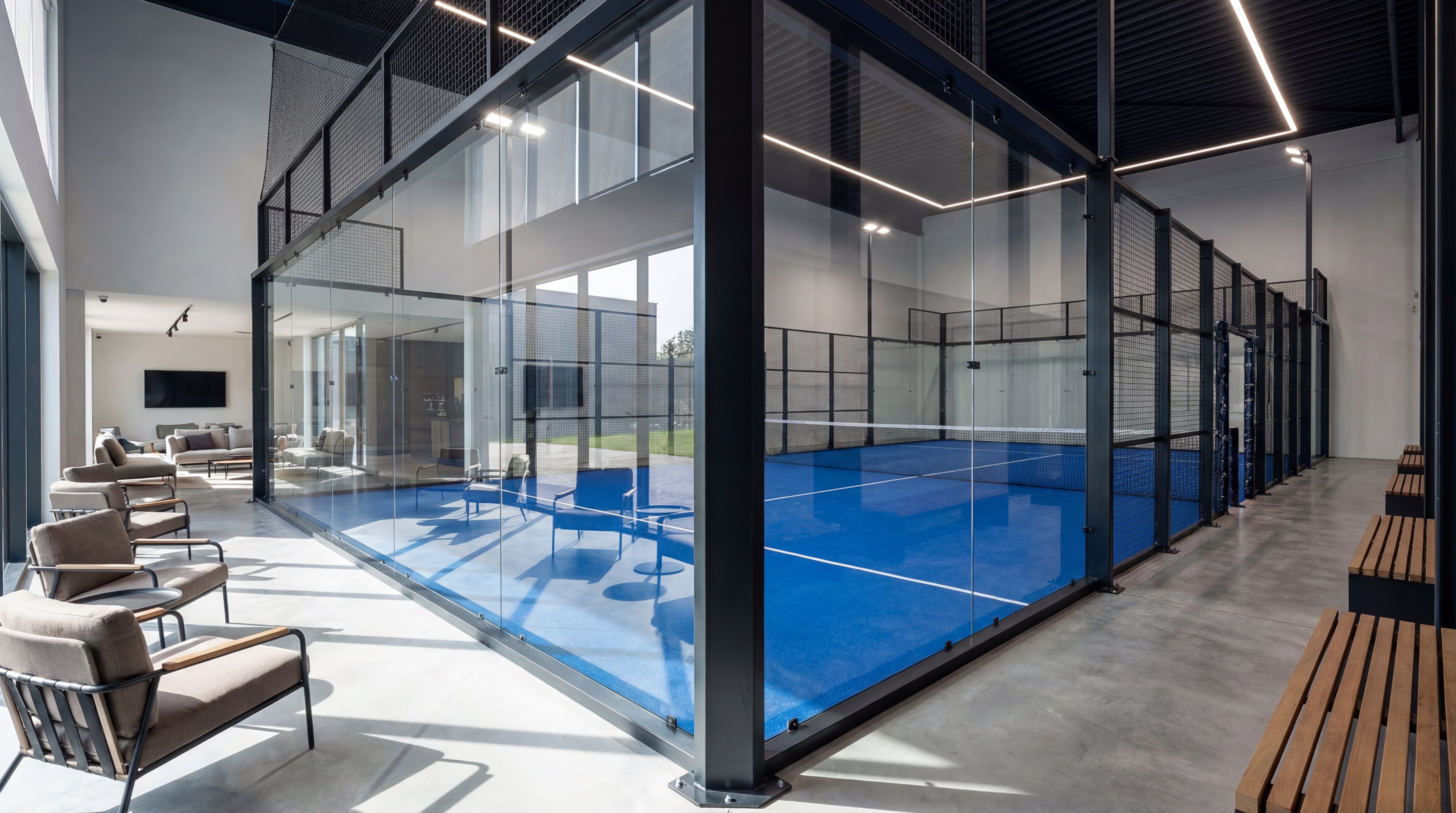
An indoor padel court is a regulation-sized playing area housed within a building or permanent cover to facilitate year-round play. These structures protect the playing surface and the athletes from external elements like rain and UV radiation. Every professional indoor padel court utilizes tempered glass and specialized steel frames to ensure safety and consistent ball bounce.
Standard court dimensions
The playing area remains consistent with international standards regardless of the venue. You need a space that accommodates a 10-meter width and a 20-meter length.
Material requirements
High-quality steel is the backbone of the entire installation. The structure must withstand constant vibrations and player impact over time.
- Hot-dip galvanized steel frames.
- 12mm tempered safety glass.
- Monofilament or textured turf.
Here is the deal:
Quality materials aren’t just about aesthetics; they are about long-term liability and player safety.
Key Takeaway: An indoor facility provides the most stable environment for consistent gameplay and business revenue.
| Feature | Standard Requirement |
|---|---|
| Width | 10 Meters |
| Length | 20 Meters |
| Glass Thickness | 10mm – 12mm |
| Frame Material | Galvanized Steel |
Investing in high-quality components ensures the longevity of your sports facility.
What are the indoor padel court specifications?
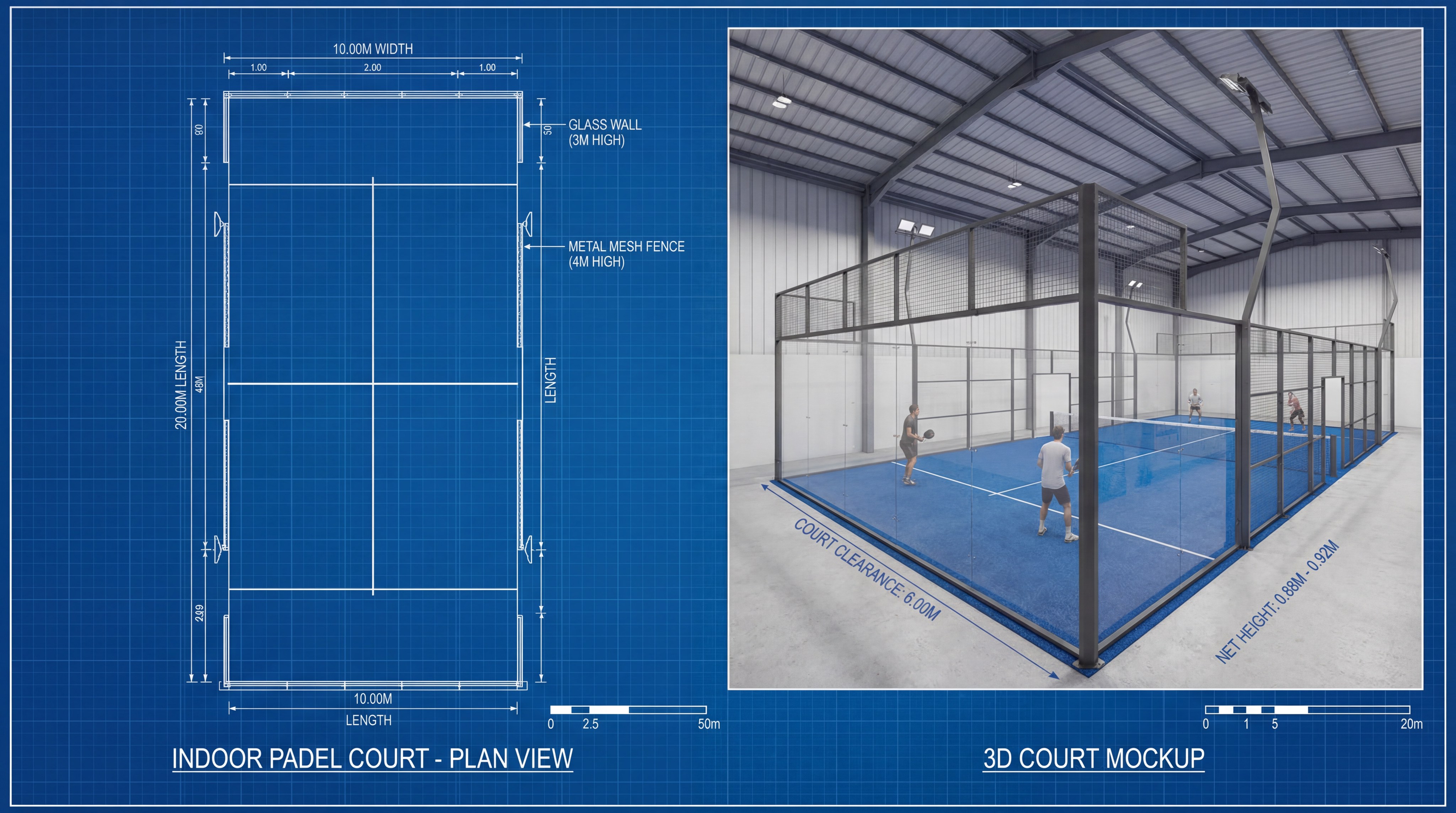
Specifications for an indoor padel court dictate that the facility must have a minimum ceiling height of 6 meters, though 8 to 9 meters is preferred for professional play. These measurements ensure that high “lobs” do not strike the roof, which would disrupt the flow of the game. Adhering to these strict specs for your indoor padel court is the difference between a recreational hobby room and a world-class club.
Ceiling height and clearance
Think about it:
If your ceiling is too low, you lose the most strategic shot in the game.
- Minimum height: 6 meters.
- Recommended height: 8-10 meters.
- Obstruction clearance: Lighting and beams must be outside the lob zone.
Wall and fencing heights
The back walls must be 4 meters high to meet FIP standards. Side walls can be stepped, transitioning from 4 meters to 3 meters as you move toward the net.
Key Takeaway: Correct vertical clearance is the most overlooked factor when converting warehouses into padel clubs.
| Parameter | Minimum | Ideal |
|---|---|---|
| Vertical Clearance | 6 Meters | 9+ Meters |
| Back Wall Height | 4 Meters | 4 Meters |
| Side Mesh Height | 3 Meters | 3 Meters |
| Total Area Needed | 200 sqm | 231 sqm |
Precise architectural planning prevents costly structural modifications during the construction phase.
How to build an indoor padel court structure?
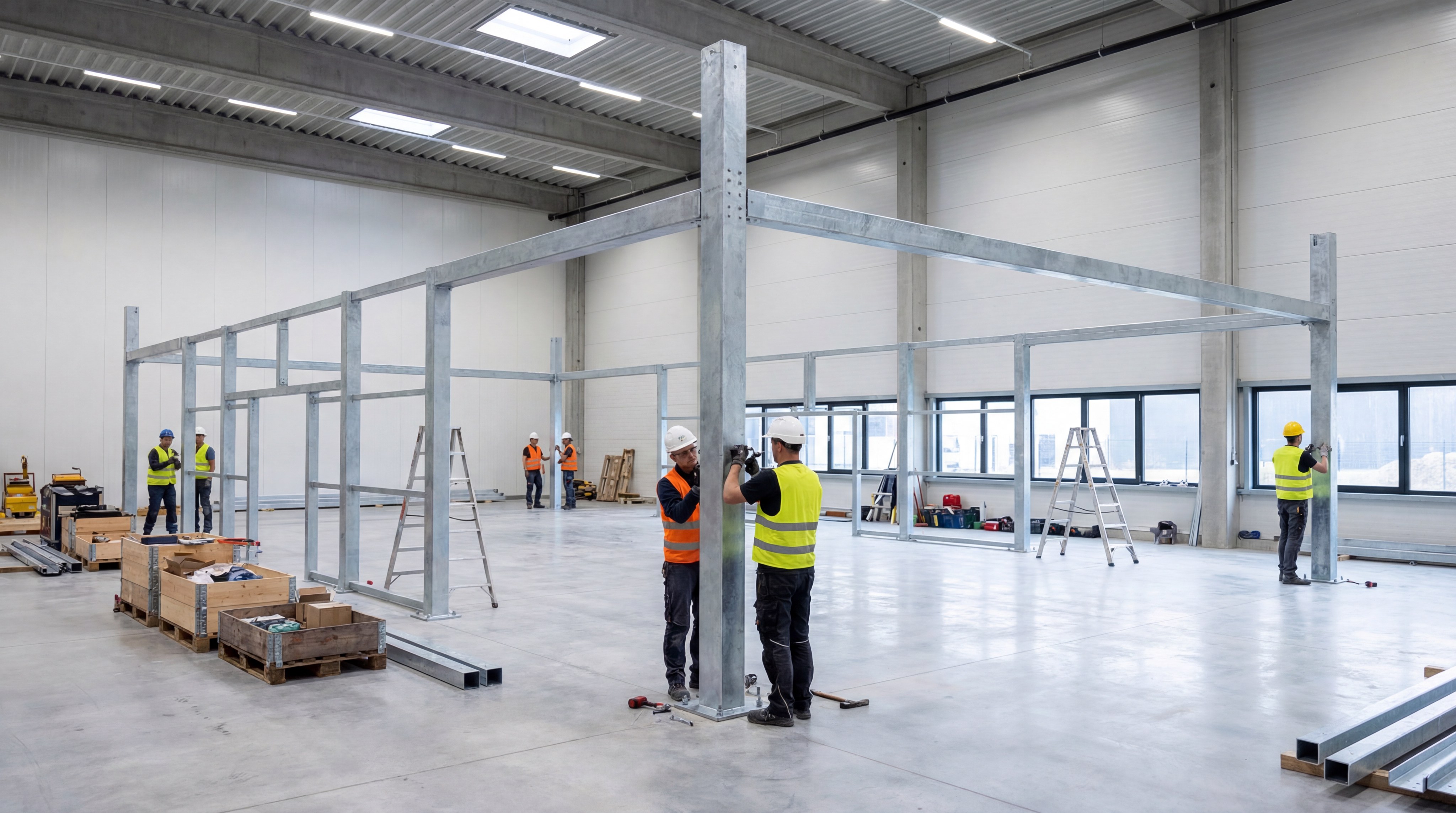
Building an indoor padel court requires a modular approach where pre-fabricated steel frames are anchored to a reinforced concrete foundation. The process starts with the perimeter layout followed by the upright post installation. A professional team can typically finish the core of an indoor padel court in less than a week if the floor is already level.
Foundation and floor leveling
You cannot skip the leveling process. A deviation of even a few millimeters can cause the glass panels to stress and eventually shatter.
- Use laser-leveling for the concrete base.
- Ensure a minimum thickness of 15cm for the slab.
Frame assembly steps
But wait, there is more:
The order of assembly matters for structural integrity.
- Anchor the corner posts.
- Install the horizontal beams.
- Secure the wire mesh panels.
Key Takeaway: Modular CNC-manufactured frames allow for rapid deployment and precise fitment on-site.
| Assembly Phase | Duration (Days) | Key Focus |
|---|---|---|
| Leveling | 1-2 | Perfection of the base |
| Steel Framing | 2-3 | Anchor bolt precision |
| Mesh Installation | 1 | Tension and safety |
Rapid installation timelines allow your club to begin generating membership fees sooner.
Why use glass for an indoor padel court?
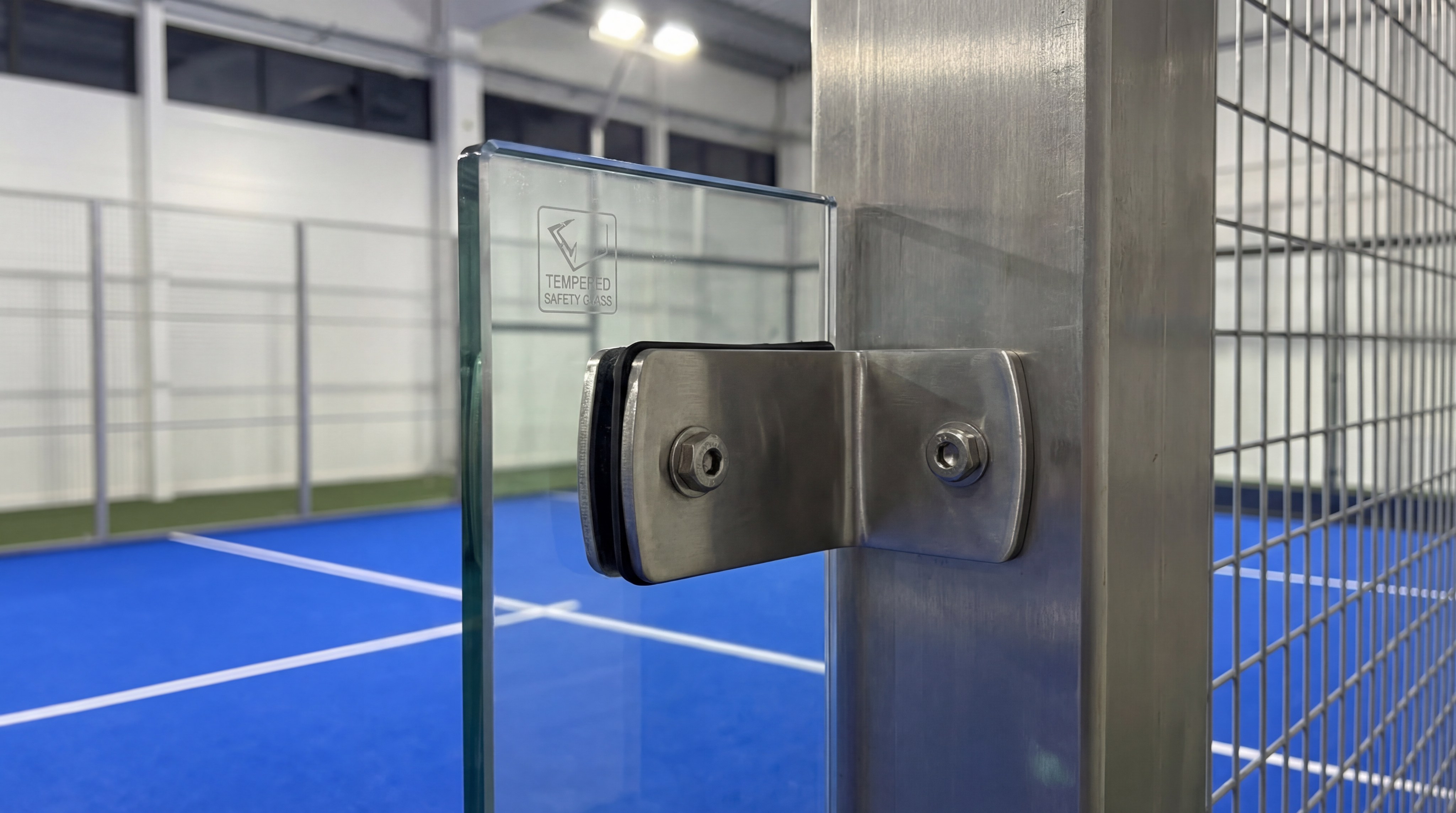
Glass is used for an indoor padel court because it provides the essential rebound properties required for the sport while ensuring maximum visibility for spectators. Using 12mm tempered glass is the industry standard for safety and performance. When designing an indoor padel court, the glass must be mounted with specialized rubber gaskets to absorb the impact of players hitting the walls.
Safety and durability
Tempered glass is designed to crumble into small, blunt pieces if it breaks. This minimizes injury risks in high-intensity matches.
- Certified EN 12150 standards.
- Polished edges for safety.
Visibility for spectators
The deal is this:
Panoramic glass designs remove the need for metal pillars in the corners. This creates an immersive experience for fans watching the match from the sidelines.
Key Takeaway: High-quality glass connections are the primary safety feature of any modern padel court.
| Glass Property | Standard | Purpose |
|---|---|---|
| Thickness | 12mm | Impact Resistance |
| Type | Tempered | Safety / Break Pattern |
| Connection | Stainless Steel | Corrosion Resistance |
| Gaskets | Neoprene | Vibration Dampening |
Transparent walls transform a simple court into a professional stadium environment.
Which grass is for an indoor padel court?
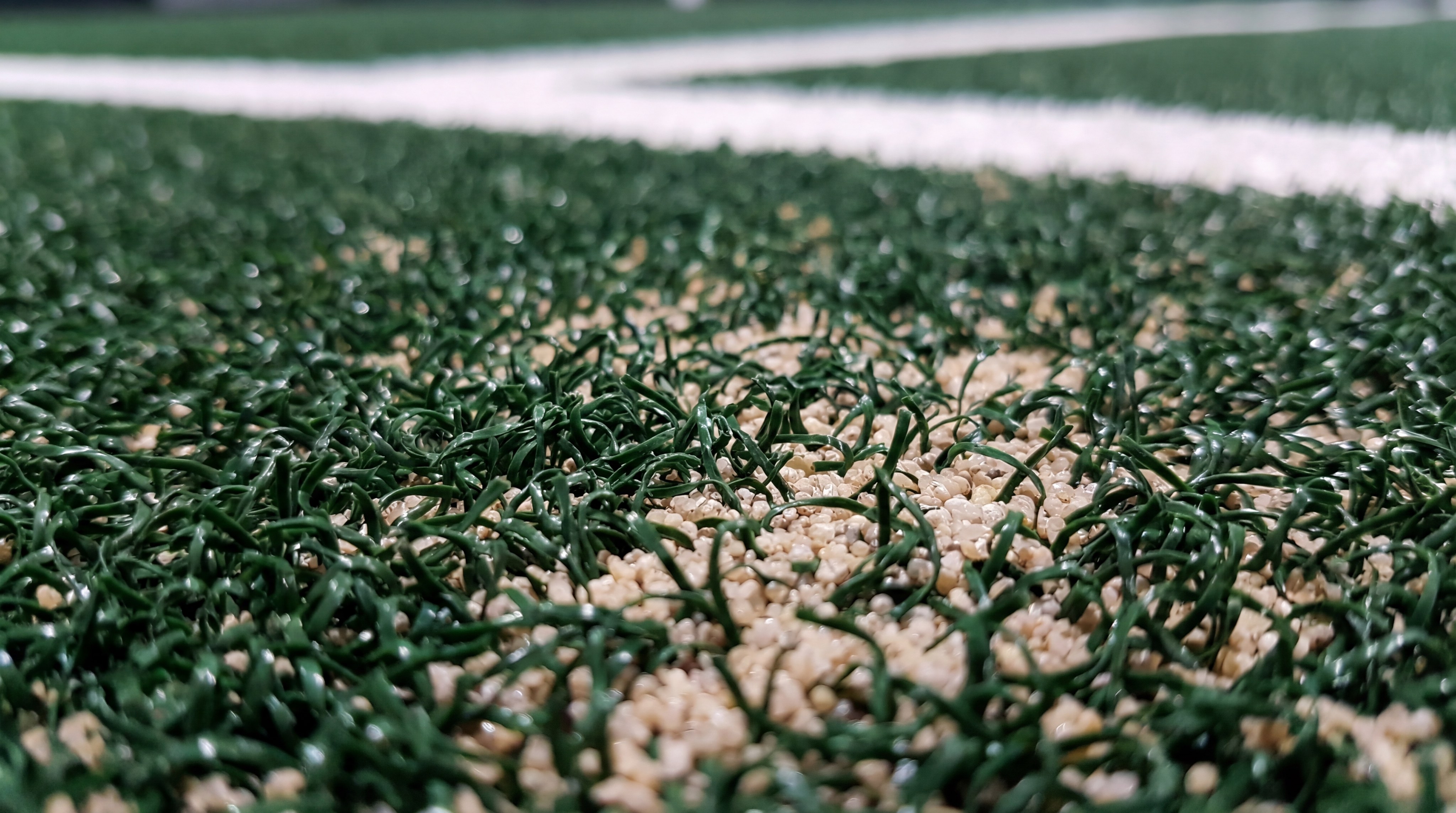
The best grass for an indoor padel court is specialized monofilament synthetic turf with a high density of stitches per square meter. Unlike outdoor turf, indoor surfaces do not need to manage heavy water drainage, allowing for a focus on grip and slide. A high-quality indoor padel court surface will use textured fibers that hold the silica sand infill more effectively, reducing maintenance needs.
Monofilament vs. Fibrillated
Monofilament fibers are generally more durable and provide a more natural ball bounce. They are the preferred choice for clubs hosting competitive tournaments.
Silica sand infill
But check this out:
The sand isn’t just for weight; it controls the friction of the ball and the player’s shoes.
- Use 12-15kg of sand per square meter.
- Ensure sand is kiln-dried and round-grained.
Key Takeaway: Selecting the right turf density reduces the frequency of “bald spots” and uneven play.
| Turf Metric | Recommended Value | Benefit |
|---|---|---|
| Pile Height | 10mm – 12mm | Controlled Bounce |
| Dtex | 8,000 – 10,000 | Fiber Resilience |
| Gauge | 3/16 inch | High Density |
| Color | Blue / Green | Visibility |
Premium turf significantly enhances player comfort and prevents joint injuries during long matches.
How to light an indoor padel court?
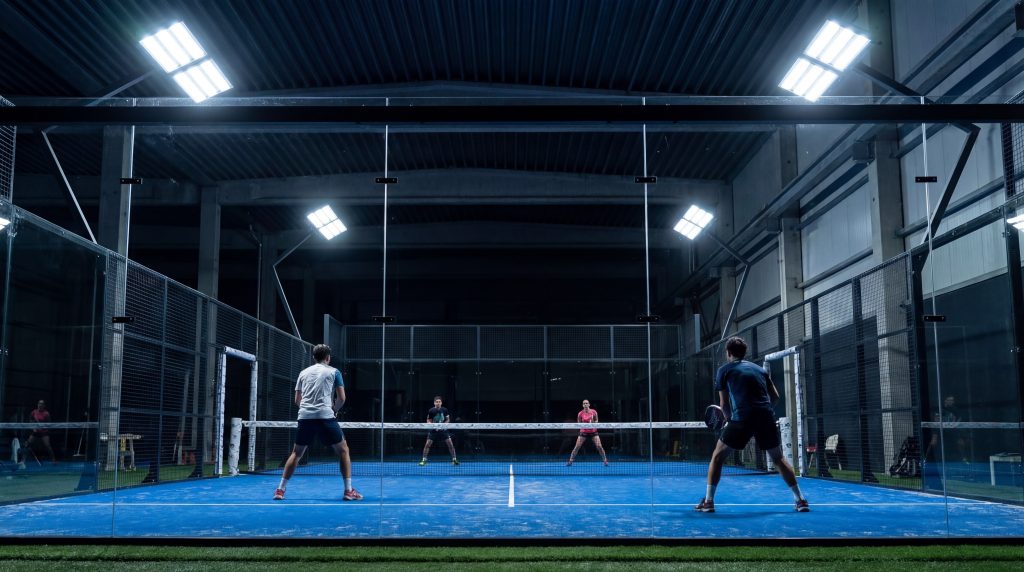
Lighting an indoor padel court requires a minimum of 500 to 750 lux to ensure players can track the ball at high speeds. Because indoor environments lack natural sunlight, the placement of LED floodlights must be precise to avoid glare and shadows. For a professional indoor padel court, you should use eight 200W LED lamps mounted on four specialized poles or integrated into the ceiling structure.
Lux levels and uniformity
Uniformity is more important than raw brightness. You want the light to be even across the entire 200-square-meter surface.
- Class I (Professional): 750 Lux.
- Class II (Regional): 500 Lux.
- Class III (Recreational): 300 Lux.
Avoiding glare
The deal is simple:
If a player looks up for a lob and gets blinded, you have a design flaw. Angle the lights at 15-20 degrees to keep the beam focused on the floor.
Key Takeaway: LED technology provides the best color rendering index (CRI) for high-definition video recording of matches.
| Light Type | Wattage | Lifespan | Lux Target |
|---|---|---|---|
| LED Floodlight | 200W – 400W | 50,000 hrs | 500 – 750 |
| Metal Halide | (Outdated) | 10,000 hrs | 300 – 400 |
Efficient lighting systems reduce monthly utility costs while improving the customer experience.
Is ventilation for an indoor padel court vital?
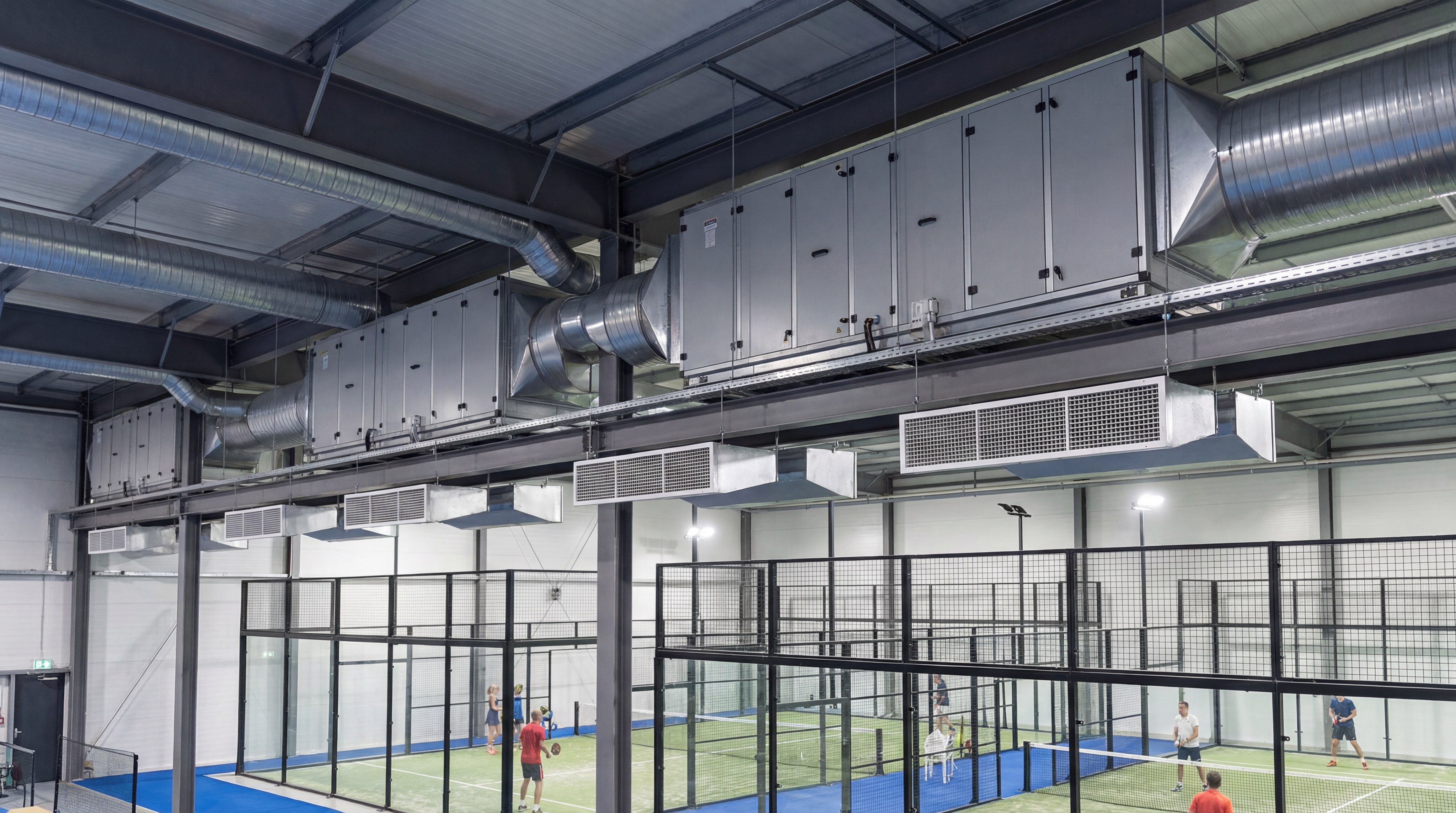
Ventilation is absolutely vital for an indoor padel court to manage humidity levels and prevent the glass walls from fogging up. Without proper airflow, the condensation on the glass makes the ball “skid” instead of bouncing, ruining the game mechanics. An effective indoor padel court climate system ensures that players remain comfortable even during high-intensity summer matches.
Humidity control
High humidity causes the silica sand to clump. This leads to an uneven surface that is difficult to brush and maintain.
- Install industrial fans for air circulation.
- Use dehumidifiers in coastal or tropical climates.
Air exchange rates
Think about it:
Four athletes breathing heavily in an enclosed space will quickly deplete fresh oxygen.
- Aim for 6-8 air changes per hour.
- Use HVAC systems for temperature consistency.
Key Takeaway: A climate-controlled environment allows you to charge premium rates for court bookings.
| System Component | Function | Priority |
|---|---|---|
| Air Extractors | Remove stale air | High |
| Dehumidifiers | Prevent glass fog | Essential |
| HVAC | Temperature control | Medium/High |
| Ceiling Fans | Circulation | Low Cost/Effective |
Proper air management protects your physical assets and keeps players coming back.
How to clean an indoor padel court?
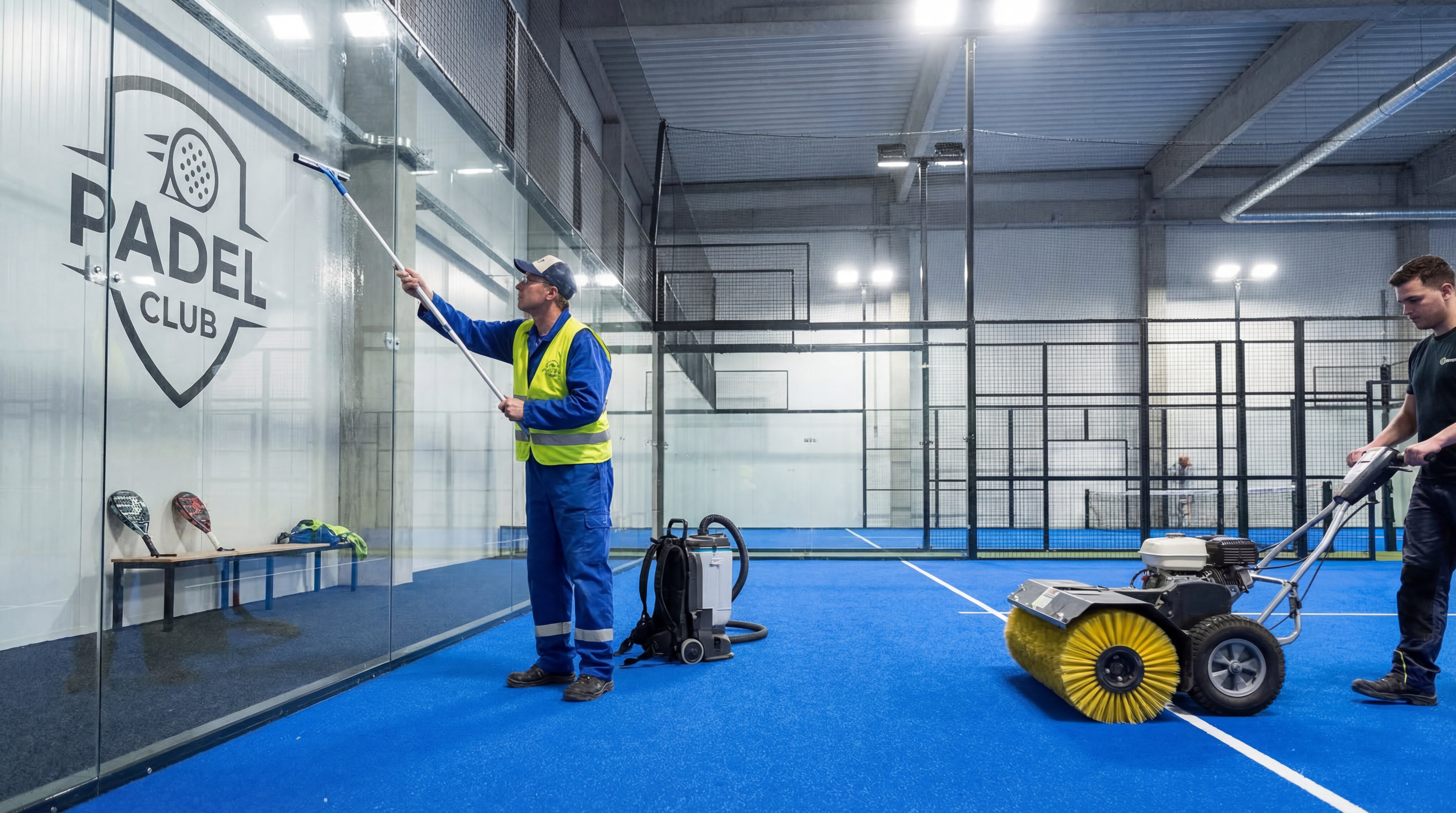
Cleaning an indoor padel court involves a weekly routine of glass polishing and turf brushing to redistribute the silica sand. Because indoor courts are shielded from rain, the sand does not get “washed” and tends to migrate toward the corners. Maintaining your indoor padel court requires specialized brushes that do not damage the synthetic fibers of the grass.
Glass maintenance
Sweat marks and handprints on the glass are inevitable. Use a standard glass cleaner and a squeegee to keep the walls crystal clear for spectators.
- Clean weekly for high-traffic clubs.
- Check for loose bolts in the connections.
Turf brushing techniques
Here is the deal:
If you don’t brush the turf, the fibers will lay flat and wear out twice as fast.
- Brush in multiple directions.
- Focus on the service line area.
- Level out sand mounds.
Key Takeaway: Regular maintenance extends the lifespan of your court from 10 years to over 15 years.
| Task | Frequency | Equipment |
|---|---|---|
| Glass Cleaning | Weekly | Squeegee / Microfiber |
| Turf Brushing | Bi-weekly | Power Brush / Triangle Brush |
| Sand Top-up | Annually | Kiln-dried Silica |
| Bolt Check | Monthly | Allen Wrench Set |
A clean court is the best marketing tool for attracting new club members.
What is the indoor padel court ROI?
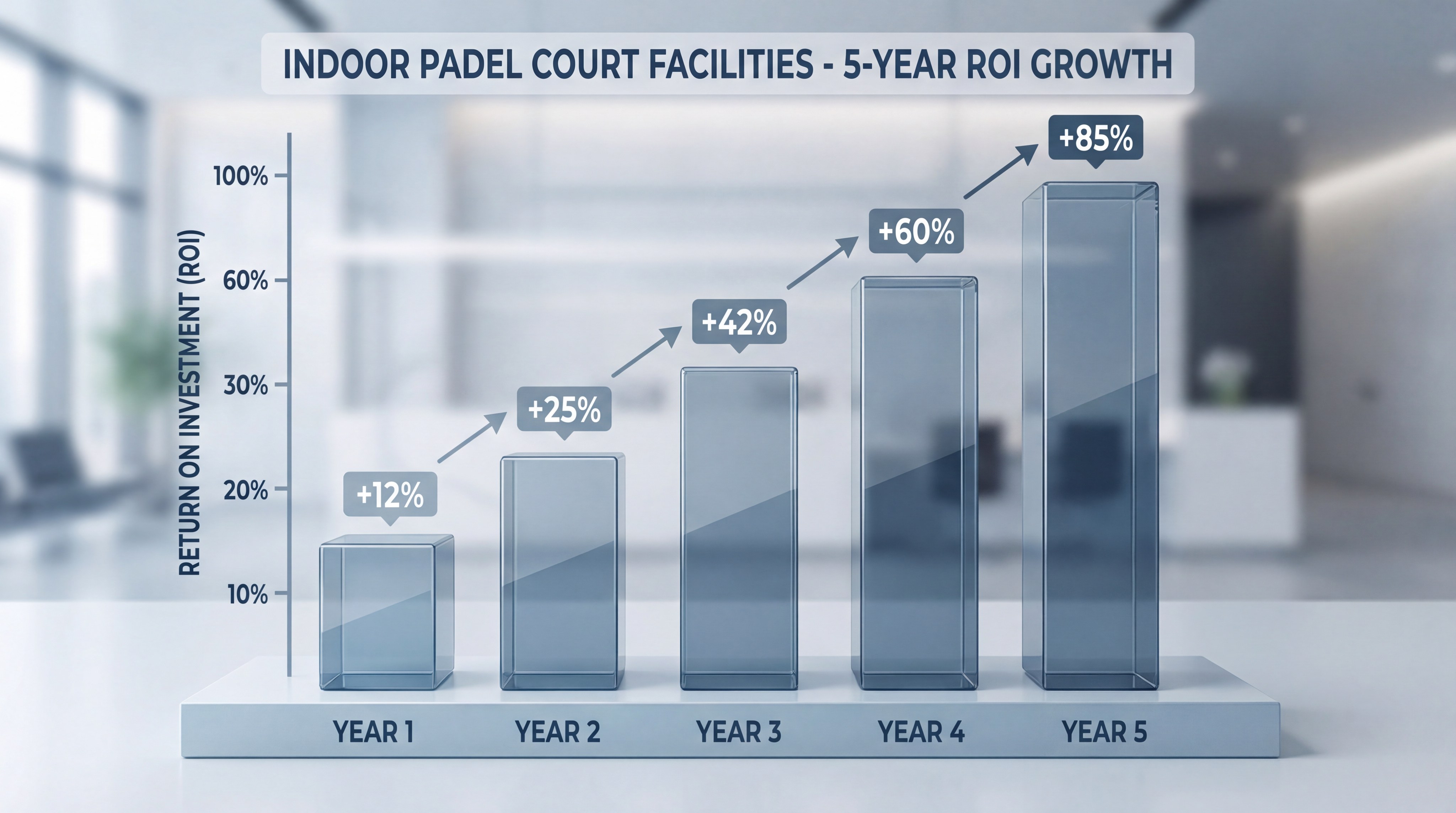
The ROI for an indoor padel court is exceptionally high because the facility can generate revenue 16 to 18 hours a day, regardless of the season. In many European and American markets, a single court can pay for itself within 18 to 24 months. Operating an indoor padel court allows for higher hourly rates during peak winter months when outdoor options are unavailable.
Revenue streams
Don’t just think about court rentals.
- Group clinics and coaching.
- Pro-shop equipment sales.
- Tournament entry fees.
Operating costs
The deal is this:
While the initial investment is higher for indoor facilities, the maintenance costs are lower because the materials are not exposed to the sun or rain.
- Electricity (LED and HVAC).
- Staffing and booking software.
- Cleaning supplies.
Key Takeaway: Indoor courts provide a predictable and scalable business model for sports entrepreneurs.
| Year | Expected ROI | Factor |
|---|---|---|
| Year 1 | 12% – 15% | Brand Building |
| Year 2 | 25% – 30% | Member Retention |
| Year 3 | 40%+ | Full Capacity |
| Year 4 | 60%+ | Ancillary Profits |
The stability of an indoor environment makes it a preferred asset for sports investors.
How to design the indoor padel court ceiling?
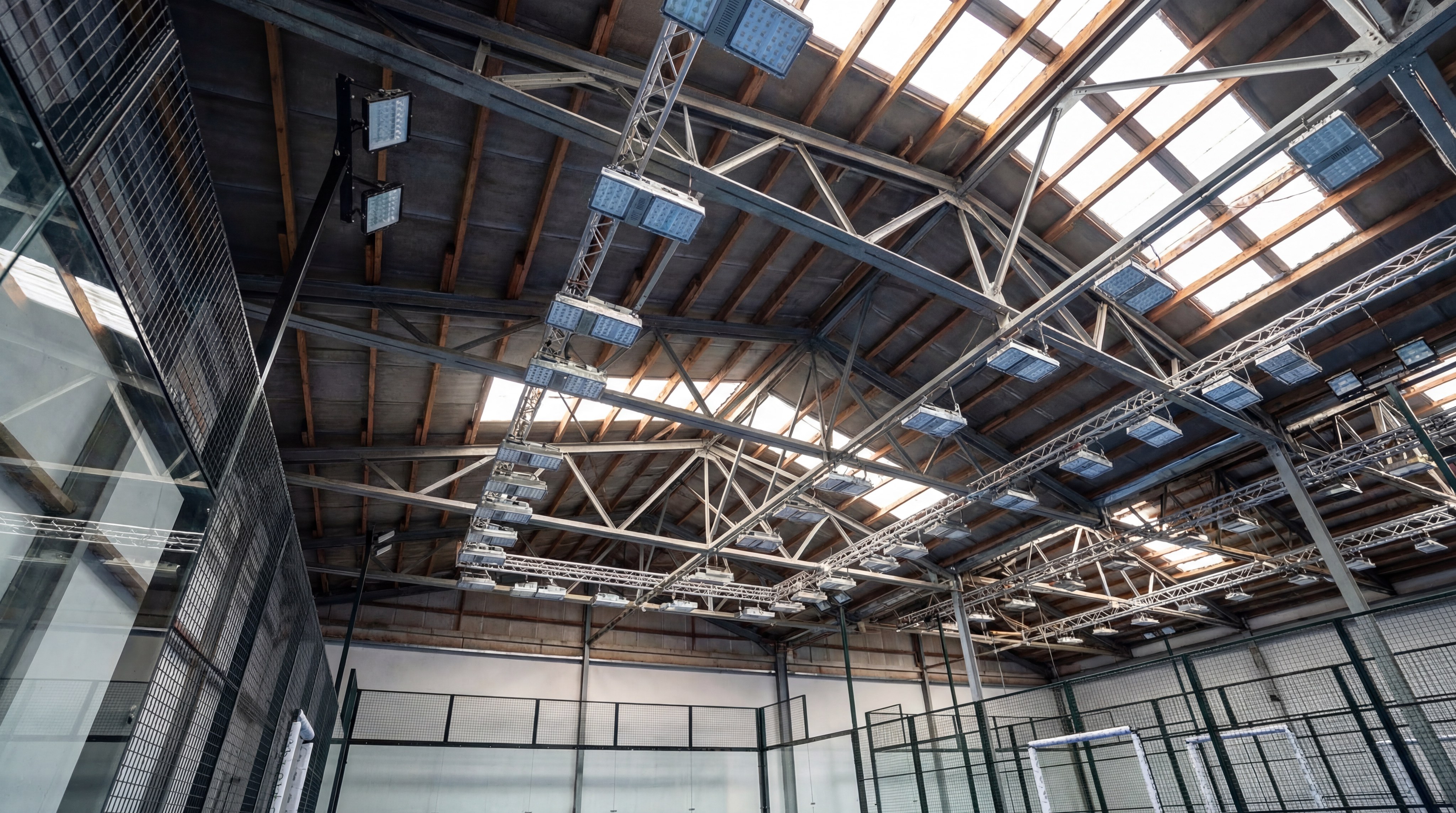
Designing the ceiling for a super panoramic indoor padel court requires a focus on acoustic dampening and non-reflective surfaces. Sound can echo significantly in large metal warehouses, which can be distracting for players. When building your indoor padel court, consider adding acoustic panels to the ceiling to absorb the “pop” of the racket hitting the ball.
Acoustic treatment
Echoing sounds can make a busy club feel chaotic. Acoustic baffles or spray-on insulation can significantly reduce the decibel levels inside the hall.
Non-reflective coatings
But wait, there is more:
The ceiling color affects the visibility of the ball.
- Use dark or neutral matte finishes.
- Avoid glossy white paints that create “hot spots” from the lights.
Key Takeaway: A well-designed ceiling improves both the playability and the social atmosphere of your club.
| Feature | Recommended | Avoid |
|---|---|---|
| Finish | Matte Dark Grey / Blue | Glossy White |
| Material | Acoustic Baffles | Bare Corrugated Metal |
| Lighting | Recessed / Angled | Low-hanging Chandeliers |
| Ventilation | Integrated Ducting | Floor-standing Fans |
Attention to the vertical environment ensures a premium experience for every player.
The transition from a simple sports enthusiast to a successful club owner depends on the quality of your infrastructure. We have solved the challenges of weather dependency, lighting precision, and structural durability through our advanced manufacturing processes. Our team provides turnkey solutions that take you from an empty warehouse to a fully operational, revenue-generating facility. If you are ready to dominate your local market with a professional sports venue, contact us today for a custom quote and design consultation. Let’s build the future of padel together.
FAQ
Can I build an indoor court in a low-ceiling warehouse?
No, you should avoid any space with less than 6 meters of clear height as it fundamentally breaks the game mechanics. Without enough vertical room, players cannot execute lobs, which are a core strategic element of padel.
What is the best lighting for evening play?
LED floodlights are the industry standard because they provide instant brightness and high color accuracy. You should aim for at least 500 lux for recreational play and 750 lux if you plan to host competitive tournaments or record matches.
How often do I need to replace the turf?
The turf usually lasts between 5 and 7 years in a high-traffic indoor facility if properly maintained. Regular brushing and sand redistribution can extend this lifespan significantly by preventing the fibers from flattening.
Is it better to have panoramic or standard glass?
Panoramic glass is superior for professional clubs as it removes the corner pillars, offering an unobstructed view for spectators and cameras. While it carries a slightly higher price point, the aesthetic appeal and spectator experience usually justify the investment.
How do I know if my concrete floor is suitable?
You must ensure the slab is at least 15cm thick and perfectly level across the entire 20×10 meter footprint. Any deviation greater than 3mm over a 3-meter span can lead to glass breakage and uneven ball bounce.