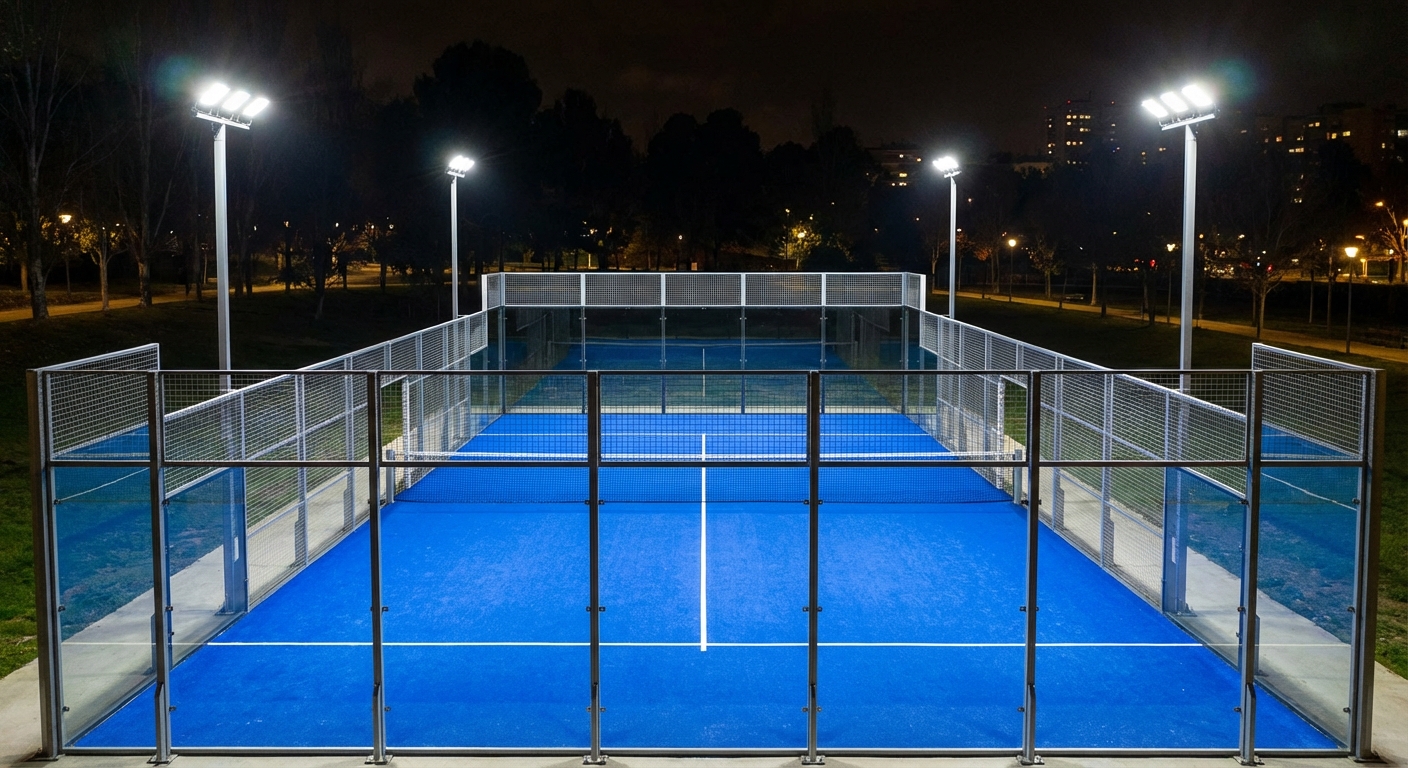
Building a high-quality sports facility is a significant capital investment, yet many projects fail because they overlook the technical nuances of professional specifications. For facility owners and investors, the frustration of uneven turf or poorly installed glass can lead to high maintenance costs and a sub-par player experience. By failing to adhere to international standards, you risk creating an underutilized space that lacks the durability needed for commercial success. This guide provides the expert blueprint for a professional paddel court that maximizes playability and longevity, ensuring your facility becomes a premier destination.
What is the definition of a modern paddel court?
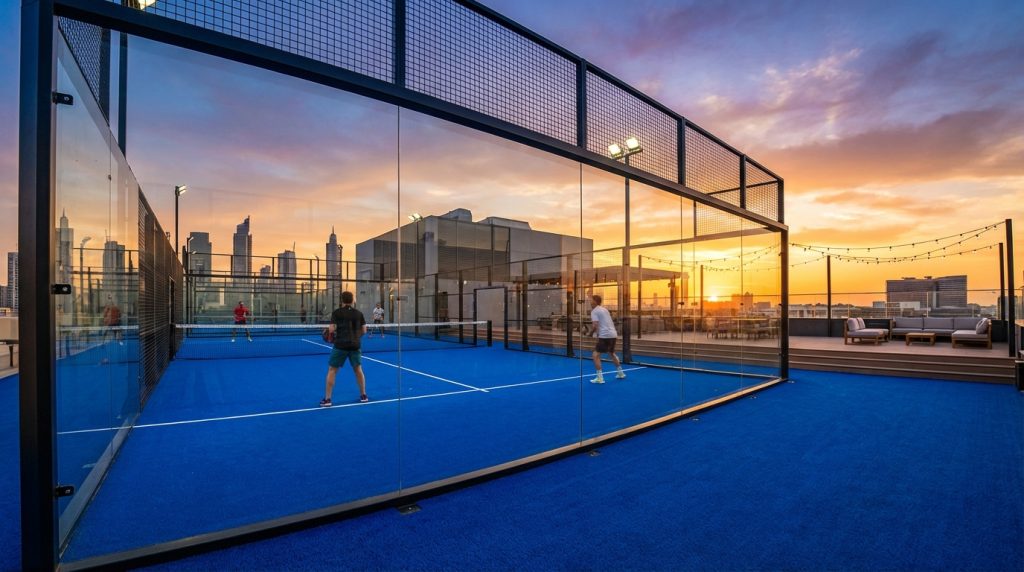
A modern paddel court is defined by its compact, rectangular layout and its high-strength enclosure that acts as an active part of the game. Unlike traditional racket sports, this environment allows the ball to rebound off the perimeter walls, creating a three-dimensional playing experience.
Core structural components and walls
The skeleton of the facility consists of steel pillars and tempered glass panels. These materials must be robust enough to withstand high-velocity impacts while providing transparency for spectators.
- 10mm or 12mm tempered safety glass.
- Electro-welded metallic mesh.
- Structural steel frames with anti-corrosion coating.
The unique social experience of play
Look at this: the smaller footprint fosters a more intimate environment compared to tennis. This makes the game highly accessible for players of all ages and skill levels.
Key Takeaway: A professional court is more than just a surface; it is an engineered environment where the walls are essential to the game’s logic and strategy.
| Feature | Specification |
|---|---|
| Primary Use | Doubles (2 vs 2) |
| Enclosure | Glass & Metal Mesh |
| Environment | Indoor or Outdoor |
Professional design ensures that the rebound dynamics remain consistent across the entire perimeter of the facility.
What is the standard paddel court size?
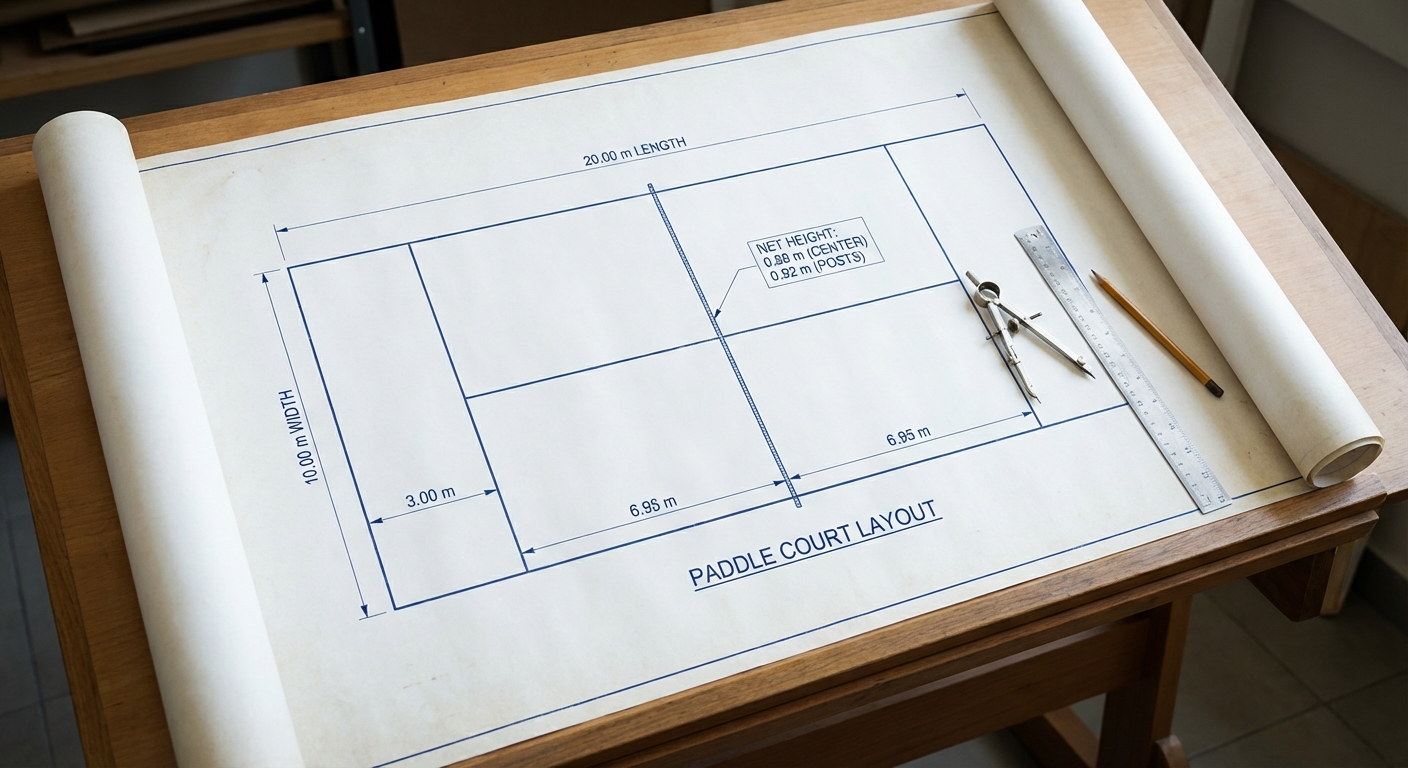
The standard paddel court size is strictly fixed at 10 meters wide by 20 meters long, creating a total playing area of 200 square meters. When you are planning your facility, reviewing the specifications for a Standard Padel Court is essential for accurate ground preparation and zoning.
Precise length and width dimensions
The internal playing area is approximately 25% smaller than a tennis court. This compactness is what drives the agility and speed required during a match.
- Total Width: 10 meters.
- Total Length: 20 meters.
- Tolerance: +/- 0.5%.
Service line and net specifications
The best part? The net height is lower than in tennis, reaching 88cm at the center. Service lines are positioned exactly 6.95 meters from the net to define the legal landing zones for the serve.
Key Takeaway: Adhering to these precise dimensions is critical for player safety and ensuring the facility meets international competitive standards.
| Dimension | Metric Measurement |
|---|---|
| Total Width | 10 Meters |
| Total Length | 20 Meters |
| Net Center Height | 0.88 Meters |
Site planning must account for an additional safety perimeter beyond these core playing dimensions.
How do rules influence the paddel court layout?
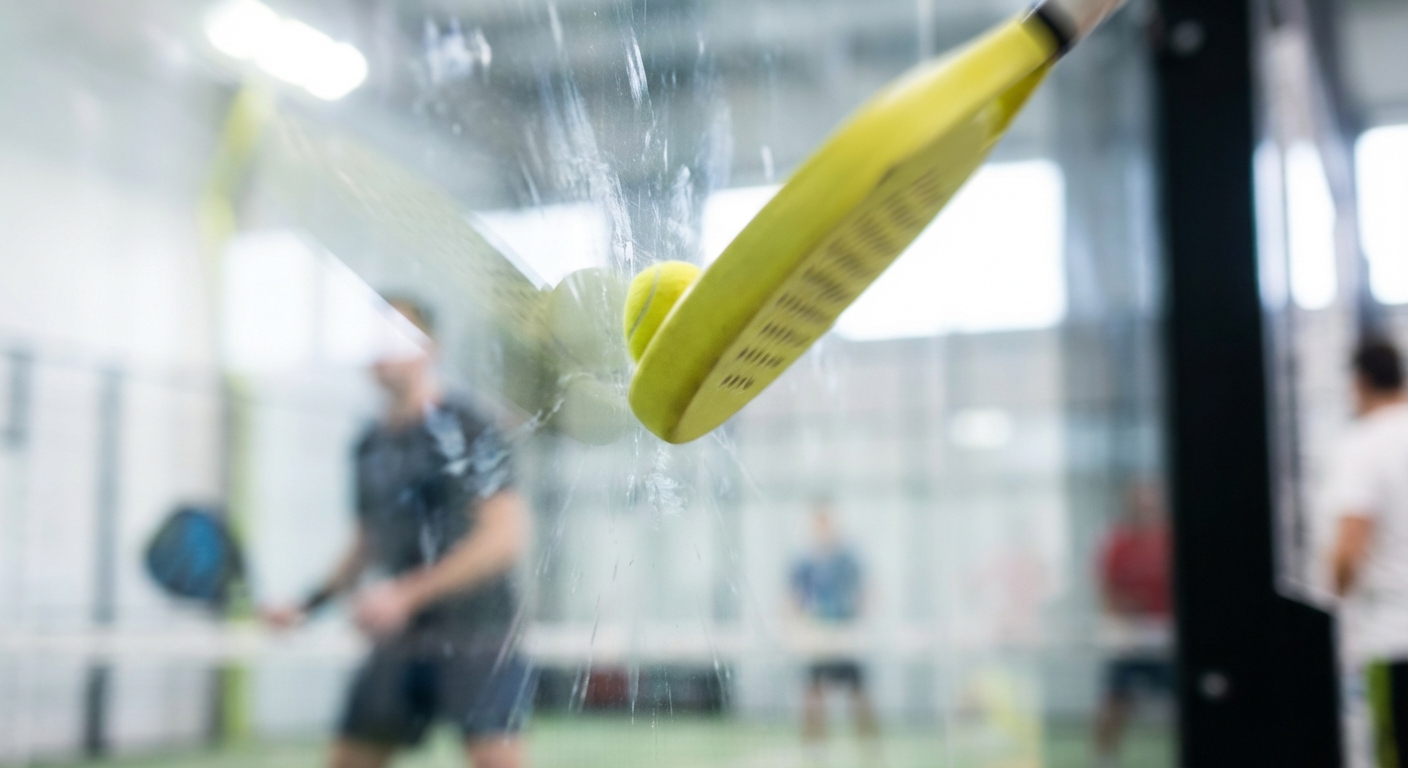
Rules dictate that the paddel court layout must accommodate ball bounces off the surrounding walls after the ball hits the ground. This “rebound” rule is the most critical factor in the engineering of the glass and mesh panels.
Impact of walls on scoring and play
Players can use the glass walls to return the ball, adding a complex layer to the match strategy. This requires the walls to be perfectly plumb and securely fastened to ensure consistent ball behavior.
- Glass provides a predictable, high-speed rebound.
- Mesh creates an unpredictable, slower bounce.
- All enclosure joints must be flush to prevent ball deflection.
Service box requirements and logic
Is the service area different? Yes, it is divided into two halves by a central line, requiring specific markings on the turf. Every serve must land diagonally in the opponent’s box after a waist-level strike.
Key Takeaway: The structural layout is a direct reflection of the game’s mechanics, where the wall materials dictate the speed and style of play.
| Rule Element | Required Layout |
|---|---|
| Rebound Play | Solid 3m high glass walls |
| Service Zones | 5m x 6.95m boxes |
| Line Width | 5cm (White or Yellow) |
Proper wall alignment is the difference between a high-quality club and a facility that players will avoid due to “dead” bounces.
What materials create a durable paddel court?
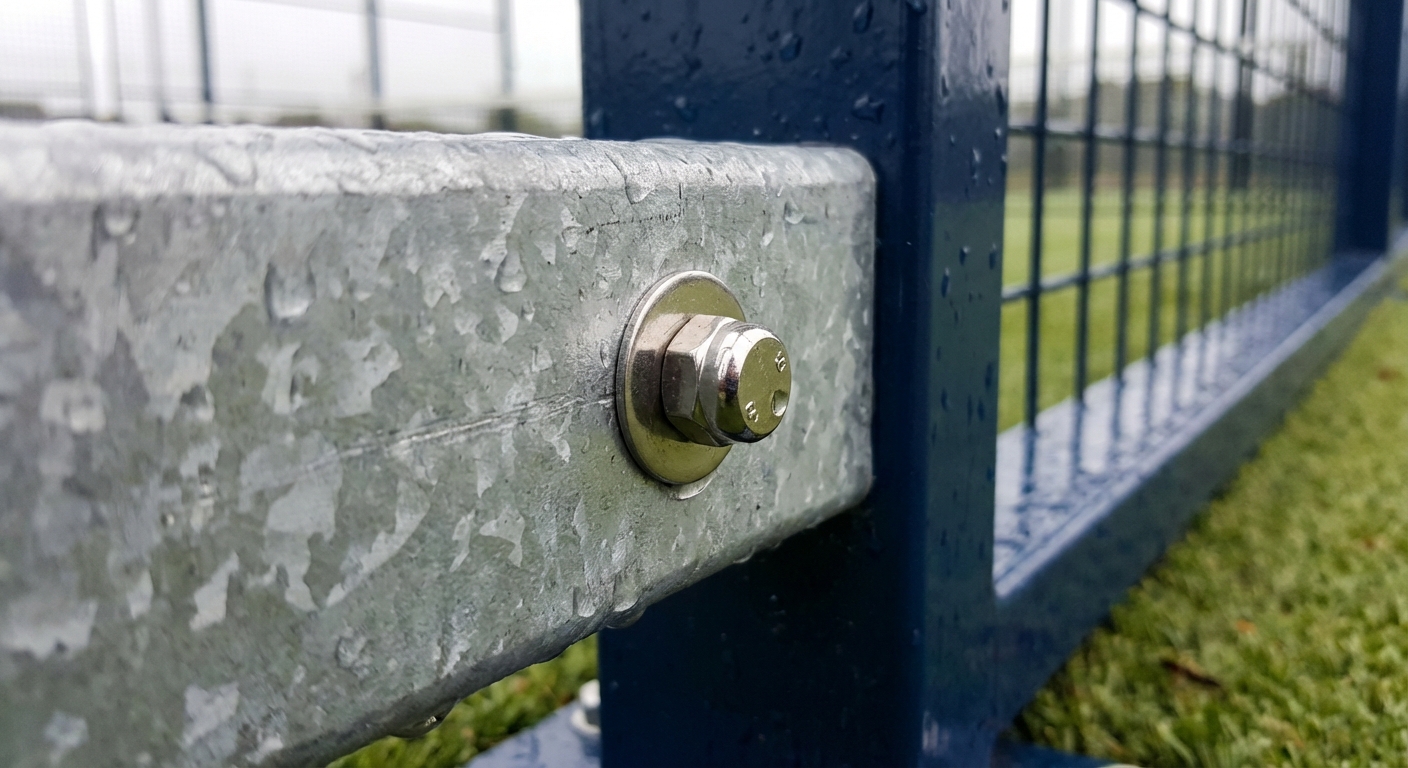
Selecting materials for a paddel court involves choosing high-grade steel and glass that can survive various weather conditions. Utilizing a professional Padel Structure ensures the skeleton of your court has a design life of over 20 years.
Galvanized steel for climate resistance
The frame must be hot-dip galvanized to prevent corrosion, especially in humid or coastal environments. A modular design allows for easier assembly and long-term structural integrity.
- Industrial-grade zinc coating.
- UV-resistant powder finish.
- Stainless steel (A2/A4) fasteners.
Anti-explosion tempered glass panels
Here is why safety is paramount: only 12mm anti-explosion tempered glass should be the industry standard for commercial use. This material provides necessary transparency without compromising the safety of players or spectators.
Key Takeaway: High-quality materials reduce the total cost of ownership by minimizing repairs and ensuring the facility remains safe for public use.
| Material | Quality Standard |
|---|---|
| Frame Steel | Hot-dip Galvanized |
| Glass Type | 12mm Tempered Safety |
| Hardware | Corrosion-resistant Bolts |
Investing in premium steel and glass prevents the structural fatigue often seen in low-cost, non-galvanized alternatives.
How is a panoramic paddel court designed?
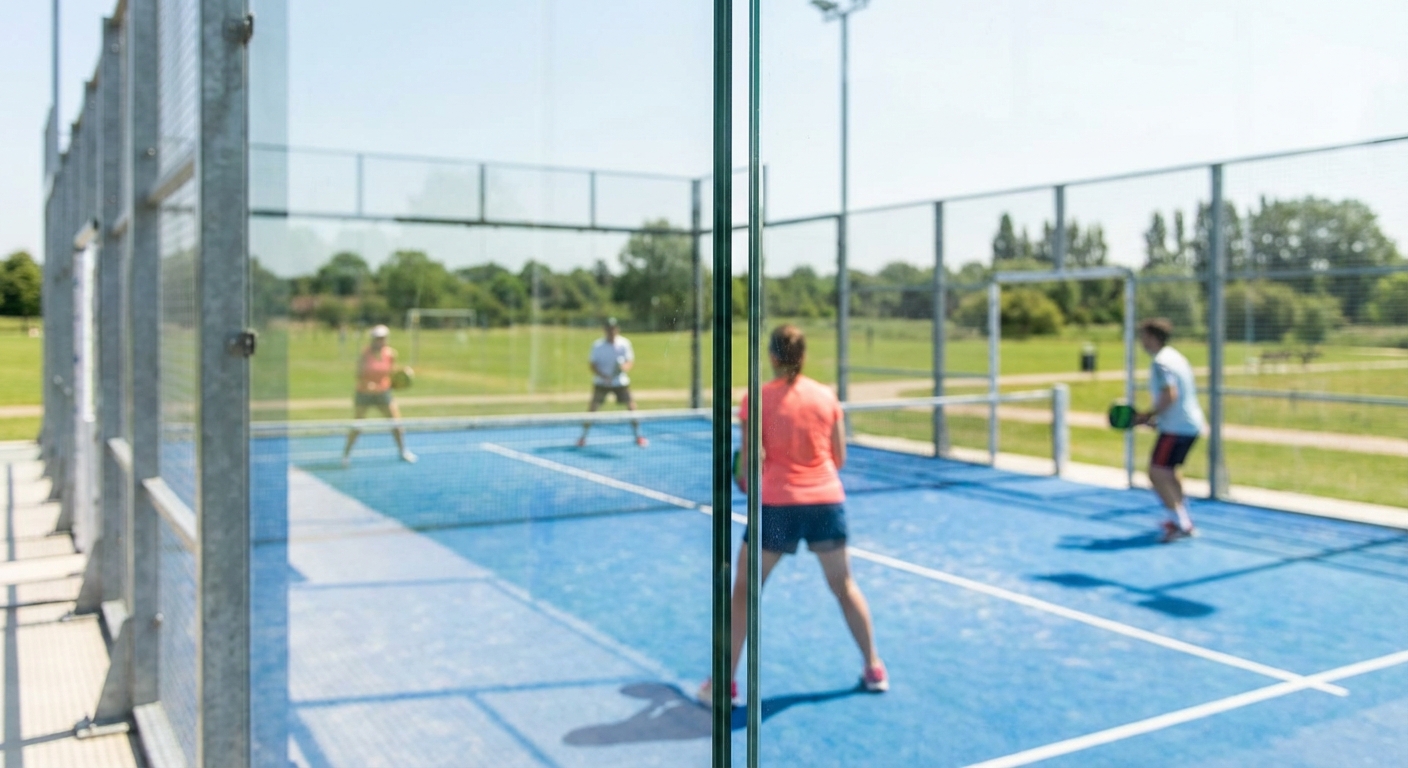
A panoramic paddel court design removes the vertical structural posts from the back walls to provide an uninterrupted view. This aesthetic choice is increasingly popular in high-end clubs and televised tournament settings to enhance the audience experience.
Removing structural posts for clarity
By utilizing thicker glass and reinforced bottom fixings, engineers can eliminate the rear corner pillars. This creates a “goldfish bowl” effect that is visually stunning for live audiences and media broadcasts.
- Seamless glass-to-glass connections.
- Heavy-duty lower support beams.
- Increased structural rigidity in side frames.
Enhancing the spectator viewing experience
The best part? Spectators benefit from a 360-degree view of the action, making the facility more attractive for events. This design typically commands higher rental fees due to its premium, modern appearance.
Key Takeaway: Panoramic designs offer a superior return on investment by positioning your facility as a premium, “pro-tier” venue.
| Design Aspect | Panoramic Benefit |
|---|---|
| Visibility | 100% Unobstructed rear view |
| Aesthetics | Modern, high-end profile |
| Monetization | Higher hourly rental rates |
Structural engineering must be significantly more precise for panoramic models to compensate for the lack of vertical steel supports.
Can you install a roofed paddel court?
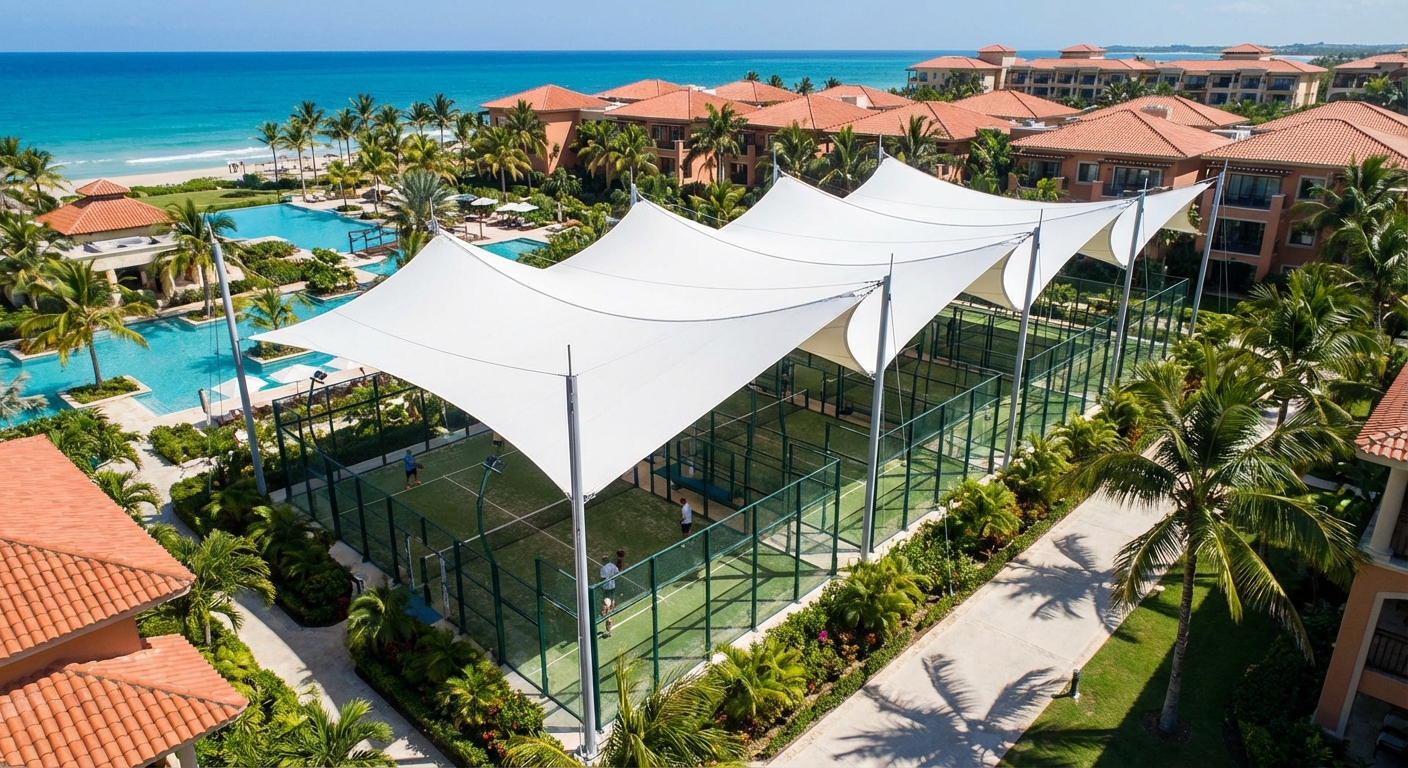
You can certainly install a paddel court with an integrated roofing system to protect players from adverse weather conditions. A Roofed Padel Court allows for consistent revenue generation regardless of rain or intense sunlight.
Protection from rain and sun exposure
A roof extends the life of the artificial turf by shielding it from UV radiation and heavy downpours. It also ensures that matches are never canceled, protecting your booking schedule.
- High-tensile fabric membranes.
- Integrated drainage systems.
- Light-filtering materials for glare reduction.
Year-round revenue and booking potential
Think about this: clubs that offer covered courts often see 30% higher booking rates during the off-season. This investment pays for itself by providing a climate-controlled environment that players actively prefer.
Key Takeaway: Roofing systems transform a seasonal asset into a year-round revenue stream, significantly accelerating your ROI.
| Benefit | Impact |
|---|---|
| Weather Protection | Zero canceled bookings |
| Turf Longevity | Reduced UV degradation |
| Player Comfort | Temperature regulation |
Selecting a roof that integrates with the court structure provides a cleaner look than independent warehouse-style covers.
What lighting is best for a paddel court?
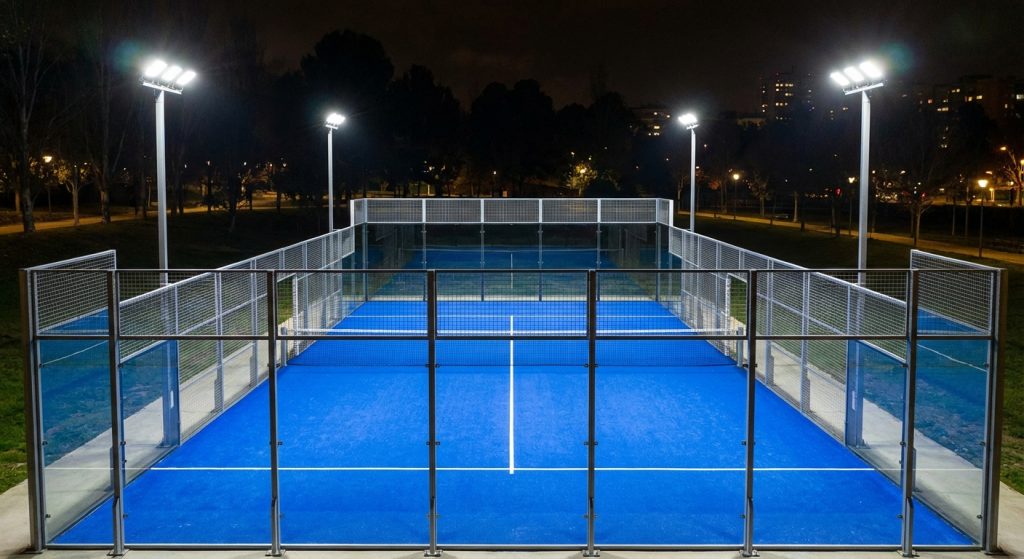
The best lighting for a paddel court consists of eight LED floodlights positioned on four poles to eliminate shadows during night play. High-efficiency LEDs provide the necessary brightness for evening matches while keeping energy costs low.
LED efficiency and waterproof standards
Outdoor courts require IP66-rated lighting to withstand dust and water ingress. Modern LEDs provide instant-on capability and a much longer lifespan than traditional metal halide bulbs.
- High lumen-per-watt efficiency.
- Instant-on / flicker-free tech.
- Modular, easy-replace LED chips.
Achieving uniform light distribution
Uniformity is key. The light must be distributed evenly across the surface so players do not lose the ball in “dead zones” or shadows. Professional setups aim for at least 300 to 500 lux for amateur and pro-tier play.
Key Takeaway: Proper lighting is a safety requirement; poor illumination can lead to player injury and reduced evening booking rates.
| Component | Industry Standard |
|---|---|
| Illumination Level | 300 – 500 Lux |
| Weather Rating | IP66 Waterproof |
| Pole Height | 6 Meters |
LED technology allows for precision optics that keep light on the court and away from neighboring properties.
How is the paddel court surface maintained?
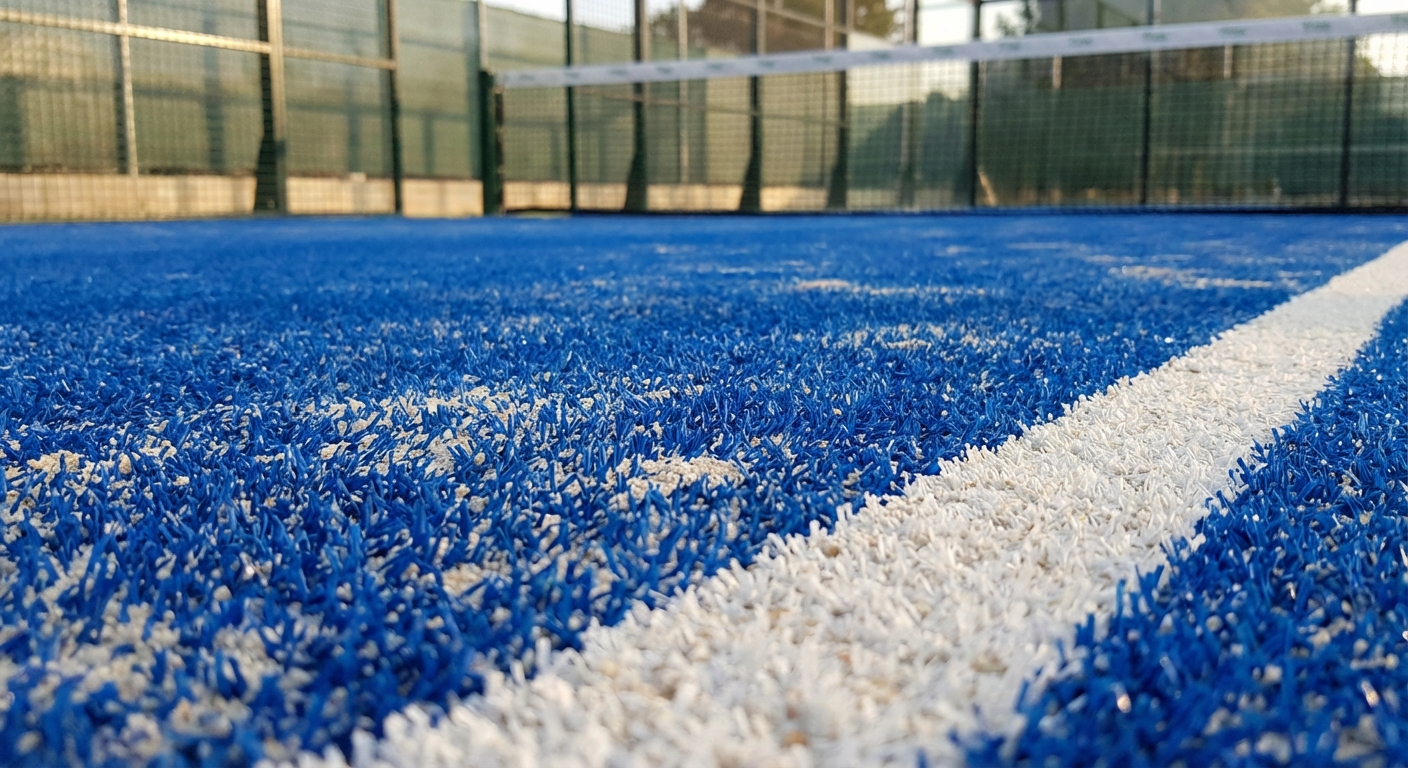
Maintaining a paddel court surface requires regular brushing of the artificial turf to redistribute the sand infill. For the best longevity, installing high-density Padel Grass is essential to withstand heavy daily foot traffic.
Fibrillated turf benefits and wear
Fibrillated or monofilament turfs are designed to hold sand better, providing a consistent ball bounce and preventing player slips. Quality turf should meet European standards for wear resistance and skin friendliness.
- High Dtex for durability.
- UV-stabilized fibers.
- Porous backing for drainage.
Sand infill and brushing requirements
Wait, is sand mandatory? Yes, kiln-dried silica sand is used to keep the turf fibers upright and provide correct friction. Brushing should be performed weekly to prevent the sand from compacting in high-traffic areas near the net.
Key Takeaway: A consistent maintenance schedule prevents “slippery” spots and ensures the court retains its professional play characteristics for years.
| Task | Recommended Frequency |
|---|---|
| Surface Brushing | Weekly |
| Sand Leveling | Monthly |
| Joint Inspection | Quarterly |
Routine care is the most cost-effective way to double the lifespan of your synthetic turf investment.
What is the cost of a private paddel court?
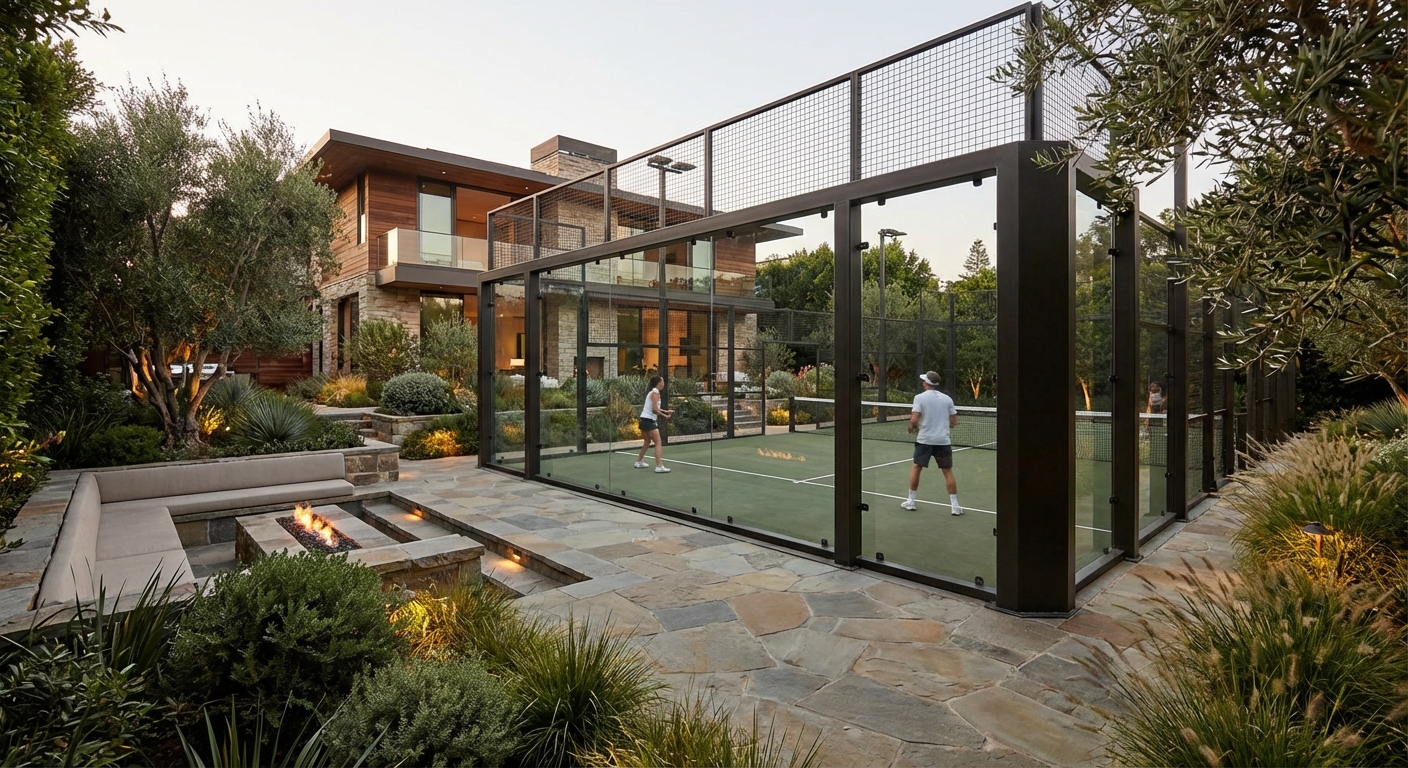
The cost of a private paddel court depends on the choice between standard or panoramic designs and the complexity of the site foundation. While procurement is one factor, site preparation often represents a significant portion of the total budget.
Procurement versus installation costs
Buying direct from a manufacturer can save you up to 30% on the structure itself. However, you must also budget for concrete slab construction, drainage systems, and professional assembly teams.
- Structure and glass procurement.
- Concrete foundation and leveling.
- Shipping and logistics.
Long-term maintenance and asset value
The best part? A well-built court adds significant value to residential or commercial properties. Because the materials are highly durable, the ongoing costs are relatively low compared to swimming pools or other luxury amenities.
Key Takeaway: Strategic procurement—buying direct and managing local civil works—is the most efficient way to control total project costs.
| Budget Factor | Estimated Weight |
|---|---|
| Court Kit | 55% |
| Foundation/Slab | 30% |
| Assembly/Labor | 15% |
Understanding the breakdown of costs allows for better financial planning and risk management during the construction phase.
How do you build a professional paddel court?
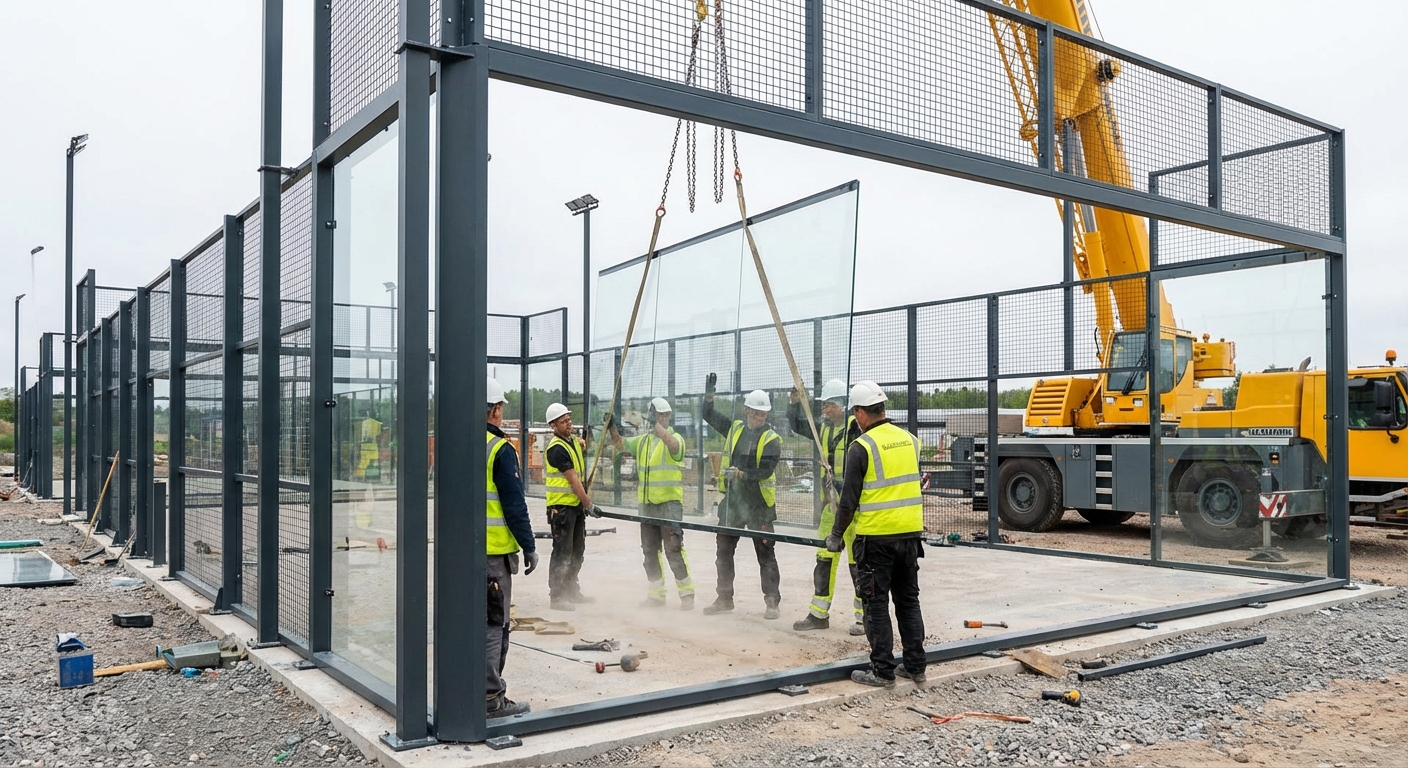
To build a professional paddel court, you must start with a laser-leveled concrete or asphalt foundation to ensure a perfect playing surface. For guidance on the complete engineering process, paddel court consultants can provide detailed structural drawings tailored to your specific site.
Foundation, drainage, and slope
The base must have a slight slope (usually 0.5% to 1.0%) for outdoor courts to allow for efficient water drainage. Any imperfections in the slab will be amplified once the turf and glass are installed.
- 15cm reinforced concrete slab.
- Perimeter ring beam for anchoring.
- Integrated drainage channels.
Final assembly and quality testing
Assembly involves securing the steel pillars with chemical anchors before installing the glass and turf. A final inspection ensures that all glass gaskets are tight and the net tension meets international competitive standards.
Key Takeaway: Professional installation is non-negotiable; structural failures in glass or anchoring can lead to catastrophic liability issues.
| Construction Phase | Critical Check |
|---|---|
| Leveling | +/- 3mm tolerance |
| Anchoring | M12/M16 Chemical Bolts |
| Glass Fitting | Uniform gasket compression |
Each stage of construction requires precise alignment to ensure the enclosure functions as a single, cohesive unit.
*
Conclusion
Building a professional sports facility requires a deep understanding of technical specifications and material quality. By choosing high-grade components and adhering to international standards, you ensure a durable, safe, and profitable asset. We are the leading manufacturer of factory-direct courts, helping you maximize your investment through superior engineering and competitive pricing. To begin your journey toward owning a world-class facility, contact us today for a comprehensive consultation.
Frequently Asked Questions
- Can I install a court on an existing tennis court surface if the dimensions are adjusted?
- What’s the best glass thickness for a high-traffic commercial club in a windy area?
- Can I customize the color of the steel structure to match my venue’s branding?
- What’s the best way to maintain the turf in a rainy or tropical climate?
- Can I build a court without a concrete foundation if using a temporary modular base?