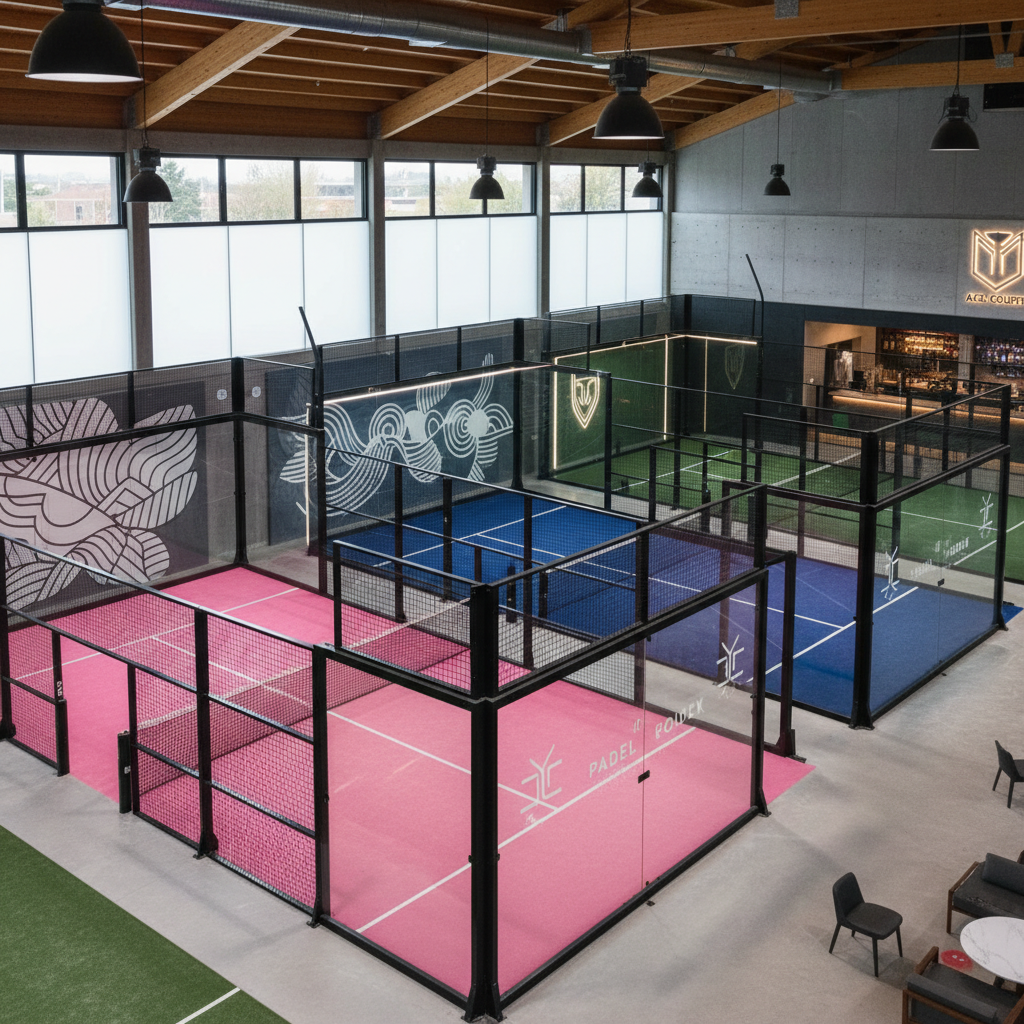
A padel indoor facility is a professional sports venue consisting of 20×10 meter courts enclosed within a high-clearance building, which you can build by optimizing structural frameworks, lighting, and climate control systems. Many sports club owners face the recurring nightmare of seasonal revenue drops when rain or winter cold halts outdoor play. This inconsistency doesn’t just hurt your bottom line; it frustrates your members and drives them toward competitors who offer year-round availability. By choosing to invest in a padel indoor project with the experts at https://superbpadel.com/, you eliminate weather-related risks and provide a premium, controlled environment that keeps your courts booked 365 days a year.
Why is the future of sport tied to padel indoor?
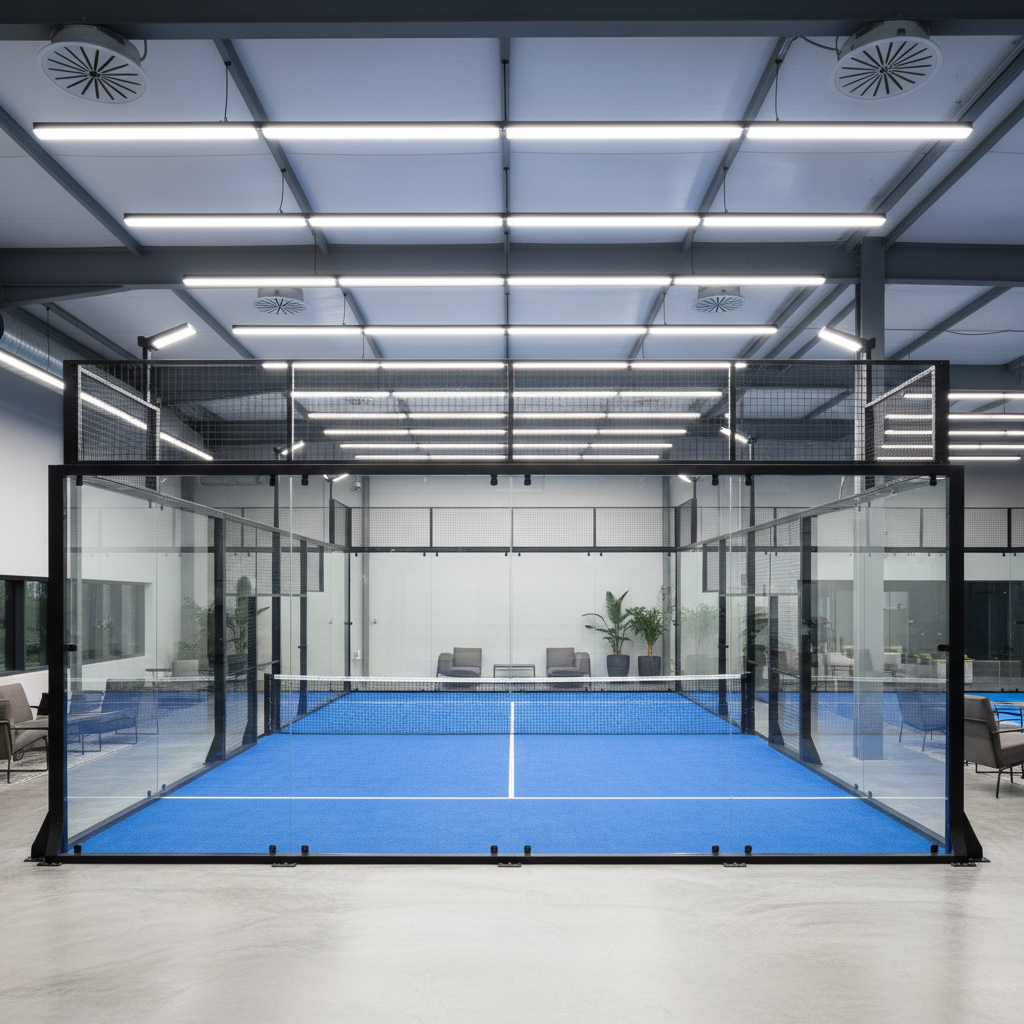
The future of the sport is leaning toward padel indoor because it offers players the most consistent experience regardless of the external environment. As the game grows globally, professional standards are shifting toward venues that can host televised tournaments without wind or sun glare interference. You will find that these facilities are becoming the gold standard for high-end urban sports centers.
The rise of year-round playability
Modern players demand the ability to schedule matches weeks in advance without checking the weather forecast. Indoor facilities solve this by providing a reliable sanctuary for the community.
- Total protection from rain, snow, and extreme heat.
- Consistent ball rebound and court speed.
- Enhanced socialization opportunities in lounge areas.
And that’s not all… the shift toward indoor play is also driven by the desire for better acoustic and atmospheric control that outdoor settings simply cannot provide.
Key Takeaway: Transitioning to an indoor model ensures your business remains operational and profitable every single day of the year.
| Feature | Outdoor Impact | Indoor Advantage |
|---|---|---|
| Weather Reliability | High Risk | Zero Risk |
| Playing Hours | Limited by light/rain | 24/7 Availability |
| Revenue Stream | Seasonal | Constant |
The table above illustrates how shifting to an indoor model effectively stabilizes your operational performance.
How does padel indoor boost your club revenue?
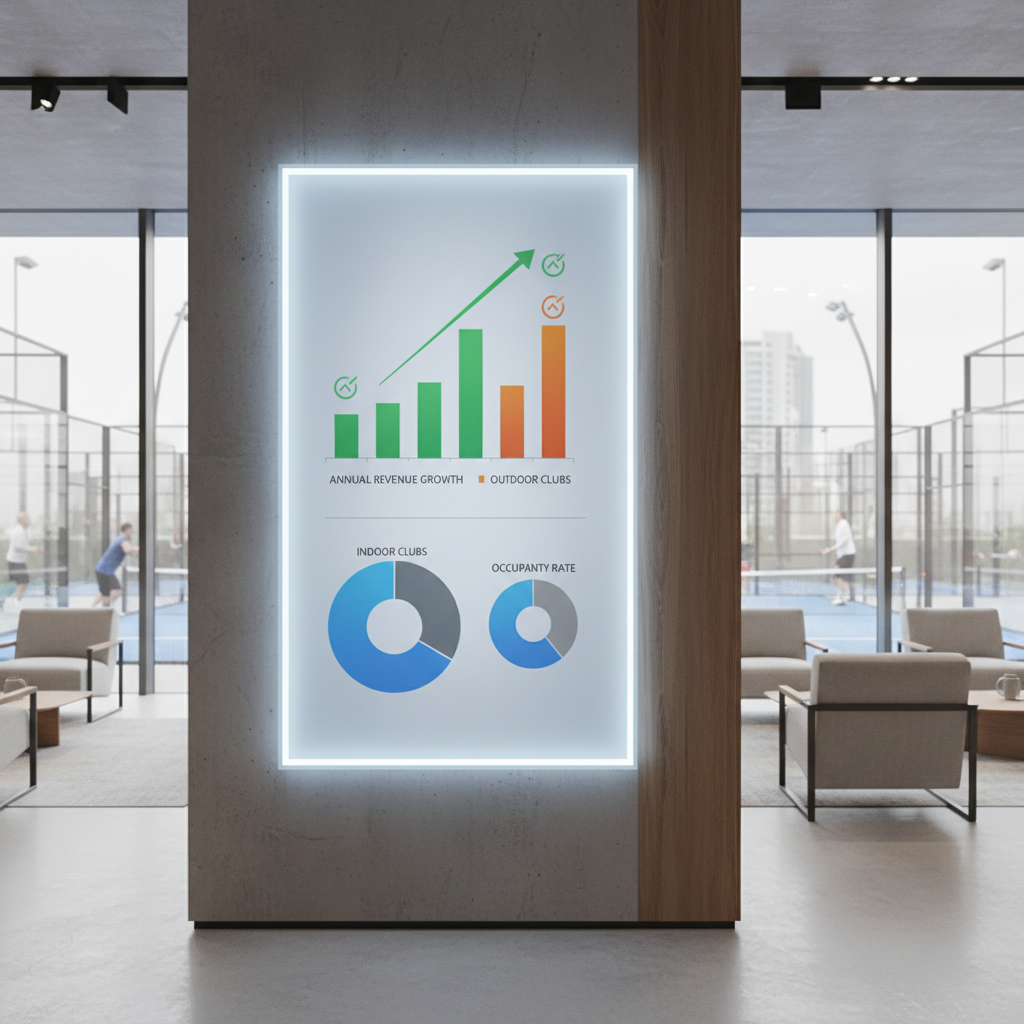
Investing in a padel indoor facility boosts your revenue by maximizing court occupancy rates during peak evening hours and traditionally “off-season” months. While outdoor courts might sit empty during a winter storm, your indoor courts will be the only option in town, allowing you to command premium booking fees. You can learn more about how specialized manufacturers support this growth on our about page.
Maximizing member retention rates
Members are more likely to commit to long-term memberships if they know their playing schedule is guaranteed. This stability allows you to build a loyal community that grows through word-of-mouth.
- Higher conversion from guest players to members.
- Increased secondary spending at pro-shops and cafes.
- Opportunity to host evening leagues with perfect lighting.
But wait, there’s more to the financial story than just booking fees; indoor environments also reduce the long-term wear on your equipment.
Key Takeaway: Financial stability in the sports industry depends on removing variables, and indoor play is the ultimate variable-killer for revenue.
| Revenue Driver | Outdoor Club | Indoor Club |
|---|---|---|
| Occupancy Rate | 45-60% | 85-95% |
| Membership Price | Standard | Premium |
| Evening Bookings | Weather Dependent | Guaranteed |
This comparison highlights why investors are increasingly favoring the high-occupancy model of enclosed sports centers.
What ceiling height is required for padel indoor?
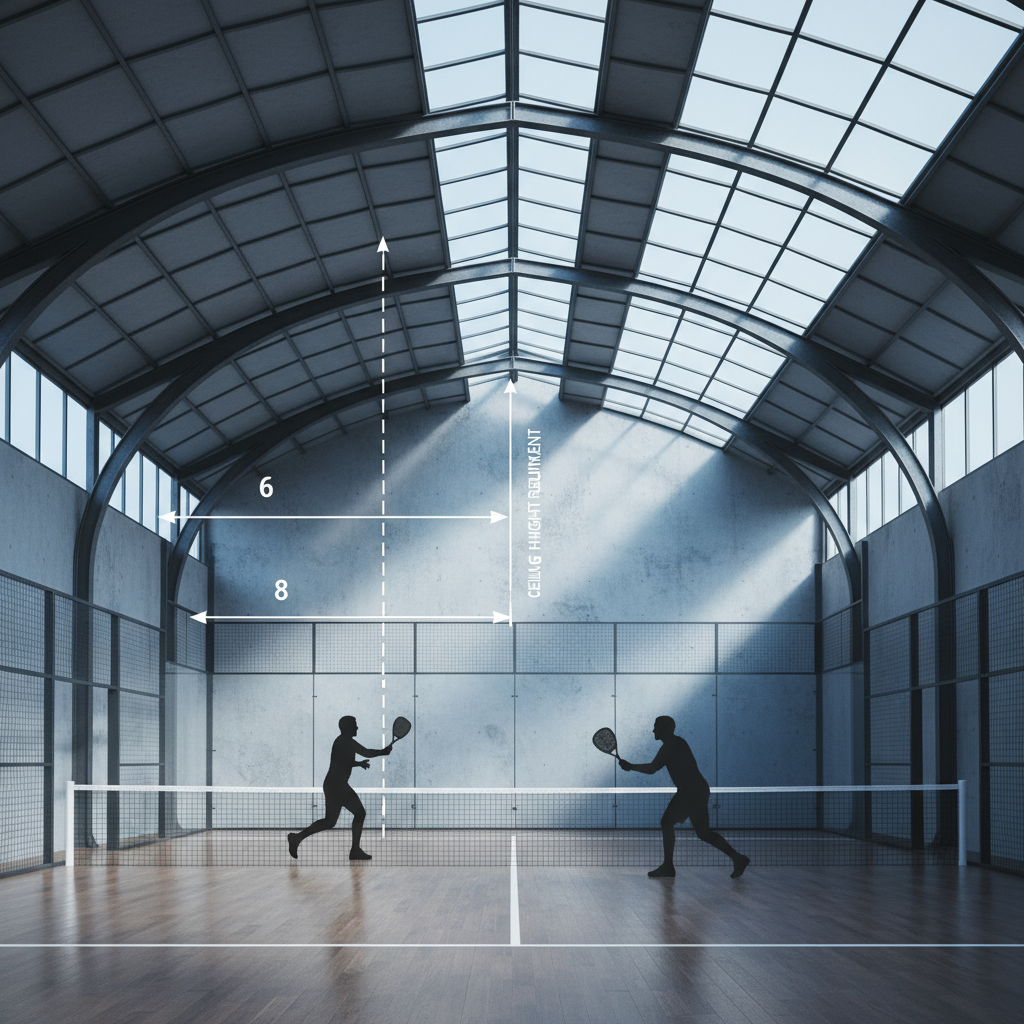
For a professional padel indoor installation, the International Padel Federation (IPF) requires a minimum clear height of 6 meters, though 8 meters is highly recommended. This clearance is vital because the “lob” is a fundamental tactical shot in padel. If the ceiling is too low, players cannot execute high lobs, which fundamentally breaks the game’s mechanics.
Engineering for vertical space
When you are scouting a warehouse or designing a new structure, you must account for HVAC ducts and lighting fixtures that might hang below the roofline. Our specialized padel structure solutions are designed to fit seamlessly within these height constraints.
- Minimum height: 6 meters for recreational play.
- Preferred height: 8-10 meters for professional standards.
- Clear zones: No pillars or obstructions within the 20×10 area.
But wait, there’s more… you must also consider the height of the perimeter glass walls, which usually stand at 3 to 4 meters.
Key Takeaway: Always prioritize ceiling height during the site selection phase to avoid building a court that professional players will find frustrating.
| Padel Play Level | Minimum Height | Recommended Height |
|---|---|---|
| Recreational | 6 Meters | 7 Meters |
| Professional | 8 Meters | 9+ Meters |
| Tournament | 9 Meters | 12 Meters |
As the data shows, the quality of play scales directly with the available vertical clearance of your facility.
Which lighting is best for your padel indoor venue?
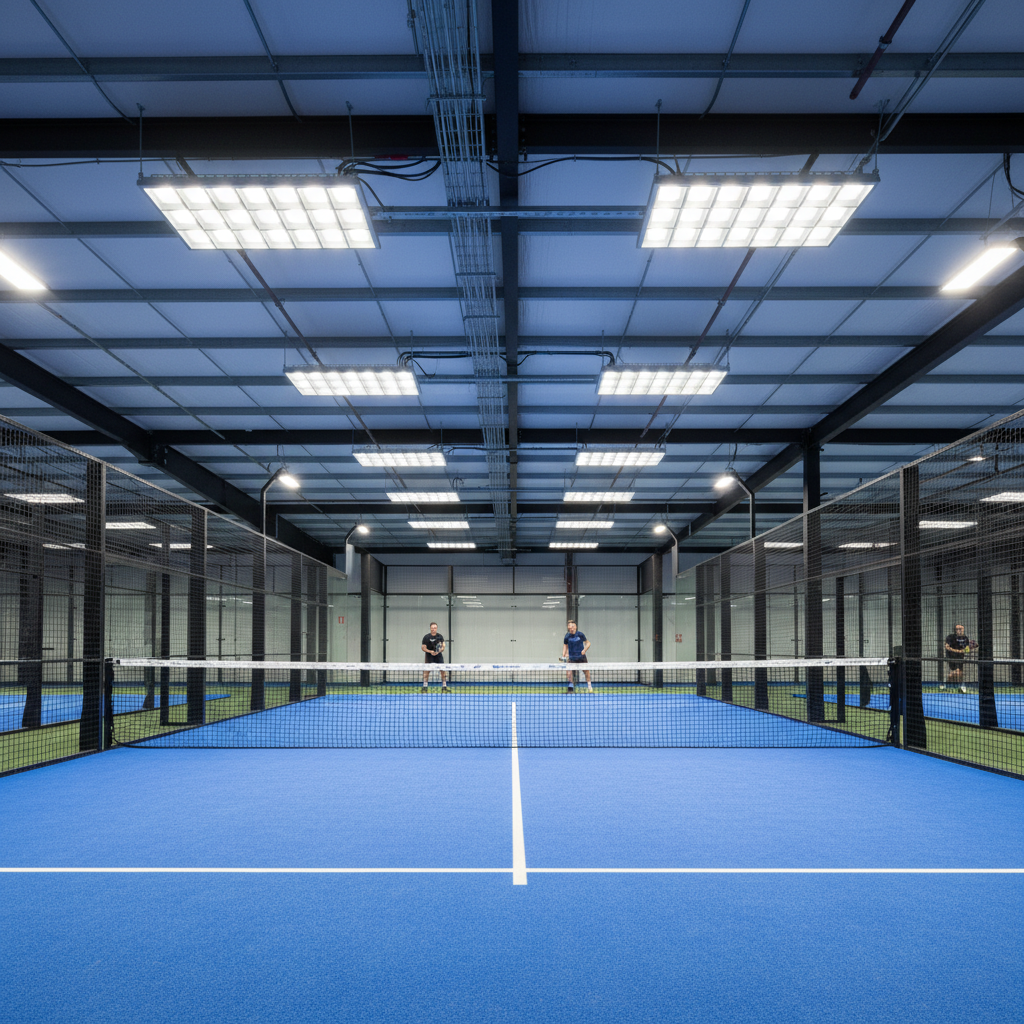
The best lighting for your padel indoor club is a high-efficiency LED floodlight system that provides at least 500 to 750 lux across the entire court surface. Proper illumination must be uniform to prevent “dark spots” that hide the ball during fast-paced volleys. You need to ensure that the fixtures are positioned outside the player’s direct line of sight to eliminate blinding glare during overhead smashes.
Optimizing lux levels and efficiency
Modern LED systems are the preferred choice because they offer instant-on capabilities and significantly lower energy consumption than traditional metal halide lamps. This reduces your operational overhead while providing better light quality.
- 500 Lux: Minimum for standard club play.
- 1000 Lux: Standard for televised professional matches.
- IP67 Rating: Ensures longevity in humid indoor environments.
And that’s not all… smart lighting controls allow you to dim courts that aren’t in use, further saving on your monthly utility bills.
Key Takeaway: High-quality LED lighting is an investment in both player safety and your club’s monthly profit margins.
| Lighting Type | Energy Use | Lifespan (Hours) | Light Quality |
|---|---|---|---|
| Traditional Halide | High | 5,000 – 10,000 | Fades over time |
| Modern LED | Low | 50,000+ | Consistent & Crisp |
Choosing the right technology ensures your venue looks as professional as the gameplay it hosts.
Is ventilation critical for a padel indoor club?
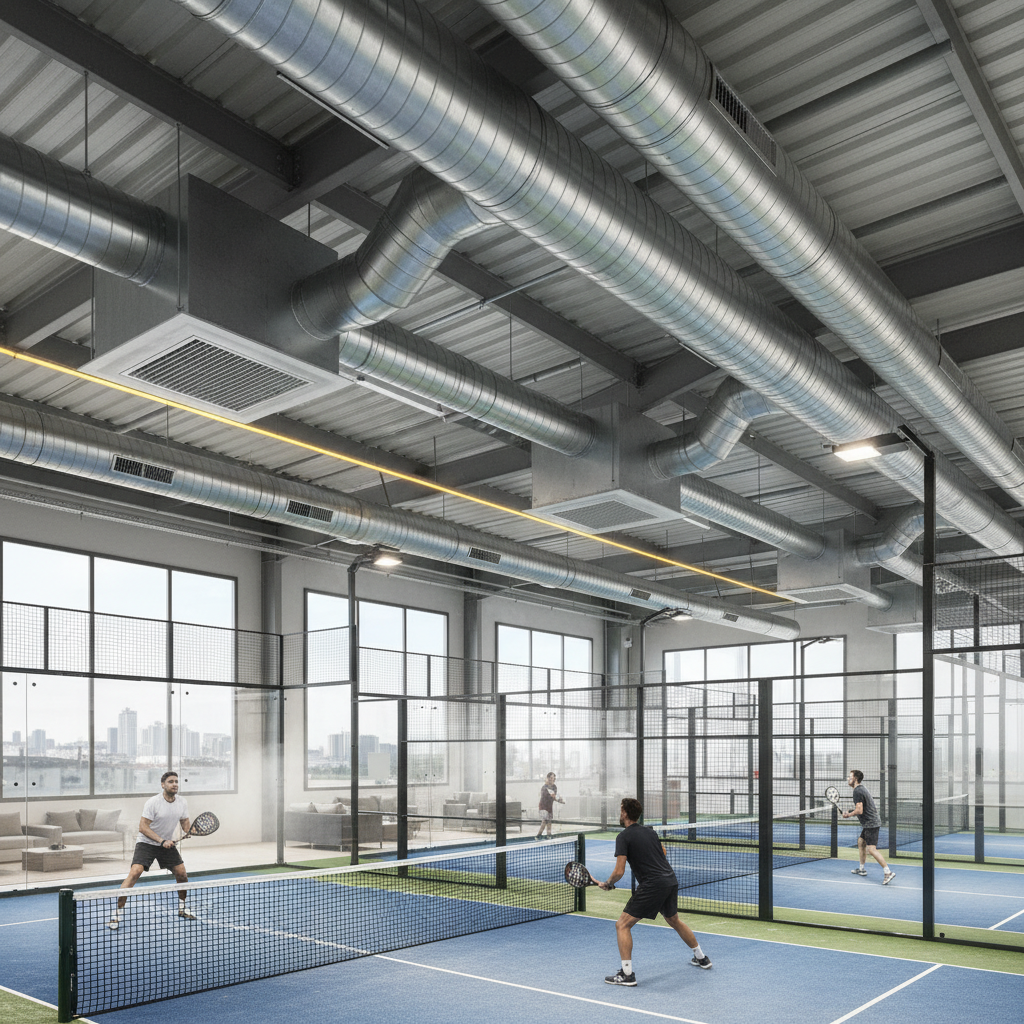
Ventilation is absolutely critical for any padel indoor facility to manage humidity levels and ensure player comfort during high-intensity matches. Without proper airflow, the glass walls of the court can “sweat” due to condensation, making the ball slide unpredictably off the surface. You should look into integrated solutions like a roofed padel court design if you are looking for semi-covered options with natural airflow.
Managing humidity and air quality
When four players are running in a confined space, they generate significant heat and moisture. A robust HVAC system or high-volume low-speed (HVLS) fans are necessary to keep the environment fresh.
- Prevents condensation on glass walls for consistent play.
- Reduces the build-up of CO2 and odors in the club.
- Keeps the synthetic turf dry and safe for movement.
But wait, there’s more… proper ventilation also protects your structural steel from the corrosive effects of trapped moisture.
Key Takeaway: A well-ventilated court isn’t just a luxury; it’s a technical requirement for maintaining the performance of the court’s glass and turf.
| Ventilation Method | Cost | Efficiency | Best For |
|---|---|---|---|
| Natural Airflow | Low | Medium | Semi-Indoor / Roofed |
| HVLS Fans | Medium | High | Large Warehouses |
| Full HVAC | High | Maximum | Luxury/Extreme Climates |
Selecting the right airflow strategy depends on your local climate and the total volume of your building.
What flooring layers define a padel indoor court?
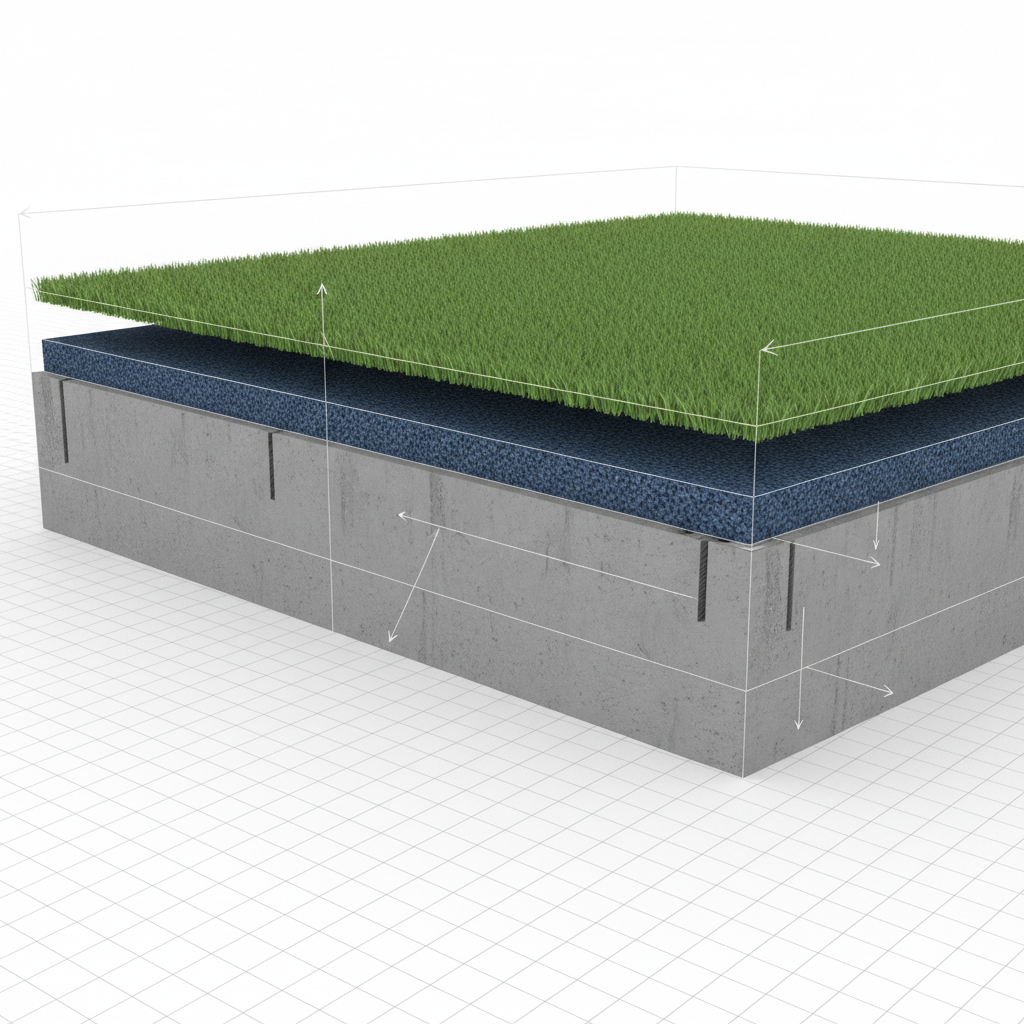
The flooring for a padel indoor court consists of three primary layers: a reinforced concrete sub-base, a high-density synthetic turf, and a layer of kiln-dried silica sand. The sub-base must be perfectly level—typically within a 3mm tolerance over 3 meters—to ensure that the ball bounces truly. You can explore the various textures of padel grass to find the right balance between player grip and ball speed.
Selecting the right synthetic turf
Indoor courts often favor monofilament textured turf because it holds the sand in place better and requires less frequent brushing than fibrillated options. This is especially important in indoor settings where there is no rain to help settle the infill.
- Monofilament: Better durability and professional aesthetics.
- Textured fibers: Reduces “sand splash” and improves grip.
- Sub-base: Must be 15-20cm of reinforced concrete for stability.
And that’s not all… the lack of UV exposure means your indoor turf will retain its color and elasticity for much longer than an outdoor installation.
Key Takeaway: The secret to a world-class indoor court lies in the precision of the concrete sub-base and the quality of the turf fibers.
| Layer | Material | Function |
|---|---|---|
| Top Layer | Silica Sand | Ball bounce & Player slide |
| Middle Layer | Synthetic Turf | Traction & Shock absorption |
| Base Layer | Reinforced Concrete | Structural Levelness |
This multi-layered approach provides the necessary shock absorption to protect players’ joints during long matches.
Can you improve acoustics in a padel indoor space?
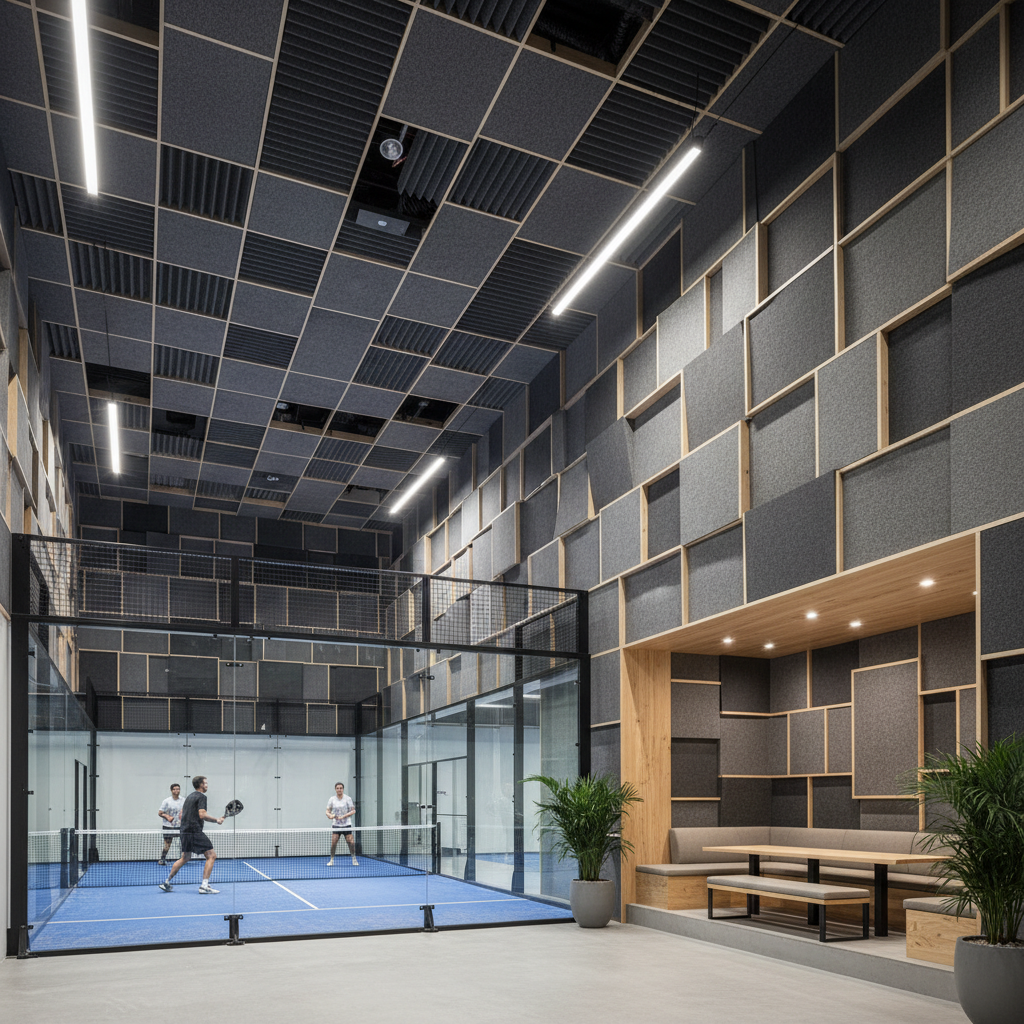
You can significantly improve the acoustics of a padel indoor space by installing sound-absorbing panels and choosing high-quality materials that minimize the “echo” of the ball hitting the glass. Large industrial warehouses are notorious for being loud, which can be distracting for players trying to communicate with their partners. Implementing acoustic treatments makes your facility feel more premium and comfortable for extended stays.
Reducing the noise floor
The sound of a padel racket hitting the ball is sharp and percussive. In an untreated space, this noise bounces off the hard glass and steel surfaces, creating a chaotic auditory environment.
- Wall-mounted acoustic baffles to soak up mid-range frequencies.
- Ceiling-hung “clouds” to prevent sound from bouncing off the roof.
- Rubberized floorings in the walkways to dampen foot traffic noise.
But wait, there’s more… good acoustics also allow your club’s background music and announcements to be heard clearly without turning up the volume.
Key Takeaway: Investing in acoustic treatment transforms a “echoey warehouse” into a professional sports club that players will enjoy visiting.
| Treatment Type | Effectiveness | Complexity | Primary Benefit |
|---|---|---|---|
| Acoustic Panels | High | Low | Sound absorption |
| Fabric Wall Covers | Medium | Medium | Aesthetic & Softening |
| Baffle Systems | High | High | Vertical sound control |
Acoustics are often the “hidden” factor that determines whether a member chooses your club over another.
How do construction costs for padel indoor break down?

Construction costs for a padel indoor project typically include the court kit, sub-base preparation, lighting installation, and internal facility amenities like locker rooms. While the court itself is a fixed cost, your budget will vary based on the state of the existing building and the level of customization you choose. For those on a tighter budget, starting with a standard padel court is often the most cost-effective way to launch.
Budgeting for long-term ROI
When calculating your budget, you should view the initial installation cost as a capital investment that pays for itself through increased uptime. Unlike outdoor courts, indoor maintenance costs are lower, which improves your long-term profit margins.
- Court Kit: Steel frame, glass, and turf.
- Civil Works: Concrete slab and electrical wiring.
- Amenities: Changing rooms, lounge, and bar area.
And that’s not all… choosing high-quality galvanized steel structures saves you money on rust prevention and repairs down the line.
Key Takeaway: Focus your budget on the core playing surface and structural integrity to ensure a long-lasting and safe facility.
| Cost Category | Budget Allocation | Priority |
|---|---|---|
| Steel & Glass Structure | 40% | High |
| Sub-base & Turf | 30% | High |
| Lighting & Electrical | 15% | Medium |
| Amenities/Branding | 15% | Variable |
Breaking down the costs allows you to allocate funds where they impact the player experience the most.
What maintenance keeps a padel indoor court pristine?
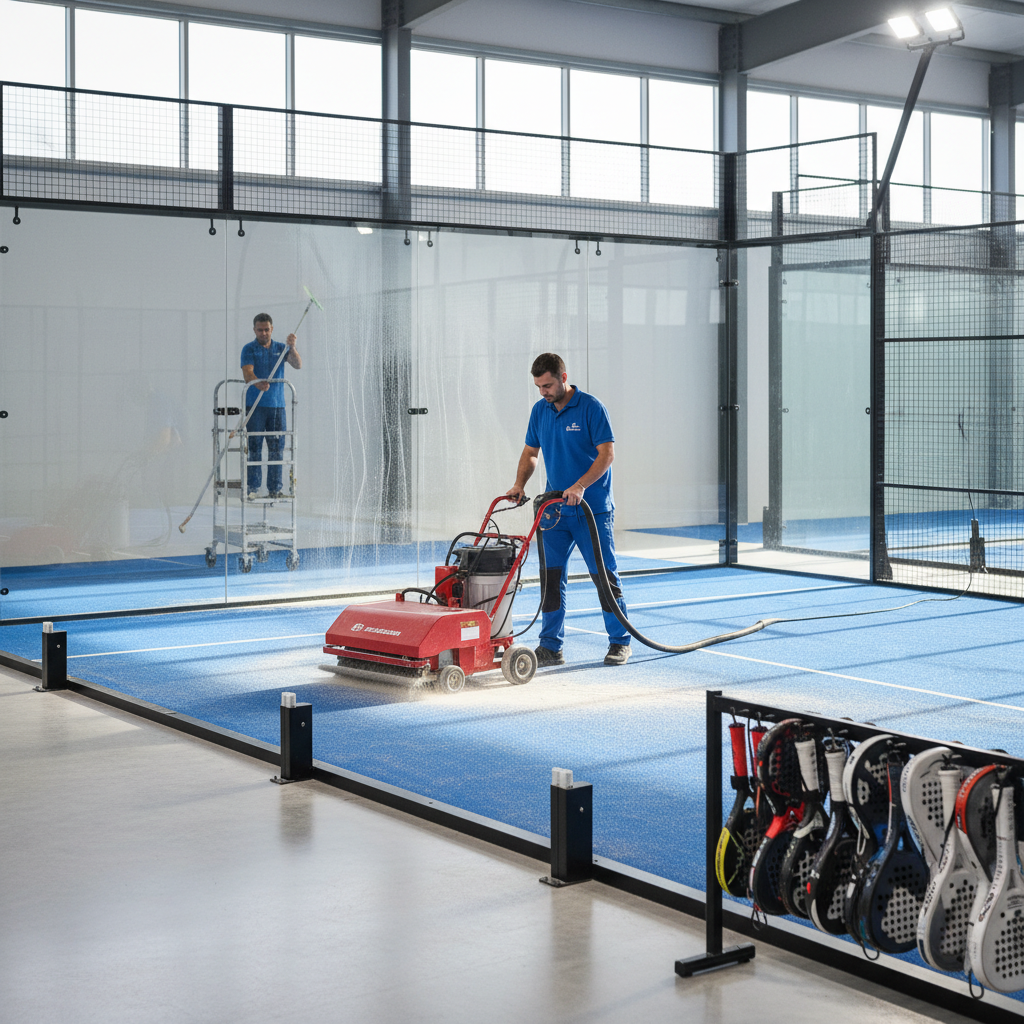
Maintaining a padel indoor court involves a routine of brushing the turf, cleaning the glass panels, and checking the structural bolts for tightness. Because indoor courts are shielded from wind-blown debris and rain, the maintenance is actually much simpler than outdoor versions. You should focus on dust management, as fine particles can settle on the turf and make it slippery over time.
Daily and weekly care cycles
A clean court is a safe court. Regularly redistributing the silica sand ensures that the turf fibers remain upright and the ball bounce remains consistent across the entire 20×10 meter area.
- Daily: Spot-clean glass to remove handprints and ball marks.
- Weekly: Brush the turf in several directions to redistribute sand.
- Quarterly: Inspect the structural tension of the perimeter net.
But wait, there’s more… you should also check the LED fixtures twice a year to ensure they are free of dust and operating at maximum brightness.
Key Takeaway: Consistent, small-scale maintenance prevents the need for expensive structural overhauls and keeps players coming back.
| Task | Frequency | Time Required |
|---|---|---|
| Glass Cleaning | Daily | 15 mins/court |
| Turf Brushing | Weekly | 30 mins/court |
| Bolt Inspection | Semi-Annual | 2 hours/court |
This schedule helps your staff manage the facility efficiently without disrupting peak booking hours.
How does customization enhance your padel indoor brand?
Customization enhances your padel indoor brand by allowing you to choose frame colors, turf shades, and panoramic glass designs that reflect your club’s unique identity. High-end clubs often opt for a panoramic padel court to give spectators a “theatrical” view of the action without vertical pillars blocking the sightlines. You can create a visually striking environment that is perfect for social media marketing and tournament hosting.
Branding through court design
Your choice of colors can influence the “vibe” of the club. For example, a blue turf with black frames offers a modern, professional look, while vibrant colors can appeal to a younger, more recreational demographic.
- Custom frame colors to match your logo.
- Integrated LED logos on the net or glass.
- Panoramic glass for 360-degree visibility.
And that’s not all… customizing the lounge area around the courts can turn your sports center into a lifestyle destination where people want to hang out after their match.
Key Takeaway: Aesthetics are a powerful tool for differentiation in a crowded market; a beautiful court is its own marketing engine.
| Custom Option | Visual Impact | Marketing Value |
|---|---|---|
| Panoramic Glass | High | Maximum (Tournaments) |
| Custom Frame Color | Medium | High (Branding) |
| Two-Tone Turf | Medium | High (Unique Look) |
The right design choices help you stand out and justify premium pricing for your facility.
Building a padel indoor facility is the smartest move you can make to future-proof your sports business against weather fluctuations and seasonal revenue loss. By focusing on critical standards like ceiling height, LED illumination, and high-performance turf, you create a destination that players will prioritize over any outdoor alternative. At Superb Padel, we offer the industry-leading vision and engineering expertise needed to transform a warehouse into a world-class club. From our panoramic designs to our rust-free galvanized structures, we provide everything you need to dominate your local market. If you’re ready to start your journey, contact us today for a custom quote and let’s build something extraordinary together.
*
Frequently Asked Questions
Can I build a padel indoor court in a warehouse with pillars?
Yes, but you must ensure the pillars do not fall within the 20×10 meter playing area or the immediate safety zones. Obstructions inside the court are not permitted by IPF standards as they interfere with ball play and safety.
What’s the best way to handle temperature control?
High-volume low-speed (HVLS) fans are often the most cost-effective solution for large indoor spaces. They move massive amounts of air to keep players cool without the extreme electricity costs of a full-scale HVAC system.
Can I install an indoor court on a standard warehouse floor?
It depends on the thickness and reinforcement of the existing slab. Most industrial floors are designed for heavy loads, but you must verify that the concrete can support the anchor bolts for the steel frame and the weight of the 12mm glass panels.
What is the minimum height needed for a padel indoor facility?
The absolute minimum is 6 meters, but professional play requires 8 meters or more. This height ensures that the ball doesn’t hit the ceiling during a standard defensive lob, which is a core part of the game.
Can I customize the color of the indoor turf?
Yes, while blue is the international standard, you can choose from green, red, black, or even purple turf to match your brand. Just keep in mind that blue provides the best contrast for tracking the yellow ball during high-speed play.