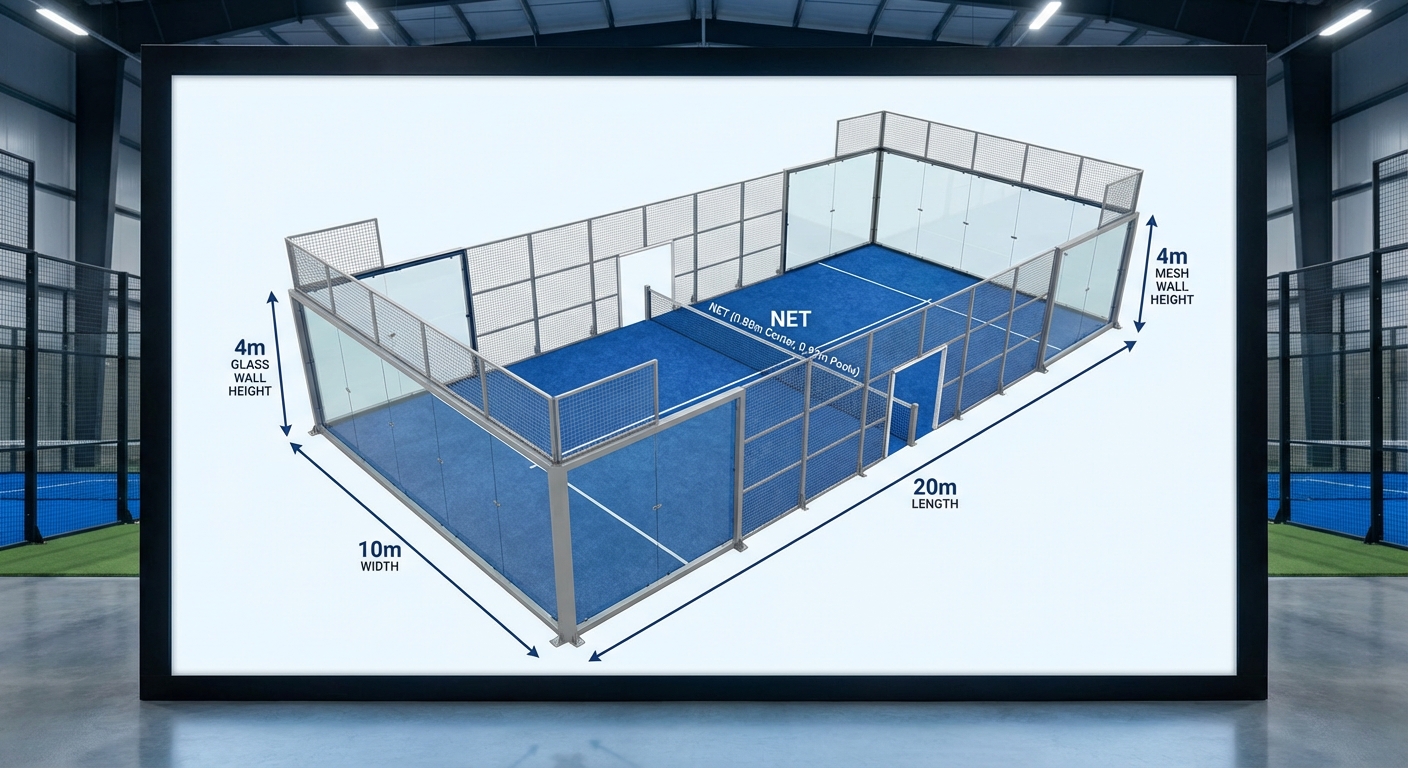
Fields padel are specialized sports enclosures measuring 10×20 meters, featuring a combination of tempered glass walls and metallic mesh to facilitate the unique rebounding mechanics of the game. Many club owners and investors recognize the massive potential of this sport but often face the hurdle of complex construction requirements and strict international standards. Choosing the wrong materials or failing to prepare the sub-base correctly can lead to structural instability, poor player experiences, and costly repairs that drain your facility’s budget. By following a professional roadmap and investing in premium fields padel, you can create a high-performance environment that maximizes player retention and ensures a safe, durable foundation for your business growth.
What are the core components of fields padel?
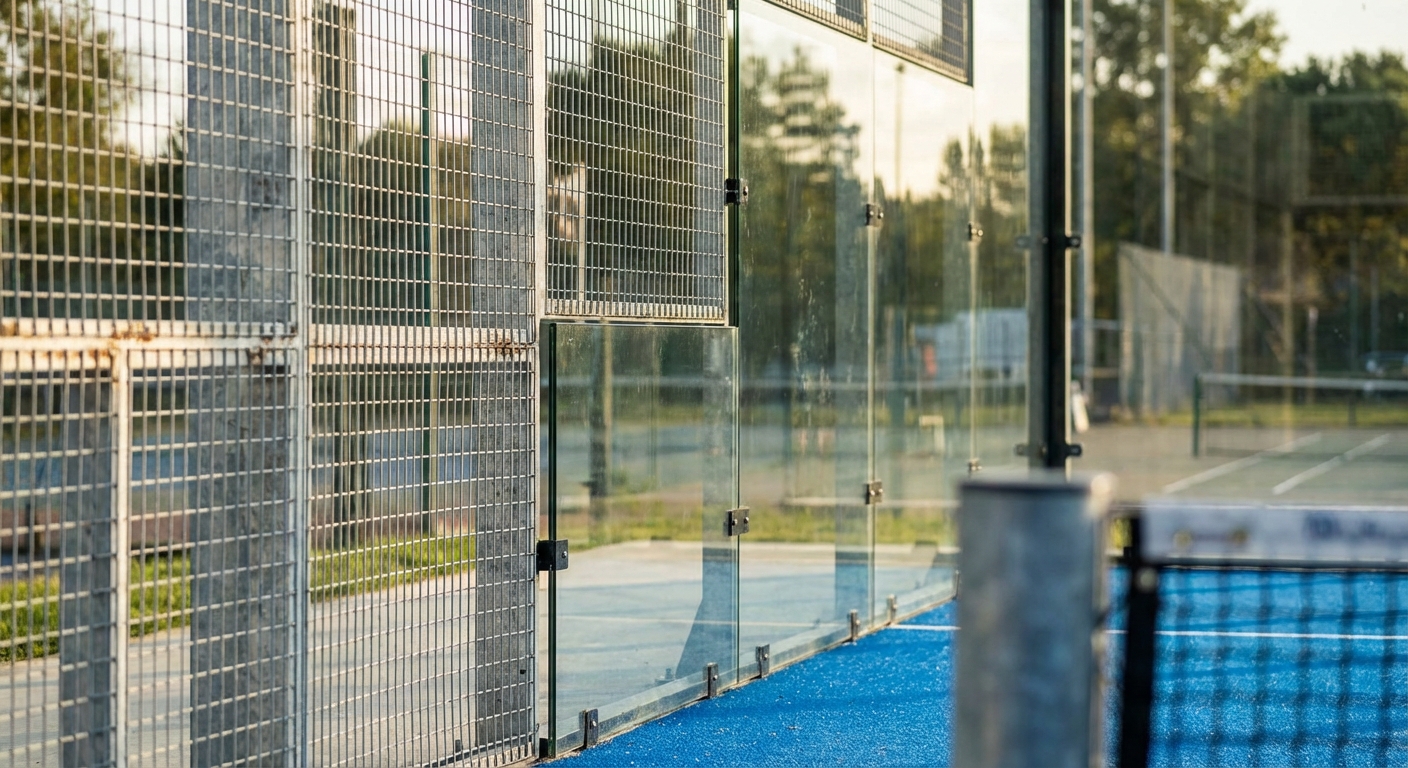
The core components of professional fields padel consist of a modular metallic structure, high-grade tempered glass panels, synthetic turf, and specialized LED lighting systems. Every element must be engineered to withstand constant impact while maintaining aesthetic appeal for a premium club environment.
Essential structural materials
Check this out:
- Hot-dip galvanized steel frames
- Electrostatic powder coating
- Neoprene glass gaskets
- Anti-corrosion bolts
Building a court that lasts decades requires a focus on the skeleton of the facility. You need to ensure the metallic pillars are thick enough to support wind loads and glass weight without vibrating excessively during play.
Specialized play surfaces
The best part?
- Polyethylene monofilament turf
- Kiln-dried silica sand
- Polyurethane adhesive
- Non-slip surface textures
Choosing the right turf determines how the ball bounces and how players move on the court. High-density grass prevents “bald spots” and ensures that the sand remains evenly distributed for consistent sliding action.
Key Takeaway: Integrating premium structural steel with high-performance turf creates a professional-grade court that attracts elite players and reduces long-term maintenance needs.
Why are dimensions for fields padel so specific?
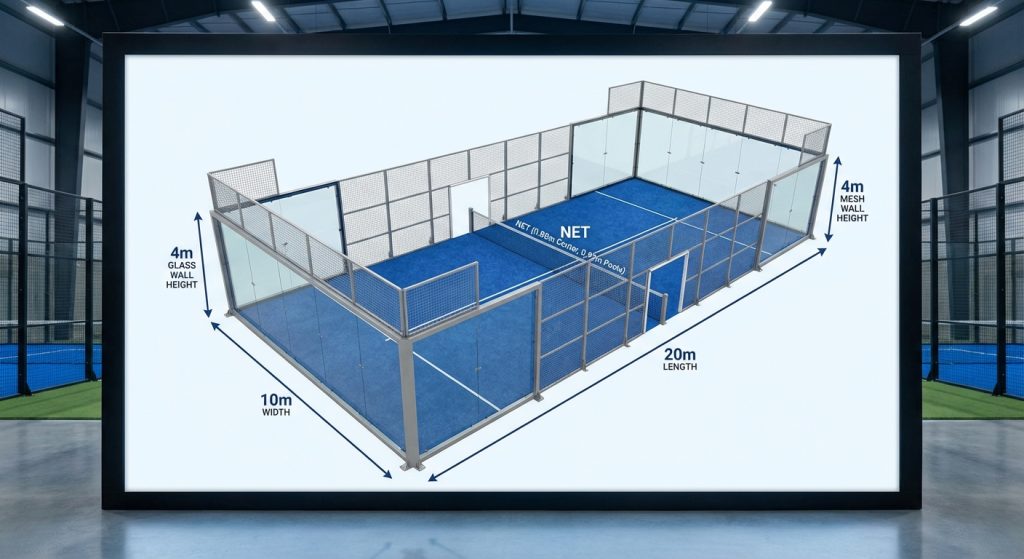
The dimensions of fields padel are strictly set at 10 meters by 20 meters to maintain the technical speed and bounce required for competitive matches. These measurements are regulated by international federations to ensure that every court provides a uniform playing experience globally.
The 10m x 20m geometry
Look at this:
- Internal playing area: 200m²
- Side wall height: 3 to 4 meters
- Net height: 0.88m center / 0.92m posts
- Service line distance: 6.95m from net
The standard rectangle is divided into two halves by a central net, with each side containing specific service boxes. You must ensure the markings are precise, as even a few centimeters of error can disrupt the professional feel of the match.
Height and safety clearance
Think about it:
- Minimum indoor clearance: 6 meters
- Recommended professional height: 8 meters
- External safety zones: 2 meters
- Pillar footprint: 10 to 15cm
Height is particularly important for the “lob” shot, which is a staple of padel strategy. If your ceiling is too low, players will find it impossible to execute advanced tactics, significantly limiting the level of competition at your club.
| Dimension Metric | Standard Value | Requirement Level |
|---|---|---|
| Playing Area | 10m x 20m | Mandatory |
| Back Wall Height | 4.0m | Mandatory |
| Side Mesh Height | 3.0m | Standard |
| Net Center Height | 0.88m | Technical |
Adhering to these exact measurements ensures your facility complies with competition standards and provides the optimal environment for high-level tactical play.
Key Takeaway: Precise geometric compliance is the foundation of a court’s technical integrity and its ability to host official tournaments.
How to prepare the ground for fields padel?
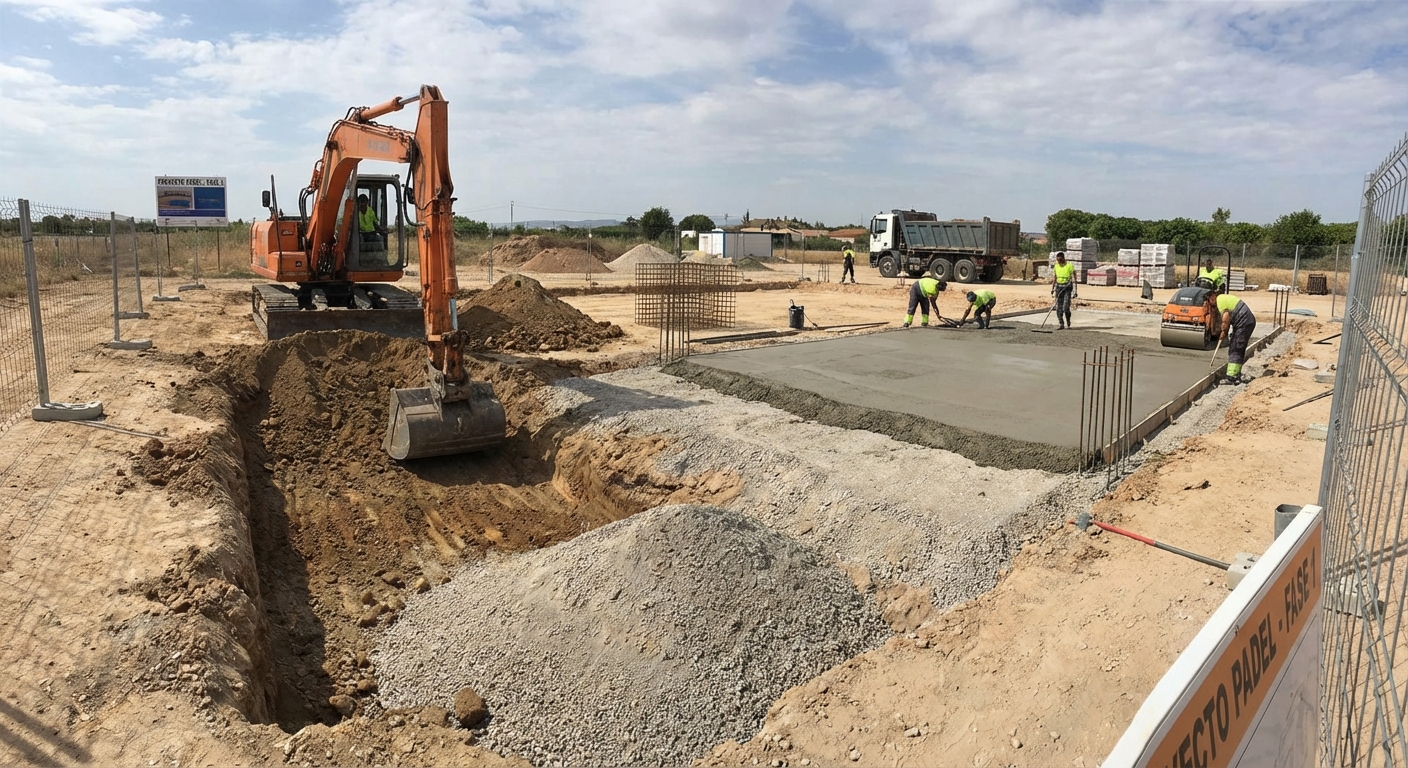
Ground preparation for fields padel requires precise excavation followed by the pouring of a reinforced, level concrete slab to prevent turf rippling. A stable foundation is the most critical part of the construction phase, as it prevents shifting that could shatter the glass walls.
Excavation and drainage
Listen up:
- Depth: 25cm to 40cm
- Porous sub-base layers
- Perimeter ring beam
- Slope: 0.5% for water runoff
Effective drainage prevents water from pooling under the turf, which can degrade the adhesive and cause the surface to bubble. You should always consult with a civil engineer to assess the soil density and local water table before digging.
Concrete sub-base requirements
Here is the deal:
- Concrete grade: HA-25 or higher
- Steel mesh reinforcement
- Power-troweled finish
- Expansion joints every 10m
The concrete must be perfectly level to ensure a consistent ball bounce across the entire 200 square meters. Any dips or bumps in the slab will become magnified once the turf is installed, frustrating players and shortening the court’s lifespan.
| Construction Stage | Key Material | Function |
|---|---|---|
| Excavation | Compacted Gravel | Stability & Drainage |
| Perimeter Beam | Reinforced Steel | Structural Support |
| Slab Pouring | Fiber Concrete | Level Surface |
| Surface Prep | Leveling Compound | Turf Adhesion |
A reinforced concrete foundation combined with a professional drainage system prevents long-term structural settling and water-related damage to the artificial grass.
Key Takeaway: Investing in a professional sub-base is non-negotiable for safety and ensures the playing surface remains perfectly flat for years.
Which glass is best for durable fields padel?
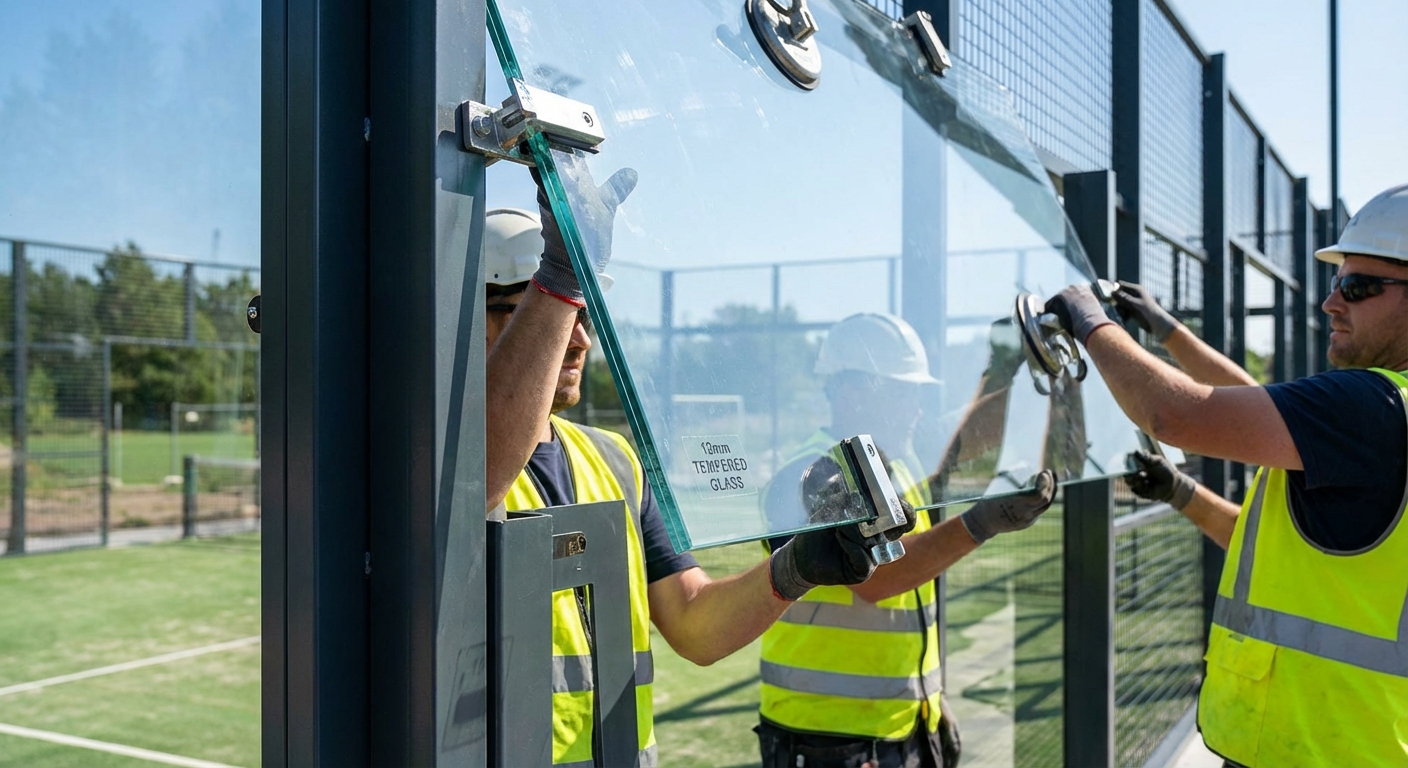
Selecting glass for fields padel involves choosing 10mm or 12mm tempered panels that can withstand high-velocity ball impacts and player contact. Quality glass not only provides the necessary rebound but also ensures the safety of everyone on and around the court.
Tempered vs laminated options
Imagine this:
- 10mm Tempered: Standard indoor
- 12mm Tempered: Professional/Outdoor
- Heat-soaked treatment
- Polished flat edges
Tempered glass is processed to be much stronger than regular glass and crumbles into small, blunt pieces if broken. You should opt for 12mm panels for outdoor installations to better handle wind pressure and temperature fluctuations.
Installation and fixing methods
Believe it or not:
- Stainless steel hardware
- Neoprene isolation pads
- Countersunk holes
- Tensioned mounting systems
The glass must never come into direct contact with the steel frame. You use rubber gaskets and specialized spacers to create a buffer that absorbs the energy from ball impacts, preventing stress fractures and spontaneous breakage.
| Glass Specification | 10mm Standard | 12mm Premium |
|---|---|---|
| Impact Resistance | High | Ultra-High |
| Weight per m² | 25 kg | 30 kg |
| Rebound Quality | Excellent | Superior |
| Best Use Case | Private Clubs | Pro Venues / Outdoor |
Using 12mm heat-soaked tempered glass provides the highest safety margins and ensures the most consistent rebound for competitive tournament play.
Key Takeaway: Safety-certified tempered glass is essential for mitigating risk and providing the high-speed rebounding action that defines the sport.
What steel structure is needed for fields padel?
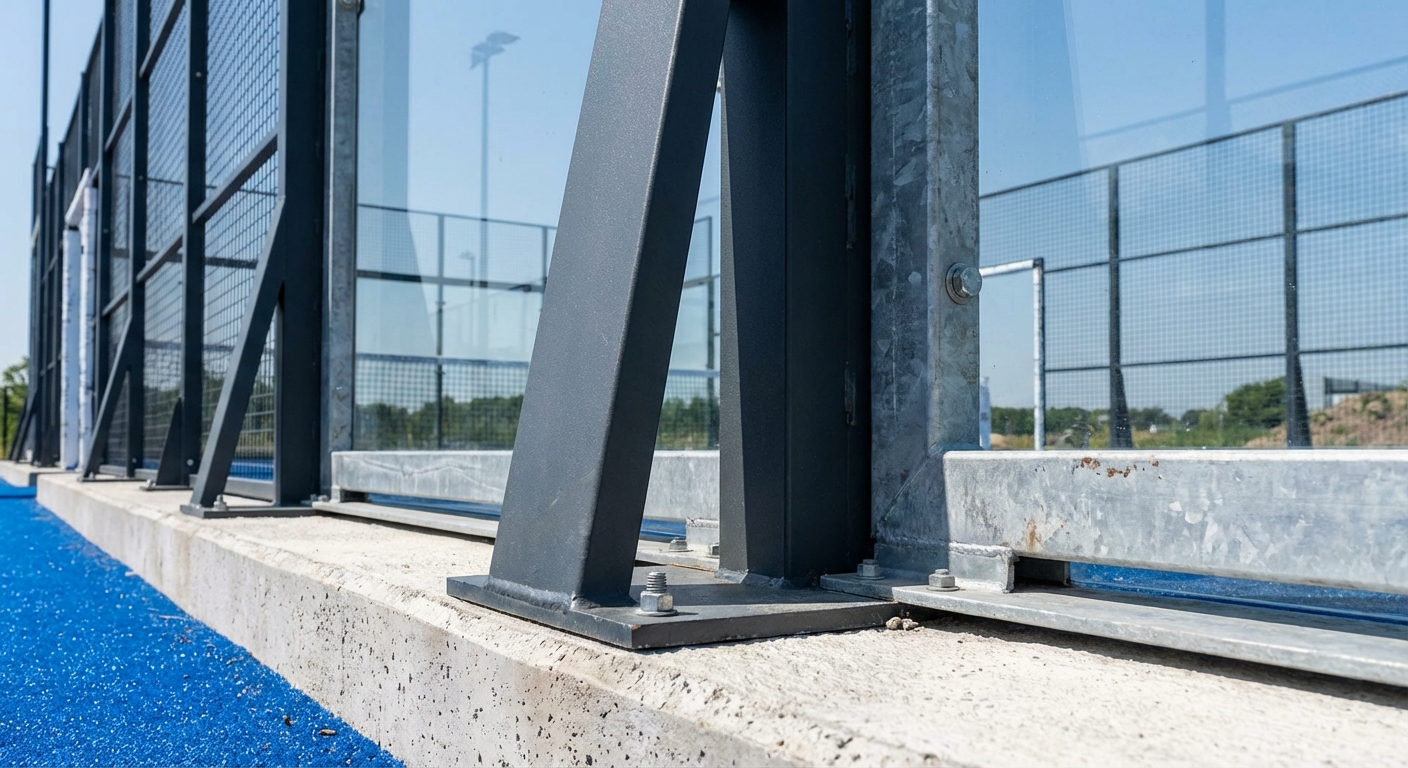
The steel for fields padel must be hot-dip galvanized and powder-coated to resist corrosion and structural fatigue over years of intensive outdoor use. A robust frame acts as the anchor for both the glass panels and the metallic mesh.
Galvanized frames for longevity
Fact is:
- Hot-dip galvanization process
- Minimum 2mm wall thickness
- Modular pillar design
- Hidden welding seams
Galvanization involves coating the steel in zinc to prevent rust, which is vital for courts in coastal or humid areas. You should look for structures that use modular bolts rather than site-welding to maintain the integrity of the protective coating.
Wind load considerations
Wait, there is more:
- Reinforced corner pillars
- Aerodynamic mesh profiles
- Braced base plates
- High-tensile fasteners
Outdoor courts act like giant sails when high winds hit the glass panels. You must ensure the structure is engineered to withstand local wind speeds, using reinforced base plates that are securely anchored into the concrete perimeter beam.
| Structural Feature | Specification | Benefit |
|---|---|---|
| Pillar Shape | 100x80mm Profile | Structural Rigidity |
| Coating Type | Thermoset Powder | UV & Scratch Resistance |
| Joint Type | Mechanical Bolted | Stress Distribution |
| Mesh Type | Anti-Injury Grid | Player Safety |
A hot-dip galvanized and powder-coated steel frame provides the necessary rigidity to support heavy glass panels while resisting environmental degradation.
Key Takeaway: Structural steel quality directly impacts the safety and lifespan of your facility, especially when exposed to harsh outdoor elements.
How is the surface of fields padel installed?
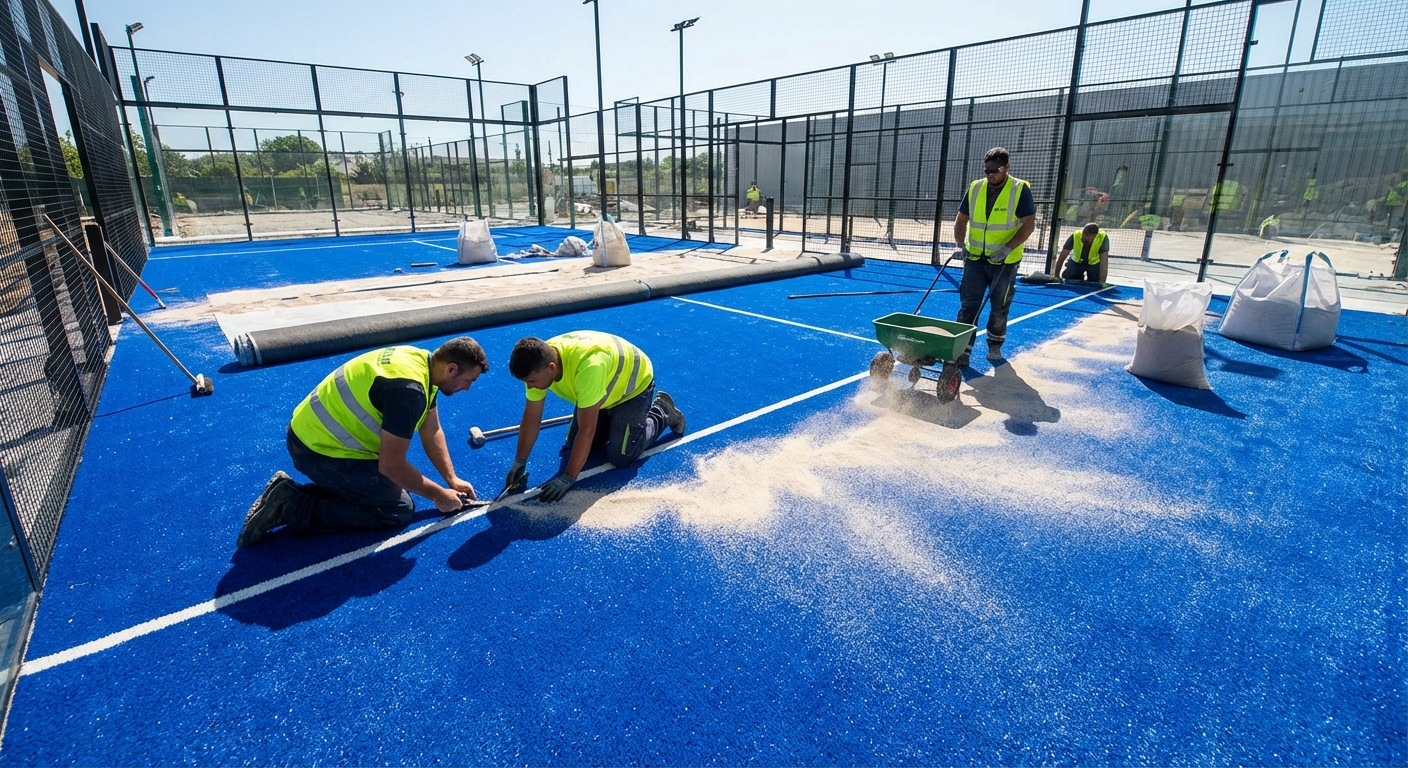
Surface installation for fields padel involves unrolling professional synthetic turf and carefully distributing silica sand to ensure a consistent bounce. This phase requires precision cutting and high-strength adhesives to create a seamless, non-trip playing environment.
Laying the synthetic turf
You see:
- Textured monofilament fibers
- Double-layer backing
- Precision seam tape
- PU weather-proof glue
The turf is laid in rolls and glued at the seams to create a single, continuous surface. You must ensure the grass fibers are brushed upright before the sand is added, as this ensures the infill settles deeply and evenly into the pile.
Sand infill and leveling
Simple as that:
- Rounded silica quartz sand
- 0.5mm to 1.0mm grain size
- 15kg to 18kg per m²
- Mechanical sand distributor
Sand is not just for weight; it controls the ball’s speed and the player’s ability to slide. You should use rounded grains to prevent the sand from “clumping” or causing excessive abrasion to the synthetic grass fibers over time.
| Surface Component | Material Type | Standard Density