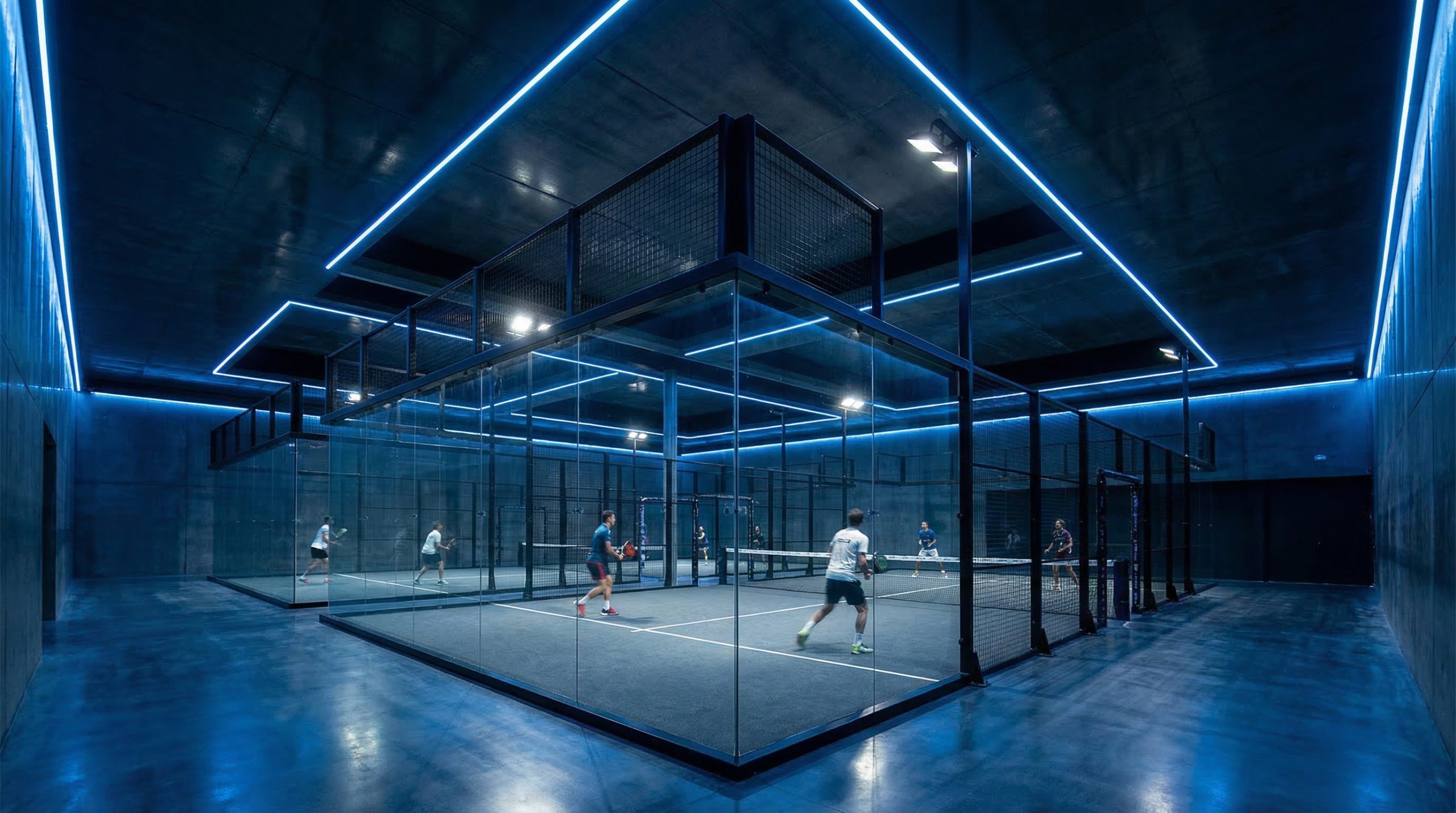
Indoor padel courts are climate-controlled sports environments consisting of structural glass and steel, built by preparing a reinforced concrete foundation and installing a modular enclosure system. Imagine a fully booked weekend at your club suddenly ruined by a heavy downpour or players complaining about blinding sun glare. These weather-related disruptions don’t just frustrate your members; they directly erode your revenue and drive serious athletes toward competitors who offer year-round, sheltered facilities. By investing in professional indoor padel courts, you eliminate the variables of nature to provide a premium, 24/7 playing experience that secures your long-term ROI.
What Makes Indoor Padel Courts the Ultimate Player Choice?
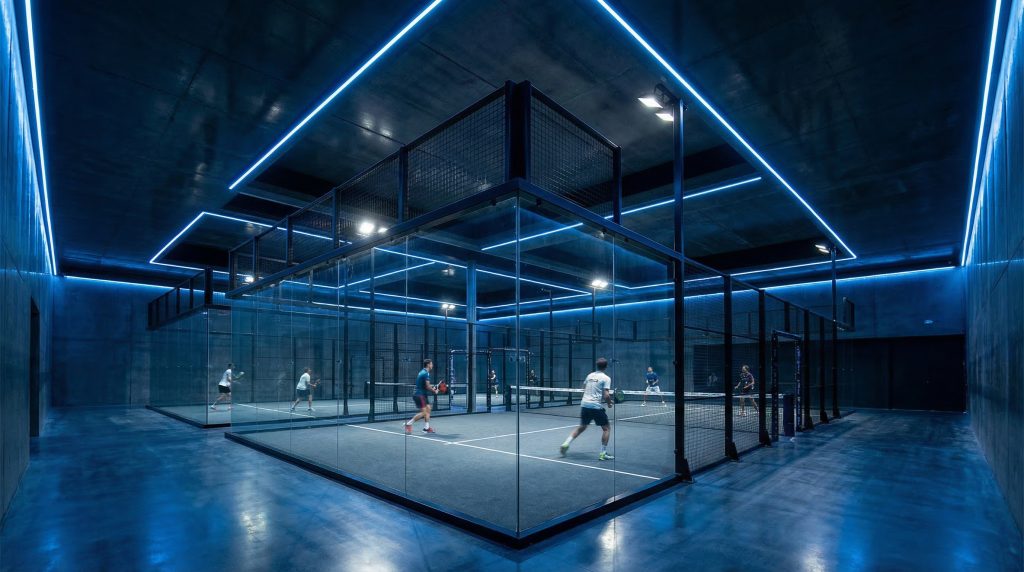
Indoor padel courts represent the highest standard of player experience because they provide a sanctuary from external elements like wind and humidity. Unlike outdoor setups, these facilities ensure a consistent ball bounce and a stable environment for technical precision.
Players appreciate the privacy and focus that a specialized indoor hall provides for elite training. You will find that membership retention rates climb when the quality of play remains identical from January to December.
Uninterrupted Playability Regardless of Weather
You never have to worry about wind gusts altering the trajectory of a delicate lob or rain making the turf slippery. This stability allows you to schedule tournaments months in advance without fear of cancellation.
- 100% protection from UV rays.
- No humidity buildup on the playing surface.
- Consistent traction for high-intensity movement.
The best part? Your players stay cool and dry, even during the most intense summer heat or winter storms.
Private Match Atmosphere for Elite Training
The acoustic properties of an indoor facility create a sense of immersion that outdoor courts simply cannot replicate. You can offer a more focused environment where coaching and tactical sessions are highly effective.
Think about it. In a crowded outdoor park, noise and wind distract the athlete. Here is the kicker: in a dedicated indoor space, every sound of the ball hitting the racket helps the player time their shots perfectly.
Key Takeaway: Indoor facilities provide a consistent, premium environment that increases player retention and facility usage rates.
| Feature | Indoor Benefit |
|---|---|
| Weather | 100% Protection |
| Visibility | Zero Glare/Sun Interference |
| Atmosphere | Private & Professional |
This data confirms that the removal of environmental variables is the primary driver for player loyalty in indoor sports settings.
Why Is Ceiling Height Critical for Indoor Padel Success?
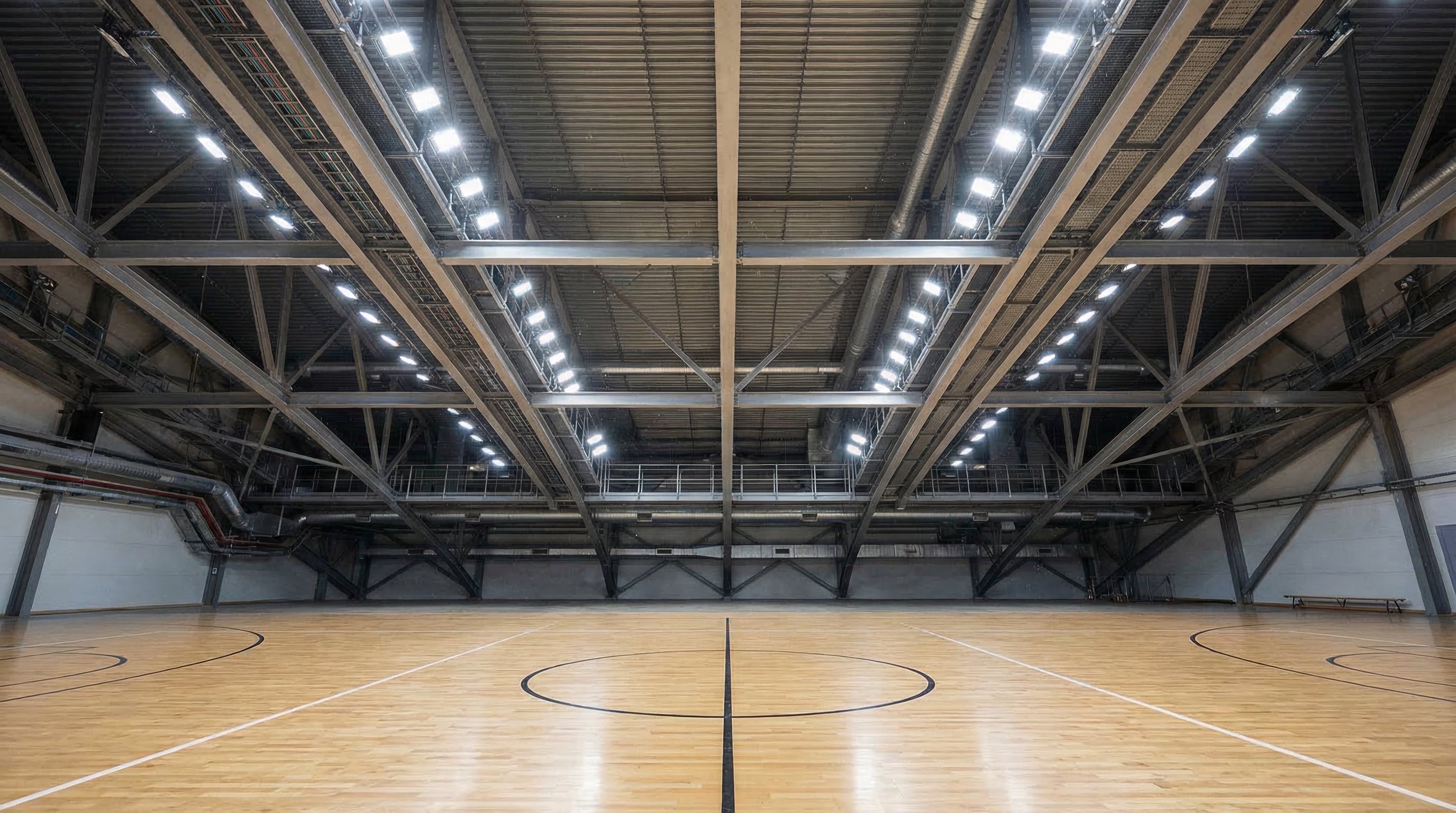
One of the most frequent technical mistakes in planning indoor padel courts is underestimating the vertical clearance required for high-level competitive lobs. If your ceiling is too low, it fundamentally breaks the mechanics of the game and prevents advanced players from utilizing standard defensive tactics.
Building a facility with sufficient height also aids in air circulation and heat dissipation. You must ensure the structural trusses are clear of the playing area to avoid ball collisions during intense matches.
International Federation Standards for Height
You should aim for a minimum of 6 meters, but professional circuits often require significantly more clearance to accommodate the world’s best athletes. If you are building for future growth, aiming higher is always the safer investment.
- Recreational level: 6 meters minimum.
- Professional level: 8 meters recommended.
- World Padel Tour level: 10 meters preferred.
Here is the kicker: building to elite standards now prevents expensive structural renovations as the sport’s level increases in your region.
Optimizing Building Volume for Airflow
Maintaining the right height isn’t just about the ball; it is about how you feel while playing. You will notice that higher ceilings allow for better ventilation and prevent that “stuffy” feeling common in smaller, enclosed gyms.
Think about it. A larger air volume is easier to regulate with HVAC systems, ensuring your players don’t overheat during long sets.
Key Takeaway: A minimum height of 6 meters is required, but 8 to 10 meters is the gold standard for professional play.
| Level | Recommended Height |
|---|---|
| Recreational | 6 Meters |
| Professional | 8+ Meters |
| Elite/WPT | 10+ Meters |
A taller structure significantly enhances the resale and rental value of the sports facility by meeting all competitive standards.
How Does Temperature Control Impact Your Court’s Longevity?
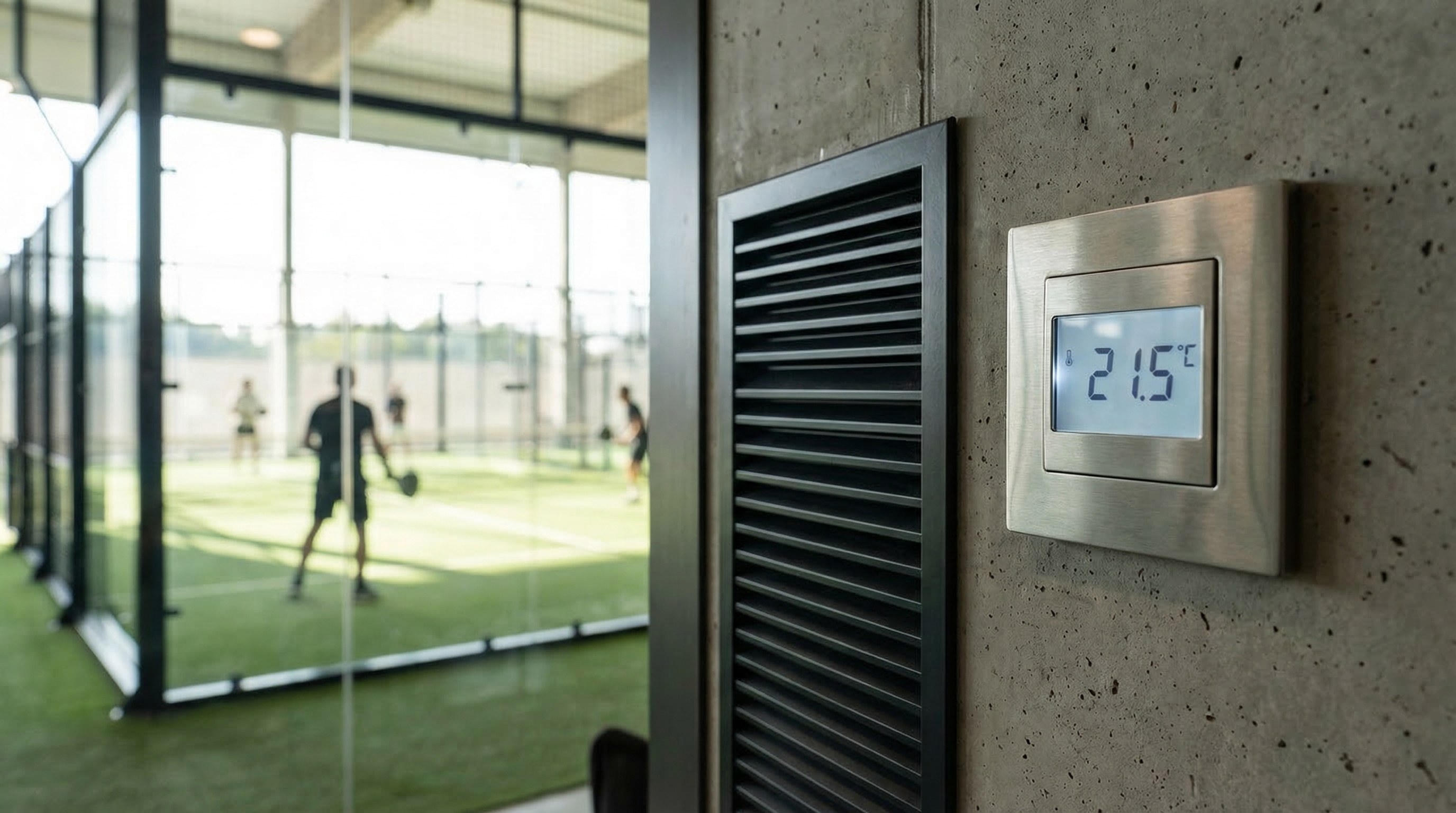
Regulating the climate within indoor padel courts is a strategic necessity that protects the structural integrity of your glass and turf systems. Excess humidity can cause condensation on the glass walls, making the surface “sweat” and reducing the transparency and safety of the panels.
By maintaining a stable temperature, you prevent the expansion and contraction of the steel frames. This stability ensures that the tension of the net and the alignment of the glass remain perfect over years of use.
Preventing Humidity Issues on Glass Walls
You will find that players get frustrated when they cannot see through the glass because of fogging. Proper ventilation keeps the panels crystal clear, allowing spectators to enjoy every moment of the game.
- Use integrated dehumidifiers in high-moisture climates.
- Ensure air vents are directed away from the glass surfaces.
- Clean the glass bi-weekly to remove dust that traps moisture.
The best part? Clear glass makes your facility look brand new even after thousands of booking hours.
HVAC Integration Strategies for Large Volumes
When you design your climate control, focus on the playing zone rather than the entire building height. You can use industrial fans or strategic ducting to ensure the court surface remains at an optimal 20°C.
Think about it. If the temperature is too high, players fatigue faster. If it is too low, the ball bounce becomes unpredictable and sluggish.
Key Takeaway: Proper ventilation and temperature control extend the life of the turf and prevent “sweating” on the glass walls.
| Factor | Ideal Range |
|---|---|
| Temperature | 18°C – 22°C (64°F – 72°F) |
| Humidity | 40% – 60% |
| Air Exchange | 4-6 times per hour |
Careful management of the indoor atmosphere reduces maintenance overhead by preventing mold and hardware corrosion.
Can Indoor Padel Courts Significantly Boost Your Club’s ROI?
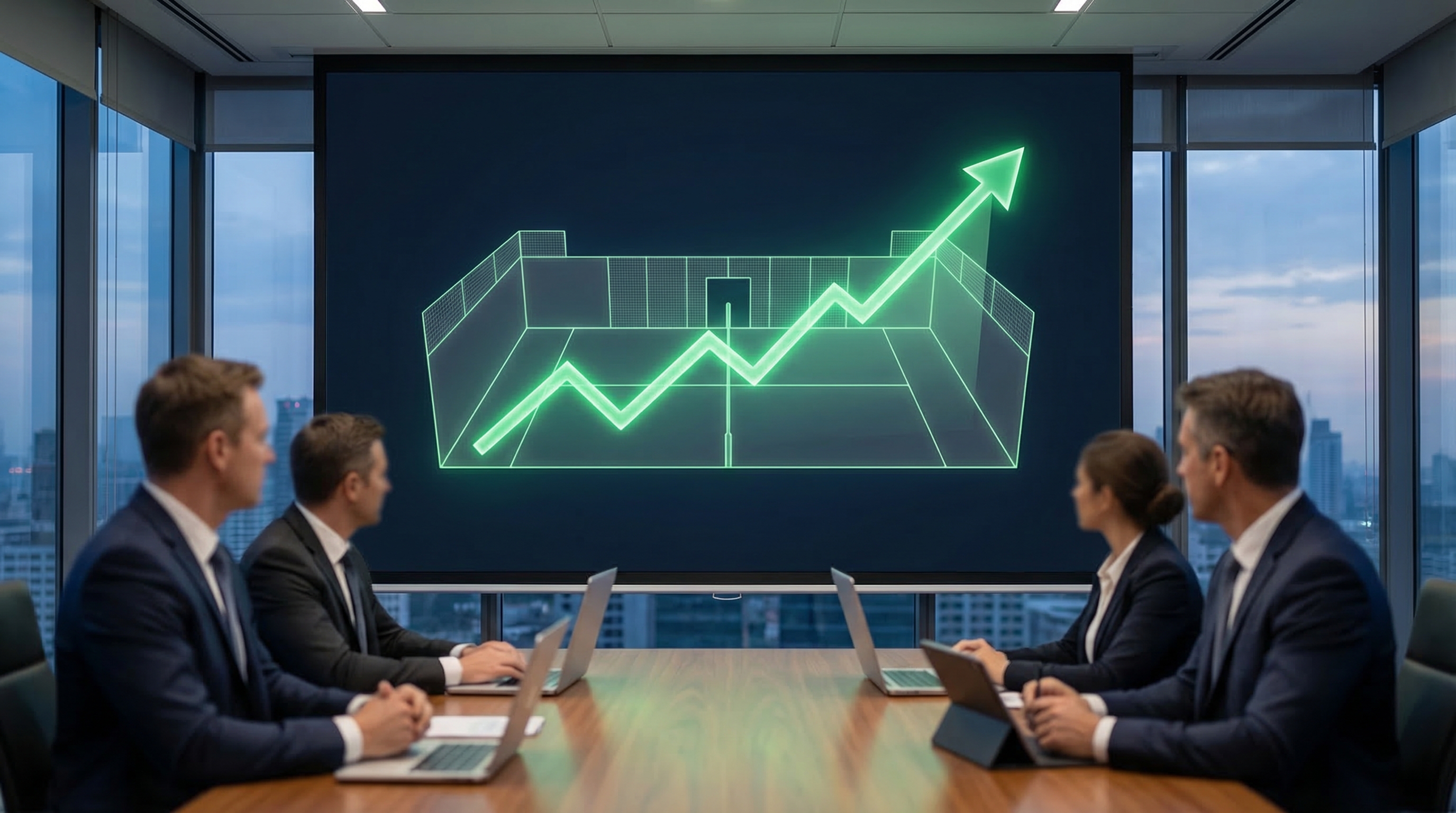
The financial viability of indoor padel courts is rooted in their ability to generate revenue 365 days a year, regardless of the season. Outdoor clubs often lose up to 30% of their potential income due to rain, wind, or extreme heat that discourages bookings.
With an indoor setup, you can monetize prime-time hours more effectively by offering a consistent, high-quality environment. This predictability allows you to sell long-term membership packages and host high-profile corporate events without risk.
Year-Round Revenue Streams Without Slumps
You can charge a premium for indoor slots because you are selling more than just a court; you are selling a guaranteed game. This reliability is a major selling point for busy professionals who plan their schedules weeks in advance.
- Eliminate seasonal downtime.
- Maintain high booking rates during winter.
- Host night matches comfortably under LEDs.
Think about it. In a month where it rains for two weeks, your outdoor competitors are empty while your courts are fully booked.
Lower Long-Term Upkeep and Maintenance Costs
While the initial investment is higher, you will spend much less on surface replacements and cleaning compared to outdoor facilities. You don’t have to deal with leaf debris, UV degradation of the turf, or rust from rain exposure.
The best part? Your turf stays vibrant and soft for years longer because it is never scorched by the direct sun.
Key Takeaway: Indoor courts typically see 30-40% higher annual booking hours compared to outdoor counterparts in temperate climates.
| Metric | Indoor Court | Outdoor Court |
|---|---|---|
| Operating Days | 365/year | ~200-250/year |
| Prime Time | 5 PM – 11 PM | Daylight Dependent |
| ROI Period | 2-3 Years | 4-5 Years |
The data proves that the higher initial capital expenditure is quickly offset by the increased utilization rates and lower repair costs.
Which Structural Materials Best Suit an Indoor Environment?
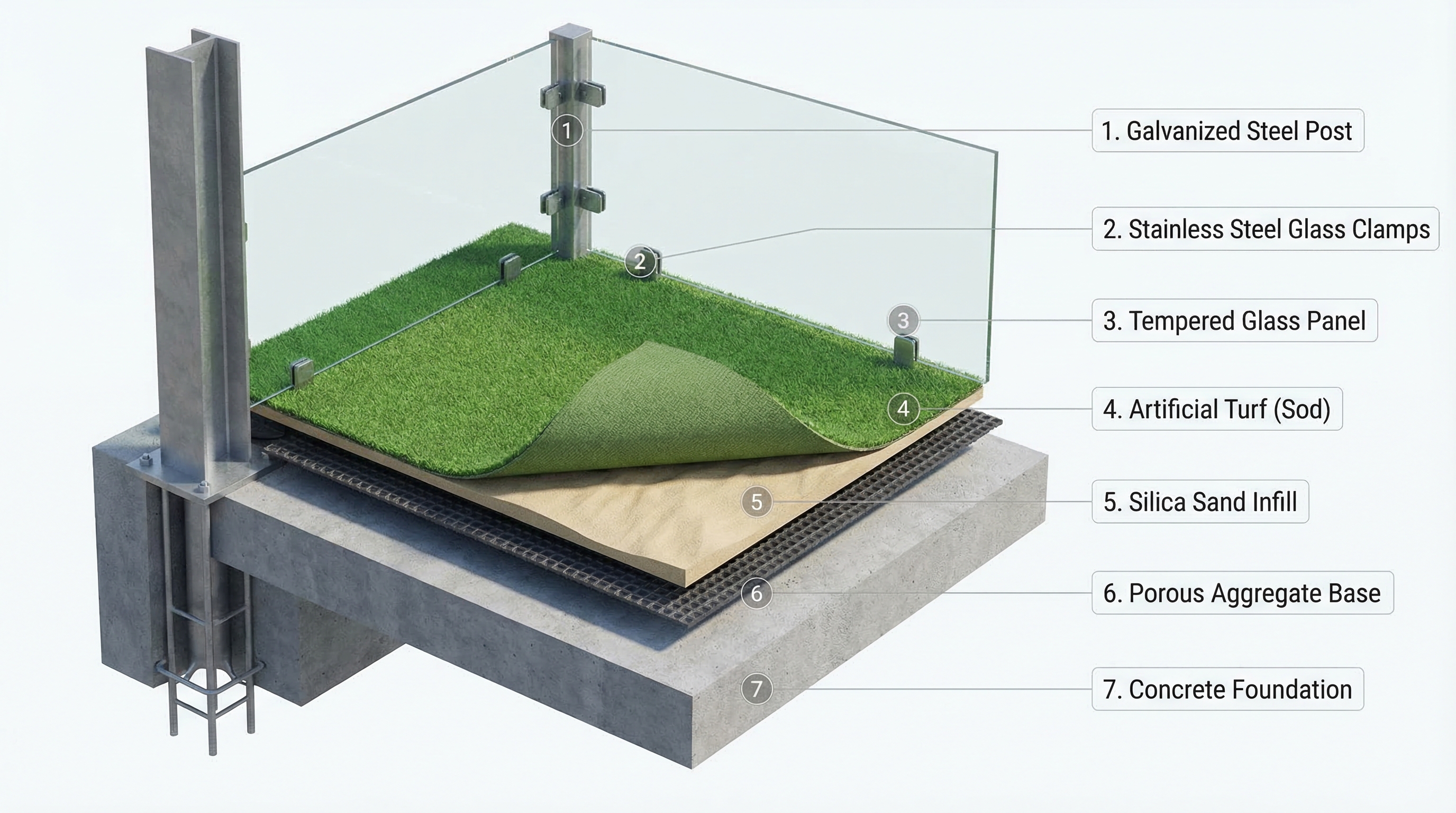
Selecting the right components for indoor padel courts involves balancing structural rigidity with the specific needs of an enclosed space. We recommend using hot-dip galvanized steel for the frame, even indoors, to ensure a lifetime of stability without the risk of oxidation from sweat or cleaning agents.
For the playing surface, high-density fibrillated turf is ideal as it resists the compaction typically caused by the heavy use seen in busy clubs. You should always prioritize 12mm tempered safety glass to meet European safety standards and ensure maximum player protection.
Galvanized Steel Protection and Modular Framing
You will appreciate a modular design because it makes the installation process much faster within an existing building. The steel pillars should be bolted into a reinforced concrete foundation to handle the impact of players running into the walls.
- Corrosion resistance for long-term use.
- Pre-drilled holes for easy glass alignment.
- Custom powder coating to match your club’s brand.
Think about it. A stable frame doesn’t just look better; it produces a more consistent ball bounce off the glass.
Tempered Safety Glass: 10mm vs 12mm Specs
You should almost always choose the 12mm option for professional clubs because it offers superior impact resistance and acoustic damping. It provides a more “solid” feel when the ball or a player strikes the wall during a fast-paced match.
Here is the kicker: 12mm glass is much less likely to vibrate or shatter, which significantly reduces your insurance liabilities.
Key Takeaway: While rust is less of a concern indoors, modular galvanized steel remains the best choice for structural rigidity and ease of installation.
| Component | Material Specification | Benefit |
|---|---|---|
| Frame | Hot-dip Galvanized Steel | 20+ Year Longevity |
| Glass | 12mm Tempered Safety Glass | Anti-explosion / Safe |
| Turf | Monofilament/Fibrillated PE | Consistent Bounce |
Using high-spec materials ensures that your facility maintains its professional aesthetic and structural safety for decades of operation.
Is Lighting the Secret to a Professional Indoor Experience?
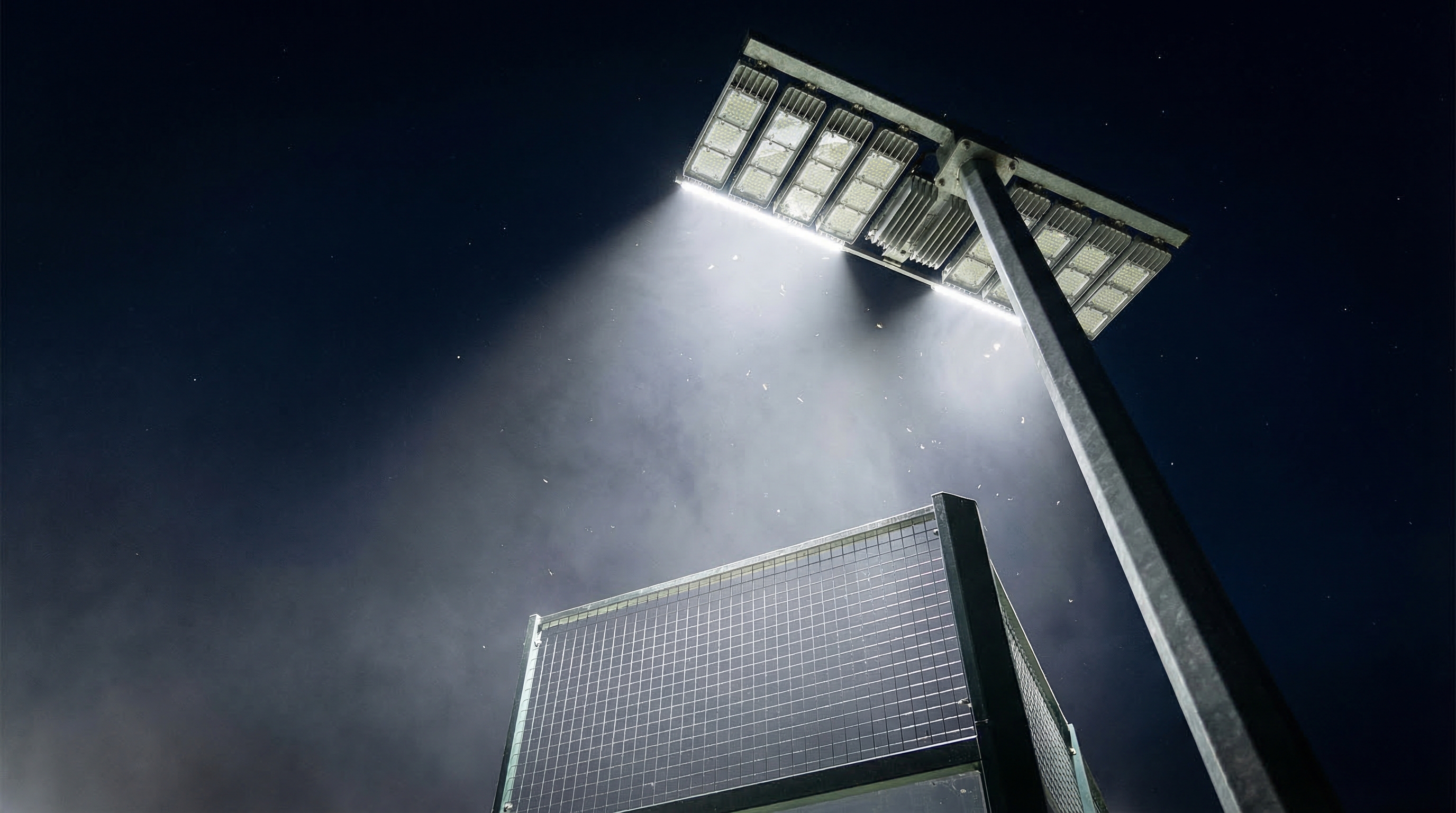
Lighting is arguably the most critical technical component of indoor padel courts because players must track a fast-moving ball in an enclosed space. Without high-quality LED systems, you risk creating shadows or glare spots that interfere with visibility and can lead to injury.
A professional installation requires at least 500 to 750 lux distributed uniformly across the entire playing surface. You will find that modern LED floodlights also provide massive energy savings compared to older halide bulbs.
Uniform Lux Distribution Across the Surface
You need to ensure that the corners of the court are just as well-lit as the center. This uniform light allows you to anticipate the ball’s movement as it comes off the glass at high speeds.
- Eliminate “blind spots” near the back walls.
- Reduce eye strain for players during long matches.
- Enhance the quality of recorded video for social media.
Think about it. If your lighting is poor, players will choose the club down the street where they can actually see the ball.
Anti-Glare LED Solutions for High Lobs
You should look for lighting fixtures with specialized diffusers that prevent blinding the players when they look up for a lob. This is especially important in indoor environments where the ceiling height can reflect light back onto the court.
The best part? Intelligent LED systems can be dimmed during off-peak hours to further reduce your operational costs.
Key Takeaway: Proper LED placement prevents “blinding” during overhead shots and ensures consistent visibility for spectators and cameras.
| Category | Lux Requirement | LED Wattage (Typical) |
|---|---|---|
| Training | 300 Lux | 150W – 200W |
| Competition | 500 Lux | 200W – 300W |
| Televised | 750+ Lux | High-Output Array |
Optimizing your lighting setup is a one-time investment that directly impacts player satisfaction and your facility’s energy efficiency.
How to Navigate the Building Permits for Indoor Facilities?
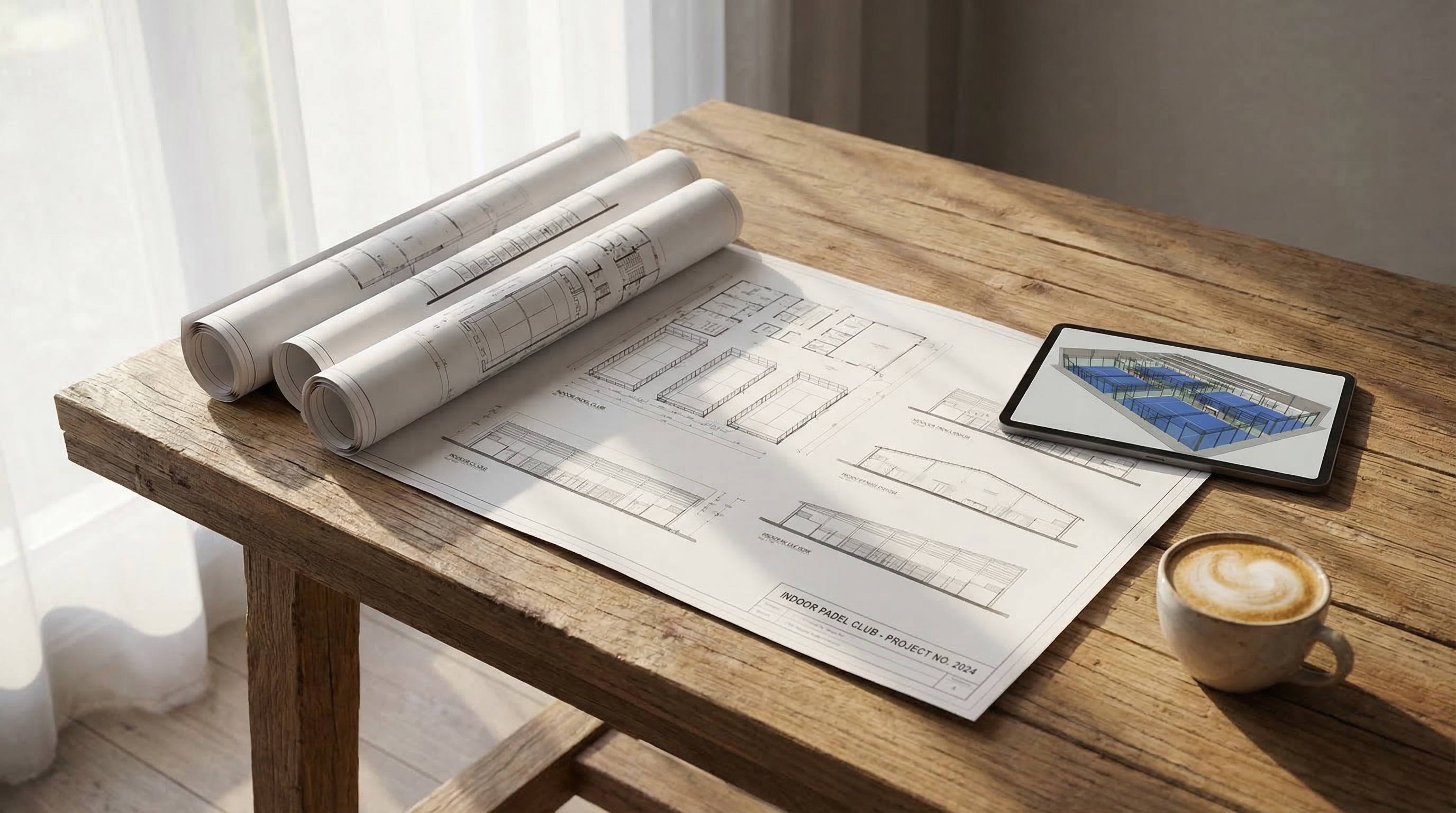
Constructing indoor padel courts usually requires more complex regulatory approvals than outdoor installations due to fire safety and occupancy rules. You must consult with local authorities to ensure your building is zoned for commercial sports use and that it meets structural load-bearing requirements for the heavy glass walls.
Whether you are converting a warehouse or building from scratch, you will need detailed architectural blueprints. These documents must account for emergency exits, accessible restrooms, and proper electrical wiring for the lighting and HVAC systems.
Zoning and Land Use for Commercial Sports
You should verify that your location allows for high-traffic sports activity before you sign a lease or buy land. Some industrial zones have restrictions on noise levels or the number of people allowed in the building at once.
- Check local zoning maps for “Recreational” use.
- Evaluate parking space requirements for peak hours.
- Assess noise mitigation if the facility is near residential areas.
Think about it. Getting your zoning right early saves you from massive legal headaches and potential club closures later on.
Fire Safety and Emergency Egress Regulations
You will need to install fire suppression systems, like sprinklers, that are integrated into your building’s infrastructure. Every indoor court hall must have clearly marked exit paths that stay lit even during a power outage.
Here is the kicker: local inspectors will not grant you an occupancy permit until your fire safety system is fully certified.
Key Takeaway: Consult with local authorities early; indoor conversions often require specific “Change of Use” permits.
| Permit Type | Focus Area | Impact |
|---|---|---|
| Zoning | Location Suitability | Land Use Rights |
| Structural | Building Integrity | Safety Approval |
| Fire | Egress & Sprinklers | Occupancy Permit |
Proper permit management ensures your investment is legally protected and safe for the public to enjoy.
Why Should You Choose Factory-Direct Padel Court Sourcing?
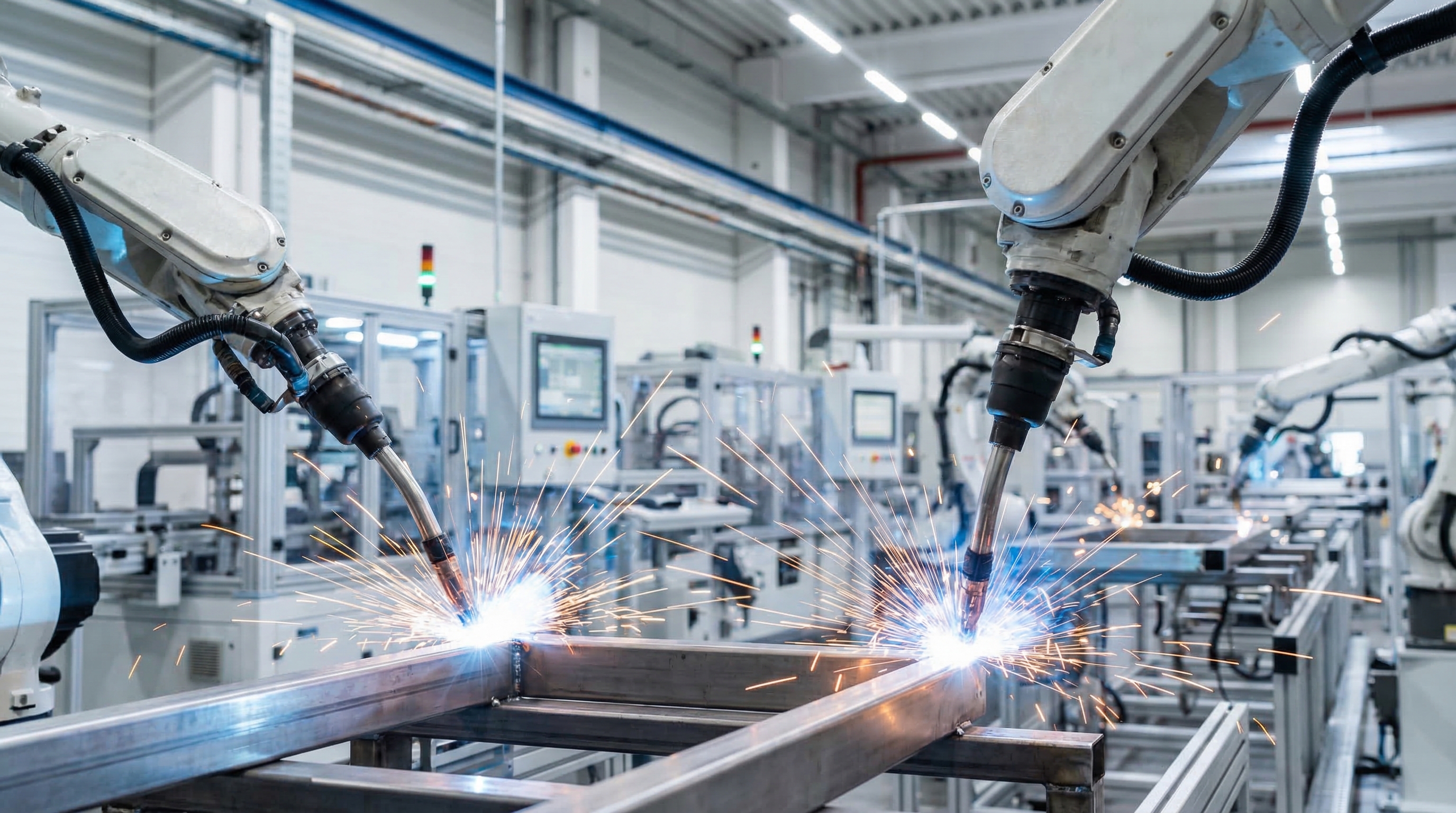
When you are budgeting for indoor padel courts, sourcing your materials directly from the manufacturer can save you up to 30% in procurement costs. Eliminating middlemen allows you to reallocate those funds into premium club amenities like a luxury bar or state-of-the-art locker rooms.
Factory-direct sourcing also gives you the ability to fully customize your courts. You can specify custom colors for the steel frame and even have your club’s logo integrated directly into the turf or net.
Eliminating Middleman Costs and Markups
You will notice that local distributors often add significant margins to cover their overhead and transport. By working directly with our factory, you get the highest quality materials at the most competitive price point available.
- Direct access to engineering support.
- Faster communication for custom requests.
- Transparency in material sourcing and quality.
Think about it. A 30% saving on a four-court project could mean an extra $40,000 in your pocket.
OEM Branding and Custom Color Opportunities
You can create a unique visual identity for your club that makes it instantly recognizable on Instagram. We offer full OEM support, allowing you to choose any RAL color for the structure to match your branding perfectly.
The best part? Custom courts feel more premium and exclusive, allowing you to justify higher membership fees.
Key Takeaway: Direct factory sourcing ensures you get the latest technology and full warranty support directly from the engineers who built the court.
| Sourcing Method | Cost | Customization | Support |
|---|---|---|---|
| Factory Direct | Low (30% Save) | High (OEM) | Direct Tech Support |
| Local Distributor | High | Limited | Third-Party |
Buying directly from the source streamlines your logistics and guarantees that you are receiving uncompromised quality for your facility.
What Maintenance Does an Indoor Padel Court Actually Need?
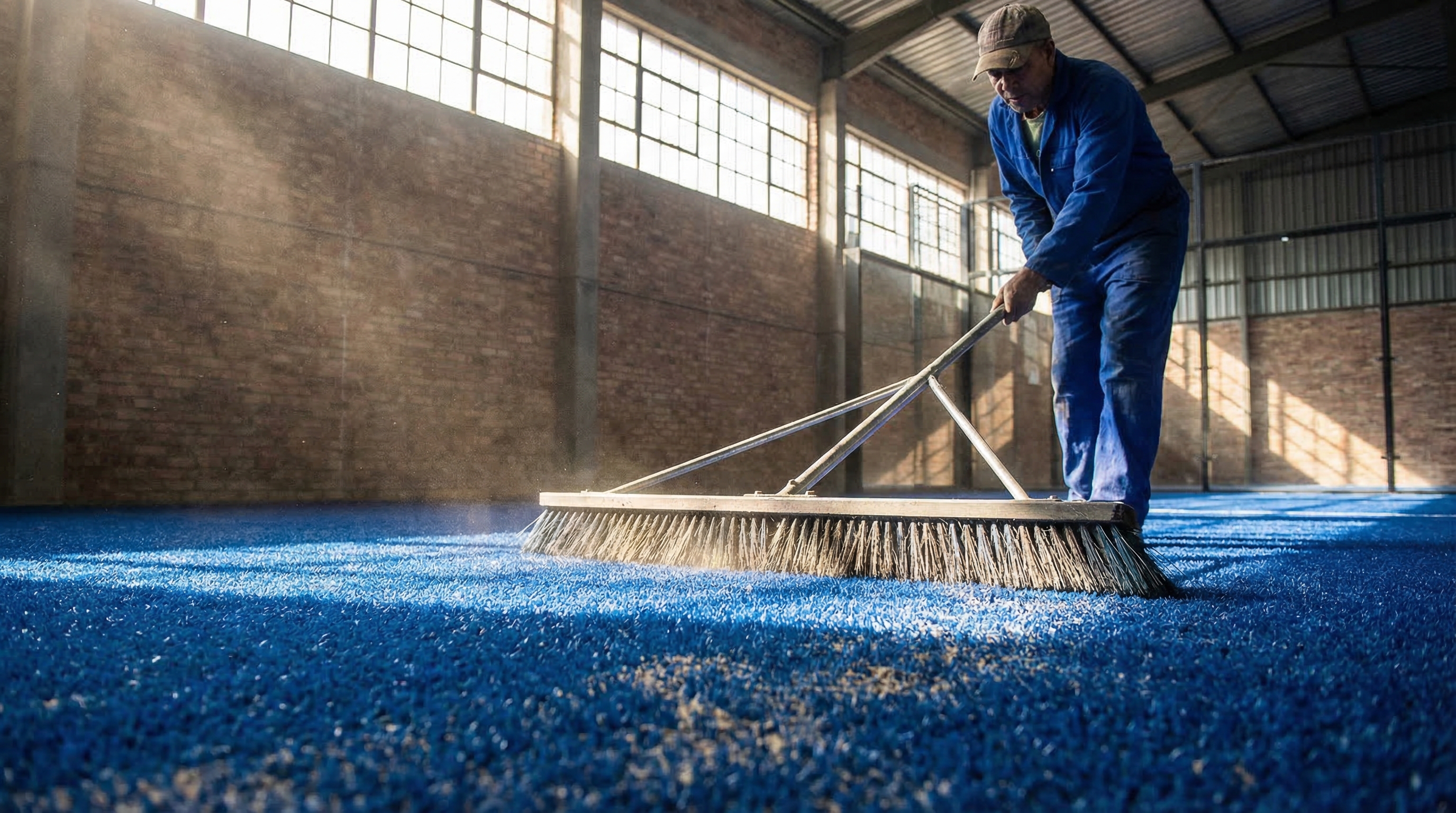
While indoor padel courts are protected from the rain, they require a specific maintenance routine to handle dust, sweat, and sand redistribution. If you don’t brush the turf regularly, the silica sand will migrate to the edges, causing the playing surface to become slippery and uneven.
The glass walls also require frequent cleaning to maintain their transparency and professional appearance. You should periodically check all the hardware and bolts to ensure the structure remains perfectly rigid and safe for play.
Surface Cleaning and Sand Redistribution
You will need a specialized triangular brush to lift the turf fibers and keep the sand level. This simple weekly task prevents the turf from matting down and ensures the ball bounce stays consistent across the entire court.
- Brush the court in multiple directions.
- Focus on the high-traffic areas near the baseline.
- Remove any debris or dust that can clog the turf.
Think about it. Five minutes of maintenance a week can double the lifespan of your expensive artificial grass.
Glass Integrity and Hardware Inspections
You should inspect the glass clamps and structural bolts every quarter to ensure nothing has loosened due to the vibration of play. Clean the glass with a simple squeegee to keep it free from fingerprints and sweat marks.
Here is the kicker: a clean court looks significantly more inviting to new members, boosting your facility’s professional image.
Key Takeaway: Weekly brushing and monthly glass cleaning are sufficient to keep an indoor court in tournament-ready condition.
| Task | Frequency | Purpose |
|---|---|---|
| Brushing | Weekly | Level Sand / Lift Fibers |
| Glass Clean | Bi-Weekly | Clarity & Hygiene |
| Bolt Check | Quarterly | Structural Safety |
Consistent care preserves the high-performance characteristics of your court and ensures a safe environment for your players.
How Does Panoramic Design Change the Indoor Spectator Game?
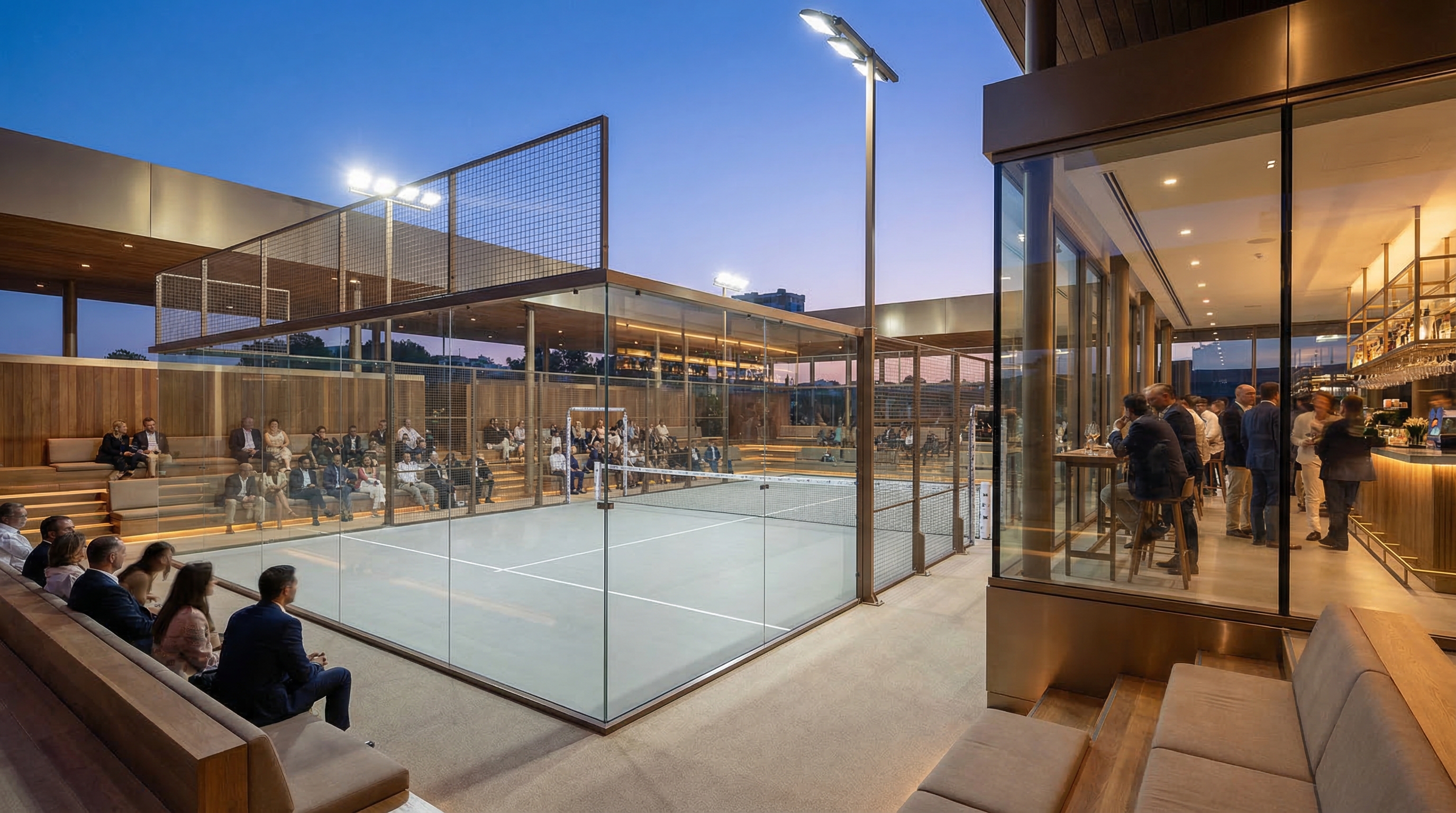
In the competitive world of indoor padel courts, visibility is the ultimate currency for facility owners. Utilizing a panoramic design removes the rear structural pillars, providing an unobstructed view of the match for spectators sitting in the lounge or bar area.
This immersive experience turns a simple match into a spectator event, making your club the preferred venue for local tournaments. You will find that panoramic courts also offer much higher social media value, as photos and videos from these courts look far more cinematic and professional.
Eliminating Rear Pillars for Maximum View
You can create a “center court” atmosphere that attracts the best players in the city. The lack of vertical steel posts in the back allows fans to see every delicate touch and powerful smash from any angle.
- Improved spectator engagement.
- Better angles for broadcasting and recording.
- A cleaner, more modern architectural aesthetic.
Think about it. If you have a bar or cafe, players will stay longer to watch matches on a panoramic court, increasing your secondary revenue.
Enhancing Facility Aesthetics for High-End Branding
You should consider panoramic glass as a statement of quality for your brand. It signals to your members that you are providing the best possible infrastructure, justifying a premium price for court rentals.
The best part? These courts are often the most requested for booking, ensuring they are the highest-performing assets in your club.
Key Takeaway: Panoramic courts are the preferred choice for center courts, as they significantly enhance the “theatre” of the sport.
| Design Type | View Quality | Best Use Case |
|---|---|---|
| Standard | Good | General Training |
| Panoramic | Excellent | Club Center Court |
| Super Panoramic | 360° Elite | Tournaments / TV |
Investing in panoramic aesthetics is a powerful way to differentiate your facility and build a reputation as a premium padel destination.
*
We have explored the technical specifications, ROI benefits, and construction requirements that define the world’s most successful padel facilities. From sourcing factory-direct materials to optimizing ceiling heights and lighting, this article has provided the roadmap for building a top-tier indoor club. At Superbpadel, we specialize in helping investors transform empty spaces into high-performance revenue engines.
Whether you need a single panoramic court or a full multi-court complex, we are here to provide the engineering expertise and high-quality materials you need to succeed. We believe that padel is more than just a sport; it is a community-driven business that deserves the highest standards of structural integrity and aesthetic design. We invite you to contact us today to start planning your next sports facility and secure your place in this rapidly growing industry.
*
FAQ
Can I convert an old warehouse into indoor padel courts?
Yes, warehouses are often the best locations because they already feature high ceilings and open floor plans. You simply need to ensure the concrete floor is level and reinforced to handle the court’s structural loads.
What’s the best way to handle acoustics in a large indoor padel hall?
You should install acoustic panels on the walls or ceiling to dampen the sound of ball impacts. Choosing high-density turf with a thick backing also helps absorb vibration and reduce the “echo” effect.
How do I know if my ceiling is high enough for professional play?
You should measure at least 6 meters to the lowest structural beam, but 8 meters is the threshold for professional play. If your ceiling is lower than 6 meters, players will find it difficult to execute standard lobs.
Can I customize the color of my indoor court structure?
Yes, we provide full OEM support allowing you to choose any RAL color for your steel frames. This is a great way to align the facility’s look with your existing club branding or logo.
What height is required for a professional-grade indoor facility?
For tournament-grade facilities, you should aim for a minimum of 8 meters. However, top-tier international clubs often target 10 meters of clearance to ensure the highest level of play is possible without interference.