Operators struggle with awkward land parcels that cannot support wide doubles courts. Utilizing professional single padel court dimensions transforms these tight areas into profitable training hubs. Our team provides engineering expertise guaranteeing your facility meets every technical safety requirement. This strategic approach maximizes revenue potential within restricted urban sports environments. Ready for the good part? You might lose thousands by leaving narrow strips of land completely unmonetized. Converting those zones into 1v1 athletic spaces offers a smart solution for modern club owners. Professional builders recognize that precision engineering exists as a necessity for high-performance padel environments. Our proven track record guarantees your installation withstands intense daily use while maintaining aesthetic appeal.
1. What are the exact single padel court dimensions?
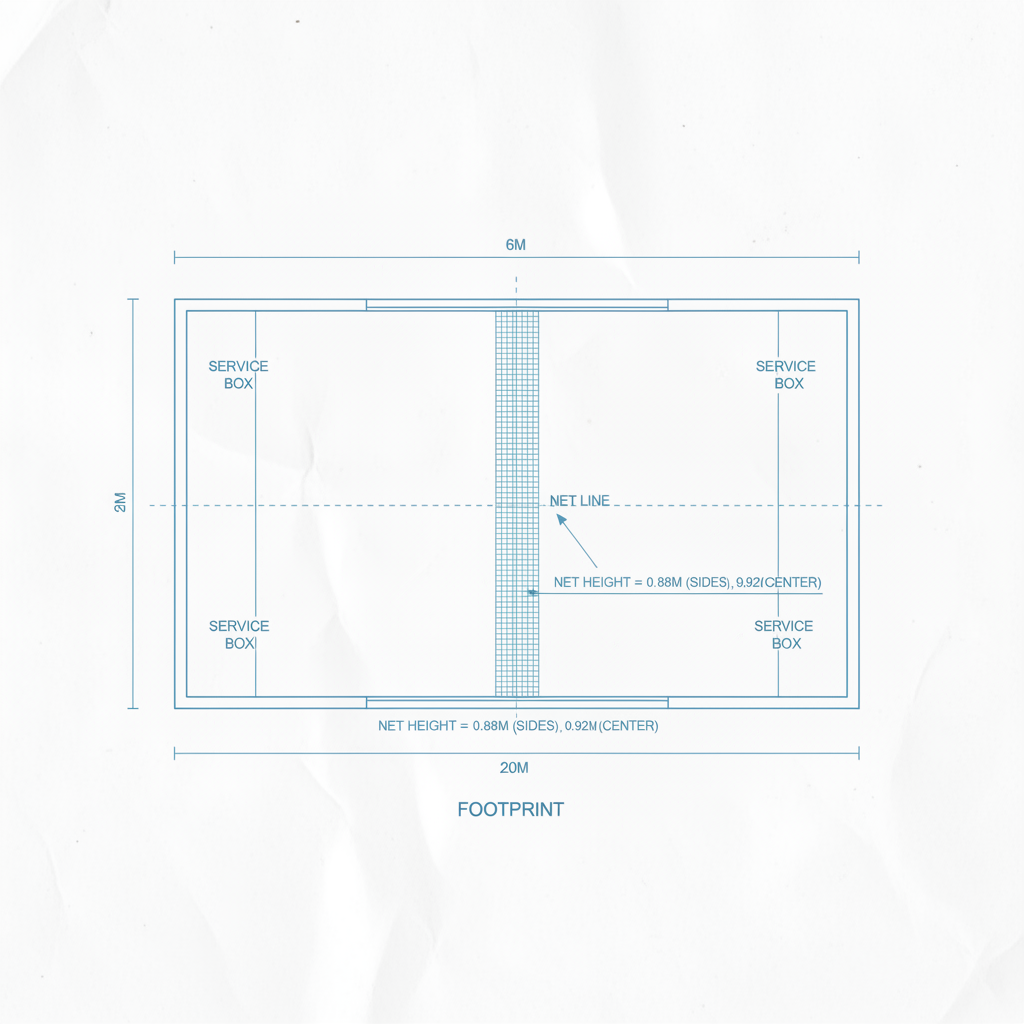
Technical single padel court dimensions require an internal playing area measuring exactly 6 meters wide and 20 meters long. This rectangular geometry provides 120 square meters of space perfectly balanced for one-on-one professional play. You must verify these metrics before pouring your concrete base. Professional builders favor this format for narrow land parcels. Here is the deal, using exact measurements prevents future technical disputes during tournaments. High-grade materials maintain structural integrity over decades of heavy use. Every millimeter counts when you aim for federation-level certification. Small errors during construction lead toward significant drainage problems or glass misalignment later.
Technical specifics of the six by twenty configuration
You might be wondering, how these metrics affect athlete movement?
- Sidelines measure twenty meters long.
- Back walls span six meters.
- Service lines sit 6.95 meters back.
- Total area equals 120sqm.
Metrics Comparison Table
| Feature | Single Court | Double Court | Difference |
|---|---|---|---|
| Internal Width | 6 Meters | 10 Meters | 4 Meters |
| Internal Length | 20 Meters | 20 Meters | 0 Meters |
| Total Area | 120 m² | 200 m² | 80 m² |
This data confirms that single courts occupy forty percent less horizontal space than standard doubles.
Key Takeaway
Precision in single padel court dimensions guarantees your facility meets international safety standards while providing an elite playing experience for enthusiasts.
2. How do single layouts compare to panoramic designs?
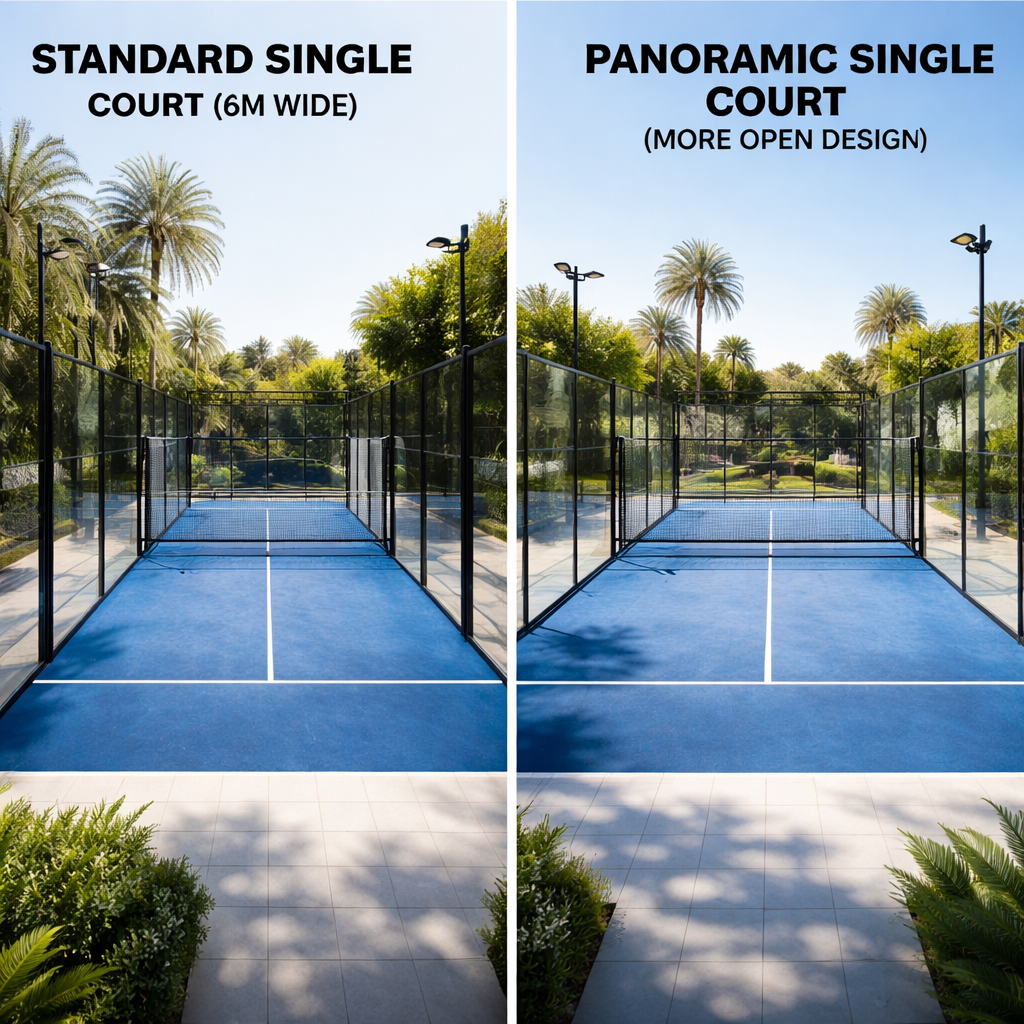
Single courts utilize the same length as panoramic models but reduce width to fit narrower facility footprints. While standard single courts use vertical steel pillars, panoramic designs eliminate these supports for an unobstructed 360-degree view. This high-end visual appeal makes a 1v1 court feel significantly more spacious and luxurious for participants. Look closer, combining a single court footprint with panoramic glass creates a stunning boutique sports environment. Removing corner pillars allows spectators to witness every fast-paced movement without interference. Elite clubs often choose this aesthetic for high-profile training zones. It creates a premium atmosphere that justifies higher booking fees.
Visual impact and structural stability for 1v1 play
But wait, there is more, regarding the structural benefits of this design.
- Pillar-free glass enhances visibility.
- Tempered glass resists heavy impacts.
- Steel frames provide lateral stability.
- Lighting rigs attach to top beams.
Design Variation Table
| Design Type | Pillar Usage | Glass Thickness | Viewing Angle |
|---|---|---|---|
| Standard Single | Vertical Posts | 10mm Tempered | 180 Degrees |
| Panoramic Single | No Mid-Pillars | 12mm Tempered | 360 Degrees |
| Junior Model | Aluminum Frame | 8mm Tempered | 180 Degrees |
This architectural comparison highlights that panoramic layouts offer superior marketing potential despite specialized glass requirements.
Key Takeaway
Merging single court sizes with panoramic structural elements provides a high-tier aesthetic that attracts elite clientele and maximizes visibility.
3. Why choose a single court over a standard double?
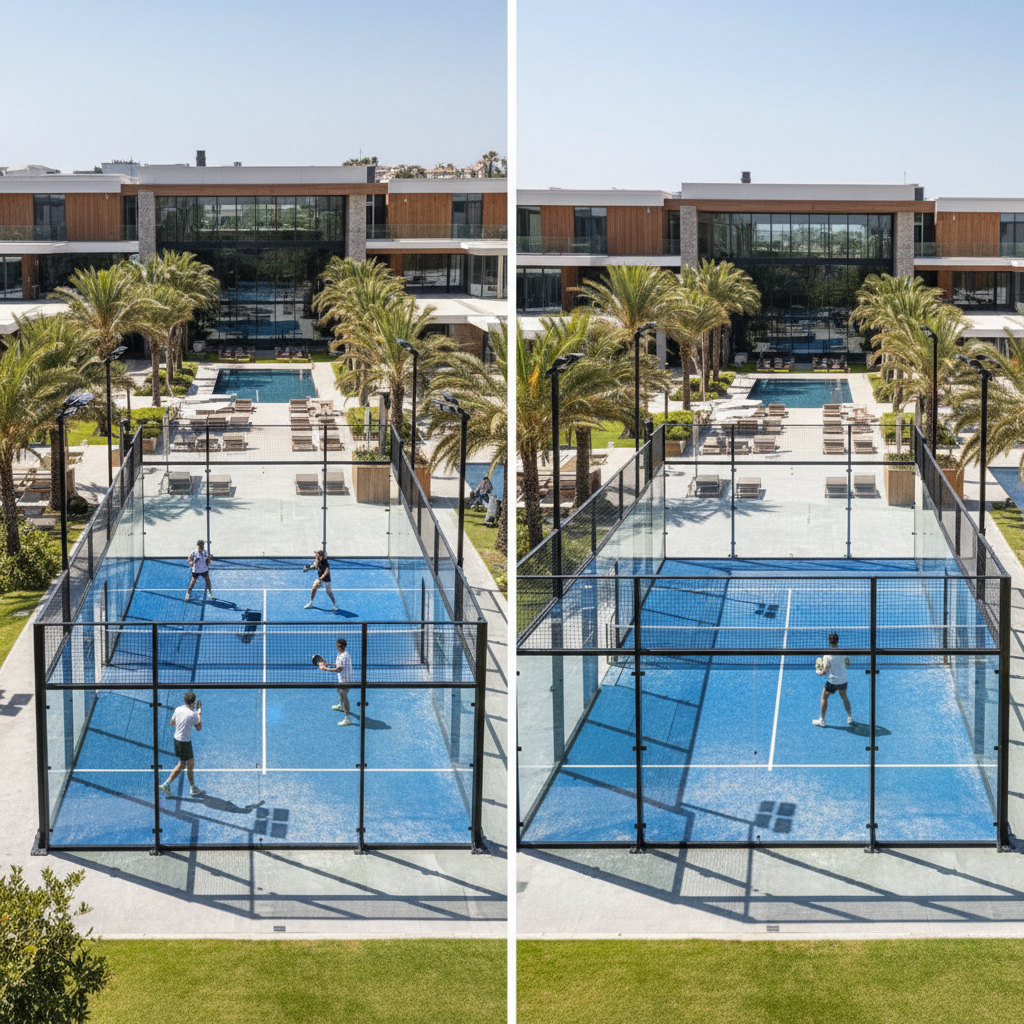
Choosing a single court involves optimizing single padel court dimensions to fit narrow real estate lots. Many operators find that certain land parcels remain too narrow for doubles but accommodate the 6-meter blueprint. This strategic decision allows you to generate significant rental profit from dead zones. Now for the good part, the 1v1 format is increasingly popular among busy professionals wanting focused cardio workouts. Individual play focuses on technical skills that doubles matches often overlook. Coaches prefer these compact spaces for private lessons. You can charge a premium for exclusive one-on-one sessions.
Revenue optimization and the 1v1 training market
This is where it gets interesting, considering the financial returns of 1v1 zones.
- Higher revenue per square meter.
- Increased booking frequency for singles.
- Lower maintenance costs for turf.
- Faster cleaning for glass panels.
Profitability Projection Table
| Asset Type | Rent per Hour | Land Footprint | Revenue Efficiency |
|---|---|---|---|
| Single Court | $40 | 120 m² | $0.33 per m² |
| Double Court | $60 | 200 m² | $0.30 per m² |
| Training Zone | $30 | 80 m² | $0.37 per m² |
Maximizing narrow strips of land with 1v1 courts provides better overall returns than leaving those areas unmonetized.
Key Takeaway
Single courts represent an efficient way for converting restricted real estate into high-performing revenue streams without compromising authentic play.
4. What is the difference between classic and single styles?
Differences between classic and single styles center on adjusted grid patterns and mesh density required for narrower sidelines. While both styles utilize twenty meters in length, single models require a more durable structural frame. You will notice that 1v1 play places higher stress on side glass because players have less horizontal ground. What’s the real story? The smaller frame allows for faster modular assembly which reduces your total project timeline significantly. Builders often complete these units within seventy-two hours. This rapid deployment gets your business operational faster. Less material usage means lower shipping costs for international orders.
Mesh configurations and glass thickness requirements
Ready for the good part? Let us examine the technical components used.
- Electro-welded mesh resists rust.
- High-tension cords support the net.
- Galvanized steel prevents structural decay.
- Silicone joints seal glass panels.
Material Comparison Table
| Component | Classic Double | Single Style | Installation Time |
|---|---|---|---|
| Glass Panels | 18 Total | 14 Total | 2 Days |
| Steel Weight | 3,500 kg | 2,200 kg | 1 Day |
| Turf Rolls | 4 Large | 2 Large | 1 Day |
The reduced weight and fewer components mean single courts are cheaper for shipping and faster for assembling in tight spaces.
Key Takeaway
Choosing a high-quality single layout gives you a durable professional-grade asset that remains easier for installing than traditional oversized structures.
5. How do padel measurements differ from tennis sizes?
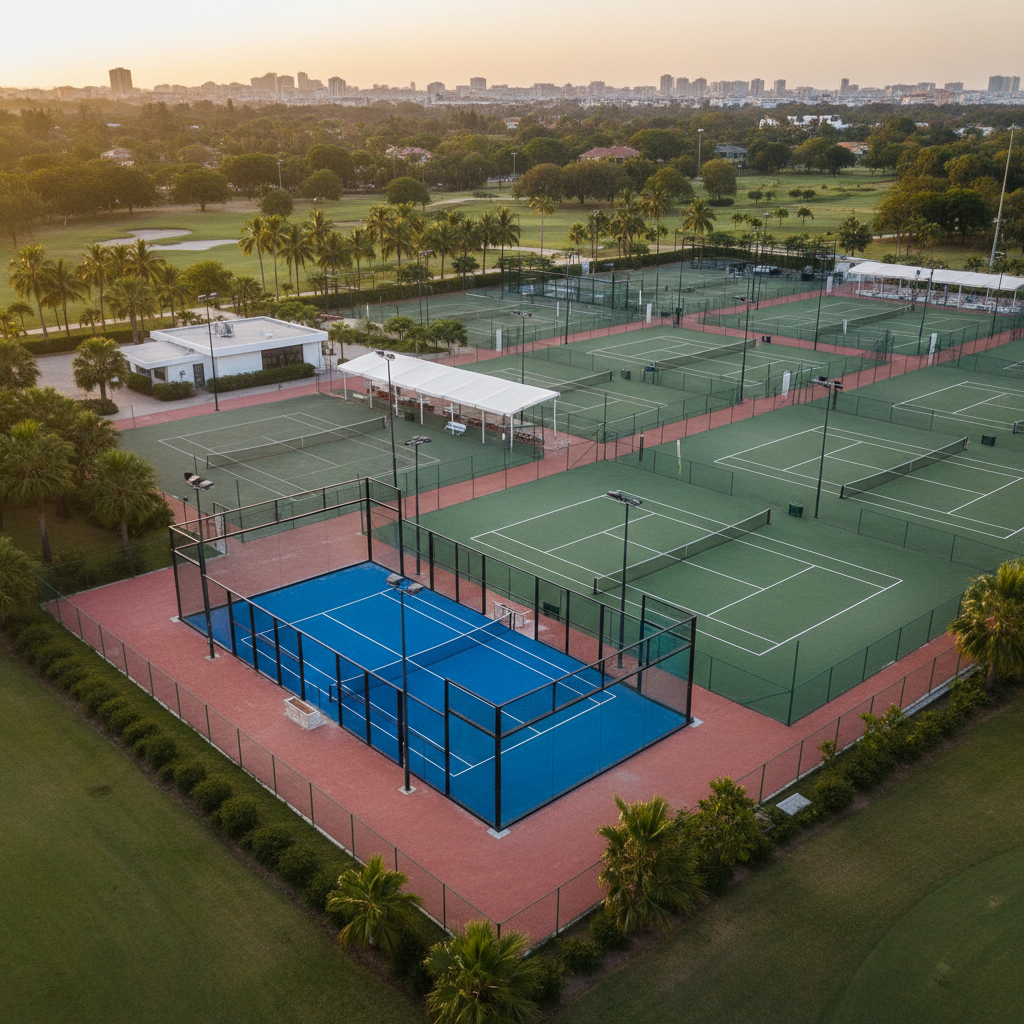
Understanding single padel court dimensions reveals that standard tennis requires over 260 square meters while single padel needs 120. This massive difference in footprint allows you to triple your player capacity on the same piece of land. But here’s the kicker, tennis courts often remain underutilized due to the higher skill ceiling required for a match. You can fit three 1v1 courts into the area of one tennis court. This maximizes your revenue per square meter instantly. Investors prefer this high-density model for urban gym developments. It caters to a wider demographic of players.
Footprint comparison and facility density
You might be wondering, how much land you can save by switching?
- Tennis needs large runoff zones.
- Padel uses glass as walls.
- Urban clubs maximize limited space.
- Multiple matches happen simultaneously.
Space Efficiency Table
| Sport Type | Total Area | Player Capacity | Land Utilization |
|---|---|---|---|
| Tennis Single | 260 m² | 2 Players | Low |
| Padel Single | 120 m² | 2 Players | High |
| Padel Double | 200 m² | 4 Players | Moderate |
By replacing one tennis court with three single padel courts, you maximize the utility of your land while catering to modern demand.
Key Takeaway
Transitioning from tennis toward padel layouts dramatically increases the profitability of every square meter while serving a larger member base.
6. What vertical clearance is needed for canopy installs?
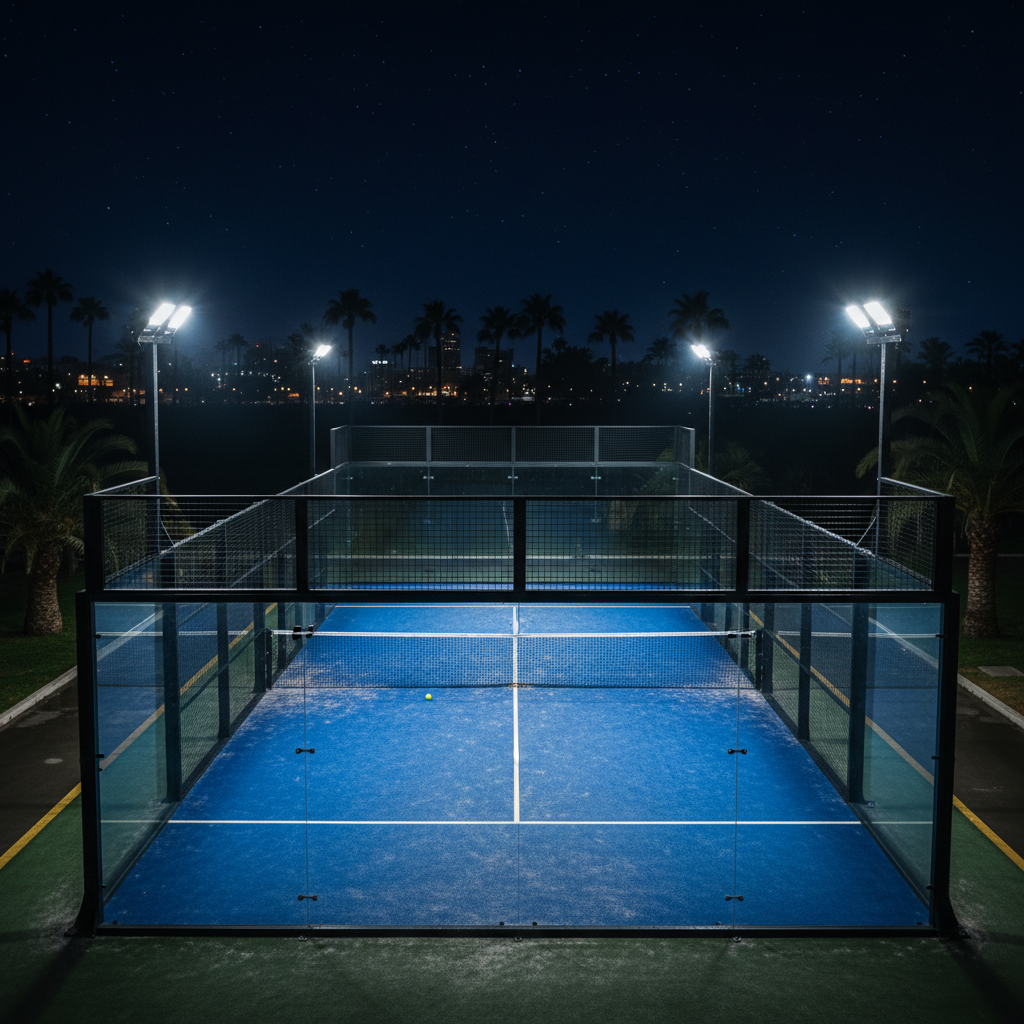
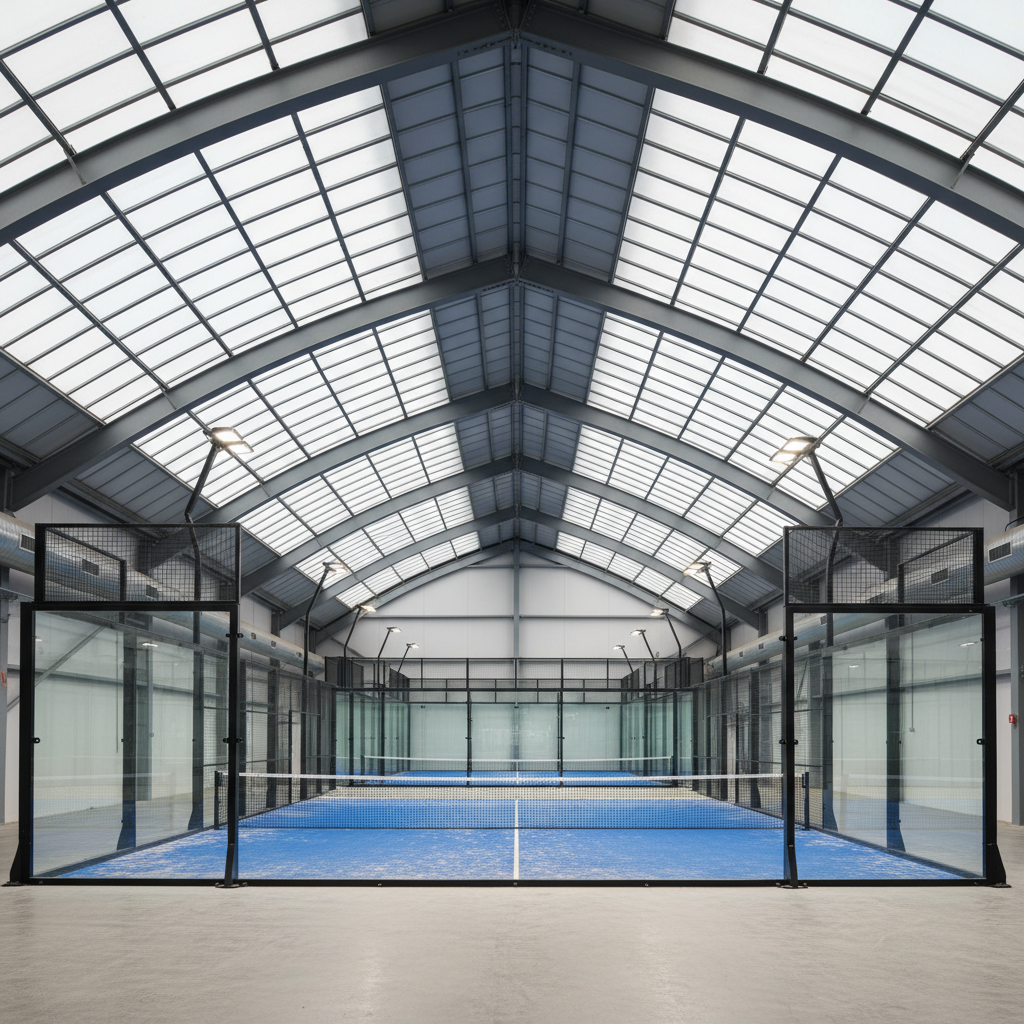
Clearance requirements for a roofed zone must account for a minimum vertical height of at least six meters for lobs. Professional facilities aim for eight meters to provide an unrestricted experience for high-level competitive athletes. Your canopy design must also consider lighting placement to avoid creating distracting shadows on the 6-meter wide surface. Think about this, your canopy structure must be engineered to withstand local wind loads while maintaining a slim profile. Proper ventilation prevents humidity buildup during intense summer matches. Using translucent materials allows natural light to enter during daytime hours. This reduces electricity costs for your sports club significantly.
Vertical height for lobs and pillar placement
Look closer, the architectural height affects how players use the space.
- Higher roofs allow defensive lobs.
- Low ceilings restrict tactical play.
- Slim pillars maximize internal room.
- Curvaceous roofs shed rainwater easily.
Canopy Specification Table
| Roof Style | Minimum Height | Lighting Level | Wind Resistance |
|---|---|---|---|
| Flat Metal | 6.0 Meters | 300 Lux | Moderate |
| Arched Fabric | 8.0 Meters | 500 Lux | High |
| Retractable | 7.0 Meters | 400 Lux | Low |
Investing in a higher roof plus professional LED lighting creates a premium indoor atmosphere that allows for year-round revenue generation.
Key Takeaway
Proper vertical clearance plus strategic canopy engineering guarantees your single court remains playable in all weather conditions while maintaining professional standards.
7. What are the specific net and service area requirements?

Specific net requirements for single padel court dimensions mandate a central height of 0.88 meters for clean ball passage. The posts must stand slightly higher at 0.92 meters to guarantee the net remains taut across the entire width. This tension is vital because players frequently hit angled shots that clip the top cord near the sidelines. Ready for the good part? Service boxes are positioned exactly 6.95 meters from the back glass wall for standard play. While the box is narrower in a single court, the depth remains familiar for experienced participants. Maintaining these proportions ensures skills translate toward any professional venue.
Net height regulations and service box geometry
Wait, there is more, regarding the technical marking of the surface.
- White lines measure 5cm wide.
- Net mesh prevents ball stuckness.
- Tensioners adjust the cord height.
- Center straps hold the net.
Regulatory Marking Table
| Marking Type | Exact Dimension | Color Standard | Purpose |
|---|---|---|---|
| Service Line | 6.95m from Back | White | Rule Enforcement |
| Center Line | Splits Court Width | White | Side Definition |
| Net Height | 0.88m at Center | Black/White | Play Integrity |
Maintaining these exact technical proportions guarantees that the skill sets developed by players on your courts will translate perfectly toward any venue.
Key Takeaway
Adhering toward standard net heights plus service box markings guarantees your single court is fully compliant with international tournament regulations.
8. What ground preparation is needed for a foundation?
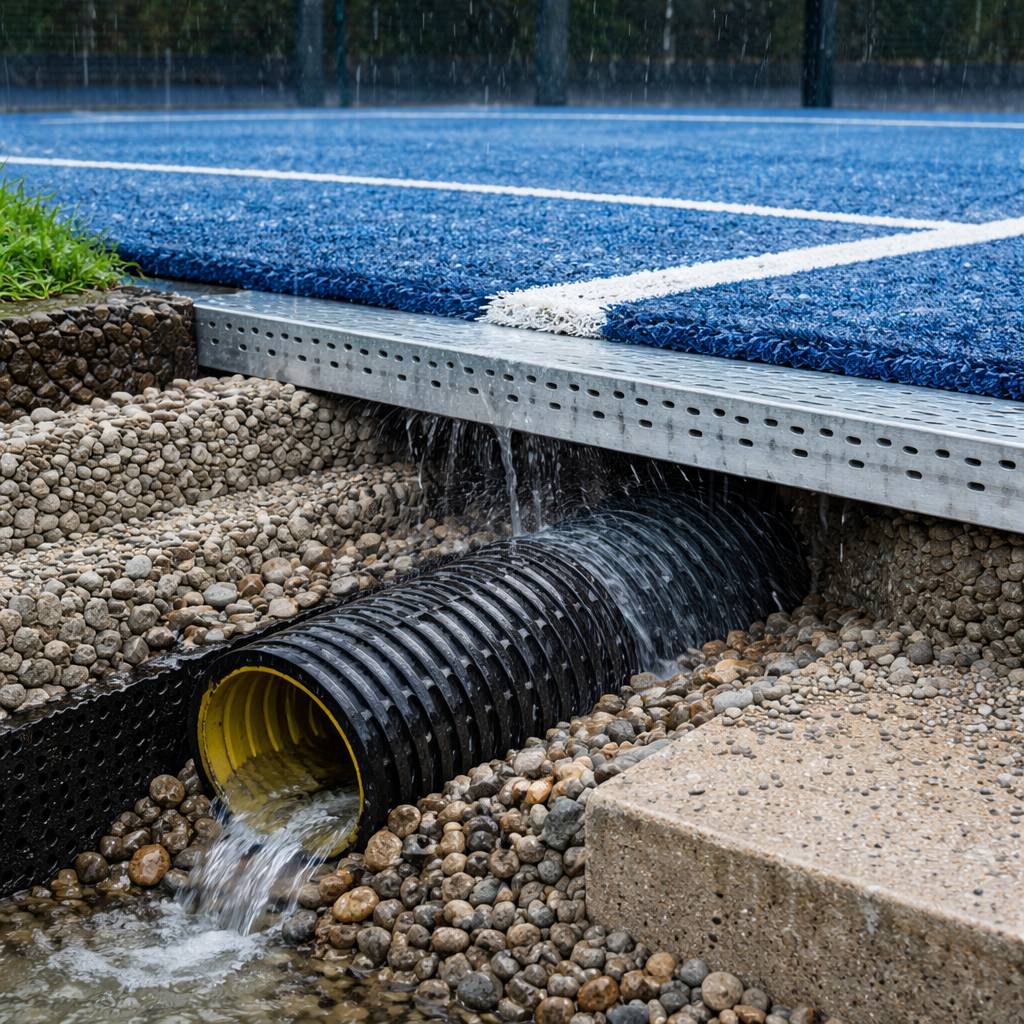
Ground preparation for 1v1 courts begins with a reinforced concrete slab that must be perfectly level across the footprint. You need a foundation thickness of at least 15 to 20 centimeters to support heavy glass panels and steel frames. This base serves as the primary anchor point which prevents shifting or cracking during seasonal temperature changes. Here’s the deal, a poor foundation will lead to uneven glass alignment which can cause panels to shatter. Using high-strength concrete guarantees a smooth surface for synthetic turf adhesion. This prevents tripping hazards for athletes during fast sprints. Professional site surveys help identify potential soil stability issues early.
Concrete slab thickness and drainage requirements
But wait, there is more, regarding the management of moisture underground.
- Porous concrete aids natural drainage.
- Steel mesh strengthens the slab.
- Perimeter channels redirect heavy rain.
- Leveling compounds remove small dips.
Foundation Metric Table
| Material | Recommended Spec | Load Capacity | Durability |
|---|---|---|---|
| Concrete | HA-25 Reinforced | 250 kg/cm² | High |
| Sub-base | 100mm Gravel | 150 kg/m² | Moderate |
| Turf Glue | Polyurethane | Weatherproof | High |
Focusing on these technical foundation details prevents future maintenance headaches and guarantees your court remains a premium asset for decades.
Key Takeaway
A high-quality reinforced concrete foundation with proper drainage exists as the bedrock for a safe plus professional-grade single padel court.
9. How much space can you save with a 1v1 court?
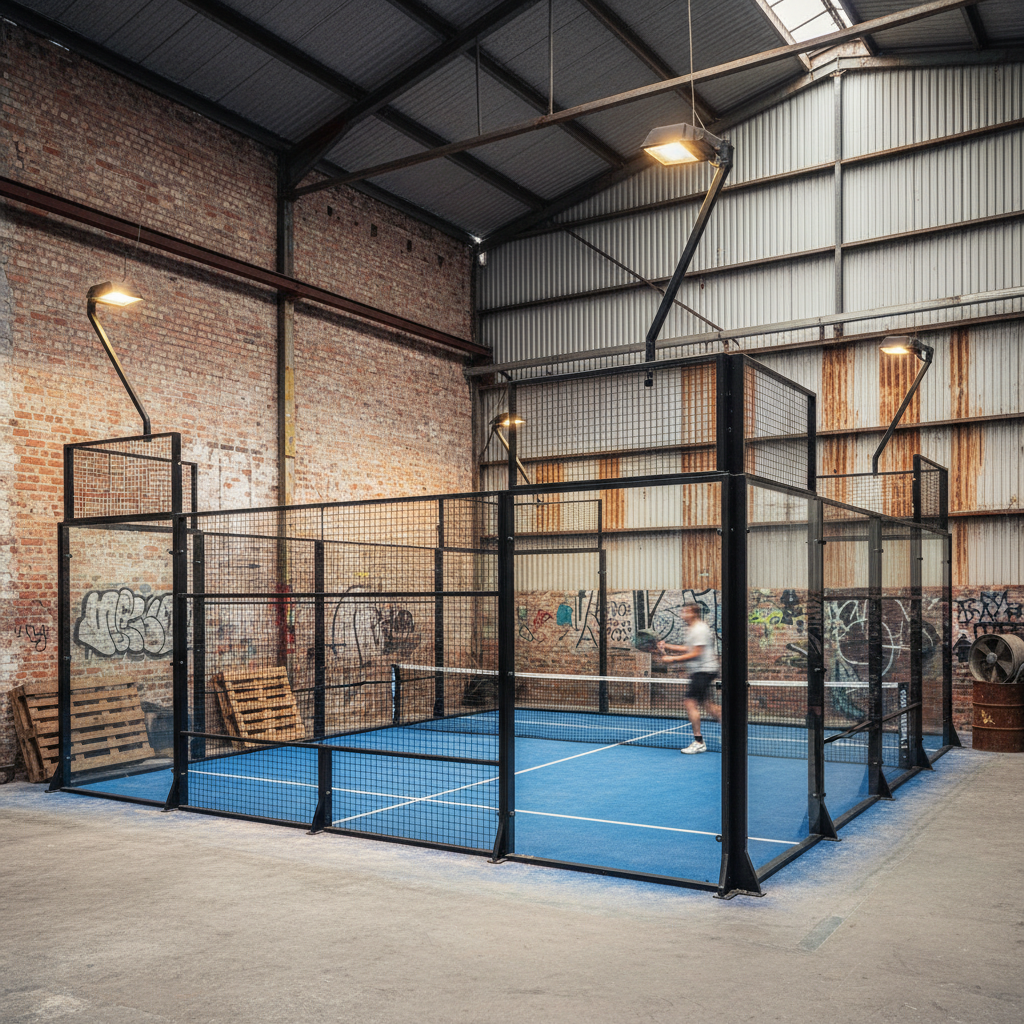
Saving space with single padel court dimensions allows you to build a world-class facility in dense city centers. You can fit two single courts in a space that would only accommodate one double court plus a walkway. This spatial efficiency doubles your potential for hosting coaching clinics and private lessons simultaneously without increasing land rent. This is where it gets interesting, urban sports clubs are pivoting toward these compact models to maximize their profitability. Smaller footprints allow for easier integration into existing rooftops or hotel terraces. You can transform underutilized parking zones into active revenue centers.
Perimeter clearance and walkway management
You might be wondering, how much clearance you need between adjacent units?
- One meter allows for movement.
- Safety zones protect the glass.
- Benches fit in tight gaps.
- Bag storage stays outside lines.
Space Saving Table
| Configuration | Total Land Used | Player Density | ROI Potential |
|---|---|---|---|
| Single Layout | 120 m² | 2 Players | Very High |
| Double Layout | 200 m² | 4 Players | Moderate |
| Multi-Unit Row | 360 m² | 6 Players | Maximum |
This analysis highlights that while two single courts use slightly more space than one double, charging two separate fees significantly boosts ROI.
Key Takeaway
Single courts exist as the ultimate tool for spatial problem-solving in modern sports facility design and urban real estate development.
10. How do you build a single padel court from scratch?
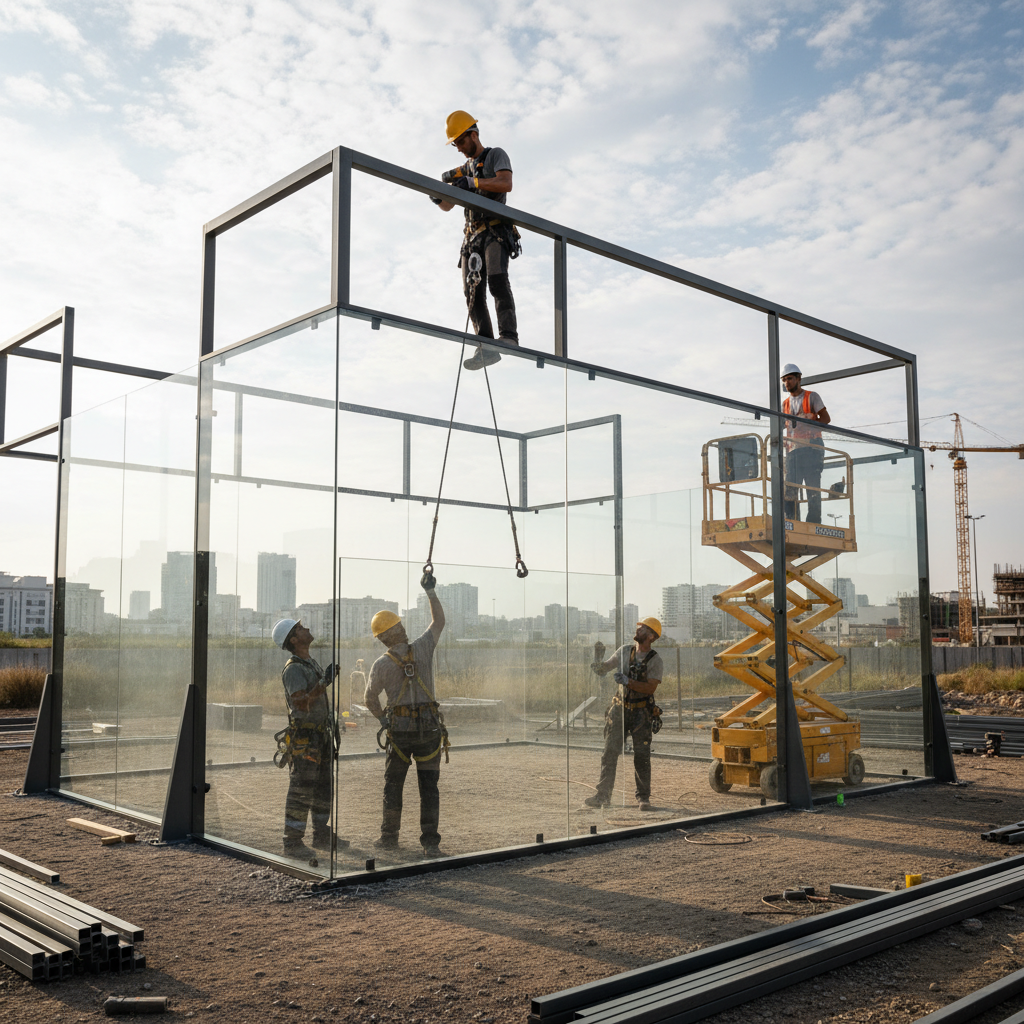
Building a court requires a systematic approach starting with a detailed site survey to verify the ground is stable. You must confirm that the sub-base is level before any reinforced concrete is poured for the foundation. Once the slab is cured, the modular assembly process begins by bolting galvanized steel pillars into pre-marked anchor points. Look closer, seeing the structure rise from the ground is when your vision for a new facility becomes reality. Precise alignment of the frame prevents stress on the glass panels later. Professional teams use laser levels to check every angle during the bolting phase.
Structural assembly and synthetic turf installation
Now for the good part, regarding the final finishing touches of construction.
- Galvanized frames resist saltwater spray.
- 12mm glass provides superior bounce.
- Fibrillated turf holds sand evenly.
- LED lamps illuminate every corner.
Construction Phase Table
| Phase Name | Duration | Critical Task | Tool Used |
|---|---|---|---|
| Groundwork | 5 Days | Slab Leveling | Laser Level |
| Steel Frame | 2 Days | Pillar Anchoring | Impact Wrench |
| Finishing | 1 Day | Turf Seaming | Glue Spreader |
Successful construction relies on combining high-quality materials with precise engineering for creating a sports facility that attracts players and generates profit.
Key Takeaway
Following a strict construction checklist guarantees your single court is built toward the highest standards of safety, performance, and long-term durability.
Implementing a single court requires a deep understanding of technical geometry to guarantee long-term profitability. While the 6-meter width is compact, the quality requirements for glass and turf remain identical to professional tournament venues. We solve the problem of underutilized space by providing modular high-performance structures that maximize your revenue per square meter. Ready for the good part? You can transform a dormant facility into a thriving athletic hub within weeks. If you are ready for increasing your facility’s profitability and serving the growing 1v1 market, contact us today for a technical consultation.
Frequently Asked Questions
Q1: What is a single padel court?
A single padel court is a specialized 1v1 sports area measuring 6m x 20m designed for technical individual training and competition.
Q2: How does the drainage work for outdoor installations?
Outdoor courts use a 1% lateral slope on the concrete base plus perimeter channels to clear rainwater from the playing surface efficiently.
Q3: Can I install a court in a small parking lot?
Yes, you can build a court in any zone with at least 7 meters of width and a reinforced concrete base.
Q4: What glass thickness is best for high-intensity 1v1 play?
Professional builders recommend 12mm tempered safety glass to withstand the frequent impacts and higher structural stress found in 1v1 matches.
Q5: Is it possible to share pillars between two adjacent courts?
Sharing structural pillars reduces total material costs and saves space while creating a more cohesive look for your sports facility layout.