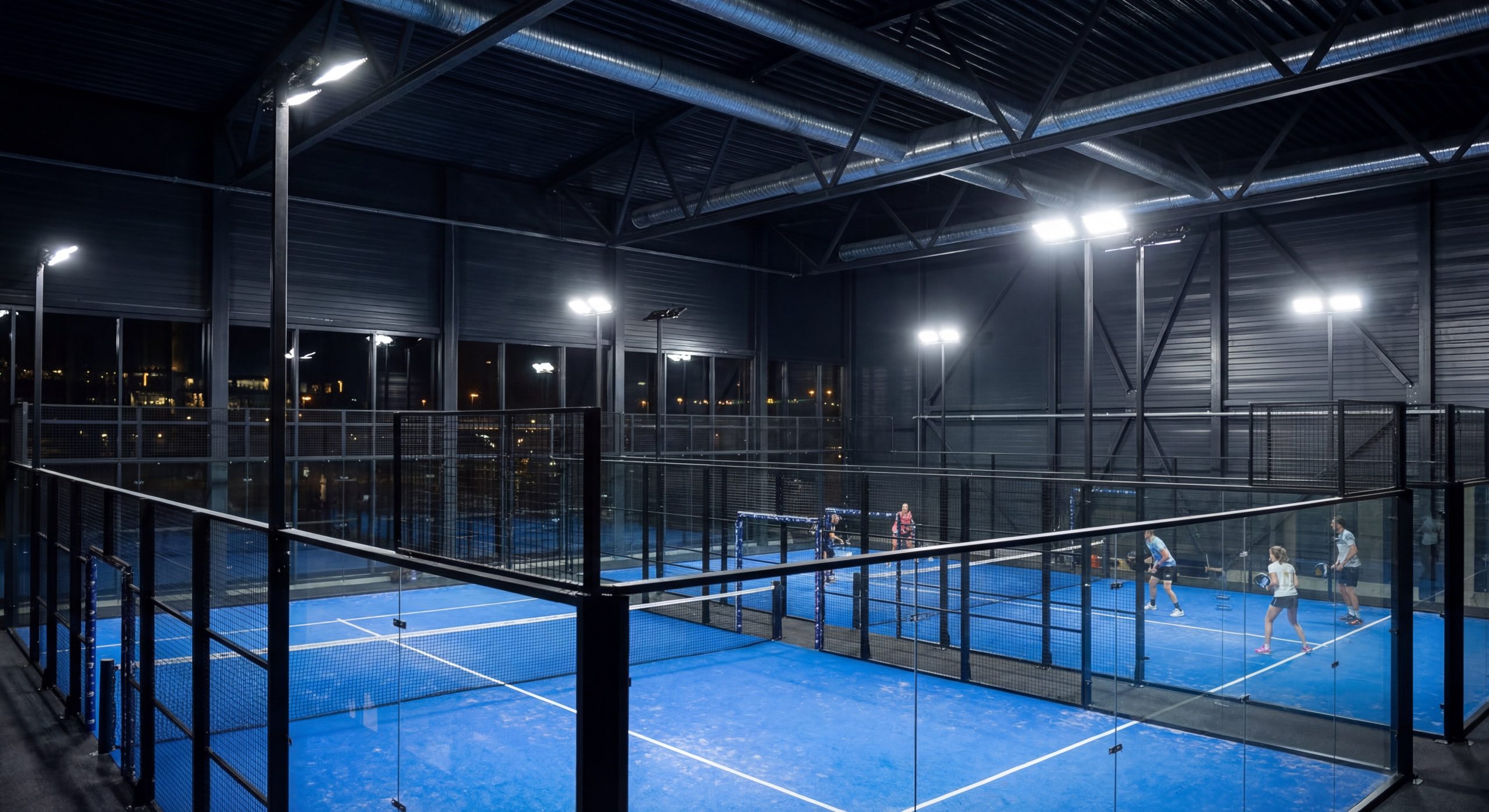
A padel indoor facility is a specialized sports environment housed within a permanent building or structure designed to provide 365-day playability. For many club owners, outdoor courts present a significant problem because unpredictable rain, extreme humidity, or scorching summer heat frequently force match cancellations. This unreliability agitates your business model by leading to lost booking revenue and frustrated players who cannot maintain their training routines. Investing in a professional padel indoor center is the ultimate solution, offering a climate-controlled atmosphere that guarantees your ROI regardless of the season.
What exactly defines a high-quality padel indoor facility?
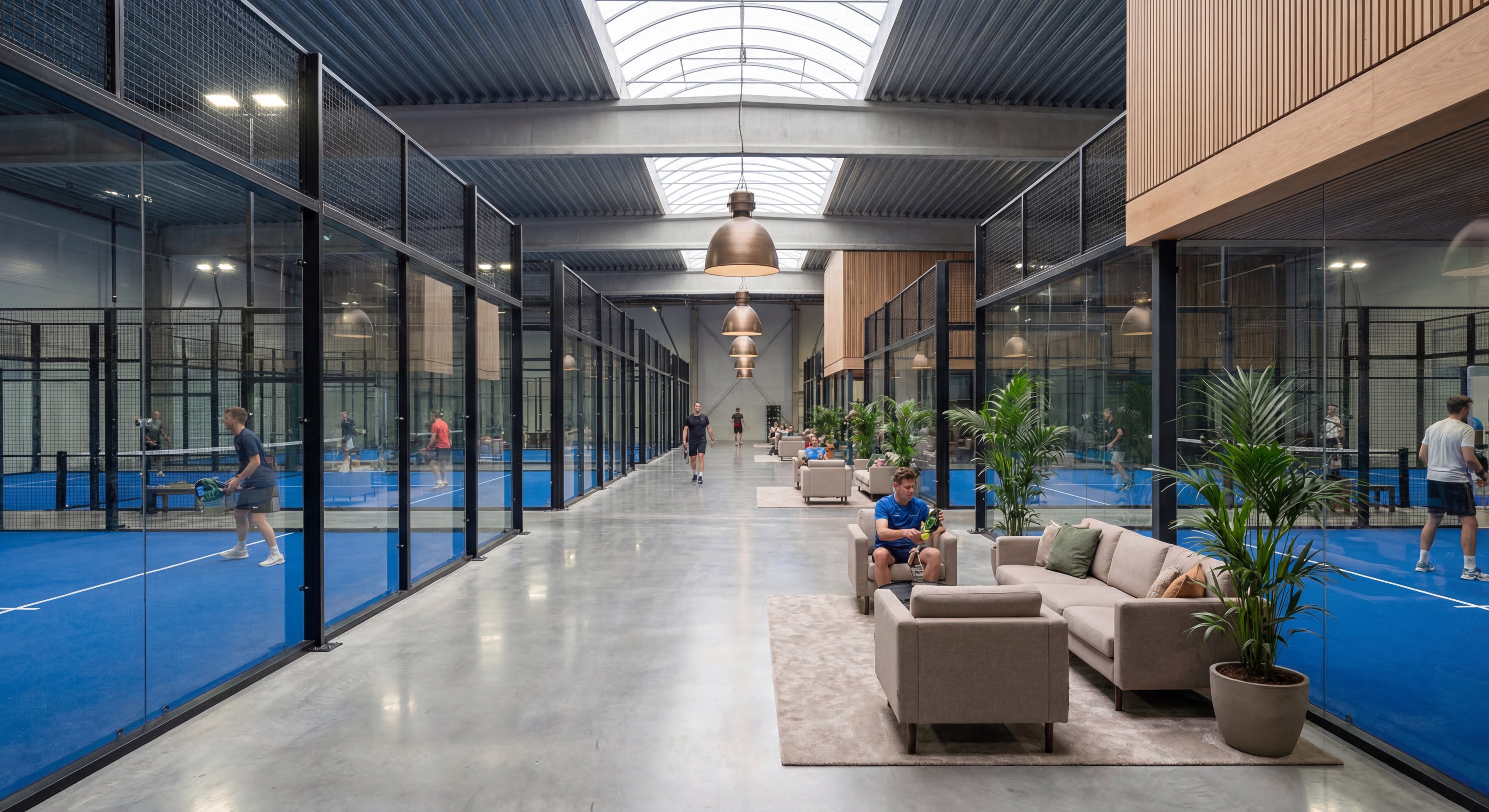
A premium facility is defined by its ability to maintain professional playing conditions inside a protected, permanent structural enclosure. To build a successful padel indoor hub, you must integrate modular steel frames with high-performance glass and specialized lighting. These facilities are often engineered using hot-dip galvanized steel to ensure the structure remains resistant to internal condensation or oxidation.
Think about it: the indoor environment provides a level of consistency that outdoor courts simply cannot match. You gain total control over the acoustics, temperature, and visual clarity of the playing area. This creates a “premium” feel that justifies higher membership fees and court rental rates for your business.
What are the core structural requirements?
The structure of an indoor court must be robust enough to handle the vibration of ball impacts while remaining easy to install in existing buildings. Most professional setups utilize a modular iron or steel frame that can be bolted directly into a level concrete slab.
- Frame Material: Hot-dip galvanized steel for maximum durability.
- Finishing: Thermo-hardened powder coating to prevent scratches and wear.
- Connectors: Stainless steel or high-grade plexiglass connectors for glass panels.
- Anchoring: Expansion bolts designed for 15-20cm industrial concrete floors.
How does the environment affect play?
In an indoor setting, players benefit from the lack of wind and sun glare, which are the two biggest obstacles in competitive padel. But wait, there’s more to consider regarding the internal atmosphere. You must ensure proper ventilation to prevent heat buildup during high-intensity matches.
Key Takeaway: High-quality indoor facilities prioritize structural durability and environmental control to provide a superior, distraction-free playing experience for athletes of all levels.
| Feature | Indoor Specification | Business Benefit |
|---|---|---|
| Material | Galvanized Iron / Steel | Zero deterioration and fireproof safety |
| Protection | Full UV and rain shield | 365 days of guaranteed bookings |
| Acoustics | Sound-dampening panels | Enhanced social and player focus |
The structural integrity of your indoor facility ensures that the initial investment leads to decades of low-maintenance operation and consistent revenue.
Why should you invest in a professional padel indoor club?
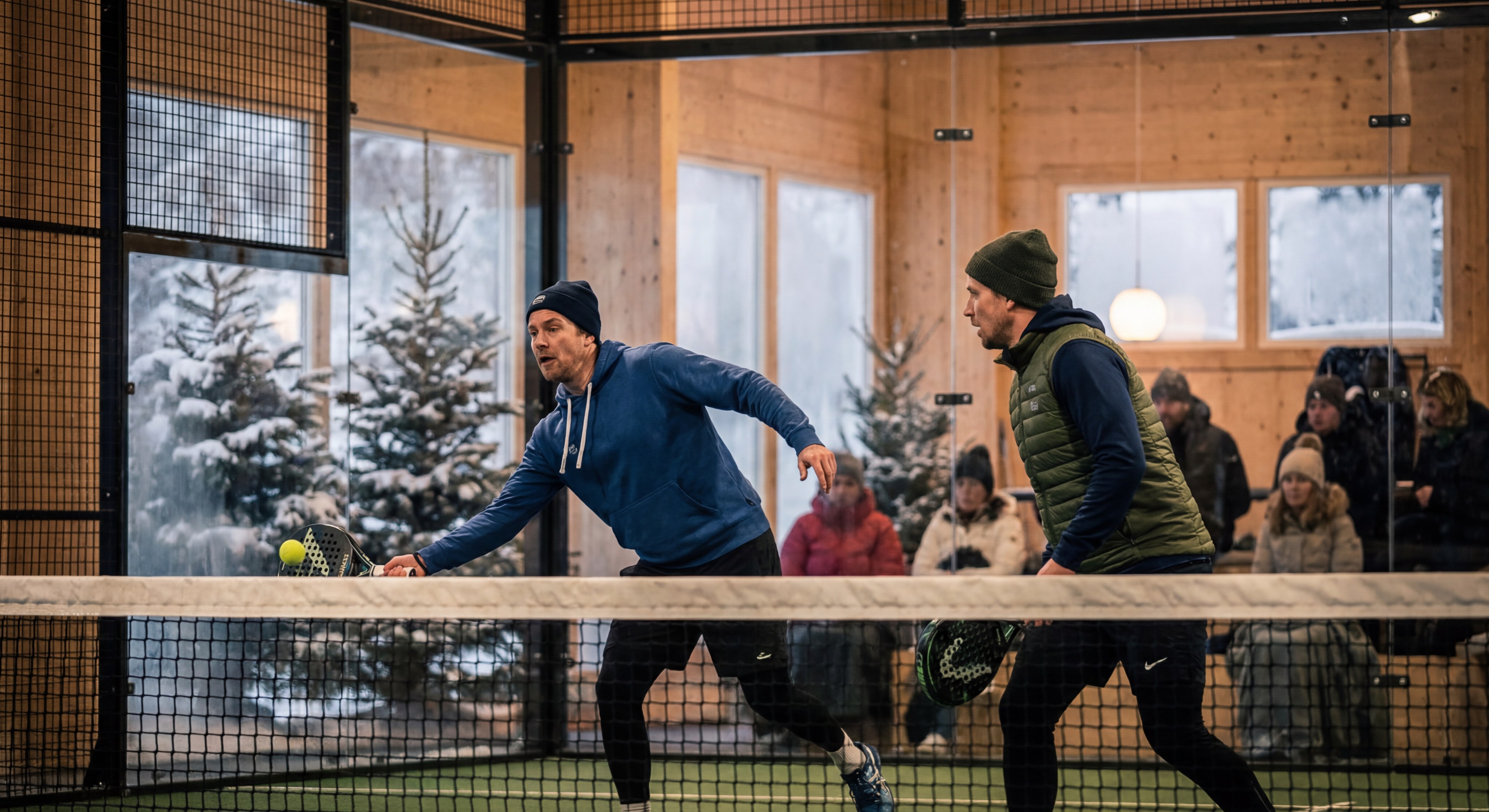
Building a professional club is a strategic move that maximizes your annual revenue by eliminating weather-related downtime completely. When you develop a padel indoor project, you are effectively buying a “weather insurance policy” for your sports business. You can view successful implementations and diverse layouts in our latest projects to see how others have optimized their space.
The financial upside is significant because indoor facilities often see 35% higher utilization rates compared to their outdoor counterparts in northern climates. Here is the kicker: players are willing to pay a premium for the comfort of a climate-controlled match during the winter or mid-day summer. This consistency allows you to build a loyal community of members who never have to check the weather forecast before booking.
Can you increase evening revenue?
Indoor facilities offer a massive advantage during the evening hours when outdoor visibility often drops or temperatures plummet. By providing a brightly lit, warm environment, you capture the lucrative “after-work” crowd that represents the bulk of court demand.
- Lighting Consistency: No shadows or sun glare during the golden hours.
- Temperature Control: Warm in winter and cool in summer via HVAC.
- Ancillary Sales: Increased bar and pro-shop revenue from players lingering longer.
- Event Hosting: Reliable scheduling for corporate tournaments and clinics.
Does it improve player retention?
Retention is the lifeblood of any sports club, and comfort is a primary driver for player loyalty. If your members can rely on a match every Tuesday at 7 PM without fail, they are far more likely to renew their memberships.
Key Takeaway: Investing in indoor courts transforms a seasonal sport into a year-round cash flow engine, providing both financial stability and a superior social environment for your players.
| Metric | Outdoor Comparison | Indoor Advantage |
|---|---|---|
| Annual Playability | ~220 Days | 365 Days |
| Utilization Rate | 60% (Estimated) | 90%+ (Peak Hours) |
| Revenue Potential | Variable | Highly Predictable |
The move toward indoor facilities is driven by the need for business predictability and the growing demand for luxury-tier sports experiences.
Where is the best place to install a padel indoor hub?
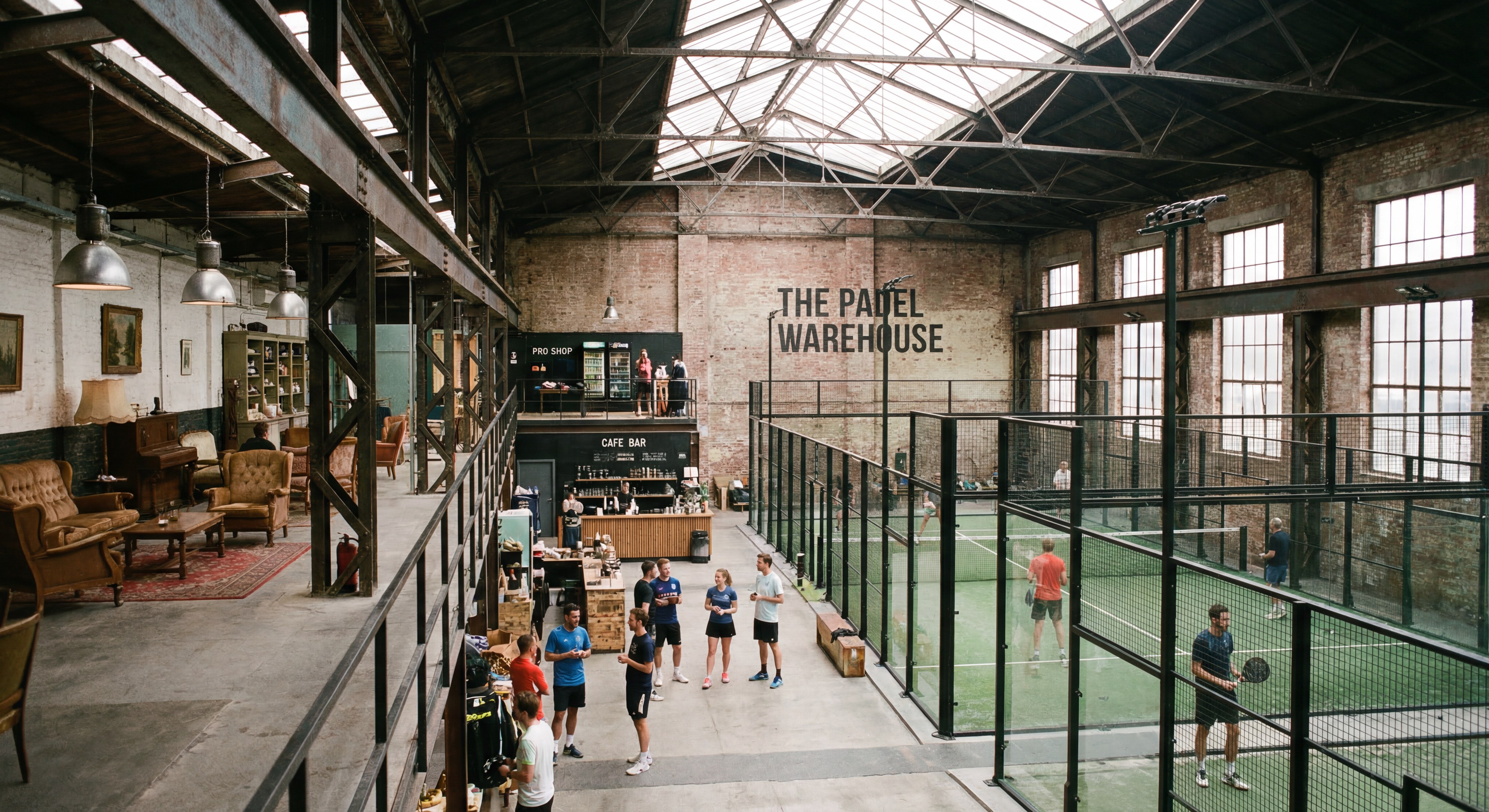
The ideal location for this type of project is typically a repurposed industrial warehouse or a large-scale commercial recreation center. To successfully launch a padel indoor venture, you need to identify a space with high ceilings and a wide-span interior free of structural columns. Many investors are currently finding success by converting old logistics centers into high-end “padel boutiques” that serve urban professionals.
But that’s not all; the location must also offer sufficient parking and accessibility to attract a high volume of daily traffic. Look for areas near residential communities or business districts where the “lunch break” and “after-work” demand is highest. A central location reduces the friction for players, making your club the default choice for their weekly games.
Are warehouses the best option?
Converting a warehouse is often the fastest and most cost-effective way to enter the market. These buildings already provide the flat concrete slabs and high clearances required for the sport.
- Cost Efficiency: No need to build a new shell from the ground up.
- Space Management: Large footprints allow for multiple courts and social zones.
- Infrastructure: Existing electrical and plumbing simplify the permit process.
- Scalability: You can start with three courts and expand as demand grows.
Can schools host indoor courts?
Educational institutions are increasingly installing covered courts to promote student health while protecting them from extreme UV exposure. This provides a safe, controlled environment for physical education programs and after-school leagues.
Key Takeaway: Choosing a location with high ceilings and easy accessibility, such as a warehouse or sports complex, is critical for operational efficiency and player satisfaction.
| Location Type | Primary Advantage | Major Challenge |
|---|---|---|
| Warehouse | High Ceilings (8m+) | Proper Ventilation |
| Sports Club | Built-in Audience | Limited Space |
| Residential | High Convenience | Noise Regulations |
Finding the right balance between ceiling height and central location will define the long-term profitability and popularity of your club.
What dimensions are required for a standard padel indoor court?
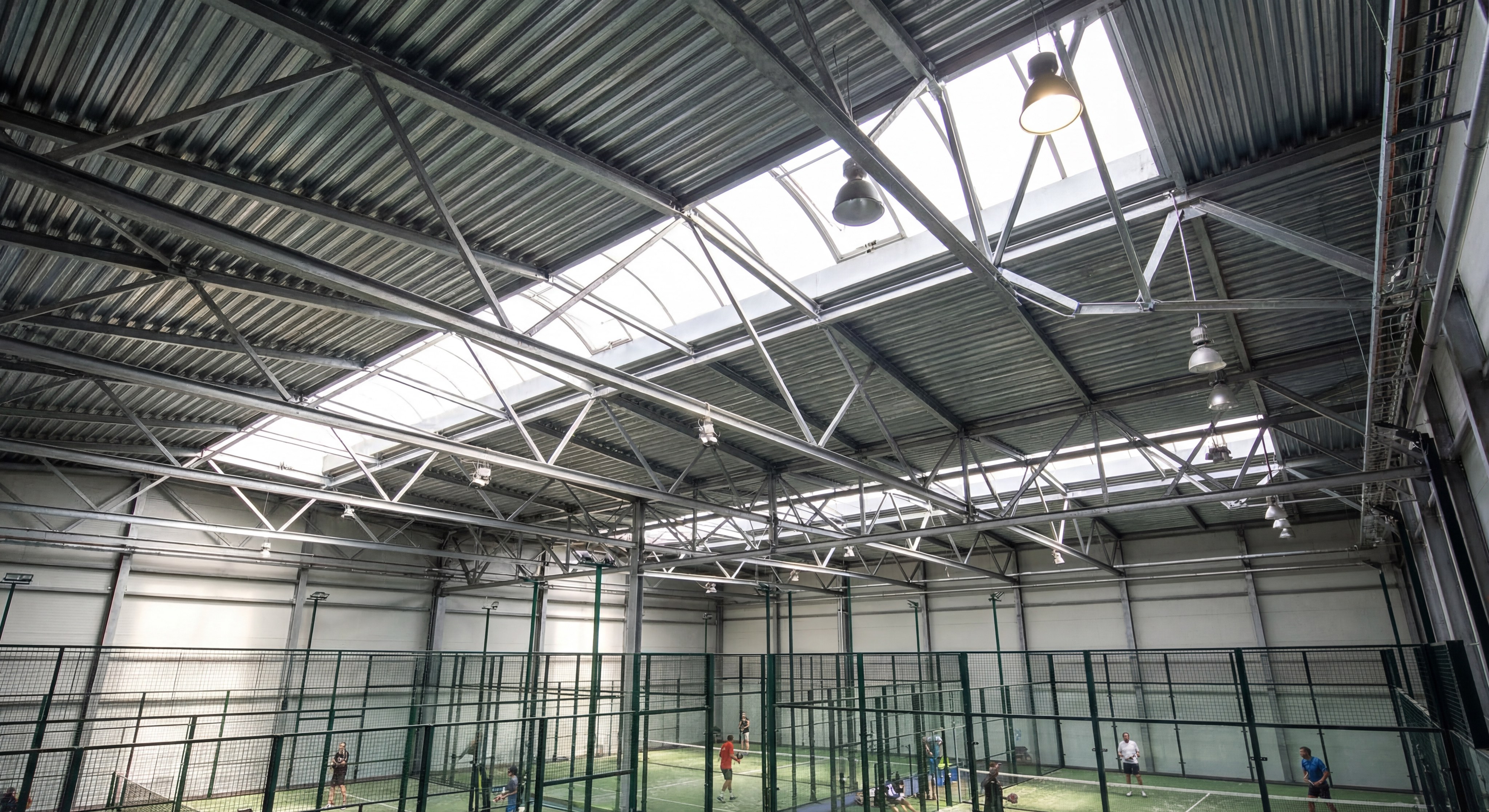
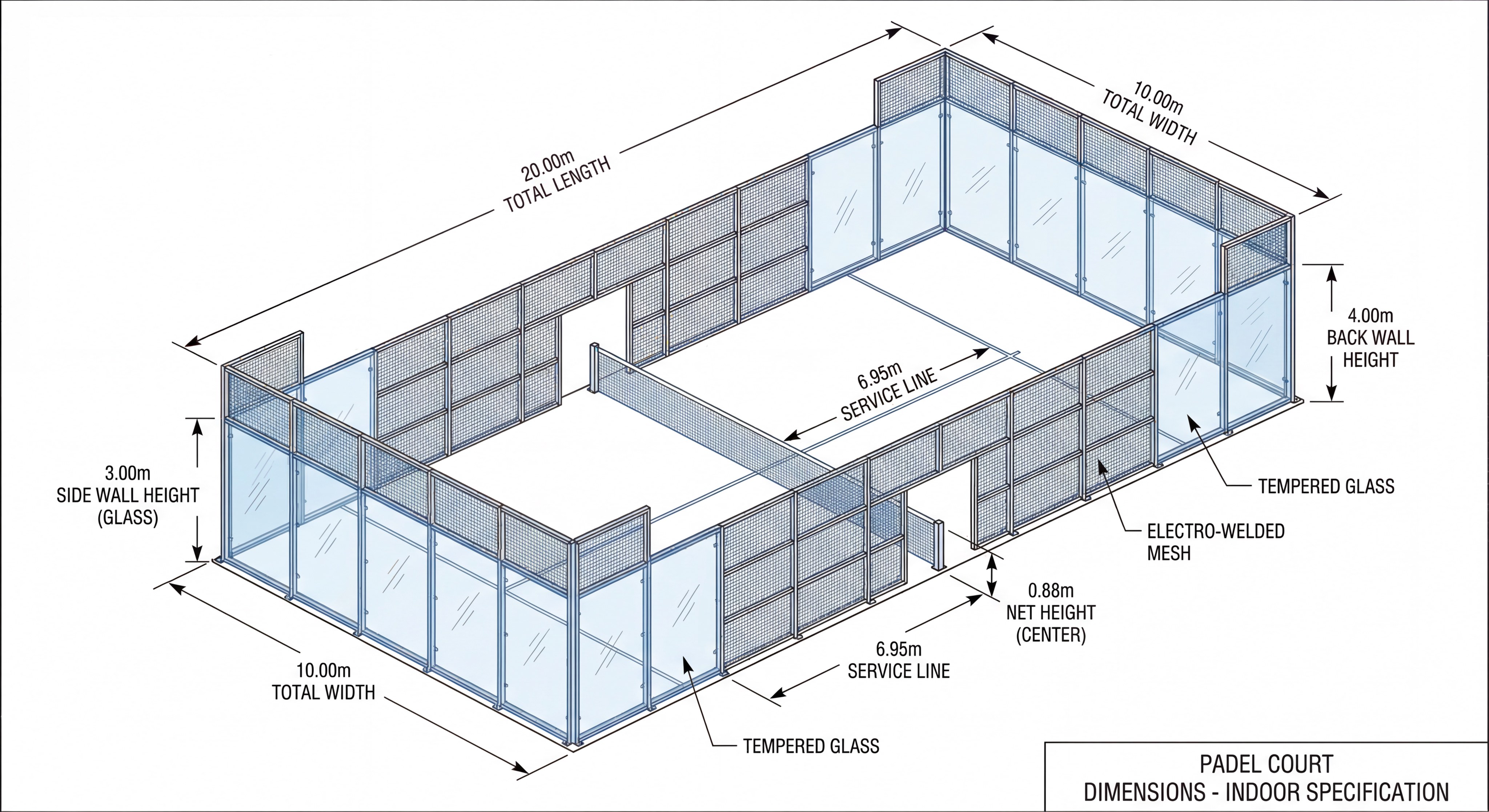
The standard dimensions for a court are 20 meters in length and 10 meters in width, measured from the internal faces of the walls. When planning your padel indoor layout, you must adhere strictly to these measurements to comply with International Padel Federation (FIP) standards. You can explore the specific technical blueprints of a padel court to ensure your building can accommodate the required footprint.
Beyond the playing area, you also need to account for a safety perimeter around the exterior of the structure. For professional clubs, a clearance of at least 0.5 meters on all sides is recommended, while elite tournaments often require several meters of “out-of-court” play space. Understanding these spatial needs is the first step in determining how many courts your building can realistically hold.
What is the total footprint?
While the play area is 200 square meters, the total footprint per court is usually closer to 231 square meters when including the structure and safety zones. Here is a breakdown of the specific spatial requirements you need to manage.
- Play Area: Exactly 20m x 10m internal.
- External Buffer: Minimum 0.5m around the perimeter for maintenance.
- Exit Zones: 2m to 4m clearance at the center gate for player safety.
- Height Clearance: A minimum of 6m, though 8m+ is preferred for the lob.
How are the lines marked?
All lines on the court must be 5 cm wide and clearly distinguishable from the turf color. The service lines are placed 6.95 meters from the net to ensure the game remains balanced and competitive.
Key Takeaway: Strict adherence to the 20×10 meter FIP standard ensures your court is suitable for sanctioned play and provides the authentic experience players expect.
| Metric | Dimension (m) | Standard |
|---|---|---|
| Internal Length | 20.00 | FIP / IPF |
| Internal Width | 10.00 | FIP / IPF |
| Line Width | 0.05 | International |
Precise measurements are non-negotiable for competitive facilities, as even a few centimeters of variance can disrupt the flow and fairness of the match.
How high should you build your padel indoor ceiling?
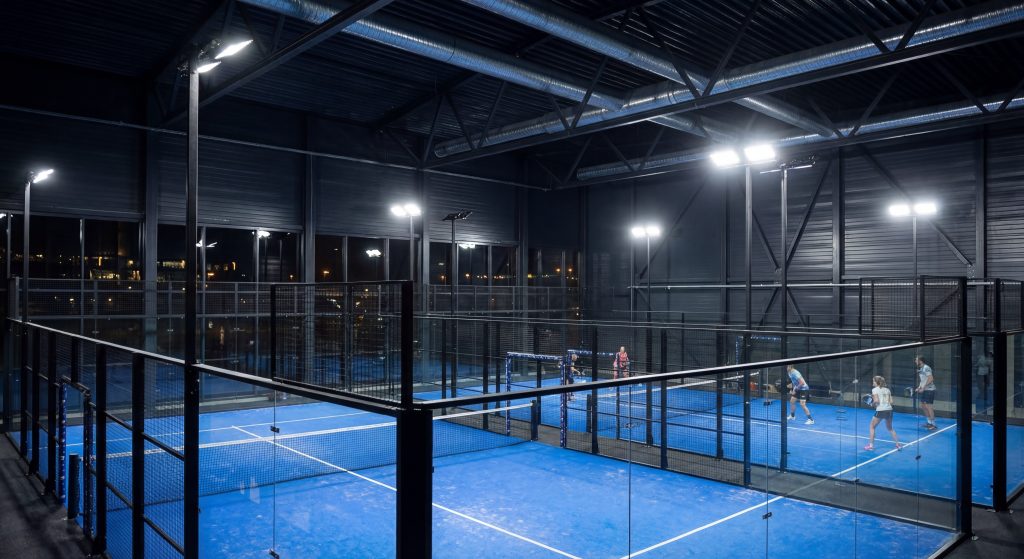
The minimum ceiling height for a professional indoor court is 6 meters, but 8 meters is considered the industry standard for high-level play. In a padel indoor setting, the “lob” is a critical strategic shot that requires significant vertical space to execute properly. If your ceiling is too low, the ball will frequently strike the roof or support beams, ruining the rally and frustrating the athletes.
It gets better: buildings with 9 to 10 meters of clearance are highly sought after by elite players and professional tournament organizers. This extra height allows for the high-arcing lobs that characterize the modern game. When choosing a building, always measure to the lowest hanging point, such as an HVAC duct or a structural truss, to ensure you meet the minimum clearance.
Does height affect your revenue?
Facilities with higher ceilings can charge a premium because they attract more serious, competitive players. If your building has a low roof, you may find yourself limited to hosting only beginner or recreational sessions.
- Recreational Level: 6.0 Meters (Bare minimum).
- Professional Level: 8.0 Meters (Preferred standard).
- Elite/WPT Level: 9.0+ Meters (Tournament grade).
- Clearance Zone: No obstructions (lights/fans) below the 6m line.
How do you handle roof obstructions?
You must carefully map out the placement of your LED floodlights and ventilation fans to ensure they do not protrude into the “free play” zone. Placing lights on angled poles or flush against the ceiling is a common strategy to maximize the available height.
Key Takeaway: Prioritizing a ceiling height of 8 meters or more will future-proof your facility and ensure it remains attractive to competitive and professional players.
| Height (m) | Playability Grade | Market Segment |
|---|---|---|
| 6.0m | Standard | Beginners / Juniors |
| 8.0m | High Performance | Competitive / Club Level |
| 10.0m | World Class | Professional / Tournaments |
Vertical space is often the most overlooked factor in facility design, yet it is the one that most directly impacts the quality of the gameplay.
Which synthetic turf is best for a modern padel indoor surface?
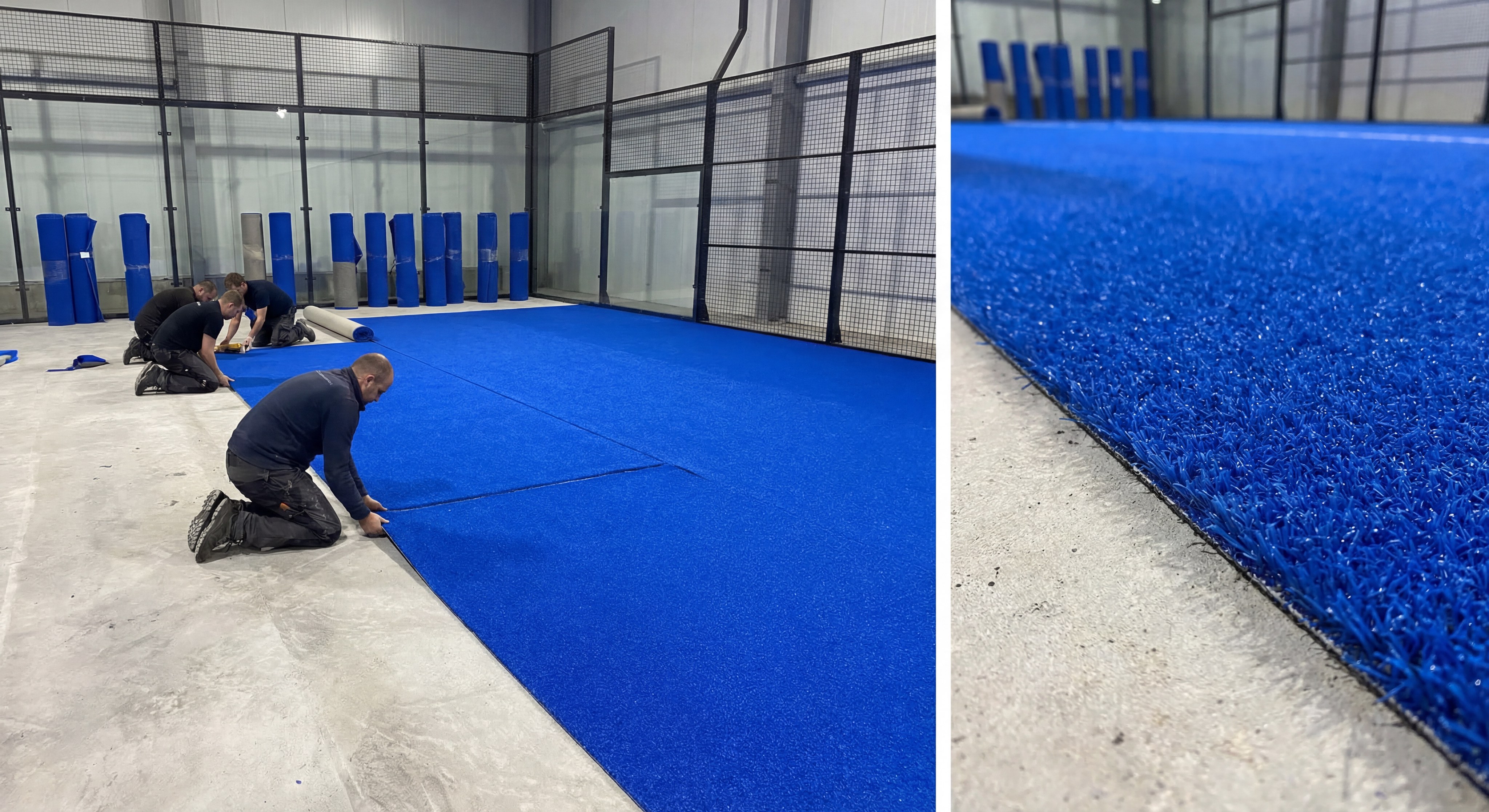
The best turf for indoor use is a high-density monofilament synthetic grass that offers consistent ball bounce and excellent joint protection. For a padel indoor facility, you generally choose between monofilament and fibrillated fibers depending on your maintenance preferences and budget. You can browse high-performance options, including our panoramic padel court surfaces, to find the right aesthetic and performance match for your club.
Monofilament turf is highly durable and maintains its verticality longer than fibrillated options, providing a more professional feel. However, fibrillated turf is excellent for holding silica sand in place, which is vital for maintaining the correct friction levels on the court. Whichever you choose, ensure the turf is UV-resistant and meets European standards for fire safety and toxicity.
Why is sand infill important?
Silica sand is not just for weight; it acts as a lubricant that allows players to slide safely and ensures the ball bounces predictably. Indoor courts typically require 2,500 to 3,000 kg of sand per court to achieve the perfect balance.
- Friction Control: Prevents the surface from becoming too “grippy” or dangerous.
- Ball Bounce: Ensures a vertical, true bounce on every shot.
- Drainage: Not a factor indoors, but sand keeps the fibers upright.
- Comfort: Adds a layer of cushioning for the player’s knees and ankles.
How often should you brush the turf?
Indoor turf requires weekly brushing to redistribute the sand and prevent the fibers from matting down. This simple maintenance task extends the life of your surface by several years and keeps the court looking brand new.
Key Takeaway: Selecting a high-quality monofilament turf and maintaining proper sand distribution is essential for creating a professional, safe, and durable playing surface.
| Turf Type | Bounce Quality | Maintenance |
|---|---|---|
| Monofilament | High / Professional | Moderate |
| Fibrillated | High / Stable | Low |
| Textured | Medium / Fast | Low |
The choice of turf directly influences the “speed” of the game and the physical impact on the players, making it a critical decision for your club’s reputation.
What glass specifications suit a professional padel indoor build?
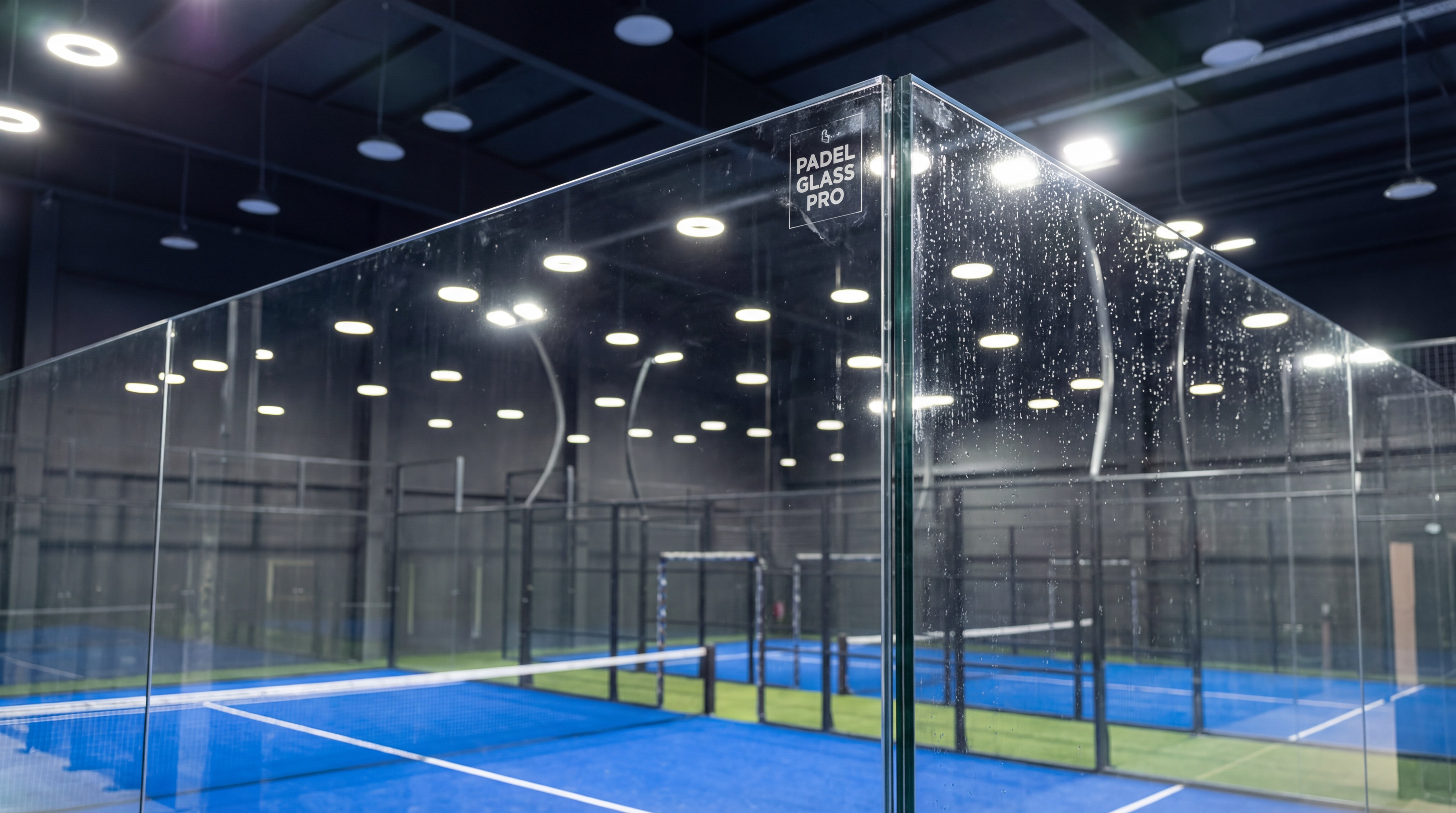
Professional indoor courts must use 10mm or 12mm anti-explosion tempered safety glass that complies with the EN 12150 European standard. In a padel indoor environment, the glass walls are not just boundaries; they are active components of the game that must withstand constant high-velocity impacts. Using 12mm glass is highly recommended for commercial facilities because it offers superior rebound consistency and a higher safety margin for heavy use.
Here is the kicker: the way the glass is mounted also matters significantly for both aesthetics and safety. Modern “Panoramic” designs remove the middle pillars, using thicker glass and specialized connectors to provide spectators with an unobstructed view of the match. This creates a high-end, televised feel for your center court and increases its value for hosting exhibitions or finals.
Is 12mm glass worth the cost?
While 10mm glass is common for private use, 12mm glass is the gold standard for clubs due to its increased mass and structural rigidity. It provides a more solid “thud” when the ball hits, which players associate with a high-quality court.
- Impact Resistance: Higher threshold for accidental player collisions.
- Vibration Control: Less shaking of the frame during intense play.
- Rebound Accuracy: More predictable ball behavior off the wall.
- Longevity: Better resistance to the thermal expansion found in warehouses.
How do you maintain the glass?
Indoor glass doesn’t deal with rain spots, but it does collect sweat, fingerprints, and dust that can obscure visibility. A simple routine of cleaning the internal panels with a mild detergent and a squeegee every two weeks will keep your facility looking pristine.
Key Takeaway: Investing in 12mm tempered safety glass ensures player safety, provides professional rebound quality, and allows for the premium panoramic aesthetics that define top-tier clubs.
| Feature | Private Standard | Club Standard |
|---|---|---|
| Thickness | 10mm | 12mm |
| Safety Type | Tempered | Tempered / Heat Soaked |
| Transparency | Clear | High-Clarity / Anti-Glare |
Safety and performance are the two primary reasons to never compromise on the quality of your glass panels during the construction phase.
How should you design the lighting for a padel indoor venue?
Effective lighting design focuses on providing uniform, glare-free illumination of at least 500 to 750 lux across the entire court area. In a padel indoor setting, players are constantly looking upward for lobs, making light placement critical to avoid blinding the athletes. Using high-efficiency LED floodlights is the best solution, and for projects requiring versatility, you might consider the benefits of a movable padel court lighting setup that can be adjusted.
Think about it: poor lighting leads to eye strain and missed shots, which directly impacts the player’s enjoyment of the game. You should aim for a uniformity ratio of 0.7 or higher to ensure there are no “dark spots” near the net or in the corners of the court. Most modern clubs use 8 LED projectors per court, mounted on four poles or directly to the building’s ceiling trusses.
Why choose LED over metal halide?
LED technology has completely replaced traditional lighting because it offers instant-on capability and significantly lower operational costs. For a club running 12 hours a day, the energy savings alone can pay for the light fixtures within the first two years.
- Energy Efficiency: 50-70% reduction in electricity consumption.
- Longevity: 50,000+ hours of operation without bulb changes.
- Heat Output: Minimal heat generation, helping to keep the indoor air cool.
- Color Rendering: Superior clarity (CRI > 80) for better ball tracking.
What is the best height for lights?
Lighting fixtures should ideally be mounted at 6 meters or higher to prevent them from becoming an obstruction. Angling the lights inward at 45 degrees helps fill the space without creating the harsh shadows that ruin high-speed rallies.
Key Takeaway: High-output LED lighting with a focus on uniformity and glare reduction is essential for providing a professional playing experience during evening and indoor matches.
| Level of Play | Required Lux | Uniformity (Uo) |
|---|---|---|
| Recreational | 300 – 500 | 0.5 |
| Competitive | 500 – 750 | 0.7 |
| Professional | 750 – 1000 | 0.8 |
A well-lit court not only improves the game but also makes your facility look more professional and inviting in photos and marketing materials.
What is the ideal distance between padel indoor courts?
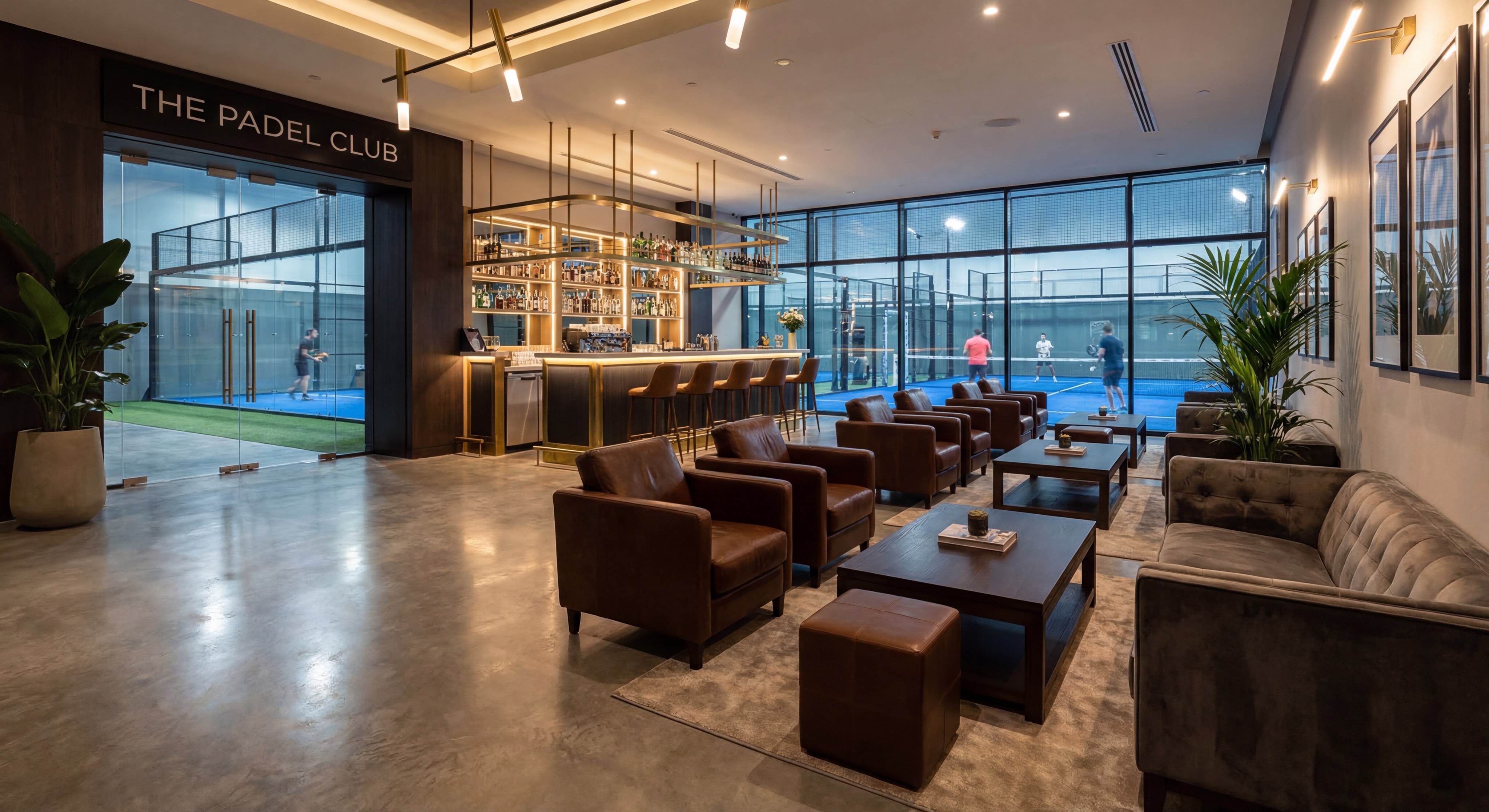
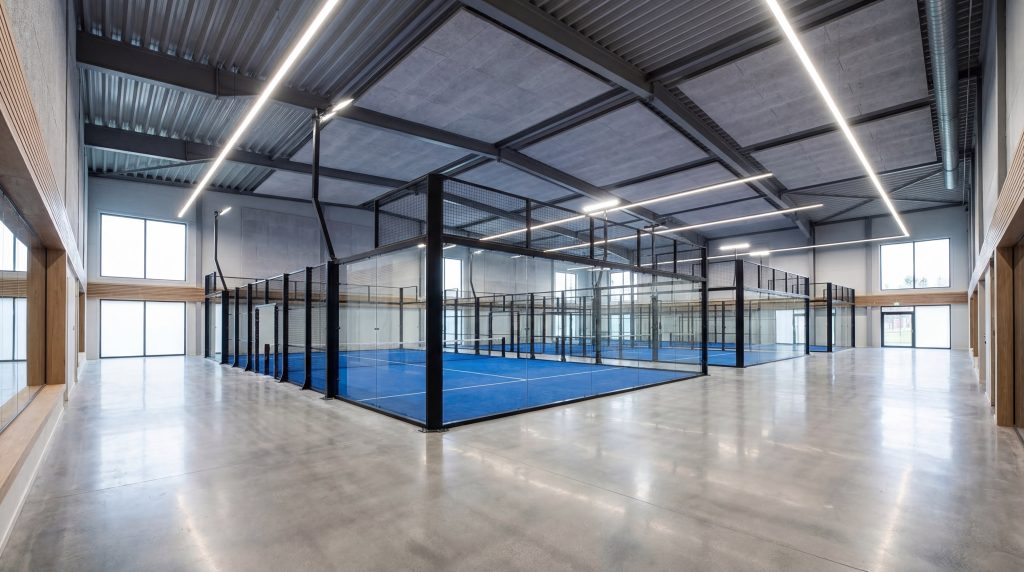
The ideal distance between courts ranges from 1.5 meters for basic safety to 6 meters for facilities that include spectator seating and social lounges. When you design a padel indoor layout, you must balance the need for revenue (more courts) with the need for a high-quality user experience (more space). Crowding courts too close together can create noise interference and safety hazards when players exit the court during a rally.
But wait, there’s more to consider regarding the social aspect of your club. Padel is a deeply social sport, and providing wide walkways between courts allows for benches, water stations, and areas where spectators can gather. This “third space” between the courts is often where the community is built, leading to higher beverage sales and member retention.
Can you share structural pillars?
Many clubs choose to place courts back-to-back or side-by-side with shared pillars to save space and reduce construction costs. While this is efficient, it means you cannot have “out-of-court” play on those shared sides.
- 1.5m Gap: Suitable for recreational clubs with limited warehouse space.
- 3.0m Gap: The “sweet spot” for safety and small bench placements.
- 6.0m Gap: Ideal for “Center Courts” with bleachers and professional filming.
- Back-to-Back: Use 0m gap for maximum court density in tight spaces.
How does spacing affect safety?
Players often exit the side gates at high speed to retrieve a ball that has bounced out. A minimum clearance of 2 meters at the center gate is vital to prevent collisions with spectators or players on the adjacent court.
Key Takeaway: Balancing court density with generous walkways and social zones is critical for creating a safe, professional, and profitable indoor padel environment.
| Gap Size (m) | Best Use Case | Player Experience |
|---|---|---|
| 0.0 – 0.5 | Maximum Density | Focused / Restricted |
| 2.0 – 4.0 | Professional Club | Balanced / Social |
| 5.0+ | Tournament Center | Elite / Spectator-Friendly |
The social atmosphere created by proper spacing is often the deciding factor for players choosing between your club and a competitor’s facility.
How do you ensure the long-term success of your padel indoor?
Success is ensured by combining a high-quality build with a consistent maintenance routine and a focus on community building. To keep your padel indoor facility thriving, you must monitor the “health” of your courts weekly, from checking glass bolt tightness to ensuring the turf infill remains level. A well-maintained facility not only protects your investment but also ensures that players always experience the “new court” feel that they crave.
Here is the kicker: the hardware is only half the battle. You must also implement smart booking software and host regular social events to keep your courts full during off-peak hours. By offering leagues, clinics, and corporate packages, you diversify your income streams and solidify your position as the premier padel destination in your local market.
What is the weekly maintenance checklist?
Preventative maintenance is significantly cheaper than emergency repairs. Dedicating just two hours a week per court to these tasks will ensure your facility remains in top condition for years.
- Glass: Clean with non-abrasive soap and check for any loose structural bolts.
- Turf: Brush in a circular motion to lift fibers and redistribute silica sand.
- Nets: Check tension and ensure the center height is exactly 88cm.
- Lighting: Inspect for flicking or dead LEDs to maintain uniform lux levels.
How do you maximize peak hour revenue?
Most clubs face over-demand in the evenings and under-demand in the mornings. Offering “Early Bird” discounts or hosting school groups during the day can help you achieve a more balanced and profitable daily schedule.
Key Takeaway: Long-term success is the result of a high-quality initial installation paired with disciplined maintenance and creative community management strategies.
| Success Factor | Action Item | Long-term Impact |
|---|---|---|
| Quality Build | Use 12mm Glass & LED | Reduced liability and lower bills |
| Maintenance | Weekly turf brushing | Surface lasts 8-10 years |
| Community | Monthly tournaments | High player retention and loyalty |
By treating your facility as a premium lifestyle destination rather than just a sports hall, you secure a competitive advantage that is difficult for others to replicate.
Building a world-class indoor facility is the most effective way to capitalize on the global padel boom while protecting your business from the whims of the weather. By focusing on ceiling height, professional-grade materials, and a social-centric layout, you create a destination that players will return to week after week. Our vision is to empower entrepreneurs with the tools and structures needed to build sustainable, high-growth sports clubs that redefine the local recreation landscape. If you are ready to transform your space and secure your future in this fast-growing industry, contact us today to receive a customized quote and expert consultation on your project.
FAQ for Padel Indoor Facilities
Can I build a court in a warehouse with only 6 meters of height?
Yes, but it is the absolute minimum allowed. While recreational players will find it acceptable, competitive athletes will likely prefer a facility with 8 meters or more to accommodate high lobs.
What’s the best way to clean the glass panels?
Simple water and a mild detergent used with a squeegee is the best approach. Avoid abrasive chemicals or rough cloths that could scratch the tempered surface or damage the powder-coated frame.
Can I install an indoor court on a second-floor mezzanine?
This is possible but requires a structural engineer to verify the load-bearing capacity. A standard court weighs between 4 and 5 tons, and the floor must be able to handle both the static weight and the dynamic force of players.
How do I handle condensation inside the building?
Industrial-grade dehumidifiers or high-positioned extraction fans are essential. Maintaining proper airflow prevents moisture from building up on the glass, which can make the walls slippery and ruin the gameplay.
What is the lifespan of an indoor padel turf?
With proper weekly brushing and sand redistribution, a high-quality monofilament turf should last between 8 and 12 years. Indoor turf typically lasts longer than outdoor turf because it is protected from UV degradation and extreme temperature swings.