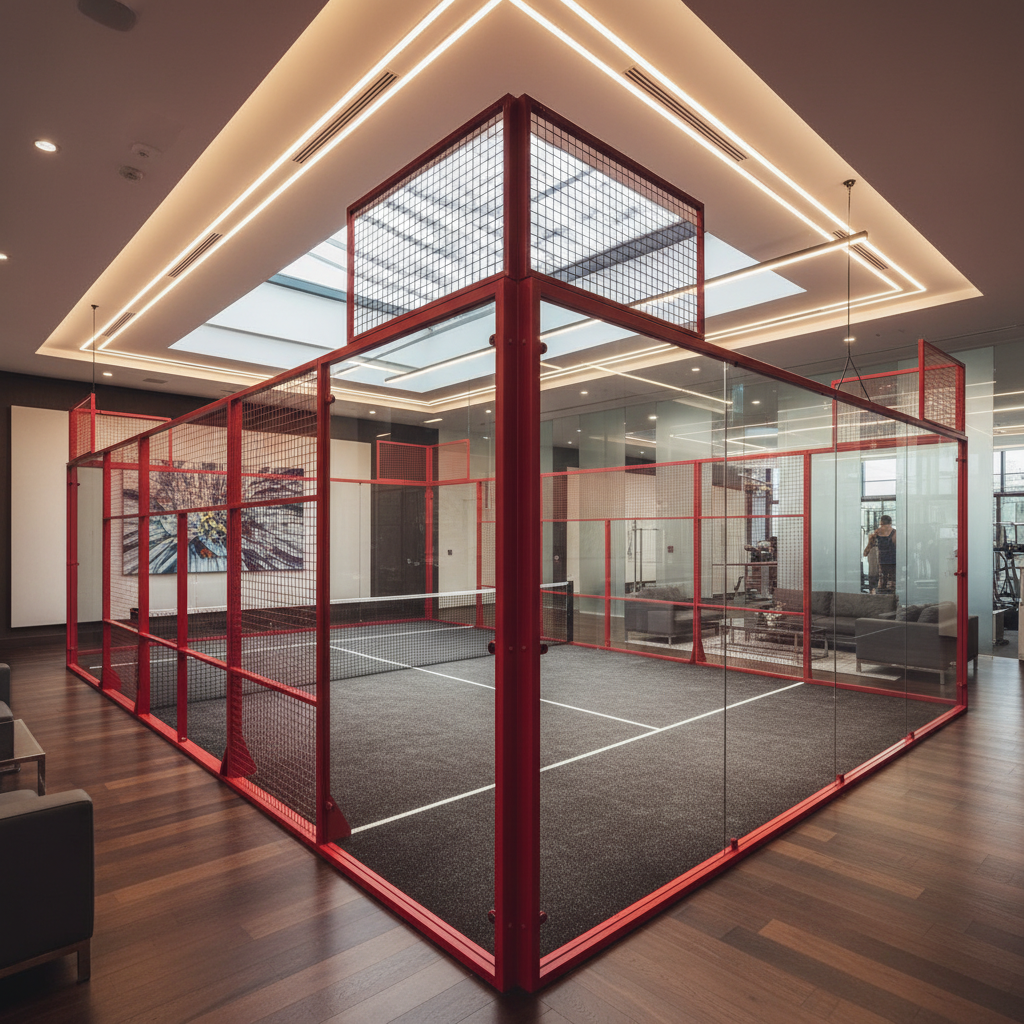
Enthusiasts often find scheduled matches cancelled due to unpredictable rain or scorching heat. This inconsistency frustrates players and slashes potential revenue for club owners relying on steady bookings. Financial losses mount quickly when courts sit empty during winter seasons or stormy weeks. Constructing high-quality indoor padel facilities offers a climate-controlled environment that functions flawlessly 365 days a year.
What is the fundamental appeal of indoor padel for players?
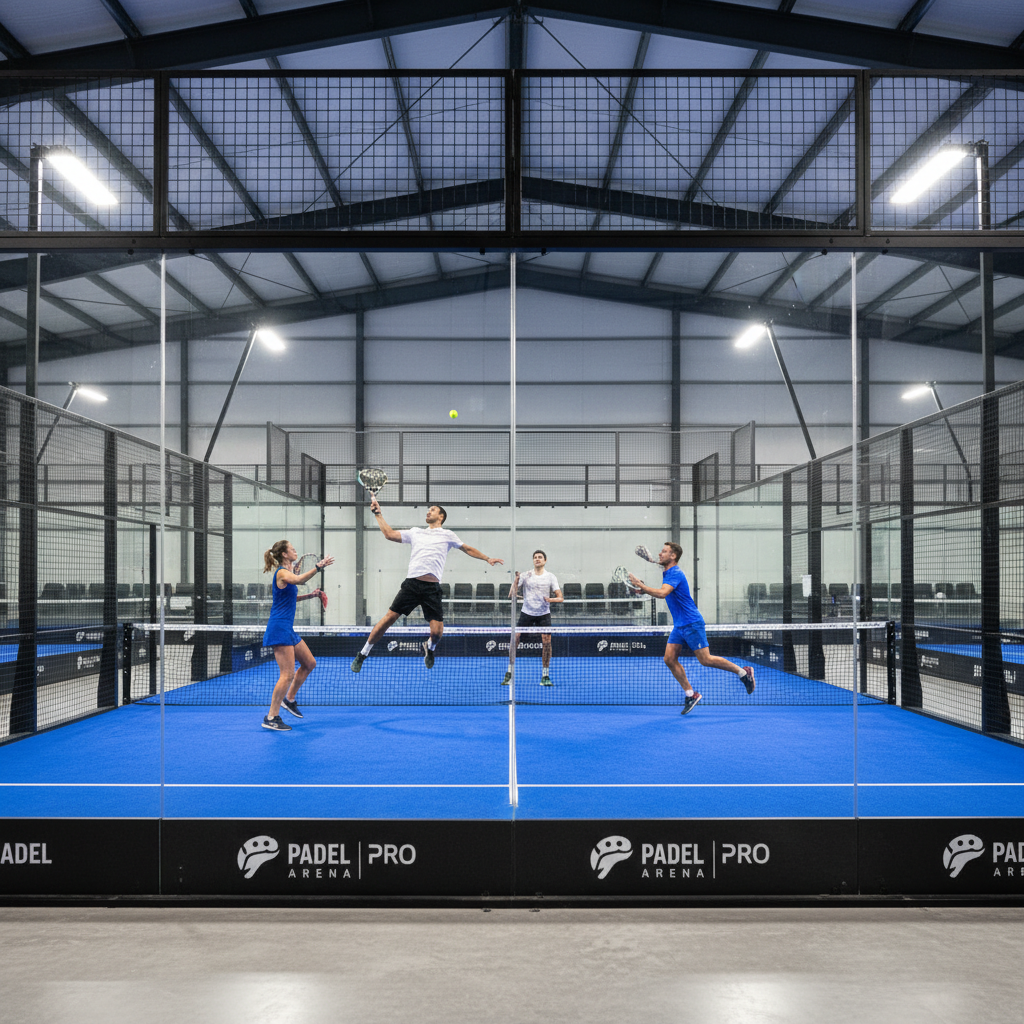
Strategic investments in indoor padel facilities provide unmatched value for modern sports clubs. Players appreciate a stable environment where wind or humidity never affects ball trajectory. Removing external variables keeps participants engaged longer than outdoor alternatives.
Providing a reliable venue creates a loyal community of athletes who book sessions months in advance. Controlled settings foster faster skill development and higher competitive standards. These factors contribute to a vibrant club atmosphere that attracts new talent consistently.
Key Takeaway: A climate-controlled environment eliminates weather-related cancellations and ensures high-quality, consistent gameplay for all skill levels.
| Feature | Indoor Padel | Outdoor Padel |
|---|---|---|
| Playing Days | 365 Days/Year | Weather Permitting |
| Ball Control | Maximum (No Wind) | Variable (Wind/Rain) |
| Surface Lifespan | 10+ Years | 5-7 Years |
| Lighting Quality | Uniform LED | Natural + Shadowing |
Why is the ROI higher for an indoor padel business?
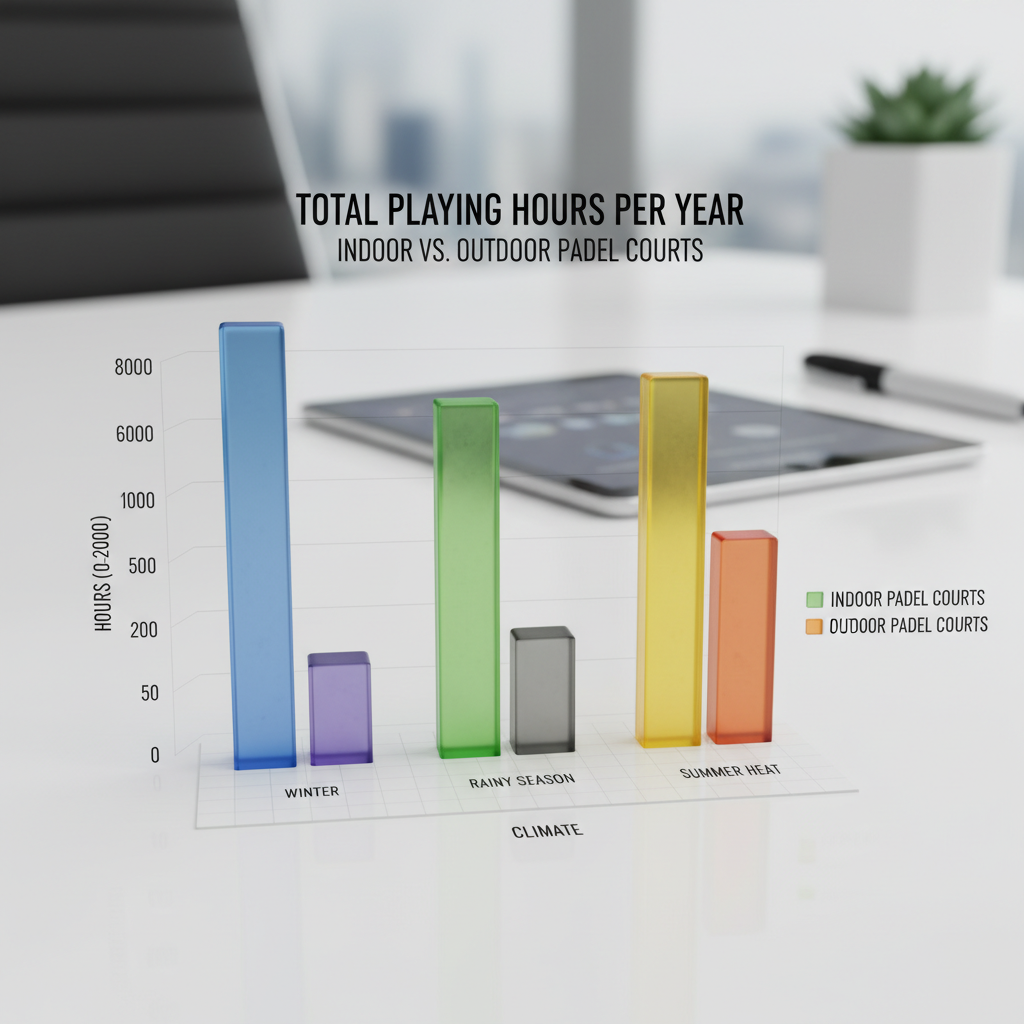
Commercial success relies on maximizing court occupancy throughout every hour of the day. Unlike outdoor courts that remain vacant during bad weather, indoor venues stay busy constantly. Owners see a faster return on capital because their facility never stops generating cash flow.
You can charge a premium for the superior comfort provided inside your climate-controlled hall. High-end amenities attract corporate clients and tournament organizers willing to pay for quality. This stability is the primary driver of sustainable growth in the sports industry.
Key Takeaway: Continuous court utilization throughout all seasons leads to a faster and more predictable return on investment for owners.
| Metric | Indoor Facility | Outdoor Facility |
|---|---|---|
| Avg. Daily Hours | 14 Hours | 6-8 Hours |
| Monthly Maintenance | Low | Moderate/High |
| Seasonal Downtime | 0% | 30-45% |
| Revenue Stability | High | Low/Variable |
What are the mandatory space requirements for indoor padel?
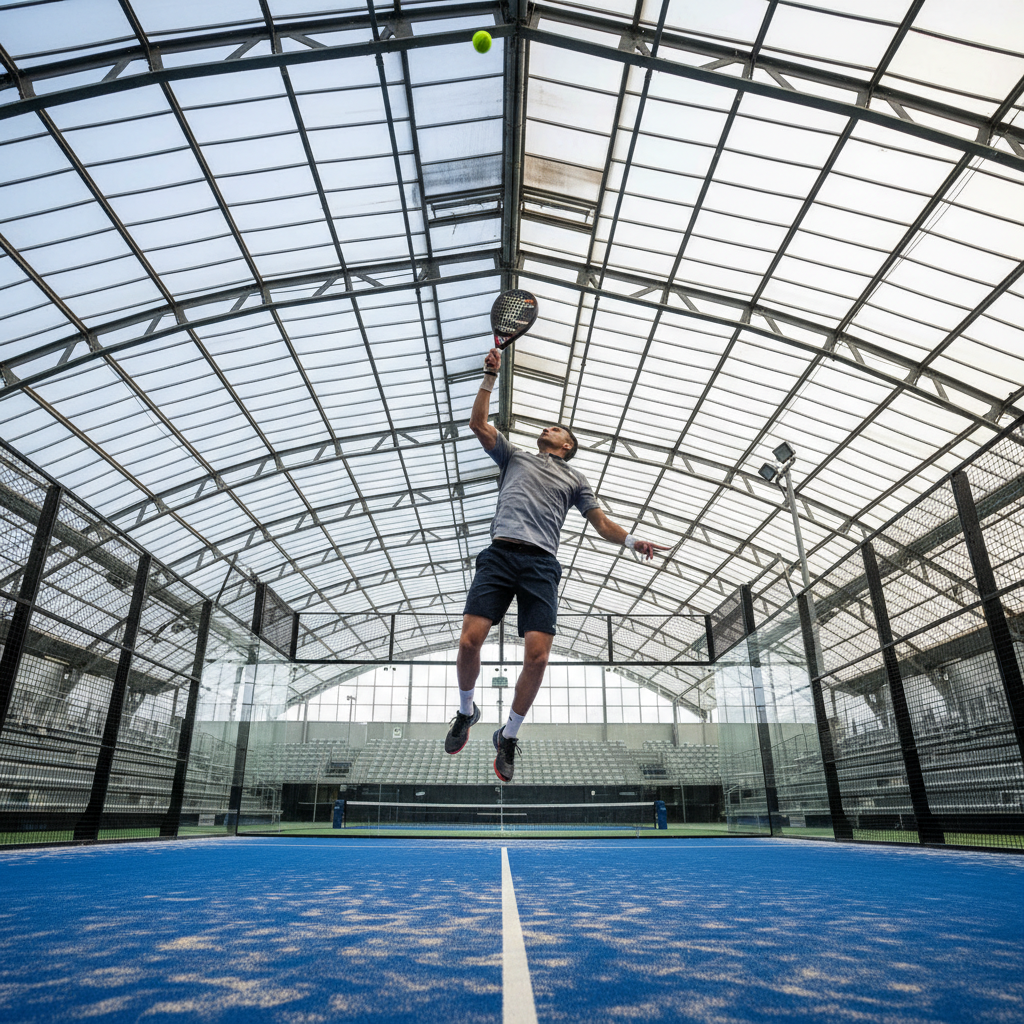
Planning an indoor padel project starts with strictly adhering to international technical dimensions. A standard playing area occupies exactly 200 square meters, but you need extra clearance for safety. Professional installations require at least 6 meters of vertical space to allow for high lobs.
Architects must account for a perimeter of 0.5 meters around the glass walls to prevent player injury. Total space allocation for a single court usually reaches 231 square meters when including these buffers. Proper measurements early in the process avoid costly structural modifications later.
Key Takeaway: Adhering to strict vertical and horizontal dimensions is non-negotiable for creating a safe and regulation-compliant sports venue.
| Parameter | Standard Requirement | Professional Recommendation |
|---|---|---|
| Length | 20 Meters | 21 Meters (incl. safety) |
| Width | 10 Meters | 11 Meters (incl. safety) |
| Ceiling Height | 6 Meters (Min) | 8-10 Meters |
| Safety Zone | 0.5 Meters | 1.0 Meter |
How do you design the perfect layout for indoor padel?

Creating a functional layout involves managing how people move between matches and where they rest. Effective designs include dedicated zones for water stations and locker rooms near the entrance. Leaving 4 to 6 meters between adjacent courts prevents players from distracting one another.
Maximizing every square foot ensures your facility feels spacious while still hosting enough courts. Integrated viewing galleries enhance the social atmosphere and keep spectators engaged with the action. Smart floor plans directly improve the overall member experience and secondary spending.
Key Takeaway: Efficient spatial design balances court density with social amenities to maximize revenue and player satisfaction simultaneously.
| Building Size | Max Courts | Recommended Amenities |
|---|---|---|
| 1,000 sqm | 3-4 Courts | Small Cafe + Showers |
| 2,000 sqm | 7-8 Courts | Full Lounge + Pro Shop |
| 5,000 sqm | 18-20 Courts | Event Space + Gym |
| 10,000 sqm | 40+ Courts | Multi-Sport + Restaurant |
What construction materials are best for indoor padel?
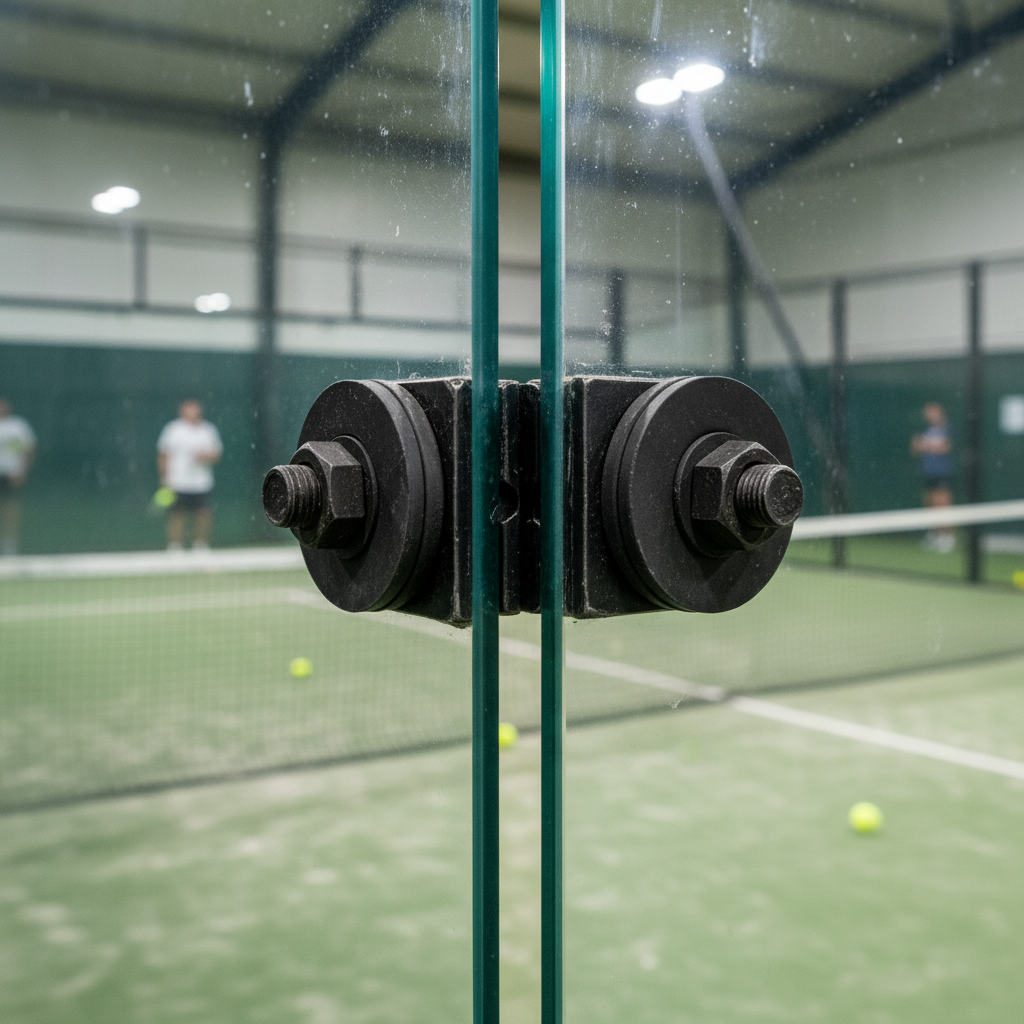
The longevity of an indoor padel court depends entirely on the quality of raw materials used. Iron frames treated with thermo-hardened powder coating offer exceptional resistance against structural fatigue. Choosing 12mm tempered safety glass is non-negotiable for professional venues to ensure protection.
Modular designs allow for faster assembly which reduces labor costs during the initial setup. Heavy-duty components prevent rust and maintain a pristine appearance after thousands of hours of use. High-quality materials also ensure compliance with local safety codes and lower insurance premiums.
Key Takeaway: Investing in premium structural materials reduces long-term maintenance overhead and enhances the safety profile of your club.
| Component | Industry Standard | High-End Specification |
|---|---|---|
| Steel Treatment | Basic Paint | Hot-Dip Galvanization |
| Glass Thickness | 10mm | 12mm Anti-Explosion |
| Connections | Standard Bolts | High-Tensile Steel |
| Coating | Air Spray | Thermo-Hardened Powder |
Which synthetic turf enhances the indoor padel experience?
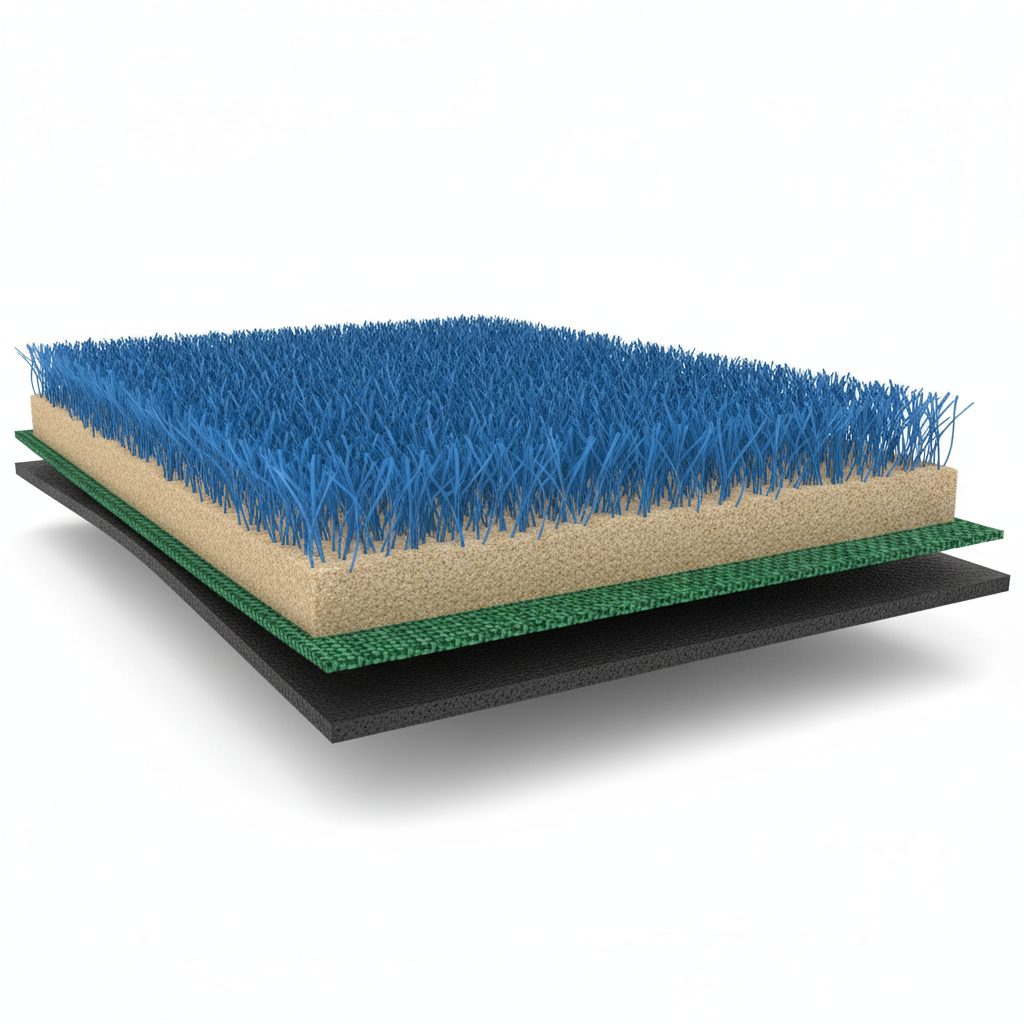
Selecting the right surface determines how the ball bounces and how players move. High-density fibrillated turf provides a traditional feel with excellent traction for sudden movements. Monofilament grass offers superior durability and maintains its structure under heavy daily traffic.
Indoor surfaces require less sand infill than outdoor versions because they are not subjected to rain. Keeping the turf clean from dust is essential for maintaining consistent friction and preventing slips. Professional-grade surfaces ensure your club becomes the preferred destination for serious competitive players.
Key Takeaway: Specialized indoor turf selections provide superior foot grip and ball response, reducing the physical strain on athletes.
| Turf Type | Best For | Durability Rating | Maintenance Need |
|---|---|---|---|
| Fibrillated | Beginners/Clubs | 4/5 | Monthly Brushing |
| Monofilament | Pro Tournaments | 5/5 | Bi-Weekly Brushing |
| Texturized | Elite Facilities | 5/5 | Minimal |
| Polyethylene | All-Round Play | 3/5 | Moderate |
What lighting specifications are required for indoor padel?
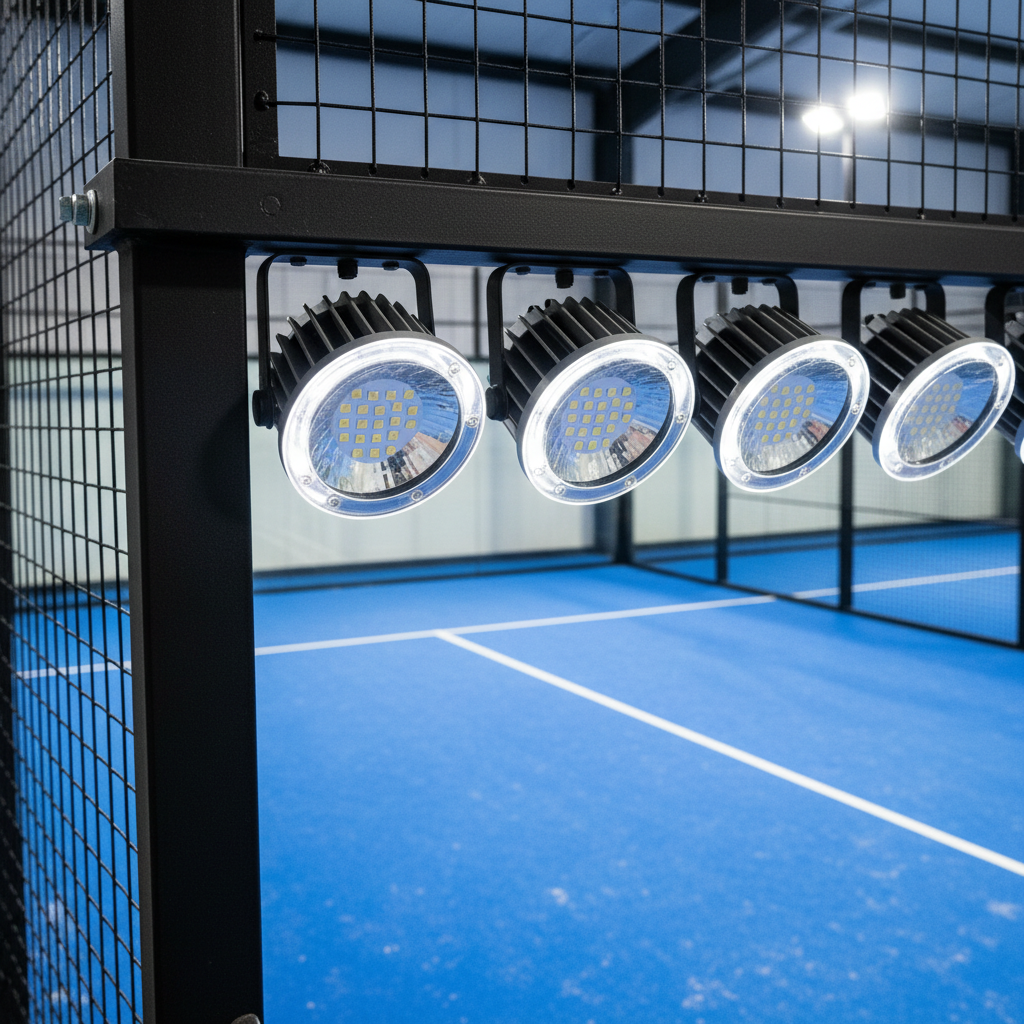
Lighting is critical for indoor padel because players must track fast-moving balls in confined spaces. You should install LED floodlights that provide at least 500 to 750 lux. Correct placement eliminates distracting shadows on the glass and floor surfaces.
Modern IP66-rated LEDs offer high efficiency and significantly reduce monthly electricity bills for owners. Uniform illumination across the entire court ensures fair play and supports high-quality video recording. Smart systems can dim when courts are empty to save additional energy costs.
Key Takeaway: Professional LED lighting systems improve player visibility while drastically cutting operational energy consumption and costs.
| Setting | Target Lux | Power Usage | Light Uniformity |
|---|---|---|---|
| Recreational | 300 – 400 | Low | 0.5 |
| Professional | 500 – 750 | Moderate | 0.7 |
| Broadcast | 1000+ | High | 0.8 |
| Training | 400 – 500 | Moderate | 0.6 |
Where can you successfully install indoor padel courts?
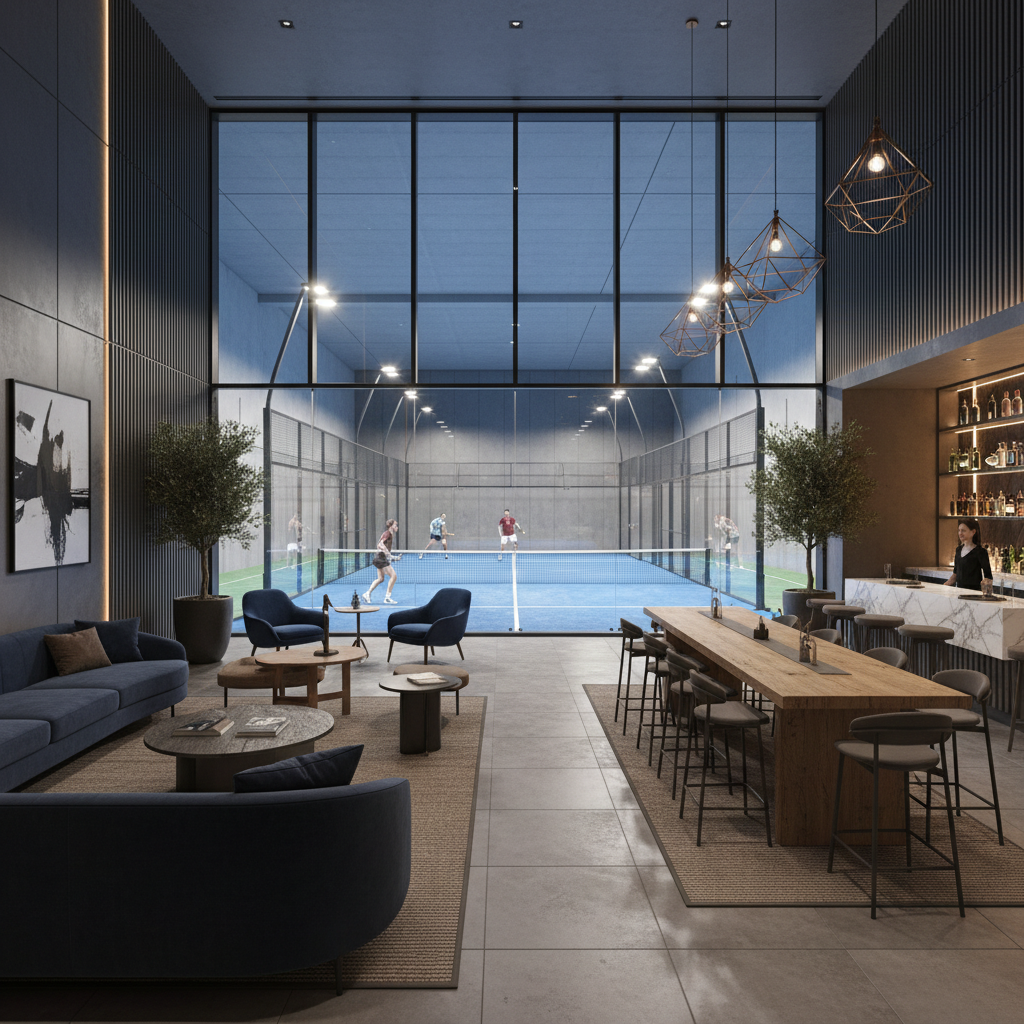
Finding the right location is the foundation of a successful business model. Converting industrial warehouses is a popular choice due to existing high ceilings and open floor plans. Integrating courts into fitness centers adds a modern amenity that attracts high-value members.
Schools and universities can use these facilities to expand athletic programs without weather disruptions. Proximity to urban centers ensures a steady stream of corporate workers during lunch breaks. Accessibility and local demographics determine the most profitable site for your new sports venture.
Key Takeaway: Repurposing industrial spaces with high ceilings offers the fastest and most cost-effective path to opening a club.
| Site Type | Ease of Conversion | ROI Potential | Ceiling Hurdles |
|---|---|---|---|
| Warehouse | High | Very High | Low |
| Gym Annex | Moderate | High | Moderate |
| New Build | Low (High Cost) | High | None |
| Retail Space | Moderate | Moderate | High |
How much does building indoor padel typically cost?
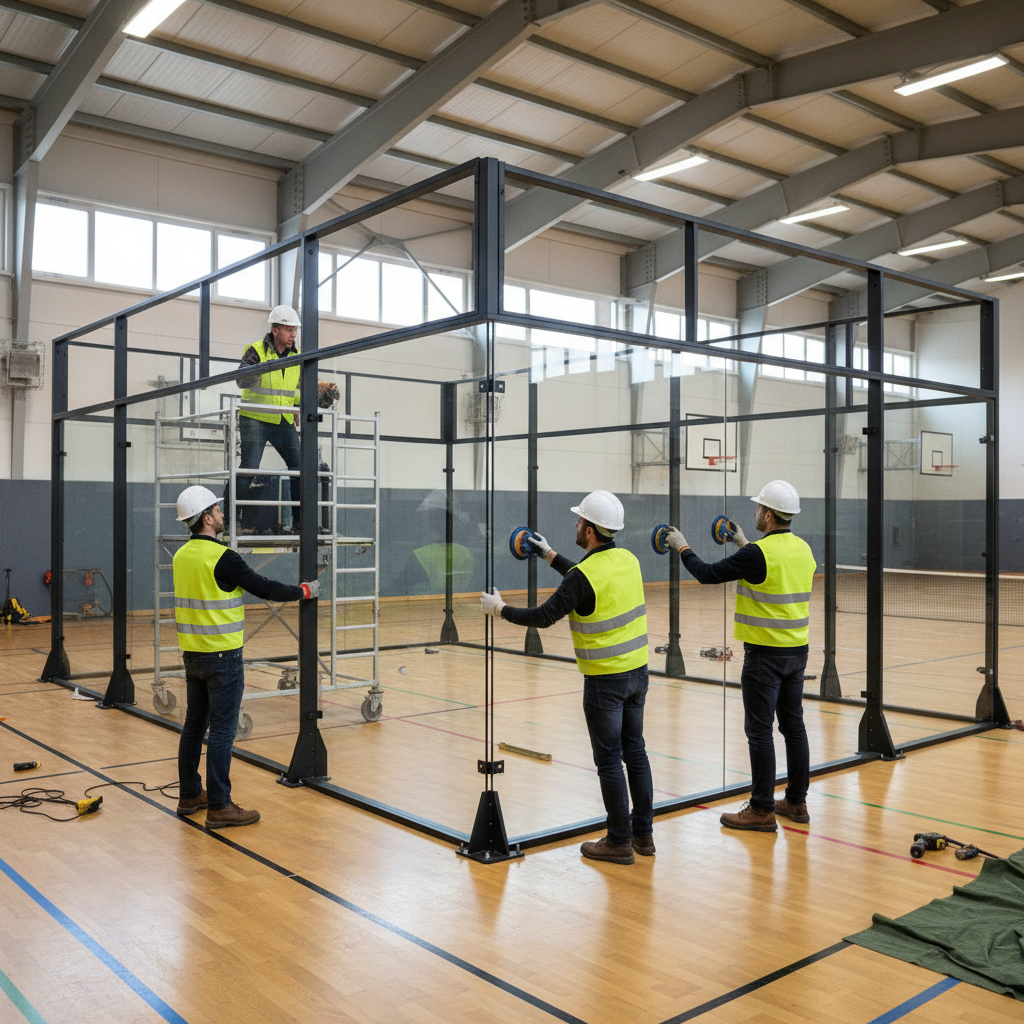
Budgeting for indoor padel requires understanding both hardware costs and site preparation. You must account for court structures, specialized turf, and professional lighting systems. While upfront prices are higher than outdoor setups, lack of weather damage means lower long-term costs.
Site preparation like leveling concrete floors or installing ventilation varies based on building condition. Savvy investors set aside funds for marketing and staff training to ensure a successful launch. Understanding these financial variables allows you to create a realistic business plan for lenders.
Key Takeaway: Direct-from-manufacturer purchasing and efficient site preparation are the keys to maintaining a manageable startup budget.
| Category | Percent of Budget | Key Items |
|---|---|---|
| Court Hardware | 45% | Structure, Glass, Turf |
| Installation | 15% | Labor, Logistics |
| Site Prep | 30% | Lighting, Flooring, AC |
| Marketing | 10% | Launch, Branding |
Why is professional support vital for indoor padel?
Partnering with a specialized manufacturer guarantees that your facility meets technical and safety standards. Professional builders offer turnkey solutions managing everything from design to final assembly. High-quality support ensures your courts remain in top condition for years.
Navigating complex international regulations and building codes is easier with an experienced team. We provide technical documentation and video guidance to support your local installation crews. Expert partnerships reduce project risk and allow you to focus on growing your club.
Key Takeaway: Working with experienced manufacturers ensures your facility complies with all safety regulations and competition standards.
| Advantage | Expert Manufacturer | Local General Contractor |
|---|---|---|
| Tech Knowledge | Deep Padel Expertise | General Construction |
| Material Sourcing | Factory Direct | Third-Party Sourcing |
| Warranty | Direct Long-Term | Limited/Standard |
| Certification | International Standards | Local Only |
Conclusion
Strategic planning and high-quality materials are essential for any successful center. By choosing a climate-controlled environment, you protect your investment from the elements and ensure steady revenue. Our iron-framed courts and premium turf solutions provide the ultimate experience for players and owners alike. Ready to start your journey? Contact us today to receive a personalized quote and expert consultation for your upcoming project.
FAQ
- Can I install indoor padel in a low-ceiling warehouse?
International standards require at least 6 meters of vertical height, though professional venues prefer 8 to 10 meters. - What’s the best way to prevent noise in indoor padel centers?
Installing acoustic panels and using high-quality glass mounting helps dampen ball impact sounds in enclosed spaces. - Can I customize the colors of my indoor padel structure?
Yes, we offer full OEM support with custom RAL colors to match your facility’s specific branding requirements. - What’s the best lighting setup for an indoor padel court?
We recommend using 8 high-efficiency LED floodlights per court to achieve a uniform illumination level of 500 lux. - Can I start with just one indoor padel court?
Absolutely, our minimum order quantity starts at one set to allow for pilot projects and space testing.