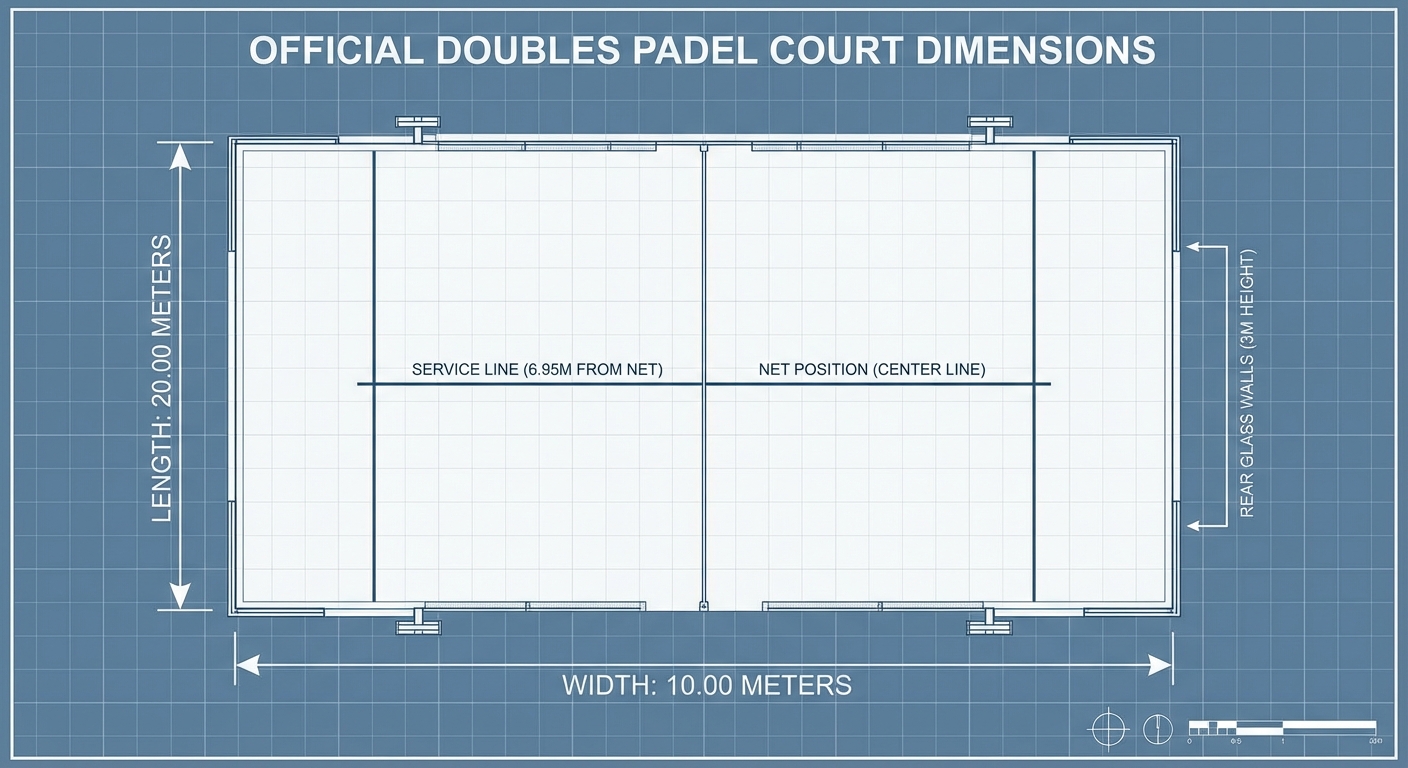
The standard padel court size for professional doubles play is a rectangle measuring 10 meters wide and 20 meters long. Many developers and private homeowners mistakenly believe they can estimate these dimensions, only to find their facility is unplayable or dangerous. This lack of precision often results in wasted capital and a court that cannot host official International Padel Federation (FIP) competitions. By following a strict technical framework, you can ensure your investment delivers a world-class playing experience for every athlete.
What is the official padel court size for doubles?
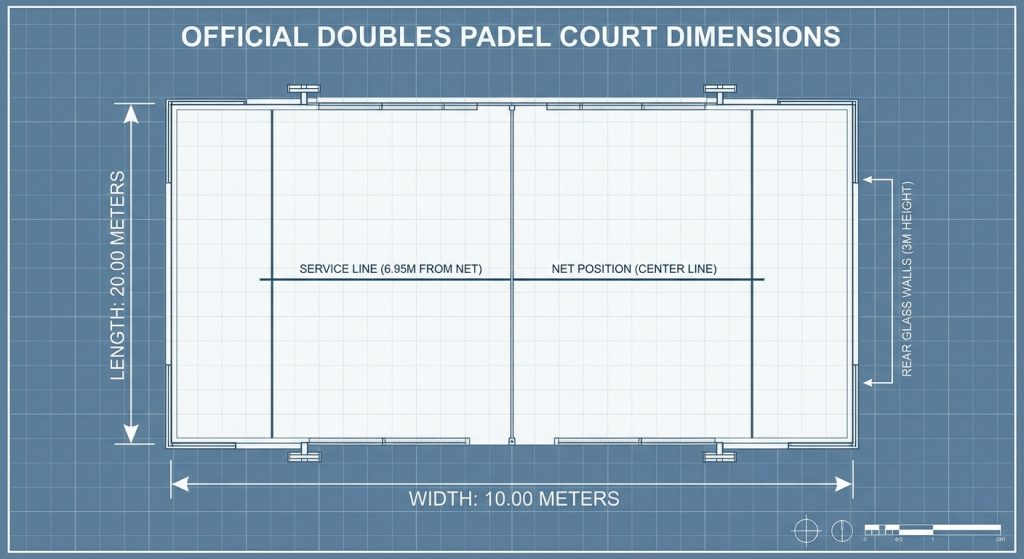
The official doubles dimensions are 10 meters in width by 20 meters in length. This specific padel court size is divided into two equal 10×10 meter halves by a central net. Every professional tournament follows these exact measurements to ensure the game remains fast-paced and fair.
Core Layout and Symmetry
Precision is the hallmark of a high-quality court build. Each half of the court must be perfectly symmetrical to allow for consistent ball physics and player movement.
- Length: 20 meters (internal measurement).
- Width: 10 meters (internal measurement).
- Shape: Perfect rectangle.
- Tolerance: 0.5% maximum deviation.
Competition Standards and Regulatory Compliance
Consider this:
Even a minor deviation of a few centimeters can change how the ball reacts off the back wall. This makes professional compliance essential for anyone looking to monetize their facility or host official rankings.
Key Takeaway: Adhering to the 20x10m standard ensures your facility is eligible for official tournaments and provides a predictable environment for competitive players.
| Feature | Standard Dimension |
|---|---|
| Playing Area Length | 20 Meters |
| Playing Area Width | 10 Meters |
| Net Line Distance | 6.95 Meters from Net |
| Total Area | 200 Square Meters |
Accurate dimensions are the foundation of player trust and long-term facility reputation.
How much ground is needed for the padel court size?
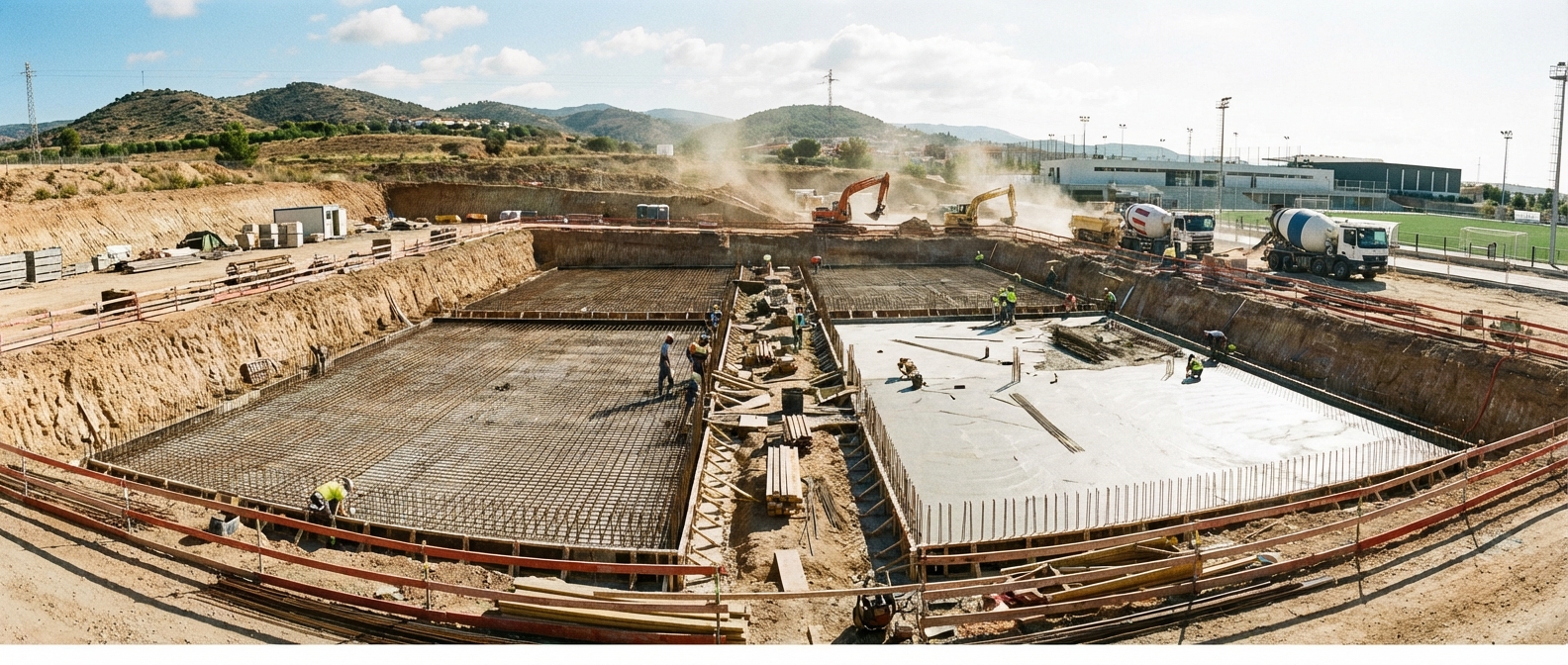
You generally need a total footprint of at least 21×11 meters to accommodate the full padel court size plus the external structure. While the playing area is 200 square meters, you must account for the thickness of the glass, the structural pillars, and the lighting foundations. Failing to plan for this extra space can lead to cramped walkways and maintenance issues.
Site Preparation and Foundation Clearances
Think about this:
You need sufficient space around the perimeter for drainage systems and spectator access. Professional clubs often extend this area even further to create a premium atmosphere.
- Standard footprint: 231 square meters.
- Pillar clearance: 0.5 to 1.0 meters.
- Maintenance path: 1.5 meters recommended.
- Total build zone: 250+ square meters.
Out-of-Court Play Zone Requirements
In professional matches, players frequently run through the side doors to retrieve balls. This means you must leave extra clearance on the sides if you want to certify your court for “out-of-court” play.
Key Takeaway: Always plan for a total area larger than the playing lines to ensure structural integrity and player safety during high-intensity points.
| Space Component | Minimum Requirement | Recommended |
|---|---|---|
| Internal Playing Area | 200 sqm | 200 sqm |
| External Structure | 31 sqm | 50 sqm |
| Safety Buffer | 0.5m | 2.0m |
| Total Area | 231 sqm | 300+ sqm |
Strategic spatial planning prevents structural bottlenecks and enhances the overall user experience.
Does the padel court size vary for single players?
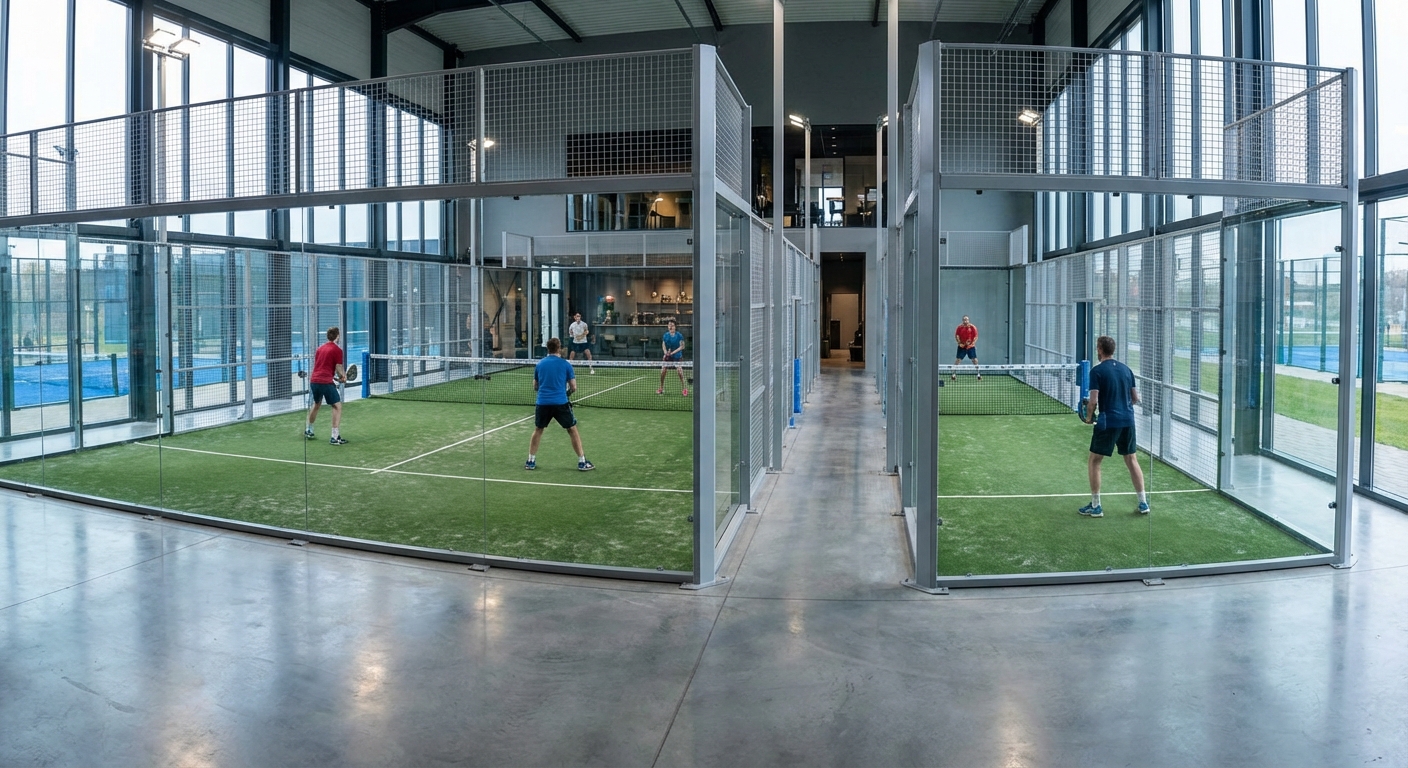
The padel court size for a single-player court is reduced to 6 meters in width while maintaining the standard 20-meter length. These courts are becoming increasingly popular for urban environments where space is at a premium. They provide an excellent training ground and allow venues to maximize every square foot of land.
Dimensions of a Singles Installation
The singles court maintains the depth of a doubles game but narrows the field of play significantly. This creates a different tactical experience focused on precision and endurance.
- Width: 6.0 meters.
- Length: 20.0 meters.
- Net Width: 6.0 meters.
- Total Area: 120 square meters.
Benefits of the Narrow Footprint
It gets better:
By installing single courts, you can utilize narrow strips of land that are otherwise unusable for standard sports. This effectively increases the revenue potential of your facility without requiring massive land acquisition.
Key Takeaway: Single courts are a smart alternative for residential properties or space-constrained clubs looking to expand their training offerings.
| Court Type | Length | Width |
|---|---|---|
| Standard Doubles | 20 Meters | 10 Meters |
| Training Singles | 20 Meters | 6 Meters |
| Mini Padel | 10 Meters | 5 Meters |
Selecting the right court type depends entirely on your available land and target player demographic.
What is the required height for the padel court size?
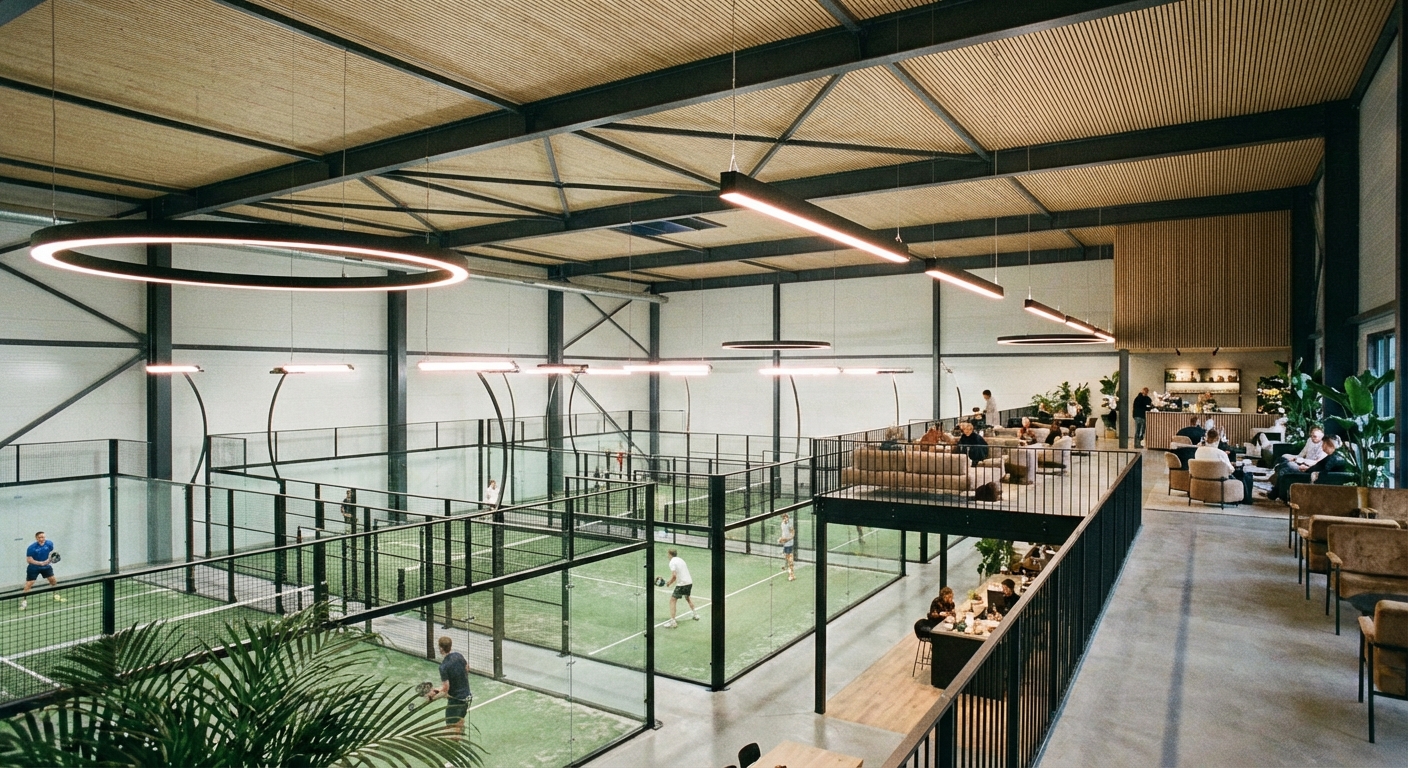
For indoor facilities, the standard padel court size requires a minimum clear ceiling height of 6 meters across the entire surface. However, professional standards strongly recommend 8 meters or higher to accommodate high defensive “lobs.” If the ceiling is too low, it restricts the game’s strategy and can frustrate advanced players.
Indoor Vertical Clearance Standards
The “free height” must be completely unobstructed by lights, beams, or ventilation ducts. Ensuring this clearance is vital for maintaining the flow of competitive play.
- Absolute Minimum: 6 meters.
- Club Standard: 7 meters.
- Professional/FIP: 8+ meters.
- Light Pole Height: 6 meters.
Wall Height Specifications
Here is the truth:
The back walls must be 4 meters high to safely contain the ball and provide a proper rebound surface. This includes 3 meters of transparent glass topped with 1 meter of metallic mesh.
Key Takeaway: Prioritizing vertical clearance during the design phase ensures your indoor club attracts top-tier talent and prevents point-ending roof hits.
| Element | Height Requirement |
|---|---|
| Minimum Clear Height | 6 Meters |
| Recommended Height | 8 Meters |
| Back Wall Glass | 3 Meters |
| Back Wall Mesh | 1 Meter |
Vertical space is just as critical as horizontal dimensions for creating a truly playable environment.
How do the net and lines fit the padel court size?
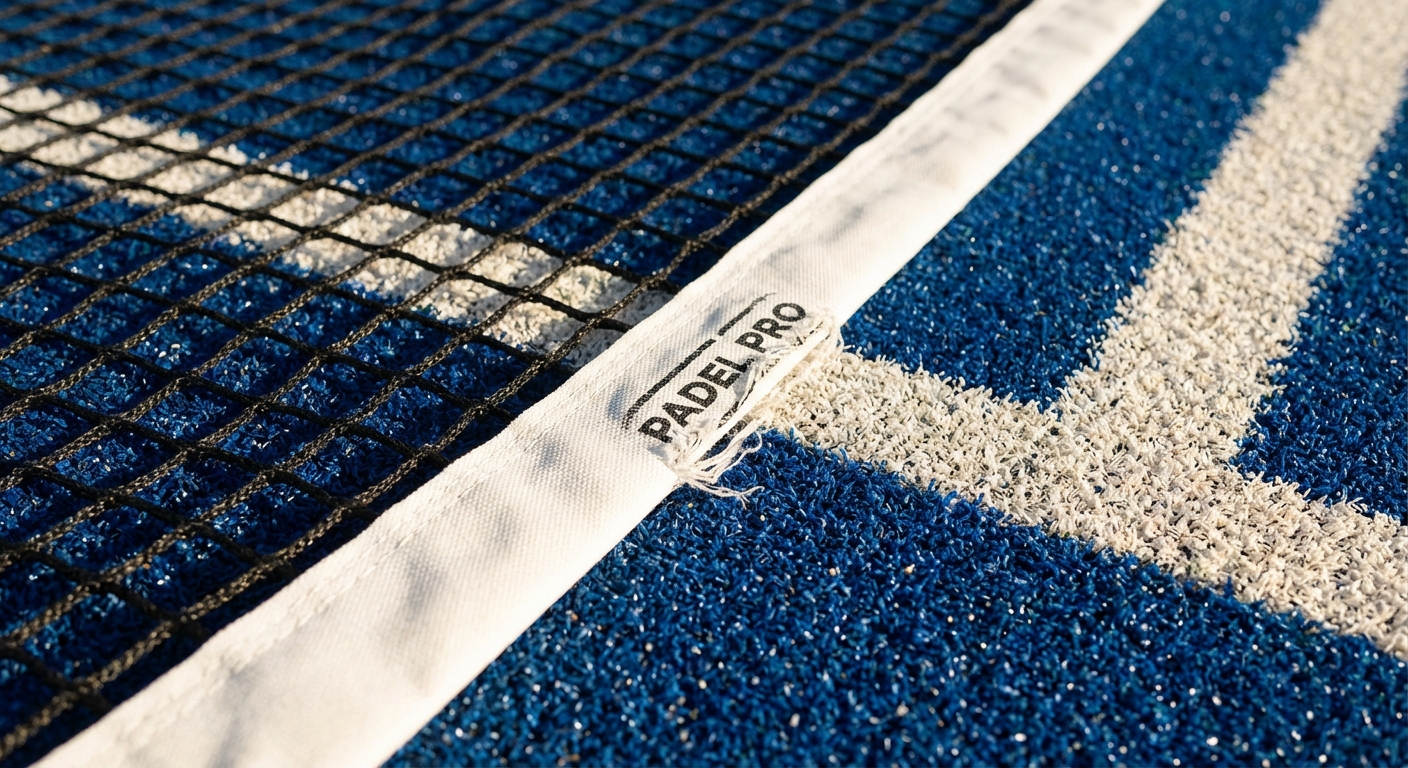
The net is positioned exactly in the middle of the padel court size, spanning the full 10-meter width. It must be 0.88 meters high at the center and reach a maximum of 0.92 meters at the side posts. These precise measurements are dictated by FIP regulations to ensure consistency across all professional courts.
Service Line and Marking Precision
Court lines define the boundaries of the service boxes and the general playing zones. All lines must be 5cm thick and painted in a color that contrasts sharply with the turf.
- Service Line: 6.95m from the net.
- Line Thickness: Exactly 5cm.
- Net Length: 10.0 meters.
- Central Service Line: Divides the court into two equal halves.
Net Tension and Safety
The bottom line?
The net must be tensioned correctly to ensure a fair bounce and player safety. It is usually held in place by a internal cable and adjusted via a tensioning mechanism hidden inside the posts.
Key Takeaway: Precise line marking and net height adjustments are non-negotiable details that define the professional quality of your build.
| Marking | Distance/Spec |
|---|---|
| Net Center Height | 0.88 Meters |
| Net Post Height | 0.92 Meters |
| Line Thickness | 5 cm |
| Distance to Wall | 3 Meters |
Accurate net placement and line marking facilitate fair play and help referees make clear calls.
Which materials best support the padel court size?
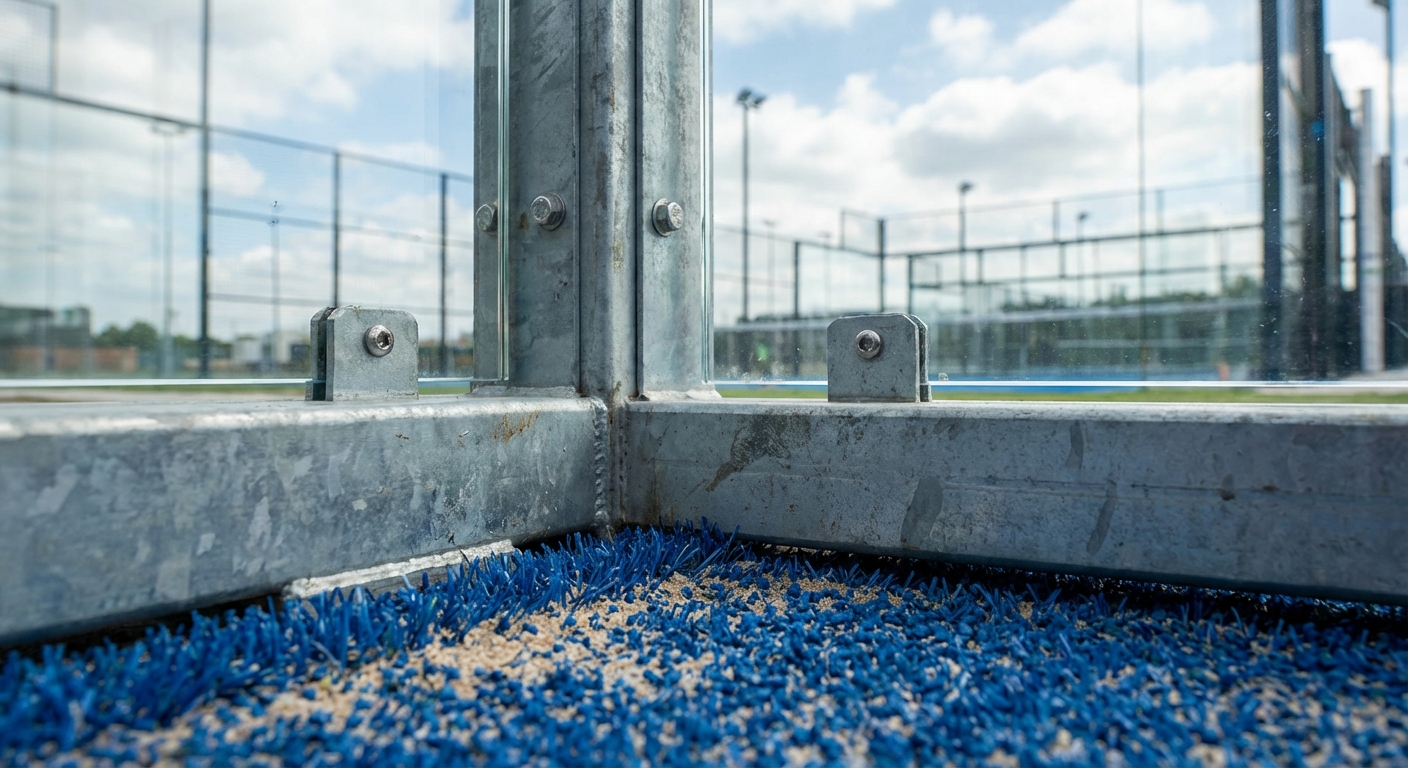
The internal padel court size is best supported by a combination of tempered glass walls and artificial turf. The turf should be high-density monofilament or textured fiber, typically filled with specialized silica sand to ensure a consistent bounce. Quality materials prevent the court from shifting, which keeps the playing dimensions accurate over the years.
Glass Walls and Steel Framing
The structure must be robust enough to withstand significant impacts from both balls and players. Galvanized steel is the standard for frames to prevent corrosion, especially in outdoor or humid environments.
- Glass Thickness: 10mm or 12mm tempered.
- Frame: Galvanized steel.
- Finish: Powder-coated anti-rust.
- Mesh: Electro-welded wire.
Choosing the Right Turf
Look for:
High-performance turf that offers UV resistance and proper drainage capabilities. The color of the turf—usually blue, green, or terracotta—must be uniform to prevent visual distractions during play.
Key Takeaway: Investing in premium materials at the start reduces long-term maintenance costs and keeps the court within official size tolerances.
| Material | Specification |
|---|---|
| Playing Surface | Artificial Turf (10-12mm) |
| Wall Panels | Tempered Glass |
| Structural Frame | Galvanized Steel |
| Mesh Enclosure | Metallic Wire |
Material choice directly impacts player safety and the longevity of your sports facility.
What are the drainage needs for the padel court size?
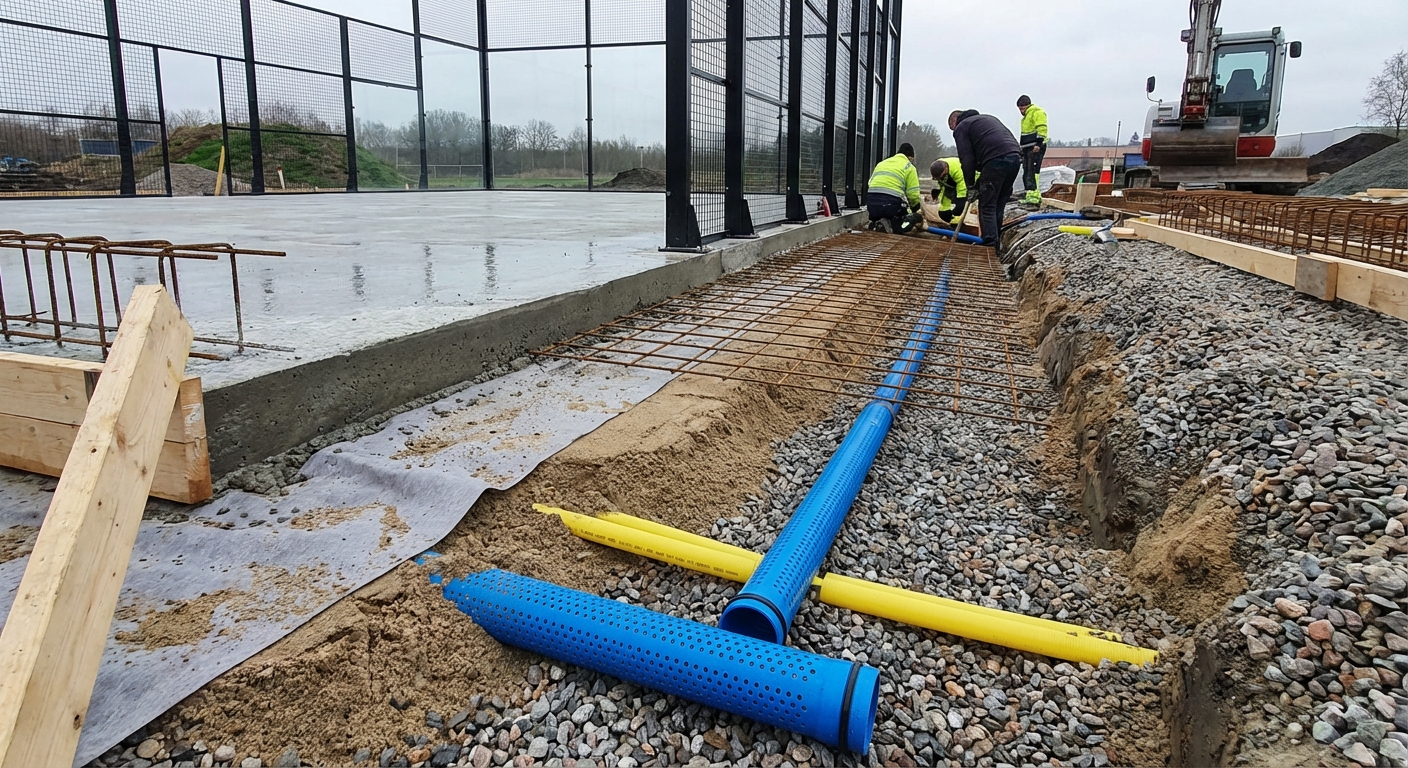
A stable foundation is required to maintain the padel court size and ensure proper water management. For outdoor courts, a reinforced concrete slab (15-20cm thick) with a subtle 0.5% to 1% slope is standard. This allow rain to drain away quickly, preventing the puddling that ruins artificial turf and delays games.
Concrete Foundation Specifications
The foundation must be perfectly level and cured correctly to prevent future cracking. Any shifting in the base will cause the glass walls to misalign, making the court unsafe.
- Concrete Grade: 25/30 or higher.
- Slab Thickness: 15 cm minimum.
- Reinforcement: Steel mesh or fiber.
- Slope: 1% maximum (outdoors).
Sub-Base Drainage Systems
But wait, there is more:
In areas with high rainfall, you might need a porous concrete base or a dedicated drainage channel around the perimeter. This ensures the court is playable within minutes after a heavy downpour.
Key Takeaway: Proper sub-base preparation is the most critical technical step to protect the accuracy and safety of your court dimensions.
| Foundation Element | Requirement |
|---|---|
| Concrete Depth | 15 – 20 cm |
| Curing Time | 21 – 28 Days |
| Permissible Slope | 0.5% – 1.0% |
| Foundation Leveling | +/- 3mm over 3m |
A solid foundation prevents structural shifts that could disqualify the court from professional use.
How does lighting affect the padel court size layout?
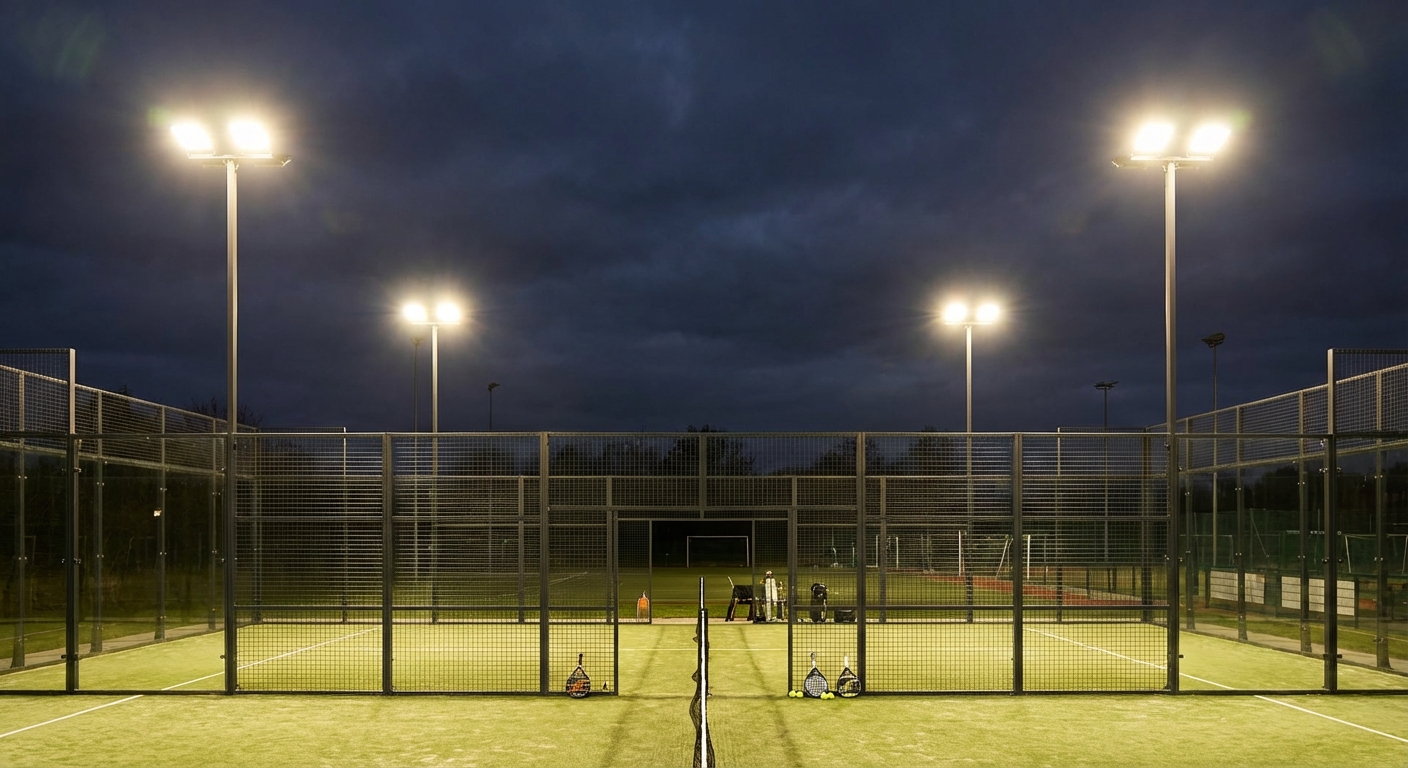
Lighting poles must be placed outside the 20×10 meter padel court size to avoid interfering with the playing area. These poles usually stand 6 meters tall and house powerful LED floodlights that provide uniform illumination across the entire turf. Proper lighting allows for evening matches, significantly increasing the revenue potential of any commercial club.
Illumination Levels and Uniformity
The intensity of the lights depends on whether the court is for recreational use or televised competition. Uniformity is the goal to prevent “dead spots” where the ball becomes hard to see.
- Recreational: 200 – 300 Lux.
- Professional: 500 – 750 Lux.
- Light Poles: 4 or 8 units per court.
- Height: 6.0 meters minimum.
Placement and Glare Prevention
The rule is simple:
Floodlights must be positioned to provide clear visibility without blinding players when they look up for a lob. Modern LED systems are preferred for their energy efficiency and instant-on capabilities.
Key Takeaway: Strategic lighting placement maximizes the usability of your court while keeping the playing area safe and unobstructed.
| Lighting Grade | Lux Level | Application |
|---|---|---|
| Training | 200 Lux | Private / Residential |
| Club Play | 300 Lux | Commercial Centers |
| Tournament | 500+ Lux | Professional / TV |
Modern LED lighting is an essential upgrade for any facility looking to operate during evening hours.
Can you customize the standard padel court size?
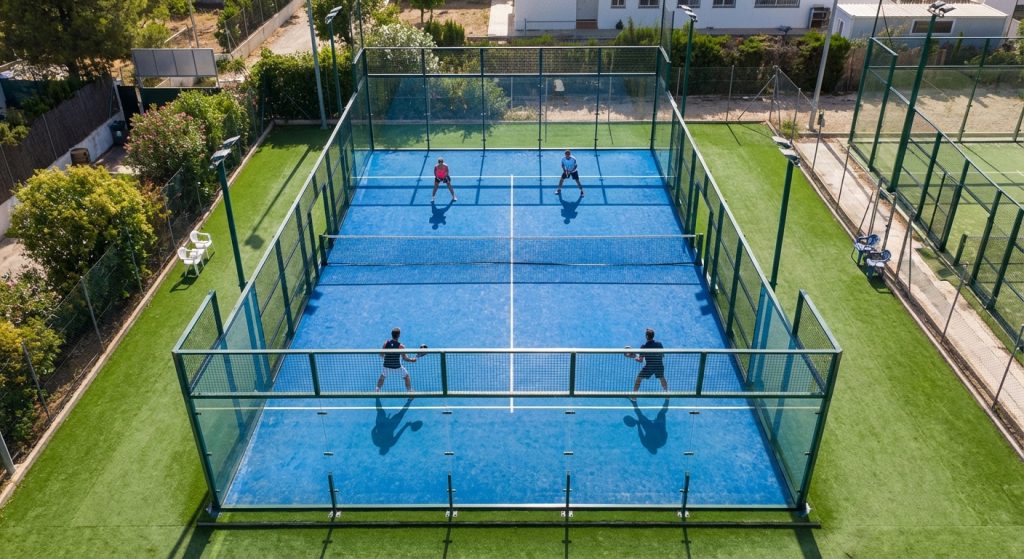
While the internal padel court size must remain 10×20 meters for official play, you can customize the aesthetic and structural elements. Panoramic glass walls, for example, eliminate the vertical steel pillars at the back of the court for better spectator viewing. You can also choose custom turf colors or frame finishes to match your brand’s identity.
Aesthetic and Functional Upgrades
Customization allows you to create a premium “VIBE” for your club. From luxury seating areas to integrated scoring systems, the possibilities are nearly endless.
- Panoramic Glass: Seamless viewing.
- Turf Colors: Blue, Black, Green, Red.
- Branded Frames: Custom powder coating.
- Scoring Systems: Integrated LED boards.
When to Avoid Customization
Here is the deal:
Never change the internal 20×10 meter dimensions or the 88cm net height if you want the court to have a high resale value. Players will avoid facilities that feel “off” because of non-standard measurements.
Key Takeaway: Customizing the “look” of your court is encouraged, but maintaining the official internal dimensions is vital for long-term success.
| Customizable | Standard (Fixed) |
|---|---|
| Glass Color | 10m x 20m Size |
| Frame Finish | Net Height |
| Turf Texture | Line Placement |
Personalization adds value to your facility without compromising the integrity of the game.
What are the common mistakes with padel court size?
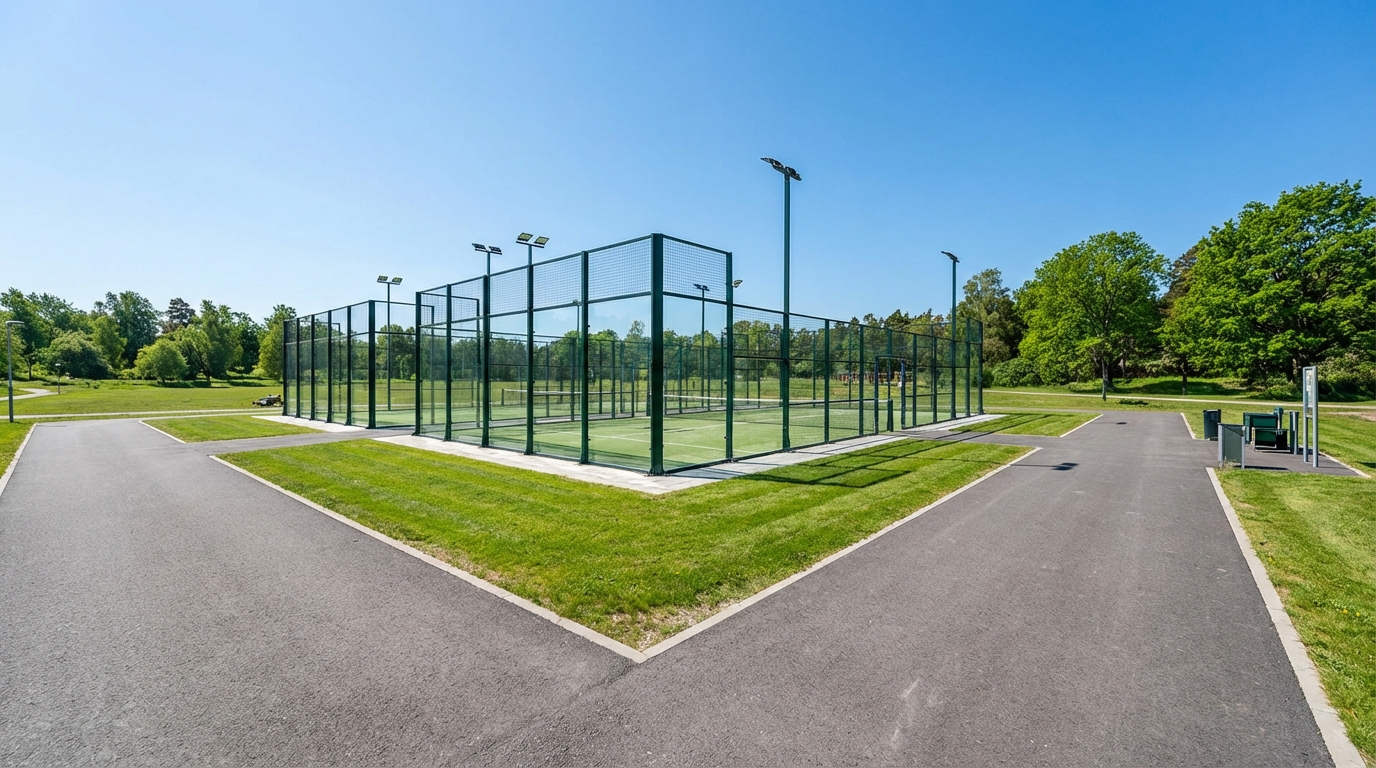
One of the most frequent errors is forgetting that the padel court size refers to the internal playing area, not the external footprint. Many builders squeeze the court into a space that is exactly 20×10 meters, leaving no room for the structural pillars or doors. This results in a facility that is impossible to maintain and dangerous for players to enter and exit.
Planning for Perimeter Safety
Why it matters:
A lack of safety clearance can lead to collisions with walls or other players. You must ensure there is at least one meter of clear space around the entire glass and mesh enclosure.
- Error 1: Internal vs External dimensions.
- Error 2: Inadequate ceiling height.
- Error 3: Poor sun orientation (East-West).
- Error 4: Lack of maintenance access.
Pre-Construction Audit Checklist
Before pouring your foundation, perform a final audit of your site survey. Ensure all clearances are met and the orientation will not cause blinding sun glare during peak playing hours.
Key Takeaway: Double-checking your measurements against FIP standards before construction starts saves thousands of dollars in retrofitting costs.
| Mistake | Consequence |
|---|---|
| No Safety Buffer | Player Injuries |
| Low Ceiling | Restricted Play |
| East-West Layout | Sun Glare Issues |
| Incorrect Slope | Water Damage |
Diligent planning and adherence to official standards are the only ways to guarantee a successful court build.
Building a world-class padel facility is a technical challenge that requires precision and expert knowledge. By focusing on the exact dimensions, height requirements, and material quality, you solve the problems of playability and longevity before they even arise. We are dedicated to providing the global infrastructure that supports this fast-growing sport. Whether you are a club owner looking to expand or a developer starting a new project, we can help you build a court that exceeds professional standards. Please contact us today to discuss your vision and receive a customized construction plan.
FAQ
Can I build a padel court on an existing tennis court?
Yes, you can. A standard tennis court is large enough to fit one padel court comfortably, and in many cases, you can fit up to three padel courts in the space of two tennis courts.
What is the best ceiling height for an indoor court?
The best option is 8 meters. While the official minimum is 6 meters, having 8 meters of clearance allows for professional-level lobs and a better overall experience.
How do I know if my foundation is level enough?
The standard is a maximum 1% slope for outdoor courts to assist with drainage. You should use professional leveling tools to ensure the slab has no more than a 3mm deviation over any 3-meter section.
Can I use regular glass for the court walls?
No, you must use tempered safety glass. Official standards require either 10mm or 12mm thickness to handle the impact of players and balls safely.
How do I choose the right turf color?
The most popular choice is blue because it provides the best contrast for both players and television cameras. However, FIP also approves green and terracotta for official play.