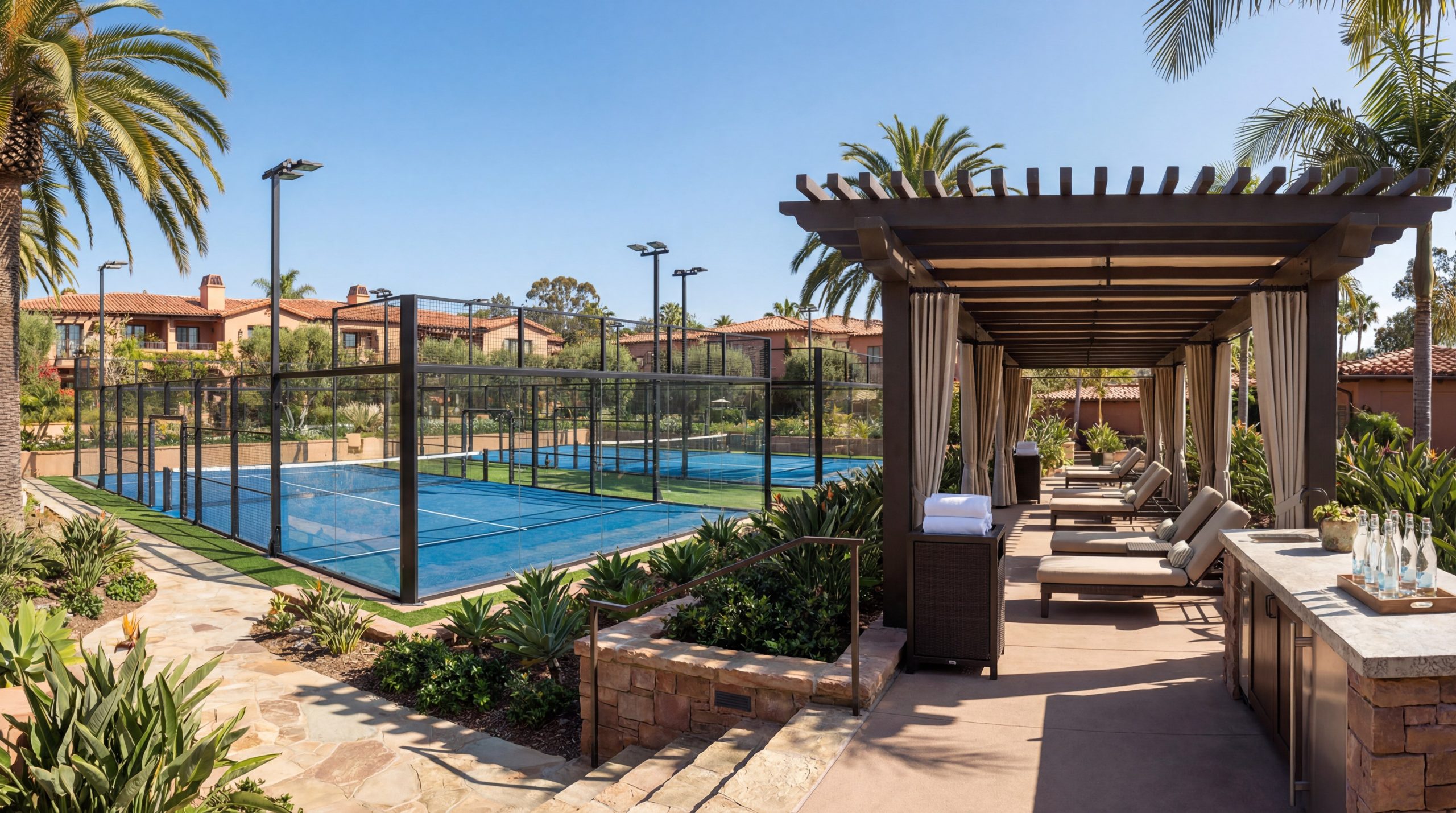
Finding high-quality sports facilities in Southern California is often a frustrating cycle of overbooked tennis courts and subpar maintenance. As the sport of padel sweeps through the region, many enthusiasts are left wondering how to access or build elite-level infrastructure that meets international standards. The king of padel san diego represents the gold standard of this movement, offering a comprehensive blueprint for both premier play and professional court construction that transforms any space into a world-class athletic hub.
What is the current status of king of padel san diego facilities?
The king of padel san diego facilities are currently expanding rapidly, moving from exclusive resort offerings to public-access powerhouses. Leading venues now feature professional-grade courts designed by international experts, providing drop-in sessions, skill-specific clinics, and monthly tournaments. These centers are no longer just places to play; they are becoming comprehensive wellness destinations.
Why professional design matters
Think about it: A court is only as good as its foundation. In the local region, luxury resorts have set the bar by installing courts that allow for high-speed play and consistent ball bounce.
- Professional instruction from certified staff.
- High-end amenities including pro shops and dining.
- Integration with existing tennis and pickleball ecosystems.
But here is the kicker: The transition to public-access courts at major centers has democratized the sport, making elite play accessible to the wider community.
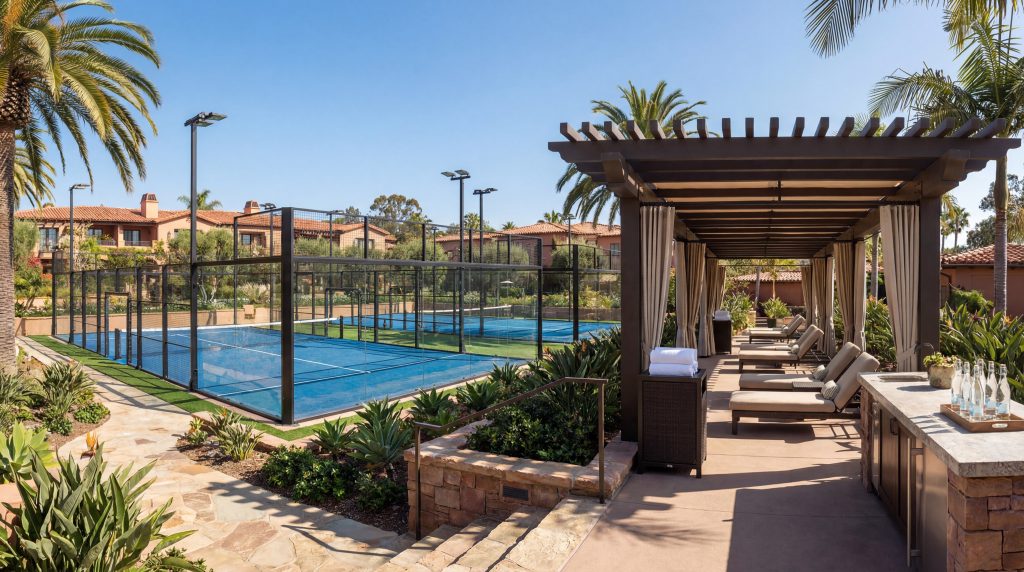
Current Market Overview
| Feature | Status |
|---|---|
| Availability | High growth in North County and coastal areas |
| Coaching | Professional academies now active |
| Access | Mix of private resort and public membership |
Key Takeaway: The local padel scene is evolving from a niche resort activity into a mainstream competitive sport with diverse facility options.
Where can you find the best king of padel san diego court construction?
You can find the best king of padel san diego court construction by looking for installers who specialize in glass and steel structures that meet European standards. Elite construction in this region focuses on durability against coastal air and high-intensity usage. Most premier courts utilize a blend of panoramic glass and specialized turf to ensure a professional experience.
Selecting a construction partner
Believe it or not, the “coastal effect” can ruin a poorly built court in months. That is why builders prioritize materials that resist corrosion while maintaining structural integrity for years.
- Specialized academy coaching integration.
- Mixed-use facilities with pickleball and tennis.
- High-traffic durability for league play.
The best builders often integrate technology from world-renowned academies to ensure the playing surface mimics professional tour conditions.
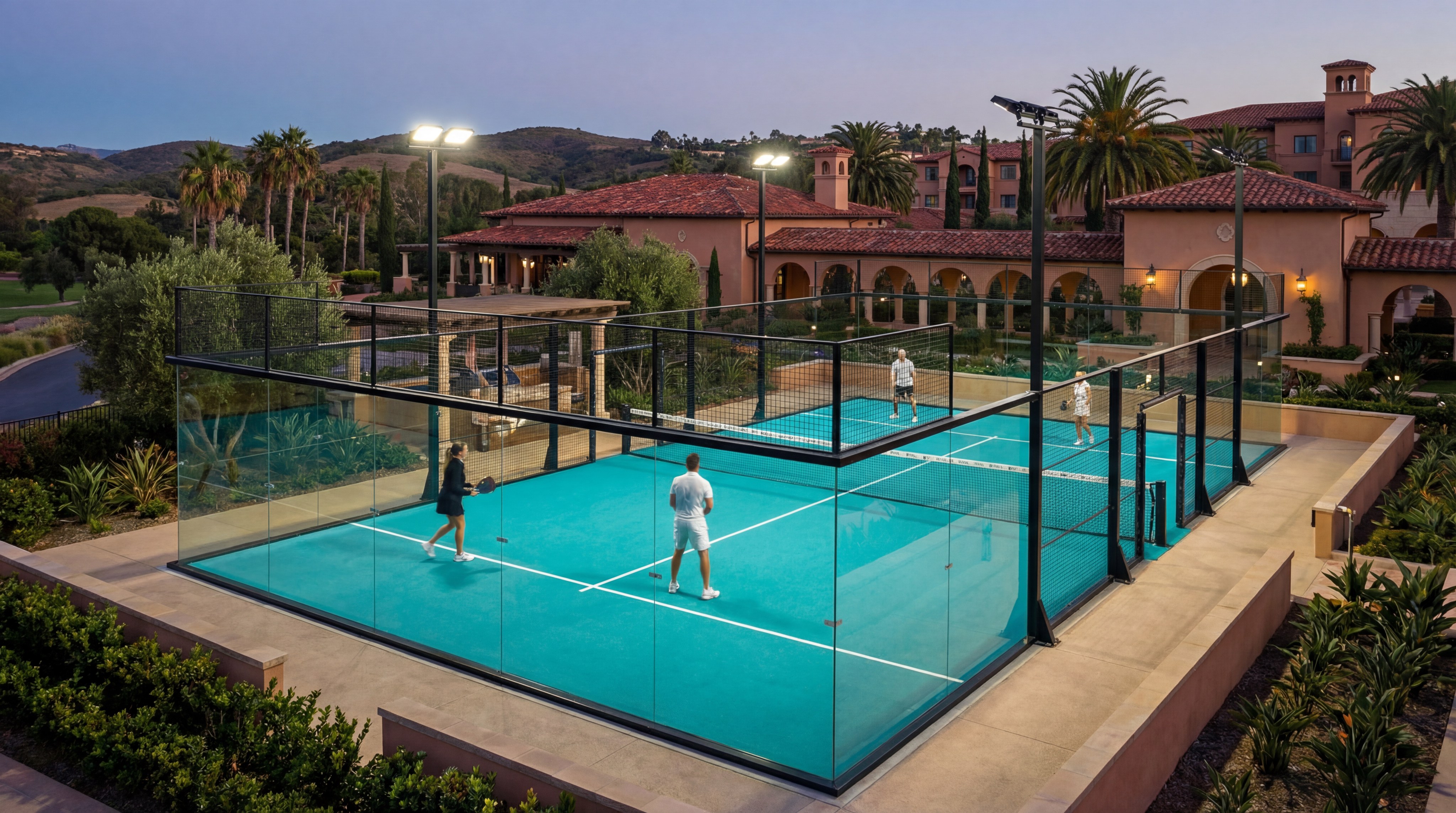
Construction Quality Indicators
| Component | Professional Standard |
|---|---|
| Glass | 12mm Tempered Safety Glass |
| Frame | Galvanized Steel with Anti-corrosion Coating |
| Net System | Heavy-duty steel posts with tension adjusters |
Key Takeaway: High-quality construction requires specialized materials that can withstand both heavy play and local environmental factors.
Why is king of padel san diego becoming a local sports phenomenon?
The king of padel san diego is becoming a phenomenon because it bridges the gap between the social ease of pickleball and the athletic rigor of tennis. The local community has embraced the sport’s unique “glass play” dynamics, which allow for longer rallies and more strategic depth. This has led to the development of massive facilities that host professional teams and seasonal events.
The rise of team padel
But here is the kicker: San Diego is now home to its own professional-level teams. This local pride has fueled a surge in court reservations and membership sign-ups at major tennis centers.
- Seven-court facilities to accommodate large crowds.
- Membership packages designed for daily players.
- Professional event hosting throughout the year.
The social aspect of the game makes it incredibly “sticky” for players, leading to high retention rates at local clubs.
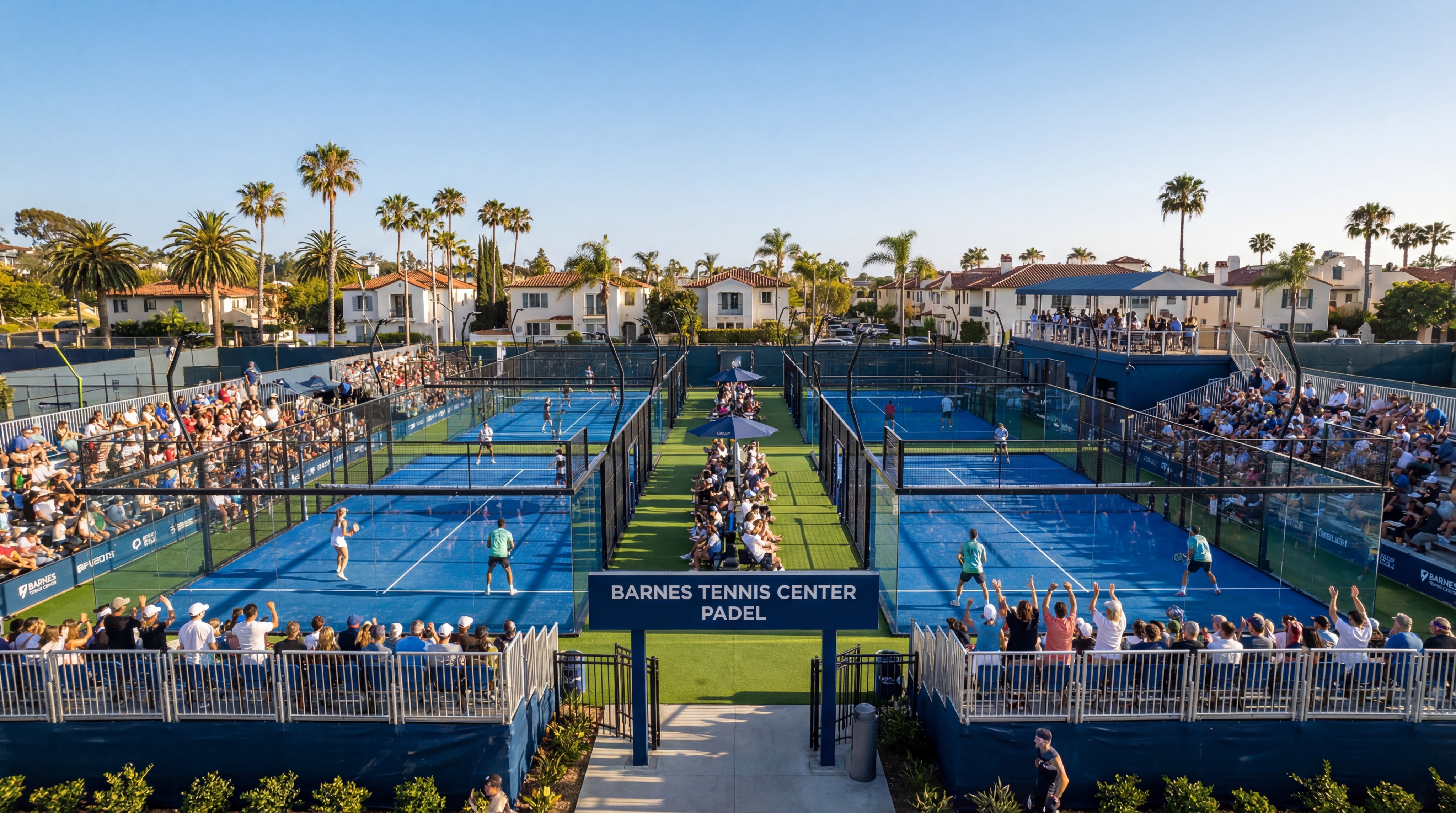
Community Growth Factors
| Growth Driver | Impact Level |
|---|---|
| Social Appeal | Very High |
| Pro Visibility | Increasing via local teams |
| Ease of Entry | High for racket sport veterans |
Key Takeaway: The combination of professional tournament visibility and social accessibility is driving unprecedented growth.
How do you choose the right materials for a king of padel san diego project?
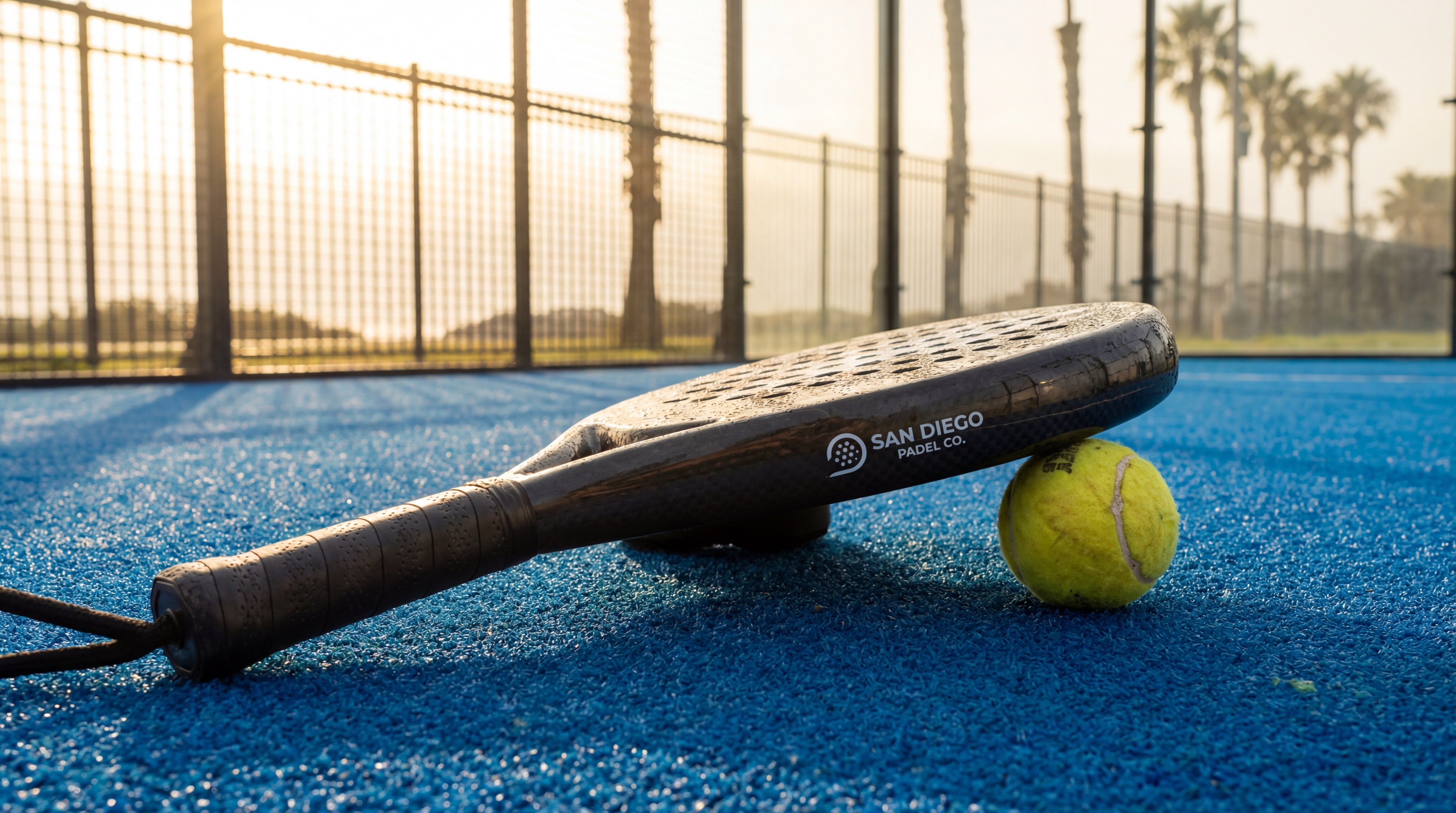
Choosing the right materials for a king of padel san diego project involves prioritizing 12mm tempered glass and monofilament synthetic grass. These materials are essential for maintaining the ball’s kinetic energy and ensuring player safety during aggressive movements. Quality rackets and balls designed for coastal humidity also play a significant role in the overall experience.
Material Durability
Think about it: A padel court is essentially a glass cage under constant stress. Using anything less than industrial-grade materials is a recipe for disaster.
- Tempered glass for maximum visibility and safety.
- Textured turf to allow for controlled sliding.
- Rust-resistant fencing for coastal installations.
Investing in high-end materials from the start reduces long-term maintenance costs and keeps the court in playing condition year-round.
Essential Material Specs
| Material | Purpose |
|---|---|
| Monofilament Grass | Superior drainage and ball bounce |
| Tempered Glass | Consistent rebound and safety |
| Galvanized Steel | Structural longevity and wind resistance |
Key Takeaway: Premium materials are the only way to ensure a court remains safe and competitive in a coastal environment.
What are the layout requirements for a king of padel san diego facility?
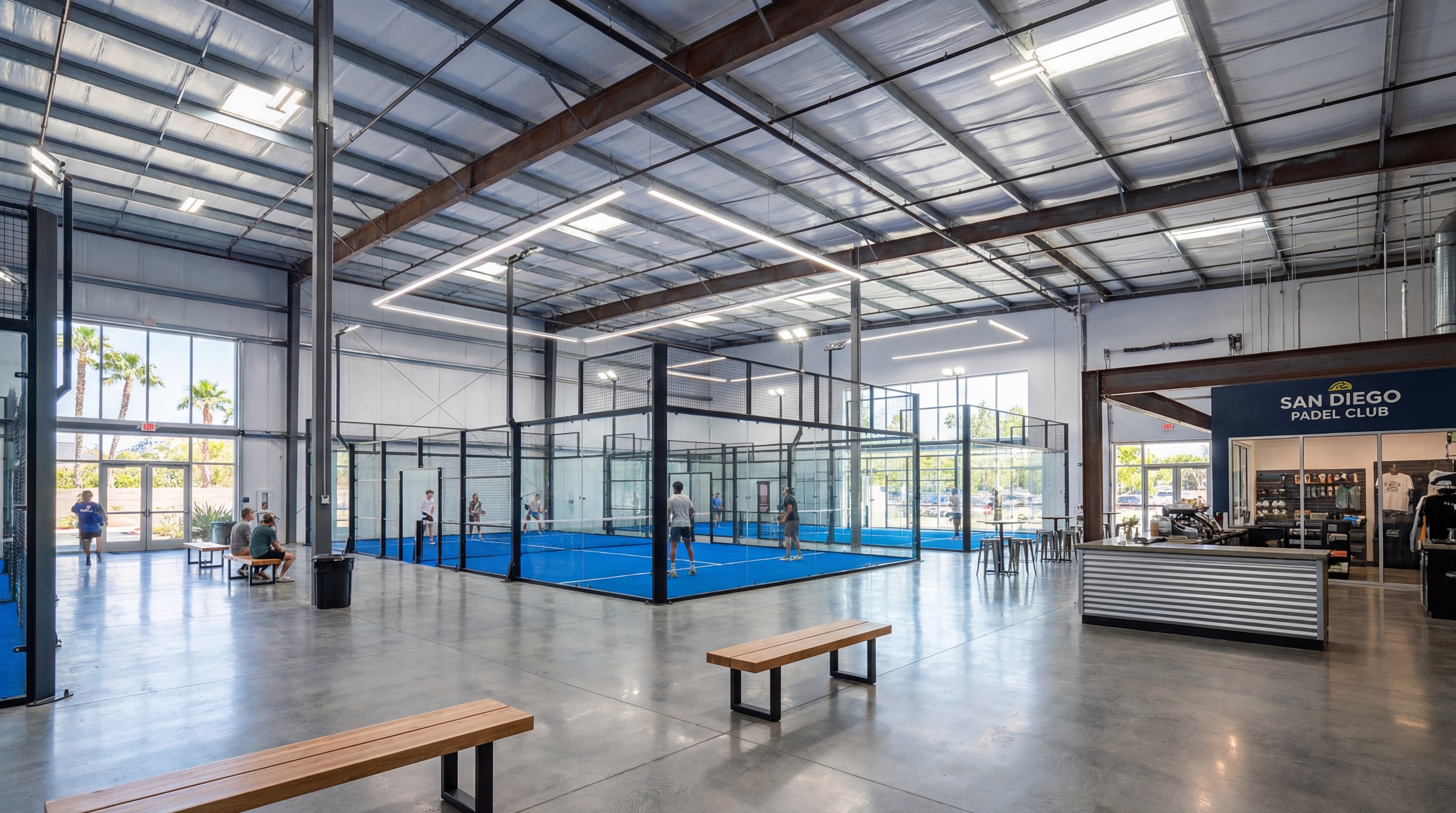
The king of padel san diego layout requirements typically demand a minimum space of 10 by 20 meters per court, with additional room for spectator flow and amenities. Many modern facilities utilize indoor warehouses to provide 24/7 climate-controlled play. This setup often includes a central lobby, pro shop, and social areas to foster a club-like atmosphere.
Indoor vs. Outdoor Layouts
You might be wondering: Is indoor play better? In San Diego, indoor facilities allow for night leagues and protection from the occasional marine layer, providing a consistent environment for serious players.
- Open play sessions with hourly rates.
- Monthly memberships with priority booking.
- Seasonal leagues for various skill levels.
A well-designed layout also accounts for gender-specific groups and mixed-play sessions to maximize court occupancy.
Facility Layout Essentials
| Zone | Requirement |
|---|---|
| Court Area | 200 square meters per court |
| Ceiling Height | Minimum 6-8 meters for indoor |
| Social Space | Lounge and viewing area for spectators |
Key Takeaway: Whether indoor or outdoor, the layout must balance court density with social and viewing spaces.
Which areas are best for a new king of padel san diego court?
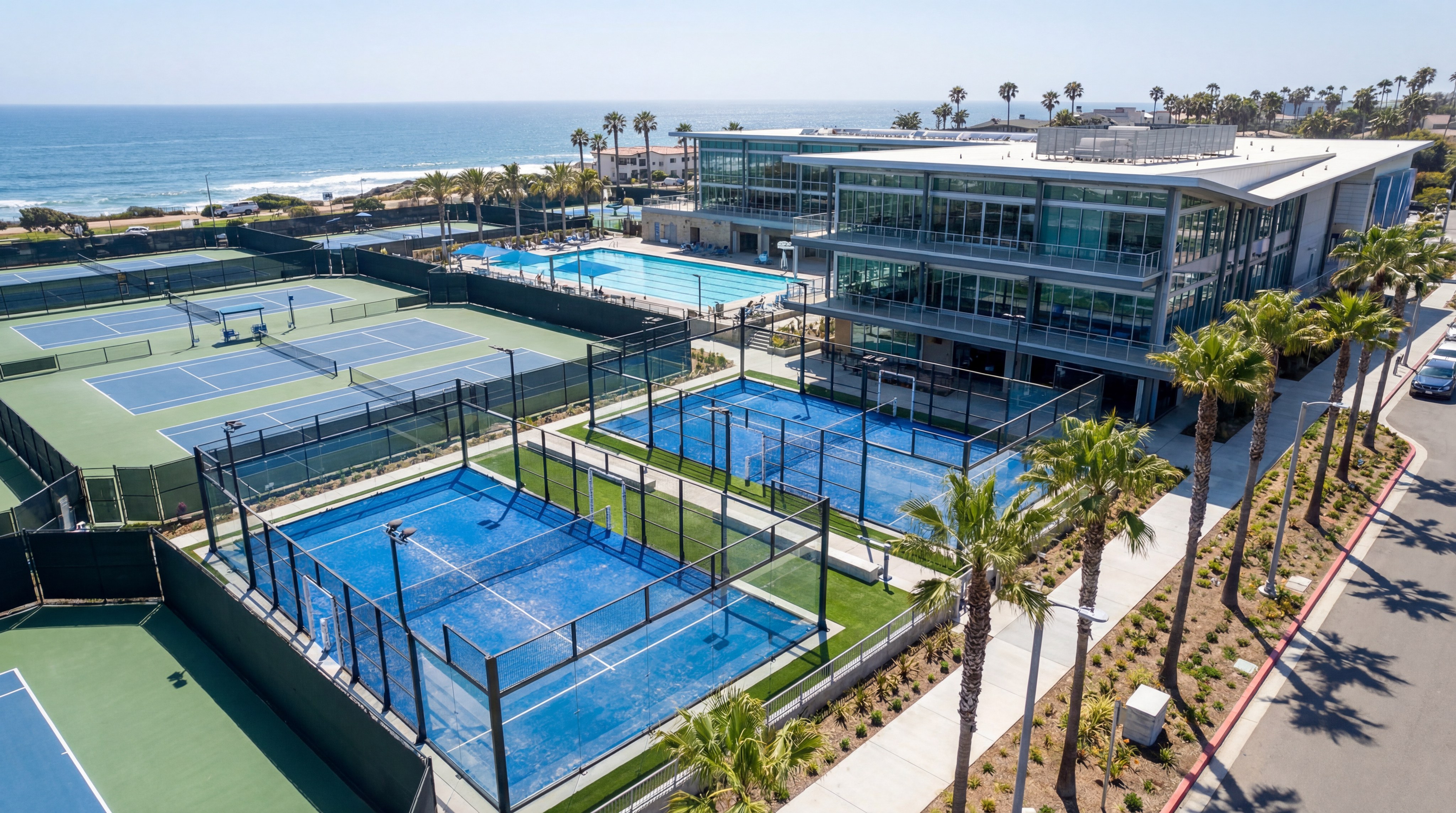
The best areas for a new king of padel san diego court are North County and coastal communities where the demand for luxury recreation is highest. These regions offer the necessary land or warehouse space to support multi-court facilities that can host large-scale tournaments. Placing courts near existing wellness or fitness hubs ensures a steady stream of athletic-minded clients.
Geographical Advantages
The truth is: Location is everything. Coastal spots attract tourists and locals alike, while North County offers the space for “mega-clubs” with ten or more courts.
- High visibility in affluent coastal neighborhoods.
- Accessibility for residents in Sorrento Valley and North County.
- Proximity to existing golf and tennis clubs.
Proximity to coastal resorts often allows for high-end “stay and play” packages that increase revenue.
Ideal Development Regions
| Region | Advantage |
|---|---|
| North County | Large plots for stadium courts |
| Sorrento Valley | High density of corporate/wellness clients |
| Coastal Bay Ho | Central access for indoor urban play |
Key Takeaway: Strategic placement near existing athletic populations is critical for the success of a new facility.
Can you build a king of padel san diego court indoors?
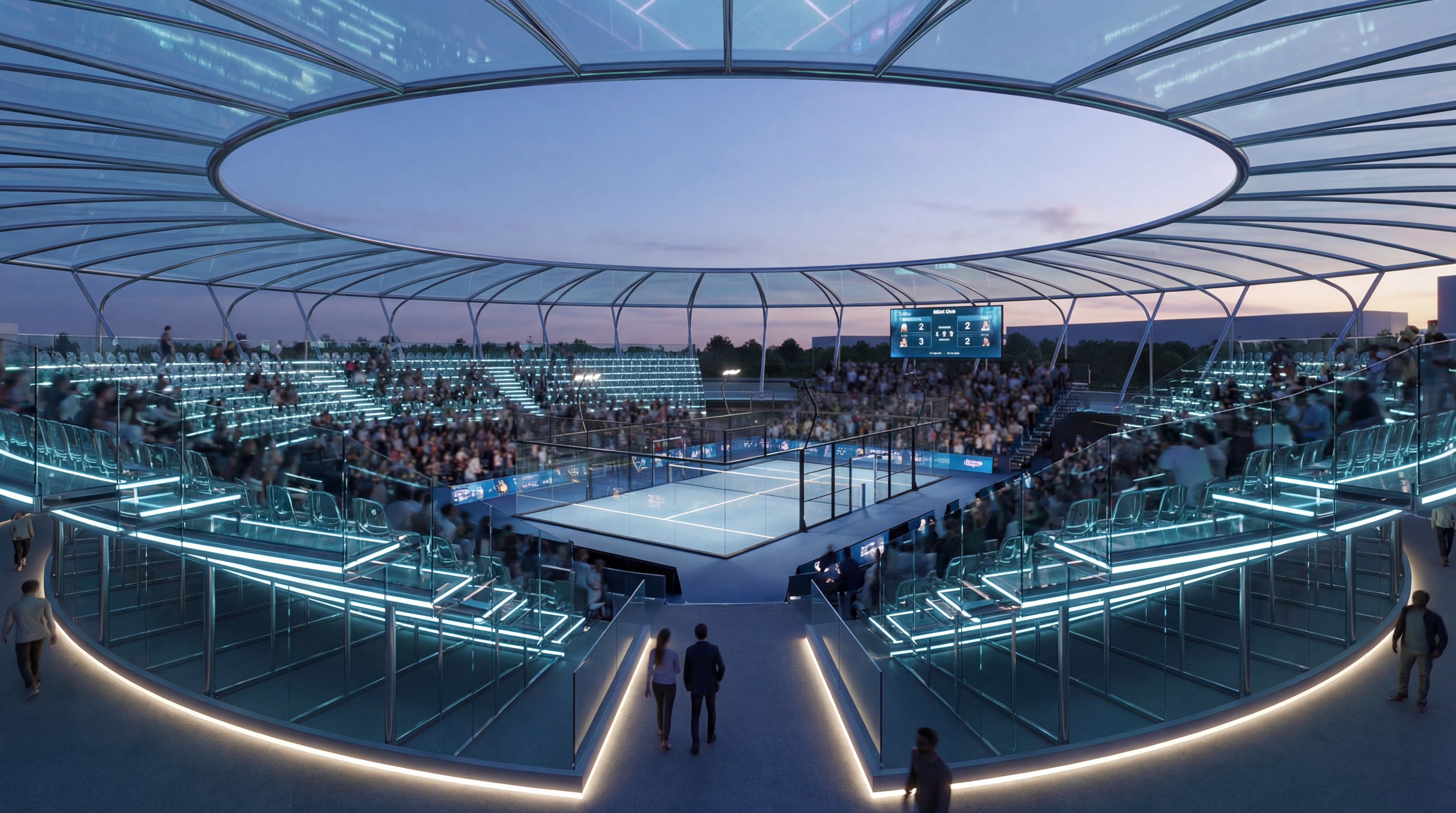
The king of padel san diego can absolutely be built indoors, and this is often the preferred method for year-round high-performance play. Indoor builds require specialized roofing considerations to ensure the ceiling height (lob height) doesn’t interfere with gameplay. Utilizing a “roofed” design or warehouse conversion allows for stadium-style seating and a futuristic aesthetic.
Advantages of Indoor Construction
Think about it: No wind, no sun glare, and no rain. Indoor courts provide a “lab-like” environment where players can perfect their technique without external variables.
- Stadium court designs for tournament finals.
- Integration of fitness complexes and dining.
- Advanced acoustics and lighting control.
Future facilities are looking to integrate wellness centers directly into the court environment, creating a 360-degree health experience.
Indoor Build Constraints
| Factor | Requirement |
|---|---|
| Clear Height | 8 meters (approx. 26 feet) is ideal |
| Ventilation | High-volume HVAC for humidity control |
| Lighting | Anti-glare LED placement |
Key Takeaway: Indoor courts offer the most consistent playing experience and are becoming the standard for professional training.
What technical specifications define the king of padel san diego standard?
The king of padel san diego standard is defined by a 20m x 10m footprint, 3m and 4m high electro-welded mesh, and 10mm-12mm glass panels. These dimensions are non-negotiable for official play. The structure must be capable of withstanding lateral forces from players colliding with the glass and wind loads in outdoor settings.
Structural Engineering
But here is the kicker: If your mesh isn’t the right height or tension, the game changes entirely. Professional courts use precise engineering to ensure the rebound off the fence is predictable.
- 6-meter height for lighting posts to avoid glare.
- Net height of 0.88m at the center to 0.92m at the posts.
- Synthetic turf with specific sand infill ratios.
Adhering to these technical diagrams ensures the court is eligible for professional tournaments and local league play.
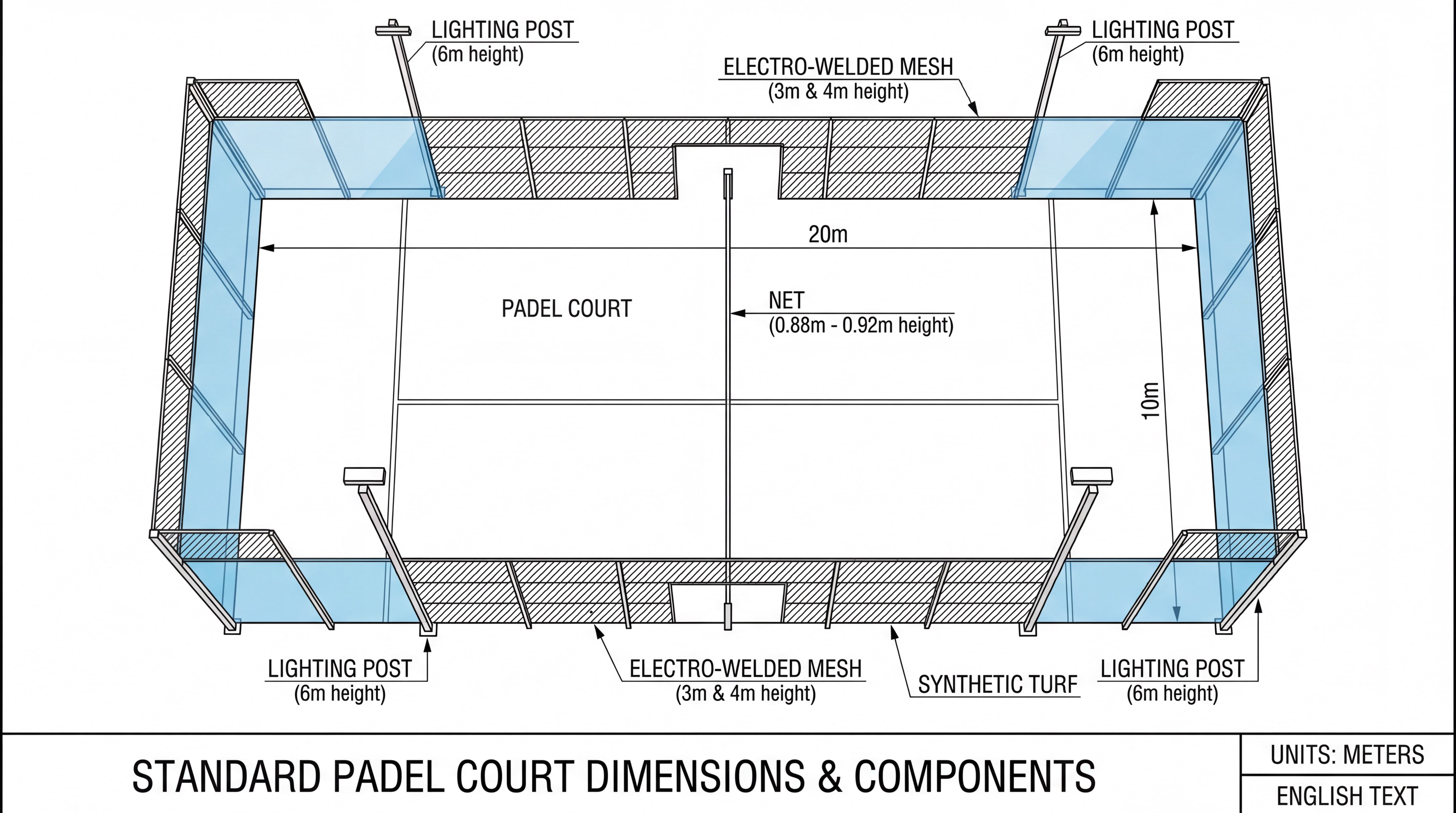
Official Court Specs
| Component | Metric |
|---|---|
| Length/Width | 20m x 10m |
| Mesh Height | 3m (sides) and 4m (ends) |
| Lighting | 4-8 LED projectors |
Key Takeaway: Technical precision is what separates a backyard court from a professional-grade facility.
How does lighting impact the king of padel san diego experience?
Lighting for the king of padel san diego must provide at least 500-750 lux to ensure high-speed ball tracking during night play. Professional installations use LED projectors mounted on 6-meter poles to minimize shadows and prevent player blinding. Proper lighting extends the operational hours of a facility, making it profitable long after the sun goes down.
Optimal Lighting Design
Believe it or not, bad lighting can cause more injuries than a slippery court. High-quality LEDs provide a “flicker-free” environment essential for both players and video recording.
- Strategic pole placement to avoid the “lob zone.”
- Energy-efficient modules to lower overhead.
- Instant-on capabilities for facility management.
The goal is to create a daylight-like experience that allows for competitive play at any hour of the night.
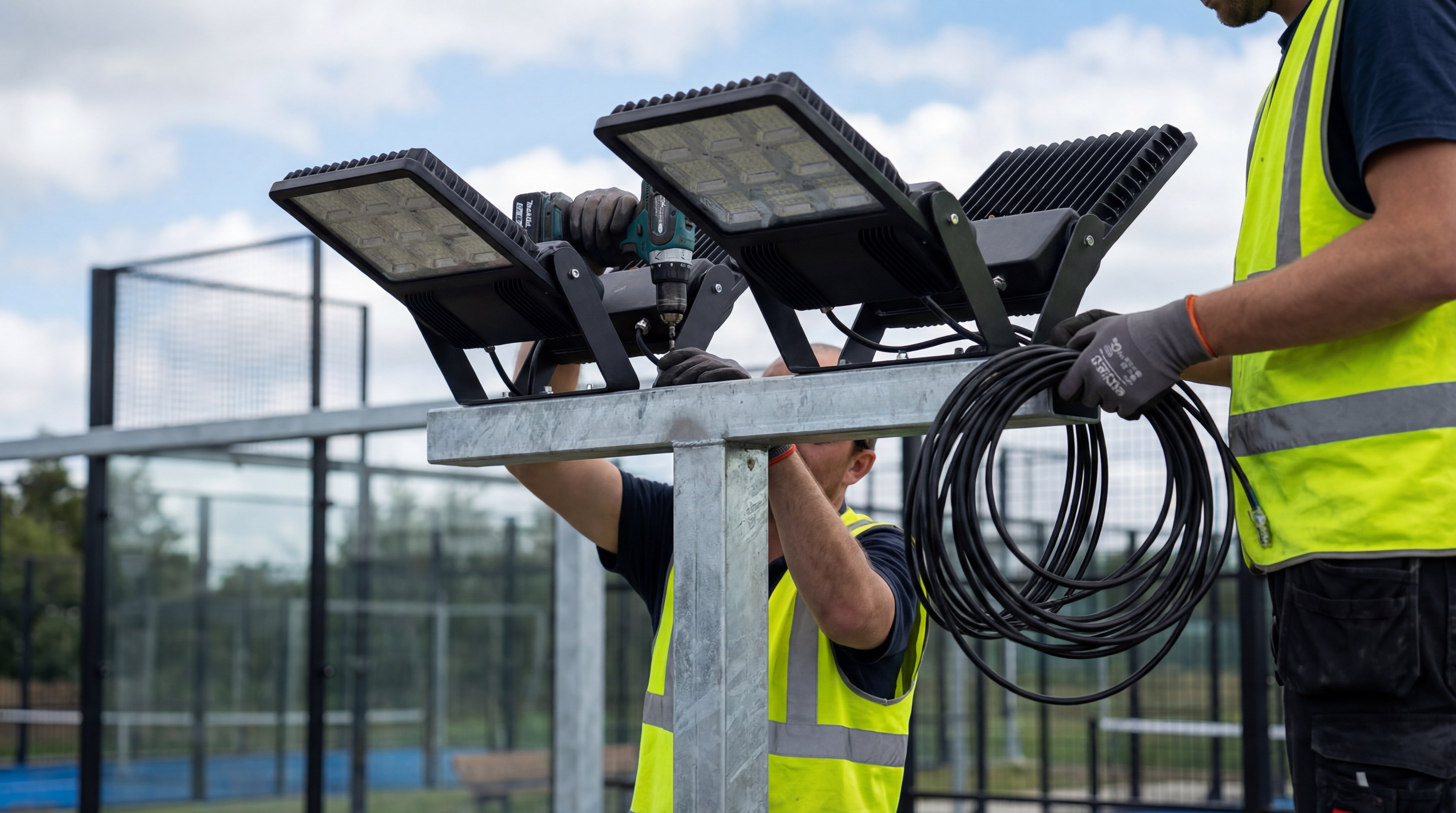
Lighting Performance Standards
| Metric | Requirement |
|---|---|
| Illuminance | 500 Lux (Standard) / 750 Lux (Pro) |
| Uniformity | > 0.7 for even coverage |
| Color Temp | 5000K – 6000K (Daylight) |
Key Takeaway: Advanced LED lighting is essential for safety, ball visibility, and maximizing the facility’s revenue hours.
What kind of turf is used for a king of padel san diego court?
A king of padel san diego court uses textured synthetic turf, often in blue, which is designed to hold a specific amount of silica sand infill. This sand is crucial because it allows the ball to bounce naturally while enabling players to slide without catching their joints. The “grass” fibers are usually monofilament or fibrillated to provide a balance of grip and speed.
Turf Texture and Maintenance
Think about it: The turf is the most abused part of the court. Choosing a high-density fiber ensures the court doesn’t develop “dead spots” or slippery areas over time.
- UV-resistant fibers to prevent fading in the sun.
- High-permeability backing for rapid drainage.
- Non-directional pile for consistent ball roll.
Regular brushing and sand redistribution are required to keep the “king” standard of play consistent for years.
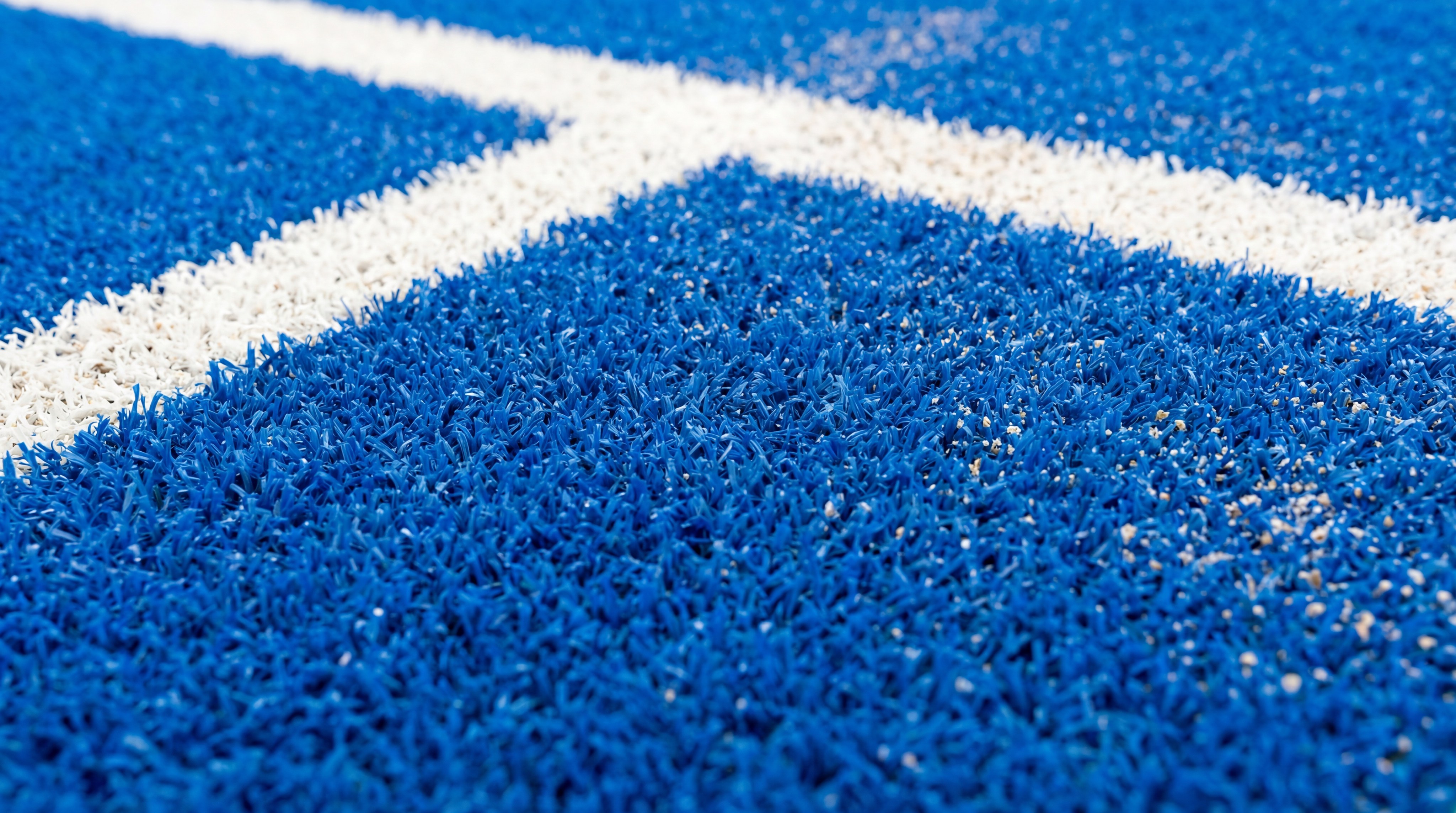
Turf Selection Criteria
| Property | Professional Grade |
|---|---|
| Fiber Height | 10mm – 12mm |
| Infill | Kiln-dried Silica Sand (approx. 3-5kg/sqm) |
| Color | Blue (standard) or Green |
Key Takeaway: The quality of the synthetic turf and the precision of the sand infill determine the pace and safety of the game.
*
Building Your Padel Legacy
The explosion of padel in Southern California is not just a trend; it is a fundamental shift in how we engage with racket sports. Whether you are a player looking for the ultimate competitive environment or a developer aiming to create a premier destination, understanding the standards of the “king of padel” is essential. From the precision of the glass rebound to the luxury of the social amenities, every detail matters in creating a world-class experience.
Ready to bring the gold standard of sports to your property? Contact us today to start your construction journey.
Frequently Asked Questions
- How much space do I need to build a professional padel court?
You need a minimum of 200 square meters (2,152 sq ft) for the court itself, but ideally 250-300 square meters to account for safety zones and spectator access. - Can I convert an existing tennis court into padel courts?
Yes! A standard tennis court is large enough to fit approximately three professional padel courts, making it a very efficient use of space. - What is the difference between panoramic and standard courts?
Panoramic courts remove the vertical pillars at the back of the court, offering unobstructed views for spectators and a more premium aesthetic, while standard courts use a traditional frame. - Is padel play possible in the rain in San Diego?
While Southern California is mostly sunny, outdoor courts with proper drainage turf can be used shortly after rain. However, indoor facilities are the only way to guarantee 100% playability. - How long does it take to construct a facility?
A single court can often be installed in 10-14 days once the concrete foundation is ready, but a full facility build-out usually takes 3-6 months depending on permits.