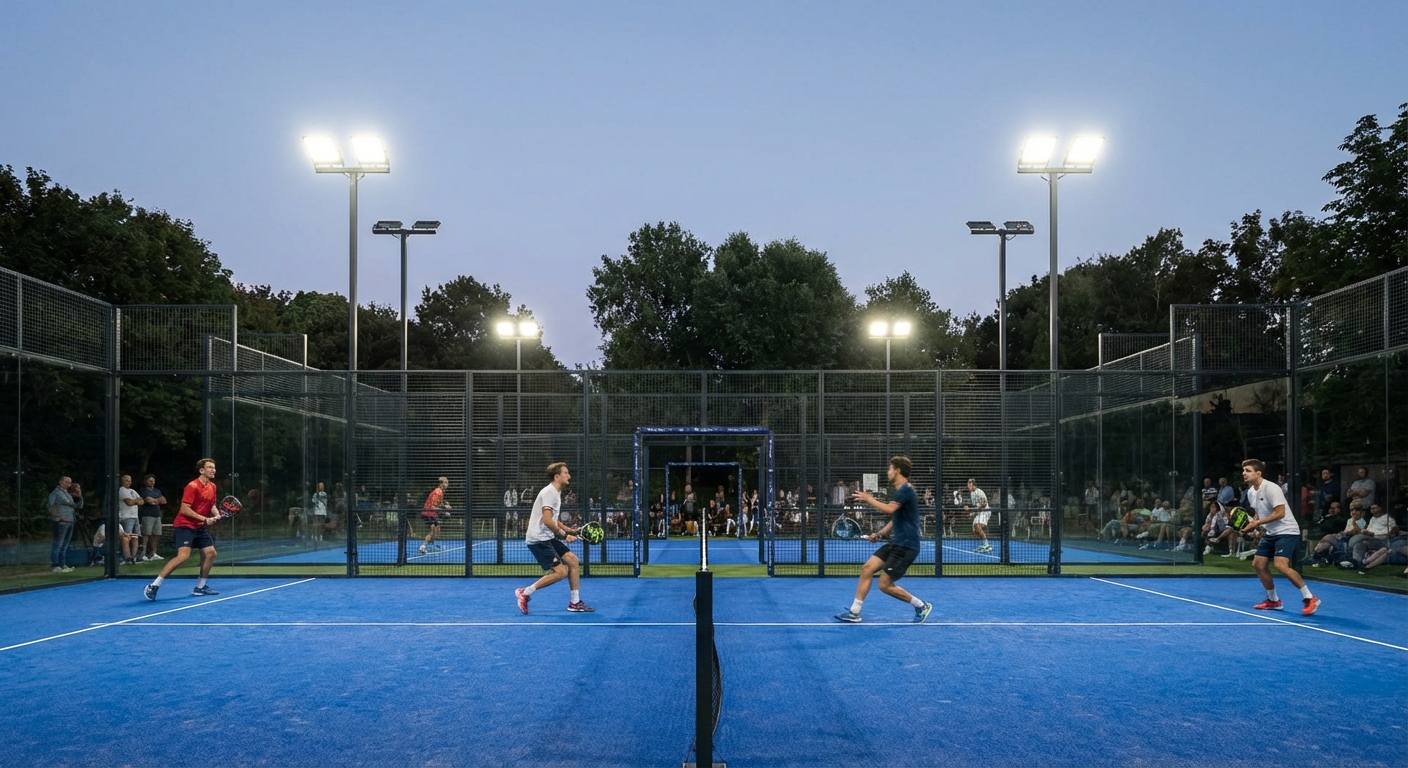
What is the average cost to build a padel court?
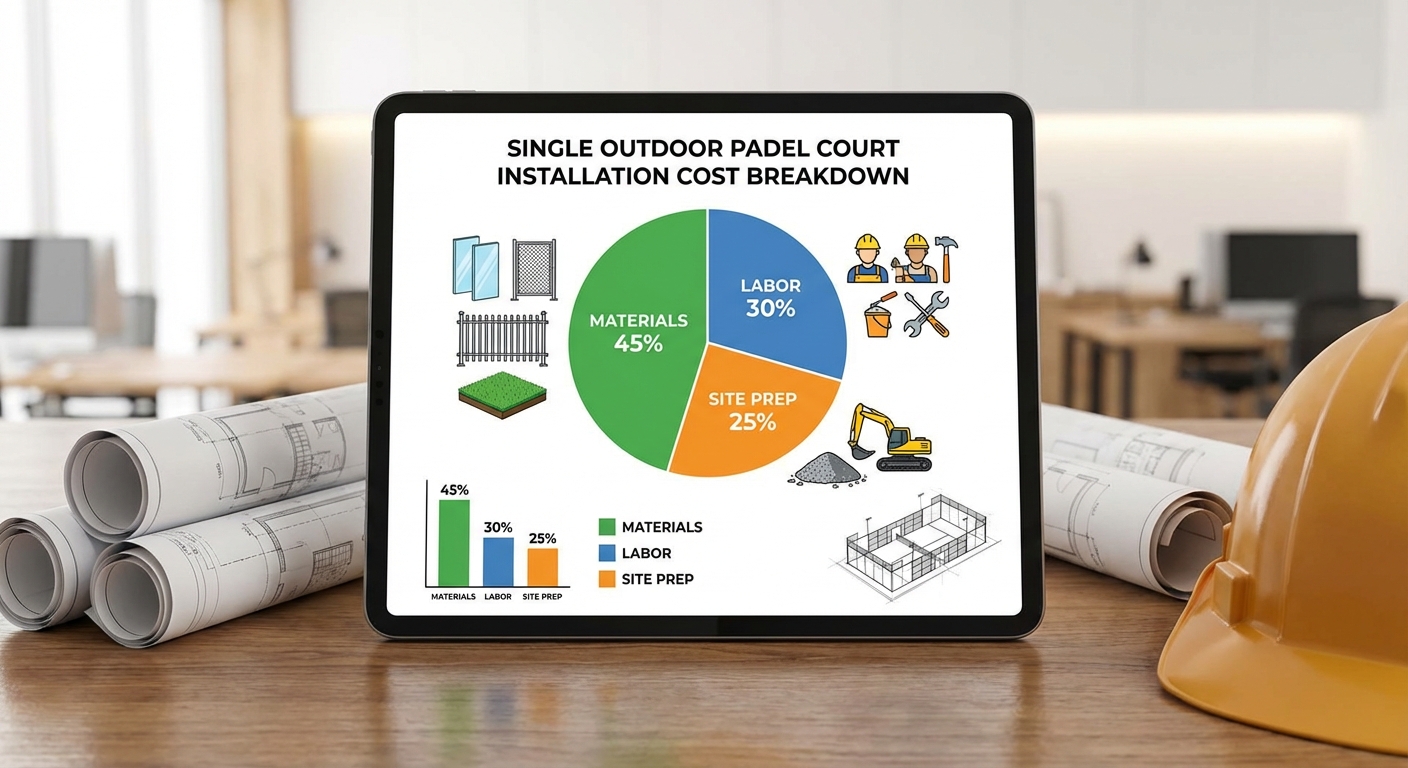
The average cost to build a padel court typically starts with a base manufacturing price between $20,000 and $27,000 for the primary structural kit. This initial figure covers the steel frame, glass panels, and the turf surface, though it excludes shipping and site preparation. Most club owners find that their final invoice for a single turnkey outdoor court settles near the $73,000 mark.
Breaking down the $20,000 to $27,000 base range
The base price fluctuates primarily based on the specific model and the thickness of the glass you select for your project.
- Standard Vision Models: Usually fall on the lower end of the pricing spectrum.
- Panoramic Designs: Command a premium due to the reinforced structural requirements.
- Customizations: Unique colors or branded logos will incrementally increase these baseline figures.
Total project estimates for outdoor installations
Here’s the deal: the “base price” is just the tip of the iceberg when considering the total project scope.
- Civil Engineering: Excavation and slab pouring typically cost around $25,000.
- Logistics: International shipping in 40-foot containers averages $8,000 per shipment.
- Lighting and Extras: LED posts and protective padding add approximately $3,000 to $5,000.
Key Takeaway: Understanding that the base kit represents only about one-third of the total investment helps you set a realistic budget for a fully functional court.
| Expense Category | Estimated Cost | Percentage of Total |
|---|---|---|
| Court Kit (Glass/Turf/Steel) | $23,000 | 32% |
| Site Prep & Foundation | $32,000 | 44% |
| Shipping & Installation | $18,000 | 24% |
This table illustrates how site preparation remains the most significant variable in your total capital expenditure.
Why do materials impact the cost to build a padel court?
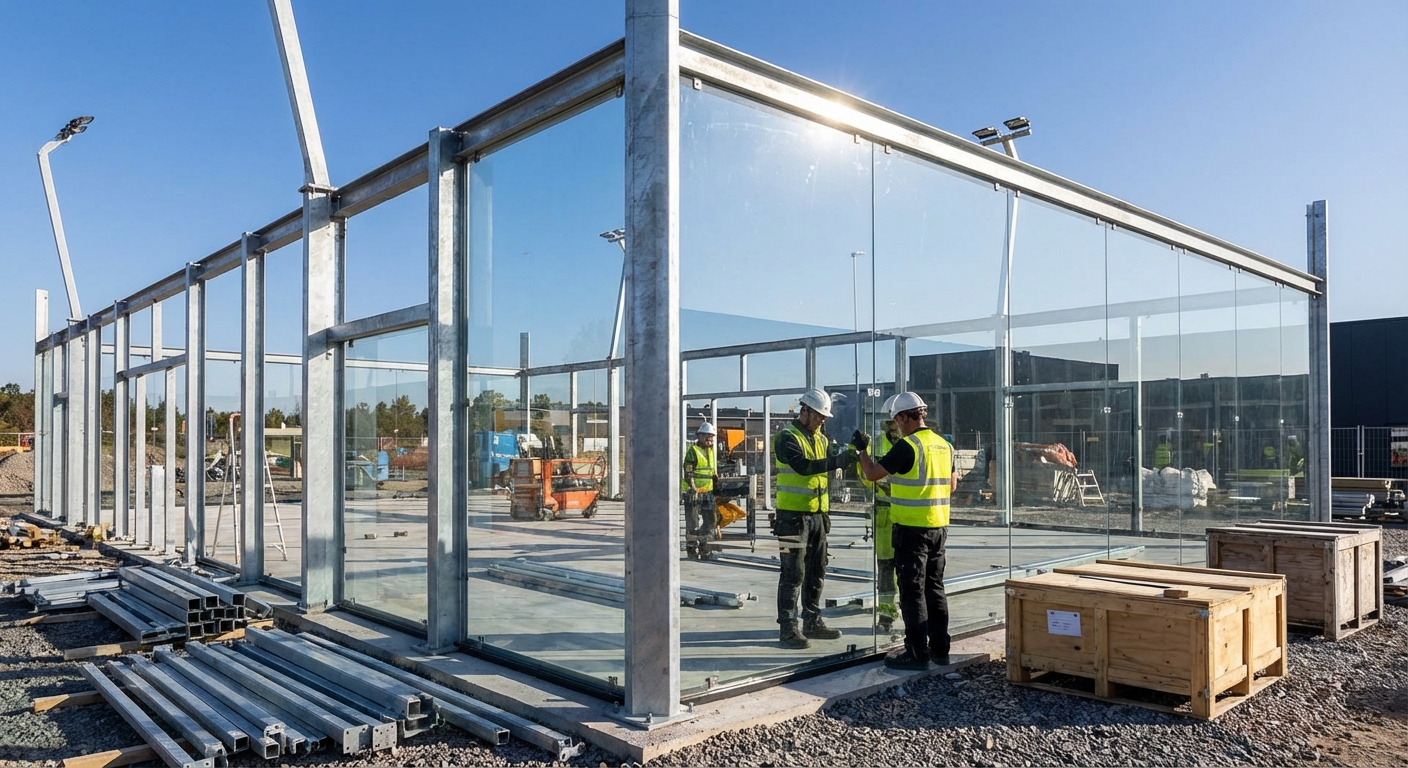
High-quality materials directly influence the cost to build a padel court because they dictate the longevity and safety of the installation. Opting for hot-dip galvanized steel and European-standard tempered glass ensures the structure survives harsh weather without corroding. While cheaper alternatives exist, they often result in higher maintenance fees and potential safety liabilities for your players.
The cost of a modular structural steel system
But wait, there’s more to the steel frame than just the raw metal weight and current market rates.
- Zinc Priming: Adding extra zinc primer for outdoor courts is essential for rust prevention.
- Modular Design: These systems allow for faster assembly, which reduces your on-site labor costs.
- Powder Coating: Premium finishes protect the aesthetic appeal for at least 7 to 10 years.
Evaluating 12mm anti-explosion tempered glass
Selecting the right glass is a non-negotiable safety step that influences your initial material investment.
- Thickness: 12mm glass is the industry standard for professional-grade and high-frequency clubs.
- Certification: Ensure your glass complies with EN 12150 standards to minimize breakage risks.
- Anti-Explosion: This safety feature prevents the glass from shattering into dangerous shards upon impact.
Key Takeaway: Investing in top-tier galvanized steel and certified safety glass reduces long-term operational risks and keeps your players safe.
| Material Component | Benefit | Impact on ROI |
|---|---|---|
| Hot-Dip Galvanized Steel | 20-Year design life | Lowers replacement frequency |
| 12mm Tempered Glass | Maximum safety | Reduces insurance and liability |
| Zinc Primer Coating | Weather resistance | Maintains resale value |
Choosing robust materials ensures that your facility remains a premium destination without requiring frequent structural repairs.
How do models affect the cost to build a padel court?
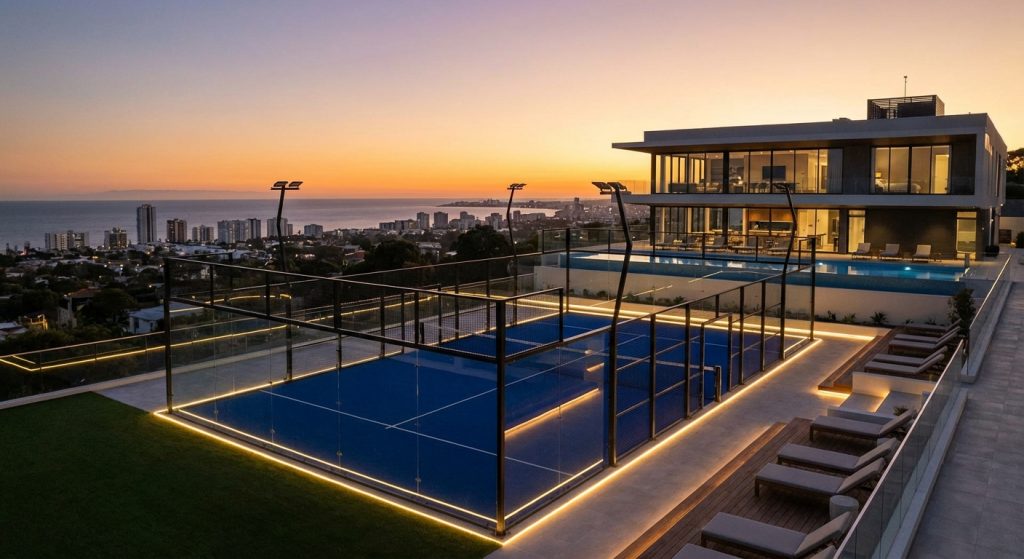
The specific model you choose significantly alters the cost to build a padel court due to structural engineering differences. A standard Vision court uses more pillars for support, making it the most economical choice for private residences or budget-friendly clubs. Conversely, panoramic models remove rear structural posts to enhance spectator visibility, requiring thicker steel and more complex engineering.
Standard vs. Panoramic: Which offers better value?
Think about it: are you building for high-level tournaments or local community recreational play?
- Vision Models: Provide high durability with integrated supports at a lower price point.
- Panoramic Models: Offer an unobstructed view that justifies higher hourly rental fees.
- Pro Performance: Most professional tours exclusively use panoramic setups for television broadcasts.
When should you consider a roofed court system?
Believe it or not, adding a roof is the most effective way to guarantee year-round revenue for your facility.
- Weather Protection: It allows play during heavy rain or intense summer sun.
- Revenue Stability: You avoid the 15-20% loss in bookings typically caused by local weather shifts.
- Integrated Lighting: Roofed systems often come with superior Padel LED Lighting configurations already built-in.
Key Takeaway: Selecting a panoramic or roofed model increases upfront costs but typically leads to higher member retention and better booking rates.
| Model Type | Primary Advantage | Ideal Use Case |
|---|---|---|
| Standard Vision | Cost-effective & robust | Schools and community centers |
| Panoramic | Superior viewing experience | Commercial clubs & resorts |
| Roofed System | 365-day availability | Regions with high rainfall |
Aligning your court model with your business goals ensures you don’t overspend on features your target audience doesn’t require.
What site preparation costs should you anticipate?
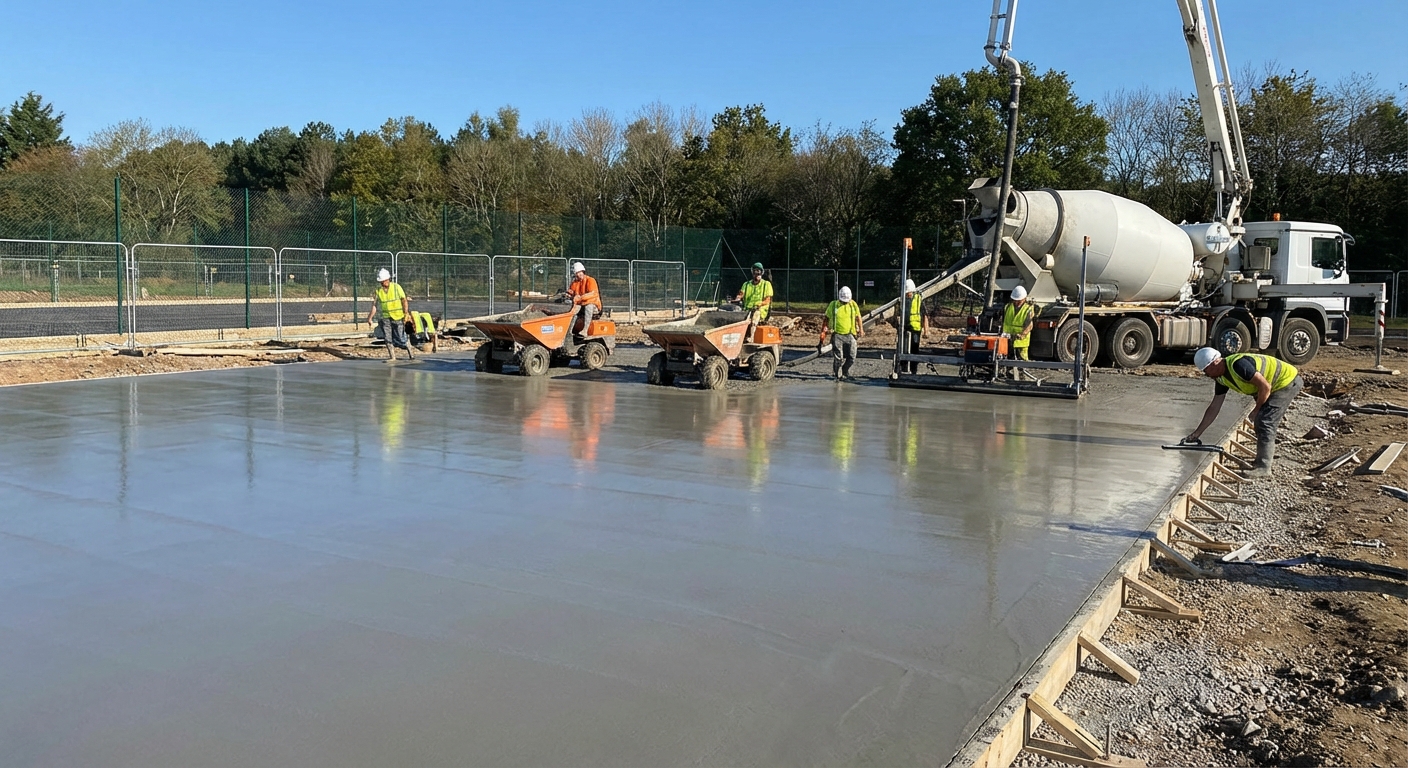
Site preparation is often the most overlooked factor in the cost to build a padel court, frequently exceeding $30,000. Before the court can be installed, you must create a perfectly level concrete slab that is at least 15cm to 20cm thick. If your land is uneven or has poor drainage, these foundational costs can escalate quickly as specialized engineering becomes necessary.
Civil work: Excavation and concrete slab pouring
Here is the deal: if the foundation isn’t perfect, the glass panels will not align correctly during assembly.
- Excavation: Clearing and leveling the land usually takes 2 to 3 days with heavy machinery.
- Reinforced Concrete: You need high-grade cement to handle the weight of the structural steel and glass.
- Curing Time: The slab must cure for approximately 7 to 10 days before the court arrives.
Managing drainage systems for outdoor courts
You see, standing water is the enemy of your court’s turf and the underlying concrete foundation.
- Slope Engineering: The slab must have a subtle 1% slope to guide water away from the playing surface.
- Perimeter Drains: Installing drains around the court prevents pooling during heavy storms.
- Permeable Layers: Some high-end slabs use porous concrete to allow water to drain directly through.
Key Takeaway: Allocating a significant portion of your budget to a high-quality foundation prevents the glass from cracking due to ground shifting later.
| Task | Estimated Labor Cost | Duration |
|---|---|---|
| Site Clearing | $3,500 | 2 Days |
| Concrete Pouring | $18,000 | 3 Days |
| Drainage Installation | $4,500 | 2 Days |
Proper civil work is the invisible foundation of a successful court project and should never be compromised for savings.
Does glass and turf quality change the investment?
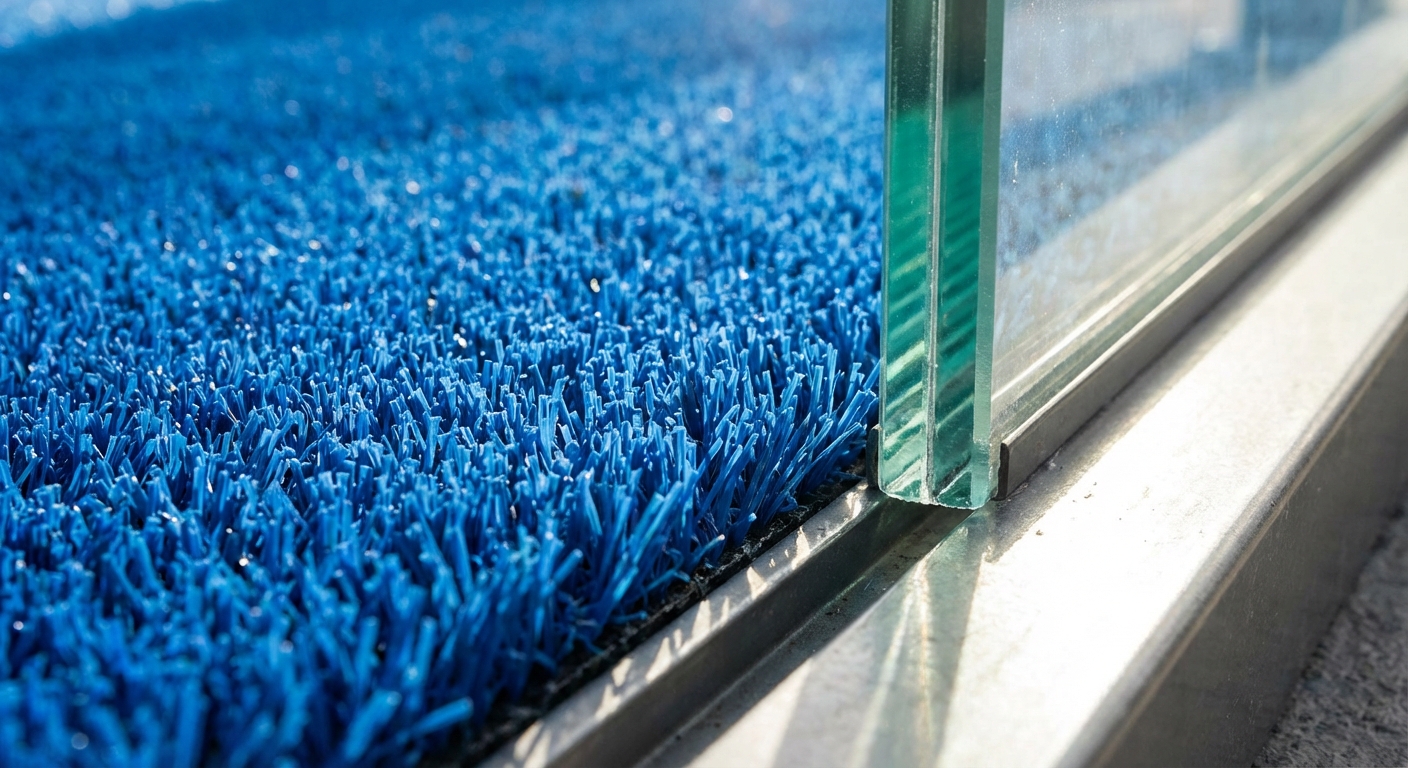
The quality of secondary components like turf and glass definitely changes the cost to build a padel court and its long-term performance. Fibrillated turf is generally more affordable and durable for heavy use, while monofilament turf offers a more professional “pro-tour” ball bounce. Choosing the right combination depends on whether you are catering to casual beginners or elite competitive players.
Why international standard glass is worth the price
It’s common knowledge that glass is the most expensive single component to replace if it breaks during play.
- Safety Compliance: European EN 12150 standard glass is significantly stronger than generic tempered options.
- Clarity: High-quality glass remains clear for years without developing a cloudy or yellowish tint.
- Impact Resistance: Better glass can withstand higher wind loads, which is vital for coastal installations.
Comparing fibrillated vs. monofilament turf costs
The bottom line is that your turf selection dictates the maintenance schedule and the overall “feel” of the game.
- Fibrillated Turf: Best for clubs with very high foot traffic due to its wear resistance.
- Monofilament Turf: Preferred by advanced players for its consistent bounce and aesthetic look.
- Density: Higher stitch counts (stitches per square meter) result in a more durable and comfortable surface.
Key Takeaway: Spending more on high-density Padel Grass and certified glass reduces your replacement frequency and enhances player satisfaction.
| Turf Type | Durability | Player Experience |
|---|---|---|
| Fibrillated | Excellent | Standard / Recreational |
| Monofilament | Good | Professional / Fast |
| Texturized | High | Consistent / Reduced sand |
Matching your surface to your player demographic ensures you provide the best possible experience within your budget.
How does lighting affect the cost to build a padel court?
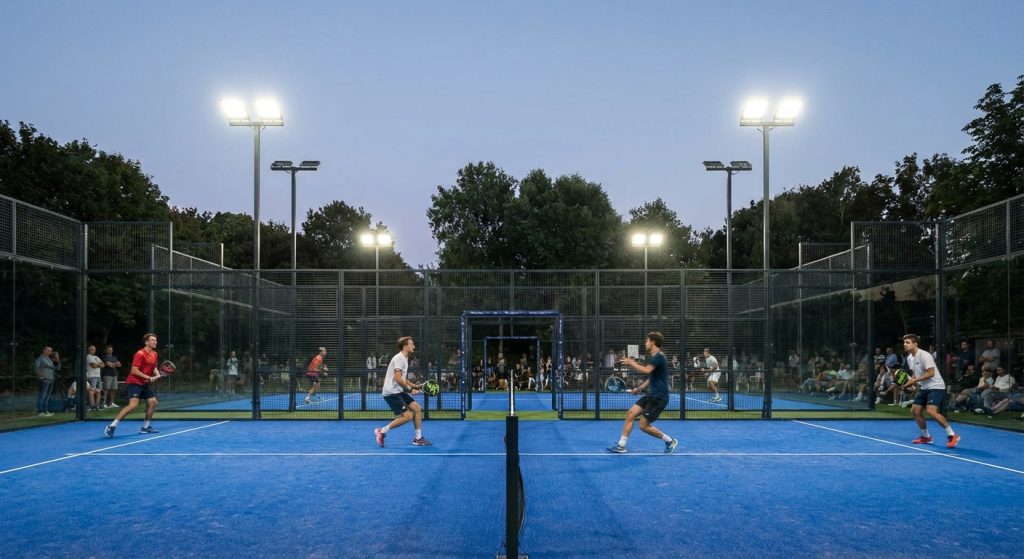
Lighting systems add approximately $2,000 to $4,000 to the total cost to build a padel court, but they are essential for evening revenue. Most modern facilities utilize high-efficiency LED floodlights because they consume 50% less energy than traditional metal halide bulbs. Effective lighting ensures uniform distribution across the court, eliminating shadows that can interfere with fast-paced gameplay.
LED floodlight pricing and energy efficiency
Here is the deal: cheap lights might save you money today, but they will inflate your monthly utility bills.
- Wattage: Most courts require four to eight 200W LED fixtures for optimal visibility.
- IP66 Rating: This ensures your lights are waterproof and dustproof for outdoor environments.
- Instant On: LEDs don’t require a warm-up period, allowing for better court management between bookings.
Adding value with benches and protective padding
You might be surprised to learn how much small “extras” can improve the perceived quality of your facility.
- Protective Padding: Installing pads on the net posts and door frames prevents player injuries.
- Ball Storage: Integrated benches with storage help keep the court tidy and professional.
- Netting: Ball stop netting is often required for courts located near roads or other sports facilities.
Key Takeaway: High-quality LED lighting and safety padding protect both your players and your long-term operational profitability.
| Lighting Feature | Benefit | Cost Impact |
|---|---|---|
| LED Technology | Lower energy bills | Moderate Initial / High Savings |
| IP66 Waterproofing | Long-term reliability | Essential for Outdoor |
| Uniform Distribution | Better playability | Requires professional layout |
Smart lighting choices allow you to extend your operating hours well into the night, significantly boosting your daily revenue.
What is the timeline for a professional installation?
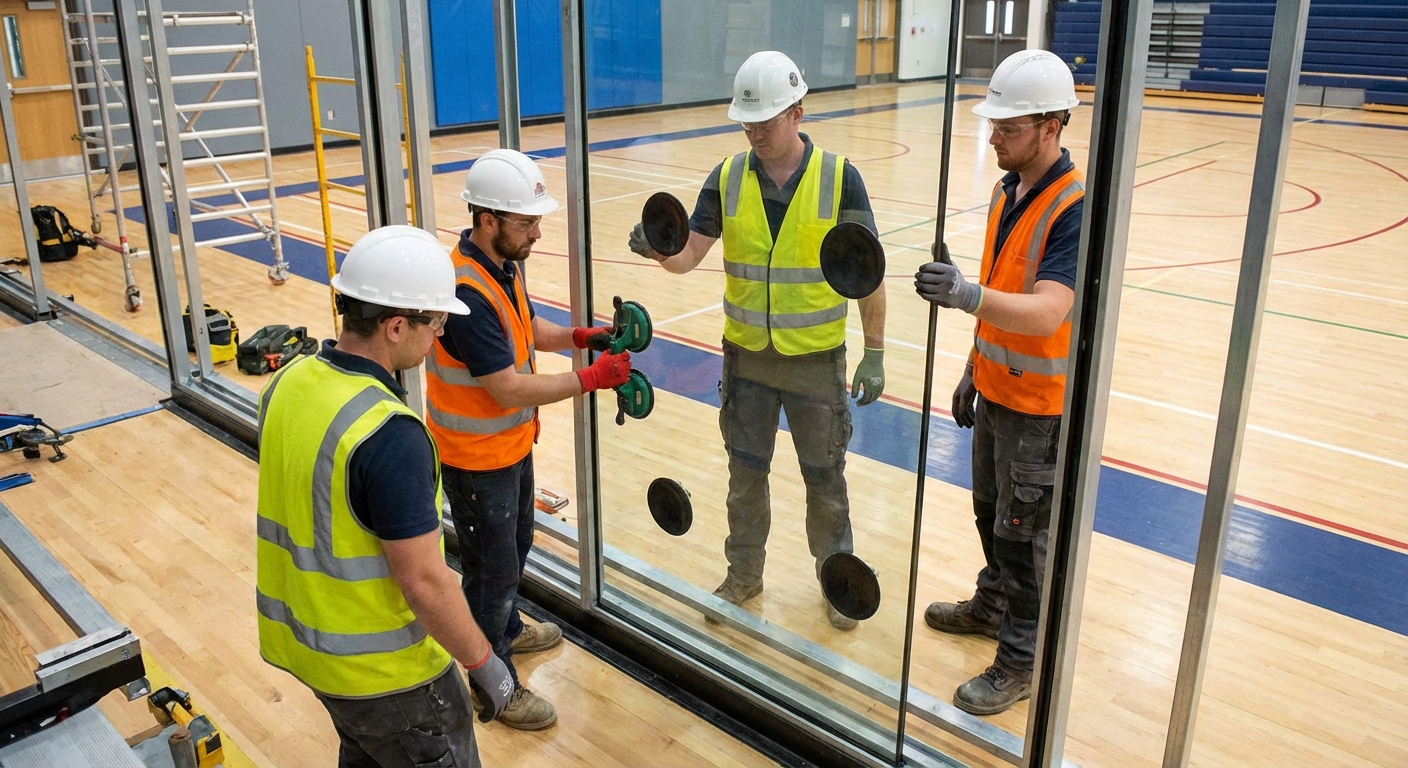
The timeline for your project impacts the cost to build a padel court through labor and equipment rental fees. Generally, a single court installation takes about two to three weeks once all materials have arrived on-site. Any delays in the foundation work or shipping logistics can lead to thousands of dollars in unexpected overhead or lost booking revenue.
Preparing the site and pouring the concrete slab
Wait, there’s more: the foundation phase is actually the most time-consuming part of the entire construction process.
- Surveying: 1-2 days to ensure the ground is perfectly flat and clear of utilities.
- Excavation: 2-3 days of active earthmoving and soil stabilization.
- Curing: 7-10 days of waiting to ensure the concrete is strong enough to support the structure.
How long does the actual court assembly take?
Once the slab is ready and the container arrives, the vertical construction moves surprisingly fast.
- Steel Assembly: 1-2 days to bolt the modular frames into the foundation.
- Glass Hanging: 1 day of precision work using specialized suction equipment.
- Turf & Sand: 1 day to lay the turf, glue the seams, and distribute the silica sand.
Key Takeaway: A well-coordinated installation team can finish the actual court assembly in just 3 to 4 days if the slab is prepared.
| Phase | Duration | Primary Labor Cost |
|---|---|---|
| Foundation | 10-14 Days | Civil engineering team |
| Structural Assembly | 2 Days | Skilled installers |
| Surface & Finishing | 2 Days | Specialist turf layers |
Managing your construction schedule tightly ensures you can start generating revenue as soon as the last glass panel is secured.
Can you save money by converting an existing court?
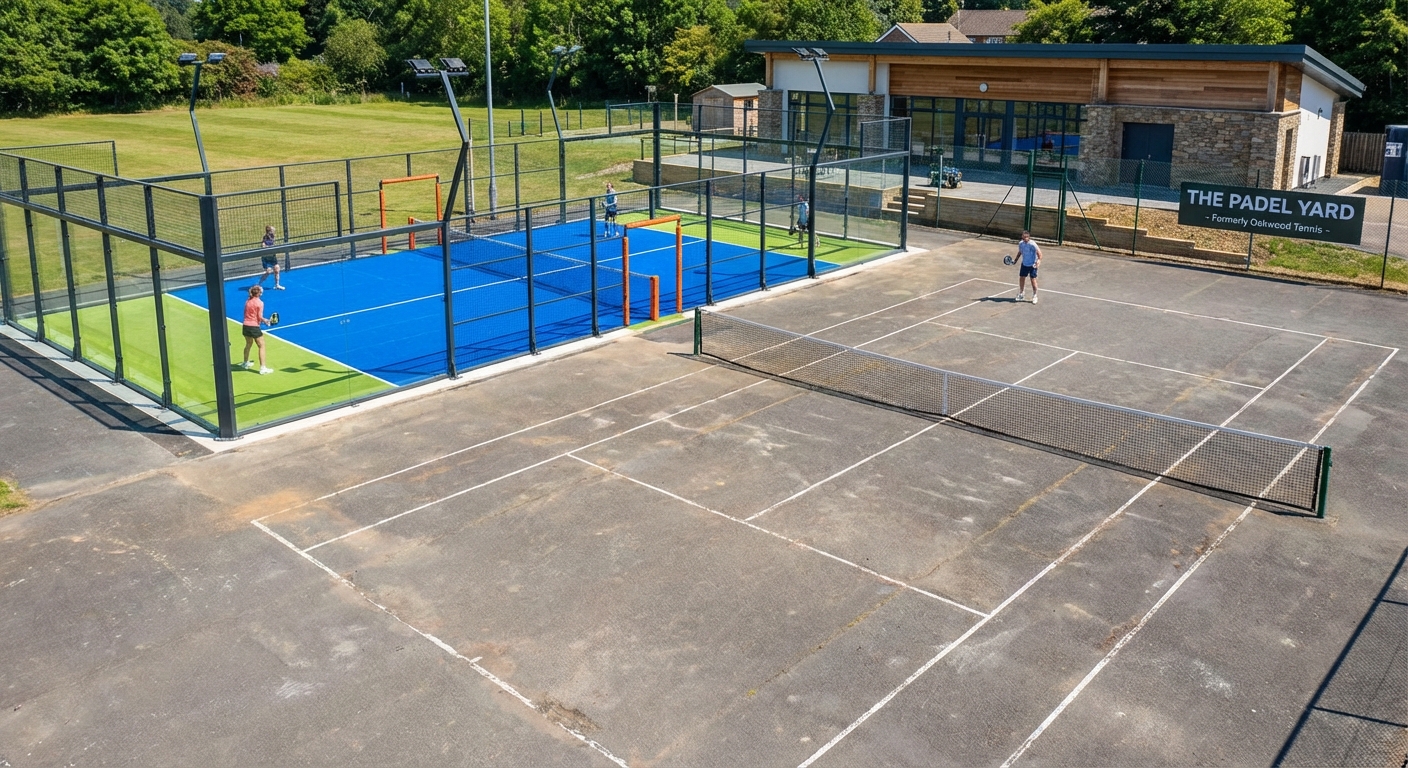
Converting an underutilized space can dramatically lower the cost to build a padel court by bypassing major civil works. Since a standard padel court is 20m x 10m, you can often fit two or even three padel courts within the footprint of a single full-sized tennis court. This strategy is popular for sports clubs looking to modernize their offerings with a higher revenue-per-square-foot sport.
Turning tennis or basketball courts into padel
But wait, there’s more to conversion than just bolting a new frame onto old asphalt.
- Structural Integrity: You must verify that the old surface can support the weight of the new glass.
- Surface Leveling: Old tennis courts often have “birdbaths” or low spots that need filling before turfing.
- Perimeter Space: Ensure you have enough clearance for players to safely exit the court during “out of court” play.
Why conversions require minimal site preparation
You see, using an existing hard surface can save you upwards of $20,000 in excavation and concrete costs.
- Existing Lighting: You may be able to reuse the current electrical hookups and light poles.
- Reduced Permits: Converting an existing sports facility is often faster through local zoning boards.
- Speed to Market: A conversion can be completed in half the time of a “greenfield” ground-up build.
Key Takeaway: Converting existing courts is the fastest way to achieve a positive ROI by leveraging your current infrastructure.
| Conversion Type | Typical Savings | Main Challenge |
|---|---|---|
| Hard Tennis Court | $15,000 – $25,000 | Slab thickness verification |
| Basketball Court | $10,000 – $20,000 | Dimension matching |
| Rooftop Installation | Variable | Weight load engineering |
Reclaiming underused space allows you to expand your facility’s capacity without the heavy costs of new land development.
What hidden fees often surprise new court owners?
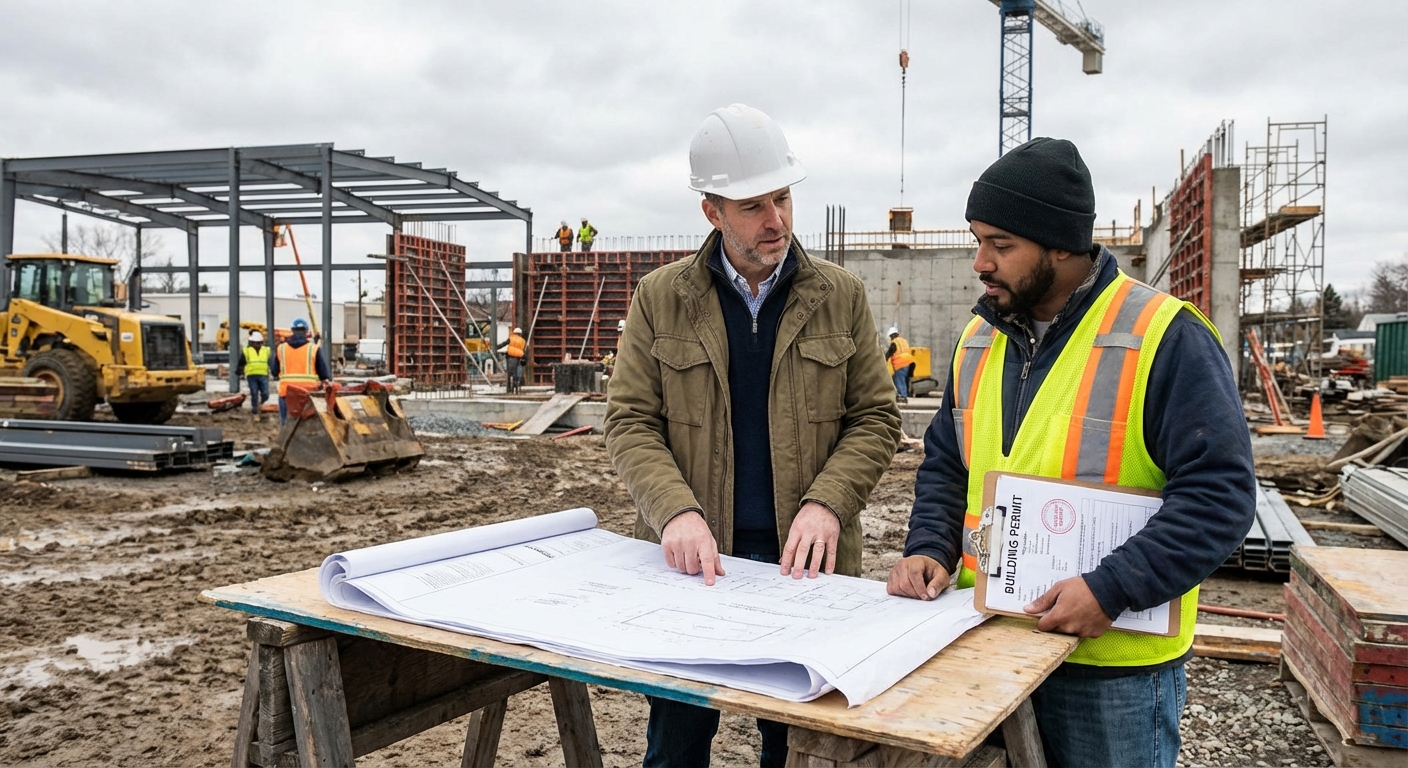
Navigating hidden fees is a critical part of managing the cost to build a padel court without blowing your budget. Many first-time builders forget to account for local building permits, which can range from $1,000 to $5,000 depending on your jurisdiction. Additionally, the cost of renting heavy equipment like forklifts and cranes for glass installation is often left out of initial manufacturer quotes.
Navigating zoning permits and local regulations
Here’s the deal: every city has different rules regarding light pollution, noise, and structure height.
- Environmental Studies: Some regions require drainage or soil tests before approving a new court.
- Zoning Lawyers: You might need professional help to rezone a property for commercial sports use.
- Electrical Inspections: Local authorities must sign off on the wiring for your floodlights and card readers.
Shipping logistics and container delivery costs
Think about it: the court components are heavy and bulky, making them expensive to move from the port.
- Container Demurrage: Fees can pile up quickly if you aren’t ready to unload the shipping container immediately.
- Last-Mile Delivery: Getting a 40ft container into a tight residential or club area requires special trucks.
- Customs Duties: Depending on your country, you may face import taxes or VAT on the material value.
Key Takeaway: Budgeting an extra 10-15% for “soft costs” like permits and logistics prevents financial stress during the build.
| Hidden Expense | Estimated Range | Frequency |
|---|---|---|
| Building Permits | $1,500 – $4,000 | Once per project |
| Forklift Rental | $800 – $1,500 | During installation |
| Geotechnical Study | $1,000 – $3,000 | Pre-construction |
Identifying these potential leaks early in the planning process keeps your project on track for a successful launch.
Why is factory-direct sourcing more cost-effective?
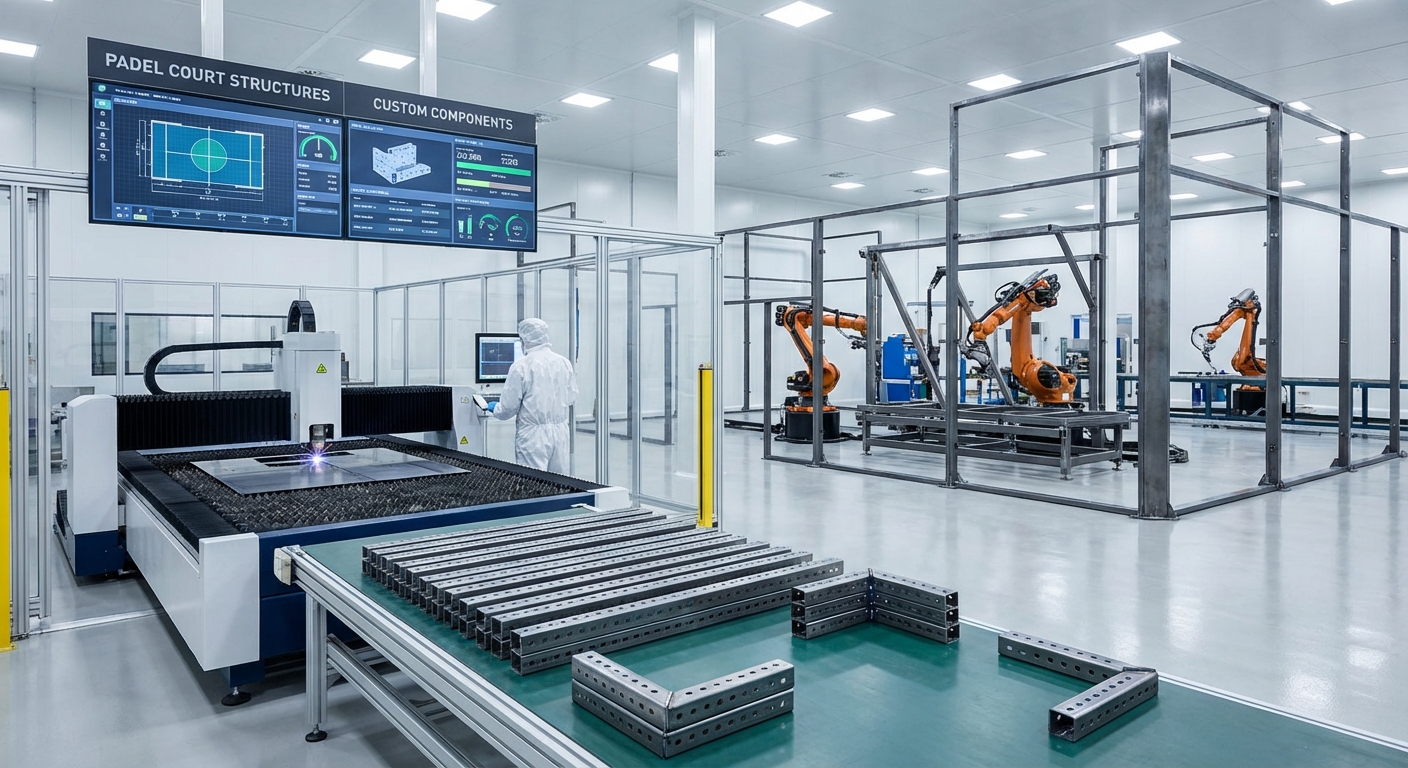
Buying directly from a manufacturer is the single best way to reduce the cost to build a padel court. By eliminating middlemen and distributor markups, you can often save up to 30% on the total material cost of the project. This approach also allows for direct communication regarding custom branding, specialized colors, and technical specifications that a third-party reseller might misunderstand.
Saving 30% by eliminating middlemen markups
But wait, there’s more to direct sourcing than just the lower price tag on the invoice.
- Quality Control: You have direct oversight of the manufacturing standards and material certifications.
- OEM Branding: You can have your facility’s logo laser-cut into the metal or printed on the net.
- No MOQ Barriers: Some factories, like Superbpadel, allow you to order just one court at factory prices.
How no-MOQ policies reduce initial financial risk
Here is the deal: not every project needs ten courts, and being forced into high minimums is a risk.
- Pilot Projects: You can test the market demand with one court before committing to a massive expansion.
- Cash Flow: Keeping your initial orders small helps you maintain liquid capital for marketing and staffing.
- Scaling: Once the first court is profitable, you can easily order a matching second court from the same source.
Key Takeaway: Sourcing directly from the factory gives you better quality control and significant cost savings to reinvest in your business.
| Sourcing Method | Potential Savings | Level of Customization |
|---|---|---|
| Factory Direct | Up to 30% | Very High |
| Local Distributor | 5% – 10% | Limited |
| Reseller / Middleman | 0% | Fixed options |
Direct sourcing empowers you to build a unique brand while keeping your procurement costs at an absolute minimum.
Conclusion
Building a successful padel facility requires balancing premium quality with strategic cost management. This article has solved the mystery of the cost to build a padel court by detailing the $73,000 total investment, the critical importance of a 20cm concrete slab, and the hidden savings found in factory-direct sourcing. We believe that every racquet sports enthusiast should have access to world-class facilities built on a foundation of safety and efficiency. If you are ready to transform your vacant land or underutilized tennis courts into a high-revenue padel club, our team is here to guide you through every structural and logistical challenge. To start your journey today with a personalized quote and expert consultancy, please contact us today.
FAQ
Can I build a padel court on my own?
No, because the installation requires specialized machinery for the 12mm glass panels and professional laser-leveling for the foundation. Attempting a DIY build often results in structural misalignment and significant safety risks for players.
What’s the best way to maintain the turf?
You should brush the silica sand weekly to ensure even distribution and prevent the fibers from matting down. Regular brushing preserves the professional ball bounce and extends the lifespan of the turf by several years.
How do I know if my soil is suitable?
You must hire a local engineer to perform a geotechnical study to test the soil’s load-bearing capacity. This prevents the concrete slab from cracking or shifting, which would cause the glass walls to shatter.
Can I install a padel court indoors?
Yes, provided your building has a minimum ceiling height of 6 to 8 meters to accommodate the high “lob” shots common in padel. Indoor installations are often cheaper because you avoid the cost of drainage and weather-resistant primers.
How long will the court last?
A high-quality, hot-dip galvanized steel structure is designed to last at least 20 years with minimal maintenance. The turf and glass usually require replacement every 5 to 10 years depending on the volume of play and weather exposure.