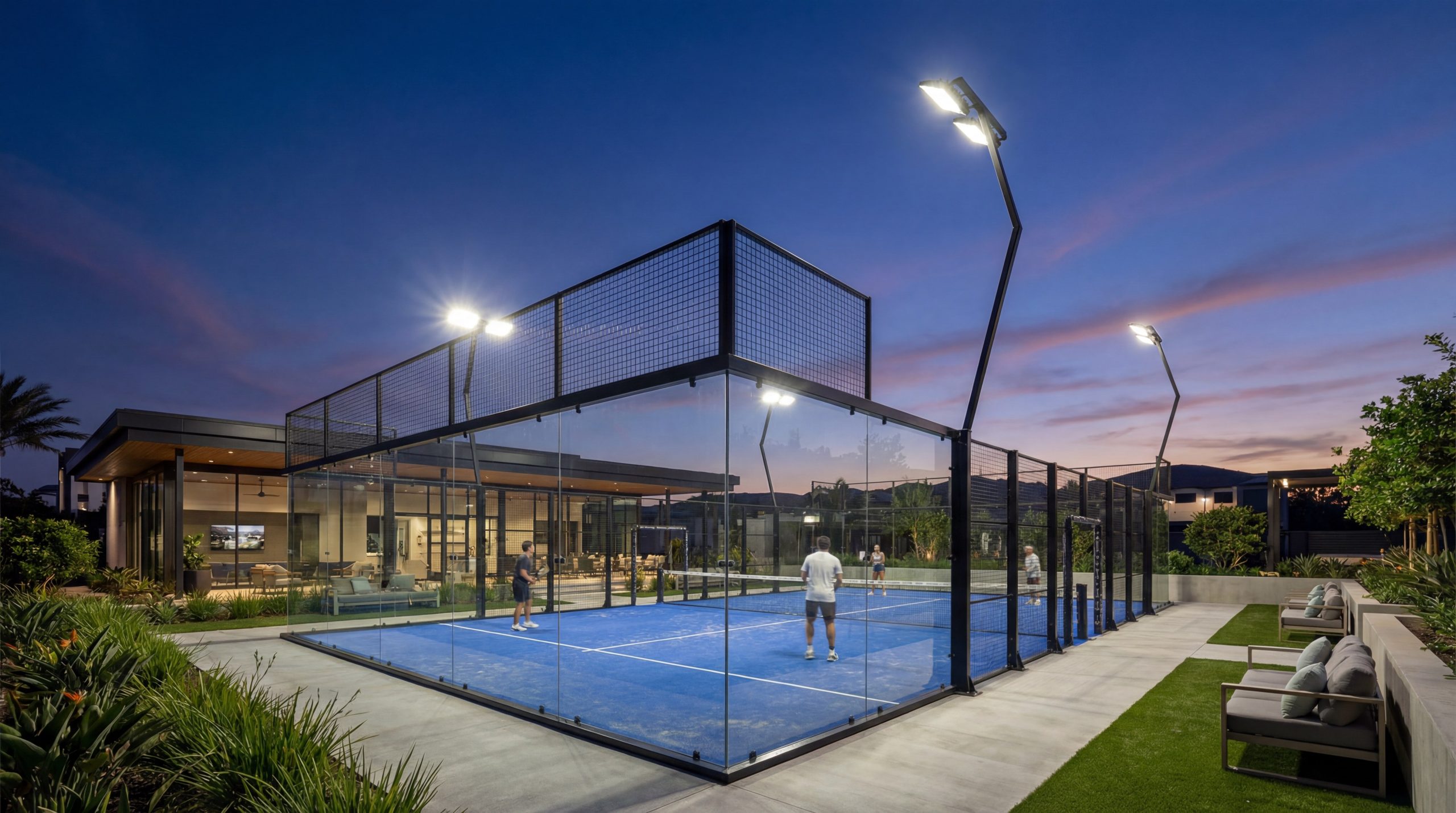
Padel is a dynamic racket sport played in doubles on an enclosed court where the glass walls are an active part of the game. Many people feel that traditional sports like tennis have a steep learning curve that discourages beginners. You might find yourself frustrated by short points and the technical difficulty of keeping the ball in play. Understanding padel que es provides the solution: a social, easy-to-learn activity that emphasizes strategy and fun over raw power.
Padel que es: What exactly defines this sport?
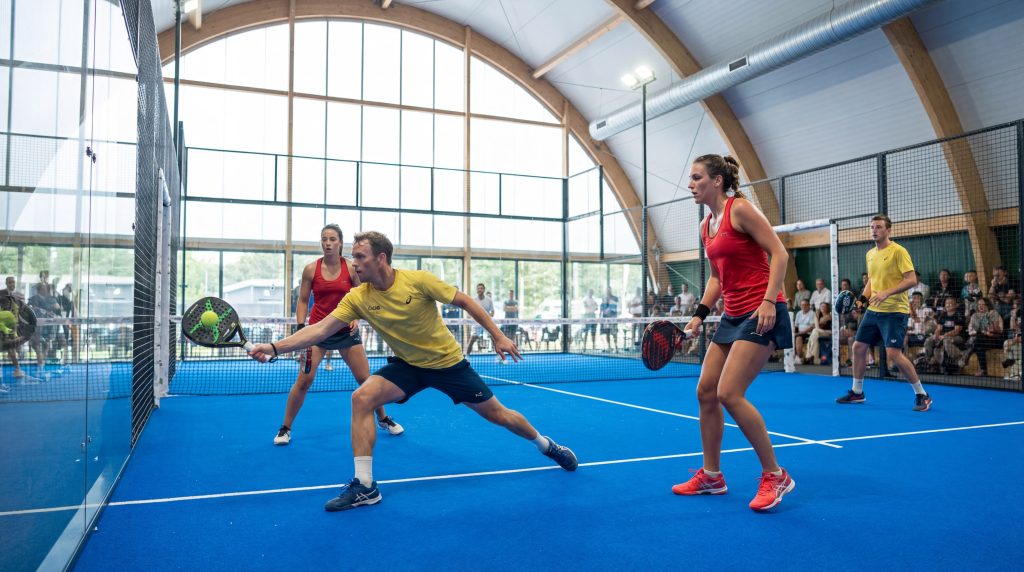
Padel is a hybrid between tennis and squash that is exclusively played in a doubles format on a 10×20 meter court. When you explore padel que es, you will notice the court is surrounded by glass and mesh walls. These boundaries allow you to play the ball after it bounces and hits the wall, keeping the rally alive.
The game is played with solid, perforated carbon fiber rackets and low-compression balls. This specific equipment makes it much easier for you to control your shots compared to traditional tennis.
- Format: Always 2 vs 2.
- Equipment: Palas (rackets) and padel-specific balls.
- Environment: Enclosed court with glass and fence.
Padel focuses on positioning and teamwork rather than physical strength alone. Its unique design ensures that even beginners can enjoy long, exciting rallies from their very first match.
Summary Table: Sport Overview
| Feature | Detail |
|---|---|
| Court Size | 20m x 10m |
| Scoring | Tennis style (15, 30, 40) |
| Players | 4 (Doubles) |
| Walls | Playable after bounce |
Transitioning from the definition, it is equally important to understand how this innovative sport came to life in the late 20th century.
Padel que es: Who invented the original game?
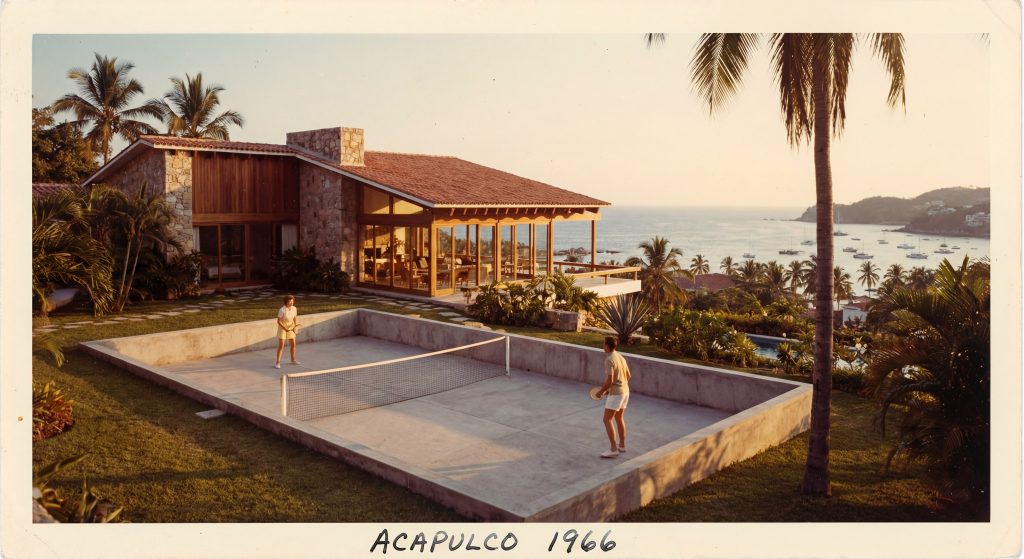
Enrique Corcuera invented padel in 1969 at his home in Acapulco, Mexico. While researching padel que es, you’ll find he didn’t have enough space for a full tennis court. To solve this, he built a smaller court and added walls to stop the ball from flying into his neighbor’s yard.
And you know what?
This localized solution quickly became a hit among the elite. It soon traveled to Spain through Alfonso de Hohenlohe, where it transformed from a backyard hobby into a massive professional circuit.
Key Takeaway: A history of ingenuity
The sport was born out of a need for space efficiency and entertainment. This heritage of maximizing small spaces continues to drive the sport’s popularity in modern urban environments.
Summary Table: Historical Timeline
| Year | Milestone |
|---|---|
| 1969 | First court built in Mexico |
| 1974 | Introduced to Marbella, Spain |
| 1991 | FIP International Federation formed |
| 2020 | Massive global expansion phase |
Once you understand the history, the next step is mastering the specific mechanics that govern the flow of a match.
Padel que es: What are the main rules of play?
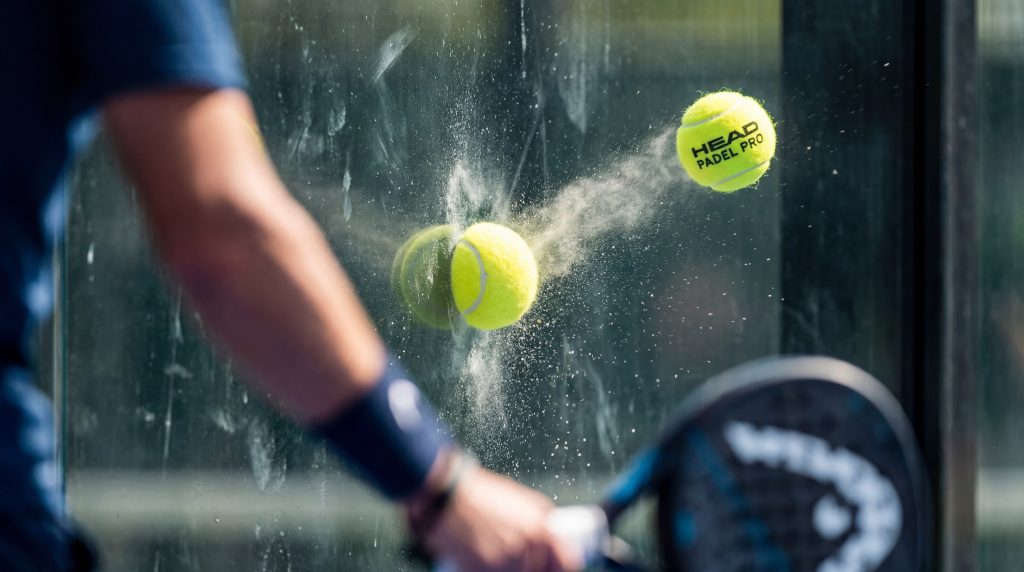
The rules of padel follow a tennis-like scoring system but feature a mandatory underhand serve. In the context of padel que es, you must hit the ball into the opponent’s service box after it bounces. The ball remains in play if it hits the glass walls after bouncing on the ground.
You lose the point if the ball hits the glass or the metallic fence directly before touching the ground. This “second chance” mechanic provided by the walls creates a tactical depth that rewards patience.
- Service: Must be underhand and below the waist.
- Bounces: Only one bounce allowed on your side.
- Wall Play: Legal if the ball hits the floor first.
Key Takeaway: Strategic depth
The walls are your allies in defense and your challenges in offense. Learning to anticipate the rebound off the glass is the most critical skill for any aspiring player.
Summary Table: Core Gameplay Rules
| Rule | Description |
|---|---|
| Serve | Cross-court, underhand |
| Walls | Valid after floor contact |
| Net | Touching net is a fault |
| Doubles | Mandatory 4-player format |
Beyond the technical rules, the physical and mental rewards of the sport make it a favorite for wellness enthusiasts.
Padel que es: Why is it good for your health?
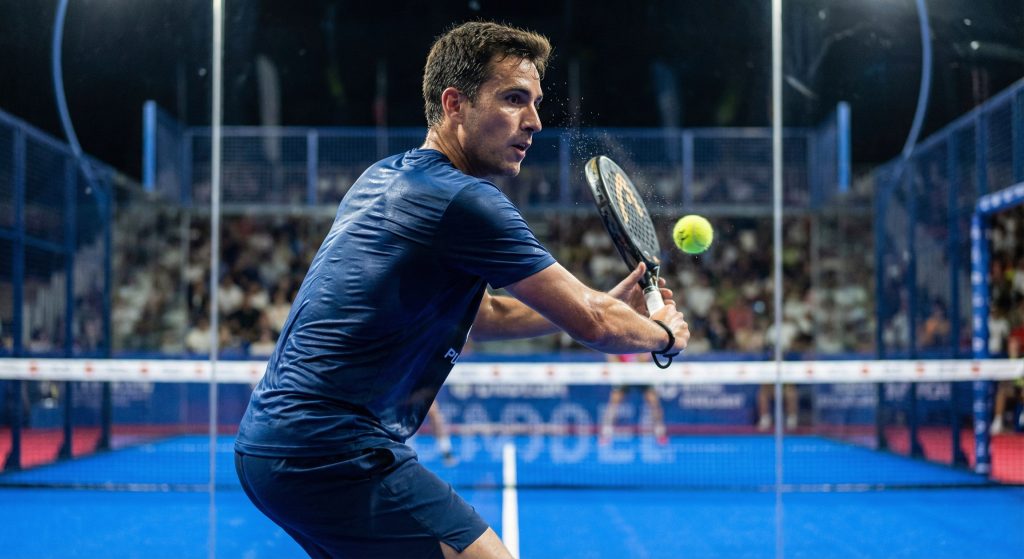
Padel is an excellent cardiovascular workout that significantly improves your coordination and reflexes. When discussing padel que es, health experts highlight that the continuous rallies keep your heart rate in the fat-burning zone. Because it is played in doubles, it also provides a massive mental boost through social interaction.
You will find it much easier on your joints than sports like squash because of the artificial turf surface.
- High calorie burn in a 60-minute session.
- Low-impact movements protect your knees.
- Strong social bonding reduces daily stress.
Key Takeaway: Holistic wellness
Padel combines intense physical activity with the joy of community. It is a rare sport where you can get a professional-grade workout while laughing and talking with your friends.
Summary Table: Wellness Benefits
| Category | Benefit |
|---|---|
| Physical | Improved agility and cardio |
| Mental | Stress relief and focus |
| Social | Teamwork and networking |
If you are planning to bring this sport to your own facility, you must first master the technical specifications of the court.
Padel que es: What are standard court dimensions?
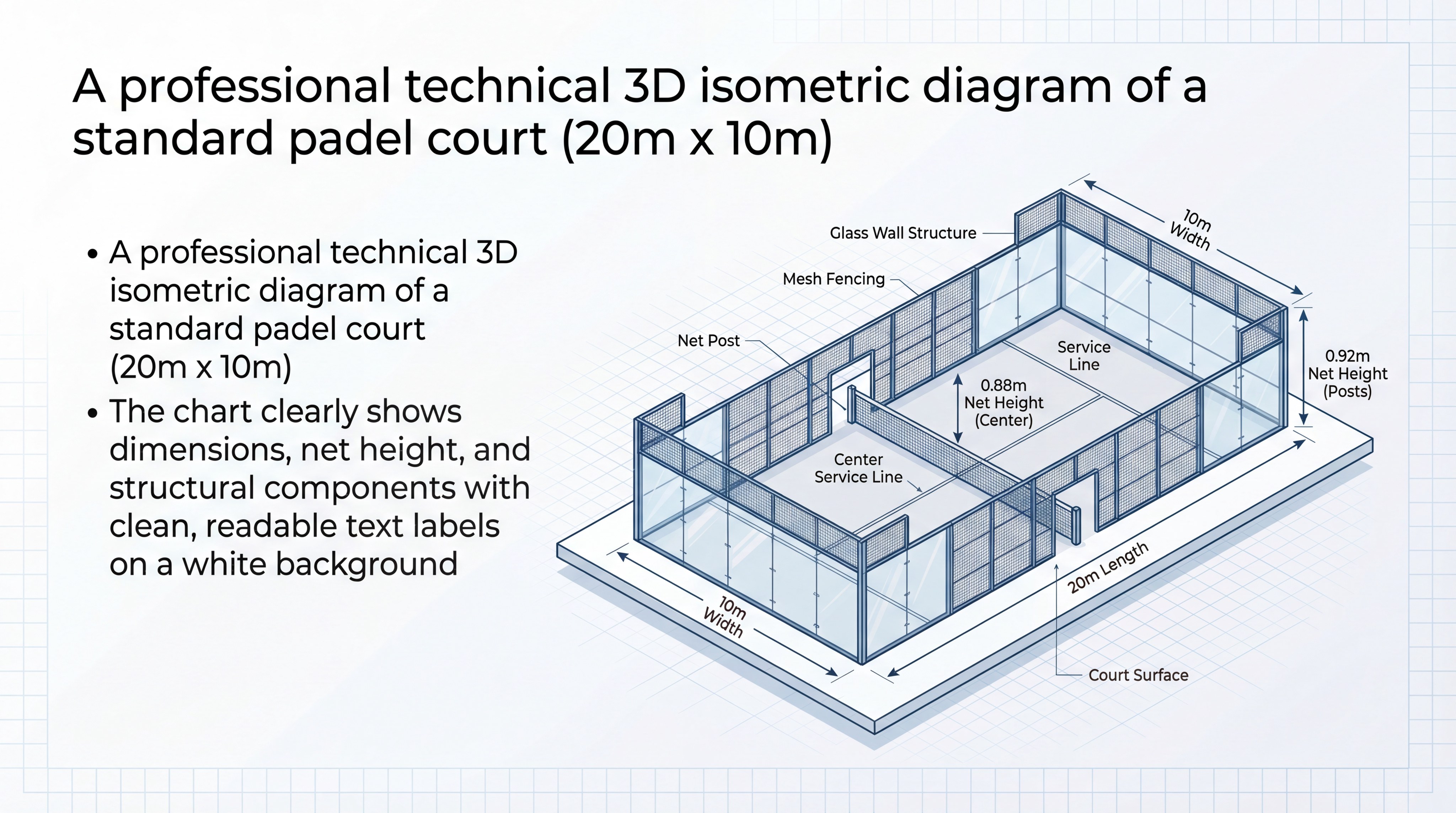
A standard court measures exactly 10 meters wide by 20 meters long, enclosed by a combination of glass and mesh. When building for padel que es, you must ensure the net height is 88 centimeters at the center. The structural frame is typically made of galvanized steel to prevent rust and ensure longevity.
The back walls are 3 meters high, often with an extra meter of mesh on top. This specific geometry ensures that the ball rebounds consistently for professional-level play.
- Length: 20 meters.
- Width: 10 meters.
- Wall Height: 3 to 4 meters total.
Key Takeaway: Precision engineering
Accuracy in dimensions is vital for the integrity of the game. Using high-quality steel and adhering to FIP standards ensures your court remains a safe and professional environment for years.
Summary Table: Structural Specs
| Component | Standard Metric |
|---|---|
| Total Area | 200 square meters |
| Net Height | 0.88m (center) |
| Mesh Height | 3.0m to 4.0m |
| Steel Type | Powder-coated galvanized |
Standard models are great, but for a truly high-end experience, you should consider the aesthetic benefits of a panoramic design.
Padel que es: Why choose a panoramic court design?
Panoramic courts provide a 360-degree unobstructed view by removing the vertical steel pillars in the glass corners. In the premium market for padel que es, these courts are the gold standard for broadcasting and spectator viewing. They offer a sleek, modern aesthetic that instantly upgrades the profile of any sports club or luxury resort.
The absence of pillars makes the game feel more open and allows spectators to see every tactical movement.
- Maximum visibility for high-stakes matches.
- Superior aesthetics for luxury branding.
- Ideal for filming and live-streaming.
Key Takeaway: The “Wow” factor
Investing in a panoramic court is about more than just utility; it is about prestige. These courts attract more players and allow for higher booking fees due to their professional appearance.
Summary Table: Standard vs. Panoramic
| Feature | Standard Court | Panoramic Court |
|---|---|---|
| Corner Pillars | Present (Steel) | None (Full Glass) |
| Spectator View | Good | Exceptional |
| Best For | Residential/Training | Tournaments/Resorts |
After choosing your frame, the next critical decision involves the surface your players will stand on.
Padel que es: How do I select the right court grass?
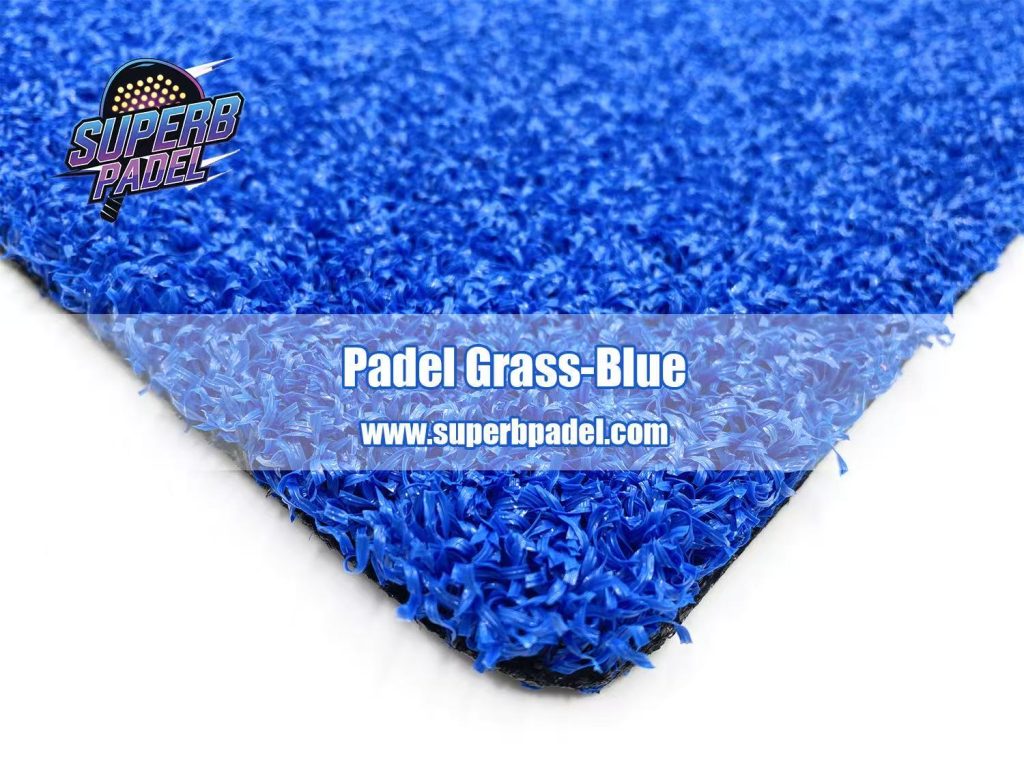
Choosing the right turf depends on your maintenance capabilities and the desired ball speed. When you research padel que es, you will find that “super-curled” monofilament grass is currently the top choice. This textured turf holds sand better and provides a more consistent bounce than traditional fibrillated options.
High-quality grass reduces the risk of player injury by providing the perfect balance of grip and slide.
- Monofilament: High durability and fiber recovery.
- Textured: Requires less sand on the surface.
- Fibrillated: Budget-friendly but higher maintenance.
Key Takeaway: Performance and safety
The grass is the most frequently replaced part of a court. Selecting a premium textured monofilament will save you money in the long run by reducing maintenance hours and increasing the turf’s lifespan.
Summary Table: Turf Comparison
| Turf Type | Durability | Play Speed | Maintenance |
|---|---|---|---|
| Fibrillated | Medium | Slow | High |
| Monofilament | High | Medium | Medium |
| Textured/Curled | Very High | Fast | Low |
While the floor provides comfort, the glass walls provide the bounce that defines the sport’s unique strategy.
Padel que es: What glass safety standards are required?
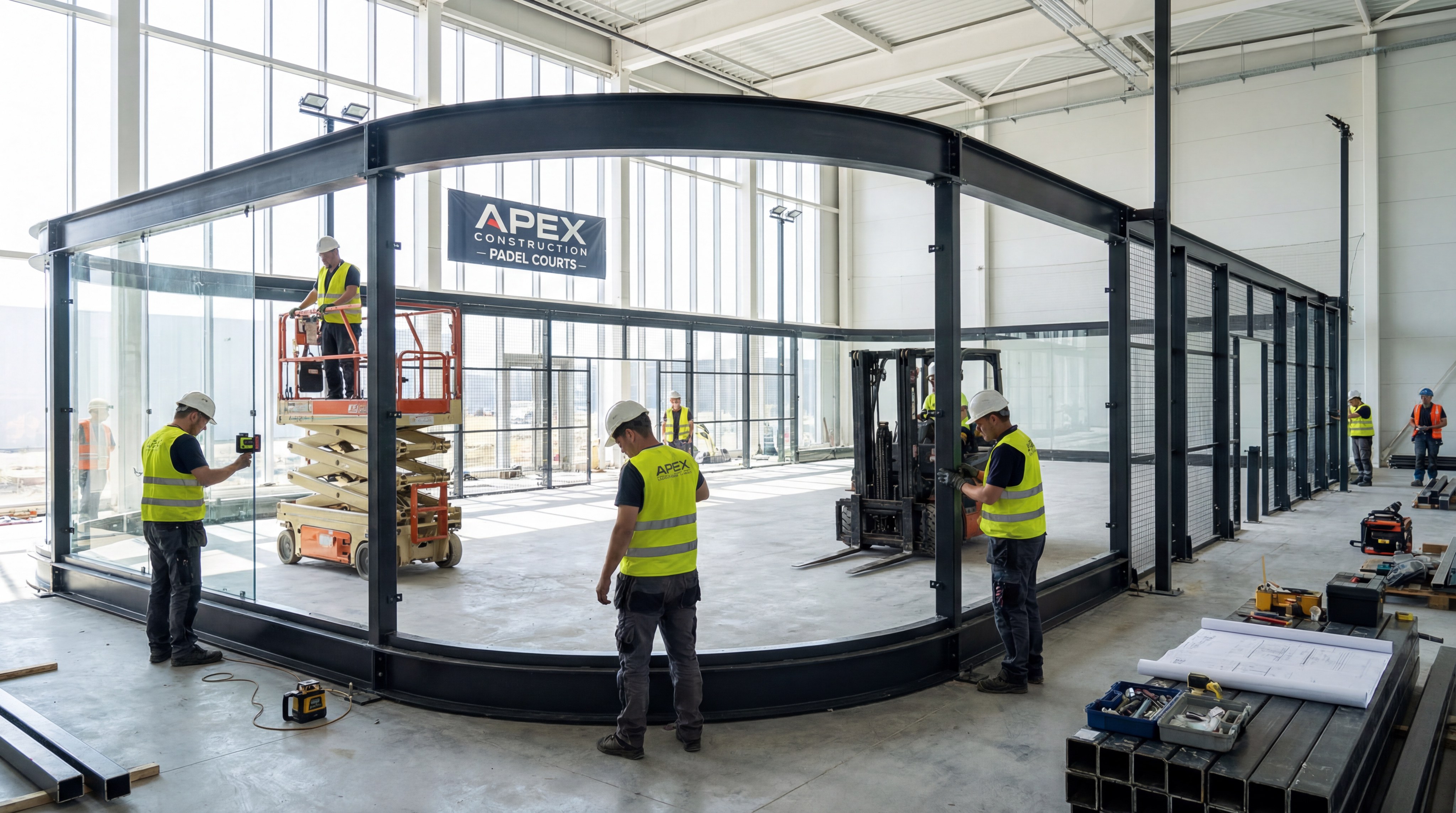
Safety glass for padel courts must be tempered and usually ranges between 10mm and 12mm in thickness. In the technical world of padel que es, the 12mm glass is preferred for professional and panoramic courts because it offers higher impact resistance. It must meet international safety certifications like CE to ensure it doesn’t shatter into dangerous shards if broken.
You must ensure that the glass panels are installed with rubber gaskets to absorb the vibrations from player impacts.
- 10mm: Standard for indoor or private courts.
- 12mm: Industry standard for high-traffic clubs.
- Tempering: Essential process for structural safety.
Key Takeaway: Non-negotiable safety
Never compromise on glass quality. High-grade tempered glass not only protects your players but also ensures the ball rebounds with the predictable speed required for competitive play.
Summary Table: Glass Specifications
| Thickness | Usage | Resistance |
|---|---|---|
| 10mm | Amateur/Private | Standard |
| 12mm | Professional/Club | High |
| Certified | Mandatory (CE/SGCC) | Extreme |
Once the structure is safe and stable, you need to ensure the action remains visible long after the sun goes down.
Padel que es: How do I optimize the court lighting?
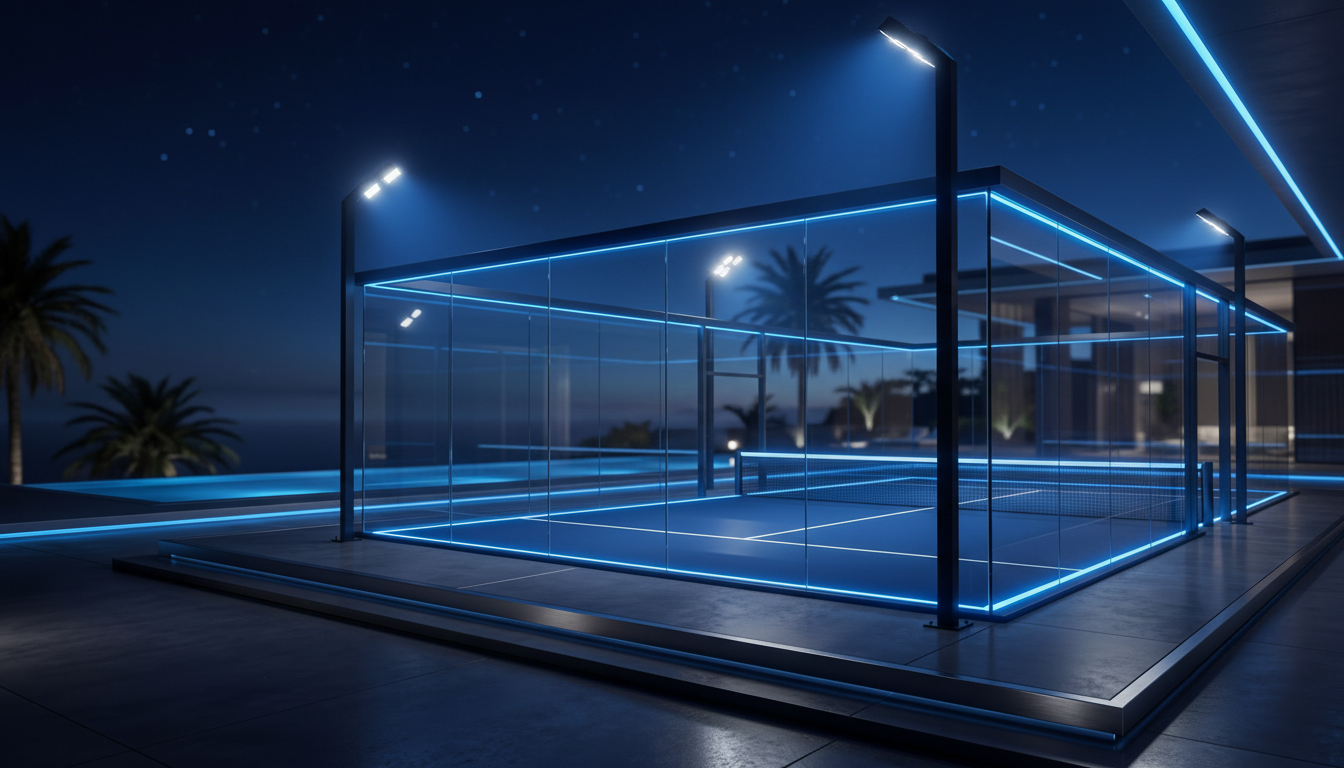
Professional lighting requires specialized LED fixtures that provide high lux levels without creating glare for the players. When optimizing padel que es, you should aim for at least 300 lux for recreational play and 750 lux for televised events. Asymmetrical lenses are crucial because they direct light onto the court and away from the players’ eyes during lobs.
Using high-efficiency LED systems will reduce your energy consumption by over 50%.
- Uniformity: Lights must be even across the turf.
- Height: Masts are usually 6 meters high.
- Technology: LED for instant-on and longevity.
Key Takeaway: Visibility equals playtime
Proper lighting extends your court’s operating hours into the night, which is when most social matches occur. Investing in flicker-free LEDs is essential for players who want to record their matches for social media.
Summary Table: Lighting Standards
| Play Level | Target Lux | Mast Height |
|---|---|---|
| Recreational | 200 – 300 | 6m |
| Pro Club | 500 – 750 | 6m – 7m |
| Broadcast | 750+ | 7m – 8m |
With all the technical details in place, the final question is whether building a court makes sense for your business or property.
Padel que es: Is court construction a good investment?
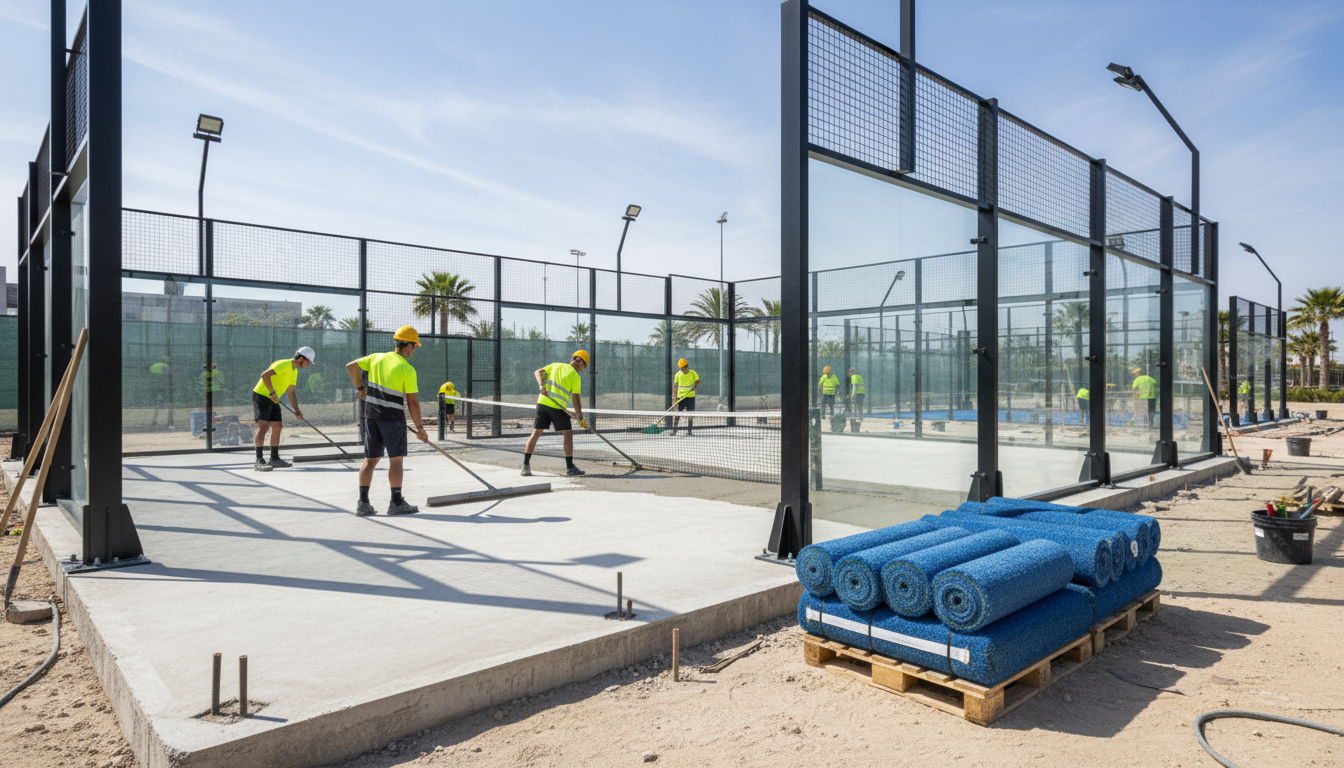
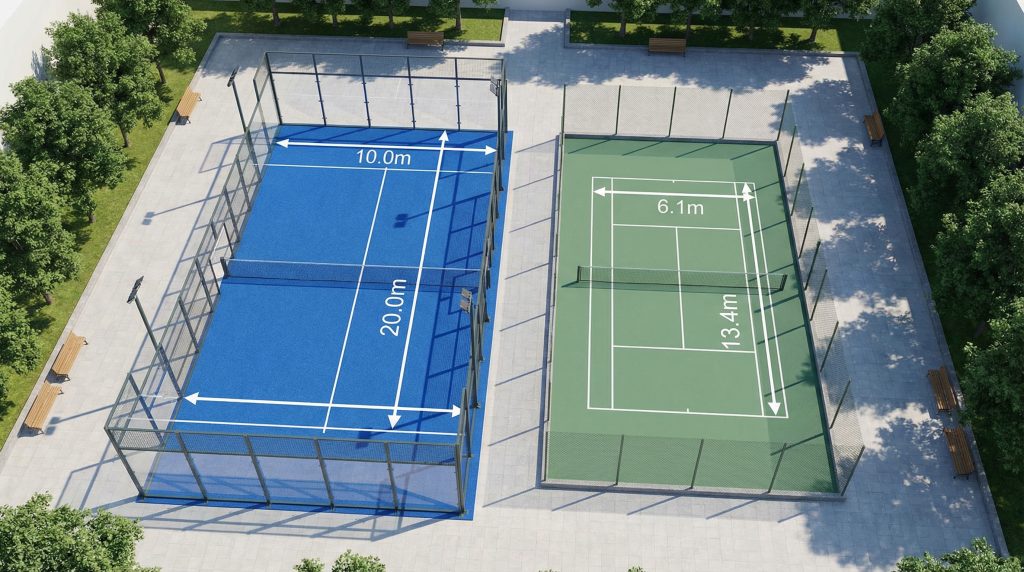
Padel offers one of the highest returns on investment in the sports industry due to its high player density. Analyzing padel que es from a business perspective reveals that you can fit three padel courts in the footprint of a single tennis court. This allows you to generate triple the revenue from hourly rentals in the same square footage.
The maintenance costs are relatively low once the initial installation is complete.
- High demand for bookings globally.
- Low square-footage requirements per player.
- Rapidly growing community and tournament scene.
Key Takeaway: Maximum efficiency
Padel is the ultimate spatial optimization for sports club owners. Its ability to host four players in a small, 200sqm area makes it significantly more profitable than almost any other racket sport.
Summary Table: Investment Metrics
| Metric | Padel Court | Tennis Court |
|---|---|---|
| Space Used | 200 sqm | 650+ sqm |
| Player Count | 4 | 2 – 4 |
| ROI Potential | Very High | Moderate |
Understanding the business logic completes your journey into the world of this fascinating sport, from its rules to its construction.
Frequently Asked Questions (FAQ)
Can I build a padel court in a small residential backyard?
Yes, you only need a flat surface of 10×20 meters plus a small perimeter buffer. Many homeowners install “Standard” models with 10mm glass for personal use.
What’s the best way to prevent the glass from shattering?
The best way is to use certified 12mm tempered glass and ensure the installer uses EPDM rubber gaskets between the glass and the steel frame to absorb vibrations.
Can I convert an old tennis court into padel courts?
Absolutely. You can typically fit three padel courts into the space of one standard tennis court, which is a common way for clubs to modernize and increase revenue.
What’s the best maintenance routine for the artificial grass?
You should brush the sand weekly to ensure even distribution and remove any leaves or debris. For curled grass, a deep professional cleaning once or twice a year is recommended.
Can I play padel in singles format if I only have one friend?
While “Singles Courts” exist (6x20m), the sport is designed for doubles. Playing 1-on-1 on a standard court is possible for practice, but it is much more physically demanding and loses the tactical depth of the walls.
Conclusion
Padel is more than just a sport; it is a global movement that brings people together through shared activity and strategic play. Whether you are a player looking for a new challenge or an investor seeking a high-growth opportunity, the world of padel offers unmatched value. Our vision at Superb Padel is to provide the highest quality infrastructure to help this community thrive across the globe.
Are you ready to transform your space into a world-class sporting destination? Contact us today to start your journey in court construction and design.