
Padel Philadelphia is a fast-paced racquet sport that combines elements of tennis and squash within an enclosed glass court, and building it requires professional-grade modular structures, high-density turf, and a strategic focus on community-centric amenities. Many urban residents in the City of Brotherly Love struggle to find social sports that offer a genuine connection, often feeling isolated by solitary fitness routines or overly competitive leagues. Traditional gyms can feel boring and repetitive, leaving you searching for a more engaging way to stay active with peers. The solution is the rise of padel philadelphia, a social athletic movement that transforms vacant urban spaces into vibrant hubs for fitness and networking.
What exactly is padel philadelphia and why is it trending?
Padel Philadelphia is a social racquet sport played in doubles on an enclosed court, currently trending due to its low barrier to entry and high social engagement. The sport is taking over the city as developers convert old industrial depots and parking lots into massive athletic hubs. This padel philadelphia movement mirrors a global surge in “third places” where people can gather outside of home and work.

The best part?
- Doubles play forces constant communication between partners and opponents.
- Enclosed glass walls keep the ball in play longer for more exciting rallies.
- The proximity of players on a smaller court facilitates post-match networking.
How does the city’s culture support padel?
Believe it or not:
- Philadelphia has a long-standing history of racquet sport excellence and active professional networks.
- Urban revitalization projects are providing the 90,000-square-foot spaces needed for major clubs.
- The sport appeals to both former college athletes and casual weekend warriors.
Key Takeaway: Padel is thriving in Philadelphia because it bridges the gap between intense physical exercise and meaningful social interaction.
| Growth Factor | Impact on Philadelphia |
|---|---|
| Social Play | High demand for doubles-based networking |
| Space Reuse | Industrial conversions into 90,000 sq ft hubs |
| Learning Curve | Faster mastery than traditional tennis or squash |
The city’s unique architectural landscape makes it the perfect environment for this athletic evolution.
How can you start a successful padel club in the city?
Starting a successful padel club involves securing a high-traffic urban location and implementing a factory-direct procurement strategy to maximize your initial investment. You can streamline your entry into the market by following a comprehensive guide to starting a padel club that focuses on professional standards. Establishing padel philadelphia venues requires a blend of athletic facilities and lifestyle amenities like lounges or pro shops.
What are the first steps for developers?
Here is the deal:
- Identify warehouses or lots with at least 25-foot ceiling clearances for indoor play.
- Secure zoning permits that allow for commercial recreation and social club use.
- Partner with manufacturers to ensure modular court assembly meets local safety codes.
How do you create a destination brand?
The kicker is:
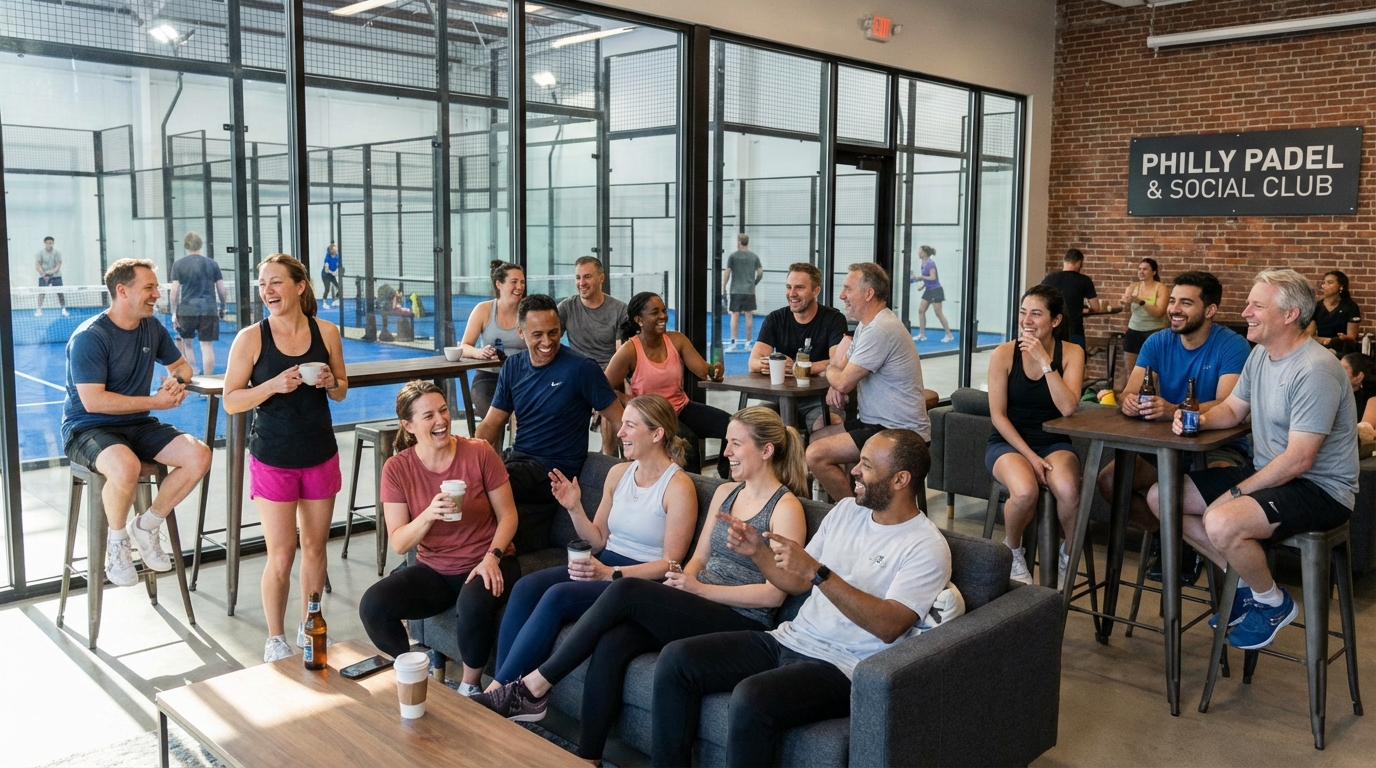
- Integrate social areas like viewing decks and cafes to increase dwell time.
- Offer diverse programming including corporate leagues, clinics, and social mixers.
- Use OEM branding to put your club’s logo and colors directly on the court frames.
Key Takeaway: Successful clubs in Philadelphia succeed by treating the facility as a social hub first and an athletic center second.
| Step | Priority Action |
|---|---|
| Location | Warehouse or parking lot with high visibility |
| Equipment | Factory-direct procurement for 30% cost savings |
| Experience | Integration of social lounges and viewing areas |
Selecting the right equipment is just as important as choosing the right neighborhood for your project.
Is padel philadelphia accessible for both beginners and pros?
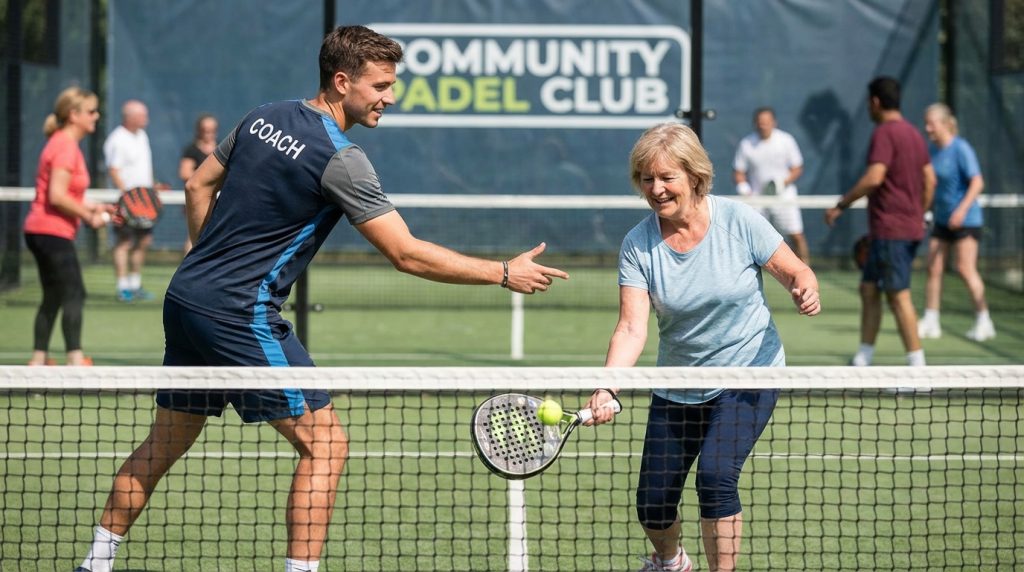
Padel Philadelphia is designed for extreme inclusivity, offering an easy learning curve for novices while providing deep tactical complexity for advanced athletes. The padel philadelphia community thrives because a beginner can have a competitive rally within their first thirty minutes on the court. Professional coaches are increasingly moving to the city to mentor this diverse range of talent.
Why is it so easy for beginners to start?
Think about it:
- The underhand serve eliminates the most difficult technical hurdle in racquet sports.
- Smaller court dimensions reduce the amount of high-intensity sprinting required.
- The glass walls allow you to play the ball even after it passes you.
Can experienced athletes find a real challenge?
But wait, there’s more:
- Mastering wall-play tactics requires advanced geometry and quick reflexes.
- High-level strategy involves slow, methodical points punctuated by explosive power.
- Local tournaments and professional clinics provide pathways for elite competition.
Key Takeaway: The “easy to learn, hard to master” nature of padel ensures a massive, sustainable player base across all skill levels.
| Skill Level | Primary Appeal |
|---|---|
| Beginner | Underhand serves and immediate rally success |
| Intermediate | Strategy-based gameplay using the glass walls |
| Advanced | High-speed reflexes and complex tactical patterns |
This broad appeal makes the sport a highly resilient business model for any facility owner.
What are the real costs of building a padel court?
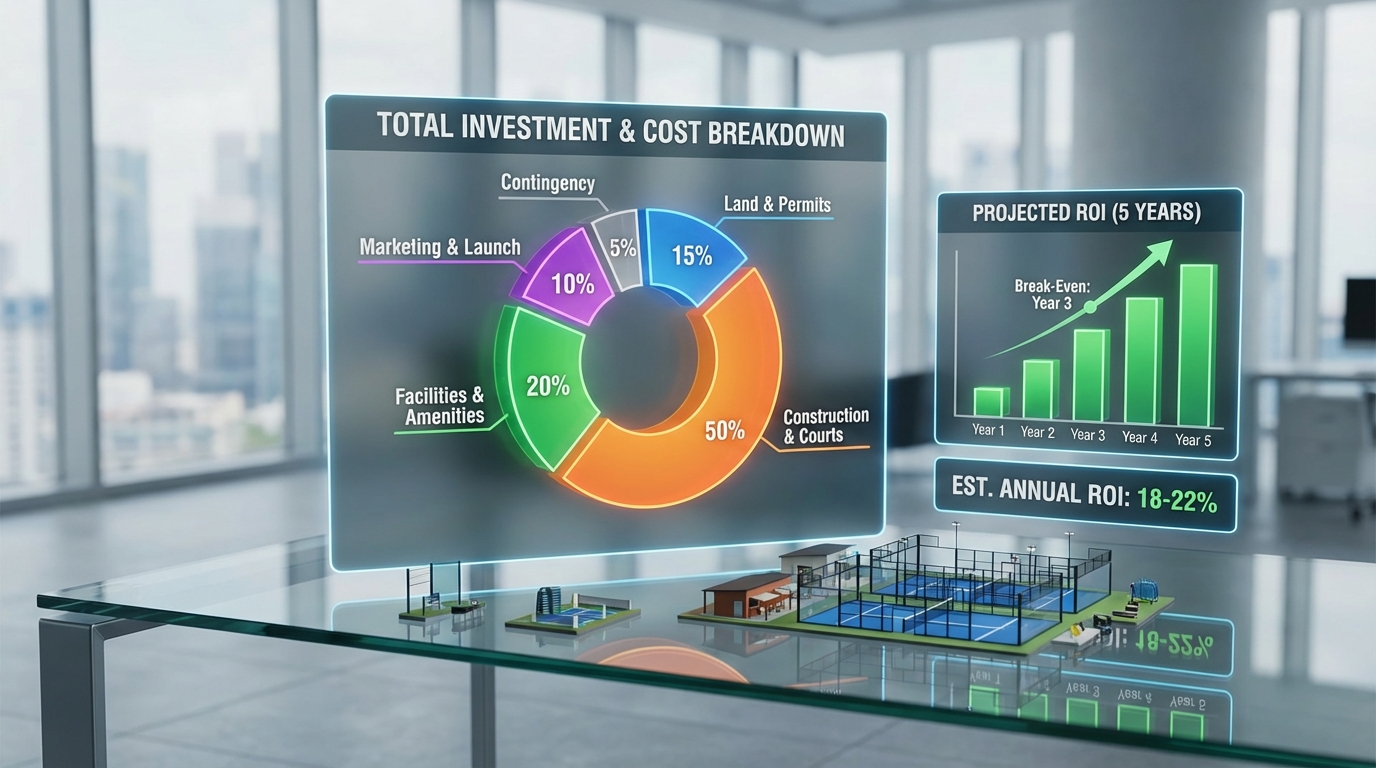
The real costs of building a padel court typically range from hardware procurement to site preparation, with factory-direct sourcing offering the most significant savings. Understanding your padel court cost breakdown is essential for maintaining a healthy return on investment. A typical padel philadelphia project will require a budget for steel structures, tempered glass, and professional sports turf.
Where can you find procurement savings?
Look:
- Buying directly from the factory can save you up to 30% compared to local distributors.
- Eliminating middlemen reduces shipping delays and ensures direct technical support.
- Bulk orders for multiple courts significantly lower the per-unit logistics cost.
The result?
- Site leveling and concrete foundation work can be a major budget variable.
- Customization like RAL colors and logos may add small premiums to the base price.
- Import duties and port logistics to Philadelphia must be calculated early.
Key Takeaway: While the initial investment is notable, the high density of players per square foot creates a faster break-even point than tennis.
| Expense Category | Typical Impact |
|---|---|
| Court Structure | 50% of total hardware budget |
| Installation | Varies based on local labor and site prep |
| ROI | 18-22% estimated annual return for busy clubs |
Effective financial planning begins with choosing the most durable materials for your specific site.
Where are the best locations to build padel courts in Philly?
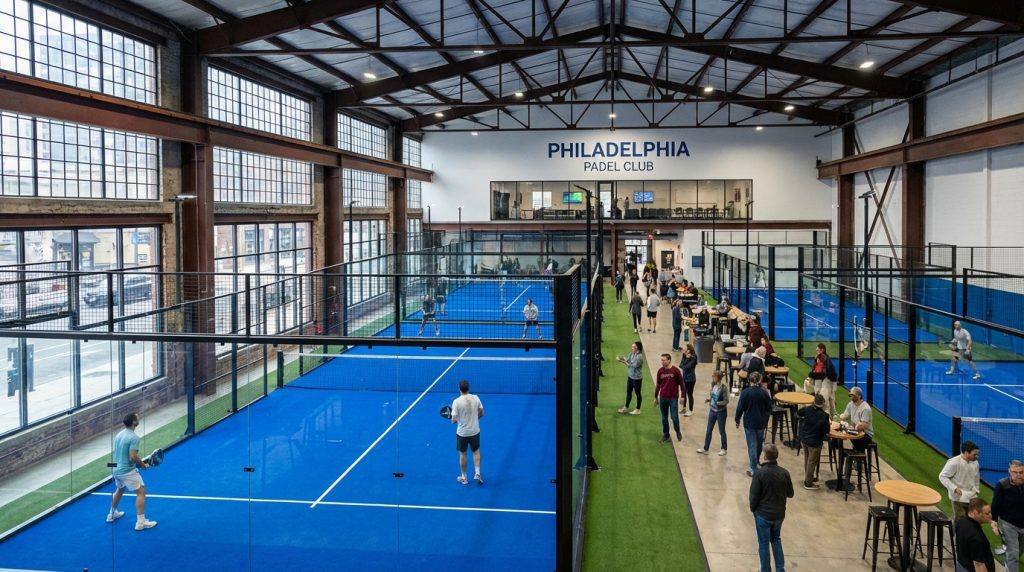
The best locations for padel courts in Philly are repurposed industrial warehouses and underutilized parking lots in neighborhoods like Northern Liberties or Fishtown. For padel philadelphia developers, finding a 90,000-square-foot footprint allows for the scale needed to host multiple courts and social amenities. These urban hubs are being revitalized by the growing demand for modern racquet sports facilities.
Why is industrial reuse so popular?
The kicker is:
- High ceilings in old depots provide the clearance needed for high lobs.
- Thick concrete floors offer a stable foundation for the glass and steel structures.
- Central locations provide easy access via public transit for urban professionals.
What about outdoor urban lots?
Here is the deal:
- Converting vacant lots into courts increases property value for surrounding real estate.
- Rooftop installations offer premium experiences with views of the city skyline.
- Outdoor courts serve as highly visible advertisements that attract curious passersby.
Key Takeaway: High-density neighborhoods with a mix of residential and commercial traffic offer the highest court utilization rates.
| Location Type | Major Advantage |
|---|---|
| Industrial Warehouse | Year-round play and high ceiling clearance |
| Vacant Urban Lot | High visibility and lower initial property costs |
| Rooftop | Premium branding and luxury member appeal |
Once a location is secured, the focus shifts to selecting a court design that wows your members.
Which padel court designs offer the best player experience?
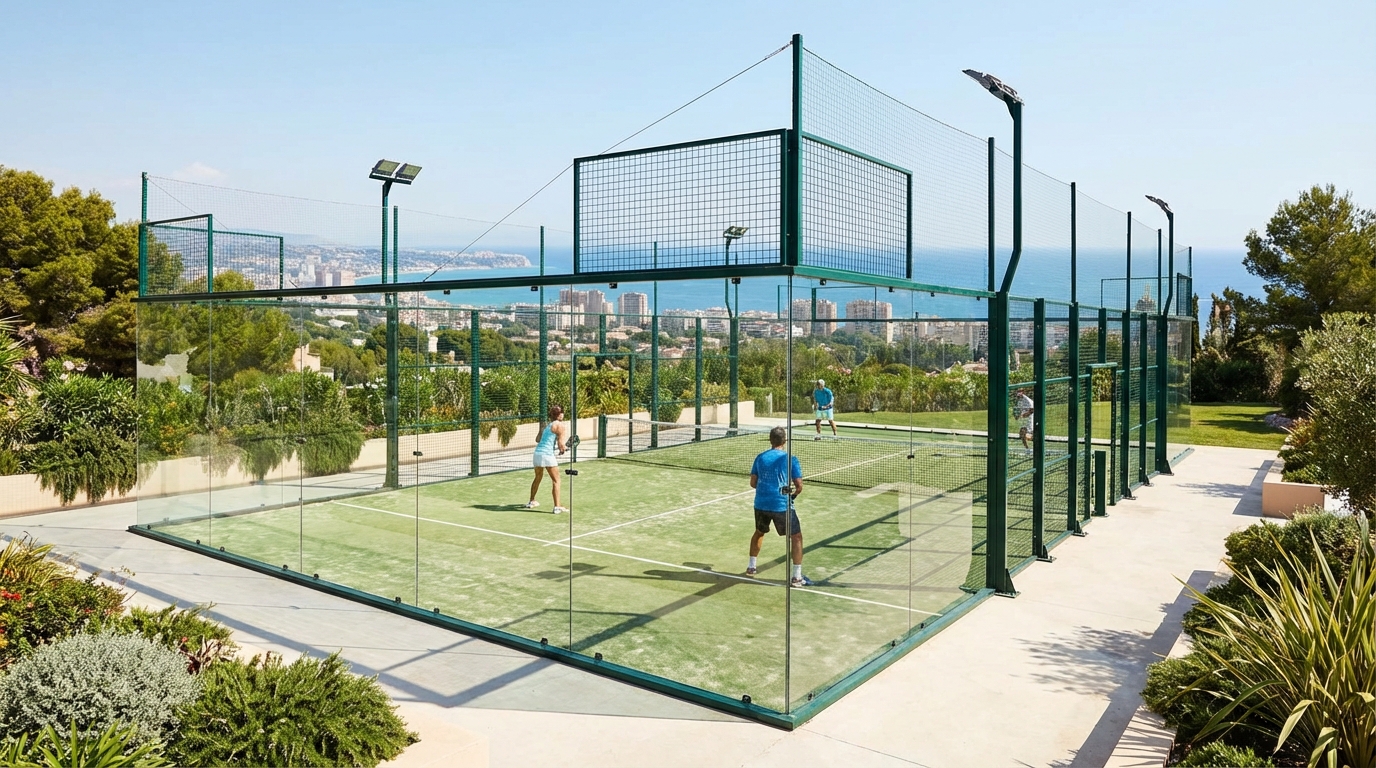
Panoramic and super-panoramic designs offer the best player experience by providing unobstructed views and a premium, high-end aesthetic. You can explore panoramic court specifications to see how removing rear pillars enhances both play and spectating. In the competitive padel philadelphia market, the visual appeal of your facility is a major factor in member retention.
Why choose a panoramic model?
Think about it:
- The lack of corner posts provides a 360-degree view for tournament spectators.
- It creates a “TV-ready” look that is perfect for social media marketing.
- Players feel less enclosed, which improves the overall sense of luxury.
How does the court surface impact play?
Believe it or not:
- Fibrillated turf provides a consistent ball bounce and superior traction.
- Custom turf colors can match your brand identity while maintaining professional standards.
- High-density grass prevents injuries by allowing for controlled slides and pivots.
Key Takeaway: Investing in premium panoramic designs allows clubs to command higher rental fees and attract elite players.
| Design Feature | Player Benefit |
|---|---|
| Panoramic Glass | Unobstructed views and premium atmosphere |
| Fibrillated Turf | Consistent ball bounce and reduced joint impact |
| Modular Steel | High structural integrity for aggressive play |
High-quality design must be matched by equally high-quality construction to ensure longevity.
How do you ensure high-quality construction for your court?
Ensuring high-quality construction requires using hot-dip galvanized steel, 12mm tempered safety glass, and following European EN 12150 standards. For any padel philadelphia project, the structural integrity of the frame is the first line of defense against heavy usage and local weather. Choosing materials with a 20-year design life minimizes long-term maintenance and protects your players.

Why is the steel treatment critical?
Look:
- Hot-dip galvanization prevents corrosion in the humid Philadelphia climate.
- Modular designs allow for faster assembly and easier part replacement.
- Robotic welding ensures uniform strength across all structural joints.
What makes the glass safe for commercial use?
The result?
- 12mm anti-explosion tempered glass is the global standard for player safety.
- Counter-sunk holes for glass fixings prevent ball deflection and snagging.
- Certified glass ensures the structure can withstand high-impact body collisions.
Key Takeaway: Quality construction is a non-negotiable insurance policy for your facility’s reputation and safety.
| Component | Quality Standard |
|---|---|
| Glass | 12mm Tempered (EN 12150 Certified) |
| Frame | Hot-dip galvanized with 20-year design life |
| Turf | High-density EU-standard fibrillated fibers |
Durability is particularly important when considering the varied weather patterns of the Northeast.
Should you choose indoor or outdoor courts for Philly weather?
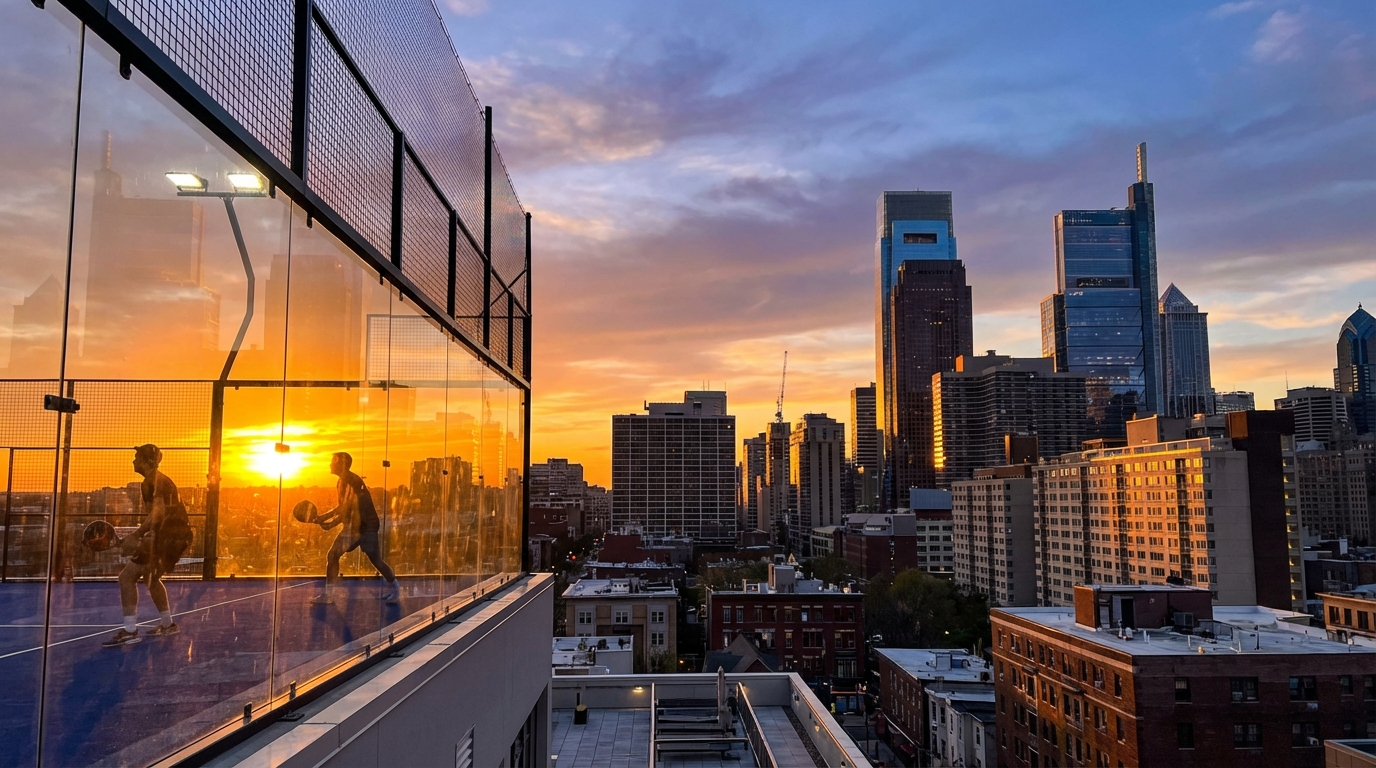
Choosing between indoor and outdoor courts depends on your revenue goals, as indoor facilities offer 365 days of play despite the city’s unpredictable rain and snow. Utilizing roofed padel court solutions allows you to capture the outdoor feel while protecting your investment from the elements. In padel philadelphia, the most successful clubs often provide a mix of both or a fully climate-controlled interior.
What are the benefits of indoor facilities?
The best part?
- Zero revenue loss from weather-related cancellations or rainouts.
- Consistent playing conditions that allow for serious league scheduling.
- Full climate control keeps members comfortable during extreme summer heat.
How do you maximize outdoor potential?
The kicker is:
- Rooftop courts provide an unmatched aesthetic and social atmosphere at sunset.
- Outdoor play in the Spring and Fall is highly desirable for urban residents.
- Proper drainage systems and UV-resistant turf are essential for outdoor longevity.
Key Takeaway: Indoor facilities provide the most stable business model, but outdoor courts offer superior branding and “wow” factor.
| Feature | Indoor Facilities | Outdoor Facilities |
|---|---|---|
| Reliability | 100% (No weather delays) | Weather-dependent |
| Maintenance | Lower (No UV/Rust stress) | Higher (Needs weatherproofing) |
| Atmosphere | Focused and competitive | Social and scenic |
Lighting becomes the next critical factor for ensuring your courts are usable at all hours.
Why is professional lighting essential for padel philadelphia?
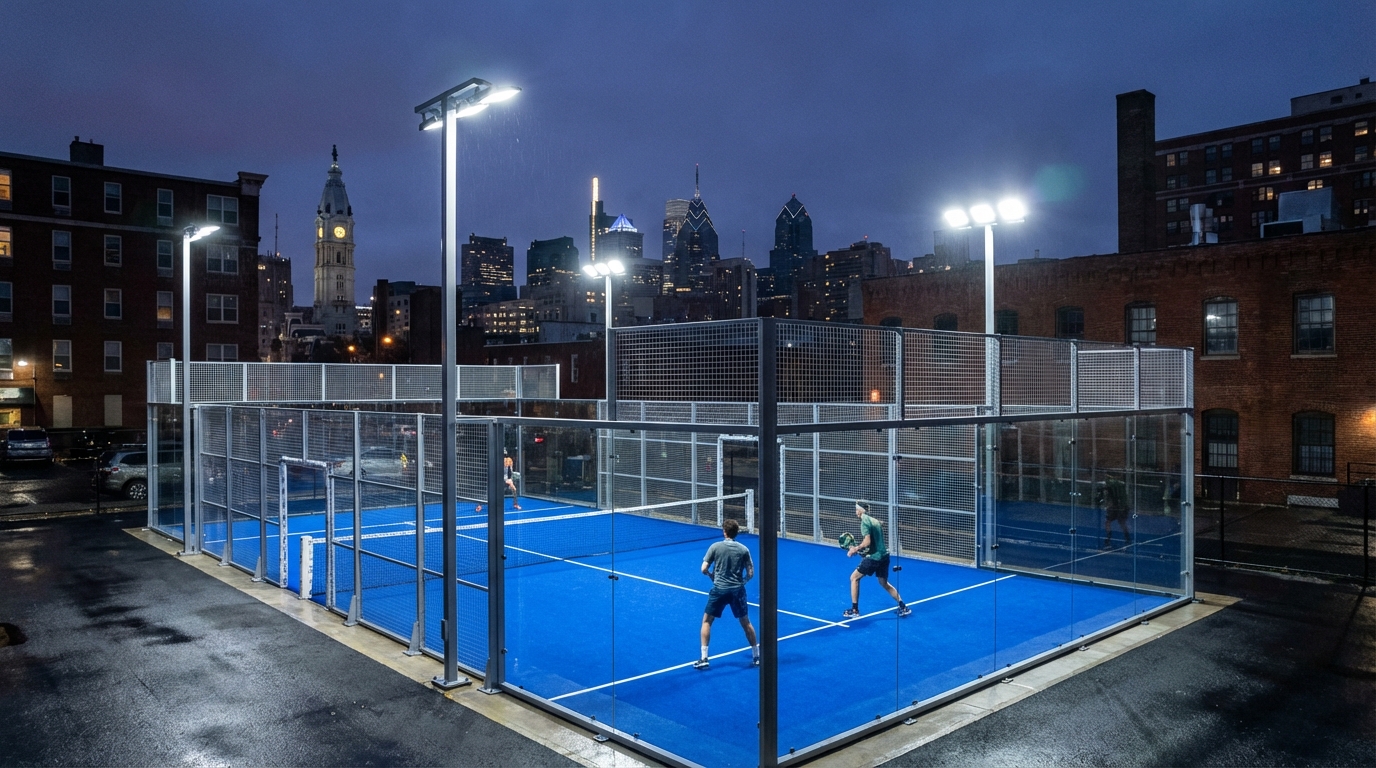
Professional lighting is essential because it eliminates glare on the glass walls and ensures uniform visibility during high-speed rallies at night. Every padel philadelphia court should be equipped with IP66-rated LED floodlights to withstand both dust and water. High-quality illumination doesn’t just improve safety; it significantly extends your facility’s billable hours into the evening.
Why is LED the only choice for modern clubs?
Think about it:
- High-efficiency LEDs reduce operational electricity costs by up to 60%.
- Instant-on technology means you don’t waste time waiting for bulbs to warm up.
- Uniform light distribution prevents “blind spots” during deep lobs or fast serves.
How does lighting impact the player experience?
Here is the deal:
- Flicker-free lights reduce eye strain during long evening matches.
- Properly angled masts prevent reflections on the tempered glass walls.
- Brilliant white light creates a professional atmosphere that players love.
Key Takeaway: Professional LED lighting is the most cost-effective way to double your daily court booking potential.
| Lighting Feature | Technical Benefit |
|---|---|
| IP66 Rating | Full protection against rain and urban dust |
| 200W-300W LED | High intensity with low energy consumption |
| Anti-Glare Design | Clearer vision through glass walls at night |
With the infrastructure in place, the final step is fostering the human connection that makes padel special.
How does a padel club build a thriving local community?
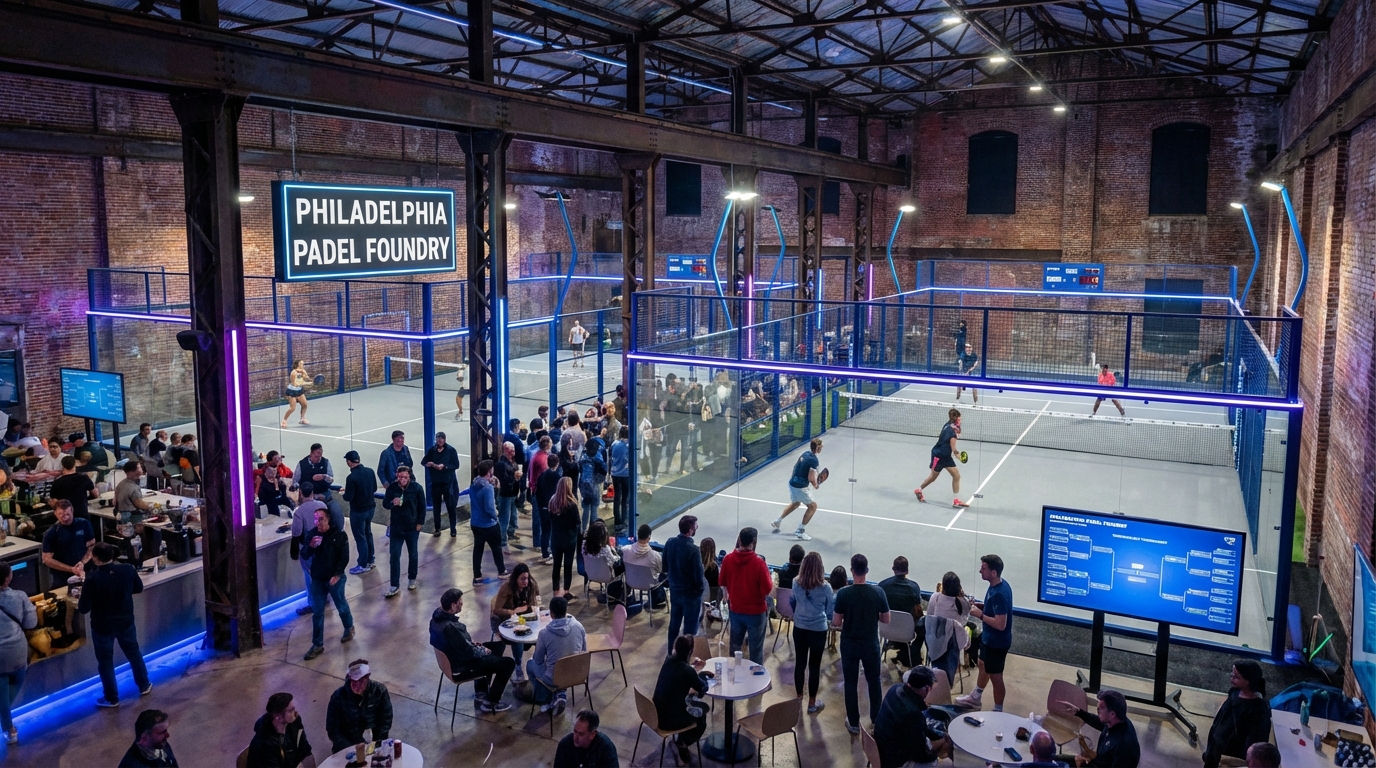
A padel club builds community by hosting diverse social events, leagues, and youth clinics that turn players into long-term members. The future of padel philadelphia relies on these venues acting as modern town squares where fitness and friendship overlap. By providing comfortable viewing areas and social lounges, you encourage players to stay long after their match has ended.
How can you engage different demographics?
The result?
- Corporate leagues attract the city’s professional network for weekday mixers.
- Youth programs and clinics ensure the next generation of players is invested.
- Social tournaments with food and music create a festival atmosphere.
What role does the staff play in community building?
But wait, there’s more:
- Experienced coaches act as mentors and social glue for the club.
- Pro shops offering high-quality gear become a hub for tech talk and trends.
- Personalized member services help newcomers feel welcome from day one.
Key Takeaway: A thriving club is measured by its “dwell time”—how long members stay to socialize after their game is over.
| Community Pillar | Implementation |
|---|---|
| Programming | Mix of competitive leagues and social mixers |
| Environment | Comfortable lounges and viewing decks |
| Leadership | Skilled coaches who foster a welcoming culture |
Building a padel facility in Philadelphia is an investment in the city’s social fabric and its athletic future.
FAQ: Common Questions About Padel in the City
- Can I play padel in Philadelphia if I’ve never played tennis?
Absolutely, as the sport is designed for accessibility and most beginners can rally within their very first hour. - What is the typical size of a padel court for urban planning?
A standard court is 10×20 meters, which is roughly one-third the size of a traditional tennis court, making it perfect for dense urban areas. - Is it better to build indoor or outdoor courts in Philly?
Indoor courts are generally recommended for the Philadelphia climate to ensure year-round revenue and protection from rain and snow. - How much can I save by ordering courts factory-direct?
You can typically save 30% on procurement costs by skipping middlemen and working directly with a manufacturer. - Are there leagues available for players in the region?
Yes, new facilities are actively launching leagues, clinics, and social tournaments for all skill levels from novice to professional.
Ready to bring the world’s fastest-growing sport to your neighborhood? To start your journey with a professional-grade facility, contact us today for a custom quote and expert consultation on your project.