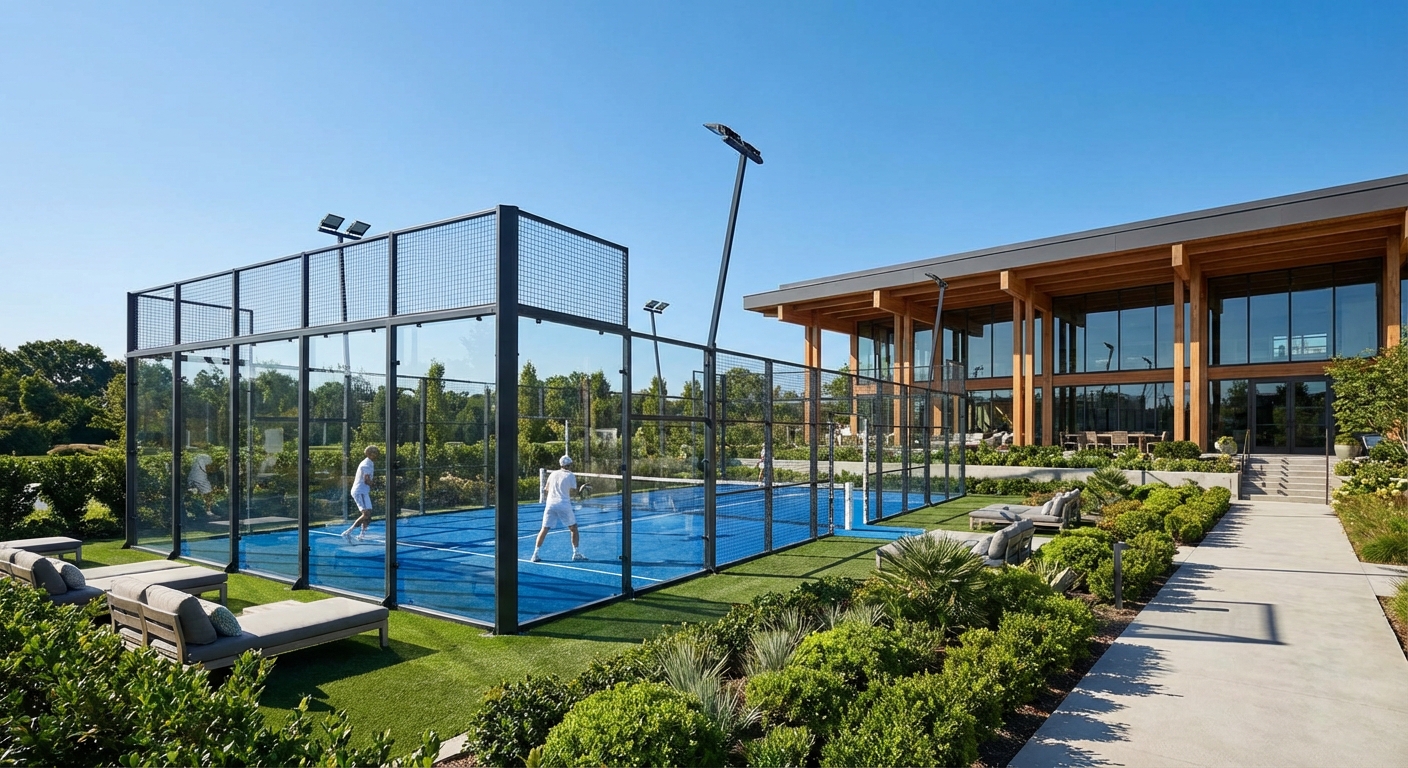
Padel is a fast-paced racquet sport played in a glass-enclosed court that combines technical precision with high-intensity social interaction. You are likely witnessing the explosive growth of the sports industry and wondering how to capitalize on the increasing demand for high-revenue athletic facilities. Without a clear understanding of specialized construction standards, your investment risks being sidelined by structural failures or poor player retention. Developing a premium padel facility solves these issues by maximizing court density and providing a superior user experience that drives long-term membership growth.
What is the official definition of padel?
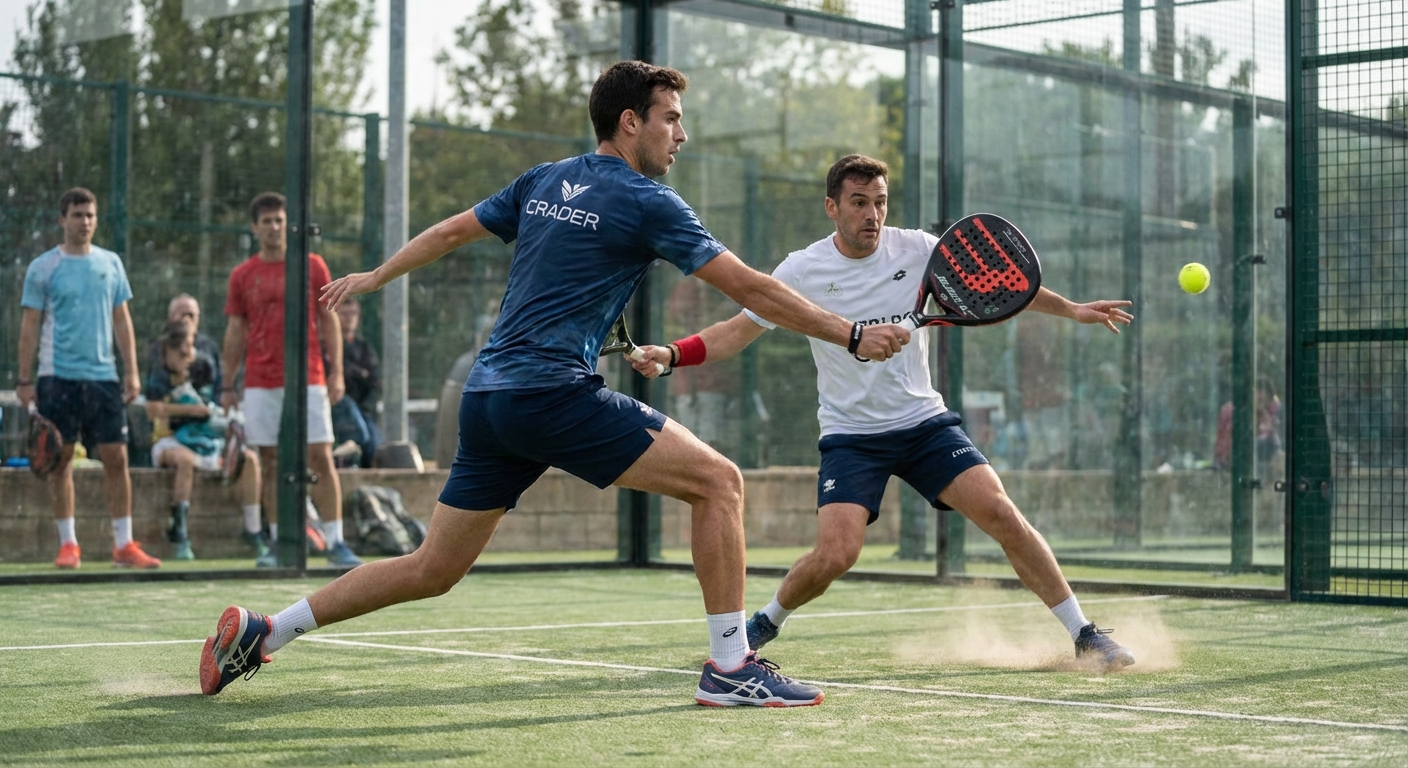
Padel is a social racquet sport traditionally played in doubles within a rectangular, glass-walled enclosure that allows the ball to be played off the walls. When you evaluate the unique appeal of padel, it becomes clear that the sport bridges the gap between the physical demands of tennis and the strategic play of squash. The game is played with a stringless, perforated carbon-fiber paddle and a low-compression ball, making it accessible to various skill levels.
This discipline relies on a specific set of rules regulated by the International Padel Federation (FIP). The inclusion of walls as active playing surfaces changes the tactical landscape, favoring positioning and patience over raw power. This shift in gameplay is why the sport has seen such massive adoption in the B2B sports and leisure sector.
The Origins and Evolution of the Game
The sport began in Mexico during the late 1960s before exploding in popularity across Spain and eventually the rest of the world. Think about it: a sport that requires less space than tennis but allows for more players per square meter is a developer’s dream. Today, it stands as a pillar of modern sports club offerings.
The evolution of the game has led to standardized equipment and professional circuits. These professional standards ensure that every court built today meets a high level of competition quality. You must adhere to these standards to attract serious players and tournament organizers to your facility.
The Core Mechanics of Play
Players must serve underhand, and the ball must bounce once on the opponent’s side before hitting a wall to be considered in play. This reliance on the enclosure requires specific structural integrity in the glass and mesh panels. You cannot simply install standard glass; it must be engineered for high-impact sports performance.
Here is the deal:
- Matches are almost exclusively played in doubles format.
- Scoring follows the traditional tennis system (15, 30, 40, game).
- The “Golden Point” rule is often used in professional matches to speed up play.
- Walls consist of a mix of tempered glass and metallic mesh.
Structural Requirements for Regulation Play
To meet official standards, the court must be a 10×20 meter rectangle with a net dividing the center. The height of the walls and the tension of the mesh are strictly defined to ensure a consistent bounce. If these elements are not perfectly calibrated, the quality of play will suffer significantly.
| Component | Specification | Purpose |
|---|---|---|
| Enclosure Height | 3 to 4 meters | Defines play area |
| Wall Material | Tempered Glass | Ensures predictable bounce |
| Mesh Type | Electro-welded Steel | Provides rebound variety |
| Net Height | 88cm (center) | Regulates court division |
The integration of glass and steel creates a transparent but durable environment that is ideal for both players and spectators.
Key Takeaway: Understanding the official definition and structural requirements of the sport is the first step in building a facility that meets international competition standards and player expectations.
How do you start building a padel court?
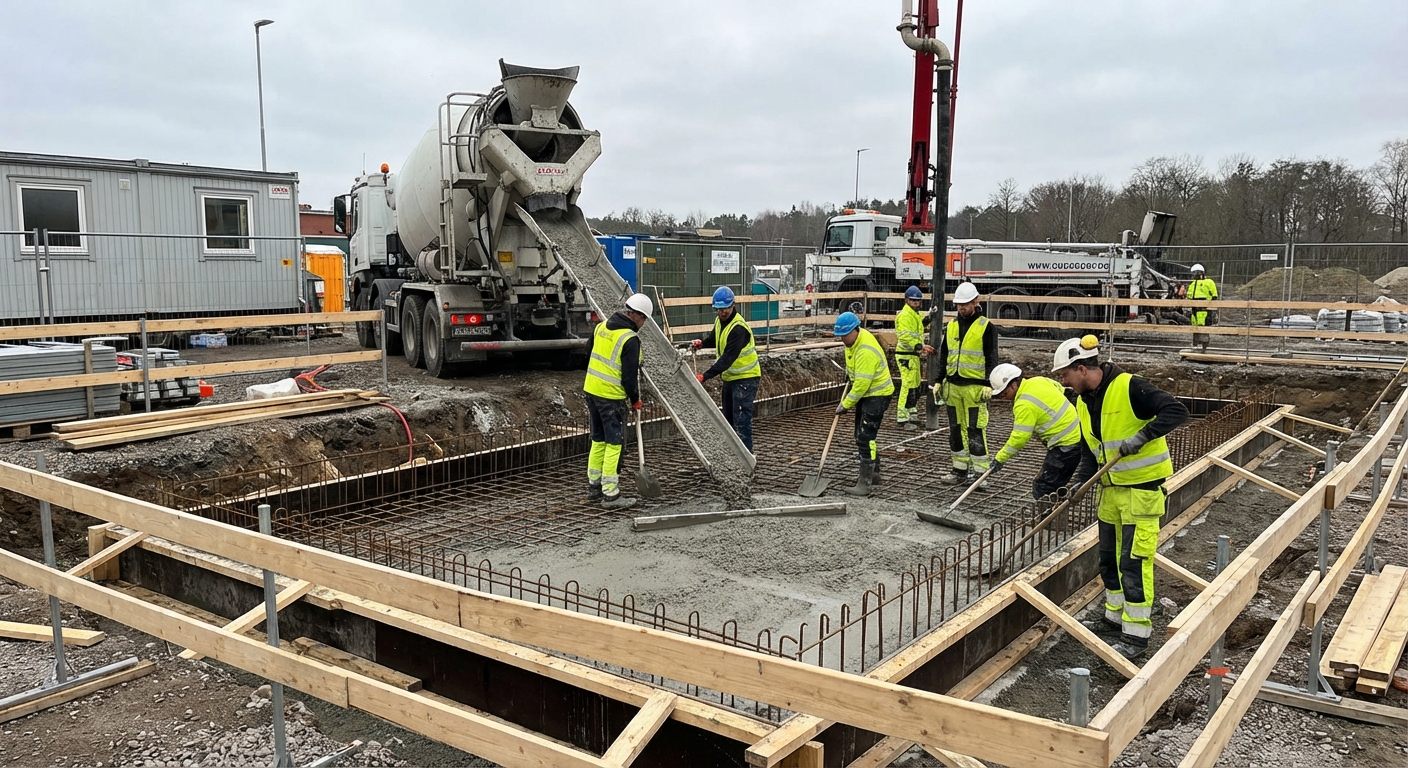
Starting a padel construction project begins with a comprehensive site assessment and a feasibility study to ensure the location can support the weight and dimensions of the structure. You must first determine if your land or existing facility can accommodate the 200-square-meter footprint required for a standard padel court. This initial phase involves checking local zoning laws and obtaining the necessary building permits for sports infrastructure.
The planning stage is where you define the scope of your facility, whether you are aiming for a single court or a massive multi-court club. Professional consultation is vital here to avoid common pitfalls in drainage, orientation, and foundation stability. A solid start ensures that the subsequent installation phases proceed without costly technical delays.
Site Preparation and Groundwork
The foundation is the most critical part of the construction process, requiring a reinforced concrete slab or a specialized porous asphalt base. You need a perfectly level surface to ensure that the artificial turf lays flat and the glass panels align correctly. Proper drainage systems must be integrated into the base to prevent water accumulation, especially for outdoor courts.
Soil analysis is often the first technical step to determine the load-bearing capacity of the ground. Think about it: a single glass panel can weigh over 100kg, and the entire structure exerts significant pressure on the slab. Neglecting groundwork can lead to shifting glass and dangerous structural cracks over time.
Navigating Legal and Zoning Requirements
Before breaking ground, you must consult with local authorities regarding noise regulations and light pollution standards. Many municipalities have specific requirements for sports lighting, particularly in residential areas where glare can be an issue. Securing these permits early prevents legal challenges once the facility is operational.
Here is why it matters:
- Building permits ensure the structure meets safety codes.
- Environmental impact studies may be required for large clubs.
- Accessibility regulations (ADA compliance) must be integrated into the design.
- Utility connections for lighting and irrigation need early planning.
Selecting the Right Project Partners
Choosing a contractor with specific experience in racquet sports infrastructure is more important than hiring a general builder. You need a partner who understands the tolerances required for laser-cut steel frames and FIP-certified glass. Their expertise will guide you through material selection and long-term maintenance planning.
| Phase | Primary Goal | Deliverable |
|---|---|---|
| Feasibility | Market Analysis | ROI Projections |
| Design | Technical Blueprints | Site Plan |
| Permitting | Legal Compliance | Approved Permits |
| Foundation | Structural Base | Level Concrete Slab |
A phased approach to planning allows you to manage capital expenditures while ensuring every technical milestone is met.
Key Takeaway: A successful build depends on rigorous site preparation and legal compliance, ensuring the foundation is capable of supporting high-performance sports equipment.
What are the standard padel court dimensions?
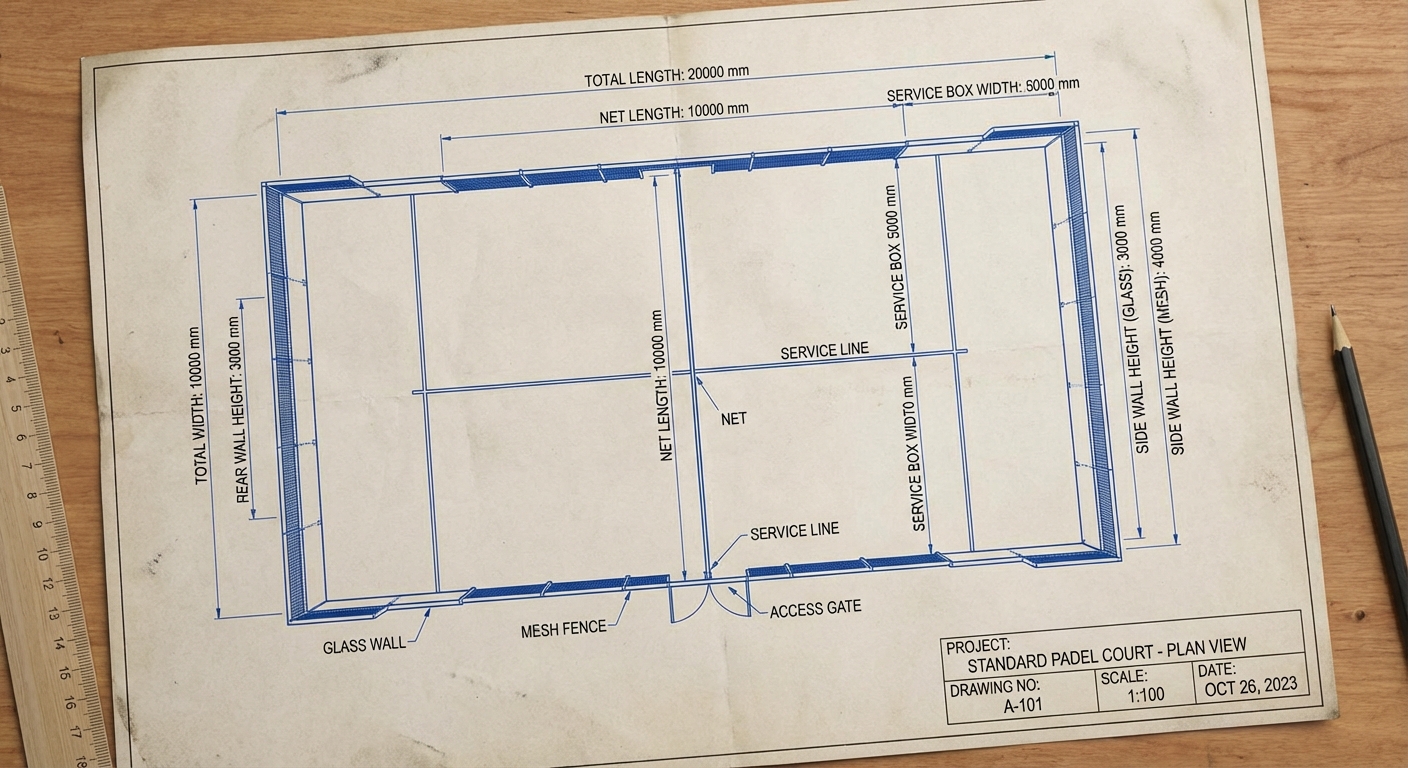
The standard dimensions for a doubles padel court are 10 meters in width by 20 meters in length, with a total playing area of 200 square meters. When designing your padel facility, you must also account for the external “clearance” zones, which typically bring the total required footprint to approximately 23×13 meters. These dimensions are strictly mandated by the FIP to ensure a uniform playing experience globally.
Precision is non-negotiable when marking the court lines and installing the structural frame. Even a 0.5% deviation in length or width can disqualify a court from hosting official tournaments. This is why professional installers use laser-leveling tools during the foundation and framing stages.
Internal Marking and Net Height
The service lines are positioned 6.95 meters from the net on each side, dividing the back area into two service boxes. The central service line must extend 10cm beyond the service line for clear visibility. You should ensure these lines are integrated into the artificial turf during manufacturing for maximum durability.
The net itself must be 10 meters long and reach a height of 88 centimeters at the center, rising to 92 centimeters at the posts. Maintaining the correct tension is essential for a fair game and to prevent the net from sagging during play. Regular checks are required to keep these measurements within the allowed tolerance levels.
Vertical Clearance and Ceiling Heights
For indoor installations, the vertical dimension is just as important as the horizontal footprint. The FIP requires a minimum height of 6 meters over the entire playing surface, though 8 meters is highly recommended for professional play. Think about it: high-lob shots are a fundamental part of the game’s strategy, and a low ceiling will ruin the experience.
If your building has structural beams or light fixtures, these must be accounted for in the height calculations. Obstructions within the 6-meter zone can lead to frequent play interruptions and frustrated members. Always aim for the maximum possible clearance to future-proof your facility.
Dimensions for Single Courts
While less common, single courts are an excellent option for training or maximizing odd-shaped spaces in your club. A single court measures 6 meters in width by 20 meters in length, maintaining the same rules and wall heights as the doubles version. Here is the deal: single courts allow you to diversify your offering and accommodate players who prefer a higher-intensity individual workout.
| Area | Dimension | Regulation Type |
|---|---|---|
| Play Area (Doubles) | 10m x 20m | FIP Standard |
| Play Area (Single) | 6m x 20m | Training Standard |
| Min. Indoor Height | 6m | Mandatory |
| Recommended Height | 8m | Professional |
Accurate dimensions are the backbone of a high-quality facility, directly impacting the speed and flow of the game.
Key Takeaway: Adhering to the 10x20m standard and ensuring a minimum 6m vertical clearance is essential for creating a court that meets international playing standards.
Which materials are used for padel construction?
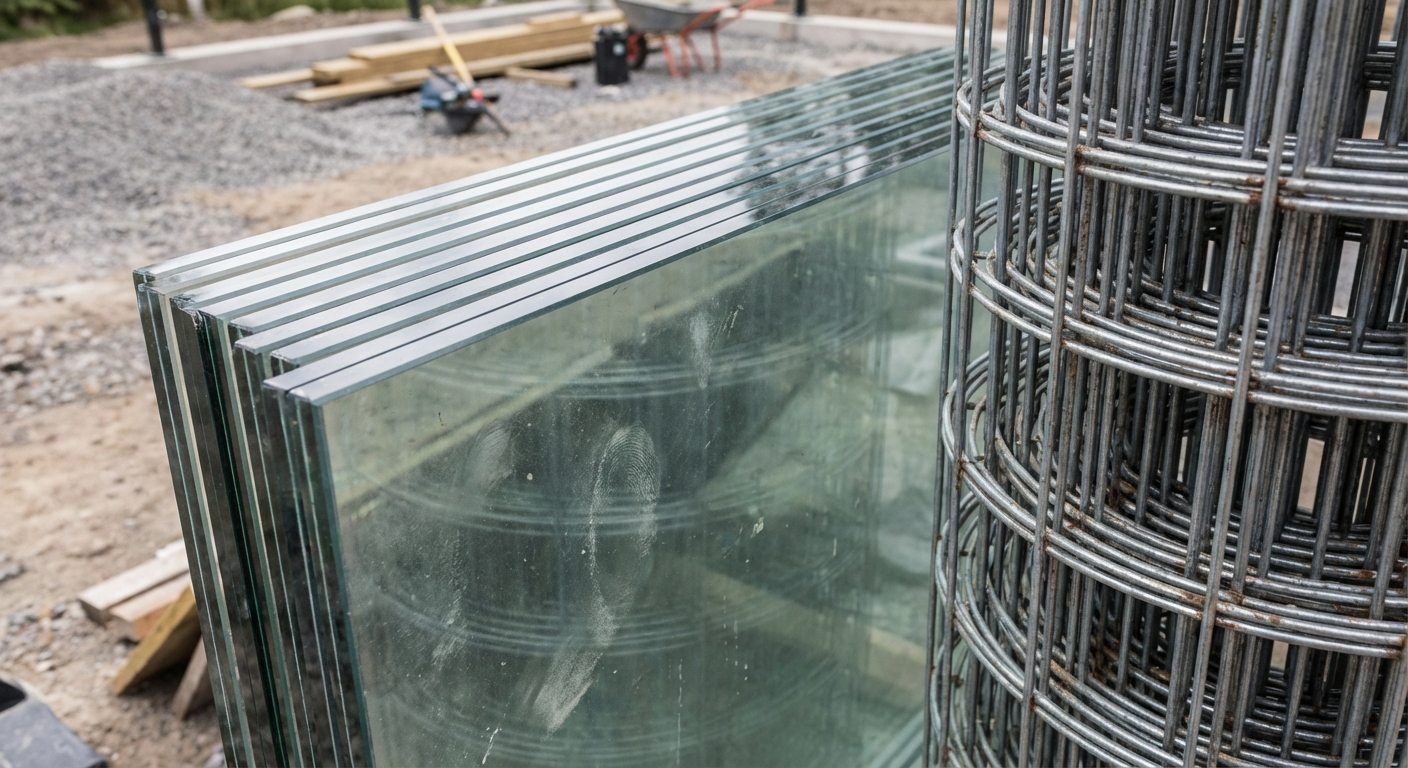
The primary materials used in padel construction include galvanized steel for the frame, tempered glass for the walls, and specialized artificial turf for the playing surface. Selecting high-grade materials is vital because the court must withstand constant impact and, if located outdoors, harsh weather conditions. You should look for steel that has undergone a hot-dip galvanizing process to prevent rust and corrosion over its 20-year lifespan.
The glass panels are typically 10mm or 12mm thick, designed to provide a consistent rebound while offering maximum visibility for spectators. Using inferior glass not only affects the game but also poses a significant safety risk to the players. High-quality construction integrates these materials into a seamless, high-performance environment.
Steel Frames and Laser-Cut Technology
The structural skeleton of the court is made of steel pillars and frames that support the glass and mesh. Modern facilities utilize laser-cut technology to ensure every joint is precise, which is crucial for the stability of the panoramic walls. You want a frame that offers maximum resistance to wind loads and player impacts without obstructing the view.
A powder-coated finish is often applied over the galvanized steel to provide an extra layer of protection and aesthetic appeal. This finish is resistant to UV rays and scratches, maintaining the club’s professional look for years. The choice of color can also help define your brand identity within the facility.
Artificial Turf and Sand Infill
The flooring consists of synthetic grass specifically designed for the lateral movements and pivots required in this sport. This turf is then filled with a specific grade of kiln-dried silica sand to provide the necessary grip and ball bounce. The best part? Modern monofilament fibers are designed to resist matting and maintain their texture even under heavy use.
Here is why it matters:
- Monofilament fibers offer superior durability and playability.
- Textured turf requires less sand, making it easier to maintain.
- Blue turf is the standard for televised and professional matches.
- Proper sand distribution prevents injuries caused by “dead spots” or slipping.
Specialized Glass and Mesh Panels
The walls of the court are a combination of tempered glass and electro-welded metallic mesh. The mesh allows for airflow and creates a different rebound dynamic compared to the glass sections. This variety is what gives the game its unique tactical depth, and the quality of the welding ensures the mesh doesn’t deform over time.
| Material | Key Feature | Expected Life |
|---|---|---|
| Galvanized Steel | Anti-corrosive | 20+ Years |
| Tempered Glass | High impact resistance | 15+ Years |
| Synthetic Turf | UV resistance | 5-8 Years |
| Silica Sand | Consistent friction | Ongoing |
The synergy between these materials determines the court’s overall performance, safety, and aesthetic value.
Key Takeaway: Investing in premium materials like galvanized steel and tempered glass ensures the structural integrity and long-term durability of your sports investment.
Why should you invest in a padel facility?
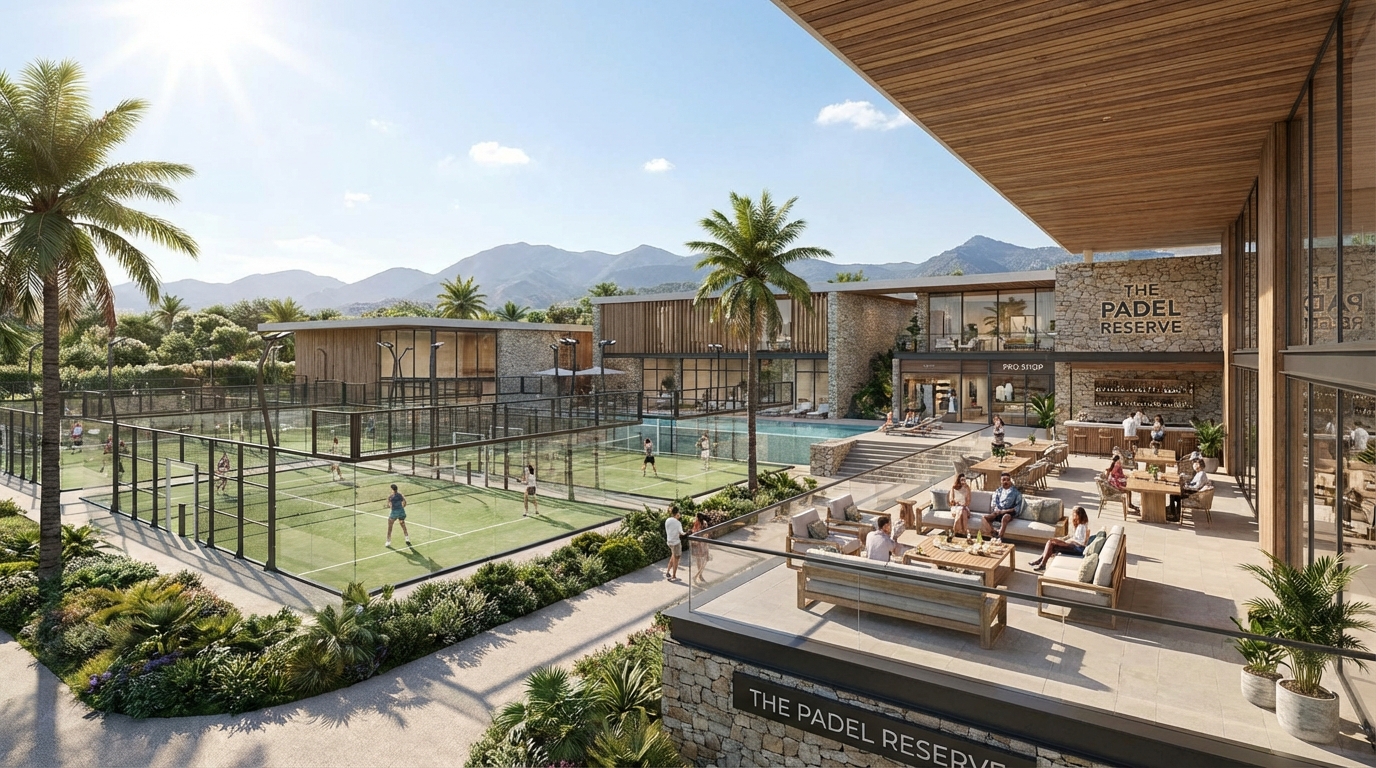
Investing in a padel facility offers a high return on investment due to the sport’s high player density and lower maintenance costs compared to traditional tennis. From a business perspective, padel allows you to fit three courts in the space of one tennis court, effectively tripling your potential revenue per square meter. This efficiency, combined with the sport’s growing global popularity, makes it a highly attractive asset for club owners and real estate developers.
Furthermore, the social nature of the game drives high retention rates and ancillary spending at your facility. Players often visit in groups of four, which naturally leads to increased demand for food, beverages, and pro-shop equipment. You are not just building a court; you are creating a community hub that generates multiple revenue streams.
High Revenue Per Square Meter
Because the court footprint is small, you can accommodate more paying customers simultaneously. In a typical hour, a tennis court hosts two to four players, while three courts on that same footprint can host twelve. This increased capacity is a game-changer for urban sports centers where land value is a primary concern.
Think about it: more players mean more bookings, more membership fees, and more tournament opportunities. The social aspect also encourages players to stay longer, increasing the “dwell time” that is so crucial for modern hospitality-linked sports businesses. Your ROI is directly tied to this increased throughput.
Low Maintenance and Operational Costs
Once the initial construction is complete, the ongoing costs of running a court are remarkably low. The synthetic turf requires occasional brushing and sand leveling, while the glass and steel only need periodic cleaning and bolt tightening. Unlike clay or grass tennis courts, there is no need for daily watering or specialized rolling.
Here is the deal:
- No daily resurfacing or irrigation requirements.
- Durable materials minimize the need for frequent repairs.
- Automated lighting and booking systems reduce labor costs.
- Weather-resistant designs allow for year-round play in many climates.
Diversification of Club Offerings
Adding this sport to your portfolio attracts a younger, more diverse demographic that may not be interested in traditional racquet sports. It is often described as “easy to learn but hard to master,” which keeps players coming back for years. By offering a modern, high-energy alternative, you protect your business against shifts in consumer behavior.
| Metric | Padel Court | Tennis Court |
|---|---|---|
| Space Required | 200 sqm | 650+ sqm |
| Players per Hour | 4 | 2-4 |
| Maintenance Level | Low | Medium-High |
| Revenue Potential | High | Moderate |
The economic advantages of this sport make it one of the most resilient and profitable segments of the modern fitness industry.
Key Takeaway: The high player density and low operational overhead of the sport provide a compelling financial case for commercial developers and sports club owners.
How is a panoramic padel court designed?
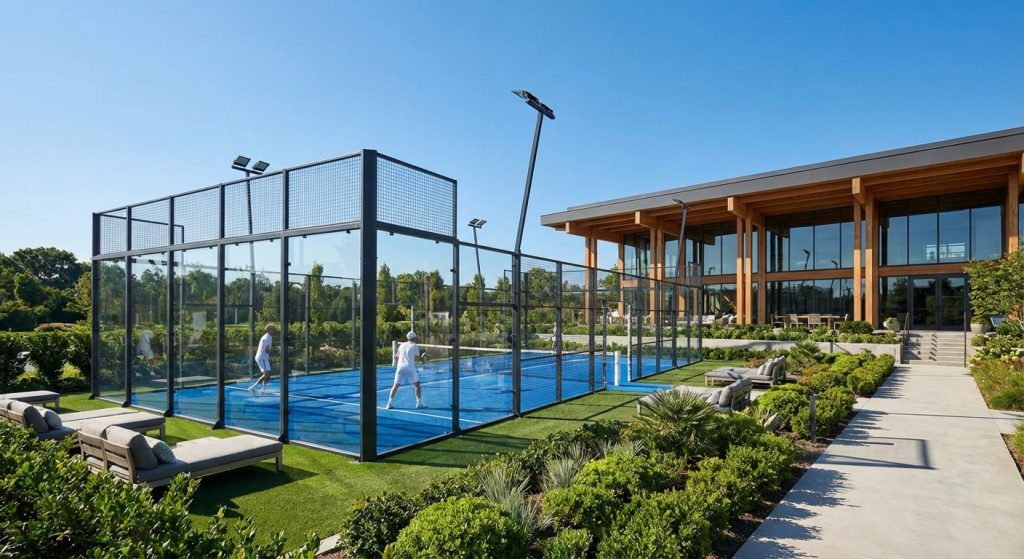
A panoramic padel court is designed with a frameless glass back wall to provide an unobstructed view of the action for spectators and television cameras. You achieve this by using thicker tempered glass panels, often 12mm, and specialized structural supports that eliminate the need for vertical steel pillars in the corners. This design is the gold standard for center courts and high-end clubs that prioritize aesthetics and viewing experiences.
While the playing dimensions remain the same, the engineering requirements for a panoramic model are significantly higher. Without the support of a full steel frame on the back walls, the remaining structure must be reinforced to handle the lateral force of players hitting the glass. This results in a sleek, modern look that elevates the profile of any sports facility.
Engineering for Visual Clarity
The primary goal of the panoramic design is to remove visual barriers, making the sport more “watchable” and prestigious. High-quality panoramic courts use laser-cut connectors and invisible gaskets to join the glass panels seamlessly. When you look at a top-tier panoramic installation, the transition between the glass and the environment feels almost transparent.
This transparency is not just for show; it enhances the player’s experience by making the court feel more open and integrated into the surrounding landscape. For indoor clubs, this means better light penetration and a more premium atmosphere. It is the preferred choice for clubs hosting professional tournaments or high-profile events.
Structural Integrity Without Corner Pillars
Because the corner pillars are removed, the structural load is redistributed to the side frames and the top and bottom rails. You must ensure that the glass panels are secured with high-tension hardware that can withstand constant vibration. Professional engineers use finite element analysis to ensure these courts can withstand extreme wind loads in outdoor settings.
Now, let’s dig deeper:
- Specialized 12mm glass provides the necessary rigidity for the frameless design.
- Reinforced base plates are used to anchor the main support pillars.
- Hidden structural braces maintain the alignment of the glass panels.
- The absence of pillars reduces “blind spots” for both players and fans.
Aesthetic and Commercial Value
The visual impact of a panoramic court acts as a powerful marketing tool for your facility. These courts are the ones most likely to be featured on social media, drawing in new members through high-quality photography and video. From a B2B perspective, a panoramic court justifies higher booking fees and premium sponsorship placements.
| Feature | Standard Court | Panoramic Court |
|---|---|---|
| Corner Pillars | Yes (Steel) | No (Glass) |
| Glass Thickness | 10mm – 12mm | 12mm Mandatory |
| Visibility | Good | Exceptional |
| Use Case | General Play | Competition / Center Court |
The panoramic design represents the pinnacle of sports architecture, blending safety with unparalleled visual access.
Key Takeaway: Panoramic courts use advanced engineering to remove visual barriers, creating a premium experience that enhances both spectator engagement and the club’s brand value.
Can you build padel courts for indoor use?
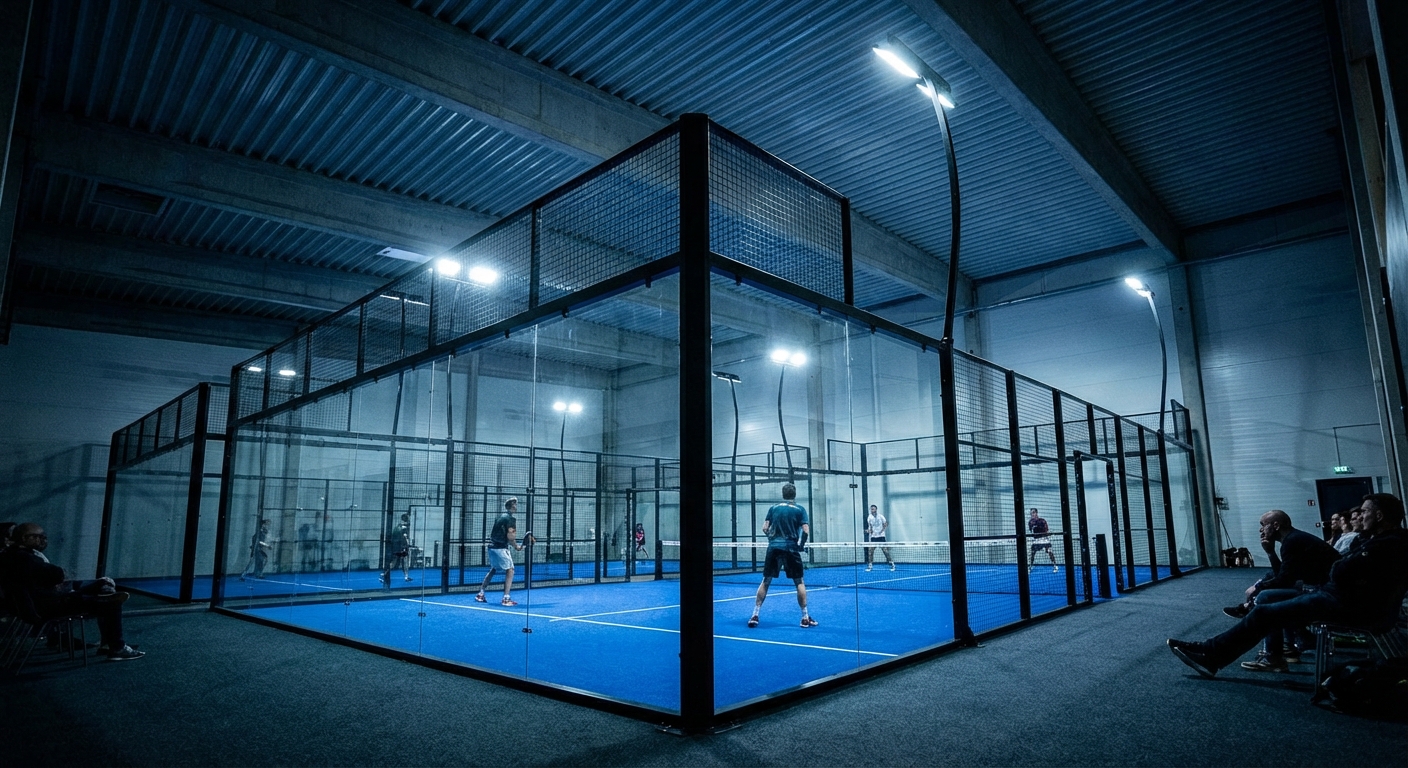
You can build padel courts for indoor use provided the building meets the necessary ceiling height and ventilation requirements to ensure player comfort and safety. Indoor facilities are becoming the preferred choice for investors in regions with unpredictable weather, as they guarantee 365 days of revenue. The construction process is similar to outdoor courts, but you must pay closer attention to lighting and acoustics within the enclosed space.
The main challenge for indoor installations is the vertical clearance, which must be at least 6 meters to accommodate high-lob shots. If you are repurposing an old warehouse or industrial space, you may need to modify the roof structure or move existing light fixtures. When planned correctly, an indoor club becomes a stable, climate-controlled environment that attracts premium memberships.
Acoustic Management and Lighting
Indoor sports environments can become very loud due to the sound of the ball hitting the glass and the paddles. You should consider installing acoustic panels or sound-absorbing materials on the ceiling and upper walls to improve the experience. Proper lighting is also crucial; LED systems must be positioned to minimize glare on the glass while providing uniform illumination across the court.
The lighting should be flicker-free and provide at least 500 to 750 lux for competitive play. Think about it: shadows or bright spots on a glass-enclosed court can be incredibly distracting and even dangerous for fast-moving players. High-quality LED fixtures are an investment that pays for itself through lower energy bills and better player satisfaction.
Climate Control and Ventilation
Playing an intense racquet sport in an enclosed space generates significant heat and humidity. You need a robust HVAC or ventilation system to keep the air fresh and prevent the glass from fogging up during matches. If the humidity is too high, the ball and turf will become heavy, significantly degrading the quality of play.
Here is why it matters:
- Proper airflow prevents moisture buildup on the tempered glass.
- Temperature control ensures a consistent ball bounce regardless of the season.
- Good ventilation reduces the spread of odors in high-traffic clubs.
- Dehumidification protects the steel frame from long-term oxidation.
Maximizing Indoor Space Utility
Indoor centers often include additional amenities like locker rooms, cafes, and specialized training areas. Because you are not limited by weather, you can maximize the use of the space with a pro shop or even a gym. This multi-functional approach increases the average revenue per member and makes your facility a destination rather than just a place to play.
| Requirement | Indoor Specification | Impact on Play |
|---|---|---|
| Min. Height | 6 Meters | Allows lobs and lances |
| Illumination | 500 – 750 Lux | Visibility and safety |
| Air Exchange | High Volume | Prevents fogged glass |
| Acoustic Treatment | Recommended | Enhances social atmosphere |
Indoor courts provide the ultimate reliability for sports business owners, ensuring that external conditions never interfere with the booking schedule.
Key Takeaway: Indoor courts offer year-round revenue potential but require careful planning regarding ceiling height, lighting, and climate control to ensure a professional playing environment.
What is the process for padel court installation?
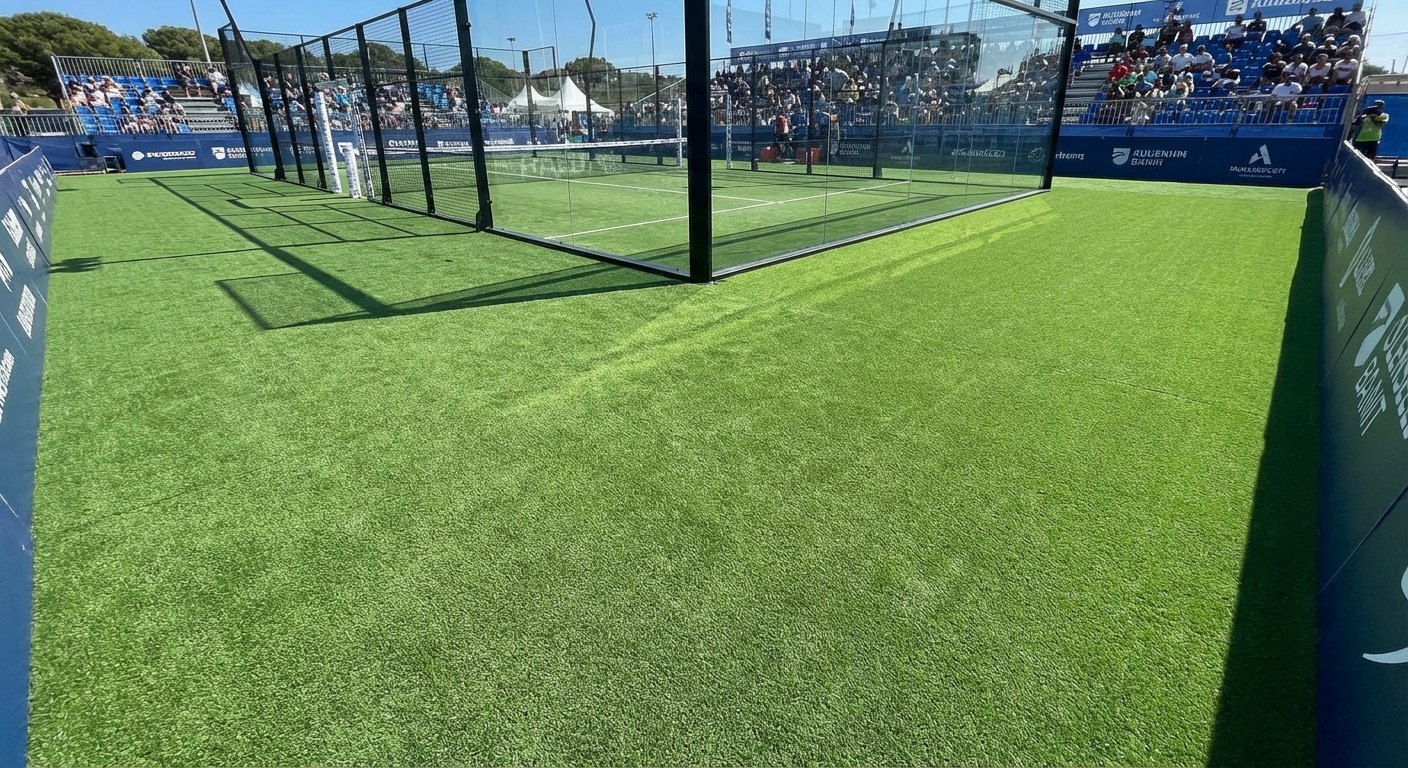
The process for padel court installation involves four main stages: foundation preparation, structural framing, glass installation, and turf laying. Once the concrete base is cured and leveled, the steel pillars are anchored to the ground using high-strength expansion bolts. This phase requires extreme precision, as the entire structure depends on the perfect alignment of the vertical supports to hold the heavy glass panels safely.
After the frame is secure, the glass and mesh panels are fitted into the structure using specialized rubber gaskets to prevent direct contact between metal and glass. Finally, the artificial turf is rolled out, cut to size, and filled with silica sand. A professional installation team can typically complete a single court in three to five days, provided the foundation is ready.
Anchoring the Structural Frame
The steel frame is the backbone of the court and must be perfectly vertical to ensure the glass panels fit without tension. You must use laser levels during the anchoring process to check the alignment of every pillar. If the frame is even slightly tilted, the glass will be difficult to install and may shatter under the pressure of the expansion bolts.
Each pillar is fixed to the concrete slab with multiple anchors, designed to withstand both the weight of the structure and the impact of players. Think about it: a player running into the mesh or glass creates a significant dynamic load. High-quality hardware is essential for the safety and longevity of the facility.
Glass Handling and Security
The installation of the tempered glass panels is the most delicate part of the project, requiring specialized suction cups and lifting equipment. Each panel must be handled with care to avoid chipping the edges, which could cause the entire sheet to explode into small pieces. Once in place, the glass is secured with stainless steel bolts and protective washers.
Here is the deal:
- Professional installers use mechanical lifts to manage the 100kg+ panels.
- Rubber gaskets are essential to absorb vibrations from ball impacts.
- Corner joints must be perfectly flush to ensure a predictable rebound.
- Regular tension checks on the bolts are part of the post-installation service.
Turf Application and Sand Infill
The synthetic turf is the final layer, providing the playing surface and defining the court markings. The rolls are glued together at the seams using specialized tape and polyurethane adhesive to create a single, seamless carpet. Once the glue is set, the silica sand is spread evenly across the surface and brushed into the fibers to stabilize the turf.
| Step | Task | Duration (Typical) |
|---|---|---|
| Anchoring | Securing steel pillars | 1 Day |
| Paneling | Installing glass and mesh | 1-2 Days |
| Flooring | Laying turf and gluing | 1 Day |
| Finishing | Sand infill and net setup | 1 Day |
A systematic installation process ensures that every component is perfectly integrated for maximum performance and safety.
Key Takeaway: Professional installation is a multi-stage process that requires precision framing and careful glass handling to ensure a safe and durable playing environment.
How do you maintain a padel court surface?
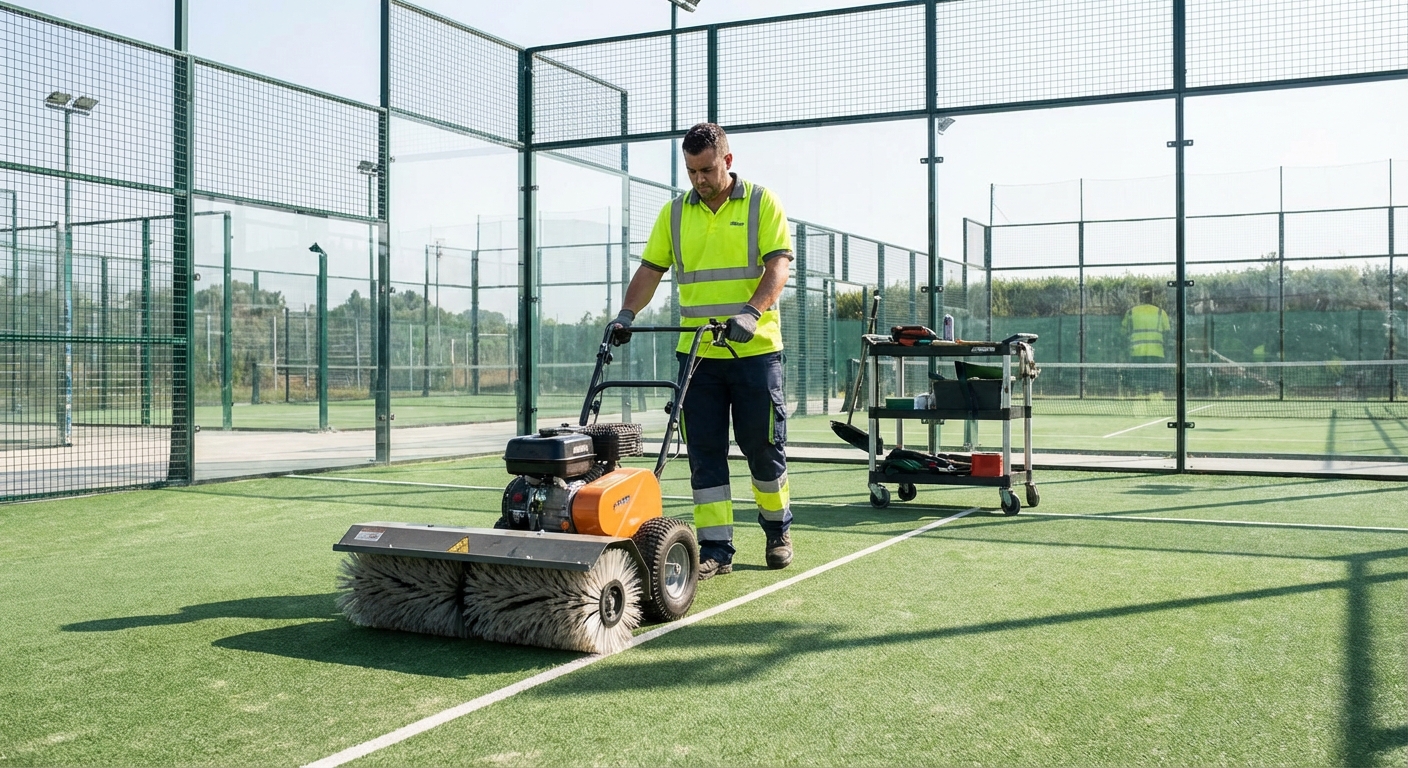
You maintain a padel court surface through regular brushing of the synthetic turf and periodic cleaning of the glass walls to ensure visibility and a consistent bounce. Maintaining the correct level of silica sand is the most important part of turf care, as it prevents the fibers from flattening and protects the base of the carpet. A well-maintained court not only plays better but also lasts several years longer, protecting your initial investment.
For the glass, a simple mixture of water and mild detergent is usually enough to remove sweat marks and dust. You should avoid abrasive cleaners that could scratch the tempered surface. Routine maintenance should be scheduled weekly for high-traffic clubs to keep the facility looking and performing at its best.
Turf Brushing and Sand Redistribution
Over time, the sand infill tends to migrate toward the corners and the net area due to player movement. You need to use a specialized brush to redistribute the sand toward the high-traffic zones in the back of the court. This ensures the turf remains upright and provides a consistent grip for the players’ shoes.
If the sand level drops too low, the synthetic fibers will be exposed to excessive wear and UV damage. Think about it: the sand acts as a protective shield for the turf’s backing. Regular redistribution also prevents “bald spots” where the ball might skid rather than bounce predictably.
Glass and Frame Inspection
The structural components of the court should be inspected every few months for loose bolts or signs of corrosion. Even though high-quality courts use galvanized steel, minor scratches in the paint should be touched up to prevent rust from forming. You should also check the rubber gaskets between the glass and metal to ensure they haven’t perished or shifted.
Here is why it matters:
- Loose bolts can lead to glass vibration and potential breakage.
- Clean glass enhances the spectator experience and the club’s image.
- Checking the net tension ensures a fair game for every match.
- Identifying small issues early prevents expensive emergency repairs.
Deep Cleaning and Re-sanding
Every year or two, the court may require a deep clean to remove moss, algae, or accumulated dirt within the sand. This involves using a specialized machine to de-compact the sand, filter out debris, and then re-spread it across the turf. This process restores the drainage capacity of the court and rejuvenates the playability of the surface.
| Task | Frequency | Objective |
|---|---|---|
| Brushing | Weekly | Sand redistribution |
| Glass Cleaning | Weekly | Visibility/Aesthetics |
| Bolt Check | Quarterly | Structural Safety |
| Deep Clean | 1-2 Years | Drainage/Turf Life |
Proactive maintenance is the key to minimizing long-term operational costs and maximizing the lifespan of your sports assets.
Key Takeaway: Regular brushing and glass cleaning are essential tasks that preserve the playability and structural integrity of your facility over its 20-year lifespan.
What is the cost to build a padel project?
The cost to build a padel project typically ranges from $25,000 to $50,000 per court, depending on the quality of materials, site preparation requirements, and whether you choose a standard or panoramic model. You must also factor in the cost of the concrete foundation, which can add another $10,000 to $20,000 depending on the local soil conditions and drainage needs. While the upfront investment is significant, the high revenue potential often leads to a full return on investment within 18 to 24 months.
It is important to view these costs through the lens of long-term durability and maintenance. Saving money on low-quality steel or thin glass can lead to higher repair costs and a shorter facility lifespan. A comprehensive budget should include shipping, installation, lighting, and any necessary landscaping or amenities around the court.
Budgeting for the Court Structure
The structure itself is the largest single expense, covering the steel frame, tempered glass, mesh, and net. Panoramic models are more expensive than standard “pillar” models due to the specialized glass and reinforced engineering required. You should also consider the cost of high-efficiency LED lighting, which is essential for maximizing evening booking hours.
Shipping and logistics can also vary greatly depending on your location relative to the manufacturer. Spanish-made courts are often considered the industry standard for quality but may involve higher freight costs. Always ask for a detailed quote that includes import duties and local transportation to avoid budget surprises.
Foundation and Infrastructure Costs
The groundwork is often the most overlooked expense in a sports construction project. A reinforced concrete slab must be poured to a precise thickness and levelness to support the court’s weight. If you are building multiple courts, you can often achieve economies of scale by pouring a single large slab for the entire facility.
Here is why it matters:
- Proper drainage prevents water damage and downtime.
- Level foundations are required for the glass walls to align.
- Utility trenching for lighting should be done before the slab is poured.
- Landscaping and fencing add to the overall professional appeal.
Operating Expenses and ROI
Beyond the initial build, you should budget for modest monthly expenses like electricity for lighting and basic cleaning supplies. Most club owners find that the high occupancy rates of these courts quickly cover these costs. When you calculate the ROI, consider the membership fees, court rentals, and tournament entry fees that the facility will generate.
| Budget Category | Estimated Cost (USD) | Priority |
|---|---|---|
| Court Structure | $25k – $40k | High |
| Foundation | $10k – $20k | Critical |
| LED Lighting | $2k – $5k | High |
| Installation | $5k – $8k | High |
Careful financial planning ensures that your sports facility remains a profitable and sustainable business for years to come.
Key Takeaway: While a premium court requires an initial investment of $35k-$70k including foundation, the rapid ROI makes it one of the most profitable investments in modern sports real estate.
Padel represents more than just a trend; it is a structural shift in how we approach sports business and community engagement. By addressing the technical challenges of site selection, material quality, and professional installation, you can overcome the hurdles that often stall commercial developments. Our team is dedicated to helping you navigate every phase of this process, ensuring your facility stands as a benchmark for quality and profitability in the industry. We believe that high-performance infrastructure is the foundation of every successful sports ecosystem. To transform your vision into a world-class athletic destination and secure your place in this growing market, contact us today for a comprehensive consultation and custom project quote.
Frequently Asked Questions
Can I build a padel court on an existing tennis court?
Yes, because a tennis court is significantly larger than a padel court, allowing you to fit two or even three courts in the same space. However, you must verify that the existing foundation can support the specific anchoring requirements and weight of the new glass and steel structures.
Do I need a special permit for padel court lighting?
It depends on your local municipality’s zoning laws and proximity to residential areas. Most cities require a permit for sports lighting to ensure that glare and light spill do not negatively impact the surrounding environment or neighborhood.
Can I install a padel court myself?
No, because the installation requires specialized heavy machinery for the glass panels and laser-precision tools for the steel frame alignment. Improper installation poses a severe safety risk and can lead to structural failure or glass breakage during play.
How long does it take to build a complete padel facility?
It depends on the scope of the project, but typically the foundation takes two weeks to cure, and the court installation takes about five days per court. From breaking ground to the first match, you should expect a timeline of approximately six to ten weeks.
Is a panoramic court better than a standard court?
It depends on your target audience and budget, as panoramic courts offer superior visibility for spectators and a more prestigious “pro” feel. While more expensive, they are the preferred choice for center courts in commercial clubs aiming to attract high-profile tournaments.