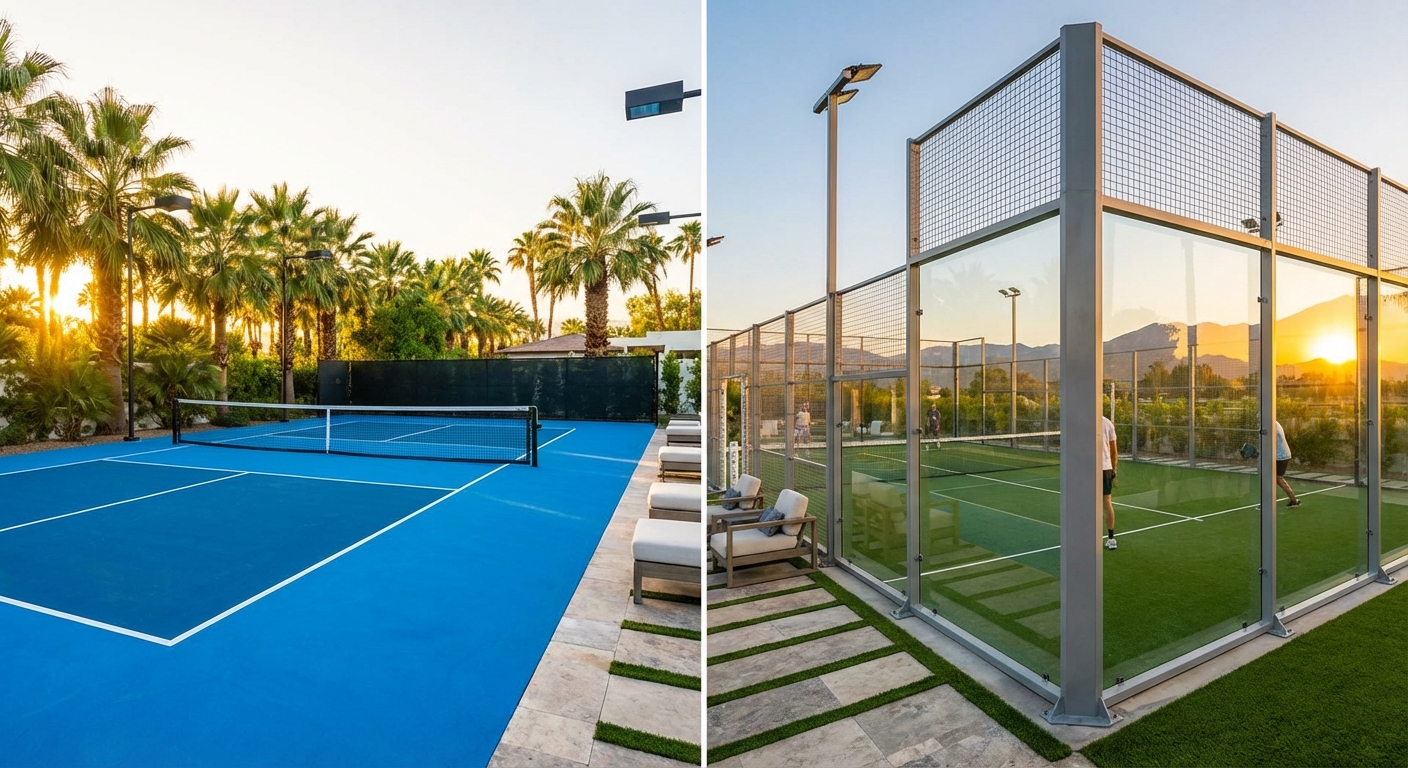
Deciding between two booming sports can be a massive headache for facility managers. If you choose the wrong infrastructure, you risk wasting thousands on a court that sits empty or requires constant, expensive repairs. Fortunately, understanding the nuances of pickleball vs padel allows you to make a data-driven investment that maximizes player engagement. This guide provides the technical breakdown and construction blueprints you need to build a world-class venue.
What are the main differences in pickleball vs padel?
The primary differences lie in the court environment, equipment used, and how the ball interacts with the surrounding space. When you evaluate pickleball vs padel, you quickly realize that while both are social paddle sports, they offer vastly different tactical experiences. Pickleball focuses on finesse within an open space, while padel emphasizes 3D movement using glass enclosures.
Why do these differences matter?
You need to know how players move to design a safe and durable facility. Padel players rely on wall rebounds, which places unique stress on the glass and steel structure.
- Pickleball: No walls, focus on the “kitchen” zone.
- Padel: Uses tempered glass walls as part of the field.
- Footwear: Both require court-specific shoes for grip.
Here is the deal: your choice dictates the construction complexity. If you want a more “open” social feel, pickleball is often the go-to option for traditional community centers.
Key Takeaway
Understanding the fundamental design of each sport is the first step in successful facility planning.
| Feature | Pickleball | Padel |
|---|---|---|
| Enclosure | Open Court | Glass & Mesh Walls |
| Strategy | Dinking and Placement | Wall Rebounds and Power |
| Social Level | Very High | High |
Building a padel court requires specialized structural engineering that standard pickleball courts do not need.
Why does size matter for pickleball vs padel?
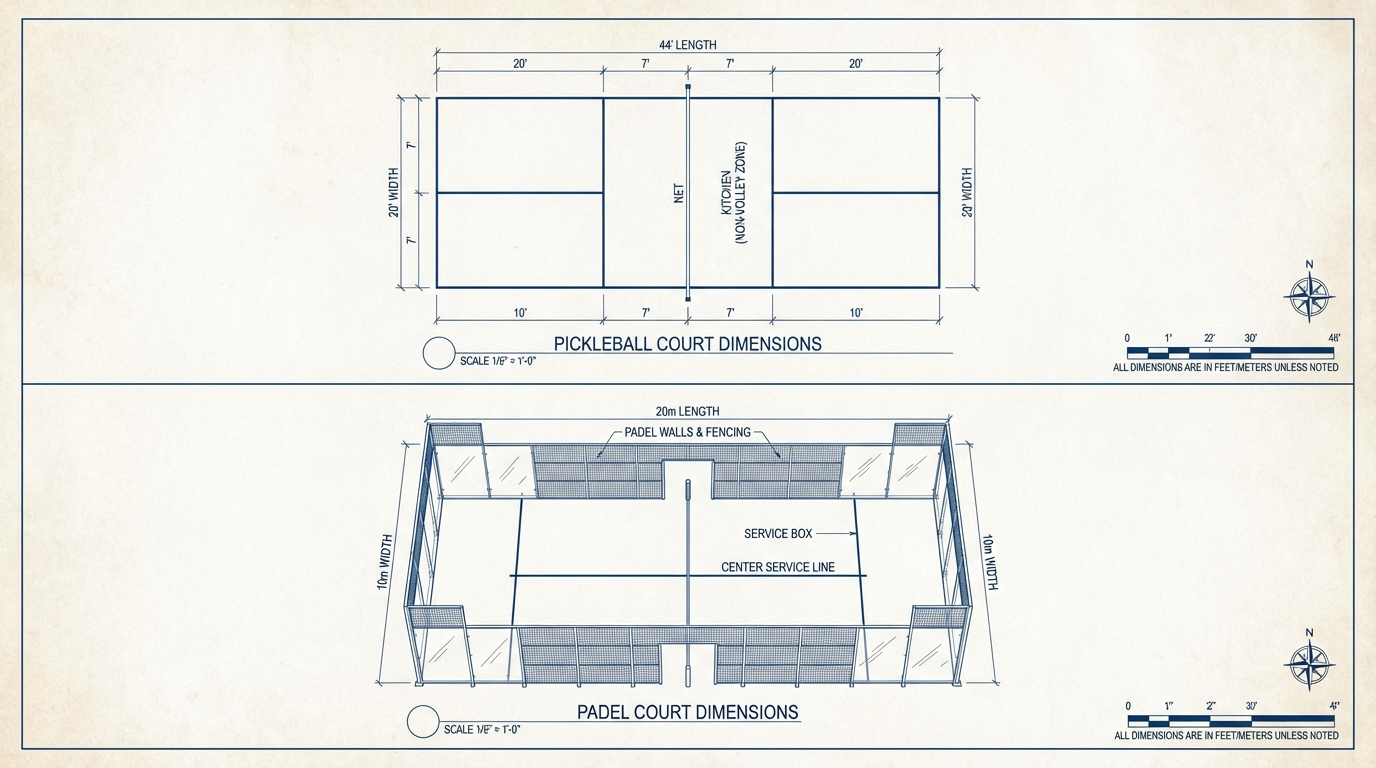
Pickleball courts are smaller at 20 by 44 feet, whereas padel courts require a 10 by 20-meter footprint. Space optimization is a critical factor when comparing pickleball vs padel for commercial use. You can often fit four pickleball courts in the footprint of a single tennis court, making it extremely space-efficient.
Can you fit both in your facility?
Think about your total square footage before you break ground. A padel court needs extra clearance for the wall structures and spectator walkways.
- Pickleball: 880 square feet of playing area.
- Padel: Approximately 2,152 square feet of playing area.
- Buffer Zones: Both need at least 5-10 feet of safety space.
It’s simpler than you think. If you have limited space, pickleball allows you to serve more players simultaneously.
Key Takeaway
Space efficiency is the primary driver for high-volume recreational centers.
| Metric | Pickleball | Padel |
|---|---|---|
| Playing Area | 880 sq ft | 2,152 sq ft |
| Standard Units | Imperial (Feet) | Metric (Meters) |
| Player Capacity | 4 players per 880 sq ft | 4 players per 2,152 sq ft |
Padel requires nearly triple the space of pickleball, which significantly impacts your potential revenue per square foot.
What gear is needed for pickleball vs padel?
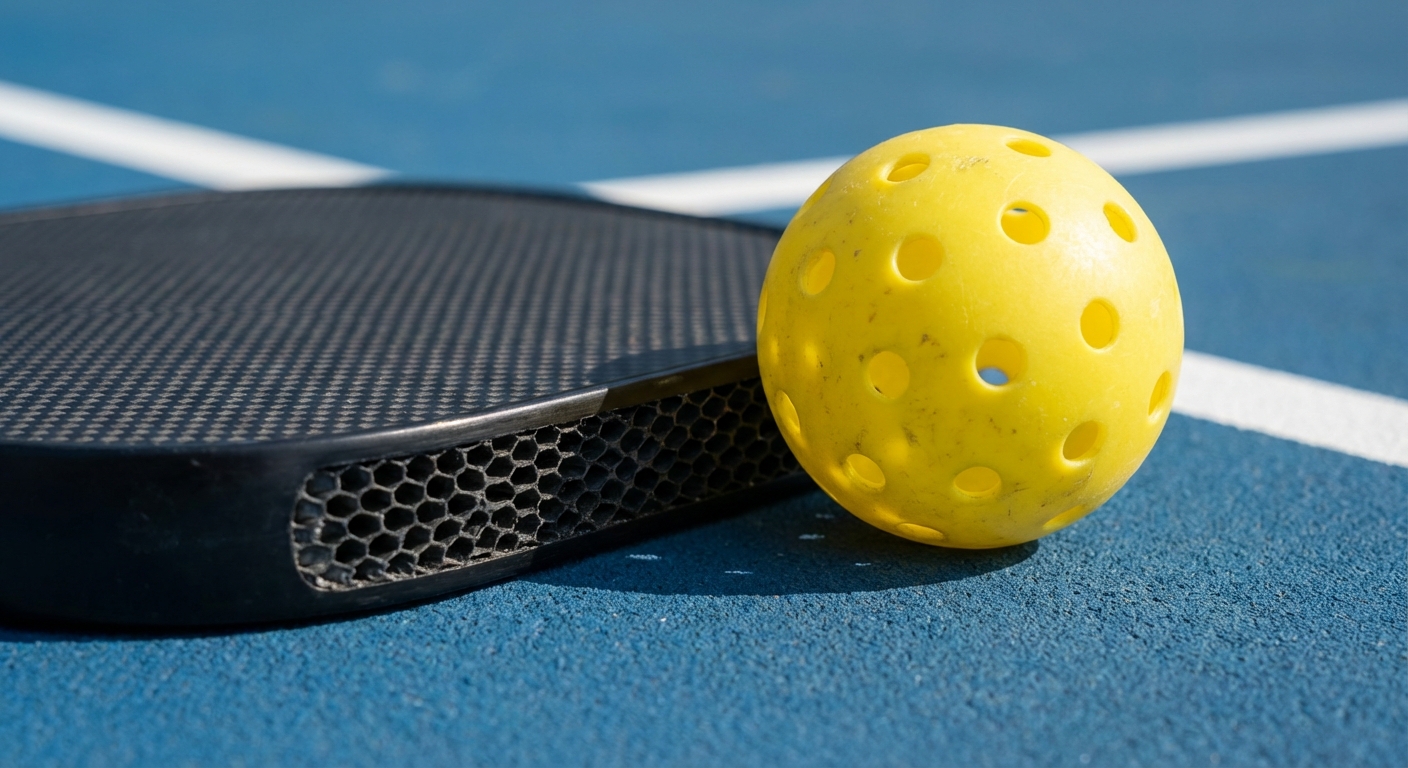
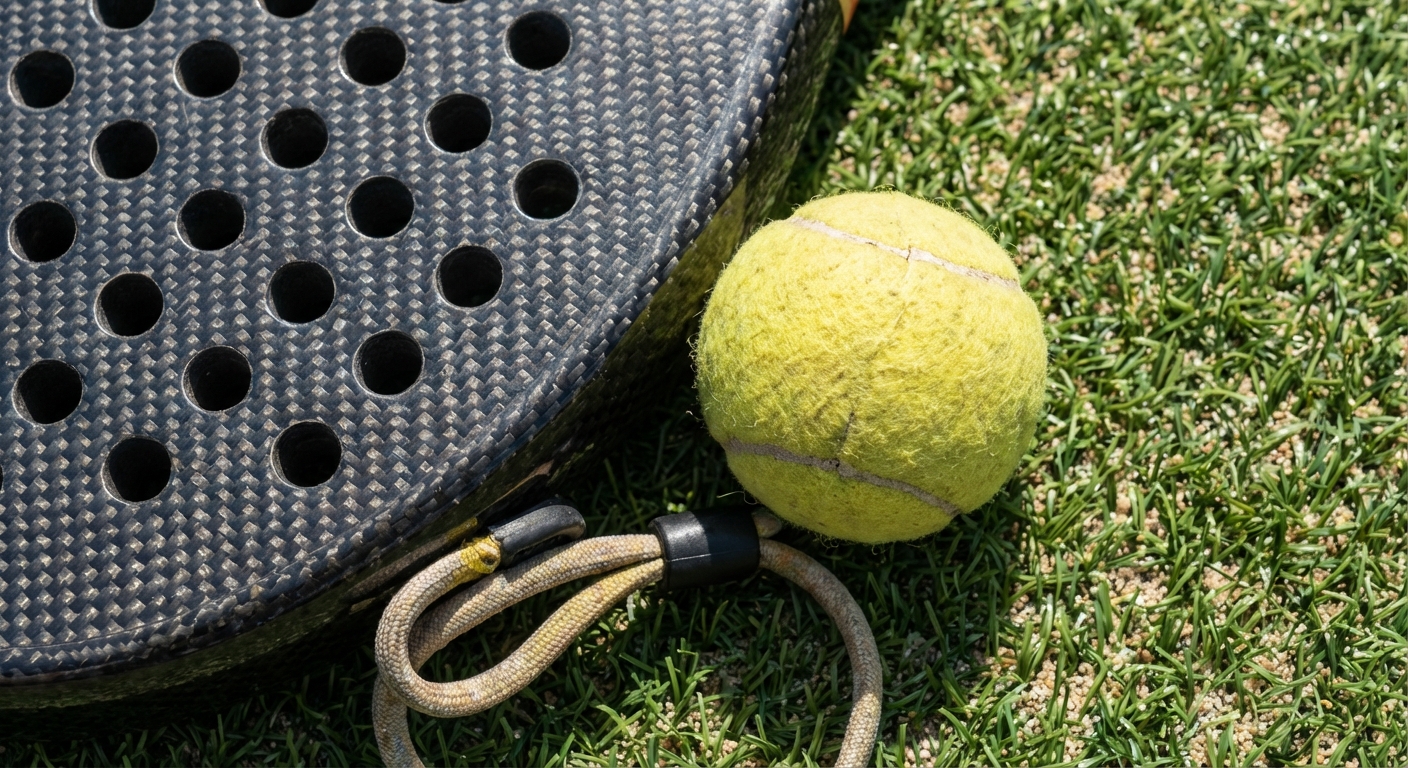
Pickleball requires a perforated plastic ball and a solid paddle, while padel uses a stringless carbon-fiber racket and a depressurized ball. When analyzing the equipment for pickleball vs padel, the differences in weight and aerodynamics are immediately apparent. You will find that padel rackets are heavier and require more wrist strength than pickleball paddles.
What about the balls?
The ball is where the physics truly diverge between the two sports. Pickleball balls are designed for low wind resistance and slower speeds, while padel balls look like tennis balls but bounce less.
- Pickleball Ball: Hard plastic with holes.
- Padel Ball: Felt-covered rubber, depressurized.
- Paddle/Racket: Solid vs. perforated carbon fiber.
Believe it or not: the equipment choice changes the sound profile of your facility. Pickleball has a distinctive “pop” that you must consider for noise mitigation.
Key Takeaway
Gear selection defines the speed of the game and the acoustic impact on the surrounding environment.
| Equipment | Pickleball | Padel |
|---|---|---|
| Tool | Solid Paddle | Perforated Racket |
| Projectile | Wiffle-style Ball | Depressurized Tennis Ball |
| Material | Wood or Composite | Carbon Fiber or Fiberglass |
The heavier padel racket allows for more power, while the lighter pickleball paddle prioritizes hand speed at the net.
How do points work in pickleball vs padel?
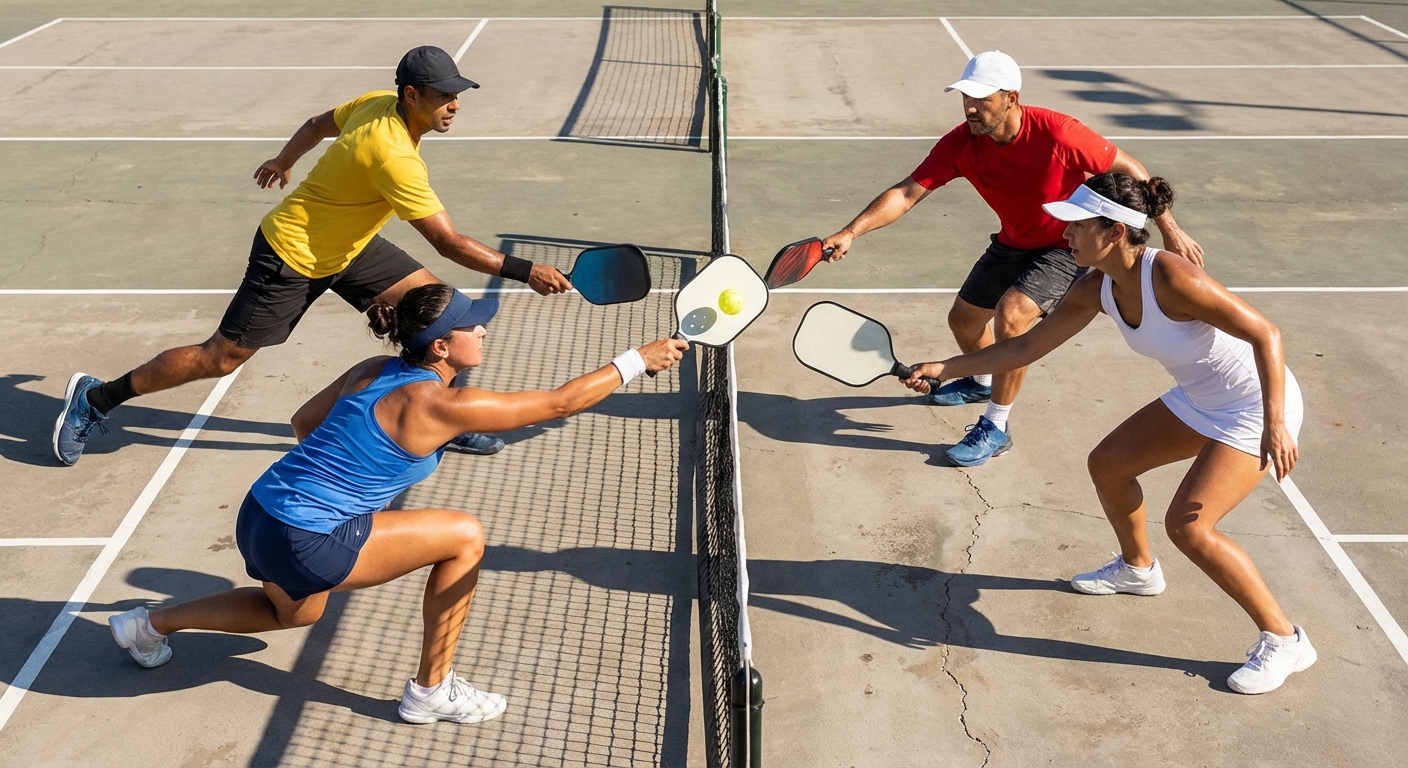
Pickleball usually goes to 11 points with service-only scoring, while padel follows the traditional 15, 30, 40 tennis format. Scoring systems for pickleball vs padel create very different match rhythms for your players. In padel, you play sets and matches, which typically results in longer court booking times for your club.
Is padel scoring more complex?
If you have ever played tennis, you already know how to score a padel match. It includes deuces, advantage points, and tiebreakers that most athletes find familiar.
- Padel: Games, Sets, and Matches (best of three).
- Pickleball: Rally or Side-out scoring (usually to 11 or 15).
- Win by: Both require a two-point margin to finish a game.
Let’s look closer. Pickleball matches are often shorter, which might increase the turnover rate for your court rentals.
Key Takeaway
Scoring structures influence match duration and court turnover rates for facility operators.
| System | Pickleball | Padel |
|---|---|---|
| Game Target | 11 Points | 4 Points (Game) |
| Scoring Type | Side-out (usually) | Traditional Tennis |
| Match Length | 15 – 25 Minutes | 60 – 90 Minutes |
Padel matches are endurance-based events, whereas pickleball is optimized for fast-paced, rotating play.
Are walls included in pickleball vs padel?
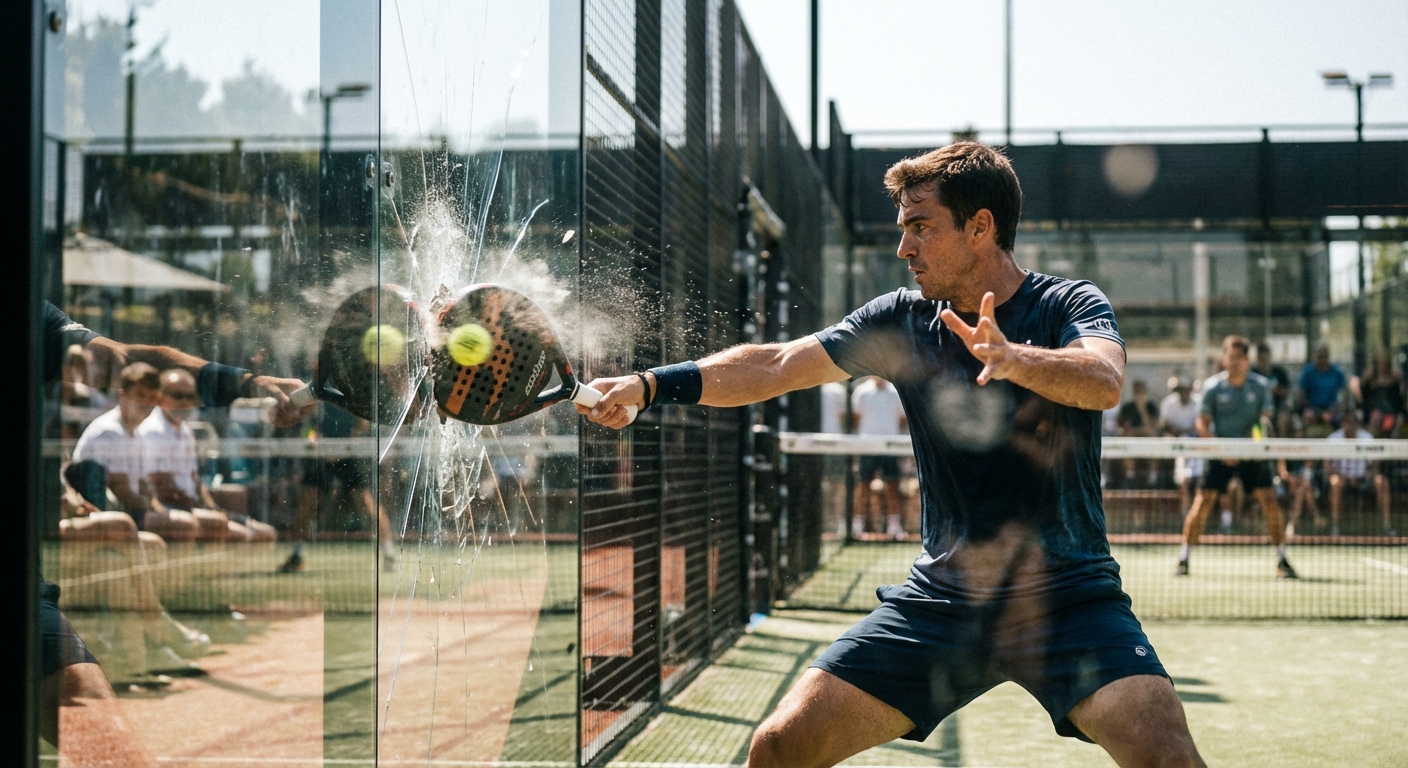
Walls are a mandatory structural component of a padel court, whereas pickleball is played on an open surface with no vertical boundaries. The structural requirements for pickleball vs padel vary significantly because of these enclosures. You must install 10mm to 12mm tempered glass to ensure the safety and rebound quality required for professional padel.
Do the walls change the game?
Absolutely, because the ball remains in play after hitting the glass, leading to much longer rallies. You won’t find this “second chance” mechanic in a standard pickleball match.
- Padel: Glass and wire mesh define the boundary.
- Pickleball: Out-of-bounds lines are on the floor.
- Spectators: Walls in padel provide a clear viewing window.
The result? Padel is often viewed as more “spectacular” for television and tournament viewing because of the wall interactions.
Key Takeaway
Structural enclosures are the defining physical characteristic that separates padel from pickleball.
| Element | Pickleball | Padel |
|---|---|---|
| Boundary | Lines on the Ground | Glass and Mesh Walls |
| Safety Glass | Not Required | 10-12mm Tempered |
| Play Style | 2D (Floor-based) | 3D (Wall-inclusive) |
The integration of walls makes padel a more complex engineering project compared to the flat-surface construction of pickleball.
Which is easier to learn: pickleball vs padel?
Pickleball is widely considered the easier sport for beginners due to its slower ball speed and smaller court. When you look at pickleball vs padel from a participation standpoint, pickleball has a lower barrier to entry for seniors and children. However, padel offers a higher technical ceiling for those who enjoy the strategy of squash or racquetball.
Why is the learning curve different?
In pickleball, you don’t have to worry about the ball bouncing behind you and hitting a wall. Mastering the “back glass” in padel takes several weeks of practice for most new players.
- Pickleball: Low impact, easy rules, instant fun.
- Padel: Fast reflexes, wall timing, steeper curve.
- Fitness: Padel requires more lateral agility and speed.
Here’s the kicker: both sports are highly addictive once you learn the basics. Your facility will likely see high retention rates for both.
Key Takeaway
Pickleball attracts a broader age range quickly, while padel appeals to competitive athletes looking for a challenge.
| Level | Pickleball | Padel |
|---|---|---|
| Barrier to Entry | Minimal | Moderate |
| Technical Depth | Strategic | High-Speed & Technical |
| Primary Demographic | All Ages | 18 – 55 Adults |
Pickleball’s simplicity is its greatest strength for community growth, while padel’s depth keeps competitive players engaged.
How do you build a base for pickleball vs padel?
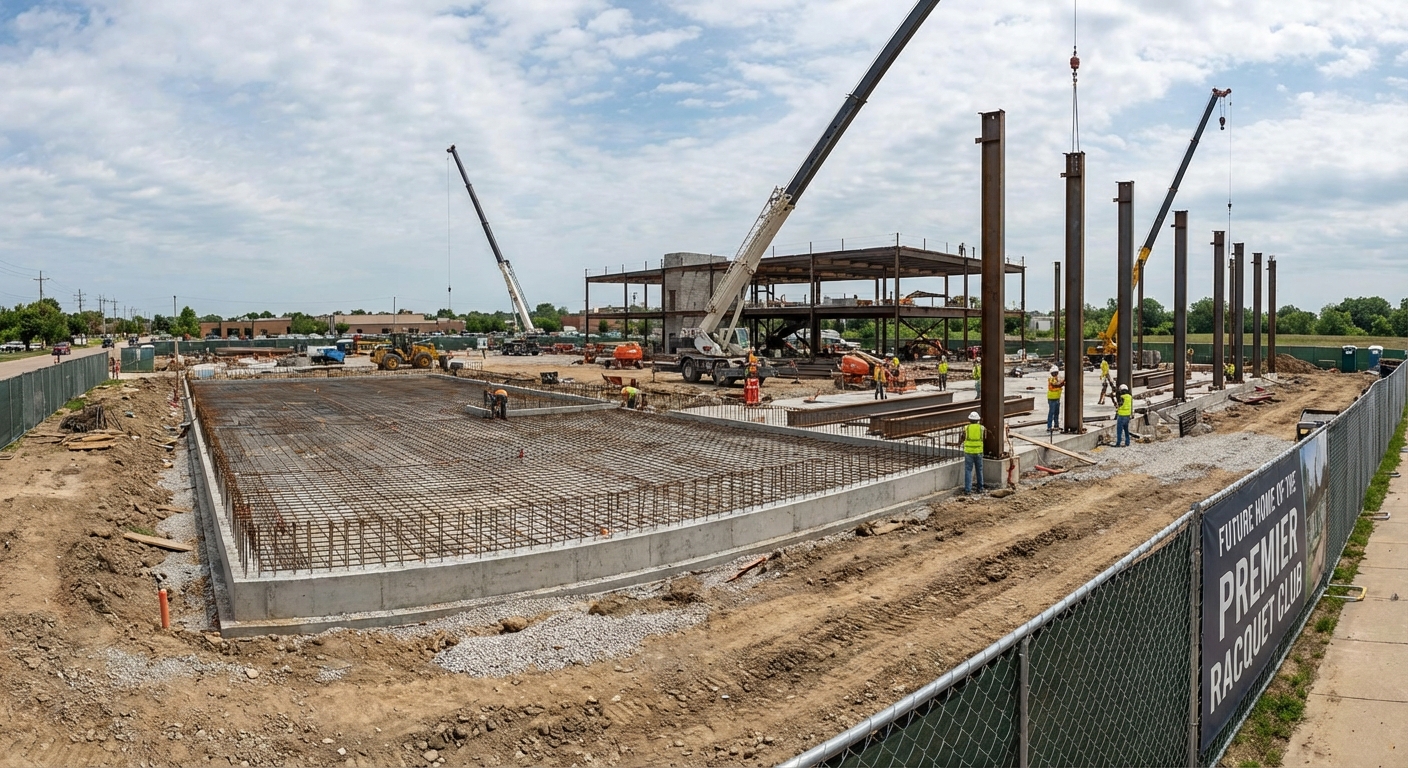
Both sports require a level concrete or asphalt base, but padel needs a reinforced perimeter to anchor the glass walls. The foundation work for pickleball vs padel represents the biggest portion of your initial construction budget. You must ensure the slab is perfectly flat to prevent “dead spots” where the ball won’t bounce correctly.
What are the drainage requirements?
You need a slight slope or porous surface for outdoor courts to ensure water doesn’t pool during rain. Padel courts often use specialized turf that requires a specific drainage design underneath.
- Concrete: Best for permanent, high-traffic courts.
- Asphalt: A cost-effective alternative with good flexibility.
- Padel Anchors: Must be deep-set to handle hurricane-force winds.
Simply put: do not cut corners on the foundation. A cracked slab can ruin either type of court within just a few years.
Key Takeaway
Foundational integrity is the most important technical aspect of court construction.
| Component | Pickleball | Padel |
|---|---|---|
| Base Material | Concrete / Asphalt | Reinforced Concrete |
| Anchoring | Minimal | High-Strength Bolts |
| Flatness Tolerance | Very Strict | Very Strict |
Padel foundations are more labor-intensive because they must support the weight and wind load of the glass walls.
What is the ROI for pickleball vs padel?
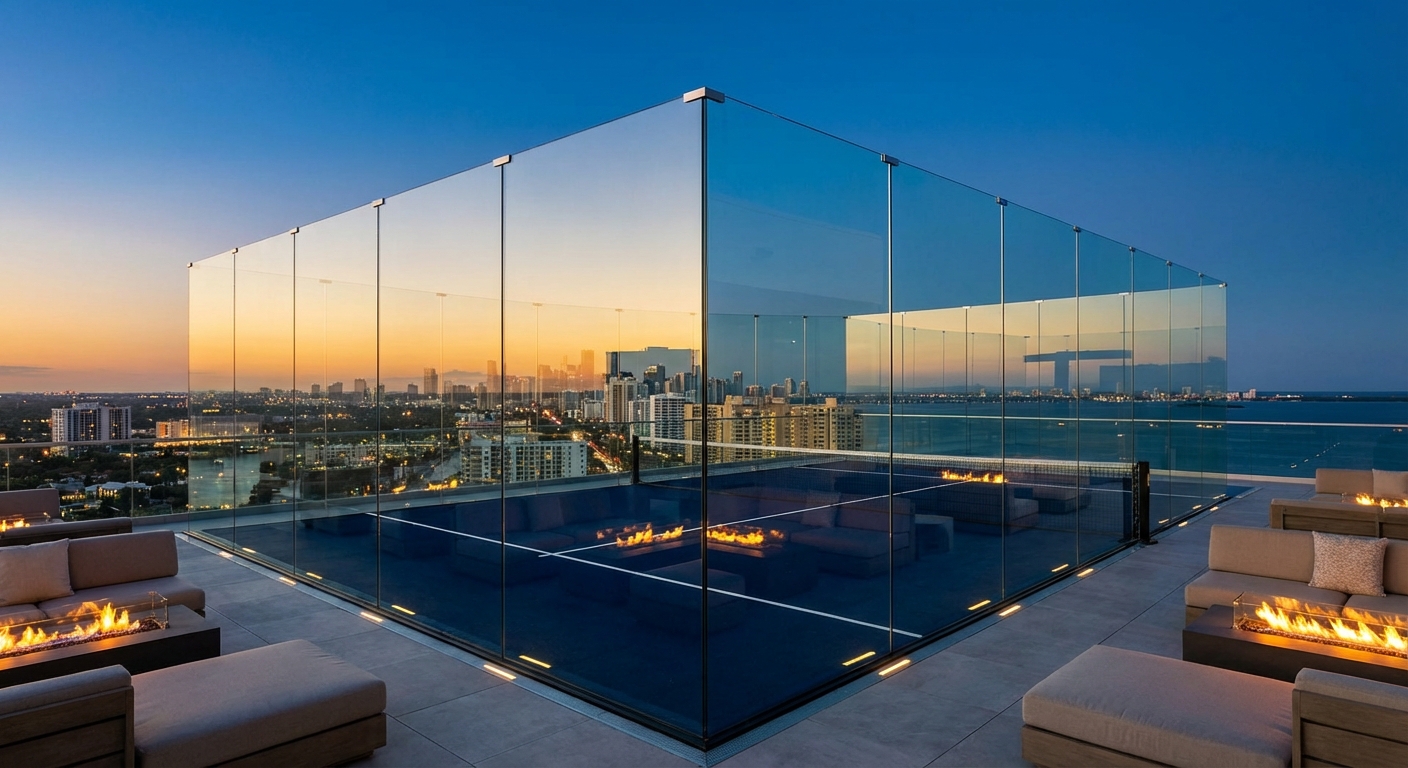
Padel typically offers higher hourly rental rates, while pickleball generates revenue through high-volume tournament play. When you calculate the return on investment for pickleball vs padel, you must factor in the construction cost versus the premium your market is willing to pay. Padel is often positioned as a “premium” sport, allowing you to charge more per hour.
How do you maximize profits?
Think about adding lighting for night play. Extending your operating hours by 4-5 hours each day can double your monthly revenue.
- Pickleball: Best for multi-court memberships and leagues.
- Padel: Best for premium hourly rentals and corporate events.
- Add-ons: Pro shops and cafes work well for both communities.
The best part? Both sports have low maintenance costs once the initial construction is complete.
Key Takeaway
ROI depends on your ability to match the sport to your local market’s spending habits.
| Economic Factor | Pickleball | Padel |
|---|---|---|
| Build Cost | Lower | Higher |
| Rental Rate | $20 – $40 / hour | $40 – $80 / hour |
| Maintenance | Low | Low (Turf & Glass) |
While padel costs more to build, the ability to charge premium rates often leads to a faster break-even point in affluent areas.
Which surface is best for pickleball vs padel?
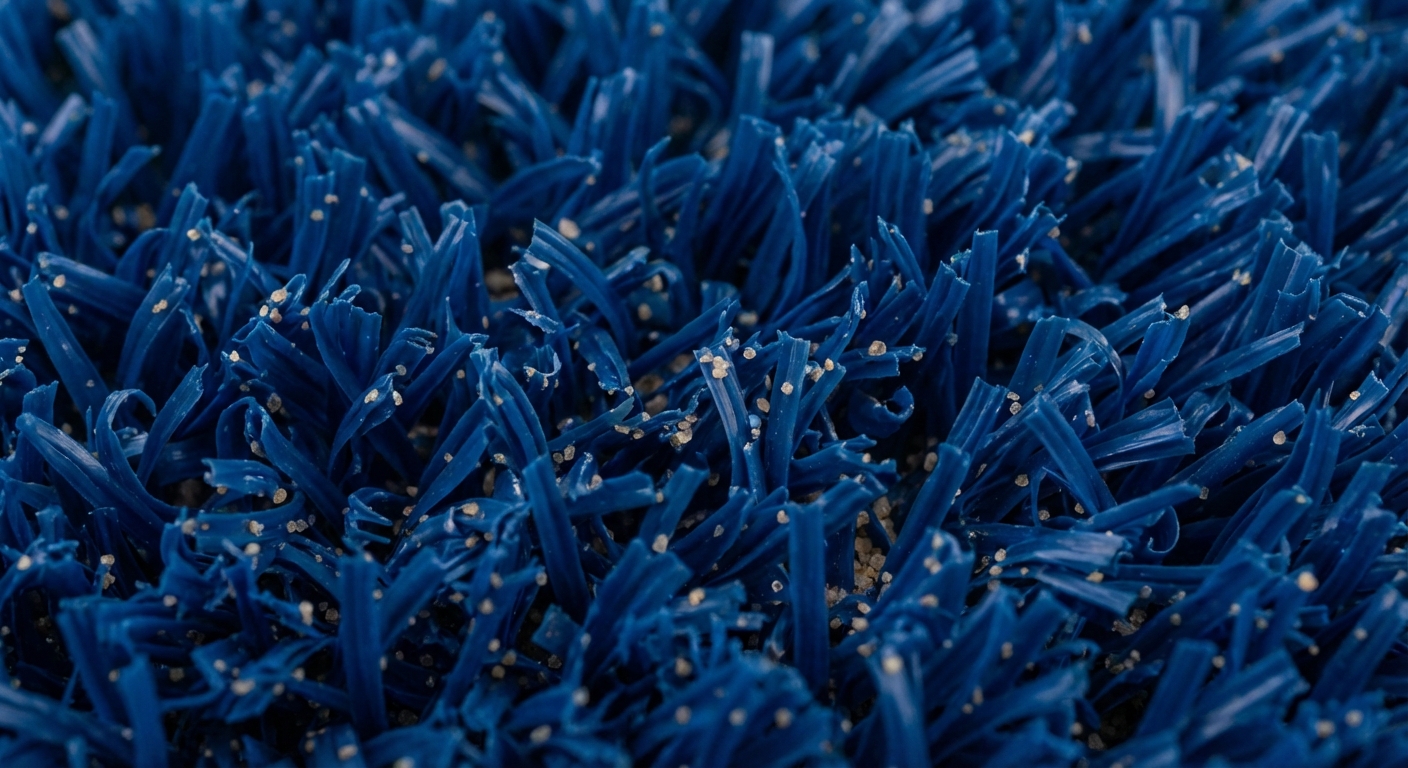
Pickleball uses a hard acrylic coating, whereas padel utilizes a specialized synthetic turf with sand infill. Surfacing for pickleball vs padel changes the way the ball bounces and how players’ joints feel after a match. You should choose high-density turf for padel to ensure long-term durability and player comfort.
Why does sand infill matter?
In padel, the sand allows players to slide slightly, which prevents knee injuries during high-speed changes of direction. Pickleball’s acrylic surface provides maximum grip, which is essential for the quick dinking movements at the net.
- Acrylic: Consistent bounce, high traction.
- Turf: Soft on joints, requires sand.
- Colors: Both can be customized to match your brand.
It gets better. Modern turf systems are designed to resist UV damage, keeping your courts looking vibrant for over a decade.
Key Takeaway
Surface choice directly impacts player safety and the long-term aesthetic of your facility.
| Surface | Pickleball | Padel |
|---|---|---|
| Material | Multi-layer Acrylic | Synthetic Turf |
| Infill | None | Silica Sand |
| Player Feel | Hard / High Grip | Soft / Slight Slide |
Acrylic surfaces are easier to clean, while turf surfaces provide superior shock absorption for long-playing sessions.
Can you play outdoors in pickleball vs padel?
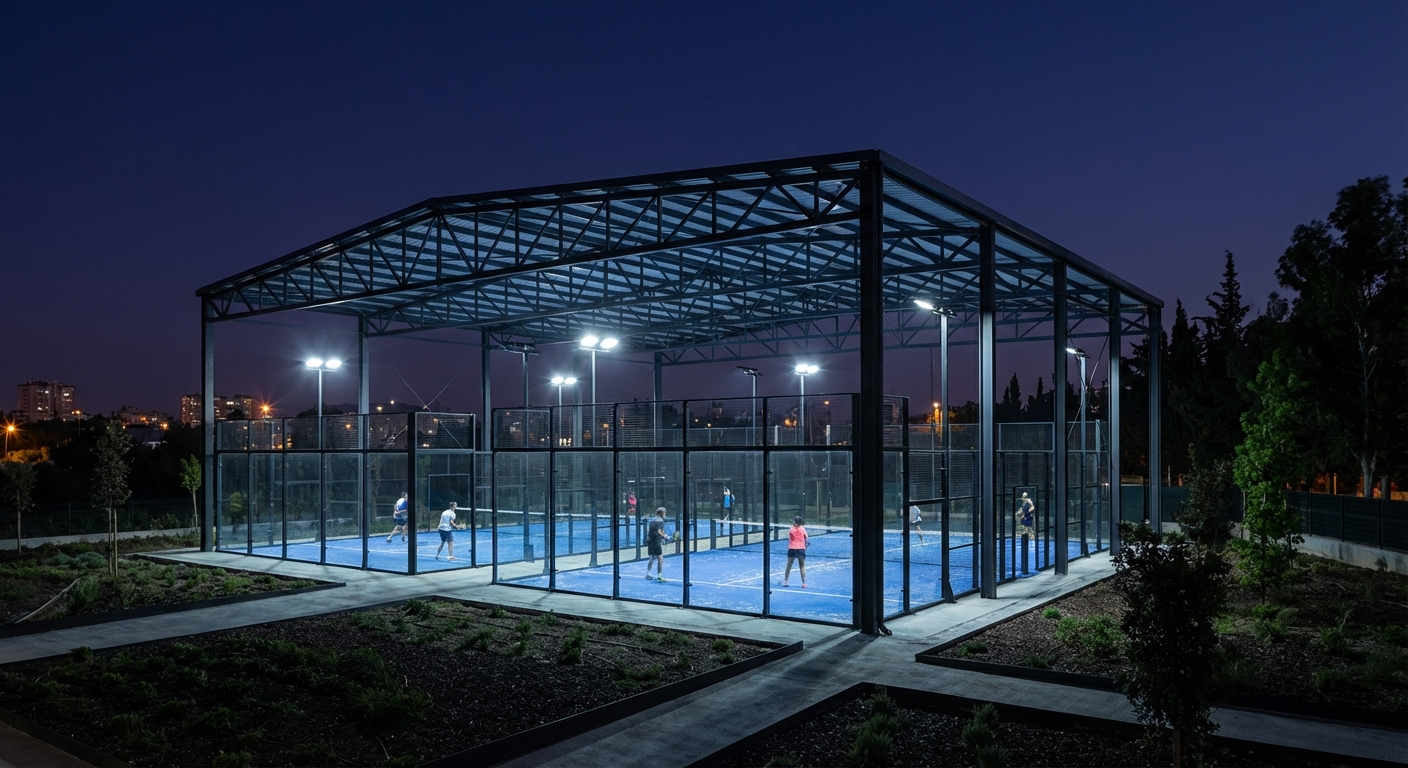
Both sports are excellent for outdoor installation, but padel often benefits from a roof to prevent rain from making the glass slippery. Weatherproofing is a vital consideration when planning pickleball vs padel courts in tropical or rainy climates. You should consider high-quality LED lighting to ensure your outdoor courts are usable after sunset.
Should you build a roof?
A roofed court ensures that your revenue doesn’t stop just because the clouds roll in. For padel, a roof also protects the expensive turf from excessive sun exposure.
- Pickleball: Easiest to keep outdoors; just needs good drainage.
- Padel: Glass needs regular cleaning if exposed to the elements.
- Materials: Use galvanized steel to prevent rust in outdoor settings.
Think about it. If you build a roof, you can host tournaments year-round regardless of the forecast.
Key Takeaway
Outdoor play is viable for both, but environmental protection increases your facility’s reliability.
| Outdoor Issue | Pickleball | Padel |
|---|---|---|
| Rain Impact | Slippery Surface | Slippery Glass & Turf |
| Sun Exposure | Acrylic Fading | Turf & Glass Stress |
| Solution | Good Drainage | Roof & Galvanized Steel |
Investing in a roofed structure for padel can significantly increase your ROI by eliminating weather-related cancellations.
Whether you choose the accessibility of pickleball or the high-octane excitement of padel, your success depends on quality construction. At SuperbPadel, we specialize in factory-direct, professional-grade court systems designed to last for decades. Our vision is to empower club owners with the most durable and visually stunning sports infrastructure on the market. Ready to transform your facility? To get a custom quote and expert consultation, contact us today and let’s build your future.
FAQ
Can I build a pickleball court on a padel court base?
No, you shouldn’t because the dimensions and anchoring requirements for the glass walls are completely different.
What’s the best way to clean padel glass?
A simple squeegee and water work best; you must avoid abrasive chemicals that could scratch the tempered safety glass.
Is pickleball louder than padel?
Yes, generally the “pop” of the plastic ball is higher in decibels, which means you might need sound barriers in residential areas.
Can I play singles on a padel court?
You can, but the standard 10x20m court is designed for doubles, so the game will feel much more physically demanding.
Which sport has a better future growth?
Both are growing exponentially, but you should look at your local tennis community to see which sport they are gravitals toward first.