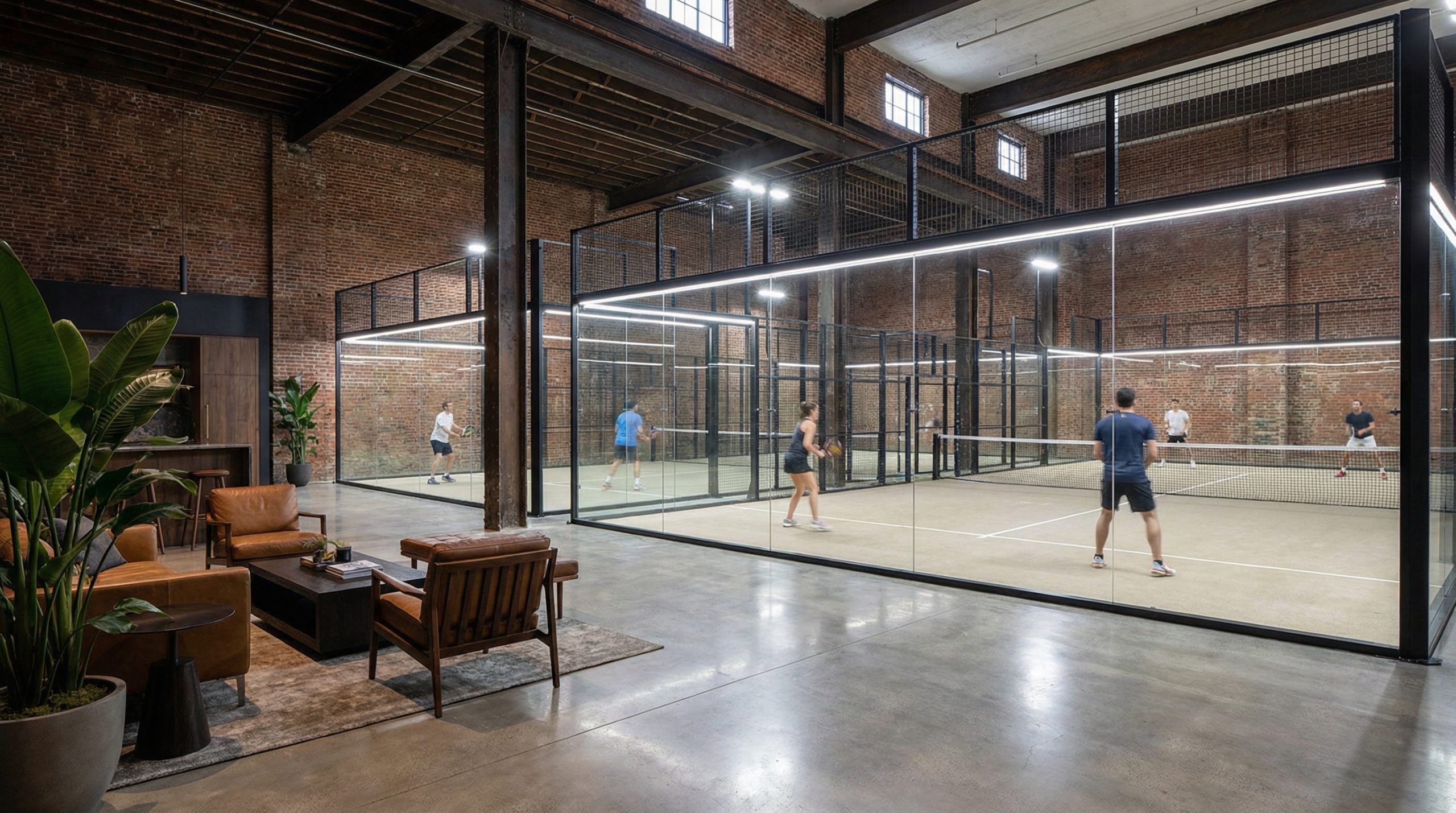
Padel hudson yards represents the pinnacle of urban racquet sports, combining high-end luxury infrastructure with the world’s fastest-growing social sport in New York’s premier development district. Many commercial developers find that their luxury amenities are no longer enough to retain high-net-worth tenants who demand active, social wellness options. Without a modern sporting asset, your property risks falling behind as competitors integrate exclusive athletic clubs into their footprints. By strategically implementing padel hudson yards, you can transform underutilized urban space into a high-revenue, community-focused destination that defines modern luxury living.
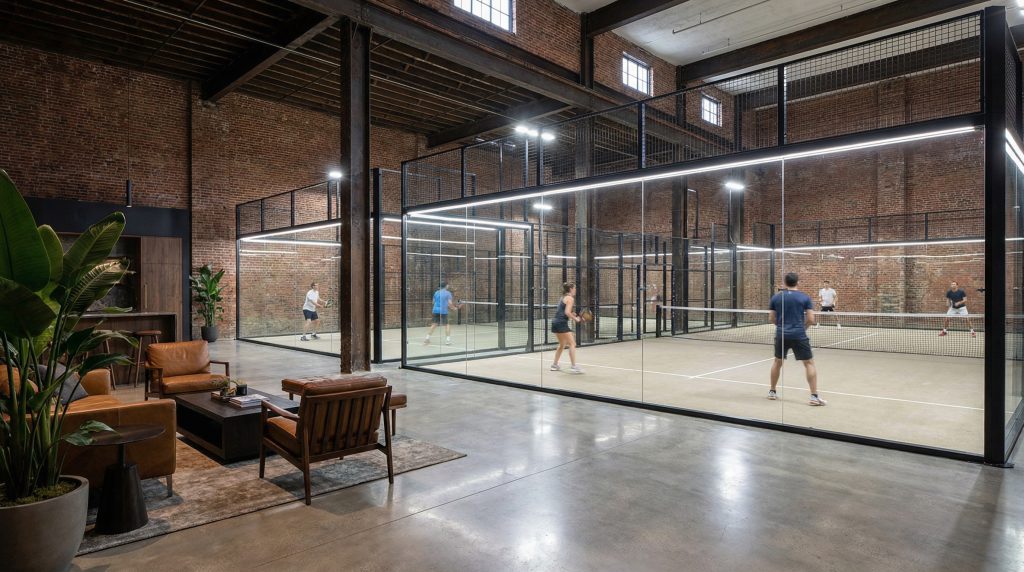
The premium appeal of padel hudson yards lies in its unique blend of social networking and elite athletic performance within a sophisticated architectural environment. This sport offers a high-density footprint that allows developers to maximize player engagement per square foot. You will find that these facilities cater to a demographic that values both physical health and the “clubhouse” culture inherent to the sport.
Is it a growing commercial opportunity?
Think about this:
The ROI on urban padel facilities often exceeds traditional gym models due to high court-rental turnover and ancillary revenue streams.
- High hourly rental rates for peak urban times.
- Opportunities for corporate memberships and sponsorships.
- Increased foot traffic for surrounding retail and dining.
- Low operational overhead compared to full-service spas.
The evolution of racquet sports in urban spaces?
Here is the kicker:
As traditional tennis courts become harder to find in Manhattan, padel provides a compact alternative that fits perfectly in dense environments.
- Smaller court dimensions (20m x 10m) allow for more courts.
- Glass walls offer spectators a front-row view of the action.
- Social lounge integration creates a lifestyle destination.
Key Takeaway: Premium padel facilities drive community engagement and significant commercial returns in high-density luxury markets.
| Feature | Urban Impact | Commercial Value |
|---|---|---|
| Court Size | Compact (200 sqm) | High Density |
| Social Factor | High Networking | Member Retention |
| Demographic | High Net Worth | Premium Pricing |
How does the location impact padel hudson yards design?
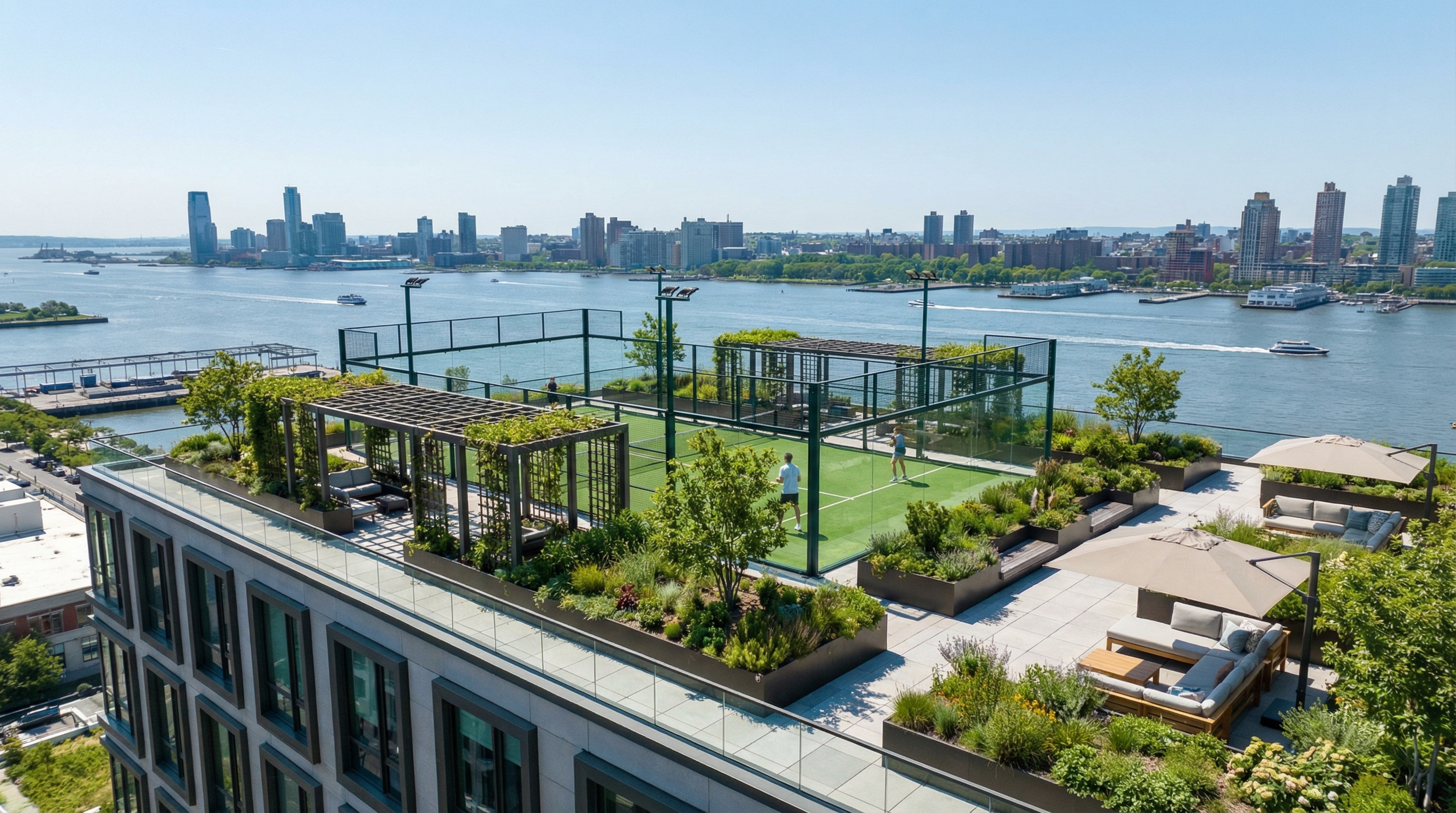
Location dictates the structural engineering and spatial orientation required for a successful padel hudson yards installation in a vertical city. When building in a high-density area, you must account for wind loads, substrate vibration, and logistical access for construction materials. Your design should harmonize with the surrounding skyline while maintaining the rigorous technical standards of professional play.
Look at the numbers:
Installing courts on rooftops or elevated plazas requires a deep understanding of weight distribution and structural reinforcements.
- Reinforced concrete slabs to support glass and steel weight.
- Vibration dampening layers to protect lower floors.
- Wind-resistant glass panels rated for high-altitude gusts.
- Modular crane-friendly components for easy transport.
Vertical integration and spatial optimization?
Why does this matter?
You can stack courts or utilize narrow footprints to create a multi-level sports complex that defies traditional ground-level constraints.
- Double-height ceilings for necessary ball clearance.
- Perimeter glass for natural lighting and views.
- Integrated locker rooms and pro shops in tight corners.
Key Takeaway: Urban padel construction requires specialized engineering to handle the unique structural stresses of NYC’s vertical landscape.
| Metric | Requirement | NYC Consideration |
|---|---|---|
| Ceiling Height | 6 meters minimum | HVAC Duct Clearance |
| Floor Load | ~150-200 kg/sqm | Structural Bracing |
| Wind Rating | High (Cat B/C) | Tempered Glass Thickness |
What is the ideal padel hudson yards court configuration?
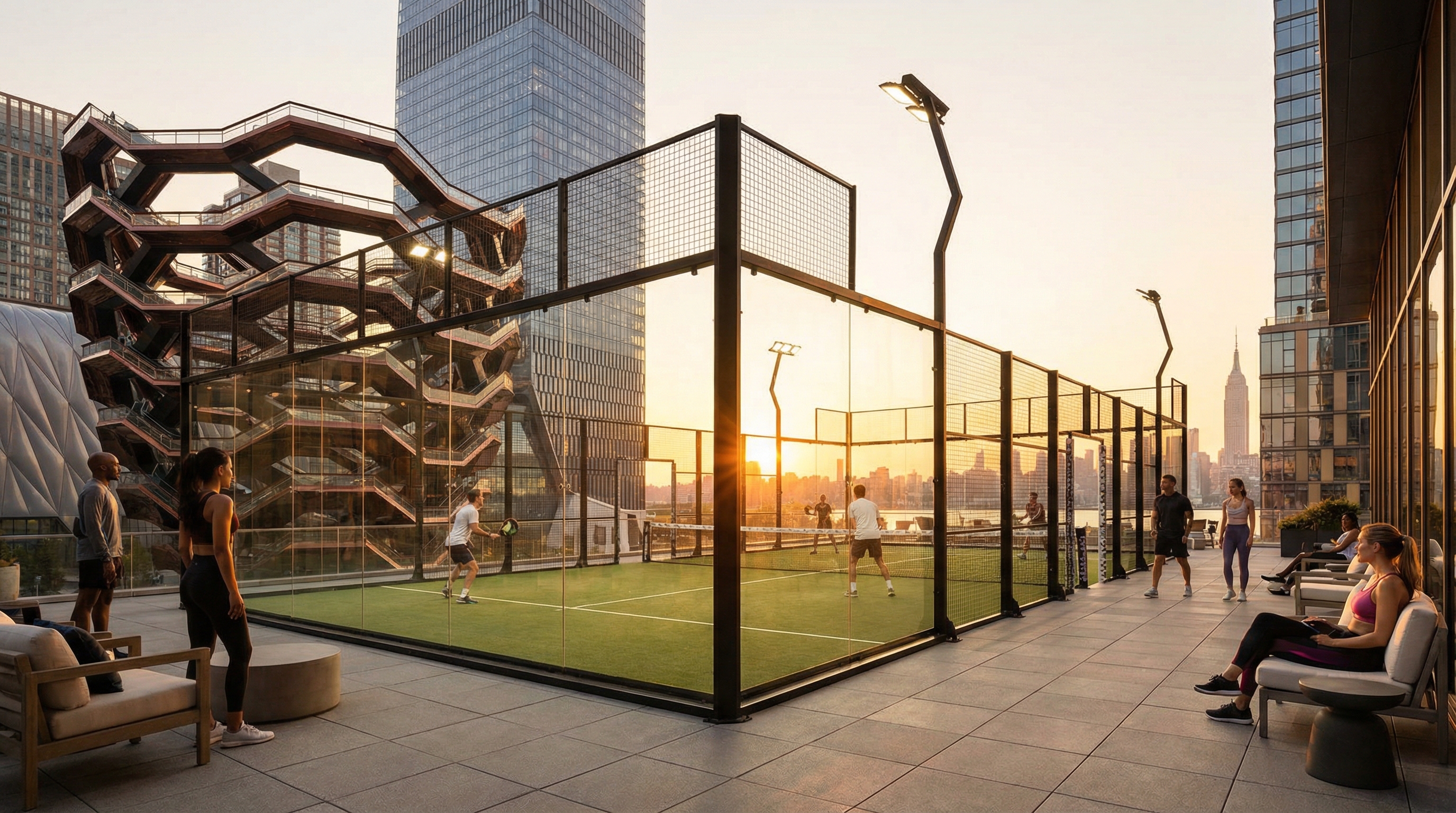
The ideal configuration for padel hudson yards involves a mix of panoramic views and durable structural frames to satisfy both casual and pro players. You must select a configuration that balances aesthetic elegance with the technical requirements of high-impact play. Proper orientation is also crucial to ensure that sun glare does not interfere with the player experience during peak daylight hours.
Choosing the right Padel Structure?
Believe it or not:
The framework of your court determines its longevity and the quality of the ball bounce off the back walls.
- Galvanized steel frames for maximum rust resistance.
- Electrostatic powder coating for a premium finish.
- Precision-aligned glass supports to prevent rattling.
- Integrated LED lighting masts for shadow-free play.
How to determine court dimensions for luxury?
Let’s dive in:
While the playing area is standard, the surrounding runoff and social zones determine if your facility feels like a premium club.
- Standard 20m x 10m internal playing dimensions.
- Extra perimeter space for player safety and refereeing.
- Strategically placed viewing benches for spectators.
Key Takeaway: High-end court configurations prioritize structural stability and player comfort to deliver a world-class sporting experience.
| Component | Standard Spec | Premium Upgrade |
|---|---|---|
| Glass | 10mm Tempered | 12mm Heat-Strengthened |
| Lighting | 4x 200W LED | 8x 300W Asymmetric LED |
| Turf | Fibrillated | Texturized Monofilament |
Why choose a standard padel hudson yards setup?
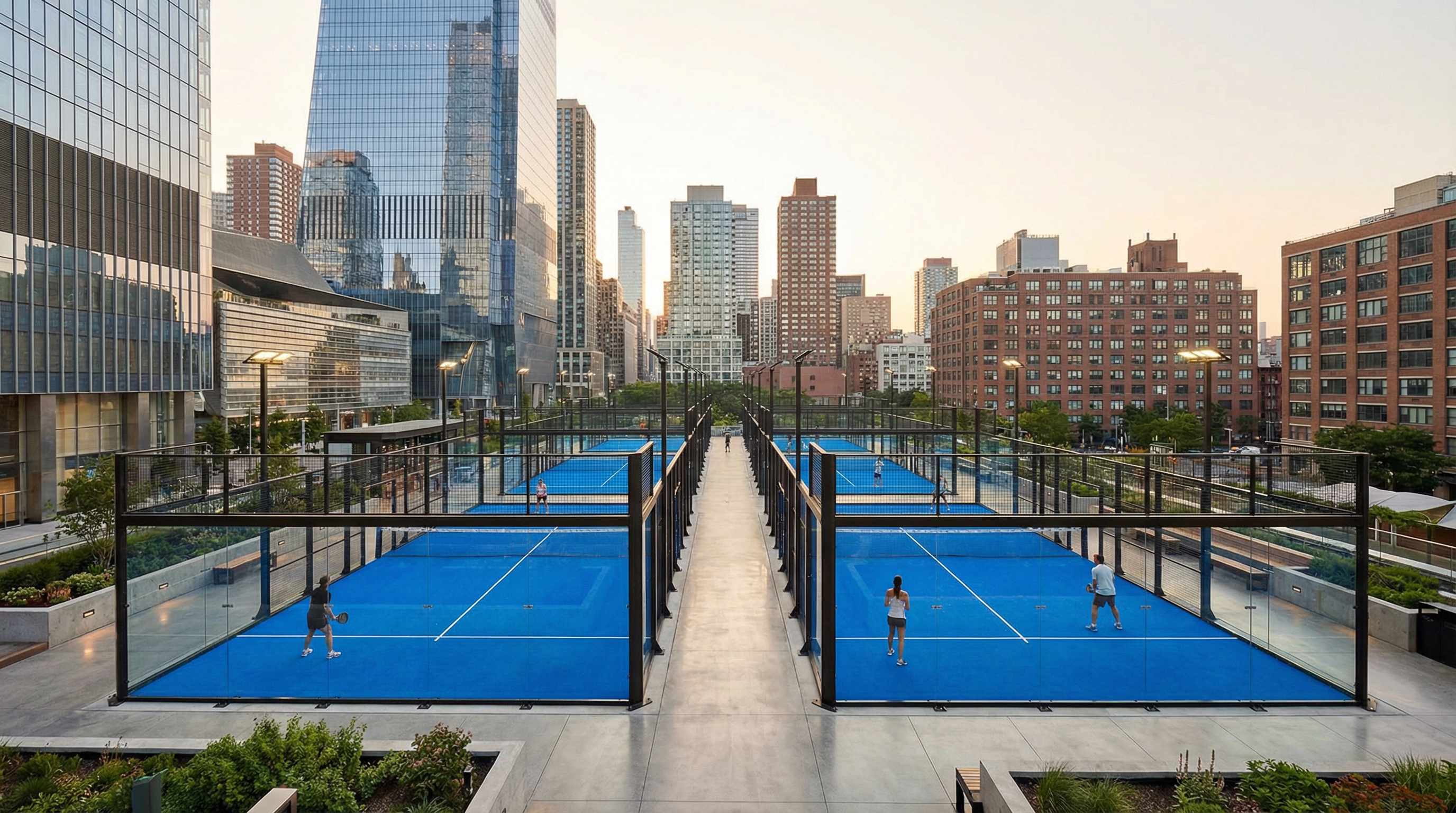
A standard padel hudson yards setup offers the most cost-effective entry point for clubs looking to maximize their court count quickly. This model utilizes a pillar-based frame that provides exceptional durability and ease of maintenance in high-traffic environments. You will find that these courts are the workhorses of the industry, delivering consistent performance for thousands of matches.
Benefits of a Standard Padel Court?
The best part?
Standard courts offer a familiar playing experience that satisfies the majority of club members while keeping your initial investment low.
- Increased structural rigidity through a pillar-based frame.
- Faster installation times due to modular components.
- Easier glass replacement in the event of accidental damage.
- Proven design used in thousands of clubs worldwide.
Cost-effective scaling for multi-court clubs?
It’s a simple fact:
Building multiple standard courts allows you to host larger tournaments and handle a higher volume of concurrent bookings.
- Lower price per unit when ordering in bulk.
- Uniform maintenance protocols across the entire facility.
- Flexible layouts that adapt to various room shapes.
Key Takeaway: Standard court setups provide a reliable, scalable foundation for commercial padel clubs focused on high volume and durability.
| Factor | Standard Model | Benefit |
|---|---|---|
| Frame Type | 80x80mm Pillars | Maximum Stability |
| Maintenance | Low | Reduced OpEx |
| Playability | Consistent | Member Satisfaction |
How does a panoramic padel hudson yards view work?
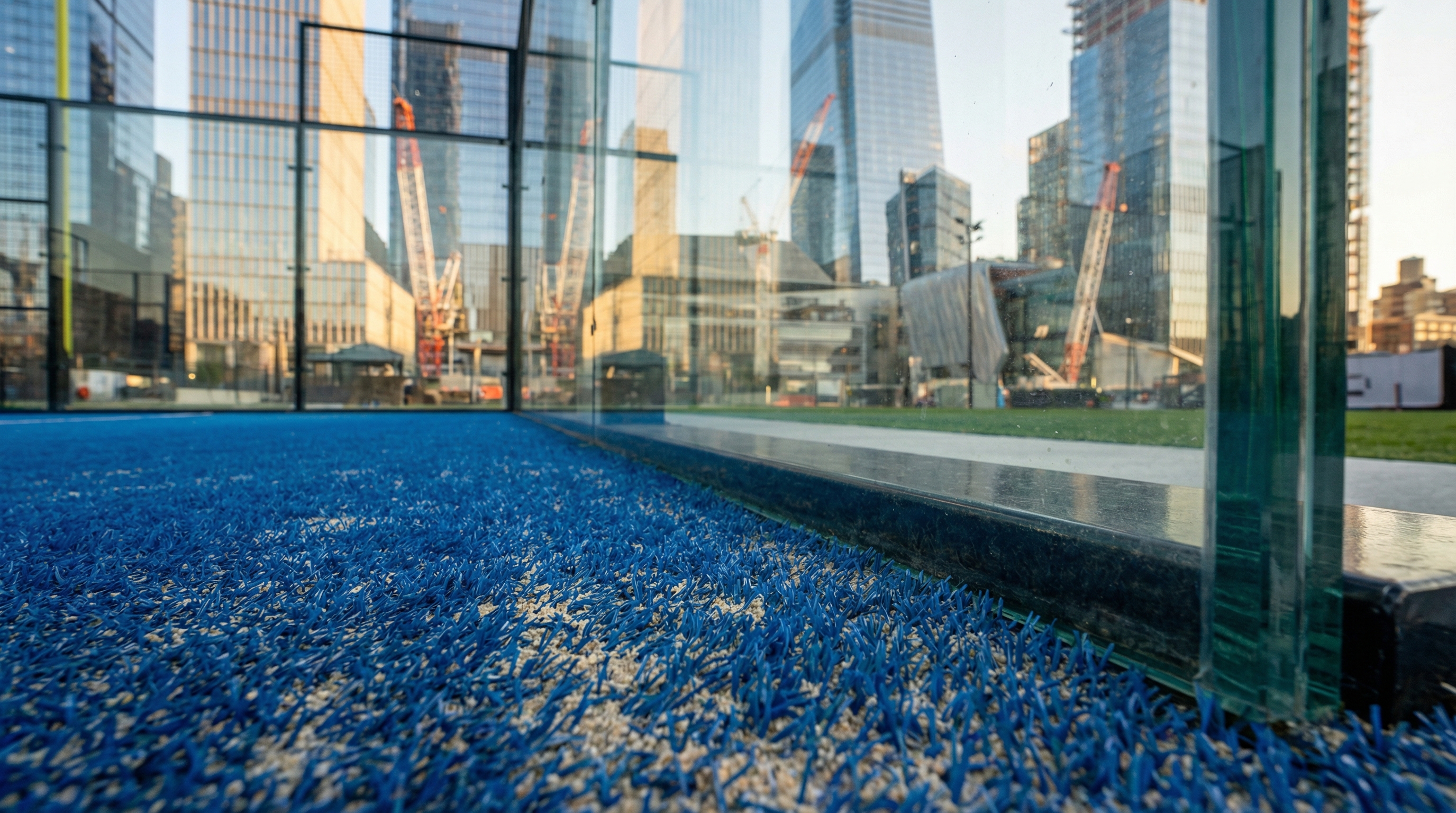
A panoramic padel hudson yards design removes the vertical pillars from the back and side walls to provide an unobstructed view of the court. This setup is specifically designed for high-end clubs where aesthetics and spectator visibility are top priorities. You will notice that players feel more connected to the surrounding environment, especially when the facility overlooks iconic landmarks.
Advantages of a Panoramic Padel Court?
Here is the reality:
The visual appeal of a panoramic court makes it the most “Instagrammable” asset in your facility, driving organic marketing.
- 360-degree visibility for coaches and spectators.
- Sleek, modern aesthetic that fits luxury developments.
- Enhanced player immersion with fewer visual distractions.
- High-strength glass panels that ensure total safety.
Structural integrity vs. maximum visibility?
Don’t be fooled:
Removing pillars requires thicker glass and specialized corner brackets to maintain the court’s structural safety.
- 12mm tempered glass is the standard for panoramic.
- Hidden anchoring systems for a clean floor-to-ceiling look.
- Precision-engineered top rails for additional support.
Key Takeaway: Panoramic designs offer superior aesthetics and spectator views but require higher-grade materials to ensure safety.
| Feature | Panoramic | Standard Comparison |
|---|---|---|
| Rear Pillars | None | 2-4 Pillars |
| Glass Thickness | 12mm | 10mm |
| Aesthetic | Luxury/High-End | Functional/Sporty |
What makes the super panoramic padel hudson yards model?
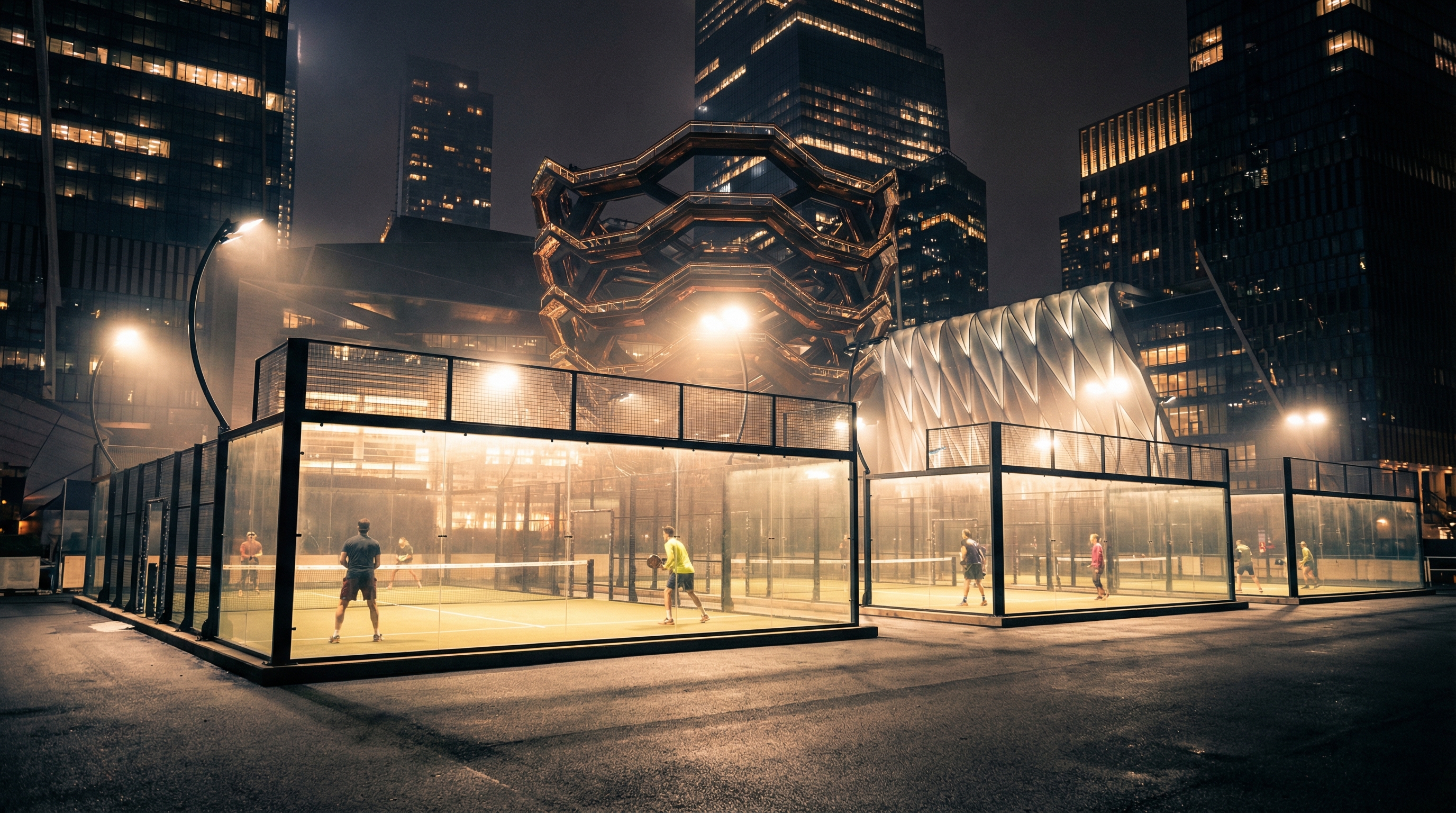
The super panoramic padel hudson yards model is the gold standard of professional play, featuring virtually no visible framing on the main glass walls. This design is often used for “center courts” where professional matches are recorded or live-streamed for audiences. You are providing the ultimate stage for the sport, ensuring that every angle of the match is visible to everyone in the arena.
Features of a Super Panoramic Court?
Take a look:
This model utilizes high-tension engineering to eliminate almost all structural obstructions from the player’s field of vision.
- Zero corner pillars for a seamless glass-to-glass look.
- Professional-grade turf designed for maximum traction.
- Reinforced baseplates to handle intense lateral force.
- Customizable frame colors to match brand identity.
Is professional glass necessary for urban sites?
Why wait?
Professional-grade glass is non-negotiable in urban settings where safety and durability under constant use are paramount.
- Heat-soaked glass to prevent spontaneous breakage.
- Polished edges to ensure perfect fit and finish.
- Anti-reflective coatings for better visibility under lights.
Key Takeaway: Super panoramic courts are the ultimate luxury sporting asset, perfect for high-profile urban installations and televised events.
| Spec | Super Panoramic | Market Use |
|---|---|---|
| Visibility | 100% Rear/Side | Pro Tournaments |
| Glass Tech | Heat-Soaked Tempered | Luxury Clubs |
| Installation | Specialist Required | Elite Facilities |
How to manage climate for padel hudson yards facilities?
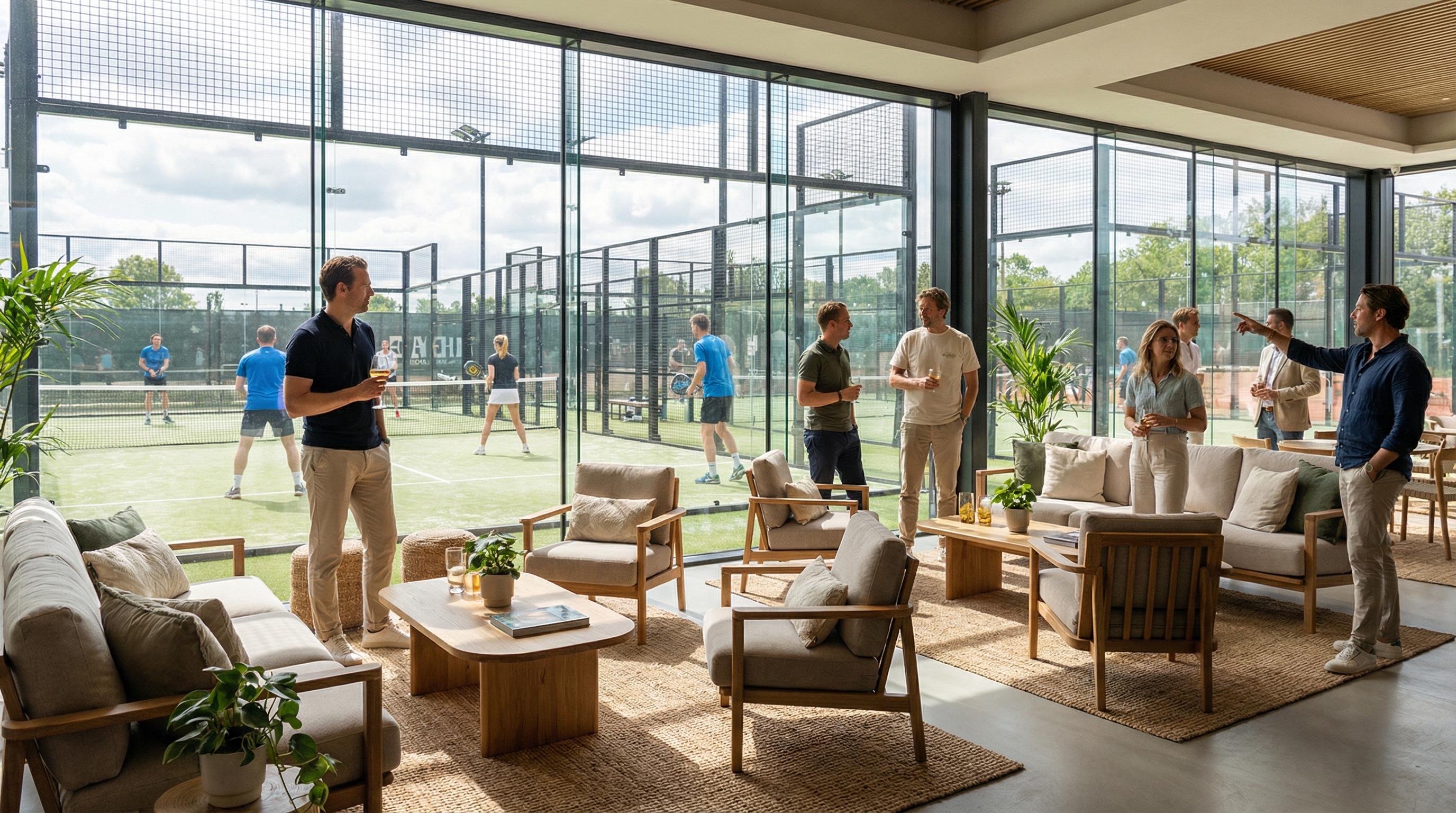
Managing the climate for padel hudson yards ensures that your facility remains operational and comfortable 365 days a year, regardless of NYC’s weather. Indoor or roofed solutions protect the delicate turf from moisture and allow for climate-controlled social areas. You will find that players are willing to pay a premium for a facility that guarantees a dry court and a cool lounge.
Implementing a Roofed Padel Court solution?
Think about it:
A roofed solution allows you to maintain consistent court conditions while still providing the airy feel of an outdoor sport.
- Steel truss roofs with high-clearance ball space.
- Translucent roofing materials for natural daylighting.
- Integrated gutter systems to manage heavy rainfall.
- Side-wall enclosures for wind and snow protection.
Ventilation and indoor environmental controls?
The real secret?
Proper airflow prevents humidity buildup, which can make the glass slippery and the turf dangerously damp for players.
- High-volume low-speed (HVLS) fans for air circulation.
- Dehumidification systems to protect glass and steel.
- Zoned heating for comfortable play during winter.
Key Takeaway: Year-round operational capability depends on effective roof structures and climate control systems that protect the asset.
| Environment | Outdoor | Roofed/Indoor |
|---|---|---|
| Playing Days | Weather Dependent | 365 Days/Year |
| Maintenance | High (Leaves/Rain) | Low (Controlled) |
| ROI | Seasonal | Constant |
What costs and blueprints guide padel hudson yards?
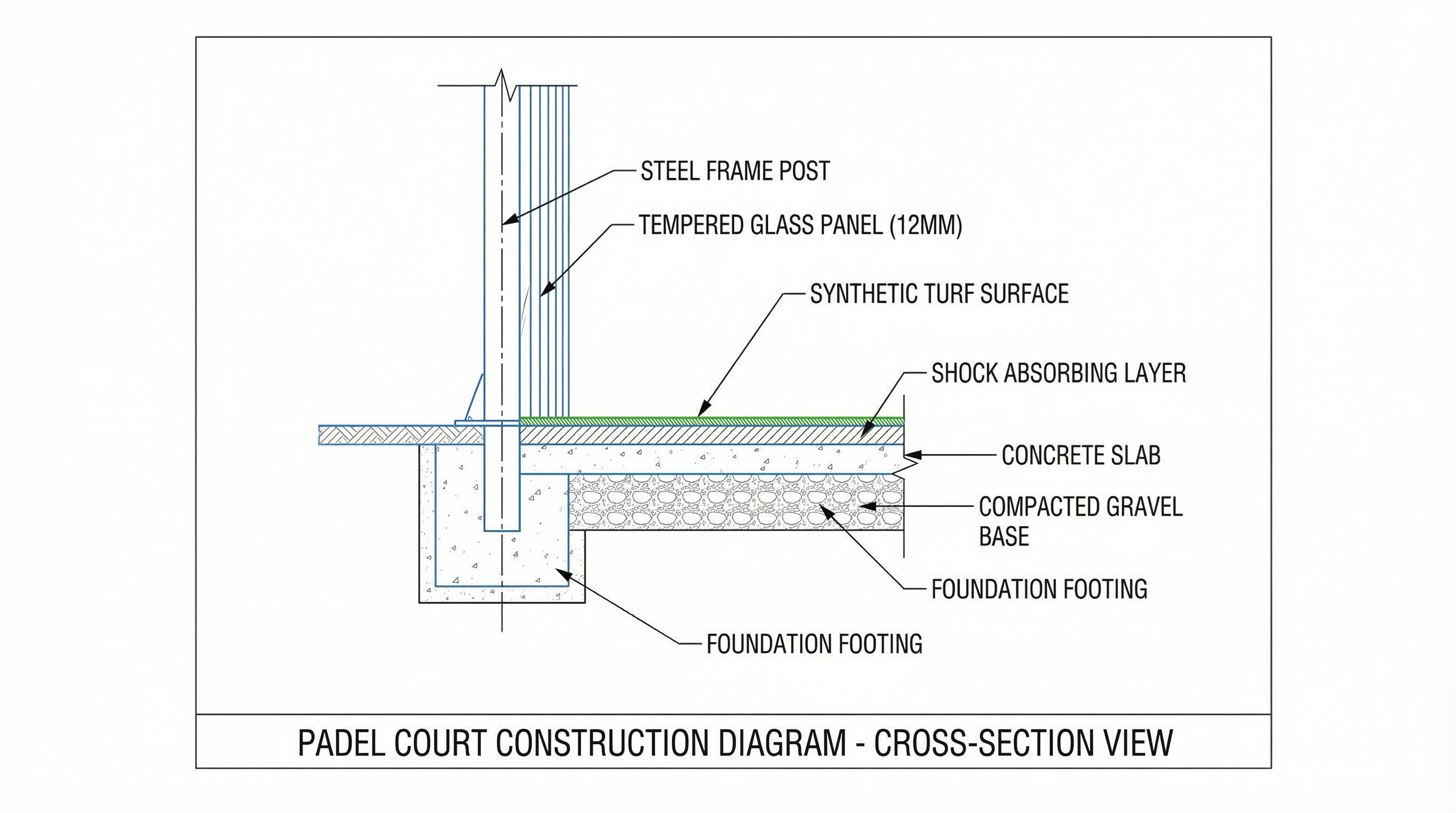
Blueprints for a padel hudson yards project must detail the foundation depth, drainage slopes, and precise anchor point locations for the steel frame. Budgeting for these projects requires a clear understanding of the difference between court costs and the necessary site preparation work. You must work with engineers who understand the lateral loads exerted on the glass during high-velocity gameplay.
Foundation blueprints for urban courts?
Look closer:
The foundation is the most critical part of the build, as any slight tilt can cause glass panels to shatter or the turf to wrinkle.
- Laser-leveled concrete slabs with <3mm deviation.
- Integrated drainage channels for outdoor installations.
- Curing times of at least 21 days for concrete strength.
- Embedded anchor bolts for seamless frame mounting.
Budgeting for high-performance materials?
Here is the breakdown:
While the frame is a one-time cost, high-performance turf and lighting are long-term investments in player satisfaction.
- Steel and glass: 50% of court budget.
- Specialized turf: 20% of court budget.
- LED lighting and electronics: 15% of budget.
- Installation and site work: Variable based on location.
Key Takeaway: Technical precision in the blueprint phase prevents costly structural failures and ensures a professional playing surface.
| Phase | Duration | Primary Cost Driver |
|---|---|---|
| Site Prep | 2-4 Weeks | Concrete/Excavation |
| Court Install | 1 Week | Specialized Labor |
| Commissioning | 3 Days | Lighting/Turf Sand |
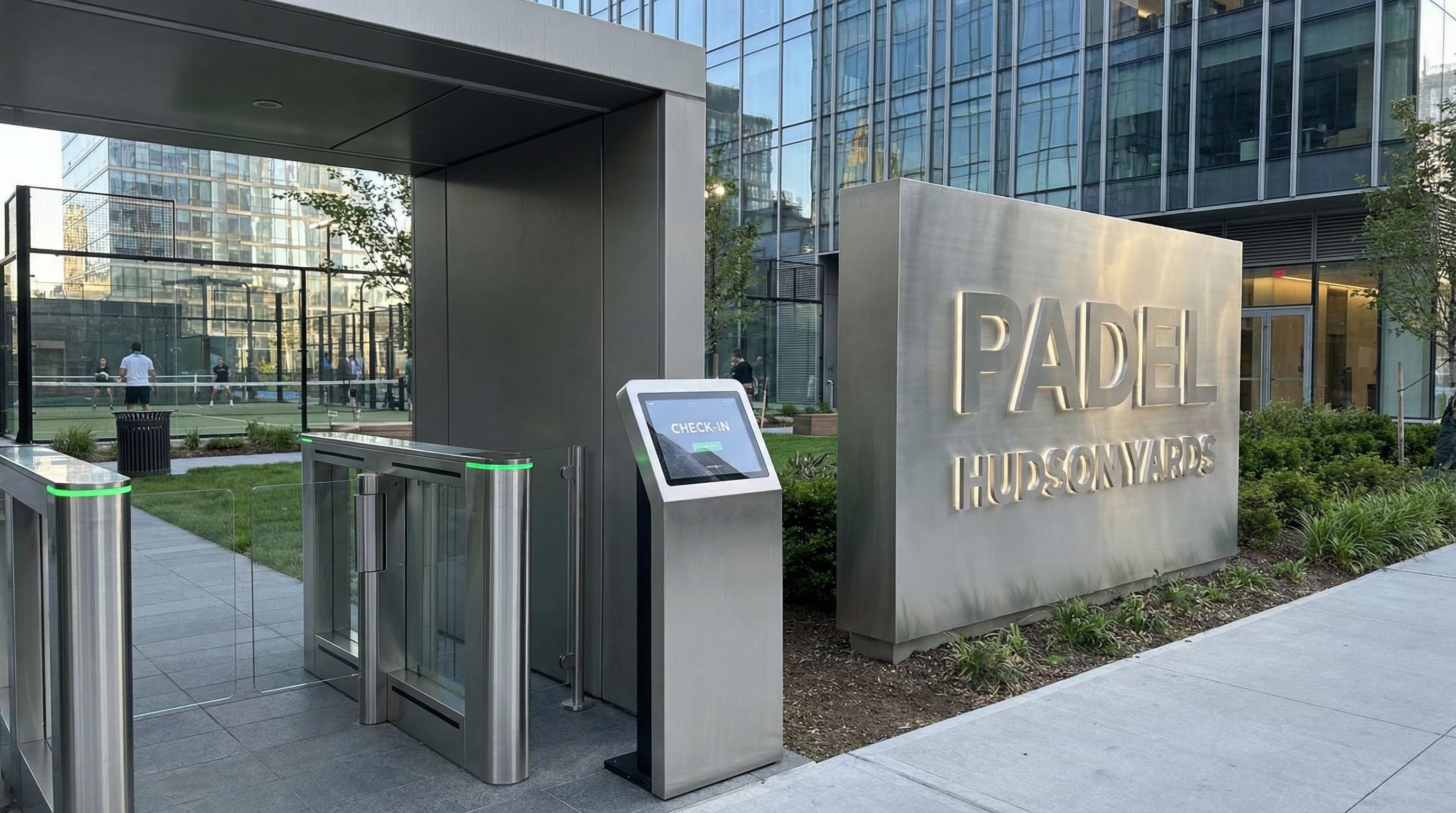
Navigating the permit process for padel hudson yards involves coordinating with local zoning boards to ensure compliance with commercial recreation codes. You will need to submit detailed site plans that account for noise mitigation, lighting spill, and emergency egress routes. Your project will move faster if you engage with consultants who have experience in NYC’s specific building department requirements.
Understanding zoning for commercial sports?
Notice this:
Padel facilities are often categorized as “General Recreation,” which may have specific parking and occupancy requirements.
- Verified occupancy limits for social lounge areas.
- Acoustic studies to ensure glass impact noise is managed.
- Compliance with Americans with Disabilities Act (ADA).
- Light pollution assessments for night-time play.
Safety regulations and municipal building codes?
Keep in mind:
Building codes in NYC are some of the strictest in the world, particularly concerning structural fire safety and glass ratings.
- Fire-rated materials for indoor social structures.
- Emergency exit signage visible from the court.
- Impact-rated safety glass for all playing walls.
Key Takeaway: Early engagement with zoning and safety consultants is essential to avoid delays in the urban permitting process.
| Requirement | Type | Focus |
|---|---|---|
| ADA Access | Regulatory | Inclusive Design |
| Noise Study | Environmental | Community Impact |
| Fire Safety | Building Code | Occupant Protection |
What are the maintenance needs for padel hudson yards?
Maintenance for a padel hudson yards facility centers on keeping the turf clean and the glass walls free of smudges for optimal visibility. You will find that a proactive maintenance schedule extends the life of your equipment and keeps your facility looking brand new. Regular inspections of the tension bolts and net height are also necessary to maintain professional play standards.
Daily vs. seasonal upkeep schedules?
Watch the details:
Daily tasks keep the facility presentable, while seasonal tasks ensure the structural integrity of the heavy glass and steel components.
- Daily glass cleaning with non-abrasive solutions.
- Weekly turf brushing to redistribute silica sand.
- Monthly net tension and height adjustments.
- Bi-annual bolt tightening and frame inspection.
How to ensure long-term ROI through management?
Why does it matter?
A well-maintained court retains its value and allows you to charge premium rates for years without needing a major renovation.
- Consistent turf quality prevents player injuries.
- Clean glass enhances the spectator experience.
- Proactive repairs prevent small issues from becoming costly.
Key Takeaway: Diligent maintenance preserves the aesthetic appeal and structural safety of your high-end padel investment.
| Task | Frequency | Objective |
|---|---|---|
| Glass Cleaning | Daily | Aesthetics/Visibility |
| Turf Brushing | Weekly | Sand Distribution |
| Structural Check | Bi-Annual | Safety/Integrity |
*
Padel hudson yards is more than just a sport; it is a strategic real estate asset that bridges the gap between luxury wellness and community engagement. By addressing the lack of premium urban racquet facilities, developers can unlock new revenue streams and provide an unparalleled lifestyle experience for their tenants. Our vision is to lead the evolution of urban sports by delivering world-class infrastructure that stands the test of time. Whether you are repurposing a rooftop or designing a ground-up athletic club, we are here to ensure your project exceeds the highest standards of professional play and architectural elegance. To begin your journey into the future of urban sports, contact us today to discuss your specific site requirements and feasibility.
*
FAQ
Can I install a padel court on a rooftop?
Yes, rooftop installations are possible but require a structural engineer to verify the building’s load-bearing capacity and wind-load resistance.
What’s the best glass thickness for a panoramic court?
For panoramic models, 12mm tempered or heat-strengthened glass is recommended to provide the necessary structural support without pillars.
How do I know if my ceiling is high enough?
The minimum recommended clearance is 6 meters, though 8 meters is preferred for professional-level play to accommodate high lobs.
Can I customize the color of the court frame?
Absolutely, our steel frames can be powder-coated in any RAL color to align with your facility’s branding or architectural style.
What is the average timeline for construction?
Once the foundation is ready, the physical installation of a single court typically takes between 5 to 7 days with a professional crew.