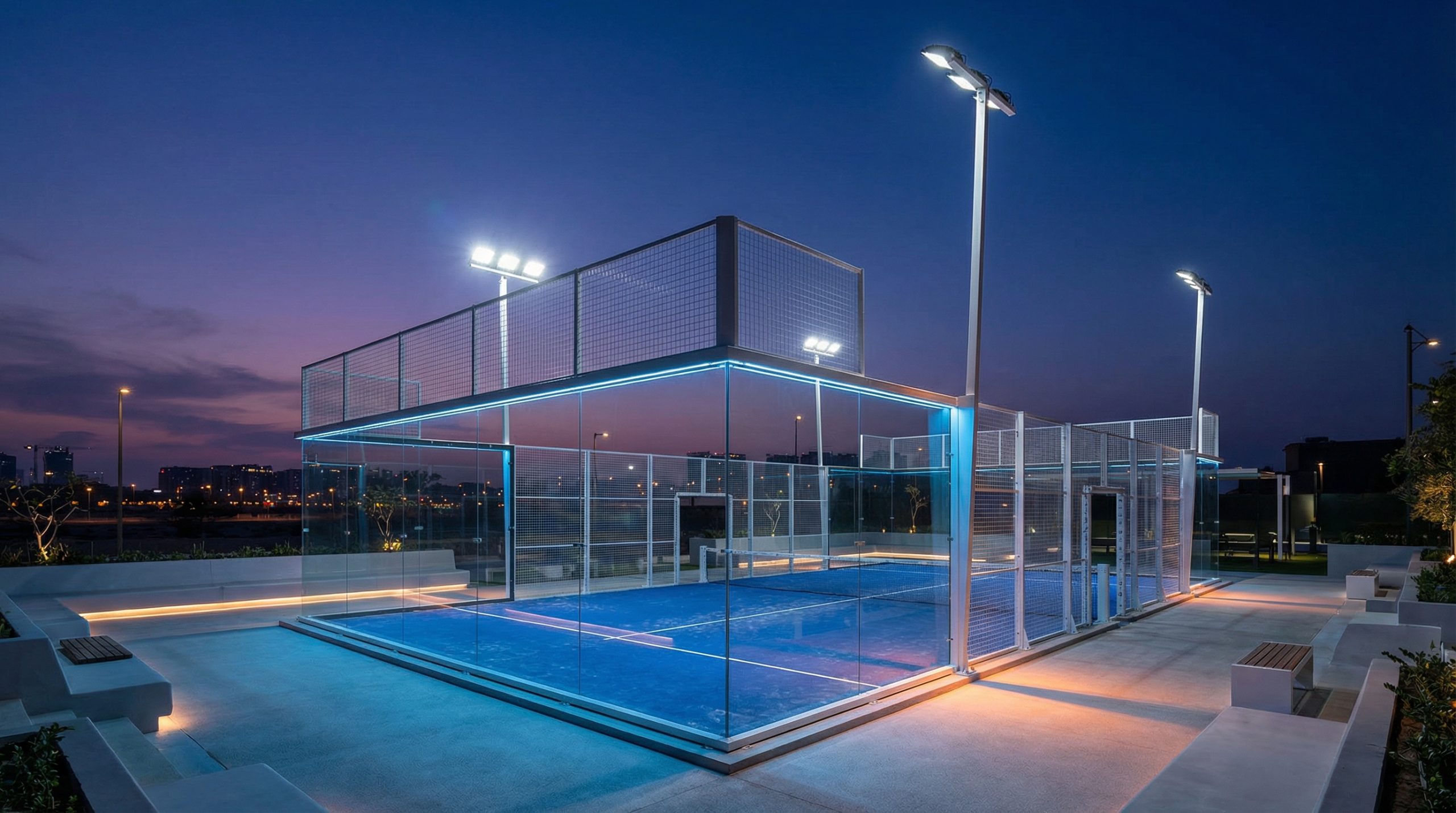
1. What exactly is a panoramic padel court and its core design?
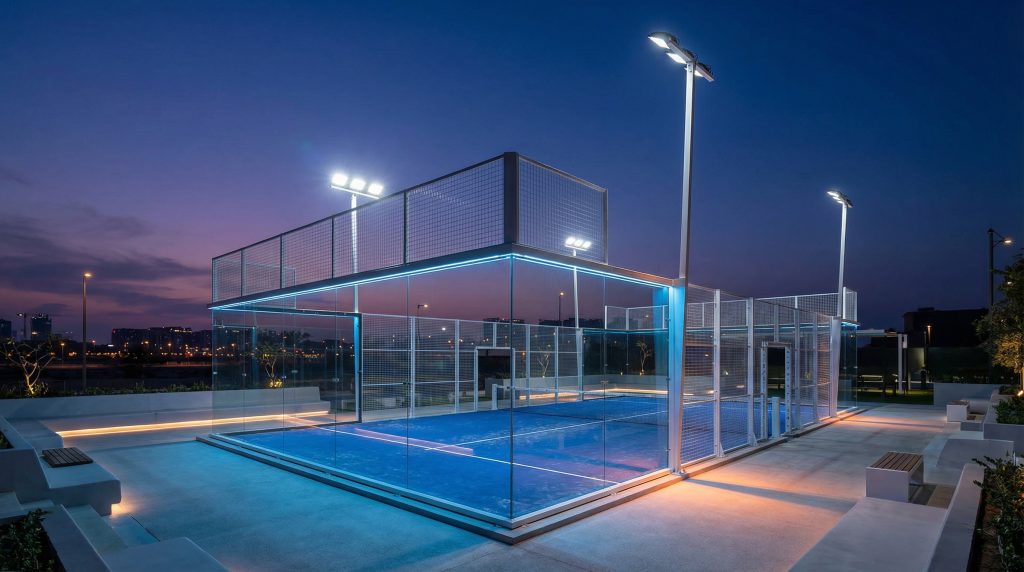
A panoramic padel court is a specialized version of the standard court that removes all vertical steel pillars from the back and corner areas to allow for an unobstructed view of the game. This design relies on high-tensile glass and reinforced perimeter beams to maintain structural integrity without the need for bulky support posts. You will notice that the result is a seamless glass wall that provides a stadium-like experience for both players and fans.
How does the pillar-less structure maintain stability?
Think about it: how can a glass wall stand safely against high-velocity ball impacts and wind without vertical posts? The secret lies in the horizontal structural beams and specialized glass-to-glass connectors that distribute energy across the entire frame.
- High-tensile steel perimeter frames provide the primary skeleton.
- Specialized “glass-to-glass” brackets replace the need for traditional pillars.
- Laser-cut steel components ensure every joint fits with millimeter precision.
- Engineered base plates anchor the entire system to a reinforced concrete foundation.
Why is the aesthetic appeal so important for modern clubs?
But wait, there’s more to it than just looks when you look at high-end products in the industry. The aesthetic of a panoramic court positions your facility as a premium destination, attracting a more professional demographic of players.
- Minimalist designs create a “World Padel Tour” feel for amateur players.
- Enhanced natural light improves the playing experience during daylight hours.
- Clear sightlines allow for easier social media content creation and live broadcasting.
- Modern finishes and customizable colors help the court blend into luxury environments.
What are the standard dimensions for these models?
Here is the kicker: despite the advanced look, the internal playing dimensions remain identical to standard courts to ensure official tournament compliance. You must adhere to the 10-meter by 20-meter footprint while allowing extra space for the structural overhang of the panoramic beams.
- Internal playing area is strictly 200 square meters.
- The total height of the glass walls usually sits at 3 meters or 4 meters.
- Perimeter spacing of at least 1-2 meters is recommended for safety and spectator flow.
- Structural foundations must extend slightly beyond the glass line for stability.
Key Takeaway
The panoramic design is a masterclass in modern engineering that trades bulky steel for high-strength glass and hidden support systems. It offers the same playing dimensions as traditional models but with a significantly upgraded visual profile.
| Feature | Standard Court | Panoramic Court |
|---|---|---|
| Rear Pillars | Steel posts every 2-3 meters | Zero pillars at rear or corners |
| Visibility | Obstructed by steel frames | 360-degree unobstructed |
| Structural Focus | Vertical post support | Horizontal beam and glass-to-glass |
This comparison highlights why the panoramic model is the preferred choice for center courts in elite clubs globally.
2. Why should you choose a panoramic padel court for your club?
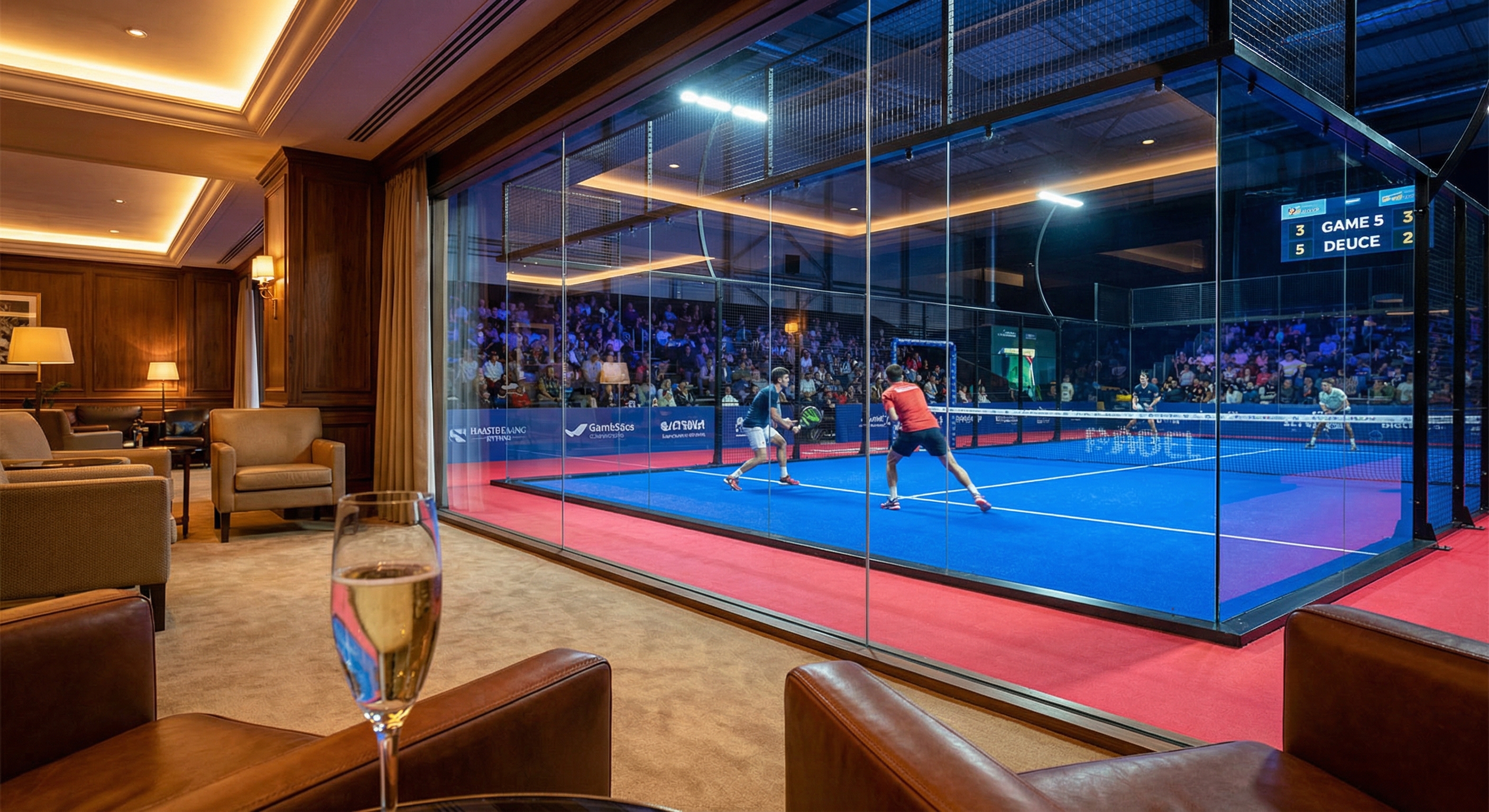
Choosing a panoramic padel court is the most effective way to differentiate your business and command higher booking fees from premium-tier members. In a market where standard courts are becoming common, offering a “Show Court” experience allows you to host prestigious tournaments and corporate events. You will find that the investment pays for itself through increased visibility and the ability to attract high-value sponsorships.
How does it enhance the spectator experience?
Make no mistake: fans will choose to watch matches on a panoramic court over a standard one every single time. The lack of pillars means there is no “bad seat” in the house, allowing your lounge or seating area to be fully utilized.
- Perfect for VIP hospitality areas and clubhouses.
- Facilitates high-quality video recording and live-streaming of matches.
- Allows for closer proximity of seating without blocking the view of the lines.
- Encourages social interaction between players on the court and fans outside.
Can it improve the quality of professional play?
The best part? Professional players prefer the visual openness because it eliminates the visual “flicker” caused by passing behind steel posts during fast movements. This sense of space allows for better focus on the ball and more accurate defensive positioning near the glass.
- Reduced visual interference improves reaction times for high-level players.
- Consistent glass-to-glass bounce characteristics across the entire back wall.
- Psychological benefit of playing on a “professional” stage increases player satisfaction.
- Better light distribution prevents glare and shadows on the turf surface.
What is the marketing value for your brand?
Think about it: in the age of Instagram and TikTok, a visually stunning court is your best marketing tool. When players share photos of their match on a panoramic court, your club’s logo and premium environment are showcased to their entire network.
- High-contrast visuals make your facility stand out in digital advertisements.
- Panoramic courts are the preferred choice for brand activations and product launches.
- Creates a sense of exclusivity that justifies higher membership or booking rates.
- Enhances the overall architectural value of the property or sports complex.
Key Takeaway
Investing in panoramic technology is a strategic business move that enhances brand prestige, improves spectator ROI, and provides a superior playing environment. It transforms a simple sports court into a high-revenue entertainment asset.
| Value Driver | Impact on Club | Strategic Benefit |
|---|---|---|
| Social Media | High shareability | Free organic marketing |
| Sponsorship | Professional look | Attracts corporate partners |
| Booking Fees | Premium pricing | Faster ROI on initial investment |
The data suggests that facilities with at least one panoramic court see a 25% higher occupancy rate for that specific unit.
3. What materials are in a panoramic padel court?
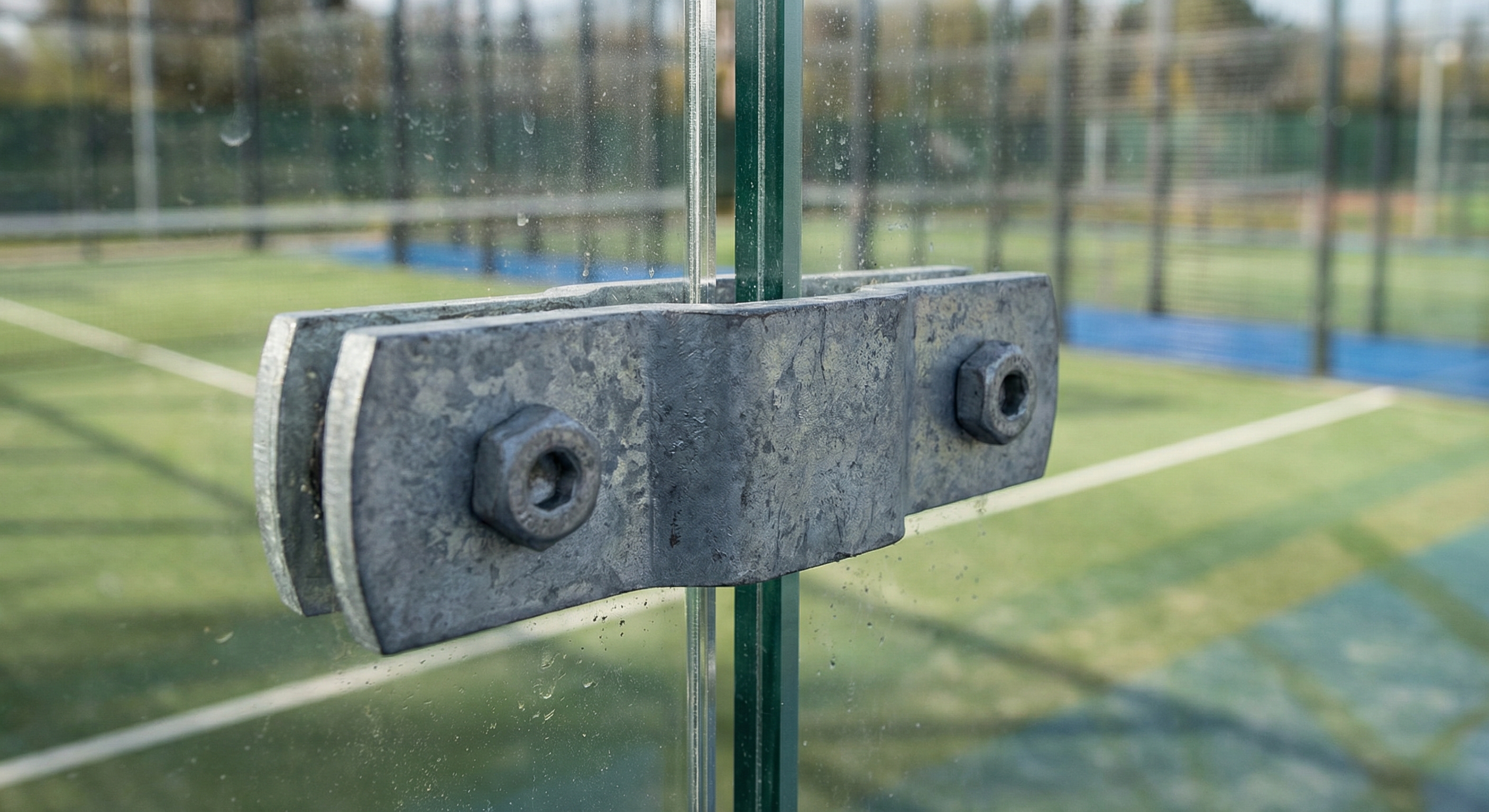
The materials used in a panoramic padel court must be of the highest industrial grade to compensate for the lack of vertical support pillars. You are looking for a combination of high-tensile carbon steel and heavy-duty tempered glass that can withstand both weather and impact. Because the structure is more exposed, every bolt, gasket, and bracket must be designed for maximum durability.
Why is 12mm tempered glass the standard?
Make no mistake: safety is your primary concern when building a wall of glass without middle supports. Using 12mm thick tempered glass provides the necessary rigidity and weight to ensure the wall doesn’t vibrate excessively during play.
- Heat-soaked tempering process prevents spontaneous breakage.
- Precision-polished edges reduce the risk of stress fractures at the joints.
- High transparency ratings ensure the “invisible” effect of the panoramic design.
- Compliance with international safety standards like EN 12150-1 is mandatory.
What role does galvanized steel play in the frame?
You might be wondering: how do you prevent rust in a structure with so many exposed metal joints? Using premium products made from hot-dip galvanized steel ensures the frame remains structurally sound for decades, even in humid or coastal environments.
- Q235 or Q355 carbon steel provides the necessary tensile strength.
- Zinc coating thickness of at least 80-100 microns prevents oxidation.
- Double-layered powder coating adds an extra barrier against UV rays and scratches.
- Heavy-duty base plates ensure the frame doesn’t shift under wind load.
Which turf and lighting components are essential?
The best part? The interaction between the turf and the glass defines the speed of the game. You should select a monofilament polyethylene turf that provides consistent traction and works in harmony with the silica sand infill.
- Textured monofilament fibers provide better sand grip and player safety.
- LED floodlights with asymmetric lenses reduce reflections on the glass walls.
- High-grade EPDM rubber gaskets are used to cushion every glass-to-metal contact point.
- Marine-grade stainless steel bolts prevent “bleeding” of rust onto the court surface.
Key Takeaway
The integrity of a panoramic court relies on the quality of its components; 12mm glass and galvanized steel are non-negotiable standards. Cutting corners on materials in a panoramic design can lead to structural failure or poor playability.
| Material | Specification | Purpose |
|---|---|---|
| Glass | 12mm Tempered / Heat-Soaked | Structural wall & impact resistance |
| Steel | Hot-Dip Galvanized Q235/Q355 | Perimeter skeleton & rust prevention |
| Hardware | Stainless Steel / EPDM Gaskets | Joint security & vibration damping |
High-quality materials ensure that the aesthetic beauty of the court is matched by its longevity and safety.
4. Is a panoramic padel court better than standard?
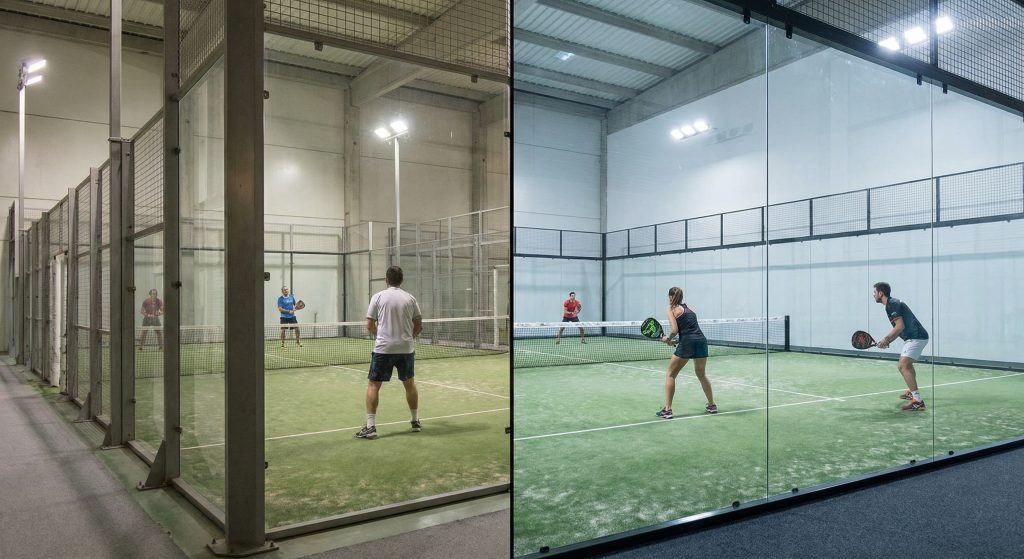
A panoramic padel court is generally considered superior for professional clubs, while standard courts remain the workhorses for basic training facilities. You must evaluate whether your target audience consists of casual learners or competitive players who value the atmosphere of the game. While the panoramic model is more complex to build, its benefits in visibility and prestige often outweigh the simplicity of traditional models.
Is the cost difference justifiable for new clubs?
Think about it: are you building a community center or a premium sports brand? While the panoramic court has a higher initial price point due to thicker glass and specialized steel, it allows you to charge a “premium” for every booking.
- Higher resale value if you ever decide to upgrade or move the facility.
- Lower long-term maintenance on the frame due to fewer vertical posts to inspect.
- Increased attraction for high-level coaches who want a professional backdrop.
- Ability to host televised events which are impossible on standard courts.
How does installation complexity vary between models?
The kicker is that panoramic courts require a much higher level of precision during the setup phase. Because there are no pillars to hide minor misalignments, your foundation and frame must be perfectly square to allow the glass to fit.
- Requires specialized glass lifting equipment for the 12mm panels.
- Needs a more experienced installation crew to ensure structural balance.
- Standard courts can be installed faster but lack the professional finish.
- Panoramic models require more rigorous wind load testing before approval.
Which model offers better long-term durability?
But wait, there’s more to consider regarding the environment where you are building. While standard courts have more steel for support, panoramic courts use high-strength glass that is immune to the rust and warping that can plague metal posts over time.
- Fewer joints in the panoramic design mean fewer points for rust to start.
- High-grade tempered glass is virtually indestructible under normal playing conditions.
- Standard court mesh panels can sag or break over time, unlike solid glass.
- Panoramic designs often feature more advanced drainage integration in the frame.
Key Takeaway
Panoramic courts win on prestige, visibility, and ROI, while standard courts win on initial affordability and ease of installation. For any club aiming for “premium” status, the panoramic model is the clear industry leader.
| Metric | Standard Model | Panoramic Model |
|---|---|---|
| Initial Cost | Lower | Higher (approx. 20-30%) |
| Prestige Level | Moderate | Elite |
| Maintenance | Higher (Mesh/Posts) | Lower (Glass/Frame) |
The choice between models should be dictated by your long-term business vision rather than short-term budget constraints.
5. What engineering defines a panoramic padel court?
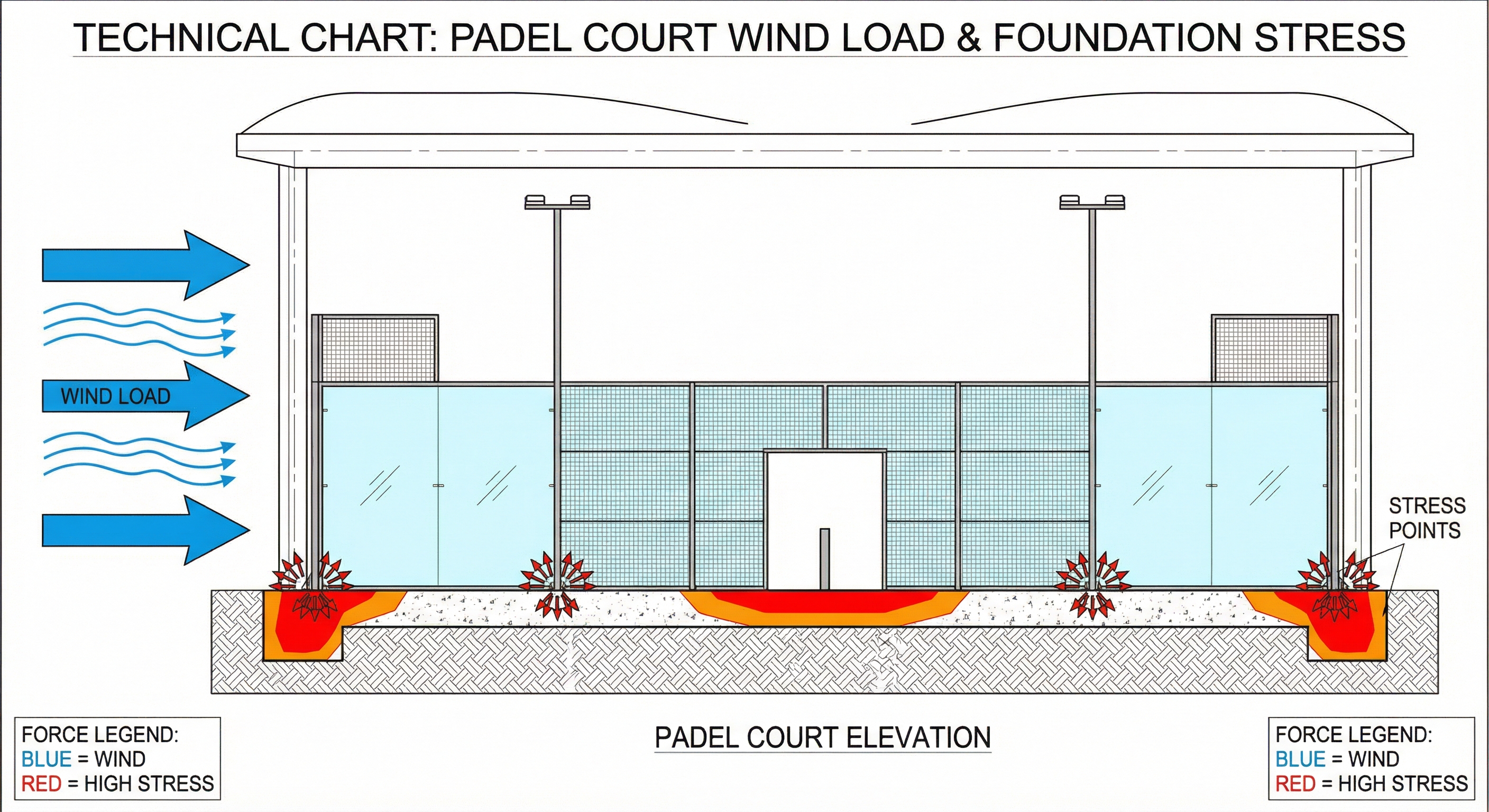
The engineering of a panoramic padel court centers on the principles of load distribution and structural transparency. You must understand that removing vertical pillars creates a “lever” effect where the wind and impact loads are concentrated on the top and bottom horizontal beams. Engineers use advanced 3D modeling to ensure that the glass panels act as structural members rather than just decorative partitions.
How is wind load calculated for glass walls?
Think about it: a 10-meter glass wall is essentially a massive sail that must withstand hurricane-force winds. Engineers calculate the “Pascal” rating of the glass and the shear strength of the steel anchors to ensure the court remains standing in extreme weather.
- Analysis of local wind zones (coastal vs. inland) is required.
- Reinforced base plates are often 20mm thick to prevent tipping.
- Vibration-dampening gaskets prevent the glass from shattering under resonant frequencies.
- High-tensile bolts are used to secure the horizontal beams to the foundation.
What are the foundation requirements for stability?
Here is the kicker: a panoramic court is only as strong as the concrete it sits on. You cannot install a panoramic model on a simple asphalt patch; it requires a reinforced concrete slab with specific PSI ratings to handle the concentrated weight of the glass.
- Minimum 15cm to 20cm thickness of reinforced H25 concrete.
- Precision leveling to within 3mm across the entire 20-meter span.
- Integrated drainage channels to prevent water from pooling under the base plates.
- Anchor bolts must be chemically set to provide maximum pull-out resistance.
How do glass-to-glass connectors function?
Make no mistake: the “hooks” or brackets that join the glass panels are the most critical engineering components. These connectors must be strong enough to hold the weight of the glass but flexible enough to allow for thermal expansion during the day.
- Manufactured from high-grade stainless steel or aluminum alloys.
- Features internal rubber sleeves to prevent metal-on-glass contact.
- Designed to allow for a 2-3mm expansion gap between glass sheets.
- Tested for thousands of cycles of impact to simulate years of play.
Key Takeaway
Engineering a panoramic court requires a “whole-system” approach where the foundation, frame, and glass work together to manage stress. Without professional engineering, a pillar-less design risks instability under high winds or heavy impact.
| Engineering Factor | Requirement | Purpose |
|---|---|---|
| Foundation | Reinforced C25/30 Concrete | Weight distribution & anchoring |
| Wind Rating | Variable (Up to 150km/h) | Safety in outdoor environments |
| Glass Joint | EPDM Cushioned Brackets | Impact absorption & expansion |
Proper engineering ensures that the “invisible” design of the court remains safe and functional for its entire lifespan.
6. How to install a panoramic padel court correctly?
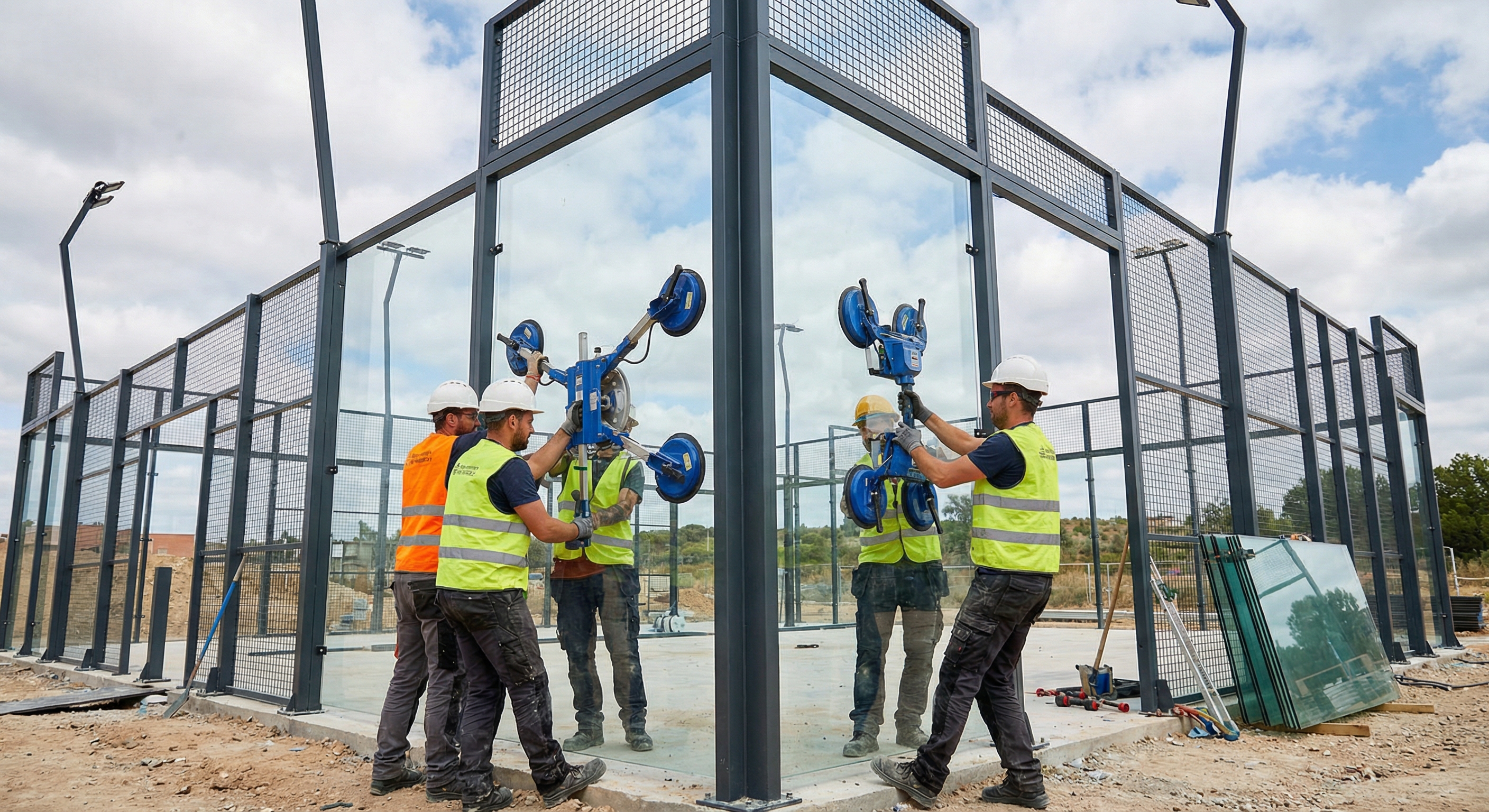
Installing a panoramic padel court correctly requires a professional crew and specialized lifting equipment to handle the heavy glass panels safely. You should never attempt a DIY installation for this model, as the lack of pillars means there is zero margin for error in frame alignment. Professional services ensure that the structure is not only level but also safely anchored to withstand years of intense use.
What are the phases of a professional installation?
The best part? A well-organized installation can be completed in as little as five to seven days if the foundation is properly prepared. You must follow a strict sequence to ensure the frame is stable before the heavy glass is introduced to the site.
- Phase 1: Perimeter layout and laser-leveling of the foundation.
- Phase 2: Assembly and anchoring of the galvanized steel skeleton.
- Phase 3: Precision placement of the 12mm glass panels using vacuum lifters.
- Phase 4: Turf installation, line marking, and silica sand distribution.
Why is vacuum lifting equipment essential?
Make no mistake: handling 12mm tempered glass manually is dangerous and increases the risk of chipping the edges. You must use professional suction-cup lifters to position each panel, as even a small “clink” against the steel frame can cause a future stress fracture.
- Vacuum lifters provide 100% control over panel tilt and rotation.
- Reduces the physical strain on the installation crew, preventing accidents.
- Allows for the exact 2mm spacing required between glass joints.
- Protects the polished edges of the glass from impact during the “drop” phase.
How do you ensure the turf is perfectly laid?
Think about it: the turf is the only part of the court the player actually touches, so its installation is critical. You must ensure the seams are bonded with high-strength polyurethane glue and that the sand is brushed in multiple directions for a flat finish.
- Use of a professional sand-spreader for even distribution.
- Brushing the turf repeatedly to “stand up” the monofilament fibers.
- Cutting in the white lines with precision to ensure official dimensions.
- Verifying that the drainage holes in the turf backing are not obstructed.
Key Takeaway
Installation is a specialized trade that combines heavy machinery with fine-tuned precision. A successful panoramic court installation focuses on perfect leveling, safe glass handling, and meticulous turf finishing.
| Installation Step | Tool Required | Critical Success Factor |
|---|---|---|
| Frame Leveling | Rotating Laser Level | 100% flat base for glass safety |
| Glass Setting | Vacuum Suction Lifter | Zero impact on glass edges |
| Turf Bonding | Two-Component PU Glue | Seamless joints for player safety |
Following these steps ensures the court meets international playability standards and remains safe for the public.
7. Does a panoramic padel court handle extreme weather?
A panoramic padel court is specifically engineered to handle extreme weather, from the salty air of coastal resorts to the intense UV radiation of desert climates. You will find that the materials selected for these models—such as heat-soaked glass and hot-dip galvanized steel—are designed for 20+ years of outdoor exposure. The key to weather resistance lies in the chemical treatments applied to the surfaces during the manufacturing process.
Can the glass withstand extreme temperature swings?
But wait, there’s more: tempered glass is naturally resistant to thermal shock, meaning it won’t crack when moving from a freezing night to a hot sunny day. You should ensure your glass has been “heat-soaked” to remove any impurities that could cause spontaneous breakage in high temperatures.
- Withstands temperature ranges from -40°C to +60°C.
- Low-E coatings can be applied to reduce heat absorption in tropical areas.
- Expansion joints in the frame prevent the glass from being “pinched” as the metal expands.
- Resists UV-induced yellowing, ensuring the panoramic view remains clear for decades.
How does the structure resist salt-air corrosion?
The kicker for coastal clubs is the salt in the air, which can destroy standard steel in just a few years. By using hot-dip galvanization where the steel is submerged in molten zinc, you create a molecular bond that is impervious to salt-water oxidation.
- Zinc-rich coatings “self-heal” minor scratches in the frame.
- Marine-grade 316 stainless steel bolts are used for all glass connectors.
- Powder coating provides an additional layer of protection against sand abrasion.
- Regular fresh-water rinsing is the only maintenance needed in seaside locations.
Is the turf designed for heavy rainfall?
Think about it: a court is useless if it stays flooded for hours after a rainstorm. High-quality panoramic courts feature porous turf backing and a “slope-to-drain” foundation that allows water to vanish almost instantly.
- Drainage capacity of over 60 liters per minute per square meter.
- Anti-fungal treatments prevent moss and algae growth in damp climates.
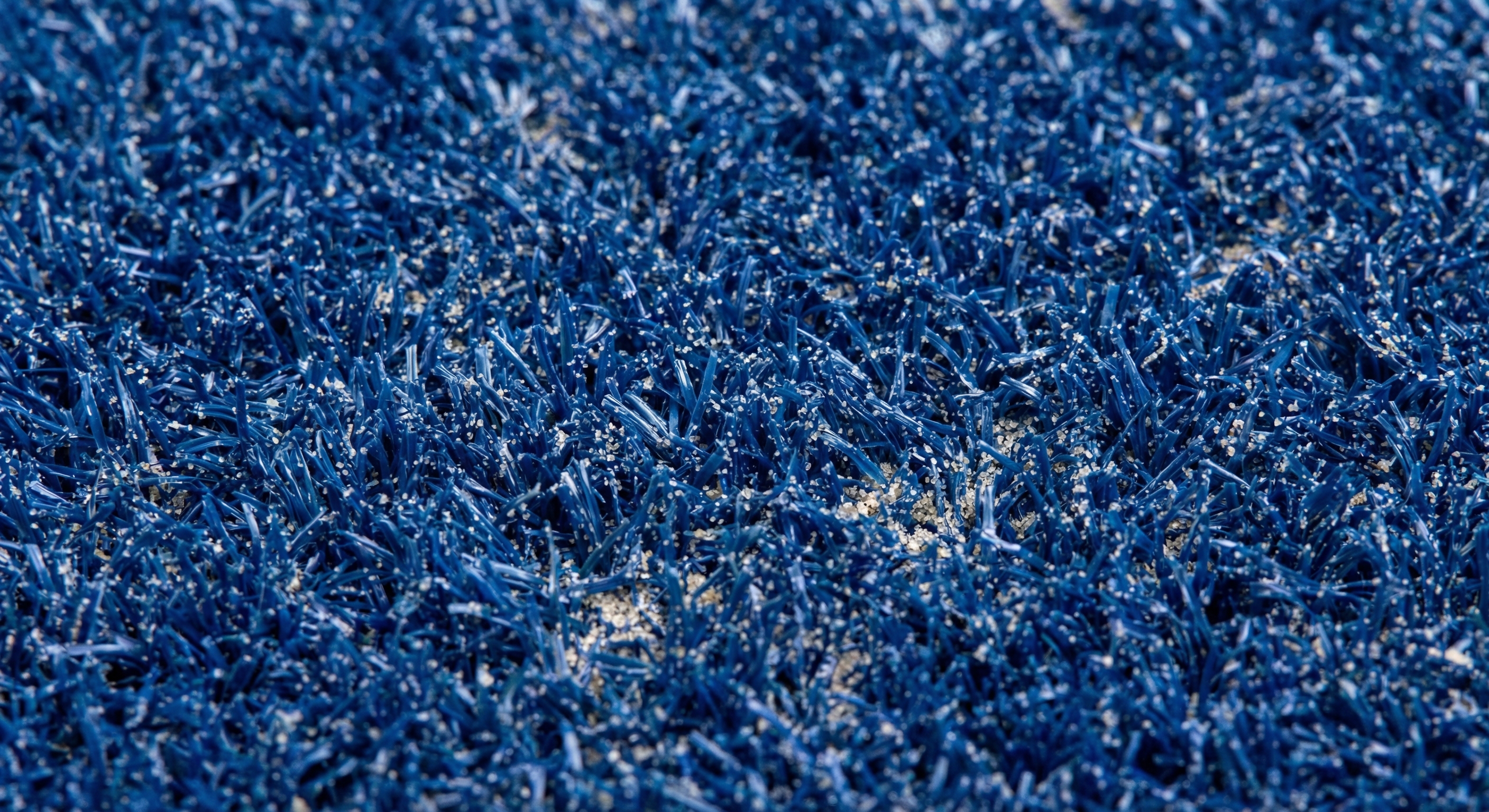
- UV-stabilized fibers prevent the blue or green color from fading in the sun.
- Specialized silica sand resists “clumping” when wet, maintaining playability.
Key Takeaway
Extreme weather is no match for a correctly specified panoramic court. Through advanced metallurgy and material science, these structures thrive in environments that would destroy traditional sports equipment.
| Weather Threat | Protection Method | Result |
|---|---|---|
| Salt Corrosion | Hot-Dip Galvanization | 20-year rust-free lifespan |
| UV Damage | Polyethylene Stabilizers | No turf fading or glass clouding |
| High Wind | Hurricane-Rated Engineering | Structural stability in storms |
The robust nature of these courts makes them a safe investment for clubs in any geographic location.
8. Which lights suit a panoramic padel court best?
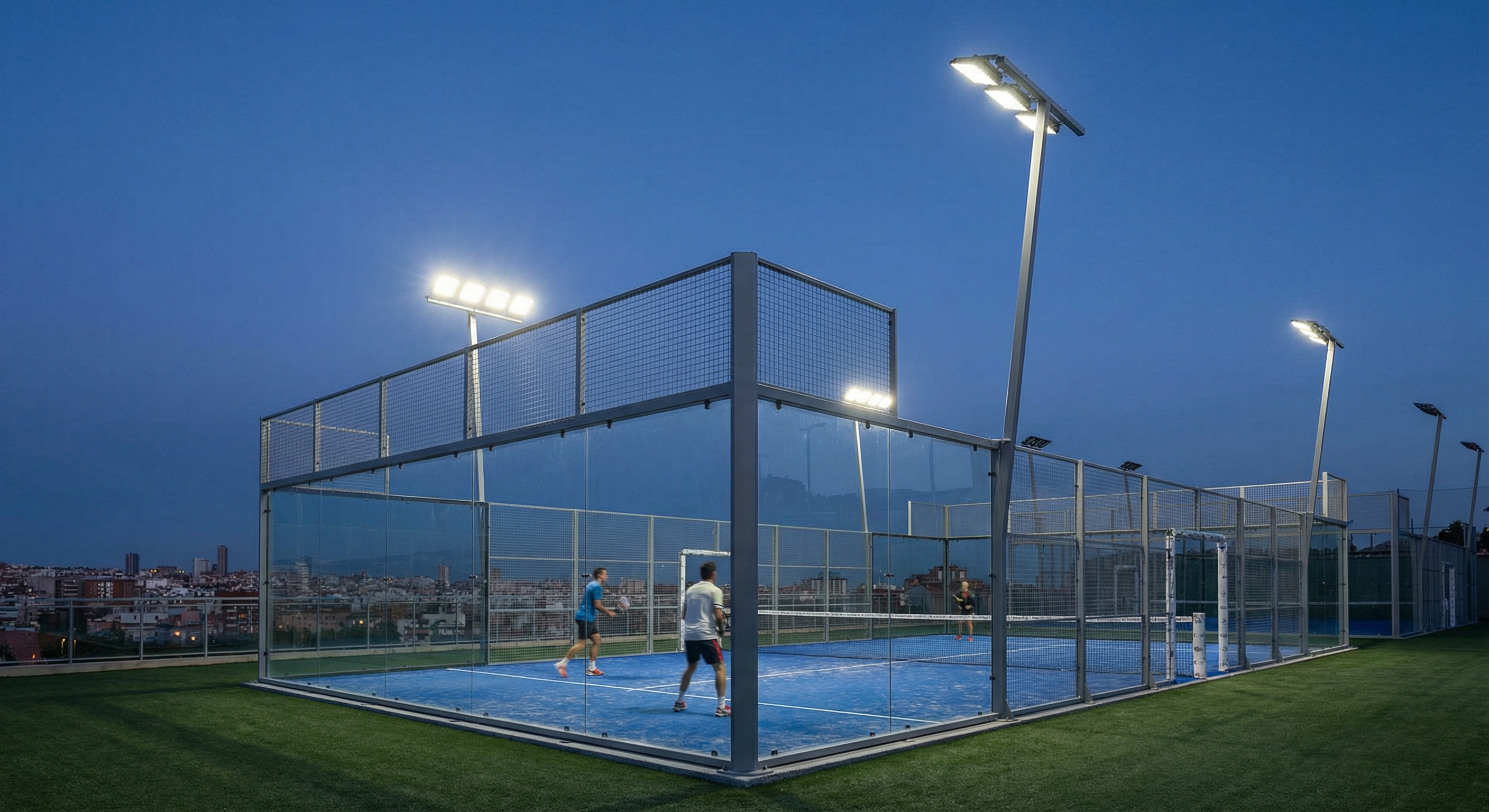
The lighting system for a panoramic padel court must be as advanced as the structure itself to avoid creating glare on the expansive glass walls. You should prioritize LED systems with asymmetric lenses that direct light onto the turf rather than scattering it towards the spectators or players’ eyes. Proper lighting not only extends your booking hours but also enhances the premium visual appeal of the court at night.
Why is 200W-300W LED the industry standard?
Here is the kicker: traditional metal halide lights are obsolete because they take too long to warm up and consume massive amounts of electricity. Modern LED floodlights provide instant illumination and can reduce your club’s energy bill by up to 60%.
- Provides a consistent 500-750 lux for professional-level visibility.
- Long lifespan of 50,000+ hours reduces the need for expensive bulb replacements.
- Flicker-free technology is essential for recording high-speed match video.
- Low heat emission prevents damage to nearby net systems or turf.
How do you prevent reflections on the panoramic glass?
The best part? Professional lighting designers use “light mapping” software to position the fixtures at the perfect angle. By using “curved” or “slanted” light posts, you can ensure the beam hits the court at an angle that minimizes the “mirror effect” on the back glass.
- Asymmetric optics push light towards the center of the court.
- Anti-glare shields can be fitted to the housing to protect spectators.
- Mounting heights of 6 to 8 meters ensure uniform light distribution.
- Positioning the posts away from the main spectator lines improves the view.
Can smart lighting systems improve ROI?
Make no mistake: being able to control your lights from a smartphone is a game-changer for club management. You can integrate your lighting with your booking software so the court only illuminates when a player has paid for their session.
- Motion sensors can dim the lights to 10% during gaps between bookings.
- Remote scheduling allows you to manage multiple courts without being on-site.
- Dimming capabilities allow for “mood lighting” during club social events.
- Energy monitoring tools help you track the exact cost of every match played.
Key Takeaway
Lighting is the final touch that defines the playability of a panoramic court at night. By choosing high-output, asymmetric LEDs, you ensure player safety, reduce operating costs, and maximize the aesthetic beauty of the glass.
| Lighting Feature | Benefit | Business Impact |
|---|---|---|
| Asymmetric Lens | Zero glare on glass | Better player performance |
| Instant-On LED | No wait times | Increased booking efficiency |
| Smart Integration | Automated control | Reduced labor and energy costs |
A well-lit panoramic court becomes a glowing beacon for your club, attracting players from miles away during the evening hours.
9. How much maintenance does a panoramic padel court require?
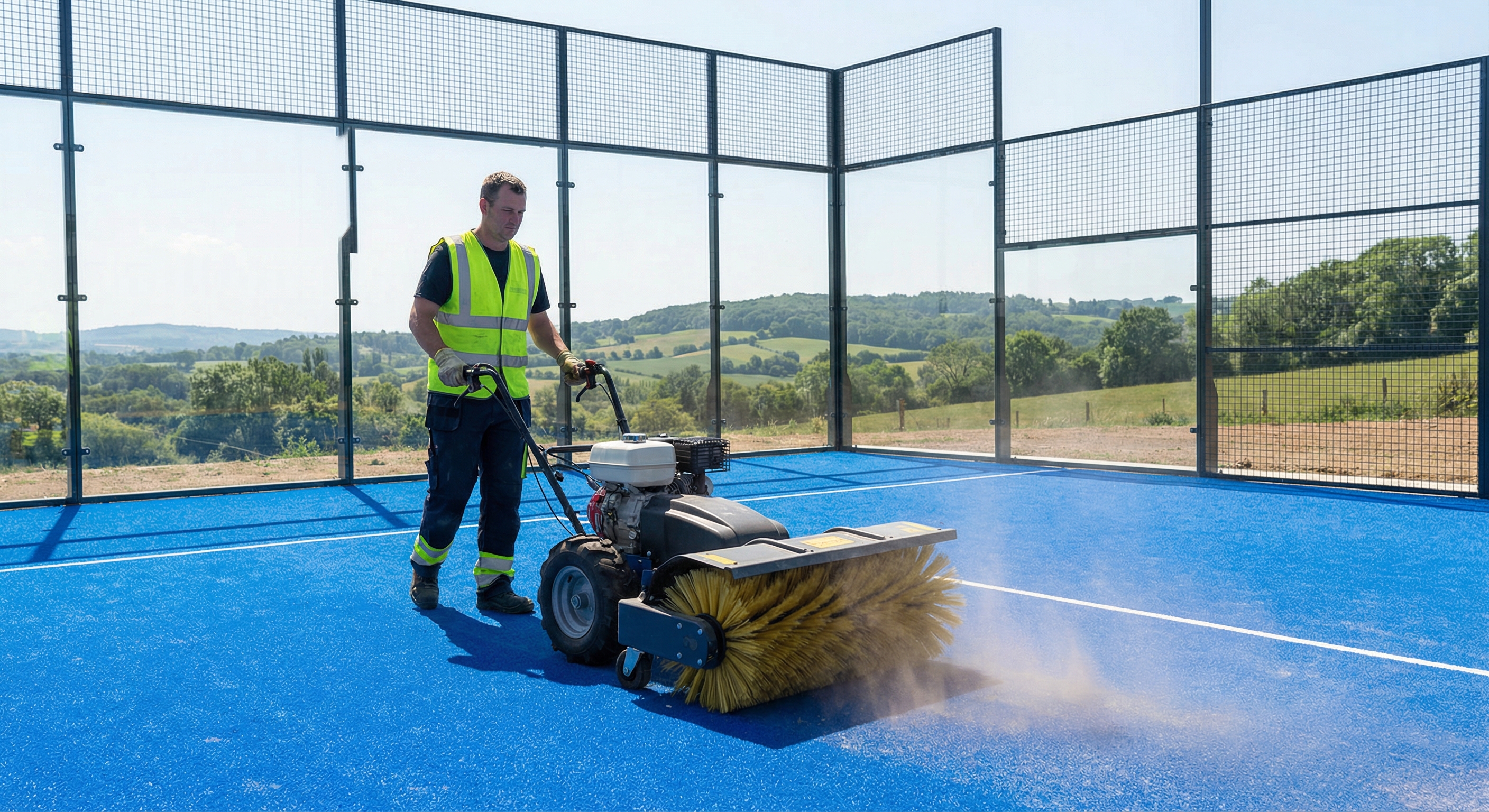
Maintenance for a panoramic padel court is surprisingly minimal, focusing primarily on glass clarity and turf consistency. You will find that because there are no mesh fences to sag or steel pillars to paint, the daily upkeep is faster than a standard model. However, to maintain the “premium” status of your facility, you must be diligent with cleaning and sand redistribution.
How often should you clean the panoramic glass?
Think about it: a “panoramic” view isn’t very impressive if it’s covered in fingerprints and dust. You should schedule a professional squeegee cleaning at least once a week to ensure the court remains a visual centerpiece for your members.
- Use only non-abrasive detergents to protect the glass surface.
- Check the glass-to-glass connectors for any salt or dirt buildup.
- Inspect the rubber gaskets for signs of wear or hardening.
- Remove bird droppings or tree sap immediately to prevent staining.
What is the proper way to maintain the turf?
Make no mistake: the “speed” of your court is determined by how you manage the silica sand infill. You must use a specialized services brush or an automated grooming machine to prevent the sand from compacting in high-traffic areas like the baseline.
- Brush the turf every 2-3 weeks to keep the fibers upright.
- Add “top-up” silica sand once a year to replace lost volume.
- Remove leaves and organic debris daily to prevent drainage clogs.
- De-compact the sand annually to maintain a consistent ball bounce.
What structural checks are required annually?
But wait, there’s more: because the panoramic design relies on fewer support points, you must verify that all anchor bolts remain tight. A quick annual inspection of the primary horizontal beams ensures the structural integrity remains at 100%.
- Torque-test the base plate bolts to ensure no loosening from vibration.
- Check the powder coating for any chips that need a “touch-up” pen.
- Inspect the net tensioning system and replace worn nets every 12-18 months.
- Verify that the LED cooling fans (if applicable) are free of dust and insects.
Key Takeaway
Panoramic courts are low-maintenance but high-discipline assets. Consistent cleaning of the glass and regular brushing of the turf are the two most important factors in preserving the court’s value and playability.
| Maintenance Task | Frequency | Estimated Time |
|---|---|---|
| Glass Cleaning | Weekly | 45 Minutes |
| Turf Brushing | Bi-Weekly | 30 Minutes |
| Bolt Inspection | Annually | 2 Hours |
A proactive maintenance schedule ensures that your investment continues to look brand new even after years of heavy use.
10. What is the estimated ROI of investing in a panoramic padel court?
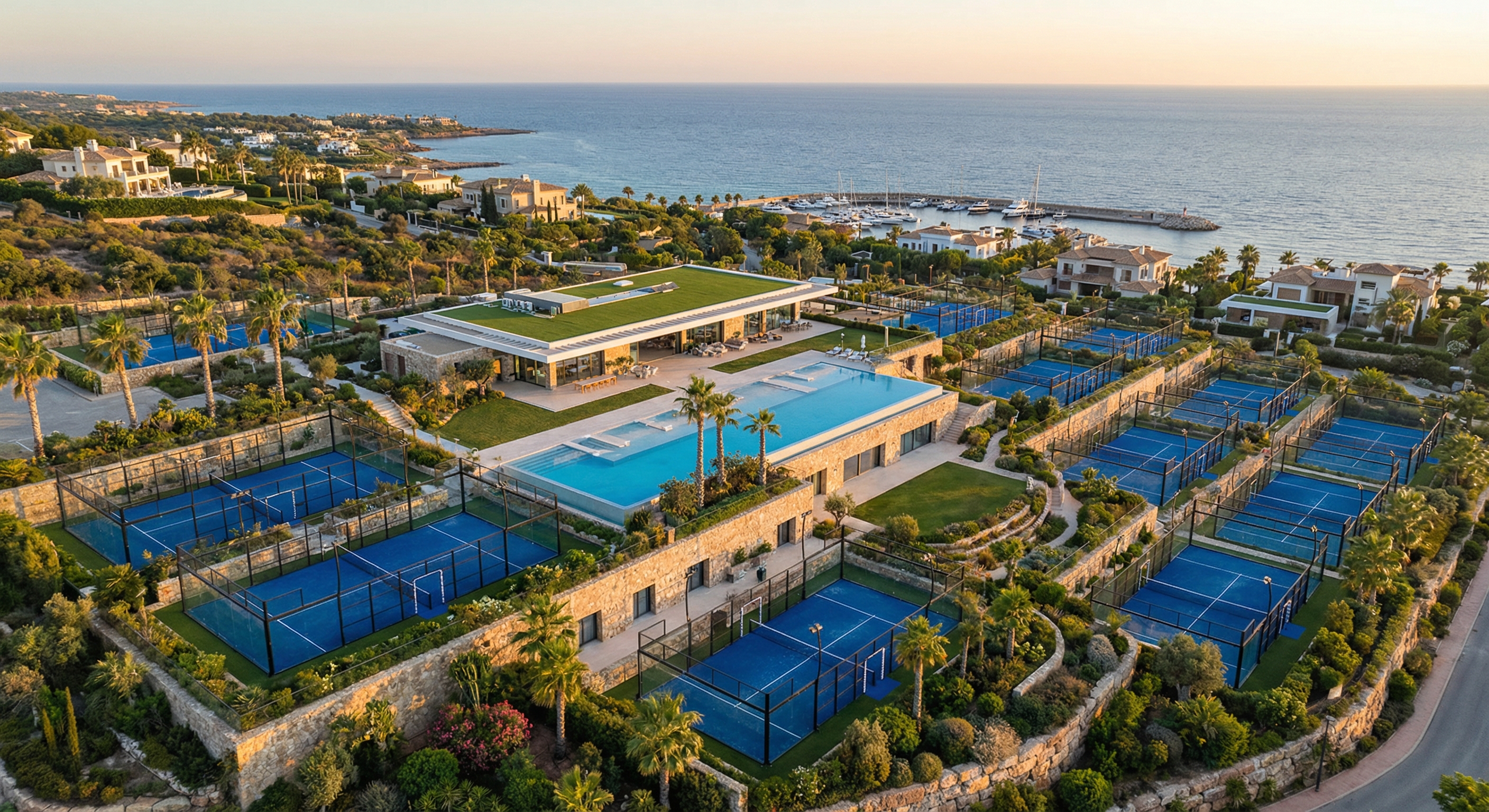
The return on investment (ROI) for a panoramic padel court is significantly faster than a standard model due to its ability to attract high-value bookings and sponsorships. You should view the extra upfront cost as a marketing and branding expenditure that pays dividends through higher occupancy rates and club prestige. In competitive markets, the panoramic court often becomes the “anchor” that drives traffic to the rest of your facility.
How do booking rates compare to standard courts?
Think about it: if two courts are available, players will almost always choose the panoramic one for the experience. This high demand allows you to implement a tiered pricing strategy where the “Center Court” costs 20-30% more per hour.
- Increases average revenue per user (ARPU) across the club.
- Maximizes peak-hour revenue when demand outstrips supply.
- Encourages players to book further in advance to secure the “best” court.
- Drives food and beverage sales as more people stay to watch matches.
What are the additional revenue streams?
Here is the kicker: a panoramic court isn’t just a place to play; it’s a stage for events. You can generate substantial income by renting the court for professional exhibitions, corporate team-building days, and brand photo shoots.
- Attracts high-value tournament sponsors who want their logos on a professional court.
- Facilitates the sale of VIP “viewing passes” for high-stakes matches.
- Provides a backdrop for professional coaching clinics and “pro-am” events.
- Increases the value of club memberships by offering a world-class environment.
What is the long-term asset value?
But wait, there’s more to the financial picture than just daily bookings. A high-quality panoramic court built with galvanized steel and 12mm glass has a lifespan of 20+ years, making it a very stable capital asset for your business.
- Low depreciation compared to other sports equipment or gym machinery.
- High resale value to other clubs if you decide to remodel your facility.
- Improves the overall property valuation for landlords or investors.
- Reduces the “cost of acquisition” for new members who are sold on the visuals.
Key Takeaway
The ROI of a panoramic padel court is driven by its “prestige factor.” By charging premium rates and leveraging the court for events and sponsorship, you can expect a full payback on the investment within 18 to 24 months of full operation.
| Revenue Source | Standard Court (Est.) | Panoramic Court (Est.) |
|---|---|---|
| Hourly Booking Fee | $40 / hr | $55 / hr |
| Monthly Sponsorship | $200 / mo | $800 / mo |
| Annual Events | $1,500 / yr | $10,000 / yr |
The financial data confirms that “Show Courts” are the most profitable assets in any modern padel facility.
Frequently Asked Questions
Can I install a panoramic padel court in an indoor warehouse?
Yes, you can certainly install them indoors. In fact, the panoramic design is highly recommended for indoor spaces because it removes the “caged-in” feeling often associated with warehouse sports facilities and makes the space feel much more open and professional.
What is the best way to handle glass breakage on a panoramic court?
The best way is to ensure you use 12mm tempered glass that meets CE standards, which shatters into tiny, non-sharp pieces if broken. You should always keep the contact information of your original installer, as panoramic glass panels have specific drill patterns for the connectors that must be perfectly matched during replacement.
Can I build a panoramic padel court on an existing tennis court?
You can, but you must first verify the thickness and reinforcement of the existing slab. Most tennis courts are built on 10cm of unreinforced concrete or asphalt, which is not strong enough to support the concentrated weight of a panoramic court’s glass walls; a new reinforced foundation “strip” is usually required.
How does a panoramic padel court perform in high-wind coastal areas?
It performs exceptionally well if it is engineered correctly. The lack of pillars is compensated for by using thicker steel for the horizontal beams and larger, deeper anchors in the concrete, allowing the court to withstand hurricane-force winds without structural failure.
Is it possible to customize the frame color of a panoramic court?
Absolutely. You can choose from any RAL color for the powder-coated finish. Most elite clubs choose matte black, charcoal grey, or deep navy to highlight the transparency of the glass and the vibrancy of the blue turf.
Ready to transform your club into a world-class sports destination with a professional panoramic design? Superb Padel is a leading manufacturer specializing in professional-grade sports infrastructure for elite clubs worldwide. Contact us today to receive a customized quote and expert engineering consultation for your next project.