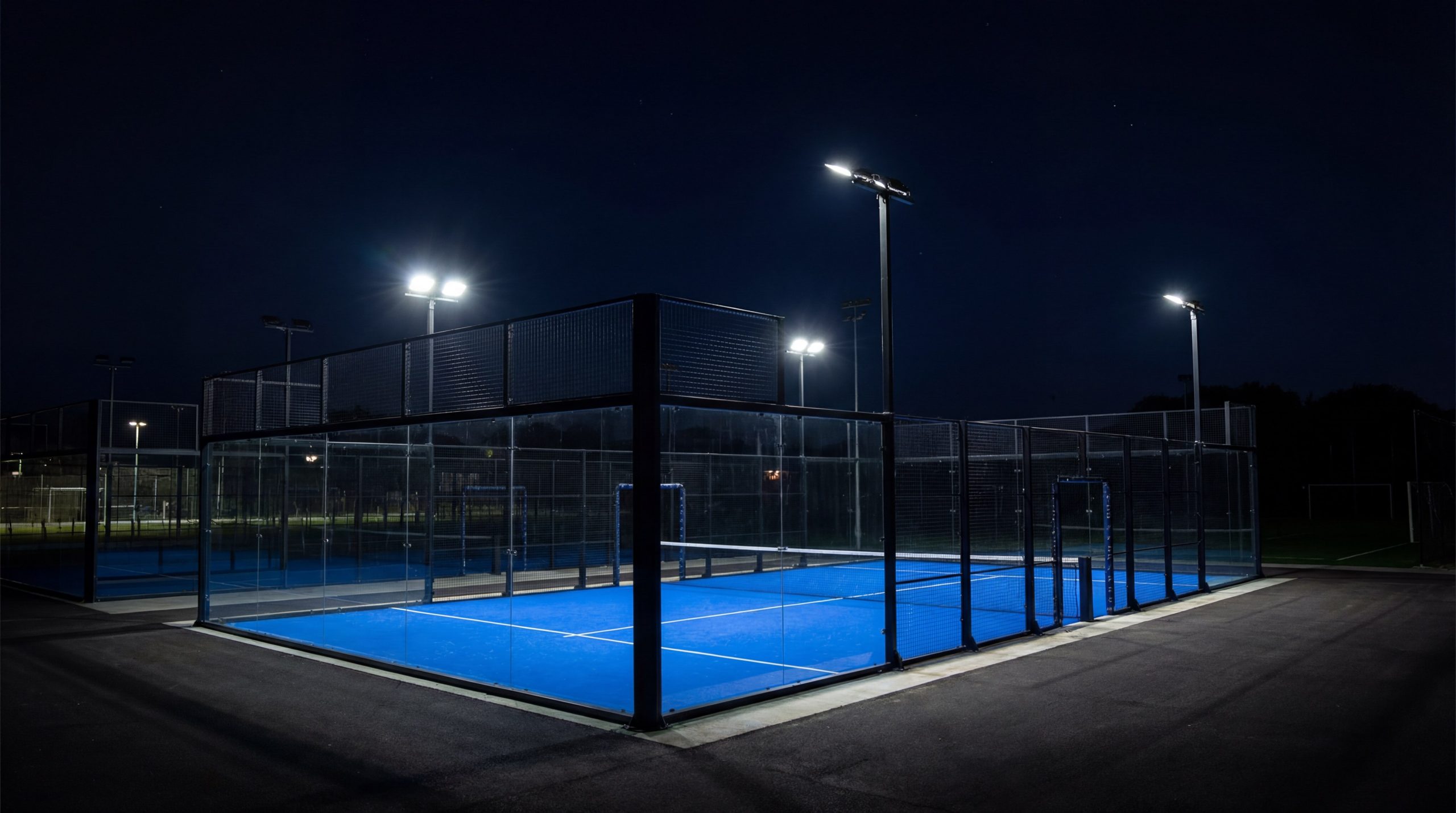
Finding a high-quality space to play padel is becoming increasingly difficult as the sport’s popularity outpaces the available infrastructure. You might have experienced the frustration of playing on poorly constructed courts with uneven surfaces, dead ball bounces, or dim lighting that ruins the evening game. Investing in your own terrain de padel ensures a professional-grade experience, and this guide provides the roadmap to building a court that lasts.
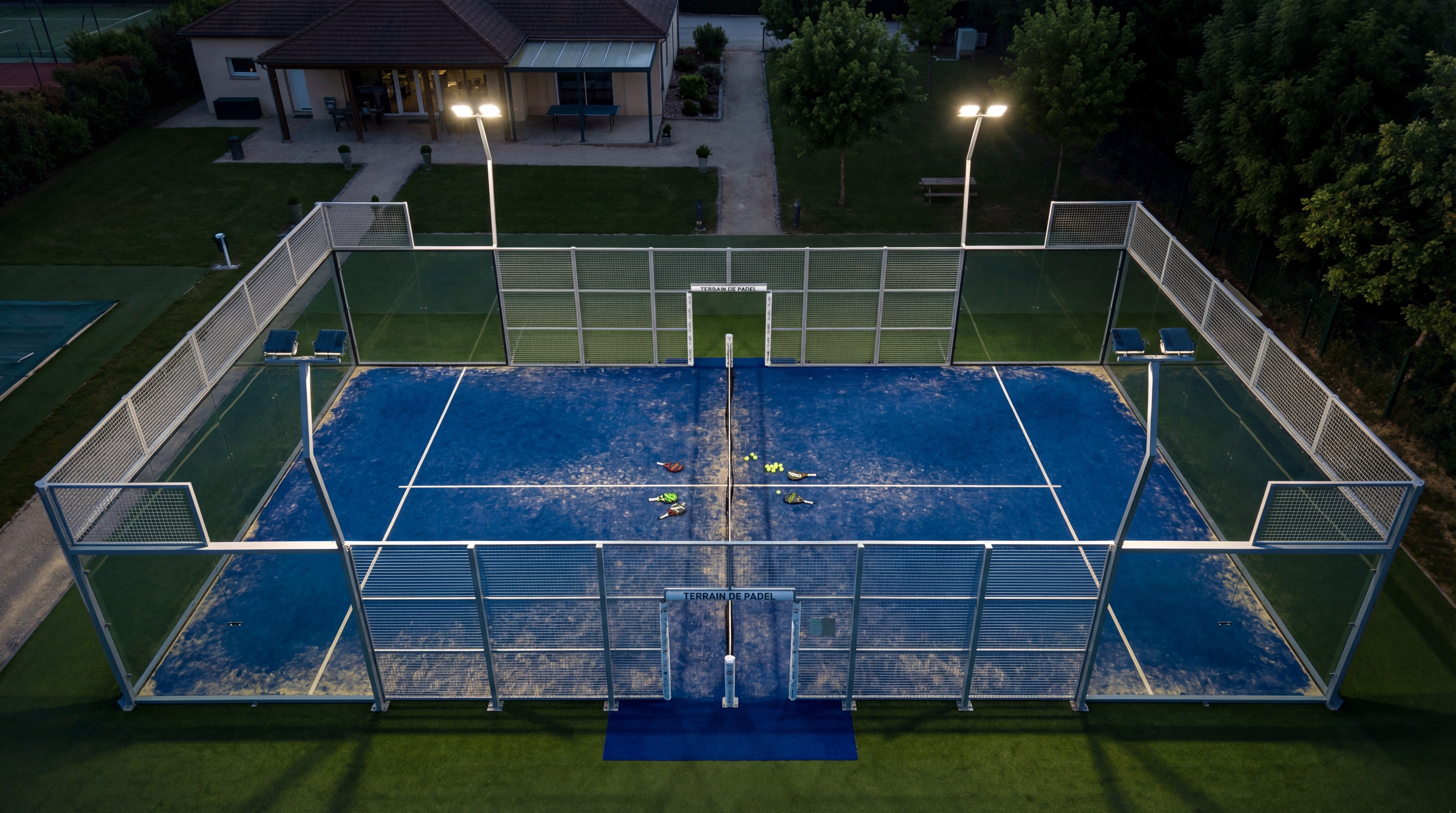
What exactly is a terrain de padel?
A terrain de padel is a specialized sports enclosure measuring 10 by 20 meters, specifically designed for a fast-paced racket sport that combines elements of tennis and squash. It features glass walls and metallic mesh that allow the ball to remain in play after hitting the perimeter. This unique environment fosters a social and strategic game typically played in doubles.
A unique blend of tennis and squash?
The game uses a perforated racket and a low-compression ball, making it easier to learn than traditional tennis. You can play the ball off the walls, which is where the squash-like strategy comes into play. This mix creates a dynamic experience where positioning is often more important than raw power.
Why is this sport exploding worldwide?
The smaller court size means you are always close to your partner and opponents, making it an incredibly social activity. It is less physically demanding on the joints than tennis but offers a high-intensity cardiovascular workout. You will find that the learning curve is short, allowing beginners to enjoy competitive rallies almost immediately.
| Feature | Description |
|---|---|
| Court Type | Enclosed racket sport facility |
| Core Elements | Glass walls, metallic mesh, artificial turf |
| Player Count | Typically 4 (Doubles) |
| Primary Goal | Social, strategic, and high-energy play |
Which terrain de padel types exist?
The primary terrain de padel types include standard, panoramic, and roofed designs, each catering to different aesthetic and functional requirements. Choosing the right one depends on whether you are building for a private residence, a commercial club, or a professional tournament. Modern engineering allows for high levels of customization in frame color and glass thickness.
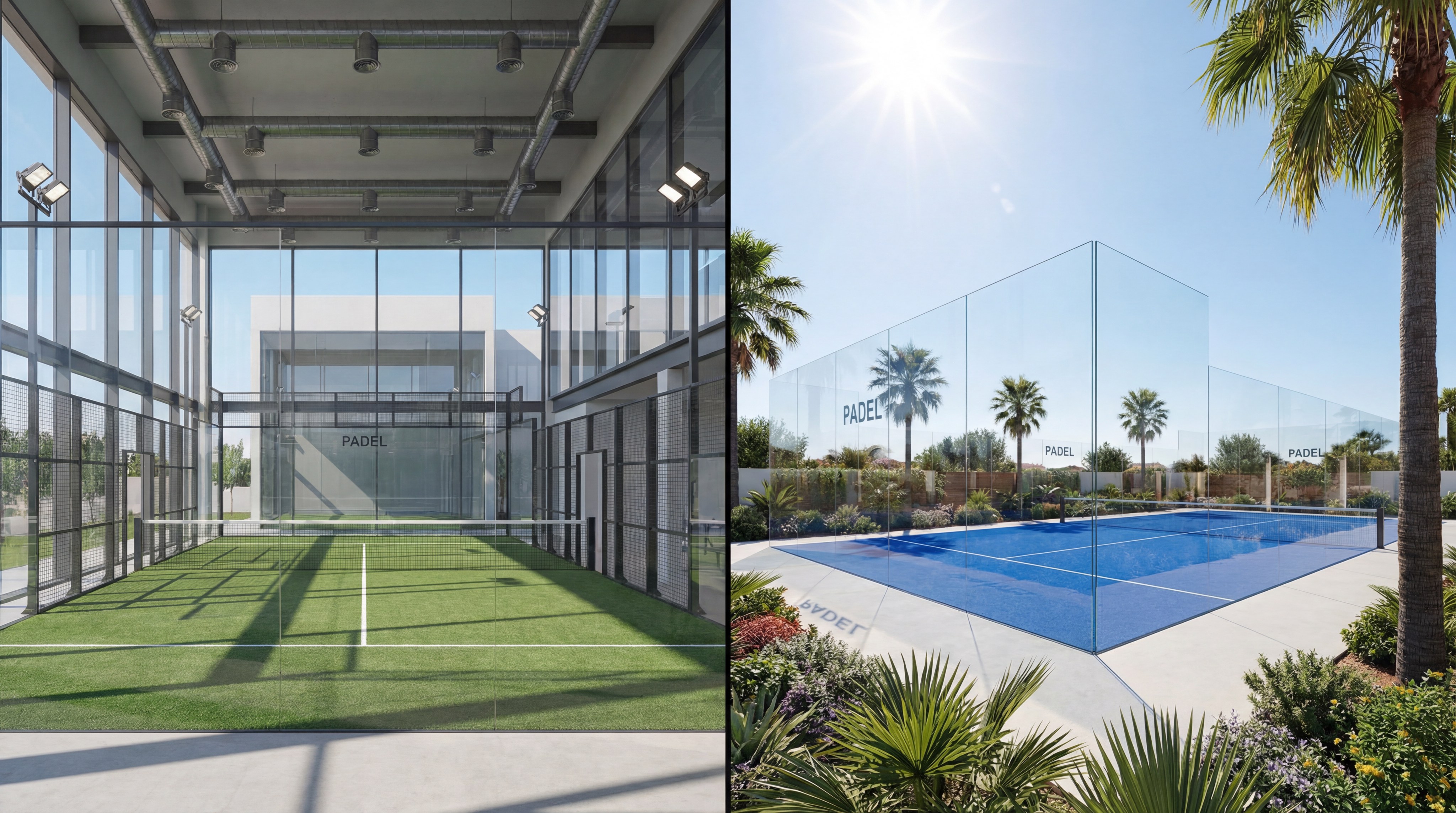
Choosing between standard and panoramic designs
Standard models use structural pillars at the corners and along the back, providing a robust and cost-effective solution. In contrast, the Panoramic Padel Court removes these rear pillars to provide an unobstructed view for spectators. You should choose the panoramic option if you plan to host filmed matches or want a high-end luxury look.
Should you opt for a roofed or indoor model?
A roofed court allows you to maintain consistent revenue or play schedules regardless of rain or intense sunlight. These structures can be integrated into the court frame or built as a separate hangar. If you live in a climate with extreme weather, a covered facility ensures your investment remains usable year-round.
The rise of reinforced and single-player courts
Reinforced courts are built with thicker steel to withstand high wind loads in coastal areas. If you have limited space, a single-player court (6m x 20m) offers a great way to practice or play one-on-one. These products are becoming popular for private gardens where a full-sized court might not fit.
| Court Type | Best Use Case | Key Advantage |
|---|---|---|
| Standard | Commercial clubs | High durability and lower cost |
| Panoramic | Tournament venues | Unobstructed spectator views |
| Roofed | All-weather facilities | Protection from rain and UV |
| Single | Private residences | Compact footprint for limited space |
What is the size of a terrain de padel?
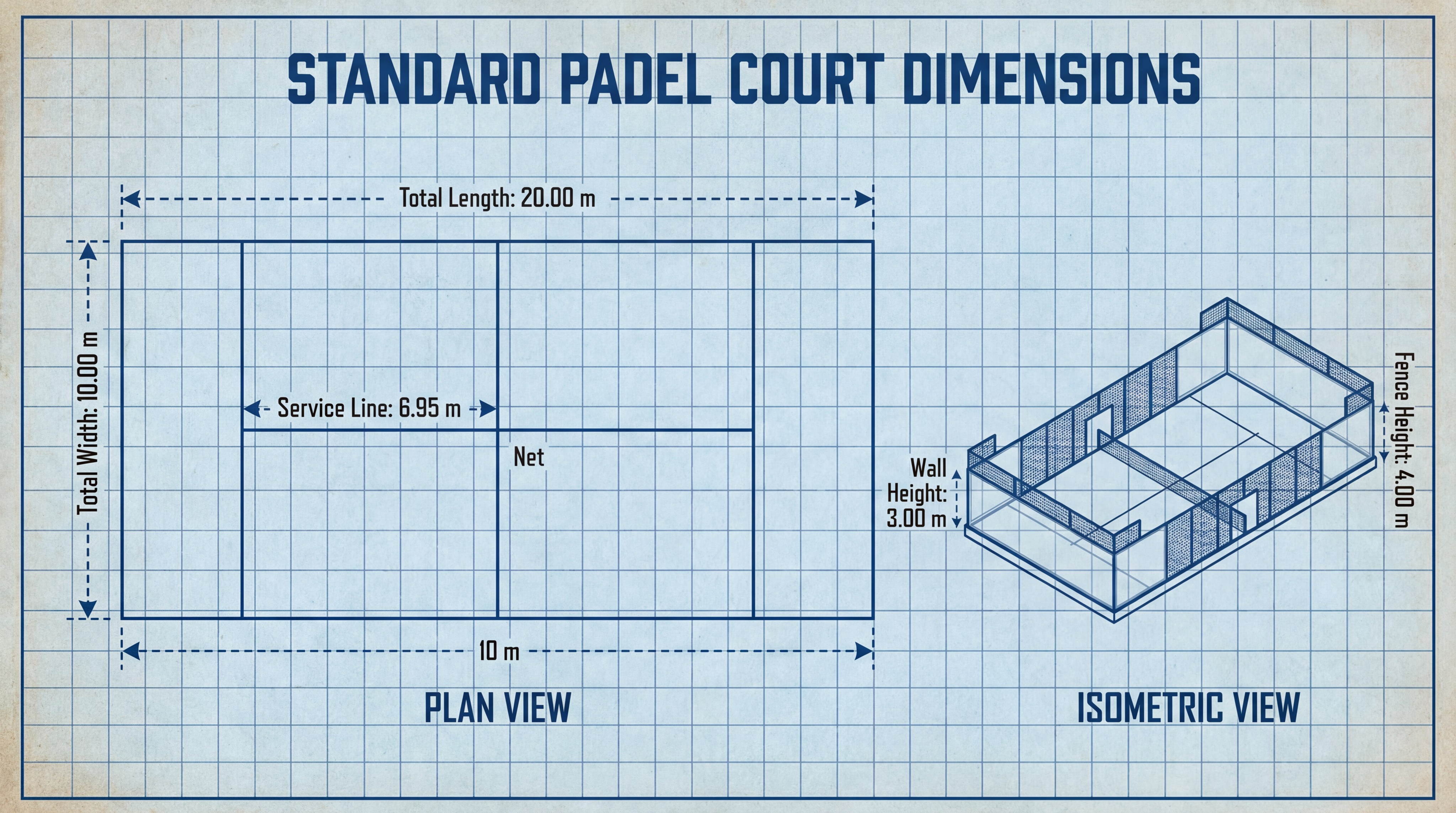
The official size of a standard terrain de padel for doubles play is 10 meters wide by 20 meters long. These dimensions are strictly regulated by the International Padel Federation (FIP) to ensure consistent play quality. The total footprint must also account for the structural supports and potential out-of-court play zones.
Standard dimensions for doubles play
The 200-square-meter area is divided by a net into two equal 10×10 meter squares. Service lines are positioned 6.95 meters from the net to define the legal serving area. You must ensure the boundary lines are clearly marked, usually in white or yellow, for maximum visibility against the turf.
How do single-player court sizes differ?
Single courts maintain the 20-meter length but reduce the width to just 6 meters. This creates a narrower, faster game that is perfect for training or individual coaching sessions. While less common in professional clubs, they are an excellent space-saving alternative for your home.
Regulation heights for glass and mesh walls
The back walls must be 4 meters high, consisting of 3 meters of glass topped by 1 meter of metallic mesh. Side walls typically transition from 4 meters at the corners to 3 meters along the mid-section. These heights ensure that most high lobs stay within the field of play while allowing for strategic wall bounces.
| Dimension | Standard Double | Single Court |
|---|---|---|
| Width | 10 Meters | 6 Meters |
| Length | 20 Meters | 20 Meters |
| Wall Height | 4 Meters (Back) | 4 Meters (Back) |
| Net Height | 88cm (Center) | 88cm (Center) |
How to prep the base for a terrain de padel?
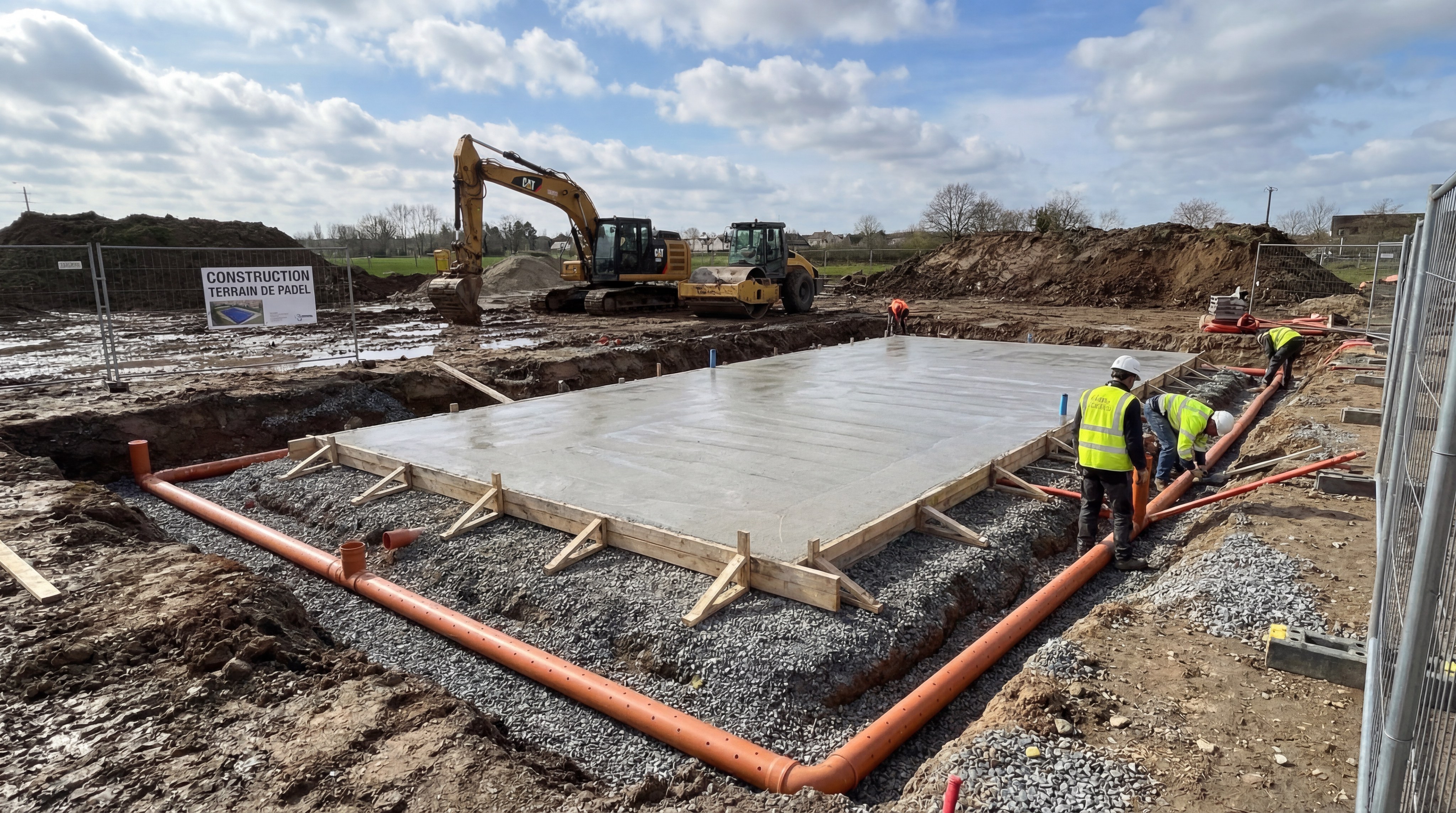
Preparing the base for a terrain de padel requires professional excavation, the installation of a drainage system, and the pouring of a level concrete slab. Without a stable foundation, the court surface will eventually shift, leading to cracks in the glass or wrinkles in the turf. A solid base is the most critical step for the longevity of your facility.
Why is a drainage system the first priority?
Water accumulation under the turf can cause the synthetic fibers to rot and create slippery, dangerous patches. You must install a perimeter drainage trench or use porous concrete to allow rainwater to exit the court area quickly. This prevents “bubbling” of the artificial grass after heavy storms.
Achieving a perfectly level concrete slab
A reinforced concrete slab, usually 15cm to 20cm thick, provides the necessary support for the heavy steel and glass structure. You should use a laser-leveling tool to ensure there are no depressions where water could pool. A smooth finish is essential so that the turf lays flat and the ball bounce remains uniform across the entire court.
Ground stabilization and excavation steps
The process begins by removing the top layer of vegetation and compacting the soil to prevent future settling. You then lay a sub-base of crushed stone to provide a stable, well-draining platform for the concrete. Proper site preparation ensures that your services for installation go smoothly without structural delays.
| Preparation Step | Material/Tool | Purpose |
|---|---|---|
| Excavation | Heavy machinery | Clear debris and level the soil |
| Sub-base | Crushed stone/Gravel | Provide stability and drainage |
| Foundation | Reinforced Concrete | Support the court structure |
| Finish | Laser Leveling | Ensure a perfectly flat surface |
What frame supports a terrain de padel?
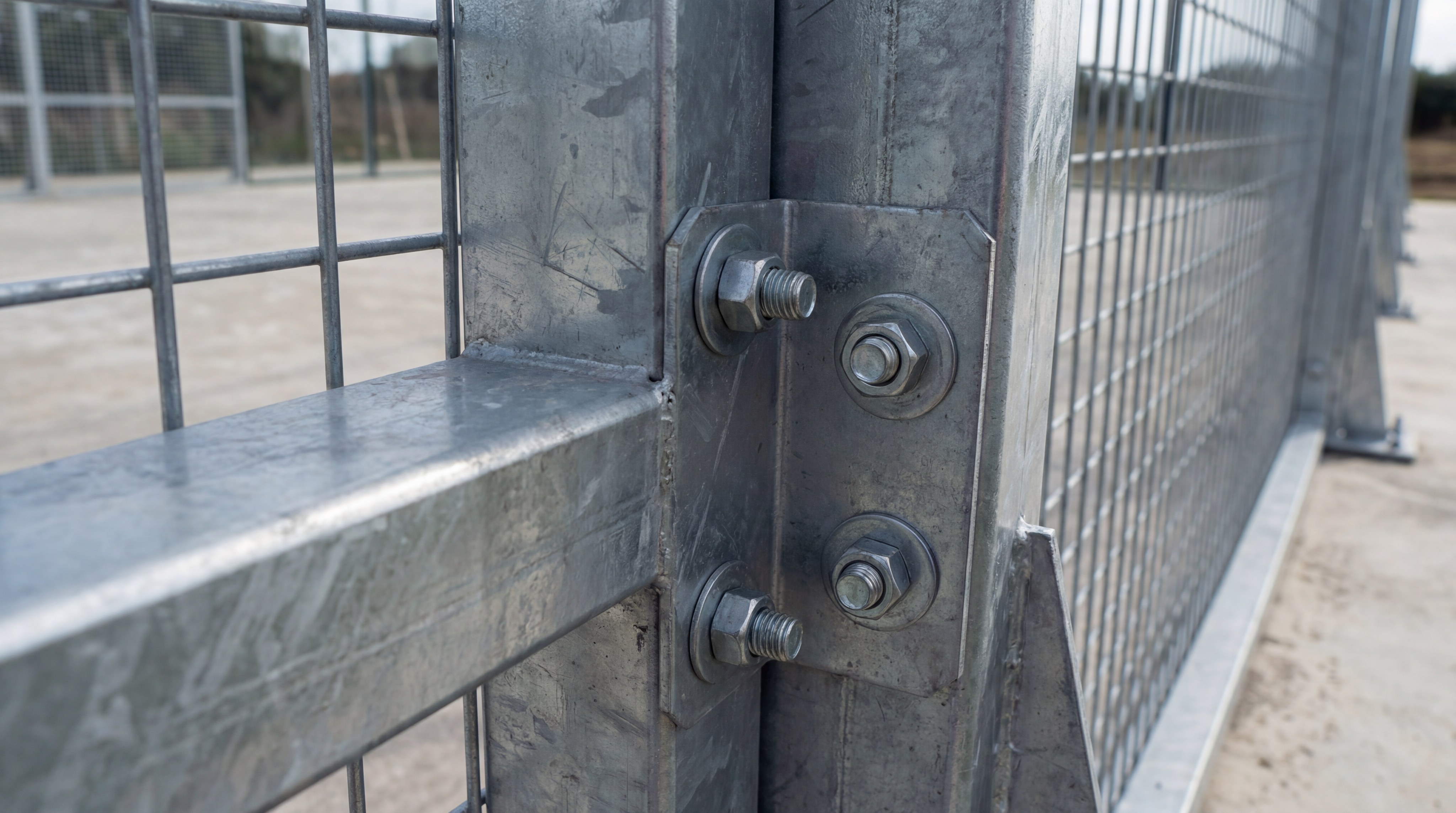
The frame of a terrain de padel is constructed from high-grade galvanized steel pillars and frames designed to support the weight of the glass panels and resist wind pressure. This metallic skeleton must be treated with anti-corrosion coatings to survive outdoor environments. The modular nature of modern frames makes the assembly process efficient and precise.
The importance of galvanized steel structures
Hot-dip galvanization is the gold standard for protecting the steel against rust, especially in humid or salty coastal climates. You should look for frames that are powder-coated after galvanization for an extra layer of protection and aesthetic appeal. This dual treatment ensures that your court remains structurally sound for over 20 years.
Modular designs for faster assembly
Modern Standard Padel Court designs use pre-drilled, modular components that bolt together on-site. This reduces the need for welding, which can damage anti-rust coatings and weaken the metal. You can expect a professional team to erect the basic frame in just a few days once the foundation is ready.
Ensuring resistance to wind and impact
The structure must be engineered to withstand the vibration of players running into the walls and the force of high-speed ball impacts. Engineers calculate wind load requirements based on your specific location to ensure the court won’t buckle during a storm. Heavy-duty base plates and anchor bolts are used to secure the pillars deep into the concrete foundation.
| Component | Material | Benefit |
|---|---|---|
| Pillars | Galvanized Steel | Structural strength and rust resistance |
| Coating | Electrostatic Powder | Aesthetic color and UV protection |
| Fasteners | Stainless Steel | Prevents corrosion at joint points |
| Mesh | Electro-welded Wire | Durable rebound surface |
Why is glass key to a terrain de padel?
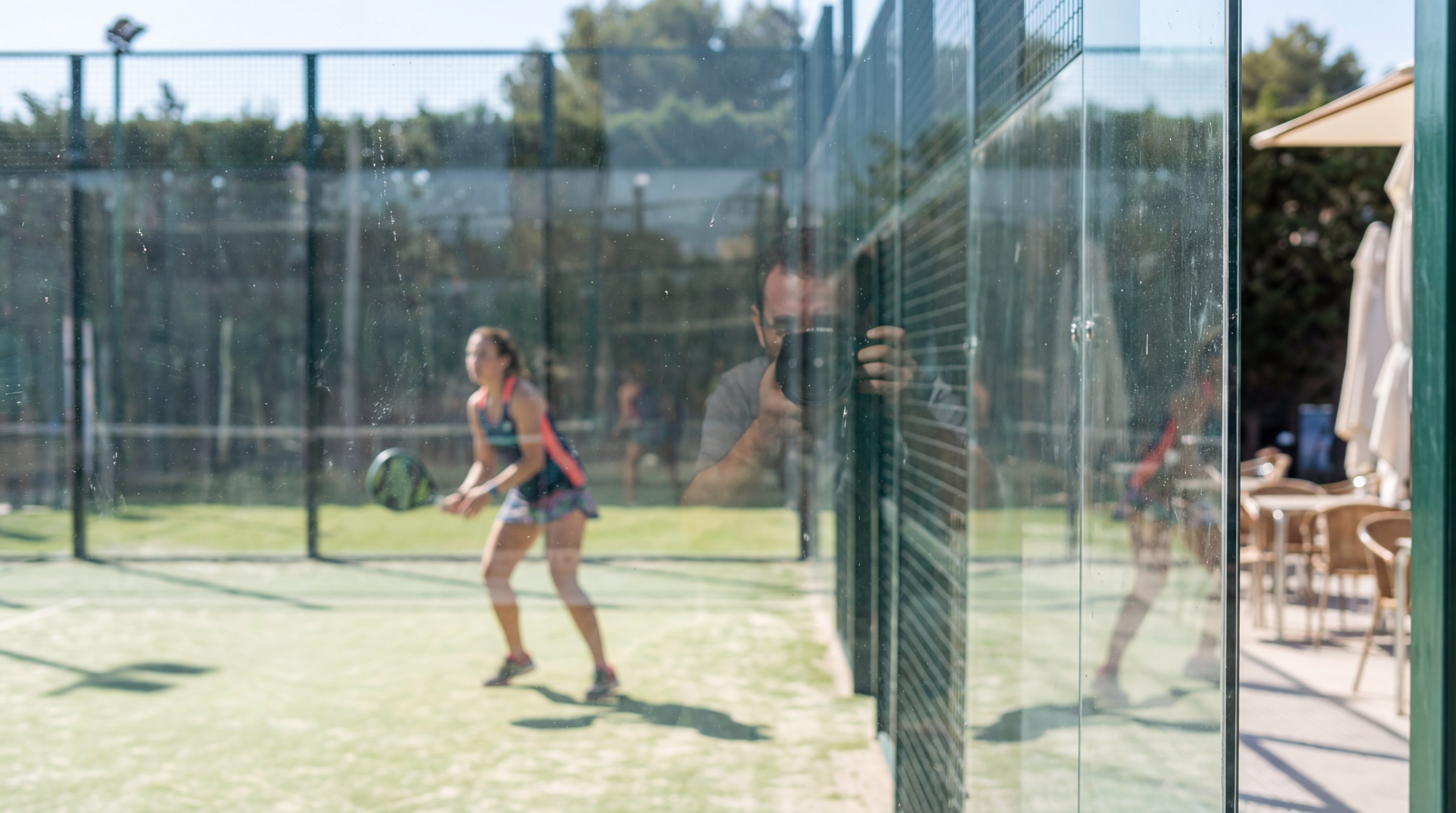
Glass is essential for a terrain de padel because it provides a consistent, predictable rebound surface and allows spectators to watch the game from any angle. Modern courts use tempered safety glass that is designed to be incredibly strong and break into small, blunt pieces if a failure occurs. This component transforms the court from a simple cage into a professional arena.
Anti-explosion tempered safety glass standards
You must use glass that meets international safety standards, such as EN 12150-1, to protect players from injury. This type of glass undergoes a thermal tempering process that increases its strength by four to five times compared to standard glass. It is specifically designed to withstand the impact of a player’s body weight during intense rallies.
Choosing between 10mm and 12mm thickness
While 10mm glass is common for residential or low-traffic courts, 12mm glass is the preferred choice for professional and commercial facilities. The thicker 12mm panels offer a superior ball bounce and less vibration when hit. You will find that 12mm glass provides a more premium feel and better long-term durability for high-frequency use.
Maintaining clear visibility for spectators
The transparency of the glass is what makes padel such an engaging spectator sport. You should ensure the glass panels are perfectly aligned during installation to avoid visual distortions. High-quality glass also resists scratching and maintains its clarity even after years of exposure to the elements.
| Glass Property | 10mm Option | 12mm Option |
|---|---|---|
| Safety Standard | Tempered / Toughened | Tempered / Toughened |
| Impact Resistance | Standard | High |
| Bounce Quality | Good | Professional |
| Recommended Use | Private / Residential | Commercial / Professional |
Which turf fits a terrain de padel best?
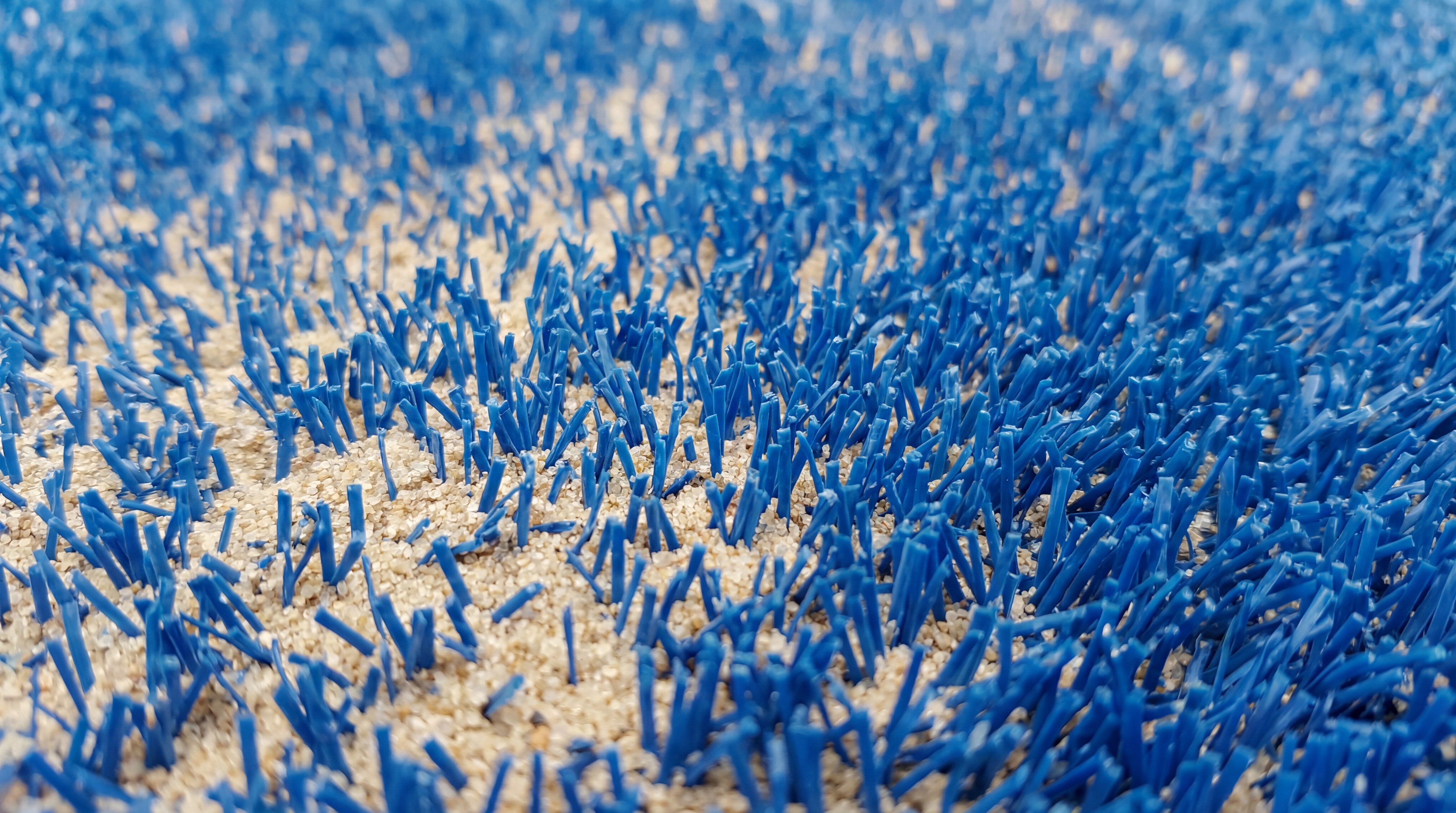
The best turf for a terrain de padel is a high-density, fibrillated or monofilament artificial grass specifically engineered for the sport’s unique movement patterns. This surface must balance player traction with the ability for the ball to slide and bounce naturally. Most professional courts use a sand-filled system to stabilize the fibers and provide a consistent playing experience.
Blue, green, or red artificial grass?
While green provides a traditional look, blue has become the global standard because it offers the best contrast against the yellow ball. You can also opt for clay-red or even black turf to match your club’s branding or personal preference. Regardless of the color, ensure the yarn is UV-stabilized so it doesn’t fade under the sun.
High-density fibers for consistent ball bounce
The density of the grass blades determines how the ball interacts with the surface. High-quality turf features thousands of stitches per square meter to prevent the ball from “dying” on impact. You want a surface that allows for a predictable vertical bounce, which is essential for high-level strategic play.
Anti-slip properties and injury prevention
Artificial turf is designed to be kinder to your joints than hard tennis courts or concrete. The combination of synthetic fibers and silica sand infill provides a cushioning effect that reduces the risk of knee and ankle injuries. You should look for turf with a high “Dtex” rating, which indicates the durability and thickness of the grass fibers.
| Turf Type | Fiber Shape | Best For |
|---|---|---|
| Fibrillated | Slit-film | Retaining sand and durability |
| Monofilament | Individual blades | Natural look and play feel |
| Texturized | Curly fibers | Low maintenance and high density |
| Standard Colors | Blue, Green, Red | Player visibility and aesthetics |
How to light a terrain de padel at night?
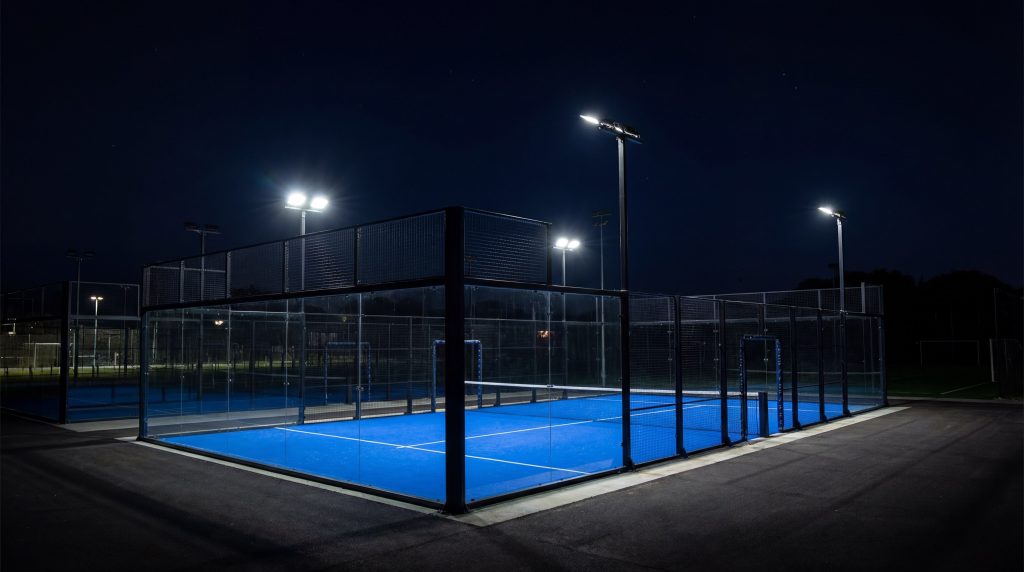
Lighting a terrain de padel at night requires a minimum of eight high-efficiency LED floodlights mounted on four poles to ensure uniform brightness across the entire surface. Proper illumination is vital for tracking the fast-moving ball and ensuring player safety during evening matches. Modern LED systems provide instant-on capability and significant energy savings compared to old metal-halide lamps.
High-efficiency LED floodlight requirements
You should aim for a lighting level of at least 300 to 500 lux for recreational play, and up to 750 lux for professional tournaments. LED floodlights with 200W output are typically used to achieve this intensity without creating glare. High-quality lights also have a high Color Rendering Index (CRI), making the court colors appear vivid and natural.
Achieving uniform illumination across the court
Uniformity is key because dark spots or shadows can make it difficult to judge the speed and trajectory of the ball. You must position the light poles at the mid-points of the side walls to cast even light across the net and into the corners. This setup prevents players from being blinded when looking up to hit a high lob or smash.
Waterproofing and energy-saving solutions
Outdoor lighting must have an IP65 or IP66 waterproof rating to withstand rain and humidity. You will benefit from LED technology because it uses up to 60% less electricity than traditional lighting systems. Furthermore, LEDs have a much longer lifespan, reducing the frequency and cost of maintenance for your facility.
| Lighting Factor | Requirement | Benefit |
|---|---|---|
| Lux Level | 300 – 750 Lux | Visibility and safety |
| Technology | LED | Energy efficiency |
| Lifespan | 50,000+ Hours | Low maintenance costs |
| Protection | IP66 Rated | All-weather reliability |
What is the terrain de padel price range?
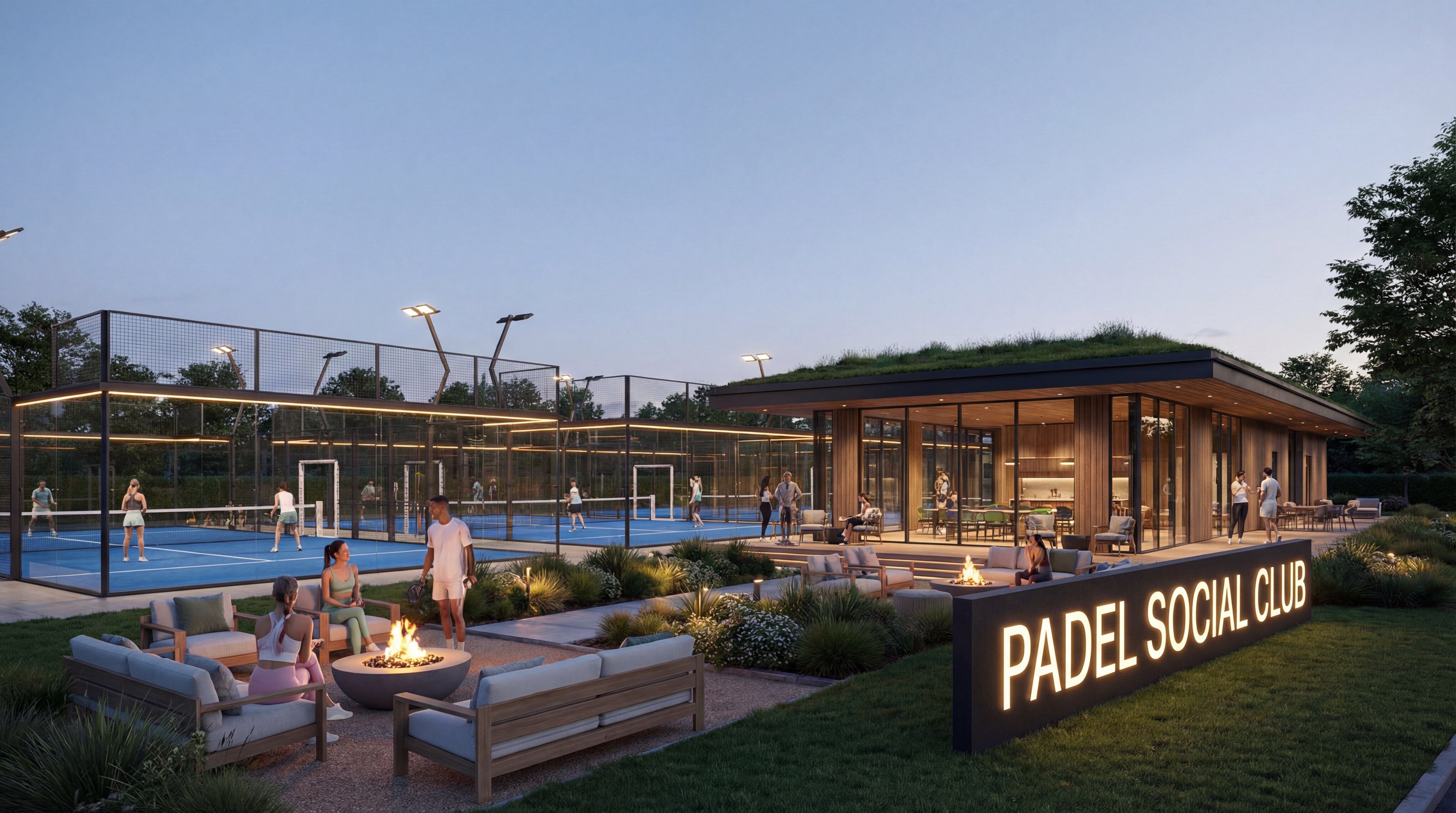
The price of a terrain de padel typically ranges from $15,000 to $35,000 for the court equipment, excluding the cost of the concrete foundation and installation labor. Your total investment will fluctuate based on the quality of materials, such as glass thickness and steel treatment. Commercial projects with multiple courts often benefit from bulk purchasing and shared infrastructure.
Factors that influence construction costs
Logistics and shipping play a major role in the final price, especially if the components are traveling long distances. You must also consider the cost of local permits, ground preparation, and electrical work for the lighting system. Premium features like panoramic glass or custom branding will also add to the initial capital requirement.
From single courts to full-scale club facilities
Building a single court for home use is a different financial undertaking than developing a 10-court commercial hub. A full club requires additional spending on amenities like changing rooms, pro shops, and social cafes. You should view the court itself as the core asset that drives the ROI of the entire facility.
Balancing quality materials and budget
While it is tempting to choose the cheapest option, low-quality steel and thin turf will lead to higher repair costs within just a few years. Investing in hot-dip galvanized steel and 12mm glass ensures your court remains attractive and functional for decades. You should prioritize structural safety and play quality over minor aesthetic upgrades if the budget is tight.
| Cost Component | Estimated Range | Note |
|---|---|---|
| Court Kit | $15,000 – $35,000 | Depends on model and glass |
| Foundation | $5,000 – $15,000 | Site-specific excavation/concrete |
| Installation | $3,000 – $7,000 | Professional labor and tools |
| Total Project | $25,000 – $60,000+ | Per court, fully operational |
How to care for a terrain de padel long-term?
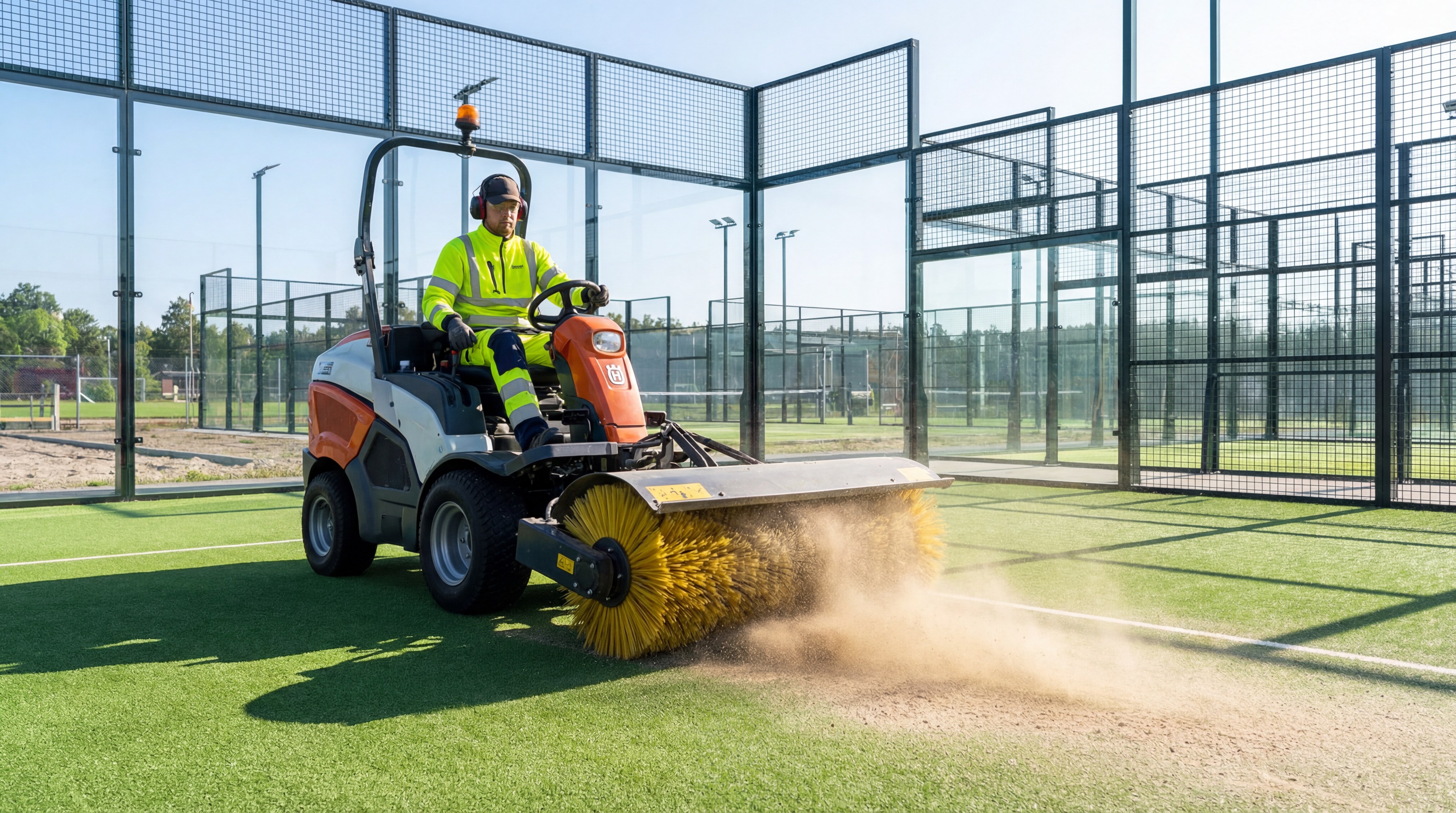
Caring for a terrain de padel involves regular brushing of the turf, cleaning the glass panels, and periodic inspections of the structural bolts and net tension. Proper maintenance prevents the buildup of organic matter and ensures the safety of all players. A well-maintained court not only looks better but also retains its value and performance for many years.
Essential maintenance for the playing surface
You should brush the artificial turf at least once a week to redistribute the sand infill and keep the fibers upright. This prevents the surface from becoming “compacted” and slick, which can lead to unpredictable ball bounces. Removing leaves, trash, and weeds promptly will prevent the drainage system from clogging.
Checking structure and glass safety regularly
Extreme temperature changes and player impacts can cause structural bolts to loosen over time. You should perform a monthly check of all fasteners and the tension of the metallic mesh. Cleaning the glass with standard window cleaners keeps the court looking professional and ensures spectators have a clear view of the action.
Tips for ensuring a 20-year court lifespan
Avoid using harsh chemicals or pressure washers on the turf, as this can damage the synthetic fibers. You should also replace the net every one to two years, as it is the component most susceptible to wear and UV degradation. Following a consistent maintenance schedule will ensure your contact us today request remains for upgrades rather than repairs.
| Task | Frequency | Action |
|---|---|---|
| Turf Brushing | Weekly | Evenly distribute sand |
| Glass Cleaning | Bi-Weekly | Remove smudges and dust |
| Bolt Inspection | Monthly | Tighten structural fasteners |
| Net Replacement | 12 – 24 Months | Ensure proper tension/safety |