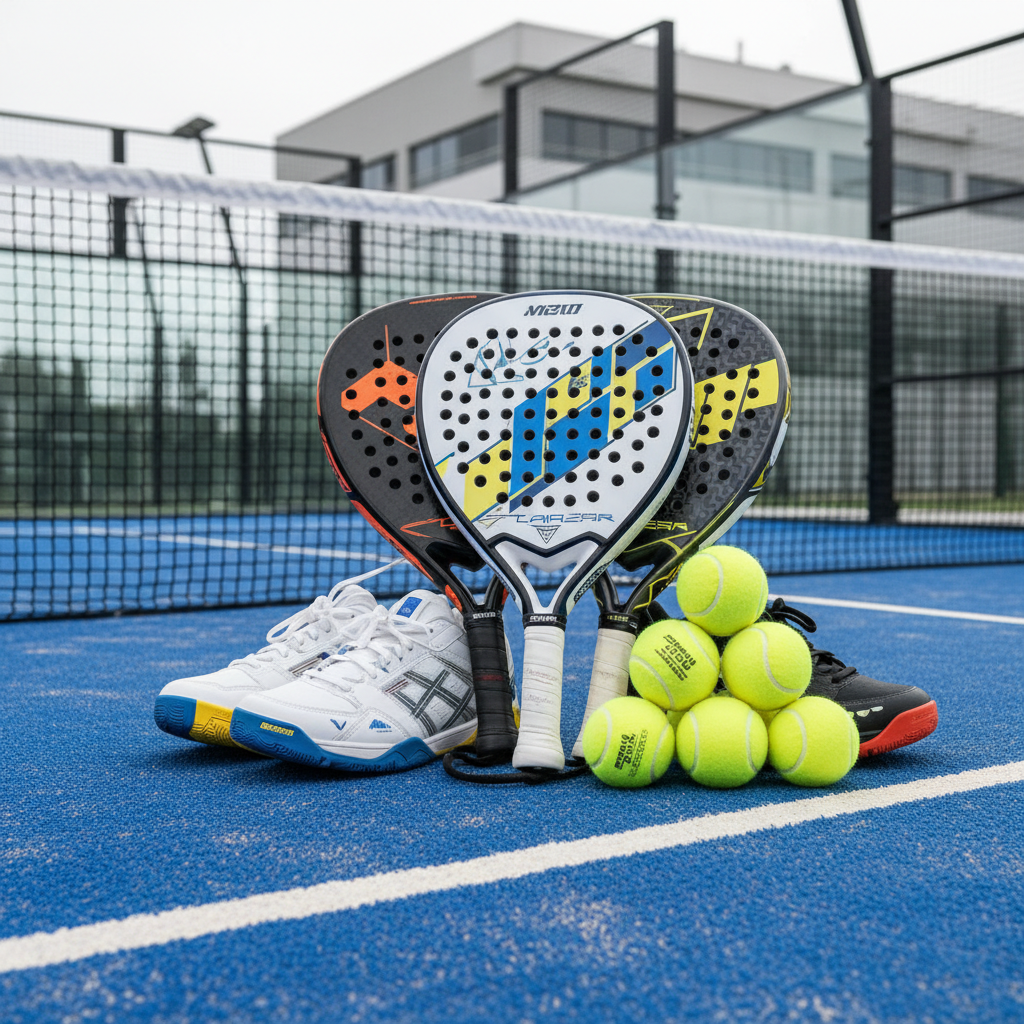
Professional padel equipment consists of specialized carbon-fiber rackets, low-pressure rubber balls, and technical court hardware engineered to facilitate a high-speed game played within glass-walled enclosures. You often find that traditional racket sport gear fails to accommodate the specific requirements of the smaller court dimensions and the unique ball-rebound physics found in this discipline. Mastering the selection and assembly of these components represents the most efficient pathway toward achieving consistent performance and ensuring the structural integrity of your playing environment. This guide provides an analytical breakdown of every necessary tool while offering actionable steps for building a high-standard gear kit tailored to competitive B2B sports facility requirements.
1. What constitutes the essential range of padel equipment?
The primary range of padel equipment includes perforated rackets with solid cores, pressurized balls with reduced bounce metrics, and specific court components like net systems and glass panels. You must recognize that these items are strictly regulated by the International Padel Federation to maintain a standardized level of competition across global venues. Professional facility managers prioritize gear that withstands high-frequency impact while providing a safe and predictable experience for all participants during intense match play. Investing in a standardized equipment suite prevents the development of poor technical habits caused by inconsistent ball flight or improper racket balance points.
What are the specific technical requirements for rackets?
Here is the deal. Professional rackets must feature a stringless hitting surface constructed from composite materials like carbon fiber or fiberglass to ensure maximum durability and control. You will notice that these frames possess a maximum thickness of 38 millimeters and an overall length that does not exceed 45.5 centimeters to remain within legal tournament specifications.
- The racket face must contain a specific pattern of holes ranging from 9 to 13 millimeters in diameter.
- The safety wrist strap is a mandatory component for preventing the racket from accidentally flying out of your hand during overhead smashes.
- Surface textures can vary from smooth to rough to assist in generating ball spin during technical volleys.
| Component | Standard Metric | Material Choice | Primary Function |
|---|---|---|---|
| Racket Frame | 38mm Thickness | Carbon Fiber | Structural Rigidity |
| Racket Core | EVA / Polyethylene | Compressed Foam | Shock Absorption |
| Racket Surface | Perforated Face | Composite Layers | Aerodynamic Control |
The data confirms that adhering to these precise dimensions allows players to execute high-speed maneuvers without risking mechanical failure or violating international competitive regulations.
Key Takeaway: You should always verify that every racket in your facility meets the 38mm thickness rule to provide a level playing field for all athletes.
2. How do you evaluate the quality of padel equipment?
Evaluating the quality of padel equipment involves analyzing the density of the internal foam cores and the tensile strength of the exterior carbon weaving. You should inspect the uniformity of the holes on the racket face to ensure that the balance point remains consistent across the entire striking surface. Quality gear often features reinforced bridges in the handle area to reduce the transmission of harmful vibrations into the player’s elbow and wrist joints. Experienced auditors look for specialized certifications that prove the equipment has undergone rigorous thermal and mechanical stress testing before entering the commercial market.
How do core materials impact the feel of the ball?
You might be wondering. The choice between EVA and Polyethylene cores determines whether a racket provides a firm, precise response or a softer, more powerful ball exit. You will find that harder EVA cores offer significant advantages for advanced players who possess the physical strength to generate their own power through fast swing speeds.
- Hard cores provide greater durability and resist softening during long sessions in high-temperature environments.
- Soft cores offer a larger sweet spot which helps beginner players maintain consistency during defensive rallies.
- Hybrid cores are increasingly popular for those seeking a balance between high-velocity smashes and delicate drop shots.
| Material Type | Density Level | Player Level | Outcome |
|---|---|---|---|
| EVA High Memory | High | Advanced | Maximum Precision |
| Polyethylene | Low | Beginner | Comfortable Power |
| Dual Core | Variable | Intermediate | Balanced Response |
The analysis shows that matching foam density to the player’s technical proficiency is the most effective way to optimize on-court performance and comfort.
Key Takeaway: You must select equipment based on the specific skill levels of your players to prevent frustration caused by overly stiff or unresponsive racket cores.
3. Why does specialized padel equipment improve court safety?
Specialized padel equipment improves court safety by utilizing advanced shock-absorption technologies and high-grip sole patterns designed specifically for synthetic grass surfaces. You will find that standard tennis gear lacks the lateral support needed for the explosive direction changes and sudden stops that characterize this high-speed sport. Professional shoes feature deep herringbone or omni-sole patterns that prevent your feet from sliding unexpectedly on the sand layers typical of modern courts. Rackets with integrated vibration-dampening systems act as a primary defense against the repetitive stress injuries that often plague unconditioned or recreational athletes.
How does proper footwear prevent common ankle injuries?
This is where it gets interesting. Padel shoes are engineered with a reinforced heel and a lower center of gravity to stabilize your ankle during rapid side-to-side movements. You will notice that the lateral stabilizers built into the midsole prevent the foot from rolling over when chasing deep lobs or executing a quick retreat from the net.
- The pivot point in the sole allows for smooth rotations without catching the turf and straining your knee ligaments.
- High-density cushioning in the heel absorbs the vertical impact of jumping for overheads on hard concrete-based foundations.
- Breathable mesh materials help regulate temperature and prevent moisture buildup that could lead to slipping inside the shoe.
| Footwear Feature | Technical Design | Health Benefit | Performance Impact |
|---|---|---|---|
| Pivot Point | Circular Sole Cut | Knee Protection | Easier Rotations |
| Lateral Stabilizer | TPU Insert | Ankle Stability | Safer Sprints |
| Herringbone Grip | Deep Grooves | Slip Prevention | Better Traction |
The evidence suggests that investing in sport-specific footwear is a non-negotiable requirement for any facility aiming to minimize liability and player injury rates.
Key Takeaway: You should mandate the use of specific court shoes to protect both the players’ joints and the longevity of the expensive synthetic turf.
4. Can you manufacture custom padel equipment at home?
Manufacturing custom accessories or modifying your gear at home allows you to adjust the balance and grip ergonomics to fit your specific physical dimensions. While creating a full carbon-fiber frame requires an industrial autoclave, you can easily build training aids or customize the weighting of existing rackets using specialized lead tape. You might also design 3D-printed handle extensions or frame guards that protect your investment from the inevitable collisions with the glass walls or the metal mesh. Taking a proactive approach to gear customization deepens your understanding of how weight distribution affects the physics of every shot you take.
How do you adjust the balance point of a racket?
But here’s the kicker. Adding small amounts of weight to the head of the racket shifts the balance upward and increases the leverage available for powerful smashing maneuvers. You will see that professional technicians often use tungsten or lead strips placed strategically at the top of the frame to customize the swing weight.
- Placing weight in the handle creates a “head-light” feel that significantly improves your reaction time during fast net volleys.
- Frame protectors not only prevent scratches but also add a slight amount of head weight that can assist with ball depth.
- Overgrip layering allows you to increase the handle circumference to reduce the grip strength required to hold the racket firmly.
| Customization | Method | Difficulty | Benefit |
|---|---|---|---|
| Head Weighting | Lead/Tungsten Tape | Low | Increased Power |
| Handle Weighting | Silicone/Weights | Medium | Better Maneuverability |
| Grip Adjustment | Multiple Overgrips | Very Low | Hand Comfort |
The data indicates that even minor adjustments of 5 to 10 grams can drastically alter the aerodynamic feel and hitting power of your gear.
Key Takeaway: You can effectively bridge the gap between mass-produced gear and bespoke performance by applying simple weighting techniques to your existing rackets.
5. What materials are used to construct padel equipment?
The construction of high-tier padel equipment relies on advanced aerospace materials like carbon fiber, Kevlar, and high-density EVA foams to ensure structural integrity and performance. You will observe that premium rackets use 12K or 24K carbon weaving, where the number indicates thousands of threads per bundle for maximum stiffness. Most entry-level options utilize fiberglass because it is more flexible and offers a softer touch for those who are still learning the basics of the game. Understanding the material composition of your gear helps you make informed purchasing decisions that balance upfront costs against long-term durability in a commercial setting.
Why is carbon fiber preferred over cheaper fiberglass?
What’s the real story? Carbon fiber provides a significantly higher strength-to-weight ratio which allows for a lighter racket that does not compromise on hitting power or frame stability. You will find that fiberglass is much more prone to structural fatigue and loses its elastic properties after a few months of heavy competitive use.
- 12K carbon surfaces provide a very stiff response that translates your swing energy into ball speed with minimal loss.
- Aluminized fiberglass layers can be used to bridge the gap between the softness of glass and the rigidity of carbon.
- The resins used to bind these layers must be of high quality to prevent delamination during high-temperature outdoor play.
| Material | Durability | Elasticity | Weight |
|---|---|---|---|
| Fiberglass | Moderate | High | Heavier |
| 3K Carbon | High | Medium | Light |
| 12K/24K Carbon | Very High | Low | Very Light |
The analysis confirms that while carbon fiber commands a higher price, its superior longevity and performance consistency make it the logical choice for professional venues.
Key Takeaway: You should prioritize carbon-faced rackets for your rental fleet to ensure that the gear remains responsive for thousands of matches.
6. How is court hardware integrated into padel equipment?
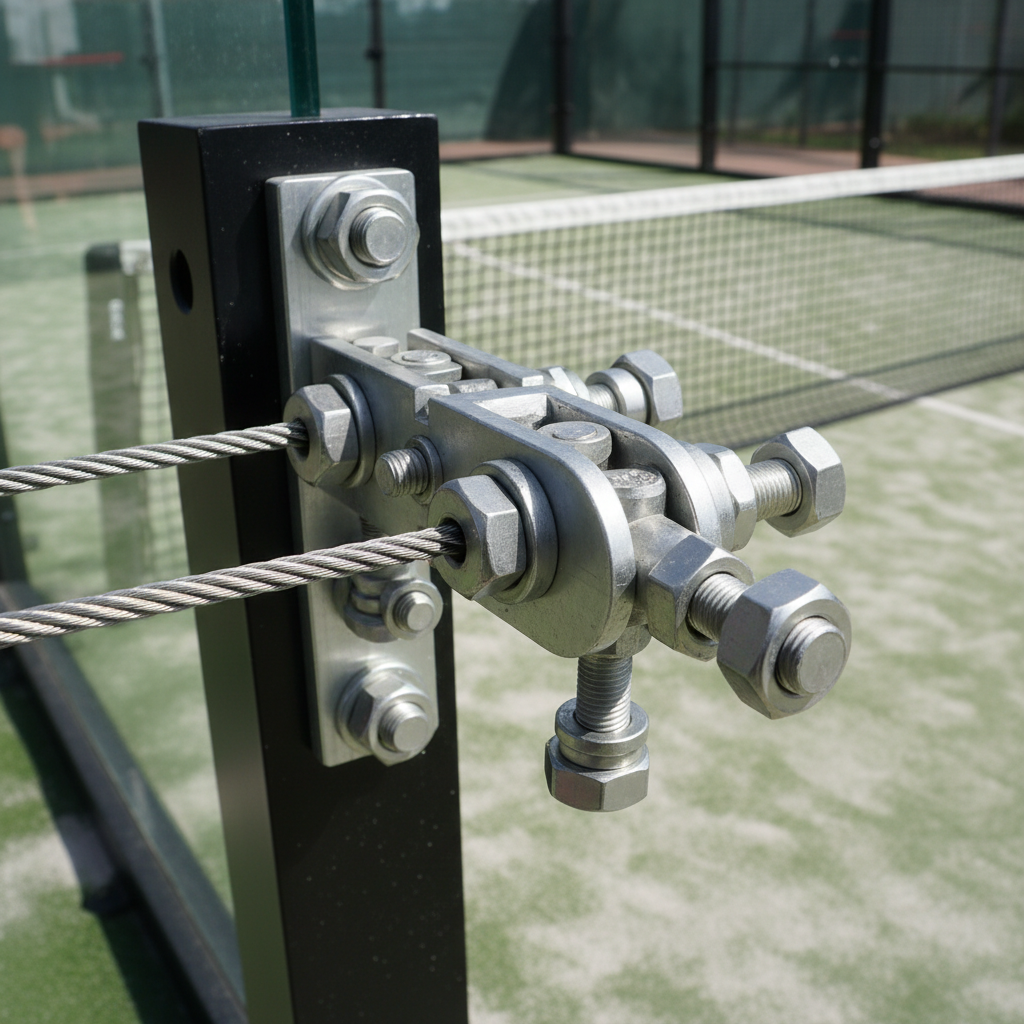
Court hardware like net posts, tensioning systems, and lighting fixtures are integrated into the overall equipment suite to ensure a professional and safe playing environment. You must ensure that your net posts are anchored into the foundation with enough precision to maintain a center net height of exactly 88 centimeters. The lighting systems should provide a minimum of 300 to 500 lux across the entire court surface to eliminate shadows and improve ball visibility during night matches. Integrating high-quality hardware is the only way to prevent constant maintenance issues that could lead to facility downtime or lost revenue for your business.
How do you install the net system correctly?
Ready for the good part? Proper net installation requires the use of heavy-duty steel cables and internal winding mechanisms that can withstand the extreme tension needed for a level top line. You will notice that professional nets feature a center strap that is anchored to the ground to prevent the net from sagging or fluctuating in height.
- Post padding is an essential safety component that protects players who might collide with the metal structure during play.
- The net mesh must be tight enough to prevent the ball from passing through but flexible enough to absorb impact without tearing.
- Ground anchors for the center strap must be flush with the turf to prevent tripping hazards for the athletes on the court.
| Hardware Item | Specification | Material | Focus |
|---|---|---|---|
| Net Post | 92cm Height | Galvanized Steel | Tension Support |
| Center Strap | 88cm Regulation | Polyester/Nylon | Height Control |
| Lighting Fixture | LED 300-500 Lux | Aluminum/Glass | Visibility |
The data shows that precise hardware measurements are the foundation of a court that meets international standards for professional match play and broadcasting.
Key Takeaway: You must use a center strap for every net installation to ensure the height remains exactly at 88 centimeters across the entire width.
7. Does professional padel equipment affect your performance?
Professional padel equipment significantly affects performance by providing a more consistent sweet spot and superior energy return during high-velocity offensive maneuvers. You will find that high-end rackets allow for more precise ball placement because the frame does not twist or deform upon impact with a heavy smash. Many advanced players utilize “rough” surface coatings to increase the friction between the racket and the ball for more effective slice and topspin. While a racket cannot replace proper technique, it certainly removes the mechanical limitations that lower-quality gear imposes on your tactical development and overall success on the court.
How does surface texture assist in shot manipulation?
This is where it gets interesting. A sand-blasted or 3D-molded surface helps the racket grip the ball for a split second longer during the hitting phase of your swing. You will notice that this increased contact time allows you to impart more rotational energy on the ball for difficult-to-return “vibora” shots.
- Rough surfaces are particularly effective in humid conditions where the ball might otherwise slip off a smooth racket face.
- 3D patterns integrated into the carbon weave offer the most durable solution for maintaining spin capabilities over time.
- Smooth faces are often preferred by power-focused players who want the ball to exit the racket as quickly as possible.
| Surface Type | Grip Level | Durability | Best Shot |
|---|---|---|---|
| Smooth | Low | Very High | Flat Smash |
| Sand-Paper | High | Moderate | Sliced Volley |
| 3D Molded | High | High | Technical Spin |
The evidence suggest that selecting a surface texture that matches your tactical preference is the final step in fine-tuning your on-court performance and competitive edge.
Key Takeaway: You should encourage advanced players to experiment with 3D-molded surfaces to maximize their ability to control the ball’s rotation and bounce.
8. Where should you procure certified padel equipment?
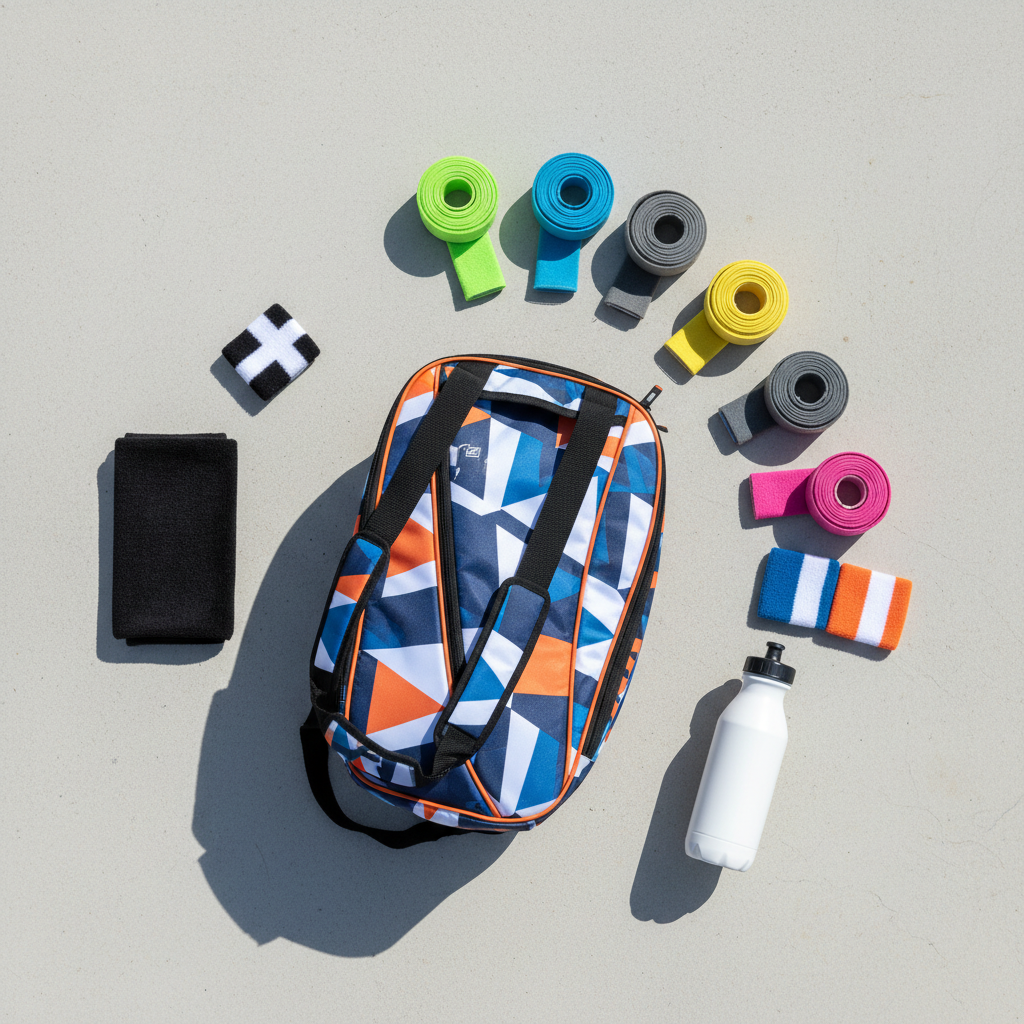
Procuring certified gear involves sourcing products from specialized B2B distributors who understand the nuances of the international federation’s technical requirements and safety standards. You should avoid purchasing from unverified online marketplaces that cannot provide detailed material specifications or proof of impact resistance for their carbon fiber frames. Professional venues benefit from establishing relationships with dedicated equipment suppliers who offer comprehensive warranties and maintenance support for their high-volume rental fleets. Sourcing from reputable manufacturers ensures that every item in your facility contributes to a high-quality brand image and a superior player experience for all your clients.
What are the benefits of using a specialized B2B supplier?
Here is the deal. Specialized suppliers provide access to bulk pricing and customized branding options that allow you to integrate your facility’s logo directly onto the gear. You will find that these partners also offer expert advice on the best racket mixes for your specific demographic of beginner and intermediate players.
- Suppliers often provide “demo” kits that allow your members to test new technologies before the facility commits to a large purchase.
- Maintenance contracts can include the regular replacement of grips and the inspection of court hardware for structural safety.
- B2B partners usually have direct access to the latest innovations in smart-racket technology and sustainable material manufacturing.
| Source Option | Pricing | Customization | Expertise |
|---|---|---|---|
| General Sports Shop | High | None | Low |
| Online Marketplace | Low | Variable | None |
| B2B Distributor | Wholesale | High | Very High |
The analysis confirms that partnering with a specialized distributor is the most cost-effective way to maintain a modern and professional equipment inventory for any commercial venue.
Key Takeaway: You should always request technical material data sheets from your suppliers to ensure you are receiving genuine carbon fiber and high-quality EVA foam.
9. How do you preserve the lifespan of padel equipment?
Preserving the lifespan of your gear requires a consistent maintenance schedule that includes thermal protection and regular cleaning of all striking surfaces and court components. You must recognize that environmental factors like extreme heat and high humidity are the primary causes of premature foam degradation and resin softening in carbon frames. Storing your rackets in insulated bags and replacing overgrips frequently are simple yet highly effective ways to maintain the performance characteristics of your investment. Facility managers who implement a strict care protocol find that their equipment stays in peak condition for significantly longer than those who ignore basic maintenance.
Why is thermal protection vital for carbon rackets?
You might be wondering. The resins used to bind the layers of carbon fiber can become unstable when exposed to the high temperatures found inside a parked car or an outdoor locker. You will find that heat causes the internal foam to lose its “memory,” resulting in a “dead” feel where the ball no longer bounces consistently.
- Thermal bags use specialized aluminum linings to reflect external heat and maintain a stable internal temperature for your rackets.
- Leaving your gear in the sun during breaks can cause the frame to warp or the surface layers to delaminate over time.
- Moisture absorption can also increase the weight of the racket and alter its balance, making it feel sluggish and difficult to maneuver.
| Action | Frequency | Purpose | Longevity Gain |
|---|---|---|---|
| Grip Replacement | Every 5 Matches | Control / Safety | High |
| Thermal Storage | Always | Foam Integrity | Very High |
| Surface Cleaning | Weekly | Aerodynamics | Moderate |
The data indicates that a small investment in protective bags and consistent cleaning routines results in a significant reduction in the annual replacement costs for your gear.
Key Takeaway: You should educate your members on the dangers of heat exposure to ensure they take proper care of their equipment both on and off the court.
10. What future innovations will reshape padel equipment?
Future innovations will likely center on the integration of smart sensors and the use of sustainable bio-resins to reduce the environmental impact of the sport. You will soon see rackets that provide real-time data on swing speed and impact locations directly to your smartphone or the facility’s coaching software. Leading manufacturers are also experimenting with 3D-printed cores that allow for zonal density adjustments, providing different levels of power and control across a single racket face. These technological advancements will turn the equipment into an active training partner that helps players of all levels identify and correct technical flaws with scientific precision.
How will smart sensors change the coaching process?
But here’s the kicker. Integrated chips will allow coaches to analyze a player’s performance over thousands of shots to find patterns that are invisible to the naked eye. You will notice that this data-driven approach allows for much more personalized training programs and faster skill acquisition for competitive athletes.
- Sensors can track the rotational speed of the ball to help players master the difficult “bandeja” and “vibora” techniques.
- Impact maps show exactly where the player is hitting the ball, highlighting the need for better footwork or timing adjustments.
- Bio-based materials like basalt fiber are being tested to provide a more sustainable alternative to traditional carbon fiber without losing performance.
| Innovation | Technology | Impact | Benefit |
|---|---|---|---|
| Smart Sensors | IoT Integration | Data Analysis | Faster Learning |
| 3D Printed Cores | Additive Mfg | Zonal Density | Pure Precision |
| Bio-Resins | Green Chemistry | Sustainability | Eco-Friendly |
The final analysis suggests that the future of the sport lies in the intersection of high-performance material science and digital analytics to create a more engaging and sustainable experience.
Key Takeaway: You should stay informed about the development of smart-racket technologies to ensure your facility remains at the cutting edge of modern sports coaching.
Selecting and maintaining the correct gear is the most critical step toward building a successful and safe playing environment for any sports business. From evaluating the density of carbon frames to ensuring the precise installation of court hardware, every decision impacts the quality of the game. If you require further assistance in selecting the perfect inventory or designing a professional court, please contact us for expert B2B guidance. Mastering your equipment is the first step toward mastering the future of the sport.
Padel Equipment FAQ
Q1: What is padel equipment?
It consists of specialized rackets, low-pressure balls, and court hardware like net systems and glass walls designed for a specific 20×10 meter court.
Q2: How does a padel racket work?
It uses a solid but perforated hitting surface made of carbon fiber and foam to absorb shock and provide control without the use of strings.
Q3: Can I use tennis balls for padel?
No, because they have higher internal pressure and bounce too high for the smaller dimensions and glass walls of a padel court.
Q4: How often should I replace my racket?
Professional players might replace them every few months, but for regular club use, a high-quality carbon racket should last one to two years with proper care.
Q5: What is the best weight for a racket?
Most men’s rackets weigh between 360g and 375g, while women’s versions are usually lighter, between 345g and 360g, to ensure better maneuverability.