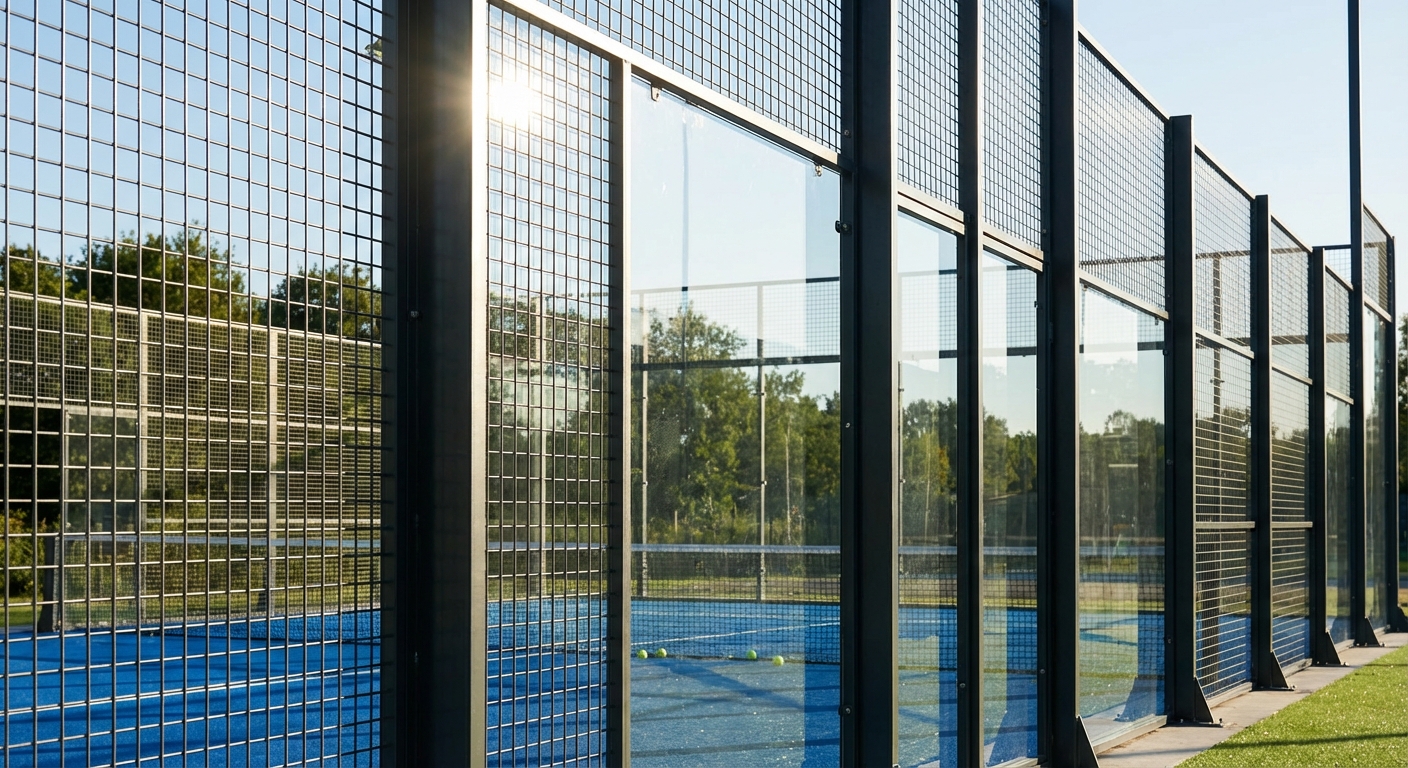
What is the official padel court layout?
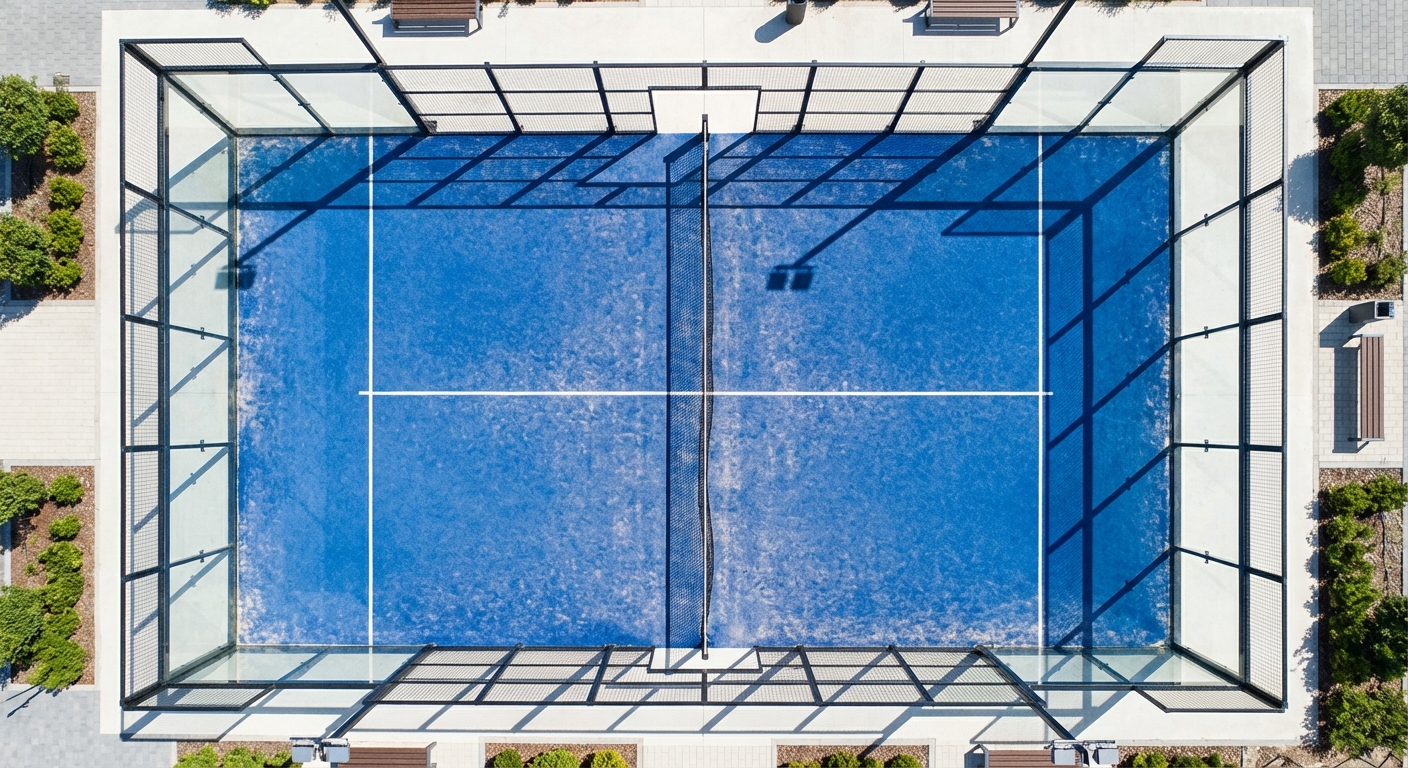
The official layout consists of a 20m x 10m playing field with a tolerance of 0.5% in dimensions as mandated by the International Padel Federation (FIP). When planning your padel court layout, you must account for the interior measurements from the walls, ensuring the net perfectly bisects the length into two 10m x 10m squares.
FIP standard dimensions
Strict adherence to FIP dimensions is the foundation of any successful club development. Here is the deal: if your court is off by even a few centimeters, it cannot host official competitions.
- Length: 20 meters exactly.
- Width: 10 meters exactly.
- Service Lines: Located 6.95 meters from the net.
- Center Service Line: Extends 5 meters on either side of the transverse line.
Dividing the court area
The division of the court area must be symmetrical to provide fair play for both teams. You must ensure the net is 10 meters long and suspended by a wire with a maximum diameter of 0.01 meters.
Key Takeaway: Precision in the initial measurements of the 20x10m area prevents future legal and certification hurdles during facility inspections.
| Feature | Official Metric |
|---|---|
| Total Area | 200 Square Meters |
| Playing Half | 10m x 10m |
| Service Line Distance | 6.95m from Net |
| Line Width | 5cm Standard |
An accurate geometric foundation is the most critical step in ensuring your sports facility meets international competition standards.
How does a professional padel court layout look?
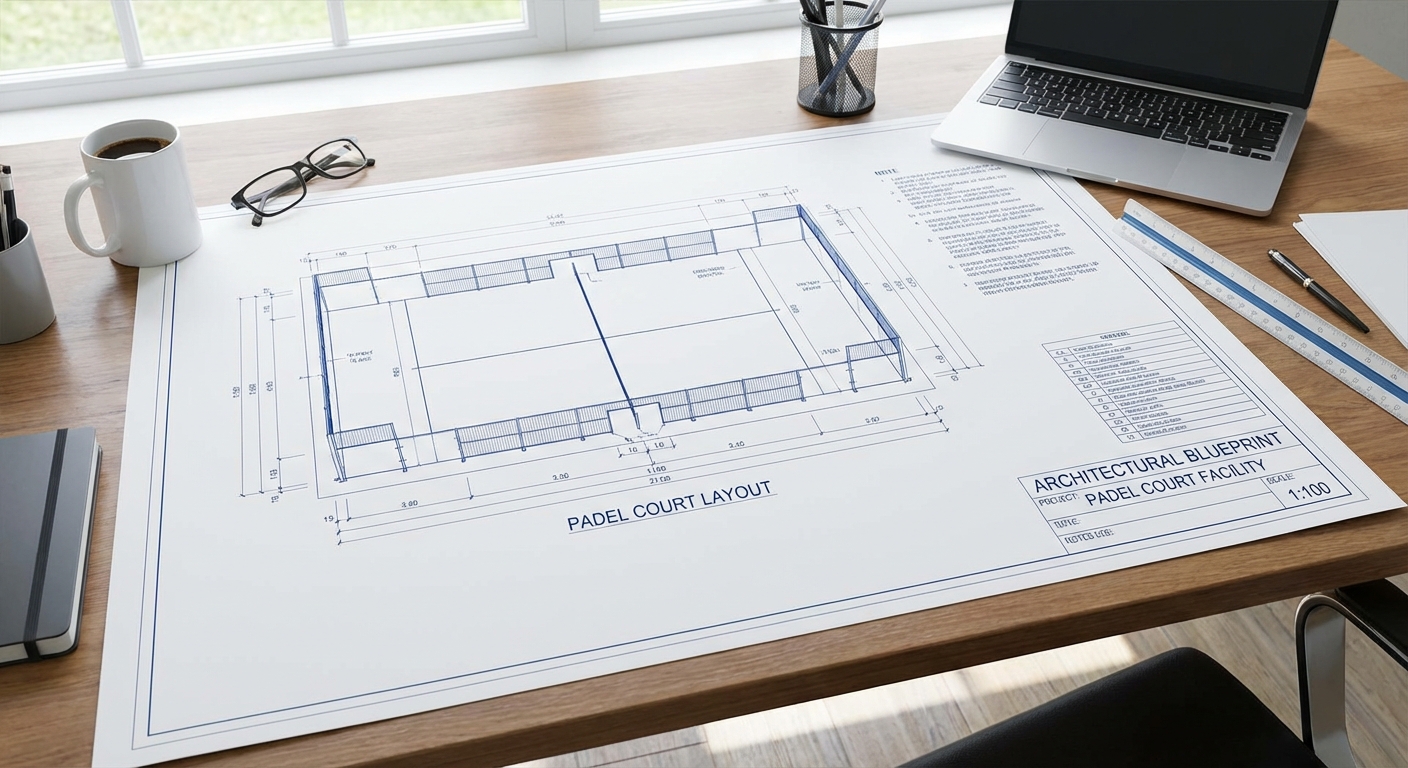
A professional layout features seamless glass transitions, integrated LED lighting, and a perfectly level concrete base that supports a 20m x 10m playing area. Your professional padel court layout should prioritize unobstructed views for spectators while maintaining the rigid structural integrity of the galvanized steel frames.
Playing area specifications
Professional courts utilize high-grade tempered glass and monofilament textured turf to provide the “World Padel Tour” feel. Think about it: players are more likely to pay a premium for a court that looks and plays like a professional venue.
- Perimeter Clearances: At least 2 meters of safety space around the court.
- Height Clearances: Minimum of 6 meters unobstructed overhead.
- Glass Thickness: 12mm is the gold standard for professional rebounds.
What are the net height rules?
The net must be 0.88 meters high at the center and 0.92 meters at the posts. You must ensure the tension is sufficient to prevent sagging while allowing the ball to graze the top tape during play.
Key Takeaway: A professional aesthetic combined with technical compliance increases the booking value of your court by up to 30%.
| Spec Item | Professional Requirement |
|---|---|
| Center Net Height | 88 Centimeters |
| Post Net Height | 92 Centimeters |
| Overhead Clearance | 6 Meters Minimum |
| Perimeter Zone | 2 Meters Wide |
Visual symmetry and technical precision in net height define the professional quality of a high-end padel facility.
Why are glass walls vital to padel court layout?
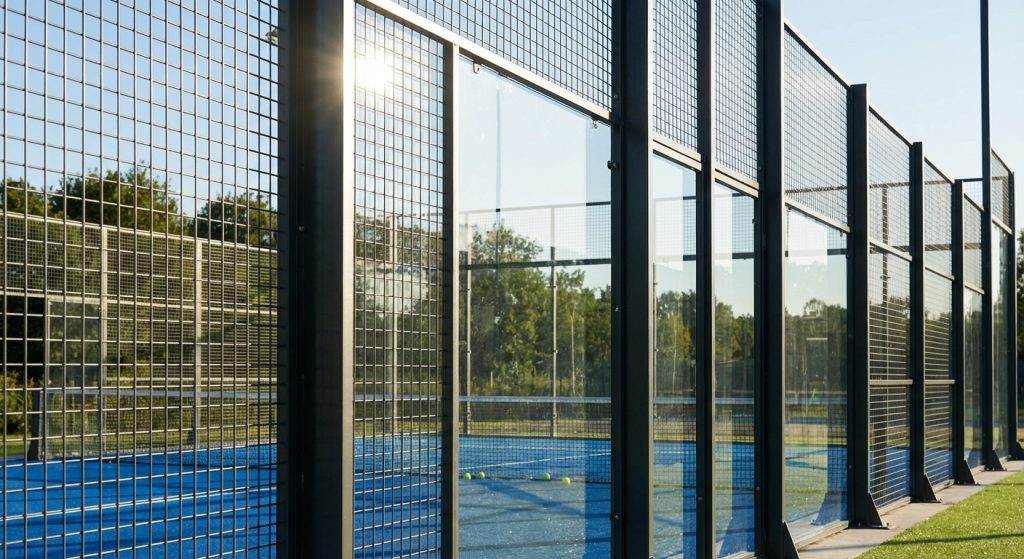
Glass walls are vital because they serve as active playing surfaces that allow the ball to bounce back into the 20m x 10m field, creating the sport’s unique “second chance” dynamics. In a modern padel court layout, the 10mm or 12mm tempered glass panels must be perfectly aligned with the metallic mesh to ensure consistent ball rebounds.
Strategic gameplay dynamics
The strategic use of walls is what separates padel from tennis and other racket sports. But wait, there is more: the glass also protects the players from external winds and noise, creating a controlled environment.
- Rebound Consistency: Glass provides a 100% predictable bounce.
- Wall Height: Typically 3 meters at the back and 4 meters in the corners.
- Safety: Tempered glass shatters into small granules if broken, preventing injury.
Improving spectator visibility
Panoramic glass designs eliminate the need for corner pillars, offering 360-degree visibility for fans and cameras. This is crucial for clubs looking to host tournaments or sell sponsorship space on the court perimeter.
Key Takeaway: Investing in high-quality tempered glass enhances both the technical difficulty of the game and the commercial appeal for spectators.
| Wall Component | Specification |
|---|---|
| Material | Tempered Safety Glass |
| Thickness | 10mm or 12mm |
| Corner Height | 4 Meters |
| Back Wall Height | 3 Meters |
Strategic glass placement transforms the court from a simple enclosure into a dynamic and immersive sports arena.
What surface types fit your padel court layout?
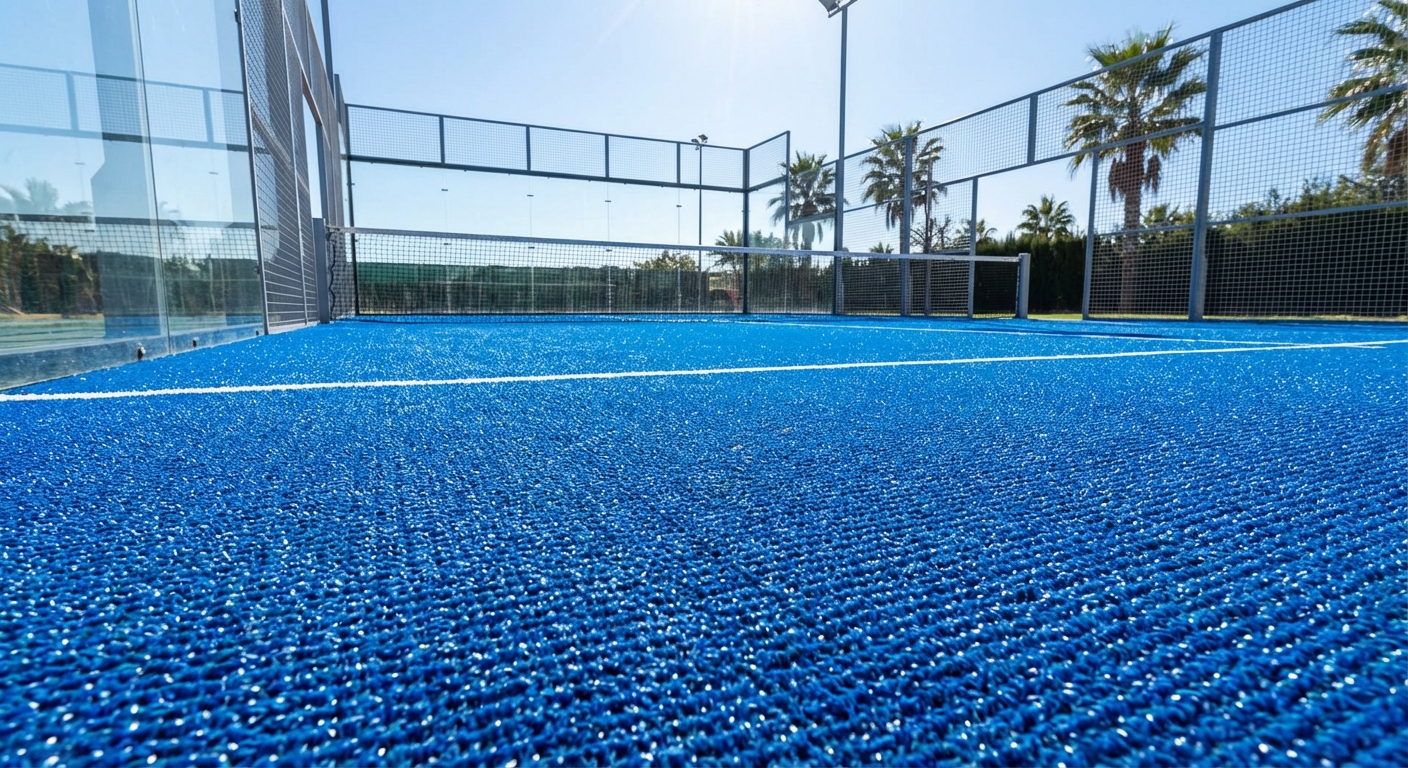
The most common surface types are artificial turf, acrylic, and concrete, with turf being the preferred choice for its joint-friendly impact absorption. When selecting a surface for your padel court layout, you must consider the balance between ball speed and player safety, as porous surfaces facilitate better drainage for outdoor builds.
Benefits of artificial turf
Artificial turf is the industry standard because it mimics the natural grass feel while requiring significantly less water. Here is the deal: curly monofilament fibers hold silica sand better, reducing player slips and skin abrasions during dives.
- Color Options: Blue, Green, Clay, and Black.
- Durability: High-quality turf lasts 5–7 years with regular brushing.
- Performance: Consistent ball bounce across the entire 200m² area.
Does surface impact ball bounce?
The density of the turf and the amount of sand infill directly affect how high the ball pops after a hit. You must ensure an even distribution of 10-15kg of sand per square meter to prevent “dead spots” on the court.
Key Takeaway: Selecting the right turf density and sand infill is the most effective way to control the speed of play and player safety.
| Surface Type | Primary Benefit | Maintenance Level |
|---|---|---|
| Artificial Turf | Joint Protection | Moderate (Brushing) |
| Acrylic | High Speed | Low |
| Concrete | High Durability | Very Low |
| Clay | Traditional Feel | High |
Choosing the correct surface material determines the long-term playability and maintenance costs of your sports investment.
Can you customize a modern padel court layout?
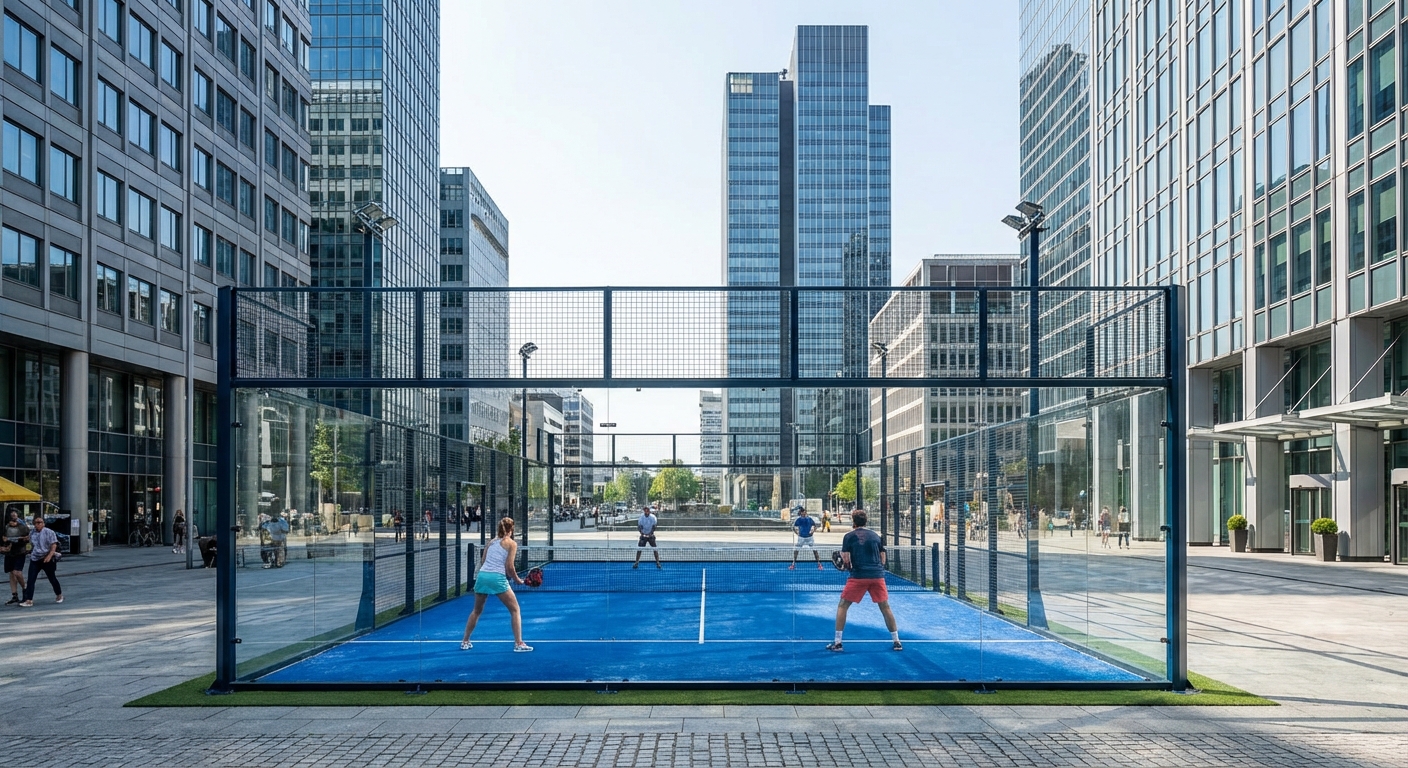
Modern customization allows you to select specific frame colors, LED lighting configurations, and logo placements on the turf or glass. You can tailor your padel court layout to match your club’s branding or corporate identity without compromising the structural integrity of the FIP-standard components.
Choosing frame colors
The steel structure can be powder-coated in any RAL color to stand out in a competitive market. Think about it: a vibrant orange or sleek matte black frame can become the signature look that defines your brand in a crowded city.
- Powder Coating: Protects against rust and UV fading.
- Aesthetic Appeal: Matches the surrounding architecture.
- Branding: Allows for sponsor logos on the corner pillars.
Custom turf and logo options
High-end manufacturers can laser-cut your logo into the artificial turf or etch it directly onto the glass panels. This creates a premium feel that enhances the perceived value of the facility for high-end clientele.
Key Takeaway: Customization transforms a standard sports court into a powerful marketing tool that builds brand recognition and loyalty.
| Custom Element | Options | Impact |
|---|---|---|
| Frame Color | Any RAL Color | Brand Identity |
| Turf Color | Blue, Green, Red | Visual Appeal |
| LED Lighting | 400 – 800 Lux | Playability |
| Branding | Logos on Glass/Turf | Sponsorship Revenue |
Thoughtful customization allows facility owners to differentiate their courts in a rapidly growing and competitive sports market.
How do you plan the padel court layout structure?
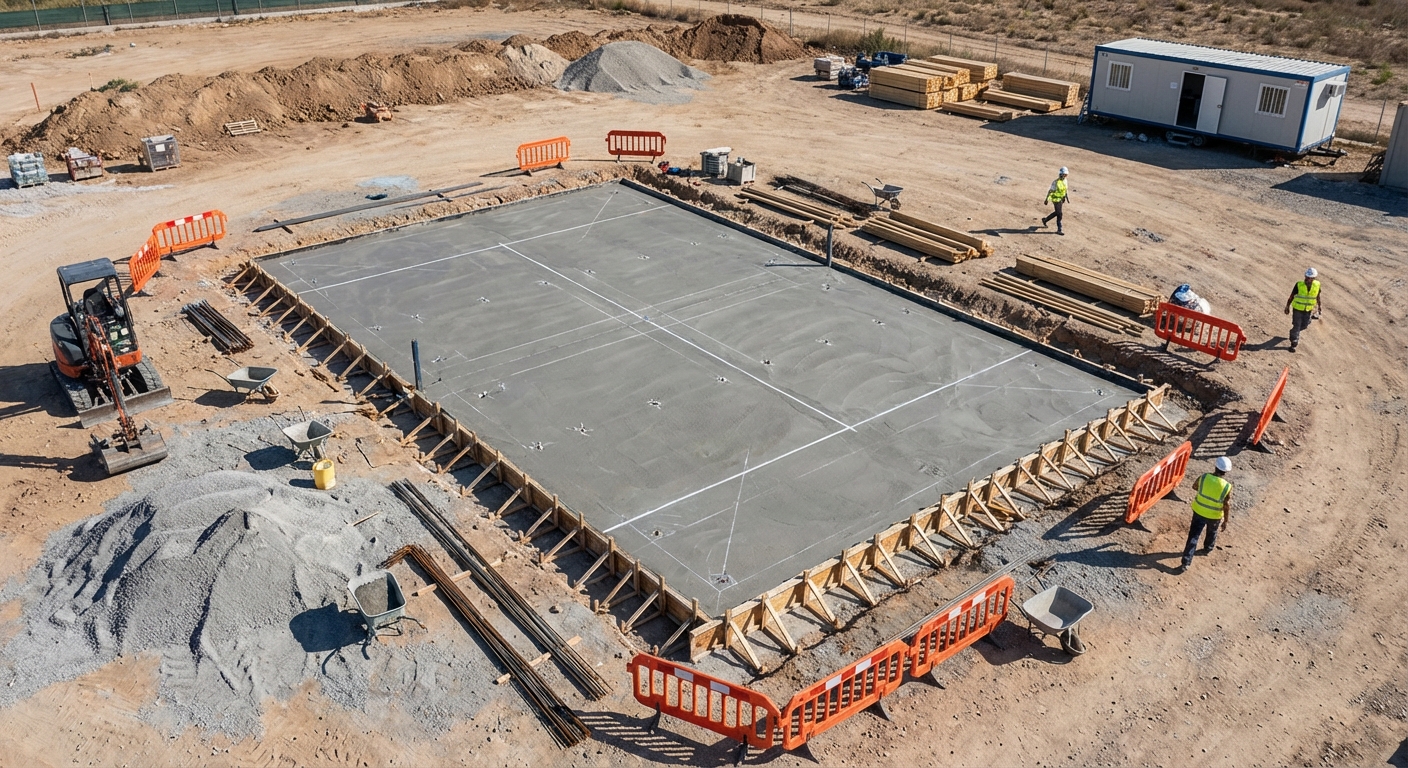
Planning the structure begins with a reinforced concrete slab that must be perfectly flat with a slope of less than 1% for drainage. Your padel court layout requires a modular steel frame that can withstand wind loads and player impacts, ensuring the glass panels remain securely in place for decades.
Steel frame installation
The steel frame must be hot-dip galvanized to prevent corrosion, especially in humid or coastal environments. But wait, there is more: the thickness of the steel tubes (typically 3mm) determines the court’s resistance to structural vibration.
- Anchoring: Use heavy-duty expansion bolts for the concrete.
- Mesh Panels: Must be flush with the glass to prevent ball snags.
- Structural Lifespan: A well-built frame should last 15-20 years.
Selecting tempered glass
You must choose between 10mm and 12mm glass based on the expected level of play and local weather conditions. Thicker glass offers better stability and a more consistent “true” bounce for professional-level competitors.
Key Takeaway: A solid foundation and a corrosion-resistant steel frame are the most important factors for the long-term safety of the structure.
| Structural Phase | Key Requirement | Duration |
|---|---|---|
| Groundwork | Level Concrete Slab | 7-14 Days |
| Frame Assembly | Galvanized Steel | 2-3 Days |
| Glass Fitting | 12mm Tempered | 1 Day |
| Turf Laying | Silica Sand Infill | 1 Day |
Engineering a robust foundation and frame ensures the structural safety and longevity of your sports facility.
Why is maintenance key for padel court layout?
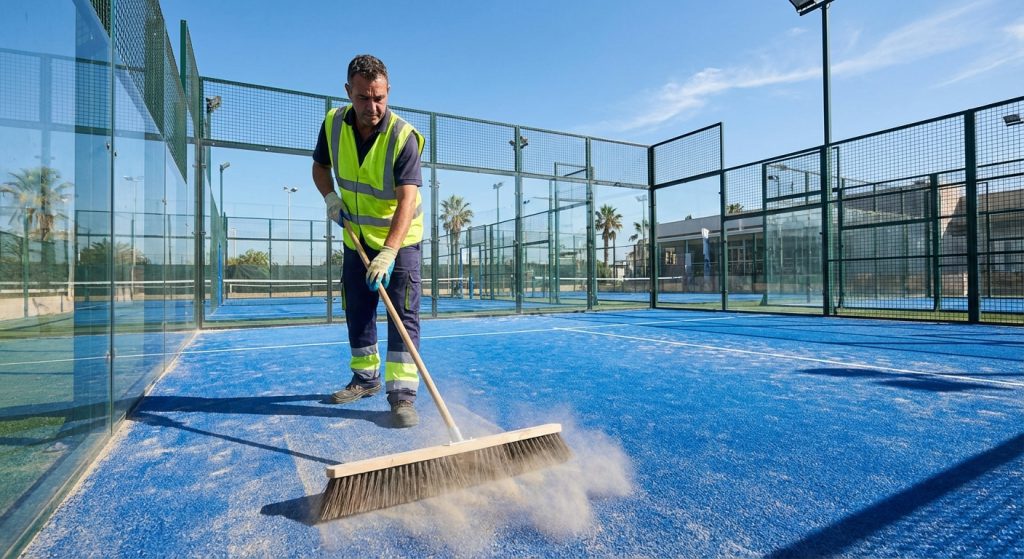
Maintenance is key because it preserves the integrity of the 200m² playing area and ensures that the ball bounce remains consistent over time. Regular upkeep of your padel court layout prevents the accumulation of algae and debris, which can make the surface slippery and dangerous for players.
Brushing and adding sand
Brushing the turf redistributes the silica sand that gets displaced during heavy play sessions. Here is the deal: without regular brushing, the turf fibers flatten, leading to premature wear and a slick playing surface.
- Frequency: Once a week for high-traffic courts.
- Sand Level: Maintain even coverage to protect turf roots.
- Equipment: Use a soft-bristled brush or a mechanical sweeper.
How often to check hardware?
You must inspect the bolts and net tensioners every month to ensure nothing has loosened due to vibration or thermal expansion. Glass clips and gaskets should also be checked for cracks to prevent the panels from rattling.
Key Takeaway: A proactive maintenance schedule doubles the lifespan of your turf and ensures player safety through structural stability.
| Task | Frequency | Estimated Time |
|---|---|---|
| Turf Brushing | Weekly | 30 Minutes |
| Glass Cleaning | Weekly | 45 Minutes |
| Bolt Inspection | Monthly | 20 Minutes |
| Net Adjustment | Monthly | 10 Minutes |
Consistent maintenance is the only way to protect your capital investment and provide a top-tier experience for members.
How does the padel court layout compare to tennis?
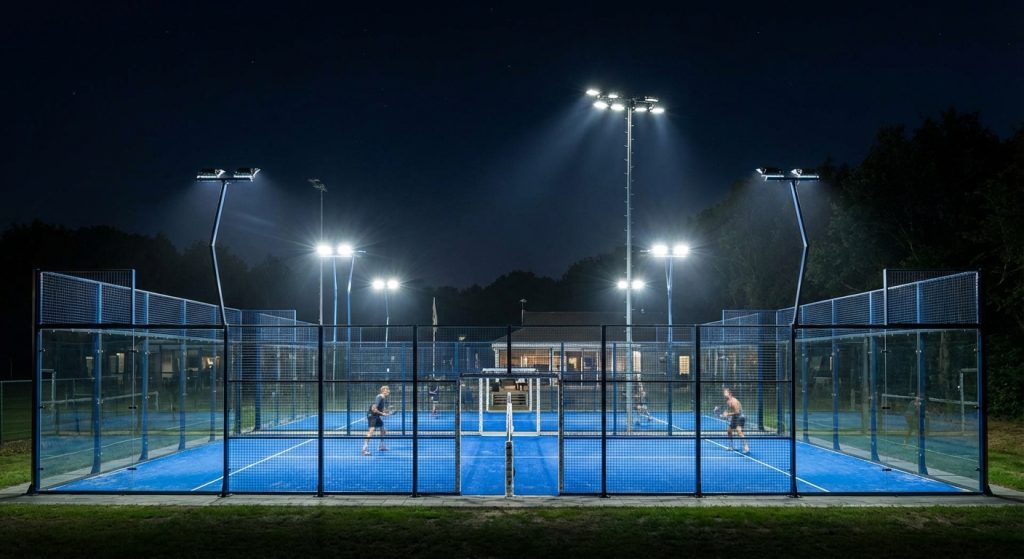
Padel courts are significantly smaller than tennis courts, occupying about one-third of the space required for a traditional tennis court layout. Understanding the differences in your padel court layout—such as the 10-meter width versus the 10.97-meter width of a tennis court—is essential for maximizing court density on your land.
Side-by-side dimension check
Tennis requires much more lateral space because players hit the ball from outside the lines. Think about it: you can fit three padel courts in the space of one tennis court, potentially tripling your revenue per square meter.
- Padel: 20m x 10m (Enclosed).
- Tennis: 23.77m x 10.97m (Open).
- Net Height: Padel is slightly lower at the center (0.88m vs 0.914m).
What are the boundary differences?
In tennis, if the ball hits the fence, the point is over; in padel, the walls are part of the game. This fundamental difference in layout creates a faster, more social game that appeals to a wider demographic of players.
Key Takeaway: Replacing underutilized tennis courts with padel courts dramatically increases facility utilization and profitability.
| Dimension | Padel Court | Tennis Court |
|---|---|---|
| Length | 20 Meters | 23.77 Meters |
| Width | 10 Meters | 10.97 Meters |
| Playing Style | Enclosed / Walls | Open / Lines |
| Space Efficiency | High | Low |
The compact footprint of padel makes it the superior choice for urban developers looking to maximize sports revenue.
Can a padel court layout include a roof?
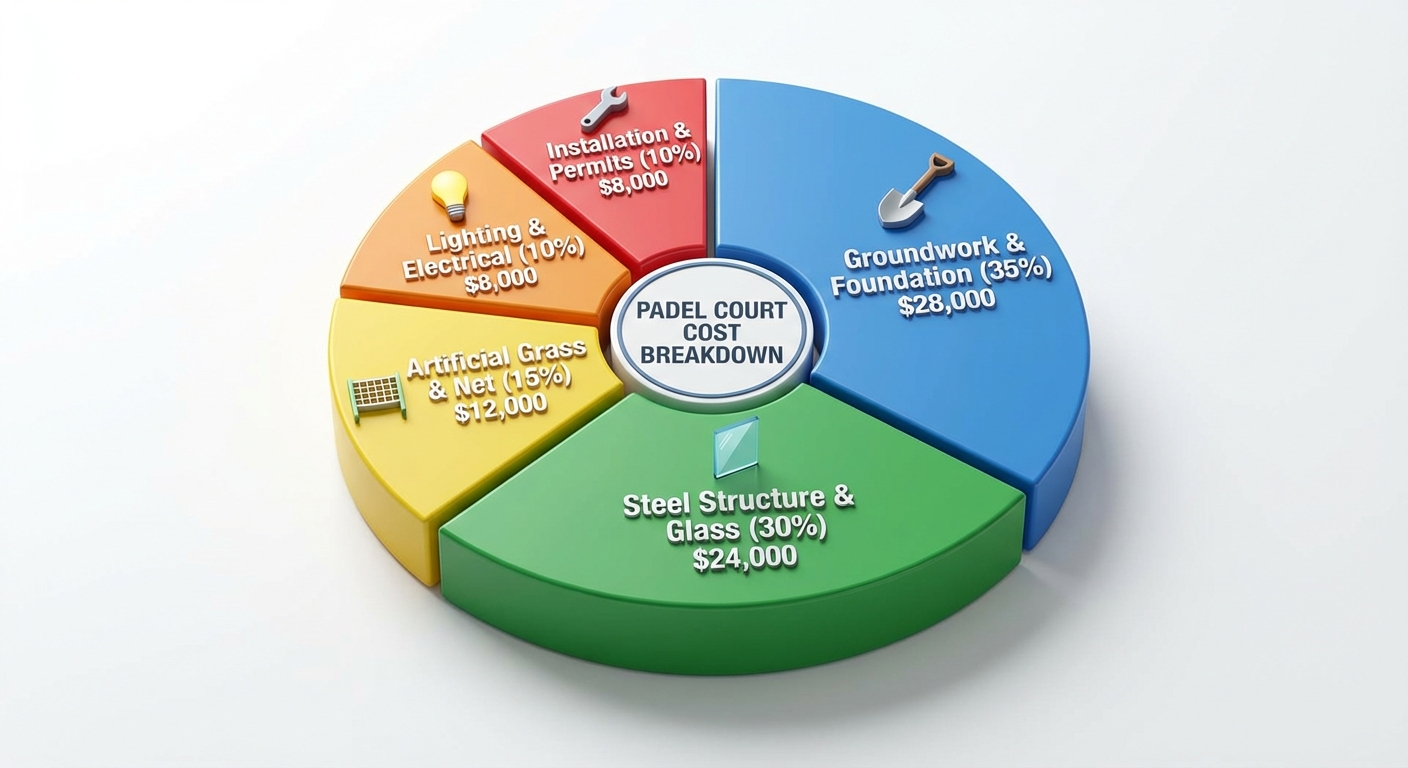
Yes, a padel court layout can include a roof, which allows for year-round play by protecting the facility from rain, snow, and extreme sun. Adding a roof to your padel court layout typically increases the total investment but ensures 100% booking availability regardless of the weather forecast.
Advantages of indoor play
Indoor or roofed courts provide a climate-controlled environment that prevents the turf from becoming waterlogged. But wait, there is more: a roof also allows for the installation of higher-quality lighting systems that are not exposed to the elements.
- Revenue Stability: No cancellations due to rain.
- Surface Longevity: UV protection for turf and glass.
- Player Comfort: Shade during hot summer months.
Requirements for roofed builds
A roofed structure requires a minimum internal height of 6 to 8 meters to allow for the high “lob” shots common in the game. You must also account for drainage systems that prevent water from pooling around the court foundation.
Key Takeaway: While the upfront cost is higher, a roofed court pays for itself through increased booking hours during the winter and rainy seasons.
| Cost Category | Percentage | Estimated USD |
|---|---|---|
| Foundation | 35% | $28,000 |
| Steel & Glass | 30% | $24,000 |
| Turf & Net | 15% | $12,000 |
| Lighting/Electric | 10% | $8,000 |
| Permits/Install | 10% | $8,000 |
Roofed installations provide the ultimate insurance policy against weather-related revenue loss for commercial clubs.
How do you build a proper padel court layout?
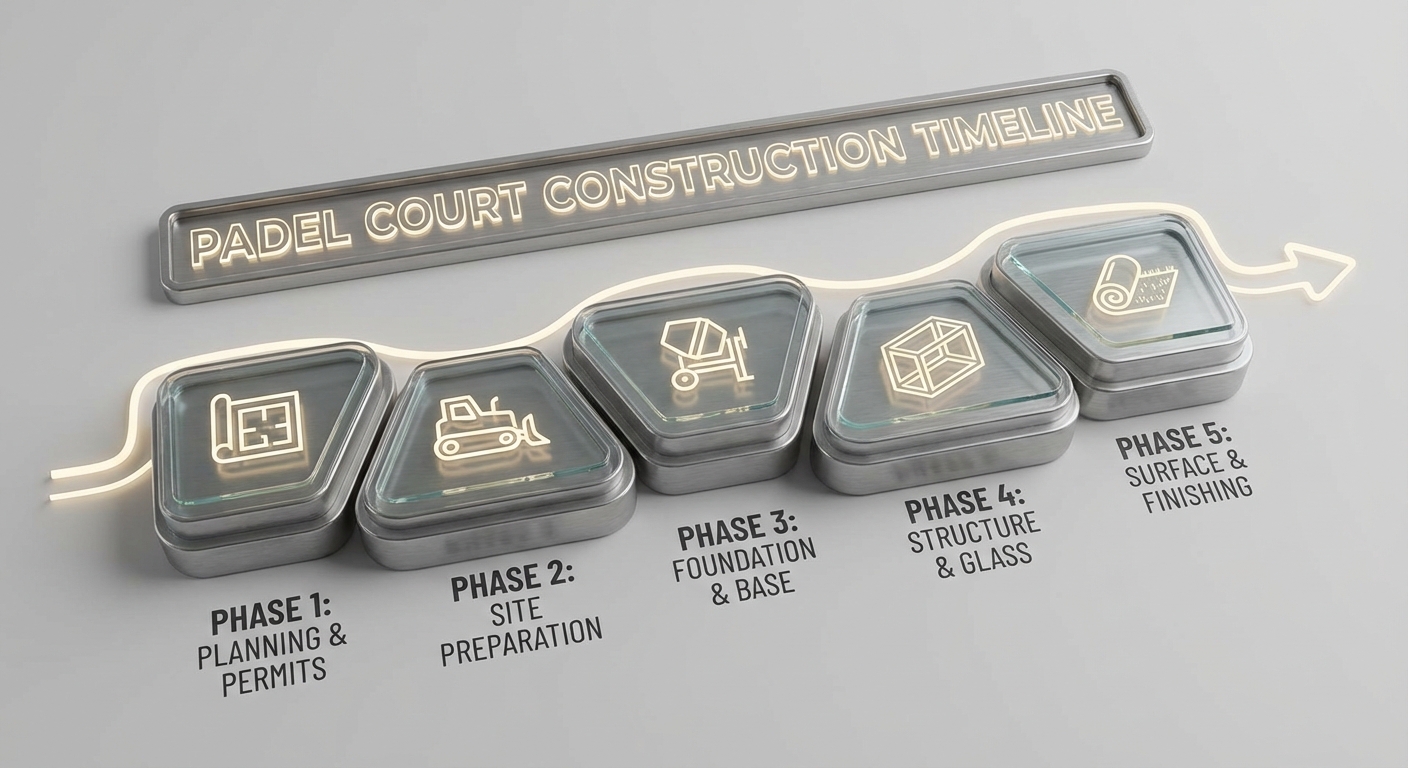
Building a proper layout requires a phased approach starting with site leveling and ending with the precision installation of the synthetic turf. You must coordinate the arrival of heavy materials like tempered glass and steel frames to ensure your padel court layout is completed within the standard 25-day manufacturing and installation window.
Site preparation steps
The first step is ensuring the ground is stable enough to support a 20-ton concrete slab without shifting. Here is the deal: poor site preparation leads to cracked glass and uneven turf, which are the most expensive issues to fix post-construction.
- Excavation: Remove 20-30cm of topsoil.
- Compaction: Use a vibratory roller to create a solid base.
- Curing: Allow concrete to cure fully before installing the steel frame.
Lighting and LED placement
Professional courts require at least eight LED spotlights (typically 200W each) mounted on four 6-meter poles. You must ensure the light distribution is even across the entire 200m² area to eliminate shadows during night play.
Key Takeaway: Following a strict construction timeline and using professional installers ensures your court meets all safety and performance standards.
| Phase | Description | Key Milestone |
|---|---|---|
| Phase 1 | Planning & Permits | Legal Approval |
| Phase 2 | Site Preparation | Level Ground |
| Phase 3 | Foundation | Concrete Curing |
| Phase 4 | Structure & Glass | Frame Stability |
| Phase 5 | Surface & Finish | Play Ready |
A systematic construction process is the only way to ensure your project stays on budget and meets professional standards.
Strategic Success with Padel
Building a world-class sports facility starts with a deep understanding of the padel court layout and the technical requirements of the International Padel Federation. We have explored how precise dimensions, high-quality materials, and a commitment to regular maintenance can transform a simple piece of land into a high-revenue sports destination. At SuperbPadel, we believe that the future of racket sports lies in the perfect fusion of professional engineering and community-focused design. We are dedicated to providing the factory-direct manufacturing expertise you need to build courts that stand the test of time and weather.
If you are ready to maximize your property’s potential or need a detailed quote for your next project, contact us today to speak with our global installation experts.
FAQ
Can I build a padel court on an existing tennis court?
Yes, but you must reinforce the base. Padel courts have much higher localized weight loads on the glass and frame anchor points than tennis courts, so the existing slab may need structural thickening.
What is the best glass thickness for a commercial club?
12mm tempered glass is the best choice for commercial venues. It provides superior durability and a more consistent rebound for high-level players compared to the lighter 10mm options.
How do I know if my site is suitable for a padel court?
You need a flat area of at least 22m x 12m to account for the court and safety clearances. A soil stability test is recommended to ensure the concrete foundation won’t shift or crack over time.
Can I install the court myself to save money?
It is not recommended due to the extreme precision required for glass alignment. Even a 1mm misalignment in the steel frame can cause the 12mm tempered glass panels to shatter during installation or play.
What is the best direction for outdoor court orientation?
North-South is the ideal orientation for outdoor courts. This placement ensures that the sun stays out of the players’ eyes during the morning and evening, which are the peak booking hours.