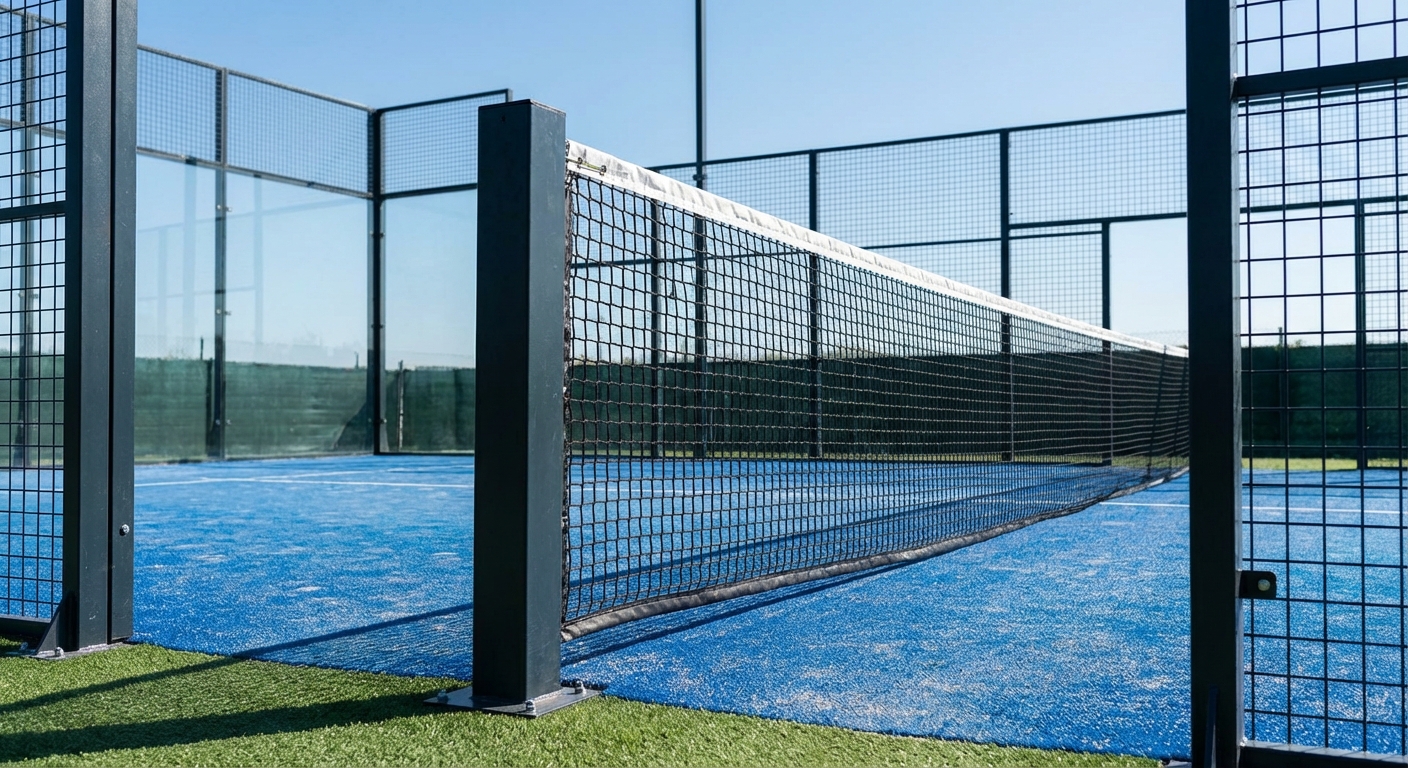
The standard size of padel court installations is exactly 20 meters long by 10 meters wide, creating a precise 200-square-meter playing surface. You may be finding it difficult to allocate the right amount of land or understand the technical tolerances required for a professional-grade facility. This uncertainty can lead to costly construction errors or a court that doesn’t meet international competitive standards. By understanding the specific size of padel court requirements, you can confidently invest in a high-performance sports asset that maximizes player enjoyment and safety.
What is the standard size of padel court areas?
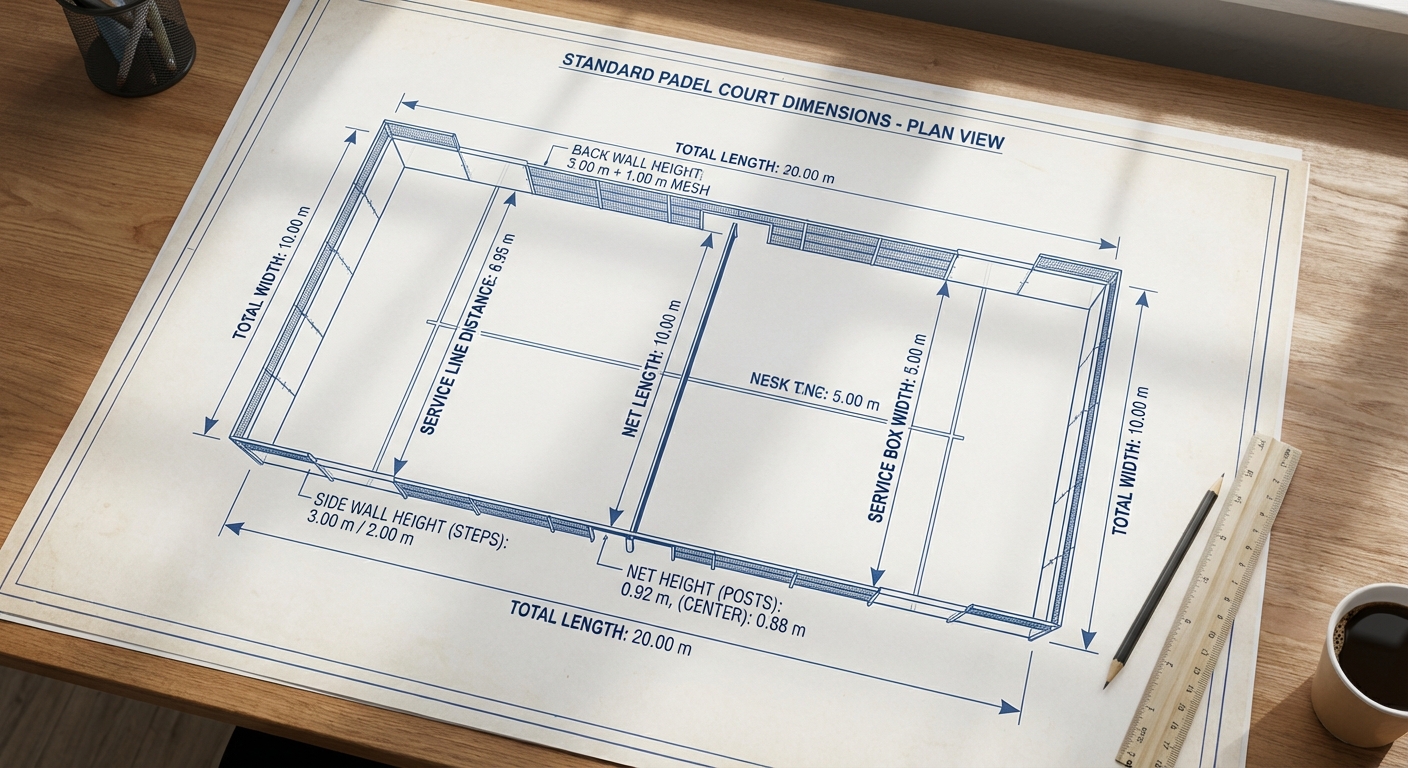
The standard size of padel court facilities is a rectangular area measuring 10 meters in width and 20 meters in length. This specific size of padel court is strictly mandated by the International Padel Federation (FIP) for all competitive and recreational play.
Official FIP Regulation Measurements
Every professional court must adhere to these exact dimensions to ensure fair play across different venues. Here is the deal: if your court is off by even a few centimeters, the ball bounce dynamics can change entirely.
- Length: 20.00 meters (internal measurement).
- Width: 10.00 meters (internal measurement).
- Tolerance: Minimal variations are allowed only in non-competitive private settings.
Comparing Padel to Tennis Court Sizes
How much smaller is it compared to tennis? You can actually fit approximately three padel courts into the space normally reserved for a single tennis court. This efficiency makes padel a highly lucrative option for club owners looking to maximize player density per square foot.
Key Takeaway: Adhering to official dimensions ensures your court is suitable for sanctioned tournaments and provides a consistent experience for experienced players.
| Dimension Type | Metric Value | Imperial Equivalent |
|---|---|---|
| Internal Length | 20.00 m | 65.62 ft |
| Internal Width | 10.00 m | 32.81 ft |
| Total Playing Area | 200.00 m² | 2,152.78 ft² |
Strict adherence to the 2:1 length-to-width ratio is the fundamental pillar of padel court architecture.
How does the size of padel court lines work?
The size of padel court lines is defined by a standard width of 5 centimeters, typically applied in white or yellow for maximum visibility. These markings are essential for defining the service boxes and the center of the playing area.
Service Box and Center Line Rules
The service lines are positioned exactly 6.95 meters from the net on both sides of the court. Look at it this way: the precision of these lines dictates the difficulty of the serve and the flow of the game.
- The center service line divides the service area into two equal halves.
- It extends 10 centimeters beyond the service line toward the back walls.
- All lines are part of the area they define.
What is the correct line width?
Is there any flexibility in the width of the markings? Standard regulations require all lines to be 5cm wide, though some decorative courts might vary slightly if not used for official tournaments. Maintaining this width ensures that line-call technology and human referees can make accurate judgments during fast-paced rallies.
Key Takeaway: Precise line marking is vital for game integrity, particularly during serves where every centimeter of the 6.95m box matters.
| Line Element | Specification | Importance |
|---|---|---|
| Line Width | 5 cm | Official visibility standard |
| Service Line Distance | 6.95 m from net | Defines legal serve area |
| Line Color | White or Yellow | Contrast against turf |
The geometric accuracy of surface markings is what transforms a simple turf area into a regulated sporting environment.
What is the size of padel court net systems?
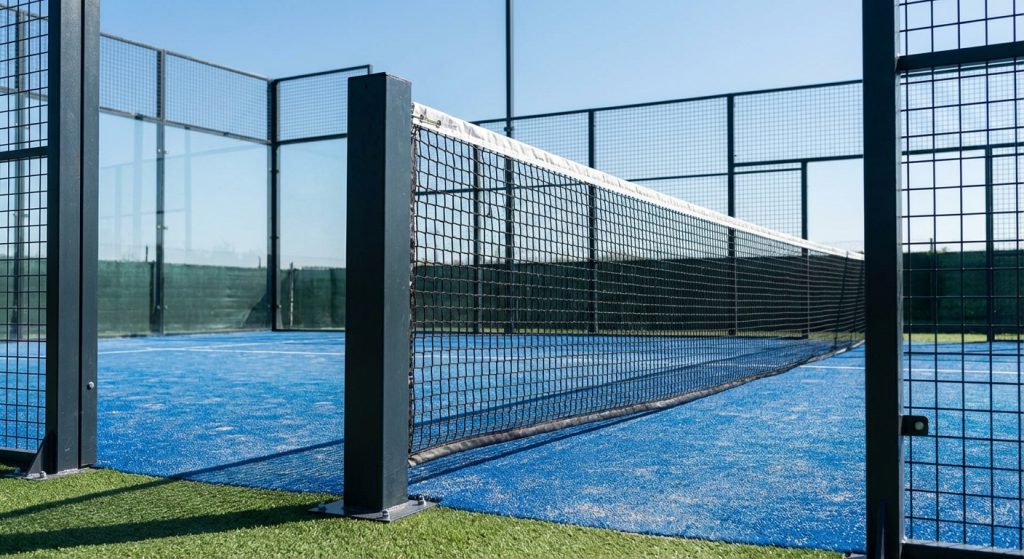
The size of padel court net components includes a length of 10 meters and a height of 0.88 meters at the center. This net spans the entire width of the court, dividing the 20-meter length into two equal 10-meter halves.
Center vs. Post Height Specs
The height of the net is not uniform across its entire span. While the center must be 0.88 meters high, the net reaches a maximum height of 0.92 meters at the supporting posts. But wait, there is more: the tension of the net must be sufficient to prevent excessive sagging while remaining within a 0.5-centimeter tolerance.
- Center Height: 0.88 m.
- Post Height: 0.92 m.
- Post Distance: Max 0.25m from the court sidelines.
Cable and White Band Regulations
What holds the net in place? A metallic cable with a maximum diameter of 0.01 meters runs through a white top band that must be between 5 and 6.3 centimeters wide. This band ensures the top of the net is clearly visible to players during high-speed play.
Key Takeaway: Correct net height and tension are critical for ensuring that low-flying shots behave predictably according to the physics of the sport.
| Net Component | Requirement | Material Standard |
|---|---|---|
| Total Length | 10.00 m | Synthetic mesh |
| Center Height | 0.88 m | Tension adjusted |
| Top Band Width | 5.0 – 6.3 cm | UV-resistant PVC/Fabric |
Proper net calibration is often the most overlooked aspect of court maintenance but is essential for professional play.
How does the size of padel court walls vary?
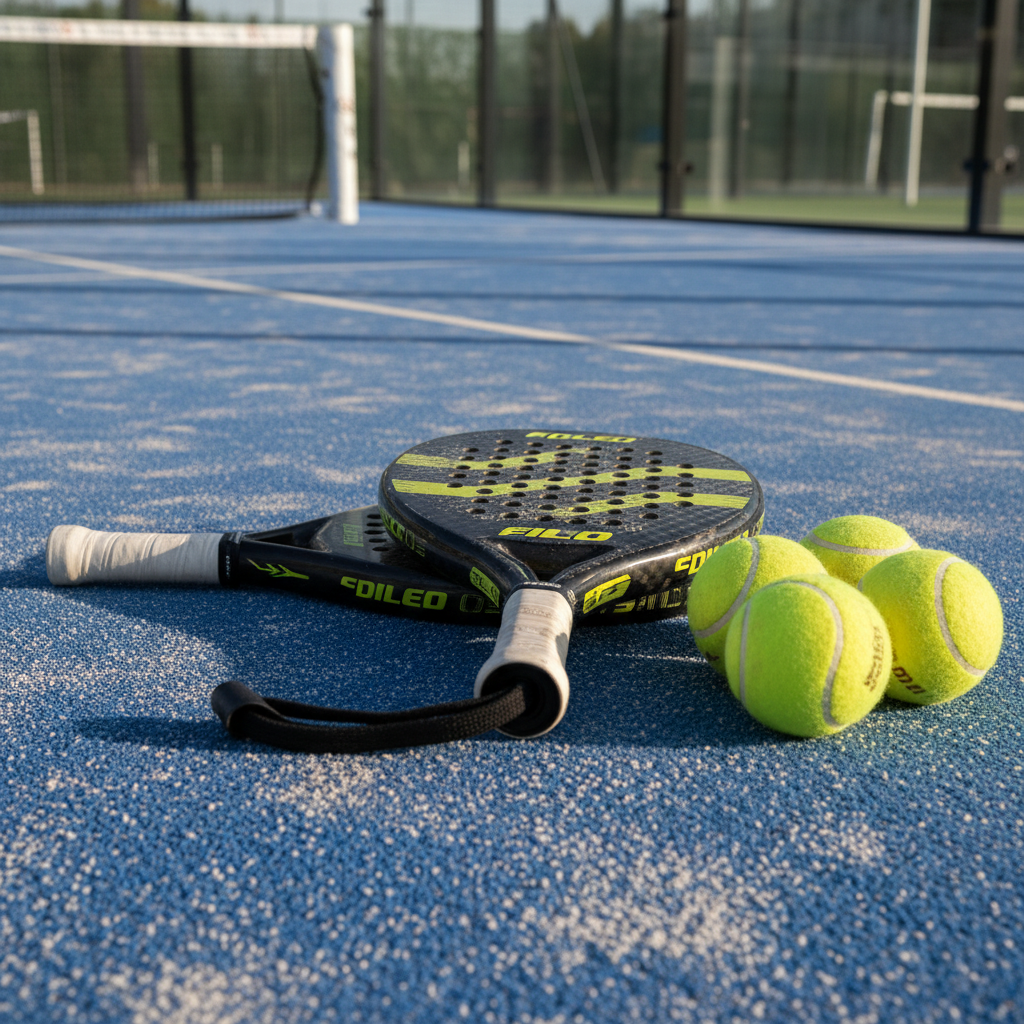
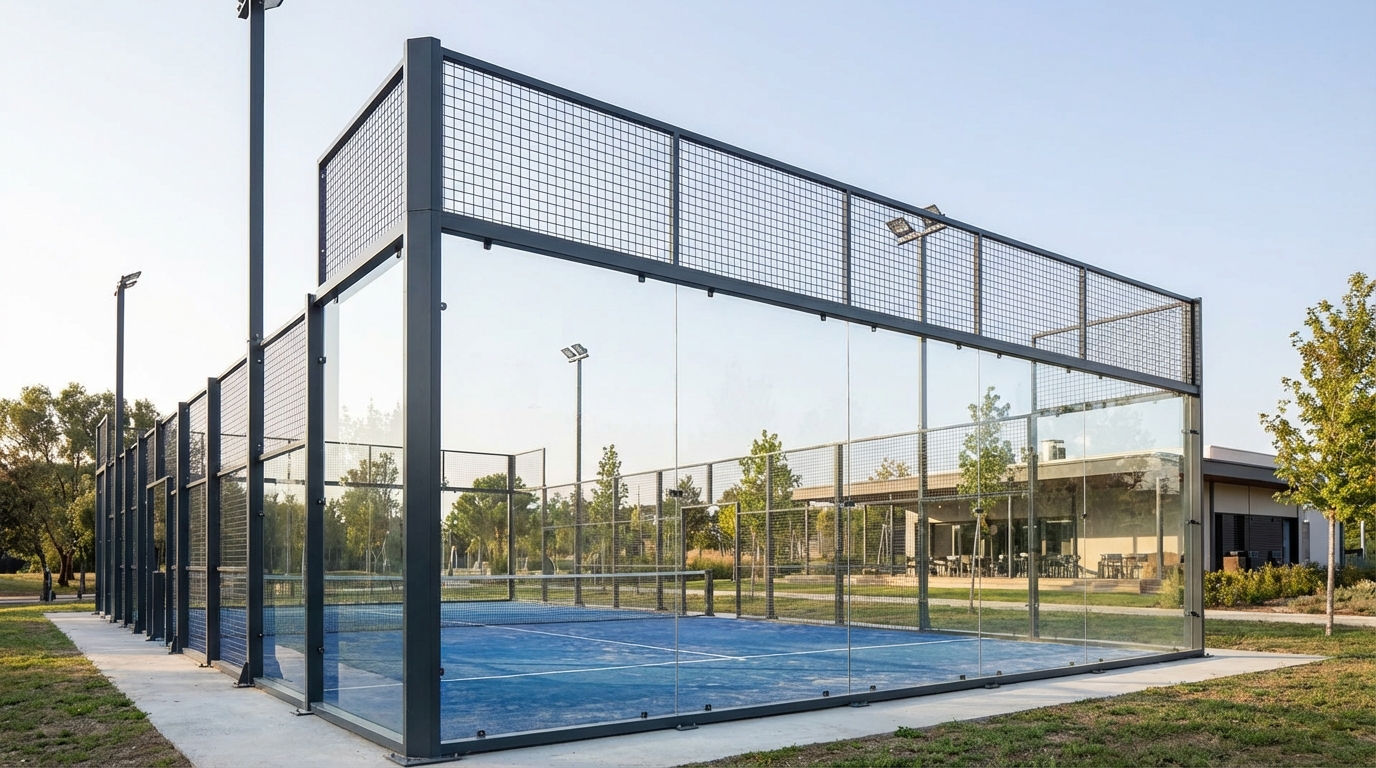
The size of padel court walls consists of a combination of glass and mesh reaching heights of 3 and 4 meters. The back walls are typically 4 meters high, while the side walls feature a stepped design for aerodynamic and visibility reasons.
Glass Panel and Metal Mesh Heights
The first 3 meters of the back wall are usually tempered glass, topped by an additional 1 meter of metallic mesh. Think about it: this 4-meter total height prevents most balls from leaving the court while allowing for the iconic “off the wall” play style.
- Back Wall Height: 4 meters (3m glass + 1m mesh).
- Side Wall Start: 3 meters high for the first 2 meters from the back wall.
- Side Wall End: Decreases or stays at 3 meters depending on the specific “European” or “American” style.
Why are wall configurations unique?
Does the mesh height matter for player safety? Yes, the mesh must be rigid enough to withstand player impact and ball strikes without deforming. The specific sizing of the mesh openings is also regulated to ensure the ball cannot get stuck or pass through.
Key Takeaway: Correct wall heights and materials define the unique “enclosed” nature of padel, enabling the strategic use of rebounds.
| Wall Section | Height | Primary Material |
|---|---|---|
| Rear Wall | 4.0 m | 10-12mm Tempered Glass |
| Side Wall (First 2m) | 4.0 m | Glass and Mesh combo |
| Side Wall (Remaining) | 3.0 m | Metallic Mesh |
High-quality wall construction provides the structural safety needed for intense matches where players frequently lean or crash into the perimeter.
What total size of padel court space is needed?
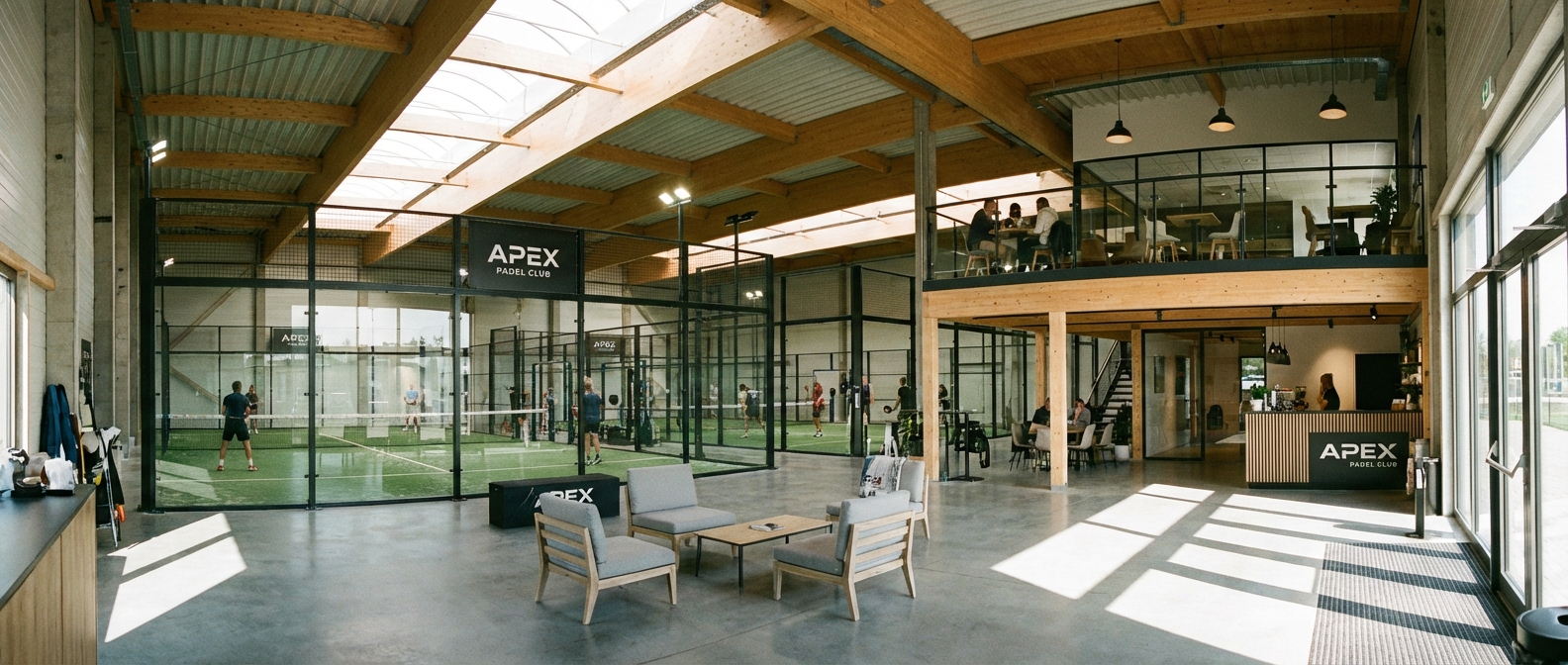
The total size of padel court footprint required for installation is approximately 231 square meters to account for structural pillars and safety zones. While the playing area is 200 sqm, you must plan for the external frame and any out-of-court play zones.
Minimum Footprint for Safe Play
When building multiple courts, you need to leave space between the structures for maintenance and player movement. It gets better: if you intend to allow “out-of-court” play, you need an additional 2 meters of clear space on each side of the net.
- Standard Footprint: 21m x 11m (minimum area).
- Pro Footprint: 23m x 15m (includes safety zones).
- Pillar Clearance: 0.5m around the exterior.
What are the indoor ceiling requirements?
Are you building indoors? You must have a minimum clear height of 6 meters throughout the entire court area, though 8 meters is highly recommended for professional play. Any lower, and players will find it impossible to perform effective “lobs” without hitting the ceiling.
Key Takeaway: Planning for a larger footprint than the 20x10m playing area ensures your facility is safe, accessible, and compliant with out-of-court play rules.
| Space Category | Recommended Size | Purpose |
|---|---|---|
| Playing Surface | 200 m² | Regulation gameplay |
| Construction Slab | 231 m² | Structural foundation |
| Ceiling Height | 7.0 m+ | Unobstructed lobs |
Allocating sufficient buffer space around your court prevents congestion and allows for future upgrades like spectator seating.
What size of padel court base is required?
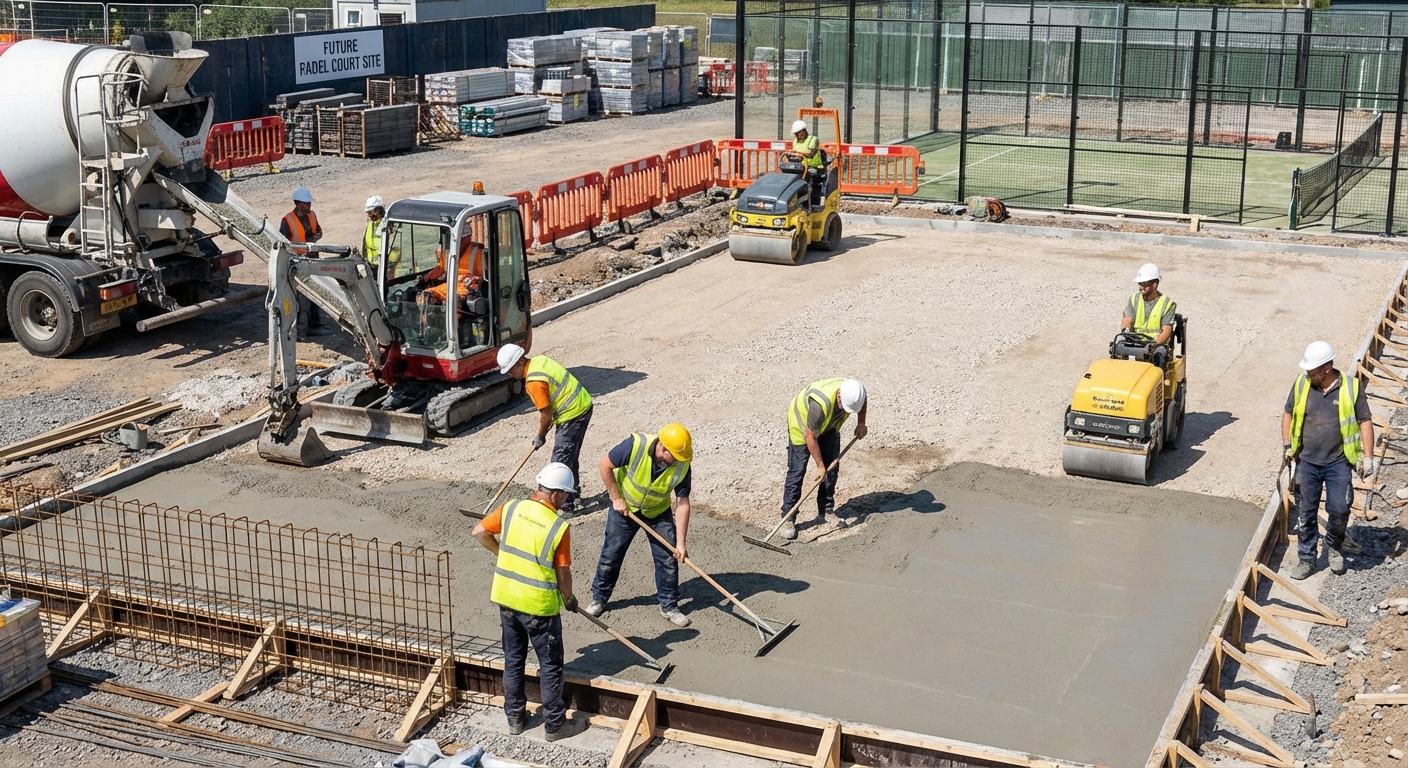
The size of padel court base should be slightly larger than the court itself, typically a 21m x 11m reinforced concrete slab. This base must be perfectly level with a maximum slope of 0.5% to allow for water runoff without affecting ball bounce.
Excavation and Concrete Foundations
The depth of the excavation depends on your local soil conditions, but a standard 15-25cm thick concrete slab is common. Best of all: using reinforced concrete prevents the surface from cracking or shifting over time, which would ruin the court’s playability.
- Slab Thickness: 15cm to 25cm.
- Reinforcement: Steel mesh or fiber-reinforced concrete.
- Finish: Laser-leveled to ensure 0% deviation in the center.
Managing Proper Court Drainage
How do you prevent flooding? For outdoor courts, the concrete base is often porous or includes a peripheral drainage channel to whisk away rainwater. If water sits on the surface, it can damage the synthetic turf and the adhesive used to secure it.
Key Takeaway: A robust, level foundation is the single most important factor in the longevity and performance of your padel court investment.
| Base Feature | Specification | Impact |
|---|---|---|
| Slab Dimensions | 21 x 11 m | Structural support for frame |
| Max Slope | < 0.5% | Balanced ball bounce |
| Concrete Grade | HA-25 or higher | Durability and strength |
A poorly constructed base will lead to “dead spots” in the turf and potential structural failure of the glass enclosure.
How does the size of padel court turf matter?
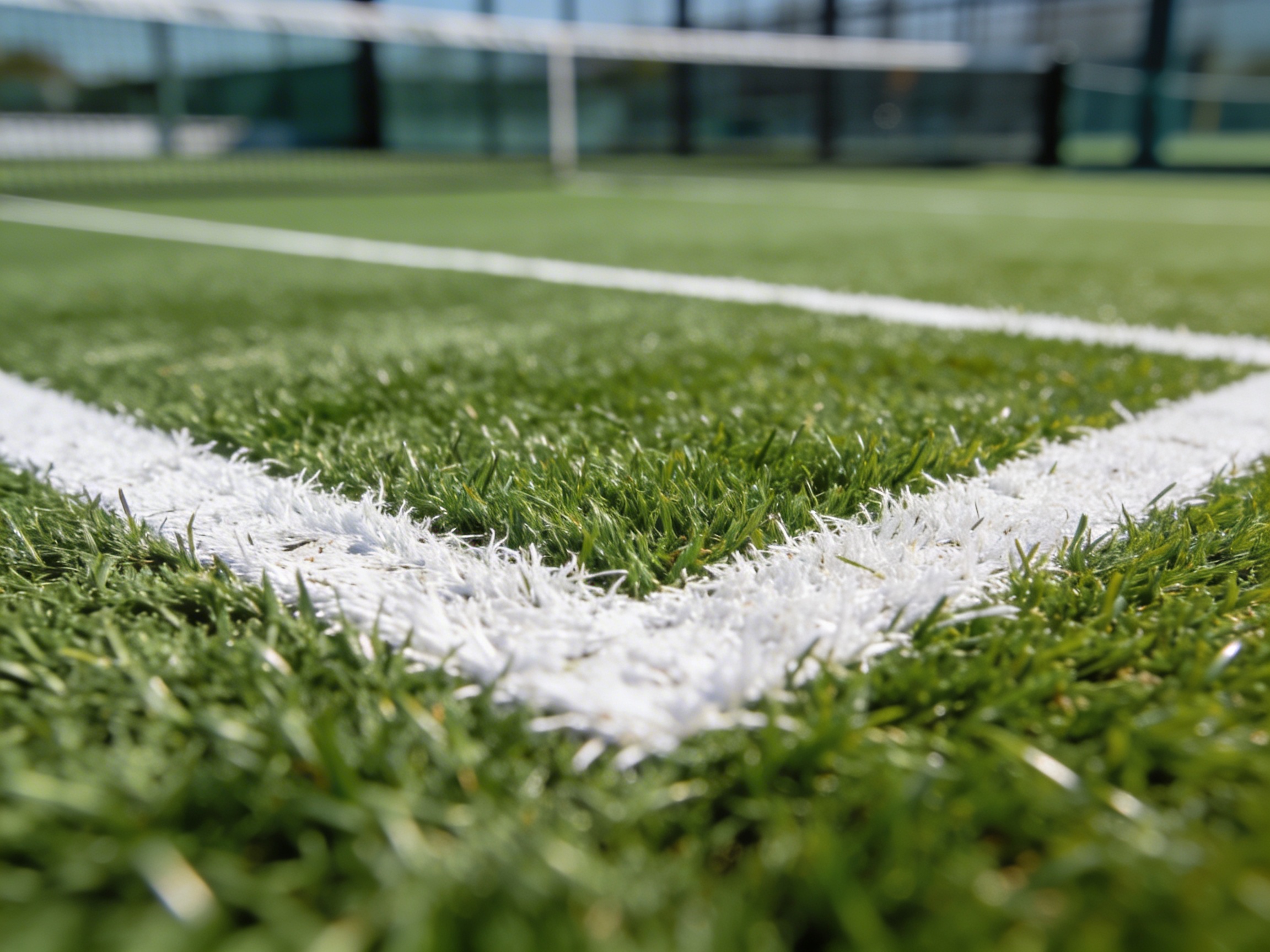
The size of padel court turf filaments is usually between 10mm and 15mm in height, depending on the desired speed of play. This synthetic grass is designed specifically to hold silica sand, which provides the necessary grip and slide for players.
Artificial Grass Material Choices
Most modern courts use monofilament or textured (curly) polyethylene fibers. The truth is: curly fibers are becoming the industry standard because they hold the sand in place more effectively and require less maintenance.
- Monofilament: Faster play, requires more frequent brushing.
- Fibrillated: Durable but can feel harder underfoot.
- Textured: Best for sand concealment and consistent bounce.
Silica Sand Infill Requirements
How much sand is needed for a 200 sqm court? Typically, you will need between 2,500kg and 3,000kg of kiln-dried silica sand to properly infill the turf. This sand must have a specific grain size (usually 0.5mm to 1.0mm) to avoid being abrasive to players or the turf fibers.
Key Takeaway: Choosing high-quality turf and the correct sand volume directly influences player joint health and the speed of the game.
| Turf Property | Ideal Range | User Benefit |
|---|---|---|
| Fiber Height | 10 – 12 mm | Consistent ball speed |
| Sand Quantity | 12 – 15 kg/m² | Optimal traction |
| Dtex Rating | 8,000 – 10,000 | Long-term wear resistance |
The interaction between the turf fibers and the silica sand creates the unique “sliding” movement that defines padel footwork.
How does the size of padel court glass impact it?
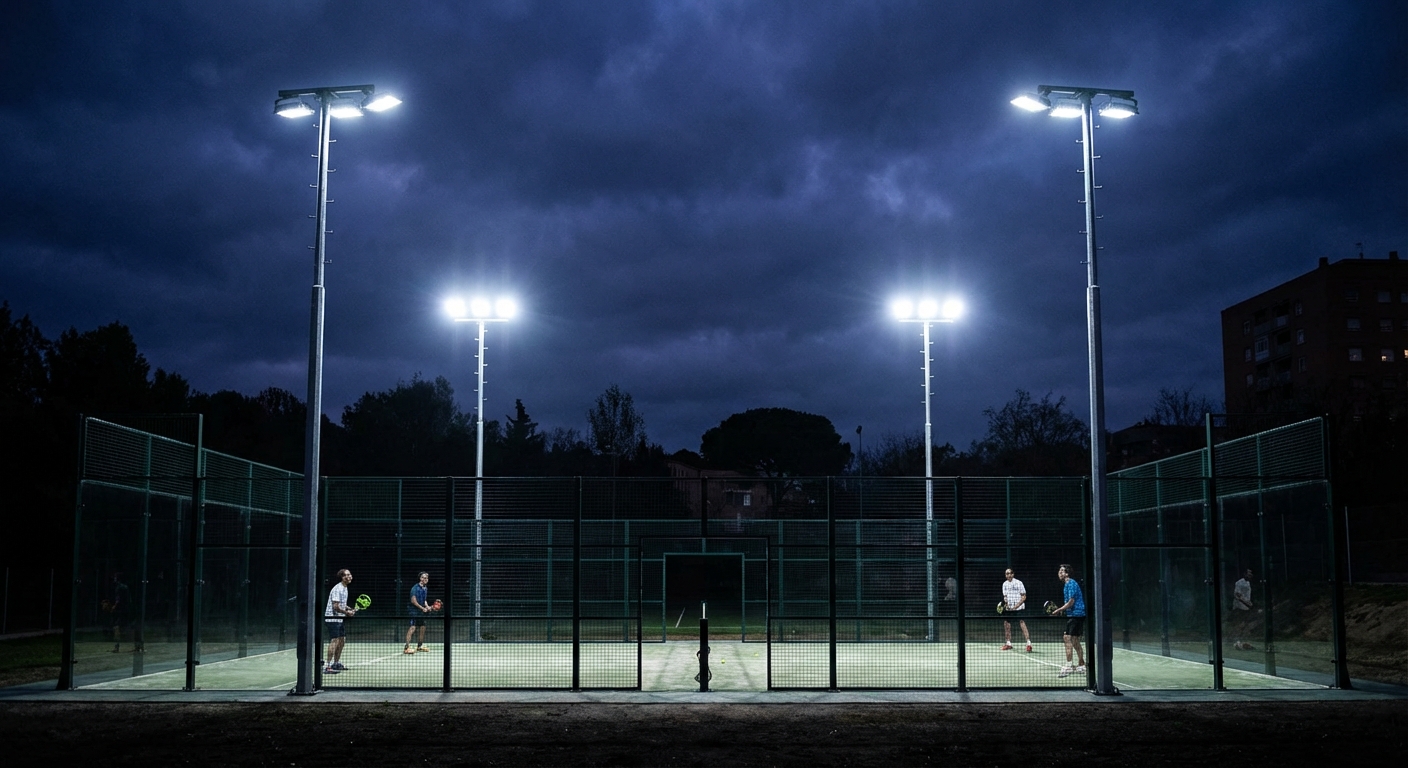
The size of padel court glass panels is standardized at 2 meters by 3 meters, with a thickness of 10mm or 12mm. These panels must be tempered to ensure that if they break, they crumble into small, harmless pieces rather than sharp shards.
Choosing Tempered vs. Toughened Glass
Which thickness should you choose? In other words: 12mm glass is superior for high-traffic clubs as it offers better resistance to player impact and a more consistent rebound for the ball.
- 10mm Glass: Common for private residential courts.
- 12mm Glass: Industry standard for commercial and pro clubs.
- Fasteners: Stainless steel or high-tensile bolts with nylon bushings.
Maintaining Structural Integrity
Can the glass withstand extreme weather? High-quality padel glass is designed to resist wind loads of up to 100km/h, provided the metal frame is properly anchored to the concrete base. Regular inspections of the gaskets and bolts are necessary to prevent vibration-induced stress fractures.
Key Takeaway: Investing in 12mm tempered glass provides a more “pro” feel and significantly reduces the risk of accidental breakage during intense play.
| Glass Spec | Standard | Security Level |
|---|---|---|
| Thickness | 12 mm | Professional/Commercial |
| Material | Tempered Safety Glass | High (CE Certified) |
| Panel Size | 1,995 x 2,995 mm | Standardized replacement |
The transparency and resilience of the glass are what make padel an engaging spectator sport, even from outside the court.
What is the size of padel court build costs?
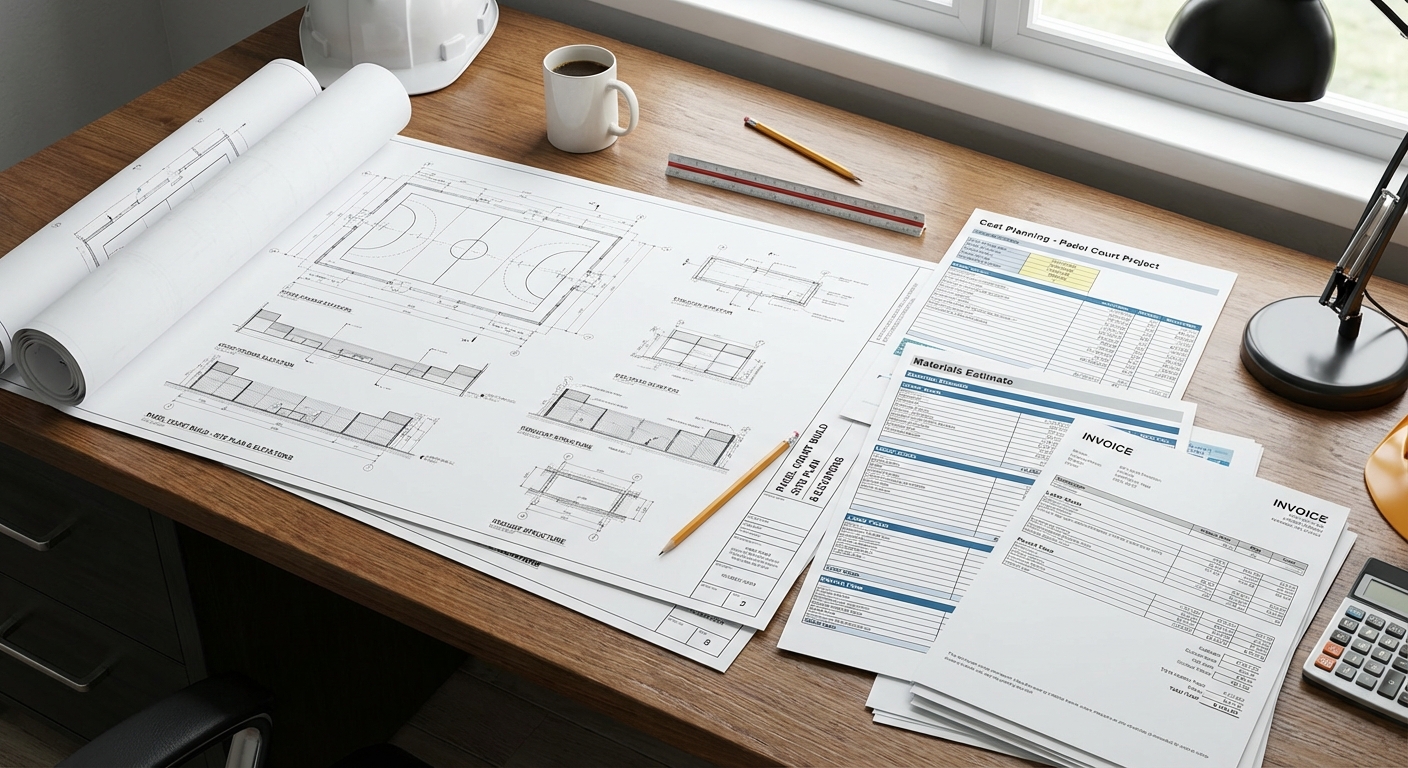
The size of padel court financial investment typically ranges from $20,000 to $50,000 per court, excluding land costs. This variation is driven by the quality of materials, local labor rates, and the complexity of the site preparation.
Estimated Expense Range in the US
Building a court in the United States often involves higher shipping costs for specialized European components. Let’s face it: while the initial price might seem high, the low maintenance costs and high rental demand often lead to a full ROI within 24 months.
- Budget Level: $20k – $28k (standard materials, basic turf).
- Premium Level: $30k – $45k (12mm glass, panoramic view, LED lighting).
- Luxury Level: $50k+ (Custom branding, high-end turf, advanced drainage).
What factors influence the final price?
Why do prices fluctuate so much? The most significant cost drivers are the “Panoramic” vs. “Standard” frame designs and the inclusion of high-output LED lighting systems. Site leveling and soil stabilization can also add thousands to the total if the land is not already prepared.
Key Takeaway: Understanding the cost tiers allows you to balance your initial capital expenditure with the long-term revenue potential of your facility.
| Cost Component | Est. Percentage | Notes |
|---|---|---|
| Concrete Base | 25% – 35% | Most variable cost |
| Structure & Glass | 40% – 50% | Core hardware cost |
| Turf & Lighting | 15% – 20% | Critical for play quality |
A detailed budget plan prevents mid-project delays and ensures that you don’t cut corners on critical safety components like glass and foundations.
Why does size of padel court planning matter?
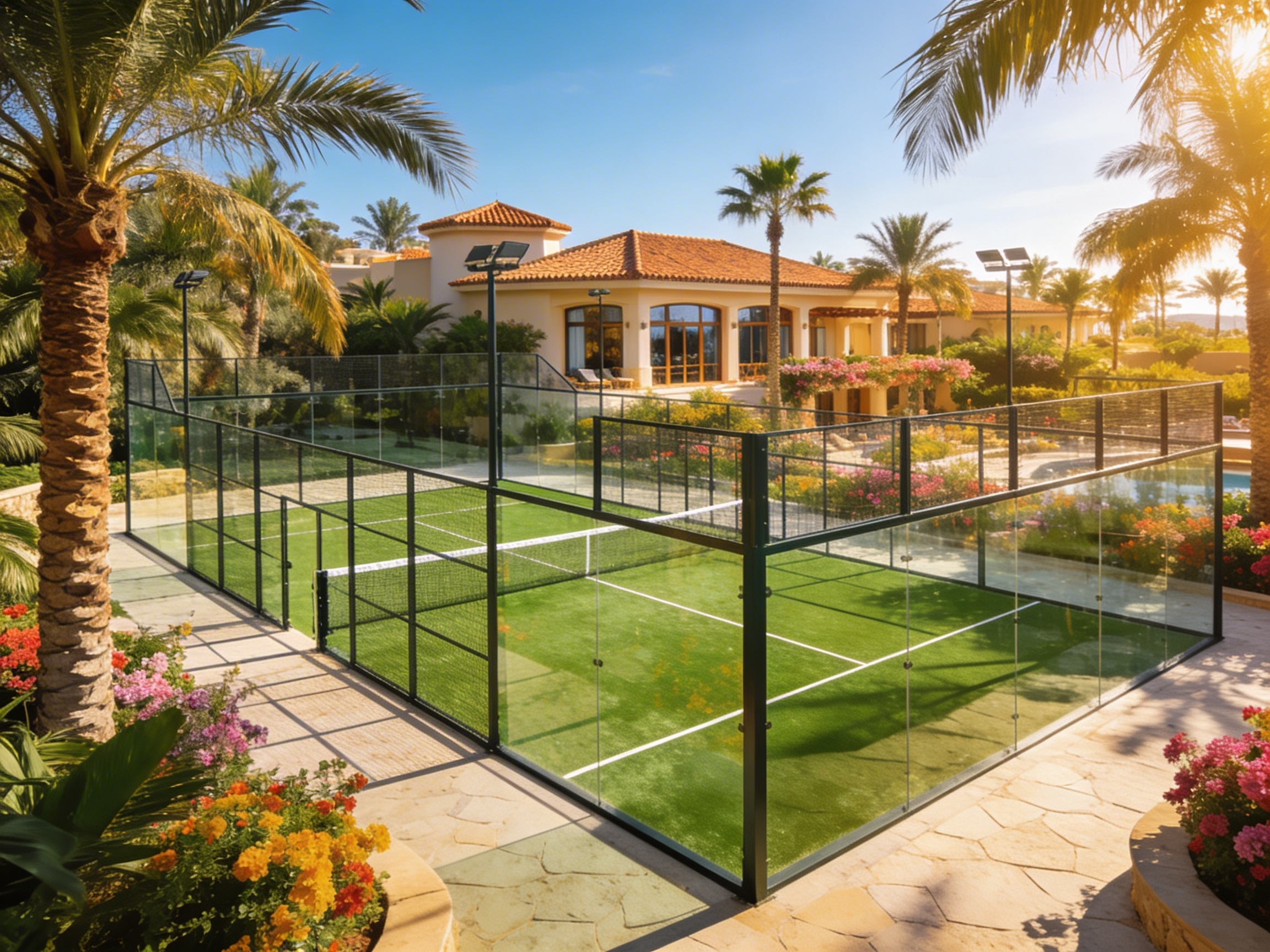
Proper size of padel court planning is the difference between a thriving sports hub and a facility plagued by maintenance issues. By assessing your site early, you can optimize the orientation of the court to avoid sun glare for players.
Location and Site Assessment Steps
Where should you place the court? Bottom line: you should ideally orient the court North-South to minimize the impact of the sun during morning and evening matches. This planning phase also involves checking local zoning laws and noise ordinances.
- Orientation: North-South is ideal.
- Permits: Check local “Sports Facility” zoning.
- Accessibility: Ensure enough room for disabled access and emergency exits.
Finding Professional Court Builders
How do you choose a contractor? You should look for builders who specialize specifically in padel, as the tolerances for glass and turf are much stricter than those for traditional tennis or pickleball. A general contractor may not understand the importance of the 0.5% slope or the exact tensioning of the mesh walls.
Key Takeaway: Early strategic planning minimizes long-term operational risks and ensures your court remains a premium destination for years.
| Planning Stage | Action Item | Success Metric |
|---|---|---|
| Site Survey | Soil testing & Leveling | Stable foundation |
| Logistics | Shipping & Crane access | On-time delivery |
| Compliance | Local building permits | Legal operation |
Taking the time to plan every millimeter of your installation protects your capital and guarantees a world-class player experience.
*
We have explored every technical detail from the exact 20x10m playing area to the complex engineering of tempered glass and reinforced foundations. Navigating the specific requirements for a padel installation can be overwhelming, but getting it right ensures a safe, durable, and profitable facility. We specialize in bringing professional-grade sports infrastructure to life with precision and expertise. Our stance is simple: we believe every court should be a masterpiece of engineering that inspires play. contact us today to turn your vision into a reality.
Frequently Asked Questions
Can I build a padel court in my backyard?
Yes, provided you have at least 231 square meters of flat land and meet local residential zoning requirements for noise and structures. You must also ensure that heavy machinery can access the site for the concrete pour and glass installation.
What is the best surface for a padel court?
Artificial turf with silica sand is the industry standard because it provides the optimal balance of grip and player safety. For high-end commercial clubs, textured monofilament turf is generally considered the best for durability and aesthetics.
Can I convert a tennis court into two padel courts?
Yes, a standard tennis court provides enough footprint (approx. 600-700 sqm) to comfortably fit two padel courts side-by-side. This is a common strategy for clubs looking to increase their revenue per square foot.
What is the best lighting for a padel court?
LED lighting is the superior choice, specifically systems providing at least 500-750 lux for competitive play. Modern LED fixtures are more energy-efficient and provide more uniform light distribution than traditional metal halide bulbs.
Can I use concrete walls instead of glass?
It depends on your goals; while older “Wall Padel” courts used concrete, modern players almost exclusively prefer glass for better visibility and rebound consistency. Glass courts are also required for any sanctioned competitive tournaments.