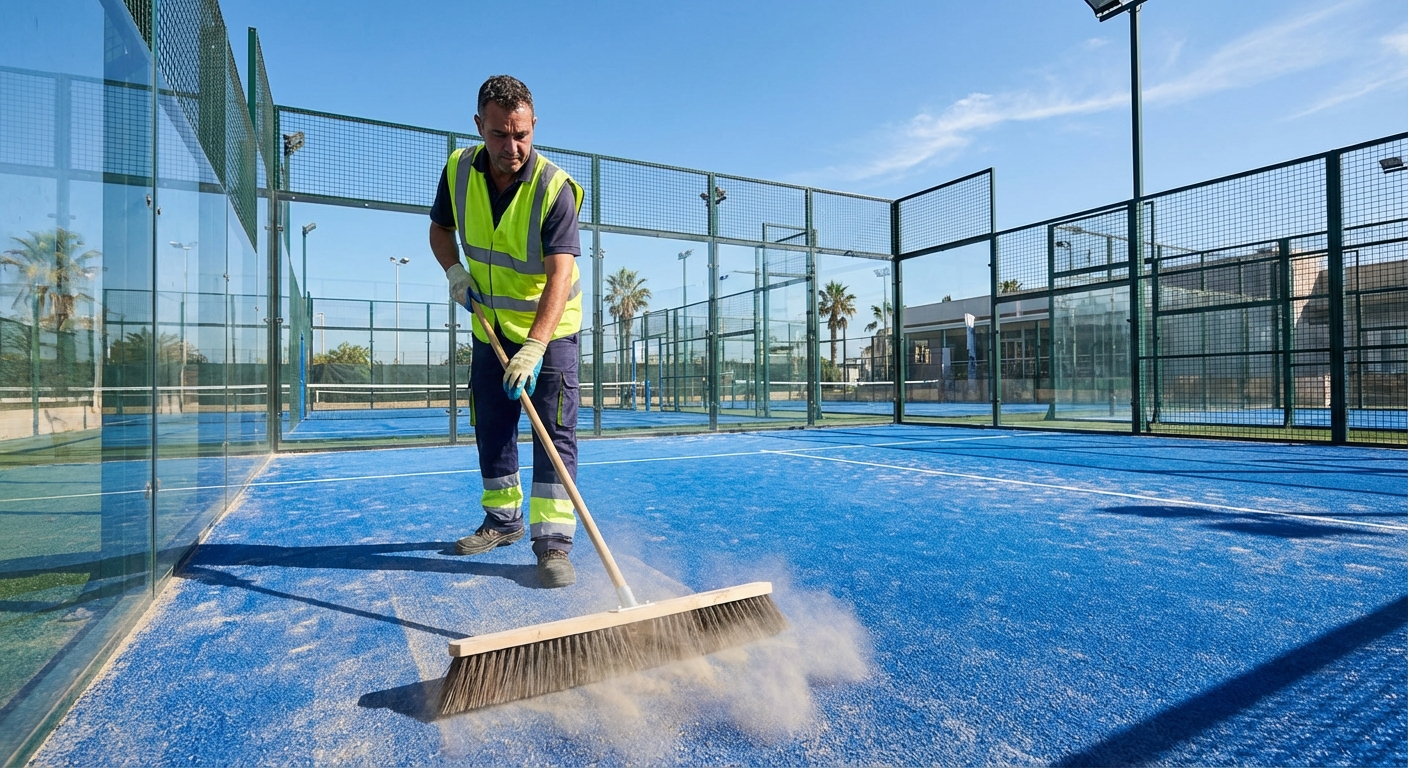
Padel tennis court installation is the comprehensive technical process of constructing a 10 x 20-meter sports enclosure that integrates tempered glass walls, metallic mesh fencing, and synthetic turf to create a specialized playing environment.
You are likely noticing your sports facility is falling behind as the global demand for social racket sports skyrockets. Without a professional padel tennis court installation, you risk losing your most active members to competitors who provide modern, high-turnover amenities. This lack of specialized infrastructure results in missed revenue opportunities and a stagnant community. By choosing a high-performance build, you transform underutilized space into a premium destination that guarantees player engagement and long-term facility growth.
What is padel tennis court installation?
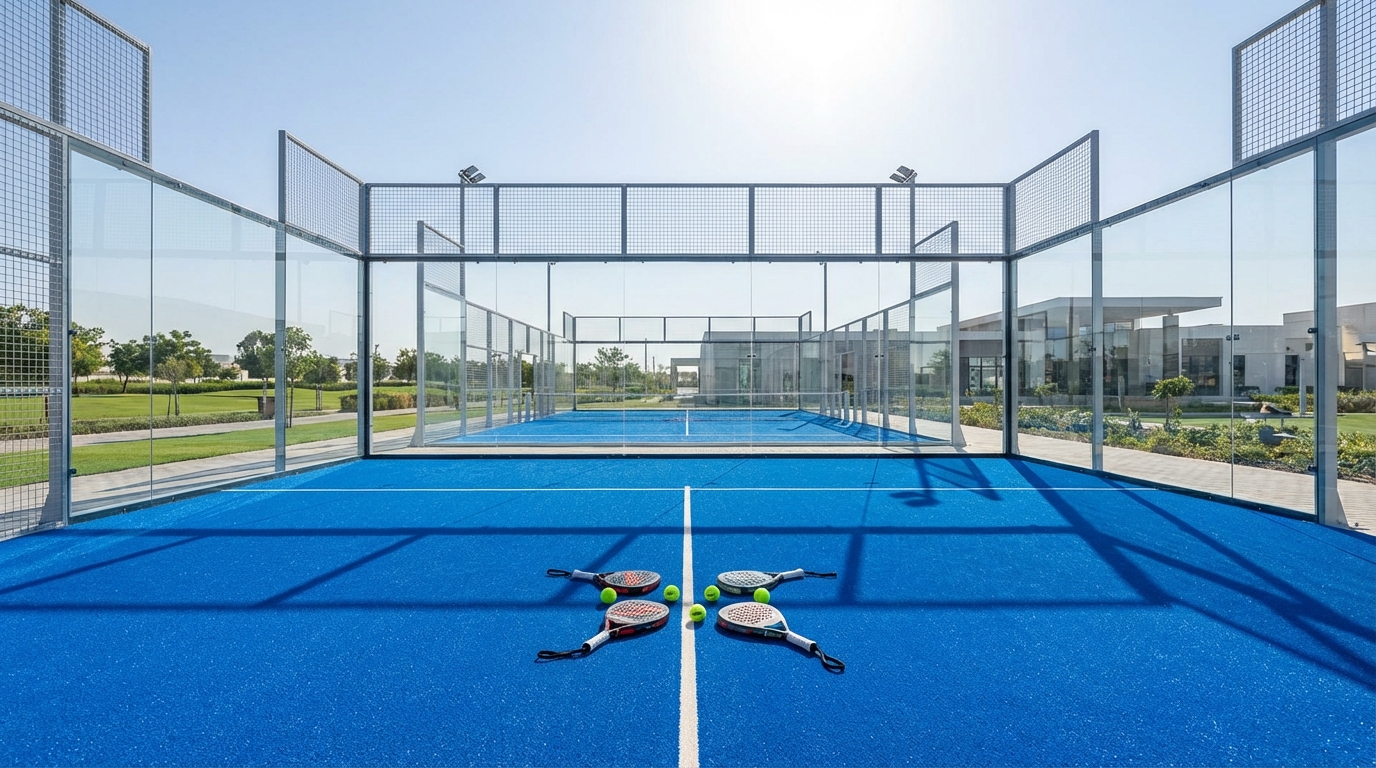
Padel tennis court installation is a specialized engineering project that creates a 200-square-meter playing area enclosed by structural glass and steel. This specific padel tennis court installation requires precise alignment to ensure that the “walls” of the court function as active participants in the game.
Is it different from a tennis court?
The footprint of this build is significantly smaller than a traditional tennis court, measuring exactly 10 meters wide by 20 meters long. Unlike tennis, the enclosure is a structural requirement because players use the glass to rebound the ball.
What are the core components?
Every professional build consists of a rigid steel frame, high-impact tempered glass panels, and an artificial grass surface. These elements must be integrated seamlessly to handle the high-velocity impact of strategic doubles play.
You might be wondering:
- Why is the glass so thick?
- How does the mesh affect the bounce?
- What makes the surface unique?
Key Takeaway: A professional installation is more than just a surface; it is a structural environment where the enclosure is part of the game.
| Component | Standard Specification | Functional Role |
|---|---|---|
| Enclosure | 10-12mm Tempered Glass | Provides consistent ball rebound |
| Dimensions | 10m x 20m | Defined playing area for doubles |
| Framework | Galvanized Steel | Supports the glass and mesh weight |
Why invest in padel tennis court installation?
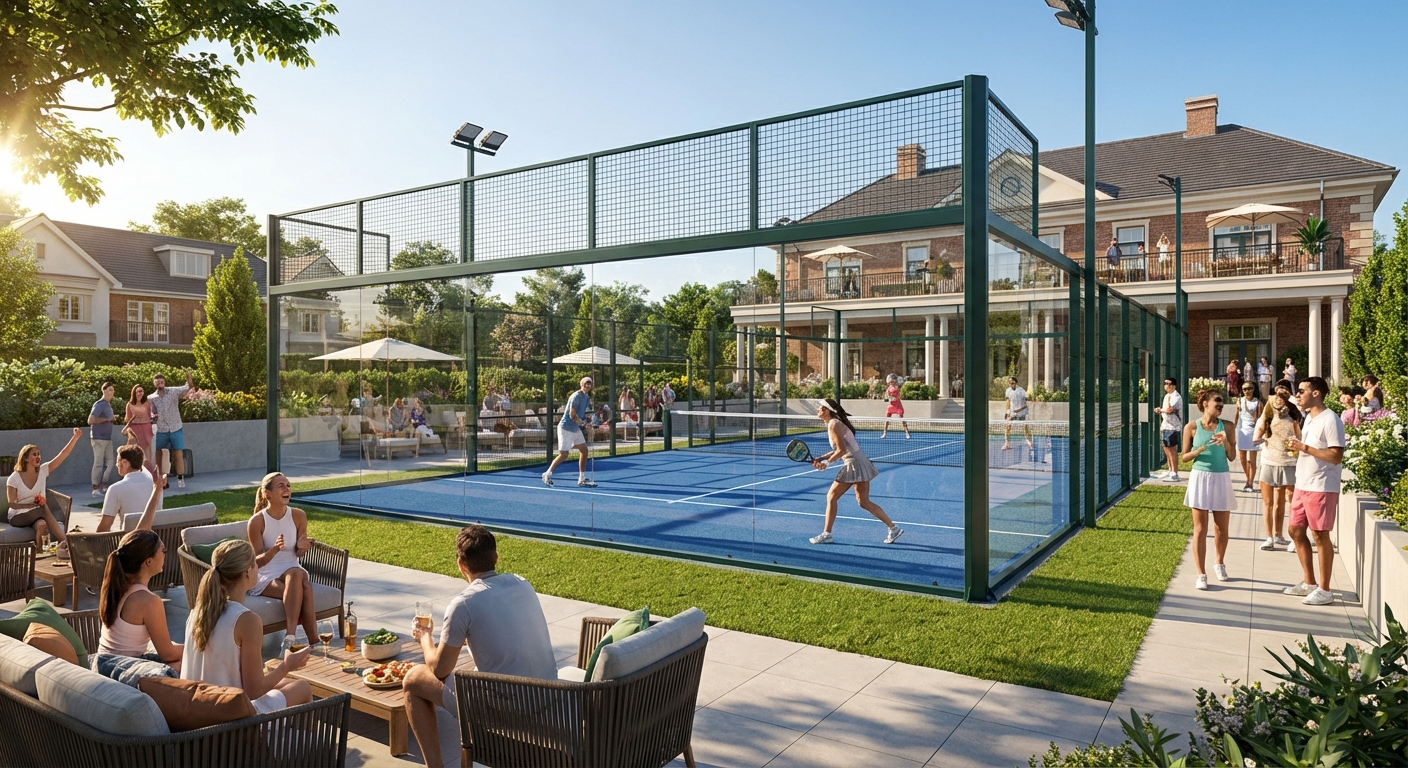
The primary reason for padel tennis court installation is the massive increase in player density and revenue per square meter compared to other racket sports. Choosing a canoramic padel court style for your padel tennis court installation ensures that you offer the most visually striking and spectator-friendly experience available.
Is the ROI better than tennis?
You can fit nearly three padel courts in the space of one full-sized tennis court. This allows for 12 active players in the same footprint that previously only accommodated four, tripling your potential hourly rental income.
Does it attract a new demographic?
Padel is famously easy to learn, making it highly attractive to social players, families, and corporate groups. It bridges the gap between the intensity of squash and the technical difficulty of tennis.
But here is the kicker:
- Social engagement leads to higher clubhouse spending.
- Membership retention increases with multi-sport offerings.
- The learning curve is significantly shorter for beginners.
Key Takeaway: High player turnover and efficient land use make this the most profitable upgrade for modern sports clubs.
| Investment Metric | Padel Court | Tennis Court |
|---|---|---|
| Players per 600sqm | 12 Players | 4 Players |
| Learning Curve | Low (Immediate Fun) | High (Technical) |
| Social Factor | Very High | Medium |
What space needs padel tennis court installation?
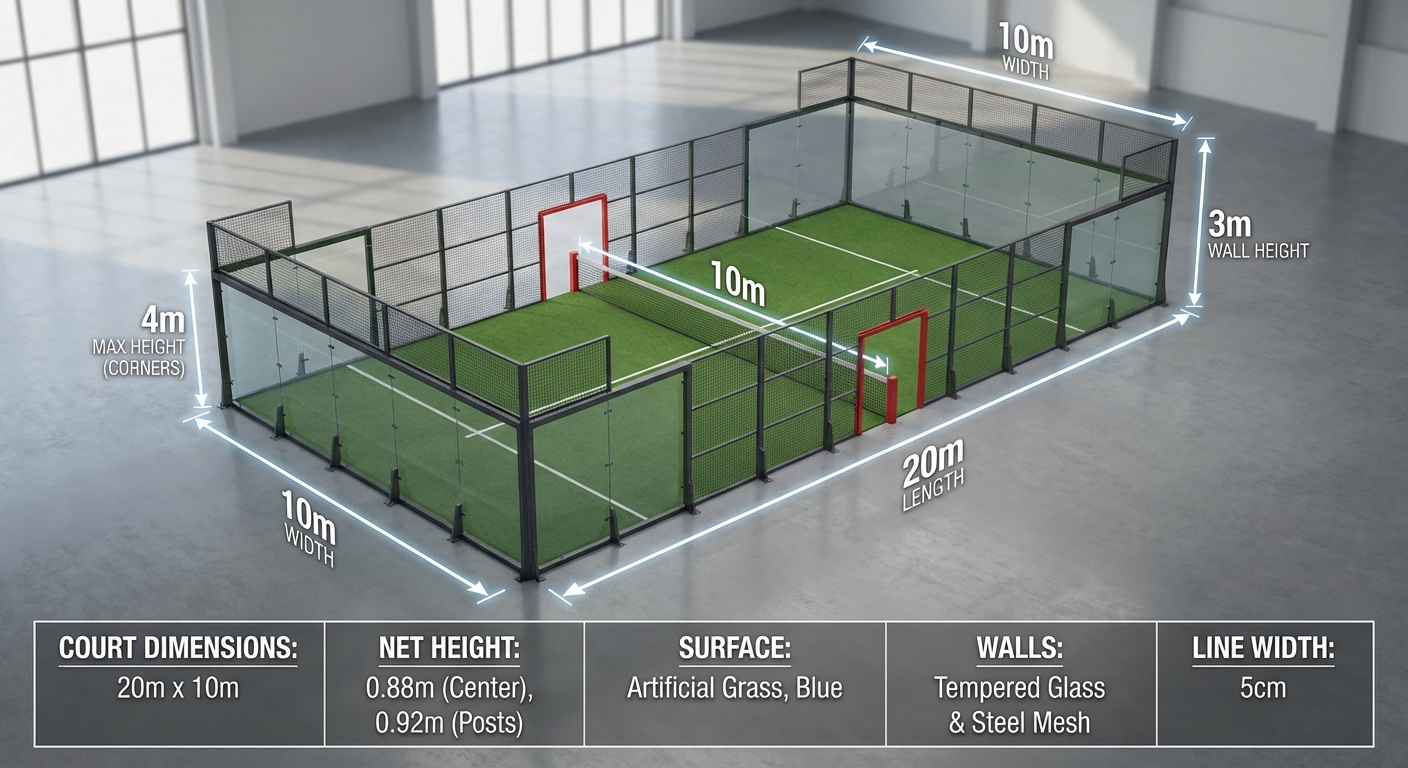
Space requirements for padel tennis court installation include a minimum clear footprint of 11 x 21 meters to account for the structural pillars and safety zones. During the planning of your padel tennis court installation, you must ensure the ground is perfectly level to prevent erratic ball behavior.
What are the official dimensions?
The internal playing area must be exactly 10 meters wide and 20 meters long, divided by a central net. Any deviation from these metrics can disqualify the court from hosting official International Padel Federation (FIP) sanctioned matches.
How much height is required?
For outdoor builds, height is usually not an issue, but for indoor or covered facilities, you need a minimum of 6 meters of clearance. However, professional-grade facilities aim for 8 meters to allow for high-arcing “lob” shots.
You might be wondering:
- Can I use an existing concrete slab?
- Does the orientation of the sun matter?
- How much safety space is needed outside the glass?
Key Takeaway: Precision in dimensions and vertical clearance is non-negotiable for a professional playing experience.
| Dimension | FIP Standard | Recommended |
|---|---|---|
| Internal Length | 20 Meters | 20 Meters |
| Internal Width | 10 Meters | 10 Meters |
| Ceiling Height | 6 Meters (Min) | 8 Meters (Ideal) |
What parts comprise padel tennis court installation?
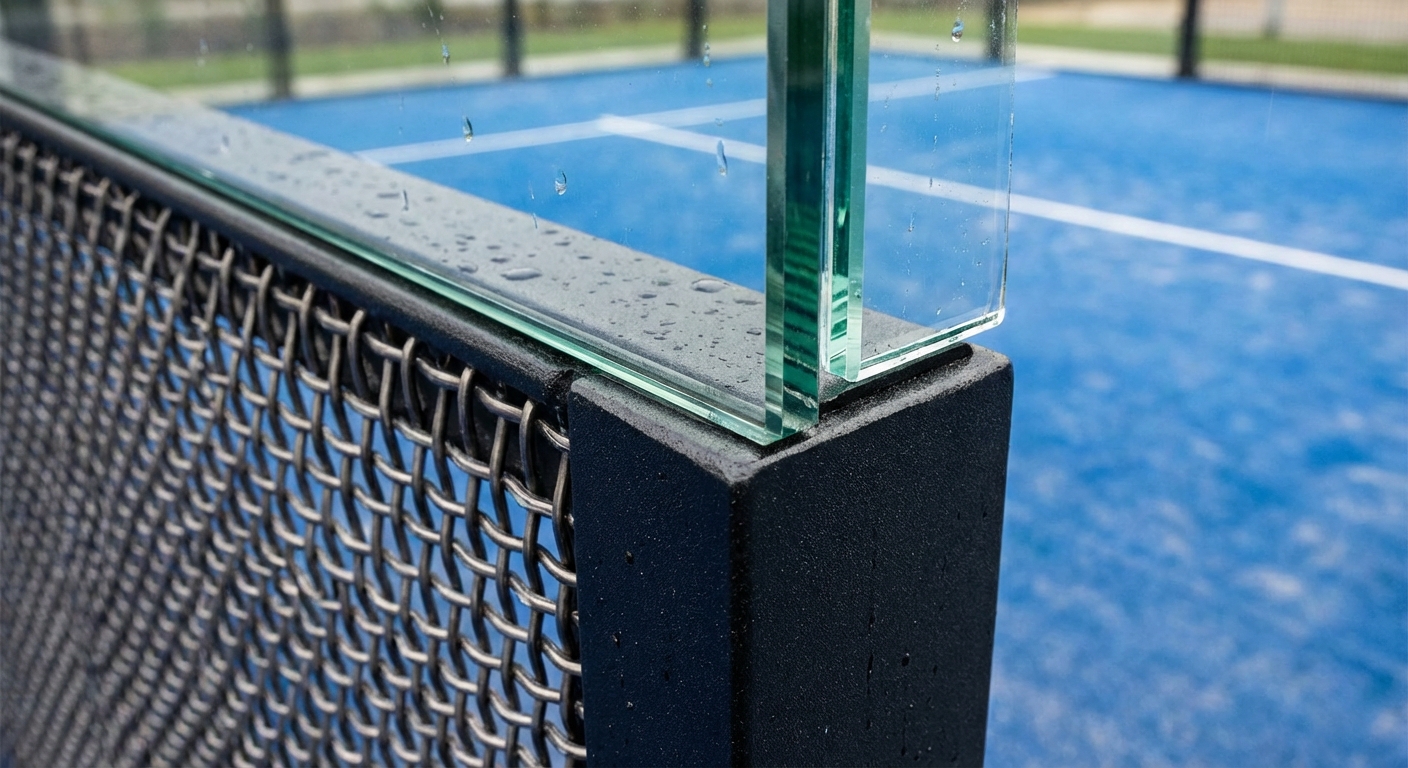
A standard padel tennis court installation comprises a galvanized steel structure, 10mm to 12mm tempered glass, and specialized synthetic turf. Utilizing a classic padel court design for your padel tennis court installation provides a robust, time-tested framework that balances durability with cost-effectiveness.
Why is tempered glass used?
Tempered glass is used because it provides the impact resistance necessary to withstand players running into the walls and high-velocity ball strikes. If it breaks, it shatters into small, blunt pieces to prevent serious injury.
What is the role of the mesh?
The electro-welded metallic mesh covers the sides and upper sections of the court. It must be perfectly flush with the glass panels to ensure that the ball bounce remains predictable when transitioning between surfaces.
But here is the kicker:
- High-quality mesh prevents “dead spots” in the game.
- Galvanized steel prevents rust in outdoor environments.
- 12mm glass is preferred for high-wind or coastal areas.
Key Takeaway: The quality of the glass and the flushness of the mesh are the two most critical factors for fair gameplay.
| Material | Requirement | Benefit |
|---|---|---|
| Glass | 10mm or 12mm Tempered | Safety and consistent bounce |
| Frame | Zinc-Galvanized Steel | Corrosion resistance |
| Mesh | Electro-welded Steel | Durable enclosure |
Which base suits padel tennis court installation?
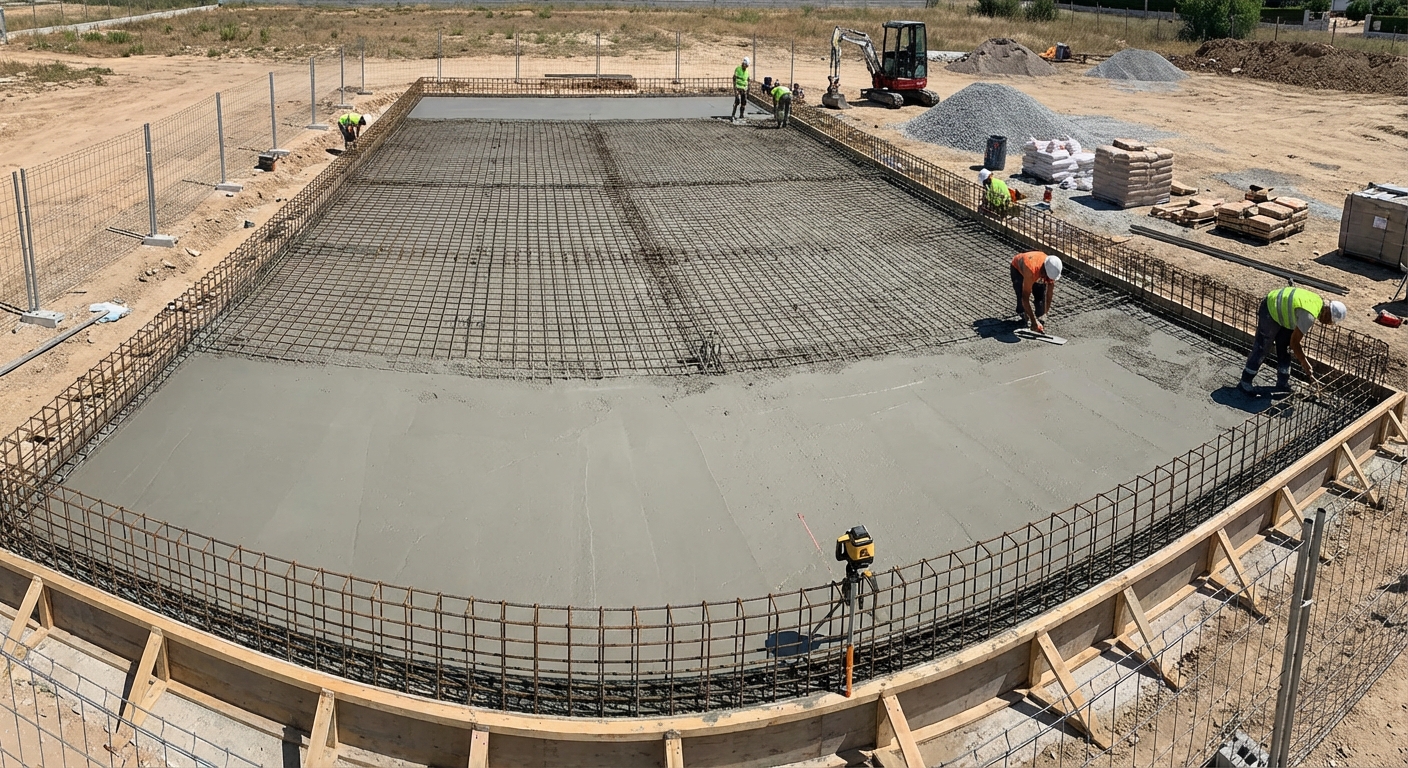
The best base for padel tennis court installation is a reinforced concrete slab with a thickness of at least 15cm. Without a stable foundation, your padel tennis court installation will suffer from shifting glass panels and poor turf drainage, leading to expensive repairs.
Is concrete better than asphalt?
Concrete provides a more rigid surface for anchoring the heavy steel pillars that support the glass. Asphalt is an option, but it requires much more frequent maintenance and can soften in high-heat environments.
How do you manage drainage?
Outdoor courts require a subtle 1% slope or a porous sub-base to allow rainwater to exit the playing surface quickly. Standing water is the primary enemy of synthetic turf and can cause the silica sand infill to clump.
You might be wondering:
- How long does the concrete need to cure?
- Should I use rebar or mesh reinforcement?
- Can I build on top of an old tennis court?
Key Takeaway: A perfectly level, reinforced concrete base is the only way to ensure the structural integrity of the glass walls.
| Base Type | Pros | Cons |
|---|---|---|
| Reinforced Concrete | Maximum stability; best for glass | Higher initial cost |
| Porous Concrete | Superior vertical drainage | Harder to anchor pillars |
| Asphalt | Faster installation | Prone to shifting and heat damage |
How to finish padel tennis court installation?
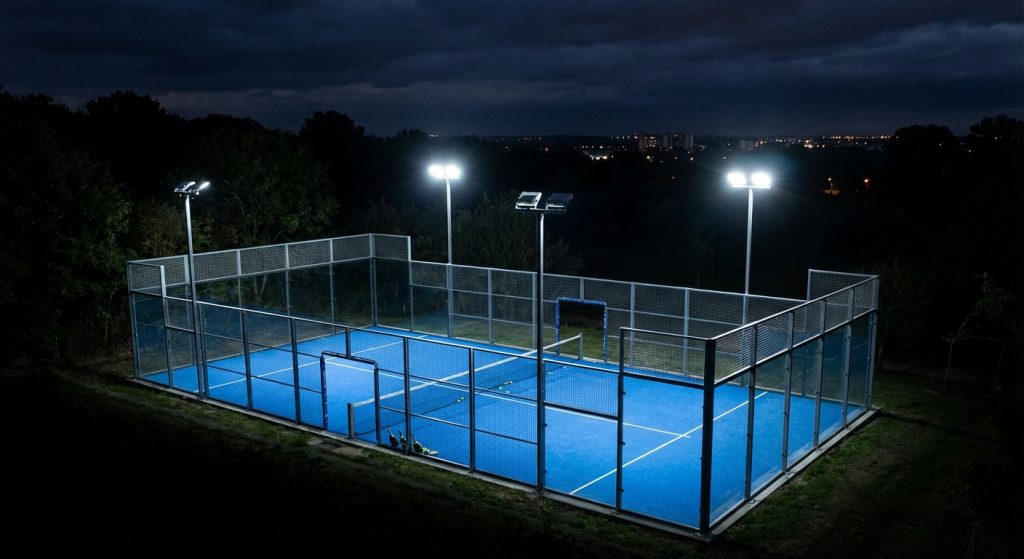
Finishing a padel tennis court installation involves laying the artificial turf, applying silica sand infill, and installing LED floodlights. As outlined in our about us page, the final touches of a padel tennis court installation determine the actual “feel” and usability of the facility for the players.
What turf should I choose?
You should select monofilament or textured synthetic turf designed specifically for padel. The fibers are shorter and denser than soccer turf, allowing for the precise ball bounce required for racket sports.
Is lighting essential for ROI?
Installing 4 to 8 LED floodlights on 6-meter poles is essential if you want to maximize evening rental revenue. High-quality LEDs minimize glare, which is critical for players looking up to track lobs.
But here is the kicker:
- Blue turf provides the best visual contrast for television and photos.
- Silica sand (0.5-1.0mm) must be brushed in evenly to prevent “bald” spots.
- Uniform lighting prevents shadows that can distract players.
Key Takeaway: Proper lighting and turf selection are the final steps in turning a construction site into a premium sports product.
| Finishing Step | Detail | Importance |
|---|---|---|
| Turf Laying | Blue or Green Monofilament | Traction and aesthetics |
| Sand Infill | Fine Silica Sand | Fiber support and sliding |
| LED Lighting | 200W to 400W Projectors | Enables 24/7 revenue |
Is maintenance vital for padel tennis court installation?
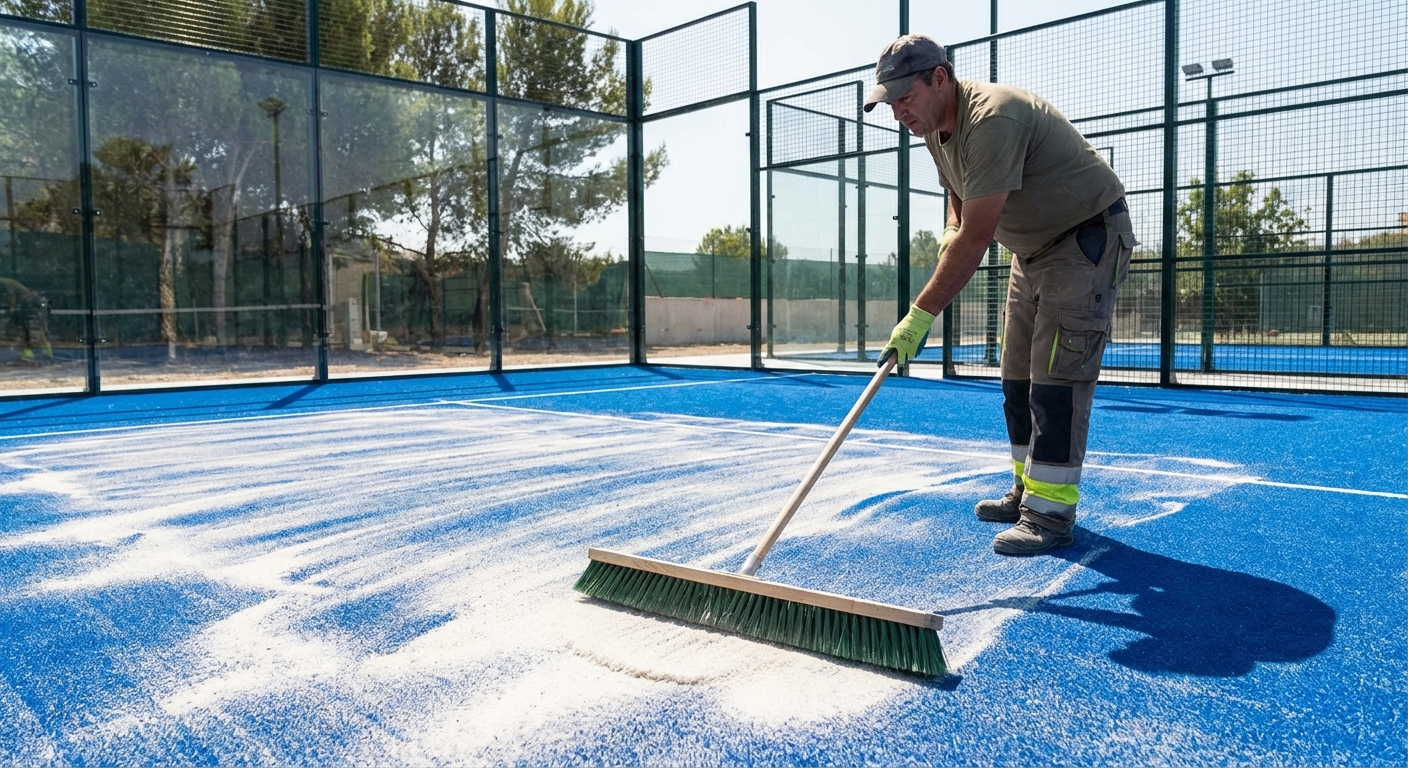
Routine maintenance for padel tennis court installation is vital to preserve the longevity of the turf and the safety of the glass anchors. Neglecting your padel tennis court installation can lead to compacted sand, which makes the surface slippery and dangerous for fast-moving players.
How often should I brush the turf?
You should brush the silica sand weekly to ensure it is distributed evenly across the surface. This prevents the fibers from flattening and maintains the correct “slide” factor that padel players expect.
Do the glass panels need checking?
Yes, you must inspect the structural bolts and glass gaskets every six months to ensure the vibration from play hasn’t loosened the fittings. Clean glass is also essential for maintaining a premium facility aesthetic.
You might be wondering:
- Can I use a regular broom?
- How do I remove moss from outdoor courts?
- When should the sand be replaced?
Key Takeaway: A simple weekly brushing routine can extend the life of your synthetic turf by several years.
| Maintenance Task | Frequency | Goal |
|---|---|---|
| Turf Brushing | Weekly | Redistribute sand; lift fibers |
| Glass Cleaning | Monthly | Visual clarity and member satisfaction |
| Bolt Inspection | Every 6 Months | Structural safety and stability |
How profitable is padel tennis court installation?
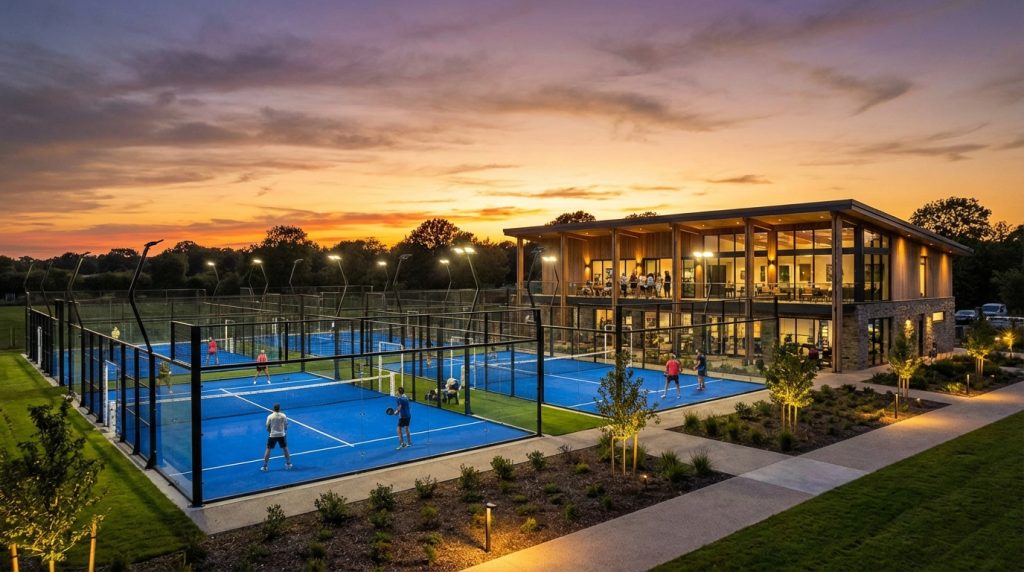
The profitability of padel tennis court installation is driven by its high player-to-space ratio and low operational overhead. Investing in a professional padel court for your padel tennis court installation typically results in a faster payback period than traditional sports infrastructure.
What is the typical payback period?
Depending on your local market rates and court utilization, most commercial facilities see a full return on their investment within 18 to 24 months. The low maintenance costs contribute significantly to this rapid ROI.
How do ancillary revenues work?
A court often acts as a magnet for foot traffic, allowing you to sell racket rentals, balls, and refreshments. Many clubs also find success by hosting weekend tournaments that attract non-members to the facility.
But here is the kicker:
- One tennis court space can house three padel courts.
- Padel is almost exclusively played as doubles (4 players per hour).
- Tournament fees and coaching provide significant secondary income.
Key Takeaway: The high turnover of players makes padel the most land-efficient revenue generator in the racket sports industry.
| Revenue Stream | Opportunity | Impact |
|---|---|---|
| Hourly Rentals | $40 – $100 per hour | Primary income driver |
| Pro Shop | Equipment and ball sales | High-margin secondary sales |
| Coaching | Private and group lessons | Builds a loyal community |
Can indoors host padel tennis court installation?
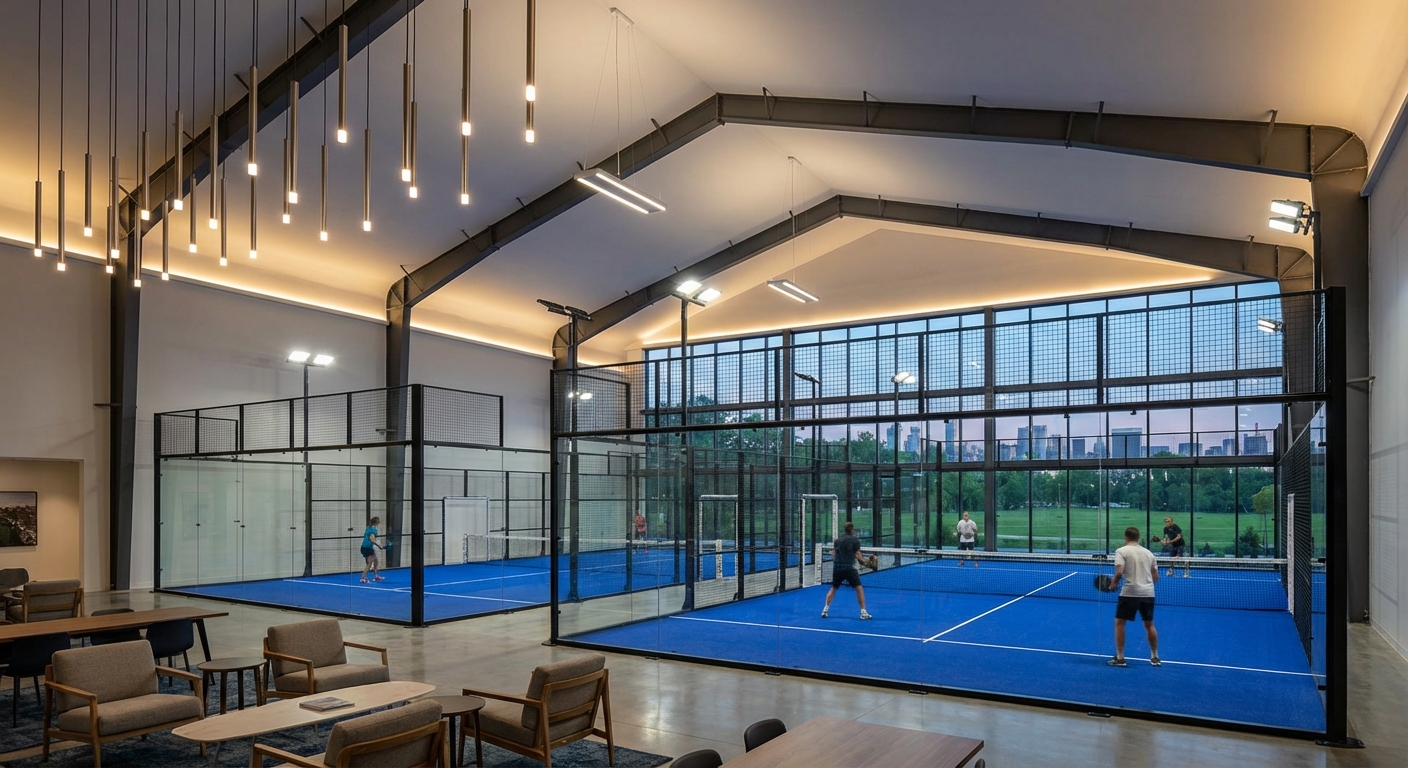
Indoor facilities are perfect for padel tennis court installation because they allow for 365 days of play regardless of weather conditions. During an indoor padel tennis court installation, you must prioritize lighting and ceiling height to ensure the game remains professional.
What is the minimum ceiling height?
The absolute minimum height for recreational play is 6 meters, but you should aim for 8 meters to accommodate competitive lobs. If the ball hits the ceiling or lights, the point is dead, which can frustrate high-level players.
Does the glass need to be different?
Indoor courts usually use 10mm glass since they are not subjected to external wind loads. However, you should still ensure the ventilation in the building is adequate to prevent condensation on the glass surfaces.
You might be wondering:
- Can I build in a warehouse?
- How do I manage sound echoing?
- Does indoor turf wear out faster?
Key Takeaway: Indoor courts provide the highest revenue stability by removing weather-related cancellations.
| Indoor Factor | Requirement | Benefit |
|---|---|---|
| Vertical Clearance | 8 Meters | Allows all tactical shots |
| Ventilation | Mechanical HVAC | Prevents slippery glass/turf |
| Acoustics | Sound dampening | Improves social experience |
Who manages padel tennis court installation?
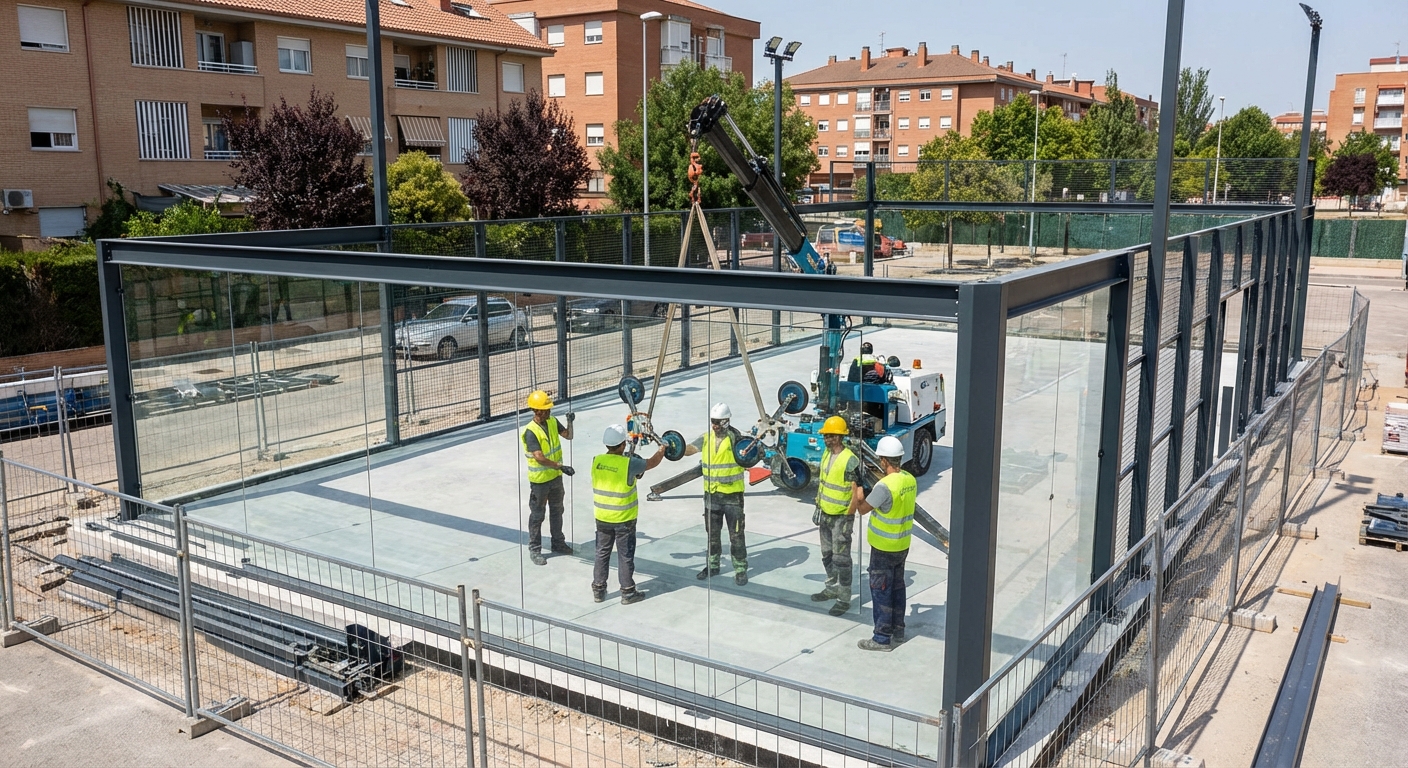
Professional contractors must manage padel tennis court installation to ensure the safety of the glass walls and the precision of the steel frame. Selecting a team that understands the nuances of a canoramic padel court is vital for a successful padel tennis court installation that meets international standards.
Why is professional assembly needed?
The tempered glass panels weigh over 150kg each and require specialized suction equipment and experienced crews to install. Misaligned glass can lead to spontaneous shattering or an inconsistent ball bounce that ruins gameplay.
What certifications should I look for?
You should look for installers who follow FIP (International Padel Federation) guidelines and use CE-certified materials. This ensures that the court is not only fun to play on but also meets all local building and safety codes.
But here is the kicker:
- DIY installation often voids the warranty on materials.
- Professional leveling prevents long-term foundation cracks.
- Experienced crews can finish a build in less than 10 days.
Key Takeaway: Expert installation is an investment in safety and playability that prevents future structural failures.
| Project Stage | Responsibility | Outcome |
|---|---|---|
| Groundwork | Local Contractor | Level, stable foundation |
| Framework | Specialized Installer | Safe, rigid enclosure |
| Turf & Sand | Padel Specialist | Perfect playability |
*
Frequently Asked Questions
Can I install a padel court on an existing tennis court?
Yes, a standard tennis court provides enough space to comfortably fit two to three padel courts, though you will need to install a new concrete base and anchoring system.
What’s the best glass thickness for outdoor courts?
The industry standard is 12mm tempered glass for outdoor courts to ensure maximum resistance against wind loads and accidental player impact.
Can I build a padel court myself to save costs?
It is highly discouraged due to the extreme weight of the glass and the precision required for the frame; professional installation ensures safety and a fair ball bounce.
What’s the best way to prevent rust in coastal areas?
You should choose a hot-dip galvanized steel frame with a powder-coated finish, as this provides the highest level of protection against salt-air corrosion.
Can I use regular tennis balls for padel?
No, while they look similar, padel balls have slightly lower internal pressure to account for the smaller court size and the strategic use of the walls.
*
Building a professional sports facility requires a partner who understands the intersection of engineering and gameplay. We are dedicated to delivering FIP-compliant, high-performance courts that transform your space into a profitable community hub.
Contact us today to start your project with the industry leaders in precision sports construction.