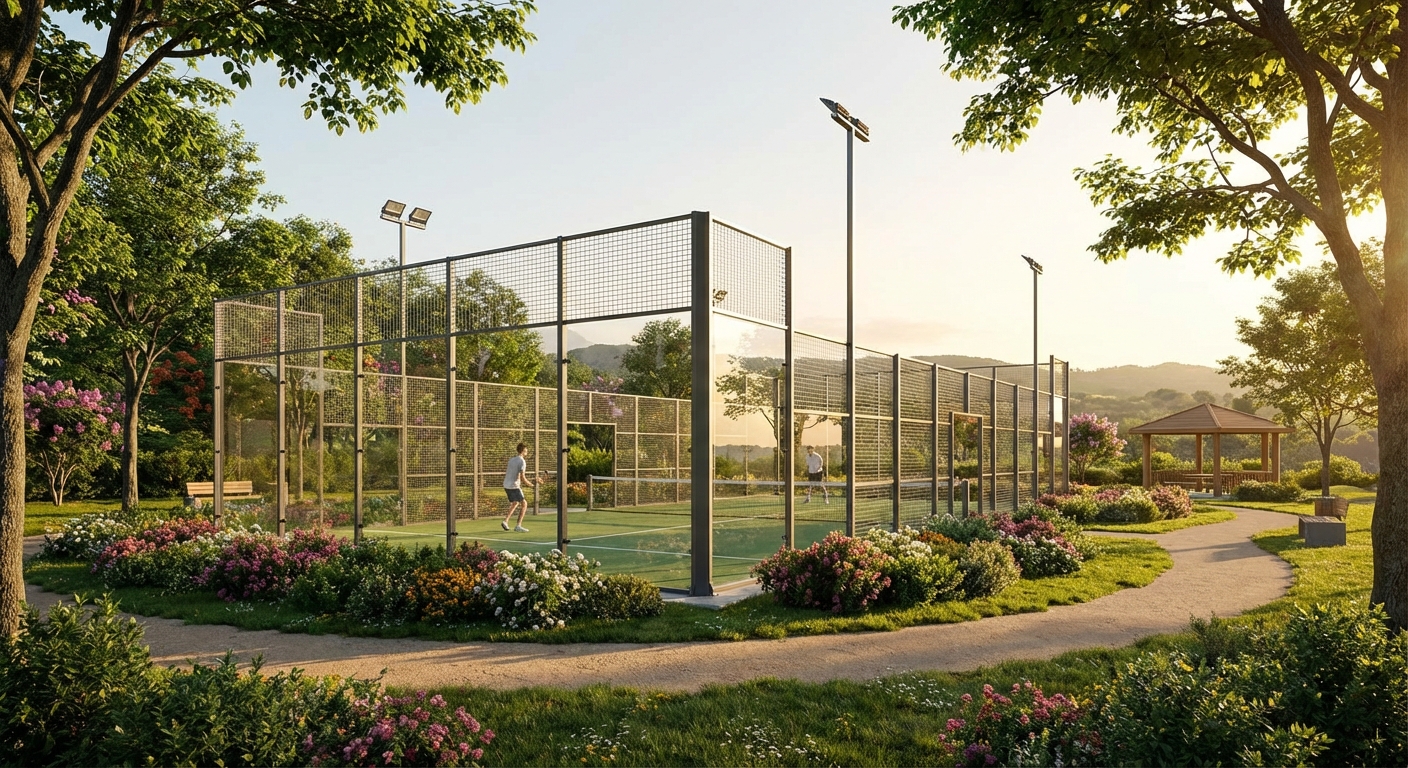
Determining the padel court kosten involves a base investment starting around €27,500 for the court kit and approximately €30,000 for professional foundation work. Many sports clubs and facility owners are currently struggling with declining membership numbers and stagnant revenue streams. You might see your traditional tennis courts sitting empty while overhead costs continue to rise. By investing in a high-quality padel court kosten plan, you can revitalize your facility with the world’s fastest-growing racket sport.
What is the average padel court kosten for a project?
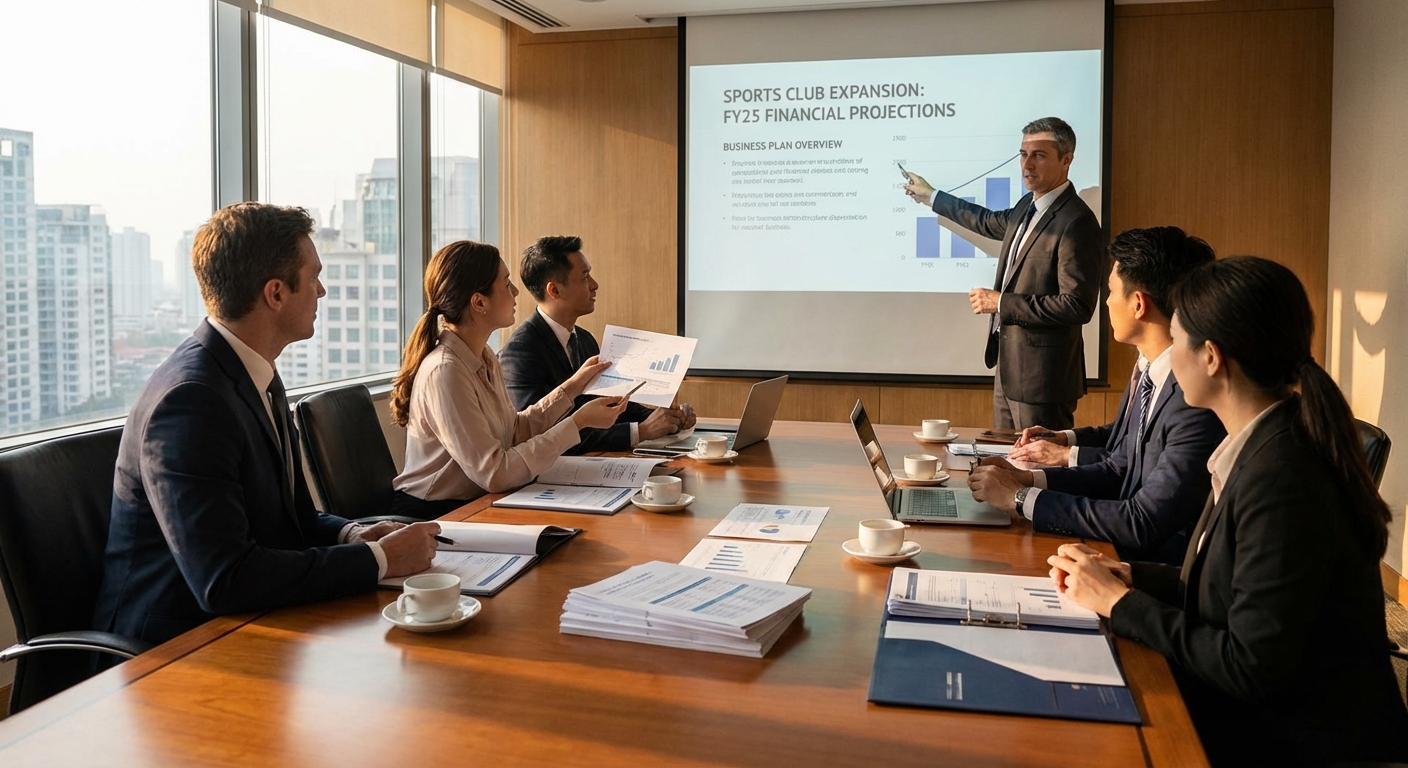
The average kit for a double court typically starts at €27,500 net, covering the basic structure, lighting, and installation. Understanding the initial padel court kosten is the first step in planning a profitable sports venture. You must account for the specific model you choose, as high-end options will naturally increase the price.
Pricing for standard court models
Standard courts are engineered for high-frequency daily use and represent the most cost-effective entry point. These models focus on durability and performance without unnecessary aesthetic flourishes. Believe it or not, these are often the best choice for public parks or high-traffic gyms.
- Commercial-grade steel frames
- Basic LED lighting systems
- Standard blue or green artificial turf
- Professional-grade netting
Balancing quality and budget
You don’t want to cut corners on structural integrity just to save a few Euros today. Investing in a robust Standard Padel Court ensures that your facility remains safe for players over the long term. The best part? Higher quality materials lead to significantly lower repair bills in the future.
Key Takeaway: Starting with a clear budget for the basic kit allows you to scale your project without financial surprises during the construction phase.
| Item | Estimated Cost (Net) |
|---|---|
| Basic Court Kit | €27,500+ |
| Professional Setup | Included in kit or €3k+ |
| Shipping/Logistics | Variable by region |
The baseline price provides a solid foundation for your financial planning, but site preparation is where the complexity truly begins.
How do foundation requirements impact your padel court kosten?
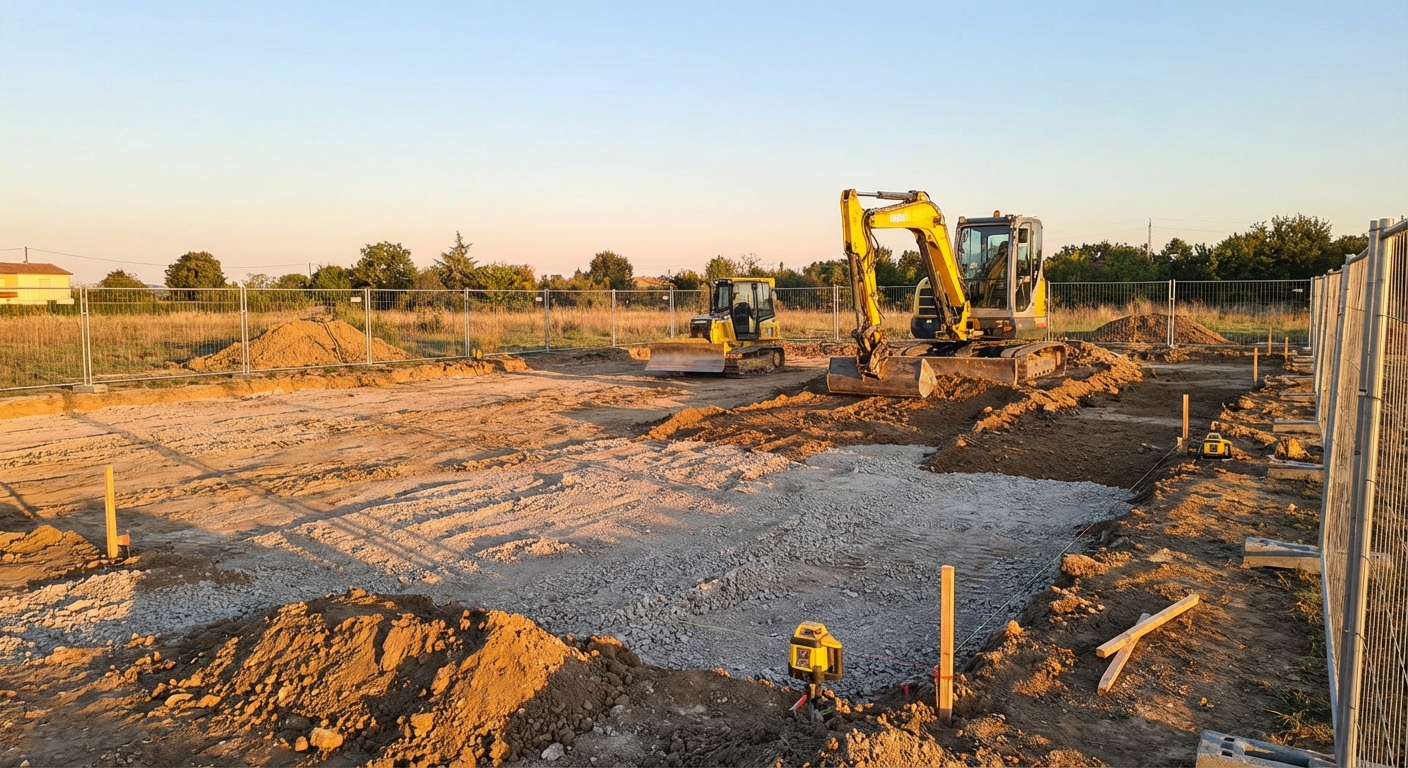
Foundation work for outdoor courts usually adds an additional €30,000 to your total padel court kosten calculation. This phase is critical because a court is only as good as the ground it sits on. You need a perfectly level, reinforced concrete or asphalt base to support the glass and steel.
Necessary ground preparation steps
Before the first steel beam is bolted down, the site must be excavated and stabilized. This involves soil testing and the installation of a proper drainage system to prevent water pooling. Wait, there’s more. If the ground is uneven, the cost of leveling and earth-moving can escalate quickly.
- Soil compaction and stabilization
- Installation of drainage asphalt or concrete
- Perimeter strip foundations for glass support
- Leveling to within precise tolerances
Indoor vs outdoor foundation needs
Indoor installations often have lower foundation-related padel court kosten because the existing warehouse floor might already be suitable. However, you must verify that the concrete can handle the point loads of the structural posts. Think about it: a repurposed tennis hall is much easier to convert than a raw field.
Key Takeaway: Allocate nearly half of your total project budget to groundworks to ensure the longevity and safety of the playing surface.
| Foundation Type | Avg. Cost | Primary Benefit |
|---|---|---|
| Outdoor Concrete | €30,000 | Maximum stability |
| Indoor Conversion | €5,000 – €10,000 | Rapid deployment |
| Drainage Asphalt | €25,000 | Best for heavy rain |
Once the ground is prepared, the focus shifts to the specific components that make up the court structure itself.
Which materials are essential for calculating padel court kosten?
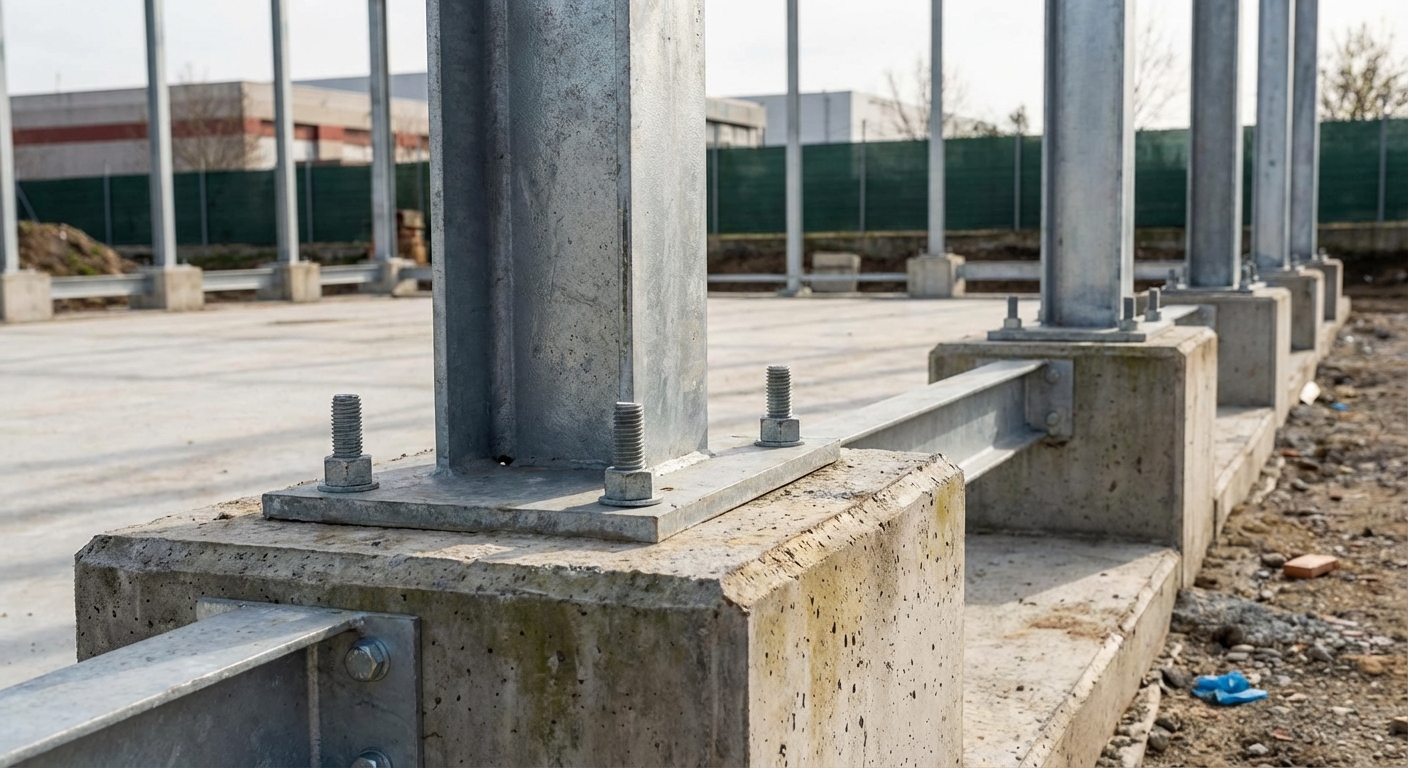
The three primary material expenses are the hot-dip galvanized steel, 12mm tempered safety glass, and specialized fibrillated turf. Every padel court kosten estimate should prioritize these elements to guarantee a 20-year design life. You are essentially paying for durability against the elements and player impact.
Selecting the right steel and glass
The Padel Structure should be made from S 275 JR steel or higher to withstand high wind loads and vibration. You should also insist on 12mm anti-explosion glass that meets EN 12150 standards. Here is the deal: cheaper 10mm glass is much more prone to shattering under stress.
- Hot-dip galvanized coating for rust prevention
- Tempered safety glass for player protection
- Modular bolt-together frame design
- Integrated lighting mast supports
Choosing high-performance turf
Your players will judge the court based on the Padel Grass and how the ball bounces. High-density monofilament or fibrillated turf provides the most consistent playability and resistance to wear. In short: the turf is the most replaced component, so buying quality now saves money later.
Key Takeaway: Prioritizing certified, high-grade materials reduces your long-term liability and ensures your court remains a premier destination for years.
| Material | Standard | Impact on Price |
|---|---|---|
| Steel | S 275 JR Galvanized | High (Durability) |
| Glass | 12mm Tempered | Medium (Safety) |
| Turf | Fibrillated/Textured | Medium (Playability) |
While materials are a fixed cost, your geographic location introduces variables that can swing the budget in either direction.
Why is location a major factor in padel court kosten?
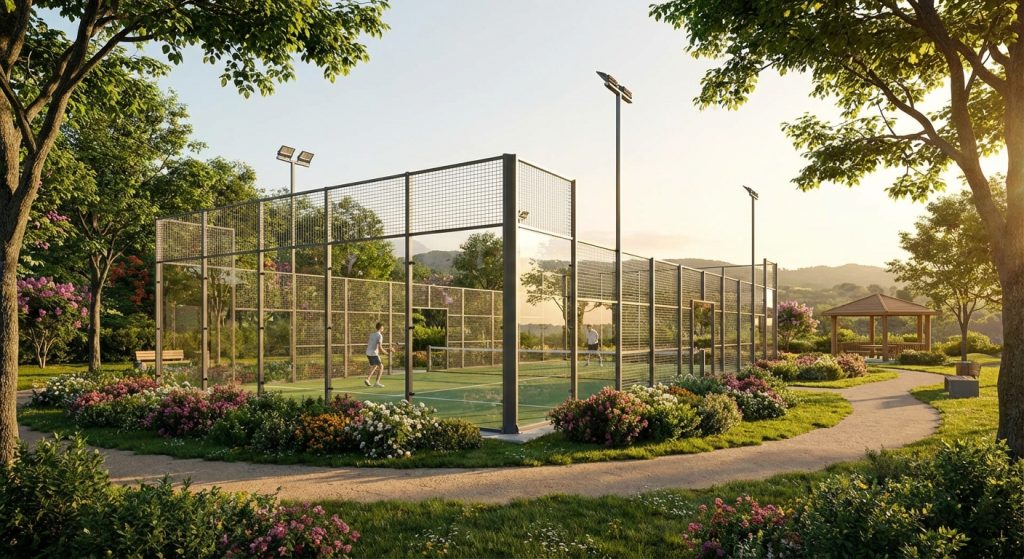
Local labor rates, shipping distances, and regional wind zone requirements significantly alter the padel court kosten for every project. Building a court in a coastal area requires different structural reinforcements than an indoor facility in a city center. You must consider how accessible your site is for heavy machinery and delivery trucks.
Logistics and delivery challenges
Transporting heavy glass panels and steel beams from the factory to your site requires specialized logistics. If your site has limited access, you might need smaller delivery vehicles, which increases the time and expense. As it turns out, shipping can sometimes account for 10-15% of the total equipment price.
- Proximity to major shipping ports
- Local permit and zoning fees
- Availability of skilled installation teams
- Regional environmental impact studies
Weather and environmental adaptations
Courts in high-wind zones need thicker steel profiles and reinforced glass anchoring systems to remain safe. These modifications will naturally increase the padel court kosten compared to a standard sheltered installation. Make no mistake, ignoring local weather patterns can lead to catastrophic structural failure during a storm.
Key Takeaway: Consult with local engineers early to determine if your specific site requires expensive structural reinforcements or specialized building permits.
| Location Factor | Cost Impact | Solution |
|---|---|---|
| Coastal High Winds | +15% to structure | Reinforced steel posts |
| Remote Access | +€2,000 shipping | Early logistics planning |
| Urban Permits | €1,000 – €5,000 | Professional consultants |
Understanding these regional variables helps you decide whether a factory-direct approach is more suitable for your bottom line.
How can factory-direct sourcing reduce padel court kosten?
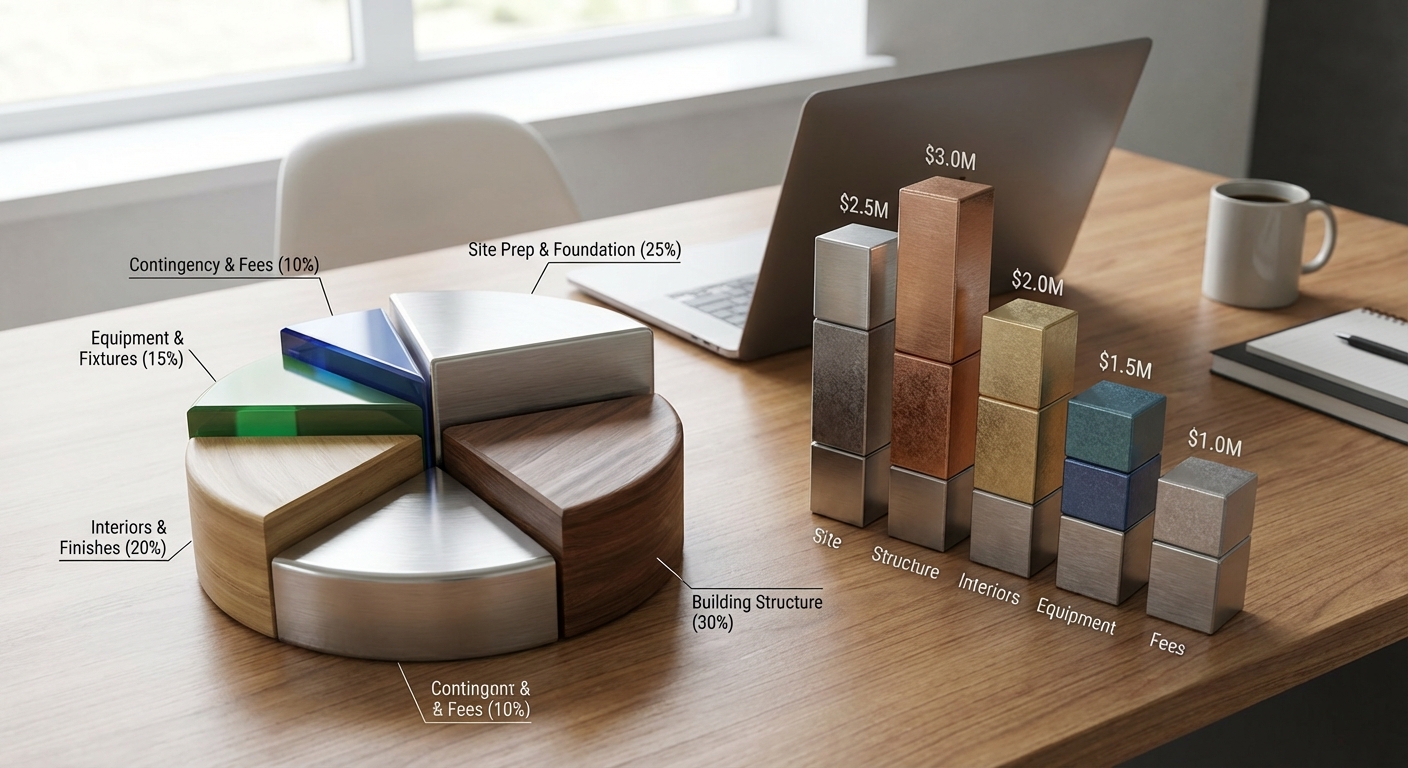
Buying directly from the manufacturer can save you up to 30% by eliminating middleman markups and distributor fees. When you analyze your padel court kosten, sourcing from a factory gives you direct control over quality and customization. You gain access to the same materials used by top-tier clubs at wholesale prices.
Benefits of OEM customization
Working directly with a factory allows you to customize the colors, logos, and dimensions of your court without extra retail fees. You can build a unique brand identity that sets your facility apart from the competition. Let’s dive in.
- Direct communication with engineers
- Lower procurement costs for bulk orders
- Custom branding and RAL color choices
- Faster response for replacement parts
Streamlined project management
Buying direct also simplifies the documentation process for your building permits and planning applications. You receive all structural drawings and material certifications directly from the source. Simply put, there is no “lost in translation” moment between a salesperson and the production line.
Key Takeaway: Sourcing from a factory is the most effective way to lower initial investment costs while maintaining high international quality standards.
| Sourcing Method | Savings | Support Level |
|---|---|---|
| Local Distributor | 0% | Local but expensive |
| Factory Direct | 20% – 30% | International expert |
| Used/Refurbished | 40% | High risk, no warranty |
Saving on the initial purchase is wise, but you must also plan for the ongoing expenses required to keep the court in top shape.
What are the recurring maintenance needs and padel court kosten?
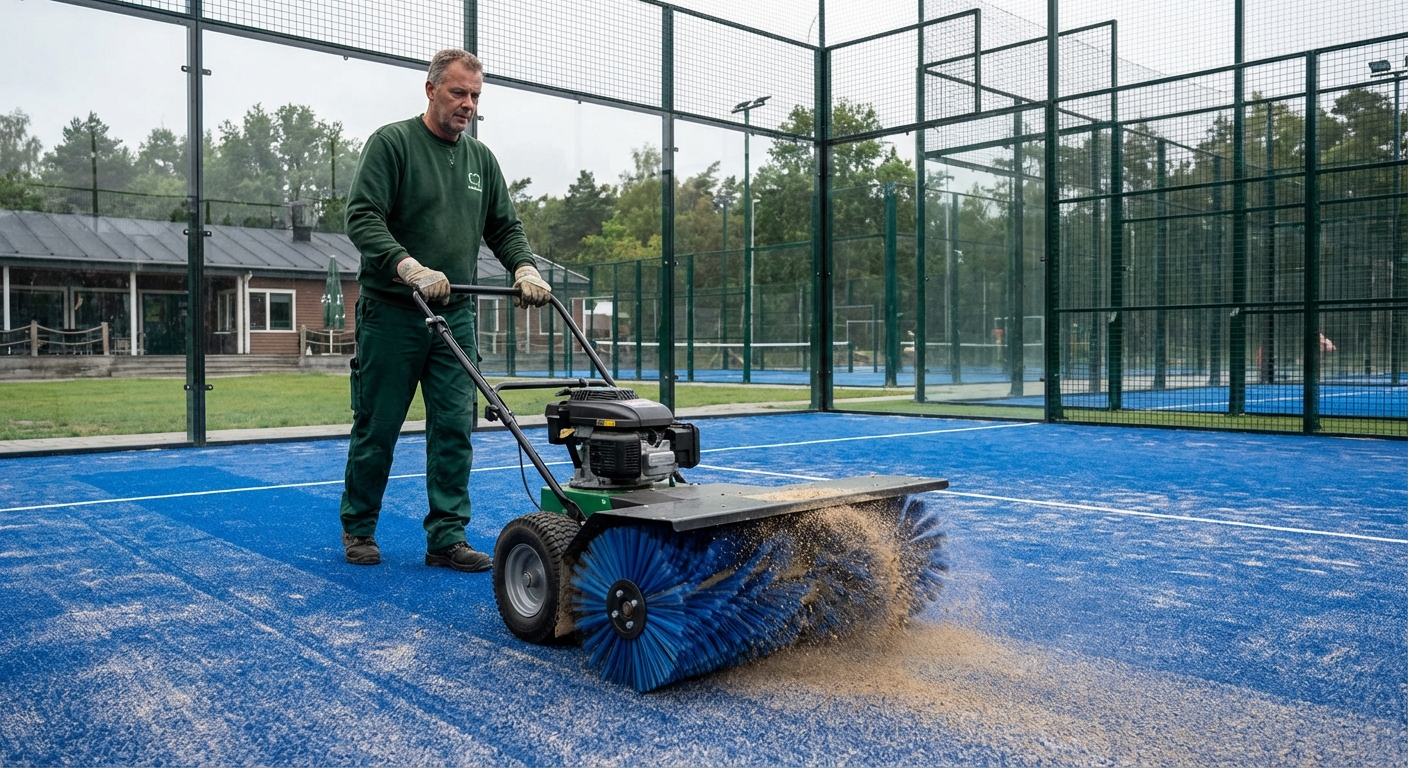
Annual maintenance typically costs between €1,000 and €2,000 to cover sand redistribution, glass cleaning, and net tightening. These ongoing padel court kosten are necessary to ensure the court remains playable and attractive to members. You should treat your court like a high-performance machine that needs regular tuning.
Daily and weekly upkeep tasks
The most frequent task is keeping the glass panels clean and the surrounding area free of debris. You also need to brush the sand back into the center of the court where play is most intense. Believe it or not, neglecting the sand level can cause the turf to wear out twice as fast.
- Weekly glass cleaning with standard tools
- Monthly sand redistribution and leveling
- Quarterly checking of bolt torque
- Yearly professional deep cleaning
Long-term component replacement
While the structure lasts decades, the Padel Glass and turf will eventually need more than just a cleaning. You should budget for turf replacement every 5 to 7 years depending on how many hours the court is used. The best part? Regular care can extend this lifespan significantly, protecting your investment.
Key Takeaway: Consistent, low-cost maintenance prevents expensive structural repairs and keeps player satisfaction high at your facility.
| Maintenance Task | Frequency | Estimated Cost |
|---|---|---|
| Sand Brushing | Monthly | DIY / €50 labor |
| Bolt Inspection | Quarterly | €200 |
| Professional Clean | Annually | €800 – €1,200 |
If maintenance is a priority, you might consider how adding a roof could protect your court from the elements.
Is a roofed structure worth the extra padel court kosten?
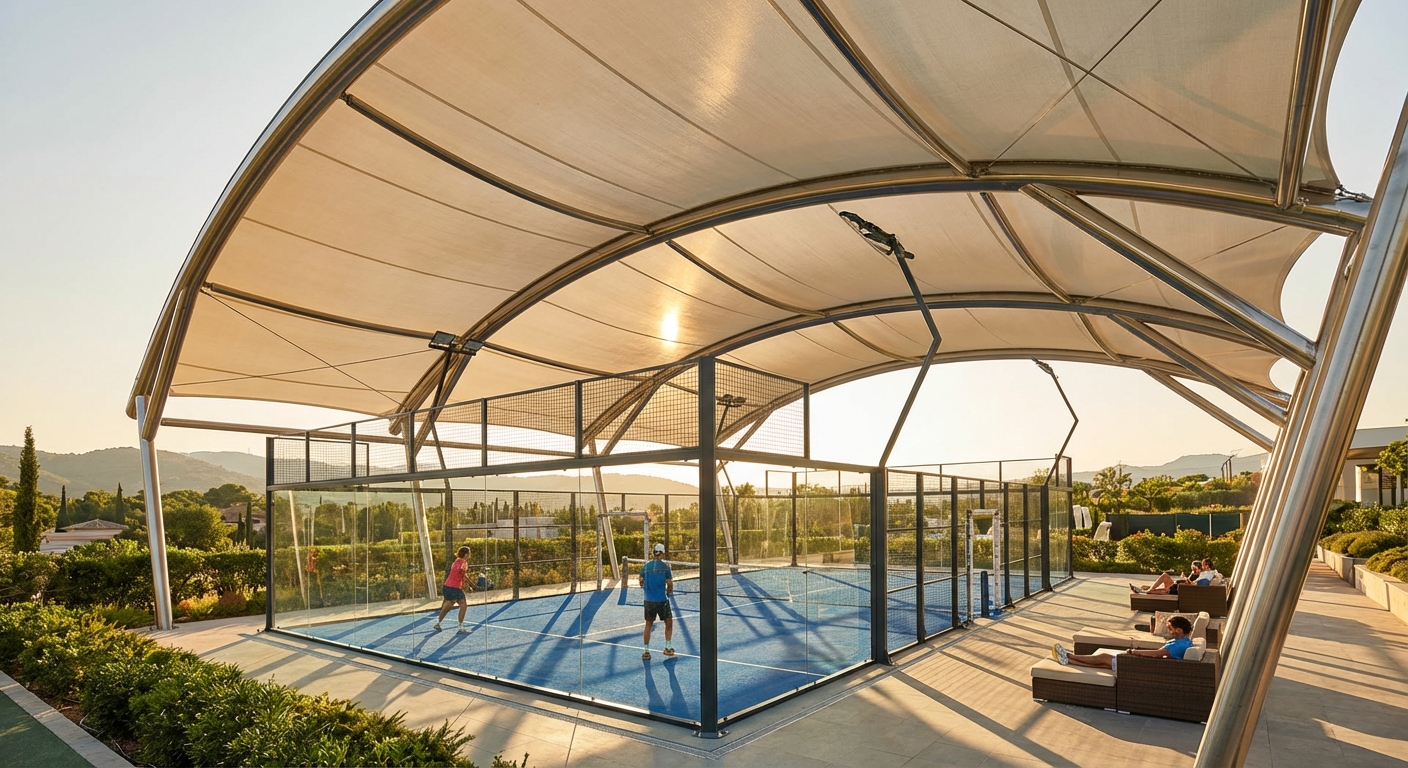
Adding an all-weather roof can increase your initial padel court kosten by €15,000 or more, but it allows for year-round revenue. You eliminate the risk of cancellations due to rain or extreme summer sun, which stabilizes your monthly income. You have to decide if the increased uptime justifies the higher upfront capital.
Boosting year-round utilization
A Roofed Padel Court transforms a seasonal hobby into a reliable 12-month business. Players are often willing to pay a premium for sheltered courts during the winter months or peak summer heat. Wait, there’s more. A roof also protects the turf and glass from UV damage and bird droppings.
- Guaranteed play during rain showers
- Protection from intense heat and UV rays
- Reduced cleaning needs for the turf
- Higher demand during off-peak seasons
Impact on architectural planning
Installing a roof requires additional structural calculations and often more complex building permits. You must ensure the height clearance meets international padel federation standards for high lobs. Think about it: a roof is a one-time cost that solves your biggest enemy—the weather.
Key Takeaway: For commercial operators, a roofed court often has a faster ROI because it maintains a high utilization rate regardless of the climate.
| Feature | Without Roof | With Roof |
|---|---|---|
| Annual Uptime | 60% – 70% | 95% – 100% |
| Initial Cost | Base | Base + €15k+ |
| Maintenance | High (Weather) | Lower (Sheltered) |
Beyond operational revenue, there are external ways to mitigate