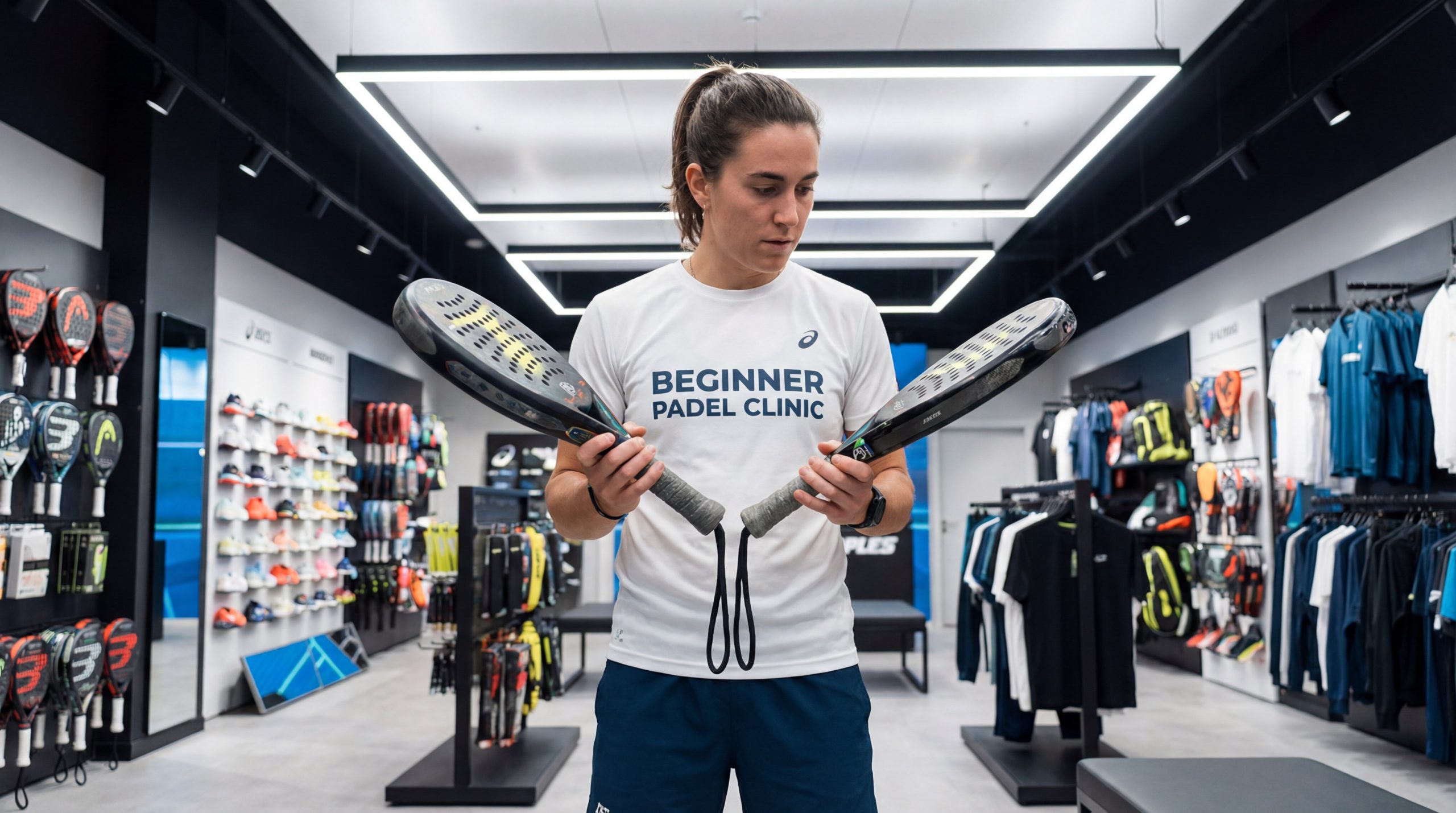
A padel grip is the critical contact point between a player and their racket, built through a combination of base layers and overgrips to ensure maximum control. You have likely experienced the frustration of a racket twisting in your hand during a high-stakes smash. This loss of stability agitates your technique and leads to unnecessary unforced errors on the court. The solution lies in understanding the anatomy of your handle to create a customized setup that fits your unique playing style.
What are the different types of padel grip?
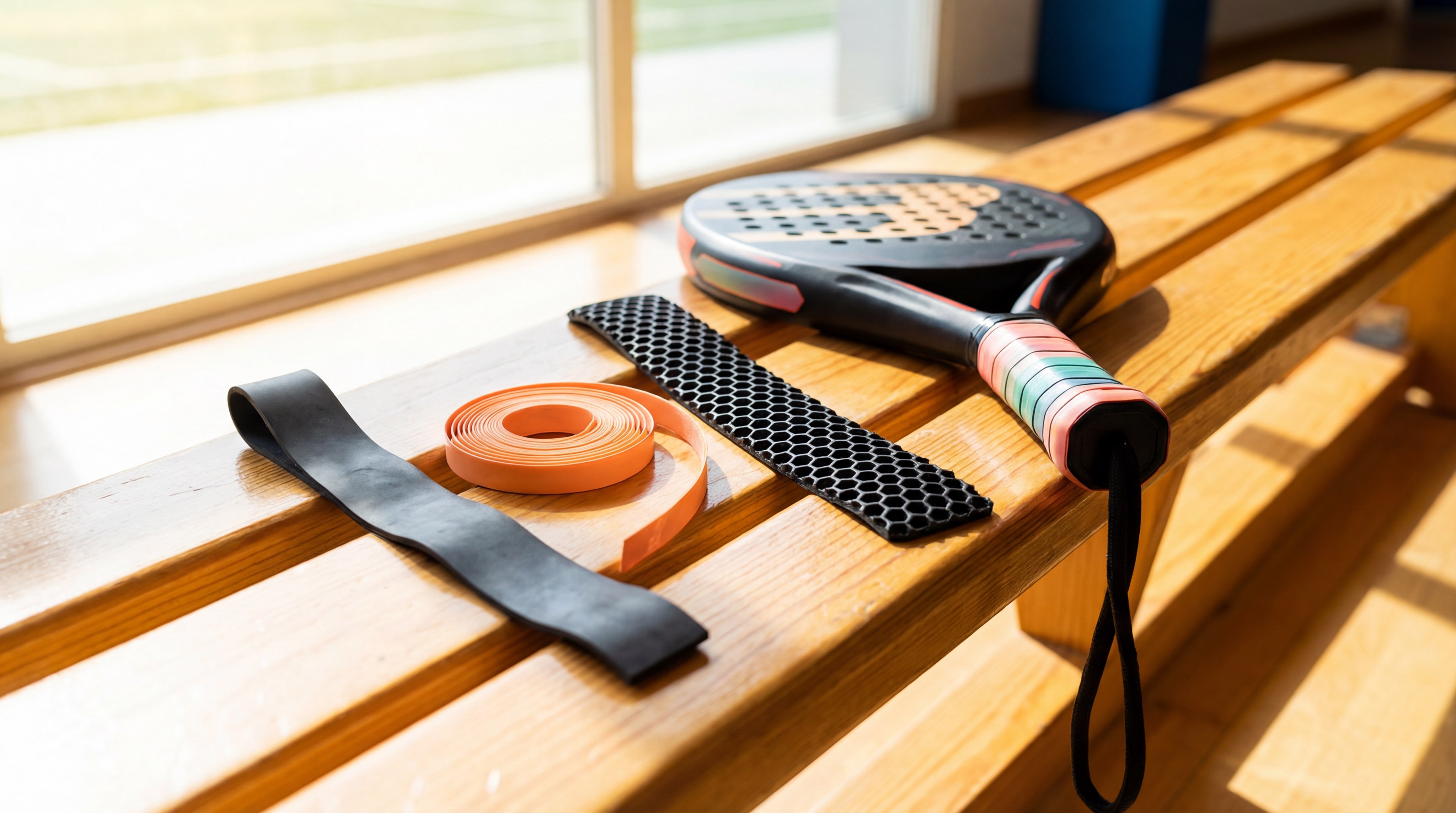
Different variations of the padel grip are categorized by their placement and material density. Most rackets come with a standard factory base grip, but players often add overgrips or undergrips to modify the circumference. Understanding these layers is the first step toward optimizing your technical performance.
How do overgrips differ from base grips?
Here is the kicker: overgrips are much thinner than base layers. They are designed to be replaced frequently to maintain a high level of tackiness and sweat absorption during intense matches.
- Overgrips provide the final texture you feel.
- Base grips provide the foundational cushioning.
- Replacement is easier with thin overgrip layers.
What is the purpose of an undergrip?
Think of it this way: undergrips are the secret weapon for injury prevention. These ergonomic layers sit directly on the frame and often feature patterns that dampen vibrations before they reach your elbow.
- Undergrips reduce the risk of “padel elbow.”
- They create a contoured surface for better finger placement.
- Honeycomb designs increase the surface area for your palm.
Key Takeaway
Selecting the right combination of layers ensures your hand stays comfortable while maintaining a firm hold on the racket.
| Grip Type | Placement | Main Benefit |
|---|---|---|
| Base Grip | Directly on handle | Standard Cushioning |
| Overgrip | Top layer | Sweat Absorption |
| Undergrip | Under base/overgrip | Vibration Dampening |
A balanced setup typically involves one base layer and at least one overgrip for optimal texture.
How can beginners select their first padel grip?
For those just starting, choosing a padel grip should focus on simplicity and comfort. You want a handle that isn’t too thick, as this allows you to develop the correct wrist snap for technical shots. Most novices benefit from a single overgrip applied over the factory base to provide extra “stick” without adding excessive bulk.
Why is tackiness vital for new players?
Make no mistake: a tacky surface is your best friend when learning the game. It prevents the racket from sliding, which allows you to focus entirely on your footwork and swing path.
- Tacky surfaces increase confidence during smashes.
- They allow for a lighter, more relaxed hold.
- Higher friction reduces the chance of dropping the racket.
Should beginners use multiple layers?
Believe it or not, less is often more when you are first learning the ropes. Using too many layers can make the handle feel like a log, which limits your ability to feel the ball impact.
- Start with one overgrip to gauge your comfort.
- Avoid making the handle too wide for your palm.
- Focus on feel rather than just thickness.
Key Takeaway
Beginners should prioritize tackiness and a standard thickness to facilitate proper technique development and hand safety.
| Player Level | Layer Count | Focus Area |
|---|---|---|
| Absolute Beginner | 1 Overgrip | Grip Security |
| Intermediate | 1-2 Overgrips | Comfort & Feel |
| Advanced | Customized | Performance & Control |
Keeping the handle slim helps beginners learn how to manipulate the racket head more effectively.
What is the ideal thickness for a padel grip?
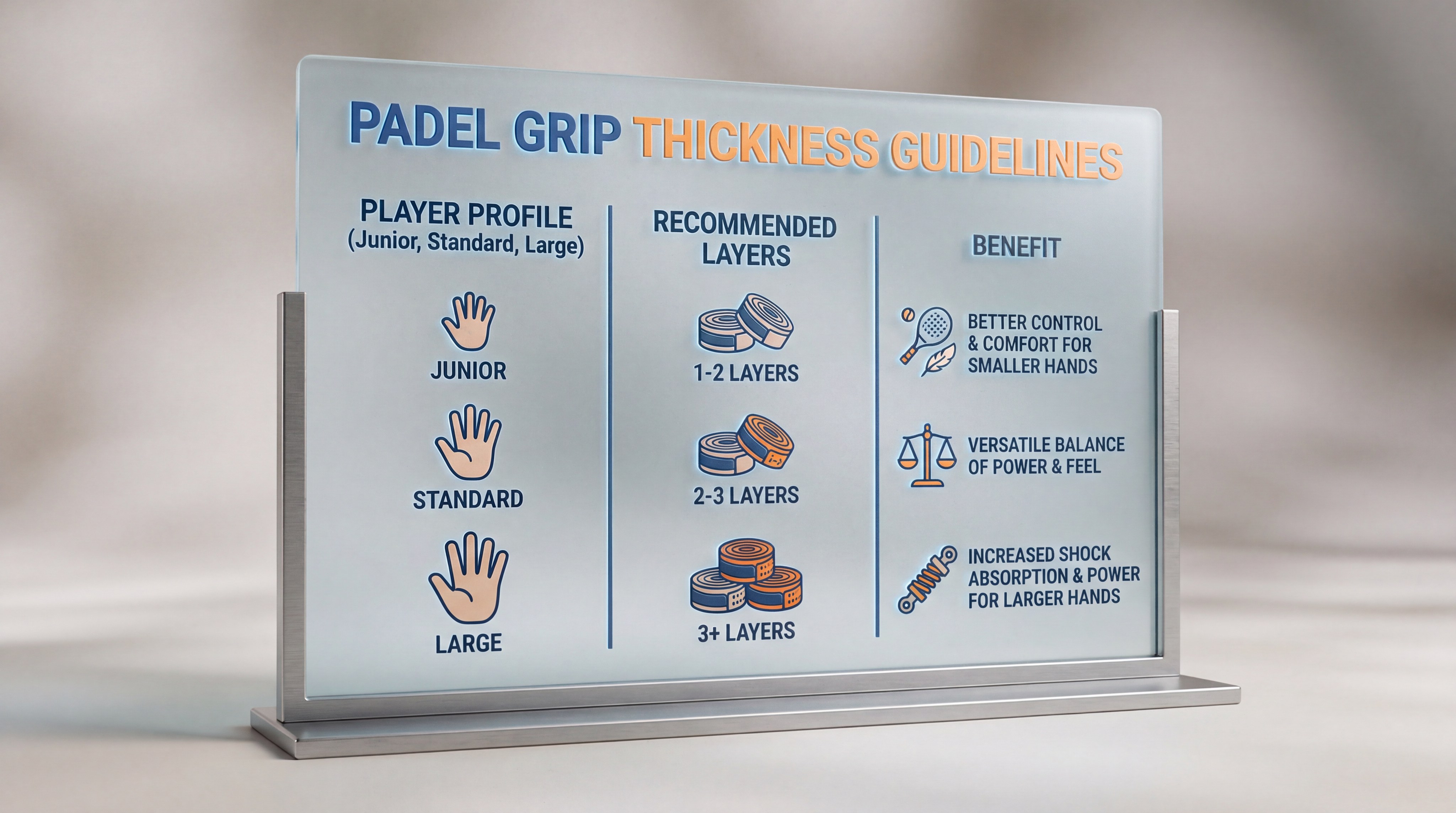
The thickness of your padel grip is a personal preference that depends heavily on the size of your hand. A handle that is too thin will cause your fingers to dig into your palm, while one that is too thick will strain your forearm muscles. You should aim for a gap roughly the width of your index finger between your fingertips and your thumb when holding the racket.
How do you measure the correct fit?
But wait, there’s more to it than just eyeballing the size. You can perform a simple check by gripping the racket in a continental style and checking the spacing.
- Fingers should not touch the base of the thumb.
- A 1cm gap is generally considered the sweet spot.
- Adjust layers until the handle feels natural in your fist.
Does thickness change your power output?
Here is a pro tip: thickness directly impacts how you transfer energy to the ball. A thicker handle provides more stability for flat power shots, whereas a thinner one aids in generating spin.
- Thick grips offer stability for heavy hitters.
- Thin grips allow for faster wrist movements.
- Balance is key for all-around court players.
Key Takeaway
Customizing thickness is essential for preventing long-term strain and maximizing the versatility of your shots.
| Hand Size | Recommended Overgrips | Style Impact |
|---|---|---|
| Small | 1 Overgrip | High maneuverability |
| Medium | 1-2 Overgrips | Balanced performance |
| Large | 2-3 Overgrips | Enhanced stability |
Finding the “Goldilocks” thickness prevents the common issue of over-squeezing the handle during play.
How do you install a replacement padel grip?
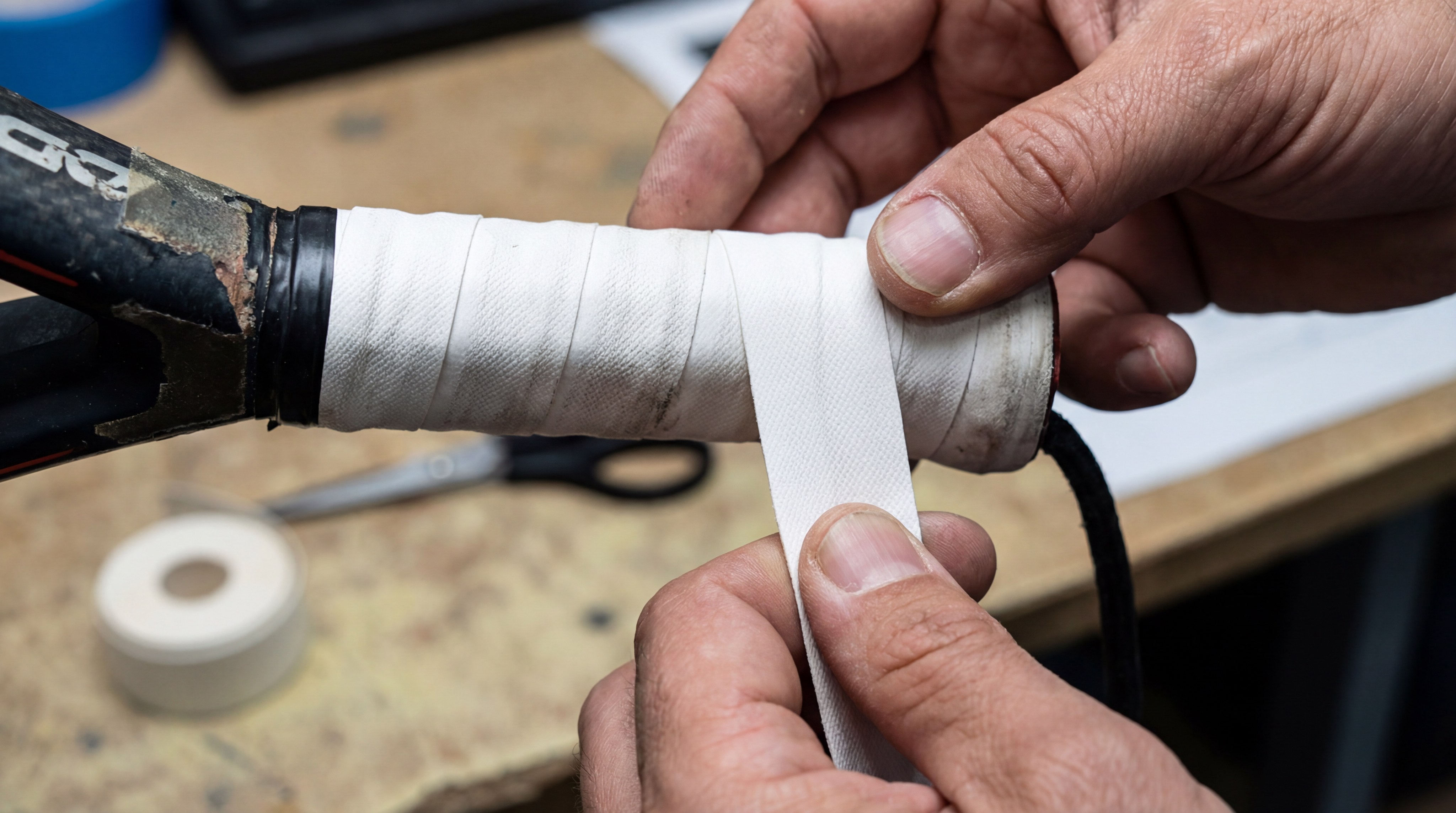
Building a fresh padel grip requires patience and a steady hand to avoid uncomfortable ridges. You begin at the butt cap of the racket, securing the adhesive end before wrapping in a spiral motion toward the throat. Ensuring that each layer overlaps slightly will create a smooth, professional finish that lasts for several sessions.
Where should the wrapping begin?
Let’s get started: always begin at the very bottom of the handle. This ensures that the layers stay secure as your hand naturally moves down during aggressive swings.
- Secure the tapered end with the small adhesive strip.
- Wrap tightly around the butt cap first.
- Keep the material flat to avoid lumps.
How much tension should you apply?
Here is the kicker: the amount of pull you use determines the final feel of the handle. Pulling too hard thins out the material, while too little tension leads to slipping layers.
- Maintain a constant, firm tension throughout.
- Overlap the edges by about 2 or 3 millimeters.
- Finish with the provided tape at the top.
Key Takeaway
A proper installation prevents the material from unravelling mid-match and ensures a consistent feel across the entire handle.
| Step | Action | Common Mistake |
|---|---|---|
| Start | Secure at butt cap | Loose initial wrap |
| Spiral | Overlap 2-3mm | Creating thick ridges |
| Finish | Apply adhesive tape | Forgetting the top seal |
Consistent tension is the secret to a professional-looking wrap that doesn’t shift during play.
When is the right time to change your padel grip?
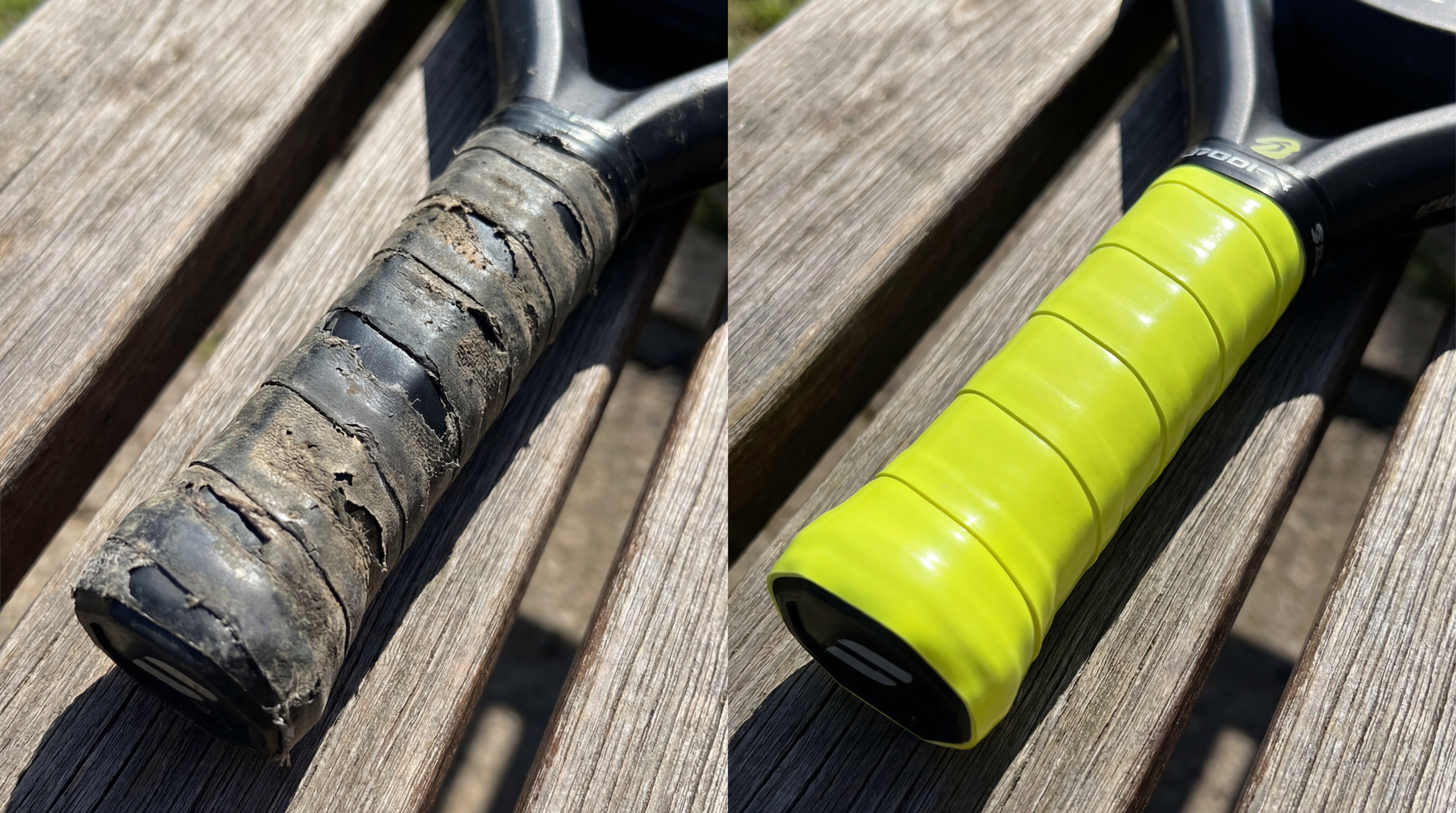
Knowing when to replace your padel grip is vital for maintaining a high level of play and preventing injuries. You will notice that as the material wears down, it loses its ability to absorb sweat and becomes increasingly slippery. If you find yourself adjusting your hand position more than usual, it is likely time to apply a fresh layer.
How does humidity affect lifespan?
You might be wondering why your handle feels different in various weather conditions. High humidity causes the material to saturate faster, leading to a “mushy” feel that kills your feedback from the ball.
- Sweat reduces the friction of the outer layer.
- Discoloration is a clear sign of material fatigue.
- Replace more often during summer or indoor play.
Can a worn handle cause injuries?
The truth is: a slippery handle is a recipe for medical trouble. When the surface is worn, you tend to squeeze much harder to compensate, which leads to muscle fatigue in the forearm.
- Over-gripping causes lateral epicondylitis.
- Fresh layers allow for a more relaxed hand.
- New grips absorb shock more effectively.
Key Takeaway
Regularly replacing your overgrip is a low-cost way to ensure peak performance and protect your physical health.
| Sign of Wear | Impact | Action |
|---|---|---|
| Loss of Tackiness | Racket twists in hand | Replace immediately |
| Discoloration | Poor sweat absorption | Change after match |
| Visual Fraying | Uncomfortable texture | Apply new overgrip |
Most active players should consider changing their overgrip every 5 to 10 hours of court time.
Can an undergrip improve your padel grip?
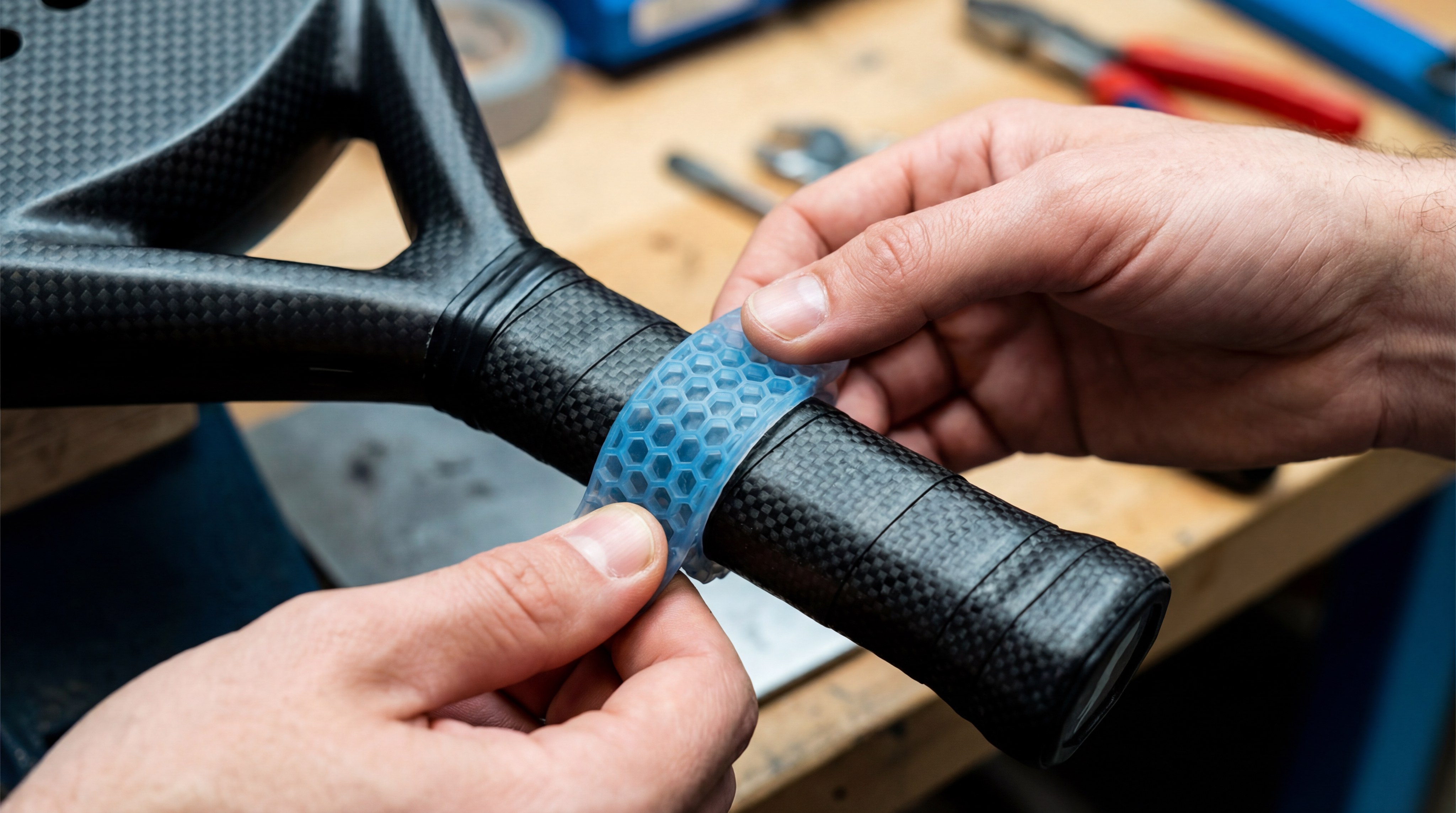
Using a specialized under-layer for your padel grip has become a standard practice for professional and club players alike. These products are usually made of silicone or rubber and feature a honeycomb structure that fits the natural curves of your hand. You will find that these designs significantly reduce the vibrations transmitted through the frame during heavy impacts.
Does it really help with control?
But wait, there’s more: the 3D surface of an undergrip creates more contact points with your palm. This allows you to hold the racket with less effort while maintaining total control over the face angle.
- Increased surface area improves grip stability.
- The hexagonal pattern helps with consistent hand placement.
- It provides a more ergonomic “locked-in” feeling.
Is it difficult to install?
Here is the secret: it is easier than it looks if you use a bit of lubricant. Most players use a small amount of alcohol spray to slide the sleeve onto the handle before it dries and sticks.
- Slide the undergrip over the bare handle.
- Ensure it is aligned with the handle’s edges.
- Wait for it to set before adding an overgrip.
Key Takeaway
Undergrips are a transformative addition for players who struggle with hand fatigue or chronic joint pain.
| Feature | Undergrip Benefit | Overgrip Comparison |
|---|---|---|
| Material | Silicone/Rubber | Polyurethane |
| Texture | 3D Honeycomb | Flat/Perforated |
| Longevity | Long-lasting | Frequent replacement |
The vibration-dampening qualities of an undergrip make it a premium choice for serious competitors.
What are the best overgrips for a padel grip?
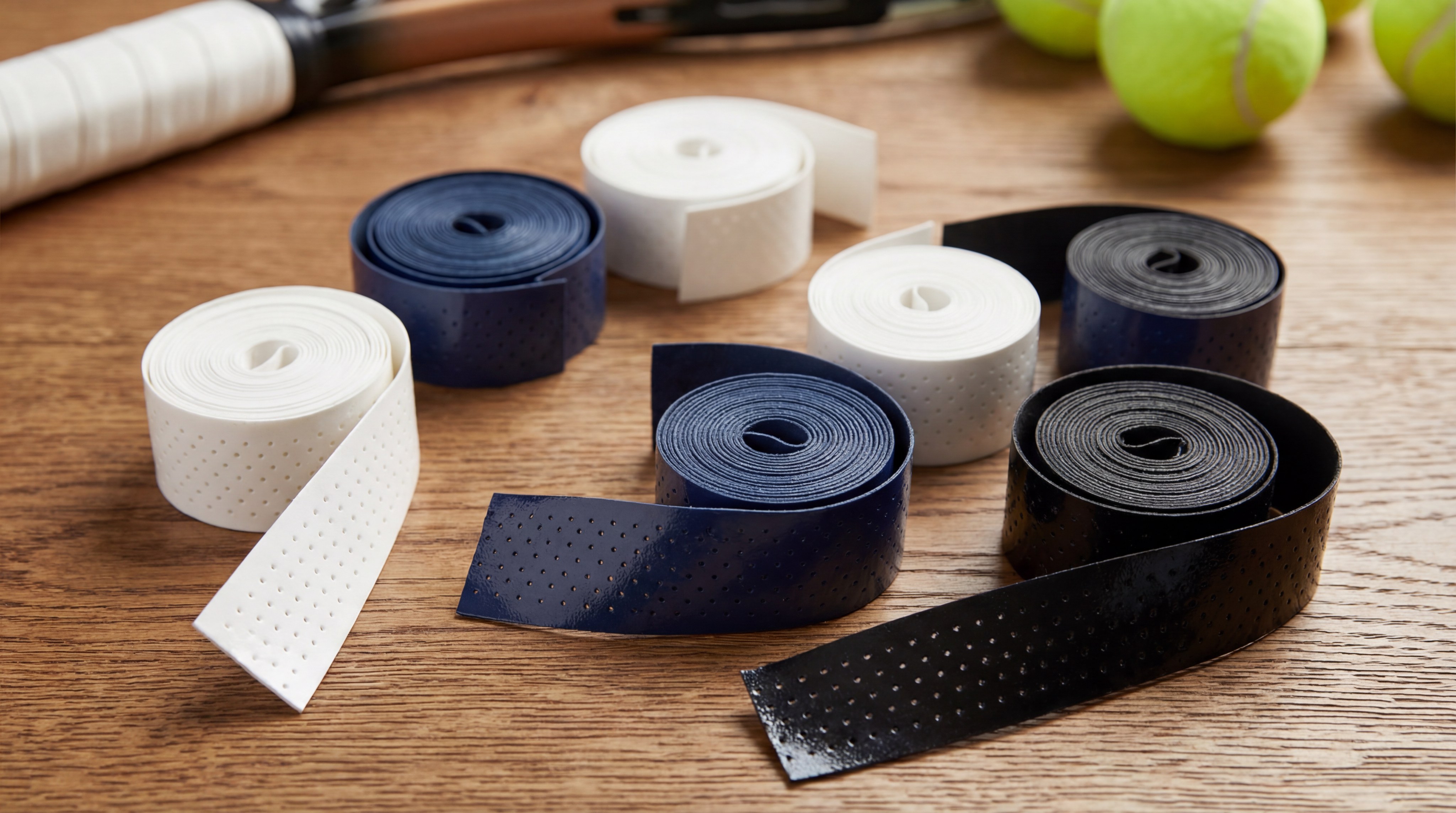
The market for the padel grip is filled with options ranging from ultra-tacky to highly absorbent “dry” finishes. You should choose your overgrip based on how much your hands sweat during a match. If you play in a hot climate, a perforated or high-absorption material will serve you better than a standard smooth wrap.
Which texture provides the most stick?
Let’s dive in: smooth, high-tack overgrips offer the most adhesive feel. These are perfect for players who want the racket to feel like an extension of their arm with minimal movement.
- High-tack finishes are best for dry hands.
- They provide maximum security during power shots.
- The sticky feeling is immediate from the first hit.
Are perforated grips better for sweat?
Here is the kicker: perforated designs feature small holes that help moisture escape. If you are a heavy sweater, these will keep the surface from becoming a slippery mess mid-game.
- Holes allow air to reach the inner layers.
- Moisture is wicked away from the surface quickly.
- They maintain a consistent feel even when wet.
Key Takeaway
Matching the overgrip texture to your specific sweat profile is the most effective way to maintain handle security.
| Grip Style | Best For | Main Attribute |
|---|---|---|
| Tacky / Smooth | Dry conditions | High adhesion |
| Perforated | Humid conditions | Breathability |
| Extra Absorbent | Heavy sweating | Moisture wicking |
Testing different textures during practice sessions will help you find the most reliable option for match play.
How do sprays and gels enhance a padel grip?
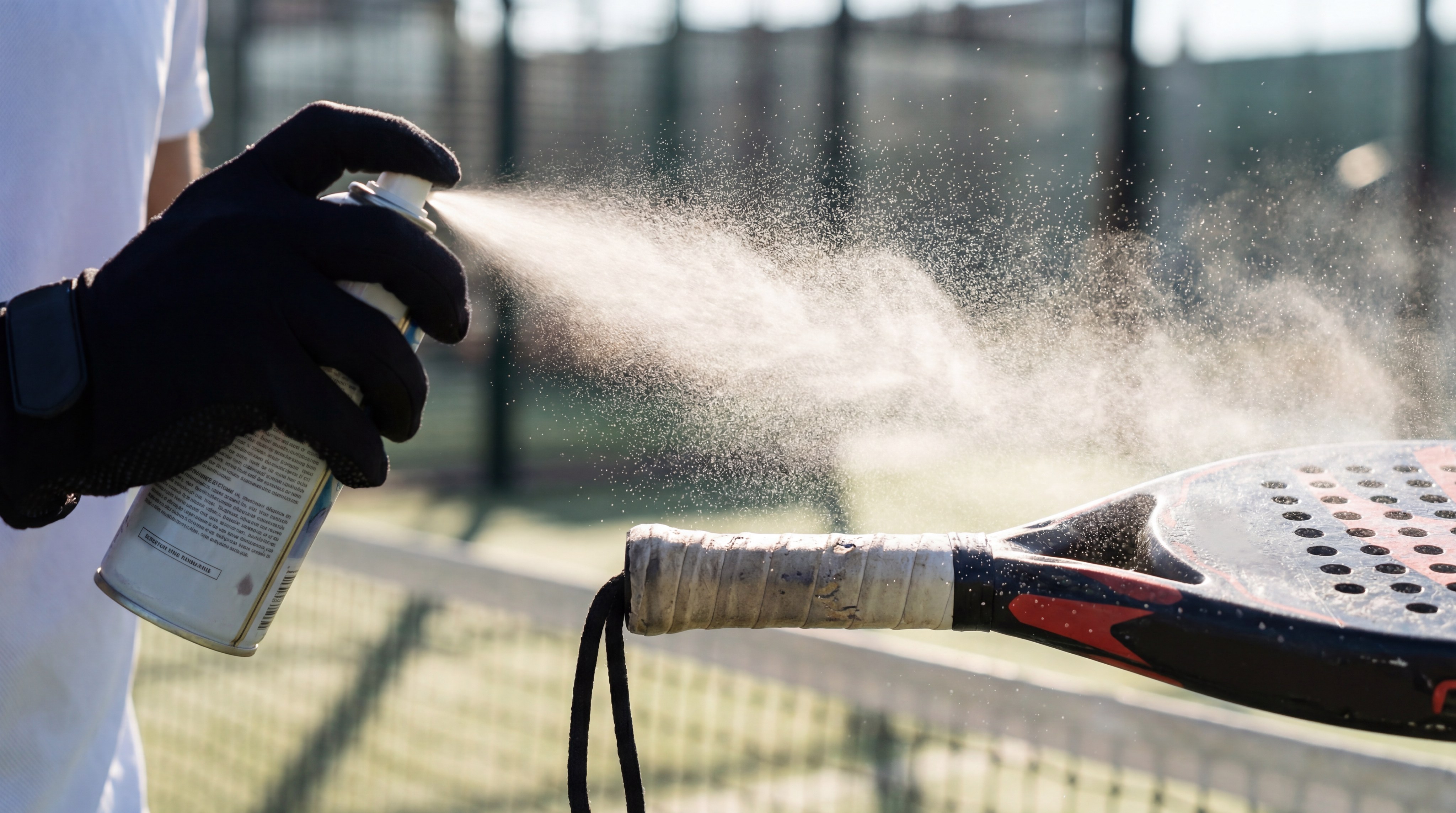
Modern technology has introduced liquid solutions to improve the performance of your padel grip beyond the fabric itself. You can now use specialized sprays or resins that provide an instant boost in friction without adding any weight or bulk to the handle. These products are particularly useful during long tournaments where your hands may become fatigued or overly moist.
When should you apply these products?
But wait, there’s more: timing is everything when using grip enhancers. You should apply them just before you step onto the court to ensure the chemical bond is fresh and effective.
- Apply a small amount to the palm or handle.
- Wait a few seconds for the solution to become tacky.
- Reapply between sets if the friction fades.
Are gels better than traditional powders?
Here is the truth: gels offer a much cleaner application than old-school chalk or powders. They don’t leave white marks on your black clothing or the court surface, making them a more professional choice.
- Resin-based gels offer longer-lasting stickiness.
- Sprays provide a more even, light coating.
- Towel-based resins are great for quick touch-ups.
Key Takeaway
Grip enhancers are essential tools for maintaining a consistent hold when external conditions are at their worst.
| Product Type | Application Method | Advantage |
|---|---|---|
| Adhesive Spray | Spray on handle | Instant tackiness |
| Resin Gel | Rub on palms | Deep friction |
| Grip Towel | Wipe handle | Moisture removal |
Using a spray in combination with a high-quality overgrip provides the ultimate level of racket security.
Why does padel grip quality affect court performance?
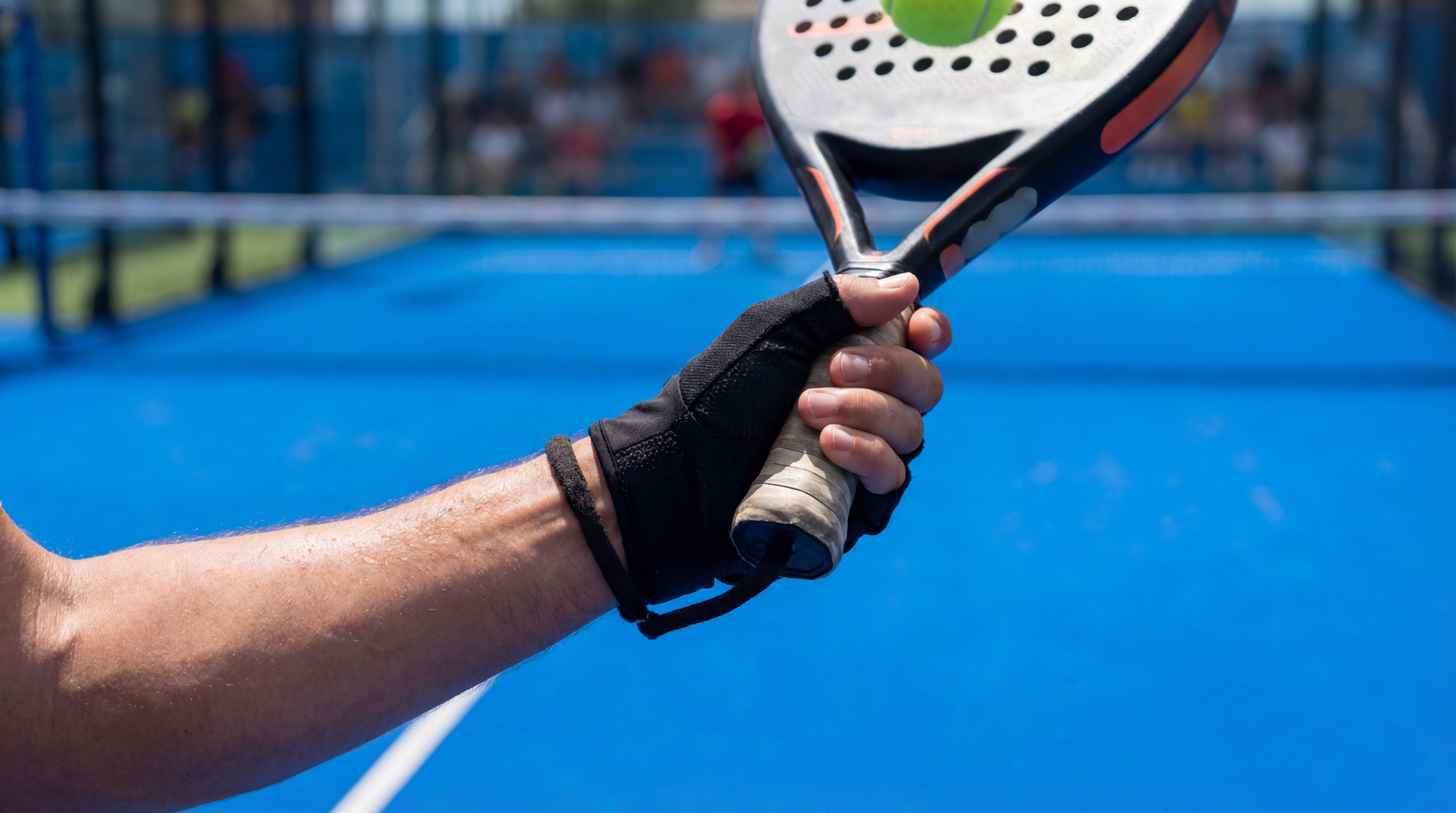
The precision of your technique is fundamentally linked to the state of your padel grip. You cannot execute a perfect bandeja or a nuanced drop shot if the racket is shifting slightly upon impact. A secure connection allows for the minute wrist adjustments needed to put spin on the ball and direct it into the corners of the court.
Does a loose handle affect your spin?
Make no mistake: spin generation requires a firm but flexible hold. If the handle slides, you lose the “brushing” action needed to create the downward rotation that makes padel shots so difficult to return.
- Spin requires perfect timing and handle stability.
- A firm grip translates your power into rotation.
- Slippage results in “flat” balls that hit the glass.
Can the right handle improve defense?
Believe it or not, your defensive game depends heavily on your handle. When you are digging balls out of the corner, a reliable surface allows you to flick the ball over the net with confidence.
- Defensive lobs require a stable racket face.
- Reaction shots are faster with a secure handle.
- Confidence in your equipment leads to better poaching.
Key Takeaway
Investing in handle maintenance directly correlates to a lower unforced error rate and better shot variety.
| Shot Type | Grip Requirement | Impact of Poor Grip |
|---|---|---|
| Smash | High Stability | Racket twist/miss-hit |
| Bandeja | Precise Angle | Loss of slice/depth |
| Lob | Consistency | Short balls/easy smashes |
Total confidence in your handle allows you to focus on the tactical layout of the match rather than your equipment.
How to customize your padel grip for better control?
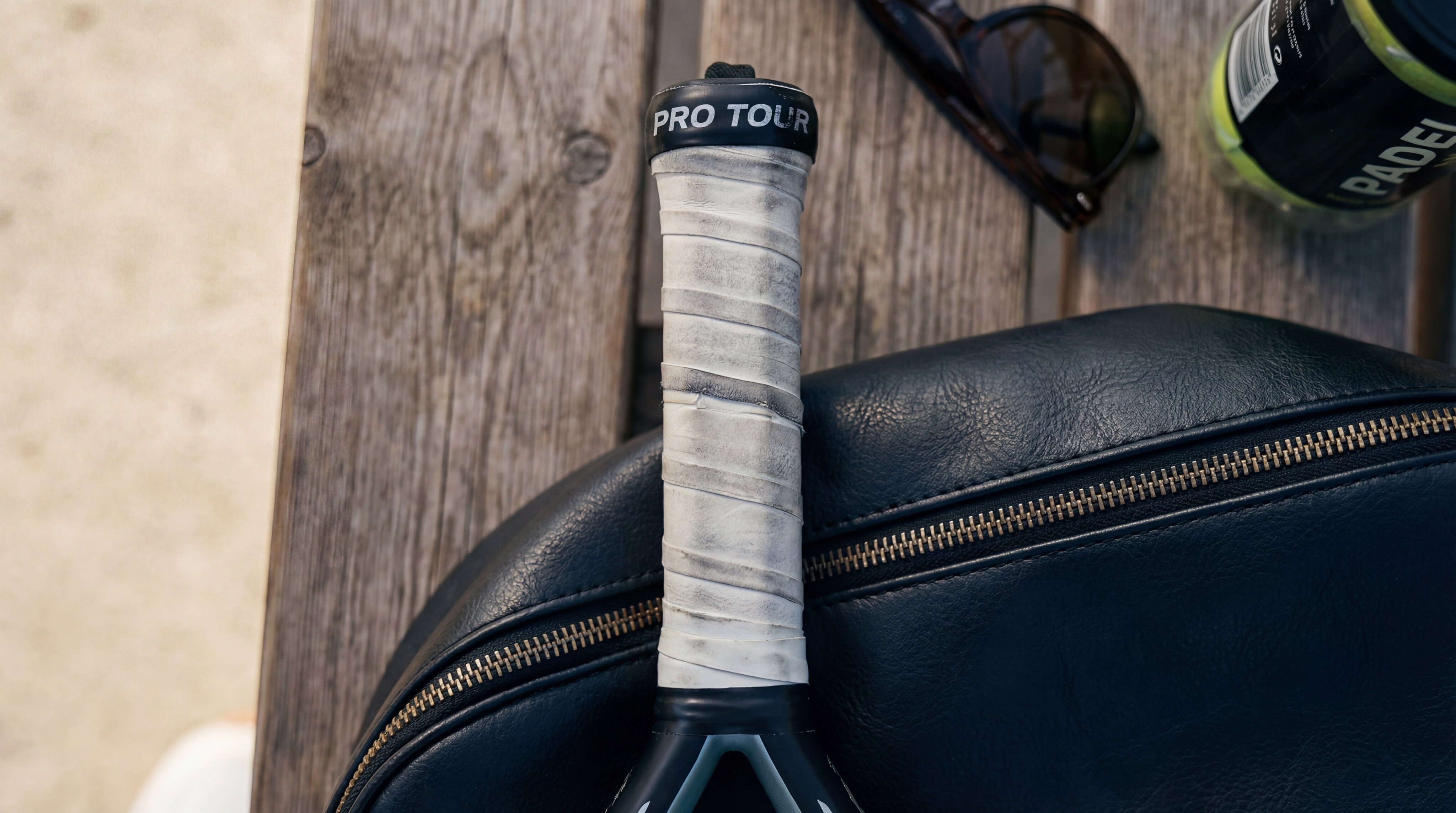
Customizing your padel grip is the final step in creating a professional-grade setup. You can experiment with different overlapping techniques to create “ridges” that act as finger guides, or you can keep it perfectly smooth for a more traditional feel. The goal is to create a handle that feels like a natural extension of your arm, allowing you to react instinctively to every ball.
Should you wrap the handle high?
Here is a pro secret: wrapping the material higher up the shaft can be beneficial for certain players. If you occasionally use a two-handed backhand or like to choke up on the racket for volleys, a longer wrap is necessary.
- High wraps protect the racket frame from sweat.
- They provide a larger surface for two-handed shots.
- It helps balance the weight slightly toward the handle.
Is there a specific pro wrapping style?
But wait, there’s more: many professionals use a “hybrid” approach. They might use a thick undergrip for comfort and a very thin, ultra-tacky overgrip on top for maximum ball feel.
- Combine different brands for custom textures.
- Use finishing tape to mark your hand position.
- Experiment with the amount of overlap for ridges.
Key Takeaway
Customization allows you to fine-tune your equipment to match the specific demands of your physical build and playing style.
| Customization | Effect | Best For |
|---|---|---|
| High Overlap | Created ridges | Extra finger security |
| Silicone Underlay | Vibration dampening | Injury prevention |
| Extended Wrap | More surface area | Two-handed players |
Testing different configurations during off-season play is the best way to discover your perfect handle setup.
FAQ: Common Padel Grip Questions
Can I wash my padel grip to make it sticky again?
No, you should never wash an overgrip as water destroys the specialized chemical coatings that provide tackiness. It is far more effective to simply replace the layer with a fresh one.
What’s the best grip for very sweaty hands?
The best option for heavy sweating is a combination of a perforated overgrip and a resin-based spray or gel to maintain friction throughout the match.
How do I know if my grip is too thick?
If you experience pain in your forearm after short periods of play, or if your fingers cannot comfortably reach around the handle, your setup is likely too thick and needs adjustment.
Can I use a tennis overgrip for padel?
Yes, you can use tennis overgrips, but keep in mind that padel-specific versions are often slightly shorter and optimized for the thicker handles of padel rackets.
How often should a club player change their overgrip?
A typical club player should change their overgrip every 10 to 15 hours of play, or sooner if they notice a significant drop in tackiness or visible wear and tear.
Ready to upgrade your court experience? For the highest quality court infrastructure and expert advice on professional padel equipment, contact us today and let our team help you build the perfect facility.