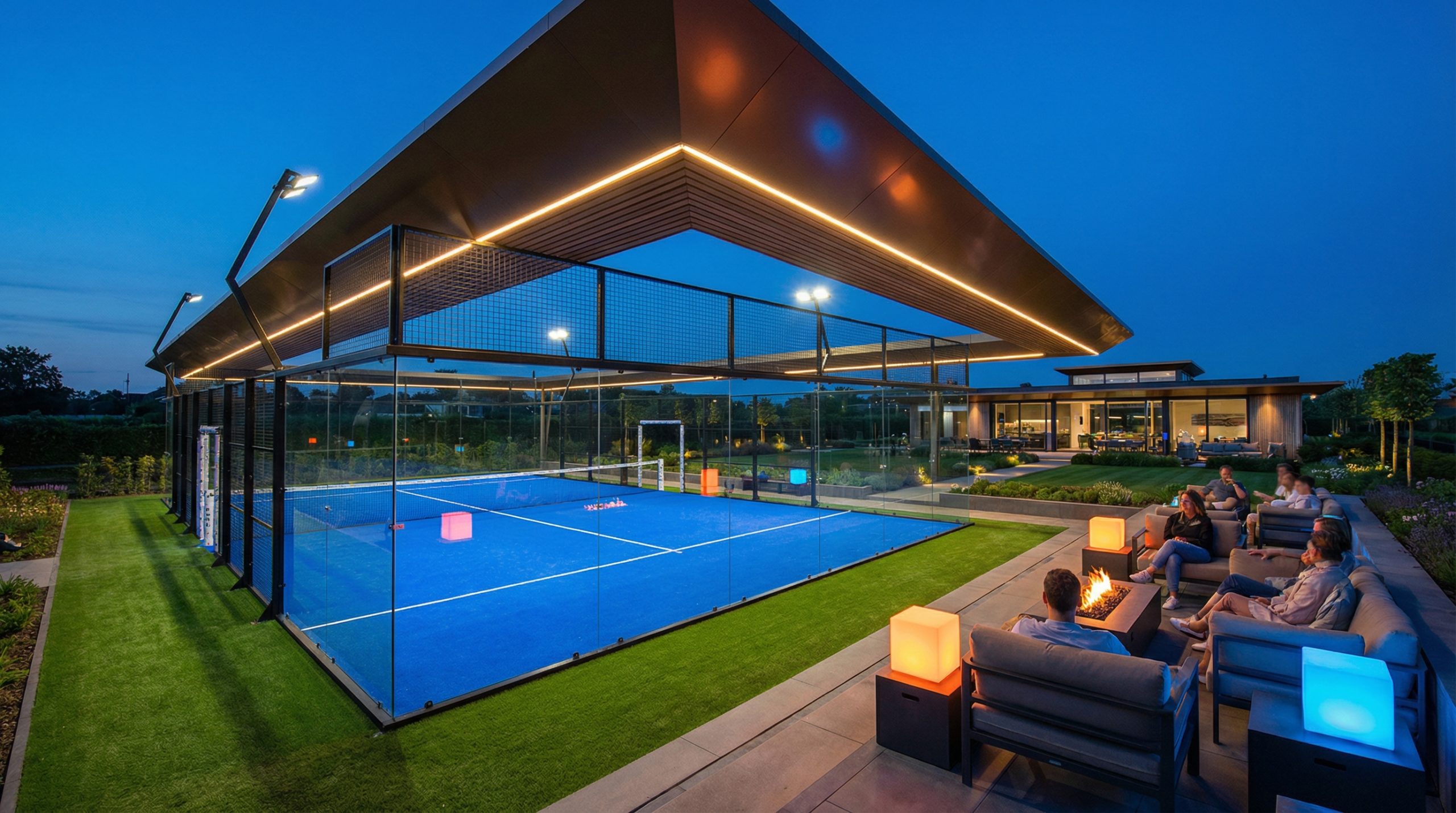
Interest in padel is exploding globally, yet many investors find themselves confused by technical requirements and professional installation standards. Building a sub-standard facility is a waste of capital that leads to poor player experiences, high maintenance costs, and safety risks. This guide provides a comprehensive blueprint for understanding the cancha padel—from technical specifications to the precise steps required for a high-quality build.
1. What defines a modern cancha padel?
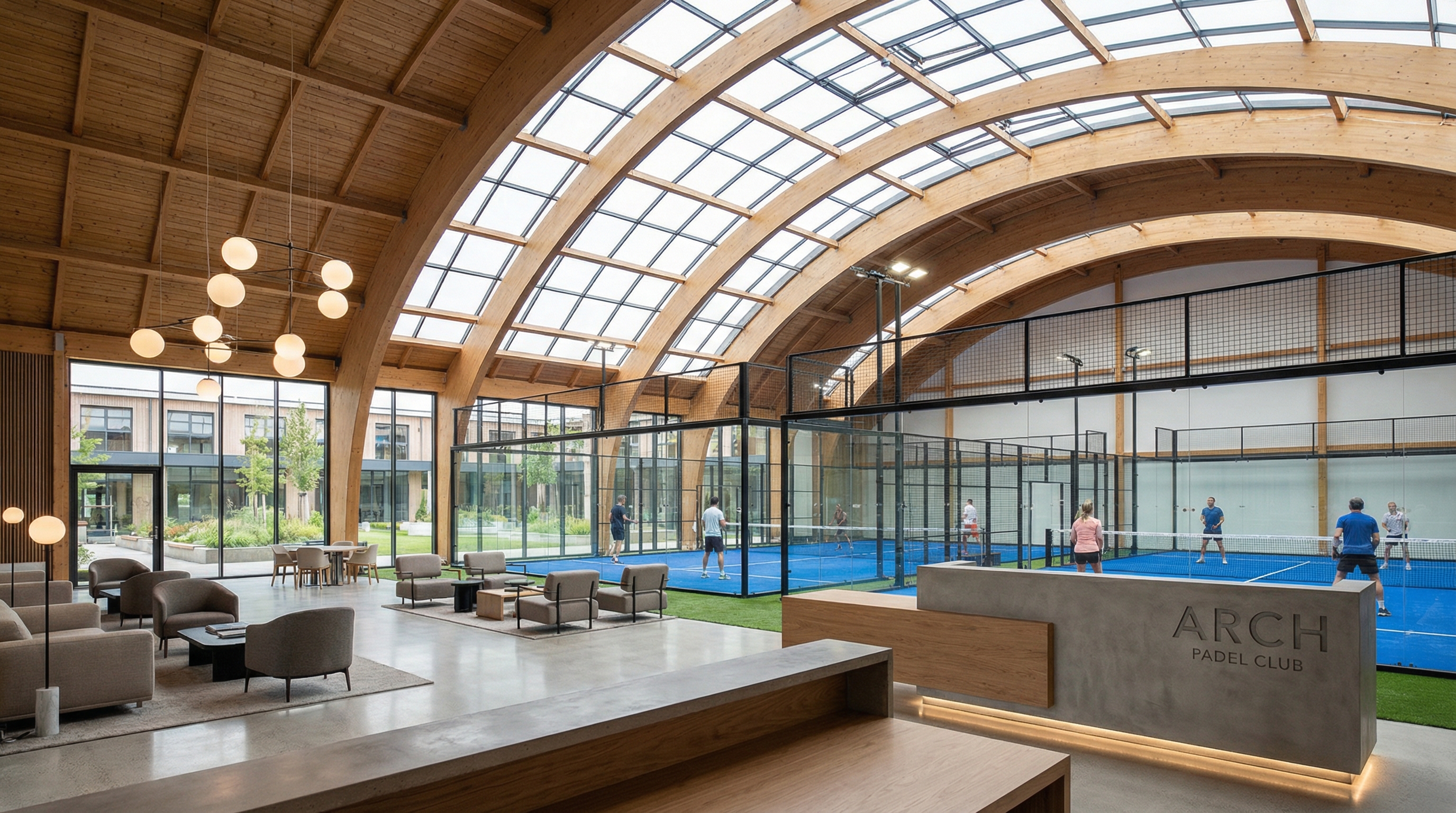
A modern court is a precision-engineered sports environment designed for fast-paced play where walls are active participants in the game. You will find that a professional cancha padel requires specific structural integrity to handle constant ball impacts and player movement.
Is it different from a paddle court?
While the terms are often used interchangeably, padel refers to the specific sport born in Mexico using glass walls. Paddle can be a broader term for various platform or beach sports depending on your geographic region.
Why do walls matter in the game?
The walls allow for tactical depth, creating a unique hybrid experience between tennis and squash. This design necessitates high-quality materials to ensure a consistent ball bounce across the entire perimeter.
Here is the deal:
Without structural glass, the game loses its primary strategic element.
- Key Features:
- Glass and metallic mesh enclosure.
- Tactical use of rebounds.
- Predominantly played in doubles.
Key Takeaway: Proper planning begins with understanding that padel is a wall-based strategic sport, not just a small tennis variant.
| Feature | Padel Court Specification |
|---|---|
| Primary Strategy | Tactical use of walls/rebounds |
| Enclosure | Tempered glass and metallic mesh |
| Player Count | Predominantly doubles (4 players) |
This data demonstrates how the structural enclosure dictates the unique tactical nature of the sport compared to open-field racket games.
2. What are the dimensions of a cancha padel?
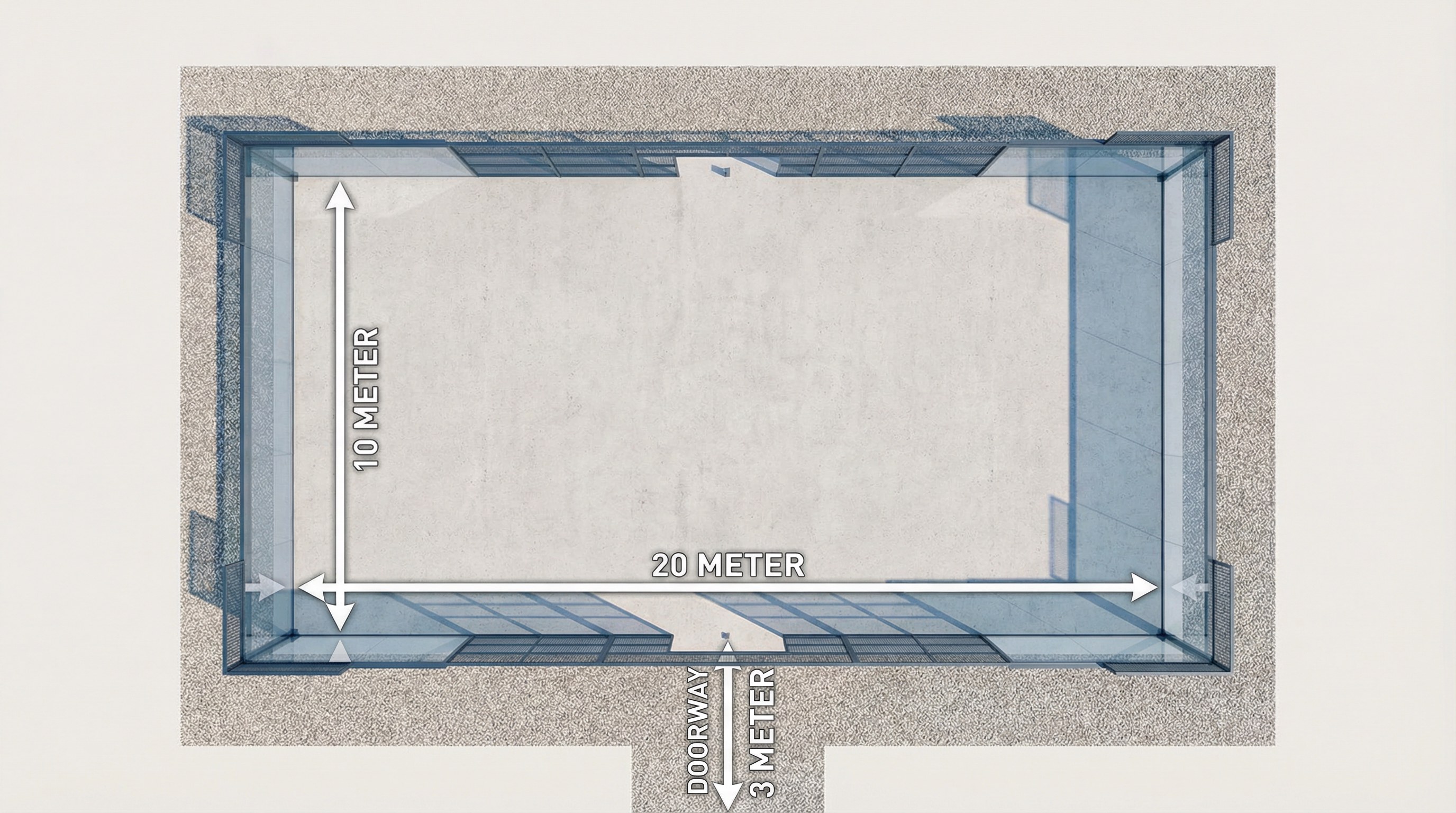
A professional court must measure exactly 10 meters in width by 20 meters in length to meet official standards. When you design a cancha padel, even a few centimeters of deviation can disqualify the facility from hosting competitive tournaments.
What is the standard footprint?
The internal playing area is a rectangle divided by a central net, totaling 200 square meters of active space. You must ensure the ground is perfectly level to prevent “dead spots” that ruin the game’s flow.
How much clearance is needed?
Safety zones and spectator pathways must be calculated beyond the 10x20m field of play to ensure player safety. Most builders also need to account for vertical clearance to allow for high lobs during intense rallies.
Here is the kicker:
Vertical height is just as important as the floor dimensions for professional play.
- Spatial Requirements:
- 10m Internal Width.
- 20m Internal Length.
- Minimum 6m vertical clearance.
Key Takeaway: Stick strictly to the 10x20m ratio to ensure your court remains functional for both casual and competitive players.
| Dimension | Measurement | Requirement Type |
|---|---|---|
| Internal Width | 10 Meters | Absolute |
| Internal Length | 20 Meters | Absolute |
| Minimum Height | 6 to 8 Meters | Recommended |
Maintaining these specific measurements is essential for the court to be recognized by international padel federations.
3. Which surface is best for a cancha padel?
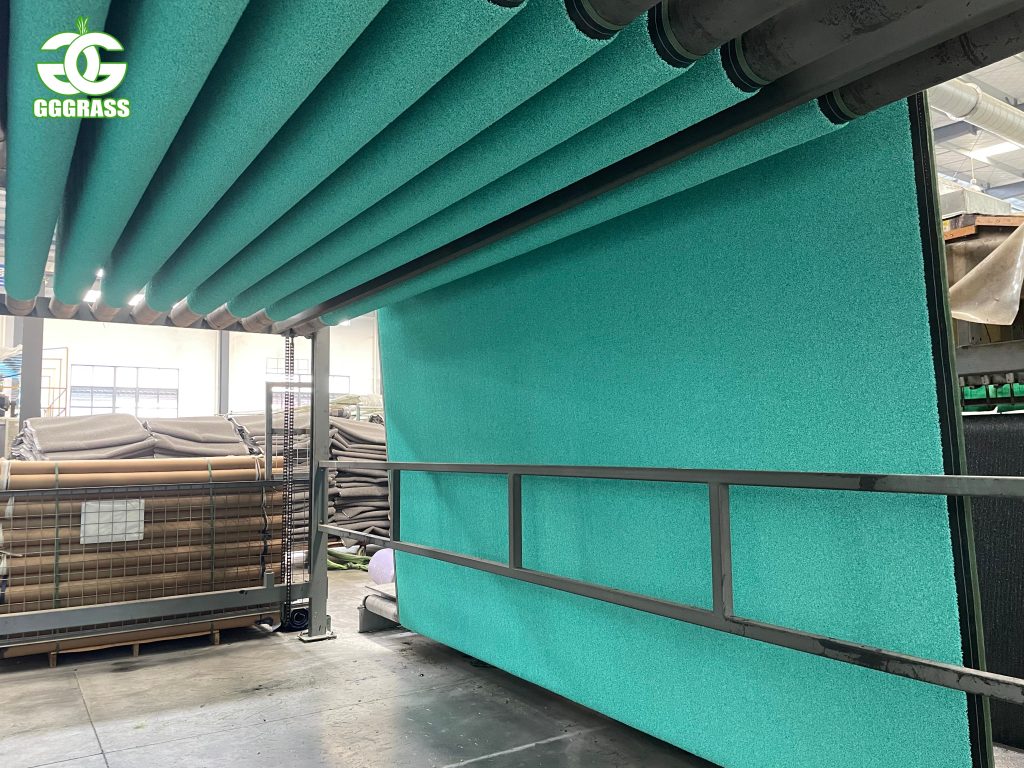
High-quality synthetic turf paired with silica sand is the industry standard for providing a consistent bounce and player safety. The turf of a cancha padel dictates the speed of the game and the physical impact on the players’ joints.
How does Padel Grass affect play?
Specialized turf is engineered to hold a specific amount of sand, allowing players to slide safely without catching their shoes. You will notice that monofilament fibers provide better resilience and a more natural feel during long matches.
What about the sub-base?
A court is only as good as the foundation, which usually consists of porous concrete or asphalt for drainage. This prevents water accumulation, allowing you to return to the court quickly after a rainstorm.
Look:
The sub-base is the most expensive part to fix if it is done incorrectly.
- Essential Turf Components:
- UV-resistant monofilament fibers.
- Kiln-dried silica sand infill.
- Reinforced backing for heavy traffic.
Key Takeaway: Prioritize high-density turf and professional-grade drainage to reduce long-term maintenance costs and improve player satisfaction.
| Surface Type | Traction Level | Maintenance |
|---|---|---|
| Monofilament | High | Moderate |
| Fibrillated | Medium | Low |
The choice between monofilament and fibrillated turf involves balancing the desired speed of play against your facility’s maintenance budget.
4. How is glass used in a cancha padel?
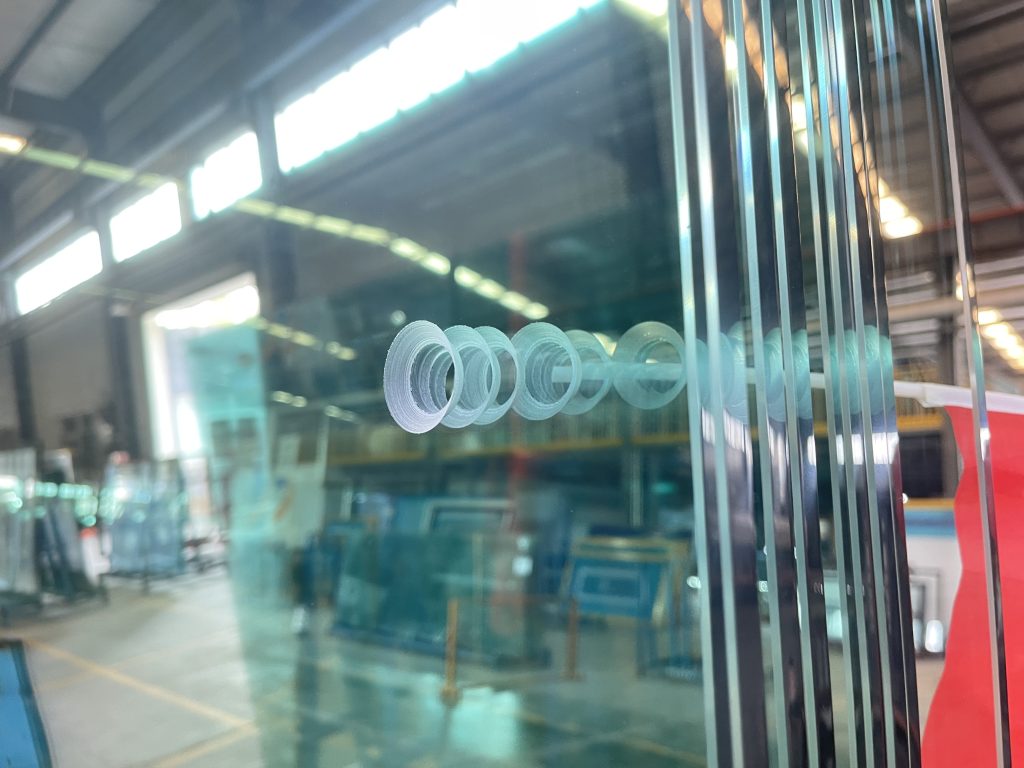
Tempered glass panels are used to create the back and side walls, providing both visibility and a predictable rebound surface. When selecting materials for a cancha padel, you must choose glass that can withstand high-velocity ball impacts and player collisions.
Why choose a Panoramic Padel Court?
Panoramic designs remove structural pillars from the back walls to offer an unobstructed view for spectators and cameras. This aesthetic upgrade is essential if you want your club to look premium and attract high-end members.
Is tempered glass mandatory?
Yes, tempered glass—typically 10mm or 12mm thick—is the industry standard for safety and structural performance. It is designed to shatter into small, blunt pieces in the rare event of a breakage, protecting players from injury.
Think about this:
The connection between the glass and the metallic frame must be seamless to prevent unwanted vibrations.
- Glass Specifications:
- 10mm for indoor/standard use.
- 12mm for high-impact/outdoor use.
- Countersunk holes for flush mounting.
Key Takeaway: Investing in thicker, high-quality glass enhances the “premium” feel of your facility while ensuring the highest safety standards.
| Glass Type | Thickness | Best Use Case |
|---|---|---|
| Standard Tempered | 10mm | Budget-friendly/Indoor |
| Heavy Tempered | 12mm | High-impact/Outdoor |
Using 12mm glass provides superior durability for outdoor courts exposed to wind loads and frequent competitive play.
5. Should you install a roofed cancha padel?
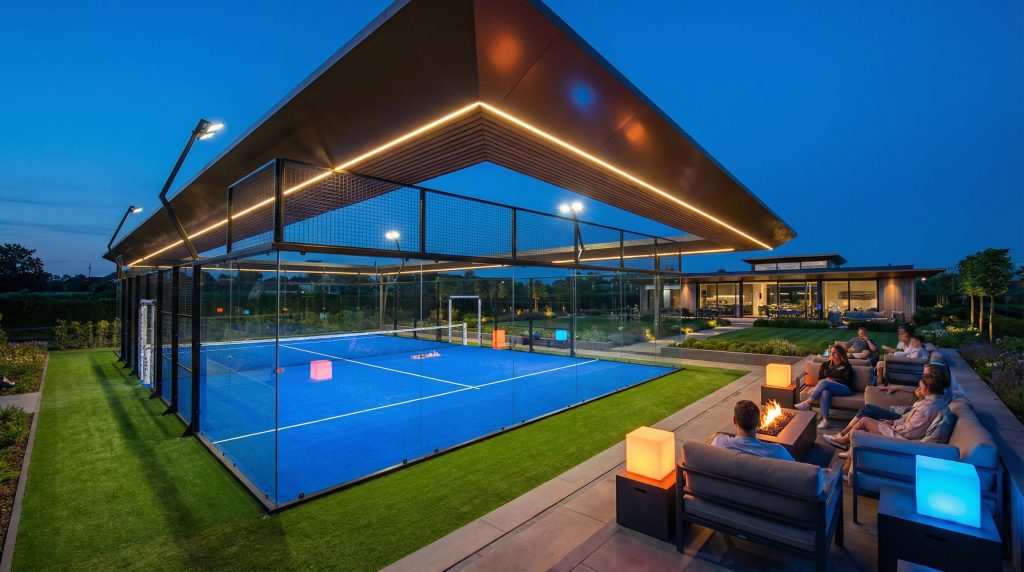
Installing a roof allows your facility to operate 365 days a year, protecting your investment from rain and extreme heat. A roofed cancha padel is a strategic business decision that ensures consistent booking revenue regardless of the season or local weather patterns.
What are the benefits of a Roofed Padel Court?
Roofed structures eliminate “dead days” caused by inclement weather and protect the turf from UV degradation. You will find that players prefer the shade during peak summer months, leading to higher occupancy rates during the day.
How high should the roof be?
The roof should ideally be at least 8 meters high at its lowest point to avoid interfering with “globos” or lobs. This height ensures that the vertical dimension of the game remains intact for advanced players.
Believe it or not:
A roof can pay for itself within two seasons just by capturing revenue from rainy days.
- Structural Considerations:
- Wind load resistance for open sides.
- Acoustic dampening for racket noise.
- Integration of high-bay lighting.
Key Takeaway: A roof significantly increases the ROI of a padel facility by ensuring the courts are playable every single day.
| Feature | Open Court | Roofed Court |
|---|---|---|
| Playability | Weather dependent | Year-round |
| Revenue Stability | Low | High |
| Construction Cost | Lower | Higher |
This comparison highlights how the higher initial investment of a roofed structure leads to more stable and predictable long-term revenue.
6. How to light up your cancha padel?
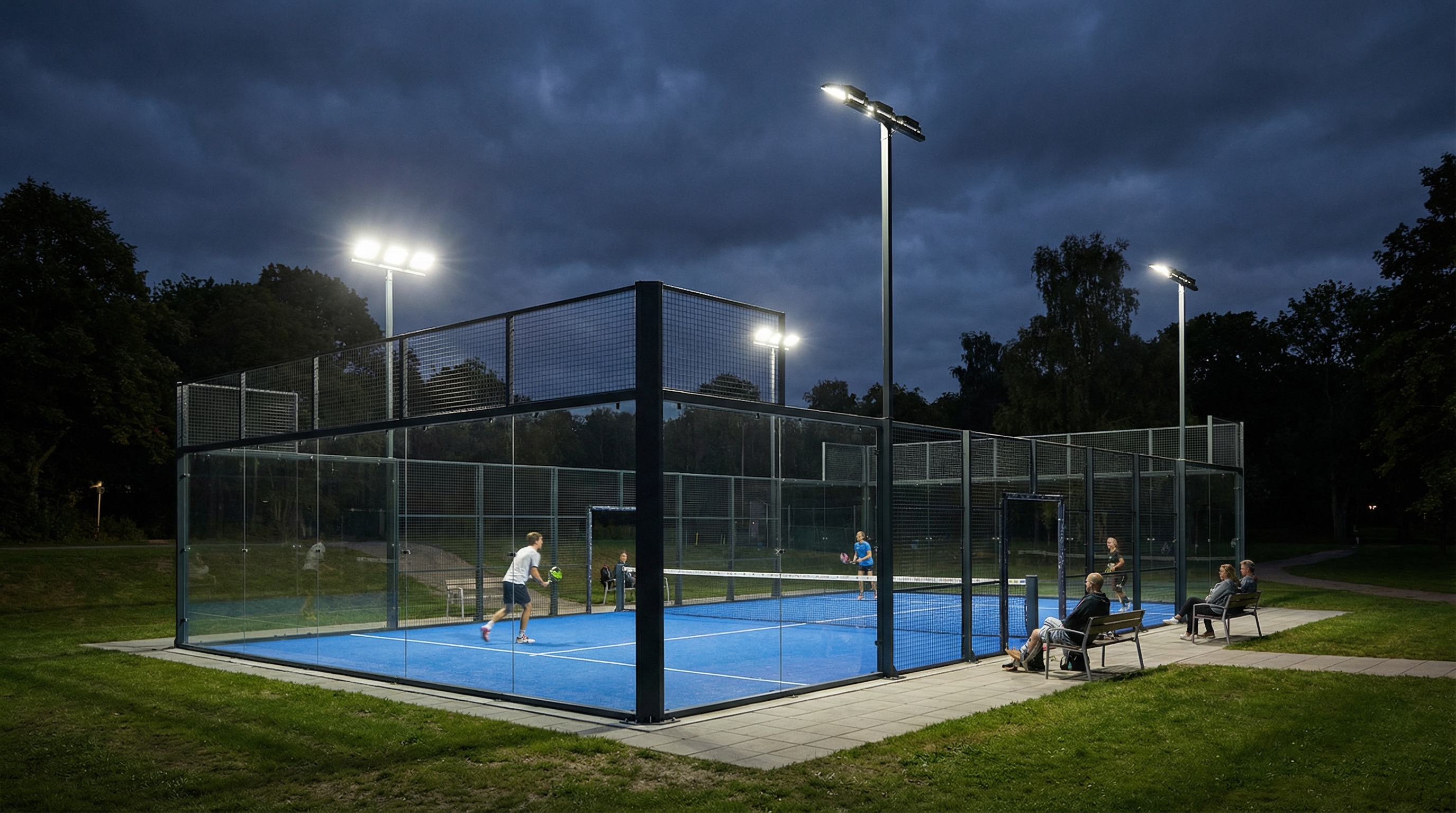
Specialized LED systems are required to provide uniform lighting across the court without creating glare for the players. For a professional cancha padel, you must ensure the lighting system is specifically designed for the fast-paced nature of the sport.
Why is Padel LED Lighting superior?
LEDs provide instant brightness and lower energy consumption compared to traditional metal halide bulbs. You will benefit from a more uniform light distribution, which is critical for players tracking a fast-moving ball against a glass background.
Where should the poles be placed?
Light poles are typically situated outside the court frame at the mid-points or corners to prevent them from becoming obstacles. Proper positioning ensures that players are not blinded when looking up to hit a defensive lob.
The bottom line is:
If your lighting is uneven, the players’ depth perception will suffer, leading to a poor experience.
- Lighting Standards:
- Minimum 300 LUX for club play.
- 750+ LUX for televised professional matches.
- Anti-glare diffusers for player comfort.
Key Takeaway: Aim for a minimum of 500 LUX with high uniformity to accommodate evening play, which is often the busiest time for clubs.
| Lighting Factor | Recommended Level | Quality Goal |
|---|---|---|
| Average Illuminance | 500 LUX | Visual Clarity |
| Uniformity Ratio | > 0.7 | Consistent Visibility |
Professional lighting is non-negotiable for clubs looking to maximize their evening booking slots and player retention.
7. How to build a standard cancha padel?
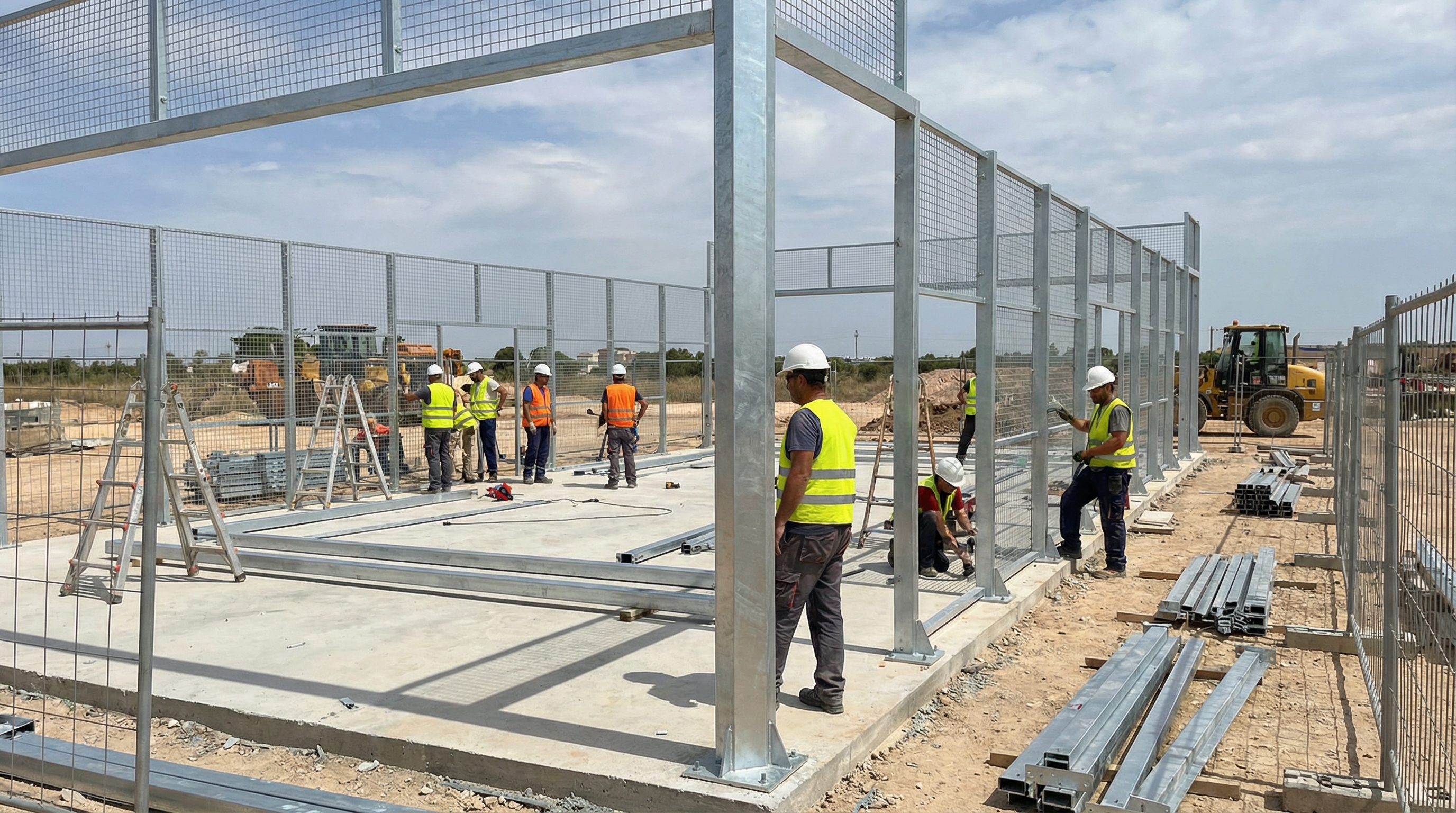
Building a court involves a multi-step process including ground leveling, frame assembly, glass installation, and turf laying. A standard cancha padel is the most cost-effective and reliable entry point for new club owners looking to scale quickly.
What makes a Standard Padel Court?
Standard models use a traditional pillar-based frame that offers maximum durability and simplifies the installation process. You can rely on these “workhorse” designs for heavy daily use in both indoor and outdoor environments.
What are the installation steps?
The process begins with casting a peripheral ring beam, followed by the assembly of the galvanized steel frame. Once the frame is secure, you mount the glass panels and lay the synthetic turf with its sand infill.
Check this out:
A professional team can usually assemble the hardware in under five days once the foundation is ready.
- Construction Workflow:
- Ground leveling and drainage prep.
- Peripheral concrete ring beam.
- Metal frame and mesh assembly.
- Glass mounting and turf laying.
Key Takeaway: Standard courts offer the best balance of price and durability, making them the ideal choice for multi-court facilities.
| Component | Standard Material | Purpose |
|---|---|---|
| Frame | Galvanized Steel | Structural Integrity |
| Mesh | Electrowelded | Safety/Bounce |
| Fasteners | Stainless Steel | Rust Prevention |
Using galvanized and stainless steel ensures the structure remains safe and rust-free for over a decade of use.
8. Is a super panoramic cancha padel better?
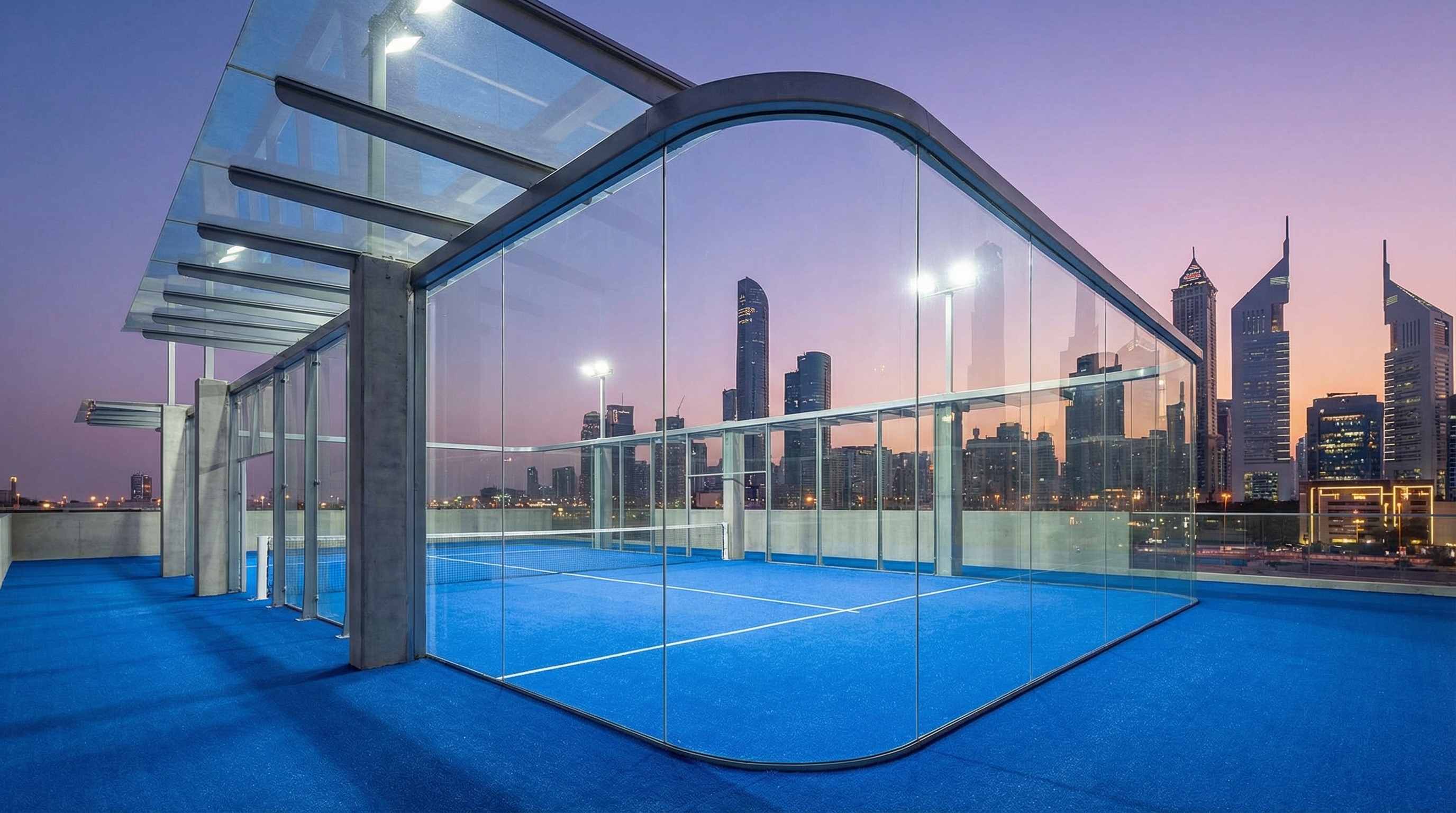
Super panoramic models remove almost all vertical supports around the glass to create a stunning “glass box” visual effect. For any flagship club, the visual impact of a cancha padel is one of your most powerful marketing and branding tools.
What is a Super Panoramic Padel Court?
This design uses thicker glass and reinforced horizontal beams to maintain structural integrity without the need for vertical pillars. You will find that these courts are the preferred choice for center courts where visibility for spectators is the priority.
Does it affect the ball bounce?
Because the glass and supports are engineered to high tolerances, the ball bounce remains identical to standard configurations. You are paying for the aesthetic and spectator experience rather than a change in game physics.
But wait, there’s more:
These flagship courts often command higher booking fees because players love the professional feel.
- Super Panoramic Benefits:
- 360-degree visibility for fans.
- Premium “Stadium” appearance.
- High-strength 12mm glass panels.
Key Takeaway: Super panoramic courts are premium investments designed to create a “wow” factor that attracts players and sponsors alike.
| Feature | Panoramic | Super Panoramic |
|---|---|---|
| Visibility | Excellent | Superior |
| Structural Design | Minimal Pillars | No Rear Pillars |
| Market Positioning | Premium | Flagship/Elite |
Investing in a super panoramic model as your “Center Court” can significantly boost your club’s social media presence and prestige.
9. What is the cost of a cancha padel?
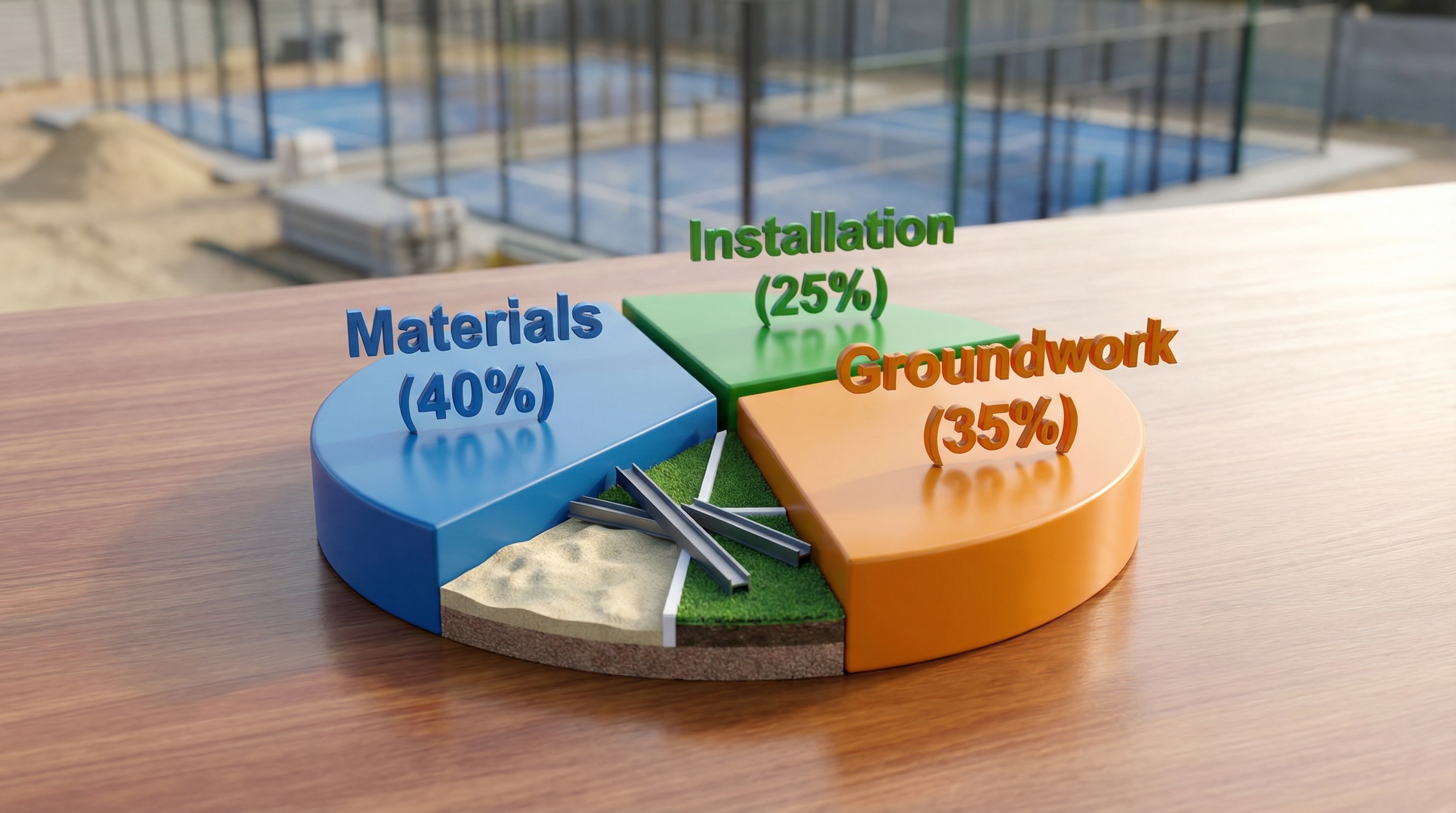
Budgeting for a court requires you to look beyond the hardware price to include groundwork, shipping, and local labor. The total cost of a cancha padel is influenced by your choice of materials, such as glass thickness and lighting quality.
What drives the price?
The quality of the steel treatment (galvanization) and the density of the synthetic turf are the primary hardware cost drivers. You should also account for the LED system’s power and the structural engineering required for your specific site.
Groundwork and site preparation often account for a significant portion of the total project budget and vary by location. You must also factor in import duties, shipping containers, and the cost of renting specialized installation machinery.
You should know:
Cutting corners on the foundation will lead to massive repair bills within the first three years.
- Cost Factors:
- Steel and glass quality.
- Site accessibility for heavy machinery.
- Local labor rates for civil works.
Key Takeaway: Always request a “turnkey” quote that includes shipping and installation to avoid unexpected financial surprises.
| Budget Item | Estimated Share | Importance |
|---|---|---|
| Court Hardware | 50% | High |
| Groundwork | 30% | Critical |
| Installation/Shipping | 20% | Variable |
Allocating a sufficient budget for groundwork ensures your court remains level and safe for its entire 15-year lifespan.
10. How to clean and fix a cancha padel?
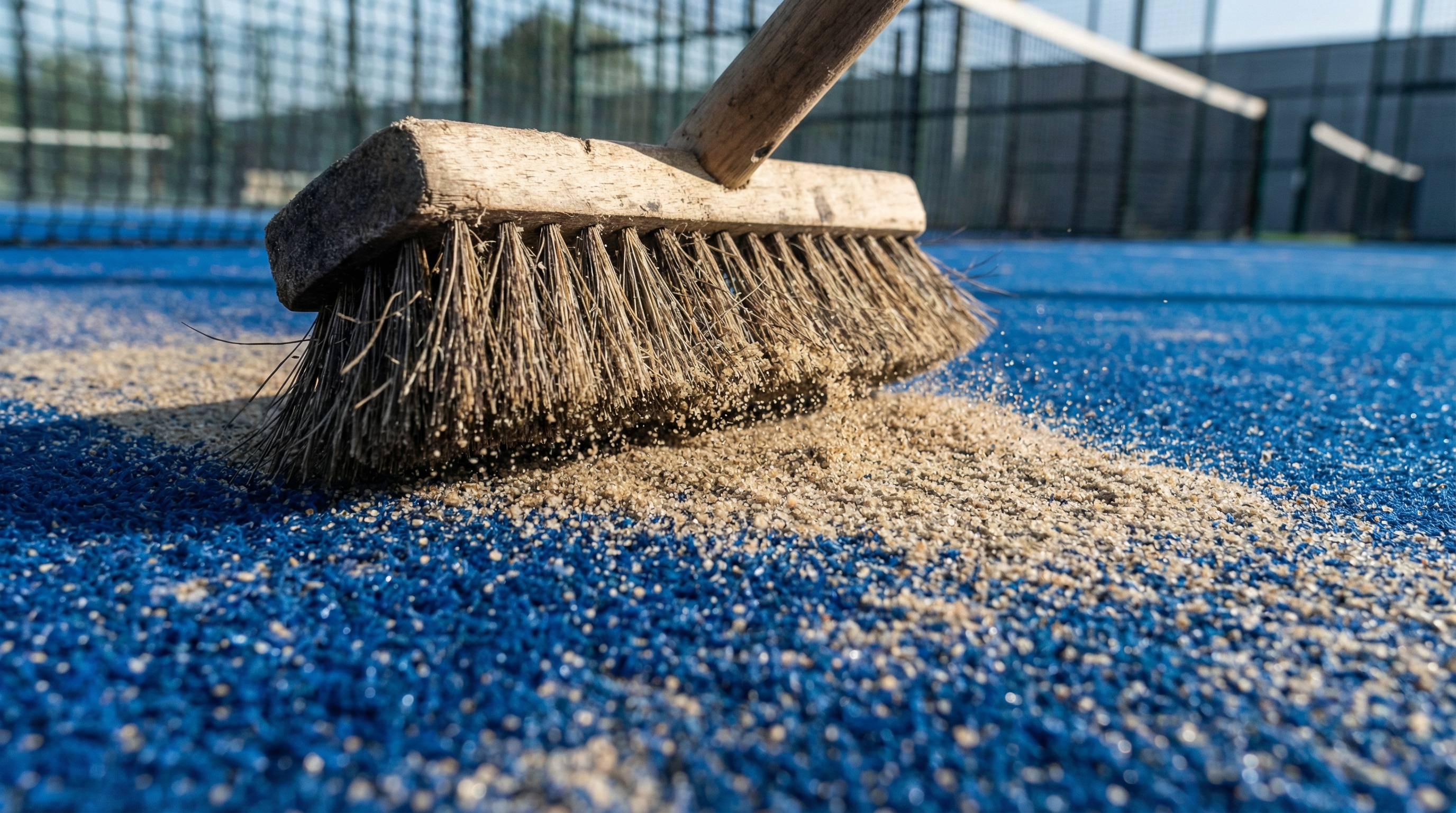
Routine maintenance involves brushing the sand, cleaning the glass, and checking the tension of the metallic mesh. A well-maintained cancha padel can last over 15 years, but neglect will shorten that lifespan significantly.
How often should sand be redistributed?
You should brush the silica sand weekly to prevent it from accumulating in the corners and leaving “dead spots” in the center. Even distribution ensures a consistent bounce and protects the turf fibers from premature wear and tear.
How to clean the glass?
Standard glass cleaners and squeegees work best for removing sweat, handprints, and dust from the panels. You must also perform a monthly check of the gaskets and screws to ensure everything remains tight and vibration-free.
You might be wondering:
Does the mesh need maintenance? Yes, checking for tension and signs of rust is essential for any outdoor court.
- Maintenance Tasks:
- Weekly turf brushing.
- Monthly bolt tightening.
- Yearly deep turf cleaning.
Key Takeaway: Consistent, low-cost maintenance is far cheaper than replacing glass panels or worn-out turf later on.
| Task | Frequency | Estimated Time |
|---|---|---|
| Turf Brushing | Weekly | 30 Minutes |
| Glass Cleaning | Weekly | 45 Minutes |
| Hardware Inspection | Monthly | 1 Hour |
Establishing a strict maintenance schedule protects your capital investment and keeps your players coming back to a high-quality surface.
Conclusion
Building a professional padel facility requires a blend of technical precision and strategic planning. By focusing on official dimensions, high-quality tempered glass, and superior LED lighting, you create an environment that players will love and respect. Whether you choose a standard configuration or a flagship super panoramic design, the longevity of your investment depends on professional installation and diligent maintenance. To start planning your facility or to view our full range of professional equipment, contact us today.
Frequently Asked Questions
Can I build a padel court in my backyard?
Yes, provided you have a flat area of at least 11×21 meters and meet local zoning requirements for structures and lighting. You will need to ensure a professional foundation is laid to prevent the structure from shifting over time.
What’s the best orientation for an outdoor court?
A North-South orientation is ideal because it prevents the sun from being directly in the players’ eyes during sunrise and sunset. This ensures that the game remains fair and comfortable for all players regardless of the time of day.
How many players can use the court at once?
Padel is almost exclusively played as a doubles game with 4 players on the court at any given time. While “Single” courts exist for 2 players, they have different dimensions and are much less common in professional clubs.
How long does the construction process take?
Once the foundation is cured and ready, a professional team can typically install the metal structure, glass, and turf in 3 to 5 days. The groundwork and concrete curing are the stages that usually take the longest amount of time.
Can I convert a tennis court into padel courts?
Absolutely, and it is a very common way to increase revenue per square meter in existing sports clubs. One standard tennis court provides enough space to fit two or even three padel courts depending on the surrounding clearance.